 6,105 words
On 2024’s April Fool’s Day, fighter-bombers from modern Israel’s American-funded and American-equipped air force bombed the Embassy of Iran in Damascus, Syria. A fortnight later, the Iranians responded with a drone and missile attack that was mostly thwarted. Then came the appearance of calm between the two hostile nations for several months. The fighting resumed in the autumn of 2024 after the Israelis killed Hezbollah’s leader, Hassan Na’srallah, in an airstrike. In response, the Iranians unleashed a barrage of long-range ballistic missiles upon Tel Aviv.
Matters between Israel and Iran continued to escalate, and President Trump intervened on Israel’s side during the “Twelve Day War” in the summer of 2025. This intervention broke Trump’s campaign promise of no new wars, but Trump’s promise was unlikely to hold since the governments of belligerent and hostile nations don’t make or keep promises to American voters. By 2025, Israelis had spent a considerable amount of time moving in and out of the bomb shelters—a major disruption to everyday economic life. There were also fatalities, injuries, and destroyed buildings.
Because of this situation, the Israeli government was duty bound to its citizens to use the full power of its Lobby in America to bring in the Americans to change the international dynamic. However, the Israelis and Americans live in different information bubbles. Since the end of the Cold War, many Americans have come to view atrocity tales and claims of mad scientists building super weapons in foreign countries as war propaganda designed to get fellows from Wyoming to shoot high end ordinance into the tents of the tribal enemies of some foreign faction with influence over Congress. Obviously, the Israelis don’t view the world this way. They believe they are under constant threat of destruction and with the nighttime sky over their respective heads brightened by incoming Iranian rockets, it’s been all too real.
America & The Strait of Hormuz
On February 28, 2026, the United States, Israel, (and somehow the Gulf Arabs) directly attacked Iran, decapitating its leadership while sinking most of the Iranian navy. The Iranians have responded by “closing” the Strait of Hormuz—a narrow passageway between the Persian Gulf and the Arabian Sea through which enormous ships carrying oil and liquid natural gas pass.
The Iranians don’t really have the ability to close the Strait of Hormuz. Instead, they have just enough military capability in the form of armed speedboats, drones, and anti-ship missiles to ensure insurance companies won’t underwrite a voyage through the Hormuz chokepoint. Due to the closure, energy prices have climbed and the global economy is in an uproar. The Americans have responded to the closure with a naval blockade of Iran’s ports.
As this article goes to print, there is a shaky ceasefire. Additionally, the Iranian government is divided and operating in a way outside its constitutionally defined process. The Iranian military is likewise divided between an ordinary military and an armed, ideologically driven revolutionary guard. Polities with sharp domestic politics and a history of violent political shifts require two militaries with separate command structures to prevent military takeovers. The current Iranian government came into power in a violent revolution in 1979. Iran is fundamentally unstable.
The Return of an Edwardian-Style International Political Scene
While the Iran War grinds away, the international political situation is one that matches, to a degree, the international footing just before World War One, with America standing in for the British Empire. Then, the British Empire was internally polarized, deindustrializing, and its rulers felt threatened by rising powers.
During a talk promoting his book on the origins of the First World War, Australian historian Christopher Clark said that the period which preceded the war-starting assassination of Archduke Francis Ferdinand appears peculiar at first glance to the students such as him learning history in the 1970s but,
… if you take another look at the [assassination of Franz Ferdinand]…not from the perspective of the 1970s but from the perspective of today, as people of the early not quite beginning 21st Century, and you think of what happened on that day, the cavalcade of automobiles on the Appel Quay, you cannot help but be reminded of Dallas in November 1963. It is the raw modernity of the events that strikes you. The story starts with a squad of suicide bombers, exotic figures when they first appeared, when they populated the historiography of the First World War in the 1970s, but much less exotic figures now – they are a very familiar part of our historical landscape… And then there is the fact that 9-11, the attack on the Twin Towers in New York, reminded us of the power of an event the power of a terrorist event with symbolic meanings…And finally, there is the fact that we are no longer in the era of bipolar stability that we used to call the Cold War, and we are still scratching our heads and trying to work out what that means…
What the Iran War might mean in this era of post-Cold War instability is that we are fighting BRICS War One—at least we are possibly fighting BRICS War One. Historians will one day write with certainty about how this conflict settled one group of problems and created an entirely new batch, but they’ll be looking with the clarity of hindsight. As this article goes to print, we are seeing things play out in an uncertain present. Regardless, it is certain that the Iran War is a conflict which will be bigger and more globally impactful than splendid out-of-the-way wars like President Clinton’s operations in Haiti.
The BRICS Coalition
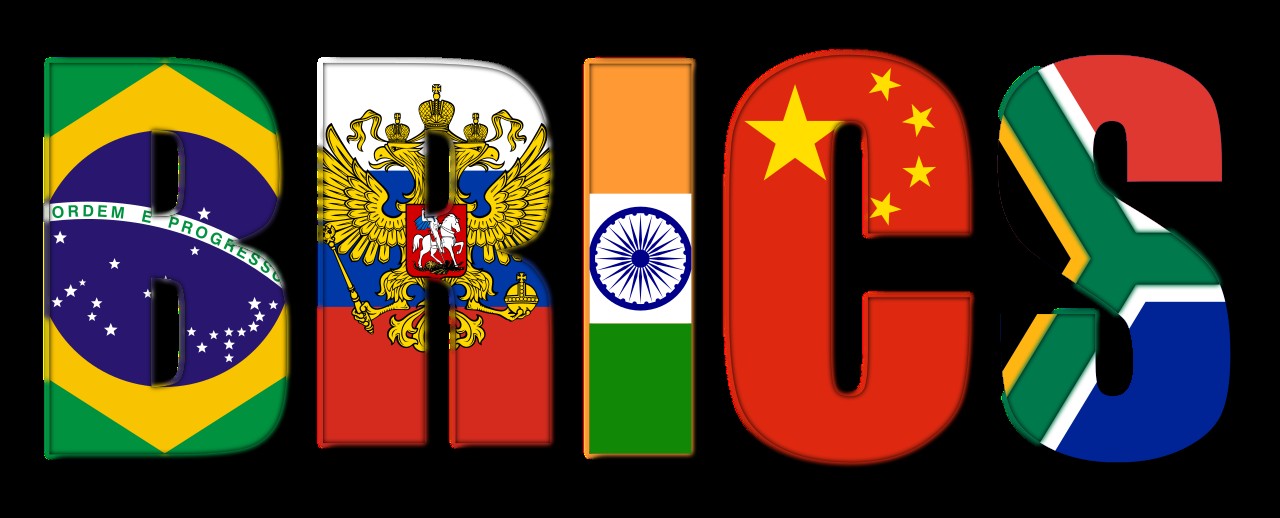
BRICS is a coalition organized around a financial and banking system that seeks to rival the monetary system based on the US dollar. The coalition’s primary members are Brazil, Russia, India, China, and South Africa. The primary BRICS nations have cooperated militarily—they held joint naval exercises in South Africa. BRICS is deliberately anti-American and it is already involved in the ongoing Iran War. Iran is a BRICS member as well as Egypt, the Gulf Arab states, Indonesia, and Ethiopia.
Iran is a BRICS member that is a critical ally to Russia and China and the BRICS members in the Gulf Arab states are critical allies of the United States and Israel. On the surface, therefore, the BRICS coalition has fractured in the Persian Gulf, but that fracture could be a desert mirage. America and the Gulf Arabs have enough economic, cultural, and theological differences that there could be a big diplomatic divorce in the future. Therefore, the conflict in Iran is one of significant risk—it could overturn America and strengthen China and Russia. It’s a jump ball situation.
A way to understand how the Iran War might strengthen the BRICS coalition is to take a closer look at the primary members—Brazil, Russia, India, and China. South Africa is a primary member, but it can be quickly defeated by recognizing the government of an independent Cape of Good Hope which will separate contemporary “South Africa’s” white and Colored English/Afrikaans-speaking west from the Bantu east, thereby returning half of “South Africa” to Western Civilization.
Brazil
Historian Odd Arne Westad writes,
Brazil is already a formidable power in most senses. It produces roughly half of South America’s total GDP. Its population of over 200 million people has created the region’s industrial powerhouse, with significant automotive, aerospace, petrochemical, and manufacturing industries. Its military capabilities today dwarf those of any other South American country, or a combination thereof, and are significantly stronger than those of the main European powers. While it is too early to speak of Brazil as a hegemonic power in South America, things are clearly headed in that direction, especially if US involvement on the continent continues to decline. Brazil’s global orientation is based on balancing its economic relations with China, which is now by far the country’s biggest trading partner, with its continued relations with the United States as a hemispheric power. The positions Brazil has taken on international issues are mainly oriented toward its cooperation with non-Western countries. It has refused to join sanctions against Russia after its attack on Ukraine, has condemned Israel’s war against the Palestinians, and stresses global economic and political reform that favors non-Western countries. Although it makes most sense to think of Brazil as a Great Power within its own continent, it has over time politically positioned itself as being substantially closer to countries in Asia and Africa than to any country in the West. [1]
The rise of Brazil also poses an entirely new set of strategic problems which will require at a minimum outreach from the United States towards Argentina as a counterweight to Brazil. This will potentially stir up trouble with Chile and the British Falkland Islands.
Eurasianist Russia
In the immediate aftermath of the Cold War, Russia was in a NATO-aligned organization called the Partnership for Peace, but Russia’s natural civilizational pull has ended the optimistic cooperation of the 1990s. Since 2001, Russia has re-armed and steadily become more ominous.
The sunny optimism reflected the reality at the End of History. Russia’s military activity was not threatening after the collapse of the Soviet Union. The Russians cooperated with NATO in Kosovo and otherwise focused on Chechnya and Abkhazia. As the years went by, however, Russian activities started to threaten the rest of Europe. The danger was masked for a time, however, since the Russian attack on Ukraine in 2014 had the color of legitimacy. The areas taken by Putin’s forces in 2014 were Crimea and the Russian-speaking, religiously Eastern Orthodox areas. Crimea had been ruled directly from Moscow as part of Russia until it was transferred to the Ukrainian SSR in the 1950s for ease of administration within an empire that then appeared to be continuously stable. The Russians, therefore, had a semi-plausible moral claim to parts of Ukraine.
The Russians threw away their moral claim and whatever remained of their American support after invading the rest of Ukraine in 2022. Since then, it is unquestionable that the Russians are a problem for the rest of Eastern Europe, especially the nations which were once part of the old Russian Empire—Finland, the Baltics, and Poland.
India
Perhaps as a counter to China, Russia and India have agreed to allow their soldiers to be based in each other’s respective countries. This could be a split in the BRICS coalition which can be exploited, or it is a flex against America. Regardless, India is proving to be a problem. India has completely dropped its 1940s-era British Labour Party influenced moderation. Odd Arne Westad writes,
Indian nationalism is different from that of the other Great Powers, because it is so intimately connected to domestic majority religious sectarianism. The Bharatiya Janata Party (BJP), which has ruled India since 2014, is a Hindu supremacist organization that regularly demonizes Muslims and has made many among India’s almost 300 million non-Hindus feel unsafe. Under Prime Minister Modi, the BJP brand of Indian authoritarian nationalism has also been at the center of foreign policy, insisting on India’s right to primacy in South Asia and conducting an intense defense of Indian sovereignty and independent policymaking. India’s refusal to condemn Russia’s attack on Ukraine comes out of this form of nationalism, for which the war serves as a tool to stress India’s independence and nonalignment. Overall, Modi does not let his increasing strategic cooperation with the United States get in the way of extreme nationalist statements at home. Internationally, BJP nationalism is particularly directed against two countries, Pakistan and China. Many BJP leaders regard the partition of India that led to the setting up of an Islamic republic as a disaster and believe that Pakistan from the beginning has been an illegitimate tool for foreign empires: Britain, first, followed by the United States, and now China. Today, in BJP rhetoric, Pakistan is a weak and fragile country, a hub for terrorism and Muslim fanaticism, and an asset that China can use in its confrontation with India for power in Asia. Privately, Indian national security officials express absolute conviction that China is India’s biggest challenge now and in the future, and that the two Great Powers are on a collision course not just over Pakistan and the border conflict in the Himalayas but because China is intent on containing and limiting India’s power. “With the uncertainties about the US position, India may be the only country standing between China and complete domination of Asia.” [2]
China
China’s rise has been striking. It has gone from being a disorganized nation hooked on opium and exploited by foreign powers a century ago, to a manufacturing superpower. China’s desire to conquer Taiwan is well known, but it also is expanding into Southeast Asia. This has created a response from its neighbors. Writes Westad,
The vast majority of Southeast Asians today want a balanced relationship with outside Great Powers. Over-all, they prefer China for economic relations and the United States for security. The latter, though, is increasingly becoming a key concern for many people in the region. The South China Sea (or the Southeast Asian Sea, which may be a more accurate term for it) is a contested set of sea lanes of which the [People’s Republic of China] claims almost 90 per-cent, based on assumed historic rights, land features sovereignty, and effective control. [3]
Presently, the Chinese Navy routinely clashes with the Philippine Navy, although for now the battles are waged with fire hoses and attempts to ram rather than bullets. Additionally, Chinese engineers have turned reefs in the South China Sea into artificial islands which hold landing fields and other military facilities.
Restoring Deterrence
The BRICS coalition, especially China and Russia, must be deterred with increased military spending and weapons development, especially weapons that can be exported to nations under threat from the BRICS coalition. Americans can also seek to leapfrog the Chinese with new technology—an example of this is how electric lighting leapfrogged gas lamps. Americans can also choose to allow the mainland of East Asia to rewild by withdrawing from South Korea. Withdrawing from South Korea means that Russia and China will need to reposition forces to northeast Asia, which will relieve the Russian pressure on Europe and possibly cause the two BRICS nations to fight amongst themselves. Selective isolationism can be a highly useful policy tool.
Additionally, the threat of selective American isolationism can compel nations near either Russia or China to re-arm. For decades the Europeans have neglected their militaries. The re-arming of America’s longstanding allies is essential. The Palantir Manifesto put this best in Point 15:
The postwar neutering of Germany and Japan must be undone. The defanging of Germany was an overcorrection for which Europe is now paying a heavy price. A similar and highly theatrical commitment to Japanese pacifism will, if maintained, also threaten to shift the balance of power in Asia.
The Clashing Theological Systems
While reflecting on the words of Cardinal Henry Edward Manning, the writer and historian Hilaire Belloc wrote,
This saying of his (which I carried away with me somewhat bewildered) “that all human conflict is ultimately theological”: that is, that all wars and revolutions and all decisive struggles between parties of men arise from a difference in morals and Transcendental doctrine, was utterly novel to me. To a young man the saying was without meaning: I would have almost said nonsensical, save that I could not attach the idea of folly to Manning. But as I grew older it became a searchlight: with the observation of the world, and with continuous reading of history, it came to possess for me a universal meaning so profound that it reached to the very roots of political action; so extended that it covered the whole.
Talmudic Judaism & the Sunnis of the Gulf
The Iran War and the building problem of the BRICS coalition is a clash between theological systems. The first system is the ethnonationalist Jewish Talmudic system. To put it simply, this ethos is two-tiered, one system for the Jewish in-group and another for those outside it. This is the ethos criticized by Jesus Christ in Matthew 23:27, “Woe to you, scribes and Pharisees, hypocrites! For you are like whitewashed tombs, which outwardly appear beautiful, but within are full of…bones and all uncleanness.” A tribe following this theological system will easily come into bitter conflict with nearby people.
Israel’s poor treatment of the Palestinians is one of the reasons why Iran has been able to make so many inroads in the Middle East and why Anglo-Americans are so demoralized. The images of Israeli attacks on hospitals in Gaza make Iranian military actions in the Middle East seem like those of an army of freedom fighters. The displaced Palestinians have destabilized nations like Lebanon, which allowed Iranian agents to radicalize Shia Moslems in Lebanon and Syria.
Illicit Jewish behavior is also a known and quantifiable factor, and nations can use the public’s knowledge of Jewish issues to advance their own interests while blaming “the Jews.” In his excellent book on World War II, historian Sean McMeekin points out that the scheme to deindustrialize Germany after World War II—the Morgenthau Plan—was deliberately presented to the Jewish US Secretary of the Treasury Henry Morgenthau Jr. by Soviet agents working in the Treasury Department as part of a plan to advance Soviet interests. Stalin knew that Morgenthau would follow his ethnic interests and promote the wicked plan. In doing so, Morgenthau stiffened German resistance against American forces in Western Europe. While this happened, Stalin announced his war aims were to remove Hitler, not genocide the Germans—allowing the Soviet army to advance with less trouble.
Another theological system is that of Sunni Islam practiced by the Gulf Arabs. This is a branch of Islam separate from Iran’s Shi’ite (or Shia) Islam. There are some radical elements of Sunni Islam. The most dangerous of which is Salafi Jihadism, which was the theology and political ideology of ISIS and the 9-11 hijackers. However, Sunni Islam also has a theological side that allows for the decadence and flashy wealth displays found in Qatar and the United Arab Emirates (UAE). Sunni Islam clashes with the Shia (Shi’ite) Moslems of Iran. The UAE has suffered more attacks by Iran than Israel during this war.
The Manichean Duality of the Shi’ites
Iran is heir to an ancient theological system, which contains at its core a stark dualistic view of good versus evil. The idea that good, represented by light, is clashing with evil, represented by darkness, first appears in the ancient Egyptian religion and that concept was either picked up in ancient Persia (Iran) or arose there independently. It is certain that the Persian religion Zoroastrianism sharpened the distinctions between the good/light side and the evil/dark side.
This duality has an influence on the film The Empire Strikes Back (1980), and can be found in the Dead Sea Scrolls as well as the prologue to the Gospel of John. Theologian John Painter points out that in the Dead Sea Scrolls, 1 QS III.21, the verse “…and walk in the ways of darkness…” is very similar to John 8:12, “…those who walk in darkness.” Additionally, the expression “the sons of light” in the Dead Sea Scroll 1 QS 1.9 matches people becoming “children of light” by believing in Christ in John 12:36. [4]
In the third century, the prophet Mani arose in Persia. He further sharpened the distinctions between “light” and “dark” or good and evil. In his study on Manicheanism, John C. Reed quoted the Islamic scholar Jähiz, Kitab al-hayawãn’s summation of Manicheanism belief writing,
…[T]he universe with its contents derives from ten kinds (of things). Five of them are Good and Light, and five of them are Evil and Darkness, and each of them is sentient and passionate. Humans are composed of all these ‘kinds,’ but in variant proportions: in each person some of the ‘good’ kinds outweigh the ‘bad’ kinds, and some of the ‘bad’ kinds outweigh the ‘good’ kinds. Humans possess five senses, and there is present in each sense the main parts of the five kinds and their opposites. Whenever a person beholds a merciful sight, this sight derives from what is Light and Good, but when they behold a threatening sight, this sight derives from Darkness. The same holds true for all the senses. The sense of hearing is a separate ‘kind.’ That which is in the sense of sight that derives from Good and Light does not assist that which derives from Good in the sense of hearing, but it nevertheless does not oppose it. Nor does it corrupt it or obstruct it: it does not assist it to a different situation or ‘kind,’ nor does it help it, although it is not an opponent. The ‘kinds’ belonging to Evil differ from one another and oppose the ‘kinds’ which belong to Good. The ‘kinds’ belonging to Good differ from one another, but do not oppose (their Evil counterparts). [5]
Mani’s ideas made evil a force which was both independent of good and equal to it. The influence of Manicheanism runs through Shi’ite Islam. During the Iranian Revolution, Manicheanism imagery was everywhere. Susan Zickmund writes,
With powerful symbolic associations, [Revolutionary Leader Ayatollah Ruhollah] Khomeini’s discourse redefined modern Iranian society by tapping old religious themes. It tied religious and historical symbols for good and evil to contemporary figures. Khomeini’s discourse drew on a Manichean conception of religion. The reality he depicted in speeches fused worldly powers in politics with the fundamental forces of good and evil.
Although there are similarities between “light” and “darkness” and good and evil between Shi’ite Islam and Western Christianity, the latter faith doesn’t view evil as a separate entity with its own power. This is spelled out in John 1:5, “The light shines in the darkness, and the darkness has not overcome it.” Saint Augustine, a former Manichean and convert to Christianity further developed this theme, positing that that there was nothing—like evil—that could exist independently from God. Things that appear evil at first glance can be reformed in a Christian system of theology.
Shi’ite Islam also has an eschatology which holds that the “Twelfth Imam” will return as the Mahdi who will defeat tyrannical and cosmic forces on Earth at the end of time, to put it simply. Many of the followers of Ayatollah Khomeini thought that he was the Twelfth Imam. This eschatology is partially the reason why Ayatollah Khomeini answered, “Nothing,” when asked by a journalist how he felt returning to Iran. Khomeini’s statement was theologically driven—indicating a focus on religious rather than secular aims. “Nothing” is also presumably what the Mahdi would say to the question, “How do you feel?” Indeed, many of the Iranians cheering the Ayatollah’s return to Iran from exile in 1979 believed he was the Twelfth Imam.
However, Khomeini’s statement that he felt “nothing” is nihilistic. Additionally, the sharp duality of Manichean influenced Shi’ite Islam is infinitely fungible. One day evil and darkness can be the far enemy—America; the next day it can be the rival government official sitting across the table. During the Iranian Revolution chants of “Death to the Shah” were replaced by “Death to America” which will easily be changed to “Death to…” something else.
The Pilgrims’ American City on a Hill
America’s theological system is overwhelmingly Western Christian—Roman Catholic and Protestant, but it leans heavily to the Protestant side. Stephen H. Webb writes,
Any interpretation of America’s self-understanding as a world power must deal with another indisputable fact: the role that Christianity has played in American history. More specifically, no sharp line can be drawn between American motivations in the international arena and the Calvinistic drama, brought to our shores by the Puritans, of a nation conceived as a vehicle of God’s will. As Archbishop Francis George of Chicago lamented at a meeting of the Synod for America, a gathering of bishops and other Catholic Church leaders from all of the Americas, even Catholics in the United States are “culturally Calvinist.” [6]
Calvinism is a form of Protestantism that was a heavy influence the Puritan movement of seventeenth century England. Chard Powers Smith writes,
Ultimately Puritanism was and is an aesthetic, a way of perceiving, ordering and expressing reality. But as primarily stated in the language of its heyday, it was a Religion, a Cosmic Drama, specifically the Christian Cosmic Drama, a method of adjusting human life to forces that both transcend and include the observed forces of Nature. In application the religion was a Psychological System, and this survives today as the habitation of each of 40,000,000 Yankees [in 1954], even though most of them have forgotten its religious origin and nomenclature. The religion and the psychological system are identical in structure, each including a philosophy, a cosmology, an ethics, a morality, a mythology, a deology, an eschatology, an ecclesiasticology, a jurisprudence, an economy, a sociology, a literary standard, a logic, and many lesser systems that are appropriate to complete living. All these are interdependent, being closely fitted and pegged together in a single structure, the Puritan House. [7]
Walter Russell Mead adds,
Calvinism’s emphasis on secular occupations as calls from God clearly gave new dignity and importance to economic and social tasks. To serve the world in business was to serve God. A better mousetrap would not only lead the world to beat a path to your door; to build one was a sign that God had chosen you for salvation. This attitude tended to make Calvinists more successful in their worldly occupations. At the same time, it was important to live in thrift and sobriety – not to misuse the riches that worldly success brought. Intemperance was not a sign of God’s salvific grace. As a result, Calvinist communities soon began to develop pools of capital available for investment – and diligent, trustworthy young men ready to make profitable use of the savings of others… The habits of Calvinism persisted even when the doctrines fell into disuse. Benjamin Franklin was no Calvinist, yet the precepts of his Autobiography and Poor Richard’s Almanack faithfully reproduced Calvinist strictures in a utilitarian rather than theological context. Whatever might become of us in the next world, early to bed and early to rise would make us healthy and wealthy and wise in this one…whether or not they believed like John Calvin; a Calvinist heritage would…continue to drive societies into capitalism and wealth even after the initial religious impulse had faded. [8]
If Calvinist Puritanism is the sun in America’s theological firmament, the Quakerism of the Delaware River Valley is the Moon. David Hackett Fischer writes,
The Society of Friends always maintained an official hostility to formal doctrine, and never required subscription to a creed…At the center of this Quaker “system” was a God of Love and Light whose benevolent spirit harmonized the universe…
A central tenet of Quaker theology was the doctrine of the inner light, which held that an emanation of divine goodness and virtue passed from Jesus into every human soul…The psychology of conversion among Quakers was similar in some respects to that of Calvinists. But it was not precisely the same. Most Quakers had little doubt that salvation could be achieved by individual effort, and that the instruments had been placed by God in their hands. Once converted, they felt a sense of optimistic fatalism about the world to come. [9]
These two theological systems are at the root of America’s industrial drive, obscured for now by the neo-liberal economic policies that took off in the mid-1990s. The Quaker’s idea that the “inner light” could pass to all humans allowed the Pennsylvanians to assimilate white ethnics. (They were unable to assimilate non-whites.) It is in Pennsylvania where the term “whites” arose to describe the fusing of the English, Germans, and other Europeans into a single people. Many of the most serious of the Christian Identity thinkers are of Pennsylvanian or Yankee heritage.
Unfortunately, America’s Christian heritage has three internal problems. The first is Negro Worship. During the abolitionist struggle, sub-Saharan blacks became sacred objects. Negro Worship is what compels mattoids, cruel women seeking to do harm, and useful idiot liberals to interrupt police arrests and call for violence when a young black dies near an officer of the law. Additionally, Western Christianity is currently caught in the web that is the Pseudo-Religion of World War II. This heresy is centered upon the wartime propaganda caricature of Hitler as a negative moral example. The Pseudo-Religion of World War II is what drives the transsexual social contagion (now a fad that appears to be running its course) as well as the various attempts to assassinate Donald Trump.
The third problem is that both Calvinism and Quakerism drive capitalism and capitalism has some drawbacks. For many people free market capitalism is a source of considerable frustration. Brazil was driven to set up a different financial system because their economy has suffered from inflation and such by their financial connections to the US dollar economy. The frustration goes both ways. American irritation with its allies in Western Civilization has been expressed through calls to leave NATO and draw the defensive line in Greenland. The Greenland talk has given Europeans the excuse to not get involved in the Iran War.
The Religion of Eurasianism
The Eurasianist theory which is currently propagated by Aleksandr Dugin has become something like the respective national religions of Russia, Kazakhstan, and Belarus. The ideology originated among Russian expatriates in Western Europe and it seeks to blend the European Russians with the various Asiatic tribes who mostly follow the Eastern Orthodox religion.
Dugin holds that the Russian Eurasians are a land power under threat from the seaborne “Atlanticists” who are racial segregationists that are especially comfortable with enslaving those who are not white and Catholic or Protestant.
The Eurasianist Dugin is a prophet of Holy War. Russian civilization is on one side and the white, Western Christians of the West are the primary enemies. Dugin also propagates an apocalyptic eschatology. In 2019 he wrote,
I am convinced that, over time, spiritual arguments, eschatological analysis, and references to sacred tradition will gain in importance and significance in all our societies. In Iran, this is already a reality. And it is becoming a major reality in Russia and among Western elites: one need only consider the influence of Protestant eschatology on American foreign policy – it is considerable.
On March 26, 2026, Dugin referenced a prophecy from a work of Islamic eschatology called the Hadith of the Black Flags saying,
When you see the black flags coming from the direction of Khorasan, go to them, even if you have to crawl over snow/ice, for among them is the Khalifah of Allah—the Mahdi.
Dugin’s Eurasianist theory holds that Moslems in Russia are an integral part of the Russian Eurasian civilization. His call to the Iranians should be taken seriously.
The Limited Theologies of China & India
The Chinese and Indian theological systems are a factor, but they are limited even though Hindu scriptures do contain a great deal of wisdom. The faith structures in both Asiatic nations hold up their respective civilizations, but India’s Hinduism and China’s Confucism are not exportable and they are not dynamic compared to the others. Both theological structures have a commonality of being ossified ritualistic religions. Should both China and India fully embrace their respective traditions and completely abandon any modernist and Western ideas, the nations will enter an Asiatic dark age. India without the British was the land of the Thugee Cult, burning widows on funeral pyres, and starvation. As for China, nobody takes a stand based on the principles of the Tao.
A Possible American Victory in Iran
At a Pentagon religious service, Secretary of War Pete Hegseth prayed,
Behold now the wicked who rise against your justice and the peace of the righteous. Snap the rod of the oppressor, frustrate the wicked plans and break the teeth of the ungodly. By the blast of your anger, let the evil perish. Grant this task force clear and righteous targets for violence. Surround them as a shield, protect the innocent and blameless in their midst, make their arrows like those of a skilled warrior who returned not empty-handed. Let every round find its mark against the enemies of righteousness and our great nation. Preserve their lives, sharpen their resolve and let justice be executed swiftly and without remorse, that evil may be driven back and wicked souls delivered to the eternal damnation prepared for them.
It’s always cringe to watch a politician /TV celebrity pray. The prayer was criticized indirectly by the Pope and Calvinists expressed dismay at what looks on the surface like an Israel First, George Dubya Stupid style dustup in the desert like the Iraq War. Gloom abounds. Nonetheless, it is clear that Hegseth recognizes the theological struggle that is going on alongside the drone strikes and blockade in the Strait of Hormuz.
The Iran War has some bright spots. The ease in which the Iranian Navy was destroyed will give the Chinese pause before embarking on an amphibious invasion of any of the nations in the First Island Chain. China’s oil supply is also shown to be vulnerable. It’s always been a gauntlet run to get ships to travel from the Persian Gulf, past Iran, Pakistan, India, and the Strait of Malacca to China. Now we know for certain how easy it is to completely stop shipping along the southern shore of Asia. China’s Belt and Road Initiative has hit a setback.
Furthermore, the Trump administration made it a point to fire general officers. Thomas Ricks, a journalist who covered the Iraq War came away from the fiasco convinced that the inability of the Bush administration to manage its generals contributed to the problems. General Franks, who planned and led the invasion, retired just as the insurgency started, for example. Meanwhile, DEI officers and limited men continued to stay in place.
The Israelis (and the Gulf Arabs) are also not on the sidelines in this conflict. They are active participants which means that there will not likely be a USS Liberty type of event and the Gulf Arabs will be likelier to not sponsor dangerous young men to travel to America to wage Jihad.
Finally, it is not clear that Iran has much of a hand in this deadly card game. The dire predictions of doom have so far not materialized. During the Iraq War, the problems were already noticeable when Bush administration declared “Mission Accomplished.” Additionally, Iran has gotten very little support. They are now experiencing the same level of help from Russia that the Syrians and Armenians got a few years ago. Russia is a danger but not much of an ally.
As far as the trouble with the Persian Gulf oil shipments—it might not be a long-term problem. The ongoing oil shock is analogous to wheat supplies during the First World War. When the war broke out, wheat shipments from Russia were stopped by the Ottoman Turks. For a time, prices of flour and bread increased, but wheat production increased in the United States and elsewhere. Prices stabilized and the Western Allies had food throughout the conflict.
The real crisis came when Russia’s wheat exports resumed in the late 1920s. This caused a price crash that started an agricultural depression. When drought came to western America, the soil in marginal areas that had been plowed for wheat planting dried up, turned into dust clouds and the American Prairie became the “Dust Bowl.” Oil producers increasing operations in the United States, Venezuela, and the North Sea need to be aware that the end of the war could bring about a problem upon their operations.
The Iran War has certainly showed the friction points in the international system. America has clearly alienated its important allies in Europe and South America, although this alienation was inevitable given the disaster of deindustrialization and so much unappreciated American military effort. Meanwhile, there is a new anti-American coalition, BRICS, which is positioned to capitalize on any American misstep.
Notes
[1] Odd Arne Westad, The Coming Storm: Power, Conflict, and Warnings From History, (New York: Henry Holt and Company, 2026) pp. 56/7
[2] Ibid. pp. 108/9
[3] Ibid. p. 174
[4] John Painter, The Quest for the Messiah: The History, Literature and Theology of the Johannine Community, (Edinburgh, Scotland: T&T Clark (Second Edition) 1993) p. 45
[5] John C. Reeves, Prolegomena to a History of Islamicate Manichaeism, (Sheffield, England: Equinox Publishing, Ltd, 2011) p. 162
[6] Stephen H. Webb, American Providence: A Nation with a Mission, (New York: Continuum, 2004) p. 2
[7] Chard Powers Smith, Yankees and God, (New York: Hermitage House, 1954) p. 47
[8] Walter Russell Mead, God and Gold: Britain, America, and the Making of the Modern World (New York: Knopf Doubleday Publishing Group, 2008) p. 339
[9] David Hackett Fischer, Albion’s Seed: Four British Folkways in America (New York: Oxford University Press, 1989) pp. 426/7
13 comments
Is not the Russian War in Ukraine the BRICS war one, and Iranian – only second? Behind both Russia and Iran stands China who fights the West with its proxies, so typically for their stratageme thinking.
The artificial civic religion of the so-called West, including and not limited to the Zionist Occupation Government of the United States of America, is a mostly Jewish-created and mostly Jewish-sustained system of eliminationist antiwhitism. The system of antiwhitism works like a system of integrated pest control, with our race as the pest to be eradicated. The hegemonic antiwhite establishment sustains White genocide polices that unless they are overturned doom our race.
We have no stake in the domination, the success, or even the survival of this evil system, the main point of which is to force us into a policy-driven extinction.
We want our race to live. Therefore we want the White genocide system to fail, as soon as possible and as conclusively as possible.
If others, for their own reasons, are willing to spend their resources to rebuff the Jewish supremacist White genocide system and to diminish its moral authority, that is not a problem for us. By default, we don’t owe these other people anything, but they are breaking down something we need broken, and we should be at peace with that.
The West consists of Jewish brains and Anglosaxon muscles, and both are now weak and unable. Without German brains and muscles the West cannot exist and the time of the German West is over . Germany was destroyed and occupied by Anglosaxons and Soviets on Jewish service.
Germany was not destroyed, it was wounded. The NSDAP fought very well against overwhelming odds, when no one else would. The next evolution will involve (some) White people world-wide thinking beyond the old nation state mentality, because we must. Cheer up, friend.
The worst is, it was RE-EDUCATED (umerzogen), to kill German “Geist”. Interesting, that also the “winners” like the English and the French, were also umerzogen, and the Africans and Asians were brought in, just to guarantee, that the “NS” or any another radical nationalism would not emerge again. Now the same is going on in Ukraine, where thousands of Bengalis, Pakistanis and Indians are brought in. (Nobody in the West needs “those dangerous Ukrainian Nazis”, and when it was not possible to kill them all with Russian missiles and bullets, this “bad” population should be simply replaced.)
The propaganda directed at Germans and indeed all White people at the cessation of WWII, is just that, propaganda intended to confuse us and break our spirit. But, in spite of the tremendous resources that jew rats and White traitors have expended in tying to genocide us, the White spirit is exploding world-wide.
Propaganda lies only go so far, and base-line human nature is always present, waiting to erupt and assert itself, when conditions are in favour of it. We live in epic times, and I expect that things will happen that the bigoted, psychotic freaks who oppress us, will not be able to control. Life will find a way.
Joe Gould: May 5, 2026 The artificial civic religion of the so-called Wes… is a mostly Jewish-created and mostly Jewish-sustained system of eliminationist antiwhitism…
We want our race to live. Therefore we want the White genocide system to fail, as soon as possible and as conclusively as possible.
—-
Thanks for the truth, Joe, and the general solution.
“The influence of Manicheanism runs through Shi’ite Islam. During the Iranian Revolution, Manicheanism imagery was everywhere.”
That’s simply not true in any meaningful sense. Islam itself is dualistic, like all Abrahamic faiths, and Manichaeism/Zoroastrianism long gone.
When the “quranguideblog” claims that “CURRENT ISLAM IS “MANICHAEISM” WHICH HAS NOTHING TO DO WITH THE QURANIC ISLAM BROUGHT BY PROPHET MUHAMMAD”, I’m strongly reminded of Protestant Christian conspiracy theorists who claim that Catholicism is a Pagan religion going back to “Mystery Babylon”.
“The current Iranian government came into power in a violent revolution in 1979. Iran is fundamentally unstable.”
That violent revolution was in response to the American-backed Shah regime.
Iran itself is quite stable when it isn’t being deliberately destabilized. Scott Bessent, current Treasury Secretary – and close associate of George Soros – admitted the following in public:
“At Treasury and what we have do have done is created a dollar shortage in the country. At [a] speech at the Economic Club of New York in March I outlined this strategy. It came to a swift and I would say, grand, culmination in December, when one of the largest banks in Iran went under – there was a run on the banks, the Central Bank had to print money, the Iranian currency went into freefall, inflation exploded and hence we’ve seen the Iranian people out on the street.”
When you see the black flags coming from the direction of Khorasan, go to them, even if you have to crawl over snow/ice, for among them is the Khalifah of Allah—the Mahdi.
“…And as long as the Mahdi follows Russian laws we won’t have any problems!”
All that Chechnya has to donis get really close to Kremlin buttons, using as much Leninist cooperation as possible to leverage friendship in the Federation. When Putin sweeps them out, Chechnya can hold up Dugin’s words to eat for all the umma to see.
Great article! Please continue the illumination of the distinctions between Manicheanism, and Zoroastrianism. 🙃
For that I recommend Jason Reza Jorjani. Here is his YouTube channel.
I wrote a comment that was pro-Russian […]
Yes, two of them, filled with Russian talking points circa 2022. I am not platforming that sort of spam.
If you have a Subscriber access,
simply login first to see your comment auto-approved.
Note on comments privacy & moderation
Your email is never published nor shared.
Comments are moderated. If you don't see your comment, please be patient. If approved, it will appear here soon. Do not post your comment a second time.