Counter-Currents
  • Advertise
  • Private Events
  • T&C
  • About
  • Contact
  • RSS
    • Main feed
    • Podcast feed
    • Videos feed
    • Comments feed
  • Welcome
  • Webzine
  • Books
  • Merch
  • Podcasts
  • Videos
  • Donate
  • Patrons
  • Subscribe
  • Crypto

LEVEL2

Donate Now Mailing list
Upcoming podcasts
  • Rob Rundo on Counter-Currents Radio

    Rob Rundo on Counter-Currents Radio

    Counter-Currents Radio

    06/13/2026 — 3 pm EST / 9 pm CET
  • Daniel Tyrie on Counter-Currents Radio

    Daniel Tyrie on Counter-Currents Radio

    Counter-Currents Radio

    06/20/2026 — 3 pm EST / 9 pm CET

Writers of May

(2 votes) Morris van de Camp David M. Zsutty Derek Stark Jayant Bhandari Greg Johnson

Articles of May

The Lunch Wars by David M. Zsutty Heidegger on Nietzsche, Part One by Collin Cleary 2 votes
  • Welcome
  • Webzine
  • Books
  • Merch
  • Podcasts
  • Videos
  • Donate
  • Patrons
  • Subscribe
  • Crypto
    • The Union Jackal, June 2026

      Mark Gullick

      10

    • The Inferiority Behind Immigrant Superiority

      Jayant Bhandari

      9

    • Counter-Currents Radio Podcast No. 690
      Greg Johnson & David Zsutty Discuss Current Things: AI, Henry Nowak, the Iran Crisis, & More

      Counter-Currents Radio

      2

    • Collin Cleary: What Rome Means to Me

      Collin Cleary

      4

    • Paul Krugman: Closet Bolshevik

      Spencer J. Quinn

      13

    • Fugue of Ideas:
      Ibram X. Kendi’s Chain of Ideas

      Greg Johnson

      17

    • Based Blacks

      Lipton Matthews

      8

    • Black Intellectual Fatigue

      Derek Stark

      35

    • Why White Advocates Should Avoid “Based Blacks”

      Dani Vypont

      21

    • Nietzsche & Race

      Mark Gullick

    • Editor’s Update
      Rob Rundo Rescheduled to Next Week on Counter-Currents Radio;
      Tonight Greg Johnson & David Zsutty Answer Your Questions;
      Fundraiser Update & a New $20,000 Matching Grant

      Greg Johnson

    • The Counter-Currents 2026 Fundraiser
      Lifetime Subscriber Welcome Packages Extended

      Greg Johnson

    • Nationalism This Week
      Who’s Looking Back?

      Greg Johnson

      29

    • China’s Threat to American Security:
      Food, Farmland, Foreign Control, & Energy Policy

      Lipton Matthews

      5

    • The Bitter End of Western Metaphysics:
      Heidegger on Nietzsche, Part Two

      Collin Cleary

      16

    • The Killing of Henry Nowak

      Mark Gullick

      38

    • The Crisis of Chinese Technology Thieves

      Morris van de Camp

      1

    • The Strange World of Gender Bender Fiction:
      & What This Genre Tells Us About Autosexuality

      Dani Vypont

      3

    • Watching the Watchers:
      The Dark Triad Question

      David M. Zsutty

      14

    • The Remigration Movement Solidifies

      F. Roger Devlin

      1

    • Casting Aspersions:
      The Fatal Consequences of Race-Swapped Casting, From Helen of Troy to Henry of Southampton

      Steven Tucker

      20

    • The Murder of Henry Nowak

      Millennial Woes

      23

    • Don’t Forget to Vote in Our Writer & Article of the Month Poll

      Greg Johnson

    • The Robot Hotdog Stand

      Greg Johnson

      37

    • Laughing Our Way to Victory

      Dave Chambers

      7

    • The Zodiac Killer

      Mark Gullick

      11

    • Jared Taylor: What Rome Means to Me

      Jared Taylor

      1

    • An Interview with Endeavour:
      My Way of Life Is an Adventure!

      Ondrej Mann

      6

    • José Pedro Zúquete’s The Identitarians

      Greg Johnson

      3

    • Editor’s Update
      Fundraiser Update & How to Watch the Remigration Summit

      Greg Johnson

      5

    • The Bitter End of Western Metaphysics:
      Heidegger on Nietzsche, Part One

      Collin Cleary

      11

    • Berlin: City of Stones

      Spencer J. Quinn

      6

    • True Folk-Horror Is Horror of Your Own Folk:
      Mark Gatiss vs the Brexit Blind Dead  

      Steven Tucker

      4

    • Counter-Currents Radio Podcast No. 689
      Thomas Massie, the America 2050 Bust, the Need for Whites to Divest from America, the AI Economic Apocalypse, & Pro-White Project Pitches to Billionaires

      Counter-Currents Radio

      7

    • Nationalism This Week
      Remigration is Inevitable, Part 3

      Greg Johnson

      27

    • Why Billionaires Should Fund White Identity Politics

      Lipton Matthews

      8

    • How Cold War Two Came About

      Morris van de Camp

      5

    • Now Available for Pre-Order at a Special Price!
      Greg Johnson’s The Philosopher Is In

      Greg Johnson

    • David Zsutty’s Elevator Pitch to a Billionaire

      David M. Zsutty

      1

    • Headbanging Lite

      Mark Gullick

      5

    • White Advocacy Past and Present

      Peter Bradley

      13

    • The Lunch Wars

      David M. Zsutty

      47

    • The Russians are Coming/The Russians are Coming

      Steven Clark

      1

    • Peak Fatigue in Fort Wayne

      Gabriel Anderson

      24

    • Keith Woods’ Elevator Pitch to a Billionaire

      Keith Woods

    • The Cruelty of Kindness

      Morris van de Camp

      9

    • Predation Wearing the Mask of Civilization

      Jayant Bhandari

      13

    • The Mandalorian & Grogu

      Trevor Lynch

      24

    • Editor’s Update
      Fundraiser Update & a New $20,000 Matching Grant
      Greg Johnson & David Zsutty Discuss Thomas Massie on Counter-Currents Radio

      Greg Johnson

      2

    • How the Jews Defeated Thomas Massie—& Themselves

      David M. Zsutty

      27

    • YT

      The Union Jackal, June 2026

      One of the links said JDVance was “very good friends” with this Lammy creature. I hope that isn’t...

    • Zarathustra

      The Inferiority Behind Immigrant Superiority

      I abhor Jews, but geography cannot be invalidated. Professor Diamond doesn't mention or even allude...

    • TiredofBoomers

      Black Intellectual Fatigue

      I am Mr. Tired of Boomers, not Miss. Regarding "Scott," I have no idea. I wasn't involved in that...

    • Will Williams

      Black Intellectual Fatigue

      Bigfoot: June 10, 2026  [Leftkowitz] is a Jew… an academic will sometimes point out the lies of...

    • YT

      Why White Advocates Should Avoid “Based Blacks”

      I call total bs. I agree there are a lot of goofy “conservatives” who’ve bought into racial...

    • Flel

      Fugue of Ideas: Ibram X. Kendi’s Chain of Ideas

      *phonebook

    • Flel

      Fugue of Ideas: Ibram X. Kendi’s Chain of Ideas

      Fine review. I’d rather read the phone in pig Latin than read a page from this pompous ass. White...

    • New Flyer

      The Inferiority Behind Immigrant Superiority

      It's the same inferiority complex of the weakling who believes he's the hard man and has to keep...

    • Glide Ratio 0:1

      The Inferiority Behind Immigrant Superiority

      Dancing around a fire half naked is not culture. Giant buoyancy labs, space programs, colossal...

    • WayDown

      The Inferiority Behind Immigrant Superiority

      The rationale in that book doesn't make sense to me. It basically says black are interchangeable...

    • WayDown

      The Union Jackal, June 2026

      I think the Makerfield byelection is overblown. If Labour wins then there is a good chance Burnham...

    • Malaparte

      Heidegger on Nietzsche, Part Two

      Off topic, but I'm curious if Cleary is familiar with Emanuele Severino?  Bloomsbury has recently...

    • Derek Stark

      The Inferiority Behind Immigrant Superiority

      If you wish to follow the Jew view that there is nothing unique about whites that led them to...

    • E_Perez

      The Union Jackal, June 2026

      Being defeated is difficult for anybody, but nobody could foresee that the British would be treated...

    • Anonymous

      The Inferiority Behind Immigrant Superiority

      One phenomenon I observed on the internet is the phrase 'Proud Indian' proclaimed by many Indians on...

    • Zarathustra

      The Inferiority Behind Immigrant Superiority

      I recently read "Guns, Germs, and Steel" and found its rationale rather convincing.

    • Stronza

      Based Blacks

      Re the killing of Charlie Kirk.  Maybe it's some third party, neither Israel nor Robinson.  Maybe...

    • Will Williams

      Dispatches from the Fallout Shelter

      Gunnar: April 22,2026 ...A ten-day ceasefire was finally declared between Israel and Lebanon....

    • Jank

      Counter-Currents Radio Podcast No. 690

      "I want 40% of the FBI hunting down antifa" Bad News. 40% of the FBI is antifa.

    • John

      Collin Cleary: What Rome Means to Me

      Christianity is universal, unlike Judaism which is racial. What good is a religion if it does not...

    • Earth Day Special

      John Morgan

      12

    • A Robertson Roundup
      Remembering Wilmot Robertson
      (April 16, 1915 – July 8, 2005)

      Margot Metroland

      13

    • The Paranoid Style in White Nationalism

      Greg Johnson

      30

    • Join the Dance!

      Andrew Hamilton

      1

    • We Can’t Save the Earth Without Reducing African Birth Rates

      James Dunphy

      36

    • “I’m Not a Conspiracy Theorist, but . . .”:
      Jeffrey Epstein’s Death Gives New Life to “Conspiracy Theories”

      Greg Johnson

      22

    • Sylvia Plath: Stasis in Darkness

      Vic Olvir

      17

    • Vanguardism, Vantardism, & Mainstreaming

      Greg Johnson

      80

    • Aviation, Geography, & Race

      Charles Lindbergh

      3

    • Some Thoughts on Yule

      Collin Cleary

      4

    • Living in Truth:
      A Yuletide Homily

      Jef Costello

      7

    • John Kennedy Toole’s A Confederacy of Dunces

      Greg Johnson

      20

    • On Aleksandr Solzhenitsyn’s Warning to the West

      Spencer J. Quinn

      7

    • Elitism, British Modernism, & Wyndham Lewis

      Jonathan Bowden

      6

    • Philip K. Dick’s Do Androids Dream of Electric Sheep? as Anti-Semitic/Christian-Gnostic Allegory

      Greg Johnson

      20

    • “Conspiracy Theory” or Conspiracy?

      Andrew Hamilton

      21

    • Remembering H. P. Lovecraft
      (August 20, 1890–March 15, 1937)

      Greg Johnson

      3

    • Who Are We?
      Nordics, Aryans, & Whites

      Greg Johnson

      71

    • Remembering William Gayley Simpson
      (July 23, 1892–December 31, 1990)
      A Pleasant Afternoon with Harriet & Bill Simpson

      Margot Metroland

      18

    • Here are the Young Men
      Remembering Ian Curtis
      (July 15, 1956–May 18, 1980)

      Mark Gullick

      18

    • Percy Grainger
      Artist of the Right

      Alex Graham

      7

    • Remembering Revilo Oliver
      (July 7, 1908–August 20, 1994)

      Greg Johnson

      18

    • The Meaning of July 4th for the White Man

      Gregory Hood

      13

    • The Front National’s Evolution

      Bruno Mégret

    • Merwin K. Hart
      Forgotten American Hero & Man of the Right

      Morris van de Camp

      10

    • George Orwell’s Nineteen Eighty-Four

      Jonathan Bowden

      8

    • Carleton S. Coon
      Scientist & Reluctant White Advocate

      Morris van de Camp

      3

    • The Kwanzaa Absurdity Will Be Dwarfed by Juneteenth

      Robert Hampton

      10

    • Stravinsky

      Alex Graham

      7

    • Like the Roman:
      Remembering Enoch Powell (1912-1998)

      Mark Gullick

      23

    • Neo-Fascism in Film
      Part 5

      Karel Veliky

      15

    • The Game of Tarot

      Mark Gullick

      2

    • Institutions Cannot Be Transplanted

      Jayant Bhandari

      5

    • Jonathan Bowden’s Deliverance
      Part 5

      Jonathan Bowden

    • Crosstown Traffic:
      Jimi Hendrix & The Post-War Rock ‘N’ Roll Revolution

      Mark Gullick

      1

    • Slaves from the North:
      Finns & Karelians in the East European Slave Trade, 900–1600

      Lipton Matthews

      14

    • Neo-Fascism in Film
      Part 4

      Karel Veliky

      2

    • David Lean’s A Passage to India

      Spencer J. Quinn

      1

    • Elites are Essential to Development

      Lipton Matthews

      7

    • Jonathan Bowden’s Deliverance
      Part 4

      Jonathan Bowden

    • Neo-Fascism in Film
      Part 3

      Karel Veliky

      6

    • E. M. Forster’s A Passage to India & the Indian Mentality

      Spencer J. Quinn

      25

    • Jonathan Bowden’s Deliverance
      Part 3

      Jonathan Bowden

    • The Rest Is Silence
      Heidegger’s Quietism

      Mark Gullick

      2

    • Dispelling the Historical Fallacy of Indian Nationalism

      Lipton Matthews

      8

    • Neo-Fascism in Film
      Part 2

      Karel Veliky

      8

    • Jonathan Bowden’s Deliverance
      Part 2

      Jonathan Bowden

    • Life of a Klansman

      Mark Gullick

      8

    • Jonathan Bowden’s Deliverance, Part 1

      Jonathan Bowden

    • Decolonial Ideas are Holding Back Developing Countries

      Lipton Matthews

      8

    • Neo-fascism in Film, Part 1

      Karel Veliky

      21

    • Jonathan Bowden’s Onslaught, Part 8
      Divigations on Decadence

      Jonathan Bowden

    • Jonathan Bowden’s Onslaught, Part 7
      Intrigues in the National Front

      Jonathan Bowden

      1

    • Rotten to the Core

      Mark Gullick

      8

    • Strauss on Husserl’s “Philosophy as Rigorous Science”

      Greg Johnson

    • Jonathan Bowden’s Onslaught, Part 6
      Francis Bacon & Right-Wing Nihilism

      Jonathan Bowden

    • London After (& Before) Midnight:
      Aleister Crowley, The Landlord’s Worst Nightmare

      James J. O'Meara

      2

    • Jonathan Bowden’s Onslaught, Part 5
      The Post-War British Far Right

      Jonathan Bowden

    • No Rules: Rollerball

      Mark Gullick

      4

    • Jonathan Bowden’s Onslaught, Part 3
      Brett Easton Ellis’ American Psycho

      Jonathan Bowden

    • András László
    • Derek Hawthorne
    • Beau Albrecht
    • Alain de Benoist
    • Kerry Bolton
    • Jonathan Bowden
    • Collin Cleary
    • Jef Costello
    • Savitri Devi
    • Julius Evola
    • Jim Goad
    • Gregory Hood
    • Juleigh Howard-Hobson
    • Greg Johnson
    • Charles Krafft
    • Anthony M. Ludovici
    • Trevor Lynch
    • H. L. Mencken
    • J. A. Nicholl
    • James J. O’Meara
    • Christopher Pankhurst
    • Tito Perdue
    • Michael Polignano
    • Spencer J. Quinn
    • Fenek Solère
    • Irmin Vinson
    • Leo Yankevich
    • Francis Parker Yockey
    • Multiple authors
  • Editor-in-Chief

    • Greg Johnson, Ph.D.

    Featured Writers

    • Beau Albrecht
    • Gunnar Alfredsson
    • Collin Cleary, Ph.D.
    • Jef Costello
    • Morris V. de Camp
    • F. Roger Devlin, Ph.D.
    • Stephen Paul Foster, Ph.D.
    • Jim Goad
    • Alex Graham
    • Mark Gullick, Ph.D.
    • Greg Johnson, Ph.D.
    • Travis LeBlanc
    • Trevor Lynch
    • Margot Metroland
    • James J. O’Meara
    • Angelo Plume
    • Spencer J. Quinn
    • Fred Reed
    • Clarissa Schnabel
    • Michael Walker
    • David M. Zsutty

    Frequent Writers

    • Asier Abadroa
    • Aquilonius
    • Alain de Benoist
    • Kerry Bolton, Ph.D.
    • Dave Chambers
    • Steven Clark
    • James Dunphy
    • Endeavour
    • Richard Houck
    • Jason Kessler
    • Titus Livius
    • Ondrej Mann
    • Lipton Matthews
    • Mark Mazari
    • John Morgan
    • Jaroslav Ostrogniew
    • Kathryn S.
    • Christian Secor
    • Anne Wilson Smith
    • Thomas Steuben
    • William De Vere
    • Kenneth Vinther
    • Max West

    Classic Authors

    • Maurice Bardèche
    • Jonathan Bowden
    • Julius Evola
    • Guillaume Faye
    • Ernst Jünger
    • Kevin MacDonald, Ph.D.
    • D. H. Lawrence
    • Charles Lindbergh
    • Jack London
    • H. P. Lovecraft
    • Anthony M. Ludovici
    • Sir Oswald Mosley
    • National Vanguard
    • Friedrich Nietzsche
    • Revilo Oliver
    • William Pierce
    • Ezra Pound
    • Saint-Loup
    • Savitri Devi
    • Carl Schmitt
    • Miguel Serrano
    • Oswald Spengler
    • P. R. Stephensen
    • Jean Thiriart
    • John Tyndall
    • Dominique Venner
    • Leo Yankevich
    • Francis Parker Yockey

    Other Authors

    • Howe Abbott-Hiss
    • Michael Bell
    • Giles Corey
    • Jack Donovan
    • Richardo Duchesne, Ph.D.
    • Emile Durand
    • Guillaume Durocher
    • Mark Dyal
    • Tom Goodroch
    • Andrew Hamilton
    • Robert Hampton
    • Huntley Haverstock
    • Derek Hawthorne
    • Gregory Hood
    • Juleigh Howard-Hobson
    • Alexander Jacob
    • Ruuben Kaalep
    • Tobias Langdon
    • Julian Langness
    • Patrick Le Brun
    • G A Malvicini
    • John Michael McCloughlin
    • Millennial Woes
    • Michael O’Meara
    • Christopher Pankhurst
    • Michael Polignano
    • J. J. Przybylski
    • Quintilian
    • Edouard Rix
    • C. B. Robertson
    • C. F. Robinson
    • Herve Ryssen
    • Alan Smithee
    • Fenek Solere
    • Ann Sterzinger
    • Robert Steuckers
    • Tomislav Sunic
    • Donald Thoresen
    • Marian Van Court
    • Irmin Vinson
    • Book Reviews
    • Movie Reviews
    • TV Reviews
    • Music Reviews
    • Art Criticism
    • Graphic Novels & Comics
    • Video Game Reviews
    • Fiction
    • Poems
    • Interviews
    • Videos
    • English Translations
    • Other Languages
      • Arabic
      • Bulgarian
      • Croatian
      • Czech
      • Danish
      • Dutch
      • Estonian
      • Finnish
      • French
      • German
      • Greek
      • Hungarian
      • Italian
      • Lithuanian
      • Norwegian
      • Polish
      • Portuguese
      • Romanian
      • Russian
      • Slovak
      • Spanish
      • Swedish
      • Ukrainian
    • Commemorations
    • Why We Write
  • Archives
  • Top 100 Commenters
  • The Looney Bin
  • Advertise
  • Private Events
  • T&C
  • About
  • Contact
  • RSS
    • Main feed
    • Podcast feed
    • Videos feed
    • Comments feed
Sponsored Links
Europa.com Above Time Coffee Antelope Hill Publishing Paul Waggener IHR-Store Spencer J. Quinn American Renaissance Jim Goad The Occidental Observer
Print August 29, 2023 1 comment

Famine in 1930s Kazakhstan:
The Forgotten Holodomor

Morris van de Camp

2,428 words

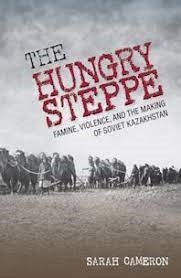
Sarah Cameron
The Hungry Steppe: Famine, Violence, and the Making of Soviet Kazakhstan
Ithaca, N.Y.: Cornell University Press, 2018

See also: What is the Metaphysics of the Left & Nietzsche and the Psychology of the Left

Strikingly ignorant, malignantly cruel, with no concept of history, with but an elementary knowledge of social production, with little productive capacity, with no constructive ability, [Bolshevism] would be ludicrous were it not for the sentimental, weak-minded followers who, steeped in idealism and fanaticism, really believe in a Bolshevik Utopia, where free milk will run in the water mains and life may be supported without toil, where knowledge may be gained without effort, and where the established truths of the centuries will be overthrown by soviet resolutions. — Ole Hanson, Americanism versus Bolshevism (1924)
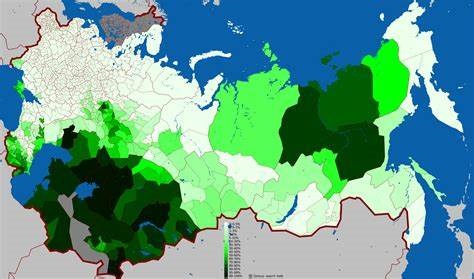
Turkic languages in the Russian Empire during the time of Tsar Alexander II.

The Kazakhs and the Kazakh Soviet Socialist Republic

In the early 1930s, while the multicultural Soviet Empire was starving the Ukrainians, a similar famine was ongoing in Kazakhstan. The famine’s cause was the Communist Party of the Soviet Union’s simplistic and wrongheaded views on land use, economics, and society, combined with their hatred for a nation that was independent of their multicultural experiment. In the end, nearly 1.5 million Kazakhs — a quarter of the population — died. Other deaths included non-Kazaks who had been deported to gulags in Central Asia.

The Russian Empire conquered Turkistan — the area comprising Kazakhstan, Uzbekistan, Tajikistan, Turkmenistan, and Kyrgyzstan — starting in 1865. Russian settlers began to develop the area shortly thereafter. The Russian experience in Turkistan is very similar to the American settlement of the Great Plains states except that in the Russian case, the Turkistan natives — a mixture of white and Asian Turkic peoples, as well as Indo-Europeans Tajiks — didn’t vanish into small, reservation-bound groups as the American Indians did. Nor did the natives carry out massacres of the Russians, as the Indians did to American whites.

Part of the reason for this was that the people of Central Asia were fully connected to the outside world. They’d been living along the Silk Road and the nomadic highway of the Eurasian Steppe since time immemorial. They were also nomadic pastoralists rather than hunter-gatherers. Further is that during the initial stages of Russian settlement, the Russians did not settle in the pasturelands which the Kazakhs used.
You can buy Spencer J. Quinn’s Solzhenitsyn and the Right here.

When the Bolsheviks took power in the former Russian Empire, which became the Soviet Union, they set about implementing their ideology. In Ukraine and Kazakhstan, the results were disastrous — and deliberately so.

The Kazakh people’s origins go back to a political split during the late stages of the Mongol Empire. As it was fracturing, a group of Turkic people who rejected the Uzbek Khan migrated to what is now Kazakhstan, intermarrying and forming a nation united by blood ties. They trace their ancestry to a possibly mythical ancestor named Alash and his three sons: Bekarys, Akarys, and Zhanarys. The sons led their own hordes, which included clans consisting of subgroupings called auls. Aristocratic Kazakhs are called “white bones” and commoners are called “black bones.” There are also Kazaks who claim descent from Genghis Khan as well as those who claim descent from the Prophet Muhammad. In traditional Kazakh society the “wealthy” were those with ordinary ambitions who made up the mid-level clergy and leadership, and were known as bais. When the Communists came to power in Kazakhstan, they claimed that the bais were exploiters. It became a term akin to kulak in Ukraine.

The Russian settlement of Kazakhstan went well enough in the northern, less arid part of the region. In the arid steppes, however, settled agriculture was difficult to establish. The problem was the climate. Kazakhstan has a continental climate which roughly trisects the region. In the northern fringe the climate is Dfb, or humid continental, akin to the eastern parts of the Dakotas. In the central zone it is Bsk: cold and semi-arid, akin to the climate of the eastern portions of Montana, Wyoming, and Colorado. In the south there is a cold desert. The Russian settlers therefore prospered in the north.

The boundaries of the climate zones shift yearly, depending on the winter westerlies from the Atlantic, and change as a result of the North Atlantic Oscillation, which is the interplay of high- and low-pressure atmospheric zones centered on Iceland and the Azores. These zones send rain east towards Eurasia. By the time the moisture reaches Kazakhstan, most of the rain has already fallen in Europe. The Kazakh way of life was adapted to this climate, however, as the Kazakhs moved their flocks and herds to the areas with the best grass on a seasonal basis.
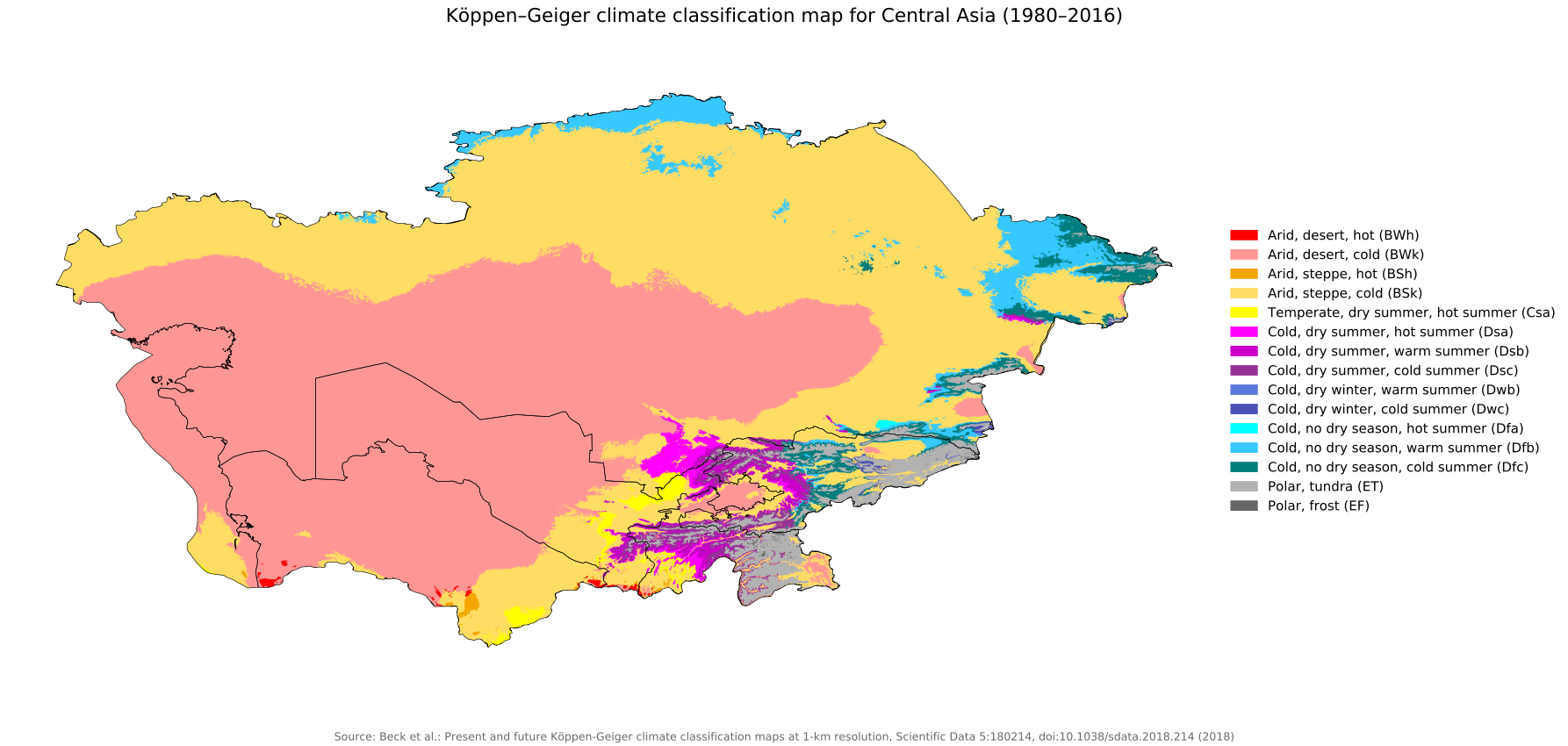
The climate in Central Asia.

Communist ideology held that all peoples would become Communist via stages, one of which was establishing a nation in those areas where there wasn’t one already. In keeping with this doctrine, the Soviet government created what became the Kazakh Soviet Socialist Republic in 1920 and staffed it with Bolshevik true believers. The most critical of them was Filipp Goloshchekin, a Jew who became the leader of the Kazakh SSR in 1925.

The leaders of the Soviet Union tended to be non-Russians who were alienated from the Russian ethnos. They were highly-educated midwits who tended towards criminality. Goloshchekin demonstrated these traits, having been responsible for murdering Tsar Alexander II and his family.

The Soviets’ goal in Kazakhstan was to use the example of the American settlement of the Great Plains to create a meatpacking industry which would rival that of Chicago.
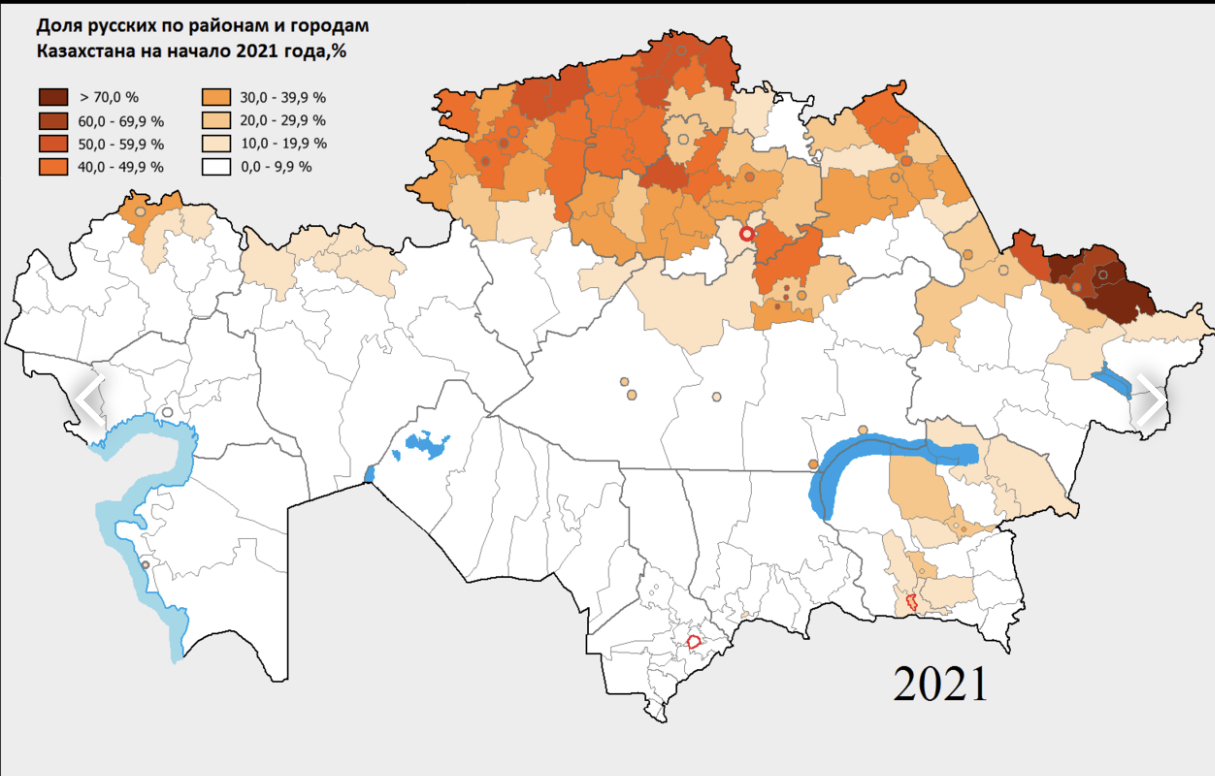
The location of Russians in Kazakhstan. When Kazakhstan was part of the USSR, the number of Russians increased until they became a majority. After the fall of the Soviet Union, the Kazakhs reversed much of their own Great Replacement.

Misreading the American settlement of the Great Plains

The first problem with this plan was that the Communists were misreading the American situation. They ignored warnings that had been issued by Tsarist officials about the problems involved in grain production on the arid Eurasian Steppe. The Americans had settled the Great Plains more carefully, although they, too, had problems when settlers plowed up the grasslands while thinking they could change the Plains’ climate to suit their ways in the early twentieth century.

Many American explorers of the semi-arid plains remarked upon the difficulty of settling a cold, semi-arid climate zone. Captain William Ludlow led an expedition to the Black Hills and the western Dakota Territory, an area similar to Central Asia, in 1874. As he wrote in his report:

Water is scarce, and almost invariably alkaline, even in running streams, from the presence of a salt which forms a component of the clayey soil. The rivers are small streams of great comparative length, which, from absorption and evaporation, shrink in their downward course, and are frequently dry at their mouths while flowing freely a hundred or two miles above. The seasons of spring and fall are exceedingly brief. The winter snows are rapidly disposed of in the spring and rain-falls are unfrequent until cold weather in the fall, which soon again merges into winter. By July 1 the grass is fully grown, and in another month has turned dry and yellow, cured to hay upon the ground and readily burned.

The Americans also had private enterprises which could issue stock to raise the necessary capital to crisscross the area with railroads. Any citizen was free to use the railroads however they wanted. After the Civil War, Texas cowboys moved enormous herds of cattle north and across the plains to Kansas, where they would be shipped to the meatpacking centers in Chicago. The cowboys were free to spend or save their wages as they saw fit, and while there were cattle rustlers and brigands attempting to steal their cattle, these men were not employed by the United States government.

The homesteaders who settled the prairie were free to adopt new technologies, such as windmills to bring up groundwater. Families had access to loans and capital to develop their farms. The American pioneers plowed up the land, however, and when drought came – coincidentally, at the same time as the famine in Kazakhstan — they were free to leave. Many headed to California, turning Los Angeles into an extension of Middle America. Those who stayed changed the ways in which they used the land to better conform to the environment.

American socialist enterprises on the Great Plains, such as they were, likewise conformed to existing conditions. The New Deal Leftists didn’t resettle Americans in collective farms; they built dams and roads. Water rights were sorted out through a lengthy process of court cases, and the resulting body of laws came to be known collectively as riparian water rights. This allowed water to be used effectively.

Those who settled the American plains were families of the same racial stock as the railroad owners and the meatpacking magnates. They understood each other. Leftist critiques of the “capitalists” in the US were akin to William Jennings Bryan’s statement that

[t]he man who is employed for wages is as much a businessman as his employer. The attorney in a country town is as much a businessman as the corporation counsel in a great metropolis. The merchant at the crossroads store is as much a businessman as the merchant of New York. The farmer who goes forth in the morning and toils all day, begins in the spring and toils all summer, and by the application of brain and muscle to the natural resources of this country creates wealth, is as much a businessman as the man who goes upon the Board of Trade and bets upon the price of grain. The miners who go 1,000 feet into the earth or climb 2,000 feet upon the cliffs and bring forth from their hiding places the precious metals to be poured in the channels of trade are as much businessmen as the few financial magnates who in a backroom corner the money of the world.

In other words, the common people didn’t want to overthrow the system, but rather bring it into alignment with their interests. William Jennings Bryan’s populism was of an entirely different bent than that of the Communists.
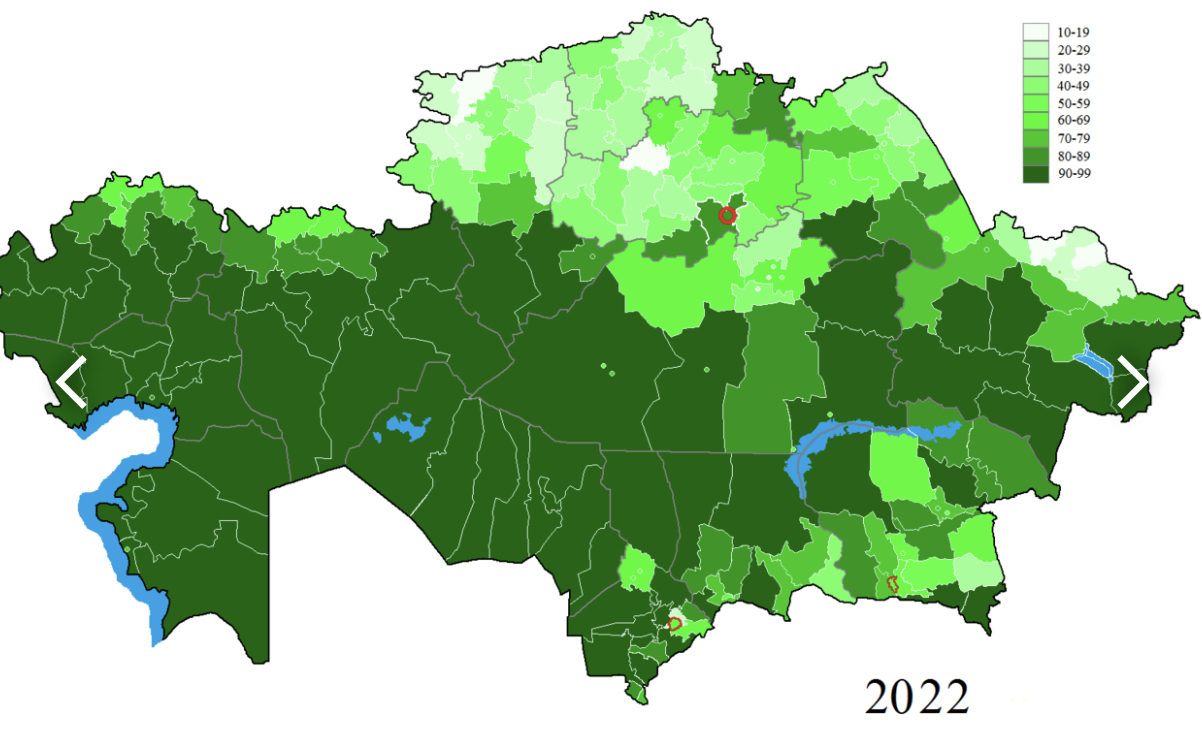
The location of ethnic Kazakhs in Kazakhstan. They still reside on the Eurasian Steppe.

The Famine

In contrast, the Soviet leaders were entirely hostile to the Kazakhs. They didn’t understand Kazakh society, and they imposed their ideology onto a people who had no history of being an “industrial proletariat.” They also did not take environmental factors into account as the Americans were doing, ruling by decree and applying Soviet methods that were completely unsuited to the conditions. They collectivized the Kazakhs in the same way as the Ukrainians, with some differences. In the same way that the kulaks were allegedly the problem in Ukraine, the Kazakh bais were blamed for Kazakhstan’s problems.

The Communist government gave commissions to pro-Communist Kazakhs to dispossess the bai and seize the Kazakh nomads’ livestock, which were then taken to railheads and kept in poor conditions where disease was rampant. Many of the animals died, leaving corpses that led to further unsanitary conditions and further increased the death rate. The Kazakhs themselves were herded into collective farms where there was no food or the possibility of getting any. Starvation naturally followed. The crisis was further compounded by the fact that deportees were being sent to Kazakhstan from other parts of the USSR, and upon arrival found themselves without food. As the famine deepened, the Kazakhs were forced to resort to theft and murder, and in some cases even cannibalism.
You can buy Greg Johnson’s Here’s the Thing here.

The attack upon the bai damaged Kazakh society in many ways. They had been part of Kazakhstan’s traditional social structure for centuries, so their removal disrupted everything. The links which had kept the Kazakh body and soul together were severed, and even their marriage customs were overturned. Many Kazakhs ended up joining the Soviets and preyed upon their ethnic kin. Some tried to flee to the cities, such as they were, but they had no urban job skills.

Many Kazakhs fled to western China, where they had relatives and the climate was similar, panicking the Soviet government. Anti-Communist forces had set up bases in the region, and the Chinese government had no ability to control its side of the border, so the Soviets established a security force to prevent the Kazakhs from leaving, although it wasn’t very effective in stopping a nomadic people who were highly skilled at travelling across the vast grassland.

The famine in Kazakhstan ended around the same time that the one in Ukraine did, and as with Ukraine, it is not known why Stalin suddenly changed his policies at that particular time. It could be that he recognized that Kazakhstan’s economy had completely collapsed and that the disaster could end up threatening his regime. In any event he replaced Goloshchekin with Levon Mirzoyan, who took steps to end the crisis, including by allowing the Kazakhs to return to the steppes with their livestock, offering inoculations, and providing food. This process was aided with abundant rains in 1934, which led to a strengthening of the grasslands and prevented crop failures.

Both Goloshchekin and Mirzoyan were later executed on Stalin’s orders during the various purges of Communist officials. Kazakh society, for its part, remained badly hurt. The Kazakhs’ nomadic lifestyle never fully returned after the famine. Instead, auls and other sub-groups took over entire collective farms, leading to the return of a reduced form of pastoralism that incorporated tractors and other modern equipment. It wasn’t until 1960 that livestock numbers in Kazakhstan returned to their pre-famine levels. The camel populations likewise recovered, although not to the same number as before.

The Kazakhs who survived were entirely dependent upon the Soviet state. They had not been conscripted into the Russian military in the First World War, but served in the Red Army in great numbers during the Second. Kazaks remained a minority in their own country throughout the Soviet era and only recovered majority status after the collapse of the Evil Empire. The famine is not remembered in Kazakhstan in the same way as Ukraine’s famine is in that country, however; today it is largely forgotten.

It is no surprise that the Soviet Union and its unworkable system collapsed in 1991. What is more puzzling is how the Soviet experiment remained viable for so long. It has been amazing to see the return of Marxist and Communist ideology in so many areas of American life in recent years. It should be remembered that Communism leads to disaster everywhere it is applied — whether in industrialized nations, or on the Eurasian Steppe.

*  *  *

Counter-Currents has extended special privileges to those who donate at least $10/month or $120/year.

  1. Donors will have immediate access to all Counter-Currents posts. Everyone else will find that one post a day, five posts a week will be behind a “paywall” and will be available to the general public after 30 days. Naturally, we do not grant permission to other websites to repost paywall content before 30 days have passed.
  2. Paywall member comments will appear immediately instead of waiting in a moderation queue. (People who abuse this privilege will lose it.)
  3. Paywall members have the option of editing their comments.
  4. Paywall members get an Badge badge on their comments.
  5. Paywall members can “like” comments.
  6. Paywall members can “commission” a yearly article from Counter-Currents. Just send a question that you’d like to have discussed to [email protected]. (Obviously, the topics must be suitable to Counter-Currents and its broader project, as well as the interests and expertise of our writers.)

To get full access to all content behind the paywall, please visit our redesigned Paywall page. 

Famine in 1930s Kazakhstan: The Forgotten Holodomor

Famine%20in%201930s%20Kazakhstan%3A%0AThe%20Forgotten%20Holodomor%0A

Share

  • Gab

Enjoyed this article?

Be the first to leave a tip in the jar!

Instant Echeck GreenPay™

Related

  • Paul Krugman: Closet Bolshevik

  • The Crisis of Chinese Technology Thieves

  • The Robot Hotdog Stand

  • Berlin: City of Stones

  • How Cold War Two Came About

  • The Cruelty of Kindness

  • Lothrop Stoddard’s The Revolt Against Civilization

  • Lewis Strauss Did Nothing Wrong:

Tags

American socialismBolshevismbook reviewsCentral AsiaCommunismfaminefamine in KazakhstanFilipp GoloshchekinJoseph StalinKazakh Soviet Socialist RepublicKazakhstanLevon MirzoyanMorris van de CampnomadismNorth American prairieRussian EmpireRussians in KazakhstanSarah Cameronthe Eurasian Steppethe Great Plainsthe HolodomorThe Hungry Steppethe Kazakhsthe Mongol Empirethe New Dealthe plainsthe Soviet Unionthe Steppe peoplesTurkic peoplesTurkistanUkraineWilliam Jennings BryanWilliam Ludlow

1 comment

  1. Bobby says:
    August 31, 2023 at 7:54 am

    This is fascinating Morris. Thank you. I had no idea.

    There are now many Kazak’s who live in New York City. I have gotten to know some of them and they are a very sturdy, robust, and intelligent people. I will share your piece with them. Their favorite food is horse. I’ve had some. It taste like brisket.

    Not only history such as this, but we must find a way to bring these atrocities, that were carried out by nothing more than Jewish gangsters, into the American education system.

    A very hard task, I know, being that the American education system is run by… Jewish gangsters.

    1
    1
    • Morris van de Camp

Comments are closed.

If you have a Subscriber access,
simply login first to see your comment auto-approved.

Note on comments privacy & moderation

Your email is never published nor shared.

Comments are moderated. If you don't see your comment, please be patient. If approved, it will appear here soon. Do not post your comment a second time.

Upcoming podcasts
  • Rob Rundo on Counter-Currents Radio

    Rob Rundo on Counter-Currents Radio

    Counter-Currents Radio

    Sat, Jun 13th — 3 pm EST / 9 pm CET
  • Daniel Tyrie on Counter-Currents Radio

    Daniel Tyrie on Counter-Currents Radio

    Counter-Currents Radio

    Sat, Jun 20th — 3 pm EST / 9 pm CET

Writers of May

(2 votes) Morris van de Camp David M. Zsutty Derek Stark Jayant Bhandari Greg Johnson

Articles of May

The Lunch Wars by David M. Zsutty Heidegger on Nietzsche, Part One by Collin Cleary 2 votes
    • The Union Jackal, June 2026

      Mark Gullick

      10

    • The Inferiority Behind Immigrant Superiority

      Jayant Bhandari

      9

    • Counter-Currents Radio Podcast No. 690
      Greg Johnson & David Zsutty Discuss Current Things: AI, Henry Nowak, the Iran Crisis, & More

      Counter-Currents Radio

      2

    • Collin Cleary: What Rome Means to Me

      Collin Cleary

      4

    • Paul Krugman: Closet Bolshevik

      Spencer J. Quinn

      13

    • Fugue of Ideas:
      Ibram X. Kendi’s Chain of Ideas

      Greg Johnson

      17

    • Based Blacks

      Lipton Matthews

      8

    • Black Intellectual Fatigue

      Derek Stark

      35

    • Why White Advocates Should Avoid “Based Blacks”

      Dani Vypont

      21

    • Nietzsche & Race

      Mark Gullick

    • Editor’s Update
      Rob Rundo Rescheduled to Next Week on Counter-Currents Radio;
      Tonight Greg Johnson & David Zsutty Answer Your Questions;
      Fundraiser Update & a New $20,000 Matching Grant

      Greg Johnson

    • The Counter-Currents 2026 Fundraiser
      Lifetime Subscriber Welcome Packages Extended

      Greg Johnson

    • Nationalism This Week
      Who’s Looking Back?

      Greg Johnson

      29

    • China’s Threat to American Security:
      Food, Farmland, Foreign Control, & Energy Policy

      Lipton Matthews

      5

    • The Bitter End of Western Metaphysics:
      Heidegger on Nietzsche, Part Two

      Collin Cleary

      16

    • The Killing of Henry Nowak

      Mark Gullick

      38

    • The Crisis of Chinese Technology Thieves

      Morris van de Camp

      1

    • The Strange World of Gender Bender Fiction:
      & What This Genre Tells Us About Autosexuality

      Dani Vypont

      3

    • Watching the Watchers:
      The Dark Triad Question

      David M. Zsutty

      14

    • The Remigration Movement Solidifies

      F. Roger Devlin

      1

    • Casting Aspersions:
      The Fatal Consequences of Race-Swapped Casting, From Helen of Troy to Henry of Southampton

      Steven Tucker

      20

    • The Murder of Henry Nowak

      Millennial Woes

      23

    • Don’t Forget to Vote in Our Writer & Article of the Month Poll

      Greg Johnson

    • The Robot Hotdog Stand

      Greg Johnson

      37

    • Laughing Our Way to Victory

      Dave Chambers

      7

    • The Zodiac Killer

      Mark Gullick

      11

    • Jared Taylor: What Rome Means to Me

      Jared Taylor

      1

    • An Interview with Endeavour:
      My Way of Life Is an Adventure!

      Ondrej Mann

      6

    • José Pedro Zúquete’s The Identitarians

      Greg Johnson

      3

    • Editor’s Update
      Fundraiser Update & How to Watch the Remigration Summit

      Greg Johnson

      5

    • The Bitter End of Western Metaphysics:
      Heidegger on Nietzsche, Part One

      Collin Cleary

      11

    • Berlin: City of Stones

      Spencer J. Quinn

      6

    • True Folk-Horror Is Horror of Your Own Folk:
      Mark Gatiss vs the Brexit Blind Dead  

      Steven Tucker

      4

    • Counter-Currents Radio Podcast No. 689
      Thomas Massie, the America 2050 Bust, the Need for Whites to Divest from America, the AI Economic Apocalypse, & Pro-White Project Pitches to Billionaires

      Counter-Currents Radio

      7

    • Nationalism This Week
      Remigration is Inevitable, Part 3

      Greg Johnson

      27

    • Why Billionaires Should Fund White Identity Politics

      Lipton Matthews

      8

    • How Cold War Two Came About

      Morris van de Camp

      5

    • Now Available for Pre-Order at a Special Price!
      Greg Johnson’s The Philosopher Is In

      Greg Johnson

    • David Zsutty’s Elevator Pitch to a Billionaire

      David M. Zsutty

      1

    • Headbanging Lite

      Mark Gullick

      5

    • White Advocacy Past and Present

      Peter Bradley

      13

    • The Lunch Wars

      David M. Zsutty

      47

    • The Russians are Coming/The Russians are Coming

      Steven Clark

      1

    • Peak Fatigue in Fort Wayne

      Gabriel Anderson

      24

    • Keith Woods’ Elevator Pitch to a Billionaire

      Keith Woods

    • The Cruelty of Kindness

      Morris van de Camp

      9

    • Predation Wearing the Mask of Civilization

      Jayant Bhandari

      13

    • The Mandalorian & Grogu

      Trevor Lynch

      24

    • Editor’s Update
      Fundraiser Update & a New $20,000 Matching Grant
      Greg Johnson & David Zsutty Discuss Thomas Massie on Counter-Currents Radio

      Greg Johnson

      2

    • How the Jews Defeated Thomas Massie—& Themselves

      David M. Zsutty

      27

    • YT

      The Union Jackal, June 2026

      One of the links said JDVance was “very good friends” with this Lammy creature. I hope that isn’t...

    • Zarathustra

      The Inferiority Behind Immigrant Superiority

      I abhor Jews, but geography cannot be invalidated. Professor Diamond doesn't mention or even allude...

    • TiredofBoomers

      Black Intellectual Fatigue

      I am Mr. Tired of Boomers, not Miss. Regarding "Scott," I have no idea. I wasn't involved in that...

    • Will Williams

      Black Intellectual Fatigue

      Bigfoot: June 10, 2026  [Leftkowitz] is a Jew… an academic will sometimes point out the lies of...

    • YT

      Why White Advocates Should Avoid “Based Blacks”

      I call total bs. I agree there are a lot of goofy “conservatives” who’ve bought into racial...

    • Flel

      Fugue of Ideas: Ibram X. Kendi’s Chain of Ideas

      *phonebook

    • Flel

      Fugue of Ideas: Ibram X. Kendi’s Chain of Ideas

      Fine review. I’d rather read the phone in pig Latin than read a page from this pompous ass. White...

    • New Flyer

      The Inferiority Behind Immigrant Superiority

      It's the same inferiority complex of the weakling who believes he's the hard man and has to keep...

    • Glide Ratio 0:1

      The Inferiority Behind Immigrant Superiority

      Dancing around a fire half naked is not culture. Giant buoyancy labs, space programs, colossal...

    • WayDown

      The Inferiority Behind Immigrant Superiority

      The rationale in that book doesn't make sense to me. It basically says black are interchangeable...

    • WayDown

      The Union Jackal, June 2026

      I think the Makerfield byelection is overblown. If Labour wins then there is a good chance Burnham...

    • Malaparte

      Heidegger on Nietzsche, Part Two

      Off topic, but I'm curious if Cleary is familiar with Emanuele Severino?  Bloomsbury has recently...

    • Derek Stark

      The Inferiority Behind Immigrant Superiority

      If you wish to follow the Jew view that there is nothing unique about whites that led them to...

    • E_Perez

      The Union Jackal, June 2026

      Being defeated is difficult for anybody, but nobody could foresee that the British would be treated...

    • Anonymous

      The Inferiority Behind Immigrant Superiority

      One phenomenon I observed on the internet is the phrase 'Proud Indian' proclaimed by many Indians on...

    • Zarathustra

      The Inferiority Behind Immigrant Superiority

      I recently read "Guns, Germs, and Steel" and found its rationale rather convincing.

    • Stronza

      Based Blacks

      Re the killing of Charlie Kirk.  Maybe it's some third party, neither Israel nor Robinson.  Maybe...

    • Will Williams

      Dispatches from the Fallout Shelter

      Gunnar: April 22,2026 ...A ten-day ceasefire was finally declared between Israel and Lebanon....

    • Jank

      Counter-Currents Radio Podcast No. 690

      "I want 40% of the FBI hunting down antifa" Bad News. 40% of the FBI is antifa.

    • John

      Collin Cleary: What Rome Means to Me

      Christianity is universal, unlike Judaism which is racial. What good is a religion if it does not...

    • Earth Day Special

      John Morgan

      12

    • A Robertson Roundup
      Remembering Wilmot Robertson
      (April 16, 1915 – July 8, 2005)

      Margot Metroland

      13

    • The Paranoid Style in White Nationalism

      Greg Johnson

      30

    • Join the Dance!

      Andrew Hamilton

      1

    • We Can’t Save the Earth Without Reducing African Birth Rates

      James Dunphy

      36

    • “I’m Not a Conspiracy Theorist, but . . .”:
      Jeffrey Epstein’s Death Gives New Life to “Conspiracy Theories”

      Greg Johnson

      22

    • Sylvia Plath: Stasis in Darkness

      Vic Olvir

      17

    • Vanguardism, Vantardism, & Mainstreaming

      Greg Johnson

      80

    • Aviation, Geography, & Race

      Charles Lindbergh

      3

    • Some Thoughts on Yule

      Collin Cleary

      4

    • Living in Truth:
      A Yuletide Homily

      Jef Costello

      7

    • John Kennedy Toole’s A Confederacy of Dunces

      Greg Johnson

      20

    • On Aleksandr Solzhenitsyn’s Warning to the West

      Spencer J. Quinn

      7

    • Elitism, British Modernism, & Wyndham Lewis

      Jonathan Bowden

      6

    • Philip K. Dick’s Do Androids Dream of Electric Sheep? as Anti-Semitic/Christian-Gnostic Allegory

      Greg Johnson

      20

    • “Conspiracy Theory” or Conspiracy?

      Andrew Hamilton

      21

    • Remembering H. P. Lovecraft
      (August 20, 1890–March 15, 1937)

      Greg Johnson

      3

    • Who Are We?
      Nordics, Aryans, & Whites

      Greg Johnson

      71

    • Remembering William Gayley Simpson
      (July 23, 1892–December 31, 1990)
      A Pleasant Afternoon with Harriet & Bill Simpson

      Margot Metroland

      18

    • Here are the Young Men
      Remembering Ian Curtis
      (July 15, 1956–May 18, 1980)

      Mark Gullick

      18

    • Percy Grainger
      Artist of the Right

      Alex Graham

      7

    • Remembering Revilo Oliver
      (July 7, 1908–August 20, 1994)

      Greg Johnson

      18

    • The Meaning of July 4th for the White Man

      Gregory Hood

      13

    • The Front National’s Evolution

      Bruno Mégret

    • Merwin K. Hart
      Forgotten American Hero & Man of the Right

      Morris van de Camp

      10

    • George Orwell’s Nineteen Eighty-Four

      Jonathan Bowden

      8

    • Carleton S. Coon
      Scientist & Reluctant White Advocate

      Morris van de Camp

      3

    • The Kwanzaa Absurdity Will Be Dwarfed by Juneteenth

      Robert Hampton

      10

    • Stravinsky

      Alex Graham

      7

    • Like the Roman:
      Remembering Enoch Powell (1912-1998)

      Mark Gullick

      23

    • Neo-Fascism in Film
      Part 5

      Karel Veliky

      15

    • The Game of Tarot

      Mark Gullick

      2

    • Institutions Cannot Be Transplanted

      Jayant Bhandari

      5

    • Jonathan Bowden’s Deliverance
      Part 5

      Jonathan Bowden

    • Crosstown Traffic:
      Jimi Hendrix & The Post-War Rock ‘N’ Roll Revolution

      Mark Gullick

      1

    • Slaves from the North:
      Finns & Karelians in the East European Slave Trade, 900–1600

      Lipton Matthews

      14

    • Neo-Fascism in Film
      Part 4

      Karel Veliky

      2

    • David Lean’s A Passage to India

      Spencer J. Quinn

      1

    • Elites are Essential to Development

      Lipton Matthews

      7

    • Jonathan Bowden’s Deliverance
      Part 4

      Jonathan Bowden

    • Neo-Fascism in Film
      Part 3

      Karel Veliky

      6

    • E. M. Forster’s A Passage to India & the Indian Mentality

      Spencer J. Quinn

      25

    • Jonathan Bowden’s Deliverance
      Part 3

      Jonathan Bowden

    • The Rest Is Silence
      Heidegger’s Quietism

      Mark Gullick

      2

    • Dispelling the Historical Fallacy of Indian Nationalism

      Lipton Matthews

      8

    • Neo-Fascism in Film
      Part 2

      Karel Veliky

      8

    • Jonathan Bowden’s Deliverance
      Part 2

      Jonathan Bowden

    • Life of a Klansman

      Mark Gullick

      8

    • Jonathan Bowden’s Deliverance, Part 1

      Jonathan Bowden

    • Decolonial Ideas are Holding Back Developing Countries

      Lipton Matthews

      8

    • Neo-fascism in Film, Part 1

      Karel Veliky

      21

    • Jonathan Bowden’s Onslaught, Part 8
      Divigations on Decadence

      Jonathan Bowden

    • Jonathan Bowden’s Onslaught, Part 7
      Intrigues in the National Front

      Jonathan Bowden

      1

    • Rotten to the Core

      Mark Gullick

      8

    • Strauss on Husserl’s “Philosophy as Rigorous Science”

      Greg Johnson

    • Jonathan Bowden’s Onslaught, Part 6
      Francis Bacon & Right-Wing Nihilism

      Jonathan Bowden

    • London After (& Before) Midnight:
      Aleister Crowley, The Landlord’s Worst Nightmare

      James J. O'Meara

      2

    • Jonathan Bowden’s Onslaught, Part 5
      The Post-War British Far Right

      Jonathan Bowden

    • No Rules: Rollerball

      Mark Gullick

      4

    • Jonathan Bowden’s Onslaught, Part 3
      Brett Easton Ellis’ American Psycho

      Jonathan Bowden

    • András László
    • Derek Hawthorne
    • Beau Albrecht
    • Alain de Benoist
    • Kerry Bolton
    • Jonathan Bowden
    • Collin Cleary
    • Jef Costello
    • Savitri Devi
    • Julius Evola
    • Jim Goad
    • Gregory Hood
    • Juleigh Howard-Hobson
    • Greg Johnson
    • Charles Krafft
    • Anthony M. Ludovici
    • Trevor Lynch
    • H. L. Mencken
    • J. A. Nicholl
    • James J. O’Meara
    • Christopher Pankhurst
    • Tito Perdue
    • Michael Polignano
    • Spencer J. Quinn
    • Fenek Solère
    • Irmin Vinson
    • Leo Yankevich
    • Francis Parker Yockey
    • Multiple authors
  • Editor-in-Chief

    • Greg Johnson, Ph.D.

    Featured Writers

    • Beau Albrecht
    • Gunnar Alfredsson
    • Collin Cleary, Ph.D.
    • Jef Costello
    • Morris V. de Camp
    • F. Roger Devlin, Ph.D.
    • Stephen Paul Foster, Ph.D.
    • Jim Goad
    • Alex Graham
    • Mark Gullick, Ph.D.
    • Greg Johnson, Ph.D.
    • Travis LeBlanc
    • Trevor Lynch
    • Margot Metroland
    • James J. O’Meara
    • Angelo Plume
    • Spencer J. Quinn
    • Fred Reed
    • Clarissa Schnabel
    • Michael Walker
    • David M. Zsutty

    Frequent Writers

    • Asier Abadroa
    • Aquilonius
    • Alain de Benoist
    • Kerry Bolton, Ph.D.
    • Dave Chambers
    • Steven Clark
    • James Dunphy
    • Endeavour
    • Richard Houck
    • Jason Kessler
    • Titus Livius
    • Ondrej Mann
    • Lipton Matthews
    • Mark Mazari
    • John Morgan
    • Jaroslav Ostrogniew
    • Kathryn S.
    • Christian Secor
    • Anne Wilson Smith
    • Thomas Steuben
    • William De Vere
    • Kenneth Vinther
    • Max West

    Classic Authors

    • Maurice Bardèche
    • Jonathan Bowden
    • Julius Evola
    • Guillaume Faye
    • Ernst Jünger
    • Kevin MacDonald, Ph.D.
    • D. H. Lawrence
    • Charles Lindbergh
    • Jack London
    • H. P. Lovecraft
    • Anthony M. Ludovici
    • Sir Oswald Mosley
    • National Vanguard
    • Friedrich Nietzsche
    • Revilo Oliver
    • William Pierce
    • Ezra Pound
    • Saint-Loup
    • Savitri Devi
    • Carl Schmitt
    • Miguel Serrano
    • Oswald Spengler
    • P. R. Stephensen
    • Jean Thiriart
    • John Tyndall
    • Dominique Venner
    • Leo Yankevich
    • Francis Parker Yockey

    Other Authors

    • Howe Abbott-Hiss
    • Michael Bell
    • Giles Corey
    • Jack Donovan
    • Richardo Duchesne, Ph.D.
    • Emile Durand
    • Guillaume Durocher
    • Mark Dyal
    • Tom Goodroch
    • Andrew Hamilton
    • Robert Hampton
    • Huntley Haverstock
    • Derek Hawthorne
    • Gregory Hood
    • Juleigh Howard-Hobson
    • Alexander Jacob
    • Ruuben Kaalep
    • Tobias Langdon
    • Julian Langness
    • Patrick Le Brun
    • G A Malvicini
    • John Michael McCloughlin
    • Millennial Woes
    • Michael O’Meara
    • Christopher Pankhurst
    • Michael Polignano
    • J. J. Przybylski
    • Quintilian
    • Edouard Rix
    • C. B. Robertson
    • C. F. Robinson
    • Herve Ryssen
    • Alan Smithee
    • Fenek Solere
    • Ann Sterzinger
    • Robert Steuckers
    • Tomislav Sunic
    • Donald Thoresen
    • Marian Van Court
    • Irmin Vinson
    • Book Reviews
    • Movie Reviews
    • TV Reviews
    • Music Reviews
    • Art Criticism
    • Graphic Novels & Comics
    • Video Game Reviews
    • Fiction
    • Poems
    • Interviews
    • Videos
    • English Translations
    • Other Languages
      • Arabic
      • Bulgarian
      • Croatian
      • Czech
      • Danish
      • Dutch
      • Estonian
      • Finnish
      • French
      • German
      • Greek
      • Hungarian
      • Italian
      • Lithuanian
      • Norwegian
      • Polish
      • Portuguese
      • Romanian
      • Russian
      • Slovak
      • Spanish
      • Swedish
      • Ukrainian
    • Commemorations
    • Why We Write
  • Archives
  • Top 100 Commenters
  • The Looney Bin
Sponsored Links
Europa.com Above Time Coffee Antelope Hill Publishing Paul Waggener IHR-Store Spencer J. Quinn American Renaissance Jim Goad The Occidental Observer
Donate Now Mailing list
Books for sale
  • The Philosopher Is In
  • Sexual Utopia in Power (Expanded Edition)
  • In Defense of Prejudice
  • Loving Our Own
  • Tyranny & Wisdom
  • The Populist Moment
  • Is America Doomed?
  • To all books
Copyright © 2026 Counter-Currents Publishing, Ltd.

Paywall Access


Please enter your email address.

Lost your password?

Edit your comment

Writer & Article of the Month May 2026

Voting for this month has concluded. Here are the final results!

Top Writers

  • #1 Morris van de Camp 2 votes
  • #2 David M. Zsutty 2 votes
  • #3 Derek Stark 2 votes
  • #4 Jayant Bhandari 2 votes
  • #5 Greg Johnson 2 votes
  • #6 Jared Taylor 1 vote
  • #7 Collin Cleary 1 vote
  • #8 Spencer J. Quinn 1 vote
  • #9 Mark Gullick 1 vote
  • #10 Lipton Matthews 1 vote
  • #11 Keith Woods 1 vote
  • #12 Steven Tucker 1 vote

Top Articles

  • #1 The Lunch Wars 2 votes
  • #2 Heidegger on Nietzsche, Part One 2 votes
  • #3 Predation Wearing the Mask of Civilization 1 vote
  • #4 Peak Fatigue in Fort Wayne 1 vote
  • #5 Keith Wood's Elevator Pitch to a Billionaire 1 vote
  • #6 Do You Want to Play a Game? 1 vote
  • #7 Why Billionaires Should Fund White Identity Politics 1 vote
  • #8 The 1970s: The Golden Age of Hijacking 1 vote
  • #9 True Folk-Horror Is Horror of Your Own Folk 1 vote
  • #10 Finding Atlantis Part 4 1 vote
  • #11 Berlin: City of Stones 1 vote
  • #12 The Ghost of the Confederacy 1 vote
  • #13 Lothrop Stoddard’s The Revolt Against Civilization 1 vote
  • #14 Could Fascism Work? 1 vote
  • #15 Jared Taylor's Elevator Pitch to a Billionaire 1 vote

Total votes cast: 17