 2,498 word
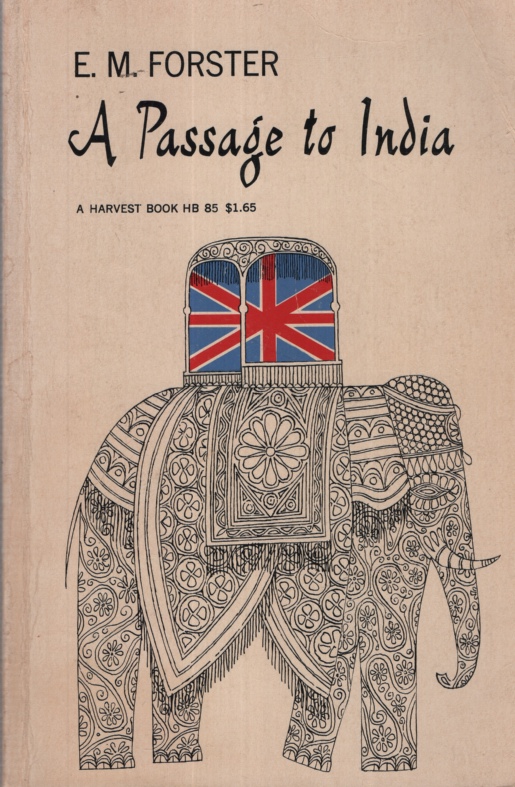
There is quite a bit to recommend about E. M. Forster’s 1924 novel A Passage to India despite the fact that as a novel it is not very good. It keeps a lazy, middling pace throughout and seems to rely upon its post-First World War readership’s hunger for detail about everything Indian — from the landscape to the wildlife to the people and customs — for much of its appeal. If you’re already familiar with most of this — or if you just don’t care — then the plot and characters will make up for it, but just barely. It’s as if Forster found it distasteful to produce anything as vulgar as suspense — or, Heaven forfend, a cliffhanger.
While attempting to tell a story about an interracial friendship amid the latter days of the British Raj, Forster spends much of his time mapping out the avenues and alleyways of the Indian mind, which are as colorful and animated as they are unpredictable and unkempt. Meanwhile, he gives short shrift to the uptight and bigoted English colonizers. Yes, Forster somewhat makes up for this shortcoming toward the end, if you are willing to slog through the novel that far. But in my opinion it’s too little, too late to save A Passage to India from being at heart an appeal against colonialism, almost to the extent that Harper Lee’s To Kill a Mockingbird was an appeal against segregation and Alan Paton’s Cry the Beloved Country was an appeal against Apartheid.
In terms of words-per-page Dr. Aziz may not be the story’s primary character, but he seems to be where Forster’s greatest interests lie. Aziz is a widower who gives the majority of his salary to his children, and might still carry a flame for his deceased wife. He also loves Urdu poetry and will often spout it apropos of nothing. When we first meet him, he is a chipper, unassuming doctor in the fictitious city of Chandrapore who looks to enjoy a bite of food and a little hookah with friends while struggling under the yoke of the mercurial civil surgeon, Major Callendar. His friends debate whether it is difficult or impossible to be friends with the English — whom, admittedly, they admire. Aziz, on the other hand, just isn’t interested. “Why talk about the English?” he asks. “Brrrr . . . !”
Several things happen to Aziz which cause him to think badly of the English as well as his own identity as an Indian Muslim descendent of the Moghuls, the subcontinent’s pre-British Muslim rulers. He gets rudely treated by Callendar’s servant when arriving late due to no fault of his own; two British women appropriate his tonga — his rented horse-drawn carriage — without offering him compensation or even a glance; and later, while enjoying a moment of profound peace and joy in a mosque, he befriends an elderly white woman named Mrs. Moore who wanders in. The first two events, and others like them, slowly alienate Aziz from the English and nurture his embryonic ethnocentrism. Forster contributes to this alienation in the mind of the reader when depicting the callous and insufferable behavior of the British themselves when Aziz is not around.

You can order Spencer J. Quinn;s Critical Daze here.
The third event, however, reveals the hushed respect and nigh-servile attitude many Indians of the time had toward the British, given that they were clearly superior to them in nearly every respect. Simply because Mrs. Moore was decent enough to listen to Aziz’s complaints, a purely platonic mutual affection begins to bloom between the pair. That a man in his prime of any race would take an elderly woman as his closest and dearest friend after such a brief encounter demands that the reader suspend his disbelief if he wishes to get anything out of A Passage to India. Although it does give Forster a chance to do what he does best in the novel: depict how the Indian mind differs from the Western one.
When sitting alone in the mosque, Aziz contemplates the religious implications of the dualism he sees in the shadows cast by moonlight. Moments later, however, he is contradicting himself and exaggerating — lying, basically — when blathering on with Mrs. Moore about his problems. This, according to Forster, seems to be both a feature and a bug regarding the Indians, as exemplified by Aziz. They are capable of beatific imagination and childlike wonder, but keep at best a loose hold on the truth, especially when excited. These tendencies are linked, according to Forster, who later describes Aziz as “inaccurate because he was sensitive.”
Adela Quested arrived recently to Chandrapore as Mrs. Moore’s companion. Mrs. Moore wishes to set Adela up in marriage with her son Ronny, who is the local magistrate. Adela, whom Forster describes as having no race-consciousness, quickly becomes frustrated because she cannot see the real India as inhabited by real Indians. Instead, she must surround herself with English people whose high-handed attitudes toward the natives simply appall her. They appall the reader as well. How else can one react to passages such as the following:
She [Adela] became the centre of an amused group of ladies. One said, “Wanting to see Indians! How new that sounds!” Another, “Natives! Why, fancy!” A third, more serious, said, “Let me explain. Natives don’t respect one any the more after meeting one, you see.”
But the lady, entirely stupid and friendly, continued: “What I mean is, I was a nurse before my marriage, and came across them a great deal, so I know. I really do know the truth about Indians. A most unsuitable position for any Englishwoman—I was a nurse in a Native State. One’s only hope was to hold sternly aloof.”
“Even from one’s patients?”
“Why, the kindest thing one can do to a native is to let him die,” said Mrs. Callendar.
Ronny, thankfully, is a decent sort and treats Adela and his mother fairly throughout, but he has no illusions about the Indians and how the British should interact with them. He tells Mrs. Moore:
“We’re not here for the purpose of behaving pleasantly! . . . We’re out here to do justice and keep the peace. Them’s my sentiments. India isn’t a drawing room.”
“Your sentiments are those of a god,” she said quietly, but it was his manner rather than his sentiments that annoyed her.
Trying to recover his temper, he said, “India likes gods.”
Later he describes the women as “morbidly sensitive” in being so solicitous to the natives and explains how corrupt and base Indian society really is:
Every day he worked hard in the court trying decide which of two untrue accounts was the less untrue, trying to dispense justice fearlessly, to protect the weak against the less weak, the incoherent against the plausible, surrounded by lies and flattery.
Forster unfortunately never shows us this corruption; he only tells the reader about it, mostly through the mouths of the British themselves. This taints their arguments as being not vessels of truth, but rather self-serving devices meant to maintain their grip on power. Along with obnoxious characters such as Mrs. Callendar and the mindless way nearly all the English in the book take their own side in the novel’s central struggle — the wrong side of the struggle, as it turns out — one cannot help but conclude that the English are doing a world of harm by being in India in the first place. This appears to be Forster’s message throughout fourth-fifths of A Passage to India.
You can buy Spencer J. Quinn’s Solzhenitsyn and the Right here.
Adela later finds common ground with the bachelor Cyril Fielding, who is the principal of the local government college. Unlike his closed-minded and cynical peers, Fielding is open to friendship with Indians and is sympathetic to their plight, such as it is, of being a subject race in the British Empire. He also becomes great friends with Aziz. A better novelist would have established a love triangle between Fielding, Adela, and Ronny, and explored the evolving and contradictory English attitudes toward colonialism as part of the greater struggle over English identity. This would have involved formulating a plot filled with action and reaction for the purpose of entertaining the reader, however, which Forster seems to think is beneath him. Instead, we get a lot of sterile chatting about how the English aren’t as nice to the Indians as they could be, and isn’t that just a shame, and oh, Adela, darling, you just don’t understand!
In typically insipid fashion, Forster waits until halfway through the novel to introduce its central conflict. Suffice to say, it was a familiar trope of the day: the innocent non-white being framed for a crime he didn’t commit. Think the Dreyfuss Affair or the Bellis Trial. In this case, it’s Aziz being crushed under the weight of not-so-blind English justice. Forster, frankly, handles the circumstances of the so-called crime rather poorly. We really don’t know what happened exactly, other than the fact that Aziz didn’t do it. Maybe some readers will find such ambiguity intriguing; I found it disappointing. A novel’s central conflict should at least be thematic and represent a phase in a main character’s ongoing development. Instead, the cause of the conflict — which happen to be the vagaries of female psychology — makes an appearance in A Passage to India and then disappears, never to be addressed again. All we get is Fielding showing his high-minded integrity and individualism by siding with the Indians against his own people, as if every other English character in the novel is either too stupid or race-blind to recognize the obvious truth behind Aziz’s innocence.
After he receives cards from Indian attorneys who wish to represent Aziz, the police officer McBryde explains this well enough to Fielding:
“But at a time like this there’s no room for — well — personal views. The man who doesn’t toe the line is lost.”
“I see what you mean.”
“No, you don’t see entirely. He not only loses himself, he weakens his friends. If you leave the line, you leave a gap in the line. These jackals” — he pointed at the lawyers’ cards — “are looking with all their eyes for a gap.”
Sound advice. Because it is given unsoundly in an unsound circumstance, however, Forster makes it seem as if it is unsound advice, especially coming from the mouth of a white person. This in a nutshell describes much of my frustration with Forster.
Nevertheless, the diligent reader of A Passage to India will find diamonds in the rough. Despite his anti-colonial, anti-English biases, Forster has a strong understanding of Indian psychology. While siding with the Indians, Fielding grows frustrated with their fundamental lack of honesty or sincere concern over Aziz. For example, Professor Godbole, the Hindu mystic, chalks it all up to fate and believes it won’t matter what Fielding does because everything is preordained. He defends his apathy with orientalist mumbo-jumbo disguised as “philosophy,” which Fielding sees through right away. In a rare moment of wit, Forster remarks drily upon how Godbole’s perorations “frequently culminated in a cow.” Meanwhile, Aziz’s attorneys are more interested in rhetoric and putting on a show for the unwashed turbaned masses than they are in determining their client’s innocence based on the evidence. In one of the novel’s more memorable moments, when Mrs. Moore’s name is brought up during Aziz’s trial, the awestruck people begin chanting her name in the streets as if she were a Hindu goddess: “Esmiss Esmoor . . . Esmiss Esmoor . . . Esmiss Esmoor . . .”
Forster depicts the Indian mind most strikingly, however, through Aziz’s character arc. As a result of being coerced by the English, he sheds his optimism and naïveté and becomes a hardened Indian nationalist who slowly begins to hate the English. He also splits with Fielding whom he wrongly — and quite childishly — suspects of betrayal. This leads him to abandon Western ways, and move himself and his family to a region of India beyond the Raj. Being a Muslim surrounded by obscurantist Hindus, he’s an outsider there as well. Although he never harbors hatred for Hindus – who, after all, are his blood brothers.
In describing Aziz as he considers contributing a poem to a Hindu nationalist periodical, Forster gives us perhaps the best paragraph in the entire novel:
He loved poetry — science was merely an acquisition, which he laid aside when unobserved like his European dress — and this evening he longed to compose a new song which should be acclaimed by multitudes and even sung in the fields. In what language shall it be written? And what shall it announce? He vowed to see more of Indians who were not Mohammedans, never to look backward. It is the only healthy course. Of what help, in this latitude and hour, are the glories of Cordova and Samarcand? They have gone, and while we lament them the English occupy Delhi and exclude us from East Africa. Islam itself, though true, throws cross-lights over the path to freedom. The song of the future must transcend creed.
You can buy Spencer Quinn’s novel White Like You here.
Indeed. Would whites today heed such advice about Christianity and the Great Replacement.
The novel ends with Field and Aziz reuniting after many years and trying to patch things up. Although soon they realize, sadly, that their racial differences and the power relations between their peoples are just too much to overcome. During his time away, Fielding had likewise embraced nationalism and his ethnicity, and meets his former friend not as a maverick schoolteacher but as a determined colonial administrator who now, perhaps not coincidentally, has a wife and child. He counters Aziz’s romantic calls for Indian independence with firm, fact-based, pro-colonial arguments, which Forster never impugns. He has in fact refilled the gap he had left in the British line, as described by Officer McBryde. Despite it all, Fielding and Aziz still find that they admire each other.
This is a nice ending, and Fielding’s transformation leading up to it is equally good and appreciated. Unlike Aziz’s, however, we don’t witness it. We have to take Forster’s word for it that it even happened. It’s as if Aziz’s transformation had been more important than Fielding’s all along. But why would an author take that position if he didn’t harbor a latent anti-British attitude in the first place?
A century after this story takes place, the roles have nearly been reversed, with India now occupying much of Britain. Not only this, but Indians of Aziz’s ilk — i.e., Pakistani Muslims — have become notorious in English cities for crime, terror, and rape — unlike the British in India. Meanwhile, the Indian elite in England calls for more and more immigration. The flaws of the Indian mind as exposed in A Passage to India have now become quite tangible in the British homeland, and the British people are beginning to suffer as a result. Dr. Aziz’s ethnocentrism has gained ascendency today, while Cyril Fielding’s is roundly deplored.
Perhaps this wouldn’t have been the case if enough men in E. M. Forster’s day had not been so enamored with Indians and so suspicious their own people, as depicted on so many pages of A Passage to India.
25 comments
Book is a real snooze fest. I gave up a quarter of the way through.
Agree. I had to conscientiously plow through the first half. The second half was better for sure. Overall I’d give the novel a B because Forster’s depiction of the Indian mind is quite valuable.
Do have any opinions on Gregory Roberts’ Shantaram? I read it before my political awakening and did enjoy it but I’ll change my opinions if the author is antiWhite though I didn’t get that impression from the novel.
I’ve not read that one but will be on the lookout for it. Thanks.
Great article! Sounds like Forster would be right at home in todays antifa movement, wasn’t he supposed to be a fag? Anyways, I have read Howard’s End, and A Room With A View–I wasn’t impressed. 🙃
The movie versions are better
I thought they were dull, like most things British. I think Anthony Hopkins was in both movies. 🙃
On that note, I haven’t read A Passage to India, but I did see the movie. It certainly set my propaganda detectors off.
Good tying this book in with Cry the Beloved Country and To Kill a Mockingbird (I read both of them when a lad but not Passage to India) They are sort of the trifecta of highly popular 20th century books that successfully sought to undermine white identity. They sort of reduced literature to shallow, anti-white propaganda. (I still think the N-word did it in Mockingbird. And Country presaged all the relatives of murdered whites who forgive the murderers today).
Passage to India is not quite as blatantly anti-white as the other two thanks to Fielding’s maturation in the end. But still . . .
“successfully sought to undermined white identity.”
The only reason white identity needs to come about is because of the anxiety that has comes to our homelands. Otherwise, it is simply embarrassing, full of prigs who think the peak of western culture is Taxi Driver and abridged, modernised renditions of Homer. White solidarity is a response to insecurity and need to protect oneself and one’s kin. Successful cultures, healthy people do not think this way. They are not neurotic. Doubt creeps when the first punches are felt. Why are divorcees so shocked when their wife leaves them for another man? They have never required to consider the reality of woman’s nature, just as our nations have never seriously had to consider the reality of race beyond superficial observation. Now that blacks and Muslims are an ever perversive presence, a dominant one at that, normal people have been forced to examine who they are on the blood level. Even respectable people, the real Aryans, the ones who never thought a nasty thought in their lives, must now consider white identity. Before, they authored novels about manners, in a plain, objective style. That is the style of winners. A minority, or a dwindling majority, must assert its ego to protect itself, must play with style. What is the work of Scots like Kelman, or Joyce, but a people at war? Saul Bellow resented Henry James’ perceived neutrality, his totality of style, his seeing of the other side, never settling with an answer. The attitude of a man certain of himself and the world he lives in, that he owns. The style of Augie March is contempt, anger. Bellow’s ‘culture of critique’ is imbedded in his form. Even he, a conservative, is a negative presence, even he revolts against the language he supposedly loves.
Forster is merely positing similar Church of England values a radical reverend might make. Like Woolf, he is a member of the diverse, English protestant tradition. His opinions are unimportant. He was an upper class twonk who never needed to worry about work or anything serious, and his novels reflects that. Like most English novelists he is a child playing in a sandbox. He says nothing. His best novel is Where Angels Fear to Tread, a farce. The Longest Journey begins with the dullest, and the most Oxfordian of debates, the reality of a perceived cow. This is the delight of victors, the glories of wasteful thinking. He is not a novelist that speaks to the era if he ever did. You give him too much agency by suggesting he has motives of destroying his own people. A Passage is work about a man looking for an alternative to the mores (primarily sexual in cause) of Christian Europe. Ditto Isherwood. Ditto Maugham. Forster did not think in race, lucky for him. Not seriously anyway, not in a way that is undermining. Not like Sesame Street, or Law & Order. Conrad and Kipling experienced race, however, and wrote accordingly, rather than placate it with naïve ideals. But most of the Victorian era, when the novel was most important, was an altogether bad time for literature, and the only great novel from that time about the English, written by an Englishman, is Butler’s Way of All Flesh, published long after it began to receive its first criticisms. Only Butler fully understands human nature, and our nation of shopkeepers and scientists. The rest of the era, and much of the Edwardian, deserves the derision it is commonly given, for its sentimentality, its cheap morality, it is elevation of worthless concepts. I used to think Lawerence was silly for despising so many novels, but he was quite right; there is not that many that are not insulting, especially in the light of where we are at now, and how easy moralism has caused so many people. Then again, the best thing he wrote was The Rainbow, with most of his other work polluted by his insistence of discussing whatever idea that is in his head for that week, which might appeal to those who dislike literature, and certain right wing writers who believe a good story should be as didactic as Uncle Tom’s Cabin, as comforting to, but for anyone with taste… Eliot was right that ‘serious’ literature, due to its nature and audience, can hardly impact us, or corrupt us, as popular literature can, which is far more insidious because they do not invite criticism but comfort, certainty and assumption. Another reason, also, religion trumps philosophy.
Much ado about nothing. Never understood why this book has become a classic.
However, I do agree that the description of the Indian mind is of value.
The attack against Europeans was more directed towards a certain Britishness of the times than against whites at large. For real anti-white literature set in India, one has to go to Burmese Days.
A good deal of the writings depicting India during the Raj and complaining about colonialism was done by gays, and it shows. I suppose normal people had better things to do.
So Orwell goes down that road too, huh? That’s too bad.
That is a bit of a disappointment, but he fought with the communists in Spain so what do we expect.
I bought his very long novel ” A passage to India” after re-viewing one of THE most beautiful , most “Hu White” movies I have ever seen:
“A Room With a View”
https://en.wikipedia.org/wiki/A_Room_with_a_View_(1985_film)
“A Room with a View is a 1985 British romance film directed by James Ivory and produced by Ismail Merchant. It was written by Ruth Prawer Jhabvala, who adapted E. M. Forster’s 1908 novel A Room with a View”
The movie is entirely White – though Italians in Florence are depicted as well, not so White as the Edwardian English – and the English are enjoying the beautiful scenery of Italy but with the view that it’s a bit dangerous and not always civilized as the English are very confident in everything that. is civilized.
I noted the Indian component of the writers and directors of the movie “A Room With A View”
Yes – it’s a near 50/50 English/Indian production
Directed by
James Ivory
Screenplay by
Ruth Prawer Jhabvala
Based on
A Room with a View
1908 novel
by E. M. Forster
Produced by
Ismail Merchant
In my opinion it is right up there with John Ford/John Wayne’s romantic, idealized view of Ireland “The Quiet Man” presenting English at it’s best , only in a Agatha Christie type exotic setting – Florence Italy.
So after seeing this GOAT movie of EM Foster’s “A Room With a View” I purchased the long book novel “A Passage to India” and was expecting something similarly great…. I just couldn’t get in to it. I didn’t know much of anything about the writer E M Foster other than he had penned the novel that was the basis of this GOAT, I thought he must be like Rudyard Kipling….
Not so. Then I do some research on EM Foster and I find out he’s homosexual which I did see anything to signal this in the movie “A Room With a View”.
What a different time that must have been in Merry Old England when even homosexual artists, writers, musicians generally supported White English civilization.
Oh well.
Some how I doubt EM Foster or the characters in “A Passage to India” would be of much or any use dealing with Pakistani sexual grooming gangs, rapists of young English girls in now all English cities or sinking any of those “Camp of the Saint” rubber boats invading Dover England.
Ruth Prawer Jhabvala has written one of the worst books ever printed, Heat and Dust.
Jhabvala, Ivory, Merchant, same mob.
Spencer, I have little interest in this subject, but while searching for any recent news on the ongoing brouhaha between Jews & SPLC and current FBI Director Cash Patel here on C-C, I could find nothing that was not closed to comments. I found this one from you, closed also, but relevant:
An Interview with Glen Allen, Free Speech Advocate by Spencer J. Quinn
Glen Allen is a Baltimore attorney who lost his job working for the City in August 2016 thanks to actions taken by the Southern Poverty Law Center (SPLC). Because Allen once allegedly supported William Pierce’s National Alliance (NA), SPLC officials Heidi Beirich and Mark Potok allegedly pressured the city leaders to fire Allen, which they did. Allen responded by filing suit in December 2018 in the district court for the District of Maryland, demanding millions in damages and claiming that the SPLC’s tax-exempt status should be revoked for its alleged violation of the Racketeer Influenced and Corrupt Organizations (RICO) Act. In 2015, the SPLC had allegedly acquired stolen documents which Beirich then used to author an article about the National Alliance—an article which explicitly mentions Glen Allen. The SPLC later smeared Allen as a “neo-Nazi,” a term I have described in the past as an anti-white racial slur…
Excellent interview. Folks should read Glen’s lawsuit. He alerted me this morning to this AP article, repeating the SPLC:
Southern Poverty Law Center says it faces a Justice
Department criminal probe over paid informants
Associated Press
Tue, April 21, 2026
It seems that the <cough!> “law Center” is on its heels over DOJ charges that are being filed against it by Trump’s top cop, Cash Patel and his $250 million lawsuit against Jew-run Atlantic magazine for smears of him — thought to be in retaliation for Trump and Patel’s kicking the SPLC and ADL to the curb late last year.
WASHINGTON (AP) — The Southern Poverty Law Center says it’s the subject of a criminal investigation by the Justice Department and faces possible charges over its past use of paid informants to infiltrate extremist groups.
The civil rights group made the announcement on Tuesday, saying President Donald Trump’s administration appears to be preparing legal action against it or some of its employees.
“Although we don’t know all the details, the focus appears to be on the SPLC’s prior use of paid confidential informants to gather credible intelligence on extremely violent groups,”
Spencer, you might be interested in following up on what’s gone on since Glen’s masterful lawsuit against SPLC was thrown out by Biden’s DOJ. I’m no fan of either Patel or Trump, but things are coming to a head now that Trump is retaliating against what Biden’s DOJ did to him for years.
Southern Poverty Law Center says it faces a Justice
Department criminal probe over paid informants
Associated Press
Tue, April 21, 2026
Follow up:
It’s mainstream news now. Fox News has apparently turned on Director Patel, and I just checked with Jew-owned CNN to learn that one of DOJ’s claims against SPLC is fraud, that the “law center” allegedly funded a white supremacist organizer of the August 2017 Unite the Right gathering with $270,00.
That is some charge! No wonder SPLC is scared. Maybe frequent C-C writer Jason Kessler, who knows all about Charlottesville, even wrote a book about it, can throw some light on Trump’s DOJ case against the SPLC anti-White “civil rights” watchdogs?
Federal Grand Jury Charges Southern Poverty Law Center for Wire Fraud, False Statements, and Conspiracy to Commit Money Laundering
Tuesday, April 21, 2026
For Immediate Release DOJ Office of Public Affairs
Between 2014 and 2023, the SPLC secretly funneled more than $3 million in donated funds to individuals who were associated with various violent extremist groups including the Ku Klux Klan, Aryan Nations, and National Socialist Party of America
A Grand Jury in Montgomery, Alabama, today returned an indictment charging the Southern Poverty Law Center (SPLC) with 11 counts of wire fraud, false statements to a federally insured bank, and conspiracy to commit concealment money laundering. The United States Attorney’s Office for the Middle District of Alabama Northern Division filed two forfeiture actions to recover alleged proceeds of the organization’s fraud scheme. The Federal Bureau of Investigation (FBI) investigated this case with assistance from the Internal Revenue Service Criminal Investigation (IRS-CI).
“The SPLC is manufacturing racism to justify its existence,” said Acting Attorney General Todd Blanche. “Using donor money to allegedly profit off Klansmen cannot go unchecked. This Department of Justice will hold the SPLC and every other fraudulent organization operating with the same deceptive playbook accountable. No entity is above the law.”
“The SPLC allegedly engaged in a massive fraud operation to deceive their donors, enrich themselves, and hide their deceptive operations from the public,” said FBI Director Kash Patel. “They lied to their donors, vowing to dismantle violent extremist groups, and actually turned around and paid the leaders of these very extremist groups – even utilizing the funds to have these groups facilitate the commission of state and federal crimes. That is illegal – and this is an ongoing investigation against all individuals involved.”
The SPLC is a non-profit organization headquartered in Montgomery, Alabama, whose mission, according to its website during the relevant time period, was to be a “catalyst for racial justice in the South and beyond, working in partnership with communities to dismantle white supremacy, strengthen intersectional movements, and advance the human rights of all people.”
According to the indictment starting in the 1980s, the SPLC began operating a covert network of individuals who were either associated with violent and extremist groups, such as the Ku Klux Klan, or who had infiltrated violent extremist groups at the SPLC’s direction. Unbeknownst to donors, some of their donated money was being used to fund the leaders and organizers of racist groups at the same time that the SPLC was denouncing the same groups on its website.
“Donors gave their money believing they were supporting the fight against violent extremism,” said Acting United States Attorney Kevin Davidson. “As alleged, the SPLC instead diverted a portion of those funds to benefit individuals and groups they claimed to oppose. That kind of deception undermines public trust and social cohesion.”
Between 2014 and 2023, the SPLC secretly funneled more than $3 million in donated funds to individuals who were associated with various violent extremist groups including:
Ku Klux Klan
United Klans of America
Unite the Right
National Alliance
[…]
According to the indictment, the objective of the scheme and artifice was to obtain money via donations through materially false representations and omissions about what the donated funds would be used for.
In order to covertly pay the individuals, the SPLC opened bank accounts connected to a series of fictitious entities. The covert nature of the accounts allowed the SPLC to disguise the true nature, source, ownership, and control of the fraudulently obtained donated money the SPLC paid the individuals. In order to keep the scheme going, the SPLC made a series of false statements related to the operation of the accounts.
A conviction will result in the forfeiture of financial gains from the alleged illegal activities.
Acting Attorney General Todd Blanche and FBI Director Kash Patel made the announcement in Washington….
Source: Office of Public Affairs | Federal Grand Jury Charges Southern Poverty Law Center for Wire Fraud, False Statements, and Conspiracy to Commit Money Laundering | United States Department of Justice
So which “National Alliance Chairman” was the one on the SPLC take?
It’s too soon to see if this indictment will even go forward against the “law center,” but in paragraph 11.e, according to the dates given, I have to assume DOJ is talking about my predecessor and old friend, Erich Gliebe, who allegedly received $140,000 from Miss Heidi Beirich and friends. We’ll see.
A fascinating and instructive interview that is worth viewing is this with SPLC victim and our friend, attorney Glen Allen, by Dave Garahy: https://ftjmedia.com/video/20357
The indictment: https://www.justice.gov/opa/media/1437146/dl
Read this 14-page DOJ document for yourselves. I cannot cut & paste from it, but will say that I can hardly wait to get into discovery of paragraphs 11.b and 11.e that allege that there has been more than $1,000,000 that the SPLC paid its informants to infiltrate and attempt to destroy the National Alliance.
An international story now with this from Al Jazeera:
Trump administration sues Southern Poverty Law Center on fraud charges | Donald Trump News | Al Jazeera
The Southern Poverty Law Center (SPLC) in the United States has been indicted on federal fraud charges after acting Attorney General Todd Blanche accused the civil rights group of improperly raising millions of dollars to pay informants to infiltrate the Ku Klux Klan and other far-right groups.
The Department of Justice alleged that the law centre defrauded donors by using their money to fund the very ideology it claimed to be fighting…
Read the rest of the big story for our side, for once, at the link
There doesn’t appear to me to be any interest in this significant story here at nominally “WN” C-C.
Greg Johnson: [W]hich “National Alliance Chairman” was the one on the SPLC take?
—
As “National Alliance Chairman” since 2014 I can categorically say that it was not me. I recommend again for anyone at C-C who is serious about preservation of our race:
“the fascinating and instructive interview that is worth viewing is this with SPLC victim and our friend, attorney Glen Allen, by Dave Garahy: https://ftjmedia.com/video/20357 ” Glen’s site is given there where loyalists can donate funds for him to renew the fight against our SPLC watchdogs.
I notice today on “conservative” Fox News a graphic that has been put up several times $1M+ to National Alliance Affiliate by the SPLC and $140,000+ to Former National Alliance Chairman by the SPLC, according to the DOJ indictment.
So, controlled media are planting the seed that NA received more than $1,000,000 from SPLC prior to DOJ’s indictment being challenged with discovery of alleged details. Thoughtless Fox News fans have no reason to question that graphic. The following USA Today report defends SPLC as the “good guys,” helping the FBI to combat and destroy hateful, dangerous White supremacy:
DOJ indicts Southern Poverty Law Center on fraud and money laundering charges Today, a few minutes ago — https://www.msn.com/en-us/news/us/key-civil-rights-group-indicted-for-paying-informants-but-fbi-does-it-too/
The nation’s top law enforcement officials, FBI Director Kash Patel and acting Attorney General Todd Blanche announced a slew of criminal charges against the Southern Poverty Law Center, a nonprofit research and advocacy organization that has worked for decades to investigate, report on and combat White supremacist, neo-Nazi and other hate groups.
The charges focus on the SPLC’s use of paid informants, who, according to prosecutors, were given large sums of money to infiltrate some of the nation’s most infamous and dangerous extremist groups. This tactic, Blanche said at a news conference, “was not dismantling these groups, it was instead manufacturing the extremism it purports to oppose by paying sources to stoke racial hatred.”
The federal indictment against the SPLC, unveiled April 21, states: “Unbeknownst to donors, some of their donated money was being used to fund the leaders and organizers of racist groups, including the Ku Klux Klan, the Aryan Nation, and the National Alliance.”
Paying informants to infiltrate hate groups, the tactic at the heart of the SPLC indictment, has, however, been used by federal law enforcement agencies “for decades, if not longer,” said Javed Ali, associate professor of practice at the Gerald R. Ford School of Public Policy at the University of Michigan and a former senior counterterrorism official at the FBI and the Department of Homeland Security.
The FBI has long paid, and probably is still paying, confidential sources across the country to gather intelligence on extremist groups, including organizations like those named in Tuesday’s indictment, Ali said.
“There are, I would have to imagine, every day those kinds of operations,” Ali said.
‘They were doing good’
The federal indictment contends that the SPLC “explicitly sought donations under the auspices that donor money would be used to help ‘dismantle’ violent extremist groups,” and “donors were not told that some of the donated funds were to be used by the SPLC to pay high-level leaders of violent extremist groups.”“They used the fraudulently raised money, by lying to their donor network − thousands of Americans − to go ahead and actually pay the leadership of these supposed violent extremist groups,” Patel said at the news conference.
The indictment describes how the SPLC for years publicized its successes − including by disseminating information and documents provided by paid confidential sources − in articles and newsletters.
Confidential sources who have been paid by the FBI have included “high-level leaders.”
One such source, David Gletty, spent years infiltrating anti-government militia groups and neo-Nazi and biker gangs for the FBI. He told USA TODAY he received “a lot of money” from the agency for his work, which he described as dangerous and exhilarating. But he also got into trouble while working for the agency, Gletty acknowledged.
“I was getting paid $1,000 a week at the beginning, then I went up to $2,000 a week after I did certain crazy stuff, but there were also bonuses,” Gletty said. “ But I got arrested one time working undercover and it cost me.”
A 2022 USA TODAY investigation detailed how the FBI had paid an informant, Joshua Caleb Sutter, more than $140,000. While he was on the FBI payroll, Sutter published and sold books glorifying torture, child abuse, rape, terrorism, mass murder and more – all in the name of his racist and satanic beliefs.
Sutter’s self-published books became go-to texts for some of the most extreme and violent White supremacists across the world and were required reading in a sinister satanist cult that spread to several countries and has inspired several known terrorists and would-be mass killers.
Back in the 1990s and 2000s, paid operatives like Gletty had the option to work for law enforcement agencies or to hire themselves to organizations like the SPLC, he said. Operatives working for a private entity could “fish” for information by getting inside groups before any probable cause existed to investigate them, a handy loophole for law enforcement agencies that would, invariably, eventually be handed the information gathered by the private group.
“I tried to work with the SPLC, but they were afraid of me,” Gletty said. “Sometimes, they would give the FBI everything they needed on a silver platter. You do all the work yourself. You’ve got to go into some pretty dark places and be with some pretty dark people.
“They were doing good,” Gletty added. “This looks bad for them, but they were doing good.”
The federal indictment lays out the SPLC’s longstanding program of paying informants, claiming they were funneled money through a number of “clandestine” business entities created for the sole purpose of getting sources paid.Why are paid sources used to investigate hate groups?
Paying people to take serious risks − and working with private organizations that pay their informants − is a tried and tested way to access the inner workings of criminal and extremist organizations, said Pat Cotter, a former public prosecutor who helped investigate and prosecute Mafia crime families in the 1990s.
“If you want to know what’s going on in the sewer, you have to walk through a lot of s—,” Cotter said. “If you want to know what the Nazis are doing, you have to talk to a Nazi.”
Cotter decried the SPLC indictment, calling it “ludicrous and idiotic.”
The alleged use of fictitious business entities to pay informants makes perfect sense, he said, because it ensured the sources weren’t receiving money directly from the SPLC that could possibly be traced. Claiming the creation of such entities amounts to fraud is “a unique if not perversely inventive theory of fraud,” Cotter said.“The idea that people who contribute to the Southern Poverty Law Center would have objected that some of their funding was going to pay people who infiltrated extremist far-right groups like the Ku-Klux Klan is ridiculous on its face,” Cotter said. “It’s stupid. It doesn’t pass the laugh test.”
The Justice Department and the FBI did not respond immediately to a request for comment.
“We are outraged by the false allegations levied against SPLC – an organization that for 55 years has stood as a beacon of hope fighting white supremacy and various forms of injustice to create a multi-racial democracy where we can all live and thrive,” SPLC [Negro} CEO Bryan Fair said in a statement. “Taking on violent hate and mist groups is among the most dangerous work there is, and we believe it is also among the most important work we do. To be clear, this program saved lives.”
This article originally appeared on USA TODAY: Key civil rights group indicted for paying informants. But FBI does it too.
Since the FBI has practiced sleazy anti-White law enforcement practices, violating Whites’ rights of free expression, so could the “law center.”
What a country! It’s like a volunteer fire department paying an arsonist to start a fire so it could heroically come extinguish it. Pfft.
I am following the story.
Greg Johnson: April 23, 2026 I am following the story.
—
Very good! Any C-C input will be helpful. Our oh-so-civic-minded watchdogs have been kicking us around for decades (See: “William Pierce on Lawyers and the SPLC ” at nationalvanguard.org from 11 years ago) Now that tables have been turned on the bastards I say kick ’em hard while they’re down.
Our National Alliance Media Director, Kevin Strom, put up an article this morning, “Chaos at the Compound Redux: SPLC Indicted by DOJ” at nationalvanguard.org that brings the controversy into focus from our point of view:
US Attorney charges SPLC: Deceiving donors; funding “hate groups”; money laundering; wire fraud; false statements to a federally insured bank; illegal entry. Unnamed recipients of SPLC funds include “former Chairman” of the National Alliance (speculated by some to be Erich Gliebe) and an individual who apparently illegally entered National Alliance offices at the SPLC’s behest (speculated by some to be Robert Demarais).
FOR DECADES, THE SPLC VOWED TO DESTROY the National Alliance, the parent organization of National Vanguard. The SPLC (“Southern Poverty Law Center”) has operated as an above-the-law, hyper-privileged, media- and Jewish power structure-linked private intelligence/lawfare agency, complete with a network of spies, informants, and paid disruptors — and has launched innumerable attempts to attack and shut down pro-White organizations, and interfere with, and ruin the lives of, racial-nationalists in the United States. Its nefarious and illegal activities have been exposed numerous times by National Vanguard. Now they have been caught breaking numerous federal laws, and are the targets of a civil forfeiture action directed at the proceeds of those crimes, according to the current administration’s Department of Justice (DOJ). They are also the subject of an ongoing federal investigation according to current FBI Director Kash Patel. The SPLC is now entrapped in the same legal web they used again and again to harm racially conscious White people.
The Trump DOJ isn’t quite framing it that way, however. The indictment and associated DOJ press release heavily emphasize the theory — echoing the lame conservative meme that says that “the Democrats are the real racists” — that much of the culpability of the SPLC lies in the fact that they paid donor money to “racists,” thus “supporting hate groups,” making their claims in donation solicitations that they were trying to “dismantle” such groups “fraudulent.”
This framing is quite wrong. In truth, the SPLC was attempting to disrupt and ruin perfectly legal pro-White advocacy groups including the National Alliance, and destroy the lives of numerous totally innocent racial-nationalists, breaking the law and trampling on their rights as American citizens in the process. That is an illegal (and immoral) purpose, far worse than “deceiving donors.” Their attempt to stifle the rights of racial-nationalists is the SPLC’s main crime.
National Alliance Chairman William White Williams stated:
After decades of the National Alliance exposing the Southern Poverty Law Center’s illegal attacks on our organization and other dissident pro-White groups, and SPLC getting away with it, the dam has suddenly burst in our favor. Trump’s DOJ has just filed an indictment against the illegal “law center”: https://www.justice.gov/opa/media/1437146/dl….
Read more at the link.
If you have a Subscriber access,
simply login first to see your comment auto-approved.
Note on comments privacy & moderation
Your email is never published nor shared.
Comments are moderated. If you don't see your comment, please be patient. If approved, it will appear here soon. Do not post your comment a second time.