Counter-Currents
  • Advertise
  • Private Events
  • T&C
  • About
  • Contact
  • RSS
    • Main feed
    • Podcast feed
    • Videos feed
    • Comments feed
  • Welcome
  • Webzine
  • Books
  • Merch
  • Podcasts
  • Videos
  • Donate
  • Patrons
  • Subscribe
  • Crypto

LEVEL2

Donate Now Mailing list
Upcoming podcasts
  • Rob Rundo on Counter-Currents Radio

    Rob Rundo on Counter-Currents Radio

    Counter-Currents Radio

    06/06/2026 — 3 pm EST / 9 pm CET
  • Daniel Tyrie on Counter-Currents Radio

    Daniel Tyrie on Counter-Currents Radio

    Counter-Currents Radio

    06/20/2026 — 3 pm EST / 9 pm CET

Writers of May

(2 votes) Morris van de Camp David M. Zsutty Derek Stark Jayant Bhandari Greg Johnson

Articles of May

The Lunch Wars by David M. Zsutty Heidegger on Nietzsche, Part One by Collin Cleary 2 votes
  • Welcome
  • Webzine
  • Books
  • Merch
  • Podcasts
  • Videos
  • Donate
  • Patrons
  • Subscribe
  • Crypto
    • Editor’s Update
      Fundraiser Update, a New $20,000 Matching Grant, & Rob Rundo Returns to Counter-Currents Radio

      Greg Johnson

    • The Counter-Currents 2026 Fundraiser
      Lifetime Subscriber Welcome Packages Extended

      Greg Johnson

    • Nationalism This Week
      Who’s Looking Back?

      Greg Johnson

      7

    • China’s Threat to American Security:
      Food, Farmland, Foreign Control, & Energy Policy

      Lipton Matthews

      1

    • The Bitter End of Western Metaphysics:
      Heidegger on Nietzsche, Part Two

      Collin Cleary

      2

    • The Killing of Henry Nowak

      Mark Gullick

      22

    • The Crisis of Chinese Technology Thieves

      Morris van de Camp

      1

    • The Strange World of Gender Bender Fiction:
      & What This Genre Tells Us About Autosexuality

      Dani Vypont

      3

    • Watching the Watchers:
      The Dark Triad Question

      David M. Zsutty

      14

    • The Remigration Movement Solidifies

      F. Roger Devlin

      1

    • Casting Aspersions:
      The Fatal Consequences of Race-Swapped Casting, From Helen of Troy to Henry of Southampton

      Steven Tucker

      19

    • The Murder of Henry Nowak

      Millennial Woes

      23

    • Don’t Forget to Vote in Our Writer & Article of the Month Poll

      Greg Johnson

    • The Robot Hotdog Stand

      Greg Johnson

      34

    • Laughing Our Way to Victory

      Dave Chambers

      4

    • The Zodiac Killer

      Mark Gullick

      11

    • Jared Taylor: What Rome Means to Me

      Jared Taylor

      1

    • An Interview with Endeavour:
      My Way of Life Is an Adventure!

      Ondrej Mann

      6

    • José Pedro Zúquete’s The Identitarians

      Greg Johnson

      3

    • Editor’s Update
      Fundraiser Update & How to Watch the Remigration Summit

      Greg Johnson

      5

    • The Bitter End of Western Metaphysics:
      Heidegger on Nietzsche, Part One

      Collin Cleary

      11

    • Berlin: City of Stones

      Spencer J. Quinn

      6

    • True Folk-Horror Is Horror of Your Own Folk:
      Mark Gatiss vs the Brexit Blind Dead  

      Steven Tucker

      4

    • Counter-Currents Radio Podcast No. 689
      Thomas Massie, the America 2050 Bust, the Need for Whites to Divest from America, the AI Economic Apocalypse, & Pro-White Project Pitches to Billionaires

      Counter-Currents Radio

      7

    • Nationalism This Week
      Remigration is Inevitable, Part 3

      Greg Johnson

      26

    • Why Billionaires Should Fund White Identity Politics

      Lipton Matthews

      8

    • How Cold War Two Came About

      Morris van de Camp

      5

    • Now Available for Pre-Order at a Special Price!
      Greg Johnson’s The Philosopher Is In

      Greg Johnson

    • David Zsutty’s Elevator Pitch to a Billionaire

      David M. Zsutty

      1

    • Headbanging Lite

      Mark Gullick

      5

    • White Advocacy Past and Present

      Peter Bradley

      13

    • The Lunch Wars

      David M. Zsutty

      47

    • The Russians are Coming/The Russians are Coming

      Steven Clark

      1

    • Peak Fatigue in Fort Wayne

      Gabriel Anderson

      24

    • Keith Woods’ Elevator Pitch to a Billionaire

      Keith Woods

    • The Cruelty of Kindness

      Morris van de Camp

      9

    • Predation Wearing the Mask of Civilization

      Jayant Bhandari

      13

    • The Mandalorian & Grogu

      Trevor Lynch

      24

    • Editor’s Update
      Fundraiser Update & a New $20,000 Matching Grant
      Greg Johnson & David Zsutty Discuss Thomas Massie on Counter-Currents Radio

      Greg Johnson

      2

    • How the Jews Defeated Thomas Massie—& Themselves

      David M. Zsutty

      24

    • Jared Taylor’s Elevator Pitch to a Billionaire

      Jared Taylor

      15

    • Nationalism This Week
      Remigration Is Inevitable, Part 2

      Greg Johnson

      8

    • Could Fascism Work?

      Mark Gullick

      40

    • Jonathan Bowden’s Deliverance
      Part 7

      Jonathan Bowden

    • China’s Quiet Hand:
      Influence, Infiltration, & the Western Blind Spot

      Lipton Matthews

      9

    • Counter-Currents Radio Podcast No. 688
      Tyler Dykes on Running for US Congress in South Carolina

      Counter-Currents Radio

      3

    • Lothrop Stoddard’s The Revolt Against Civilization

      Spencer J. Quinn

      14

    • Lewis Strauss Did Nothing Wrong:
      How the politics of the Atom Bomb during the early Cold War Apply to Artificial Intelligence Today

      Morris van de Camp

      14

    • The Ghost of the Confederacy

      Dave Chambers

      12

    • America’s Century of Humiliation has Begun

      Greg Johnson

      27

    • Will Williams

      America Has Already Lost the Iran War

      US Warships Flee Oman Sea after Iranian Navy’s Missile WarningJune, 05, 2026 – Politics...

    • Peter Quint

      Casting Aspersions

      Maybe he is one of those reptilians we have been hearing about. 🙃

    • Peter Quint

      The Killing of Henry Nowak

      Unfortunately, you are correct; there’s not enough racial loyalty out there to kill a piss-ant...

    • Tye

      Heidegger on Nietzsche, Part Two

      Fascinating series I have followed since the beginning. This bird’s eye view piece has been...

    • Vagrant Rightist

      Who’s Looking Back?

      Yes. No one knows where this data is going. I’ve never used an AI for anything personal and never...

    • Connor McDowell

      The Killing of Henry Nowak

      Apparently, Nowak’s father has come out with a statement of “please let’s not make this about race...

    • Sigurd

      The Murder of Henry Nowak

      I'm really having a hard time trying to figure out if those police officers who made the arrest are...

    • DarkPlato

      Who’s Looking Back?

      What math problems do you use ai for?  It’s ever so wonderful.  It can solve them better...

    • kolokol

      Who’s Looking Back?

      Never sign up for AI. You're asking for trouble, if you do. I only use Google AI-mode, because it...

    • kolokol

      China’s Threat to American Security

      This is a disturbing article. I respect China, but I don't fear them. They are strong and...

    • Peter Quint

      Who’s Looking Back?

      Someone please break this tie for “writer of the month,” or it is going to be a long citation...

    • Rough Bastard

      Casting Aspersions

      Fvcking hilarious. Murphy exudes something very unsavory and strange, in a bad way.

    • Peter Quint

      Who’s Looking Back?

      Great article! I am glad I am a low-tech guy. 🙃

    • Glide Ratio 0:1

      Casting Aspersions

      Absolutely, very good looking cast. At least the younger characters. Everything else was still a...

    • kolokol

      Who’s Looking Back?

      So that's what "palantir" means. I've never read that book. In its AI-mode, Google gives a plot...

    • Will Williams

      Watching the Watchers

      Delete screwed-up duplicate comment

    • Glide Ratio 0:1

      The Killing of Henry Nowak

      I really don't want to say this but Jake Shields does the same and I'm starting to suspect him now...

    • Will Williams

      Watching the Watchers

      Julius Strange: June 5, 2026   At least people motivated by excitement and glory can be...

    • Throne Of My Enemies Bones

      Who’s Looking Back?

      Some time ago, I had an interesting experience with a 20-something woman from India, who was working...

    • DenisetheCelt

      Casting Aspersions

      Oh dear. "Troy" had a very attractive cast. Especially with Brad Pitt cast as Achilles. He was at...

    • Earth Day Special

      John Morgan

      12

    • A Robertson Roundup
      Remembering Wilmot Robertson
      (April 16, 1915 – July 8, 2005)

      Margot Metroland

      13

    • The Paranoid Style in White Nationalism

      Greg Johnson

      30

    • Join the Dance!

      Andrew Hamilton

      1

    • We Can’t Save the Earth Without Reducing African Birth Rates

      James Dunphy

      36

    • “I’m Not a Conspiracy Theorist, but . . .”:
      Jeffrey Epstein’s Death Gives New Life to “Conspiracy Theories”

      Greg Johnson

      22

    • Sylvia Plath: Stasis in Darkness

      Vic Olvir

      17

    • Vanguardism, Vantardism, & Mainstreaming

      Greg Johnson

      80

    • Aviation, Geography, & Race

      Charles Lindbergh

      3

    • Some Thoughts on Yule

      Collin Cleary

      4

    • Living in Truth:
      A Yuletide Homily

      Jef Costello

      7

    • John Kennedy Toole’s A Confederacy of Dunces

      Greg Johnson

      20

    • On Aleksandr Solzhenitsyn’s Warning to the West

      Spencer J. Quinn

      7

    • Elitism, British Modernism, & Wyndham Lewis

      Jonathan Bowden

      6

    • Philip K. Dick’s Do Androids Dream of Electric Sheep? as Anti-Semitic/Christian-Gnostic Allegory

      Greg Johnson

      20

    • “Conspiracy Theory” or Conspiracy?

      Andrew Hamilton

      21

    • Remembering H. P. Lovecraft
      (August 20, 1890–March 15, 1937)

      Greg Johnson

      3

    • Who Are We?
      Nordics, Aryans, & Whites

      Greg Johnson

      71

    • Remembering William Gayley Simpson
      (July 23, 1892–December 31, 1990)
      A Pleasant Afternoon with Harriet & Bill Simpson

      Margot Metroland

      18

    • Here are the Young Men
      Remembering Ian Curtis
      (July 15, 1956–May 18, 1980)

      Mark Gullick

      18

    • Percy Grainger
      Artist of the Right

      Alex Graham

      7

    • Remembering Revilo Oliver
      (July 7, 1908–August 20, 1994)

      Greg Johnson

      18

    • The Meaning of July 4th for the White Man

      Gregory Hood

      13

    • The Front National’s Evolution

      Bruno Mégret

    • Merwin K. Hart
      Forgotten American Hero & Man of the Right

      Morris van de Camp

      10

    • George Orwell’s Nineteen Eighty-Four

      Jonathan Bowden

      8

    • Carleton S. Coon
      Scientist & Reluctant White Advocate

      Morris van de Camp

      3

    • The Kwanzaa Absurdity Will Be Dwarfed by Juneteenth

      Robert Hampton

      10

    • Stravinsky

      Alex Graham

      7

    • Like the Roman:
      Remembering Enoch Powell (1912-1998)

      Mark Gullick

      23

    • Jonathan Bowden’s Deliverance
      Part 5

      Jonathan Bowden

    • Crosstown Traffic:
      Jimi Hendrix & The Post-War Rock ‘N’ Roll Revolution

      Mark Gullick

    • Slaves from the North:
      Finns & Karelians in the East European Slave Trade, 900–1600

      Lipton Matthews

      14

    • Neo-Fascism in Film
      Part 4

      Karel Veliky

      2

    • David Lean’s A Passage to India

      Spencer J. Quinn

      1

    • Elites are Essential to Development

      Lipton Matthews

      7

    • Jonathan Bowden’s Deliverance
      Part 4

      Jonathan Bowden

    • Neo-Fascism in Film
      Part 3

      Karel Veliky

      6

    • E. M. Forster’s A Passage to India & the Indian Mentality

      Spencer J. Quinn

      25

    • Jonathan Bowden’s Deliverance
      Part 3

      Jonathan Bowden

    • The Rest Is Silence
      Heidegger’s Quietism

      Mark Gullick

      2

    • Dispelling the Historical Fallacy of Indian Nationalism

      Lipton Matthews

      8

    • Neo-Fascism in Film
      Part 2

      Karel Veliky

      8

    • Jonathan Bowden’s Deliverance
      Part 2

      Jonathan Bowden

    • Life of a Klansman

      Mark Gullick

      8

    • Jonathan Bowden’s Deliverance, Part 1

      Jonathan Bowden

    • Decolonial Ideas are Holding Back Developing Countries

      Lipton Matthews

      8

    • Neo-fascism in Film, Part 1

      Karel Veliky

      21

    • Jonathan Bowden’s Onslaught, Part 8
      Divigations on Decadence

      Jonathan Bowden

    • Jonathan Bowden’s Onslaught, Part 7
      Intrigues in the National Front

      Jonathan Bowden

      1

    • Rotten to the Core

      Mark Gullick

      8

    • Strauss on Husserl’s “Philosophy as Rigorous Science”

      Greg Johnson

    • Jonathan Bowden’s Onslaught, Part 6
      Francis Bacon & Right-Wing Nihilism

      Jonathan Bowden

    • London After (& Before) Midnight:
      Aleister Crowley, The Landlord’s Worst Nightmare

      James J. O'Meara

      2

    • Jonathan Bowden’s Onslaught, Part 5
      The Post-War British Far Right

      Jonathan Bowden

    • No Rules: Rollerball

      Mark Gullick

      4

    • Jonathan Bowden’s Onslaught, Part 3
      Brett Easton Ellis’ American Psycho

      Jonathan Bowden

    • An Alternate History of the Harris Presidency

      Beau Albrecht

      5

    • The Origins of Mass Education:
      Augustina S. Paglayan’s Raised to Obey

      Francis Rockwell

      4

    • Jonathan Bowden’s Onslaught, Part 2
      Louis-Ferdinand Céline

      Jonathan Bowden

      1

    • András László
    • Derek Hawthorne
    • Beau Albrecht
    • Alain de Benoist
    • Kerry Bolton
    • Jonathan Bowden
    • Collin Cleary
    • Jef Costello
    • Savitri Devi
    • Julius Evola
    • Jim Goad
    • Gregory Hood
    • Juleigh Howard-Hobson
    • Greg Johnson
    • Charles Krafft
    • Anthony M. Ludovici
    • Trevor Lynch
    • H. L. Mencken
    • J. A. Nicholl
    • James J. O’Meara
    • Christopher Pankhurst
    • Tito Perdue
    • Michael Polignano
    • Spencer J. Quinn
    • Fenek Solère
    • Irmin Vinson
    • Leo Yankevich
    • Francis Parker Yockey
    • Multiple authors
  • Editor-in-Chief

    • Greg Johnson, Ph.D.

    Featured Writers

    • Beau Albrecht
    • Gunnar Alfredsson
    • Collin Cleary, Ph.D.
    • Jef Costello
    • Morris V. de Camp
    • F. Roger Devlin, Ph.D.
    • Stephen Paul Foster, Ph.D.
    • Jim Goad
    • Alex Graham
    • Mark Gullick, Ph.D.
    • Greg Johnson, Ph.D.
    • Travis LeBlanc
    • Trevor Lynch
    • Margot Metroland
    • James J. O’Meara
    • Angelo Plume
    • Spencer J. Quinn
    • Fred Reed
    • Clarissa Schnabel
    • Michael Walker
    • David M. Zsutty

    Frequent Writers

    • Asier Abadroa
    • Aquilonius
    • Alain de Benoist
    • Kerry Bolton, Ph.D.
    • Dave Chambers
    • Steven Clark
    • James Dunphy
    • Endeavour
    • Richard Houck
    • Jason Kessler
    • Titus Livius
    • Ondrej Mann
    • Lipton Matthews
    • Mark Mazari
    • John Morgan
    • Jaroslav Ostrogniew
    • Kathryn S.
    • Christian Secor
    • Anne Wilson Smith
    • Thomas Steuben
    • William De Vere
    • Kenneth Vinther
    • Max West

    Classic Authors

    • Maurice Bardèche
    • Jonathan Bowden
    • Julius Evola
    • Guillaume Faye
    • Ernst Jünger
    • Kevin MacDonald, Ph.D.
    • D. H. Lawrence
    • Charles Lindbergh
    • Jack London
    • H. P. Lovecraft
    • Anthony M. Ludovici
    • Sir Oswald Mosley
    • National Vanguard
    • Friedrich Nietzsche
    • Revilo Oliver
    • William Pierce
    • Ezra Pound
    • Saint-Loup
    • Savitri Devi
    • Carl Schmitt
    • Miguel Serrano
    • Oswald Spengler
    • P. R. Stephensen
    • Jean Thiriart
    • John Tyndall
    • Dominique Venner
    • Leo Yankevich
    • Francis Parker Yockey

    Other Authors

    • Howe Abbott-Hiss
    • Michael Bell
    • Giles Corey
    • Jack Donovan
    • Richardo Duchesne, Ph.D.
    • Emile Durand
    • Guillaume Durocher
    • Mark Dyal
    • Tom Goodroch
    • Andrew Hamilton
    • Robert Hampton
    • Huntley Haverstock
    • Derek Hawthorne
    • Gregory Hood
    • Juleigh Howard-Hobson
    • Alexander Jacob
    • Ruuben Kaalep
    • Tobias Langdon
    • Julian Langness
    • Patrick Le Brun
    • G A Malvicini
    • John Michael McCloughlin
    • Millennial Woes
    • Michael O’Meara
    • Christopher Pankhurst
    • Michael Polignano
    • J. J. Przybylski
    • Quintilian
    • Edouard Rix
    • C. B. Robertson
    • C. F. Robinson
    • Herve Ryssen
    • Alan Smithee
    • Fenek Solere
    • Ann Sterzinger
    • Robert Steuckers
    • Tomislav Sunic
    • Donald Thoresen
    • Marian Van Court
    • Irmin Vinson
    • Book Reviews
    • Movie Reviews
    • TV Reviews
    • Music Reviews
    • Art Criticism
    • Graphic Novels & Comics
    • Video Game Reviews
    • Fiction
    • Poems
    • Interviews
    • Videos
    • English Translations
    • Other Languages
      • Arabic
      • Bulgarian
      • Croatian
      • Czech
      • Danish
      • Dutch
      • Estonian
      • Finnish
      • French
      • German
      • Greek
      • Hungarian
      • Italian
      • Lithuanian
      • Norwegian
      • Polish
      • Portuguese
      • Romanian
      • Russian
      • Slovak
      • Spanish
      • Swedish
      • Ukrainian
    • Commemorations
    • Why We Write
  • Archives
  • Top 100 Commenters
  • The Looney Bin
  • Advertise
  • Private Events
  • T&C
  • About
  • Contact
  • RSS
    • Main feed
    • Podcast feed
    • Videos feed
    • Comments feed
Sponsored Links
Europa.com Above Time Coffee Antelope Hill Publishing Paul Waggener IHR-Store Spencer J. Quinn American Renaissance Jim Goad The Occidental Observer
Print June 5, 2026 1 comment

China’s Threat to American Security:
Food, Farmland, Foreign Control, & Energy Policy

Lipton Matthews

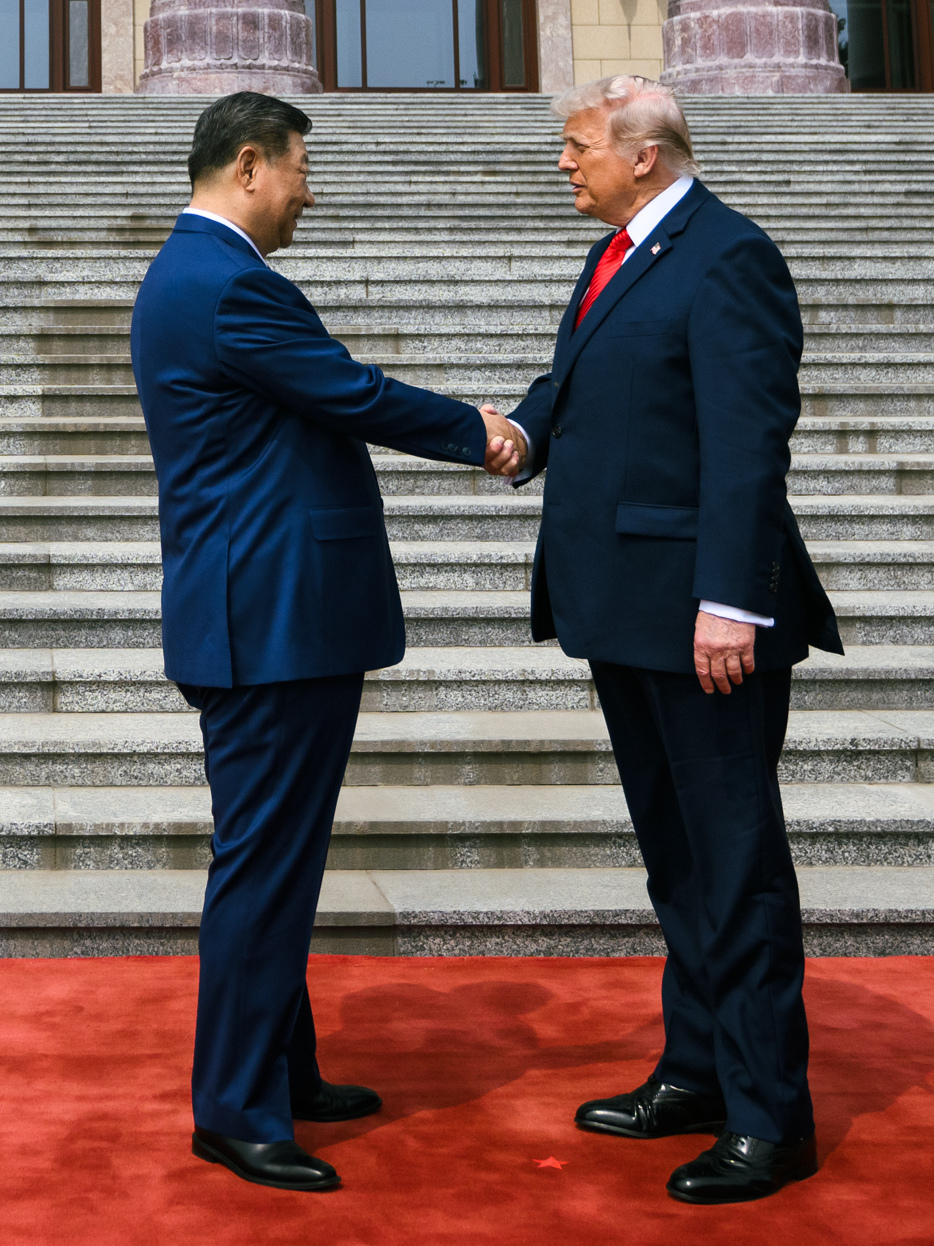
Trump and Xi Jinping (Official WH Photo by Daniel Torok)

3,809 words

Beneath the surface of everyday American life, the pork on supermarket shelves, the seeds planted across Midwestern fields, and the agrochemicals sprayed on crops from Texas to Iowa, lies a quietly assembled architecture of Chinese influence. Through corporate acquisition, land accumulation, data harvesting, and regulatory manipulation, the Chinese Communist Party has embedded itself within the systems that feed and power America. The scale of this penetration is vast, its implications alarming, and the oversight mechanisms designed to prevent it have proven, repeatedly, inadequate. Most troubling of all, Beijing’s reach now extends into the corridors of American energy policy itself, where Chinese interests have worked to shape the regulatory and legislative environment in ways that serve the Party’s long-term strategic goals rather than America’s.

American agriculture is far from peripheral to national well-being. It constitutes a $1.5 trillion industry, accounting for over 5% of US GDP and supporting approximately 10% of all American employment. The CCP recognizes this strategic reality and has moved with deliberate patience to acquire control of key chokepoints within it. What makes this especially dangerous is the legal architecture underpinning Chinese operations abroad. China’s National Intelligence Law of 2017 obligates all Chinese companies to cooperate fully with state security and intelligence agencies, while the Data Security Law of 2020 mandates that state-owned enterprises share data with Chinese intelligence services. No Chinese-owned company operating in the United States, however commercially it presents itself, is a neutral actor.

This subversion of American sovereignty, however, is not confined to the nation’s farmland. Just as China has embedded itself in the food supply through corporate acquisition and land control, it has simultaneously infiltrated the institutions that shape America’s energy future—engineering dependency from within through university partnerships, nonprofit funding networks, and regulatory capture. Together, these two campaigns constitute a unified strategic offensive: one targeting what Americans eat, the other targeting what powers their homes and industry.

Perhaps the starkest embodiment of Chinese agricultural penetration is Smithfield Foods. Once a proudly American enterprise, Smithfield was acquired in 2013 by WH Group—then known as Shuanghui—a Chinese holding company whose purchase was backed by preferred loans from state-run and state-affiliated PRC banks. At the time, it was the largest-ever acquisition of an American company by a Chinese firm, and it was no coincidence of the market. The purchase was directly informed by China’s 12th Five-Year Plan, which instructed food companies to “go abroad” in their investments. [China-Dominated U.S. Agricultural Sectors Are a National Security Threat, p. 2] Today, WH Group retains 92.7% of Smithfield’s common stock—meaning that beneath its American branding and NASDAQ listing, the company is overwhelmingly Chinese-owned.

The implications of this ownership are not merely symbolic. Smithfield controls approximately 23% of all U.S. pork processing, a market share so dominant that it effectively grants the company—and by extension, its Chinese parent—the power to set industry standards and influence prices across the entire sector. [China-Dominated U.S. Agricultural Sectors Are a National Security Threat, p. 2] Reinforcing this, the acquisition granted WH Group control over hundreds of American farms, more than 140,000 acres of agricultural land, and more than a quarter of the U.S. pork market. That degree of concentrated ownership, in the hands of a company legally obligated to serve Chinese state interests, represents an extraordinary lever of influence over what Americans eat and what they pay for it.

Nowhere was this tension more viscerally exposed than during the COVID-19 pandemic. As supply chain disruptions crippled the American meat industry—with Smithfield itself asserting that US meat processing was “perilously close to the edge” of being unable to supply the domestic market—the company was simultaneously exporting over 9,000 tons of pork to China per month during some months of 2020. Research confirms the same pattern: during the pandemic-era meat shortages, Smithfield increased exports to China even as American consumers faced empty shelves and shuttered plants.

This was not an aberration but a structural vulnerability made manifest. A company controlling nearly a quarter of American pork production chose, in a moment of national crisis, to prioritize foreign demand over domestic need. For those seeking to understand what Chinese ownership of critical food infrastructure actually means in practice, the pandemic offered an unambiguous answer.

You can buy Greg Johnson’s Is America Doomed? here.

However, long before the pandemic, Smithfield’s conduct under Chinese ownership had already begun raising serious concerns. In the days immediately preceding WH Group’s 2013 public announcement of its intention to purchase Smithfield, the company abruptly increased the proportion of hogs not receiving ractopamine—a controversial growth accelerant banned in China since 2011—from 10% to 50%. This rapid adjustment of American agricultural practice to meet Chinese market preferences, executed before the purchase was even formally announced, demonstrated with remarkable clarity China’s capacity and willingness to reshape US industry standards to suit its own requirements.

Legal accountability followed in multiple forms. In both 2022 and 2023, Smithfield paid hundreds of millions of dollars in settlements to resolve price-fixing accusations brought by direct purchasers, retail consumers, and restaurant customers. In ongoing antitrust litigation, the company was alleged to have orchestrated a deliberate strategy of increasing exports to reduce domestic supply and thereby inflate prices—with internal communications from a cooperating company stating that moving pork out of the US would raise domestic prices, a strategy Smithfield allegedly both recognized and actively encouraged.

Beyond its market conduct, Smithfield’s record of environmental and labor abuses paints an equally troubling portrait. Over a thirty-year period, Smithfield facilities spilled 7.3 million gallons of wastewater near rural communities. One incident alone—at a Missouri facility with a documented history of watershed contamination—saw 300,000 gallons of waste discharged into nearby streams, turning the water “black and putrid” for miles. The company has faced more than $470 million in penalties arising from pollution-related lawsuits.

Compounding this, a 2024 investigation by Minnesota’s Department of Labor and Industry found that Smithfield had illegally employed at least eleven children between the ages of 14 and 17, three of whom began working for the company at just 14 years old. All eleven were found to have performed hazardous work—operating meat grinders, slicers, power-driven conveyor belts, and motorized lift equipment. That a company 92.7% owned by a Chinese holding company with CCP members on its board was simultaneously exploiting child labor in American facilities only deepens the case for urgent, comprehensive scrutiny.

Extending well beyond corporate ownership, China’s physical presence on American soil constitutes an equally grave dimension of this threat. The Agricultural Foreign Investment Disclosure Act report of 2023 found that Chinese nationals or entities with primary Chinese ownership held at least 277,336 acres of US agricultural land—a figure explicitly described as a minimum estimate, given the opacity of multi-country ownership structures. What makes the trend still more alarming is its trajectory: Chinese-owned agricultural acreage increased more than five-fold between 2011 and 2021, even as overall Chinese investment in the United States fell sharply. This is not passive capital deployment but rather the deliberate accumulation of strategic terrain.

Smithfield’s landholdings alone encompass 89,218 acres, concentrated predominantly in North Carolina and Missouri—two states hosting significant military installations. The strategic logic of this proximity is not hypothetical. Recent conflicts have demonstrated graphically that even modest parcels of land near military infrastructure can serve as platforms for devastating attack—drones pre-positioned near Russian military bases in Ukraine destroyed billions of dollars in nuclear-capable aircraft, while unmonitored properties in Iran were used to assemble drones that disabled large portions of Iran’s air defense systems.

Furthermore, the oversight regime designed to monitor these holdings has proven deeply deficient. In one egregious instance, Chinese billionaire and CCP member Chen Tianqiao purchased nearly 200,000 acres of Oregon timberland in 2015—yet the USDA only became aware of this through Oregon’s 2023 tax records, eight years after the purchase. The transaction had been approved by CFIUS without triggering the disclosure requirements that should have applied. Cases such as this strongly imply that official figures for Chinese agricultural land ownership represent a substantial under count of the true position.

Turning from physical terrain to digital infrastructure, a further and increasingly consequential channel of Chinese influence has emerged through agricultural data collection. Syngenta—the global agrochemicals and seeds giant acquired by ChemChina, a CCP-controlled state-owned enterprise, in 2017—operates a digital platform called Cropwise that integrates imagery, planting data, seed selection, and farm management information from operations across the United States. Smithfield operates analogous data analytics tools across its processing facilities. Under Chinese law, all such data is subject to compulsory transmission to state intelligence services at any time.

In an era defined by artificial intelligence, the strategic value of such datasets cannot be overstated. Aggregated at scale, this information could be used to map American agricultural vulnerabilities with extraordinary precision—identifying the performance of specific crop strains in particular soils, tracking the locations of key food production infrastructure, and modelling the systemic weaknesses of the U.S. food supply chain. All of this data, once transmitted, would be fed to China’s government, shared among government agencies, and potentially weaponized against the United States. Chinese drone manufacturers, meanwhile, are actively seeking to expand into American agriculture to compound this data-collection capacity, despite a de facto federal ban and ongoing illicit importation.

Equally troubling is the manner in which these Chinese-owned companies have shaped American policy from the inside. Both Smithfield and Syngenta have engaged in extensive federal lobbying without registering as foreign agents, as would ordinarily be required under the Foreign Agents Registration Act—a law enacted specifically to protect American democracy from malign foreign influence. Since coming under Chinese ownership, Syngenta has spent over $8 million on federal lobbying, while Smithfield has spent over $11 million.
You can buy Greg Johnson’s Against Imperialism here.

The timing and targets of this lobbying are instructive. During the first Trump administration’s imposition of tariffs on Chinese goods, both companies lobbied the USDA, the Department of Commerce, and the US Trade Representative on matters with direct bearing on US-China trade relations. In doing so, companies legally obligated to serve Chinese state interests were actively shaping the American policies designed to counteract those very interests—all while presenting themselves as ordinary commercial participants in the democratic process.

Woven throughout all of these episodes is a consistent and deeply troubling thread: the institutions designed to prevent exactly this kind of foreign strategic penetration have failed, repeatedly and consequentially, to do so. CFIUS—the Committee on Foreign Investment in the United States—approved the Smithfield acquisition in 2013 without apparent regard for the food security implications that would become so apparent during the pandemic. It approved a Chinese billionaire’s wind farm project in Texas despite the site’s proximity to Laughlin Air Force Base. And in the case of the Chinese agribusiness giant Fufeng Group’s proposed corn mill just twelve miles from Grand Forks Air Force Base in North Dakota, CFIUS concluded it lacked jurisdiction to review the transaction entirely—even as the Air Force warned in writing that the project presented “a significant threat to national security with both near- and long-term risks.”

In each of these instances, it was not federal oversight mechanisms but local communities, state legislatures, and the military itself that ultimately acted to block Chinese advances. That pattern of grassroots defense against strategic-level threats reflects an oversight system badly misaligned with the nature and sophistication of the challenge it faces.

Yet agriculture and land are only one battleground. If the food supply represents China’s first front, the nation’s energy infrastructure constitutes a second—one where the weaponry is not farmland or corporate acquisition but academic legitimacy, nonprofit funding, and the meticulous capture of regulatory institutions from within.

To understand China’s influence on American energy policy, one must first grasp Beijing’s broader strategic ambitions. China has made securing dominance over the world’s supply of rare earth elements (REEs) a cornerstone of its economic strategy. It holds one-third of global REE reserves, more than half of the world’s mining capacity, and approximately 90% of global refining capability. These materials are essential for building electric vehicles, wind turbines, and solar panels—the technologies that Western climate mandates are pushing nations to adopt.

Beijing’s “Made in China 2025” industrial strategy formalized this ambition, targeting global leadership in electric vehicles and green technologies. Chinese EVs now account for over 70% of those manufactured worldwide. The strategy is elegant in its design: encourage Western governments to mandate the adoption of green technologies through climate policy, then supply those technologies from Chinese-controlled supply chains. The result is not environmental progress but strategic dependency.

Mirroring the duplicity observed in its agricultural investments, China has pursued a “dual track” energy approach domestically—pledging net-zero emissions by 2060 while simultaneously expanding coal production and coal-powered plants at record rates. While the West dismantles its fossil fuel infrastructure in pursuit of net-zero goals, China insulates itself from energy volatility and maintains industrial output. It offers the West green technology with one hand while strengthening its own hydrocarbon backbone with the other.

Universities occupy a uniquely powerful position in American society. They simultaneously shape public opinion, train future policymakers, produce research that drives regulation, and enjoy trusted access to both government officials and the business community. China has exploited this position with deliberate precision.

Beyond the now-familiar story of Confucius Institutes and research theft, Beijing has found a more sophisticated avenue of influence: using American universities to shape climate and energy policy in ways that create demand for Chinese products. California’s California-China Climate Institute (CCCI), established through a formal partnership between UC Berkeley and Tsinghua University and enshrined in California law through Assembly Bill 39, is the clearest example of this strategy.

Tsinghua University—the Chinese partner in this arrangement—is rated “High Risk” by the Australian Strategic Policy Institute and is overseen by Beijing’s State Administration for Science, Technology, Industry, and National Defense. It has been linked to cyberattacks on American companies, the development of technology used in human rights abuses in Xinjiang, and the advancement of nuclear weapons and artificial intelligence for military purposes. This is the institution that California law designates as a partner in shaping the state’s regulatory framework.

The CCCI’s founding announcement stated explicitly that it would “foster relationships between Chinese nationals and the California Air Resources Board in formulating air quality standards.” This was not incidental—it was the stated purpose of a state-sanctioned academic institute, funded in part by organizations with documented ties to China’s intelligence services.

California has constructed one of the world’s most aggressive energy regulatory regimes. Beginning with Assembly Bill 1493 in 2002, Sacramento steadily delegated increasing authority to the California Air Resources Board (CARB), insulating climate mandates from ordinary legislative and voter scrutiny. By 2022, the state had mandated net-zero emissions by 2045, required 90% renewable energy by 2035, and prohibited the sale of new petrol and diesel vehicles after 2035. Each of these mandates creates demand for products that China dominates. For green infrastructure, China produces 92% of the world’s solar modules and 82% of wind turbines. Invariably, California’s regulatory framework has effectively constructed a captive market for Chinese industry and this is not a coincidence.

Former California governor Jerry Brown traveled to China in 2017, accompanied by CARB chairperson Mary Nichols, to meet directly with Chinese EV manufacturers including BYD, Beijing Auto Group, Great Wall, Geely, Dongfeng Xiao Kang, and Yangtze Motors. During the visit, Nichols briefed Chinese automakers on California’s EV mandates. The meeting produced commitments to create a working group to expand cooperation with Chinese zero-emission vehicle and battery companies. These relationships translated directly into contracts. San Francisco and multiple Los Angeles-area transit authorities later signed agreements to purchase BYD buses. CARB reported that BYD-America received $120 million from California’s cap-and-trade fund to support its electric vehicle factory.

China’s influence on American energy policy extends beyond promoting EV adoption. Through a network of American nonprofits funded by organizations with ties to Beijing, China has actively worked to dismantle American hydrocarbon infrastructure. The Energy Foundation China, a US-registered 501(c)(3) that describes itself as an independent charitable organization, has distributed millions of dollars to American universities and advocacy groups to advance anti-fossil-fuel research and policy. In 2023 alone, it donated $630,000 to UC Berkeley, UCLA, Harvard College, and the University of Maryland. Since becoming independent in 2020, it has granted roughly $12 million to various climate and environmental initiatives.

These grants have produced policy-specific research with measurable consequences for American consumers. Energy Foundation China funded the Rocky Mountain Institute, which published research linking gas stoves to childhood asthma. This report was subsequently cited by the US Department of Energy under the Biden administration when proposing stricter regulations on gas appliances. A federal safety commissioner publicly proposed banning new gas stoves. Berkeley’s city council unanimously voted to ban natural gas in new buildings, with the sponsoring councilor explicitly citing the Rocky Mountain Institute’s work.

The Natural Resources Defense Council (NRDC), another major recipient of Energy Foundation China funding, has similarly embedded itself in both California and federal energy policy. Its former president served as the Biden administration’s climate adviser, and the organization held ongoing consultations with Special Presidential Envoy for Climate John Kerry. Congress questioned in 2018 why the NRDC had not registered as a foreign agent under the Foreign Agent Registration Act, noting its regular meetings with CCP officials and its advocacy against American energy interests. [Behind the Climate Curtain, p. 56]

The Jamestown Foundation identified the Energy Foundation as having ties to both the CCP and China’s Ministry of State Security through the professional connections of its leadership. The organization’s CEO served as a Chinese negotiator in the lead-up to the Paris Agreement, while one board member previously served as Legislative Director for China’s National People’s Congress, drafting Five-Year Plans and legislation for multiple Chinese ministries.

The policy collaboration between China, American universities, and California’s regulatory apparatus has produced a measurable and damaging impact on American consumers and energy independence. Residential electricity rates for Pacific Gas and Electric rose by 104% between 2015 and 2025, while Southern California Edison’s rates climbed by 83% over the same period. California’s average electricity rates moved from 30% above the national average to 80% above the national average over the decade. These increases outpaced inflation by a significant margin, indicating that they are policy-driven rather than the result of market forces.

California’s cap-and-trade system, which was developed in close coordination with China and shaped in part by research funded through organizations connected to Beijing, generated $31.4 billion in revenue by 2025. This system, while marketed as an environmental tool, has functioned as a significant cost imposed on California businesses and passed on to consumers. A quarter of all cap-and-trade revenue through 2030 was directed to California’s troubled High-Speed Rail project—a programme that has since been defunded by the federal government.

Chinese companies have been prominent recipients of California’s green energy spending. Battery storage contracts worth billions have gone to Chinese firm CATL—a company that was blacklisted by the US Department of Defense in January for ties to the Chinese military and to forced labour in Xinjiang. Green energy developer FlexGen, which supports projects for Southern California Edison, signed a contract with CATL for 10 gigawatt-hours worth of batteries.

California now imports 64% of its oil from overseas, including from Iraq, Ecuador, Saudi Arabia, and Brazil—where imports alone rose from 8.3 to 20.4% between 2021 and 2024. A state that was once energy-rich has manufactured its own dependency, driven in part by regulations developed in partnership with the very foreign power that stands to benefit most from American energy weakness.

Among the most alarming revelations concerns the direct placement of individuals with ties to Tsinghua University inside California’s primary environmental regulatory agency. Between September and December 2021, CARB promoted two Tsinghua graduates to significant roles within the agency. One was placed in the On-Road Model Development Section, where responsibilities included developing CARB’s on-road emissions inventory model and supporting regulatory activities across the agency. Another was appointed as an economist in the Office of Economic and Policy Analysis, where staff serve as consultants for the economic and financial analysis that accompanies proposed regulations. In April 2025, a third Tsinghua graduate was promoted to Chief of the Special Assessment Branch within CARB’s Air Quality Planning and Science Division, overseeing the development of emissions inventory estimates, community air quality databases, and the implementation of statewide criteria pollutant and air toxics emissions reporting regulations.

The CCCI’s founding announcement had made this integration explicit, stating that the institute would foster relationships between Chinese nationals and CARB in formulating air quality standards. The policy has been implemented as designed. Tsinghua graduates are now embedded in the regulatory body responsible for setting the standards that determine California’s energy and vehicle markets—markets that Chinese companies are positioned to supply.

The implications of this network extend well beyond consumer electricity bills. When American regulatory policy is shaped through research funded by organizations tied to China’s intelligence services, implemented by officials with personal and professional connections to Chinese state institutions, and formalized through university partnerships with a university overseen by China’s defense administration, the result is a systematic erosion of American sovereignty and strategic independence.

China has achieved through soft power what would be inconceivable through conventional means: a situation in which a major American state has voluntarily aligned its energy regulatory framework with the interests of its principal geopolitical adversary. California has entered into multiple memoranda of understanding with Chinese government bodies—including China’s National Development and Reform Commission and the Ministry of Ecology—that function as treaties in all but name, potentially in violation of Article I, Section 10 of the US Constitution, which prohibits states from entering into treaties or confederations with foreign powers.

The Green Shipping Corridor partnership between the ports of Los Angeles, Long Beach, and Shanghai has embedded COSCO Shipping—a company listed by the US Department of Defense as a Chinese military company for its record of leveraging commercial assets for intelligence purposes—as the chair of the Energy Supply Working Group governing goods movement between American and Chinese ports. The CCCI holds a designated role as a contact point within this arrangement.

Meanwhile, China continues to expand its coal production to record highs while exporting the green technology narrative that constrains Western energy policy. The net effect is a strategic imbalance: America dismantles the energy infrastructure that underpins its economic and military power, while China builds both coal plants and solar factories, maintaining the optionality that its rivals are surrendering.

In sum, the picture that emerges from a close examination of China’s dual offensive across food and energy alike is of a systematic and largely successful effort to shape American institutions in ways that benefit Beijing economically and weaken the United States strategically. This is not a story about trade competition or climate science. It is a story about economic warfare conducted through institutional capture, the quiet colonization of regulatory agencies, research institutes, corporate structures, and policy networks by a network of individuals and organizations whose interests are aligned with Beijing rather than with American citizens and taxpayers. The cost is already visible in grocery bills, electricity rates, energy import dependency, and the steady enrichment of Chinese companies at the expense of American industry. The deeper cost, to national security, constitutional sovereignty, and democratic accountability, may be harder to quantify, but is no less real.

China’s Threat to American Security: Food, Farmland, Foreign Control, & Energy Policy

China%E2%80%99s%20Threat%20to%20American%20Security%3A%0AFood%2C%20Farmland%2C%20Foreign%20Control%2C%20andamp%3B%20Energy%20Policy%0A

Share

  • Gab

Enjoyed this article?

Be the first to leave a tip in the jar!

Instant Echeck GreenPay™

Related

  • The Crisis of Chinese Technology Thieves

  • Why Billionaires Should Fund White Identity Politics

  • How Cold War Two Came About

  • Predation Wearing the Mask of Civilization

  • China’s Quiet Hand:

  • Lewis Strauss Did Nothing Wrong:

  • America’s Century of Humiliation has Begun

  • The Selective Memory of Empire:

Tags

academiaagricultureCalifornia-China Climate InstituteCCCICCPChinaChinese espionageChinese infiltrationcorruptionfarmlandgeopoliticsLipton Matthewslobbyingnational securityNatural Resources Defense CouncilSmithfield FoodsWH Group

Previous

« Who’s Looking Back?

Next

» Heidegger on Nietzsche, Part Two

1 comment

  1. kolokol says:
    June 5, 2026 at 11:10 pm

    This is a disturbing article. I respect China, but I don’t fear them. They are strong and potentially dangerous. But they are not our enemy. Our number one enemy is the Epstein Class. The Jews are the enemy, not the Chinese. The Jews control the media, the universities, the culture. The Jews control our politicians. The result is a multiracial dystopia. The Chinese didn’t do that.

    Of course we should keep them out of our country. Non-White immigration should be strictly forbidden. And why do our governments allow China to buy up our land, our technology, our food industry? Just forbit it. China won’t complain. If they do, then patiently explain it to them.

    1
    1
    • Peter Quint
    Reply

If you have a Subscriber access,
simply login first to see your comment auto-approved.

Post a comment Cancel reply

Note on comments privacy & moderation

Your email is never published nor shared.

Comments are moderated. If you don't see your comment, please be patient. If approved, it will appear here soon. Do not post your comment a second time.

Upcoming podcasts
  • Rob Rundo on Counter-Currents Radio

    Rob Rundo on Counter-Currents Radio

    Counter-Currents Radio

    Sat, Jun 6th — 3 pm EST / 9 pm CET
  • Daniel Tyrie on Counter-Currents Radio

    Daniel Tyrie on Counter-Currents Radio

    Counter-Currents Radio

    Sat, Jun 20th — 3 pm EST / 9 pm CET

Writers of May

(2 votes) Morris van de Camp David M. Zsutty Derek Stark Jayant Bhandari Greg Johnson

Articles of May

The Lunch Wars by David M. Zsutty Heidegger on Nietzsche, Part One by Collin Cleary 2 votes
    • Editor’s Update
      Fundraiser Update, a New $20,000 Matching Grant, & Rob Rundo Returns to Counter-Currents Radio

      Greg Johnson

    • The Counter-Currents 2026 Fundraiser
      Lifetime Subscriber Welcome Packages Extended

      Greg Johnson

    • Nationalism This Week
      Who’s Looking Back?

      Greg Johnson

      7

    • China’s Threat to American Security:
      Food, Farmland, Foreign Control, & Energy Policy

      Lipton Matthews

      1

    • The Bitter End of Western Metaphysics:
      Heidegger on Nietzsche, Part Two

      Collin Cleary

      2

    • The Killing of Henry Nowak

      Mark Gullick

      22

    • The Crisis of Chinese Technology Thieves

      Morris van de Camp

      1

    • The Strange World of Gender Bender Fiction:
      & What This Genre Tells Us About Autosexuality

      Dani Vypont

      3

    • Watching the Watchers:
      The Dark Triad Question

      David M. Zsutty

      14

    • The Remigration Movement Solidifies

      F. Roger Devlin

      1

    • Casting Aspersions:
      The Fatal Consequences of Race-Swapped Casting, From Helen of Troy to Henry of Southampton

      Steven Tucker

      19

    • The Murder of Henry Nowak

      Millennial Woes

      23

    • Don’t Forget to Vote in Our Writer & Article of the Month Poll

      Greg Johnson

    • The Robot Hotdog Stand

      Greg Johnson

      34

    • Laughing Our Way to Victory

      Dave Chambers

      4

    • The Zodiac Killer

      Mark Gullick

      11

    • Jared Taylor: What Rome Means to Me

      Jared Taylor

      1

    • An Interview with Endeavour:
      My Way of Life Is an Adventure!

      Ondrej Mann

      6

    • José Pedro Zúquete’s The Identitarians

      Greg Johnson

      3

    • Editor’s Update
      Fundraiser Update & How to Watch the Remigration Summit

      Greg Johnson

      5

    • The Bitter End of Western Metaphysics:
      Heidegger on Nietzsche, Part One

      Collin Cleary

      11

    • Berlin: City of Stones

      Spencer J. Quinn

      6

    • True Folk-Horror Is Horror of Your Own Folk:
      Mark Gatiss vs the Brexit Blind Dead  

      Steven Tucker

      4

    • Counter-Currents Radio Podcast No. 689
      Thomas Massie, the America 2050 Bust, the Need for Whites to Divest from America, the AI Economic Apocalypse, & Pro-White Project Pitches to Billionaires

      Counter-Currents Radio

      7

    • Nationalism This Week
      Remigration is Inevitable, Part 3

      Greg Johnson

      26

    • Why Billionaires Should Fund White Identity Politics

      Lipton Matthews

      8

    • How Cold War Two Came About

      Morris van de Camp

      5

    • Now Available for Pre-Order at a Special Price!
      Greg Johnson’s The Philosopher Is In

      Greg Johnson

    • David Zsutty’s Elevator Pitch to a Billionaire

      David M. Zsutty

      1

    • Headbanging Lite

      Mark Gullick

      5

    • White Advocacy Past and Present

      Peter Bradley

      13

    • The Lunch Wars

      David M. Zsutty

      47

    • The Russians are Coming/The Russians are Coming

      Steven Clark

      1

    • Peak Fatigue in Fort Wayne

      Gabriel Anderson

      24

    • Keith Woods’ Elevator Pitch to a Billionaire

      Keith Woods

    • The Cruelty of Kindness

      Morris van de Camp

      9

    • Predation Wearing the Mask of Civilization

      Jayant Bhandari

      13

    • The Mandalorian & Grogu

      Trevor Lynch

      24

    • Editor’s Update
      Fundraiser Update & a New $20,000 Matching Grant
      Greg Johnson & David Zsutty Discuss Thomas Massie on Counter-Currents Radio

      Greg Johnson

      2

    • How the Jews Defeated Thomas Massie—& Themselves

      David M. Zsutty

      24

    • Jared Taylor’s Elevator Pitch to a Billionaire

      Jared Taylor

      15

    • Nationalism This Week
      Remigration Is Inevitable, Part 2

      Greg Johnson

      8

    • Could Fascism Work?

      Mark Gullick

      40

    • Jonathan Bowden’s Deliverance
      Part 7

      Jonathan Bowden

    • China’s Quiet Hand:
      Influence, Infiltration, & the Western Blind Spot

      Lipton Matthews

      9

    • Counter-Currents Radio Podcast No. 688
      Tyler Dykes on Running for US Congress in South Carolina

      Counter-Currents Radio

      3

    • Lothrop Stoddard’s The Revolt Against Civilization

      Spencer J. Quinn

      14

    • Lewis Strauss Did Nothing Wrong:
      How the politics of the Atom Bomb during the early Cold War Apply to Artificial Intelligence Today

      Morris van de Camp

      14

    • The Ghost of the Confederacy

      Dave Chambers

      12

    • America’s Century of Humiliation has Begun

      Greg Johnson

      27

    • Will Williams

      America Has Already Lost the Iran War

      US Warships Flee Oman Sea after Iranian Navy’s Missile WarningJune, 05, 2026 – Politics...

    • Peter Quint

      Casting Aspersions

      Maybe he is one of those reptilians we have been hearing about. 🙃

    • Peter Quint

      The Killing of Henry Nowak

      Unfortunately, you are correct; there’s not enough racial loyalty out there to kill a piss-ant...

    • Tye

      Heidegger on Nietzsche, Part Two

      Fascinating series I have followed since the beginning. This bird’s eye view piece has been...

    • Vagrant Rightist

      Who’s Looking Back?

      Yes. No one knows where this data is going. I’ve never used an AI for anything personal and never...

    • Connor McDowell

      The Killing of Henry Nowak

      Apparently, Nowak’s father has come out with a statement of “please let’s not make this about race...

    • Sigurd

      The Murder of Henry Nowak

      I'm really having a hard time trying to figure out if those police officers who made the arrest are...

    • DarkPlato

      Who’s Looking Back?

      What math problems do you use ai for?  It’s ever so wonderful.  It can solve them better...

    • kolokol

      Who’s Looking Back?

      Never sign up for AI. You're asking for trouble, if you do. I only use Google AI-mode, because it...

    • kolokol

      China’s Threat to American Security

      This is a disturbing article. I respect China, but I don't fear them. They are strong and...

    • Peter Quint

      Who’s Looking Back?

      Someone please break this tie for “writer of the month,” or it is going to be a long citation...

    • Rough Bastard

      Casting Aspersions

      Fvcking hilarious. Murphy exudes something very unsavory and strange, in a bad way.

    • Peter Quint

      Who’s Looking Back?

      Great article! I am glad I am a low-tech guy. 🙃

    • Glide Ratio 0:1

      Casting Aspersions

      Absolutely, very good looking cast. At least the younger characters. Everything else was still a...

    • kolokol

      Who’s Looking Back?

      So that's what "palantir" means. I've never read that book. In its AI-mode, Google gives a plot...

    • Will Williams

      Watching the Watchers

      Delete screwed-up duplicate comment

    • Glide Ratio 0:1

      The Killing of Henry Nowak

      I really don't want to say this but Jake Shields does the same and I'm starting to suspect him now...

    • Will Williams

      Watching the Watchers

      Julius Strange: June 5, 2026   At least people motivated by excitement and glory can be...

    • Throne Of My Enemies Bones

      Who’s Looking Back?

      Some time ago, I had an interesting experience with a 20-something woman from India, who was working...

    • DenisetheCelt

      Casting Aspersions

      Oh dear. "Troy" had a very attractive cast. Especially with Brad Pitt cast as Achilles. He was at...

    • Earth Day Special

      John Morgan

      12

    • A Robertson Roundup
      Remembering Wilmot Robertson
      (April 16, 1915 – July 8, 2005)

      Margot Metroland

      13

    • The Paranoid Style in White Nationalism

      Greg Johnson

      30

    • Join the Dance!

      Andrew Hamilton

      1

    • We Can’t Save the Earth Without Reducing African Birth Rates

      James Dunphy

      36

    • “I’m Not a Conspiracy Theorist, but . . .”:
      Jeffrey Epstein’s Death Gives New Life to “Conspiracy Theories”

      Greg Johnson

      22

    • Sylvia Plath: Stasis in Darkness

      Vic Olvir

      17

    • Vanguardism, Vantardism, & Mainstreaming

      Greg Johnson

      80

    • Aviation, Geography, & Race

      Charles Lindbergh

      3

    • Some Thoughts on Yule

      Collin Cleary

      4

    • Living in Truth:
      A Yuletide Homily

      Jef Costello

      7

    • John Kennedy Toole’s A Confederacy of Dunces

      Greg Johnson

      20

    • On Aleksandr Solzhenitsyn’s Warning to the West

      Spencer J. Quinn

      7

    • Elitism, British Modernism, & Wyndham Lewis

      Jonathan Bowden

      6

    • Philip K. Dick’s Do Androids Dream of Electric Sheep? as Anti-Semitic/Christian-Gnostic Allegory

      Greg Johnson

      20

    • “Conspiracy Theory” or Conspiracy?

      Andrew Hamilton

      21

    • Remembering H. P. Lovecraft
      (August 20, 1890–March 15, 1937)

      Greg Johnson

      3

    • Who Are We?
      Nordics, Aryans, & Whites

      Greg Johnson

      71

    • Remembering William Gayley Simpson
      (July 23, 1892–December 31, 1990)
      A Pleasant Afternoon with Harriet & Bill Simpson

      Margot Metroland

      18

    • Here are the Young Men
      Remembering Ian Curtis
      (July 15, 1956–May 18, 1980)

      Mark Gullick

      18

    • Percy Grainger
      Artist of the Right

      Alex Graham

      7

    • Remembering Revilo Oliver
      (July 7, 1908–August 20, 1994)

      Greg Johnson

      18

    • The Meaning of July 4th for the White Man

      Gregory Hood

      13

    • The Front National’s Evolution

      Bruno Mégret

    • Merwin K. Hart
      Forgotten American Hero & Man of the Right

      Morris van de Camp

      10

    • George Orwell’s Nineteen Eighty-Four

      Jonathan Bowden

      8

    • Carleton S. Coon
      Scientist & Reluctant White Advocate

      Morris van de Camp

      3

    • The Kwanzaa Absurdity Will Be Dwarfed by Juneteenth

      Robert Hampton

      10

    • Stravinsky

      Alex Graham

      7

    • Like the Roman:
      Remembering Enoch Powell (1912-1998)

      Mark Gullick

      23

    • Jonathan Bowden’s Deliverance
      Part 5

      Jonathan Bowden

    • Crosstown Traffic:
      Jimi Hendrix & The Post-War Rock ‘N’ Roll Revolution

      Mark Gullick

    • Slaves from the North:
      Finns & Karelians in the East European Slave Trade, 900–1600

      Lipton Matthews

      14

    • Neo-Fascism in Film
      Part 4

      Karel Veliky

      2

    • David Lean’s A Passage to India

      Spencer J. Quinn

      1

    • Elites are Essential to Development

      Lipton Matthews

      7

    • Jonathan Bowden’s Deliverance
      Part 4

      Jonathan Bowden

    • Neo-Fascism in Film
      Part 3

      Karel Veliky

      6

    • E. M. Forster’s A Passage to India & the Indian Mentality

      Spencer J. Quinn

      25

    • Jonathan Bowden’s Deliverance
      Part 3

      Jonathan Bowden

    • The Rest Is Silence
      Heidegger’s Quietism

      Mark Gullick

      2

    • Dispelling the Historical Fallacy of Indian Nationalism

      Lipton Matthews

      8

    • Neo-Fascism in Film
      Part 2

      Karel Veliky

      8

    • Jonathan Bowden’s Deliverance
      Part 2

      Jonathan Bowden

    • Life of a Klansman

      Mark Gullick

      8

    • Jonathan Bowden’s Deliverance, Part 1

      Jonathan Bowden

    • Decolonial Ideas are Holding Back Developing Countries

      Lipton Matthews

      8

    • Neo-fascism in Film, Part 1

      Karel Veliky

      21

    • Jonathan Bowden’s Onslaught, Part 8
      Divigations on Decadence

      Jonathan Bowden

    • Jonathan Bowden’s Onslaught, Part 7
      Intrigues in the National Front

      Jonathan Bowden

      1

    • Rotten to the Core

      Mark Gullick

      8

    • Strauss on Husserl’s “Philosophy as Rigorous Science”

      Greg Johnson

    • Jonathan Bowden’s Onslaught, Part 6
      Francis Bacon & Right-Wing Nihilism

      Jonathan Bowden

    • London After (& Before) Midnight:
      Aleister Crowley, The Landlord’s Worst Nightmare

      James J. O'Meara

      2

    • Jonathan Bowden’s Onslaught, Part 5
      The Post-War British Far Right

      Jonathan Bowden

    • No Rules: Rollerball

      Mark Gullick

      4

    • Jonathan Bowden’s Onslaught, Part 3
      Brett Easton Ellis’ American Psycho

      Jonathan Bowden

    • An Alternate History of the Harris Presidency

      Beau Albrecht

      5

    • The Origins of Mass Education:
      Augustina S. Paglayan’s Raised to Obey

      Francis Rockwell

      4

    • Jonathan Bowden’s Onslaught, Part 2
      Louis-Ferdinand Céline

      Jonathan Bowden

      1

    • András László
    • Derek Hawthorne
    • Beau Albrecht
    • Alain de Benoist
    • Kerry Bolton
    • Jonathan Bowden
    • Collin Cleary
    • Jef Costello
    • Savitri Devi
    • Julius Evola
    • Jim Goad
    • Gregory Hood
    • Juleigh Howard-Hobson
    • Greg Johnson
    • Charles Krafft
    • Anthony M. Ludovici
    • Trevor Lynch
    • H. L. Mencken
    • J. A. Nicholl
    • James J. O’Meara
    • Christopher Pankhurst
    • Tito Perdue
    • Michael Polignano
    • Spencer J. Quinn
    • Fenek Solère
    • Irmin Vinson
    • Leo Yankevich
    • Francis Parker Yockey
    • Multiple authors
  • Editor-in-Chief

    • Greg Johnson, Ph.D.

    Featured Writers

    • Beau Albrecht
    • Gunnar Alfredsson
    • Collin Cleary, Ph.D.
    • Jef Costello
    • Morris V. de Camp
    • F. Roger Devlin, Ph.D.
    • Stephen Paul Foster, Ph.D.
    • Jim Goad
    • Alex Graham
    • Mark Gullick, Ph.D.
    • Greg Johnson, Ph.D.
    • Travis LeBlanc
    • Trevor Lynch
    • Margot Metroland
    • James J. O’Meara
    • Angelo Plume
    • Spencer J. Quinn
    • Fred Reed
    • Clarissa Schnabel
    • Michael Walker
    • David M. Zsutty

    Frequent Writers

    • Asier Abadroa
    • Aquilonius
    • Alain de Benoist
    • Kerry Bolton, Ph.D.
    • Dave Chambers
    • Steven Clark
    • James Dunphy
    • Endeavour
    • Richard Houck
    • Jason Kessler
    • Titus Livius
    • Ondrej Mann
    • Lipton Matthews
    • Mark Mazari
    • John Morgan
    • Jaroslav Ostrogniew
    • Kathryn S.
    • Christian Secor
    • Anne Wilson Smith
    • Thomas Steuben
    • William De Vere
    • Kenneth Vinther
    • Max West

    Classic Authors

    • Maurice Bardèche
    • Jonathan Bowden
    • Julius Evola
    • Guillaume Faye
    • Ernst Jünger
    • Kevin MacDonald, Ph.D.
    • D. H. Lawrence
    • Charles Lindbergh
    • Jack London
    • H. P. Lovecraft
    • Anthony M. Ludovici
    • Sir Oswald Mosley
    • National Vanguard
    • Friedrich Nietzsche
    • Revilo Oliver
    • William Pierce
    • Ezra Pound
    • Saint-Loup
    • Savitri Devi
    • Carl Schmitt
    • Miguel Serrano
    • Oswald Spengler
    • P. R. Stephensen
    • Jean Thiriart
    • John Tyndall
    • Dominique Venner
    • Leo Yankevich
    • Francis Parker Yockey

    Other Authors

    • Howe Abbott-Hiss
    • Michael Bell
    • Giles Corey
    • Jack Donovan
    • Richardo Duchesne, Ph.D.
    • Emile Durand
    • Guillaume Durocher
    • Mark Dyal
    • Tom Goodroch
    • Andrew Hamilton
    • Robert Hampton
    • Huntley Haverstock
    • Derek Hawthorne
    • Gregory Hood
    • Juleigh Howard-Hobson
    • Alexander Jacob
    • Ruuben Kaalep
    • Tobias Langdon
    • Julian Langness
    • Patrick Le Brun
    • G A Malvicini
    • John Michael McCloughlin
    • Millennial Woes
    • Michael O’Meara
    • Christopher Pankhurst
    • Michael Polignano
    • J. J. Przybylski
    • Quintilian
    • Edouard Rix
    • C. B. Robertson
    • C. F. Robinson
    • Herve Ryssen
    • Alan Smithee
    • Fenek Solere
    • Ann Sterzinger
    • Robert Steuckers
    • Tomislav Sunic
    • Donald Thoresen
    • Marian Van Court
    • Irmin Vinson
    • Book Reviews
    • Movie Reviews
    • TV Reviews
    • Music Reviews
    • Art Criticism
    • Graphic Novels & Comics
    • Video Game Reviews
    • Fiction
    • Poems
    • Interviews
    • Videos
    • English Translations
    • Other Languages
      • Arabic
      • Bulgarian
      • Croatian
      • Czech
      • Danish
      • Dutch
      • Estonian
      • Finnish
      • French
      • German
      • Greek
      • Hungarian
      • Italian
      • Lithuanian
      • Norwegian
      • Polish
      • Portuguese
      • Romanian
      • Russian
      • Slovak
      • Spanish
      • Swedish
      • Ukrainian
    • Commemorations
    • Why We Write
  • Archives
  • Top 100 Commenters
  • The Looney Bin
Sponsored Links
Europa.com Above Time Coffee Antelope Hill Publishing Paul Waggener IHR-Store Spencer J. Quinn American Renaissance Jim Goad The Occidental Observer
Donate Now Mailing list
Books for sale
  • The Philosopher Is In
  • Sexual Utopia in Power (Expanded Edition)
  • In Defense of Prejudice
  • Loving Our Own
  • Tyranny & Wisdom
  • The Populist Moment
  • Is America Doomed?
  • To all books
Copyright © 2026 Counter-Currents Publishing, Ltd.

Paywall Access


Please enter your email address.

Lost your password?

Edit your comment

Writer & Article of the Month May 2026

Voting for this month has concluded. Here are the final results!

Top Writers

  • #1 Morris van de Camp 2 votes
  • #2 David M. Zsutty 2 votes
  • #3 Derek Stark 2 votes
  • #4 Jayant Bhandari 2 votes
  • #5 Greg Johnson 2 votes
  • #6 Jared Taylor 1 vote
  • #7 Collin Cleary 1 vote
  • #8 Spencer J. Quinn 1 vote
  • #9 Mark Gullick 1 vote
  • #10 Lipton Matthews 1 vote
  • #11 Keith Woods 1 vote
  • #12 Steven Tucker 1 vote

Top Articles

  • #1 The Lunch Wars 2 votes
  • #2 Heidegger on Nietzsche, Part One 2 votes
  • #3 Could Fascism Work? 1 vote
  • #4 Jared Taylor's Elevator Pitch to a Billionaire 1 vote
  • #5 Predation Wearing the Mask of Civilization 1 vote
  • #6 Peak Fatigue in Fort Wayne 1 vote
  • #7 Keith Wood's Elevator Pitch to a Billionaire 1 vote
  • #8 Do You Want to Play a Game? 1 vote
  • #9 Why Billionaires Should Fund White Identity Politics 1 vote
  • #10 The 1970s: The Golden Age of Hijacking 1 vote
  • #11 True Folk-Horror Is Horror of Your Own Folk 1 vote
  • #12 Finding Atlantis Part 4 1 vote
  • #13 Berlin: City of Stones 1 vote
  • #14 The Ghost of the Confederacy 1 vote
  • #15 Lothrop Stoddard’s The Revolt Against Civilization 1 vote

Total votes cast: 17

Insert/edit link

Enter the destination URL

Or link to existing content

    No search term specified. Showing recent items. Search or use up and down arrow keys to select an item.