Counter-Currents
  • Advertise
  • Private Events
  • T&C
  • About
  • Contact
  • RSS
    • Main feed
    • Podcast feed
    • Videos feed
    • Comments feed
  • Welcome
  • Webzine
  • Books
  • Merch
  • Podcasts
  • Videos
  • Donate
  • Patrons
  • Subscribe
  • Crypto

LEVEL2

Donate Now Mailing list

Writers of May

(2 votes) Morris van de Camp David M. Zsutty Derek Stark Jayant Bhandari Greg Johnson

Articles of May

The Lunch Wars by David M. Zsutty Heidegger on Nietzsche, Part One by Collin Cleary 2 votes
  • Welcome
  • Webzine
  • Books
  • Merch
  • Podcasts
  • Videos
  • Donate
  • Patrons
  • Subscribe
  • Crypto
    • Editor’s Update
      Rob Rundo on Counter-Currents Radio, Fundraiser Update, & a New $20,000 Matching Grant

      Greg Johnson

    • The Bitter End of Western Metaphysics:
      Heidegger on Nietzsche, Part Three

      Collin Cleary

      10

    • Uncivil War

      Mark Gullick

      37

    • Exclusive Interview with Karel Veliky:
      The Final Chapter in the Film Series! Part II

      Ondrej Mann

      2

    • Happy Birthday to Us!

      Greg Johnson

      6

    • Zsutty’s Maximum

      David M. Zsutty

      15

    • Exclusive Interview with Karel Veliky:
      The Final Chapter in the Film Series! Part I

      Ondrej Mann

      2

    • The Union Jackal, June 2026

      Mark Gullick

      23

    • The Inferiority Behind Immigrant Superiority

      Jayant Bhandari

      15

    • Counter-Currents Radio Podcast No. 690
      Greg Johnson & David Zsutty Discuss Current Things: AI, Henry Nowak, the Iran Crisis, & More

      Counter-Currents Radio

      7

    • Collin Cleary: What Rome Means to Me

      Collin Cleary

      4

    • Paul Krugman: Closet Bolshevik

      Spencer J. Quinn

      19

    • Fugue of Ideas:
      Ibram X. Kendi’s Chain of Ideas

      Greg Johnson

      19

    • Based Blacks

      Lipton Matthews

      20

    • Black Intellectual Fatigue

      Derek Stark

      41

    • Why White Advocates Should Avoid “Based Blacks”

      Dani Vypont

      32

    • Nietzsche & Race

      Mark Gullick

    • Editor’s Update
      Rob Rundo Rescheduled to Next Week on Counter-Currents Radio;
      Tonight Greg Johnson & David Zsutty Answer Your Questions;
      Fundraiser Update & a New $20,000 Matching Grant

      Greg Johnson

    • The Counter-Currents 2026 Fundraiser
      Lifetime Subscriber Welcome Packages Extended

      Greg Johnson

    • Nationalism This Week
      Who’s Looking Back?

      Greg Johnson

      29

    • China’s Threat to American Security:
      Food, Farmland, Foreign Control, & Energy Policy

      Lipton Matthews

      5

    • The Bitter End of Western Metaphysics:
      Heidegger on Nietzsche, Part Two

      Collin Cleary

      16

    • The Killing of Henry Nowak

      Mark Gullick

      38

    • The Crisis of Chinese Technology Thieves

      Morris van de Camp

      1

    • The Strange World of Gender Bender Fiction:
      & What This Genre Tells Us About Autosexuality

      Dani Vypont

      3

    • Watching the Watchers:
      The Dark Triad Question

      David M. Zsutty

      14

    • The Remigration Movement Solidifies

      F. Roger Devlin

      1

    • Casting Aspersions:
      The Fatal Consequences of Race-Swapped Casting, From Helen of Troy to Henry of Southampton

      Steven Tucker

      20

    • The Murder of Henry Nowak

      Millennial Woes

      23

    • Don’t Forget to Vote in Our Writer & Article of the Month Poll

      Greg Johnson

    • The Robot Hotdog Stand

      Greg Johnson

      37

    • Laughing Our Way to Victory

      Dave Chambers

      7

    • The Zodiac Killer

      Mark Gullick

      11

    • Jared Taylor: What Rome Means to Me

      Jared Taylor

      1

    • An Interview with Endeavour:
      My Way of Life Is an Adventure!

      Ondrej Mann

      6

    • José Pedro Zúquete’s The Identitarians

      Greg Johnson

      3

    • Editor’s Update
      Fundraiser Update & How to Watch the Remigration Summit

      Greg Johnson

      5

    • The Bitter End of Western Metaphysics:
      Heidegger on Nietzsche, Part One

      Collin Cleary

      12

    • Berlin: City of Stones

      Spencer J. Quinn

      6

    • True Folk-Horror Is Horror of Your Own Folk:
      Mark Gatiss vs the Brexit Blind Dead  

      Steven Tucker

      4

    • Counter-Currents Radio Podcast No. 689
      Thomas Massie, the America 2050 Bust, the Need for Whites to Divest from America, the AI Economic Apocalypse, & Pro-White Project Pitches to Billionaires

      Counter-Currents Radio

      7

    • Nationalism This Week
      Remigration is Inevitable, Part 3

      Greg Johnson

      27

    • Why Billionaires Should Fund White Identity Politics

      Lipton Matthews

      8

    • How Cold War Two Came About

      Morris van de Camp

      5

    • Now Available for Pre-Order at a Special Price!
      Greg Johnson’s The Philosopher Is In

      Greg Johnson

    • David Zsutty’s Elevator Pitch to a Billionaire

      David M. Zsutty

      1

    • Headbanging Lite

      Mark Gullick

      5

    • White Advocacy Past and Present

      Peter Bradley

      13

    • The Lunch Wars

      David M. Zsutty

      47

    • The Russians are Coming/The Russians are Coming

      Steven Clark

      1

    • Will Williams

      Nationalism This Week
      The SPLC Indictment

      I bump this comment because Christian conservative reporter Tyler O'Neil is on the SPLC  beat again...

    • Peter Quint

      Why White Advocates Should Avoid “Based Blacks”

      Why would you tell a little parable like that? Are you trying to tell us to judge blacks by the  “...

    • Will Williams

      Based Blacks

      Uncle Semantic: June 14, 2026  Will, I’m curious if your racial journey to where you stand now...

    • Will Williams

      Based Blacks

      Uncle Semantic: June 14, 2026  Do you think blacks would be more palatable to the proWhite...

    • ArminiusMaximus

      Based Blacks

      I may want them to get scared straight, but I doubt that message will sink in. Can they think in...

    • Uncle Semantic

      Fugue of Ideas:
      Ibram X. Kendi’s Chain of Ideas

      The movie American Fiction with Jeffrey Wright is very good on this.

    • Will Williams

      Why White Advocates Should Avoid “Based Blacks”

      Scott: June 13, 2026 Will Williams wrote:“Scott, it’s interesting that you call George...

    • Joe Gould

      Uncivil War

      Upvoted for this: "Actually, there’s another, special tier, above the rest, for the Epstein Class...

    • Fred C. Dobbs

      Why White Advocates Should Avoid “Based Blacks”

      Anomaly

    • Scott

      Based Blacks

      D'oh, my post was lost by the C-C software again and it was short so I did not save it elsewhere. I...

    • Joe Gould

      Uncivil War

      One of the reasons we are confused and act unwisely is that many things around us have false names....

    • Greg Johnson

      Counter-Currents Radio Podcast No. 690
      Greg Johnson & David Zsutty Discuss Current Things: AI, Henry Nowak, the Iran Crisis, & More

      This is a spam post, but it is interesting. Apparently, now gambling platforms have AI spambots that...

    • Uncle Semantic

      Based Blacks

      Watch brian shapiro if you want a real dose of Every Single Time the person. Way worse than the...

    • Uncle Semantic

      Based Blacks

      When is it supposed to begin? Can’t be a bigger freak show than this stupid ufc fight at the white...

    • Uncle Semantic

      Based Blacks

      Will, I’m curious if your racial journey to where you stand now was from the republican/con inc./...

    • Uncle Semantic

      Based Blacks

      Do you think blacks would be more palatable to the proWhite message just by reminding them that...

    • Uncle Semantic

      Black Intellectual Fatigue

      In the words of that great humanitarian Rodney King, can’t we all just get along? No, with a capital...

    • Uncle Semantic

      Black Intellectual Fatigue

      Black Dolphin Prison is a Christmas present for scum like Austin’s killer.

    • Uncle Semantic

      Black Intellectual Fatigue

      Andre Williams has been making the rounds with certain podcasters and his is a welcome new voice as...

    • YT

      Uncivil War

      Excellent article, very intelligently written, best thing I’ve read on this sickening outrage. I...

    • Earth Day Special

      John Morgan

      12

    • A Robertson Roundup
      Remembering Wilmot Robertson
      (April 16, 1915 – July 8, 2005)

      Margot Metroland

      13

    • The Paranoid Style in White Nationalism

      Greg Johnson

      30

    • Join the Dance!

      Andrew Hamilton

      1

    • We Can’t Save the Earth Without Reducing African Birth Rates

      James Dunphy

      36

    • “I’m Not a Conspiracy Theorist, but . . .”:
      Jeffrey Epstein’s Death Gives New Life to “Conspiracy Theories”

      Greg Johnson

      22

    • Sylvia Plath: Stasis in Darkness

      Vic Olvir

      17

    • Vanguardism, Vantardism, & Mainstreaming

      Greg Johnson

      80

    • Aviation, Geography, & Race

      Charles Lindbergh

      3

    • Some Thoughts on Yule

      Collin Cleary

      4

    • Living in Truth:
      A Yuletide Homily

      Jef Costello

      7

    • John Kennedy Toole’s A Confederacy of Dunces

      Greg Johnson

      20

    • On Aleksandr Solzhenitsyn’s Warning to the West

      Spencer J. Quinn

      7

    • Elitism, British Modernism, & Wyndham Lewis

      Jonathan Bowden

      6

    • Philip K. Dick’s Do Androids Dream of Electric Sheep? as Anti-Semitic/Christian-Gnostic Allegory

      Greg Johnson

      20

    • “Conspiracy Theory” or Conspiracy?

      Andrew Hamilton

      21

    • Remembering H. P. Lovecraft
      (August 20, 1890–March 15, 1937)

      Greg Johnson

      3

    • Who Are We?
      Nordics, Aryans, & Whites

      Greg Johnson

      71

    • Remembering William Gayley Simpson
      (July 23, 1892–December 31, 1990)
      A Pleasant Afternoon with Harriet & Bill Simpson

      Margot Metroland

      18

    • Here are the Young Men
      Remembering Ian Curtis
      (July 15, 1956–May 18, 1980)

      Mark Gullick

      18

    • Percy Grainger
      Artist of the Right

      Alex Graham

      7

    • Remembering Revilo Oliver
      (July 7, 1908–August 20, 1994)

      Greg Johnson

      18

    • The Meaning of July 4th for the White Man

      Gregory Hood

      13

    • The Front National’s Evolution

      Bruno Mégret

    • Merwin K. Hart
      Forgotten American Hero & Man of the Right

      Morris van de Camp

      10

    • George Orwell’s Nineteen Eighty-Four

      Jonathan Bowden

      8

    • Carleton S. Coon
      Scientist & Reluctant White Advocate

      Morris van de Camp

      3

    • The Kwanzaa Absurdity Will Be Dwarfed by Juneteenth

      Robert Hampton

      10

    • Stravinsky

      Alex Graham

      7

    • Like the Roman:
      Remembering Enoch Powell (1912-1998)

      Mark Gullick

      23

    • The 1970s: The Golden Age of Hijacking

      Morris van de Camp

      21

    • Jonathan Bowden’s Deliverance
      Part 6

      Jonathan Bowden

    • Do You Want to Play a Game?

      Mark Gullick

      1

    • Sexually Incontinent on the Indian Subcontinent:
      Who Rapes More Animals, Indians or Pakistanis? The Battle Continues!

      Steven Tucker

      3

    • Neo-Fascism in Film
      Part 5

      Karel Veliky

      15

    • The Game of Tarot

      Mark Gullick

      2

    • Institutions Cannot Be Transplanted

      Jayant Bhandari

      5

    • Jonathan Bowden’s Deliverance
      Part 5

      Jonathan Bowden

    • Crosstown Traffic:
      Jimi Hendrix & The Post-War Rock ‘N’ Roll Revolution

      Mark Gullick

      1

    • Slaves from the North:
      Finns & Karelians in the East European Slave Trade, 900–1600

      Lipton Matthews

      14

    • Neo-Fascism in Film
      Part 4

      Karel Veliky

      2

    • David Lean’s A Passage to India

      Spencer J. Quinn

      1

    • Elites are Essential to Development

      Lipton Matthews

      7

    • Jonathan Bowden’s Deliverance
      Part 4

      Jonathan Bowden

    • Neo-Fascism in Film
      Part 3

      Karel Veliky

      6

    • E. M. Forster’s A Passage to India & the Indian Mentality

      Spencer J. Quinn

      25

    • Jonathan Bowden’s Deliverance
      Part 3

      Jonathan Bowden

    • The Rest Is Silence
      Heidegger’s Quietism

      Mark Gullick

      2

    • Dispelling the Historical Fallacy of Indian Nationalism

      Lipton Matthews

      8

    • Neo-Fascism in Film
      Part 2

      Karel Veliky

      8

    • Jonathan Bowden’s Deliverance
      Part 2

      Jonathan Bowden

    • Life of a Klansman

      Mark Gullick

      8

    • Jonathan Bowden’s Deliverance, Part 1

      Jonathan Bowden

    • Decolonial Ideas are Holding Back Developing Countries

      Lipton Matthews

      8

    • Neo-fascism in Film, Part 1

      Karel Veliky

      21

    • Jonathan Bowden’s Onslaught, Part 8
      Divigations on Decadence

      Jonathan Bowden

    • Jonathan Bowden’s Onslaught, Part 7
      Intrigues in the National Front

      Jonathan Bowden

      1

    • Rotten to the Core

      Mark Gullick

      8

    • Strauss on Husserl’s “Philosophy as Rigorous Science”

      Greg Johnson

    • Jonathan Bowden’s Onslaught, Part 6
      Francis Bacon & Right-Wing Nihilism

      Jonathan Bowden

    • András László
    • Derek Hawthorne
    • Beau Albrecht
    • Alain de Benoist
    • Kerry Bolton
    • Jonathan Bowden
    • Collin Cleary
    • Jef Costello
    • Savitri Devi
    • Julius Evola
    • Jim Goad
    • Gregory Hood
    • Juleigh Howard-Hobson
    • Greg Johnson
    • Charles Krafft
    • Anthony M. Ludovici
    • Trevor Lynch
    • H. L. Mencken
    • J. A. Nicholl
    • James J. O’Meara
    • Christopher Pankhurst
    • Tito Perdue
    • Michael Polignano
    • Spencer J. Quinn
    • Fenek Solère
    • Irmin Vinson
    • Leo Yankevich
    • Francis Parker Yockey
    • Multiple authors
  • Editor-in-Chief

    • Greg Johnson, Ph.D.

    Featured Writers

    • Beau Albrecht
    • Gunnar Alfredsson
    • Collin Cleary, Ph.D.
    • Jef Costello
    • Morris V. de Camp
    • F. Roger Devlin, Ph.D.
    • Stephen Paul Foster, Ph.D.
    • Jim Goad
    • Alex Graham
    • Mark Gullick, Ph.D.
    • Greg Johnson, Ph.D.
    • Travis LeBlanc
    • Trevor Lynch
    • Margot Metroland
    • James J. O’Meara
    • Angelo Plume
    • Spencer J. Quinn
    • Fred Reed
    • Clarissa Schnabel
    • Michael Walker
    • David M. Zsutty

    Frequent Writers

    • Asier Abadroa
    • Aquilonius
    • Alain de Benoist
    • Kerry Bolton, Ph.D.
    • Dave Chambers
    • Steven Clark
    • James Dunphy
    • Endeavour
    • Richard Houck
    • Jason Kessler
    • Titus Livius
    • Ondrej Mann
    • Lipton Matthews
    • Mark Mazari
    • John Morgan
    • Jaroslav Ostrogniew
    • Kathryn S.
    • Christian Secor
    • Anne Wilson Smith
    • Thomas Steuben
    • William De Vere
    • Kenneth Vinther
    • Max West

    Classic Authors

    • Maurice Bardèche
    • Jonathan Bowden
    • Julius Evola
    • Guillaume Faye
    • Ernst Jünger
    • Kevin MacDonald, Ph.D.
    • D. H. Lawrence
    • Charles Lindbergh
    • Jack London
    • H. P. Lovecraft
    • Anthony M. Ludovici
    • Sir Oswald Mosley
    • National Vanguard
    • Friedrich Nietzsche
    • Revilo Oliver
    • William Pierce
    • Ezra Pound
    • Saint-Loup
    • Savitri Devi
    • Carl Schmitt
    • Miguel Serrano
    • Oswald Spengler
    • P. R. Stephensen
    • Jean Thiriart
    • John Tyndall
    • Dominique Venner
    • Leo Yankevich
    • Francis Parker Yockey

    Other Authors

    • Howe Abbott-Hiss
    • Michael Bell
    • Giles Corey
    • Jack Donovan
    • Richardo Duchesne, Ph.D.
    • Emile Durand
    • Guillaume Durocher
    • Mark Dyal
    • Tom Goodroch
    • Andrew Hamilton
    • Robert Hampton
    • Huntley Haverstock
    • Derek Hawthorne
    • Gregory Hood
    • Juleigh Howard-Hobson
    • Alexander Jacob
    • Ruuben Kaalep
    • Tobias Langdon
    • Julian Langness
    • Patrick Le Brun
    • G A Malvicini
    • John Michael McCloughlin
    • Millennial Woes
    • Michael O’Meara
    • Christopher Pankhurst
    • Michael Polignano
    • J. J. Przybylski
    • Quintilian
    • Edouard Rix
    • C. B. Robertson
    • C. F. Robinson
    • Herve Ryssen
    • Alan Smithee
    • Fenek Solere
    • Ann Sterzinger
    • Robert Steuckers
    • Tomislav Sunic
    • Donald Thoresen
    • Marian Van Court
    • Irmin Vinson
    • Book Reviews
    • Movie Reviews
    • TV Reviews
    • Music Reviews
    • Art Criticism
    • Graphic Novels & Comics
    • Video Game Reviews
    • Fiction
    • Poems
    • Interviews
    • Videos
    • English Translations
    • Other Languages
      • Arabic
      • Bulgarian
      • Croatian
      • Czech
      • Danish
      • Dutch
      • Estonian
      • Finnish
      • French
      • German
      • Greek
      • Hungarian
      • Italian
      • Lithuanian
      • Norwegian
      • Polish
      • Portuguese
      • Romanian
      • Russian
      • Slovak
      • Spanish
      • Swedish
      • Ukrainian
    • Commemorations
    • Why We Write
  • Archives
  • Top 100 Commenters
  • The Looney Bin
  • Advertise
  • Private Events
  • T&C
  • About
  • Contact
  • RSS
    • Main feed
    • Podcast feed
    • Videos feed
    • Comments feed
Sponsored Links
Europa.com Above Time Coffee Antelope Hill Publishing Paul Waggener IHR-Store Spencer J. Quinn American Renaissance Jim Goad The Occidental Observer
Print February 11, 2026 11 comments

Why Civilizations Take Millennia to Change

Jayant Bhandari

2,035 words

Modern people—particularly the university-educated, raised in predictable urban environments in relative comfort—live inside a powerful illusion: the belief that societies can change quickly.

We are surrounded by examples that condition us to think this way. Within a few decades, countries have gone from wretched poverty and primitive existence to rapid economic growth, and from illiteracy to seeming technical sophistication. Airplanes cross oceans in hours. Software spreads across the world in seconds. Universities produce millions of graduates each year. Entire industries appear almost overnight. Those who, until recently, lived in near-primitive conditions now wear Western clothes. Fads and popular culture—good or bad—democracy, feminism, climate change activism, hip-hop culture—spread from the West almost instantaneously. The modern mind therefore assumes that civilization itself must be equally malleable—that if a country acquires enough education, technology, and economic growth it can compress centuries and millennia of social evolution into a single generation.

This belief is comforting, optimistic, and profoundly mistaken.

It confuses material progress with civilizational progress. It assumes institutions can be imported like machines, that prosperity automatically produces virtue, and that education can rewire a society’s moral psychology within a few decades. Above all, it assumes that the deep foundations of a civilization—its values, instincts, and concept of moral responsibility—are easily replaceable.

History suggests the opposite: not only does change fail to occur quickly, externally applied reforms often produce perverse outcomes—the exact opposite of their intent.

Civilizations do not change on the timescale of political reforms or economic cycles. They change on the timescale of centuries and millennia. Institutions are not the engines of civilization; they are its outward expression. Beneath every functioning legal system, market economy, or democratic state lies an invisible infrastructure of shared moral assumptions: beliefs about truth, duty, restraint, justice, responsibility, and the dignity of the individual. These assumptions are not written into constitutions. They are written into minds, habits, and expectations, and are slowly transmitted across generations.

When this moral and psychological foundation is absent, institutions become hollow shells. Laws are selectively obeyed, rules become negotiable, and systems designed for cooperation are repurposed for extraction. What appears, from a distance, to be a failure of policy is often a mismatch between imported institutions and the consciousness required to sustain them.

To understand why meaningful change is so difficult, one must begin not with politics or economics, but with the moral architecture of civilization itself.

At the deepest level, civilizations differ in how they attempt to restrain human impulses. Every society must confront the same raw material: envy, lust, greed, fear, tribal loyalty, and the constant temptation of short-term gratification. The question is not whether these impulses exist—they exist everywhere—but how a culture disciplines them and what moral framework it builds to channel them toward cooperation rather than destruction.

Hedonism is insatiable. The more you encourage it, hoping to exhaust it, the more you inflame it. It is no surprise, then, that monotheistic, non-idolatrous religions emphasize internal restraint over escapism. Where inner discipline proved impractical, external controls were imposed.

Every civilization must develop some mechanism—religious, philosophical, or institutional—to restrain human impulses and align individual behavior with long-term collective survival. Without such mechanisms, cooperation fails to materialize, trust fails to appear, and social systems stay extractive rather than productive. The specific form of restraint differs across cultures, but the need for it is universal.

Unlike the Ten Commandments, Indian traditions offer no moral architecture to restrain excess, build a civilization, or give society cohesiveness. India is an atomized, disharmonious society at war with itself. Nothing civilizational sticks. Worse, if it does, it is eventually perverted. Meanwhile, vulgar popular culture and instant-gratification norms are absorbed with ease. Pleasure-centric values that promise instant gratification are deeply rooted in Indian sensibilities. The more refined civilizing influences of the British were only a surface layer. As that veneer erodes, the underlying affinity is becoming more visible—and increasingly accepted.

The substrate—the deeply rooted cultural values or non-values—is the higher-order factor that has the final say. Institutions, policies, and reforms operate at the surface. The substrate operates beneath them. It determines what survives, what is ignored, and what is ultimately perverted. It is the soil in which institutions either take root—or wither.

Those seeking lasting change must first understand why civilizational values fail to take root. For such values to endure, the foundations of reason and morality must first be properly established—a process that takes several millennia. This kind of deep cultural churn is what shaped Greco-Roman civilization, Christianity, and Europe’s historical values.

The transformation of Europe was neither smooth nor inevitable. It unfolded over centuries of conflict, failure, and painful self-examination. Classical Greek philosophy introduced the idea that reality could be understood through reason rather than myth. Roman civilization developed legal traditions that treated law as something more than the will of rulers. Christianity reshaped the moral imagination of Europe by insisting on the inner life of the individual—on sin, conscience, redemption, and the equal moral worth of souls. Over time, these strands intertwined and evolved, producing a civilization increasingly concerned with truth, responsibility, and moral accountability.

This process was neither linear nor peaceful. Europe experienced centuries of violence, religious wars, plagues, and social upheaval. Yet through these struggles, the idea slowly took hold that power must be constrained, that truth matters, that individuals possess moral agency, and that justice requires more than force. The Enlightenment later built upon these foundations, extending the commitment to reason, scientific inquiry, and institutional accountability. From the Greek philosophers to the Enlightenment spans nearly two thousand years of intellectual and moral evolution.

By the time modern democratic institutions emerged, they rested on a moral and psychological substrate that had been developing for several millennia. Concepts such as the rule of law, human rights, and individual liberty did not appear suddenly; they were the culmination of long civilizational learning. Generations had internalized the habits required to sustain them: respect for rules, delayed gratification, trust in abstract systems, and the belief that truth is discoverable and worth defending.

This long gestation is easy to overlook because modern institutions now feel natural to those standing on the work of their ancestors. They forget the millennia of struggle that built these foundations. Raised within stable Western societies, many assume this surrounding cultural milieu played little role in shaping their values. They then conclude that copying visible institutions should be enough to transform primitive societies.
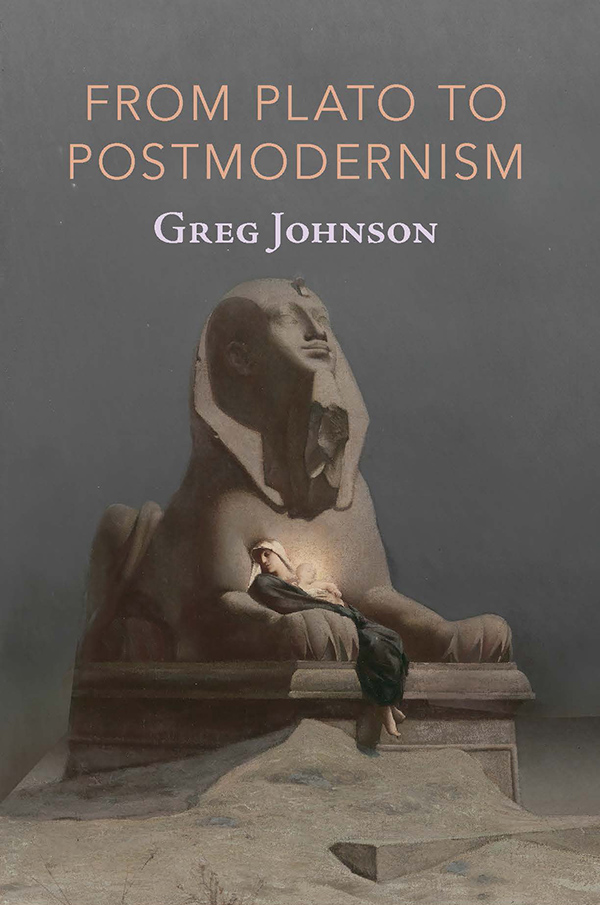
You can buy Greg Johnson’s From Plato to Postmodernism here

The West often conflates “faith” with spirituality, treating them as largely synonymous. India, by contrast, lacks even a conceptual equivalent to “spirituality” in the Western sense. Its dominant values—might-makes-right, materialism, hedonism, and their offshoots—stand in fundamental opposition to what the West understands as faith. To an outsider grounded in morality and reason, these more primal tendencies might appear correctable through education and training. But it is not so simple. Transforming such a value system is a task spanning millennia at best, as not only thought leaders must become aware of moral values and rationality, but these must start asserting their systems of thought and action and slowly permeate throughout the society, all interacting with each other, while each value dances in synch with other values, evolves them, and concretizes the whole complex.

This is the job of millennia.

Modern development theory often assumes that education and economic growth will gradually reshape society. Once people become literate, attend universities, and participate in a modern economy, their values are expected to converge with those of developed societies. Rationality, civic responsibility, and institutional trust are assumed to follow naturally.

This assumption mistakes knowledge for wisdom and skills for character.

Education can transmit information and train technical competence. It can produce engineers, doctors, and programmers. What it cannot do is quickly transform the moral instincts guiding everyday behavior. A society may produce functional engineers yet struggle with cooperation and creativity. It may train skilled doctors while lacking professional duty. It may graduate millions without making them socially productive and cultivating trust, honesty, or long-term thinking.

Economic growth faces a similar limitation. Prosperity changes what people can afford, not automatically what they value. Wealth can amplify existing cultural tendencies as easily as it can transform them. In societies shaped by restraint and responsibility, prosperity reinforces cooperation and institutional stability. In societies shaped by short-term gratification, wealth expands consumption, competition, and status-seeking.

Modern technology makes this mismatch even more visible. Smartphones, software, and global markets can be adopted within a generation. The moral and psychological frameworks that made such tools possible cannot.

This mismatch creates the illusion of rapid progress. From a distance, the outward signs of modernization—universities, infrastructure, financial markets, and democratic institutions—suggest deep transformation. Beneath the surface, older patterns of thought and behavior remain intact—and now, ironically, preserved and perverted—shaping how these new tools are used.

The result is not merely stagnation but perversions, as if tribal populations are moved into cities only to be left in slums. An honest visit—avoiding luxury travel—to the Third World, home to two-thirds of humanity, makes this unmistakable. A Western visitor, trained to ignore the invisible moral and value-based foundations of civilization, sees what appears to be progress. He is watching a Penrose staircase without realizing it. At any given moment, he believes society stands at the cusp of rapid growth. On repeated visits, he observes minor improvements in a few areas and deterioration in many others, resulting in an overall decline. Political correctness then pushes him to focus only on the improvements, reinforcing his conviction that the future is bright.

Indians perceive the world through a prism of consciousness detached from any framework. Escapism, fatalism, ritualism, materialism, a craving for mental and physical stupor, and the outsourcing of responsibility—either to the divine or to fate—dominate, untouched by morality or reason. The worldview is unmoored from objectivity, shaped by magical thinking, a conception of the cosmos as arbitrary and lacking in principle.

In such an amoral, irrational space, no cohesive force binds the economy or systems of knowledge. Everything tends to dissipate and decay. Bridges collapse months after inaugurations. Roads wash away. Institutions do the opposite of their intended purpose. Anti-corruption offices become centers of corruption. Justice systems become predatory.

Compartmentalized knowledge, unassociated with a larger framework, leads to no cognitive dissonance, as it is not challenged or required to be assimilated by any underlying intellectual fabric. That compartmentalized knowledge becomes stale and eventually grossly corrupted as the underpinning magical thinking and the instinct of might-makes-right seep into it.

From a modern perspective, this can feel frustrating. Technology evolves in years, economies in decades, and political systems overnight. It is tempting to assume societies should evolve just as quickly.

But civilizations do not move at the speed of technology. They move at the speed at which values are transmitted and evolve in a dance across generations—through families, religious traditions, schools, and social expectations. These processes are slow because they require more than information. They require the gradual reshaping of instincts, habits, and moral imagination. They demand the emergence of trust where distrust once prevailed, the acceptance of rules where impulse once dominated, and the cultivation of long-term thinking in cultures shaped by immediate necessity.

This is why attempts to accelerate civilizational change so often lead to disappointment. Outsiders see institutions, policies, and educational systems as levers that can be pulled to produce rapid transformation. They underestimate the invisible infrastructure that allows these tools to function. Without that foundation, reforms appear successful on paper while failing, and often being counterproductive, in practice. The salient feature of today’s Third World is not forest dwellers (who should not be romanticised as noble savages) but slums drowning in sewage, drugs, and crime.

The cultural change that should take millennia has, for now, been upended, as the motivation and feedback to make values more moral and rational have dissipated with the gift of Western technology and prosperity. Reformers continue to prescribe institutional solutions to civilizational problems. Until this civilizational timescale is acknowledged, the Third World will continue to be misread, misdiagnosed, and repeatedly “reformed” into deeper dysfunction.

Why Civilizations Take Millennia to Change

Why%20Civilizations%20Take%20Millennia%20to%20Change%0A

Share

  • Gab

Enjoyed this article?

Be the first to leave a tip in the jar!

Instant Echeck GreenPay™

Related

  • The Inferiority Behind Immigrant Superiority

  • Collin Cleary: What Rome Means to Me

  • Who’s Looking Back?

  • Jared Taylor: What Rome Means to Me

  • Predation Wearing the Mask of Civilization

  • Lothrop Stoddard’s The Revolt Against Civilization

  • Lewis Strauss Did Nothing Wrong:

  • Do You Want to Play a Game?

Tags

ChristianitycivilizationcultureGreek philosophyinstitutionsJayant BhandariRoman lawrule of lawsocial developmentsocial reformtechnologythe Enlightenmentthe third worldWestern values

Previous

« Nietzsche and the Nazis

Next

» Direct Democracy: The Alternative to Globalist Plutocracy? Part 3

11 comments

  1. Jocelynn Cordes says:
    February 11, 2026 at 7:00 pm

    This is an exceptional piece. Nearly every sentence is worth highlighting. These are two I agree with wholeheartedly:

    Institutions are not the engines of civilization; they are its outward expression. 

    What appears, from a distance, to be a failure of policy is often a mismatch between imported institutions and the consciousness required to sustain them.

    2
    2
    • Todd Wayne
    • Uncle Semantic
  2. Zarathustra says:
    February 11, 2026 at 9:56 pm

    This article, as insightful as it may be, indirectly and unintentionally (?) contradicts one of the cornerstones of White Nationalism: the notion that immigration is a civilisational threat. Since civilisations change on the timescale of millennia.

    0
    0
    1. Greg Johnson says:
      February 11, 2026 at 11:53 pm

      I think it undermines an essential assumption of the diversity regime, which is that we can assimilate these people — indeed, without even trying, since multiculturalism is just the opposite of assimilation.

      3
      3
      • Jocelynn Cordes
      • Todd Wayne
      • Uncle Semantic
  3. Tye says:
    February 11, 2026 at 10:22 pm

    I’ve read nearly ever article published on this site for many years, and this was one of the most well written pieces. Thank you for publishing. It sounds like a high IQ Indian frustrated with the motherland?

    5
    5
    • Jocelynn Cordes
    • Bigfoot
    • Bigfoot
    • Todd Wayne
    • Uncle Semantic
  4. Chud says:
    February 11, 2026 at 11:06 pm

    The existence of economic “miracles” (Wirtschaftwunder, Japanese economic miracle, miracle on the Han River, etc) typically gives this false impression. With a relatively open market and functioning institutions, it’s only around 30 years from an undeveloped economy to a developed economy. 30 years was about the time from the Meiji Restoration to the Japanese victory over Russia. It’s described as a “miracle”, because as Mr Bhandari said, intellectuals are often blind to the true cause. It leads to some bizarre optimism. The early 20th century racialist authors like Stoddard were more tempered with their predictions about economic development in the non-white world, and his predictions hit the mark better than almost every late 20th century economist who remained blind to race.

    The racial and cultural inheritance we have is the base upon which the superstructure of development rests. Replacement migration undermines the very base of western civilization, it’s far, far, far more damaging than any statistic accurately captures. And the damage to the civilizational base we’re seeing now will likely be felt for the next few thousand years.

    There’s even an invisible change that’s not genetic or demographic, but cultural. When whites in a certain city find out they’re being systematically excluded by Indian in-group preference, they adapt, they adapt through mimicry. They start practicing in-group exclusionary behavior or even outright deceitful behavior in the same manner to economically get by, setting themselves on the path to becoming similar to the third world migrants replacing them. Having to adjust to the sub-continent’s hierarchical nature rubs off on you, even living around them is enough to cause you to think and act more like they do. This will be difficult to change, and could again take hundreds of years.

    4
    4
    • Tye
    • Todd Wayne
    • Elear
    • Uncle Semantic
    1. E_Perez says:
      February 12, 2026 at 3:01 am

      “The existence of economic “miracles” (Wirtschaftwunder, Japanese economic miracle, miracle on the Han River, etc) typically gives this false impression. With a relatively open market and functioning institutions, it’s only around 30 years from an undeveloped economy to a developed economy.”

      Oh no, these were not a false impressions. Your examples prove that you have not understood the article.

      The ‘Wirtschaftswunder’ – 15 years after WWII – was not a transition from an undeveloped economy thanks to ‘open markets’.

      On the contrary, it was the manifestation that a society rooted in centuries of cultural prowess can be defeated but cannot be destroyed easily.

      And this, in fact, is the message of this article.


      0
      0
      1. Chud says:
        February 12, 2026 at 9:52 am

        Perhaps I was too vague with my reply, excuse me for the confusion. I agree with Mr Bhandari, I was just framing it how mainstream economists frame it. They call these events an economic “miracle” because to them the rapid development just came out of the blue. To the racially conscious person, they’ve always had an eye for the potential of different people and haven’t been as surprised.

        The false impression is that they were “miracles”, not that they happened.

        0
        0
  5. Bigfoot says:
    February 12, 2026 at 8:01 am

    This article should be mandatory reading for anyone thinking of joining the Peace Corps.

    Also, I wonder if the leadership of the U.S. Military realized any of this when the U.S. lost the war in Afghanistan.

    2
    2
    • Todd Wayne
    • Uncle Semantic
  6. Elear says:
    February 12, 2026 at 2:31 pm

    Great article from Mr. Bhandari. Indeed we mustn’t forget about the soil (& blood) upon which we cultivate the civilization, although I’d probably emphasize the elite component more when discussing change.

    In India’s case I see the internal ethnic diversity, lack of a strong imperial tradition and the post-colonial political arrangements as significant impediments to progress. In such environment the elite and coalition management is difficult, breeding massive corruption and diffusing power too widely. Tribalism ultimately stalls development as the preservation of chieftain’s power trumps every other aspiration and progress can disrupt the status quo. The British were able to circumvent some of these obstacles with their system while ruling via local intermediaries since they knew how to manage them and retained sufficient strength to dispense threats & incentives. With the downfall of the Empire there was no local power that could replace the British in similar capacity which forced a devolution of central power and increased the relative price of elite compromise. It seems that India can’t really go forward without reducing diversity within the polity, importing foreign talent or enduring another elite replacement that restructures the power distribution.

    1
    1
    • Uncle Semantic
  7. Rotbard says:
    February 16, 2026 at 2:26 am

    Well-written and insightful. Thank you.

    I hope this isn’t too much of a non sequitur:
    My sense is that we Europeans have reached a long-developing tipping point. I think we have become anti-civilizational. When we possibly implode in the next 250 years, and our technocracy withers,
    the 3rd world may be able to resume their own proper development. And, of course, maybe we can get set on a better course of our own.

    0
    0
  8. Az says:
    May 5, 2026 at 1:35 pm

    Great piece of thought. Mr. Bhandari always puts ideas which need deep thinking. I used to always wonder why the west seems so peaceful and cultured. Now i have my answers. I hope the new generation open their eyes to preserve it before too late.

    About third world and India especially we see all the systems breaking apart. Atleast one of politicians should read and understand the lackings of society.

    0
    0

Comments are closed.

If you have a Subscriber access,
simply login first to see your comment auto-approved.

Note on comments privacy & moderation

Your email is never published nor shared.

Comments are moderated. If you don't see your comment, please be patient. If approved, it will appear here soon. Do not post your comment a second time.

Writers of May

(2 votes) Morris van de Camp David M. Zsutty Derek Stark Jayant Bhandari Greg Johnson

Articles of May

The Lunch Wars by David M. Zsutty Heidegger on Nietzsche, Part One by Collin Cleary 2 votes
    • Editor’s Update
      Rob Rundo on Counter-Currents Radio, Fundraiser Update, & a New $20,000 Matching Grant

      Greg Johnson

    • The Bitter End of Western Metaphysics:
      Heidegger on Nietzsche, Part Three

      Collin Cleary

      10

    • Uncivil War

      Mark Gullick

      37

    • Exclusive Interview with Karel Veliky:
      The Final Chapter in the Film Series! Part II

      Ondrej Mann

      2

    • Happy Birthday to Us!

      Greg Johnson

      6

    • Zsutty’s Maximum

      David M. Zsutty

      15

    • Exclusive Interview with Karel Veliky:
      The Final Chapter in the Film Series! Part I

      Ondrej Mann

      2

    • The Union Jackal, June 2026

      Mark Gullick

      23

    • The Inferiority Behind Immigrant Superiority

      Jayant Bhandari

      15

    • Counter-Currents Radio Podcast No. 690
      Greg Johnson & David Zsutty Discuss Current Things: AI, Henry Nowak, the Iran Crisis, & More

      Counter-Currents Radio

      7

    • Collin Cleary: What Rome Means to Me

      Collin Cleary

      4

    • Paul Krugman: Closet Bolshevik

      Spencer J. Quinn

      19

    • Fugue of Ideas:
      Ibram X. Kendi’s Chain of Ideas

      Greg Johnson

      19

    • Based Blacks

      Lipton Matthews

      20

    • Black Intellectual Fatigue

      Derek Stark

      41

    • Why White Advocates Should Avoid “Based Blacks”

      Dani Vypont

      32

    • Nietzsche & Race

      Mark Gullick

    • Editor’s Update
      Rob Rundo Rescheduled to Next Week on Counter-Currents Radio;
      Tonight Greg Johnson & David Zsutty Answer Your Questions;
      Fundraiser Update & a New $20,000 Matching Grant

      Greg Johnson

    • The Counter-Currents 2026 Fundraiser
      Lifetime Subscriber Welcome Packages Extended

      Greg Johnson

    • Nationalism This Week
      Who’s Looking Back?

      Greg Johnson

      29

    • China’s Threat to American Security:
      Food, Farmland, Foreign Control, & Energy Policy

      Lipton Matthews

      5

    • The Bitter End of Western Metaphysics:
      Heidegger on Nietzsche, Part Two

      Collin Cleary

      16

    • The Killing of Henry Nowak

      Mark Gullick

      38

    • The Crisis of Chinese Technology Thieves

      Morris van de Camp

      1

    • The Strange World of Gender Bender Fiction:
      & What This Genre Tells Us About Autosexuality

      Dani Vypont

      3

    • Watching the Watchers:
      The Dark Triad Question

      David M. Zsutty

      14

    • The Remigration Movement Solidifies

      F. Roger Devlin

      1

    • Casting Aspersions:
      The Fatal Consequences of Race-Swapped Casting, From Helen of Troy to Henry of Southampton

      Steven Tucker

      20

    • The Murder of Henry Nowak

      Millennial Woes

      23

    • Don’t Forget to Vote in Our Writer & Article of the Month Poll

      Greg Johnson

    • The Robot Hotdog Stand

      Greg Johnson

      37

    • Laughing Our Way to Victory

      Dave Chambers

      7

    • The Zodiac Killer

      Mark Gullick

      11

    • Jared Taylor: What Rome Means to Me

      Jared Taylor

      1

    • An Interview with Endeavour:
      My Way of Life Is an Adventure!

      Ondrej Mann

      6

    • José Pedro Zúquete’s The Identitarians

      Greg Johnson

      3

    • Editor’s Update
      Fundraiser Update & How to Watch the Remigration Summit

      Greg Johnson

      5

    • The Bitter End of Western Metaphysics:
      Heidegger on Nietzsche, Part One

      Collin Cleary

      12

    • Berlin: City of Stones

      Spencer J. Quinn

      6

    • True Folk-Horror Is Horror of Your Own Folk:
      Mark Gatiss vs the Brexit Blind Dead  

      Steven Tucker

      4

    • Counter-Currents Radio Podcast No. 689
      Thomas Massie, the America 2050 Bust, the Need for Whites to Divest from America, the AI Economic Apocalypse, & Pro-White Project Pitches to Billionaires

      Counter-Currents Radio

      7

    • Nationalism This Week
      Remigration is Inevitable, Part 3

      Greg Johnson

      27

    • Why Billionaires Should Fund White Identity Politics

      Lipton Matthews

      8

    • How Cold War Two Came About

      Morris van de Camp

      5

    • Now Available for Pre-Order at a Special Price!
      Greg Johnson’s The Philosopher Is In

      Greg Johnson

    • David Zsutty’s Elevator Pitch to a Billionaire

      David M. Zsutty

      1

    • Headbanging Lite

      Mark Gullick

      5

    • White Advocacy Past and Present

      Peter Bradley

      13

    • The Lunch Wars

      David M. Zsutty

      47

    • The Russians are Coming/The Russians are Coming

      Steven Clark

      1

    • Will Williams

      Nationalism This Week
      The SPLC Indictment

      I bump this comment because Christian conservative reporter Tyler O'Neil is on the SPLC  beat again...

    • Peter Quint

      Why White Advocates Should Avoid “Based Blacks”

      Why would you tell a little parable like that? Are you trying to tell us to judge blacks by the  “...

    • Will Williams

      Based Blacks

      Uncle Semantic: June 14, 2026  Will, I’m curious if your racial journey to where you stand now...

    • Will Williams

      Based Blacks

      Uncle Semantic: June 14, 2026  Do you think blacks would be more palatable to the proWhite...

    • ArminiusMaximus

      Based Blacks

      I may want them to get scared straight, but I doubt that message will sink in. Can they think in...

    • Uncle Semantic

      Fugue of Ideas:
      Ibram X. Kendi’s Chain of Ideas

      The movie American Fiction with Jeffrey Wright is very good on this.

    • Will Williams

      Why White Advocates Should Avoid “Based Blacks”

      Scott: June 13, 2026 Will Williams wrote:“Scott, it’s interesting that you call George...

    • Joe Gould

      Uncivil War

      Upvoted for this: "Actually, there’s another, special tier, above the rest, for the Epstein Class...

    • Fred C. Dobbs

      Why White Advocates Should Avoid “Based Blacks”

      Anomaly

    • Scott

      Based Blacks

      D'oh, my post was lost by the C-C software again and it was short so I did not save it elsewhere. I...

    • Joe Gould

      Uncivil War

      One of the reasons we are confused and act unwisely is that many things around us have false names....

    • Greg Johnson

      Counter-Currents Radio Podcast No. 690
      Greg Johnson & David Zsutty Discuss Current Things: AI, Henry Nowak, the Iran Crisis, & More

      This is a spam post, but it is interesting. Apparently, now gambling platforms have AI spambots that...

    • Uncle Semantic

      Based Blacks

      Watch brian shapiro if you want a real dose of Every Single Time the person. Way worse than the...

    • Uncle Semantic

      Based Blacks

      When is it supposed to begin? Can’t be a bigger freak show than this stupid ufc fight at the white...

    • Uncle Semantic

      Based Blacks

      Will, I’m curious if your racial journey to where you stand now was from the republican/con inc./...

    • Uncle Semantic

      Based Blacks

      Do you think blacks would be more palatable to the proWhite message just by reminding them that...

    • Uncle Semantic

      Black Intellectual Fatigue

      In the words of that great humanitarian Rodney King, can’t we all just get along? No, with a capital...

    • Uncle Semantic

      Black Intellectual Fatigue

      Black Dolphin Prison is a Christmas present for scum like Austin’s killer.

    • Uncle Semantic

      Black Intellectual Fatigue

      Andre Williams has been making the rounds with certain podcasters and his is a welcome new voice as...

    • YT

      Uncivil War

      Excellent article, very intelligently written, best thing I’ve read on this sickening outrage. I...

    • Earth Day Special

      John Morgan

      12

    • A Robertson Roundup
      Remembering Wilmot Robertson
      (April 16, 1915 – July 8, 2005)

      Margot Metroland

      13

    • The Paranoid Style in White Nationalism

      Greg Johnson

      30

    • Join the Dance!

      Andrew Hamilton

      1

    • We Can’t Save the Earth Without Reducing African Birth Rates

      James Dunphy

      36

    • “I’m Not a Conspiracy Theorist, but . . .”:
      Jeffrey Epstein’s Death Gives New Life to “Conspiracy Theories”

      Greg Johnson

      22

    • Sylvia Plath: Stasis in Darkness

      Vic Olvir

      17

    • Vanguardism, Vantardism, & Mainstreaming

      Greg Johnson

      80

    • Aviation, Geography, & Race

      Charles Lindbergh

      3

    • Some Thoughts on Yule

      Collin Cleary

      4

    • Living in Truth:
      A Yuletide Homily

      Jef Costello

      7

    • John Kennedy Toole’s A Confederacy of Dunces

      Greg Johnson

      20

    • On Aleksandr Solzhenitsyn’s Warning to the West

      Spencer J. Quinn

      7

    • Elitism, British Modernism, & Wyndham Lewis

      Jonathan Bowden

      6

    • Philip K. Dick’s Do Androids Dream of Electric Sheep? as Anti-Semitic/Christian-Gnostic Allegory

      Greg Johnson

      20

    • “Conspiracy Theory” or Conspiracy?

      Andrew Hamilton

      21

    • Remembering H. P. Lovecraft
      (August 20, 1890–March 15, 1937)

      Greg Johnson

      3

    • Who Are We?
      Nordics, Aryans, & Whites

      Greg Johnson

      71

    • Remembering William Gayley Simpson
      (July 23, 1892–December 31, 1990)
      A Pleasant Afternoon with Harriet & Bill Simpson

      Margot Metroland

      18

    • Here are the Young Men
      Remembering Ian Curtis
      (July 15, 1956–May 18, 1980)

      Mark Gullick

      18

    • Percy Grainger
      Artist of the Right

      Alex Graham

      7

    • Remembering Revilo Oliver
      (July 7, 1908–August 20, 1994)

      Greg Johnson

      18

    • The Meaning of July 4th for the White Man

      Gregory Hood

      13

    • The Front National’s Evolution

      Bruno Mégret

    • Merwin K. Hart
      Forgotten American Hero & Man of the Right

      Morris van de Camp

      10

    • George Orwell’s Nineteen Eighty-Four

      Jonathan Bowden

      8

    • Carleton S. Coon
      Scientist & Reluctant White Advocate

      Morris van de Camp

      3

    • The Kwanzaa Absurdity Will Be Dwarfed by Juneteenth

      Robert Hampton

      10

    • Stravinsky

      Alex Graham

      7

    • Like the Roman:
      Remembering Enoch Powell (1912-1998)

      Mark Gullick

      23

    • The 1970s: The Golden Age of Hijacking

      Morris van de Camp

      21

    • Jonathan Bowden’s Deliverance
      Part 6

      Jonathan Bowden

    • Do You Want to Play a Game?

      Mark Gullick

      1

    • Sexually Incontinent on the Indian Subcontinent:
      Who Rapes More Animals, Indians or Pakistanis? The Battle Continues!

      Steven Tucker

      3

    • Neo-Fascism in Film
      Part 5

      Karel Veliky

      15

    • The Game of Tarot

      Mark Gullick

      2

    • Institutions Cannot Be Transplanted

      Jayant Bhandari

      5

    • Jonathan Bowden’s Deliverance
      Part 5

      Jonathan Bowden

    • Crosstown Traffic:
      Jimi Hendrix & The Post-War Rock ‘N’ Roll Revolution

      Mark Gullick

      1

    • Slaves from the North:
      Finns & Karelians in the East European Slave Trade, 900–1600

      Lipton Matthews

      14

    • Neo-Fascism in Film
      Part 4

      Karel Veliky

      2

    • David Lean’s A Passage to India

      Spencer J. Quinn

      1

    • Elites are Essential to Development

      Lipton Matthews

      7

    • Jonathan Bowden’s Deliverance
      Part 4

      Jonathan Bowden

    • Neo-Fascism in Film
      Part 3

      Karel Veliky

      6

    • E. M. Forster’s A Passage to India & the Indian Mentality

      Spencer J. Quinn

      25

    • Jonathan Bowden’s Deliverance
      Part 3

      Jonathan Bowden

    • The Rest Is Silence
      Heidegger’s Quietism

      Mark Gullick

      2

    • Dispelling the Historical Fallacy of Indian Nationalism

      Lipton Matthews

      8

    • Neo-Fascism in Film
      Part 2

      Karel Veliky

      8

    • Jonathan Bowden’s Deliverance
      Part 2

      Jonathan Bowden

    • Life of a Klansman

      Mark Gullick

      8

    • Jonathan Bowden’s Deliverance, Part 1

      Jonathan Bowden

    • Decolonial Ideas are Holding Back Developing Countries

      Lipton Matthews

      8

    • Neo-fascism in Film, Part 1

      Karel Veliky

      21

    • Jonathan Bowden’s Onslaught, Part 8
      Divigations on Decadence

      Jonathan Bowden

    • Jonathan Bowden’s Onslaught, Part 7
      Intrigues in the National Front

      Jonathan Bowden

      1

    • Rotten to the Core

      Mark Gullick

      8

    • Strauss on Husserl’s “Philosophy as Rigorous Science”

      Greg Johnson

    • Jonathan Bowden’s Onslaught, Part 6
      Francis Bacon & Right-Wing Nihilism

      Jonathan Bowden

    • András László
    • Derek Hawthorne
    • Beau Albrecht
    • Alain de Benoist
    • Kerry Bolton
    • Jonathan Bowden
    • Collin Cleary
    • Jef Costello
    • Savitri Devi
    • Julius Evola
    • Jim Goad
    • Gregory Hood
    • Juleigh Howard-Hobson
    • Greg Johnson
    • Charles Krafft
    • Anthony M. Ludovici
    • Trevor Lynch
    • H. L. Mencken
    • J. A. Nicholl
    • James J. O’Meara
    • Christopher Pankhurst
    • Tito Perdue
    • Michael Polignano
    • Spencer J. Quinn
    • Fenek Solère
    • Irmin Vinson
    • Leo Yankevich
    • Francis Parker Yockey
    • Multiple authors
  • Editor-in-Chief

    • Greg Johnson, Ph.D.

    Featured Writers

    • Beau Albrecht
    • Gunnar Alfredsson
    • Collin Cleary, Ph.D.
    • Jef Costello
    • Morris V. de Camp
    • F. Roger Devlin, Ph.D.
    • Stephen Paul Foster, Ph.D.
    • Jim Goad
    • Alex Graham
    • Mark Gullick, Ph.D.
    • Greg Johnson, Ph.D.
    • Travis LeBlanc
    • Trevor Lynch
    • Margot Metroland
    • James J. O’Meara
    • Angelo Plume
    • Spencer J. Quinn
    • Fred Reed
    • Clarissa Schnabel
    • Michael Walker
    • David M. Zsutty

    Frequent Writers

    • Asier Abadroa
    • Aquilonius
    • Alain de Benoist
    • Kerry Bolton, Ph.D.
    • Dave Chambers
    • Steven Clark
    • James Dunphy
    • Endeavour
    • Richard Houck
    • Jason Kessler
    • Titus Livius
    • Ondrej Mann
    • Lipton Matthews
    • Mark Mazari
    • John Morgan
    • Jaroslav Ostrogniew
    • Kathryn S.
    • Christian Secor
    • Anne Wilson Smith
    • Thomas Steuben
    • William De Vere
    • Kenneth Vinther
    • Max West

    Classic Authors

    • Maurice Bardèche
    • Jonathan Bowden
    • Julius Evola
    • Guillaume Faye
    • Ernst Jünger
    • Kevin MacDonald, Ph.D.
    • D. H. Lawrence
    • Charles Lindbergh
    • Jack London
    • H. P. Lovecraft
    • Anthony M. Ludovici
    • Sir Oswald Mosley
    • National Vanguard
    • Friedrich Nietzsche
    • Revilo Oliver
    • William Pierce
    • Ezra Pound
    • Saint-Loup
    • Savitri Devi
    • Carl Schmitt
    • Miguel Serrano
    • Oswald Spengler
    • P. R. Stephensen
    • Jean Thiriart
    • John Tyndall
    • Dominique Venner
    • Leo Yankevich
    • Francis Parker Yockey

    Other Authors

    • Howe Abbott-Hiss
    • Michael Bell
    • Giles Corey
    • Jack Donovan
    • Richardo Duchesne, Ph.D.
    • Emile Durand
    • Guillaume Durocher
    • Mark Dyal
    • Tom Goodroch
    • Andrew Hamilton
    • Robert Hampton
    • Huntley Haverstock
    • Derek Hawthorne
    • Gregory Hood
    • Juleigh Howard-Hobson
    • Alexander Jacob
    • Ruuben Kaalep
    • Tobias Langdon
    • Julian Langness
    • Patrick Le Brun
    • G A Malvicini
    • John Michael McCloughlin
    • Millennial Woes
    • Michael O’Meara
    • Christopher Pankhurst
    • Michael Polignano
    • J. J. Przybylski
    • Quintilian
    • Edouard Rix
    • C. B. Robertson
    • C. F. Robinson
    • Herve Ryssen
    • Alan Smithee
    • Fenek Solere
    • Ann Sterzinger
    • Robert Steuckers
    • Tomislav Sunic
    • Donald Thoresen
    • Marian Van Court
    • Irmin Vinson
    • Book Reviews
    • Movie Reviews
    • TV Reviews
    • Music Reviews
    • Art Criticism
    • Graphic Novels & Comics
    • Video Game Reviews
    • Fiction
    • Poems
    • Interviews
    • Videos
    • English Translations
    • Other Languages
      • Arabic
      • Bulgarian
      • Croatian
      • Czech
      • Danish
      • Dutch
      • Estonian
      • Finnish
      • French
      • German
      • Greek
      • Hungarian
      • Italian
      • Lithuanian
      • Norwegian
      • Polish
      • Portuguese
      • Romanian
      • Russian
      • Slovak
      • Spanish
      • Swedish
      • Ukrainian
    • Commemorations
    • Why We Write
  • Archives
  • Top 100 Commenters
  • The Looney Bin
Sponsored Links
Europa.com Above Time Coffee Antelope Hill Publishing Paul Waggener IHR-Store Spencer J. Quinn American Renaissance Jim Goad The Occidental Observer
Donate Now Mailing list
Books for sale
  • The Philosopher Is In
  • Sexual Utopia in Power (Expanded Edition)
  • In Defense of Prejudice
  • Loving Our Own
  • Tyranny & Wisdom
  • The Populist Moment
  • Is America Doomed?
  • To all books
Copyright © 2026 Counter-Currents Publishing, Ltd.

Paywall Access


Please enter your email address.

Lost your password?

Edit your comment

Writer & Article of the Month May 2026

Voting for this month has concluded. Here are the final results!

Top Writers

  • #1 Morris van de Camp 2 votes
  • #2 David M. Zsutty 2 votes
  • #3 Derek Stark 2 votes
  • #4 Jayant Bhandari 2 votes
  • #5 Greg Johnson 2 votes
  • #6 Jared Taylor 1 vote
  • #7 Collin Cleary 1 vote
  • #8 Spencer J. Quinn 1 vote
  • #9 Mark Gullick 1 vote
  • #10 Lipton Matthews 1 vote
  • #11 Keith Woods 1 vote
  • #12 Steven Tucker 1 vote

Top Articles

  • #1 The Lunch Wars 2 votes
  • #2 Heidegger on Nietzsche, Part One 2 votes
  • #3 Peak Fatigue in Fort Wayne 1 vote
  • #4 Keith Wood's Elevator Pitch to a Billionaire 1 vote
  • #5 Do You Want to Play a Game? 1 vote
  • #6 Why Billionaires Should Fund White Identity Politics 1 vote
  • #7 The 1970s: The Golden Age of Hijacking 1 vote
  • #8 True Folk-Horror Is Horror of Your Own Folk 1 vote
  • #9 Finding Atlantis Part 4 1 vote
  • #10 Berlin: City of Stones 1 vote
  • #11 The Ghost of the Confederacy 1 vote
  • #12 Lothrop Stoddard’s The Revolt Against Civilization 1 vote
  • #13 Could Fascism Work? 1 vote
  • #14 Jared Taylor's Elevator Pitch to a Billionaire 1 vote
  • #15 Predation Wearing the Mask of Civilization 1 vote

Total votes cast: 17