 1,075 words
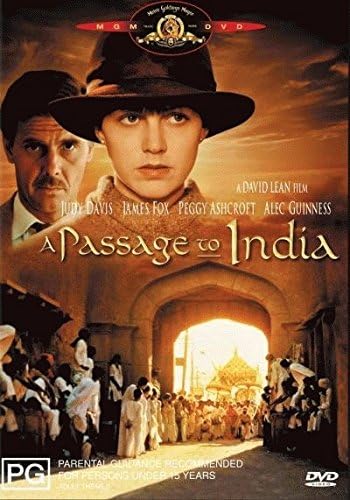
If there ever was a wrong choice of director for a movie, it was David Lean in his 1984 adaptation of EM Forster’s 1924 novel A Passage to India. By no means does this make A Passage to India a bad movie. In many respects it is a better movie than the novel is a novel. Lean applies his characteristic vision and vastness of scope to the story of interracial friendship within the British Raj, and the result is a pure delight for the eyes. Lean also edited the film, and despite its being nearly three hours long, it moves quickly and seamlessly—unlike many passages in Forster’s dreary novel. Lean just knows where to put the camera and how and when to move it. He also knows how to cull believable performances from his actors—with one exception, which we will discuss below. Forty-plus years after its release has done nothing to diminish the entertainment value of this oft-neglected film.
The problem is that A Passage to India is neglected for good reason. Ultimately, the story itself—or, really, what Lean decided to keep from Forster’s story—does not merit the epic narrative techniques that the director of Lawrence of Arabia and The Bridge on the River Kwai brings to the table. Forster’s novel has, in my opinion, two redeeming qualities which makes it worth remembering—an accurate depiction of the Indian mind as distinct from the Western one, and a story arc which takes two friends, Cyril Fielding (played by James Fox) and Dr. Aziz Ahmed (played by Victor Banerjee), from idealistic universalism to ethnocentric nationalism. These elements combine into a fairly evocative treatise on race and colonialism which, if one can slog through Forster’s tedious and abstruse prose, retains relevance today.
You can buy Spencer J. Quinn’s young adult novel The No College Club here.
Lean ignores all of this. Instead, he focuses on the significantly less dramatic topic of Fielding’s and Ahmed’s friendship as if they were once college chums who had a falling out. He also focuses on the least developed and most perplexing aspect of Forster’s novel—the erratic nature of the female mind. Thus he attempts to make an A+ movie out of a C+ plus story. The result, of course, is a failure—but one of the most interesting failures I have ever seen.
One of the hallmarks of a great director is his ability to keep the viewer’s interest in the absence of dialogue through pure cinema. Not that I recommend this exercise, but watching A Passage to India with the sound off—as if it’s a silent movie directed by DW Griffith—will shed surprisingly little of the movie’s appeal. We witness gorgeous landscapes and exotic ruins and tortuous trees and cavernous passages and granite mountains and graffitied elephants and Buster Keaton-esque thrills aboard speeding trains. Only Lean can spend several minutes depicting a procession moving slowly from point A to point B to point C and never relinquish visual interest.
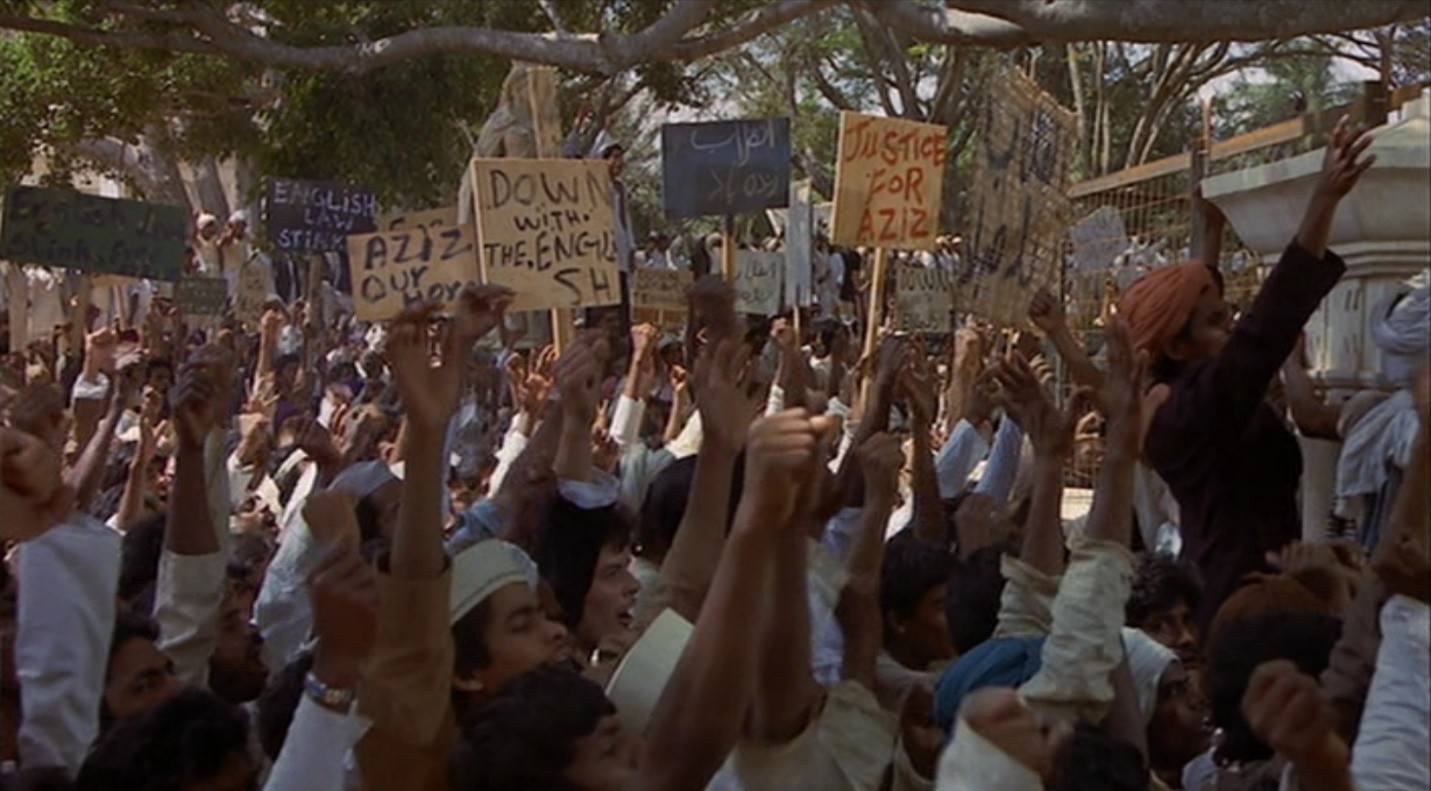
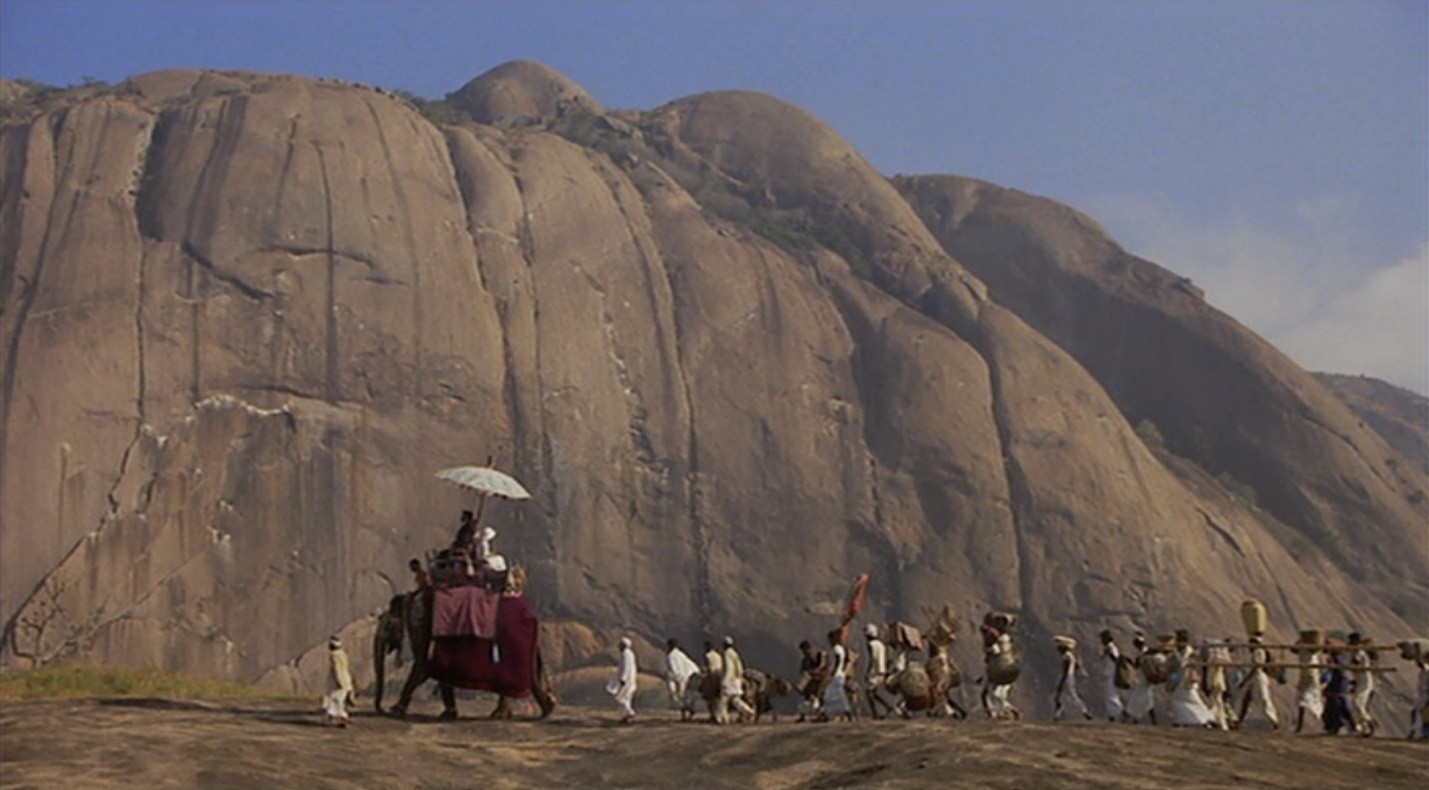 He also makes great use of his cast of, if not thousands then hundreds, of half-naked turbaned Indian extras who buoy his sweeping epic through vast scenes of euphoria and unrest.
 Despite the lack of major stars in all the leading roles, Lean brings out believable and compelling performances from his actors. Fox plays the maverick school teacher Fielding with suitable humor and gravitas. Peggy Ashcroft blends beautifully into the haggard and disillusioned old woman Mrs. Moore. Judy Davis is suitably unattractive and clueless as Forster’s unattractive and clueless anti-heroine Adela Quested. In perhaps the most memorable role in A Passage to India, a heavily made-up Alec Guinness portrays the Hindu mystic Professor Godbole.
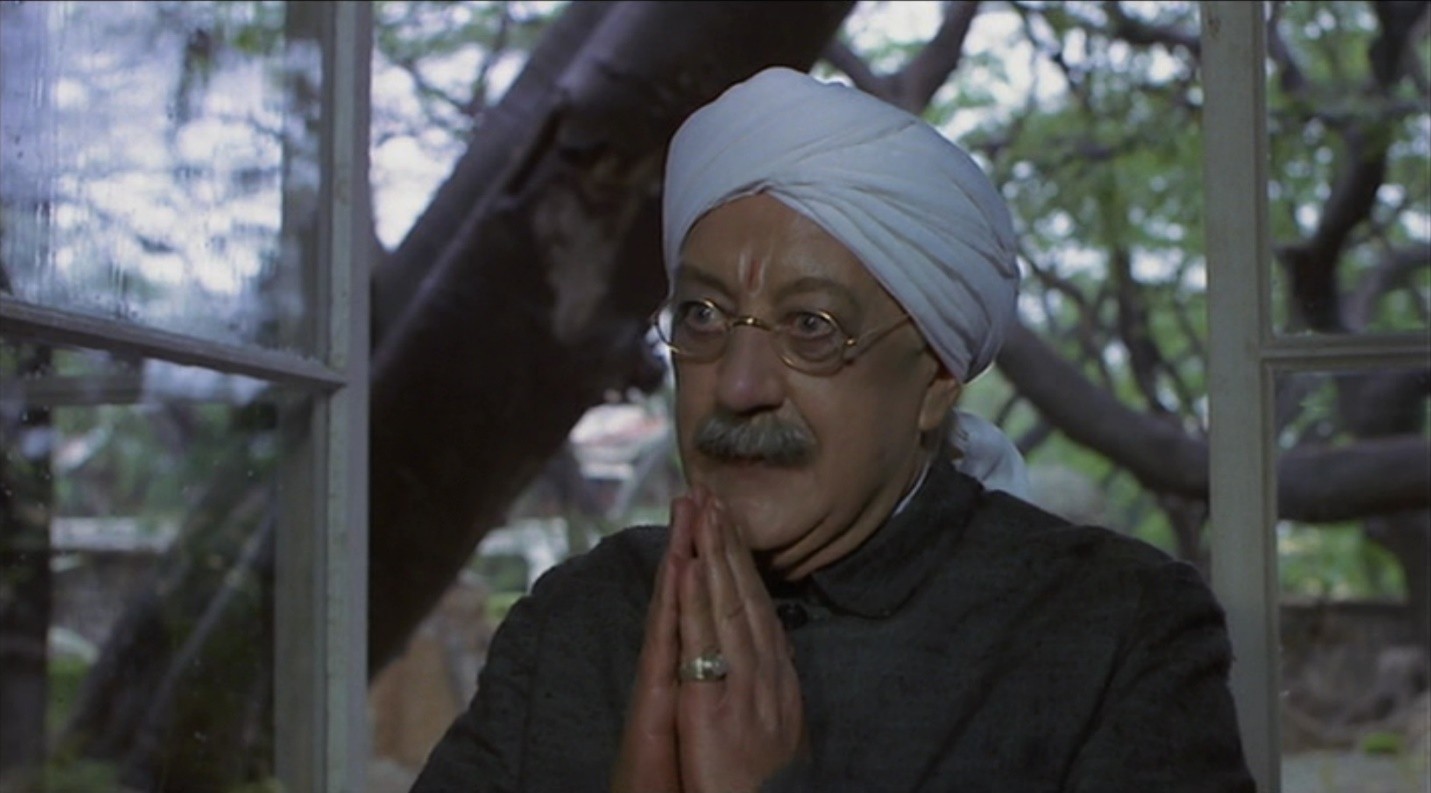 The man who gave us Yevgraf Zhivago, Adolf Hitler, and Obi-Wan Kenobi now delivers a nigh-spiritual performance with such a naturally lilting Indian accent, it’s as if he were born in Bombay. Guinness enriches every scene he is in. And thanks to first rate costuming and makeup he looks the part as well. In one scene, Lean depicts a barefoot Godbole reaching for his sandals as if to show off what a great job the makeup department had done in darkening Guinness’ feet.
Yes, the British extras and minor characters are portrayed stereotypically as uptight and callous oppressors—as they are in the novel. But in fairness to Lean, the Indian characters don’t come across any better. The masses are portrayed as simple minded, superstitious, volatile, and easily led. Aside from Aziz, all other Indian characters who have any dialogue at all are either hysterical, incompetent, or simply not developed enough to warrant analysis.

You can buy Spencer Quinn’s novel White Like You here.
And this leads us to the one glaring flaw in A Passage to India—Victor Banerjee’s dreadful performance as Dr. Aziz. When placed alongside the impeccable portrayals delivered by his white co-stars, the amateurish emotings of this Indian thespian grates upon the viewer—or, at least, upon this viewer—almost immediately. I can just imagine Lean inwardly cringing after every take knowing that he just isn’t going to get anything better out of this earnestly striving actor. And since casting a white actor for the role would have been inappropriate, Lean must have been forced to make do. But was this really the best a nation of 500 or 600 million in 1984 could have offered?
Despite its glowing cinematic merits, however, A Passage to India depicts a story in which relatively little is at stake. How many of us have had a dear friend in our youth whom we cast off in a fit of foolishness and never see again? Such is one of life’s inevitable and unnumerable hiccups, yet by eschewing the racial aspects of EM Forster’s original story, Lean attempts to sell it as tragedy. It ultimately doesn’t work. This is why I believe he was the wrong director for this film. Satyajit Ray would have been better, who may have lacked Lean’s genius for scope, but would likely have focused on the racial and colonial aspects of the novel—which are also its best aspects. See Ray’s wonderful The Chess Players from 1977 for a great example of this. Sure, Ray may have presented the British negatively. But the British were going to be presented negatively regardless, weren’t they? Making up for this, however, would have been our witnessing Dr. Aziz’s slow maturation from optimistic youth into racially identifying nationalist—a transformation which will always prove compelling.
1 comment
Great article! I’ll be sure to avoid this film. 🙃
If you have a Subscriber access,
simply login first to see your comment auto-approved.
Note on comments privacy & moderation
Your email is never published nor shared.
Comments are moderated. If you don't see your comment, please be patient. If approved, it will appear here soon. Do not post your comment a second time.