Counter-Currents
  • Advertise
  • Private Events
  • T&C
  • About
  • Contact
  • RSS
    • Main feed
    • Podcast feed
    • Videos feed
    • Comments feed
  • Welcome
  • Webzine
  • Books
  • Merch
  • Podcasts
  • Videos
  • Donate
  • Patrons
  • Subscribe
  • Crypto

LEVEL2

Donate Now Mailing list
Upcoming podcasts
  • Rob Rundo on Counter-Currents Radio

    Rob Rundo on Counter-Currents Radio

    Counter-Currents Radio

    06/13/2026 — 3 pm EST / 9 pm CET
  • Daniel Tyrie on Counter-Currents Radio

    Daniel Tyrie on Counter-Currents Radio

    Counter-Currents Radio

    06/20/2026 — 3 pm EST / 9 pm CET

Writers of May

(2 votes) Morris van de Camp David M. Zsutty Derek Stark Jayant Bhandari Greg Johnson

Articles of May

The Lunch Wars by David M. Zsutty Heidegger on Nietzsche, Part One by Collin Cleary 2 votes
  • Welcome
  • Webzine
  • Books
  • Merch
  • Podcasts
  • Videos
  • Donate
  • Patrons
  • Subscribe
  • Crypto
    • Black Intellectual Fatigue

      Derek Stark

      5

    • Why White Advocates Should Avoid “Based Blacks”

      Dani Vypont

      7

    • Nietzsche & Race

      Mark Gullick

    • Editor’s Update
      Rob Rundo Rescheduled to Next Week on Counter-Currents Radio;
      Tonight Greg Johnson & David Zsutty Answer Your Questions;
      Fundraiser Update & a New $20,000 Matching Grant

      Greg Johnson

    • The Counter-Currents 2026 Fundraiser
      Lifetime Subscriber Welcome Packages Extended

      Greg Johnson

    • Nationalism This Week
      Who’s Looking Back?

      Greg Johnson

      25

    • China’s Threat to American Security:
      Food, Farmland, Foreign Control, & Energy Policy

      Lipton Matthews

      4

    • The Bitter End of Western Metaphysics:
      Heidegger on Nietzsche, Part Two

      Collin Cleary

      13

    • The Killing of Henry Nowak

      Mark Gullick

      29

    • The Crisis of Chinese Technology Thieves

      Morris van de Camp

      1

    • The Strange World of Gender Bender Fiction:
      & What This Genre Tells Us About Autosexuality

      Dani Vypont

      3

    • Watching the Watchers:
      The Dark Triad Question

      David M. Zsutty

      14

    • The Remigration Movement Solidifies

      F. Roger Devlin

      1

    • Casting Aspersions:
      The Fatal Consequences of Race-Swapped Casting, From Helen of Troy to Henry of Southampton

      Steven Tucker

      20

    • The Murder of Henry Nowak

      Millennial Woes

      23

    • Don’t Forget to Vote in Our Writer & Article of the Month Poll

      Greg Johnson

    • The Robot Hotdog Stand

      Greg Johnson

      35

    • Laughing Our Way to Victory

      Dave Chambers

      7

    • The Zodiac Killer

      Mark Gullick

      11

    • Jared Taylor: What Rome Means to Me

      Jared Taylor

      1

    • An Interview with Endeavour:
      My Way of Life Is an Adventure!

      Ondrej Mann

      6

    • José Pedro Zúquete’s The Identitarians

      Greg Johnson

      3

    • Editor’s Update
      Fundraiser Update & How to Watch the Remigration Summit

      Greg Johnson

      5

    • The Bitter End of Western Metaphysics:
      Heidegger on Nietzsche, Part One

      Collin Cleary

      11

    • Berlin: City of Stones

      Spencer J. Quinn

      6

    • True Folk-Horror Is Horror of Your Own Folk:
      Mark Gatiss vs the Brexit Blind Dead  

      Steven Tucker

      4

    • Counter-Currents Radio Podcast No. 689
      Thomas Massie, the America 2050 Bust, the Need for Whites to Divest from America, the AI Economic Apocalypse, & Pro-White Project Pitches to Billionaires

      Counter-Currents Radio

      7

    • Nationalism This Week
      Remigration is Inevitable, Part 3

      Greg Johnson

      27

    • Why Billionaires Should Fund White Identity Politics

      Lipton Matthews

      8

    • How Cold War Two Came About

      Morris van de Camp

      5

    • Now Available for Pre-Order at a Special Price!
      Greg Johnson’s The Philosopher Is In

      Greg Johnson

    • David Zsutty’s Elevator Pitch to a Billionaire

      David M. Zsutty

      1

    • Headbanging Lite

      Mark Gullick

      5

    • White Advocacy Past and Present

      Peter Bradley

      13

    • The Lunch Wars

      David M. Zsutty

      47

    • The Russians are Coming/The Russians are Coming

      Steven Clark

      1

    • Peak Fatigue in Fort Wayne

      Gabriel Anderson

      24

    • Keith Woods’ Elevator Pitch to a Billionaire

      Keith Woods

    • The Cruelty of Kindness

      Morris van de Camp

      9

    • Predation Wearing the Mask of Civilization

      Jayant Bhandari

      13

    • The Mandalorian & Grogu

      Trevor Lynch

      24

    • Editor’s Update
      Fundraiser Update & a New $20,000 Matching Grant
      Greg Johnson & David Zsutty Discuss Thomas Massie on Counter-Currents Radio

      Greg Johnson

      2

    • How the Jews Defeated Thomas Massie—& Themselves

      David M. Zsutty

      25

    • Jared Taylor’s Elevator Pitch to a Billionaire

      Jared Taylor

      15

    • Nationalism This Week
      Remigration Is Inevitable, Part 2

      Greg Johnson

      8

    • Could Fascism Work?

      Mark Gullick

      40

    • Jonathan Bowden’s Deliverance
      Part 7

      Jonathan Bowden

    • China’s Quiet Hand:
      Influence, Infiltration, & the Western Blind Spot

      Lipton Matthews

      9

    • Counter-Currents Radio Podcast No. 688
      Tyler Dykes on Running for US Congress in South Carolina

      Counter-Currents Radio

      4

    • Lothrop Stoddard’s The Revolt Against Civilization

      Spencer J. Quinn

      14

    • Eric

      Black Intellectual Fatigue

      Greetings.  "Black intellectuals" are also known as, "professional negroes."

    • Collin Cleary

      Heidegger on Nietzsche, Part Two

      Perhaps the irony here is that he was mistaking appearance (what appears to a human subject) as...

    • Collin Cleary

      Heidegger on Nietzsche, Part Two

      No, Heidegger wasn't an influence on either.

    • Scott

      China’s Threat to American Security

      I don’t fear or hate the Chinese. But China is still a Communist nation and they will never be our...

    • Eric

      Black Intellectual Fatigue

      Thank you very much for this fine article.  One book opens another.  Mr. Stark has...

    • Scott

      Why White Advocates Should Avoid “Based Blacks”

      Agree with most of the article. Spot on about Negroes and the dusky grifter, Candace Owens.However,...

    • Will Williams

      Black Intellectual Fatigue

      Am I the only White racial nationalist who is fatigued from Black “intellectual” Lip Man Matthews...

    • Will Williams

      Why White Advocates Should Avoid “Based Blacks”

      Dani, your understanding of GLR is wanting. You and others would do well to read the eight-part...

    • Peter Quint

      Black Intellectual Fatigue

      Great article! “Black intellectuals,” if that’s not an oxymoron, I don’t know what is. 🙃

    • Peter Quint

      Why White Advocates Should Avoid “Based Blacks”

      Great article! It is “past-time” that each White person developed a “siege mentality.” Each White...

    • Fred C. Dobbs

      Black Intellectual Fatigue

      It’s great to see increasing movement in the right direction. Excellent review. I often wonder if...

    • Derek Stark

      China’s Threat to American Security

      Very good article. I remember back in the 1980s and 1990s how all the genius economists were saying...

    • Will Williams

      Counter-Currents Radio Podcast No. 688

      I rarely listen to long podcasts, but was interested in this one with Mr. Dykes, the American...

    • Tye

      Why White Advocates Should Avoid “Based Blacks”

      Exactly, enough of the precious exceptions.

    • Joe Gould

      Why White Advocates Should Avoid “Based Blacks”

      Amen to this whole article.

    • Peter Quint

      Why White Advocates Should Avoid “Based Blacks”

      That goes for all non-whites! 🙃

    • Moss

      The Killing of Henry Nowak

      Well said Joe. That bears repeating.

    • Fred C. Dobbs

      Why White Advocates Should Avoid “Based Blacks”

      I would advise all white people to never even befriend a black person. You will always get burned....

    • Hi-ya!

      Who’s Looking Back?

      the attraction of owning a radio is so much greater than the fear of propaganda Jacque ellul

    • Hi-ya!

      Who’s Looking Back?

      The Death of an Era My room was a block away I opened the bar at 5AM and closed it at 2AM Often...

    • Earth Day Special

      John Morgan

      12

    • A Robertson Roundup
      Remembering Wilmot Robertson
      (April 16, 1915 – July 8, 2005)

      Margot Metroland

      13

    • The Paranoid Style in White Nationalism

      Greg Johnson

      30

    • Join the Dance!

      Andrew Hamilton

      1

    • We Can’t Save the Earth Without Reducing African Birth Rates

      James Dunphy

      36

    • “I’m Not a Conspiracy Theorist, but . . .”:
      Jeffrey Epstein’s Death Gives New Life to “Conspiracy Theories”

      Greg Johnson

      22

    • Sylvia Plath: Stasis in Darkness

      Vic Olvir

      17

    • Vanguardism, Vantardism, & Mainstreaming

      Greg Johnson

      80

    • Aviation, Geography, & Race

      Charles Lindbergh

      3

    • Some Thoughts on Yule

      Collin Cleary

      4

    • Living in Truth:
      A Yuletide Homily

      Jef Costello

      7

    • John Kennedy Toole’s A Confederacy of Dunces

      Greg Johnson

      20

    • On Aleksandr Solzhenitsyn’s Warning to the West

      Spencer J. Quinn

      7

    • Elitism, British Modernism, & Wyndham Lewis

      Jonathan Bowden

      6

    • Philip K. Dick’s Do Androids Dream of Electric Sheep? as Anti-Semitic/Christian-Gnostic Allegory

      Greg Johnson

      20

    • “Conspiracy Theory” or Conspiracy?

      Andrew Hamilton

      21

    • Remembering H. P. Lovecraft
      (August 20, 1890–March 15, 1937)

      Greg Johnson

      3

    • Who Are We?
      Nordics, Aryans, & Whites

      Greg Johnson

      71

    • Remembering William Gayley Simpson
      (July 23, 1892–December 31, 1990)
      A Pleasant Afternoon with Harriet & Bill Simpson

      Margot Metroland

      18

    • Here are the Young Men
      Remembering Ian Curtis
      (July 15, 1956–May 18, 1980)

      Mark Gullick

      18

    • Percy Grainger
      Artist of the Right

      Alex Graham

      7

    • Remembering Revilo Oliver
      (July 7, 1908–August 20, 1994)

      Greg Johnson

      18

    • The Meaning of July 4th for the White Man

      Gregory Hood

      13

    • The Front National’s Evolution

      Bruno Mégret

    • Merwin K. Hart
      Forgotten American Hero & Man of the Right

      Morris van de Camp

      10

    • George Orwell’s Nineteen Eighty-Four

      Jonathan Bowden

      8

    • Carleton S. Coon
      Scientist & Reluctant White Advocate

      Morris van de Camp

      3

    • The Kwanzaa Absurdity Will Be Dwarfed by Juneteenth

      Robert Hampton

      10

    • Stravinsky

      Alex Graham

      7

    • Like the Roman:
      Remembering Enoch Powell (1912-1998)

      Mark Gullick

      23

    • Neo-Fascism in Film
      Part 5

      Karel Veliky

      15

    • The Game of Tarot

      Mark Gullick

      1

    • Institutions Cannot Be Transplanted

      Jayant Bhandari

      5

    • Jonathan Bowden’s Deliverance
      Part 5

      Jonathan Bowden

    • Crosstown Traffic:
      Jimi Hendrix & The Post-War Rock ‘N’ Roll Revolution

      Mark Gullick

      1

    • Slaves from the North:
      Finns & Karelians in the East European Slave Trade, 900–1600

      Lipton Matthews

      14

    • Neo-Fascism in Film
      Part 4

      Karel Veliky

      2

    • David Lean’s A Passage to India

      Spencer J. Quinn

      1

    • Elites are Essential to Development

      Lipton Matthews

      7

    • Jonathan Bowden’s Deliverance
      Part 4

      Jonathan Bowden

    • Neo-Fascism in Film
      Part 3

      Karel Veliky

      6

    • E. M. Forster’s A Passage to India & the Indian Mentality

      Spencer J. Quinn

      25

    • Jonathan Bowden’s Deliverance
      Part 3

      Jonathan Bowden

    • The Rest Is Silence
      Heidegger’s Quietism

      Mark Gullick

      2

    • Dispelling the Historical Fallacy of Indian Nationalism

      Lipton Matthews

      8

    • Neo-Fascism in Film
      Part 2

      Karel Veliky

      8

    • Jonathan Bowden’s Deliverance
      Part 2

      Jonathan Bowden

    • Life of a Klansman

      Mark Gullick

      8

    • Jonathan Bowden’s Deliverance, Part 1

      Jonathan Bowden

    • Decolonial Ideas are Holding Back Developing Countries

      Lipton Matthews

      8

    • Neo-fascism in Film, Part 1

      Karel Veliky

      21

    • Jonathan Bowden’s Onslaught, Part 8
      Divigations on Decadence

      Jonathan Bowden

    • Jonathan Bowden’s Onslaught, Part 7
      Intrigues in the National Front

      Jonathan Bowden

      1

    • Rotten to the Core

      Mark Gullick

      8

    • Strauss on Husserl’s “Philosophy as Rigorous Science”

      Greg Johnson

    • Jonathan Bowden’s Onslaught, Part 6
      Francis Bacon & Right-Wing Nihilism

      Jonathan Bowden

    • London After (& Before) Midnight:
      Aleister Crowley, The Landlord’s Worst Nightmare

      James J. O'Meara

      2

    • Jonathan Bowden’s Onslaught, Part 5
      The Post-War British Far Right

      Jonathan Bowden

    • No Rules: Rollerball

      Mark Gullick

      4

    • Jonathan Bowden’s Onslaught, Part 3
      Brett Easton Ellis’ American Psycho

      Jonathan Bowden

    • András László
    • Derek Hawthorne
    • Beau Albrecht
    • Alain de Benoist
    • Kerry Bolton
    • Jonathan Bowden
    • Collin Cleary
    • Jef Costello
    • Savitri Devi
    • Julius Evola
    • Jim Goad
    • Gregory Hood
    • Juleigh Howard-Hobson
    • Greg Johnson
    • Charles Krafft
    • Anthony M. Ludovici
    • Trevor Lynch
    • H. L. Mencken
    • J. A. Nicholl
    • James J. O’Meara
    • Christopher Pankhurst
    • Tito Perdue
    • Michael Polignano
    • Spencer J. Quinn
    • Fenek Solère
    • Irmin Vinson
    • Leo Yankevich
    • Francis Parker Yockey
    • Multiple authors
  • Editor-in-Chief

    • Greg Johnson, Ph.D.

    Featured Writers

    • Beau Albrecht
    • Gunnar Alfredsson
    • Collin Cleary, Ph.D.
    • Jef Costello
    • Morris V. de Camp
    • F. Roger Devlin, Ph.D.
    • Stephen Paul Foster, Ph.D.
    • Jim Goad
    • Alex Graham
    • Mark Gullick, Ph.D.
    • Greg Johnson, Ph.D.
    • Travis LeBlanc
    • Trevor Lynch
    • Margot Metroland
    • James J. O’Meara
    • Angelo Plume
    • Spencer J. Quinn
    • Fred Reed
    • Clarissa Schnabel
    • Michael Walker
    • David M. Zsutty

    Frequent Writers

    • Asier Abadroa
    • Aquilonius
    • Alain de Benoist
    • Kerry Bolton, Ph.D.
    • Dave Chambers
    • Steven Clark
    • James Dunphy
    • Endeavour
    • Richard Houck
    • Jason Kessler
    • Titus Livius
    • Ondrej Mann
    • Lipton Matthews
    • Mark Mazari
    • John Morgan
    • Jaroslav Ostrogniew
    • Kathryn S.
    • Christian Secor
    • Anne Wilson Smith
    • Thomas Steuben
    • William De Vere
    • Kenneth Vinther
    • Max West

    Classic Authors

    • Maurice Bardèche
    • Jonathan Bowden
    • Julius Evola
    • Guillaume Faye
    • Ernst Jünger
    • Kevin MacDonald, Ph.D.
    • D. H. Lawrence
    • Charles Lindbergh
    • Jack London
    • H. P. Lovecraft
    • Anthony M. Ludovici
    • Sir Oswald Mosley
    • National Vanguard
    • Friedrich Nietzsche
    • Revilo Oliver
    • William Pierce
    • Ezra Pound
    • Saint-Loup
    • Savitri Devi
    • Carl Schmitt
    • Miguel Serrano
    • Oswald Spengler
    • P. R. Stephensen
    • Jean Thiriart
    • John Tyndall
    • Dominique Venner
    • Leo Yankevich
    • Francis Parker Yockey

    Other Authors

    • Howe Abbott-Hiss
    • Michael Bell
    • Giles Corey
    • Jack Donovan
    • Richardo Duchesne, Ph.D.
    • Emile Durand
    • Guillaume Durocher
    • Mark Dyal
    • Tom Goodroch
    • Andrew Hamilton
    • Robert Hampton
    • Huntley Haverstock
    • Derek Hawthorne
    • Gregory Hood
    • Juleigh Howard-Hobson
    • Alexander Jacob
    • Ruuben Kaalep
    • Tobias Langdon
    • Julian Langness
    • Patrick Le Brun
    • G A Malvicini
    • John Michael McCloughlin
    • Millennial Woes
    • Michael O’Meara
    • Christopher Pankhurst
    • Michael Polignano
    • J. J. Przybylski
    • Quintilian
    • Edouard Rix
    • C. B. Robertson
    • C. F. Robinson
    • Herve Ryssen
    • Alan Smithee
    • Fenek Solere
    • Ann Sterzinger
    • Robert Steuckers
    • Tomislav Sunic
    • Donald Thoresen
    • Marian Van Court
    • Irmin Vinson
    • Book Reviews
    • Movie Reviews
    • TV Reviews
    • Music Reviews
    • Art Criticism
    • Graphic Novels & Comics
    • Video Game Reviews
    • Fiction
    • Poems
    • Interviews
    • Videos
    • English Translations
    • Other Languages
      • Arabic
      • Bulgarian
      • Croatian
      • Czech
      • Danish
      • Dutch
      • Estonian
      • Finnish
      • French
      • German
      • Greek
      • Hungarian
      • Italian
      • Lithuanian
      • Norwegian
      • Polish
      • Portuguese
      • Romanian
      • Russian
      • Slovak
      • Spanish
      • Swedish
      • Ukrainian
    • Commemorations
    • Why We Write
  • Archives
  • Top 100 Commenters
  • The Looney Bin
  • Advertise
  • Private Events
  • T&C
  • About
  • Contact
  • RSS
    • Main feed
    • Podcast feed
    • Videos feed
    • Comments feed
Sponsored Links
Europa.com Above Time Coffee Antelope Hill Publishing Paul Waggener IHR-Store Spencer J. Quinn American Renaissance Jim Goad The Occidental Observer
Print May 19, 2021 3 comments

Stalin’s World War

Robert Hampton

3,006 words

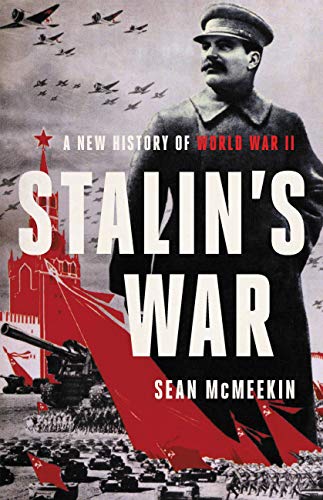
Sean McMeekin
Stalin’s War: A New History of World War II
New York: Basic Books, 2021.

World War II is the central historical event of our time. It’s the only historical reference point for most journalists and laymen. We constantly view every current event through its figures, battles, and atrocities. Hated politicians and leaders are always the next Hitler, everything bad in the world is always the next Holocaust, and the plucky heroes of the day are always just like the soldiers landing on Omaha Beach. It’s why Trump (and every Republican candidate) is seen as Hitler, a border wall is the new Auschwitz, and Antifa are hailed as the heirs of the D-Day heroes.

World War II solidifies the liberal worldview. It supposedly pitted democracy and tolerance against tyranny and racism. The good guys won, making the world safe for freedom and multiculturalism. The villains of the war committed the worst atrocity in mankind’s history, incomparable with any other. We must learn about it, so we never repeat Nazism ever again.

Needless to say, World War II discourse is cringe beyond endurance. It makes ordinary people loyal to the liberal regime and hostile to any alternatives. It’s imperative for the Dissident Right to challenge the common myths of WWII and reframe the conflict. As it is told to the public, it’s the one good war where good guys fought bad guys. Counter-Currents readers know there is far more to the story than that.

Bard College history professor Sean McMeekin offers a solid alternative view of the war in his latest work, Stalin’s War. McMeekin has distinguished himself with high-quality work on the Russian Revolution and the First World War. His new book does not disappoint. He argues that Adolf Hitler is not the true central figure of WWII — it’s Joseph Stalin. In his account, Stalin spurred conflict in both Asia and Europe and his actions had longer-term consequences than Hitler’s. McMeekin makes Stalin out to be the true villain who duped liberal democracies into doing his bidding and allowing half the world to be communist. McMeekin even blames Japanese and German aggression on Soviet decisions. It’s a compelling thesis that all right-wingers should listen to.

McMeekin argues Stalin played a critical role in both theaters and he, unlike Hitler, was still alive at the end of the war. Operation Barbarossa doesn’t occur until Chapter 17 in the book, indicating this is not a work dedicated solely to the Eastern Front. Soviet foreign policy from Vladimir Lenin to the beginnings of the Cold War serves as the book’s focus. The author finds the roots of Stalin’s war in Lenin’s manipulation of the western powers. Fearing an intervention that could wipe out his government, the first Soviet premier worked hard to fend off a foreign invasion. The chaos of the Civil War years left the Soviet leadership with the impression that the entire world was out to get them, and they must do everything to secure their own power.

A fundamental argument of the book is that Stalin was not content to merely stick to socialism-in-one-state. The Soviet Union was built to export global revolution. McMeekin isn’t blind enough to claim that this was an admirable trait of Stalin’s, as do other mainstream historians. Stalin didn’t want to spread communism to end global inequality; it was a weapon to secure Soviet power. Stalin spectacularly achieved this goal. He was helped in his mission by western sympathizers — both communists and liberals — who found his cause worthy.

The book’s prologue sets the tone with a Stalin speech given a few weeks before Barbarossa. The historical consensus claims that Hitler was the unprovoked aggressor, and the Soviets were completely unprepared for war. The premier’s speech tells a different story. In his perforation, Stalin warned his audience that war would come, and the Soviet Union would be prepared. He touted the latest advances in military technology and training his military had made. He called the Soviet Union a “rapacious predator” lying in wait for its prey. Outside of the speech, McMeekin notes later in the book that Stalin was preparing his army for an offensive war against Germany. This is an idea in keeping with the controversial “Icebreaker” theory. Proposed by Russian writer Viktor Suvorov, the theory claims Stalin planned a surprise attack against Nazi Germany for late summer 1941. Suvorov argued that Barbarossa was a pre-emptive strike against this expected attack. McMeekin doesn’t quite fully endorse it, even though he writes that the Soviet military was geared for offensive operations when the Germans struck. The author doesn’t conclude that Stalin was set for war, but he does persuasively conclude that he was prepared for one.

McMeekin spends the first chapters explaining how Stalin manipulated the great powers to advance his nation’s interests and pit them against each other. The man of steel wished for another great war that would bleed the capitalists dry and let the Soviets accomplish world revolution. Every player in the upcoming war tried hard to appease the Soviets at one point or another. The Americans, British, French, Japanese, the Germans, and most future Axis members all came to Moscow to play nice with Stalin, according to McMeekin’s account. All of these states got the short end of the deal.

No state probably got more hoodwinked by Stalin than America. Franklin D. Roosevelt’s administration was staffed with communist sympathizers. Some of them were credentialed spies and committed communists. Others were just standard New Deal liberals who saw the Soviet Union as a bulwark against fascism. This warm feeling toward the Soviets was shared by FDR himself. It led to all manners of terrible deals and subversion. One of the first raw deals was the lopsided offer that granted the rogue state recognition. A chief term of recognition was the expectation the Soviets would repay millions on defaulted state loans and expropriated property. The Soviets estimated the cost to be $600 million and Stalin authorized his Jewish diplomat Maxim Litvinov to offer $500 million in compensation. FDR’s team instead started the offering bid at $150 million, which Litvinov was able to haggle over and get the best possible deal from the duped administration.

The Soviets gained more from American recognition than the U.S., but the Americans played the desperate suitor. Litvinov agreed to a paltry sum in debt compensation, along with a promise to stop supporting communist subversion in the U.S. Despite gaining recognition, the Soviets never paid the debt and continued to support domestic interference. The Communist Party continued to receive subsidies and the Soviets placed hundreds of agents throughout the U.S. government.

The lopsided relationship continued throughout FDR’s presidency. In the late thirties, Roosevelt replaced the skeptical Ambassador to Russia William Bullitt with the Soviet sycophant Joseph Davies. Roosevelt purged the embassy of Soviet skeptics and ordered the destruction of its library, which documented the terror and show trials of the rogue state. This handicapped America’s insight into the country, but that may have been the whole point.

McMeekin argues that American industry — the epitome of capitalism — helped Russia survive the war. The Lend-Lease program was eagerly demanded by the Soviets, but little gratitude was paid for it. Soviet officials would demand more hardware and it be shipped to some of the most inconvenient locations as well. Americans dutifully accepted these conditions and shipped supplies that kept the Soviet war machine rolling. Much of the technology deployed on the Eastern Front was American-made. Without it, the Germans would’ve crushed the Soviet Union. American (and British) war material played a crucial role in the Battles of Stalingrad and Kursk.

Stalin would offer the barest of thanks for this role, and the Lend-Lease program turned out to be another debt that the Soviets never repaid. America forgave the debt during the Cold War as an act of goodwill. But even during the War, America placed no conditions on the aid it delivered. This contrasts with the conditions Roosevelt extracted from Winston Churchill for the aid he provided Great Britain. Churchill was forced to give up critical naval bases and other facets of the British Empire, which ultimately led to its dissolution in the post-war era. The Brits also paid back their debts. Roosevelt didn’t seem to mind the prospect that Stalin would never fulfill his obligations.

Much of the administration’s pro-Soviet stance was driven by two liberal sympathizers: senior Treasury Harry Dexter White and FDR’s chief foreign policy adviser Harry Hopkins. White was an actual Soviet agent (despite his WASPish name, he was a Lithuanian Jew); Hopkins was not. Both were not in any way communists. White helped set up the reign of global capitalism at the Bretton Woods conference, for instance. But both felt the Soviets were necessary to fend off the facsist threat and create a more egalitarian world. Both served the communists well. White drew up plans suggested to him by Soviet agents to make America serve the communists, and Hopkins as a diplomat prioritized Soviet interests.

The most egregious example of Soviet interference is the Morgenthau plan. Named after White’s boss, Henry Morgenthau Jr., the White-crafted plan would have sent Germany back to the dark ages. The plan called for the permanent deindustrialization of the Axis power, the elimination of all of its defenses, and its division into multiple parts. Germany would be relegated to an agricultural state at the complete mercy of other powers. The plan was approved by FDR and even public backlash only slightly diminished its influence over occupation policy. The only reasons the Morgenthau plan weren’t fully carried out was due to FDR’s death and the Cold War.

If FDR had lived longer, Stalin may have even gobbled more territory, and the Allies exacted a more punitive toll on the Germans. Roosevelt was open to Stalin’s suggestions that the victors liquidate 50,000 German officers after the war. The idea horrified Churchill but didn’t bother American leaders at all. It’s one of the many examples of Roosevelt giving everything Stalin wanted. The book makes a good case why FDR was one of the worst presidents ever.

Roosevelt’s pro-Stalin stance may have led to this death. He begged Stalin to pick the 1945 conference somewhere in the Mediterranean to accommodate his poor health and travel. Stalin instead picked Yalta in Crimea, forcing the sick president to weather awful travel in winter conditions. The strain may have well led to his death just a few weeks after Yalta. Stalin, as always, didn’t reciprocate the good feelings of his admirers.

The UK and the US share equal blame for the sellout of Eastern European nationalists. Soviet agents working within the British government undermined support for the Serbian Chetniks and convinced their superiors to back Marshall Tito’s Yugoslav partisans instead. Tito made Yugoslavia communist after the war. He wouldn’t have come out as the superior player without British and American support. Similar scenarios played throughout the region, with the Western allies retreating in the face of Soviet intractability and communist subversion.

Liberals weren’t the only defenders of Soviet malfeasance. Churchill defended the Soviet invasion of Poland because it secured “its own safety” and halted German expansion. He even claimed that the territory grabbed was rightfully Soviet because it was taken from Russia after World War I. He further claimed that the Soviets had the right to conquer the Baltic states and Finland to shore up its defenses. These expected aggressions were apparently in Britain’s interests. And this was all said before the UK and the USSR were formally allies.

Churchill didn’t maintain this rosy-eyed view of Stalin throughout the war. He came to regard the Soviets as a threat and was usually the lone voice to oppose Stalin’s suggestions as the great power conferences. But his protests didn’t matter; he was outvoted two-to-one. Churchill obsessed over Germany as the great threat to the British Empire. He helped defeat Germany but lost the Empire in the process.

Harry S. Truman did not share FDR’s adoration of Stalin, but he still kept on Hopkins and other Soviet sympathizers. This continuity ensured China and other countries turned red after the war. But, to his credit, President Truman didn’t desire the complete ruination of Germany and didn’t let the Soviets bully him around. We can only imagine what would have happened if Roosevelt lived to finish out his fourth term.

McMeekin’s coverage of Nazi-Soviet relations is particularly interesting. Most histories portray Hitler as the conniving aggressor who took advantage of Russian generosity. Stalin’s War presents a different side. Stalin is shown as the clear winner in Nazi-Soviet relations and the stronger partner. Stalin only invaded Poland when Germany had nearly finished Polish resistance in 1939. The Molotov-Ribbentrop Pact gave the Russians tremendous economic power over the Germans. Before Barbarossa, Stalin was able to force the Nazis to concede multiple times in foreign disputes. The Germans couldn’t stop the Soviets from taking Romanian territory, even though it threatened their oil supply. The Germans were also well-aware that the Soviets were preparing for war.

The author is clearly not a fan of the Nazis. He admires the conservative officer corps that tried to topple Hitler. He claims they had wide support and a serious chance of taking over Germany, which is doubtful. Most new research shows that younger military officers were fervent National Socialists, and the SS and other institutions would’ve opposed it. Civil war was a more likely scenario than a clean coup.

McMeekin distinguishes himself from other historians in not excusing Stalin’s atrocities. He doesn’t claim they were not as bad as Hitler’s because he believed in “equality” or he only killed adult men. McMeekin offers no equivocations or justifications — he lays out that Stalin was a brute. The one time he compares Nazi and Soviet crimes, he implies the Nazis were better. McMeekin admits that at least Hitler and his government cared about their own soldiers; Stalin did not. It didn’t matter to Stalin what happened to captured Soviet troops, or even to his living troops. He was willing to throw millions of his own men to their own deaths in risky attacks and poorly planned operations. (The book is quite persuasive in deflating myths of Soviet military ability. His coverage of Kursk is particularly devastating in this regard.) The Nazis, on the other hand, cared deeply about their men and tried to get them out of captivity. You won’t ever find this opinion in any other mainstream history text.

Stalin’s atrocities, mostly ignored, are put front and center in the book. From the man-made famines to the systematic extermination of Polish elites, Stalin comes across as the bloodthirsty tyrant he was in real life. McMeekin reminds readers that these atrocities (at least the ones that occurred in the war) were abetted by the Western allies. They would even lie for Stalin, as in the case of the Katyn massacre. The millions Stalin killed were the price to save “freedom.”

Stalin’s War makes a compelling case for Stalin as the main character of World War II. It disabuses normie readers of their illusions about the conflict and dispenses with many of the myths perpetuated by the system. It’s a surprisingly conservative work, with the author defending the U.S. and the U.K.’s role in the war’s conclusion — in contrast to the many who claim the Soviets won it by themselves. The Soviets would have folded without the Lend-Lease program and many of their key victories were due to the Brits and Americans holding down the Germans. Kursk, according to McMeekin, was only a Soviet success because Hitler had to divert troops to Italy.  McMeekin’s conclusion is that the war made the world safe for communism, not democracy. He also doesn’t view the war as inevitable and believes it only resulted in such massive devastation due to the appeasement of Stalin. The mainstream consensus is that the war was only terrible because western leaders appeased Hitler.

Many liberal readers will scoff at the conclusion and argue communism was better than fascism. They can’t comprehend any world where communism was worse. In their minds, communism was just a bad hiccup we got over. They speak of the Iron Curtain in the way older folks speak of poor actions as kids. “We may have done crazy things in our youth, but we turned out alright.” That same opinion is applied to the entirety of Eastern Europe. This opinion wouldn’t be so grating if we weren’t constantly lectured on how Nazi crimes were the worst thing to ever happen, and we must never forget them. No one speaks glibly of Nazi occupation, and no amount of blood was too much to vanquish this menace.

McMeekin’s work would have been very popular with conservatives during the Cold War, even though some of them may have winced at the suggestion that it wasn’t the “Good War.” Now with the Soviet Union dead and communism considered a harmless anachronism, the book may not be a hit with mainstream conservatives. There’s no burgeoning desire to demonize Stalin in the same way Hitler is treated. National Socialism is treated as the ultimate enemy that could pop out any moment because it makes for a much better foil to liberalism than communism. Communism is relegated to the dustbin as a well-intentioned mistake; fascism is an ever-present demonic force.

Stalin’s War is an important work that right-wingers should read. Some may find it imperfect, and many will quibble with its conclusions and theories. But no other recent mainstream history book shatters the mythology around World War II than Stalin’s War. It can appeal to normies and convince them that Stalin was the ultimate victor in the war. Was it all worth it to make the red flag fly over half the world? How noble and just was our war effort when it was guided by communist agents and directed to help a murderous tyranny? Was the war actually wrong?

Ordinary people need to be shaken out of their faith in the fairy tales surrounding World War II. Stalin’s War is a good start for curious friends and family.


Stalin’s World War

Stalin%E2%80%99s%20World%20War

Share

  • Gab

Enjoyed this article?

Be the first to leave a tip in the jar!

Instant Echeck GreenPay™

Related

  • Nietzsche & Race

  • Could Fascism Work?

  • Finding Atlantis Part 4

  • Barbara Will’s Unlikely Collaboration

  • BRICS War One:

  • A Novel Approach: Roberto Bolaño’s 2666

  • Restoring American Deterrence through Innovation and Industry

  • E. M. Forster’s A Passage to India & the Indian Mentality

Tags

Adolf Hitlerbook reviewsFranklin Delano RooseveltHarry S TrumanJosef StalinRobert HamptonSean McMeekinStalin's WarWinston ChurchillWorld War II

3 comments

  1. Stephen Paul Foster says:
    May 21, 2021 at 3:11 am

    Great review, and I look forward to reading Stalin’s War. I am particularly interested to learn if McMeekin cites Victor Suvorov in his work.  Suvorov, a Soviet military intelligence officer defected to the UK in the late 1970s. He wrote “The Chief Culprit: Stalin’s Grand Design to Start WWII”,  which argues very much like what I am reading about McMeekin’s new book. Suvovov’s book was published 1n 2008 by the Naval Institute Press (MD). It’s likely no mainstream or university press would touch it. It  was pretty much ignored for the reasons, I would surmise, that Robert Hampton notes about the “conventional wisdom” of WWII. Suvorov’s book, by the way, gives his arguments so much additional punch because of his in depth knowledge of comparative German-Soviet weaponry. Soviet tanks, we learn were far superior to the Germans.

    0
    0
  2. Broseph McCarthy says:
    July 1, 2021 at 4:18 am

    I too read Suvorov’s book, quite incredulously, but after much further study and reflection came to regard it as 100% accurate.

    https://youtu.be/wYSy80WlmWY


    This is a really great talk by Suvorov himself


    0
    0
  3. Anglian says:
    July 4, 2021 at 1:38 pm

    Suvorov’s book “Aquarium” has been unavailable in Britain for many years. It disappeared from my local library mysteriously and was unavailable in nearby libraries either.

    0
    0

Comments are closed.

If you have a Subscriber access,
simply login first to see your comment auto-approved.

Note on comments privacy & moderation

Your email is never published nor shared.

Comments are moderated. If you don't see your comment, please be patient. If approved, it will appear here soon. Do not post your comment a second time.

Upcoming podcasts
  • Rob Rundo on Counter-Currents Radio

    Rob Rundo on Counter-Currents Radio

    Counter-Currents Radio

    Sat, Jun 13th — 3 pm EST / 9 pm CET
  • Daniel Tyrie on Counter-Currents Radio

    Daniel Tyrie on Counter-Currents Radio

    Counter-Currents Radio

    Sat, Jun 20th — 3 pm EST / 9 pm CET

Writers of May

(2 votes) Morris van de Camp David M. Zsutty Derek Stark Jayant Bhandari Greg Johnson

Articles of May

The Lunch Wars by David M. Zsutty Heidegger on Nietzsche, Part One by Collin Cleary 2 votes
    • Black Intellectual Fatigue

      Derek Stark

      5

    • Why White Advocates Should Avoid “Based Blacks”

      Dani Vypont

      7

    • Nietzsche & Race

      Mark Gullick

    • Editor’s Update
      Rob Rundo Rescheduled to Next Week on Counter-Currents Radio;
      Tonight Greg Johnson & David Zsutty Answer Your Questions;
      Fundraiser Update & a New $20,000 Matching Grant

      Greg Johnson

    • The Counter-Currents 2026 Fundraiser
      Lifetime Subscriber Welcome Packages Extended

      Greg Johnson

    • Nationalism This Week
      Who’s Looking Back?

      Greg Johnson

      25

    • China’s Threat to American Security:
      Food, Farmland, Foreign Control, & Energy Policy

      Lipton Matthews

      4

    • The Bitter End of Western Metaphysics:
      Heidegger on Nietzsche, Part Two

      Collin Cleary

      13

    • The Killing of Henry Nowak

      Mark Gullick

      29

    • The Crisis of Chinese Technology Thieves

      Morris van de Camp

      1

    • The Strange World of Gender Bender Fiction:
      & What This Genre Tells Us About Autosexuality

      Dani Vypont

      3

    • Watching the Watchers:
      The Dark Triad Question

      David M. Zsutty

      14

    • The Remigration Movement Solidifies

      F. Roger Devlin

      1

    • Casting Aspersions:
      The Fatal Consequences of Race-Swapped Casting, From Helen of Troy to Henry of Southampton

      Steven Tucker

      20

    • The Murder of Henry Nowak

      Millennial Woes

      23

    • Don’t Forget to Vote in Our Writer & Article of the Month Poll

      Greg Johnson

    • The Robot Hotdog Stand

      Greg Johnson

      35

    • Laughing Our Way to Victory

      Dave Chambers

      7

    • The Zodiac Killer

      Mark Gullick

      11

    • Jared Taylor: What Rome Means to Me

      Jared Taylor

      1

    • An Interview with Endeavour:
      My Way of Life Is an Adventure!

      Ondrej Mann

      6

    • José Pedro Zúquete’s The Identitarians

      Greg Johnson

      3

    • Editor’s Update
      Fundraiser Update & How to Watch the Remigration Summit

      Greg Johnson

      5

    • The Bitter End of Western Metaphysics:
      Heidegger on Nietzsche, Part One

      Collin Cleary

      11

    • Berlin: City of Stones

      Spencer J. Quinn

      6

    • True Folk-Horror Is Horror of Your Own Folk:
      Mark Gatiss vs the Brexit Blind Dead  

      Steven Tucker

      4

    • Counter-Currents Radio Podcast No. 689
      Thomas Massie, the America 2050 Bust, the Need for Whites to Divest from America, the AI Economic Apocalypse, & Pro-White Project Pitches to Billionaires

      Counter-Currents Radio

      7

    • Nationalism This Week
      Remigration is Inevitable, Part 3

      Greg Johnson

      27

    • Why Billionaires Should Fund White Identity Politics

      Lipton Matthews

      8

    • How Cold War Two Came About

      Morris van de Camp

      5

    • Now Available for Pre-Order at a Special Price!
      Greg Johnson’s The Philosopher Is In

      Greg Johnson

    • David Zsutty’s Elevator Pitch to a Billionaire

      David M. Zsutty

      1

    • Headbanging Lite

      Mark Gullick

      5

    • White Advocacy Past and Present

      Peter Bradley

      13

    • The Lunch Wars

      David M. Zsutty

      47

    • The Russians are Coming/The Russians are Coming

      Steven Clark

      1

    • Peak Fatigue in Fort Wayne

      Gabriel Anderson

      24

    • Keith Woods’ Elevator Pitch to a Billionaire

      Keith Woods

    • The Cruelty of Kindness

      Morris van de Camp

      9

    • Predation Wearing the Mask of Civilization

      Jayant Bhandari

      13

    • The Mandalorian & Grogu

      Trevor Lynch

      24

    • Editor’s Update
      Fundraiser Update & a New $20,000 Matching Grant
      Greg Johnson & David Zsutty Discuss Thomas Massie on Counter-Currents Radio

      Greg Johnson

      2

    • How the Jews Defeated Thomas Massie—& Themselves

      David M. Zsutty

      25

    • Jared Taylor’s Elevator Pitch to a Billionaire

      Jared Taylor

      15

    • Nationalism This Week
      Remigration Is Inevitable, Part 2

      Greg Johnson

      8

    • Could Fascism Work?

      Mark Gullick

      40

    • Jonathan Bowden’s Deliverance
      Part 7

      Jonathan Bowden

    • China’s Quiet Hand:
      Influence, Infiltration, & the Western Blind Spot

      Lipton Matthews

      9

    • Counter-Currents Radio Podcast No. 688
      Tyler Dykes on Running for US Congress in South Carolina

      Counter-Currents Radio

      4

    • Lothrop Stoddard’s The Revolt Against Civilization

      Spencer J. Quinn

      14

    • Eric

      Black Intellectual Fatigue

      Greetings.  "Black intellectuals" are also known as, "professional negroes."

    • Collin Cleary

      Heidegger on Nietzsche, Part Two

      Perhaps the irony here is that he was mistaking appearance (what appears to a human subject) as...

    • Collin Cleary

      Heidegger on Nietzsche, Part Two

      No, Heidegger wasn't an influence on either.

    • Scott

      China’s Threat to American Security

      I don’t fear or hate the Chinese. But China is still a Communist nation and they will never be our...

    • Eric

      Black Intellectual Fatigue

      Thank you very much for this fine article.  One book opens another.  Mr. Stark has...

    • Scott

      Why White Advocates Should Avoid “Based Blacks”

      Agree with most of the article. Spot on about Negroes and the dusky grifter, Candace Owens.However,...

    • Will Williams

      Black Intellectual Fatigue

      Am I the only White racial nationalist who is fatigued from Black “intellectual” Lip Man Matthews...

    • Will Williams

      Why White Advocates Should Avoid “Based Blacks”

      Dani, your understanding of GLR is wanting. You and others would do well to read the eight-part...

    • Peter Quint

      Black Intellectual Fatigue

      Great article! “Black intellectuals,” if that’s not an oxymoron, I don’t know what is. 🙃

    • Peter Quint

      Why White Advocates Should Avoid “Based Blacks”

      Great article! It is “past-time” that each White person developed a “siege mentality.” Each White...

    • Fred C. Dobbs

      Black Intellectual Fatigue

      It’s great to see increasing movement in the right direction. Excellent review. I often wonder if...

    • Derek Stark

      China’s Threat to American Security

      Very good article. I remember back in the 1980s and 1990s how all the genius economists were saying...

    • Will Williams

      Counter-Currents Radio Podcast No. 688

      I rarely listen to long podcasts, but was interested in this one with Mr. Dykes, the American...

    • Tye

      Why White Advocates Should Avoid “Based Blacks”

      Exactly, enough of the precious exceptions.

    • Joe Gould

      Why White Advocates Should Avoid “Based Blacks”

      Amen to this whole article.

    • Peter Quint

      Why White Advocates Should Avoid “Based Blacks”

      That goes for all non-whites! 🙃

    • Moss

      The Killing of Henry Nowak

      Well said Joe. That bears repeating.

    • Fred C. Dobbs

      Why White Advocates Should Avoid “Based Blacks”

      I would advise all white people to never even befriend a black person. You will always get burned....

    • Hi-ya!

      Who’s Looking Back?

      the attraction of owning a radio is so much greater than the fear of propaganda Jacque ellul

    • Hi-ya!

      Who’s Looking Back?

      The Death of an Era My room was a block away I opened the bar at 5AM and closed it at 2AM Often...

    • Earth Day Special

      John Morgan

      12

    • A Robertson Roundup
      Remembering Wilmot Robertson
      (April 16, 1915 – July 8, 2005)

      Margot Metroland

      13

    • The Paranoid Style in White Nationalism

      Greg Johnson

      30

    • Join the Dance!

      Andrew Hamilton

      1

    • We Can’t Save the Earth Without Reducing African Birth Rates

      James Dunphy

      36

    • “I’m Not a Conspiracy Theorist, but . . .”:
      Jeffrey Epstein’s Death Gives New Life to “Conspiracy Theories”

      Greg Johnson

      22

    • Sylvia Plath: Stasis in Darkness

      Vic Olvir

      17

    • Vanguardism, Vantardism, & Mainstreaming

      Greg Johnson

      80

    • Aviation, Geography, & Race

      Charles Lindbergh

      3

    • Some Thoughts on Yule

      Collin Cleary

      4

    • Living in Truth:
      A Yuletide Homily

      Jef Costello

      7

    • John Kennedy Toole’s A Confederacy of Dunces

      Greg Johnson

      20

    • On Aleksandr Solzhenitsyn’s Warning to the West

      Spencer J. Quinn

      7

    • Elitism, British Modernism, & Wyndham Lewis

      Jonathan Bowden

      6

    • Philip K. Dick’s Do Androids Dream of Electric Sheep? as Anti-Semitic/Christian-Gnostic Allegory

      Greg Johnson

      20

    • “Conspiracy Theory” or Conspiracy?

      Andrew Hamilton

      21

    • Remembering H. P. Lovecraft
      (August 20, 1890–March 15, 1937)

      Greg Johnson

      3

    • Who Are We?
      Nordics, Aryans, & Whites

      Greg Johnson

      71

    • Remembering William Gayley Simpson
      (July 23, 1892–December 31, 1990)
      A Pleasant Afternoon with Harriet & Bill Simpson

      Margot Metroland

      18

    • Here are the Young Men
      Remembering Ian Curtis
      (July 15, 1956–May 18, 1980)

      Mark Gullick

      18

    • Percy Grainger
      Artist of the Right

      Alex Graham

      7

    • Remembering Revilo Oliver
      (July 7, 1908–August 20, 1994)

      Greg Johnson

      18

    • The Meaning of July 4th for the White Man

      Gregory Hood

      13

    • The Front National’s Evolution

      Bruno Mégret

    • Merwin K. Hart
      Forgotten American Hero & Man of the Right

      Morris van de Camp

      10

    • George Orwell’s Nineteen Eighty-Four

      Jonathan Bowden

      8

    • Carleton S. Coon
      Scientist & Reluctant White Advocate

      Morris van de Camp

      3

    • The Kwanzaa Absurdity Will Be Dwarfed by Juneteenth

      Robert Hampton

      10

    • Stravinsky

      Alex Graham

      7

    • Like the Roman:
      Remembering Enoch Powell (1912-1998)

      Mark Gullick

      23

    • Neo-Fascism in Film
      Part 5

      Karel Veliky

      15

    • The Game of Tarot

      Mark Gullick

      1

    • Institutions Cannot Be Transplanted

      Jayant Bhandari

      5

    • Jonathan Bowden’s Deliverance
      Part 5

      Jonathan Bowden

    • Crosstown Traffic:
      Jimi Hendrix & The Post-War Rock ‘N’ Roll Revolution

      Mark Gullick

      1

    • Slaves from the North:
      Finns & Karelians in the East European Slave Trade, 900–1600

      Lipton Matthews

      14

    • Neo-Fascism in Film
      Part 4

      Karel Veliky

      2

    • David Lean’s A Passage to India

      Spencer J. Quinn

      1

    • Elites are Essential to Development

      Lipton Matthews

      7

    • Jonathan Bowden’s Deliverance
      Part 4

      Jonathan Bowden

    • Neo-Fascism in Film
      Part 3

      Karel Veliky

      6

    • E. M. Forster’s A Passage to India & the Indian Mentality

      Spencer J. Quinn

      25

    • Jonathan Bowden’s Deliverance
      Part 3

      Jonathan Bowden

    • The Rest Is Silence
      Heidegger’s Quietism

      Mark Gullick

      2

    • Dispelling the Historical Fallacy of Indian Nationalism

      Lipton Matthews

      8

    • Neo-Fascism in Film
      Part 2

      Karel Veliky

      8

    • Jonathan Bowden’s Deliverance
      Part 2

      Jonathan Bowden

    • Life of a Klansman

      Mark Gullick

      8

    • Jonathan Bowden’s Deliverance, Part 1

      Jonathan Bowden

    • Decolonial Ideas are Holding Back Developing Countries

      Lipton Matthews

      8

    • Neo-fascism in Film, Part 1

      Karel Veliky

      21

    • Jonathan Bowden’s Onslaught, Part 8
      Divigations on Decadence

      Jonathan Bowden

    • Jonathan Bowden’s Onslaught, Part 7
      Intrigues in the National Front

      Jonathan Bowden

      1

    • Rotten to the Core

      Mark Gullick

      8

    • Strauss on Husserl’s “Philosophy as Rigorous Science”

      Greg Johnson

    • Jonathan Bowden’s Onslaught, Part 6
      Francis Bacon & Right-Wing Nihilism

      Jonathan Bowden

    • London After (& Before) Midnight:
      Aleister Crowley, The Landlord’s Worst Nightmare

      James J. O'Meara

      2

    • Jonathan Bowden’s Onslaught, Part 5
      The Post-War British Far Right

      Jonathan Bowden

    • No Rules: Rollerball

      Mark Gullick

      4

    • Jonathan Bowden’s Onslaught, Part 3
      Brett Easton Ellis’ American Psycho

      Jonathan Bowden

    • András László
    • Derek Hawthorne
    • Beau Albrecht
    • Alain de Benoist
    • Kerry Bolton
    • Jonathan Bowden
    • Collin Cleary
    • Jef Costello
    • Savitri Devi
    • Julius Evola
    • Jim Goad
    • Gregory Hood
    • Juleigh Howard-Hobson
    • Greg Johnson
    • Charles Krafft
    • Anthony M. Ludovici
    • Trevor Lynch
    • H. L. Mencken
    • J. A. Nicholl
    • James J. O’Meara
    • Christopher Pankhurst
    • Tito Perdue
    • Michael Polignano
    • Spencer J. Quinn
    • Fenek Solère
    • Irmin Vinson
    • Leo Yankevich
    • Francis Parker Yockey
    • Multiple authors
  • Editor-in-Chief

    • Greg Johnson, Ph.D.

    Featured Writers

    • Beau Albrecht
    • Gunnar Alfredsson
    • Collin Cleary, Ph.D.
    • Jef Costello
    • Morris V. de Camp
    • F. Roger Devlin, Ph.D.
    • Stephen Paul Foster, Ph.D.
    • Jim Goad
    • Alex Graham
    • Mark Gullick, Ph.D.
    • Greg Johnson, Ph.D.
    • Travis LeBlanc
    • Trevor Lynch
    • Margot Metroland
    • James J. O’Meara
    • Angelo Plume
    • Spencer J. Quinn
    • Fred Reed
    • Clarissa Schnabel
    • Michael Walker
    • David M. Zsutty

    Frequent Writers

    • Asier Abadroa
    • Aquilonius
    • Alain de Benoist
    • Kerry Bolton, Ph.D.
    • Dave Chambers
    • Steven Clark
    • James Dunphy
    • Endeavour
    • Richard Houck
    • Jason Kessler
    • Titus Livius
    • Ondrej Mann
    • Lipton Matthews
    • Mark Mazari
    • John Morgan
    • Jaroslav Ostrogniew
    • Kathryn S.
    • Christian Secor
    • Anne Wilson Smith
    • Thomas Steuben
    • William De Vere
    • Kenneth Vinther
    • Max West

    Classic Authors

    • Maurice Bardèche
    • Jonathan Bowden
    • Julius Evola
    • Guillaume Faye
    • Ernst Jünger
    • Kevin MacDonald, Ph.D.
    • D. H. Lawrence
    • Charles Lindbergh
    • Jack London
    • H. P. Lovecraft
    • Anthony M. Ludovici
    • Sir Oswald Mosley
    • National Vanguard
    • Friedrich Nietzsche
    • Revilo Oliver
    • William Pierce
    • Ezra Pound
    • Saint-Loup
    • Savitri Devi
    • Carl Schmitt
    • Miguel Serrano
    • Oswald Spengler
    • P. R. Stephensen
    • Jean Thiriart
    • John Tyndall
    • Dominique Venner
    • Leo Yankevich
    • Francis Parker Yockey

    Other Authors

    • Howe Abbott-Hiss
    • Michael Bell
    • Giles Corey
    • Jack Donovan
    • Richardo Duchesne, Ph.D.
    • Emile Durand
    • Guillaume Durocher
    • Mark Dyal
    • Tom Goodroch
    • Andrew Hamilton
    • Robert Hampton
    • Huntley Haverstock
    • Derek Hawthorne
    • Gregory Hood
    • Juleigh Howard-Hobson
    • Alexander Jacob
    • Ruuben Kaalep
    • Tobias Langdon
    • Julian Langness
    • Patrick Le Brun
    • G A Malvicini
    • John Michael McCloughlin
    • Millennial Woes
    • Michael O’Meara
    • Christopher Pankhurst
    • Michael Polignano
    • J. J. Przybylski
    • Quintilian
    • Edouard Rix
    • C. B. Robertson
    • C. F. Robinson
    • Herve Ryssen
    • Alan Smithee
    • Fenek Solere
    • Ann Sterzinger
    • Robert Steuckers
    • Tomislav Sunic
    • Donald Thoresen
    • Marian Van Court
    • Irmin Vinson
    • Book Reviews
    • Movie Reviews
    • TV Reviews
    • Music Reviews
    • Art Criticism
    • Graphic Novels & Comics
    • Video Game Reviews
    • Fiction
    • Poems
    • Interviews
    • Videos
    • English Translations
    • Other Languages
      • Arabic
      • Bulgarian
      • Croatian
      • Czech
      • Danish
      • Dutch
      • Estonian
      • Finnish
      • French
      • German
      • Greek
      • Hungarian
      • Italian
      • Lithuanian
      • Norwegian
      • Polish
      • Portuguese
      • Romanian
      • Russian
      • Slovak
      • Spanish
      • Swedish
      • Ukrainian
    • Commemorations
    • Why We Write
  • Archives
  • Top 100 Commenters
  • The Looney Bin
Sponsored Links
Europa.com Above Time Coffee Antelope Hill Publishing Paul Waggener IHR-Store Spencer J. Quinn American Renaissance Jim Goad The Occidental Observer
Donate Now Mailing list
Books for sale
  • The Philosopher Is In
  • Sexual Utopia in Power (Expanded Edition)
  • In Defense of Prejudice
  • Loving Our Own
  • Tyranny & Wisdom
  • The Populist Moment
  • Is America Doomed?
  • To all books
Copyright © 2026 Counter-Currents Publishing, Ltd.

Paywall Access


Please enter your email address.

Lost your password?

Edit your comment

Writer & Article of the Month May 2026

Voting for this month has concluded. Here are the final results!

Top Writers

  • #1 Morris van de Camp 2 votes
  • #2 David M. Zsutty 2 votes
  • #3 Derek Stark 2 votes
  • #4 Jayant Bhandari 2 votes
  • #5 Greg Johnson 2 votes
  • #6 Jared Taylor 1 vote
  • #7 Collin Cleary 1 vote
  • #8 Spencer J. Quinn 1 vote
  • #9 Mark Gullick 1 vote
  • #10 Lipton Matthews 1 vote
  • #11 Keith Woods 1 vote
  • #12 Steven Tucker 1 vote

Top Articles

  • #1 The Lunch Wars 2 votes
  • #2 Heidegger on Nietzsche, Part One 2 votes
  • #3 Could Fascism Work? 1 vote
  • #4 Jared Taylor's Elevator Pitch to a Billionaire 1 vote
  • #5 Predation Wearing the Mask of Civilization 1 vote
  • #6 Peak Fatigue in Fort Wayne 1 vote
  • #7 Keith Wood's Elevator Pitch to a Billionaire 1 vote
  • #8 Do You Want to Play a Game? 1 vote
  • #9 Why Billionaires Should Fund White Identity Politics 1 vote
  • #10 The 1970s: The Golden Age of Hijacking 1 vote
  • #11 True Folk-Horror Is Horror of Your Own Folk 1 vote
  • #12 Finding Atlantis Part 4 1 vote
  • #13 Berlin: City of Stones 1 vote
  • #14 The Ghost of the Confederacy 1 vote
  • #15 Lothrop Stoddard’s The Revolt Against Civilization 1 vote

Total votes cast: 17