 2,985 words
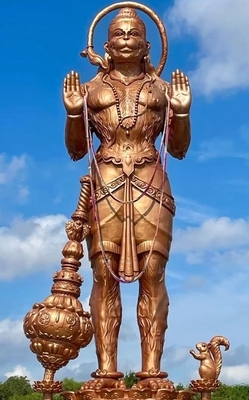
Muslims blocking streets in London or Paris, Sikhs staging martial pageantry, Hindus building oversized temples and statues abroad, Indians boasting about the number of Indian CEOs in American corporations, Africans amplifying dance, ornament, and sexuality—Westerners often mistake such displays for confidence or cultural pride.
It is the opposite.
Every gesture is exaggerated, caricatured, and grotesquely inflated, often beyond anything practiced back home. Rituals are embellished. Costumes are invented. National flags are waved by people celebrating independence from colonial rule while voluntarily living in the West, under the civilization they claim to have escaped. Ask one immigrant community what it thinks of another community’s public display, and it usually sees the absurdity immediately. But its own spectacle is always pure, authentic, unembellished.
The West struggles to understand this because it suffers from a peculiar handicap: intelligent people struggle to understand stupidity, and compassionate people struggle to understand evil. What looks like confidence is often not confidence at all. It is inferiority in costume.
The Westerner mistakes servility for respect and spectacle for pride; the immigrant mistakes Western order for magic. They see past each other, neither understanding what is really happening.
Holding the victim card and showing off are not opposites. They are two sides of the same might-makes-right psychology. The victim card says: you owe me. The spectacle says: you must recognize me. Both arise from the same refusal to stand alone, accept inferiority honestly, and submit oneself to the discipline of improvement.
Superiority complex is not a rooted belief in one’s superiority. It is inferiority complex ossified—inferiority that has lost its capacity to learn. Raw inferiority can provide feedback. It can force a person to recognize a higher standard, struggle upward, and improve. But when he lacks the will, courage, or moral seriousness to rise above his limitations, the psyche protects itself. It says: I am not deficient. I am already complete. The problem is that others refuse to recognize me.
That is where grievance, victimhood, ethnic pride, religious spectacle, and fake superiority enter. Inferiority honestly faced can become the beginning of growth. Inferiority denied hardens into superiority complex. The person stops learning, retreats into group identity, converts shame into accusation, and mistakes collective noise for confidence. What should have remained a painful but useful signal becomes a break in the feedback system.
This is not self-confidence. Confidence, spiritually understood, is self-possession: being rooted enough not to require constant validation from external entities. The amoral and irrational mind cannot be confident in this sense, because its worldview is materialistic, outward-looking, and dependent on status, power, and recognition. It must compensate by showing off, engaging in sadism, staging group theatrics, or resorting to might-makes-right behavior. Real self-confidence comes from earned competence, discipline, moral grounding, and repeated contact with reality.
The deeper issue is not ignorance alone, but the refusal to metabolize inferiority into learning. Contrary to conventional wisdom in the West, people of the Third World do not truly think they are superior. Their magical-thinking mind can see the exterior of the West—its manners, clothes, wealth, confidence, and ability to get things done—but it cannot see the moral and rational habits underneath. The result is not understanding but utter deification. They see the West’s success as a kind of magic. They treat white people as gods, so much so that some of the worst Europeans go to the Third World to receive recognition they would never receive at home.
It is worth looking at how white people are treated in India to understand the underlying thought process. The Indian cosmetic industry is largely built around fairness creams. Some people use aggressive chemicals to lighten their skin. When I worked in Delhi and met people in the boardrooms of public-sector companies, my European colleagues would often be served tea in ceramic cups while I was served tea in plastic cups. If a European carried two cases, someone at the host company might forcibly take both from him and hand one to me.
I was the country manager. I ran the Indian office, handled negotiations, and gave presentations on our equipment. Yet if a service engineer came from Europe, the host company often insisted that he lead the negotiation or give the presentation, irrespective of his actual role or knowledge of the matter. My existence could simply be ignored. Thankfully, my European colleagues perceived this as Indian hospitality, sparing me some embarrassment.
A few years ago, the camera of an Italian tourist was stolen in Bhopal, my hometown and the capital of Madhya Pradesh. The theft became so significant that the Chief Minister, the top city administrator, and the top police officer became involved. Had a poor Indian woman been gang-raped, or an orphan boy raped, they would have found it nearly impossible even to register a police case.
White people are constantly watched and gawked at. Single white women are endlessly asked to be photographed by Indian men, and even by women. Indians deify people with white skin. The result is that even some of the worst Europeans can go to India and receive recognition they would never receive at home.

You can buy Greg Johnson’s The White Nationalist Manifesto here.
One must be careful not to mistake this deification for respect. It is closer to celebrity worship. The moment the idol comes too close, loses distance, or reveals ordinariness, the same worship can turn into contempt. In a might-makes-right society, one is either above or below, worshiped or demeaned, oppressor or oppressed. There is no room for equality, friendship, or brotherhood; these are civilizational values, born where magical thinking and amorality have been disciplined by reason and morality. A sane European in such an environment quickly learns that distance is necessary.
Westerners, therefore, misunderstand immigrant spectacle. They think such people truly feel superior. In reality, they are often so deep in inferiority that they see no path out. The individual cannot stand alone. He seeks security in the anonymity of the group. He has no real view of his own, but in a group, he mistakes borrowed certainty for conviction. Each person becomes a crutch for the other.
In the insecurity of a foreign land, he is pulled toward those of his own kind, however remote the association may be. In an attempt to socialize with people from their native lands, even atheists or those uninterested in secessionist movements back home are often sucked in abroad. Lacking the variety and complexity of their native ecology, they become intellectually inbred. The group protects them from loneliness, but also from feedback.
They fight with other third-world groups, but the same pattern repeats fractally within each group, down to the individual level. You see grotesque fighting over management positions of cultural and religious places, over whose views will be heard, and over shares of the loot contributed by gullible followers. What brings them superficially together is hatred of others. What gives them energy is, ironically, their inner resistance to becoming better. Within the group, even the weakest and most timid man can perform daring feats, because he is no longer standing alone; he is leaning on the crutches of the crowd.
Immigrating is not easy. You leave behind family, friends, language, habits, references, and the cultural ecology that made you intelligible to yourself. The result is deep insecurity. I had arrived in the UK to learn about the West. Two days after my arrival, I found myself sharing a house with four other Indians. It took me a while to realize that this arrangement conflicted with my purpose. I had gone to Britain to encounter the West, but had quickly found myself trapped in a miniature India.
The daily conversations in that house frustrated me. They reinforced the same patterns of thought I had hoped to escape. Crab mentality reigned supreme. Any attempt to do something outside Indian approval was mocked. I knew I had to leave.
A few days later, when a plastic card arrived from my bank, I asked an Indian friend what it was. He did not know. We agreed not to ask anyone else, lest we look stupid. I sat in my MBA class clueless about what McDonald’s or Coke meant. The ignorance was real. The question was whether one would accept that ignorance and learn, or retreat into Indian self-protection.
Most people around me chose the second path. They blamed racism for the lack of opportunities or for their failures. The easy trust the British showed toward us was perceived as stupidity. British politeness was mistaken for weakness. What was actually civilizational confidence appeared, to the insecure mind, as naivety.
Eventually, to break from my past, I gave up Indian food, Indian music, and even Indian friends for a few years. These things had a natural pull. They carried me back into the emotional world I was trying to escape. Emotions are intertwined. One cannot reengineer the mind while continuing to feed the old emotional ecosystem.
This was not going to be a struggle of years, but of decades. It could be undertaken only by an immigrant willing to take responsibility rather than scapegoat the host society for his lack of willpower.
The immigrant arrives in the West and faces a disorienting fact: he does not know how the host civilization works. He lacks its habits, codes, references, confidence, and moral grammar. At that point, he has two choices. He can say: I am ignorant. I must learn. Or he can say: I am not deficient. My people are superior. The West is racist. The host society must change.
When I moved to the UK, I found it extraordinarily compassionate, tolerant, and helpful—words that had no emotional significance for me until then. Indeed, I was initially cynical. What did the other person want? But despite its politeness, Britain still gave feedback. If you made a nuisance of yourself on public transport, someone would tell you to stop. If you lied, people noticed or quietly stopped taking your words seriously. If you failed to arrive on time, you were sidelined. That feedback was not cruelty. It was civilization correcting behavior.
Truth-seeking and self-responsibility, perhaps the keys to changing oneself, do not come easily to a mind formed by amorality, irrationality, and magical thinking. There is no lock in such a mind for those keys to turn. Worse, everything in that mind rebels against them. Trying to change oneself becomes a Sisyphean task. To rise above such a formation requires hard work—extraordinarily hard work. A man must rebuild himself from the ground up. Even small changes can destabilize him, because every belief is tied to other beliefs, habits, fears, and loyalties.
The rare ones who persevere usually come to the West for more than money. They have some attraction, however vague, toward Western values, liberty, reason, and truth. They possess a compass and a vision. Because they accept self-responsibility, they do not instinctively blame the host society for every failure. Their inferiority becomes corrective.
Most third-world immigrants, however, come primarily for money. They do not come seeking liberty in any serious sense. Had they wanted liberty, they would seek it, study it, and discipline themselves for it. But money requires no inward transformation. One can earn it while remaining morally and intellectually unchanged. In such a case, the West’s values may stand directly before him, but he sees through them. They do not register. If he sees them at all, he misconstrues them or mocks them.
One might object that everyone suffers from some degree of inferiority. That is true. The problem is not inferiority itself, but whether a person—or a culture—has the habit of asking why, seeking solutions, and submitting itself to truth. That is what gives the West its unusually solid foundations, its confidence, and its self-possession. This is what has made the West, by a huge margin, the foremost civilization in the world. It has built into itself, however imperfectly, mechanisms of criticism and correction.
Some non-Western cultures have absorbed parts of this discipline. The Japanese, Koreans, and increasingly the Chinese have developed habits of self-correction, competence, order, and long-term striving, even if they have not fully absorbed the Western tradition of independent thought, philosophical inquiry, and open criticism. When they suffer from inferiority, they are more likely to convert it into performance than into grievance. The remaining non-Western world has not even begun that journey. In the West, its people often feel even less pressure to begin, because they already receive what they came for: money.
Within their own cultural ecology, such people may remain stable. In segregated environments, they may even feel content. But give them equality, opportunity, and a platform for grievance, and the inferiority complex awakens. Equality requires performance. When performance fails, racism becomes an easy scapegoat.
Self-responsibility has little place in the Third World’s moral vocabulary. In a culture organized around might-makes-right, the child is not taught to stand upright, think independently, or submit himself to truth. He is taught to locate power and adjust himself to it. Willpower is actively crushed. Individuality is treated as rebellion. One is expected to beg, flatter, and submit to those with power. This habit survives emigration. Put such people in the West, give them legal equality, social tolerance, and ethnic protection, and the old inferiority complex does not disappear. It mutates, becomes intellectually inbred, and amplifies itself.
A rational Westerner may imagine that such people can easily be established in objective reason and morality. Nothing could be further from the truth. For a group, the chasm requires millennia to cross. Even for an individual with an unrelenting passion to improve himself, the task takes decades, and reason reaches only those parts of the mind capable of receiving it.
Westerners cannot decide whether Indians are servile or arrogant because they do not understand that both come from the same root: insecurity before power. Servility says: I am below you, so I flatter you. Arrogance says: I am above you, so I humiliate you. In a group, even the timid man becomes aggressive because he has disappeared into collective strength. None of this is dignity. It is hierarchy management.
Why has this changed? Until the late twentieth century, the West admitted only a small sample of people from the Third World. It still retained some of the hard wisdom gained from centuries of colonization. It understood that the Third World was not poor merely because of defective institutions, but because of the culture, habits, and moral substrate of the societies in question. Those who immigrated were often a kind of natural elite: people seeking liberty, opportunity, and some contact with Western values. They were the positive tail of the distribution, later mistaken by armchair virtue-signallers for the average.
Mass immigration changed the sample. It also changed the incentives. Dispersed in the wider Western society, immigrants had to adapt or suffer. In ethnic ghettos, they are protected from feedback. There, grievance, myth, victimhood, and fake superiority become self-reinforcing. The host society is blamed, while its wealth, order, and tolerance are consumed. As immigrant numbers grew, even the West’s corrective feedback weakened; people became increasingly reluctant to enforce ordinary standards for fear of being accused of racism.
The obsession with Indian CEOs in American corporations, or with India’s space program, is another form of borrowed selfhood. The individual has not achieved anything inwardly. He borrows importance from someone racially or nationally adjacent to him and calls it confidence. This is not pride. It is vicarious compensation.
The insecure immigrant copies the surface of the West while missing the source of Western confidence. He adopts accent, clothing, lifestyle, slogans, or libertine habits, but not the discipline underneath: criticism, introspection, respect for truth, and the habit of standing alone. He wants the fruits of confidence without its moral roots. His might-makes-right, amoral, and materialistic orientation immunizes him from seeing the moral roots.
When faced with immigrants who loudly proclaim the superiority of the cultures they left behind, the natural question should be simple: if your civilization is superior, why did you leave it?
Unable to answer honestly, they retreat into grievance. The West stole their wealth. The West suppressed their greatness. The West owes them recognition. One example is the widely circulated claim that Britain stole $45 trillion from India—a number so grotesque that it fails the simplest test of reason. Such claims are not history. They are psychological compensation.
This is how shame becomes accusation. The immigrant who cannot face his inferiority honestly converts it into a civilizational indictment of his host. He depends on the West, consumes its wealth, uses its freedoms, and yet consoles himself with fantasies of stolen greatness. He cannot say, “I came here because this civilization works better.” So he says, “I am here because you robbed me.”
Such grievance myths imagine precolonial societies as suppressed versions of advanced civilizations rather than tribal, primitive societies lacking the institutions, infrastructure, and habits that later made modernity possible.
Superiority complex is a disaster because inferiority continues to bubble underneath, never finding a way to correct itself. Dispersed in the wider Western society, such people would have had to adapt or suffer. In ethnic ghettos, they are protected from feedback. Victimhood stories, myths of cultural greatness, resentment toward the host society, fantasies of moral or spiritual superiority, and contempt for the West all become self-reinforcing—while the same West is relied upon for money, safety, and status.
What looks like immigrant superiority is not confidence. It is ossified inferiority seeking protection from self-knowledge. It is damaging to the immigrant and malignant to the West. Real confidence comes from moral grounding, self-responsibility, and the courage to learn from inferiority.
The immigrant who accepts inferiority honestly may grow. The immigrant who converts inferiority into superiority becomes trapped—neither of the West nor honestly of his own civilization, living in a ghetto of grievance, mimicry, and self-deception.
2 comments
Very interesting. I recall Eric Hoffer discussing the two-sided superiority/inferiority complex of Indian intellectuals in the “Ordeal of Change” (I think), written in the 1960s.
However, I’m not sure the author gets how that the West is undergoing a reverse dynamic, that it is no longer a confident society. Its self-correction mechanisms have overheated–we are pressed to feel guilty over our lack of perfection and to adopt a leveling mindset that considers our propensity to achieve great things as luck (as in “Guns, Germs, and Steel”).
I think he sees the vestiges of a West that used to be, notices the high standard of living, and assumes that it is still alive and well. For instance, he writes “If you made a nuisance of yourself on public transport, someone would tell you to stop.” That is ceasing to be the case, since so many people have wound up being “unalived” for correcting the behavior of third-world types.
Also, the game has shifted away from individuality to group power in the West, thanks in a large part to immigration. Politicians now pander to voting blocs that can guarantee victory in their districts. Jayant may admire the individuality of the West, but that individuality is now the West’s weakness as much or more than it is our strength.
Is that a statue of a monkey man, being propitiated by a squirrel? 🙃
If you have a Subscriber access,
simply login first to see your comment auto-approved.
Note on comments privacy & moderation
Your email is never published nor shared.
Comments are moderated. If you don't see your comment, please be patient. If approved, it will appear here soon. Do not post your comment a second time.