Liberals reliably fall for what I call the “just like me” fallacy—that is, they assume that all humans are inherently like them in terms of motivations, intelligence, and outlook. Any perceivable differences in behavior—whether interpersonal, intercultural, or interracial—must result from environmental causes, not from anything innate. (more…)
Tag: racial differences
-
Eugenics, the science of improving human genetics through selective breeding and genetic technologies, has been unfairly maligned due to its historical associations with racism and coercion. (more…)
-
It is the norm in America to ascribe racial disparities to discrimination. However, this is a shallow argument that collapses under scrutiny. If racism were the primary force impeding the success of blacks, we would expect clear, consistent evidence of its impact across different areas of life. (more…)
-
In my lecture “What’s Wrong with Diversity,” I lay out some basic arguments for why it is a bad idea to make one’s society racially and ethnically diverse. Here I want to expand upon a problem that starts as soon as diversity becomes a goal that institutions must promote.
Promoting diversity corrupts every institution, one institution at a time. (more…)
-
“Look, Mom! They have 10 pound bags of rotten apples on sale for 75% off. I bet there are a few good ones in there. We should buy a bag.”
“Not all ‘X’ are like that,” is the equivalent to buying a bag of rotten apples because there are a few good ones in the bag. (more…)
-
When given enough time to reflect, one can easily enough unravel most forms of sophistry. The very point of sophistry is to use false argumentation to deceive or manipulate the listener in real time, when they don’t have time to reflect and when they don’t have data at their fingertips. (more…)
-
The term “NAXALT” is short for “Not all [members of group X] are like that.” It’s a frequent rebuttal to discussions of group behavior. This X might refer to any race, ethnicity, religion, nationality, sexual identity, social class, or really any other particularism. For example, if you say that anyone who identifies as a cat is deluded, someone might “correct” you for making a hasty generalization: surely not all bipedal talking cats are that way! (more…)
-
Part 3 (Read Part 1 here. Read Part 2 here.)
As a nation it is imperative that we meet present and future challenges in a competitive global environment. I’m not holding my breath. Chinese kids are learning trigonometry and how to assemble and disassemble a Type-191 assault rifle blindfolded while American kids are taught that racism is why we suck as a country and you can identify as a fruit salad (and we won’t tell your parents). (more…)
-
The new upper-class culture is different from mainstream American culture in all sorts of ways. — Charles Murray, Coming Apart
And you may ask yourself, well, how did I get here? — Talking Heads, “Once in a Lifetime”
Charles Murray
Coming Apart: The State of White America, 1960-2010
New York: Crown Forum, 2012 (more…) -

Source: The Bakken Museum on Flickr.

Source: The Bakken Museum on Flickr.
1,325 words
Statistics communicating racial gaps in earnings convey nothing about the depth of racial discrimination in society. Invariably, inequalities in socioeconomic outcomes are an ineluctable consequence of group differences in ability and aptitude. (more…)
-

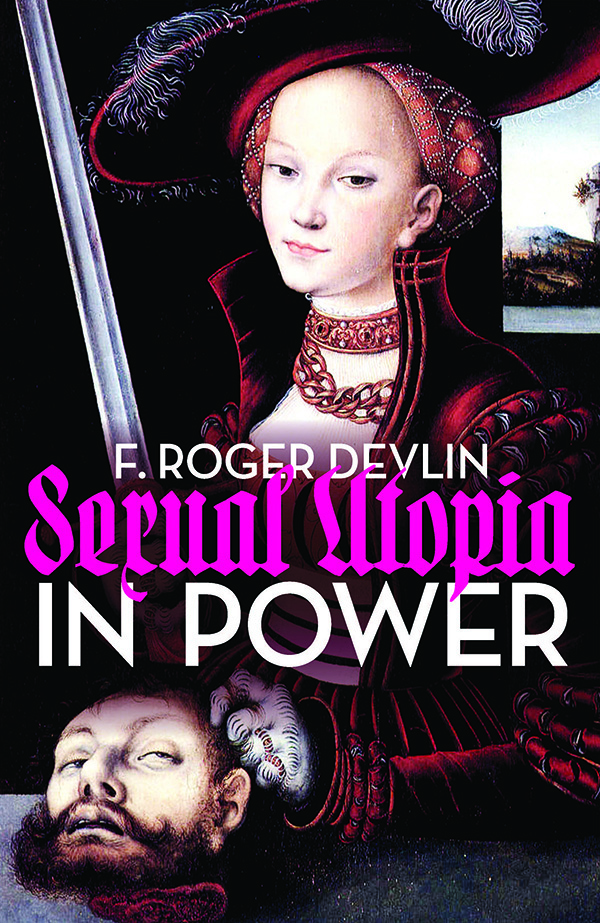
You can buy F. Roger Devlin’s Sexual Utopia in Power here.

You can buy F. Roger Devlin’s Sexual Utopia in Power here.
189 words / 2:10:27
Our latest livestream was the third meeting of the Counter-Currents Book Club, where author F. Roger Devlin, Greg Johnson, Travis LeBlanc, and Counter-Currents Program Director Cyan Quinn discussed F. Roger Devlin’s Sexual Utopia in Power. The stream is now available for download and online listening.
Topics discussed include:
00:03:57 Summary of Sexual Utopia in Power
00:14:04 On the superiority of monogamy
00:18:43 On racial differences in breeding patterns
00:27:22 What is “hypergamy”? (more…) -
Part 5 of 5 (Part 1 here, Part 4 here)
Transcript by Hyacinth Bouquet. The following is a transcript of the fifth and final part of Marian Van Court and Arthur Jensen’s conversation, which can be heard here, or using the player below.
There are a few places where the recording is inaudible, and have been marked as such. If you can figure out what is being said, or if you have other corrections, please offer them in the comments below. (more…)
-
Part 4 of 5 (Part 1 here, Part 3 here, Part 5 here)
Transcript by Hyacinth Bouquet. The following is a transcript of the fourth part of Marian Van Court and Arthur Jensen’s conversation, which can be heard here, or using the player below.
There are a few places where the recording is inaudible, and have been marked as such. If you can figure out what is being said, or if you have other corrections, please offer them in the comments below. (more…)