Counter-Currents
  • Advertise
  • Private Events
  • T&C
  • About
  • Contact
  • RSS
    • Main feed
    • Podcast feed
    • Videos feed
    • Comments feed
  • Welcome
  • Webzine
  • Books
  • Merch
  • Podcasts
  • Videos
  • Donate
  • Patrons
  • Subscribe
  • Crypto

LEVEL2

Donate Now Mailing list

Writer of June

(4 votes) David M. Zsutty

Article of June

Why White Advocates Should Avoid “Based Blacks” by Dani Vypont 4 votes
  • Welcome
  • Webzine
  • Books
  • Merch
  • Podcasts
  • Videos
  • Donate
  • Patrons
  • Subscribe
  • Crypto
    • Replacement Migration & Hypergamy

      F. Roger Devlin

      29

    • Kurds of a Feather Flock Together:
      Europe’s “Racist” Parakeet Tweet-Storm

      Steven Tucker

      1

    • Elevator Pitch to a Billionaire
      Money, Money, Money

      Ondrej Mann

      2

    • All Hail Rhodesia

      Spencer J. Quinn

      3

    • Nationalism This Week
      Disenfranchisement

      Greg Johnson

      31

    • The Murder of Ann Widdecombe

      Lipton Matthews

      9

    • Disclosure Day
      Please, Keep It Undisclosed

      Francisco Albanese

      12

    • Remembering Carl Schmitt
      July 11, 1888–April 7, 1985

      Greg Johnson

      1

    • Editor’s Update
      Fundraiser Update & New Books

      Greg Johnson

      1

    • Third Homeland Institute Poll on the Great Replacement

      David M. Zsutty

      12

    • The Bitter End of Western Metaphysics:
      Heidegger on Nietzsche, Part Five (Conclusion)

      Collin Cleary

      9

    • Fraudulent Black British History

      Mark Gullick

      7

    • A White Nationalist Response to Scott Greer

      Dave Chambers

      25

    • The Miami Mall Incident:
      Black Youths or Black Extraterrestrials?

      Dominic Fox

      6

    • The Theology of Three Populisms

      Morris van de Camp

      2

    • The Dangers of Skilled Immigration

      Lipton Matthews

      25

    • The Brotherhood of the Bell

      Beau Albrecht

      16

    • Endeavor: What Rome Means to Me

      Endeavour

    • When the Family Becomes Predation

      Jayant Bhandari

      5

    • RICU: The Gentle Art of Persuasion

      Mark Gullick

      7

    • Mind of Darkness:
      A Review of Lipton Matthews’s Busting African Delusions

      Derek Stark

      12

    • Remembering Revilo Oliver
      July 7, 1908–August 20, 1994

      Greg Johnson

      2

    • Some Advantages of Irish Nationalism

      Greg Johnson

      31

    • America at 250 from the National Cathedral

      Gabriel Anderson

      18

    • Why Not Stop All the Clocks?
      Modern Conservatism’s Flagging Commitment Towards Turning Back Time

      Steven Tucker

      3

    • Remembering Jean Raspail
      July 5, 1925–June 13, 2020

      Greg Johnson

      2

    • Editor’s Update
      Fundraiser Update & New Books

      Greg Johnson

    • The Ethnic Reality of FIFA 2026

      Samuel Valleus

      13

    • Nationalism This Week
      Tucker’s New Party

      Greg Johnson

      30

    • Ethiopia Against Italy
      How the Italo-Ethiopian Wars were part of the conflict between Eastern & Western Christiandom

      Morris van de Camp

    • Please Vote in Our Writer & Article of the Month Poll

      Greg Johnson

    • Available for Pre-Order!
      F. Roger Devlin’s Not Hooking Up

      F. Roger Devlin

    • Kolberg: The Last Nazi (or Prussian?) Film

      Steven Clark

      2

    • America 250 & The Fate of Empires

      Richard Houck

      20

    • Available for Pre-Order!
      Greg Johnson’s The Battle of the Books

      Greg Johnson

    • Why All the Silence About Blacks Being Kicked Out of South Africa?
      Because It’s Other Blacks That Are Doing It.

      Steven Tucker

      10

    • Zelensky, the Jewish Conspiracy Narrative, & the Demographic Replacement of Ukraine:
      A Critical Analysis of a Disinformation Discourse within the European Identitarian Right

      Luís Graça

      30

    • The Original Congressional Debate on Birthright Citizenship

      Alex Graham

      13

    • America at 250
      Unmanifested Destiny  

      David M. Zsutty

      32

    • The Normies are Waking Up:
      The Alliance for Responsible Citizenship Conference, London 2026

      Lipton Matthews

      2

    • Ethnic Vigilantism: The Movie

      Mark Gullick

      15

    • Lothrop Stoddard’s The Revolt against Civilization

      Kevin MacDonald

      2

    • David Zsutty on Political Organizing

      David M. Zsutty

    • PC-Incompatible Gaming:
      Plantation Simulator and the “Problem” of Racist Video Games

      Steven Tucker

      3

    • Remembering Lothrop Stoddard
      June 29, 1883–May 1, 1950

      Greg Johnson

      1

    • Editor’s Update
      Fundraiser Update & Upcoming Projects

      Greg Johnson

    • Nationalism This Week
      Metapolitics Wins:
      Scott Greer’s Whitepill

      Greg Johnson

      8

    • Remembering Colin Wilson
      June 26, 1931–December 5, 2013

      Greg Johnson

      3

    • Kevin Deanna on Political Organizing

      Kevin Deanna

      1

    • The Bitter End of Western Metaphysics:
      Heidegger on Nietzsche, Part Four

      Collin Cleary

      6

    • Bigfoot

      Elevator Pitch to a Billionaire: Money, Money, Money

      From what I understand about Pantera, the latest version of it anyway, they no longer display the...

    • Greg Johnson

      Disenfranchisement

      The underlying assumption of this is that we have created a government with the will to separation...

    • Bigfoot

      Replacement Migration and Hypergamy

      Another factor that influences interracial couples and marriages are white females that serve in the...

    • Josephus Cato

      Disenfranchisement

      I thought Greg was exaggerating about the numbers of guest workers in Qatar but lo he is right.  If...

    • Peter Quint

      Replacement Migration and Hypergamy

      the proportion who mix is higher than marriage stats would lead people to believe. That’s the actual...

    • Scott

      Some Advantages of Irish Nationalism

      Well, one of caveats against Kennedy's "A Nation of Immigrants" hubris (and that is what it was) is...

    • Dani Vypont

      Replacement Migration and Hypergamy

      One case from American history has always especially impressed me. Pretty much all the sources agree...

    • Dani Vypont

      Replacement Migration and Hypergamy

      You constantly post the most controversial and self-defeating thing possible under articles. This...

    • Peter Quint

      Replacement Migration and Hypergamy

      White women are the most racially disloyal women of all races. I always assume any White female I...

    • Scott

      Disclosure Day

      Dennis Weaver seemed miscast to me. I liked his shtick as McCloud, the New Mexico cowboy marshal,...

    • Ondrej Mann

      Replacement Migration and Hypergamy

      Young white men in Norway have only one option: to band together in gangs that reject...

    • Joseph C.

      Replacement Migration and Hypergamy

      I visited Oslo a year ago, for a week, and I'm going this october again (for a week as well). My...

    • Connor McDowell

      Replacement Migration and Hypergamy

      I’ve seen this OKCupid miscegenation argument before, and while much of my evidence is anecdotal, I...

    • Dominic Fox

      Disenfranchisement

      Even a real community will consist mostly of people who are only somewhat similar in character/...

    • Dani Vypont

      Replacement Migration and Hypergamy

      @JamesSunderland With regard to one of your earlier posts, I did some research, and it is ...

    • Dani Vypont

      Replacement Migration and Hypergamy

      What parts of the United States would you say have the most and least interracial relationships?It...

    • Dave Chambers

      All Hail Rhodesia

      Rhodesia is an inspiration to all of us whose families have had to flee the neighborhoods and...

    • CC reader

      Disclosure Day

      Duel was a very good movie, and it was made for tv. Good suspense, camera work, musical score, and...

    • WU

      Replacement Migration and Hypergamy

      I visited Norway 3 years ago, and the experience was so strange it is worth relating. In Bergen,...

    • Dave Chambers

      Replacement Migration and Hypergamy

      What parts of the United States would you say have the most and least interracial relationships?

    • Earth Day Special

      John Morgan

      12

    • A Robertson Roundup
      Remembering Wilmot Robertson
      (April 16, 1915 – July 8, 2005)

      Margot Metroland

      13

    • The Paranoid Style in White Nationalism

      Greg Johnson

      30

    • Join the Dance!

      Andrew Hamilton

      1

    • We Can’t Save the Earth Without Reducing African Birth Rates

      James Dunphy

      36

    • “I’m Not a Conspiracy Theorist, but . . .”:
      Jeffrey Epstein’s Death Gives New Life to “Conspiracy Theories”

      Greg Johnson

      22

    • Sylvia Plath: Stasis in Darkness

      Vic Olvir

      17

    • Vanguardism, Vantardism, & Mainstreaming

      Greg Johnson

      80

    • Aviation, Geography, & Race

      Charles Lindbergh

      3

    • Some Thoughts on Yule

      Collin Cleary

      4

    • Living in Truth:
      A Yuletide Homily

      Jef Costello

      7

    • John Kennedy Toole’s A Confederacy of Dunces

      Greg Johnson

      20

    • On Aleksandr Solzhenitsyn’s Warning to the West

      Spencer J. Quinn

      7

    • Elitism, British Modernism, & Wyndham Lewis

      Jonathan Bowden

      6

    • Philip K. Dick’s Do Androids Dream of Electric Sheep? as Anti-Semitic/Christian-Gnostic Allegory

      Greg Johnson

      20

    • “Conspiracy Theory” or Conspiracy?

      Andrew Hamilton

      21

    • Remembering H. P. Lovecraft
      (August 20, 1890–March 15, 1937)

      Greg Johnson

      3

    • Who Are We?
      Nordics, Aryans, & Whites

      Greg Johnson

      71

    • Remembering William Gayley Simpson
      (July 23, 1892–December 31, 1990)
      A Pleasant Afternoon with Harriet & Bill Simpson

      Margot Metroland

      18

    • Here are the Young Men
      Remembering Ian Curtis
      (July 15, 1956–May 18, 1980)

      Mark Gullick

      18

    • Percy Grainger
      Artist of the Right

      Alex Graham

      7

    • Remembering Revilo Oliver
      (July 7, 1908–August 20, 1994)

      Greg Johnson

      18

    • The Meaning of July 4th for the White Man

      Gregory Hood

      13

    • The Front National’s Evolution

      Bruno Mégret

    • Merwin K. Hart
      Forgotten American Hero & Man of the Right

      Morris van de Camp

      10

    • George Orwell’s Nineteen Eighty-Four

      Jonathan Bowden

      8

    • Carleton S. Coon
      Scientist & Reluctant White Advocate

      Morris van de Camp

      4

    • The Kwanzaa Absurdity Will Be Dwarfed by Juneteenth

      Robert Hampton

      12

    • Stravinsky

      Alex Graham

      7

    • Like the Roman:
      Remembering Enoch Powell (1912-1998)

      Mark Gullick

      23

    • Exclusive Interview with Karel Veliky:
      The Final Chapter in the Film Series! Part II

      Ondrej Mann

      2

    • Exclusive Interview with Karel Veliky:
      The Final Chapter in the Film Series! Part I

      Ondrej Mann

      2

    • Nietzsche & Race

      Mark Gullick

    • The Crisis of Chinese Technology Thieves

      Morris van de Camp

      1

    • The Zodiac Killer

      Mark Gullick

      12

    • José Pedro Zúquete’s The Identitarians

      Greg Johnson

      3

    • Berlin: City of Stones

      Spencer J. Quinn

      6

    • Headbanging Lite

      Mark Gullick

      5

    • The Russians are Coming/The Russians are Coming

      Steven Clark

      2

    • The Cruelty of Kindness

      Morris van de Camp

      11

    • Jonathan Bowden’s Deliverance
      Part 7

      Jonathan Bowden

    • Lothrop Stoddard’s The Revolt Against Civilization

      Spencer J. Quinn

      15

    • About Film “From the Right”

      Karel Veliky

    • The 1970s: The Golden Age of Hijacking

      Morris van de Camp

      21

    • Jonathan Bowden’s Deliverance
      Part 6

      Jonathan Bowden

    • Do You Want to Play a Game?

      Mark Gullick

      1

    • Sexually Incontinent on the Indian Subcontinent:
      Who Rapes More Animals, Indians or Pakistanis? The Battle Continues!

      Steven Tucker

      3

    • Neo-Fascism in Film
      Part 5

      Karel Veliky

      15

    • The Game of Tarot

      Mark Gullick

      2

    • Institutions Cannot Be Transplanted

      Jayant Bhandari

      5

    • Jonathan Bowden’s Deliverance
      Part 5

      Jonathan Bowden

    • Crosstown Traffic:
      Jimi Hendrix & The Post-War Rock ‘N’ Roll Revolution

      Mark Gullick

      1

    • Slaves from the North:
      Finns & Karelians in the East European Slave Trade, 900–1600

      Lipton Matthews

      14

    • Neo-Fascism in Film
      Part 4

      Karel Veliky

      2

    • David Lean’s A Passage to India

      Spencer J. Quinn

      1

    • Elites are Essential to Development

      Lipton Matthews

      7

    • Jonathan Bowden’s Deliverance
      Part 4

      Jonathan Bowden

    • Neo-Fascism in Film
      Part 3

      Karel Veliky

      6

    • E. M. Forster’s A Passage to India & the Indian Mentality

      Spencer J. Quinn

      25

    • Jonathan Bowden’s Deliverance
      Part 3

      Jonathan Bowden

    • András László
    • Derek Hawthorne
    • Beau Albrecht
    • Alain de Benoist
    • Kerry Bolton
    • Jonathan Bowden
    • Collin Cleary
    • Jef Costello
    • Savitri Devi
    • Julius Evola
    • Jim Goad
    • Gregory Hood
    • Juleigh Howard-Hobson
    • Greg Johnson
    • Charles Krafft
    • Anthony M. Ludovici
    • Trevor Lynch
    • H. L. Mencken
    • J. A. Nicholl
    • James J. O’Meara
    • Christopher Pankhurst
    • Tito Perdue
    • Michael Polignano
    • Spencer J. Quinn
    • Fenek Solère
    • Irmin Vinson
    • Leo Yankevich
    • Francis Parker Yockey
    • Multiple authors
  • Editor-in-Chief

    • Greg Johnson, Ph.D.

    Featured Writers

    • Beau Albrecht
    • Gunnar Alfredsson
    • Collin Cleary, Ph.D.
    • Jef Costello
    • Morris V. de Camp
    • F. Roger Devlin, Ph.D.
    • Stephen Paul Foster, Ph.D.
    • Jim Goad
    • Alex Graham
    • Mark Gullick, Ph.D.
    • Greg Johnson, Ph.D.
    • Travis LeBlanc
    • Trevor Lynch
    • Margot Metroland
    • James J. O’Meara
    • Angelo Plume
    • Spencer J. Quinn
    • Fred Reed
    • Clarissa Schnabel
    • Michael Walker
    • David M. Zsutty

    Frequent Writers

    • Asier Abadroa
    • Aquilonius
    • Alain de Benoist
    • Kerry Bolton, Ph.D.
    • Dave Chambers
    • Steven Clark
    • James Dunphy
    • Endeavour
    • Richard Houck
    • Jason Kessler
    • Titus Livius
    • Ondrej Mann
    • Lipton Matthews
    • Mark Mazari
    • John Morgan
    • Jaroslav Ostrogniew
    • Kathryn S.
    • Christian Secor
    • Anne Wilson Smith
    • Thomas Steuben
    • William De Vere
    • Kenneth Vinther
    • Max West

    Classic Authors

    • Maurice Bardèche
    • Jonathan Bowden
    • Julius Evola
    • Guillaume Faye
    • Ernst Jünger
    • Kevin MacDonald, Ph.D.
    • D. H. Lawrence
    • Charles Lindbergh
    • Jack London
    • H. P. Lovecraft
    • Anthony M. Ludovici
    • Sir Oswald Mosley
    • National Vanguard
    • Friedrich Nietzsche
    • Revilo Oliver
    • William Pierce
    • Ezra Pound
    • Saint-Loup
    • Savitri Devi
    • Carl Schmitt
    • Miguel Serrano
    • Oswald Spengler
    • P. R. Stephensen
    • Jean Thiriart
    • John Tyndall
    • Dominique Venner
    • Leo Yankevich
    • Francis Parker Yockey

    Other Authors

    • Howe Abbott-Hiss
    • Michael Bell
    • Giles Corey
    • Jack Donovan
    • Richardo Duchesne, Ph.D.
    • Emile Durand
    • Guillaume Durocher
    • Mark Dyal
    • Tom Goodroch
    • Andrew Hamilton
    • Robert Hampton
    • Huntley Haverstock
    • Derek Hawthorne
    • Gregory Hood
    • Juleigh Howard-Hobson
    • Alexander Jacob
    • Ruuben Kaalep
    • Tobias Langdon
    • Julian Langness
    • Patrick Le Brun
    • G A Malvicini
    • John Michael McCloughlin
    • Millennial Woes
    • Michael O’Meara
    • Christopher Pankhurst
    • Michael Polignano
    • J. J. Przybylski
    • Quintilian
    • Edouard Rix
    • C. B. Robertson
    • C. F. Robinson
    • Herve Ryssen
    • Alan Smithee
    • Fenek Solere
    • Ann Sterzinger
    • Robert Steuckers
    • Tomislav Sunic
    • Donald Thoresen
    • Marian Van Court
    • Irmin Vinson
    • Book Reviews
    • Movie Reviews
    • TV Reviews
    • Music Reviews
    • Art Criticism
    • Graphic Novels & Comics
    • Video Game Reviews
    • Fiction
    • Poems
    • Interviews
    • Videos
    • English Translations
    • Other Languages
      • Arabic
      • Bulgarian
      • Croatian
      • Czech
      • Danish
      • Dutch
      • Estonian
      • Finnish
      • French
      • German
      • Greek
      • Hungarian
      • Italian
      • Lithuanian
      • Norwegian
      • Polish
      • Portuguese
      • Romanian
      • Russian
      • Slovak
      • Spanish
      • Swedish
      • Ukrainian
    • Commemorations
    • Why We Write
  • Archives
  • Top 100 Commenters
  • The Looney Bin
  • Advertise
  • Private Events
  • T&C
  • About
  • Contact
  • RSS
    • Main feed
    • Podcast feed
    • Videos feed
    • Comments feed
Sponsored Links
Europa.com Above Time Coffee Antelope Hill Publishing Paul Waggener IHR-Store Spencer J. Quinn American Renaissance Jim Goad The Occidental Observer
Print May 10, 2019 8 comments

A Phone Call for Mayhem:
How JFK Caused the 1960s Race Riots

Morris van de Camp

2,619 words

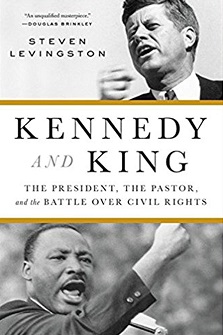
Steven Levingston
Kennedy and King: The President, the Pastor, and the Battle Over Civil Rights
New York: Hachette, 2017

To borrow from the wit of Edward Gibbon:

If a man were called to fix the period in the history of the world, during which the white race in North America was most foolish and short sighted regarding managing the non-white races in their midst, he would, without hesitation, name that which elapsed from the second term of Eisenhower to the accession of Nixon.

The man at the center of this span is President John Fitzgerald Kennedy (JFK). Kennedy was a wealthy son of privilege. His family played the “poor, oppressed Irish” bit to the hilt in their carefully marketed backstory,[1] but the Kennedys were hardly socially alienated or oppressed. JFK’s grandfather Patrick Joseph Kennedy was one of the delegates at the Democratic Party Convention who nominated President Grover Cleveland in 1888, and JFK’s maternal grandfather was Boston Mayor and Massachusetts Congressman John Francis “Honey Fitz” Fitzgerald. JFK grew up rubbing shoulders with Massachusetts’s WASP elite and attended elite schools.

JFK’s family was so rich that although Kennedy grew up in the 1930s, he didn’t know about the Great Depression until after he was taught about it in history class. As President, Kennedy surrounded himself with other Northeastern progressives. Many of them, like Sargent Shriver and Assistant Attorney General Nicholas de Belleville Katzenbach, were descended from prominent men in the American Revolution. All of them laid the foundations for an ongoing Negro revolution in the United States, as well as a black African/Third World capture of the Democratic Party as represented by the likes of the Somali Congresswoman Ilhan Omar.

The Reverend Doctor Martin Luther King, Jr. (good liberals always give the man the full title) was from a racial minority, but he was in the top social rung of that minority. His father was a minister in a large black church. King got a Ph.D. in theology at Boston University, although it has since come to light that his doctoral work was plagiarized. Like Kennedy, King was also not beaten down or oppressed, but supported throughout his career by highly talented, highly sympathetic whites and Jews who covered for any mistakes he made.

How and why JFK and his team got involved with King and the “Civil Rights” Movement deserves study from the perspective of a Rightist white advocate. One book that sheds light on the man and his time – or at least attempts to shed light – is Steven Levingston’s Kennedy and King.

Reading between the lines

This book is something of a puff piece supporting a liberal Jew’s view of the “Civil Rights” revolution. The first 70 or so pages of the book contains sticky-sweet phrases like, “King’s rise to stardom had seemed meteoric, but his path through the racial thicket of America, like that of many blacks, had been one of fear and anguish – navigated by courage.”[2]

The thesis of the book is that King appealed – like Jiminy Cricket, but more Christ-like – to JFK’s conscience to get the various “Civil Rights” laws moving. Because of the artificial sweetener, this reviewer read the book from a detached, between-the-lines perspective. And the first thing that one sees is why Negro race riots and disorder began while Kennedy was president, progressively got worse, and then ended with Nixon’s election.

A single phone call by Kennedy set the fuse for a decade’s worth of black mayhem.

Before that call, though, one must look at the nature of the politics of the 1960 election. On the surface, the American political system was split at the time in a way that Oliver Cromwell and King Charles I would have understood. As a rule of thumb, the Republicans were Yankee Protestants in the North (Cromwell’s folks), and the Democrats were Southerners and Catholics, especially Irish Catholics (King Charles’ supporters). Black voters were usually Republicans, but the Roosevelt administration’s New Deal had peeled off many of them. In 1960, the black vote was up for grabs – and it mattered. If just enough blacks in the Northern cities went for Kennedy, states like Michigan or Illinois would flip into JFK’s column.

Levingston doesn’t go into the details of how the “Civil Rights” Movement developed prior to the 1960s. In fact, very few historians do. “Civil Rights” (i.e., black racial agitation) related to desegregation had become a serious movement by the early 1930s. King’s father had been involved in desegregation efforts as early as 1942. And newspapers carried opinion columns by the desegregationist activist and baseball star Jackie Robinson.

As a result of this activism and metapolitical efforts, “civil rights” became one of the main issues of the 1960 US Presidential Election, and Kinghad become one of the main leaders of the “Civil Rights” Movement after leading the Montgomery Bus Boycott in the mid-1950s. However, he failed to properly register his car with Georgia’s Department of Motor Vehicles, and was put on parole for the violation. After he was arrested while agitating, his parole was suspended and he was put in jail. The media went berserk, and the presidential candidates had to scramble for vote-getting and vote-keeping responses. The Nixon campaign didn’t comment on the situation at all. And after a series of angry arguments among his staff, Kennedy finally made a call to King’s wife, Coretta Scott King, expressing concern. The call was carefully calculated to appease blacks and liberals, but also not to enrage the South. It worked, but Kennedy then had a debt of sorts to King and his movement. Black agitators called in this semi-debt to the fullest. And later in the decade, entire cities would burn.

The “Freedom Riders” crisis (May 1961)

King and the other leads of the “Civil Rights” Movement realized they now had a lever that could move the White House during the “Freedom Riders” crisis of May 1961. A group of Jews and blacks (I believe most of the “whites” involved were, in fact, Jewish) rode on some chartered buses to desegregate bus stops in the Deep South.[3] They wished to raise awareness of violations of Morgan v. Virginia and other court rulings, which ruled that bus stops couldn’t be segregated.[4]

The Freedom Riders stunt got a great deal of media coverage. Angry Southerners attacked the Freedom Riders, and a bus was burned. For white advocates, it was bad optics. The Kennedy administration had to step away from dealing with the Cold War to consult with King and local officials to calm matters.

King’s antics in the smaller cities of the Deep South (June 1961-August 1962)

After the Freedom Riders stunt petered out, King continued agitating across the South. He and his followers would descend upon small cities in Georgia or elsewhere and create a crisis. The tricks they used were not all that different from those of the other Green Marchers – which is to say, officially they were “non-violent,” but they would deliberately violate local laws, prompting a police and government response. The media would frame the affair as one of the police behaving badly. One of the tactics of these “non-violent” protesters was to get as many people arrested as possible to fill up the jails, causing a further crisis for the local government.

Whites reacted. Soon, there was a wave of Negro church burnings and other forms of white counter-agitation. Levingston doesn’t dive into the details of each individual church burning; many were undoubtedly insurance frauds or hate-hoaxes, but they did prompt much concern from the Kennedy administration. King:

. . . kept the pressure on the president. In a telegram to the White House, he raised the possibility of John Kennedy’s worst fear in the civil rights battle: blacks erupting into violence. Noting the attacks in the South, King said: “If Negroes are tempted to turn to retaliatory violence, we shall see a dark night of rioting all over the South.” King promised to discourage blacks from resorting to extreme measures, but he warned, “I fear my counsel will fall on deaf ears if the Federal Government does not take decisive action.”[5]

This veiled threat should have been followed up with a public return telegram explaining that the President would arrest King for rebellion and subversion if rioting broke out, but Kennedy instead half-heartedly intervened in favor of the “Civil Rights” demonstrators through back-channel calls to mayors, state governors, sheriffs, and others. As a result, Kennedy ceded moral authority to the blacks.

To put it in terms Carl von Clausewitz would approve, race riots are an extension of politics through other means. After Kennedy made his call to Coretta Scott King, black agitators knew that if they wished to get something out of the White House, all they had to do was create, or threaten to create, a riot. As long as there was someone in the White House who owed – or thought he owed – blacks a political debt, the temptation was always there for more and more black rioting.

Desegregating Old Miss & Bull Connor at Birmingham (September 1962-April 1963)

As the Kennedy administration developed, King and the “Civil Rights” Movement continued to agitate. In September 1962, Mississippi Governor Ross Barnett and the Kennedy administration painted themselves into a corner over a black Air Force veteran[6] who was seeking to attend the University of Mississippi. A deadly riot followed. The Kennedy administration was less than prepared for the disorder, and again had to disengage from serious Cold War problems to deal with the crisis. The Old Miss riot also demonstrated (again) that any violent flare-ups on the part of “civil rights” activists would result in Kennedy administration phone calls, and often US Army soldiers would end up becoming de facto supporters of the non-whites.

A short six months later, the “Civil Rights” Movement moved on to Birmingham, Alabama. The protestors complained that blacks could spend thousands of dollars in Birmingham’s high-end shops, but not eat at the shop’s restaurant. Birmingham businessmen were actually considering desegregation, but the situation quickly got out of hand because of the actions of two uncompromising men, Bull Connor, the white Commissioner of Public Safety, and the black activist Fred Shuttlesworth. Bull Connor enforced the segregation law, and Shuttlesworth carried out aggressive protests.

The optics in the Birmingham riot were pretty bad. Birmingham was enough of a fiasco that liberal white moderates issued a statement criticizing King. In response, King is purported to have written the now-famous Letter from Birmingham Jail. Attorney General Bobby Kennedy was furious with the “civil rights” activists in that they refused to post bond while howling about still being in jail. They were following Gandhi’s tactics of not paying for bail and thus upping the tension all around.

The Birmingham riots were the climax of relations between Kennedy and King. After their initial failures, “civil rights” activists, mostly organized by Shuttlesworth, shifted tactics and began to use children in the desegregation marches. Photographs of cute Negro kids being blasted by firehoses and getting arrested prompted a national outcry. Finally, there were negotiations between the “civil rights” activists and Birmingham whites. The blacks finally agreed not to protest further, and the whites agreed to desegregate.

I could only read about this with sadness. Negotiating with activist sub-Saharans is different from France and Germany negotiating over treaties. In the latter sort of agreement, both sides reach an understanding, and civilization continues to function, and the people on one side of a line will get mail from the German postal service while the other side will get theirs from the French. But in the former sort of negotiation, whites give away their civilization wholesale. Whites retreated from Birmingham, and the town fell into African-style ruin.

Critical analysis

Ultimately, the definitive book on the “Civil Rights” Movement has yet to be written. Kennedy and King still looks at it in a utopian light. However, the entire history of “civil rights” as we know it today, including Kennedy and King, is little more sticky-sweet powder. This sugar-cloud creates a great historical misperception. Kennedy and King’s Epilogue offers as little insight into race relations or white resistance to “civil rights” as a nagging sermon by Rachel Maddow. In fact, the problems in the history of “civil rights” are multifaceted, including the following:

  • Calling the social movement “civil rights” is a misnomer. The movement was a racial and ethnic conflict between whites on one side, and non-whites and Jews on the other. Furthermore, “rights” are actually established by the state and society. White societies bestow the rights – free assembly, the right to bear arms, free speech, freedom of religion, and so on – that whites are comfortable with. Black societies don’t create rights at all. If blacks can create a government, at best it will be ruled by an elite group plundering the government’s foreign aid account; at worst, it will be as lawless as Somalia.
  • The timing and flow of the “Civil Rights” Movement is usually misinterpreted. Segregation was instituted by the generation that followed the Civil War nearly thirty years after the end of slavery. Desegregation began in the 1930s. Resistance to desegregation doesn’t really begin until the mid-1950s, and then only in those parts of the nation where there were, or are, large numbers of blacks in proportion to whites, and when children were involved.
  • Kennedy and King doesn’t take the contemporary criticism of “civil rights” seriously. Southern governors were simply “virulent racists.” Nobody ever asks why they became “virulent racists.” While the low-IQ Congressman John Lewis is interviewed regarding his participation in the march to the Edmund Pettus Bridge, the white policemen and whites of Selma resisting the march aren’t interviewed.
  • The results of the “civil rights” victories in places like Detroit and Selma aren’t looked at by any mainstream historians, even though they are apparent. Black rule turns cities to ruins.
  • White resistors to “civil rights” should not be seen as “bigots” and “virulent racists,” but rather as people resisting domination by a different people. No historian simplifies the Irish troubles to a conflict between a group of “angels” fighting a group of “bigots.” Indeed, in light of the ever-expanding failed-state phenomenon in Africa, coupled with the return-to-prairie phenomenon in cities like Detroit or East St. Louis, one can see that they had a point.
  • Blacks did not win the “civil rights” struggle. Whites fled “civil rights” and created suburbs.

Notes

[1] Many American presidents carry on this “rise from poverty” charade. This includes William Henry Harrison. Harrison was born in Virginia to a prominent family, but played up the log cabin thing. Abraham Lincoln, while poor, was not from the lower classes, either. His grandfather had been a captain in the American Revolution. Lincoln was also descended from Hannah Salter, who was the daughter of Captain Richard Salter (1685-1730), a member of the Colonial New Jersey Assembly. Hannah was also the niece of colonial New Jersey’s Governor Andrew Browne (1638-1707). Lincoln only grew up poor because his grandfather died intestate; thus, under Virginia’s laws of primogeniture, his grandfather’s property went to his uncle, while his father got nothing.

[2] Levingston, Kennedy and King, p. 35.

[3] I’ve always wondered if the Freedom Rider blacks were carefully screened by the organizers of the stunt. The situation could have been a big fiasco if one of the blacks had raped a Jewish woman or committed some other crime.

[4] I want to emphasize that Morgan v. Virginia was decided in 1946. This emphasizes the point that the “Civil Rights” Movement was really scoring victories already in the 1930s, but didn’t begin to encounter serious white resistance until after the 1957 Central High School fight.

[5] Ibid., p. 259.

[6] One of the problems of enlisting blacks in the military is that they become “saintly” veterans afterwards. Recruiting non-whites into the Armed Forces is one of the largest problems for white advocates seeking a white ethnostate.

A Phone Call for Mayhem: How JFK Caused the 1960s Race Riots

A%20Phone%20Call%20for%20Mayhem%3A%20How%20JFK%20Caused%20the%201960s%20Race%20Riots

Share

  • Gab
  • How JFK Caused the 1960s Race Riots
    &body=%0D%0A%0D%0A%0D%0A%0D%0A%0D%0A%0D%0Ahttps://counter-currents.com/2019/05/a-phone-call-for-mayhem/%0D%0A%0D%0A%0D%0A%0D%0A">

Enjoyed this article?

Be the first to leave a tip in the jar!

Instant Echeck GreenPay™

Related

  • Easy As Pi

  • Laughing Our Way to Victory

  • A Novel Approach: Roberto Bolaño’s 2666

  • Restoring American Deterrence through Innovation and Industry

  • E. M. Forster’s A Passage to India & the Indian Mentality

  • The Theology Behind Ruby Ridge

  • The Rest Is Silence: Heidegger’s Quietism

  • Matt’s Negative Gloss: Matt Goodwin’s Suicide of a Nation, Part Two

Tags

book reviewsCivil Rights MovementJohn F. KennedyMartin Luther KingMorris V. de Camp

8 comments

  1. Muhammad Aryan says:
    May 10, 2019 at 11:55 am

    “Negotiating with activist sub-Saharans is different from France and Germany negotiating over treaties.”

    One of the best lines that I have ever read on CC.

    0
    0
    1. A. Nailer says:
      May 11, 2019 at 7:39 am

      I thought the very same thing while reading it myself. Its a memetic phrase for sure.

      0
      0
  2. Antidote says:
    May 10, 2019 at 1:49 pm

    After the Civil War large groups of Whites in the South were convinced they had lost the war because of the ‘sin of slavery’. Many also were persuaded the Negro was fully equal, and with some mentoring and mulatto leadership, could enter society.
    Among these deluded individuals was no less than Jefferson Davis, who turned over his plantation to Negro management, and shortly saw the whole complex fall to dysfunction, mismanagement and ruin.
    Reconstruction ended because civilisation would have ended in the South had the Separate but Equal, parallel societies system not been introduced. I’m an old mofo, so I remember well the ‘State House’ scenes from Birth of a Nation; they sprang into my mind yet again last week when I read of the antics of Baltimore’s Mayor Pugh.

    0
    0
  3. BroncoColorado says:
    May 11, 2019 at 4:49 am

    The more I read about the Kennedy clan the more I dislike them. Not quite as bad as the Bushes, but close.

    0
    0
  4. margot metroland says:
    May 11, 2019 at 5:50 am

    JFK was a trifling player in a vast story that needs to be explored. The whole “civil rights” phenomenon of negro marches and riots was a byproduct of the Cold War.

    In the 50s and 60s there was a commonplace notion that America had bad PR in the world, especially among “emerging nations” like Lower Binko and Pongogonia, because of the way we treated our negroes. And the USSR supposedly was exploiting this. The whole reason Castro became a communist dictator is that Americans were prejudiced, you see.

    0
    0
    1. Morris V. de Camp says:
      May 11, 2019 at 1:22 pm

      There is a Cold War and de-colonial part to “civil rights,” but that probably needs to be explored in a different article.

      0
      0
  5. Richard C Youghn says:
    May 11, 2019 at 1:18 pm

    Remember, folks, blacks are just like you except they aren’t.

    0
    0
  6. Dazz says:
    May 12, 2019 at 11:08 am

    In regards to the 3rd note, it was common enough that Northern women (I assume Jewesses are grouped along with White women as “White”.) were expected to sleep with black activists to prove they were truly dedicated and not racist like the Southerners, so forceful rape was most likely unneeded, only a little vocal pressure and questioning of adherence to equality.

    https://www.theoccidentalobserver.net/2017/02/20/the-dark-side-of-the-civil-rights-movement/

    0
    0

Comments are closed.

If you have a Subscriber access,
simply login first to see your comment auto-approved.

Note on comments privacy & moderation

Your email is never published nor shared.

Comments are moderated. If you don't see your comment, please be patient. If approved, it will appear here soon. Do not post your comment a second time.

Writer of June

(4 votes) David M. Zsutty

Article of June

Why White Advocates Should Avoid “Based Blacks” by Dani Vypont 4 votes
    • Replacement Migration & Hypergamy

      F. Roger Devlin

      29

    • Kurds of a Feather Flock Together:
      Europe’s “Racist” Parakeet Tweet-Storm

      Steven Tucker

      1

    • Elevator Pitch to a Billionaire
      Money, Money, Money

      Ondrej Mann

      2

    • All Hail Rhodesia

      Spencer J. Quinn

      3

    • Nationalism This Week
      Disenfranchisement

      Greg Johnson

      31

    • The Murder of Ann Widdecombe

      Lipton Matthews

      9

    • Disclosure Day
      Please, Keep It Undisclosed

      Francisco Albanese

      12

    • Remembering Carl Schmitt
      July 11, 1888–April 7, 1985

      Greg Johnson

      1

    • Editor’s Update
      Fundraiser Update & New Books

      Greg Johnson

      1

    • Third Homeland Institute Poll on the Great Replacement

      David M. Zsutty

      12

    • The Bitter End of Western Metaphysics:
      Heidegger on Nietzsche, Part Five (Conclusion)

      Collin Cleary

      9

    • Fraudulent Black British History

      Mark Gullick

      7

    • A White Nationalist Response to Scott Greer

      Dave Chambers

      25

    • The Miami Mall Incident:
      Black Youths or Black Extraterrestrials?

      Dominic Fox

      6

    • The Theology of Three Populisms

      Morris van de Camp

      2

    • The Dangers of Skilled Immigration

      Lipton Matthews

      25

    • The Brotherhood of the Bell

      Beau Albrecht

      16

    • Endeavor: What Rome Means to Me

      Endeavour

    • When the Family Becomes Predation

      Jayant Bhandari

      5

    • RICU: The Gentle Art of Persuasion

      Mark Gullick

      7

    • Mind of Darkness:
      A Review of Lipton Matthews’s Busting African Delusions

      Derek Stark

      12

    • Remembering Revilo Oliver
      July 7, 1908–August 20, 1994

      Greg Johnson

      2

    • Some Advantages of Irish Nationalism

      Greg Johnson

      31

    • America at 250 from the National Cathedral

      Gabriel Anderson

      18

    • Why Not Stop All the Clocks?
      Modern Conservatism’s Flagging Commitment Towards Turning Back Time

      Steven Tucker

      3

    • Remembering Jean Raspail
      July 5, 1925–June 13, 2020

      Greg Johnson

      2

    • Editor’s Update
      Fundraiser Update & New Books

      Greg Johnson

    • The Ethnic Reality of FIFA 2026

      Samuel Valleus

      13

    • Nationalism This Week
      Tucker’s New Party

      Greg Johnson

      30

    • Ethiopia Against Italy
      How the Italo-Ethiopian Wars were part of the conflict between Eastern & Western Christiandom

      Morris van de Camp

    • Please Vote in Our Writer & Article of the Month Poll

      Greg Johnson

    • Available for Pre-Order!
      F. Roger Devlin’s Not Hooking Up

      F. Roger Devlin

    • Kolberg: The Last Nazi (or Prussian?) Film

      Steven Clark

      2

    • America 250 & The Fate of Empires

      Richard Houck

      20

    • Available for Pre-Order!
      Greg Johnson’s The Battle of the Books

      Greg Johnson

    • Why All the Silence About Blacks Being Kicked Out of South Africa?
      Because It’s Other Blacks That Are Doing It.

      Steven Tucker

      10

    • Zelensky, the Jewish Conspiracy Narrative, & the Demographic Replacement of Ukraine:
      A Critical Analysis of a Disinformation Discourse within the European Identitarian Right

      Luís Graça

      30

    • The Original Congressional Debate on Birthright Citizenship

      Alex Graham

      13

    • America at 250
      Unmanifested Destiny  

      David M. Zsutty

      32

    • The Normies are Waking Up:
      The Alliance for Responsible Citizenship Conference, London 2026

      Lipton Matthews

      2

    • Ethnic Vigilantism: The Movie

      Mark Gullick

      15

    • Lothrop Stoddard’s The Revolt against Civilization

      Kevin MacDonald

      2

    • David Zsutty on Political Organizing

      David M. Zsutty

    • PC-Incompatible Gaming:
      Plantation Simulator and the “Problem” of Racist Video Games

      Steven Tucker

      3

    • Remembering Lothrop Stoddard
      June 29, 1883–May 1, 1950

      Greg Johnson

      1

    • Editor’s Update
      Fundraiser Update & Upcoming Projects

      Greg Johnson

    • Nationalism This Week
      Metapolitics Wins:
      Scott Greer’s Whitepill

      Greg Johnson

      8

    • Remembering Colin Wilson
      June 26, 1931–December 5, 2013

      Greg Johnson

      3

    • Kevin Deanna on Political Organizing

      Kevin Deanna

      1

    • The Bitter End of Western Metaphysics:
      Heidegger on Nietzsche, Part Four

      Collin Cleary

      6

    • Bigfoot

      Elevator Pitch to a Billionaire: Money, Money, Money

      From what I understand about Pantera, the latest version of it anyway, they no longer display the...

    • Greg Johnson

      Disenfranchisement

      The underlying assumption of this is that we have created a government with the will to separation...

    • Bigfoot

      Replacement Migration and Hypergamy

      Another factor that influences interracial couples and marriages are white females that serve in the...

    • Josephus Cato

      Disenfranchisement

      I thought Greg was exaggerating about the numbers of guest workers in Qatar but lo he is right.  If...

    • Peter Quint

      Replacement Migration and Hypergamy

      the proportion who mix is higher than marriage stats would lead people to believe. That’s the actual...

    • Scott

      Some Advantages of Irish Nationalism

      Well, one of caveats against Kennedy's "A Nation of Immigrants" hubris (and that is what it was) is...

    • Dani Vypont

      Replacement Migration and Hypergamy

      One case from American history has always especially impressed me. Pretty much all the sources agree...

    • Dani Vypont

      Replacement Migration and Hypergamy

      You constantly post the most controversial and self-defeating thing possible under articles. This...

    • Peter Quint

      Replacement Migration and Hypergamy

      White women are the most racially disloyal women of all races. I always assume any White female I...

    • Scott

      Disclosure Day

      Dennis Weaver seemed miscast to me. I liked his shtick as McCloud, the New Mexico cowboy marshal,...

    • Ondrej Mann

      Replacement Migration and Hypergamy

      Young white men in Norway have only one option: to band together in gangs that reject...

    • Joseph C.

      Replacement Migration and Hypergamy

      I visited Oslo a year ago, for a week, and I'm going this october again (for a week as well). My...

    • Connor McDowell

      Replacement Migration and Hypergamy

      I’ve seen this OKCupid miscegenation argument before, and while much of my evidence is anecdotal, I...

    • Dominic Fox

      Disenfranchisement

      Even a real community will consist mostly of people who are only somewhat similar in character/...

    • Dani Vypont

      Replacement Migration and Hypergamy

      @JamesSunderland With regard to one of your earlier posts, I did some research, and it is ...

    • Dani Vypont

      Replacement Migration and Hypergamy

      What parts of the United States would you say have the most and least interracial relationships?It...

    • Dave Chambers

      All Hail Rhodesia

      Rhodesia is an inspiration to all of us whose families have had to flee the neighborhoods and...

    • CC reader

      Disclosure Day

      Duel was a very good movie, and it was made for tv. Good suspense, camera work, musical score, and...

    • WU

      Replacement Migration and Hypergamy

      I visited Norway 3 years ago, and the experience was so strange it is worth relating. In Bergen,...

    • Dave Chambers

      Replacement Migration and Hypergamy

      What parts of the United States would you say have the most and least interracial relationships?

    • Earth Day Special

      John Morgan

      12

    • A Robertson Roundup
      Remembering Wilmot Robertson
      (April 16, 1915 – July 8, 2005)

      Margot Metroland

      13

    • The Paranoid Style in White Nationalism

      Greg Johnson

      30

    • Join the Dance!

      Andrew Hamilton

      1

    • We Can’t Save the Earth Without Reducing African Birth Rates

      James Dunphy

      36

    • “I’m Not a Conspiracy Theorist, but . . .”:
      Jeffrey Epstein’s Death Gives New Life to “Conspiracy Theories”

      Greg Johnson

      22

    • Sylvia Plath: Stasis in Darkness

      Vic Olvir

      17

    • Vanguardism, Vantardism, & Mainstreaming

      Greg Johnson

      80

    • Aviation, Geography, & Race

      Charles Lindbergh

      3

    • Some Thoughts on Yule

      Collin Cleary

      4

    • Living in Truth:
      A Yuletide Homily

      Jef Costello

      7

    • John Kennedy Toole’s A Confederacy of Dunces

      Greg Johnson

      20

    • On Aleksandr Solzhenitsyn’s Warning to the West

      Spencer J. Quinn

      7

    • Elitism, British Modernism, & Wyndham Lewis

      Jonathan Bowden

      6

    • Philip K. Dick’s Do Androids Dream of Electric Sheep? as Anti-Semitic/Christian-Gnostic Allegory

      Greg Johnson

      20

    • “Conspiracy Theory” or Conspiracy?

      Andrew Hamilton

      21

    • Remembering H. P. Lovecraft
      (August 20, 1890–March 15, 1937)

      Greg Johnson

      3

    • Who Are We?
      Nordics, Aryans, & Whites

      Greg Johnson

      71

    • Remembering William Gayley Simpson
      (July 23, 1892–December 31, 1990)
      A Pleasant Afternoon with Harriet & Bill Simpson

      Margot Metroland

      18

    • Here are the Young Men
      Remembering Ian Curtis
      (July 15, 1956–May 18, 1980)

      Mark Gullick

      18

    • Percy Grainger
      Artist of the Right

      Alex Graham

      7

    • Remembering Revilo Oliver
      (July 7, 1908–August 20, 1994)

      Greg Johnson

      18

    • The Meaning of July 4th for the White Man

      Gregory Hood

      13

    • The Front National’s Evolution

      Bruno Mégret

    • Merwin K. Hart
      Forgotten American Hero & Man of the Right

      Morris van de Camp

      10

    • George Orwell’s Nineteen Eighty-Four

      Jonathan Bowden

      8

    • Carleton S. Coon
      Scientist & Reluctant White Advocate

      Morris van de Camp

      4

    • The Kwanzaa Absurdity Will Be Dwarfed by Juneteenth

      Robert Hampton

      12

    • Stravinsky

      Alex Graham

      7

    • Like the Roman:
      Remembering Enoch Powell (1912-1998)

      Mark Gullick

      23

    • Exclusive Interview with Karel Veliky:
      The Final Chapter in the Film Series! Part II

      Ondrej Mann

      2

    • Exclusive Interview with Karel Veliky:
      The Final Chapter in the Film Series! Part I

      Ondrej Mann

      2

    • Nietzsche & Race

      Mark Gullick

    • The Crisis of Chinese Technology Thieves

      Morris van de Camp

      1

    • The Zodiac Killer

      Mark Gullick

      12

    • José Pedro Zúquete’s The Identitarians

      Greg Johnson

      3

    • Berlin: City of Stones

      Spencer J. Quinn

      6

    • Headbanging Lite

      Mark Gullick

      5

    • The Russians are Coming/The Russians are Coming

      Steven Clark

      2

    • The Cruelty of Kindness

      Morris van de Camp

      11

    • Jonathan Bowden’s Deliverance
      Part 7

      Jonathan Bowden

    • Lothrop Stoddard’s The Revolt Against Civilization

      Spencer J. Quinn

      15

    • About Film “From the Right”

      Karel Veliky

    • The 1970s: The Golden Age of Hijacking

      Morris van de Camp

      21

    • Jonathan Bowden’s Deliverance
      Part 6

      Jonathan Bowden

    • Do You Want to Play a Game?

      Mark Gullick

      1

    • Sexually Incontinent on the Indian Subcontinent:
      Who Rapes More Animals, Indians or Pakistanis? The Battle Continues!

      Steven Tucker

      3

    • Neo-Fascism in Film
      Part 5

      Karel Veliky

      15

    • The Game of Tarot

      Mark Gullick

      2

    • Institutions Cannot Be Transplanted

      Jayant Bhandari

      5

    • Jonathan Bowden’s Deliverance
      Part 5

      Jonathan Bowden

    • Crosstown Traffic:
      Jimi Hendrix & The Post-War Rock ‘N’ Roll Revolution

      Mark Gullick

      1

    • Slaves from the North:
      Finns & Karelians in the East European Slave Trade, 900–1600

      Lipton Matthews

      14

    • Neo-Fascism in Film
      Part 4

      Karel Veliky

      2

    • David Lean’s A Passage to India

      Spencer J. Quinn

      1

    • Elites are Essential to Development

      Lipton Matthews

      7

    • Jonathan Bowden’s Deliverance
      Part 4

      Jonathan Bowden

    • Neo-Fascism in Film
      Part 3

      Karel Veliky

      6

    • E. M. Forster’s A Passage to India & the Indian Mentality

      Spencer J. Quinn

      25

    • Jonathan Bowden’s Deliverance
      Part 3

      Jonathan Bowden

    • András László
    • Derek Hawthorne
    • Beau Albrecht
    • Alain de Benoist
    • Kerry Bolton
    • Jonathan Bowden
    • Collin Cleary
    • Jef Costello
    • Savitri Devi
    • Julius Evola
    • Jim Goad
    • Gregory Hood
    • Juleigh Howard-Hobson
    • Greg Johnson
    • Charles Krafft
    • Anthony M. Ludovici
    • Trevor Lynch
    • H. L. Mencken
    • J. A. Nicholl
    • James J. O’Meara
    • Christopher Pankhurst
    • Tito Perdue
    • Michael Polignano
    • Spencer J. Quinn
    • Fenek Solère
    • Irmin Vinson
    • Leo Yankevich
    • Francis Parker Yockey
    • Multiple authors
  • Editor-in-Chief

    • Greg Johnson, Ph.D.

    Featured Writers

    • Beau Albrecht
    • Gunnar Alfredsson
    • Collin Cleary, Ph.D.
    • Jef Costello
    • Morris V. de Camp
    • F. Roger Devlin, Ph.D.
    • Stephen Paul Foster, Ph.D.
    • Jim Goad
    • Alex Graham
    • Mark Gullick, Ph.D.
    • Greg Johnson, Ph.D.
    • Travis LeBlanc
    • Trevor Lynch
    • Margot Metroland
    • James J. O’Meara
    • Angelo Plume
    • Spencer J. Quinn
    • Fred Reed
    • Clarissa Schnabel
    • Michael Walker
    • David M. Zsutty

    Frequent Writers

    • Asier Abadroa
    • Aquilonius
    • Alain de Benoist
    • Kerry Bolton, Ph.D.
    • Dave Chambers
    • Steven Clark
    • James Dunphy
    • Endeavour
    • Richard Houck
    • Jason Kessler
    • Titus Livius
    • Ondrej Mann
    • Lipton Matthews
    • Mark Mazari
    • John Morgan
    • Jaroslav Ostrogniew
    • Kathryn S.
    • Christian Secor
    • Anne Wilson Smith
    • Thomas Steuben
    • William De Vere
    • Kenneth Vinther
    • Max West

    Classic Authors

    • Maurice Bardèche
    • Jonathan Bowden
    • Julius Evola
    • Guillaume Faye
    • Ernst Jünger
    • Kevin MacDonald, Ph.D.
    • D. H. Lawrence
    • Charles Lindbergh
    • Jack London
    • H. P. Lovecraft
    • Anthony M. Ludovici
    • Sir Oswald Mosley
    • National Vanguard
    • Friedrich Nietzsche
    • Revilo Oliver
    • William Pierce
    • Ezra Pound
    • Saint-Loup
    • Savitri Devi
    • Carl Schmitt
    • Miguel Serrano
    • Oswald Spengler
    • P. R. Stephensen
    • Jean Thiriart
    • John Tyndall
    • Dominique Venner
    • Leo Yankevich
    • Francis Parker Yockey

    Other Authors

    • Howe Abbott-Hiss
    • Michael Bell
    • Giles Corey
    • Jack Donovan
    • Richardo Duchesne, Ph.D.
    • Emile Durand
    • Guillaume Durocher
    • Mark Dyal
    • Tom Goodroch
    • Andrew Hamilton
    • Robert Hampton
    • Huntley Haverstock
    • Derek Hawthorne
    • Gregory Hood
    • Juleigh Howard-Hobson
    • Alexander Jacob
    • Ruuben Kaalep
    • Tobias Langdon
    • Julian Langness
    • Patrick Le Brun
    • G A Malvicini
    • John Michael McCloughlin
    • Millennial Woes
    • Michael O’Meara
    • Christopher Pankhurst
    • Michael Polignano
    • J. J. Przybylski
    • Quintilian
    • Edouard Rix
    • C. B. Robertson
    • C. F. Robinson
    • Herve Ryssen
    • Alan Smithee
    • Fenek Solere
    • Ann Sterzinger
    • Robert Steuckers
    • Tomislav Sunic
    • Donald Thoresen
    • Marian Van Court
    • Irmin Vinson
    • Book Reviews
    • Movie Reviews
    • TV Reviews
    • Music Reviews
    • Art Criticism
    • Graphic Novels & Comics
    • Video Game Reviews
    • Fiction
    • Poems
    • Interviews
    • Videos
    • English Translations
    • Other Languages
      • Arabic
      • Bulgarian
      • Croatian
      • Czech
      • Danish
      • Dutch
      • Estonian
      • Finnish
      • French
      • German
      • Greek
      • Hungarian
      • Italian
      • Lithuanian
      • Norwegian
      • Polish
      • Portuguese
      • Romanian
      • Russian
      • Slovak
      • Spanish
      • Swedish
      • Ukrainian
    • Commemorations
    • Why We Write
  • Archives
  • Top 100 Commenters
  • The Looney Bin
Sponsored Links
Europa.com Above Time Coffee Antelope Hill Publishing Paul Waggener IHR-Store Spencer J. Quinn American Renaissance Jim Goad The Occidental Observer
Donate Now Mailing list
Books for sale
  • Not Hooking Up
  • The Battle of the Books
  • The Philosopher Is In
  • Sexual Utopia in Power (Expanded Edition)
  • In Defense of Prejudice
  • Loving Our Own
  • Tyranny & Wisdom
  • To all books
Copyright © 2026 Counter-Currents Publishing, Ltd.

Paywall Access


Please enter your email address.

Lost your password?

Edit your comment

Writer & Article of the Month June 2026

Voting for this month has concluded. Here are the final results!

Top Writers

  • #1 David M. Zsutty 4 votes
  • #2 Mark Gullick 3 votes
  • #3 Morris van de Camp 2 votes
  • #4 Ondrej Mann 2 votes
  • #5 Dani Vypont 2 votes
  • #6 Greg Johnson 2 votes
  • #7 Collin Cleary 1 vote
  • #8 Millennial Woes 1 vote
  • #9 Beau Albrecht 1 vote
  • #10 Dave Chambers 1 vote
  • #11 Steven Tucker 1 vote
  • #12 Jayant Bhandari 1 vote

Top Articles

  • #1 Why White Advocates Should Avoid “Based Blacks” 4 votes
  • #2 Zsutty’s Maximum 3 votes
  • #3 The Murder of Henry Nowak 2 votes
  • #4 Uncivil War 1 vote
  • #5 Liar, Liar, Pants on Fire! 1 vote
  • #6 Small Is Beautiful: The Napoleon of Notting Hill 1 vote
  • #7 Interview with Gerhard Hallstatt of Allerseelen 1 vote
  • #8 Monkeys and Typewriters 1 vote
  • #9 The Remigration Movement Solidifies  1 vote
  • #10 I’m Glad He Failed 1 vote
  • #11 The Killing of Henry Nowak 1 vote
  • #12 Alex Jones’ Endgame: Blueprint for Global Enslavement, Part 4 1 vote
  • #13 China’s Threat to American Security 1 vote
  • #14 Ethnic Vigilantism: The Movie 1 vote
  • #15 The Inferiority Behind Immigrant Superiority 1 vote

Total votes cast: 21