
Counter-Currents
5,369 words
1. Brynhild and Sigerdrifa
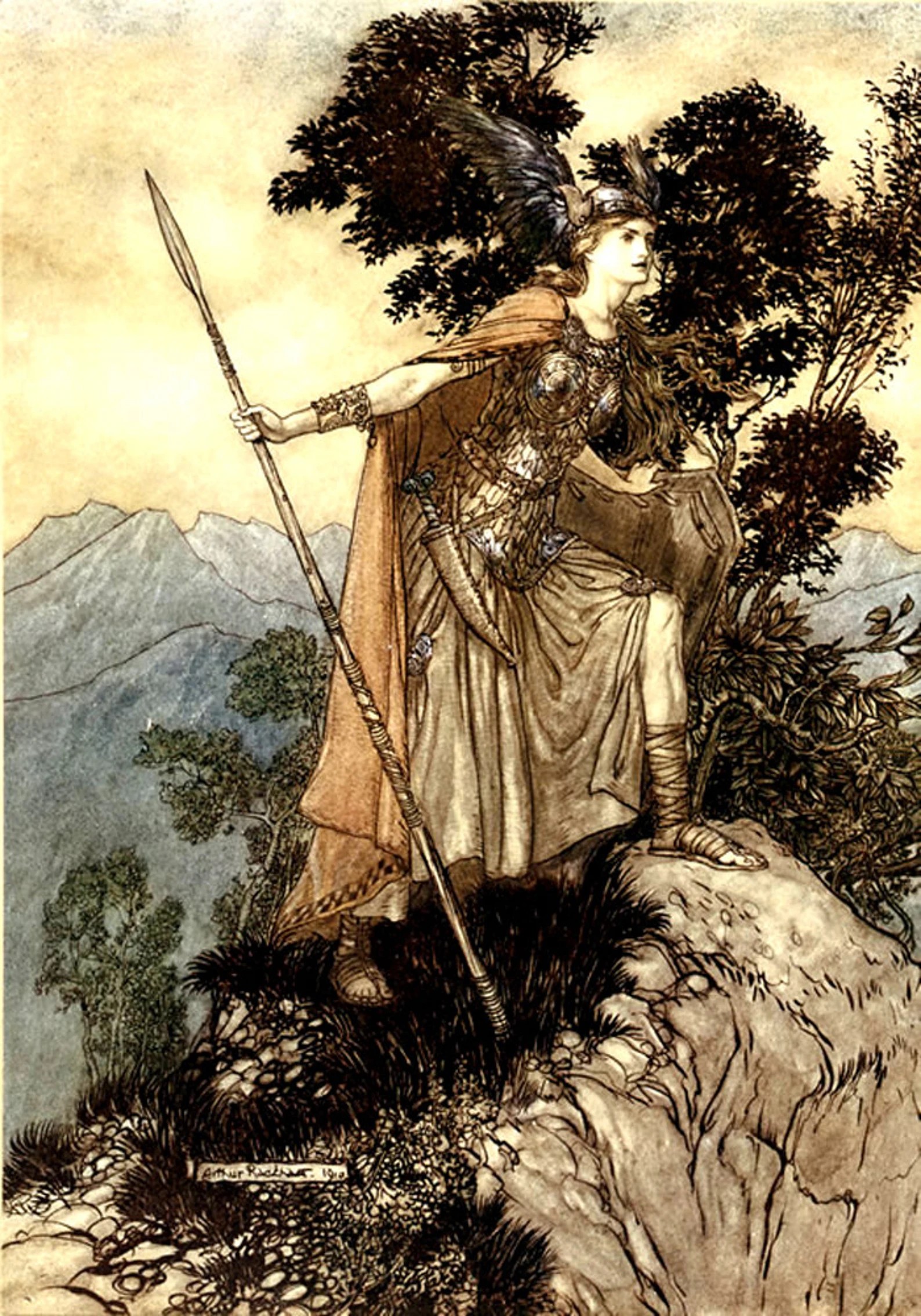
Sigurd has now slain the dragon Fafnir and tasted his blood, thereby acquiring knowledge of the language of birds. We discussed the esoteric significance of this in the last three installments. The birds tell Sigurd that he ought to ride “up to Hindarfjall, where Brynhild sleeps.” There, they say, “he would learn much wisdom.”[1] This is precisely where Sigurd heads, after loading Fafnir’s cursed treasure onto Grani. Two chapters of the saga are devoted to his meeting with Brynhild, and they are rich with occult significance. Among other things, the first of these chapters is one of the chief sources for our knowledge of rune magic. (more…)
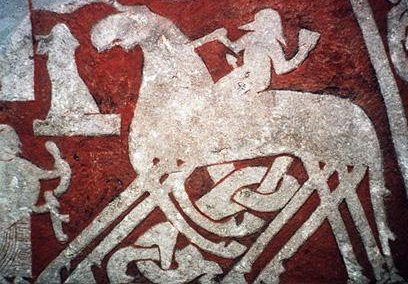
Odin riding Sleipnir in a detail on the Tjängvide stone
Odin riding Sleipnir in a detail on the Tjängvide stone
5,668 words
1. The Language of Birds
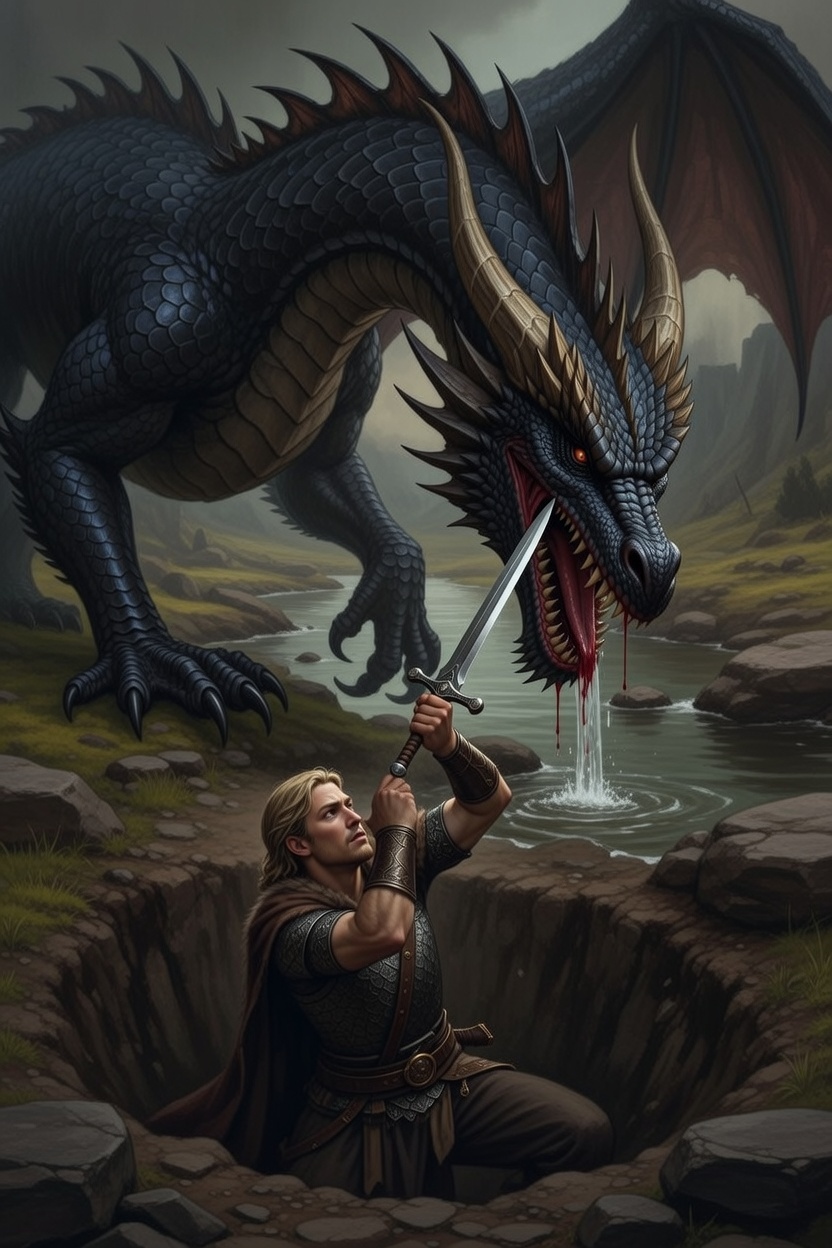
In our last installment, we explored the idea that Sigurd bathing in the dragon’s blood is a symbol for the achievement of the “spiritual corporeality.” In order to complete this alchemical transmutation, however, Sigurd must also consume the dragon’s blood, and its heart. (more…)
4,420 words
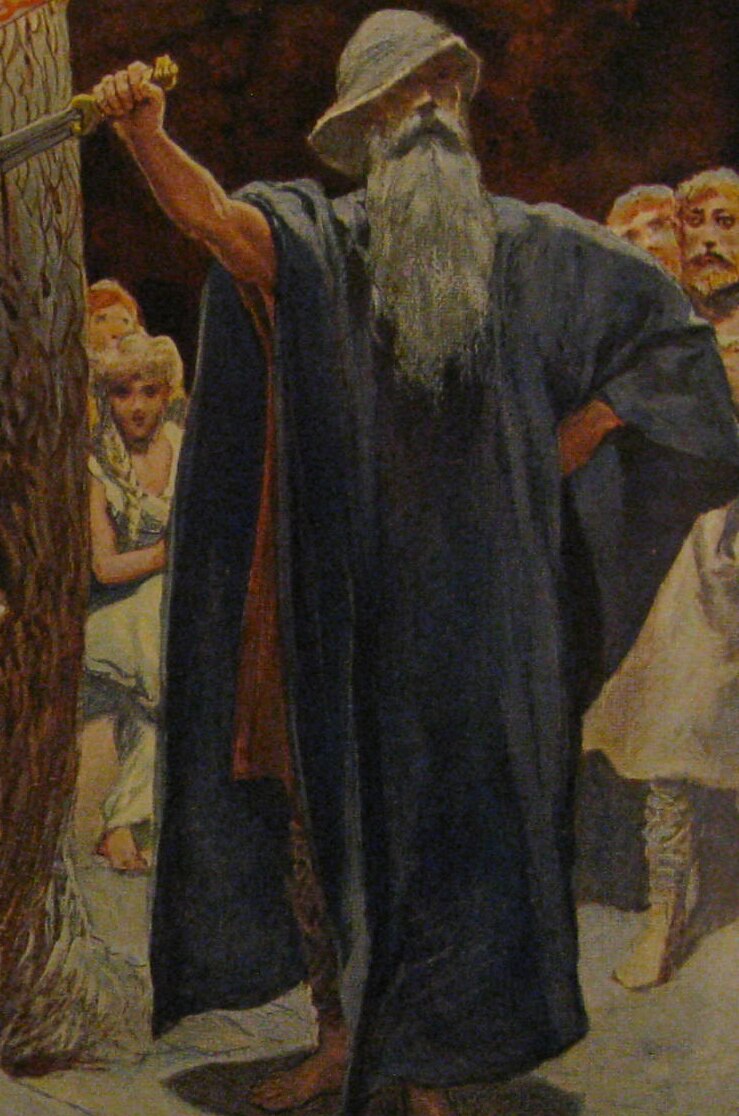
1. What Kind of Hero is Sigurd?
The previous installment offered a summary and interpretation of Julius Evola’s writings on alchemy. This was to prepare us for what we will begin in this essay: an alchemical interpretation of the dragon slaying episode in the saga, as well as related events.
Before we can develop such an interpretation, however, we should take account of the larger context in which Sigurd’s exploits occur. We shall do so by asking a very basic question: exactly what kind of hero is Sigurd? (more…)
4,441 words
In our last installment we continued telling the tale of “Otter’s Ransom.” This is the story Regin the dwarf smith tells young Sigurd, about how Regin’s brother Fafnir killed their father and made off with the hoard of gold that had belonged to the dwarf Andvari. It is a fabulous treasure, but before giving it up Andvari places a curse upon it. We discussed Claude Lecouteaux’s translation of the name Andvari as “guardian of the breath,” deriving the name from Old Norse andi/önd meaning “breath, wind, or spirit,” a term used by medieval clerics writing in Old Norse to translate Latin anima, “breath,” “wind,” “vital principle,” or “soul.” (more…)
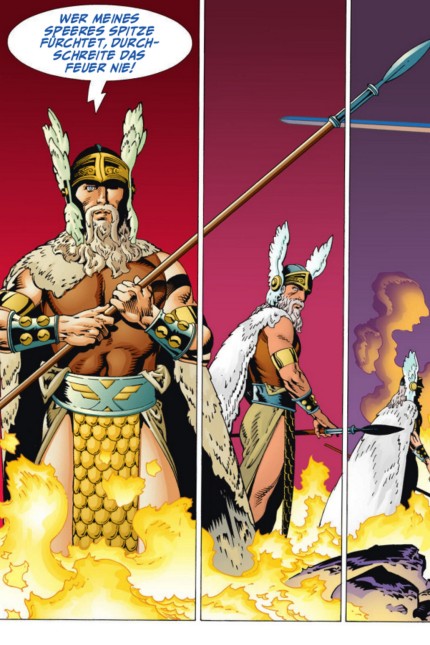
3,645 words
Part 2 of 2 (Part 1 here)
What, then, of Craig Russell’s graphic art? Enthusiasts of either opera or graphic art will probably find great pleasure in Russell’s Ring. The book — some muddled scenes such as the discovery of the sword excepted — is easier to follow than Wagner’s 16-hour cycle of music-dramas. Admirers of Craig Russell have a 448-page feast before them, while opera lovers are likely to be intrigued to discover how a comic artist presents one of the most famous of all operatic works. (more…)
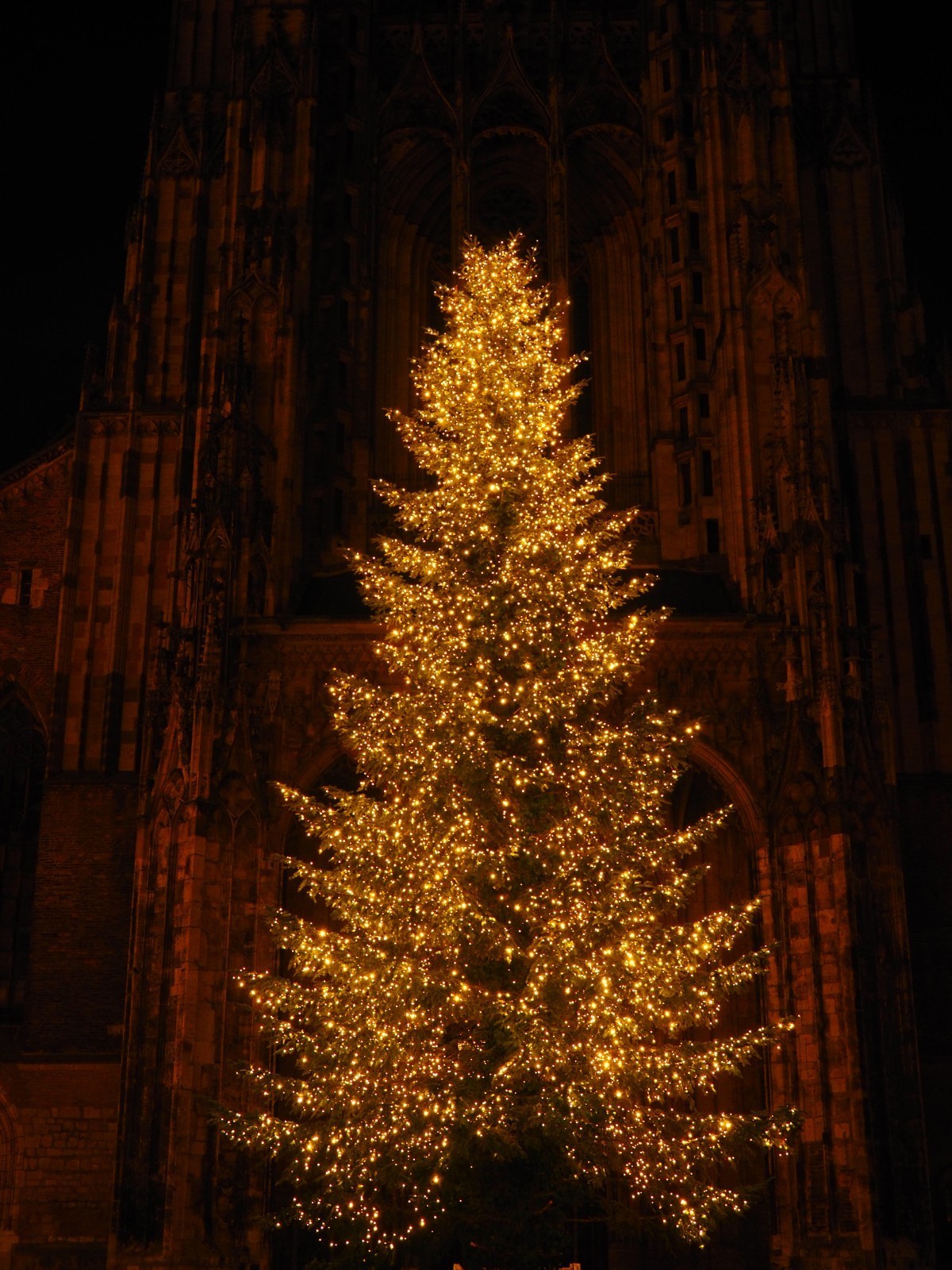
4,087 words
Like many children, some of my most vivid early memories center on the Christmas season. Preparations always began immediately after Thanksgiving. My mother and I would drag the dusty boxes of decorations down from the attic, while my father ascended onto our rooftop to string up the lights. A few weeks later we would go to the tree farm, ideally on a cold and overcast day, where my sister and I would run around searching for the ideal Christmas tree to be felled by my father’s handsaw. (more…)
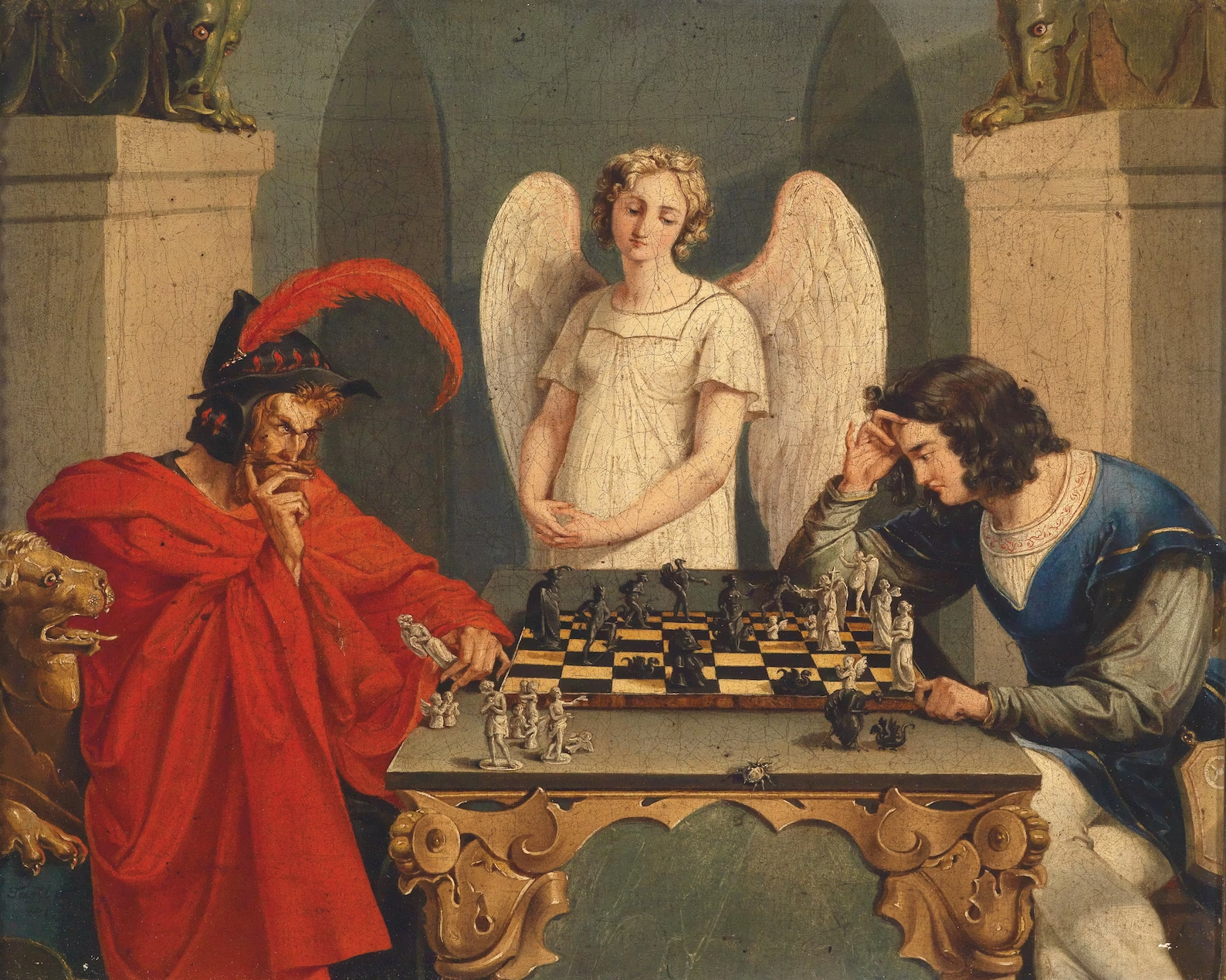
Friedrich August Moritz Retzsch, Faust and Mephisto Playing Chess, ca. 1825
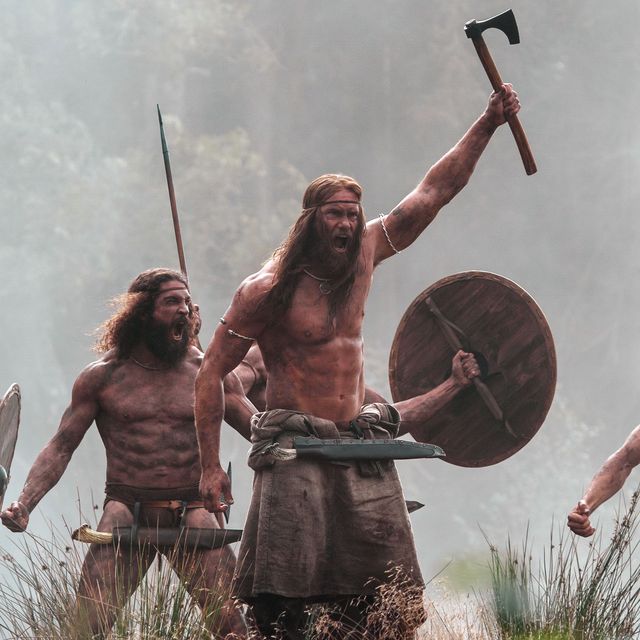
3,244 words
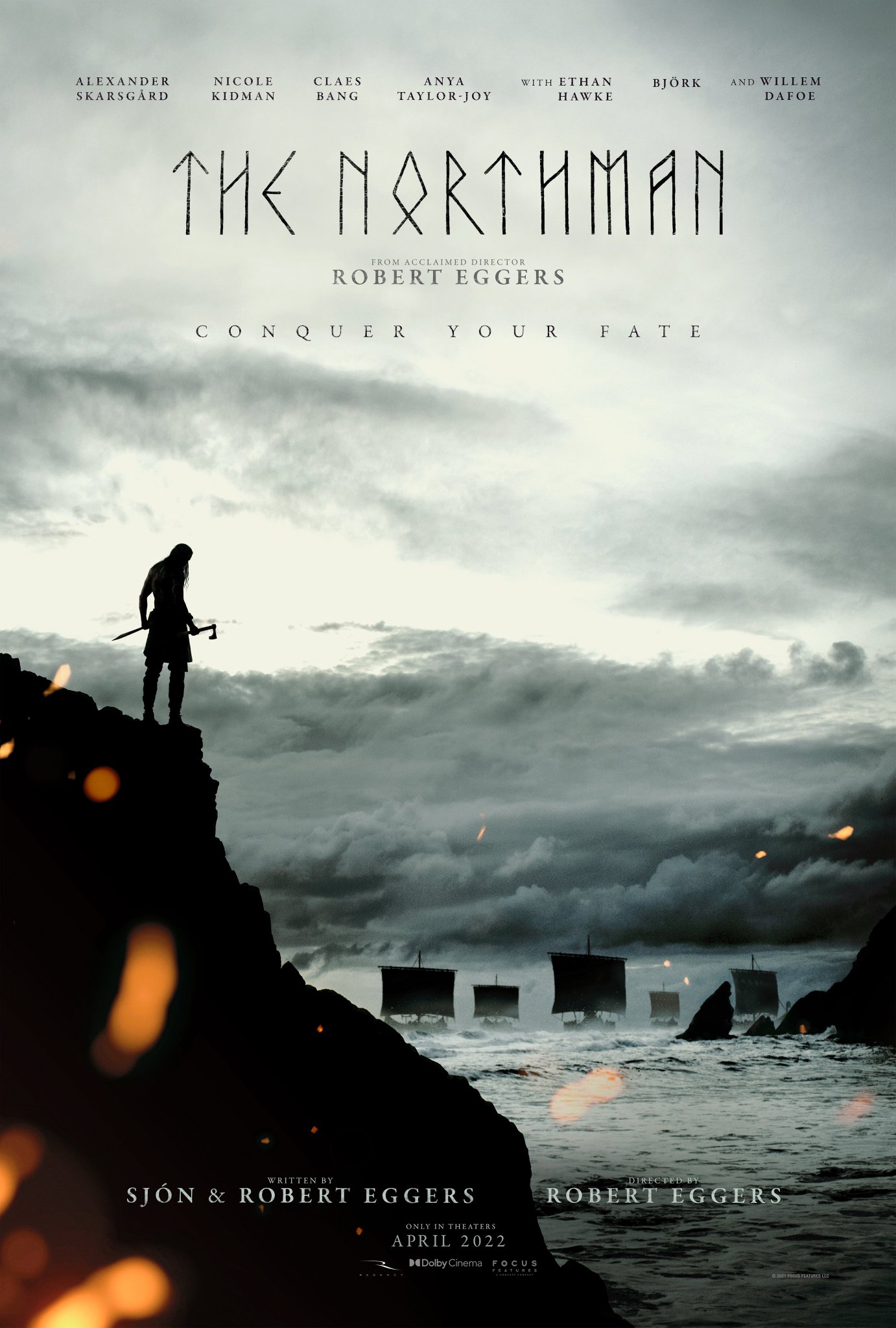
Robert Eggers’ The Northman has been widely praised for its stunning visuals, compelling performances, the creativity of its reimagination of Skakespeare’s Hamlet story (itself inspired by Saxo Grammaticus’ Amleth), and for the rich and engrossing world it creates, but criticism has also described the plot as rote, shallow when it tries to be profound, and nihilistic. (more…)
208 words / 1:12:42
Gregory Hood was Greg Johnson‘s guest on the latest broadcast of Counter-Currents Radio, where they talked about the new movie The Northman plus YOUR QUESTIONS, and it is now available for download and online listening.
Topics discussed include:
00:01:57 Overview of The Northman‘s themes
00:06:12 Destiny and fate vs. the modern notion of choosing your identity
00:13:49 Odin and the Indo-European Männerbund (more…)
4,087 words
Like many children, some of my most vivid early memories center on the Christmas season. Preparations always began immediately after Thanksgiving. My mother and I would drag the dusty boxes of decorations down from the attic, while my father ascended onto our rooftop to string up the lights. A few weeks later we would go to the tree farm, ideally on a cold and overcast day, where my sister and I would run around searching for the ideal Christmas tree to be felled by my father’s handsaw. (more…)

2,759 words
An interesting incident occurred in Sicily recently: A Roman Catholic bishop was accused of telling a group of schoolchildren Santa Claus does not exist. The Church has since apologized for these remarks, explaining to outraged parents that the cleric’s intention was direct children away from the consumerism of contemporary Christmas celebrations and towards veneration of the historic Saint Nicholas. This incident provides an opportunity to reflect on the figure of Santa Claus, how he emerged in Northern European and Anglo-American history, and his role in contemporary Christmas festivities. (more…)

5,993 words
The year was 939 AD, the setting near the city of Simancas. Count Fernán Gonzalez, a commander of free Spain, rode at the head of an army whose mission was to strike a blow against the Saracen invaders of Al-Andalus. Still, they were outnumbered and desperate. Fortune, it seemed, would favor the Moors on this day. But as the Count’s troops prepared to clash with their foe, a miracle occurred. (more…)