Counter-Currents
  • Advertise
  • Private Events
  • T&C
  • About
  • Contact
  • RSS
    • Main feed
    • Podcast feed
    • Videos feed
    • Comments feed
  • Welcome
  • Webzine
  • Books
  • Merch
  • Podcasts
  • Videos
  • Donate
  • Patrons
  • Subscribe
  • Crypto

LEVEL2

Donate Now Mailing list

Writer of June

(4 votes) David M. Zsutty

Article of June

Why White Advocates Should Avoid “Based Blacks” by Dani Vypont 4 votes
  • Welcome
  • Webzine
  • Books
  • Merch
  • Podcasts
  • Videos
  • Donate
  • Patrons
  • Subscribe
  • Crypto
    • Replacement Migration & Hypergamy

      F. Roger Devlin

      31

    • Kurds of a Feather Flock Together:
      Europe’s “Racist” Parakeet Tweet-Storm

      Steven Tucker

      1

    • Elevator Pitch to a Billionaire
      Money, Money, Money

      Ondrej Mann

      2

    • All Hail Rhodesia

      Spencer J. Quinn

      3

    • Nationalism This Week
      Disenfranchisement

      Greg Johnson

      31

    • The Murder of Ann Widdecombe

      Lipton Matthews

      9

    • Disclosure Day
      Please, Keep It Undisclosed

      Francisco Albanese

      12

    • Remembering Carl Schmitt
      July 11, 1888–April 7, 1985

      Greg Johnson

      1

    • Editor’s Update
      Fundraiser Update & New Books

      Greg Johnson

      1

    • Third Homeland Institute Poll on the Great Replacement

      David M. Zsutty

      12

    • The Bitter End of Western Metaphysics:
      Heidegger on Nietzsche, Part Five (Conclusion)

      Collin Cleary

      9

    • Fraudulent Black British History

      Mark Gullick

      7

    • A White Nationalist Response to Scott Greer

      Dave Chambers

      25

    • The Miami Mall Incident:
      Black Youths or Black Extraterrestrials?

      Dominic Fox

      6

    • The Theology of Three Populisms

      Morris van de Camp

      2

    • The Dangers of Skilled Immigration

      Lipton Matthews

      25

    • The Brotherhood of the Bell

      Beau Albrecht

      16

    • Endeavor: What Rome Means to Me

      Endeavour

    • When the Family Becomes Predation

      Jayant Bhandari

      5

    • RICU: The Gentle Art of Persuasion

      Mark Gullick

      7

    • Mind of Darkness:
      A Review of Lipton Matthews’s Busting African Delusions

      Derek Stark

      12

    • Remembering Revilo Oliver
      July 7, 1908–August 20, 1994

      Greg Johnson

      2

    • Some Advantages of Irish Nationalism

      Greg Johnson

      31

    • America at 250 from the National Cathedral

      Gabriel Anderson

      18

    • Why Not Stop All the Clocks?
      Modern Conservatism’s Flagging Commitment Towards Turning Back Time

      Steven Tucker

      3

    • Remembering Jean Raspail
      July 5, 1925–June 13, 2020

      Greg Johnson

      2

    • Editor’s Update
      Fundraiser Update & New Books

      Greg Johnson

    • The Ethnic Reality of FIFA 2026

      Samuel Valleus

      13

    • Nationalism This Week
      Tucker’s New Party

      Greg Johnson

      30

    • Ethiopia Against Italy
      How the Italo-Ethiopian Wars were part of the conflict between Eastern & Western Christiandom

      Morris van de Camp

    • Please Vote in Our Writer & Article of the Month Poll

      Greg Johnson

    • Available for Pre-Order!
      F. Roger Devlin’s Not Hooking Up

      F. Roger Devlin

    • Kolberg: The Last Nazi (or Prussian?) Film

      Steven Clark

      2

    • America 250 & The Fate of Empires

      Richard Houck

      20

    • Available for Pre-Order!
      Greg Johnson’s The Battle of the Books

      Greg Johnson

    • Why All the Silence About Blacks Being Kicked Out of South Africa?
      Because It’s Other Blacks That Are Doing It.

      Steven Tucker

      10

    • Zelensky, the Jewish Conspiracy Narrative, & the Demographic Replacement of Ukraine:
      A Critical Analysis of a Disinformation Discourse within the European Identitarian Right

      Luís Graça

      30

    • The Original Congressional Debate on Birthright Citizenship

      Alex Graham

      13

    • America at 250
      Unmanifested Destiny  

      David M. Zsutty

      32

    • The Normies are Waking Up:
      The Alliance for Responsible Citizenship Conference, London 2026

      Lipton Matthews

      2

    • Ethnic Vigilantism: The Movie

      Mark Gullick

      15

    • Lothrop Stoddard’s The Revolt against Civilization

      Kevin MacDonald

      2

    • David Zsutty on Political Organizing

      David M. Zsutty

    • PC-Incompatible Gaming:
      Plantation Simulator and the “Problem” of Racist Video Games

      Steven Tucker

      3

    • Remembering Lothrop Stoddard
      June 29, 1883–May 1, 1950

      Greg Johnson

      1

    • Editor’s Update
      Fundraiser Update & Upcoming Projects

      Greg Johnson

    • Nationalism This Week
      Metapolitics Wins:
      Scott Greer’s Whitepill

      Greg Johnson

      8

    • Remembering Colin Wilson
      June 26, 1931–December 5, 2013

      Greg Johnson

      3

    • Kevin Deanna on Political Organizing

      Kevin Deanna

      1

    • The Bitter End of Western Metaphysics:
      Heidegger on Nietzsche, Part Four

      Collin Cleary

      6

    • Bigfoot

      Elevator Pitch to a Billionaire
      Money, Money, Money

      From what I understand about Pantera, the latest version of it anyway, they no longer display the...

    • Greg Johnson

      Nationalism This Week
      Disenfranchisement

      The underlying assumption of this is that we have created a government with the will to separation...

    • Bigfoot

      Replacement Migration & Hypergamy

      Another factor that influences interracial couples and marriages are white females that serve in the...

    • Josephus Cato

      Nationalism This Week
      Disenfranchisement

      I thought Greg was exaggerating about the numbers of guest workers in Qatar but lo he is right.  If...

    • Peter Quint

      Replacement Migration & Hypergamy

      the proportion who mix is higher than marriage stats would lead people to believe. That’s the actual...

    • Scott

      Some Advantages of Irish Nationalism

      Well, one of caveats against Kennedy's "A Nation of Immigrants" hubris (and that is what it was) is...

    • Dani Vypont

      Replacement Migration & Hypergamy

      One case from American history has always especially impressed me. Pretty much all the sources agree...

    • Dani Vypont

      Replacement Migration & Hypergamy

      You constantly post the most controversial and self-defeating thing possible under articles. This...

    • Peter Quint

      Replacement Migration & Hypergamy

      White women are the most racially disloyal women of all races. I always assume any White female I...

    • Scott

      Disclosure Day
      Please, Keep It Undisclosed

      Dennis Weaver seemed miscast to me. I liked his shtick as McCloud, the New Mexico cowboy marshal,...

    • Ondrej Mann

      Replacement Migration & Hypergamy

      Young white men in Norway have only one option: to band together in gangs that reject...

    • Joseph C.

      Replacement Migration & Hypergamy

      I visited Oslo a year ago, for a week, and I'm going this october again (for a week as well). My...

    • Connor McDowell

      Replacement Migration & Hypergamy

      I’ve seen this OKCupid miscegenation argument before, and while much of my evidence is anecdotal, I...

    • Dominic Fox

      Nationalism This Week
      Disenfranchisement

      Even a real community will consist mostly of people who are only somewhat similar in character/...

    • Dani Vypont

      Replacement Migration & Hypergamy

      @JamesSunderland With regard to one of your earlier posts, I did some research, and it is ...

    • Dani Vypont

      Replacement Migration & Hypergamy

      What parts of the United States would you say have the most and least interracial relationships?It...

    • Dave Chambers

      All Hail Rhodesia

      Rhodesia is an inspiration to all of us whose families have had to flee the neighborhoods and...

    • Hairy Iranian Dude

      Replacement Migration & Hypergamy

      Boy, you are one Negative Nancy to interpret my post in such a cynical vein!

    • Gabe

      Replacement Migration & Hypergamy

      No doubt. And unscrupulous music (“record”) companies.

    • CC reader

      Disclosure Day
      Please, Keep It Undisclosed

      Duel was a very good movie, and it was made for tv. Good suspense, camera work, musical score, and...

    • Earth Day Special

      John Morgan

      12

    • A Robertson Roundup
      Remembering Wilmot Robertson
      (April 16, 1915 – July 8, 2005)

      Margot Metroland

      13

    • The Paranoid Style in White Nationalism

      Greg Johnson

      30

    • Join the Dance!

      Andrew Hamilton

      1

    • We Can’t Save the Earth Without Reducing African Birth Rates

      James Dunphy

      36

    • “I’m Not a Conspiracy Theorist, but . . .”:
      Jeffrey Epstein’s Death Gives New Life to “Conspiracy Theories”

      Greg Johnson

      22

    • Sylvia Plath: Stasis in Darkness

      Vic Olvir

      17

    • Vanguardism, Vantardism, & Mainstreaming

      Greg Johnson

      80

    • Aviation, Geography, & Race

      Charles Lindbergh

      3

    • Some Thoughts on Yule

      Collin Cleary

      4

    • Living in Truth:
      A Yuletide Homily

      Jef Costello

      7

    • John Kennedy Toole’s A Confederacy of Dunces

      Greg Johnson

      20

    • On Aleksandr Solzhenitsyn’s Warning to the West

      Spencer J. Quinn

      7

    • Elitism, British Modernism, & Wyndham Lewis

      Jonathan Bowden

      6

    • Philip K. Dick’s Do Androids Dream of Electric Sheep? as Anti-Semitic/Christian-Gnostic Allegory

      Greg Johnson

      20

    • “Conspiracy Theory” or Conspiracy?

      Andrew Hamilton

      21

    • Remembering H. P. Lovecraft
      (August 20, 1890–March 15, 1937)

      Greg Johnson

      3

    • Who Are We?
      Nordics, Aryans, & Whites

      Greg Johnson

      71

    • Remembering William Gayley Simpson
      (July 23, 1892–December 31, 1990)
      A Pleasant Afternoon with Harriet & Bill Simpson

      Margot Metroland

      18

    • Here are the Young Men
      Remembering Ian Curtis
      (July 15, 1956–May 18, 1980)

      Mark Gullick

      18

    • Percy Grainger
      Artist of the Right

      Alex Graham

      7

    • Remembering Revilo Oliver
      (July 7, 1908–August 20, 1994)

      Greg Johnson

      18

    • The Meaning of July 4th for the White Man

      Gregory Hood

      13

    • The Front National’s Evolution

      Bruno Mégret

    • Merwin K. Hart
      Forgotten American Hero & Man of the Right

      Morris van de Camp

      10

    • George Orwell’s Nineteen Eighty-Four

      Jonathan Bowden

      8

    • Carleton S. Coon
      Scientist & Reluctant White Advocate

      Morris van de Camp

      4

    • The Kwanzaa Absurdity Will Be Dwarfed by Juneteenth

      Robert Hampton

      12

    • Stravinsky

      Alex Graham

      7

    • Like the Roman:
      Remembering Enoch Powell (1912-1998)

      Mark Gullick

      23

    • Exclusive Interview with Karel Veliky:
      The Final Chapter in the Film Series! Part II

      Ondrej Mann

      2

    • Exclusive Interview with Karel Veliky:
      The Final Chapter in the Film Series! Part I

      Ondrej Mann

      2

    • Nietzsche & Race

      Mark Gullick

    • The Crisis of Chinese Technology Thieves

      Morris van de Camp

      1

    • The Zodiac Killer

      Mark Gullick

      12

    • José Pedro Zúquete’s The Identitarians

      Greg Johnson

      3

    • Berlin: City of Stones

      Spencer J. Quinn

      6

    • Headbanging Lite

      Mark Gullick

      5

    • The Russians are Coming/The Russians are Coming

      Steven Clark

      2

    • The Cruelty of Kindness

      Morris van de Camp

      11

    • Jonathan Bowden’s Deliverance
      Part 7

      Jonathan Bowden

    • Lothrop Stoddard’s The Revolt Against Civilization

      Spencer J. Quinn

      15

    • About Film “From the Right”

      Karel Veliky

    • The 1970s: The Golden Age of Hijacking

      Morris van de Camp

      21

    • Jonathan Bowden’s Deliverance
      Part 6

      Jonathan Bowden

    • Do You Want to Play a Game?

      Mark Gullick

      1

    • Sexually Incontinent on the Indian Subcontinent:
      Who Rapes More Animals, Indians or Pakistanis? The Battle Continues!

      Steven Tucker

      3

    • Neo-Fascism in Film
      Part 5

      Karel Veliky

      15

    • The Game of Tarot

      Mark Gullick

      2

    • Institutions Cannot Be Transplanted

      Jayant Bhandari

      5

    • Jonathan Bowden’s Deliverance
      Part 5

      Jonathan Bowden

    • Crosstown Traffic:
      Jimi Hendrix & The Post-War Rock ‘N’ Roll Revolution

      Mark Gullick

      1

    • Slaves from the North:
      Finns & Karelians in the East European Slave Trade, 900–1600

      Lipton Matthews

      14

    • Neo-Fascism in Film
      Part 4

      Karel Veliky

      2

    • David Lean’s A Passage to India

      Spencer J. Quinn

      1

    • Elites are Essential to Development

      Lipton Matthews

      7

    • Jonathan Bowden’s Deliverance
      Part 4

      Jonathan Bowden

    • Neo-Fascism in Film
      Part 3

      Karel Veliky

      6

    • E. M. Forster’s A Passage to India & the Indian Mentality

      Spencer J. Quinn

      25

    • Jonathan Bowden’s Deliverance
      Part 3

      Jonathan Bowden

    • András László
    • Derek Hawthorne
    • Beau Albrecht
    • Alain de Benoist
    • Kerry Bolton
    • Jonathan Bowden
    • Collin Cleary
    • Jef Costello
    • Savitri Devi
    • Julius Evola
    • Jim Goad
    • Gregory Hood
    • Juleigh Howard-Hobson
    • Greg Johnson
    • Charles Krafft
    • Anthony M. Ludovici
    • Trevor Lynch
    • H. L. Mencken
    • J. A. Nicholl
    • James J. O’Meara
    • Christopher Pankhurst
    • Tito Perdue
    • Michael Polignano
    • Spencer J. Quinn
    • Fenek Solère
    • Irmin Vinson
    • Leo Yankevich
    • Francis Parker Yockey
    • Multiple authors
  • Editor-in-Chief

    • Greg Johnson, Ph.D.

    Featured Writers

    • Beau Albrecht
    • Gunnar Alfredsson
    • Collin Cleary, Ph.D.
    • Jef Costello
    • Morris V. de Camp
    • F. Roger Devlin, Ph.D.
    • Stephen Paul Foster, Ph.D.
    • Jim Goad
    • Alex Graham
    • Mark Gullick, Ph.D.
    • Greg Johnson, Ph.D.
    • Travis LeBlanc
    • Trevor Lynch
    • Margot Metroland
    • James J. O’Meara
    • Angelo Plume
    • Spencer J. Quinn
    • Fred Reed
    • Clarissa Schnabel
    • Michael Walker
    • David M. Zsutty

    Frequent Writers

    • Asier Abadroa
    • Aquilonius
    • Alain de Benoist
    • Kerry Bolton, Ph.D.
    • Dave Chambers
    • Steven Clark
    • James Dunphy
    • Endeavour
    • Richard Houck
    • Jason Kessler
    • Titus Livius
    • Ondrej Mann
    • Lipton Matthews
    • Mark Mazari
    • John Morgan
    • Jaroslav Ostrogniew
    • Kathryn S.
    • Christian Secor
    • Anne Wilson Smith
    • Thomas Steuben
    • William De Vere
    • Kenneth Vinther
    • Max West

    Classic Authors

    • Maurice Bardèche
    • Jonathan Bowden
    • Julius Evola
    • Guillaume Faye
    • Ernst Jünger
    • Kevin MacDonald, Ph.D.
    • D. H. Lawrence
    • Charles Lindbergh
    • Jack London
    • H. P. Lovecraft
    • Anthony M. Ludovici
    • Sir Oswald Mosley
    • National Vanguard
    • Friedrich Nietzsche
    • Revilo Oliver
    • William Pierce
    • Ezra Pound
    • Saint-Loup
    • Savitri Devi
    • Carl Schmitt
    • Miguel Serrano
    • Oswald Spengler
    • P. R. Stephensen
    • Jean Thiriart
    • John Tyndall
    • Dominique Venner
    • Leo Yankevich
    • Francis Parker Yockey

    Other Authors

    • Howe Abbott-Hiss
    • Michael Bell
    • Giles Corey
    • Jack Donovan
    • Richardo Duchesne, Ph.D.
    • Emile Durand
    • Guillaume Durocher
    • Mark Dyal
    • Tom Goodroch
    • Andrew Hamilton
    • Robert Hampton
    • Huntley Haverstock
    • Derek Hawthorne
    • Gregory Hood
    • Juleigh Howard-Hobson
    • Alexander Jacob
    • Ruuben Kaalep
    • Tobias Langdon
    • Julian Langness
    • Patrick Le Brun
    • G A Malvicini
    • John Michael McCloughlin
    • Millennial Woes
    • Michael O’Meara
    • Christopher Pankhurst
    • Michael Polignano
    • J. J. Przybylski
    • Quintilian
    • Edouard Rix
    • C. B. Robertson
    • C. F. Robinson
    • Herve Ryssen
    • Alan Smithee
    • Fenek Solere
    • Ann Sterzinger
    • Robert Steuckers
    • Tomislav Sunic
    • Donald Thoresen
    • Marian Van Court
    • Irmin Vinson
    • Book Reviews
    • Movie Reviews
    • TV Reviews
    • Music Reviews
    • Art Criticism
    • Graphic Novels & Comics
    • Video Game Reviews
    • Fiction
    • Poems
    • Interviews
    • Videos
    • English Translations
    • Other Languages
      • Arabic
      • Bulgarian
      • Croatian
      • Czech
      • Danish
      • Dutch
      • Estonian
      • Finnish
      • French
      • German
      • Greek
      • Hungarian
      • Italian
      • Lithuanian
      • Norwegian
      • Polish
      • Portuguese
      • Romanian
      • Russian
      • Slovak
      • Spanish
      • Swedish
      • Ukrainian
    • Commemorations
    • Why We Write
  • Archives
  • Top 100 Commenters
  • The Looney Bin
  • Advertise
  • Private Events
  • T&C
  • About
  • Contact
  • RSS
    • Main feed
    • Podcast feed
    • Videos feed
    • Comments feed
Sponsored Links
Europa.com Above Time Coffee Antelope Hill Publishing Paul Waggener IHR-Store Spencer J. Quinn American Renaissance Jim Goad The Occidental Observer
Print February 29, 2024 15 comments

Ross Perot & the US Presidential Election of 1992

Morris van de Camp

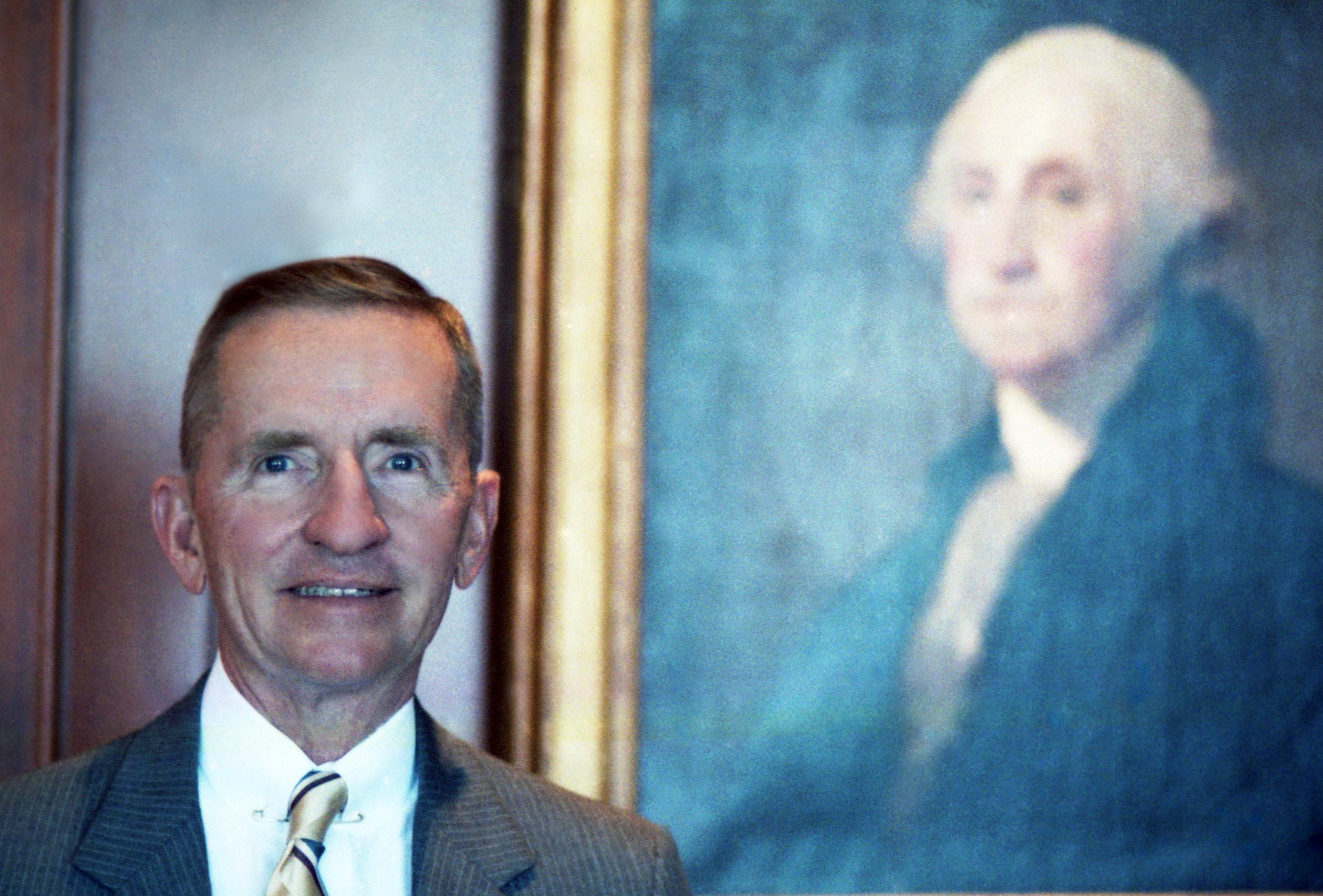
Ross Perot (photo courtesy of Wikipedia Commons)

3,613 words

The Chernobyl nuclear reactor in the Soviet Union suffered a catastrophic meltdown in April 1986. The disaster was too big to ignore, and it shattered the prestige upon which the Evil Empire was built. Thereafter the entirety of the Communist bloc in Europe started to collapse. In November 1989 the Berlin Wall came down, and then anti-Communist revolutions swept across Eastern Europe. “The world,” according to a 1991 hit song, “woke up from history.” The Soviet Union was officially dissolved on Christmas Day in 1991. The end of the Cold War brought a moment of euphoria to the Zionist-aligned political elite in the United States, and many globalist intellectuals thought that “liberal democracy” had reached a global permanence.


The end of the Cold War and the uncertainties that resulted from it underpinned the United States presidential election of 1992. At the time, however, the election only seemed notable in that an independent candidate, Ross Perot, made an unusually strong third-party run. Perot and the other candidates that represented the “fringe” in 1992 are worth reexamining.

The establishment incumbent

At the United States’ helm at the end of the Cold War was President George Herbert Walker Bush. President Bush began his career as a pilot in the United States Navy during the Second World War. The character of his service during the war was beyond valorous. Bush was a Yankee who later moved to Texas, where he got into in the oil business and became wealthy. He entered politics in the early 1960s, just as the Republicans were beginning to capture voters in the traditionally Democrat-dominated South. Bush successfully maneuvered his career through the social revolutions of the 1960s and was nominated as Ronald Reagan’s Vice President in the 1980 election. Eight years later, he was elected President in his own right.

Bush was the right man for the job on the international scene. He successfully navigated the US through the collapse of the Communist bloc and then assembled and led a diverse coalition to remove the Iraqi army from Kuwait in 1991. At the end of the Persian Gulf War, Bush’s approval rating reached 90%. He seemed unbeatable heading into the 1992 election.
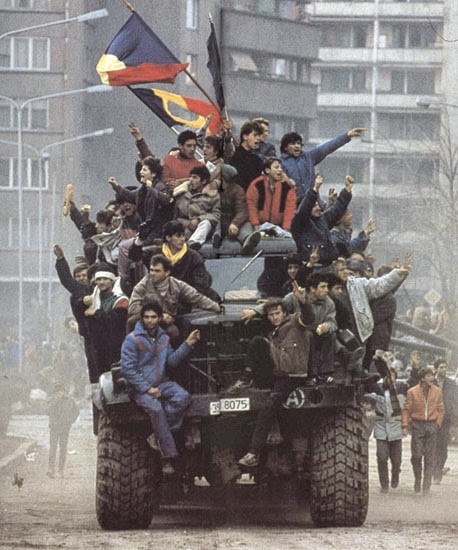
Communism in Romania collapsed in December of 1989. Romania had been one of the last loyal Soviet satellites in Eastern Europe.

Events beyond Bush’s control cut into his reelection chances, however. The first wound to his presidency came just before he was first elected in 1988, when the savings and loan industry collapsed and the US government had to step in with an expensive bailout. One of President Bush’s sons was working in the industry, so the appearance of impropriety remained a sore point for many Americans. The entire economy fell into a recession in the summer of 1990. It was short and mild, but only became clear in retrospect. In the spring of 1992, sub-Saharans rioted in response to the acquittal of four Los Angeles policemen who’d been filmed beating a sub-Saharan suspect named Rodney King. Meanwhile, deindustrialization was cutting deeply into the prosperity of those in the Rust Belt. Besides all this, George H. W. Bush was an establishment Republican and a supporter of “civil rights.” He signed the Civil Rights Act of 1991 into law in order to further shore up the illicit second constitution that is the Civil Rights Act of 1964. Bush also raised taxes after promising not to, a move that enraged many Republicans.

Bush’s vulnerability first manifested within the Republican Party itself. Pat Buchanan, a leading member of the conservative movement, launched his own candidacy in early 1992. Another challenger was David Duke, a Louisiana politician and principled white advocate who would go on to write an excellent book on the Jewish Question. Incumbent presidents who face significant primary challengers are in deep political trouble.

The Democratic challengers

As for the Democrats, a series of moderate liberals put their hats in the ring. They were mostly old-stock Americans or assimilated white ethnics. The Democratic challengers had sympathies which overlapped with those of conservative voters who might otherwise vote Republican. The 1990s was a time when one could politically be a “social liberal” while also being a “fiscal conservative” as well as “tough on crime.” The Democrats eventually nominated a moderate named Bill Clinton.

If one rewatches the 1992 presidential debates from a non-partisan perspective, Bill Clinton and Al Gore clearly dominated. Additionally, Clinton could genuinely empathize with others. George H. W. Bush was unable to formulate a winning message and came across as having low energy. Ultimately, both the Republicans and Democrats offered neo-liberal economic policies. Bush and Quayle wanted to shove the North American Free Trade Agreement (NAFTA) down America’s deindustrializing throat, and Clinton and Gore wanted to ensure that Mexico followed environmental laws before they strip-mined America of its jobs through NAFTA and other neo-liberal free trade agreements.

The independent challenger
You can buy Greg Johnson’s Against Imperialism here.

The outsider who shook things up in 1992 was Henry Ross Perot, a native Texan who rose from a humble background to become a successful businessman in the computer industry. He declared himself as an independent candidate for the presidency in February 1992. His quixotic run took votes away from Bush and most certainly left the winner, Bill Clinton, without a popular mandate, allowing for a slow burn of discontent through the first two years of Clinton’s presidency.

Perot was not a white advocate, but he was well outside the political mainstream regardless. The social problems which led to his presidential run had their roots in the “civil rights” disaster, although this wasn’t so clear in 1992. Perot was a prophet in that he predicted the problems that would ensue from neo-liberal trade deals such as NAFTA, and he likewise had opposed the 1991 Persian Gulf War. Although his views were largely ignored at the time, in retrospect we can see that the war created more problems than it solved. Perot also sought to tackle a terrible problem of the time: the plight of those Americans who had been taken as prisoners of war and who were still being held hostage abroad.

The man from Texarkana

Ross Perot was born in Texarkana, Texas on June 27, 1930 to a strict Christian family. Instead of revolting against his parents’ piety, he embraced it. He worked hard at every task he was given. Perot was accepted at the US Naval Academy in 1949 and commissioned as an Ensign in 1953. His first assignment was on a destroyer bound for Korea, where the war was still being waged. Word reached the ship that the war had ended when the destroyer reached Midway Island. Perot thus had the fortune — or misfortune, depending on one’s point of view — of just missing the chance to see combat.

Perot thrived in the Navy for a time, but once the Korean War ended he became bored, finding his fellow sailors to be undisciplined. He spent much of his stint in the Navy as a junior officer who was responsible for bailing drunken sailors out of local prisons and handing out penicillin to treat venereal diseases. Perot applied for an early discharge, but before he left the service he was assigned to manage an early form of the computer; the experience allowed him to land a job at IBM following his release from service in 1957.

Perot worked as a salesman for IBM, and soon realized three things about the company’s clients: they needed technical support, computers were often left idle, and that data was the thing they wanted most. With a $1,000 investment from his wife, Margot Birmingham Perot, he started Electronic Data Systems (EDS) in 1962.

EDS rented time on computers which would have otherwise been idle to process payroll for various clients, manage insurance claims, and analyze other forms of data. Perot had tapped into a new industry that was soon to become extremely important. His real talent was for hiring good people, however. He preferred married white men, and his employees wore coats and ties to work and kept their hair short. By the end of the 1960s, Perot started to focus on hiring Vietnam veterans who were in their early twenties but who had attained a great deal of maturity from their time in the service. This was at a time when many Vietnam vets found it difficult to find employment after reentering civilian life.

EDS began to make real money when President Lyndon Baines Johnson enacted Medicare and Medicaid as part of his broader Great Society reforms. EDS carried out the data processing for those programs in Texas, and the company’s profits jumped massively starting in 1965. EDS then expanded across the country to help all the states with these programs. Perot was on his way to becoming the first tech billionaire.

Although Perot was a “self-made man,” the way in which he acquired his fortune needs to be critically analyzed. His main client in the 1960s was a federal welfare program that had been enacted by a President who was among the last of the genuine believers in Keynesianism and “New Deal” economic systems. Perot was a capitalist, but he was one whose prosperity depended upon a socialist program.

Data processing is a vital function, but EDS ultimately became a catchment area to receive federal funds. Perot was in an industry in which money came from taxing other parts of the American economy — and those parts, such as manufacturing, were collapsing. Missing tax revenues were made up by borrowing money.

Managing Medicare and Medicaid accounts were Perot’s cash cows. To keep his grip on his government clients, Perot hired lobbyists, a platoon of good lawyers, and played for keeps. When he lost a lucrative government contract, for example, he fought hard by claiming that the contracting process had been unfair, and thus won the contract back. Eventually EDS merged with General Motors. Perot predictably clashed with the auto executives and was bought out for $750 million. EDS saved General Motors $200 million per year.

To bring out the prisoners and them that sit in darkness

On August 5, 1964, Lieutenant J. G. Everett Alvarez, Jr. of the US Navy was shot down over North Vietnam while piloting an A-4 Skyhawk. He was the first of hundreds of American prisoners of war during the Vietnam conflict. Once the Nixon administration began the US withdrawal from Vietnam, the prisoner of war issue became embedded in the collective American consciousness. Ross Perot became prominent advocate for the POWs and their families.

Perot attempted to fly aid packages to the prisoners in North Vietnam in 1968. The North Vietnamese wouldn’t allow Perot’s plane to land, however, so he stopped in Laos. The North Vietnamese were willing to accept the aid packages provided that they were smaller in size, so Perot flew them to Alaska and organized a repacking team made up of ordinary citizens. Then, Perot attempted to get the supplies to the POWs via the Soviet Union. He eventually flew the supplies from Alaska to Europe by flying over the Arctic Sea before finally realizing that the Communists were never going to cooperate. The mission was a failure, but Perot’s quixotic attempt to get supplies to the prisoners was a major story in the American media and made him a household name. When the POWs were finally released, Perot hosted them at an event in San Francisco.

EDS expanded its operations into the Middle East during the 1970s, and also began handling Iran’s social security program. The Shah’s regime was on the verge of collapse, however. Just before the Iranian Revolution, two EDS employees, Bill Gaylord and Paul Chiapparone, were arrested by the Shah’s underlings and imprisoned. Americans began leaving Iran as the situation deteriorated.

Perot was determined to free his employees. He hired retired US Army Colonel Arthur D. “Bull” Simons to lead and train a team of EDS employees who were veterans to rescue the prisoners. Simons had led a raid on a POW camp in Vietnam and was an experienced soldier. Simon’s “commando team” consisted of married men in their late 30s. The effort had all the makings of a fiasco. Perot’s legal team advised him against making a private effort to retrieve the jailed men and instead recommended that he go through official channels. Perot was insistent, however. He even went to Tehran himself and spoke with his imprisoned employees at great risk.

Col. Simons and the team infiltrated into Iran and carefully considered every potential course of action. Simons realized that the Iranian Revolution was progressing similarly to how the French one had, and that a mob of pro-Ayatollah supporters could storm the prison and release the inmates at the jail, many of whom were political prisoners, as happened at the Bastille in Paris in July 1789. Simons and an Iranian EDS employee organized such a mob, and every prisoner was freed along with the two Americans. The group then fled overland and across the mountains to Turkey, and from there to the United States.
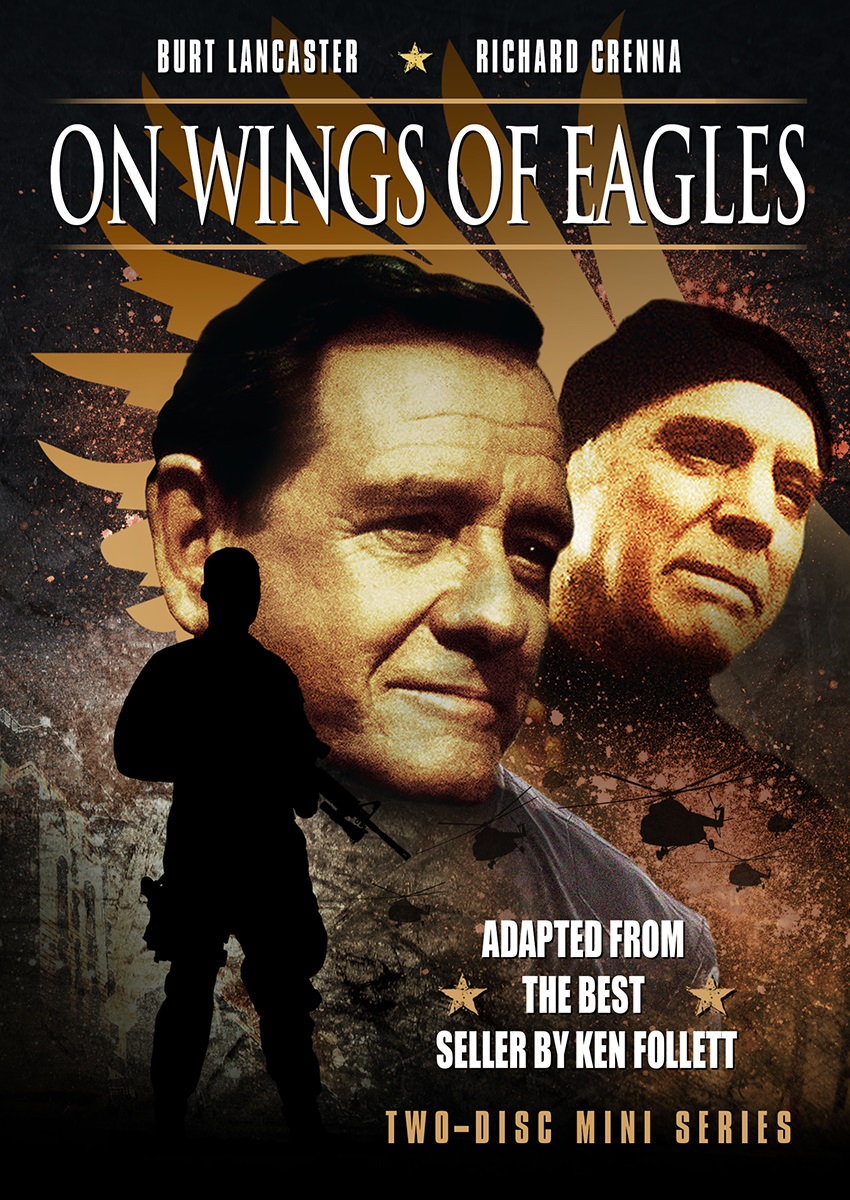
On the Wings of Eagles premiered in 1986 on NBC.

Ken Follett wrote a book based on the affair that was turned into miniseries on NBC in 1986, On Wings of Eagles. It is an engaging fictionalized account of the event, and it hits all the right notes: a loyal employer carrying out noblesse oblige, chaste wives fighting for their captured husbands, and valorous Americans who refuse to leave any man behind. There was an all-star cast as well: Burt Lancaster played Simons, and Perot was played by Richard Crenna.

Perot remained involved in the POW/MIA issue, which continued to linger after the Vietnam War ended. There were widespread rumors that some Americans were still being secretly held by the Vietnamese. Ultimately, no prisoners were ever found, although it is nevertheless the case that more than a thousand Americans had gone missing across Southeast Asia at the time. The POW/MIA issue became a cultural force in the 1970s and persisted for decades afterwards. There were several popular movies made about Americans captured or stranded in Vietnam such as The Deer Hunter, the Missing in Action series, Rambo: First Blood Part II, and Bat*21. The issue was bolstered by the Iranian Hostage Crisis in 1979-81 as well as the Lebanese hostage crisis which plagued the Reagan administration during the 1980s. Perot donated money to Oliver North in an attempt to free the Americans in Lebanon.

You can buy Tito Perdue’s novel The New Austerities here.

Perot poured a great deal of money into POW/MIA causes, funding expeditions and investigations. One such investigator was a colorful retired Special Forces operator named Bo Gritz, who would also run for President via the small Populist Party in 1992. (David Duke had been the party’s nominee in 1988.) The Populist Party had been founded by Willis Carto. Gritz didn’t focus his campaign on racial issues, however, instead speaking about the national debt, the Federal Reserve, and America’s loss of American sovereignty in George H. W. Bush’s “New World Order,” which he believed was leading to a “one-world government” that would enslave Americans.

It is possible that Perot’s money helped to keep the POW/MIA issue in the public’s mind long after the end of the Vietnam War. Retired soldiers seeking fame were certainly incentivized to keep the rumors of shackled American patriots forced into slave labor in Asian salt mines going. Perot was also initially involved in the building of the controversial Vietnam Veterans Memorial in Washington, DC. He pulled out, however, once the memorial’s design was revealed, feeling it was too negative. Some felt that he had come out of the affair appearing petty.

1992 presidential run

Perot had been involved in politics since the late 1960s. Aside from his POW/MIA activist and a brief foray into the War on Drugs, much of his activism was self-interested, consisting of lobbying efforts to further his business interests. By the late 1980s, crime had been spiraling out of control across the US for more than two decades. After three policemen were killed in Dallas in 1988, Perot got involved in police reform. He held listening sessions with police in order to get a grip on the issues, and the officers told him that the Citizens’ Review Board was holding them back, a Dallas government institution which allowed sub-Saharans to make spurious claims about “police brutality.” The Board had been established during the liberal reforms of the 1960s and itself helped bring forth the crime wave in the first place.

Perot began calling for the end of the Board, taking considerable risks while making positive political contributions for whites. Perot quickly found himself in a vicious conflict with sub-Saharan race activists. He was surprised by this, however. He had always hired his employees based on merit and claimed that he had always supported black uplift, and couldn’t understand why his “teeth were getting kicked in” and that he was being labeled a “racist.” Perot failed to realize that sub-Saharans are comfortable with crime and sympathize with criminals, nor did he understand the problems arising from the 1964 Civil Rights Act.

Saddam Hussein invaded Kuwait in August 1990. The US, supported by the United Nations, immediately declared Operation Desert Shield and began sending hundreds of thousands of troops to Saudi Arabia. It was the first major American military operation since the Vietnam War. Perot was against it from the start, believing that the war was really about control of oil. After the US expelled Iraq from Kuwait the following year, Perot said:

We rescued the Emir [of Kuwait]. Now, if I knock on your door and say I’d like to borrow your son to go to the Middle East so that this dude with 70 wives, who’s got a minister for sex to find him a virgin every Thursday night, can have his throne back, you’d probably hit me in the mouth.

Although this was hyperbole, he was nevertheless making a valid point. Americans, many of whom come from humble backgrounds, are often asked to serve in wars on behalf of nations whose main interest for the US is that they have good lobbyists in Congress. These same Americans are heavily taxed to provide foreign aid to wealthy leaders abroad. The US government likewise gives enormous economic subsidies to foreign commercial competitors in order to buy compliance with policies that the US government wants but which do nothing for ordinary Americans (or in some cases even harm their interests), such as supporting the industrialization of South Korea.

Perot declared his candidacy for President in February 1992, calling for volunteers to get him on the ballot in all 50 states. Volunteers indeed came forward and did so, and Perot climbed in the polls. His message was a mix of fiscal conservativism, social liberalism, rejection of free trade agreements, and funding for medical research to end the AIDS epidemic, which was then a major fear. Perot ran many infomercials, some of which were mean-spirited; in one, he claimed that Arkansas, where Bill Clinton was Governor at the time, was an insignificant entity compared to big corporations such as the ones he ran.

You can buy Alain de Benoist’s Ernst Jünger between the Gods and the Titans here.

Perot’s campaign was disorganized, however, due to Perot’s management style and personality quirks. He didn’t want to pay the money needed for good advertising, and became fixated upon the false stories that the media spread about him. One such story claimed that he had dynamited a coral reef in order to make a channel for his luxury yacht. He obsessed about this for much longer than he should have.

Perot attempted to woo Democrats Paul Tsongas and Al Gore as his running mate. He eventually picked retired Vice Admiral James Stockdale, who had been the highest-ranking POW in North Vietnam, enduring torture and starvation. He had been forced to wear shackles on his legs for two years.

Perot pulled out of the race in the midsummer of 1992. He claimed that the Bush administration was threatening to release lewd “computer generated” photos of his daughter. He also believed the administration was spying on him. Perot’s biographer, Gerald Posner, believed that an unsavory character in the POW/MIA Movement was in fact behind it all. But it’s entirely possible that Perot’s claims were correct.

Perot changed his mind and returned to the race on October 1, 1992. He was allowed to participate in the debates by both the Democrats and Republicans. He did reasonably well in the first two, but appeared uncomfortable and confused in the third, where “undecided” voters asked “unscripted” questions. In the vice-presidential debate, Stockdale continually paced around the stage, complaining that his legs were bothering him. He had been given less than two weeks to prepare, and also appeared confused.[1]

Ross Perot’s voters in the 1992 election. Perot failed to win any electoral college votes, but did have a remarkable showing.

Perot won almost 19% of the vote on election night. It was an enormous showing for a third-party candidate who had run a less-than-ideal campaign. His ideas impacted the national conversation. Clinton didn’t entirely end the national debt, but he did achieve budget surpluses during his second term. Perot was unfortunately not able to stop NAFTA and the other neo-liberal free trade agreements, but his resistance to them set the stage for others to call for economic tariffs later. Perot ran again in 1996, but didn’t find the same level of success as in 1992.

Ross Perot’s voters in 1996.

The 1992 election is significant for the changes it brought at the margins of politics. White advocacy became part of the national conversation, as all the candidates — especially Pat Buchanan, who ran for the first time on an immigration restriction platform — expressed ideas of concern to white America specifically. All of the candidates were ultimately proved correct when they said that America was choosing a path of debt, deindustrialization, and anti-white racism which would ultimately destabilize America.
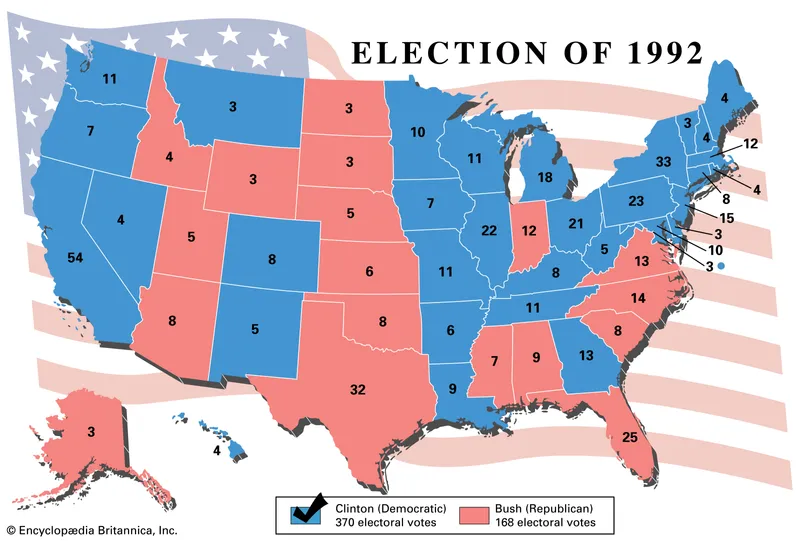
The 1992 election results.

Note

[1] Both Stockdale and Perot became fodder for the late-night comedians.

Ross Perot & the US Presidential Election of 1992

Ross%20Perot%20andamp%3B%20the%20US%20Presidential%20Election%20of%201992%0A

Share

  • Gab

Enjoyed this article?

Be the first to leave a tip in the jar!

Instant Echeck GreenPay™

*  *  *

Counter-Currents has extended special privileges to those who donate at least $10/month or $120/year.

  1. Donors will have immediate access to all Counter-Currents posts. Everyone else will find that one post a day, five posts a week will be behind a “paywall” and will be available to the general public after 30 days. Naturally, we do not grant permission to other websites to repost paywall content before 30 days have passed.
  2. Paywall member comments will appear immediately instead of waiting in a moderation queue. (People who abuse this privilege will lose it.)
  3. Paywall members have the option of editing their comments.
  4. Paywall members get an Badge badge on their comments.
  5. Paywall members can “like” comments.
  6. Paywall members can “commission” a yearly article from Counter-Currents. Just send a question that you’d like to have discussed to [email protected]. (Obviously, the topics must be suitable to Counter-Currents and its broader project, as well as the interests and expertise of our writers.)

To get full access to all content behind the paywall, please visit our redesigned Paywall page. 

Related

  • The Theology of Three Populisms

  • Tucker’s New Party

  • Ethiopia Against Italy

  • The Fragile Polity that is Syria

  • The Killing of Henry Nowak

  • The Crisis of Chinese Technology Thieves

  • The Murder of Henry Nowak

  • How Cold War Two Came About

Tags

1992 presidential electionArthur D. "Bull" SimonsArthur D. SimonsBill ClintonBo GritzCitizens' Review BoardcomputersDallasDallas policeDavid DukedeindustralizationElectronic Data Systemsfree tradeGeorge H. W. BushGeorge H. W. Bush administrationIranIranian hostagesIranian RevolutionJames StockdaleKen FollettMedicaidMedicareMorris van de CampNAFTAneoliberalismNorth American Free Trade AgreementOn Wings of EaglesPat BuchananPersian Gulf Warpolice brutalityPopulist Partyprisoners of warRoss PerotTexasthe Cold Warthe Democratic partythe Iranian revolutionthe Republican partythe Vietnam Warthird partiesthird party candidatesVietnam WarWillis Carto

15 comments

  1. Dr ExCathedra says:
    February 29, 2024 at 12:16 pm

    Perot quickly found himself in a vicious conflict with sub-Saharan race activists.

    I recall watching him on TV addressing some Black group and using the phrase “you people.”

    The crowd exploded in anger.

    It’s long been a part of The Great Lie that while SubSaharans in the US call each other brutha and sista, clearly excluding us, we are constrained to pretend that they are our fellow Americans or fellow citizens, who may never be othered with phrases like “you people.”

    1
    1
    • kolokol
    1. James Kirkpatrick says:
      February 29, 2024 at 12:36 pm

      What they really want is something no self-respecting one of us should ever consent to: Reverence; an ever-moving target that whitey, using normal language and behavior, shall never get right.

      Best to have nothing more to do with those people.

      5
      5
      • kolokol
      • Dr ExCathedra
      • Scott
      • Fred C. Dobbs
      • Bigfoot
    2. Bigfoot says:
      March 1, 2024 at 11:45 pm

      A lot of people from Perot’s generation didn’t understand that blacks are accepting of crime and are often sympathetic to criminals.

      1
      1
      • kolokol
  2. Fred C. Dobbs says:
    February 29, 2024 at 1:07 pm

    One had to have genuine sympathy for poor Admiral Stockdale in his lone debate with Quayle and Gore. He was clearly not a politician and was woefully unprepared for the debate. I even remember him explaining to the moderator that he didn’t have his hearing aid in and couldn’t respond to the question.

    3
    3
    • kolokol
    • Beau Albrecht
    • Bigfoot
    1. Bigfoot says:
      March 1, 2024 at 11:37 pm

      Admiral Stockdale was not properly briefed before the debate. Candidates are normally briefed by coaches and advisors on just about every issue before a debate. They are ready to anticipate the questions of various issues and have a prepared answer. Since Admiral Stockdale was new to politics, he was taken by surprise. Four years later he endorsed Bob Dole and had a Dole for president bumper sticker on his car. That race was similar to what Ralph Nader did to Al Gore. It takes votes away from a candidate.

      1
      1
      • kolokol
  3. Margot Metroland says:
    February 29, 2024 at 6:42 pm

    This story is well worth revisiting. Thanks for this. Perot was responsible for Clinton being elected, far and away. And yet…a little bit of Perotization, however opportunistic…would have won GHWB a landslide. Read my lips.

    Perot himself really was not ready for the heat. And why should he have been? Real question is: How could Jim Baker have messed up like that?

    I loved these lines because they sum up everything that was right and yet everything that seemed wrong about H. Ross Perot:

    His real talent was for hiring good people, however. He preferred married white men, and his employees wore coats and ties to work and kept their hair short. By the end of the 1960s, Perot started to focus on hiring Vietnam veterans who were in their early twenties but who had attained a great deal of maturity from their time in the service.

    I knew people who worked for EDS and knew him early in their careers. Never a bad word about Perot.

    1
    1
    • kolokol
    1. Scott says:
      March 2, 2024 at 6:42 pm

      The only one responsible for Bill Clinton’s victory in 1992 was George H.W. Bush.

      Perot may have gotten 19 percent of the Popular Vote but that is as meaningless as it gets.

      No third party candidate has gotten a single Electoral Vote since George Wallace in 1968, which was fallot from the Kennedy-Johnson cultural war on the South.

      If we assume that all of those voting for Perot in each state in 1992 had them assigned instead to Bush, the Voodoo Economics guy still would not have gotten a single additional Electoral Vote. So Elvis still wins.

      The 1992 election was all about the stupid economy, and Bush was as silent as a fencepost about this, apparently believing that all you had to do was keep capital gains taxes low and military spending up. Real wages had not kept pace with inflation since the 1960s, jobs were flaccid, protective tariffs were out of the question, and in the end Bush was feckless even about his “no new taxes” pledge. Jimmy Carter’s budget deficits were now the norm by light years, and the cream of Federal revenue went to pay interest on the national debt.

      Papa Bush wasn’t even particularly gifted on his strong suite of Foreign Policy. He sold a bill of goods that Kuwait needed rescue and that Saddam was “Hitler,” and then he left Hitler in power.

      Of course, the Neocons ─ who since Gorbachev had wanted to replace the faltering Cold War with an even bigger mare’s nest of an open-ended (and always short of decisive) crusade against “Islamo-Fascism” ─ they did not mind that we seemed to still be policing airspace in Iraq and were otherwise stuck in the Middle East (and hopefully always would be). Bush went from the great war leader on 24 hour CNN  coverage back to the Kennebunkport Wimp almost at once.

      This time Bush did not have a helmeted Governor Dukakis cluelessly bouncing around in a tank to contrast his manhood. Bush the young man may have looked a little like a drowned rat when he was being rescued by the submarine after having been shot down in the Pacific in WWII, but he was the real deal ─ not the one in the clown contest.

      Elvis seemed like he understood the importance of jobs and would be tough on crime. Instead, all Clinton was really about was globalization and anti-White diversity.

      I voted for Reagan in 1980 but saw the Reaganomics scam right away. Bush was nothing more than an echo, and incredibly tone deaf.

      I wanted to vote for Perot but I doubted that he would get any electoral votes anywhere, and while Admiral Stockdale was a great man, he was a couple decades past his sell date, which made me question Perot’s political judgment.

      I am ashamed to say now that Elvis got my vote that year instead of Perot. Not that anything would have changed.

      🙂

      0
      0
  4. notbe mk 2 says:
    February 29, 2024 at 9:05 pm

    one thing about NAFTA and Perot-

    now as everyone knows NAFTA is beloved by the elite as a way of making a huge pile of cash, consequences to the American working class be damned (and basically damning the American working class itself to a life of penury and drug dependence) Perot, being an old fashioned, albeit flawed, patriot knew that this would happen and he campaigned against it Al Gore challenged Perot to a tv debate The debate itself went like most such events- no clear winner with Perot being a little thin-skinned as usual but he didnt make any major gaffes and pointed out NAFTA was a “giant sucking sound” for working class jobs So no clear winner but Perot handled himself well The next day, almost all (no…ALL) media channels (NBC, NY Times etc) said it was a disastrous performance by Perot The level of agreement by the establishment media rivalled Pravda and Tass No-one in the media pointed out the obvious that the debate was actually pretty even and Perot made good points

    -another thing; Gerald Posner is a full time establishment journalist, much more boot licking that the usual run-of-the-mill journo Anything he states is not to be trusted So if he says that the Republicans did no dirty tricks on Perot and some lone nut was responsible, it means that the truth is exactly the opposite


    1
    1
    • kolokol
  5. Beau Albrecht says:
    March 1, 2024 at 3:17 am

    The way I heard it, he said the reason why he dropped out of the race was because someone was threatening to out his daughter as a lesbian right before her wedding.  Yeah, sure.  Even if were true that she’s a switch hitter, who cares?  Whatever the reason was, dropping out and then getting back in was a dumb move.  That said, although I have misgivings about Perot’s personality, he did have some very good points about the economy.

    2
    2
    • Scott
    • kolokol
    1. noucvnt says:
      March 1, 2024 at 6:42 am

      In the early 90s people were still less tolerant of degeneracy.

      Granted, Perot could have flipped it around and argue that his daughter had successfully “turned straight” and married, gaining himself the Christian Right in the process. But, as everyone says, he had some flaws alongside his right ideas.

      1
      1
      • kolokol
      1. Beau Albrecht says:
        March 3, 2024 at 8:13 am

        My recollection of the time is that lesbianism was pretty close to normalization, and even fashionable in some circles.  A Sapphic fling or two in college or whatever (if there actually was anything to it) would’ve been hardly remarkable.  Other than that, H. Ross himself wasn’t accountable for whatever his relatives did.  So, in my opinion, it all sounds like he made up a lame excuse after the fact for chickening out momentarily.

        0
        0
  6. Kök Böri says:
    March 1, 2024 at 3:21 am

    Romania had been one of the last loyal Soviet satellites in Eastern Europe.

    No, it had not been. Romania was a national-communist state with more or less independent politics. It was unloyal to Soviets and not popular in Moscow since 1968, at least, when Romanians did not support Soviet invasion in CZ. And the coup against Ceausescu in 1989 was led by pro-Soviet agents of influence.


    ***

    The Chernobyl nuclear reactor in the Soviet Union suffered a catastrophic meltdown in April 1986. The disaster was too big to ignore, and it shattered the prestige upon which the Evil Empire was built.

    This was used by the Soviet propaganda and disinformation machine, mostly through the s0-called “Greens”, who were manipulated and sponsored by the Stasi and KGB, to destroy nuclear energy industry in Europe and to make Europeans dependend on Soviet/Russian oil and gas. I do not know if the catastrophe of 1968 was done intentionally, probably not, but it was used in the full scale for the Soviet/Russian aims of economical and political control of the West.

    1
    1
    • kolokol
    1. Rez says:
      March 1, 2024 at 11:24 am

      Interesting take on the position of Romania during the Cold War. Didn’t know! That being said Chaoschescu (and his wife) was a tyrant who ruled with an iron fist and brutally ruled his country.

      1
      1
      • kolokol
      1. Kök Böri says:
        March 2, 2024 at 5:53 am

        Yes, but he was an INDEPENDENT and some kind of a nationalist tyrant.

        1
        1
        • kolokol
        1. Rez says:
          March 2, 2024 at 7:32 am

          I agree! There is a wide gradation in degrees when it comes to rulers. I have hunch that much of negative propaganda against him was due to him being “independent” from the international rulers.

          1
          1
          • kolokol

Comments are closed.

If you have a Subscriber access,
simply login first to see your comment auto-approved.

Note on comments privacy & moderation

Your email is never published nor shared.

Comments are moderated. If you don't see your comment, please be patient. If approved, it will appear here soon. Do not post your comment a second time.

Writer of June

(4 votes) David M. Zsutty

Article of June

Why White Advocates Should Avoid “Based Blacks” by Dani Vypont 4 votes
    • Replacement Migration & Hypergamy

      F. Roger Devlin

      31

    • Kurds of a Feather Flock Together:
      Europe’s “Racist” Parakeet Tweet-Storm

      Steven Tucker

      1

    • Elevator Pitch to a Billionaire
      Money, Money, Money

      Ondrej Mann

      2

    • All Hail Rhodesia

      Spencer J. Quinn

      3

    • Nationalism This Week
      Disenfranchisement

      Greg Johnson

      31

    • The Murder of Ann Widdecombe

      Lipton Matthews

      9

    • Disclosure Day
      Please, Keep It Undisclosed

      Francisco Albanese

      12

    • Remembering Carl Schmitt
      July 11, 1888–April 7, 1985

      Greg Johnson

      1

    • Editor’s Update
      Fundraiser Update & New Books

      Greg Johnson

      1

    • Third Homeland Institute Poll on the Great Replacement

      David M. Zsutty

      12

    • The Bitter End of Western Metaphysics:
      Heidegger on Nietzsche, Part Five (Conclusion)

      Collin Cleary

      9

    • Fraudulent Black British History

      Mark Gullick

      7

    • A White Nationalist Response to Scott Greer

      Dave Chambers

      25

    • The Miami Mall Incident:
      Black Youths or Black Extraterrestrials?

      Dominic Fox

      6

    • The Theology of Three Populisms

      Morris van de Camp

      2

    • The Dangers of Skilled Immigration

      Lipton Matthews

      25

    • The Brotherhood of the Bell

      Beau Albrecht

      16

    • Endeavor: What Rome Means to Me

      Endeavour

    • When the Family Becomes Predation

      Jayant Bhandari

      5

    • RICU: The Gentle Art of Persuasion

      Mark Gullick

      7

    • Mind of Darkness:
      A Review of Lipton Matthews’s Busting African Delusions

      Derek Stark

      12

    • Remembering Revilo Oliver
      July 7, 1908–August 20, 1994

      Greg Johnson

      2

    • Some Advantages of Irish Nationalism

      Greg Johnson

      31

    • America at 250 from the National Cathedral

      Gabriel Anderson

      18

    • Why Not Stop All the Clocks?
      Modern Conservatism’s Flagging Commitment Towards Turning Back Time

      Steven Tucker

      3

    • Remembering Jean Raspail
      July 5, 1925–June 13, 2020

      Greg Johnson

      2

    • Editor’s Update
      Fundraiser Update & New Books

      Greg Johnson

    • The Ethnic Reality of FIFA 2026

      Samuel Valleus

      13

    • Nationalism This Week
      Tucker’s New Party

      Greg Johnson

      30

    • Ethiopia Against Italy
      How the Italo-Ethiopian Wars were part of the conflict between Eastern & Western Christiandom

      Morris van de Camp

    • Please Vote in Our Writer & Article of the Month Poll

      Greg Johnson

    • Available for Pre-Order!
      F. Roger Devlin’s Not Hooking Up

      F. Roger Devlin

    • Kolberg: The Last Nazi (or Prussian?) Film

      Steven Clark

      2

    • America 250 & The Fate of Empires

      Richard Houck

      20

    • Available for Pre-Order!
      Greg Johnson’s The Battle of the Books

      Greg Johnson

    • Why All the Silence About Blacks Being Kicked Out of South Africa?
      Because It’s Other Blacks That Are Doing It.

      Steven Tucker

      10

    • Zelensky, the Jewish Conspiracy Narrative, & the Demographic Replacement of Ukraine:
      A Critical Analysis of a Disinformation Discourse within the European Identitarian Right

      Luís Graça

      30

    • The Original Congressional Debate on Birthright Citizenship

      Alex Graham

      13

    • America at 250
      Unmanifested Destiny  

      David M. Zsutty

      32

    • The Normies are Waking Up:
      The Alliance for Responsible Citizenship Conference, London 2026

      Lipton Matthews

      2

    • Ethnic Vigilantism: The Movie

      Mark Gullick

      15

    • Lothrop Stoddard’s The Revolt against Civilization

      Kevin MacDonald

      2

    • David Zsutty on Political Organizing

      David M. Zsutty

    • PC-Incompatible Gaming:
      Plantation Simulator and the “Problem” of Racist Video Games

      Steven Tucker

      3

    • Remembering Lothrop Stoddard
      June 29, 1883–May 1, 1950

      Greg Johnson

      1

    • Editor’s Update
      Fundraiser Update & Upcoming Projects

      Greg Johnson

    • Nationalism This Week
      Metapolitics Wins:
      Scott Greer’s Whitepill

      Greg Johnson

      8

    • Remembering Colin Wilson
      June 26, 1931–December 5, 2013

      Greg Johnson

      3

    • Kevin Deanna on Political Organizing

      Kevin Deanna

      1

    • The Bitter End of Western Metaphysics:
      Heidegger on Nietzsche, Part Four

      Collin Cleary

      6

    • Bigfoot

      Elevator Pitch to a Billionaire
      Money, Money, Money

      From what I understand about Pantera, the latest version of it anyway, they no longer display the...

    • Greg Johnson

      Nationalism This Week
      Disenfranchisement

      The underlying assumption of this is that we have created a government with the will to separation...

    • Bigfoot

      Replacement Migration & Hypergamy

      Another factor that influences interracial couples and marriages are white females that serve in the...

    • Josephus Cato

      Nationalism This Week
      Disenfranchisement

      I thought Greg was exaggerating about the numbers of guest workers in Qatar but lo he is right.  If...

    • Peter Quint

      Replacement Migration & Hypergamy

      the proportion who mix is higher than marriage stats would lead people to believe. That’s the actual...

    • Scott

      Some Advantages of Irish Nationalism

      Well, one of caveats against Kennedy's "A Nation of Immigrants" hubris (and that is what it was) is...

    • Dani Vypont

      Replacement Migration & Hypergamy

      One case from American history has always especially impressed me. Pretty much all the sources agree...

    • Dani Vypont

      Replacement Migration & Hypergamy

      You constantly post the most controversial and self-defeating thing possible under articles. This...

    • Peter Quint

      Replacement Migration & Hypergamy

      White women are the most racially disloyal women of all races. I always assume any White female I...

    • Scott

      Disclosure Day
      Please, Keep It Undisclosed

      Dennis Weaver seemed miscast to me. I liked his shtick as McCloud, the New Mexico cowboy marshal,...

    • Ondrej Mann

      Replacement Migration & Hypergamy

      Young white men in Norway have only one option: to band together in gangs that reject...

    • Joseph C.

      Replacement Migration & Hypergamy

      I visited Oslo a year ago, for a week, and I'm going this october again (for a week as well). My...

    • Connor McDowell

      Replacement Migration & Hypergamy

      I’ve seen this OKCupid miscegenation argument before, and while much of my evidence is anecdotal, I...

    • Dominic Fox

      Nationalism This Week
      Disenfranchisement

      Even a real community will consist mostly of people who are only somewhat similar in character/...

    • Dani Vypont

      Replacement Migration & Hypergamy

      @JamesSunderland With regard to one of your earlier posts, I did some research, and it is ...

    • Dani Vypont

      Replacement Migration & Hypergamy

      What parts of the United States would you say have the most and least interracial relationships?It...

    • Dave Chambers

      All Hail Rhodesia

      Rhodesia is an inspiration to all of us whose families have had to flee the neighborhoods and...

    • Hairy Iranian Dude

      Replacement Migration & Hypergamy

      Boy, you are one Negative Nancy to interpret my post in such a cynical vein!

    • Gabe

      Replacement Migration & Hypergamy

      No doubt. And unscrupulous music (“record”) companies.

    • CC reader

      Disclosure Day
      Please, Keep It Undisclosed

      Duel was a very good movie, and it was made for tv. Good suspense, camera work, musical score, and...

    • Earth Day Special

      John Morgan

      12

    • A Robertson Roundup
      Remembering Wilmot Robertson
      (April 16, 1915 – July 8, 2005)

      Margot Metroland

      13

    • The Paranoid Style in White Nationalism

      Greg Johnson

      30

    • Join the Dance!

      Andrew Hamilton

      1

    • We Can’t Save the Earth Without Reducing African Birth Rates

      James Dunphy

      36

    • “I’m Not a Conspiracy Theorist, but . . .”:
      Jeffrey Epstein’s Death Gives New Life to “Conspiracy Theories”

      Greg Johnson

      22

    • Sylvia Plath: Stasis in Darkness

      Vic Olvir

      17

    • Vanguardism, Vantardism, & Mainstreaming

      Greg Johnson

      80

    • Aviation, Geography, & Race

      Charles Lindbergh

      3

    • Some Thoughts on Yule

      Collin Cleary

      4

    • Living in Truth:
      A Yuletide Homily

      Jef Costello

      7

    • John Kennedy Toole’s A Confederacy of Dunces

      Greg Johnson

      20

    • On Aleksandr Solzhenitsyn’s Warning to the West

      Spencer J. Quinn

      7

    • Elitism, British Modernism, & Wyndham Lewis

      Jonathan Bowden

      6

    • Philip K. Dick’s Do Androids Dream of Electric Sheep? as Anti-Semitic/Christian-Gnostic Allegory

      Greg Johnson

      20

    • “Conspiracy Theory” or Conspiracy?

      Andrew Hamilton

      21

    • Remembering H. P. Lovecraft
      (August 20, 1890–March 15, 1937)

      Greg Johnson

      3

    • Who Are We?
      Nordics, Aryans, & Whites

      Greg Johnson

      71

    • Remembering William Gayley Simpson
      (July 23, 1892–December 31, 1990)
      A Pleasant Afternoon with Harriet & Bill Simpson

      Margot Metroland

      18

    • Here are the Young Men
      Remembering Ian Curtis
      (July 15, 1956–May 18, 1980)

      Mark Gullick

      18

    • Percy Grainger
      Artist of the Right

      Alex Graham

      7

    • Remembering Revilo Oliver
      (July 7, 1908–August 20, 1994)

      Greg Johnson

      18

    • The Meaning of July 4th for the White Man

      Gregory Hood

      13

    • The Front National’s Evolution

      Bruno Mégret

    • Merwin K. Hart
      Forgotten American Hero & Man of the Right

      Morris van de Camp

      10

    • George Orwell’s Nineteen Eighty-Four

      Jonathan Bowden

      8

    • Carleton S. Coon
      Scientist & Reluctant White Advocate

      Morris van de Camp

      4

    • The Kwanzaa Absurdity Will Be Dwarfed by Juneteenth

      Robert Hampton

      12

    • Stravinsky

      Alex Graham

      7

    • Like the Roman:
      Remembering Enoch Powell (1912-1998)

      Mark Gullick

      23

    • Exclusive Interview with Karel Veliky:
      The Final Chapter in the Film Series! Part II

      Ondrej Mann

      2

    • Exclusive Interview with Karel Veliky:
      The Final Chapter in the Film Series! Part I

      Ondrej Mann

      2

    • Nietzsche & Race

      Mark Gullick

    • The Crisis of Chinese Technology Thieves

      Morris van de Camp

      1

    • The Zodiac Killer

      Mark Gullick

      12

    • José Pedro Zúquete’s The Identitarians

      Greg Johnson

      3

    • Berlin: City of Stones

      Spencer J. Quinn

      6

    • Headbanging Lite

      Mark Gullick

      5

    • The Russians are Coming/The Russians are Coming

      Steven Clark

      2

    • The Cruelty of Kindness

      Morris van de Camp

      11

    • Jonathan Bowden’s Deliverance
      Part 7

      Jonathan Bowden

    • Lothrop Stoddard’s The Revolt Against Civilization

      Spencer J. Quinn

      15

    • About Film “From the Right”

      Karel Veliky

    • The 1970s: The Golden Age of Hijacking

      Morris van de Camp

      21

    • Jonathan Bowden’s Deliverance
      Part 6

      Jonathan Bowden

    • Do You Want to Play a Game?

      Mark Gullick

      1

    • Sexually Incontinent on the Indian Subcontinent:
      Who Rapes More Animals, Indians or Pakistanis? The Battle Continues!

      Steven Tucker

      3

    • Neo-Fascism in Film
      Part 5

      Karel Veliky

      15

    • The Game of Tarot

      Mark Gullick

      2

    • Institutions Cannot Be Transplanted

      Jayant Bhandari

      5

    • Jonathan Bowden’s Deliverance
      Part 5

      Jonathan Bowden

    • Crosstown Traffic:
      Jimi Hendrix & The Post-War Rock ‘N’ Roll Revolution

      Mark Gullick

      1

    • Slaves from the North:
      Finns & Karelians in the East European Slave Trade, 900–1600

      Lipton Matthews

      14

    • Neo-Fascism in Film
      Part 4

      Karel Veliky

      2

    • David Lean’s A Passage to India

      Spencer J. Quinn

      1

    • Elites are Essential to Development

      Lipton Matthews

      7

    • Jonathan Bowden’s Deliverance
      Part 4

      Jonathan Bowden

    • Neo-Fascism in Film
      Part 3

      Karel Veliky

      6

    • E. M. Forster’s A Passage to India & the Indian Mentality

      Spencer J. Quinn

      25

    • Jonathan Bowden’s Deliverance
      Part 3

      Jonathan Bowden

    • András László
    • Derek Hawthorne
    • Beau Albrecht
    • Alain de Benoist
    • Kerry Bolton
    • Jonathan Bowden
    • Collin Cleary
    • Jef Costello
    • Savitri Devi
    • Julius Evola
    • Jim Goad
    • Gregory Hood
    • Juleigh Howard-Hobson
    • Greg Johnson
    • Charles Krafft
    • Anthony M. Ludovici
    • Trevor Lynch
    • H. L. Mencken
    • J. A. Nicholl
    • James J. O’Meara
    • Christopher Pankhurst
    • Tito Perdue
    • Michael Polignano
    • Spencer J. Quinn
    • Fenek Solère
    • Irmin Vinson
    • Leo Yankevich
    • Francis Parker Yockey
    • Multiple authors
  • Editor-in-Chief

    • Greg Johnson, Ph.D.

    Featured Writers

    • Beau Albrecht
    • Gunnar Alfredsson
    • Collin Cleary, Ph.D.
    • Jef Costello
    • Morris V. de Camp
    • F. Roger Devlin, Ph.D.
    • Stephen Paul Foster, Ph.D.
    • Jim Goad
    • Alex Graham
    • Mark Gullick, Ph.D.
    • Greg Johnson, Ph.D.
    • Travis LeBlanc
    • Trevor Lynch
    • Margot Metroland
    • James J. O’Meara
    • Angelo Plume
    • Spencer J. Quinn
    • Fred Reed
    • Clarissa Schnabel
    • Michael Walker
    • David M. Zsutty

    Frequent Writers

    • Asier Abadroa
    • Aquilonius
    • Alain de Benoist
    • Kerry Bolton, Ph.D.
    • Dave Chambers
    • Steven Clark
    • James Dunphy
    • Endeavour
    • Richard Houck
    • Jason Kessler
    • Titus Livius
    • Ondrej Mann
    • Lipton Matthews
    • Mark Mazari
    • John Morgan
    • Jaroslav Ostrogniew
    • Kathryn S.
    • Christian Secor
    • Anne Wilson Smith
    • Thomas Steuben
    • William De Vere
    • Kenneth Vinther
    • Max West

    Classic Authors

    • Maurice Bardèche
    • Jonathan Bowden
    • Julius Evola
    • Guillaume Faye
    • Ernst Jünger
    • Kevin MacDonald, Ph.D.
    • D. H. Lawrence
    • Charles Lindbergh
    • Jack London
    • H. P. Lovecraft
    • Anthony M. Ludovici
    • Sir Oswald Mosley
    • National Vanguard
    • Friedrich Nietzsche
    • Revilo Oliver
    • William Pierce
    • Ezra Pound
    • Saint-Loup
    • Savitri Devi
    • Carl Schmitt
    • Miguel Serrano
    • Oswald Spengler
    • P. R. Stephensen
    • Jean Thiriart
    • John Tyndall
    • Dominique Venner
    • Leo Yankevich
    • Francis Parker Yockey

    Other Authors

    • Howe Abbott-Hiss
    • Michael Bell
    • Giles Corey
    • Jack Donovan
    • Richardo Duchesne, Ph.D.
    • Emile Durand
    • Guillaume Durocher
    • Mark Dyal
    • Tom Goodroch
    • Andrew Hamilton
    • Robert Hampton
    • Huntley Haverstock
    • Derek Hawthorne
    • Gregory Hood
    • Juleigh Howard-Hobson
    • Alexander Jacob
    • Ruuben Kaalep
    • Tobias Langdon
    • Julian Langness
    • Patrick Le Brun
    • G A Malvicini
    • John Michael McCloughlin
    • Millennial Woes
    • Michael O’Meara
    • Christopher Pankhurst
    • Michael Polignano
    • J. J. Przybylski
    • Quintilian
    • Edouard Rix
    • C. B. Robertson
    • C. F. Robinson
    • Herve Ryssen
    • Alan Smithee
    • Fenek Solere
    • Ann Sterzinger
    • Robert Steuckers
    • Tomislav Sunic
    • Donald Thoresen
    • Marian Van Court
    • Irmin Vinson
    • Book Reviews
    • Movie Reviews
    • TV Reviews
    • Music Reviews
    • Art Criticism
    • Graphic Novels & Comics
    • Video Game Reviews
    • Fiction
    • Poems
    • Interviews
    • Videos
    • English Translations
    • Other Languages
      • Arabic
      • Bulgarian
      • Croatian
      • Czech
      • Danish
      • Dutch
      • Estonian
      • Finnish
      • French
      • German
      • Greek
      • Hungarian
      • Italian
      • Lithuanian
      • Norwegian
      • Polish
      • Portuguese
      • Romanian
      • Russian
      • Slovak
      • Spanish
      • Swedish
      • Ukrainian
    • Commemorations
    • Why We Write
  • Archives
  • Top 100 Commenters
  • The Looney Bin
Sponsored Links
Europa.com Above Time Coffee Antelope Hill Publishing Paul Waggener IHR-Store Spencer J. Quinn American Renaissance Jim Goad The Occidental Observer
Donate Now Mailing list
Books for sale
  • Not Hooking Up
  • The Battle of the Books
  • The Philosopher Is In
  • Sexual Utopia in Power (Expanded Edition)
  • In Defense of Prejudice
  • Loving Our Own
  • Tyranny & Wisdom
  • To all books
Copyright © 2026 Counter-Currents Publishing, Ltd.

Paywall Access


Please enter your email address.

Lost your password?

Edit your comment

Writer & Article of the Month June 2026

Voting for this month has concluded. Here are the final results!

Top Writers

  • #1 David M. Zsutty 4 votes
  • #2 Mark Gullick 3 votes
  • #3 Morris van de Camp 2 votes
  • #4 Ondrej Mann 2 votes
  • #5 Dani Vypont 2 votes
  • #6 Greg Johnson 2 votes
  • #7 Collin Cleary 1 vote
  • #8 Millennial Woes 1 vote
  • #9 Beau Albrecht 1 vote
  • #10 Dave Chambers 1 vote
  • #11 Steven Tucker 1 vote
  • #12 Jayant Bhandari 1 vote

Top Articles

  • #1 Why White Advocates Should Avoid “Based Blacks” 4 votes
  • #2 Zsutty’s Maximum 3 votes
  • #3 The Murder of Henry Nowak 2 votes
  • #4 Uncivil War 1 vote
  • #5 Liar, Liar, Pants on Fire! 1 vote
  • #6 Small Is Beautiful: The Napoleon of Notting Hill 1 vote
  • #7 Interview with Gerhard Hallstatt of Allerseelen 1 vote
  • #8 Monkeys and Typewriters 1 vote
  • #9 The Remigration Movement Solidifies  1 vote
  • #10 I’m Glad He Failed 1 vote
  • #11 The Killing of Henry Nowak 1 vote
  • #12 Alex Jones’ Endgame: Blueprint for Global Enslavement, Part 4 1 vote
  • #13 China’s Threat to American Security 1 vote
  • #14 Ethnic Vigilantism: The Movie 1 vote
  • #15 The Inferiority Behind Immigrant Superiority 1 vote

Total votes cast: 21