Counter-Currents
  • Advertise
  • Private Events
  • T&C
  • About
  • Contact
  • RSS
    • Main feed
    • Podcast feed
    • Videos feed
    • Comments feed
  • Welcome
  • Webzine
  • Books
  • Merch
  • Podcasts
  • Videos
  • Donate
  • Patrons
  • Subscribe
  • Crypto

LEVEL2

Donate Now Mailing list
Upcoming podcasts
  • Rob Rundo on Counter-Currents Radio

    Rob Rundo on Counter-Currents Radio

    Counter-Currents Radio

    06/13/2026 — 3 pm EST / 9 pm CET
  • Daniel Tyrie on Counter-Currents Radio

    Daniel Tyrie on Counter-Currents Radio

    Counter-Currents Radio

    06/20/2026 — 3 pm EST / 9 pm CET

Writers of May

(2 votes) Morris van de Camp David M. Zsutty Derek Stark Jayant Bhandari Greg Johnson

Articles of May

The Lunch Wars by David M. Zsutty Heidegger on Nietzsche, Part One by Collin Cleary 2 votes
  • Welcome
  • Webzine
  • Books
  • Merch
  • Podcasts
  • Videos
  • Donate
  • Patrons
  • Subscribe
  • Crypto
    • Collin Cleary: What Rome Means to Me

      Collin Cleary

    • Paul Krugman: Closet Bolshevik

      Spencer J. Quinn

      8

    • Fugue of Ideas:
      Ibram X. Kendi’s Chain of Ideas

      Greg Johnson

      10

    • Based Blacks

      Lipton Matthews

      6

    • Black Intellectual Fatigue

      Derek Stark

      21

    • Why White Advocates Should Avoid “Based Blacks”

      Dani Vypont

      19

    • Nietzsche & Race

      Mark Gullick

    • Editor’s Update
      Rob Rundo Rescheduled to Next Week on Counter-Currents Radio;
      Tonight Greg Johnson & David Zsutty Answer Your Questions;
      Fundraiser Update & a New $20,000 Matching Grant

      Greg Johnson

    • The Counter-Currents 2026 Fundraiser
      Lifetime Subscriber Welcome Packages Extended

      Greg Johnson

    • Nationalism This Week
      Who’s Looking Back?

      Greg Johnson

      29

    • China’s Threat to American Security:
      Food, Farmland, Foreign Control, & Energy Policy

      Lipton Matthews

      5

    • The Bitter End of Western Metaphysics:
      Heidegger on Nietzsche, Part Two

      Collin Cleary

      15

    • The Killing of Henry Nowak

      Mark Gullick

      37

    • The Crisis of Chinese Technology Thieves

      Morris van de Camp

      1

    • The Strange World of Gender Bender Fiction:
      & What This Genre Tells Us About Autosexuality

      Dani Vypont

      3

    • Watching the Watchers:
      The Dark Triad Question

      David M. Zsutty

      14

    • The Remigration Movement Solidifies

      F. Roger Devlin

      1

    • Casting Aspersions:
      The Fatal Consequences of Race-Swapped Casting, From Helen of Troy to Henry of Southampton

      Steven Tucker

      20

    • The Murder of Henry Nowak

      Millennial Woes

      23

    • Don’t Forget to Vote in Our Writer & Article of the Month Poll

      Greg Johnson

    • The Robot Hotdog Stand

      Greg Johnson

      35

    • Laughing Our Way to Victory

      Dave Chambers

      7

    • The Zodiac Killer

      Mark Gullick

      11

    • Jared Taylor: What Rome Means to Me

      Jared Taylor

      1

    • An Interview with Endeavour:
      My Way of Life Is an Adventure!

      Ondrej Mann

      6

    • José Pedro Zúquete’s The Identitarians

      Greg Johnson

      3

    • Editor’s Update
      Fundraiser Update & How to Watch the Remigration Summit

      Greg Johnson

      5

    • The Bitter End of Western Metaphysics:
      Heidegger on Nietzsche, Part One

      Collin Cleary

      11

    • Berlin: City of Stones

      Spencer J. Quinn

      6

    • True Folk-Horror Is Horror of Your Own Folk:
      Mark Gatiss vs the Brexit Blind Dead  

      Steven Tucker

      4

    • Counter-Currents Radio Podcast No. 689
      Thomas Massie, the America 2050 Bust, the Need for Whites to Divest from America, the AI Economic Apocalypse, & Pro-White Project Pitches to Billionaires

      Counter-Currents Radio

      7

    • Nationalism This Week
      Remigration is Inevitable, Part 3

      Greg Johnson

      27

    • Why Billionaires Should Fund White Identity Politics

      Lipton Matthews

      8

    • How Cold War Two Came About

      Morris van de Camp

      5

    • Now Available for Pre-Order at a Special Price!
      Greg Johnson’s The Philosopher Is In

      Greg Johnson

    • David Zsutty’s Elevator Pitch to a Billionaire

      David M. Zsutty

      1

    • Headbanging Lite

      Mark Gullick

      5

    • White Advocacy Past and Present

      Peter Bradley

      13

    • The Lunch Wars

      David M. Zsutty

      47

    • The Russians are Coming/The Russians are Coming

      Steven Clark

      1

    • Peak Fatigue in Fort Wayne

      Gabriel Anderson

      24

    • Keith Woods’ Elevator Pitch to a Billionaire

      Keith Woods

    • The Cruelty of Kindness

      Morris van de Camp

      9

    • Predation Wearing the Mask of Civilization

      Jayant Bhandari

      13

    • The Mandalorian & Grogu

      Trevor Lynch

      24

    • Editor’s Update
      Fundraiser Update & a New $20,000 Matching Grant
      Greg Johnson & David Zsutty Discuss Thomas Massie on Counter-Currents Radio

      Greg Johnson

      2

    • How the Jews Defeated Thomas Massie—& Themselves

      David M. Zsutty

      27

    • Jared Taylor’s Elevator Pitch to a Billionaire

      Jared Taylor

      15

    • Nationalism This Week
      Remigration Is Inevitable, Part 2

      Greg Johnson

      8

    • Could Fascism Work?

      Mark Gullick

      40

    • Will Williams

      Why White Advocates Should Avoid “Based Blacks”

      Excellent comment, Scott. You will enjoy this short biography of Commander Rockwell by Dr. Pierce,...

    • Will Williams

      How the Jews Defeated Thomas Massie—& Themselves

      I’d asked:  Perhaps someone else can provide a link to Massie’s historic speech on the House...

    • Greg Johnson

      Fugue of Ideas:
      Ibram X. Kendi’s Chain of Ideas

      Thanks so much!

    • Peter Quint

      Paul Krugman: Closet Bolshevik

      I hope you don’t want to shoot George Strait, he is one of the few “old school” country singers left...

    • Connor McDowell

      Black Intellectual Fatigue

      Well lo and behold, Karmurder Anthony got the murder conviction instead of manslaughter. Color me...

    • Anticommunist Action

      Fugue of Ideas:
      Ibram X. Kendi’s Chain of Ideas

      My choices for the votes I will be casting for June’s Writer AND Article of the Month were made for...

    • Scott

      Why White Advocates Should Avoid “Based Blacks”

      ScottC-C June 9, 2026 at 10:28 pm[Note: I had to repost this (fortunately I saved the original)...

    • Don, the Rebel without a Blog

      Fugue of Ideas:
      Ibram X. Kendi’s Chain of Ideas

      LOL @ skintellectuals. Love it!

    • Stand Tall, Shoot Strait.

      Paul Krugman: Closet Bolshevik

      Krugman really does epitomize, both physically and mentally, the jew supremacists that infest our...

    • Calufrax

      Based Blacks

      Candace Owens is deeply mentally ill. It is disturbing that so many people take her seriously. Now...

    • Flel

      Paul Krugman: Closet Bolshevik

      When did losing elections and broad power lead to violent reactions instead of internal reflection...

    • Dani Vypont

      Black Intellectual Fatigue

      Moreover, one of the historically recognized traits of Western, or Faustian, Man has been our...

    • Will Williams

      How the Jews Defeated Thomas Massie—& Themselves

      It’s usually easy to find a House speech in C-SPAN’s handy archive, but, though I found that Massie...

    • Dani Vypont

      Why White Advocates Should Avoid “Based Blacks”

      Agree with most of the article. Spot on about Negroes and the dusky grifter, Candace Owens....

    • Dani Vypont

      Why White Advocates Should Avoid “Based Blacks”

      Thanks Peter! One thing I disagree with though is having a "siege mentality." That would be self-...

    • Dani Vypont

      Why White Advocates Should Avoid “Based Blacks”

      Thanks Joe!

    • Dani Vypont

      Why White Advocates Should Avoid “Based Blacks”

      I don’t know anyone who considers Candice Owens “based”. Plenty of normie conservatives, who...

    • Scott

      Based Blacks

      "As Dani Vypont observed, the Dissident Right gains no strategic advantage from associating with...

    • A Breath Of Fresh Air

      Black Intellectual Fatigue

      What exactly have African people created that we can benefit from? We in no way need Africans....

    • Greg Johnson

      Fugue of Ideas:
      Ibram X. Kendi’s Chain of Ideas

      AI would have done a better job.

    • Earth Day Special

      John Morgan

      12

    • A Robertson Roundup
      Remembering Wilmot Robertson
      (April 16, 1915 – July 8, 2005)

      Margot Metroland

      13

    • The Paranoid Style in White Nationalism

      Greg Johnson

      30

    • Join the Dance!

      Andrew Hamilton

      1

    • We Can’t Save the Earth Without Reducing African Birth Rates

      James Dunphy

      36

    • “I’m Not a Conspiracy Theorist, but . . .”:
      Jeffrey Epstein’s Death Gives New Life to “Conspiracy Theories”

      Greg Johnson

      22

    • Sylvia Plath: Stasis in Darkness

      Vic Olvir

      17

    • Vanguardism, Vantardism, & Mainstreaming

      Greg Johnson

      80

    • Aviation, Geography, & Race

      Charles Lindbergh

      3

    • Some Thoughts on Yule

      Collin Cleary

      4

    • Living in Truth:
      A Yuletide Homily

      Jef Costello

      7

    • John Kennedy Toole’s A Confederacy of Dunces

      Greg Johnson

      20

    • On Aleksandr Solzhenitsyn’s Warning to the West

      Spencer J. Quinn

      7

    • Elitism, British Modernism, & Wyndham Lewis

      Jonathan Bowden

      6

    • Philip K. Dick’s Do Androids Dream of Electric Sheep? as Anti-Semitic/Christian-Gnostic Allegory

      Greg Johnson

      20

    • “Conspiracy Theory” or Conspiracy?

      Andrew Hamilton

      21

    • Remembering H. P. Lovecraft
      (August 20, 1890–March 15, 1937)

      Greg Johnson

      3

    • Who Are We?
      Nordics, Aryans, & Whites

      Greg Johnson

      71

    • Remembering William Gayley Simpson
      (July 23, 1892–December 31, 1990)
      A Pleasant Afternoon with Harriet & Bill Simpson

      Margot Metroland

      18

    • Here are the Young Men
      Remembering Ian Curtis
      (July 15, 1956–May 18, 1980)

      Mark Gullick

      18

    • Percy Grainger
      Artist of the Right

      Alex Graham

      7

    • Remembering Revilo Oliver
      (July 7, 1908–August 20, 1994)

      Greg Johnson

      18

    • The Meaning of July 4th for the White Man

      Gregory Hood

      13

    • The Front National’s Evolution

      Bruno Mégret

    • Merwin K. Hart
      Forgotten American Hero & Man of the Right

      Morris van de Camp

      10

    • George Orwell’s Nineteen Eighty-Four

      Jonathan Bowden

      8

    • Carleton S. Coon
      Scientist & Reluctant White Advocate

      Morris van de Camp

      3

    • The Kwanzaa Absurdity Will Be Dwarfed by Juneteenth

      Robert Hampton

      10

    • Stravinsky

      Alex Graham

      7

    • Like the Roman:
      Remembering Enoch Powell (1912-1998)

      Mark Gullick

      23

    • Neo-Fascism in Film
      Part 5

      Karel Veliky

      15

    • The Game of Tarot

      Mark Gullick

      2

    • Institutions Cannot Be Transplanted

      Jayant Bhandari

      5

    • Jonathan Bowden’s Deliverance
      Part 5

      Jonathan Bowden

    • Crosstown Traffic:
      Jimi Hendrix & The Post-War Rock ‘N’ Roll Revolution

      Mark Gullick

      1

    • Slaves from the North:
      Finns & Karelians in the East European Slave Trade, 900–1600

      Lipton Matthews

      14

    • Neo-Fascism in Film
      Part 4

      Karel Veliky

      2

    • David Lean’s A Passage to India

      Spencer J. Quinn

      1

    • Elites are Essential to Development

      Lipton Matthews

      7

    • Jonathan Bowden’s Deliverance
      Part 4

      Jonathan Bowden

    • Neo-Fascism in Film
      Part 3

      Karel Veliky

      6

    • E. M. Forster’s A Passage to India & the Indian Mentality

      Spencer J. Quinn

      25

    • Jonathan Bowden’s Deliverance
      Part 3

      Jonathan Bowden

    • The Rest Is Silence
      Heidegger’s Quietism

      Mark Gullick

      2

    • Dispelling the Historical Fallacy of Indian Nationalism

      Lipton Matthews

      8

    • Neo-Fascism in Film
      Part 2

      Karel Veliky

      8

    • Jonathan Bowden’s Deliverance
      Part 2

      Jonathan Bowden

    • Life of a Klansman

      Mark Gullick

      8

    • Jonathan Bowden’s Deliverance, Part 1

      Jonathan Bowden

    • Decolonial Ideas are Holding Back Developing Countries

      Lipton Matthews

      8

    • Neo-fascism in Film, Part 1

      Karel Veliky

      21

    • Jonathan Bowden’s Onslaught, Part 8
      Divigations on Decadence

      Jonathan Bowden

    • Jonathan Bowden’s Onslaught, Part 7
      Intrigues in the National Front

      Jonathan Bowden

      1

    • Rotten to the Core

      Mark Gullick

      8

    • Strauss on Husserl’s “Philosophy as Rigorous Science”

      Greg Johnson

    • Jonathan Bowden’s Onslaught, Part 6
      Francis Bacon & Right-Wing Nihilism

      Jonathan Bowden

    • London After (& Before) Midnight:
      Aleister Crowley, The Landlord’s Worst Nightmare

      James J. O'Meara

      2

    • Jonathan Bowden’s Onslaught, Part 5
      The Post-War British Far Right

      Jonathan Bowden

    • No Rules: Rollerball

      Mark Gullick

      4

    • Jonathan Bowden’s Onslaught, Part 3
      Brett Easton Ellis’ American Psycho

      Jonathan Bowden

    • András László
    • Derek Hawthorne
    • Beau Albrecht
    • Alain de Benoist
    • Kerry Bolton
    • Jonathan Bowden
    • Collin Cleary
    • Jef Costello
    • Savitri Devi
    • Julius Evola
    • Jim Goad
    • Gregory Hood
    • Juleigh Howard-Hobson
    • Greg Johnson
    • Charles Krafft
    • Anthony M. Ludovici
    • Trevor Lynch
    • H. L. Mencken
    • J. A. Nicholl
    • James J. O’Meara
    • Christopher Pankhurst
    • Tito Perdue
    • Michael Polignano
    • Spencer J. Quinn
    • Fenek Solère
    • Irmin Vinson
    • Leo Yankevich
    • Francis Parker Yockey
    • Multiple authors
  • Editor-in-Chief

    • Greg Johnson, Ph.D.

    Featured Writers

    • Beau Albrecht
    • Gunnar Alfredsson
    • Collin Cleary, Ph.D.
    • Jef Costello
    • Morris V. de Camp
    • F. Roger Devlin, Ph.D.
    • Stephen Paul Foster, Ph.D.
    • Jim Goad
    • Alex Graham
    • Mark Gullick, Ph.D.
    • Greg Johnson, Ph.D.
    • Travis LeBlanc
    • Trevor Lynch
    • Margot Metroland
    • James J. O’Meara
    • Angelo Plume
    • Spencer J. Quinn
    • Fred Reed
    • Clarissa Schnabel
    • Michael Walker
    • David M. Zsutty

    Frequent Writers

    • Asier Abadroa
    • Aquilonius
    • Alain de Benoist
    • Kerry Bolton, Ph.D.
    • Dave Chambers
    • Steven Clark
    • James Dunphy
    • Endeavour
    • Richard Houck
    • Jason Kessler
    • Titus Livius
    • Ondrej Mann
    • Lipton Matthews
    • Mark Mazari
    • John Morgan
    • Jaroslav Ostrogniew
    • Kathryn S.
    • Christian Secor
    • Anne Wilson Smith
    • Thomas Steuben
    • William De Vere
    • Kenneth Vinther
    • Max West

    Classic Authors

    • Maurice Bardèche
    • Jonathan Bowden
    • Julius Evola
    • Guillaume Faye
    • Ernst Jünger
    • Kevin MacDonald, Ph.D.
    • D. H. Lawrence
    • Charles Lindbergh
    • Jack London
    • H. P. Lovecraft
    • Anthony M. Ludovici
    • Sir Oswald Mosley
    • National Vanguard
    • Friedrich Nietzsche
    • Revilo Oliver
    • William Pierce
    • Ezra Pound
    • Saint-Loup
    • Savitri Devi
    • Carl Schmitt
    • Miguel Serrano
    • Oswald Spengler
    • P. R. Stephensen
    • Jean Thiriart
    • John Tyndall
    • Dominique Venner
    • Leo Yankevich
    • Francis Parker Yockey

    Other Authors

    • Howe Abbott-Hiss
    • Michael Bell
    • Giles Corey
    • Jack Donovan
    • Richardo Duchesne, Ph.D.
    • Emile Durand
    • Guillaume Durocher
    • Mark Dyal
    • Tom Goodroch
    • Andrew Hamilton
    • Robert Hampton
    • Huntley Haverstock
    • Derek Hawthorne
    • Gregory Hood
    • Juleigh Howard-Hobson
    • Alexander Jacob
    • Ruuben Kaalep
    • Tobias Langdon
    • Julian Langness
    • Patrick Le Brun
    • G A Malvicini
    • John Michael McCloughlin
    • Millennial Woes
    • Michael O’Meara
    • Christopher Pankhurst
    • Michael Polignano
    • J. J. Przybylski
    • Quintilian
    • Edouard Rix
    • C. B. Robertson
    • C. F. Robinson
    • Herve Ryssen
    • Alan Smithee
    • Fenek Solere
    • Ann Sterzinger
    • Robert Steuckers
    • Tomislav Sunic
    • Donald Thoresen
    • Marian Van Court
    • Irmin Vinson
    • Book Reviews
    • Movie Reviews
    • TV Reviews
    • Music Reviews
    • Art Criticism
    • Graphic Novels & Comics
    • Video Game Reviews
    • Fiction
    • Poems
    • Interviews
    • Videos
    • English Translations
    • Other Languages
      • Arabic
      • Bulgarian
      • Croatian
      • Czech
      • Danish
      • Dutch
      • Estonian
      • Finnish
      • French
      • German
      • Greek
      • Hungarian
      • Italian
      • Lithuanian
      • Norwegian
      • Polish
      • Portuguese
      • Romanian
      • Russian
      • Slovak
      • Spanish
      • Swedish
      • Ukrainian
    • Commemorations
    • Why We Write
  • Archives
  • Top 100 Commenters
  • The Looney Bin
  • Advertise
  • Private Events
  • T&C
  • About
  • Contact
  • RSS
    • Main feed
    • Podcast feed
    • Videos feed
    • Comments feed
Sponsored Links
Europa.com Above Time Coffee Antelope Hill Publishing Paul Waggener IHR-Store Spencer J. Quinn American Renaissance Jim Goad The Occidental Observer
Print May 8, 2024 5 comments

The Origins of Western Philosophy
Diogenes Laertius

Mark Gullick

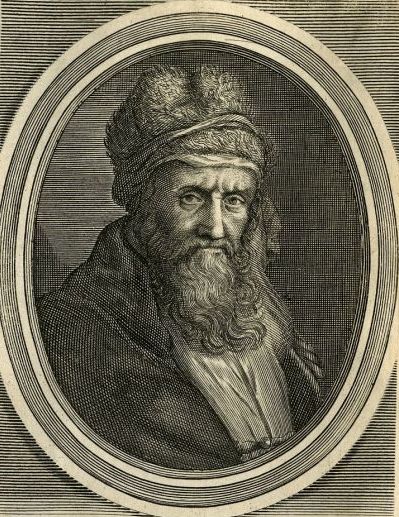
A seventeenth-century engraving of Diogenes Laertius (image courtesy of Wikipedia).

2,377 words

The Milesian philosophers were wrong about everything, but they asked the right questions, and for the first time sought natural explanations instead. — Luke Mueshaller, Pre-Socratics: A Painless Introduction

The limit of all wisdom is in me. — Epigram on Pythagoras, Boundaries, Duris

Although the twilight is darkening around Western philosophy, she is still just visible through the gloom. She had already been demoted from her role as theology’s handmaiden and queen of the sciences to a kind of antiquarian pursuit, like collecting moths in glass-covered frames or old jazz records. Now, if she exists at all, it is either as political activism or as a historical record of the intellectual adventure of the West, one increasingly neglected.

Of course there are non-Western philosophies, but I am not familiar with them, so I use the term “philosophy” to denote Western philosophy only, as most Westerners do. The Confucius I have glanced at seems to be confined to behavior at court, like a gentler version of Machiavelli with nicer tea. I read the phrase “black existentialism” recently and stopped off at Wikipedia to get the flavor. Wikipedia is gushing yet comprehensive with all things dark-skinned, and the page informed me that:

Black existentialism or Africana critical theory is a school of thought that “critiques domination and affirms the empowerment of Black [sic, you all know the score by now] people in the world”.

I am over my initial irritation at the contemporary use of “critique” as a verb, and I was interested to see a summation of the work of a man (one assumes) named Lewis Gordon, who “argues that Black existentialism is not only existential philosophy produced by Black philosophers but is also thought that addresses the intersection of problems of existence in Black contexts.” Any white person who has visited a shopping mall or taken a stroll down Martin Luther King Boulevard knows all about “problems of existence in Black contexts.”

As for Buddhist koans and suchlike, they are far too easy for hippies to like, and often wear a mask of profundity to disguise childish frivolity. If anyone ever asks you “What is the sound of one hand clapping?”, do yourself and everyone else a favor and answer by slapping their face. So, I confine myself to Western philosophy, which is both the most successful in world history, and — the Berber St. Augustine notwithstanding — exclusively white. If it’s all right with everyone, when it comes to philosophy we’ll stick with the white stuff.

Like all disciplines, philosophy has a timeline, and Diogenes Laertius’ Lives and Opinions of the Eminent Philosophers (Lives) has a curious place in that history. Not a great deal is known about Diogenes the man, who lived circa 180 to 240, and so between Sextus Empiricus and the neo-Platonists. His famous quip to Alexander the Great when asked what the mighty ruler could do for him is one of philosophy’s rare moments of humor: “Stand a little out of my sunshine.” His Lives is a collection of brief and anecdotal accounts of the lives, sayings, and works of the various Greek philosophers known as the pre-Socratics, as well as Socrates himself, Plato, and Aristotle. As a work of philosophy, it may be sketchy and incomplete, but as a portal to the founding fathers of Western philosophy, it is a treasure rescued from the iniquities of history.
You can buy Greg Johnson’s The Trial of Socrates here.

The greatest potential link we might have had to the Classical world was severed by the destruction of the great library at Alexandria, which burned down in 48 BC when Julius Caesar’s troops set fire to Ptolemy’s fleet in the harbor and the conflagration spread to the city. So, as imperfect and sporadic as the Lives may be, it is a precious consolation which preserves fragments of a philosophical world otherwise mostly lost to us. It has received, over the years, rather harsh treatment at the hands and pens of historians of philosophy, but as an introduction to Classical thought it is a primer of which I am very fond and would recommend to anyone new to the territory.

If you are a philosopher or a student of philosophy, you will know all about The Oxford Companion to Philosophy. If you are interested in the subject, and see a copy in a thrift store or secondhand bookshop, snap it up (it’s quite pricey on Amazon) and it will be money spent — as well as the sixth-century BC philosopher Thales of Miletus did when he bought up most of the local olive presses long before the harvest. He made a fortune — not because of the rich harvest (which he had foreseen by reading nature’s signs), but because there weren’t any presses left in town, Thales having cornered the market. This is the same Thales who was ridiculed by an old woman for falling into a well while walking and looking up at the stars, thereby providing an ageless metaphor for the inability of some intellectuals to process the world’s harsh realities.

The only problem with the Oxford Companion is that a lot of the entries are written by rather sniffy Englishmen, and the entry on Diogenes Laertius is no exception, as R. J. Hawkins, late of Keble College, Oxford, finds the Lives to be:

. . . an uncritical scissors-and-paste work [in which] his accounts are unreliable, and sometimes incoherent. He had a taste for anecdote and paradox, but no talent for philosophical exposition [and] it is hard to detect any distinct philosophical position of his own.

Hardly the greatest blurb for a book cover, but the ramshackle, gossipy tone of the Lives is a great part of its appeal, particularly for a reader coming to Classical philosophy for the first time. As for the lack of a “distinct philosophical position,” I am baffled as to why that counts against the work. Is a book about philosophers required to be a book of philosophy rather than just a history? A lack of philosophical opinion in the Lives did not bother Montaigne, who wished that there had been a dozen Diogenes instead of just one, but Nietzsche, a great reader of Montaigne, judged him more harshly as “dim-witted.” It is Diogenes’ philosophical small talk that provides the charm of the Lives.
You can buy Greg Johnson’s From Plato to Postmodernism here

Diogenes helpfully informs us of any other contemporaneous individuals bearing the same name as his subjects — there were several other Aristotles, for example — as well as being fascinated by the details of various philosophers’ wills, in the testamentary rather than the philosophical sense. He is also roundly mocked by critics for the poetic epigrams he devotes to various figures from the past.

Even those entirely unfamiliar with philosophy will know the name of Socrates, and Diogenes tells us that the inquisitor of the agora was physically in excellent shape, tending to his body as much as his mind. It is a pleasing thought that Socrates went to the gymnasium not just to question passersby about the nature of virtue or courage, but also for a bit of bench-pressing and a few dozen bicep curls. Western philosophy is generally agreed to begin in earnest with Socrates and his amanuensis Plato, followed by Plato’s brilliant student Aristotle. Philosophy’s internal dynamic for 2,000 years was funded by their differing concerns, and Raphael’s painting The School of Athens shows this schism visually, the elderly Plato pointing his finger to the heavens while his student flattens his palm downwards toward the earth. This instituting opposition would form the core of philosophical thought until the Renaissance, and many attempts were made to fuse these apparently irreconcilable worldviews, perhaps most famously by “the angelic doctor,” St. Thomas Aquinas. Both Plato and Aristotle are covered by Diogenes, and sprinkled with anecdote, textual fragment, and hearsay.

Philosophy was always proto-scientific, a sort of warm-up act for the triumph of the Enlightenment and the industrial revolutions of the eighteenth century. This period saw a schism within philosophy with, as it were, its scientific wing taking philosophical methodology that had been honed over centuries and leaving theology’s handmaiden with an assortment of things science had no real use for, mainly metaphysics and morals. Philosophy resembles a worker laid off but forced to train her replacement before she leaves. Pre-Socratic philosophy, although simplistic and hardly scientific in our modern sense, is nevertheless the source of the modern scientific worldview. It stands as a transition point between the Homeric mental landscape of the Greeks and the investigative course philosophy would take. For the Homeric Greek, lightning was a visible display of the Zeus’ anger (and reputedly killed Orpheus), while for Anaxagoras the phenomenon was caused by “the rubbing together of the clouds.” There is also a whisper of Kant’s transcendentalism in Anaxagoras’ belief that “[a]ll things were mixed up together; then Mind came and arranged them all in distinct order.”

Thales, he of the wine presses and mishap with the well, is usually credited along with Pythagoras as being the first philosopher proper, and he was certainly the first animist. Aristotle, and thus Diogenes, quotes Thales’ maxim that “all things are full of gods,” thus endowing the inorganic world with an internal, animating spirit. This is the seed from which the concept of the soul would grow, and is a good example of pre-Socratic thought as itself an animating principle of much of what was to follow, particularly in the religious realm.

You can buy Mark Gullick’s novel Cherub Valley here.

Many of Diogenes’ reported quips and maxims are plays on the Greek language and not often translatable, but many are simple witticisms. To see this as lightweight frippery misses a trick. The use of language to create conundrums, puns, and metaphors is just as much a part of philosophizing as the weightiest tome. When Aristippus, a pupil of Socrates, was informed by his mistress that she was pregnant by him, he drily remarked that “You can no more tell that, than you could tell, after you had gone through a thicket, which thorn had scratched you.”

There is philosophical substance here, however, despite the dismissiveness of Diogenes’ later critics, and the formative divisions and categories of the subject which would dominate philosophy for centuries are laid out in the original form of their inception. The pre-Socratic philosophers were coming to the understanding of the world fresh, with little tradition but hearsay of their own and the grand backdrop of Homer. Even in the lumber room of Diogenes it is possible to see philosophy hiving off from everyday discourse, the examination of the world becoming a distinct province with its own satraps and governors. Many of the names Diogenes covers wrote a great number of volumes (or scrolls, I suppose), and it seemed to be a part of the gentrified Greek’s life to give his opinion on numerous subjects. Most of these are, of course, lost, and it is a pity I will never get to read Theophrastus’ tract on the intellect and moral character of animals. The same writer does provide, on his deathbed like Socrates in the Phaedo, a very serviceable if conditional endorsement of philosophy to his friends:

But may you all be fortunate, and either abandon philosophy (for it is a great labour), or else cling to it diligently, for then the credit of it is great; but the vanities of life exceed the advantage of it.

The West can hardly be said to have clung diligently to philosophy, and perhaps that is a contributing factor to its current intellectual malaise. Certainly we are a long way from Plato’s celebrated requirement in the Republic that societies are best ruled not by philosophers or kings, but by an amalgam of both.

If philosophy has any political home today in the West, it can only be on the Right. Leftist dogma is blooming like bacilli on a Petri dish and has thoroughly infected the universities, and the new Left are staunchly anti-philosophy for two reasons. Firstly, philosophy is a white project, and this is enough to disqualify its entire history. David Hume, the great Scottish philosopher and polymath, wrote in an essay of 1748 entitled “Of National Characters” that “I am apt to suspect the Negroes to be naturally inferior to the whites,” which led to a predictable outcry despite being as accurate as anything he ever wrote. But, instead of reading Hume’s stylistically brilliant and philosophically groundbreaking work and offering a reasoned critique, it was far easier for Edinburgh University to register its opposition to racism (and thus placate its students) by renaming its David Hume Tower.    Secondly, even those who discount philosophy as racially outmoded and irrelevant in today’s technological world would struggle to make a case that it is intellectually negligible, and this automatically excludes those who now set the cultural agenda. In short, the Left are glad to reject philosophy for childish reasons because some of it is very hard to understand. You have to work at philosophy; you can’t have it spoon-fed to you like critical race theory.

The Classical world deserves our attention if only because Donna Zuckerberg, Mark’s unappetizing sister, claims it is the province of “the worst men on the Internet.” With that kind of billing, you can count me in. But, as the musings of the early Greek philosophers showed, philosophy is not, nor should it be, primarily concerned with definitive answers, but rather the ability to frame meaningful questions. This is something Martin Heidegger –himself a great exponent of the pre-Socratics — understood, and is nowhere more lacking than in our declining West, run as it is technocratically and managerially and obsessed as it will remain with “solutions.” Solutions, as it were, are not always the answer.

Diogenes Laertius is a curiosity in philosophy’s history, but an enjoyable one. The Lives does not need to be read through straight, but can be dipped into to provide the taste of a Greek experience for which philosophy was fresh and new, and the world with it. Now, in our jaded and intellectually undernourished age, The Lives and Opinions of the Eminent Philosophers is worth more than the lives and opinions of those currently crafting our decline. In a barbaric age, it is a pleasure to observe with Diogenes that “thus did philosophy arise among the Greeks, and indeed its very name shows that it has no connection with the barbarians.”

The Origins of Western Philosophy Diogenes Laertius

The%20Origins%20of%20Western%20Philosophy%0ADiogenes%20Laertius%0A

Share

  • Gab

Enjoyed this article?

Be the first to leave a tip in the jar!

Instant Echeck GreenPay™

*  *  *

Counter-Currents has extended special privileges to those who donate at least $10/month or $120/year.

  1. Donors will have immediate access to all Counter-Currents posts. Everyone else will find that one post a day, five posts a week will be behind a “paywall” and will be available to the general public after 30 days. Naturally, we do not grant permission to other websites to repost paywall content before 30 days have passed.
  2. Paywall member comments will appear immediately instead of waiting in a moderation queue. (People who abuse this privilege will lose it.)
  3. Paywall members have the option of editing their comments.
  4. Paywall members get an Badge badge on their comments.
  5. Paywall members can “like” comments.
  6. Paywall members can “commission” a yearly article from Counter-Currents. Just send a question that you’d like to have discussed to [email protected]. (Obviously, the topics must be suitable to Counter-Currents and its broader project, as well as the interests and expertise of our writers.)

To get full access to all content behind the paywall, please visit our redesigned Paywall page. 

Related

  • Nietzsche & Race

  • The Killing of Henry Nowak

  • The Zodiac Killer

  • Headbanging Lite

  • Could Fascism Work?

  • To Depose The King

  • You’re Nicked! The Story of The Sweeney

  • Finding Atlantis Part 4

Tags

Ancient Greeceancient GreeksAristippusblack existentialismbook reviewsClassical philosophyDavid HumeDiogenesDiogenes LaertesGreek philosophyLewis GordonLives and Opinions of the Eminent PhilosophersMark Gullickpaywallphilosophypre-Socratic philosophypresocratic philosophypresocraticsracism and philosophyThalesThe Oxford Companion to Philosophy

5 comments

  1. Al Dante says:
    May 8, 2024 at 8:20 pm

    It is very curious or telling that Donna Zuckerberg would say that. Her brother is an admiring fan of Augustus and the Empire and styles himself thus. He even looks like a marble statue.

    https://mashable.com/article/mark-zuckerberg-augustus-caesar-comparison

    0
    0
    1. Wifewaffen says:
      May 8, 2024 at 8:43 pm

      “Basically, through a really harsh approach, he established two hundred years of world peace.”

      Yep, sounds like repackaged White Genocide to me!

      0
      0
    2. Mark Gullick says:
      May 8, 2024 at 8:53 pm

      Her thesis was about how white the classics are. Al Dante is probably the best name I have seen, BTW.

      0
      0
      1. Al Dante says:
        May 8, 2024 at 10:15 pm

        Yes, she was referring to the field but I was just wondering if she includes her brother because of his deep interest.

        0
        0
  2. DarkPlato says:
    May 9, 2024 at 10:54 pm

    I don’t know, is it wrong for me to point out?, but the Diogenes who spoke to Alexander was the 3rd bc cynic philosopher, not Diogenes laertius who floruit in 3rd century ad.  Also Eratosthenes the astronomer fell down the well, looking at the stars of course, not Thales who Diogenes says died of heat stroke.

    I agree western philosophy is way better than eastern.  But I think highly of the presocratics.  Although they may have been wrong mechanistically about things, such as that the earth was flat or dome like, I think the presocratics grasped the philosophic essence of things in a way unparalleled in antiquity.  For example they basically agreed on a materialistic model of the world where things were composed of atoms of elements.  They thought there were only four or five, but right in principle.  They thought all life came from a primitive embryo that left the water.  Maybe they are a far way off from evolution by natural selection, but they had the gist thousands of years earlier than europe.  Platonism is essentially a spiritual rebellion against their materialistic worldview.

    I think the presocratics’ sort of reasoning and philosophic insight is similar to that of the science-fiction writer Jack Vance. He often has notions like that, perhaps unsupported mechanistically, but I bet capture philosophically the essence of the nature of things. “De Rerum Naturae!”

    0
    0

Comments are closed.

If you have a Subscriber access,
simply login first to see your comment auto-approved.

Note on comments privacy & moderation

Your email is never published nor shared.

Comments are moderated. If you don't see your comment, please be patient. If approved, it will appear here soon. Do not post your comment a second time.

Upcoming podcasts
  • Rob Rundo on Counter-Currents Radio

    Rob Rundo on Counter-Currents Radio

    Counter-Currents Radio

    Sat, Jun 13th — 3 pm EST / 9 pm CET
  • Daniel Tyrie on Counter-Currents Radio

    Daniel Tyrie on Counter-Currents Radio

    Counter-Currents Radio

    Sat, Jun 20th — 3 pm EST / 9 pm CET

Writers of May

(2 votes) Morris van de Camp David M. Zsutty Derek Stark Jayant Bhandari Greg Johnson

Articles of May

The Lunch Wars by David M. Zsutty Heidegger on Nietzsche, Part One by Collin Cleary 2 votes
    • Collin Cleary: What Rome Means to Me

      Collin Cleary

    • Paul Krugman: Closet Bolshevik

      Spencer J. Quinn

      8

    • Fugue of Ideas:
      Ibram X. Kendi’s Chain of Ideas

      Greg Johnson

      10

    • Based Blacks

      Lipton Matthews

      6

    • Black Intellectual Fatigue

      Derek Stark

      21

    • Why White Advocates Should Avoid “Based Blacks”

      Dani Vypont

      19

    • Nietzsche & Race

      Mark Gullick

    • Editor’s Update
      Rob Rundo Rescheduled to Next Week on Counter-Currents Radio;
      Tonight Greg Johnson & David Zsutty Answer Your Questions;
      Fundraiser Update & a New $20,000 Matching Grant

      Greg Johnson

    • The Counter-Currents 2026 Fundraiser
      Lifetime Subscriber Welcome Packages Extended

      Greg Johnson

    • Nationalism This Week
      Who’s Looking Back?

      Greg Johnson

      29

    • China’s Threat to American Security:
      Food, Farmland, Foreign Control, & Energy Policy

      Lipton Matthews

      5

    • The Bitter End of Western Metaphysics:
      Heidegger on Nietzsche, Part Two

      Collin Cleary

      15

    • The Killing of Henry Nowak

      Mark Gullick

      37

    • The Crisis of Chinese Technology Thieves

      Morris van de Camp

      1

    • The Strange World of Gender Bender Fiction:
      & What This Genre Tells Us About Autosexuality

      Dani Vypont

      3

    • Watching the Watchers:
      The Dark Triad Question

      David M. Zsutty

      14

    • The Remigration Movement Solidifies

      F. Roger Devlin

      1

    • Casting Aspersions:
      The Fatal Consequences of Race-Swapped Casting, From Helen of Troy to Henry of Southampton

      Steven Tucker

      20

    • The Murder of Henry Nowak

      Millennial Woes

      23

    • Don’t Forget to Vote in Our Writer & Article of the Month Poll

      Greg Johnson

    • The Robot Hotdog Stand

      Greg Johnson

      35

    • Laughing Our Way to Victory

      Dave Chambers

      7

    • The Zodiac Killer

      Mark Gullick

      11

    • Jared Taylor: What Rome Means to Me

      Jared Taylor

      1

    • An Interview with Endeavour:
      My Way of Life Is an Adventure!

      Ondrej Mann

      6

    • José Pedro Zúquete’s The Identitarians

      Greg Johnson

      3

    • Editor’s Update
      Fundraiser Update & How to Watch the Remigration Summit

      Greg Johnson

      5

    • The Bitter End of Western Metaphysics:
      Heidegger on Nietzsche, Part One

      Collin Cleary

      11

    • Berlin: City of Stones

      Spencer J. Quinn

      6

    • True Folk-Horror Is Horror of Your Own Folk:
      Mark Gatiss vs the Brexit Blind Dead  

      Steven Tucker

      4

    • Counter-Currents Radio Podcast No. 689
      Thomas Massie, the America 2050 Bust, the Need for Whites to Divest from America, the AI Economic Apocalypse, & Pro-White Project Pitches to Billionaires

      Counter-Currents Radio

      7

    • Nationalism This Week
      Remigration is Inevitable, Part 3

      Greg Johnson

      27

    • Why Billionaires Should Fund White Identity Politics

      Lipton Matthews

      8

    • How Cold War Two Came About

      Morris van de Camp

      5

    • Now Available for Pre-Order at a Special Price!
      Greg Johnson’s The Philosopher Is In

      Greg Johnson

    • David Zsutty’s Elevator Pitch to a Billionaire

      David M. Zsutty

      1

    • Headbanging Lite

      Mark Gullick

      5

    • White Advocacy Past and Present

      Peter Bradley

      13

    • The Lunch Wars

      David M. Zsutty

      47

    • The Russians are Coming/The Russians are Coming

      Steven Clark

      1

    • Peak Fatigue in Fort Wayne

      Gabriel Anderson

      24

    • Keith Woods’ Elevator Pitch to a Billionaire

      Keith Woods

    • The Cruelty of Kindness

      Morris van de Camp

      9

    • Predation Wearing the Mask of Civilization

      Jayant Bhandari

      13

    • The Mandalorian & Grogu

      Trevor Lynch

      24

    • Editor’s Update
      Fundraiser Update & a New $20,000 Matching Grant
      Greg Johnson & David Zsutty Discuss Thomas Massie on Counter-Currents Radio

      Greg Johnson

      2

    • How the Jews Defeated Thomas Massie—& Themselves

      David M. Zsutty

      27

    • Jared Taylor’s Elevator Pitch to a Billionaire

      Jared Taylor

      15

    • Nationalism This Week
      Remigration Is Inevitable, Part 2

      Greg Johnson

      8

    • Could Fascism Work?

      Mark Gullick

      40

    • Will Williams

      Why White Advocates Should Avoid “Based Blacks”

      Excellent comment, Scott. You will enjoy this short biography of Commander Rockwell by Dr. Pierce,...

    • Will Williams

      How the Jews Defeated Thomas Massie—& Themselves

      I’d asked:  Perhaps someone else can provide a link to Massie’s historic speech on the House...

    • Greg Johnson

      Fugue of Ideas:
      Ibram X. Kendi’s Chain of Ideas

      Thanks so much!

    • Peter Quint

      Paul Krugman: Closet Bolshevik

      I hope you don’t want to shoot George Strait, he is one of the few “old school” country singers left...

    • Connor McDowell

      Black Intellectual Fatigue

      Well lo and behold, Karmurder Anthony got the murder conviction instead of manslaughter. Color me...

    • Anticommunist Action

      Fugue of Ideas:
      Ibram X. Kendi’s Chain of Ideas

      My choices for the votes I will be casting for June’s Writer AND Article of the Month were made for...

    • Scott

      Why White Advocates Should Avoid “Based Blacks”

      ScottC-C June 9, 2026 at 10:28 pm[Note: I had to repost this (fortunately I saved the original)...

    • Don, the Rebel without a Blog

      Fugue of Ideas:
      Ibram X. Kendi’s Chain of Ideas

      LOL @ skintellectuals. Love it!

    • Stand Tall, Shoot Strait.

      Paul Krugman: Closet Bolshevik

      Krugman really does epitomize, both physically and mentally, the jew supremacists that infest our...

    • Calufrax

      Based Blacks

      Candace Owens is deeply mentally ill. It is disturbing that so many people take her seriously. Now...

    • Flel

      Paul Krugman: Closet Bolshevik

      When did losing elections and broad power lead to violent reactions instead of internal reflection...

    • Dani Vypont

      Black Intellectual Fatigue

      Moreover, one of the historically recognized traits of Western, or Faustian, Man has been our...

    • Will Williams

      How the Jews Defeated Thomas Massie—& Themselves

      It’s usually easy to find a House speech in C-SPAN’s handy archive, but, though I found that Massie...

    • Dani Vypont

      Why White Advocates Should Avoid “Based Blacks”

      Agree with most of the article. Spot on about Negroes and the dusky grifter, Candace Owens....

    • Dani Vypont

      Why White Advocates Should Avoid “Based Blacks”

      Thanks Peter! One thing I disagree with though is having a "siege mentality." That would be self-...

    • Dani Vypont

      Why White Advocates Should Avoid “Based Blacks”

      Thanks Joe!

    • Dani Vypont

      Why White Advocates Should Avoid “Based Blacks”

      I don’t know anyone who considers Candice Owens “based”. Plenty of normie conservatives, who...

    • Scott

      Based Blacks

      "As Dani Vypont observed, the Dissident Right gains no strategic advantage from associating with...

    • A Breath Of Fresh Air

      Black Intellectual Fatigue

      What exactly have African people created that we can benefit from? We in no way need Africans....

    • Greg Johnson

      Fugue of Ideas:
      Ibram X. Kendi’s Chain of Ideas

      AI would have done a better job.

    • Earth Day Special

      John Morgan

      12

    • A Robertson Roundup
      Remembering Wilmot Robertson
      (April 16, 1915 – July 8, 2005)

      Margot Metroland

      13

    • The Paranoid Style in White Nationalism

      Greg Johnson

      30

    • Join the Dance!

      Andrew Hamilton

      1

    • We Can’t Save the Earth Without Reducing African Birth Rates

      James Dunphy

      36

    • “I’m Not a Conspiracy Theorist, but . . .”:
      Jeffrey Epstein’s Death Gives New Life to “Conspiracy Theories”

      Greg Johnson

      22

    • Sylvia Plath: Stasis in Darkness

      Vic Olvir

      17

    • Vanguardism, Vantardism, & Mainstreaming

      Greg Johnson

      80

    • Aviation, Geography, & Race

      Charles Lindbergh

      3

    • Some Thoughts on Yule

      Collin Cleary

      4

    • Living in Truth:
      A Yuletide Homily

      Jef Costello

      7

    • John Kennedy Toole’s A Confederacy of Dunces

      Greg Johnson

      20

    • On Aleksandr Solzhenitsyn’s Warning to the West

      Spencer J. Quinn

      7

    • Elitism, British Modernism, & Wyndham Lewis

      Jonathan Bowden

      6

    • Philip K. Dick’s Do Androids Dream of Electric Sheep? as Anti-Semitic/Christian-Gnostic Allegory

      Greg Johnson

      20

    • “Conspiracy Theory” or Conspiracy?

      Andrew Hamilton

      21

    • Remembering H. P. Lovecraft
      (August 20, 1890–March 15, 1937)

      Greg Johnson

      3

    • Who Are We?
      Nordics, Aryans, & Whites

      Greg Johnson

      71

    • Remembering William Gayley Simpson
      (July 23, 1892–December 31, 1990)
      A Pleasant Afternoon with Harriet & Bill Simpson

      Margot Metroland

      18

    • Here are the Young Men
      Remembering Ian Curtis
      (July 15, 1956–May 18, 1980)

      Mark Gullick

      18

    • Percy Grainger
      Artist of the Right

      Alex Graham

      7

    • Remembering Revilo Oliver
      (July 7, 1908–August 20, 1994)

      Greg Johnson

      18

    • The Meaning of July 4th for the White Man

      Gregory Hood

      13

    • The Front National’s Evolution

      Bruno Mégret

    • Merwin K. Hart
      Forgotten American Hero & Man of the Right

      Morris van de Camp

      10

    • George Orwell’s Nineteen Eighty-Four

      Jonathan Bowden

      8

    • Carleton S. Coon
      Scientist & Reluctant White Advocate

      Morris van de Camp

      3

    • The Kwanzaa Absurdity Will Be Dwarfed by Juneteenth

      Robert Hampton

      10

    • Stravinsky

      Alex Graham

      7

    • Like the Roman:
      Remembering Enoch Powell (1912-1998)

      Mark Gullick

      23

    • Neo-Fascism in Film
      Part 5

      Karel Veliky

      15

    • The Game of Tarot

      Mark Gullick

      2

    • Institutions Cannot Be Transplanted

      Jayant Bhandari

      5

    • Jonathan Bowden’s Deliverance
      Part 5

      Jonathan Bowden

    • Crosstown Traffic:
      Jimi Hendrix & The Post-War Rock ‘N’ Roll Revolution

      Mark Gullick

      1

    • Slaves from the North:
      Finns & Karelians in the East European Slave Trade, 900–1600

      Lipton Matthews

      14

    • Neo-Fascism in Film
      Part 4

      Karel Veliky

      2

    • David Lean’s A Passage to India

      Spencer J. Quinn

      1

    • Elites are Essential to Development

      Lipton Matthews

      7

    • Jonathan Bowden’s Deliverance
      Part 4

      Jonathan Bowden

    • Neo-Fascism in Film
      Part 3

      Karel Veliky

      6

    • E. M. Forster’s A Passage to India & the Indian Mentality

      Spencer J. Quinn

      25

    • Jonathan Bowden’s Deliverance
      Part 3

      Jonathan Bowden

    • The Rest Is Silence
      Heidegger’s Quietism

      Mark Gullick

      2

    • Dispelling the Historical Fallacy of Indian Nationalism

      Lipton Matthews

      8

    • Neo-Fascism in Film
      Part 2

      Karel Veliky

      8

    • Jonathan Bowden’s Deliverance
      Part 2

      Jonathan Bowden

    • Life of a Klansman

      Mark Gullick

      8

    • Jonathan Bowden’s Deliverance, Part 1

      Jonathan Bowden

    • Decolonial Ideas are Holding Back Developing Countries

      Lipton Matthews

      8

    • Neo-fascism in Film, Part 1

      Karel Veliky

      21

    • Jonathan Bowden’s Onslaught, Part 8
      Divigations on Decadence

      Jonathan Bowden

    • Jonathan Bowden’s Onslaught, Part 7
      Intrigues in the National Front

      Jonathan Bowden

      1

    • Rotten to the Core

      Mark Gullick

      8

    • Strauss on Husserl’s “Philosophy as Rigorous Science”

      Greg Johnson

    • Jonathan Bowden’s Onslaught, Part 6
      Francis Bacon & Right-Wing Nihilism

      Jonathan Bowden

    • London After (& Before) Midnight:
      Aleister Crowley, The Landlord’s Worst Nightmare

      James J. O'Meara

      2

    • Jonathan Bowden’s Onslaught, Part 5
      The Post-War British Far Right

      Jonathan Bowden

    • No Rules: Rollerball

      Mark Gullick

      4

    • Jonathan Bowden’s Onslaught, Part 3
      Brett Easton Ellis’ American Psycho

      Jonathan Bowden

    • András László
    • Derek Hawthorne
    • Beau Albrecht
    • Alain de Benoist
    • Kerry Bolton
    • Jonathan Bowden
    • Collin Cleary
    • Jef Costello
    • Savitri Devi
    • Julius Evola
    • Jim Goad
    • Gregory Hood
    • Juleigh Howard-Hobson
    • Greg Johnson
    • Charles Krafft
    • Anthony M. Ludovici
    • Trevor Lynch
    • H. L. Mencken
    • J. A. Nicholl
    • James J. O’Meara
    • Christopher Pankhurst
    • Tito Perdue
    • Michael Polignano
    • Spencer J. Quinn
    • Fenek Solère
    • Irmin Vinson
    • Leo Yankevich
    • Francis Parker Yockey
    • Multiple authors
  • Editor-in-Chief

    • Greg Johnson, Ph.D.

    Featured Writers

    • Beau Albrecht
    • Gunnar Alfredsson
    • Collin Cleary, Ph.D.
    • Jef Costello
    • Morris V. de Camp
    • F. Roger Devlin, Ph.D.
    • Stephen Paul Foster, Ph.D.
    • Jim Goad
    • Alex Graham
    • Mark Gullick, Ph.D.
    • Greg Johnson, Ph.D.
    • Travis LeBlanc
    • Trevor Lynch
    • Margot Metroland
    • James J. O’Meara
    • Angelo Plume
    • Spencer J. Quinn
    • Fred Reed
    • Clarissa Schnabel
    • Michael Walker
    • David M. Zsutty

    Frequent Writers

    • Asier Abadroa
    • Aquilonius
    • Alain de Benoist
    • Kerry Bolton, Ph.D.
    • Dave Chambers
    • Steven Clark
    • James Dunphy
    • Endeavour
    • Richard Houck
    • Jason Kessler
    • Titus Livius
    • Ondrej Mann
    • Lipton Matthews
    • Mark Mazari
    • John Morgan
    • Jaroslav Ostrogniew
    • Kathryn S.
    • Christian Secor
    • Anne Wilson Smith
    • Thomas Steuben
    • William De Vere
    • Kenneth Vinther
    • Max West

    Classic Authors

    • Maurice Bardèche
    • Jonathan Bowden
    • Julius Evola
    • Guillaume Faye
    • Ernst Jünger
    • Kevin MacDonald, Ph.D.
    • D. H. Lawrence
    • Charles Lindbergh
    • Jack London
    • H. P. Lovecraft
    • Anthony M. Ludovici
    • Sir Oswald Mosley
    • National Vanguard
    • Friedrich Nietzsche
    • Revilo Oliver
    • William Pierce
    • Ezra Pound
    • Saint-Loup
    • Savitri Devi
    • Carl Schmitt
    • Miguel Serrano
    • Oswald Spengler
    • P. R. Stephensen
    • Jean Thiriart
    • John Tyndall
    • Dominique Venner
    • Leo Yankevich
    • Francis Parker Yockey

    Other Authors

    • Howe Abbott-Hiss
    • Michael Bell
    • Giles Corey
    • Jack Donovan
    • Richardo Duchesne, Ph.D.
    • Emile Durand
    • Guillaume Durocher
    • Mark Dyal
    • Tom Goodroch
    • Andrew Hamilton
    • Robert Hampton
    • Huntley Haverstock
    • Derek Hawthorne
    • Gregory Hood
    • Juleigh Howard-Hobson
    • Alexander Jacob
    • Ruuben Kaalep
    • Tobias Langdon
    • Julian Langness
    • Patrick Le Brun
    • G A Malvicini
    • John Michael McCloughlin
    • Millennial Woes
    • Michael O’Meara
    • Christopher Pankhurst
    • Michael Polignano
    • J. J. Przybylski
    • Quintilian
    • Edouard Rix
    • C. B. Robertson
    • C. F. Robinson
    • Herve Ryssen
    • Alan Smithee
    • Fenek Solere
    • Ann Sterzinger
    • Robert Steuckers
    • Tomislav Sunic
    • Donald Thoresen
    • Marian Van Court
    • Irmin Vinson
    • Book Reviews
    • Movie Reviews
    • TV Reviews
    • Music Reviews
    • Art Criticism
    • Graphic Novels & Comics
    • Video Game Reviews
    • Fiction
    • Poems
    • Interviews
    • Videos
    • English Translations
    • Other Languages
      • Arabic
      • Bulgarian
      • Croatian
      • Czech
      • Danish
      • Dutch
      • Estonian
      • Finnish
      • French
      • German
      • Greek
      • Hungarian
      • Italian
      • Lithuanian
      • Norwegian
      • Polish
      • Portuguese
      • Romanian
      • Russian
      • Slovak
      • Spanish
      • Swedish
      • Ukrainian
    • Commemorations
    • Why We Write
  • Archives
  • Top 100 Commenters
  • The Looney Bin
Sponsored Links
Europa.com Above Time Coffee Antelope Hill Publishing Paul Waggener IHR-Store Spencer J. Quinn American Renaissance Jim Goad The Occidental Observer
Donate Now Mailing list
Books for sale
  • The Philosopher Is In
  • Sexual Utopia in Power (Expanded Edition)
  • In Defense of Prejudice
  • Loving Our Own
  • Tyranny & Wisdom
  • The Populist Moment
  • Is America Doomed?
  • To all books
Copyright © 2026 Counter-Currents Publishing, Ltd.

Paywall Access


Please enter your email address.

Lost your password?

Edit your comment

Writer & Article of the Month May 2026

Voting for this month has concluded. Here are the final results!

Top Writers

  • #1 Morris van de Camp 2 votes
  • #2 David M. Zsutty 2 votes
  • #3 Derek Stark 2 votes
  • #4 Jayant Bhandari 2 votes
  • #5 Greg Johnson 2 votes
  • #6 Jared Taylor 1 vote
  • #7 Collin Cleary 1 vote
  • #8 Spencer J. Quinn 1 vote
  • #9 Mark Gullick 1 vote
  • #10 Lipton Matthews 1 vote
  • #11 Keith Woods 1 vote
  • #12 Steven Tucker 1 vote

Top Articles

  • #1 The Lunch Wars 2 votes
  • #2 Heidegger on Nietzsche, Part One 2 votes
  • #3 Predation Wearing the Mask of Civilization 1 vote
  • #4 Peak Fatigue in Fort Wayne 1 vote
  • #5 Keith Wood's Elevator Pitch to a Billionaire 1 vote
  • #6 Do You Want to Play a Game? 1 vote
  • #7 Why Billionaires Should Fund White Identity Politics 1 vote
  • #8 The 1970s: The Golden Age of Hijacking 1 vote
  • #9 True Folk-Horror Is Horror of Your Own Folk 1 vote
  • #10 Finding Atlantis Part 4 1 vote
  • #11 Berlin: City of Stones 1 vote
  • #12 The Ghost of the Confederacy 1 vote
  • #13 Lothrop Stoddard’s The Revolt Against Civilization 1 vote
  • #14 Could Fascism Work? 1 vote
  • #15 Jared Taylor's Elevator Pitch to a Billionaire 1 vote

Total votes cast: 17