Counter-Currents
  • Advertise
  • Private Events
  • T&C
  • About
  • Contact
  • RSS
    • Main feed
    • Podcast feed
    • Videos feed
    • Comments feed
  • Welcome
  • Webzine
  • Books
  • Merch
  • Podcasts
  • Videos
  • Donate
  • Patrons
  • Subscribe
  • Crypto

LEVEL2

Donate Now Mailing list

Writers of May

(2 votes) Morris van de Camp David M. Zsutty Derek Stark Jayant Bhandari Greg Johnson

Articles of May

The Lunch Wars by David M. Zsutty Heidegger on Nietzsche, Part One by Collin Cleary 2 votes
  • Welcome
  • Webzine
  • Books
  • Merch
  • Podcasts
  • Videos
  • Donate
  • Patrons
  • Subscribe
  • Crypto
    • Editor’s Update
      Rob Rundo on Counter-Currents Radio, Fundraiser Update, & a New $20,000 Matching Grant

      Greg Johnson

    • The Bitter End of Western Metaphysics:
      Heidegger on Nietzsche, Part Three

      Collin Cleary

      10

    • Uncivil War

      Mark Gullick

      35

    • Exclusive Interview with Karel Veliky:
      The Final Chapter in the Film Series! Part II

      Ondrej Mann

      2

    • Happy Birthday to Us!

      Greg Johnson

      6

    • Zsutty’s Maximum

      David M. Zsutty

      15

    • Exclusive Interview with Karel Veliky:
      The Final Chapter in the Film Series! Part I

      Ondrej Mann

      2

    • The Union Jackal, June 2026

      Mark Gullick

      23

    • The Inferiority Behind Immigrant Superiority

      Jayant Bhandari

      15

    • Counter-Currents Radio Podcast No. 690
      Greg Johnson & David Zsutty Discuss Current Things: AI, Henry Nowak, the Iran Crisis, & More

      Counter-Currents Radio

      7

    • Collin Cleary: What Rome Means to Me

      Collin Cleary

      4

    • Paul Krugman: Closet Bolshevik

      Spencer J. Quinn

      19

    • Fugue of Ideas:
      Ibram X. Kendi’s Chain of Ideas

      Greg Johnson

      18

    • Based Blacks

      Lipton Matthews

      16

    • Black Intellectual Fatigue

      Derek Stark

      41

    • Why White Advocates Should Avoid “Based Blacks”

      Dani Vypont

      29

    • Nietzsche & Race

      Mark Gullick

    • Editor’s Update
      Rob Rundo Rescheduled to Next Week on Counter-Currents Radio;
      Tonight Greg Johnson & David Zsutty Answer Your Questions;
      Fundraiser Update & a New $20,000 Matching Grant

      Greg Johnson

    • The Counter-Currents 2026 Fundraiser
      Lifetime Subscriber Welcome Packages Extended

      Greg Johnson

    • Nationalism This Week
      Who’s Looking Back?

      Greg Johnson

      29

    • China’s Threat to American Security:
      Food, Farmland, Foreign Control, & Energy Policy

      Lipton Matthews

      5

    • The Bitter End of Western Metaphysics:
      Heidegger on Nietzsche, Part Two

      Collin Cleary

      16

    • The Killing of Henry Nowak

      Mark Gullick

      38

    • The Crisis of Chinese Technology Thieves

      Morris van de Camp

      1

    • The Strange World of Gender Bender Fiction:
      & What This Genre Tells Us About Autosexuality

      Dani Vypont

      3

    • Watching the Watchers:
      The Dark Triad Question

      David M. Zsutty

      14

    • The Remigration Movement Solidifies

      F. Roger Devlin

      1

    • Casting Aspersions:
      The Fatal Consequences of Race-Swapped Casting, From Helen of Troy to Henry of Southampton

      Steven Tucker

      20

    • The Murder of Henry Nowak

      Millennial Woes

      23

    • Don’t Forget to Vote in Our Writer & Article of the Month Poll

      Greg Johnson

    • The Robot Hotdog Stand

      Greg Johnson

      37

    • Laughing Our Way to Victory

      Dave Chambers

      7

    • The Zodiac Killer

      Mark Gullick

      11

    • Jared Taylor: What Rome Means to Me

      Jared Taylor

      1

    • An Interview with Endeavour:
      My Way of Life Is an Adventure!

      Ondrej Mann

      6

    • José Pedro Zúquete’s The Identitarians

      Greg Johnson

      3

    • Editor’s Update
      Fundraiser Update & How to Watch the Remigration Summit

      Greg Johnson

      5

    • The Bitter End of Western Metaphysics:
      Heidegger on Nietzsche, Part One

      Collin Cleary

      12

    • Berlin: City of Stones

      Spencer J. Quinn

      6

    • True Folk-Horror Is Horror of Your Own Folk:
      Mark Gatiss vs the Brexit Blind Dead  

      Steven Tucker

      4

    • Counter-Currents Radio Podcast No. 689
      Thomas Massie, the America 2050 Bust, the Need for Whites to Divest from America, the AI Economic Apocalypse, & Pro-White Project Pitches to Billionaires

      Counter-Currents Radio

      7

    • Nationalism This Week
      Remigration is Inevitable, Part 3

      Greg Johnson

      27

    • Why Billionaires Should Fund White Identity Politics

      Lipton Matthews

      8

    • How Cold War Two Came About

      Morris van de Camp

      5

    • Now Available for Pre-Order at a Special Price!
      Greg Johnson’s The Philosopher Is In

      Greg Johnson

    • David Zsutty’s Elevator Pitch to a Billionaire

      David M. Zsutty

      1

    • Headbanging Lite

      Mark Gullick

      5

    • White Advocacy Past and Present

      Peter Bradley

      13

    • The Lunch Wars

      David M. Zsutty

      47

    • The Russians are Coming/The Russians are Coming

      Steven Clark

      1

    • Greg Johnson

      Counter-Currents Radio Podcast No. 690

      This is a spam post, but it is interesting. Apparently, now gambling platforms have AI spambots that...

    • Uncle Semantic

      Based Blacks

      Watch brian shapiro if you want a real dose of Every Single Time the person. Way worse than the...

    • Uncle Semantic

      Based Blacks

      When is it supposed to begin? Can’t be a bigger freak show than this stupid ufc fight at the white...

    • Uncle Semantic

      Based Blacks

      Will, I’m curious if your racial journey to where you stand now was from the republican/con inc./...

    • Uncle Semantic

      Based Blacks

      Do you think blacks would be more palatable to the proWhite message just by reminding them that...

    • Uncle Semantic

      Black Intellectual Fatigue

      In the words of that great humanitarian Rodney King, can’t we all just get along? No, with a capital...

    • Uncle Semantic

      Black Intellectual Fatigue

      Black Dolphin Prison is a Christmas present for scum like Austin’s killer.

    • Uncle Semantic

      Black Intellectual Fatigue

      Andre Williams has been making the rounds with certain podcasters and his is a welcome new voice as...

    • YT

      Uncivil War

      Excellent article, very intelligently written, best thing I’ve read on this sickening outrage. I...

    • YT

      Uncivil War

      Why leave your phone at home? You lost me there.

    • YT

      Uncivil War

      That is an ignorant and bigoted statement of precisely the type that alienates white Christians from...

    • Mark

      Counter-Currents Radio Podcast No. 690

      Excellent breakdown by Chud regarding the limits of hardware customization and the shifting...

    • Taig77

      Uncivil War

      "...the Republicans wanted Northern Ireland to be independent." will come as a great surprise to...

    • Collin Cleary

      Heidegger on Nietzsche Part Three

      I have not heard of the Beattie dissertation, or of any discussion of it. The Mansfield book is also...

    • Collin Cleary

      Heidegger on Nietzsche Part Three

      I believe in objective truth, just not the Christian claims about objective truth. Truth is what...

    • Collin Cleary

      Heidegger on Nietzsche Part Three

      Thank you very much!

    • tempus

      Why White Advocates Should Avoid “Based Blacks”

      As for lending money, that also goes for Whites. Never lend more than you are willing to make a gift...

    • tempus

      Why White Advocates Should Avoid “Based Blacks”

      The only person other than my brother to whom I have lent money who ever paid me back was a Black...

    • tempus

      Why White Advocates Should Avoid “Based Blacks”

      The Old South was nowhere near as anti-black as the Old North. Part of the Republican platform on...

    • tempus

      Black Intellectual Fatigue

      Hopefully, more Whites are ceasing to be racial nihilists and are abandoning the new morality (...

    • Earth Day Special

      John Morgan

      12

    • A Robertson Roundup
      Remembering Wilmot Robertson
      (April 16, 1915 – July 8, 2005)

      Margot Metroland

      13

    • The Paranoid Style in White Nationalism

      Greg Johnson

      30

    • Join the Dance!

      Andrew Hamilton

      1

    • We Can’t Save the Earth Without Reducing African Birth Rates

      James Dunphy

      36

    • “I’m Not a Conspiracy Theorist, but . . .”:
      Jeffrey Epstein’s Death Gives New Life to “Conspiracy Theories”

      Greg Johnson

      22

    • Sylvia Plath: Stasis in Darkness

      Vic Olvir

      17

    • Vanguardism, Vantardism, & Mainstreaming

      Greg Johnson

      80

    • Aviation, Geography, & Race

      Charles Lindbergh

      3

    • Some Thoughts on Yule

      Collin Cleary

      4

    • Living in Truth:
      A Yuletide Homily

      Jef Costello

      7

    • John Kennedy Toole’s A Confederacy of Dunces

      Greg Johnson

      20

    • On Aleksandr Solzhenitsyn’s Warning to the West

      Spencer J. Quinn

      7

    • Elitism, British Modernism, & Wyndham Lewis

      Jonathan Bowden

      6

    • Philip K. Dick’s Do Androids Dream of Electric Sheep? as Anti-Semitic/Christian-Gnostic Allegory

      Greg Johnson

      20

    • “Conspiracy Theory” or Conspiracy?

      Andrew Hamilton

      21

    • Remembering H. P. Lovecraft
      (August 20, 1890–March 15, 1937)

      Greg Johnson

      3

    • Who Are We?
      Nordics, Aryans, & Whites

      Greg Johnson

      71

    • Remembering William Gayley Simpson
      (July 23, 1892–December 31, 1990)
      A Pleasant Afternoon with Harriet & Bill Simpson

      Margot Metroland

      18

    • Here are the Young Men
      Remembering Ian Curtis
      (July 15, 1956–May 18, 1980)

      Mark Gullick

      18

    • Percy Grainger
      Artist of the Right

      Alex Graham

      7

    • Remembering Revilo Oliver
      (July 7, 1908–August 20, 1994)

      Greg Johnson

      18

    • The Meaning of July 4th for the White Man

      Gregory Hood

      13

    • The Front National’s Evolution

      Bruno Mégret

    • Merwin K. Hart
      Forgotten American Hero & Man of the Right

      Morris van de Camp

      10

    • George Orwell’s Nineteen Eighty-Four

      Jonathan Bowden

      8

    • Carleton S. Coon
      Scientist & Reluctant White Advocate

      Morris van de Camp

      3

    • The Kwanzaa Absurdity Will Be Dwarfed by Juneteenth

      Robert Hampton

      10

    • Stravinsky

      Alex Graham

      7

    • Like the Roman:
      Remembering Enoch Powell (1912-1998)

      Mark Gullick

      23

    • The 1970s: The Golden Age of Hijacking

      Morris van de Camp

      21

    • Jonathan Bowden’s Deliverance
      Part 6

      Jonathan Bowden

    • Do You Want to Play a Game?

      Mark Gullick

      1

    • Sexually Incontinent on the Indian Subcontinent:
      Who Rapes More Animals, Indians or Pakistanis? The Battle Continues!

      Steven Tucker

      3

    • Neo-Fascism in Film
      Part 5

      Karel Veliky

      15

    • The Game of Tarot

      Mark Gullick

      2

    • Institutions Cannot Be Transplanted

      Jayant Bhandari

      5

    • Jonathan Bowden’s Deliverance
      Part 5

      Jonathan Bowden

    • Crosstown Traffic:
      Jimi Hendrix & The Post-War Rock ‘N’ Roll Revolution

      Mark Gullick

      1

    • Slaves from the North:
      Finns & Karelians in the East European Slave Trade, 900–1600

      Lipton Matthews

      14

    • Neo-Fascism in Film
      Part 4

      Karel Veliky

      2

    • David Lean’s A Passage to India

      Spencer J. Quinn

      1

    • Elites are Essential to Development

      Lipton Matthews

      7

    • Jonathan Bowden’s Deliverance
      Part 4

      Jonathan Bowden

    • Neo-Fascism in Film
      Part 3

      Karel Veliky

      6

    • E. M. Forster’s A Passage to India & the Indian Mentality

      Spencer J. Quinn

      25

    • Jonathan Bowden’s Deliverance
      Part 3

      Jonathan Bowden

    • The Rest Is Silence
      Heidegger’s Quietism

      Mark Gullick

      2

    • Dispelling the Historical Fallacy of Indian Nationalism

      Lipton Matthews

      8

    • Neo-Fascism in Film
      Part 2

      Karel Veliky

      8

    • Jonathan Bowden’s Deliverance
      Part 2

      Jonathan Bowden

    • Life of a Klansman

      Mark Gullick

      8

    • Jonathan Bowden’s Deliverance, Part 1

      Jonathan Bowden

    • Decolonial Ideas are Holding Back Developing Countries

      Lipton Matthews

      8

    • Neo-fascism in Film, Part 1

      Karel Veliky

      21

    • Jonathan Bowden’s Onslaught, Part 8
      Divigations on Decadence

      Jonathan Bowden

    • Jonathan Bowden’s Onslaught, Part 7
      Intrigues in the National Front

      Jonathan Bowden

      1

    • Rotten to the Core

      Mark Gullick

      8

    • Strauss on Husserl’s “Philosophy as Rigorous Science”

      Greg Johnson

    • Jonathan Bowden’s Onslaught, Part 6
      Francis Bacon & Right-Wing Nihilism

      Jonathan Bowden

    • András László
    • Derek Hawthorne
    • Beau Albrecht
    • Alain de Benoist
    • Kerry Bolton
    • Jonathan Bowden
    • Collin Cleary
    • Jef Costello
    • Savitri Devi
    • Julius Evola
    • Jim Goad
    • Gregory Hood
    • Juleigh Howard-Hobson
    • Greg Johnson
    • Charles Krafft
    • Anthony M. Ludovici
    • Trevor Lynch
    • H. L. Mencken
    • J. A. Nicholl
    • James J. O’Meara
    • Christopher Pankhurst
    • Tito Perdue
    • Michael Polignano
    • Spencer J. Quinn
    • Fenek Solère
    • Irmin Vinson
    • Leo Yankevich
    • Francis Parker Yockey
    • Multiple authors
  • Editor-in-Chief

    • Greg Johnson, Ph.D.

    Featured Writers

    • Beau Albrecht
    • Gunnar Alfredsson
    • Collin Cleary, Ph.D.
    • Jef Costello
    • Morris V. de Camp
    • F. Roger Devlin, Ph.D.
    • Stephen Paul Foster, Ph.D.
    • Jim Goad
    • Alex Graham
    • Mark Gullick, Ph.D.
    • Greg Johnson, Ph.D.
    • Travis LeBlanc
    • Trevor Lynch
    • Margot Metroland
    • James J. O’Meara
    • Angelo Plume
    • Spencer J. Quinn
    • Fred Reed
    • Clarissa Schnabel
    • Michael Walker
    • David M. Zsutty

    Frequent Writers

    • Asier Abadroa
    • Aquilonius
    • Alain de Benoist
    • Kerry Bolton, Ph.D.
    • Dave Chambers
    • Steven Clark
    • James Dunphy
    • Endeavour
    • Richard Houck
    • Jason Kessler
    • Titus Livius
    • Ondrej Mann
    • Lipton Matthews
    • Mark Mazari
    • John Morgan
    • Jaroslav Ostrogniew
    • Kathryn S.
    • Christian Secor
    • Anne Wilson Smith
    • Thomas Steuben
    • William De Vere
    • Kenneth Vinther
    • Max West

    Classic Authors

    • Maurice Bardèche
    • Jonathan Bowden
    • Julius Evola
    • Guillaume Faye
    • Ernst Jünger
    • Kevin MacDonald, Ph.D.
    • D. H. Lawrence
    • Charles Lindbergh
    • Jack London
    • H. P. Lovecraft
    • Anthony M. Ludovici
    • Sir Oswald Mosley
    • National Vanguard
    • Friedrich Nietzsche
    • Revilo Oliver
    • William Pierce
    • Ezra Pound
    • Saint-Loup
    • Savitri Devi
    • Carl Schmitt
    • Miguel Serrano
    • Oswald Spengler
    • P. R. Stephensen
    • Jean Thiriart
    • John Tyndall
    • Dominique Venner
    • Leo Yankevich
    • Francis Parker Yockey

    Other Authors

    • Howe Abbott-Hiss
    • Michael Bell
    • Giles Corey
    • Jack Donovan
    • Richardo Duchesne, Ph.D.
    • Emile Durand
    • Guillaume Durocher
    • Mark Dyal
    • Tom Goodroch
    • Andrew Hamilton
    • Robert Hampton
    • Huntley Haverstock
    • Derek Hawthorne
    • Gregory Hood
    • Juleigh Howard-Hobson
    • Alexander Jacob
    • Ruuben Kaalep
    • Tobias Langdon
    • Julian Langness
    • Patrick Le Brun
    • G A Malvicini
    • John Michael McCloughlin
    • Millennial Woes
    • Michael O’Meara
    • Christopher Pankhurst
    • Michael Polignano
    • J. J. Przybylski
    • Quintilian
    • Edouard Rix
    • C. B. Robertson
    • C. F. Robinson
    • Herve Ryssen
    • Alan Smithee
    • Fenek Solere
    • Ann Sterzinger
    • Robert Steuckers
    • Tomislav Sunic
    • Donald Thoresen
    • Marian Van Court
    • Irmin Vinson
    • Book Reviews
    • Movie Reviews
    • TV Reviews
    • Music Reviews
    • Art Criticism
    • Graphic Novels & Comics
    • Video Game Reviews
    • Fiction
    • Poems
    • Interviews
    • Videos
    • English Translations
    • Other Languages
      • Arabic
      • Bulgarian
      • Croatian
      • Czech
      • Danish
      • Dutch
      • Estonian
      • Finnish
      • French
      • German
      • Greek
      • Hungarian
      • Italian
      • Lithuanian
      • Norwegian
      • Polish
      • Portuguese
      • Romanian
      • Russian
      • Slovak
      • Spanish
      • Swedish
      • Ukrainian
    • Commemorations
    • Why We Write
  • Archives
  • Top 100 Commenters
  • The Looney Bin
  • Advertise
  • Private Events
  • T&C
  • About
  • Contact
  • RSS
    • Main feed
    • Podcast feed
    • Videos feed
    • Comments feed
Sponsored Links
Europa.com Above Time Coffee Antelope Hill Publishing Paul Waggener IHR-Store Spencer J. Quinn American Renaissance Jim Goad The Occidental Observer
Print April 29, 2020 1 comment

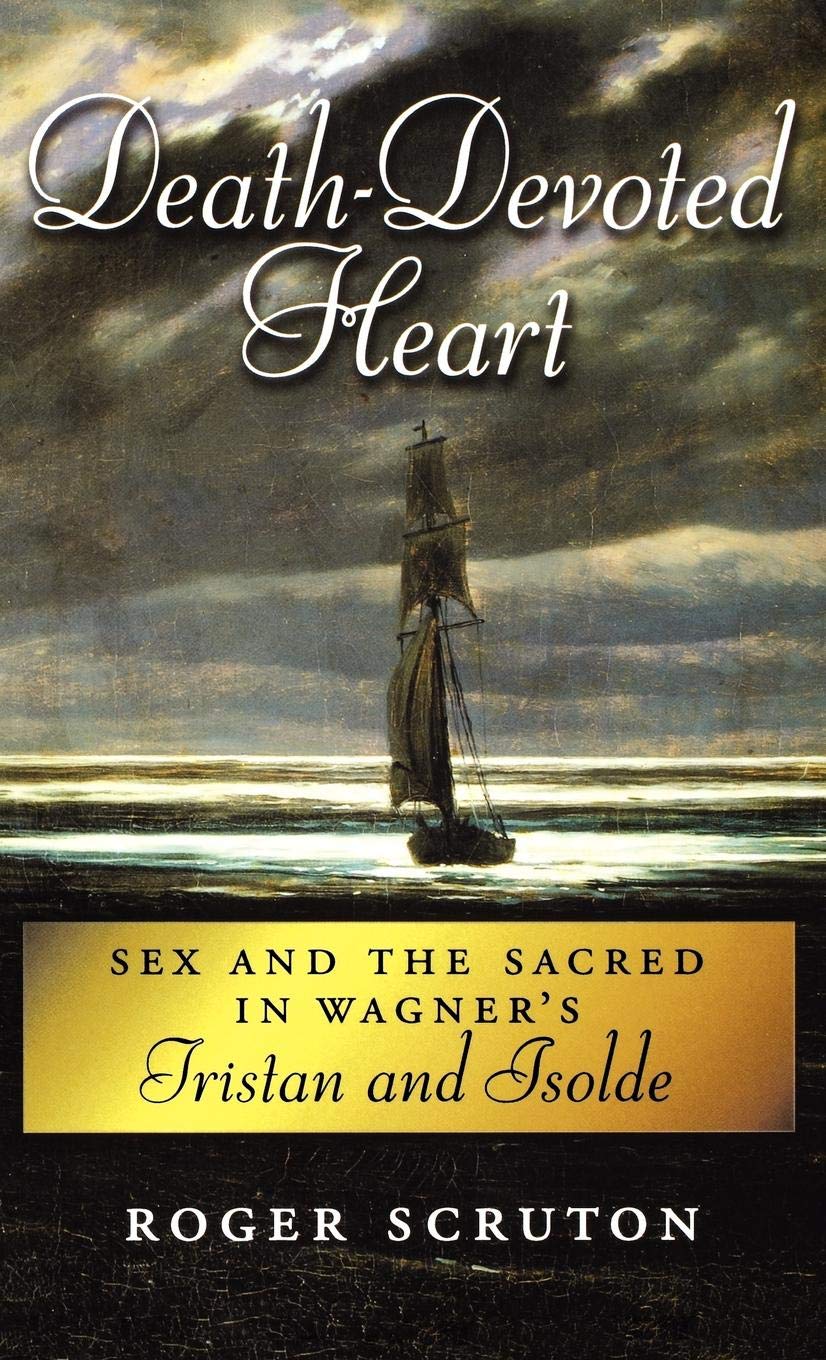
Roger Scruton’s Death-Devoted Heart
Part One: The Personal

Michael Walker

5,223 words

Part 1 of 2 (Part 2 here)

Sir Roger Scruton, who died of cancer on January 12th, 2020 at the age of seventy-five, wrote more than fifty books, was the editor of the conservative publication The Salisbury Review, and in his final years was briefly chairman — dismissed and subsequently reinstated — of the Conservative Government’s “Building Better, Building Beautiful Commission.”

I once met Roger Scruton. He invited me to his flat in London in 1982 where I remember enjoying his excellent wine. (Scruton was a wine connoisseur who famously expressed his distaste for wine tastings by claiming that blind tasting was like blind kissing. He also wrote a book entitled I drink therefore I am: A Philosopher’s Guide to Wine.) I recall neither dispute nor disharmony during our talk, yet our acquaintanceship was not continued. I think we both felt a lack of empathy towards the other that neither could explain. This is all the more remarkable given the fact that we shared many views. I wondered how it was that a feeling, not of mutual hostility, but at least of mutual distancing to the point of indifference, had continued between us down the years. I was reminded of this by the news of Scruton’s death, and then again when Counter-Currents asked me to review Death-Devoted Heart, his study of Wagner’s Tristan und Isolde. Such a study promised to make for fascinating reading; an analysis of Wagner conducted by someone who was philosopher, music lover, and conservative in one, a critic who could be relied upon to write on Richard Wagner without feeling he had to apologize for doing so. It is therefore with mixed feelings, between my sense that Scruton and I had not effectively connected and my expectations of his book, that I approached the task of reviewing Death-Devoted Heart.

In his very brief preface, Scruton makes it clear that his will be a wide-ranging approach to Tristan und Isolde. He also makes it clear that he will not apply, as many critics do, biographical detail as a psychological key to unlocking artistic content. His will be a different approach:

This is a book about Wagner’s Tristan und Isolde; it is also an attempt to gain insight into the nature of erotic love and the peculiar place of the erotic in our culture. The argument is sometimes philosophical, sometimes critical, sometimes musicological. But I intend the result as a guide to Wagner’s great music drama and as a vindication of its stature. The originality and subtlety of Wagner’s music have seldom been questioned; nevertheless, critics have often discussed Tristan und Isolde as though the drama, in itself, is of no great significance, a sublimation of the composer’s love for Mathilde Wesendonck, or a wistful romantic dream. In this work I attempt to show that the real drama takes place in the music, and that it has a profound religious meaning, as relevant to us who live in a profane and secular age as it was to Wagner’s contemporaries.” (p. v)

So Scruton’s very first paragraph places the quest for an understanding of erotic love both adjacent and linked to a quest for the understanding of a subliminal message in Tristan und Isolde. Death-Devoted Heart consists of three kinds of appraisal corresponding to what Scruton sees as the three essential elements of the opera: philosophical, musicological, and religious. In examining each aspect, Scruton assumes that his readers carry considerable cultural baggage with them; without some of that baggage, access to Scruton’s arguments is hardly possible. This is especially true of his musicological analysis, which takes up the greater part of the middle section of this book; Scruton assumes that the reader has a knowledge of the techniques of classical Western musical composition, which few who are not classical music critics, students of classical music, classical music hobbyists, or players of a classical instrument are likely to have. I must own myself to being not competent to evaluate Scruton’s appraisal of the score of Tristan und Isolde, and therefore must pass over Scruton’s expositions of Wagner’s musical techniques. It should be admitted in this respect that Scruton’s grasp of the techniques of musical composition (he composed several pieces of music himself) gives authority to his judgment of Wagner. After all, how many Wagner critics are both musicologists and philosophers? How many critics will be capable of following Scruton both in his musical and in his philosophical analysis of Wagner’s opus?

While Scruton assumes — or pretends to assume — that his readers will be familiar with the technical musical lexis used to clarify Wagner’s techniques, he shuns a discussion of the appropriateness of opera as an art form to fulfill Wagner’s aim to create the Gesamtkunstwerk, the work of total art. Clearly, Scruton believes that the drama (it should be remembered that unlike most opera composers, Wagner wrote his own libretto) of Tristan und Isolde, if not necessarily the poetry of the drama, is as integral a part of the work as the music itself. Also crucial to Scruton’s analysis of Tristan und Isolde is the religious component of the opera, which according to Scruton, has nothing to do with whether Wagner was or was not a Christian believer. The religious component Scruton considers specifically is the role played by sacrifice in the opera and the sacrificial devotion to the point of death inherent in eros, erotic love. One can speak, from Scruton’s point of view, of a mystical trinity in Tristan und Isolde: music, drama, and eros.

Scruton argues that Wagner’s opera as dramatic composition has been downplayed in favor of the music, as though only the music really mattered and that the plot of the Tristan und Isolde was a kind of clothes-horse on which to hang the musical composition. It is certainly true that many modern interpreters, critics, and producers of Wagner feel uncomfortable in the face of the ideals of sacrifice, redemption, and commitment which Wagner’s operas bring to life. Splicing the theatrical plot from the music, considering or treating the two apart, or making drama take precedence over music (or the reverse) was evidently contrary to Wagner’s own intentions. If it is right that the interaction of Wagner’s drama to his music should be examined by anyone concerned with understanding the intention and achievement of the Gesamtkunstwerk, then in that respect, Scruton’s work is eminently successful.

In his acknowledgment of those who helped him or inspired him to write his study, Scruton acknowledges his “greatest debt” to Immanuel Kant, a philosopher known, as Scruton freely admits, neither for his musical ear nor for his interest in or practice of the erotic! Nevertheless, Death-Devoted Heart, Scruton asserts, may be read “in another way as a case study in the Kantian philosophy of man.” Thus the reader is forewarned that this study is not only about Wagner’s opera, but will have a great deal to do with Scruton’s own theriac for a world sea change and how he believes that this is artistically celebrated in Wagner’s art. I chose the archaic word “theriac” intentionally. Just as the ancient Greeks believed that tragedy was a form of purgation, so Scruton’s argument is that Wagner offers the same kind of experience.

We are absorbed into the ritual and cleansed of our isolation. This process is one of reconciliation; we are reattached to the community and enjoy the forgiveness and acceptance of the god. . . Such is the liturgical experience as we know it from the Greek and Roman mysteries and from the Christian Eucharist. (p. 164)

Scruton’s understanding of this “liturgical experience” is also his understanding of Wagner’s operas, and it is in this light that he considers the deep sense of Tristan und Isolde.

Death-Devoted Heart requires a considerable amount of effort and energy, and it is made all the more daunting by the fact that the publisher, Oxford University Press, served Scruton badly. Presumably for reasons of cost, the book was printed using a smaller-than-standard pixel, and for no discernible reason, a pale and hard-to-read typeface. The book is also poorly glued: a page came apart in the course of my writing this review, and more threaten to follow. Demands physical as well as mental are therefore put upon the reader of this book. But just as Wagner’s opera brings its rewards to those with the determination and energy to continue with it, so too this book offers intellectual rewards to readers who do not allow either Scruton’s sometimes very technical and discursive style, nor the density of the subject, nor the theoretical nature of the material, nor the discomfort of a small and pale typeface and poorly manufactured book, to deter them.
You can buy Kerry Bolton’s Artists of the Right here.

Scruton sets out on the long intellectual journey he has prepared for himself by examining Wagner’s attitude toward religion. His view of Wagner is so affirmative and full of admiration that he calls Wagner “one of the great humanists of modern times.” On what grounds does Scruton make such a claim? Cynically, one can sum up the reason by noting that for Scruton, Wagner was acutely aware that humans sought salvation — a religious theriac — but the churches no longer seemed credible while politics failed to respond to humanity’s spiritual quest. Scruton believed that Wagner offered to replace the sense of the sacred (“sacralation,” he calls it) which has been lost. Wagner’s agenda, states Scruton, was “nothing less than the redemption of mankind.” However, “Wagner’s religious faith was shaky at best.” (p. 3) Whether Wagner had any “vestiges of religious belief” is “ultimately irrelevant” (p. 6); what matters is not Wagner’s religious faith or lack of it, but the intensity and devotedness of religious inspiration which his operas display. On the one hand, we are told that religion in Wagner is little more than an artistic tool or backdrop, conversely, the operas express a deep awareness of the sacred, embodied in ceremony and religious archetypes. Scruton notes that Nietzsche rejected Wagner on the grounds that the heroism in his operas are a romantic sham. In Scruton’s view, Nietzsche was entirely mistaken, and Wagner succeeds sublimely in creating a vision of a pure form of religion (we may speak almost in Platonic terms of the “essence of religion”) which is marked by abstraction, nobility, liturgy, and sacrifice.

Scruton makes the point that heroism for Wagner is not given to men as a gift generated within us. Heroism and erotic love, eros, are linked, in the sense that heroism of the interior kind, not reaching out to save others but reaching inwards to save ourselves, is linked to erotic love, whereas the love born of compassion, agape, involves sacrificing oneself for others. Tristan und Isolde is an opera of heroic sacrifice but not the sacrifice of compassion for others, agape, such as we find, for example in Parsifal, but of the sacrifice of the inner-self, of the eros.

Disappointingly, Scruton rarely compares Tristan und Isolde with other Wagnerian operas. Where Scruton does make a comparison it is enlightening; for example, when he reminds the reader of the significance of the hunting theme in Wagner’s operas and the hunting theme in Greek mythology, and compares the hunted Tristan and Isolde to the hunted Siegfried in Götterdämmerung, and Siegmund in Die Walkure. Furthermore, sacrifice, which Scruton insists upon as the quintessence and driving motive of this opera, is a common element in nearly every Wagner opera. Senta sacrifices herself for Dalan in Der fliegender Hollander, Elisabeth for Tannhäuser, Lohengrin for Elsa, and Parsifal for all creation. Another factor unremittingly present in Wagner’s operas is a forbidden love or a forbidden erotic act, the very cause of Amfortas’ wound in Parsifal, the temptation of Tannhäuser, and the incestuous love of Siegmund and Sieglinde in Der Ring. Perhaps only in Lohengrin, where the fatal flaw could be described as looking a gift horse in the mouth, is erotic transgression not the driving force of events, although even here it is the dark accusation of transgression which sets events in motion. Scruton’s wide-ranging essay sets out to show, put crudely, that sacrifice is more important than the transgression.

As one would expect, Scruton is well aware of the study of courtly love by Denis de Rougemont, L’amour et L’Occident, published in 1939. De Rougemont examines the Western ideal of love — specifically, the “forbidden” love of Medieval courtly love — sung by the troubadours. Their repertoire included the tale of the lovers Tristan and Isolde. De Rougemont presents the courtly love tradition as a romantic counter-pole to the fanaticism of the Roman Church. Scruton does not accept de Rougemont’s belief that the “acceptability” of a form of romantic love associated with a feverish longing for transgression is essential to understanding erotic love in Western culture, but he does share de Rougemont’s view that the Tristan legend plays a hugely important role in Western culture; a legend which pre-dates the Middle Ages, and was Celtic in its origin if not of earlier origin still. Scruton goes so far as to say that no myth or legend has more profoundly marked Western conceptions of love than the Tristan legend. In the legend of Tristan and Isolde, the lovers’ passion is a striving for the unobtainable; a permanent, yearning ambition. De Rougemont drew a sharp contrast between “true” love or passion which he saw as a passion willing to transgress — heightened when it must transgress — and the convenient companionship of a politically arranged marriage.

Scruton rejects this juxtaposition of romantic love and conventional marriage. There is an obvious conflict in Wagner’s operas themselves, not mentioned by Scruton, between the romantic notion of love as a kind of destiny in which two individuals discover each other as though by magic, and the classic notion of love as an imposed destiny from outside, brought about to ensure the maintenance of order by drawing “suitable” individuals toward one another; love as a duty, but a duty happily assumed. In fact, Scruton has little to say in this book about romanticism or the Romantic movement at all. There is a resemblance between Scruton and Nietzsche here. The two philosophers display characteristics typical of traditional European romanticism, yet both paradoxically displayed strong personal mistrust, even distaste, towards the Romantic movement and anything that smacked of a “sentimental” (a very negative word for Scruton) indulgence in passion. Nietzsche thus preferred Racine to Shakespeare, admired the Old Testament, and condemned the New Testament.
You can buy Collin Cleary’s Wagner’s Ring & the Germanic Tradition here.

De Rougemont points out that the attraction of the courtly lover to a married lady as “true love,” or at least a love not condemned, runs contrary to the Christian dogma which makes marriage, whether accompanied by eros and mutual attraction or not, a sacrament. The Christian view of erotic love is that the destiny of erotic love is fulfilled in marriage by mutual loyalty to the oath of fidelity and raising a family. Those whose passion, in one way or another, challenges, ignores, or dispenses with the sacramental obligation to reproduce and remain true to one person are sinful transgressions, and those who urge any kind of love not leading to matrimony are tempters (and temptresses). Courtly love, so de Rougemont, challenged this Christian view by deifying love for love’s sake and claimed to draw its strength from another even higher law than the rules of marital restraint and consent; namely, passionate devotion. The distance of courtly love (de Rougemont considered distance between the lovers as axiomatic) contrasted with the proximity of marriage and the Christian exhortation to “love thy neighbor.” It is easy to see that for many people, Tristan und Isolde is a thoroughly romantic tragedy: Two passionate lovers, constantly impeded and hampered by events and those envious of them, eventually falling under the wheels of the conspiracy of convention, are driven to be at a distance from one another and breach that distance to embrace union and death. Scruton offers a different exposé of Tristan und Isolde and an explanation of what Wagner’s intentions were in opting for the fate of the two lovers as the theme for an opera.

There are many versions of the Tristan legend. In every account, Tristan and Isolde love illicitly, in violation of a moral and social code. Isolde is a Queen and married. The man she loves is the man who killed the champion of her nation and to whom she had been betrothed. Tristan is King Marke’s nephew. Wagner reduces the many versions of the legend to bare essentials for his opera, simplifying the plot, to arrive at a stark tale of sacrifice and devotion without the distraction of sub-plot or rival lovers or the passing of many years, all features of most versions of the legend. Wagner does not dispose of the notion of illicit love, however, since that is the quintessence of the tale — even if, as Scruton passionately argues, the fate of the lovers is not repression (or punishment), as a romantic interpretation would lead one to expect, but sacrifice.

The story unfolds at a time that Cornwall was an independent kingdom, subservient to but independent of Ireland. When Wagner’s opera opens, Tristan has been entrusted with a mission to accompany Isolde to Cornwall, where it has been agreed that she shall marry Cornwall’s King Marke. The marriage is intended by the two ruling houses of Ireland and Cornwall to put an end to the enmity between them. But Isolde has discovered that Tristan has killed her first betrothed, the giant Morold, who had for years sailed to Cornwall to exact a tribute from Cornwall in the form of a number of its youth. Thus Tristan and Isolde belong to rival “houses” in a way similar to Montague and Capulet. It surprises me that Roger Scruton does not refer to the Romeo and Juliet parallel. He seems unaware or unconcerned by the many Shakespearean echoes in Wagner’s opera.

Isolde is brought to Cornwall in chattels, humiliated, mocked by Tristan’s servant Kurnevall, and suffers the humiliation of being brought to marry a man out of political convenience by the killer of the man she had had originally hoped to marry (echoes of Richard III?). So Isolde seeks to destroy Tristan, not simply out of revenge, but also out of atonement for her humiliation. In the face of her reproaches, Tristan is prepared to let Isolde kill him. But in what eerily recalls the procrastinations of Hamlet, she finds reasons for delay, just as she had not killed Tristan earlier when he was recovering from his wound and at her mercy. The dramatic progress of the drama, and psychologically, the notion of atonement, will not allow for such a swift conclusion.

One of the most dramatic parts of the opera is the surrender to fate through the drinking of the love potion. In the scene at the end of the First Act, where “the union” is in Death as (it is in the final scene of Hamlet), poison or Gift (in German the word suggests both dowry and poison) mixed in the chalice from which both drink, that death which is a delayed death, because the death potion has been exchanged for the love potion, but love is death and death is love, that scene where Tristan exclaims in a fit of commitment and passion before drinking:

Ew’ger Trauer
einz’ger Trost
Vergessens güt’ger Trank

Eternal sadness
Sole consolation
Forgetting’s welcome draught

Death-Devoted Heart almost completely lacks quotations, such as this one, from the libretto. When Scruton rarely quotes from the libretto he only gives an English translation. Scruton’s lack of interest in the libretto is puzzling, especially since Scruton himself argues for the importance of the drama independently of the music. And, if I am not mistaken, Scruton knew German. Why is he not motivated to refer to the words of Wagner’s drama? That Scruton is passionate about the opera as a dramatic as well as musical work there can be no doubt. But judging from this book, he is not very passionate about the lovers’ passion as it unfolds through their actions and in their words; only in their passion as a kind of liturgical performance.

Scruton, distancing himself from the words of erotic passion — which is nevertheless as he himself realizes and acknowledges, the essence of this opera — is dismissive of the significance of the potion and chalice, which for most observers are key elements in the plot and symbolic in themselves. The Liebestod, the death potion changed to love potion, prolongs the lives of the Tristan and Isolde, and brings about the realization of their love (I agree with Scruton that the potion awakens what is already slumbering rather than magically conjures eros from nowhere) and culminates in their union of love in death. The confusion of the potions is, in my eyes, crucial to the plot, as is the coming together of that union which culminates in the welcoming of the night by Isolde in her ecstatic acceptance of Tristan’s fate and hers at the opera’s end. Scruton’s account is strangely depersonalized. It shows no interest in the story as a love story as such.

When the lovers consume the magic potion of what they think is death, but which is, in fact, love, an overwhelmingly terrible contrast emerges between the daytime world in which Isolde is expected to play her arranged part and the passion which consumes her and Tristan after they both drink the magic potion. The potion sets alight an interior consuming fire of passion which creates a kind of screen between the secret lovers and the daytime world, a world they can hardly perceive any more, let alone comprehend or care for; a world they can hardly accept as the “real” world at all. Tristan especially is numbed and like a dreamer in the world of the day. This is the dark, deeply moving, and dramatic conclusion to Act One: 

Isolde cries:

Muß ich leben?

Must I live?

And Tristan:

O Wonne voller Tücke!
O Trug-geweihtes Glücke!

Oh joy replete with perfidy!
Oh happiness wedded to deceit!

Scruton expressly rejects the romantic view of the Tristan legend as a tale of frustrated and illicit love, in which two tragic people have to die as punishment for transgression. He also rejects the sober utilitarian explanation of erotic love as a device of Nature (or God) to draw male and female together for reproduction. Here, a certain conservative Christian view, and that of hard-nosed Darwinians, offers similar interpretations of the driving force of romantic feelings. Erotic love, in its sense of exceptionalism or sentimentality, so the Darwinians, is just a trick of Nature whereby the real sense of love, often regarded as an illusion or a fiction, is reproduction, the continuation of the species or race. Bluntly, we are all just animals.
You can buy Greg Johnson’s From Plato to Postmodernism here

Traditional Christians see the matter similarly; except in their interpretation, the reproductive urge is transformed entirely by the sacrament of matrimony, so that reproduction is blessed by God. In either case, erotic love is there for a purpose and should not become a matter of awe in itself, such attachment and devotion to individual freedom being a romantic error. Neither the utilitarian rejection nor the romantic acceptance of eros, however, is one to which Scruton holds. The originality of his analysis is in his dual rejection of both positions — not only by virtue of his own views, as a person whose philosophy rejects an interpretation of erotic love as either hedonistic or biological reductionist — but also his rejection of these interpretations in the name of Wagner. He argues that Wagner was attempting something greater than either a vindication or proscription of romantic love. In Scruton’s exegesis, Tristan und Isolde is much more than a reassuring tale in which the order of sanction and law eventually triumphs over wild delusions and emotional instability. That the subject of the opera is, superficially at least, illicit love is indisputable. The two lovers break the laws of marriage, continuing to love in thought if not in deed (whether they consummated their love or not is a matter of considerable and intriguing dispute) even after Isolde and King Marke have married, and Tristan is the son of King Marke’s sister Blancheflor and therefore his nephew. So how does Scruton’s understanding of the tragedy work?

The legend of the two lovers has inspired many painters, not least the pre-Raphealites. Leighton’s painting of Tristan and Isolde may be viewed in London at the Leighton House Museum. John Duncan, James Draper, Rossetti, and many more applied themselves to this legend.

For the pre-Raphaelites, the legend provided material for the idealization of the Medieval legend of courtly love. Scruton is aware of this, and indeed begins his second chapter angrily refuting an imaginary interlocutor who might admire the romantic rendering of the legend! For Scruton, romantic escapism has nothing to do with Wagner: “Wagner’s medieval [the lowercase M is Scruton’s] world was not a pre-Raphaelite dream in which to escape from modern realities, but a stage to be filled with believable people.” (p. 15) The painter admittedly “has it easy,” like the lovers ever straining and ever resisting on Keat’s Grecian urn:

Bold Lover, never, never canst thou kiss,
Though winning near the goal yet, do not grieve;
She cannot fade, though thou hast not thy bliss,
For ever wilt thou love, and she be fair!

Throughout the book, Scruton displays a near-too-prurient distaste for the erotic aspect of love. Do Tristan and Isolde consummate their love? On the one hand, their emotion is focused with an intensity that can only exist where passion is not consumed. On the other hand, the music is — not to put too fine a point on it — orgasmic. Scruton takes care to keep a distance between his theoretical notion of erotic love and its physical realization, and between love in Tristan und Isolde and what in the score might seem to reflect the sensuality of love (“sensuality” is word tellingly absent in this book). For Scruton, erotic love is idealized to the point that it is no longer erotic but religious.

Can the eroticism of Tristan und Isolde be denied? There is an obvious association of the love-death theme; the little death and the great death. The mounting excitement which is unmistakable in the two famous duets of the lovers evokes the mounting excitement of sexual passion. It is significant  — and in my opinion, dishonest of Scruton — not to allude to what he knows must strike most listeners as being erotic in a quite physical sense.

Scruton not only posits that Wagner is attempting to create a new religion, which the pre-Raphaelites were arguably also seeking to adumbrate, but much more controversially, he believes that Wagner is triumphantly successful in doing so. He believes that Tristan und Isolde — and Wagner’s art in general — opens the way to a new kind of post-Christian catharsis. This can only mean that he is himself a believer in this religion in which God has been replaced by a notion of “the sacred,” a notion which seems to me at least, (but each reader must accept or reject as he or she sees fit) to be Platonic; an abstraction. But this is what Scruton is arguing for. Wagner is offering an understanding of the sacred in life in a world in which conventional religions no longer inspire the necessary passion to make them adequate guardians of the sacred.

For a cynic, this book is a puff for the composer and Roger Scruton is “ol’ Dick Cartright’s new PR man.” The end of the first act of Tristan und Isolde, we are told (without the modification of “for me” or “in my opinion”) is “the greatest love scene in all opera.”

No ifs and buts about that. And anyone who might have thought to have found their greatest love scene in opera in Aida or in L’Incoronazione di Poppea or Ariadne auf Naxos stands corrected.

King Marke’s long account of Tristan’s story in Act Two (Mir dies? / Dies Tristan mir?) a story which most opera-goers will probably know already (if not, they would be much confused by the plot so far!) is described by Roger Scruton, hyperbolically, as a “brilliant dramatic stroke.” He continues: “King Marke belongs to a Wagnerian archetype, that of the authority figure, guardian of the social order, who recognizes the youthful transgressor and comes to understand that the transgressor is also a redeemer.” (p. 61)

This is an example of an authoritative style of writing in the essay which cannot be ignored. Scruton instructs us to understand Wagner without seeing the need to illustrate or provide evidence. And, as I have mentioned, Scruton does not find it necessary to cite from Wagner’s libretto, while very frequently citing from the score. He writes — challengingly — that “music presents subjective awareness in objective form” (p. 77), suggesting that the other objective form in opera, namely the libretto, need not be examined very earnestly.

Scruton believes that Tristan is a redeemer, acknowledged as such by King Marke. Is this right? I cannot find this anywhere in that libretto which Scruton disdains to cite. I do not see King Marke, at any point, regarding the man who loves his wife to the point of insanity and beyond in such a light. It would be extraordinary if he did so, and psychologically untenable. Tristan is not Parsifal. In fact, with the weakness which takes hold of him, his failure to fight Melot, he recalls to my mind not Parsifal but Siegmund, the Siegmund who falls powerless before Wotan and tamely suffers his fate in die Walkurie. What King Marke does do, in his moving final tribute to his friend and nephew in Act Three, is acknowledge that Tristan and Isolde were destined for one another. He states that he was willing to abandon Isolde and the arranged marriage, and that he had arrived (too late) to tell Tristan so.

Far from regarding Tristan as a redeemer, he sings:

auch heute noch 
mußt du den Freund verraten?”

and again today
must you betray your friend?

Melot betrays Tristan while being formally truthful in telling the King of his wife’s infidelity. (Or not formally truthful? That enigma is, perhaps, intentional both for the original tellers of the legend and for Wagner.) Melot’s motivation was envy. Formally, while the upholders of a certain order claim to act in “the best interests” of their king or people, their deeper motivations may be entirely different from what they profess. In every version of the Tristan legend to my knowledge, betrayal of the lovers is motivated by envy.

Scruton has little to say about Melot. True, Melot’s part in the opera is small and he acts as a dramatic mechanism not arousing much psychological interest, as Tristan or Isolde or King Marke himself will do. Nevertheless, it is Scruton who stresses the importance of King Marke’s long account in Act Two, where it is revealed that King Marke’s doubts already existed before Tristan and Isolde drank from the love chalice; doubts presumably kindled by the Iago-like Melot.


Roger Scruton’s Death-Devoted Heart Part One: The Personal

Roger%20Scrutonand%238217%3Bs%20Death-Devoted%20Heart%0APart%20One%3A%20The%20Personal%0A

Share

  • Gab

Enjoyed this article?

Be the first to leave a tip in the jar!

Instant Echeck GreenPay™

*  *  *

Counter-Currents has extended special privileges to those who donate at least $10/month or $120/year.

  1. Donors will have immediate access to all Counter-Currents posts. Everyone else will find that one post a day, five posts a week will be behind a “paywall” and will be available to the general public after 30 days. Naturally, we do not grant permission to other websites to repost paywall content before 30 days have passed.
  2. Paywall member comments will appear immediately instead of waiting in a moderation queue. (People who abuse this privilege will lose it.)
  3. Paywall members have the option of editing their comments.
  4. Paywall members get an Badge badge on their comments.
  5. Paywall members can “like” comments.
  6. Paywall members can “commission” a yearly article from Counter-Currents. Just send a question that you’d like to have discussed to [email protected]. (Obviously, the topics must be suitable to Counter-Currents and its broader project, as well as the interests and expertise of our writers.)

To get full access to all content behind the paywall, please visit our redesigned Paywall page. 

Related

  • Nietzsche & Race

  • Jared Taylor: What Rome Means to Me

  • Finding Atlantis Part 4

  • 500 Years of British Art, Part 2

  • De-Based Currency: Scrubbing White Faces Off British Banknotes

  • Whatever Happened to Morality?

  • An Esoteric Commentary on the Volsung Saga, Part XVIII

  • Jonathan Bowden’s Suck, Part 2

Tags

classical musicerosImmanuel KantloveMichael WalkeroperaParsifalreligionRichard WagnerRoger ScrutonromanceRomanticismRomeo and Juliet

1 comment

  1. Vehmgericht says:
    April 29, 2020 at 3:52 pm

    Most Wagnerians will concur that The Master’s librettos are a mixed bag. Used effectively, as in the stabreim of Götterdämmerung his poetry can add an extra level of ecstasy — or menace. In Tristan, for most listeners the great Act II duet invoking Night and Oblivion will be the musical heart of the drama, after which the ‘epic pedantry’ of Marke’s exposition and even Tristan’s Act III delirium may feel anticlimactic.

    As in Parsifal sensitive acting and staging are also required to unlock the dramaturgical basis of the narrative sections. In this regard the tighter use of leitmotiv and the mysterious alchemy of tone-colour and sonority evident in the Ring is a boon to the ear otherwise apt to be fatigued by such passages.

    I look forward to further expositions in this series: there is so much to explore and ponder in Wagner’s music-drama beyond the constantly raked-over question of his antisemitism (which seems above all to inform modern stagings). Scruton, Bryan McGee, Alain Badiou and even I believe Zizek have all weighed in here, and when lesser minds such as my own founder, we may look to CounterCurrents for elucidation.

    0
    0
    Reply

If you have a Subscriber access,
simply login first to see your comment auto-approved.

Post a comment Cancel reply

Note on comments privacy & moderation

Your email is never published nor shared.

Comments are moderated. If you don't see your comment, please be patient. If approved, it will appear here soon. Do not post your comment a second time.

Writers of May

(2 votes) Morris van de Camp David M. Zsutty Derek Stark Jayant Bhandari Greg Johnson

Articles of May

The Lunch Wars by David M. Zsutty Heidegger on Nietzsche, Part One by Collin Cleary 2 votes
    • Editor’s Update
      Rob Rundo on Counter-Currents Radio, Fundraiser Update, & a New $20,000 Matching Grant

      Greg Johnson

    • The Bitter End of Western Metaphysics:
      Heidegger on Nietzsche, Part Three

      Collin Cleary

      10

    • Uncivil War

      Mark Gullick

      35

    • Exclusive Interview with Karel Veliky:
      The Final Chapter in the Film Series! Part II

      Ondrej Mann

      2

    • Happy Birthday to Us!

      Greg Johnson

      6

    • Zsutty’s Maximum

      David M. Zsutty

      15

    • Exclusive Interview with Karel Veliky:
      The Final Chapter in the Film Series! Part I

      Ondrej Mann

      2

    • The Union Jackal, June 2026

      Mark Gullick

      23

    • The Inferiority Behind Immigrant Superiority

      Jayant Bhandari

      15

    • Counter-Currents Radio Podcast No. 690
      Greg Johnson & David Zsutty Discuss Current Things: AI, Henry Nowak, the Iran Crisis, & More

      Counter-Currents Radio

      7

    • Collin Cleary: What Rome Means to Me

      Collin Cleary

      4

    • Paul Krugman: Closet Bolshevik

      Spencer J. Quinn

      19

    • Fugue of Ideas:
      Ibram X. Kendi’s Chain of Ideas

      Greg Johnson

      18

    • Based Blacks

      Lipton Matthews

      16

    • Black Intellectual Fatigue

      Derek Stark

      41

    • Why White Advocates Should Avoid “Based Blacks”

      Dani Vypont

      29

    • Nietzsche & Race

      Mark Gullick

    • Editor’s Update
      Rob Rundo Rescheduled to Next Week on Counter-Currents Radio;
      Tonight Greg Johnson & David Zsutty Answer Your Questions;
      Fundraiser Update & a New $20,000 Matching Grant

      Greg Johnson

    • The Counter-Currents 2026 Fundraiser
      Lifetime Subscriber Welcome Packages Extended

      Greg Johnson

    • Nationalism This Week
      Who’s Looking Back?

      Greg Johnson

      29

    • China’s Threat to American Security:
      Food, Farmland, Foreign Control, & Energy Policy

      Lipton Matthews

      5

    • The Bitter End of Western Metaphysics:
      Heidegger on Nietzsche, Part Two

      Collin Cleary

      16

    • The Killing of Henry Nowak

      Mark Gullick

      38

    • The Crisis of Chinese Technology Thieves

      Morris van de Camp

      1

    • The Strange World of Gender Bender Fiction:
      & What This Genre Tells Us About Autosexuality

      Dani Vypont

      3

    • Watching the Watchers:
      The Dark Triad Question

      David M. Zsutty

      14

    • The Remigration Movement Solidifies

      F. Roger Devlin

      1

    • Casting Aspersions:
      The Fatal Consequences of Race-Swapped Casting, From Helen of Troy to Henry of Southampton

      Steven Tucker

      20

    • The Murder of Henry Nowak

      Millennial Woes

      23

    • Don’t Forget to Vote in Our Writer & Article of the Month Poll

      Greg Johnson

    • The Robot Hotdog Stand

      Greg Johnson

      37

    • Laughing Our Way to Victory

      Dave Chambers

      7

    • The Zodiac Killer

      Mark Gullick

      11

    • Jared Taylor: What Rome Means to Me

      Jared Taylor

      1

    • An Interview with Endeavour:
      My Way of Life Is an Adventure!

      Ondrej Mann

      6

    • José Pedro Zúquete’s The Identitarians

      Greg Johnson

      3

    • Editor’s Update
      Fundraiser Update & How to Watch the Remigration Summit

      Greg Johnson

      5

    • The Bitter End of Western Metaphysics:
      Heidegger on Nietzsche, Part One

      Collin Cleary

      12

    • Berlin: City of Stones

      Spencer J. Quinn

      6

    • True Folk-Horror Is Horror of Your Own Folk:
      Mark Gatiss vs the Brexit Blind Dead  

      Steven Tucker

      4

    • Counter-Currents Radio Podcast No. 689
      Thomas Massie, the America 2050 Bust, the Need for Whites to Divest from America, the AI Economic Apocalypse, & Pro-White Project Pitches to Billionaires

      Counter-Currents Radio

      7

    • Nationalism This Week
      Remigration is Inevitable, Part 3

      Greg Johnson

      27

    • Why Billionaires Should Fund White Identity Politics

      Lipton Matthews

      8

    • How Cold War Two Came About

      Morris van de Camp

      5

    • Now Available for Pre-Order at a Special Price!
      Greg Johnson’s The Philosopher Is In

      Greg Johnson

    • David Zsutty’s Elevator Pitch to a Billionaire

      David M. Zsutty

      1

    • Headbanging Lite

      Mark Gullick

      5

    • White Advocacy Past and Present

      Peter Bradley

      13

    • The Lunch Wars

      David M. Zsutty

      47

    • The Russians are Coming/The Russians are Coming

      Steven Clark

      1

    • Greg Johnson

      Counter-Currents Radio Podcast No. 690

      This is a spam post, but it is interesting. Apparently, now gambling platforms have AI spambots that...

    • Uncle Semantic

      Based Blacks

      Watch brian shapiro if you want a real dose of Every Single Time the person. Way worse than the...

    • Uncle Semantic

      Based Blacks

      When is it supposed to begin? Can’t be a bigger freak show than this stupid ufc fight at the white...

    • Uncle Semantic

      Based Blacks

      Will, I’m curious if your racial journey to where you stand now was from the republican/con inc./...

    • Uncle Semantic

      Based Blacks

      Do you think blacks would be more palatable to the proWhite message just by reminding them that...

    • Uncle Semantic

      Black Intellectual Fatigue

      In the words of that great humanitarian Rodney King, can’t we all just get along? No, with a capital...

    • Uncle Semantic

      Black Intellectual Fatigue

      Black Dolphin Prison is a Christmas present for scum like Austin’s killer.

    • Uncle Semantic

      Black Intellectual Fatigue

      Andre Williams has been making the rounds with certain podcasters and his is a welcome new voice as...

    • YT

      Uncivil War

      Excellent article, very intelligently written, best thing I’ve read on this sickening outrage. I...

    • YT

      Uncivil War

      Why leave your phone at home? You lost me there.

    • YT

      Uncivil War

      That is an ignorant and bigoted statement of precisely the type that alienates white Christians from...

    • Mark

      Counter-Currents Radio Podcast No. 690

      Excellent breakdown by Chud regarding the limits of hardware customization and the shifting...

    • Taig77

      Uncivil War

      "...the Republicans wanted Northern Ireland to be independent." will come as a great surprise to...

    • Collin Cleary

      Heidegger on Nietzsche Part Three

      I have not heard of the Beattie dissertation, or of any discussion of it. The Mansfield book is also...

    • Collin Cleary

      Heidegger on Nietzsche Part Three

      I believe in objective truth, just not the Christian claims about objective truth. Truth is what...

    • Collin Cleary

      Heidegger on Nietzsche Part Three

      Thank you very much!

    • tempus

      Why White Advocates Should Avoid “Based Blacks”

      As for lending money, that also goes for Whites. Never lend more than you are willing to make a gift...

    • tempus

      Why White Advocates Should Avoid “Based Blacks”

      The only person other than my brother to whom I have lent money who ever paid me back was a Black...

    • tempus

      Why White Advocates Should Avoid “Based Blacks”

      The Old South was nowhere near as anti-black as the Old North. Part of the Republican platform on...

    • tempus

      Black Intellectual Fatigue

      Hopefully, more Whites are ceasing to be racial nihilists and are abandoning the new morality (...

    • Earth Day Special

      John Morgan

      12

    • A Robertson Roundup
      Remembering Wilmot Robertson
      (April 16, 1915 – July 8, 2005)

      Margot Metroland

      13

    • The Paranoid Style in White Nationalism

      Greg Johnson

      30

    • Join the Dance!

      Andrew Hamilton

      1

    • We Can’t Save the Earth Without Reducing African Birth Rates

      James Dunphy

      36

    • “I’m Not a Conspiracy Theorist, but . . .”:
      Jeffrey Epstein’s Death Gives New Life to “Conspiracy Theories”

      Greg Johnson

      22

    • Sylvia Plath: Stasis in Darkness

      Vic Olvir

      17

    • Vanguardism, Vantardism, & Mainstreaming

      Greg Johnson

      80

    • Aviation, Geography, & Race

      Charles Lindbergh

      3

    • Some Thoughts on Yule

      Collin Cleary

      4

    • Living in Truth:
      A Yuletide Homily

      Jef Costello

      7

    • John Kennedy Toole’s A Confederacy of Dunces

      Greg Johnson

      20

    • On Aleksandr Solzhenitsyn’s Warning to the West

      Spencer J. Quinn

      7

    • Elitism, British Modernism, & Wyndham Lewis

      Jonathan Bowden

      6

    • Philip K. Dick’s Do Androids Dream of Electric Sheep? as Anti-Semitic/Christian-Gnostic Allegory

      Greg Johnson

      20

    • “Conspiracy Theory” or Conspiracy?

      Andrew Hamilton

      21

    • Remembering H. P. Lovecraft
      (August 20, 1890–March 15, 1937)

      Greg Johnson

      3

    • Who Are We?
      Nordics, Aryans, & Whites

      Greg Johnson

      71

    • Remembering William Gayley Simpson
      (July 23, 1892–December 31, 1990)
      A Pleasant Afternoon with Harriet & Bill Simpson

      Margot Metroland

      18

    • Here are the Young Men
      Remembering Ian Curtis
      (July 15, 1956–May 18, 1980)

      Mark Gullick

      18

    • Percy Grainger
      Artist of the Right

      Alex Graham

      7

    • Remembering Revilo Oliver
      (July 7, 1908–August 20, 1994)

      Greg Johnson

      18

    • The Meaning of July 4th for the White Man

      Gregory Hood

      13

    • The Front National’s Evolution

      Bruno Mégret

    • Merwin K. Hart
      Forgotten American Hero & Man of the Right

      Morris van de Camp

      10

    • George Orwell’s Nineteen Eighty-Four

      Jonathan Bowden

      8

    • Carleton S. Coon
      Scientist & Reluctant White Advocate

      Morris van de Camp

      3

    • The Kwanzaa Absurdity Will Be Dwarfed by Juneteenth

      Robert Hampton

      10

    • Stravinsky

      Alex Graham

      7

    • Like the Roman:
      Remembering Enoch Powell (1912-1998)

      Mark Gullick

      23

    • The 1970s: The Golden Age of Hijacking

      Morris van de Camp

      21

    • Jonathan Bowden’s Deliverance
      Part 6

      Jonathan Bowden

    • Do You Want to Play a Game?

      Mark Gullick

      1

    • Sexually Incontinent on the Indian Subcontinent:
      Who Rapes More Animals, Indians or Pakistanis? The Battle Continues!

      Steven Tucker

      3

    • Neo-Fascism in Film
      Part 5

      Karel Veliky

      15

    • The Game of Tarot

      Mark Gullick

      2

    • Institutions Cannot Be Transplanted

      Jayant Bhandari

      5

    • Jonathan Bowden’s Deliverance
      Part 5

      Jonathan Bowden

    • Crosstown Traffic:
      Jimi Hendrix & The Post-War Rock ‘N’ Roll Revolution

      Mark Gullick

      1

    • Slaves from the North:
      Finns & Karelians in the East European Slave Trade, 900–1600

      Lipton Matthews

      14

    • Neo-Fascism in Film
      Part 4

      Karel Veliky

      2

    • David Lean’s A Passage to India

      Spencer J. Quinn

      1

    • Elites are Essential to Development

      Lipton Matthews

      7

    • Jonathan Bowden’s Deliverance
      Part 4

      Jonathan Bowden

    • Neo-Fascism in Film
      Part 3

      Karel Veliky

      6

    • E. M. Forster’s A Passage to India & the Indian Mentality

      Spencer J. Quinn

      25

    • Jonathan Bowden’s Deliverance
      Part 3

      Jonathan Bowden

    • The Rest Is Silence
      Heidegger’s Quietism

      Mark Gullick

      2

    • Dispelling the Historical Fallacy of Indian Nationalism

      Lipton Matthews

      8

    • Neo-Fascism in Film
      Part 2

      Karel Veliky

      8

    • Jonathan Bowden’s Deliverance
      Part 2

      Jonathan Bowden

    • Life of a Klansman

      Mark Gullick

      8

    • Jonathan Bowden’s Deliverance, Part 1

      Jonathan Bowden

    • Decolonial Ideas are Holding Back Developing Countries

      Lipton Matthews

      8

    • Neo-fascism in Film, Part 1

      Karel Veliky

      21

    • Jonathan Bowden’s Onslaught, Part 8
      Divigations on Decadence

      Jonathan Bowden

    • Jonathan Bowden’s Onslaught, Part 7
      Intrigues in the National Front

      Jonathan Bowden

      1

    • Rotten to the Core

      Mark Gullick

      8

    • Strauss on Husserl’s “Philosophy as Rigorous Science”

      Greg Johnson

    • Jonathan Bowden’s Onslaught, Part 6
      Francis Bacon & Right-Wing Nihilism

      Jonathan Bowden

    • András László
    • Derek Hawthorne
    • Beau Albrecht
    • Alain de Benoist
    • Kerry Bolton
    • Jonathan Bowden
    • Collin Cleary
    • Jef Costello
    • Savitri Devi
    • Julius Evola
    • Jim Goad
    • Gregory Hood
    • Juleigh Howard-Hobson
    • Greg Johnson
    • Charles Krafft
    • Anthony M. Ludovici
    • Trevor Lynch
    • H. L. Mencken
    • J. A. Nicholl
    • James J. O’Meara
    • Christopher Pankhurst
    • Tito Perdue
    • Michael Polignano
    • Spencer J. Quinn
    • Fenek Solère
    • Irmin Vinson
    • Leo Yankevich
    • Francis Parker Yockey
    • Multiple authors
  • Editor-in-Chief

    • Greg Johnson, Ph.D.

    Featured Writers

    • Beau Albrecht
    • Gunnar Alfredsson
    • Collin Cleary, Ph.D.
    • Jef Costello
    • Morris V. de Camp
    • F. Roger Devlin, Ph.D.
    • Stephen Paul Foster, Ph.D.
    • Jim Goad
    • Alex Graham
    • Mark Gullick, Ph.D.
    • Greg Johnson, Ph.D.
    • Travis LeBlanc
    • Trevor Lynch
    • Margot Metroland
    • James J. O’Meara
    • Angelo Plume
    • Spencer J. Quinn
    • Fred Reed
    • Clarissa Schnabel
    • Michael Walker
    • David M. Zsutty

    Frequent Writers

    • Asier Abadroa
    • Aquilonius
    • Alain de Benoist
    • Kerry Bolton, Ph.D.
    • Dave Chambers
    • Steven Clark
    • James Dunphy
    • Endeavour
    • Richard Houck
    • Jason Kessler
    • Titus Livius
    • Ondrej Mann
    • Lipton Matthews
    • Mark Mazari
    • John Morgan
    • Jaroslav Ostrogniew
    • Kathryn S.
    • Christian Secor
    • Anne Wilson Smith
    • Thomas Steuben
    • William De Vere
    • Kenneth Vinther
    • Max West

    Classic Authors

    • Maurice Bardèche
    • Jonathan Bowden
    • Julius Evola
    • Guillaume Faye
    • Ernst Jünger
    • Kevin MacDonald, Ph.D.
    • D. H. Lawrence
    • Charles Lindbergh
    • Jack London
    • H. P. Lovecraft
    • Anthony M. Ludovici
    • Sir Oswald Mosley
    • National Vanguard
    • Friedrich Nietzsche
    • Revilo Oliver
    • William Pierce
    • Ezra Pound
    • Saint-Loup
    • Savitri Devi
    • Carl Schmitt
    • Miguel Serrano
    • Oswald Spengler
    • P. R. Stephensen
    • Jean Thiriart
    • John Tyndall
    • Dominique Venner
    • Leo Yankevich
    • Francis Parker Yockey

    Other Authors

    • Howe Abbott-Hiss
    • Michael Bell
    • Giles Corey
    • Jack Donovan
    • Richardo Duchesne, Ph.D.
    • Emile Durand
    • Guillaume Durocher
    • Mark Dyal
    • Tom Goodroch
    • Andrew Hamilton
    • Robert Hampton
    • Huntley Haverstock
    • Derek Hawthorne
    • Gregory Hood
    • Juleigh Howard-Hobson
    • Alexander Jacob
    • Ruuben Kaalep
    • Tobias Langdon
    • Julian Langness
    • Patrick Le Brun
    • G A Malvicini
    • John Michael McCloughlin
    • Millennial Woes
    • Michael O’Meara
    • Christopher Pankhurst
    • Michael Polignano
    • J. J. Przybylski
    • Quintilian
    • Edouard Rix
    • C. B. Robertson
    • C. F. Robinson
    • Herve Ryssen
    • Alan Smithee
    • Fenek Solere
    • Ann Sterzinger
    • Robert Steuckers
    • Tomislav Sunic
    • Donald Thoresen
    • Marian Van Court
    • Irmin Vinson
    • Book Reviews
    • Movie Reviews
    • TV Reviews
    • Music Reviews
    • Art Criticism
    • Graphic Novels & Comics
    • Video Game Reviews
    • Fiction
    • Poems
    • Interviews
    • Videos
    • English Translations
    • Other Languages
      • Arabic
      • Bulgarian
      • Croatian
      • Czech
      • Danish
      • Dutch
      • Estonian
      • Finnish
      • French
      • German
      • Greek
      • Hungarian
      • Italian
      • Lithuanian
      • Norwegian
      • Polish
      • Portuguese
      • Romanian
      • Russian
      • Slovak
      • Spanish
      • Swedish
      • Ukrainian
    • Commemorations
    • Why We Write
  • Archives
  • Top 100 Commenters
  • The Looney Bin
Sponsored Links
Europa.com Above Time Coffee Antelope Hill Publishing Paul Waggener IHR-Store Spencer J. Quinn American Renaissance Jim Goad The Occidental Observer
Donate Now Mailing list
Books for sale
  • The Philosopher Is In
  • Sexual Utopia in Power (Expanded Edition)
  • In Defense of Prejudice
  • Loving Our Own
  • Tyranny & Wisdom
  • The Populist Moment
  • Is America Doomed?
  • To all books
Copyright © 2026 Counter-Currents Publishing, Ltd.

Paywall Access


Please enter your email address.

Lost your password?

Edit your comment

Writer & Article of the Month May 2026

Voting for this month has concluded. Here are the final results!

Top Writers

  • #1 Morris van de Camp 2 votes
  • #2 David M. Zsutty 2 votes
  • #3 Derek Stark 2 votes
  • #4 Jayant Bhandari 2 votes
  • #5 Greg Johnson 2 votes
  • #6 Jared Taylor 1 vote
  • #7 Collin Cleary 1 vote
  • #8 Spencer J. Quinn 1 vote
  • #9 Mark Gullick 1 vote
  • #10 Lipton Matthews 1 vote
  • #11 Keith Woods 1 vote
  • #12 Steven Tucker 1 vote

Top Articles

  • #1 The Lunch Wars 2 votes
  • #2 Heidegger on Nietzsche, Part One 2 votes
  • #3 Peak Fatigue in Fort Wayne 1 vote
  • #4 Keith Wood's Elevator Pitch to a Billionaire 1 vote
  • #5 Do You Want to Play a Game? 1 vote
  • #6 Why Billionaires Should Fund White Identity Politics 1 vote
  • #7 The 1970s: The Golden Age of Hijacking 1 vote
  • #8 True Folk-Horror Is Horror of Your Own Folk 1 vote
  • #9 Finding Atlantis Part 4 1 vote
  • #10 Berlin: City of Stones 1 vote
  • #11 The Ghost of the Confederacy 1 vote
  • #12 Lothrop Stoddard’s The Revolt Against Civilization 1 vote
  • #13 Could Fascism Work? 1 vote
  • #14 Jared Taylor's Elevator Pitch to a Billionaire 1 vote
  • #15 Predation Wearing the Mask of Civilization 1 vote

Total votes cast: 17

Insert/edit link

Enter the destination URL

Or link to existing content

    No search term specified. Showing recent items. Search or use up and down arrow keys to select an item.