Counter-Currents
  • Advertise
  • Private Events
  • T&C
  • About
  • Contact
  • RSS
    • Main feed
    • Podcast feed
    • Videos feed
    • Comments feed
  • Welcome
  • Webzine
  • Books
  • Merch
  • Podcasts
  • Videos
  • Donate
  • Patrons
  • Subscribe
  • Crypto

LEVEL2

Donate Now Mailing list
  • Welcome
  • Webzine
  • Books
  • Merch
  • Podcasts
  • Videos
  • Donate
  • Patrons
  • Subscribe
  • Crypto
    • The Remigration Movement Solidifies

      F. Roger Devlin

    • Casting Aspersions:
      The Fatal Consequences of Race-Swapped Casting, From Helen of Troy to Henry of Southampton

      Steven Tucker

      6

    • The Murder of Henry Nowack

      Millennial Woes

      15

    • Don’t Forget to Vote in Our Writer & Article of the Month Poll

      Greg Johnson

    • The Robot Hotdog Stand

      Greg Johnson

      23

    • Laughing Our Way to Victory

      Dave Chambers

      2

    • The Zodiac Killer

      Mark Gullick

      9

    • Jared Taylor: What Rome Means to Me

      Jared Taylor

    • An Interview with Endeavour:
      My Way of Life Is an Adventure!

      Ondrej Mann

      6

    • José Pedro Zúquete’s The Identitarians

      Greg Johnson

      3

    • Editor’s Update
      Fundraiser Update & How to Watch the Remigration Summit

      Greg Johnson

      5

    • The Bitter End of Western Metaphysics:
      Heidegger on Nietzsche, Part One

      Collin Cleary

      10

    • Berlin: City of Stones

      Spencer J. Quinn

      6

    • True Folk-Horror Is Horror of Your Own Folk:
      Mark Gatiss vs the Brexit Blind Dead  

      Steven Tucker

      4

    • Counter-Currents Radio Podcast No. 689
      Thomas Massie, the America 2050 Bust, the Need for Whites to Divest from America, the AI Economic Apocalypse, & Pro-White Project Pitches to Billionaires

      Counter-Currents Radio

      7

    • Nationalism This Week
      Remigration is Inevitable, Part 3

      Greg Johnson

      26

    • Why Billionaires Should Fund White Identity Politics

      Lipton Matthews

      8

    • How Cold War Two Came About

      Morris van de Camp

      5

    • Now Available for Pre-Order at a Special Price!
      Greg Johnson’s The Philosopher Is In

      Greg Johnson

    • David Zsutty’s Elevator Pitch to a Billionaire

      David M. Zsutty

      1

    • Headbanging Lite

      Mark Gullick

      5

    • White Advocacy Past and Present

      Peter Bradley

      13

    • The Lunch Wars

      David M. Zsutty

      46

    • The Russians are Coming/The Russians are Coming

      Steven Clark

      1

    • Peak Fatigue in Fort Wayne

      Gabriel Anderson

      24

    • Keith Woods’ Elevator Pitch to a Billionaire

      Keith Woods

    • The Cruelty of Kindness

      Morris van de Camp

      9

    • Predation Wearing the Mask of Civilization

      Jayant Bhandari

      13

    • The Mandalorian & Grogu

      Trevor Lynch

      24

    • Editor’s Update
      Fundraiser Update & a New $20,000 Matching Grant
      Greg Johnson & David Zsutty Discuss Thomas Massie on Counter-Currents Radio

      Greg Johnson

      2

    • How the Jews Defeated Thomas Massie—& Themselves

      David M. Zsutty

      24

    • Jared Taylor’s Elevator Pitch to a Billionaire

      Jared Taylor

      15

    • Nationalism This Week
      Remigration Is Inevitable, Part 2

      Greg Johnson

      8

    • Could Fascism Work?

      Mark Gullick

      40

    • Jonathan Bowden’s Deliverance
      Part 7

      Jonathan Bowden

    • China’s Quiet Hand:
      Influence, Infiltration, & the Western Blind Spot

      Lipton Matthews

      9

    • Counter-Currents Radio Podcast No. 688
      Tyler Dykes on Running for US Congress in South Carolina

      Counter-Currents Radio

      3

    • Lothrop Stoddard’s The Revolt Against Civilization

      Spencer J. Quinn

      14

    • Lewis Strauss Did Nothing Wrong:
      How the politics of the Atom Bomb during the early Cold War Apply to Artificial Intelligence Today

      Morris van de Camp

      14

    • The Ghost of the Confederacy

      Dave Chambers

      12

    • America’s Century of Humiliation has Begun

      Greg Johnson

      27

    • Prepare for Africans & Schizophrenics!
      Welcome to the New Canadian Military

      Gunnar Alfredsson

      6

    • Remembering Julius Evola:
      May 19, 1898–June 11, 1974

      Greg Johnson

    • About Film “From the Right”

      Karel Veliky

    • Nostalgia Ain’t What It Used To Be. . . Now It’s Racist

      Steven Tucker

      8

    • To Depose The King

      Mark Gullick

      7

    • Editor’s Update
      Tyler Dykes on Counter-Currents Radio & The Best of Trevor Lynch Now in French

      Greg Johnson

    • Nationalism This Week
      Remigration Is Inevitable

      Greg Johnson

      21

    • You’re Nicked! The Story of The Sweeney

      Mark Gullick

      12

    • The Counter-Currents Fundraiser 2026:
      Help Us Provide You With All the News That’s Unfit To Print—Because It’s Actually Worth Reading!

      Steven Tucker

      3

    • kolokol

      The Murder of Henry Nowak

      The UK authorities fear any kind of “White backlash”, as they call it. They don’t care about the...

    • kolokol

      The Murder of Henry Nowak

      It was a racially-motivated hate-crime. "Vickrum Singh Digwa" (sic) was lying. He remember it all...

    • kolokol

      Casting Aspersions

      "Lupita Nyong’o" (sic) is a ridiculous name. And she is hideously ugly. She is the antithesis of...

    • Bernie

      The Murder of Henry Nowak

      Many are saying this could be the straw that breaks the camel’s back in the UK. I certainly hope so...

    • Derek Stark

      The Zodiac Killer

      Another one is the “De Mau Mau” cult in Illinois in the 1970s, made up of black Viet Nam vets, who...

    • DM

      The Murder of Henry Nowak

      None. My only point is that it might be true that the attacker didn't remember stabbing the fellow.

    • Will Williams

      Remigration is Inevitable Part 3

      Uncle Semantic: June 1, 2026  The weebo is ryan dawson, another antiWhite prick… —Weebo?...

    • Chud

      The Murder of Henry Nowak

      Sub-continental migration appears good when the local migration industry isn't established in India...

    • Bryan

      The Murder of Henry Nowak

      What threat did an unarmed White 18-year-old present to the entitled, knife-carrying Sikh?

    • Hammerhead

      Casting Aspersions

      'These are the popular ‘soft’ things that reinforce this evil. It’s not just an abstract...

    • Will Williams

      The Zodiac Killer

      Derek Stark: June 2, 2026 …[T]here are more black serial killers per capita than white ones in the...

    • Vagrant Rightist

      The Murder of Henry Nowak

      Weren't Sikhs supposed to be the 'good ones' ? So much for that lie. Thanks MW, for the detailed...

    • Peter Quint

      The Murder of Henry Nowak

      Carry a Para-Ordnance 45 cal. sidearm everywhere like I do. 🙃

    • Peter Quint

      The Murder of Henry Nowak

      That is the same message White people in America have been getting for decades. 🙃

    • Thomas Johnson

      The Murder of Henry Nowak

      The message to white people in the UK is clear: if the nonwhite criminals don't get you, the coppers...

    • Glide Ratio 0:1

      Casting Aspersions

      Surprised you called Nyongongo Mgolo "average". As far as my eyes can see she's a black 2. Well...

    • Vagrant Rightist

      Casting Aspersions

      I'd be very surprised if Nolan himself believes in this stuff, but he knows full well his overlords...

    • Beau Albrecht

      The Robot Hotdog Stand

      Anyone remember this quote? "The simple statement that the People are not there for the sake of...

    • Greg Johnson

      The Robot Hotdog Stand

      You're arguing that a huge wave of post-AI business investment will employ the millions of people...

    • Peter Quint

      Casting Aspersions

      Great article! Sidney Sweeney would have been the best choice for Helen of Troy. Gerard Butler would...

    • Earth Day Special

      John Morgan

      12

    • A Robertson Roundup
      Remembering Wilmot Robertson
      (April 16, 1915 – July 8, 2005)

      Margot Metroland

      13

    • The Paranoid Style in White Nationalism

      Greg Johnson

      30

    • Join the Dance!

      Andrew Hamilton

      1

    • We Can’t Save the Earth Without Reducing African Birth Rates

      James Dunphy

      36

    • “I’m Not a Conspiracy Theorist, but . . .”:
      Jeffrey Epstein’s Death Gives New Life to “Conspiracy Theories”

      Greg Johnson

      22

    • Sylvia Plath: Stasis in Darkness

      Vic Olvir

      17

    • Vanguardism, Vantardism, & Mainstreaming

      Greg Johnson

      80

    • Aviation, Geography, & Race

      Charles Lindbergh

      3

    • Some Thoughts on Yule

      Collin Cleary

      4

    • Living in Truth:
      A Yuletide Homily

      Jef Costello

      7

    • John Kennedy Toole’s A Confederacy of Dunces

      Greg Johnson

      20

    • On Aleksandr Solzhenitsyn’s Warning to the West

      Spencer J. Quinn

      7

    • Elitism, British Modernism, & Wyndham Lewis

      Jonathan Bowden

      6

    • Philip K. Dick’s Do Androids Dream of Electric Sheep? as Anti-Semitic/Christian-Gnostic Allegory

      Greg Johnson

      20

    • “Conspiracy Theory” or Conspiracy?

      Andrew Hamilton

      21

    • Remembering H. P. Lovecraft
      (August 20, 1890–March 15, 1937)

      Greg Johnson

      3

    • Who Are We?
      Nordics, Aryans, & Whites

      Greg Johnson

      71

    • Remembering William Gayley Simpson
      (July 23, 1892–December 31, 1990)
      A Pleasant Afternoon with Harriet & Bill Simpson

      Margot Metroland

      18

    • Here are the Young Men
      Remembering Ian Curtis
      (July 15, 1956–May 18, 1980)

      Mark Gullick

      18

    • Percy Grainger
      Artist of the Right

      Alex Graham

      7

    • Remembering Revilo Oliver
      (July 7, 1908–August 20, 1994)

      Greg Johnson

      18

    • The Meaning of July 4th for the White Man

      Gregory Hood

      13

    • The Front National’s Evolution

      Bruno Mégret

    • Merwin K. Hart
      Forgotten American Hero & Man of the Right

      Morris van de Camp

      10

    • George Orwell’s Nineteen Eighty-Four

      Jonathan Bowden

      8

    • Carleton S. Coon
      Scientist & Reluctant White Advocate

      Morris van de Camp

      3

    • The Kwanzaa Absurdity Will Be Dwarfed by Juneteenth

      Robert Hampton

      10

    • Stravinsky

      Alex Graham

      7

    • Like the Roman:
      Remembering Enoch Powell (1912-1998)

      Mark Gullick

      23

    • Crosstown Traffic:
      Jimi Hendrix & The Post-War Rock ‘N’ Roll Revolution

      Mark Gullick

    • Slaves from the North:
      Finns & Karelians in the East European Slave Trade, 900–1600

      Lipton Matthews

      14

    • Neo-Fascism in Film
      Part 4

      Karel Veliky

      2

    • David Lean’s A Passage to India

      Spencer J. Quinn

      1

    • Elites are Essential to Development

      Lipton Matthews

      7

    • Jonathan Bowden’s Deliverance
      Part 4

      Jonathan Bowden

    • Neo-Fascism in Film
      Part 3

      Karel Veliky

      6

    • E. M. Forster’s A Passage to India & the Indian Mentality

      Spencer J. Quinn

      25

    • Jonathan Bowden’s Deliverance
      Part 3

      Jonathan Bowden

    • The Rest Is Silence
      Heidegger’s Quietism

      Mark Gullick

      2

    • Dispelling the Historical Fallacy of Indian Nationalism

      Lipton Matthews

      8

    • Neo-Fascism in Film
      Part 2

      Karel Veliky

      8

    • Jonathan Bowden’s Deliverance
      Part 2

      Jonathan Bowden

    • Life of a Klansman

      Mark Gullick

      8

    • Jonathan Bowden’s Deliverance, Part 1

      Jonathan Bowden

    • Decolonial Ideas are Holding Back Developing Countries

      Lipton Matthews

      8

    • Neo-fascism in Film, Part 1

      Karel Veliky

      21

    • Jonathan Bowden’s Onslaught, Part 8
      Divigations on Decadence

      Jonathan Bowden

    • Jonathan Bowden’s Onslaught, Part 7
      Intrigues in the National Front

      Jonathan Bowden

      1

    • Rotten to the Core

      Mark Gullick

      8

    • Strauss on Husserl’s “Philosophy as Rigorous Science”

      Greg Johnson

    • Jonathan Bowden’s Onslaught, Part 6
      Francis Bacon & Right-Wing Nihilism

      Jonathan Bowden

    • London After (& Before) Midnight:
      Aleister Crowley, The Landlord’s Worst Nightmare

      James J. O'Meara

      2

    • Jonathan Bowden’s Onslaught, Part 5
      The Post-War British Far Right

      Jonathan Bowden

    • No Rules: Rollerball

      Mark Gullick

      4

    • Jonathan Bowden’s Onslaught, Part 3
      Brett Easton Ellis’ American Psycho

      Jonathan Bowden

    • An Alternate History of the Harris Presidency

      Beau Albrecht

      5

    • The Origins of Mass Education:
      Augustina S. Paglayan’s Raised to Obey

      Francis Rockwell

      4

    • Jonathan Bowden’s Onslaught, Part 2
      Louis-Ferdinand Céline

      Jonathan Bowden

      1

    • The Four Philosophers of the Apocalypse

      Mark Gullick

      4

    • András László
    • Derek Hawthorne
    • Beau Albrecht
    • Alain de Benoist
    • Kerry Bolton
    • Jonathan Bowden
    • Collin Cleary
    • Jef Costello
    • Savitri Devi
    • Julius Evola
    • Jim Goad
    • Gregory Hood
    • Juleigh Howard-Hobson
    • Greg Johnson
    • Charles Krafft
    • Anthony M. Ludovici
    • Trevor Lynch
    • H. L. Mencken
    • J. A. Nicholl
    • James J. O’Meara
    • Christopher Pankhurst
    • Tito Perdue
    • Michael Polignano
    • Spencer J. Quinn
    • Fenek Solère
    • Irmin Vinson
    • Leo Yankevich
    • Francis Parker Yockey
    • Multiple authors
  • Editor-in-Chief

    • Greg Johnson, Ph.D.

    Featured Writers

    • Beau Albrecht
    • Gunnar Alfredsson
    • Collin Cleary, Ph.D.
    • Jef Costello
    • Morris V. de Camp
    • F. Roger Devlin, Ph.D.
    • Stephen Paul Foster, Ph.D.
    • Jim Goad
    • Alex Graham
    • Mark Gullick, Ph.D.
    • Greg Johnson, Ph.D.
    • Travis LeBlanc
    • Trevor Lynch
    • Margot Metroland
    • James J. O’Meara
    • Angelo Plume
    • Spencer J. Quinn
    • Fred Reed
    • Clarissa Schnabel
    • Michael Walker
    • David M. Zsutty

    Frequent Writers

    • Asier Abadroa
    • Aquilonius
    • Alain de Benoist
    • Kerry Bolton, Ph.D.
    • Dave Chambers
    • Steven Clark
    • James Dunphy
    • Endeavour
    • Richard Houck
    • Jason Kessler
    • Titus Livius
    • Ondrej Mann
    • Lipton Matthews
    • Mark Mazari
    • John Morgan
    • Jaroslav Ostrogniew
    • Kathryn S.
    • Christian Secor
    • Anne Wilson Smith
    • Thomas Steuben
    • William De Vere
    • Kenneth Vinther
    • Max West

    Classic Authors

    • Maurice Bardèche
    • Jonathan Bowden
    • Julius Evola
    • Guillaume Faye
    • Ernst Jünger
    • Kevin MacDonald, Ph.D.
    • D. H. Lawrence
    • Charles Lindbergh
    • Jack London
    • H. P. Lovecraft
    • Anthony M. Ludovici
    • Sir Oswald Mosley
    • National Vanguard
    • Friedrich Nietzsche
    • Revilo Oliver
    • William Pierce
    • Ezra Pound
    • Saint-Loup
    • Savitri Devi
    • Carl Schmitt
    • Miguel Serrano
    • Oswald Spengler
    • P. R. Stephensen
    • Jean Thiriart
    • John Tyndall
    • Dominique Venner
    • Leo Yankevich
    • Francis Parker Yockey

    Other Authors

    • Howe Abbott-Hiss
    • Michael Bell
    • Giles Corey
    • Jack Donovan
    • Richardo Duchesne, Ph.D.
    • Emile Durand
    • Guillaume Durocher
    • Mark Dyal
    • Tom Goodroch
    • Andrew Hamilton
    • Robert Hampton
    • Huntley Haverstock
    • Derek Hawthorne
    • Gregory Hood
    • Juleigh Howard-Hobson
    • Alexander Jacob
    • Ruuben Kaalep
    • Tobias Langdon
    • Julian Langness
    • Patrick Le Brun
    • G A Malvicini
    • John Michael McCloughlin
    • Millennial Woes
    • Michael O’Meara
    • Christopher Pankhurst
    • Michael Polignano
    • J. J. Przybylski
    • Quintilian
    • Edouard Rix
    • C. B. Robertson
    • C. F. Robinson
    • Herve Ryssen
    • Alan Smithee
    • Fenek Solere
    • Ann Sterzinger
    • Robert Steuckers
    • Tomislav Sunic
    • Donald Thoresen
    • Marian Van Court
    • Irmin Vinson
    • Book Reviews
    • Movie Reviews
    • TV Reviews
    • Music Reviews
    • Art Criticism
    • Graphic Novels & Comics
    • Video Game Reviews
    • Fiction
    • Poems
    • Interviews
    • Videos
    • English Translations
    • Other Languages
      • Arabic
      • Bulgarian
      • Croatian
      • Czech
      • Danish
      • Dutch
      • Estonian
      • Finnish
      • French
      • German
      • Greek
      • Hungarian
      • Italian
      • Lithuanian
      • Norwegian
      • Polish
      • Portuguese
      • Romanian
      • Russian
      • Slovak
      • Spanish
      • Swedish
      • Ukrainian
    • Commemorations
    • Why We Write
  • Archives
  • Top 100 Commenters
  • The Looney Bin
  • Advertise
  • Private Events
  • T&C
  • About
  • Contact
  • RSS
    • Main feed
    • Podcast feed
    • Videos feed
    • Comments feed
Sponsored Links
Europa.com Above Time Coffee Antelope Hill Publishing Paul Waggener IHR-Store Spencer J. Quinn American Renaissance Jim Goad The Occidental Observer
Print November 23, 2017 3 comments

Beauty & Destruction in Yukio Mishima’s The Temple of the Golden Pavilion

Alex Graham

2,042 words

In 1950, the Temple of the Golden Pavilion (Kinkaku-ji) in Kyoto was burned to the ground by a young monk. The temple had been built in the fourteenth century and was the finest example of the architecture of the Muromachi period. Covered in gold leaf and crowned with a copper-gold phoenix, it projected an image of majesty and serene beauty. It had been designated a National Treasure in 1897 and was considered a national symbol in Japan. Transcripts of the monk’s trial indicate that the temple’s beauty consumed him with envy, and the reminder of his own ugliness engendered in him a hatred of everything that was beautiful. The temple haunted his imagination and became the object of his obsession. This neurotic fixation finally compelled him to destroy it.

The Golden Pavilion in 1950

This inspired Mishima to write his novel The Temple of the Golden Pavilion. He uses the incident as a basic framework upon which he crafts both a psychological portrait tracing the protagonist’s descent into madness and obsession and a philosophical meditation on the nature of beauty, time, and morality. The novel is a masterpiece and stands as one of Mishima’s greatest works.

The narrator, Mizoguchi, is physically weak, ugly in appearance, and afflicted with a stutter. This isolates him from others, and he becomes a solitary, brooding child. He first learns of the Golden Temple from his father, a frail country priest, and the image of the temple and its beauty becomes for him an idée fixe. The young Mizoguchi worships his vision of temple, but there are omens of what is to come. When a naval cadet visits his village and notices his stutter, Mizoguchi is resentful and retaliates by defacing the cadet’s prized scabbard. From the beginning, he realizes that the beauty of the temple represents an unattainable ideal: “if beauty really did exist there, it meant that my own existence was a thing estranged from beauty” (21). Over time, this seed in his mind metastasizes and begins to consume him.

Like many youths who are afflicted with both physical defects and an overactive imagination, Mizoguchi is prone to delusions of grandeur, imagining himself as a great artist with a special destiny. He takes pride in being misunderstood by others. This sense of alienation feeds his obsession throughout the book.

Mizoguchi’s reaction upon first encountering the temple is one of disappointment, but this changes after he comes across a miniature model of it enclosed in a glass case and realizes that the temple represents an ideal that can be incarnated within his mind at both infinitely small and infinitely large scales. The image of the temple often acquires a boundless and all-encompassing form in his imagination: “It filled the world like some tremendous music, and this music itself became sufficient to occupy the entire meaning of the world. The Golden Temple . . . had now completely engulfed me and had allowed me to be situated within its structure” (125). Conversely, at times he envisions the temple as a miniature model that he is able to possess and control. This duality reflects the tension both between remaining engulfed within the temple or becoming integrated into the real world and between the temple’s hold upon him and his urge to destroy it (Paul Schrader’s biopic Mishima: A Life in Four Chapters contains a dramatization of parts of the novel, in which at one point Mizoguchi holds a model of the temple and crushes it with his hands).

Upon entering the Zen Buddhist priesthood and becoming an acolyte of the temple, Mizoguchi’s obsession intensifies. He hopes that the temple will be destroyed by American air raids, and he along with it: “It became my secret dream that all Kyoto should be wrapped in flames” (47). But when the temple still remains unscathed by the end of the Second World War, Mizoguchi finds that its apparent indestructibility takes on a threatening quality, as if the temple’s beauty had descended from heaven and imposed its divine authority upon the physical world. The transcendent ideal of beauty embodied by the temple increasingly fills him with unease and bitterness. The temple’s very existence serves as an eternal, immutable reminder of his own inferiority and the ideals that elude his grasp. His eventual burning of the temple recalls an incident toward the beginning of the book in which a girl called Uiko is shot by her deserter boyfriend when he learns of her betrayal and realizes that he no longer truly possesses her. The metaphysical and quasi-erotic union with the temple that Mizoguchi dreamt of attaining as he perished along with it while Kyoto went up in flames is impossible. It can only be approximated if Mizoguchi destroys the temple.

All human beings possess a will to power in the Nietzschean sense. This finds its highest expression in self-actualization and self-mastery, and in the achievements of great artists, thinkers, and leaders, but in its lower forms is embodied by the desire of defective beings to assert themselves at all costs. This is manifested in Mizoguchi’s desire to destroy the temple, which intensifies in proportion to his realization that he will never be able to possess it or approach its beauty.

Two years later, Mizoguchi is recommended by Father Dosen (the Superior of the Temple) to attend Otani University, where he befriends a clubfooted boy by the name of Kashiwagi. While the two are on a walk near the university, they spot a girl approaching them. Kashiwagi uses the opportunity to demonstrate to Mizoguchi how he seduces women. He convulses his body and purposefully trips on his clubfeet, falling to the ground. Then he cries out to the girl in an attempt to win her sympathy by drawing attention to his suffering.

Mizoguchi attempts to imitate Kashiwagi’s tactic and make love to a girl but finds that he is impotent. For his mind still remains fixed upon the ideal of beauty represented by the Golden Temple, which renders him incapable of exploiting his disability to his advantage: “Then the Golden Temple appeared before me . . . . It was this structure that now came and stood between me and the life at which I was aiming” (125). As the novel advances this conflict becomes increasingly pronounced.

Later on, Mizoguchi tells Kashiwagi about the Zen koan that Father Dosen read to the priests on the day of Japan’s defeat. The koan involves a priest, Nansen, who settles a dispute over a kitten between two groups within his temple. He declares that he will kill the kitten unless anyone speaks; when met with no response, he cuts the kitten in two. Nansen’s chief disciple, Joshu, reacts by removing his shoes and placing them on his head upon hearing of the incident. Kashiwagi offers his own interpretation and suggests that the kitten represented beauty, which Nansen sought to destroy. He remarks: “Beauty is like a decayed tooth. It rubs against one’s tongue, it hangs there, hurting one, insisting on its own existence. Finally it gets so that one cannot stand the pain and one goes to the dentist to have the tooth extracted” (144). In his view Joshu’s act of placing his shoes on his head was a way of satirizing Nansen’s solution: Joshu realized that destroying an object of beauty was a futile act of desperation and could not eradicate the ideal of beauty itself.

During this conversation, Kashiwagi creates a flower arrangement in the traditional Japanese style, composed of irises and cattails that he persuaded Mizoguchi to steal from the temple grounds. Shortly thereafter, he is visited by the woman who instructed him in this art. After he coldly informs her that her instruction is no longer needed and he wishes never to see her again, she smashes the vase of flowers, and Kashiwagi then hits her face. The manner in which this tranquil scene abruptly escalated into violence exemplifies a tension between elegance and beauty on the one hand and brutality and violence on the other that lies at the core of Japanese culture. An undercurrent of potential brutality lurks beneath Japanese refinement and decorum. The two are not separate but rather closely intertwined. (A modern example would be the deviant and often sadomasochistic sexuality prevalent in Japanese anime and manga, which coexists alongside traditional Confucian mores.) Thus Kashiwagi remarks earlier while he and Mizoguchi are walking about that “it’s on a beautiful spring afternoon like this that people suddenly become cruel” (106). Mishima discusses this theme in a clip from an English-language interview he gave in 1970:

You can easily find two contradictory characteristics of Japanese cultures, or Japanese characters. One is elegance, one is brutality. These two characteristics are very tightly combined sometimes . . . Sometimes we are too sensitive about defilement, or elegance, or a sense of beauty, or the aesthetic side. Sometimes we get tired of it. Sometimes we need a sudden explosion to make us free from it.[1]

Mizoguchi’s immolation of the temple can be seen in a similar light. It was a “sudden explosion” that erupted from his obsession with beauty. But amidst the malaise of postwar Japanese society, the dynamic between beauty and violence took on a different form. Mizoguchi’s act is inseparable from this context.

Mishima believed that postwar Japan was characterized above all by spiritual emptiness. Until 1945, Japanese emperors were officially regarded as direct descendants of the sun goddess Amaterasu. With Japan’s defeat and the signing of the Humanity Declaration, Emperor Hirohito renounced his claim to divinity. Mishima rebuked the Emperor for this and saw his renunciation of divinity as a capitulation to secular Western values. In his view the loss of the Emperor’s divine identity was the ultimate symbol of the disintegration and hollowing out of Japanese civilization in the face of modernity.

Mizoguchi’s obsession with the temple represents an attempt to fill this void. But Mizoguchi realizes that the temple symbolizes something fundamentally alien both to his nature and to postwar Japanese society in general. The temple was inextricably linked with the history and iconography of Imperial Japan. Initially Mizoguchi sees it as a refuge from the nihilistic apathy and emptiness of the society in which he lives. Yet the more he broods upon this alienation, the more resentful and vengeful he becomes. Thus the destruction of the temple in part represents a subconscious attempt to eradicate what remained of Imperial Japanese civilization. By the end of the novel, Mizoguchi dreams of bringing about nationwide anarchy: “When the Golden Temple has been burned down . . . the world of these fellows will be transformed, the golden rule of their lives will be turned upside down, their train timetables will be thrown into utter confusion, their laws will be without effect” (185).

The novel possesses a political significance on a broader level in that it sheds light on the psychology behind modern leftism. This is best articulated when Mizoguchi voices his hope that the temple will be destroyed in American air raids: “What I dreamed of was something like a huge heavenly compressor that would bring down disasters, cataclysms and superhuman tragedies, that would crush beneath it all human beings and all objects, irrespective of their ugliness or their beauty” (47). Such represents egalitarianism taken to its logical conclusion. It is impossible to create equality by raising everyone to an equal level. Complete equality can only be achieved by cutting down “tall poppies” and eliminating standards altogether. Mizoguchi’s fantasy finds a parallel in modern progressive ideology.

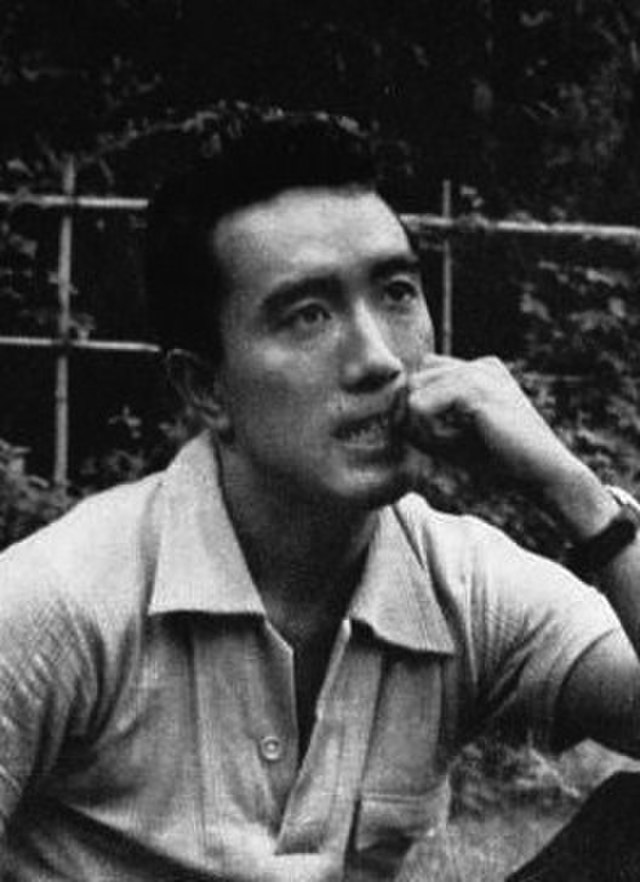
There is also a semi-autobiographical dimension to the novel. As a child, Mishima was weak, sickly, and smaller than average. He was raised during his formative years by his grandmother, who kept him indoors and forbade him from playing with other boys or engaging in rough play. Like Mizoguchi, the young Mishima was introspective, solitary, and obsessed with the ideal of beauty. Mizoguchi mentions that “when action was needed, [he] was always absorbed in words” (12), which recalls Mishima’s description of his childhood in Sun and Steel. However, rather than lashing out at society on account of his physical inferiority, Mishima sought to strengthen himself and became a bodybuilder as well as a skilled practitioner of Japanese kendo (swordsmanship).

Individuals like Mizoguchi are thus faced with a choice. They can seek either to destroy hierarchical value systems or to uphold transcendent ideals like beauty and greatness and aspire toward them.


Beauty & Destruction in Yukio Mishima’s The Temple of the Golden Pavilion

Beauty%20and%23038%3B%20Destruction%20in%20Yukio%20Mishimaand%238217%3Bs%20The%20Temple%20of%20the%20Golden%20Pavilion

Share

  • Gab

Enjoyed this article?

Be the first to leave a tip in the jar!

Instant Echeck GreenPay™

Related

  • Jared Taylor: What Rome Means to Me

  • An Interview with Endeavour:

  • Heidegger on Nietzsche, Part One

  • Finding Atlantis Part 4

  • Politics Without God

  • A Novel Approach: Roberto Bolaño’s 2666

  • Restoring American Deterrence through Innovation and Industry

  • E. M. Forster’s A Passage to India & the Indian Mentality

Tags

A. Grahambook reviewsegalitarianismFriedrich NietzscheJapanliteraturenihilismresentmentYukio Mishima

3 comments

  1. Jerry LaRue says:
    November 23, 2017 at 2:31 pm

    What a joy this was to read. By far one of the best reviews I’ve seen on this site in weeks.

    0
    0
  2. James Dunphy says:
    November 24, 2017 at 7:19 pm

    Your pieces are always good.

    0
    0
  3. Che Guava says:
    November 27, 2017 at 6:42 am

    Very good article, I only have five or six things to adding (more than one in a couple of points). Will trying not to meander too much,

    Mishima took up body-building and kendou from shame *and* because he was homosexual (not because he was ashamed of the latter). He is said to have been not very good at kendou, but as a major literary figure of the time, gained a high dan.

    The shame was from faking tuberculosis to avoid military service in the Pacific or China wars, and that is from his own words.

    Also from his own words, his own feelings towards the end of the war re. US air attacks were not unlike those he is depicting in Mizoguchi. That is not a common name, also not the real name of the arsonist monk, I have never to meet anyone with it, and is the name (Mizonoguchi, the ‘no’ part is omitted in the name, but the ‘no’ part can be omitted or written in any of three ways) of a place close to the place that Mishima chose as his own pen-surname.

    I would recommending ‘Mishima, a Life in Four Parts, by Schrader, except for parts of the Phillip ‘Glass’ soundtrack, it is very good, and parts of the soundtrack even really work.

    Final points this nochy, it was banned in Japan for a long time, his widow had it banned, and now children are complaining. Close connection of the widow to the habitual ruling party.

    However, even though he was ridiculous and ridiculed at the time, and his gay lover screwed up on ritual beheading in support (he was the other who was also dying by his own hand), Mishima’s death really was a pivot point, political assaninations by Yakuza etc. were following, I am not at all sure that was the great thing, leftists here, never showing quite the same insanity as in western places.

    0
    0

Comments are closed.

If you have a Subscriber access,
simply login first to see your comment auto-approved.

Note on comments privacy & moderation

Your email is never published nor shared.

Comments are moderated. If you don't see your comment, please be patient. If approved, it will appear here soon. Do not post your comment a second time.

    • The Remigration Movement Solidifies

      F. Roger Devlin

    • Casting Aspersions:
      The Fatal Consequences of Race-Swapped Casting, From Helen of Troy to Henry of Southampton

      Steven Tucker

      6

    • The Murder of Henry Nowack

      Millennial Woes

      15

    • Don’t Forget to Vote in Our Writer & Article of the Month Poll

      Greg Johnson

    • The Robot Hotdog Stand

      Greg Johnson

      23

    • Laughing Our Way to Victory

      Dave Chambers

      2

    • The Zodiac Killer

      Mark Gullick

      9

    • Jared Taylor: What Rome Means to Me

      Jared Taylor

    • An Interview with Endeavour:
      My Way of Life Is an Adventure!

      Ondrej Mann

      6

    • José Pedro Zúquete’s The Identitarians

      Greg Johnson

      3

    • Editor’s Update
      Fundraiser Update & How to Watch the Remigration Summit

      Greg Johnson

      5

    • The Bitter End of Western Metaphysics:
      Heidegger on Nietzsche, Part One

      Collin Cleary

      10

    • Berlin: City of Stones

      Spencer J. Quinn

      6

    • True Folk-Horror Is Horror of Your Own Folk:
      Mark Gatiss vs the Brexit Blind Dead  

      Steven Tucker

      4

    • Counter-Currents Radio Podcast No. 689
      Thomas Massie, the America 2050 Bust, the Need for Whites to Divest from America, the AI Economic Apocalypse, & Pro-White Project Pitches to Billionaires

      Counter-Currents Radio

      7

    • Nationalism This Week
      Remigration is Inevitable, Part 3

      Greg Johnson

      26

    • Why Billionaires Should Fund White Identity Politics

      Lipton Matthews

      8

    • How Cold War Two Came About

      Morris van de Camp

      5

    • Now Available for Pre-Order at a Special Price!
      Greg Johnson’s The Philosopher Is In

      Greg Johnson

    • David Zsutty’s Elevator Pitch to a Billionaire

      David M. Zsutty

      1

    • Headbanging Lite

      Mark Gullick

      5

    • White Advocacy Past and Present

      Peter Bradley

      13

    • The Lunch Wars

      David M. Zsutty

      46

    • The Russians are Coming/The Russians are Coming

      Steven Clark

      1

    • Peak Fatigue in Fort Wayne

      Gabriel Anderson

      24

    • Keith Woods’ Elevator Pitch to a Billionaire

      Keith Woods

    • The Cruelty of Kindness

      Morris van de Camp

      9

    • Predation Wearing the Mask of Civilization

      Jayant Bhandari

      13

    • The Mandalorian & Grogu

      Trevor Lynch

      24

    • Editor’s Update
      Fundraiser Update & a New $20,000 Matching Grant
      Greg Johnson & David Zsutty Discuss Thomas Massie on Counter-Currents Radio

      Greg Johnson

      2

    • How the Jews Defeated Thomas Massie—& Themselves

      David M. Zsutty

      24

    • Jared Taylor’s Elevator Pitch to a Billionaire

      Jared Taylor

      15

    • Nationalism This Week
      Remigration Is Inevitable, Part 2

      Greg Johnson

      8

    • Could Fascism Work?

      Mark Gullick

      40

    • Jonathan Bowden’s Deliverance
      Part 7

      Jonathan Bowden

    • China’s Quiet Hand:
      Influence, Infiltration, & the Western Blind Spot

      Lipton Matthews

      9

    • Counter-Currents Radio Podcast No. 688
      Tyler Dykes on Running for US Congress in South Carolina

      Counter-Currents Radio

      3

    • Lothrop Stoddard’s The Revolt Against Civilization

      Spencer J. Quinn

      14

    • Lewis Strauss Did Nothing Wrong:
      How the politics of the Atom Bomb during the early Cold War Apply to Artificial Intelligence Today

      Morris van de Camp

      14

    • The Ghost of the Confederacy

      Dave Chambers

      12

    • America’s Century of Humiliation has Begun

      Greg Johnson

      27

    • Prepare for Africans & Schizophrenics!
      Welcome to the New Canadian Military

      Gunnar Alfredsson

      6

    • Remembering Julius Evola:
      May 19, 1898–June 11, 1974

      Greg Johnson

    • About Film “From the Right”

      Karel Veliky

    • Nostalgia Ain’t What It Used To Be. . . Now It’s Racist

      Steven Tucker

      8

    • To Depose The King

      Mark Gullick

      7

    • Editor’s Update
      Tyler Dykes on Counter-Currents Radio & The Best of Trevor Lynch Now in French

      Greg Johnson

    • Nationalism This Week
      Remigration Is Inevitable

      Greg Johnson

      21

    • You’re Nicked! The Story of The Sweeney

      Mark Gullick

      12

    • The Counter-Currents Fundraiser 2026:
      Help Us Provide You With All the News That’s Unfit To Print—Because It’s Actually Worth Reading!

      Steven Tucker

      3

    • kolokol

      The Murder of Henry Nowak

      The UK authorities fear any kind of “White backlash”, as they call it. They don’t care about the...

    • kolokol

      The Murder of Henry Nowak

      It was a racially-motivated hate-crime. "Vickrum Singh Digwa" (sic) was lying. He remember it all...

    • kolokol

      Casting Aspersions

      "Lupita Nyong’o" (sic) is a ridiculous name. And she is hideously ugly. She is the antithesis of...

    • Bernie

      The Murder of Henry Nowak

      Many are saying this could be the straw that breaks the camel’s back in the UK. I certainly hope so...

    • Derek Stark

      The Zodiac Killer

      Another one is the “De Mau Mau” cult in Illinois in the 1970s, made up of black Viet Nam vets, who...

    • DM

      The Murder of Henry Nowak

      None. My only point is that it might be true that the attacker didn't remember stabbing the fellow.

    • Will Williams

      Remigration is Inevitable Part 3

      Uncle Semantic: June 1, 2026  The weebo is ryan dawson, another antiWhite prick… —Weebo?...

    • Chud

      The Murder of Henry Nowak

      Sub-continental migration appears good when the local migration industry isn't established in India...

    • Bryan

      The Murder of Henry Nowak

      What threat did an unarmed White 18-year-old present to the entitled, knife-carrying Sikh?

    • Hammerhead

      Casting Aspersions

      'These are the popular ‘soft’ things that reinforce this evil. It’s not just an abstract...

    • Will Williams

      The Zodiac Killer

      Derek Stark: June 2, 2026 …[T]here are more black serial killers per capita than white ones in the...

    • Vagrant Rightist

      The Murder of Henry Nowak

      Weren't Sikhs supposed to be the 'good ones' ? So much for that lie. Thanks MW, for the detailed...

    • Peter Quint

      The Murder of Henry Nowak

      Carry a Para-Ordnance 45 cal. sidearm everywhere like I do. 🙃

    • Peter Quint

      The Murder of Henry Nowak

      That is the same message White people in America have been getting for decades. 🙃

    • Thomas Johnson

      The Murder of Henry Nowak

      The message to white people in the UK is clear: if the nonwhite criminals don't get you, the coppers...

    • Glide Ratio 0:1

      Casting Aspersions

      Surprised you called Nyongongo Mgolo "average". As far as my eyes can see she's a black 2. Well...

    • Vagrant Rightist

      Casting Aspersions

      I'd be very surprised if Nolan himself believes in this stuff, but he knows full well his overlords...

    • Beau Albrecht

      The Robot Hotdog Stand

      Anyone remember this quote? "The simple statement that the People are not there for the sake of...

    • Greg Johnson

      The Robot Hotdog Stand

      You're arguing that a huge wave of post-AI business investment will employ the millions of people...

    • Peter Quint

      Casting Aspersions

      Great article! Sidney Sweeney would have been the best choice for Helen of Troy. Gerard Butler would...

    • Earth Day Special

      John Morgan

      12

    • A Robertson Roundup
      Remembering Wilmot Robertson
      (April 16, 1915 – July 8, 2005)

      Margot Metroland

      13

    • The Paranoid Style in White Nationalism

      Greg Johnson

      30

    • Join the Dance!

      Andrew Hamilton

      1

    • We Can’t Save the Earth Without Reducing African Birth Rates

      James Dunphy

      36

    • “I’m Not a Conspiracy Theorist, but . . .”:
      Jeffrey Epstein’s Death Gives New Life to “Conspiracy Theories”

      Greg Johnson

      22

    • Sylvia Plath: Stasis in Darkness

      Vic Olvir

      17

    • Vanguardism, Vantardism, & Mainstreaming

      Greg Johnson

      80

    • Aviation, Geography, & Race

      Charles Lindbergh

      3

    • Some Thoughts on Yule

      Collin Cleary

      4

    • Living in Truth:
      A Yuletide Homily

      Jef Costello

      7

    • John Kennedy Toole’s A Confederacy of Dunces

      Greg Johnson

      20

    • On Aleksandr Solzhenitsyn’s Warning to the West

      Spencer J. Quinn

      7

    • Elitism, British Modernism, & Wyndham Lewis

      Jonathan Bowden

      6

    • Philip K. Dick’s Do Androids Dream of Electric Sheep? as Anti-Semitic/Christian-Gnostic Allegory

      Greg Johnson

      20

    • “Conspiracy Theory” or Conspiracy?

      Andrew Hamilton

      21

    • Remembering H. P. Lovecraft
      (August 20, 1890–March 15, 1937)

      Greg Johnson

      3

    • Who Are We?
      Nordics, Aryans, & Whites

      Greg Johnson

      71

    • Remembering William Gayley Simpson
      (July 23, 1892–December 31, 1990)
      A Pleasant Afternoon with Harriet & Bill Simpson

      Margot Metroland

      18

    • Here are the Young Men
      Remembering Ian Curtis
      (July 15, 1956–May 18, 1980)

      Mark Gullick

      18

    • Percy Grainger
      Artist of the Right

      Alex Graham

      7

    • Remembering Revilo Oliver
      (July 7, 1908–August 20, 1994)

      Greg Johnson

      18

    • The Meaning of July 4th for the White Man

      Gregory Hood

      13

    • The Front National’s Evolution

      Bruno Mégret

    • Merwin K. Hart
      Forgotten American Hero & Man of the Right

      Morris van de Camp

      10

    • George Orwell’s Nineteen Eighty-Four

      Jonathan Bowden

      8

    • Carleton S. Coon
      Scientist & Reluctant White Advocate

      Morris van de Camp

      3

    • The Kwanzaa Absurdity Will Be Dwarfed by Juneteenth

      Robert Hampton

      10

    • Stravinsky

      Alex Graham

      7

    • Like the Roman:
      Remembering Enoch Powell (1912-1998)

      Mark Gullick

      23

    • Crosstown Traffic:
      Jimi Hendrix & The Post-War Rock ‘N’ Roll Revolution

      Mark Gullick

    • Slaves from the North:
      Finns & Karelians in the East European Slave Trade, 900–1600

      Lipton Matthews

      14

    • Neo-Fascism in Film
      Part 4

      Karel Veliky

      2

    • David Lean’s A Passage to India

      Spencer J. Quinn

      1

    • Elites are Essential to Development

      Lipton Matthews

      7

    • Jonathan Bowden’s Deliverance
      Part 4

      Jonathan Bowden

    • Neo-Fascism in Film
      Part 3

      Karel Veliky

      6

    • E. M. Forster’s A Passage to India & the Indian Mentality

      Spencer J. Quinn

      25

    • Jonathan Bowden’s Deliverance
      Part 3

      Jonathan Bowden

    • The Rest Is Silence
      Heidegger’s Quietism

      Mark Gullick

      2

    • Dispelling the Historical Fallacy of Indian Nationalism

      Lipton Matthews

      8

    • Neo-Fascism in Film
      Part 2

      Karel Veliky

      8

    • Jonathan Bowden’s Deliverance
      Part 2

      Jonathan Bowden

    • Life of a Klansman

      Mark Gullick

      8

    • Jonathan Bowden’s Deliverance, Part 1

      Jonathan Bowden

    • Decolonial Ideas are Holding Back Developing Countries

      Lipton Matthews

      8

    • Neo-fascism in Film, Part 1

      Karel Veliky

      21

    • Jonathan Bowden’s Onslaught, Part 8
      Divigations on Decadence

      Jonathan Bowden

    • Jonathan Bowden’s Onslaught, Part 7
      Intrigues in the National Front

      Jonathan Bowden

      1

    • Rotten to the Core

      Mark Gullick

      8

    • Strauss on Husserl’s “Philosophy as Rigorous Science”

      Greg Johnson

    • Jonathan Bowden’s Onslaught, Part 6
      Francis Bacon & Right-Wing Nihilism

      Jonathan Bowden

    • London After (& Before) Midnight:
      Aleister Crowley, The Landlord’s Worst Nightmare

      James J. O'Meara

      2

    • Jonathan Bowden’s Onslaught, Part 5
      The Post-War British Far Right

      Jonathan Bowden

    • No Rules: Rollerball

      Mark Gullick

      4

    • Jonathan Bowden’s Onslaught, Part 3
      Brett Easton Ellis’ American Psycho

      Jonathan Bowden

    • An Alternate History of the Harris Presidency

      Beau Albrecht

      5

    • The Origins of Mass Education:
      Augustina S. Paglayan’s Raised to Obey

      Francis Rockwell

      4

    • Jonathan Bowden’s Onslaught, Part 2
      Louis-Ferdinand Céline

      Jonathan Bowden

      1

    • The Four Philosophers of the Apocalypse

      Mark Gullick

      4

    • András László
    • Derek Hawthorne
    • Beau Albrecht
    • Alain de Benoist
    • Kerry Bolton
    • Jonathan Bowden
    • Collin Cleary
    • Jef Costello
    • Savitri Devi
    • Julius Evola
    • Jim Goad
    • Gregory Hood
    • Juleigh Howard-Hobson
    • Greg Johnson
    • Charles Krafft
    • Anthony M. Ludovici
    • Trevor Lynch
    • H. L. Mencken
    • J. A. Nicholl
    • James J. O’Meara
    • Christopher Pankhurst
    • Tito Perdue
    • Michael Polignano
    • Spencer J. Quinn
    • Fenek Solère
    • Irmin Vinson
    • Leo Yankevich
    • Francis Parker Yockey
    • Multiple authors
  • Editor-in-Chief

    • Greg Johnson, Ph.D.

    Featured Writers

    • Beau Albrecht
    • Gunnar Alfredsson
    • Collin Cleary, Ph.D.
    • Jef Costello
    • Morris V. de Camp
    • F. Roger Devlin, Ph.D.
    • Stephen Paul Foster, Ph.D.
    • Jim Goad
    • Alex Graham
    • Mark Gullick, Ph.D.
    • Greg Johnson, Ph.D.
    • Travis LeBlanc
    • Trevor Lynch
    • Margot Metroland
    • James J. O’Meara
    • Angelo Plume
    • Spencer J. Quinn
    • Fred Reed
    • Clarissa Schnabel
    • Michael Walker
    • David M. Zsutty

    Frequent Writers

    • Asier Abadroa
    • Aquilonius
    • Alain de Benoist
    • Kerry Bolton, Ph.D.
    • Dave Chambers
    • Steven Clark
    • James Dunphy
    • Endeavour
    • Richard Houck
    • Jason Kessler
    • Titus Livius
    • Ondrej Mann
    • Lipton Matthews
    • Mark Mazari
    • John Morgan
    • Jaroslav Ostrogniew
    • Kathryn S.
    • Christian Secor
    • Anne Wilson Smith
    • Thomas Steuben
    • William De Vere
    • Kenneth Vinther
    • Max West

    Classic Authors

    • Maurice Bardèche
    • Jonathan Bowden
    • Julius Evola
    • Guillaume Faye
    • Ernst Jünger
    • Kevin MacDonald, Ph.D.
    • D. H. Lawrence
    • Charles Lindbergh
    • Jack London
    • H. P. Lovecraft
    • Anthony M. Ludovici
    • Sir Oswald Mosley
    • National Vanguard
    • Friedrich Nietzsche
    • Revilo Oliver
    • William Pierce
    • Ezra Pound
    • Saint-Loup
    • Savitri Devi
    • Carl Schmitt
    • Miguel Serrano
    • Oswald Spengler
    • P. R. Stephensen
    • Jean Thiriart
    • John Tyndall
    • Dominique Venner
    • Leo Yankevich
    • Francis Parker Yockey

    Other Authors

    • Howe Abbott-Hiss
    • Michael Bell
    • Giles Corey
    • Jack Donovan
    • Richardo Duchesne, Ph.D.
    • Emile Durand
    • Guillaume Durocher
    • Mark Dyal
    • Tom Goodroch
    • Andrew Hamilton
    • Robert Hampton
    • Huntley Haverstock
    • Derek Hawthorne
    • Gregory Hood
    • Juleigh Howard-Hobson
    • Alexander Jacob
    • Ruuben Kaalep
    • Tobias Langdon
    • Julian Langness
    • Patrick Le Brun
    • G A Malvicini
    • John Michael McCloughlin
    • Millennial Woes
    • Michael O’Meara
    • Christopher Pankhurst
    • Michael Polignano
    • J. J. Przybylski
    • Quintilian
    • Edouard Rix
    • C. B. Robertson
    • C. F. Robinson
    • Herve Ryssen
    • Alan Smithee
    • Fenek Solere
    • Ann Sterzinger
    • Robert Steuckers
    • Tomislav Sunic
    • Donald Thoresen
    • Marian Van Court
    • Irmin Vinson
    • Book Reviews
    • Movie Reviews
    • TV Reviews
    • Music Reviews
    • Art Criticism
    • Graphic Novels & Comics
    • Video Game Reviews
    • Fiction
    • Poems
    • Interviews
    • Videos
    • English Translations
    • Other Languages
      • Arabic
      • Bulgarian
      • Croatian
      • Czech
      • Danish
      • Dutch
      • Estonian
      • Finnish
      • French
      • German
      • Greek
      • Hungarian
      • Italian
      • Lithuanian
      • Norwegian
      • Polish
      • Portuguese
      • Romanian
      • Russian
      • Slovak
      • Spanish
      • Swedish
      • Ukrainian
    • Commemorations
    • Why We Write
  • Archives
  • Top 100 Commenters
  • The Looney Bin
Sponsored Links
Europa.com Above Time Coffee Antelope Hill Publishing Paul Waggener IHR-Store Spencer J. Quinn American Renaissance Jim Goad The Occidental Observer
Donate Now Mailing list
Books for sale
  • The Philosopher Is In
  • Sexual Utopia in Power (Expanded Edition)
  • In Defense of Prejudice
  • Loving Our Own
  • Tyranny & Wisdom
  • The Populist Moment
  • Is America Doomed?
  • To all books
Copyright © 2026 Counter-Currents Publishing, Ltd.

Paywall Access


Please enter your email address.

Lost your password?

Edit your comment

Writer & Article of the Month May 2026

Select a writer and one of their articles.

1 vote
2 votes
1 vote
2 votes
1 vote
2 votes
1 vote
1 vote
1 vote
2 votes
1 vote
1 vote