Counter-Currents
  • Advertise
  • Private Events
  • T&C
  • About
  • Contact
  • RSS
    • Main feed
    • Podcast feed
    • Videos feed
    • Comments feed
  • Welcome
  • Webzine
  • Books
  • Merch
  • Podcasts
  • Videos
  • Donate
  • Patrons
  • Subscribe
  • Crypto

LEVEL2

Donate Now Mailing list

Writers of May

(2 votes) Morris van de Camp David M. Zsutty Derek Stark Jayant Bhandari Greg Johnson

Articles of May

The Lunch Wars by David M. Zsutty Heidegger on Nietzsche, Part One by Collin Cleary 2 votes
  • Welcome
  • Webzine
  • Books
  • Merch
  • Podcasts
  • Videos
  • Donate
  • Patrons
  • Subscribe
  • Crypto
    • Editor’s Update
      Rob Rundo on Counter-Currents Radio, Fundraiser Update, & a New $20,000 Matching Grant

      Greg Johnson

    • The Bitter End of Western Metaphysics:
      Heidegger on Nietzsche, Part Three

      Collin Cleary

      10

    • Uncivil War

      Mark Gullick

      32

    • Exclusive Interview with Karel Veliky:
      The Final Chapter in the Film Series! Part II

      Ondrej Mann

      2

    • Happy Birthday to Us!

      Greg Johnson

      6

    • Zsutty’s Maximum

      David M. Zsutty

      15

    • Exclusive Interview with Karel Veliky:
      The Final Chapter in the Film Series! Part I

      Ondrej Mann

      2

    • The Union Jackal, June 2026

      Mark Gullick

      23

    • The Inferiority Behind Immigrant Superiority

      Jayant Bhandari

      15

    • Counter-Currents Radio Podcast No. 690
      Greg Johnson & David Zsutty Discuss Current Things: AI, Henry Nowak, the Iran Crisis, & More

      Counter-Currents Radio

      5

    • Collin Cleary: What Rome Means to Me

      Collin Cleary

      4

    • Paul Krugman: Closet Bolshevik

      Spencer J. Quinn

      19

    • Fugue of Ideas:
      Ibram X. Kendi’s Chain of Ideas

      Greg Johnson

      18

    • Based Blacks

      Lipton Matthews

      12

    • Black Intellectual Fatigue

      Derek Stark

      38

    • Why White Advocates Should Avoid “Based Blacks”

      Dani Vypont

      29

    • Nietzsche & Race

      Mark Gullick

    • Editor’s Update
      Rob Rundo Rescheduled to Next Week on Counter-Currents Radio;
      Tonight Greg Johnson & David Zsutty Answer Your Questions;
      Fundraiser Update & a New $20,000 Matching Grant

      Greg Johnson

    • The Counter-Currents 2026 Fundraiser
      Lifetime Subscriber Welcome Packages Extended

      Greg Johnson

    • Nationalism This Week
      Who’s Looking Back?

      Greg Johnson

      29

    • China’s Threat to American Security:
      Food, Farmland, Foreign Control, & Energy Policy

      Lipton Matthews

      5

    • The Bitter End of Western Metaphysics:
      Heidegger on Nietzsche, Part Two

      Collin Cleary

      16

    • The Killing of Henry Nowak

      Mark Gullick

      38

    • The Crisis of Chinese Technology Thieves

      Morris van de Camp

      1

    • The Strange World of Gender Bender Fiction:
      & What This Genre Tells Us About Autosexuality

      Dani Vypont

      3

    • Watching the Watchers:
      The Dark Triad Question

      David M. Zsutty

      14

    • The Remigration Movement Solidifies

      F. Roger Devlin

      1

    • Casting Aspersions:
      The Fatal Consequences of Race-Swapped Casting, From Helen of Troy to Henry of Southampton

      Steven Tucker

      20

    • The Murder of Henry Nowak

      Millennial Woes

      23

    • Don’t Forget to Vote in Our Writer & Article of the Month Poll

      Greg Johnson

    • The Robot Hotdog Stand

      Greg Johnson

      37

    • Laughing Our Way to Victory

      Dave Chambers

      7

    • The Zodiac Killer

      Mark Gullick

      11

    • Jared Taylor: What Rome Means to Me

      Jared Taylor

      1

    • An Interview with Endeavour:
      My Way of Life Is an Adventure!

      Ondrej Mann

      6

    • José Pedro Zúquete’s The Identitarians

      Greg Johnson

      3

    • Editor’s Update
      Fundraiser Update & How to Watch the Remigration Summit

      Greg Johnson

      5

    • The Bitter End of Western Metaphysics:
      Heidegger on Nietzsche, Part One

      Collin Cleary

      12

    • Berlin: City of Stones

      Spencer J. Quinn

      6

    • True Folk-Horror Is Horror of Your Own Folk:
      Mark Gatiss vs the Brexit Blind Dead  

      Steven Tucker

      4

    • Counter-Currents Radio Podcast No. 689
      Thomas Massie, the America 2050 Bust, the Need for Whites to Divest from America, the AI Economic Apocalypse, & Pro-White Project Pitches to Billionaires

      Counter-Currents Radio

      7

    • Nationalism This Week
      Remigration is Inevitable, Part 3

      Greg Johnson

      27

    • Why Billionaires Should Fund White Identity Politics

      Lipton Matthews

      8

    • How Cold War Two Came About

      Morris van de Camp

      5

    • Now Available for Pre-Order at a Special Price!
      Greg Johnson’s The Philosopher Is In

      Greg Johnson

    • David Zsutty’s Elevator Pitch to a Billionaire

      David M. Zsutty

      1

    • Headbanging Lite

      Mark Gullick

      5

    • White Advocacy Past and Present

      Peter Bradley

      13

    • The Lunch Wars

      David M. Zsutty

      47

    • The Russians are Coming/The Russians are Coming

      Steven Clark

      1

    • Taig77

      Uncivil War

      "...the Republicans wanted Northern Ireland to be independent." will come as a great surprise to...

    • Collin Cleary

      Heidegger on Nietzsche Part Three

      I have not heard of the Beattie dissertation, or of any discussion of it. The Mansfield book is also...

    • Collin Cleary

      Heidegger on Nietzsche Part Three

      I believe in objective truth, just not the Christian claims about objective truth. Truth is what...

    • Collin Cleary

      Heidegger on Nietzsche Part Three

      Thank you very much!

    • tempus

      Why White Advocates Should Avoid “Based Blacks”

      As for lending money, that also goes for Whites. Never lend more than you are willing to make a gift...

    • tempus

      Why White Advocates Should Avoid “Based Blacks”

      The only person other than my brother to whom I have lent money who ever paid me back was a Black...

    • tempus

      Why White Advocates Should Avoid “Based Blacks”

      The Old South was nowhere near as anti-black as the Old North. Part of the Republican platform on...

    • tempus

      Black Intellectual Fatigue

      Hopefully, more Whites are ceasing to be racial nihilists and are abandoning the new morality (...

    • Jaego

      Uncivil War

      The Orthodox ideal - just like every other denomination - is people of all races worshiping together...

    • Jaego

      Uncivil War

      Isolate the police. Family or friends, no matter. Disown them. Maybe in time people will forgive...

    • Jaego

      Uncivil War

      Tikkun Olam. Repair of the World. Enabling mass immigration is a mitzvah or holy deed in the Repair...

    • I Do Not Surrender, My Hand Is Red.

      Uncivil War

      This is very good advice Joe. Very good.

    • NIdahoOrthodox

      Uncivil War

      How many tens of thousands of automatic weapons and tons of Semtex are in hidden caches in the North...

    • kolokol

      Uncivil War

      Stephen Ogilvie is the latest example of a decent, hard-working White person, killed by a useless...

    • Dr. X

      Uncivil War

      Great writeup. One error- I doubt the Republic of Ireland police (Garda) were responding on the...

    • kolokol

      Uncivil War

      This is a very good start. May it continue and accelerate, until all the invaders have been expelled...

    • Observer

      Heidegger on Nietzsche Part Three

      Ouch. Well, I had used the bullet formatting in the text box to break it up a bit... but it looks...

    • Gabe

      Uncivil War

      Scots-Irish is an American term. It's true that Presbyterians and others came from Scotland to...

    • Gabe

      Uncivil War

      I was just going to write that myself. The Garda Siochána, or guards, is a term they use in the...

    • Ondrej Mann

      Exclusive Interview with Karel Veliky Part 2

      Thanks for the cultural tip. I’m currently preparing an interview for CC with the Austrian band...

    • Earth Day Special

      John Morgan

      12

    • A Robertson Roundup
      Remembering Wilmot Robertson
      (April 16, 1915 – July 8, 2005)

      Margot Metroland

      13

    • The Paranoid Style in White Nationalism

      Greg Johnson

      30

    • Join the Dance!

      Andrew Hamilton

      1

    • We Can’t Save the Earth Without Reducing African Birth Rates

      James Dunphy

      36

    • “I’m Not a Conspiracy Theorist, but . . .”:
      Jeffrey Epstein’s Death Gives New Life to “Conspiracy Theories”

      Greg Johnson

      22

    • Sylvia Plath: Stasis in Darkness

      Vic Olvir

      17

    • Vanguardism, Vantardism, & Mainstreaming

      Greg Johnson

      80

    • Aviation, Geography, & Race

      Charles Lindbergh

      3

    • Some Thoughts on Yule

      Collin Cleary

      4

    • Living in Truth:
      A Yuletide Homily

      Jef Costello

      7

    • John Kennedy Toole’s A Confederacy of Dunces

      Greg Johnson

      20

    • On Aleksandr Solzhenitsyn’s Warning to the West

      Spencer J. Quinn

      7

    • Elitism, British Modernism, & Wyndham Lewis

      Jonathan Bowden

      6

    • Philip K. Dick’s Do Androids Dream of Electric Sheep? as Anti-Semitic/Christian-Gnostic Allegory

      Greg Johnson

      20

    • “Conspiracy Theory” or Conspiracy?

      Andrew Hamilton

      21

    • Remembering H. P. Lovecraft
      (August 20, 1890–March 15, 1937)

      Greg Johnson

      3

    • Who Are We?
      Nordics, Aryans, & Whites

      Greg Johnson

      71

    • Remembering William Gayley Simpson
      (July 23, 1892–December 31, 1990)
      A Pleasant Afternoon with Harriet & Bill Simpson

      Margot Metroland

      18

    • Here are the Young Men
      Remembering Ian Curtis
      (July 15, 1956–May 18, 1980)

      Mark Gullick

      18

    • Percy Grainger
      Artist of the Right

      Alex Graham

      7

    • Remembering Revilo Oliver
      (July 7, 1908–August 20, 1994)

      Greg Johnson

      18

    • The Meaning of July 4th for the White Man

      Gregory Hood

      13

    • The Front National’s Evolution

      Bruno Mégret

    • Merwin K. Hart
      Forgotten American Hero & Man of the Right

      Morris van de Camp

      10

    • George Orwell’s Nineteen Eighty-Four

      Jonathan Bowden

      8

    • Carleton S. Coon
      Scientist & Reluctant White Advocate

      Morris van de Camp

      3

    • The Kwanzaa Absurdity Will Be Dwarfed by Juneteenth

      Robert Hampton

      10

    • Stravinsky

      Alex Graham

      7

    • Like the Roman:
      Remembering Enoch Powell (1912-1998)

      Mark Gullick

      23

    • Jonathan Bowden’s Deliverance
      Part 6

      Jonathan Bowden

    • Do You Want to Play a Game?

      Mark Gullick

      1

    • Sexually Incontinent on the Indian Subcontinent:
      Who Rapes More Animals, Indians or Pakistanis? The Battle Continues!

      Steven Tucker

      3

    • Neo-Fascism in Film
      Part 5

      Karel Veliky

      15

    • The Game of Tarot

      Mark Gullick

      2

    • Institutions Cannot Be Transplanted

      Jayant Bhandari

      5

    • Jonathan Bowden’s Deliverance
      Part 5

      Jonathan Bowden

    • Crosstown Traffic:
      Jimi Hendrix & The Post-War Rock ‘N’ Roll Revolution

      Mark Gullick

      1

    • Slaves from the North:
      Finns & Karelians in the East European Slave Trade, 900–1600

      Lipton Matthews

      14

    • Neo-Fascism in Film
      Part 4

      Karel Veliky

      2

    • David Lean’s A Passage to India

      Spencer J. Quinn

      1

    • Elites are Essential to Development

      Lipton Matthews

      7

    • Jonathan Bowden’s Deliverance
      Part 4

      Jonathan Bowden

    • Neo-Fascism in Film
      Part 3

      Karel Veliky

      6

    • E. M. Forster’s A Passage to India & the Indian Mentality

      Spencer J. Quinn

      25

    • Jonathan Bowden’s Deliverance
      Part 3

      Jonathan Bowden

    • The Rest Is Silence
      Heidegger’s Quietism

      Mark Gullick

      2

    • Dispelling the Historical Fallacy of Indian Nationalism

      Lipton Matthews

      8

    • Neo-Fascism in Film
      Part 2

      Karel Veliky

      8

    • Jonathan Bowden’s Deliverance
      Part 2

      Jonathan Bowden

    • Life of a Klansman

      Mark Gullick

      8

    • Jonathan Bowden’s Deliverance, Part 1

      Jonathan Bowden

    • Decolonial Ideas are Holding Back Developing Countries

      Lipton Matthews

      8

    • Neo-fascism in Film, Part 1

      Karel Veliky

      21

    • Jonathan Bowden’s Onslaught, Part 8
      Divigations on Decadence

      Jonathan Bowden

    • Jonathan Bowden’s Onslaught, Part 7
      Intrigues in the National Front

      Jonathan Bowden

      1

    • Rotten to the Core

      Mark Gullick

      8

    • Strauss on Husserl’s “Philosophy as Rigorous Science”

      Greg Johnson

    • Jonathan Bowden’s Onslaught, Part 6
      Francis Bacon & Right-Wing Nihilism

      Jonathan Bowden

    • London After (& Before) Midnight:
      Aleister Crowley, The Landlord’s Worst Nightmare

      James J. O'Meara

      2

    • András László
    • Derek Hawthorne
    • Beau Albrecht
    • Alain de Benoist
    • Kerry Bolton
    • Jonathan Bowden
    • Collin Cleary
    • Jef Costello
    • Savitri Devi
    • Julius Evola
    • Jim Goad
    • Gregory Hood
    • Juleigh Howard-Hobson
    • Greg Johnson
    • Charles Krafft
    • Anthony M. Ludovici
    • Trevor Lynch
    • H. L. Mencken
    • J. A. Nicholl
    • James J. O’Meara
    • Christopher Pankhurst
    • Tito Perdue
    • Michael Polignano
    • Spencer J. Quinn
    • Fenek Solère
    • Irmin Vinson
    • Leo Yankevich
    • Francis Parker Yockey
    • Multiple authors
  • Editor-in-Chief

    • Greg Johnson, Ph.D.

    Featured Writers

    • Beau Albrecht
    • Gunnar Alfredsson
    • Collin Cleary, Ph.D.
    • Jef Costello
    • Morris V. de Camp
    • F. Roger Devlin, Ph.D.
    • Stephen Paul Foster, Ph.D.
    • Jim Goad
    • Alex Graham
    • Mark Gullick, Ph.D.
    • Greg Johnson, Ph.D.
    • Travis LeBlanc
    • Trevor Lynch
    • Margot Metroland
    • James J. O’Meara
    • Angelo Plume
    • Spencer J. Quinn
    • Fred Reed
    • Clarissa Schnabel
    • Michael Walker
    • David M. Zsutty

    Frequent Writers

    • Asier Abadroa
    • Aquilonius
    • Alain de Benoist
    • Kerry Bolton, Ph.D.
    • Dave Chambers
    • Steven Clark
    • James Dunphy
    • Endeavour
    • Richard Houck
    • Jason Kessler
    • Titus Livius
    • Ondrej Mann
    • Lipton Matthews
    • Mark Mazari
    • John Morgan
    • Jaroslav Ostrogniew
    • Kathryn S.
    • Christian Secor
    • Anne Wilson Smith
    • Thomas Steuben
    • William De Vere
    • Kenneth Vinther
    • Max West

    Classic Authors

    • Maurice Bardèche
    • Jonathan Bowden
    • Julius Evola
    • Guillaume Faye
    • Ernst Jünger
    • Kevin MacDonald, Ph.D.
    • D. H. Lawrence
    • Charles Lindbergh
    • Jack London
    • H. P. Lovecraft
    • Anthony M. Ludovici
    • Sir Oswald Mosley
    • National Vanguard
    • Friedrich Nietzsche
    • Revilo Oliver
    • William Pierce
    • Ezra Pound
    • Saint-Loup
    • Savitri Devi
    • Carl Schmitt
    • Miguel Serrano
    • Oswald Spengler
    • P. R. Stephensen
    • Jean Thiriart
    • John Tyndall
    • Dominique Venner
    • Leo Yankevich
    • Francis Parker Yockey

    Other Authors

    • Howe Abbott-Hiss
    • Michael Bell
    • Giles Corey
    • Jack Donovan
    • Richardo Duchesne, Ph.D.
    • Emile Durand
    • Guillaume Durocher
    • Mark Dyal
    • Tom Goodroch
    • Andrew Hamilton
    • Robert Hampton
    • Huntley Haverstock
    • Derek Hawthorne
    • Gregory Hood
    • Juleigh Howard-Hobson
    • Alexander Jacob
    • Ruuben Kaalep
    • Tobias Langdon
    • Julian Langness
    • Patrick Le Brun
    • G A Malvicini
    • John Michael McCloughlin
    • Millennial Woes
    • Michael O’Meara
    • Christopher Pankhurst
    • Michael Polignano
    • J. J. Przybylski
    • Quintilian
    • Edouard Rix
    • C. B. Robertson
    • C. F. Robinson
    • Herve Ryssen
    • Alan Smithee
    • Fenek Solere
    • Ann Sterzinger
    • Robert Steuckers
    • Tomislav Sunic
    • Donald Thoresen
    • Marian Van Court
    • Irmin Vinson
    • Book Reviews
    • Movie Reviews
    • TV Reviews
    • Music Reviews
    • Art Criticism
    • Graphic Novels & Comics
    • Video Game Reviews
    • Fiction
    • Poems
    • Interviews
    • Videos
    • English Translations
    • Other Languages
      • Arabic
      • Bulgarian
      • Croatian
      • Czech
      • Danish
      • Dutch
      • Estonian
      • Finnish
      • French
      • German
      • Greek
      • Hungarian
      • Italian
      • Lithuanian
      • Norwegian
      • Polish
      • Portuguese
      • Romanian
      • Russian
      • Slovak
      • Spanish
      • Swedish
      • Ukrainian
    • Commemorations
    • Why We Write
  • Archives
  • Top 100 Commenters
  • The Looney Bin
  • Advertise
  • Private Events
  • T&C
  • About
  • Contact
  • RSS
    • Main feed
    • Podcast feed
    • Videos feed
    • Comments feed
Sponsored Links
Europa.com Above Time Coffee Antelope Hill Publishing Paul Waggener IHR-Store Spencer J. Quinn American Renaissance Jim Goad The Occidental Observer
Print March 13, 2026 4 comments

The Four Philosophers of the Apocalypse

Mark Gullick

3,733 words

“Many no longer doubt the possibility of a world crisis. . .” These words seem entirely appropriate for our current interesting times, but were actually written almost exactly a hundred years ago. For the generation which produced the author, the great French metaphysician René Guénon, they would only have to wait just over a decade for their crisis, which took the form of World War 2. What will our crisis be?

Predicting the future is always easier if you understand the present. It seems we are due our crisis, or even crises. Guillaume Faye, the French nouvelle droitiste, wrote of a “convergence of catastrophes,” but was clear on the immediate future for Europe:

We are returning to the archaic, that is, the eternal condition of mankind, which the brief parenthesis of ‘modernity’ made us forget, in other words, the rivalry of peoples, of ethnic and cultural blocs and of civilizations.

The way Europe is headed in the short term, Faye seems to have called it correctly. The coming crisis will unquestionably involve non-battlefield violence, and the results of the carnage may surprise the elites. Any attempt by them to implement a “Great Reset” will look rather feeble if the deep, atavistic, Jungian collective unconscious of white Western mankind decides to have one of its own. White Western men have yet to fight back, an eventuality we await with interest and impatience.

But, whatever our immediate fate, and even if we don’t have our very own world war, it is important to understand how the West got to where it is. I have chosen four 20th-century writers: a Russian, a Frenchman, and two Americans, who all offer very different perspectives concerning what led the West down the sorry path it has followed. I have arranged them in a particular order, which I’ll try to make clear at the end. But if we need to understand our own decline—which can scarcely be denied—then we need to understand “managing decline,” in the words of Margaret Thatcher’s Chancellor in 1984, Sir Geoffrey Howe, when the Iron Lady asked him what he thought the task of government was. And if we want to understand managing decline, we need to understand management, and therefore we should begin with the managerial revolution.

Managing Decline: James Burnham

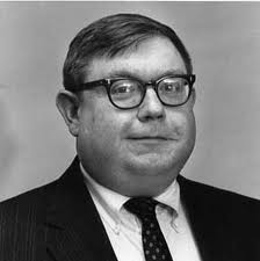
American philosopher and political theorist James Burnham was one of the leading lights of the New York political scene from the 1930s to the 1950s. He edited William F. Buckley’s National Review, as well as being a leading academic, heading the Philosophy Department at the New York University. Despite enthusiastic recognition in his field, however, and President Reagan awarding him a Congressional medal in 1983, when Burnham passed quietly away in 1987 the New York Times didn’t even run an obituary. This shows precisely how both the American Left and Right viewed a man who exposed a founding stratagem of the ruling elites which today dominates Western politics, Managerialism.

The most curious thing about Burnham was his politics, or rather his political change of direction. His first book, 1931’s An Introduction to Philosophical Analysis, opened a decade in which Burnham was an enthusiastic Trotskyite. Ten years later, he suddenly renounced Communism and denounced the Soviet Union before publishing The Managerial Revolution (MR) in 1941. This profound book has always been an outlier for the Right, on the radar but not fully appreciated, but its time has certainly come round when we observe the manner in which we are governed in the West.

Burnham’s sudden U-turn was philosophically precise. Marxism and Socialist revolution, he wrote in MR, “takes its place with the other speculative metaphysics of the 19th century”. This is not to claim, however, that Marxism’s arch-enemy, capitalism, will rush to fill the void. That said, in a modified form, capitalism has produced the current managerial class:

The theory of the managerial revolution asserts that… modern society has been organized through a certain set of economic, social, and political institutions which we call capitalist… [and we] find that a particular group or class of persons – the capitalists or bourgeoisie – is the dominant or ruling class…

This new ruling class is that of the managers. Whereas the feudal system required no management as we understand the term, and the capitalist was his own master, the managerial revolution directly transplants managerial technique from production to government:

We may often recognize [the managerial class] as ‘production managers’, operating executives, superintendents, administrative engineers, supervisory technicians; or, in government… as administrators, commissioners, bureau heads and so on.

While the remnants of capitalism remain, “managerial society has taken its place.”

While “management” has a sense of the organized and smooth running of a business, in political terms, although it can function in a non-totalitarian society, it tends to ally itself with totalitarianism. Thus:

Stalin and Hitler prepare for a new political turn more or less as a production manager prepares for getting out a new model on his assembly line.

It can easily be seen how managerialism tends away from the human and natural into coercion and rigid procedural guidelines which must be adhered to. And it is not confined to one or the other side of the 20th century’s major political schism:

Fascist and communist ideologies denounce in the same words the ‘chaos’ and ‘anarchy’ of capitalism. They conceive of the organization of the state of the future, their state, exactly along the lines on which a manager, an engineer, organizes a factory.

Welcome to the machine, indeed. The Russian Revolution, writes Burnham (and he writes as an ex-champion of the Soviet Union) “was not a socialist revolution, but a managerial one.”

Anyone who has ever worked within a line-management structure will have noted how much time is wasted on simply keeping the system going. Reports, meetings, company policies, and endless management-worker interface have been joined in recent times by DEI and its associated time-wasting exercises, and it is not difficult to see an analogue with modern governance, as “more and more of the control over production, both within the area of private enterprise and in the state, goes into the hands of the managers.”

If we pay close attention to the language used in the media, both mainstream and new, we note certain words and phrases appear and disappear like fireworks; they have their moment, burst, fade, and die. All media, legacy and dissident, are woefully philosophically illiterate, and although the concept of “managerialism” is beginning to dawn, and the term “managerial” applied to current Western political practice, the man who first anatomized the managerial revolution is seldom if ever cited. The book of the same name is a manual of technocracy, and essential reading for those wishing to understand the managerial style prevalent across the West and who wish to chart the gradual move away from the organic, natural formation of both business and state to the control-and-command model we see today.

Two-Tier Policing: Samuel T. Francis

Samuel T. Francis, once described as “the philosopher-king of the radical Right” is best known for his theory of anarcho-tyranny. Simply put, this involves policing by the state in such a way as to persecute the law-abiding while allowing lawbreakers to operate unimpeded. In Britain, ever since ex-Home Secretary Suella Braverman coined the phrase, anarcho-tyranny has been re-branded as “two-tier policing,” but at its center is still Francis’ theory.

Sam Francis had a bumpy ride during his career as a political journalist and thinker. Fired from his editorial post at The Washington Times after supposedly racist remarks made at a conference, he went onto become a leading theorist of the Right. His theory of anarcho-tyranny describes the division between “the criminalization of the law-abiding and innocent” and a society in which, at the same time, “carjackers, rapists and killers walk free on parole.” This inversion of the justice system can be seen today in Britain—and across Europe—on a daily basis, and one could pick examples at random all of which fit Francis’ template. It is anarcho-tyranny, for example, when a woman receives a longer jail sentence for insulting her rapist on social media than her attacker received for raping her. This happened very recently in Germany.

Ireland has been particularly hard hit by this deliberately malicious policing. I recently watched a video of a migrant man in Dublin, armed with some variety of butcher’s knife and swinging away at ordinary, terrified citizens like some scimitar-wielding barbarian. This goes on for some minutes (here, from around 4:00) without any sign of the Garda Siochána, the Irish police, despite taking place round the corner from a police station. However, when a pastor and teacher, Enoch Burke, recently passed 600 days in jail for refusing to use gender pronouns for the students he taught, his sister and mother complained in no uncertain terms in the courtroom. Seven Gardia officers were dispatched to their house to arrest them, and they were each given two weeks in jail for contempt of court. The two incidents, seen together, are a perfect example of Francis’ anarcho-tyranny.

A key essay by Francis is Anarcho-Tyranny, USA it is noteworthy that what was taking place in America over 30 years ago is now in full operation in the UK. Referring to the judicial system in North Carolina, and a cap placed on the number of prison inmates, anarcho-tyranny can be seen working at both ends of incarceration:

Most of the less dangerous criminals have already been turned loose, and now the prison system must release public enemies even more dangerous than drivers who do not buckle their seat belts.

The UK, accelerated by the Starmer government, has been consistently releasing dangerous criminals, apparently to free up prison space for some of the 12,000-plus British citizens arrested annually for social media comments or reposts. At the philosophical level, Francis views anarcho-tyranny as. . .

a kind of Hegelian synthesis of what appear to be dialectical opposites: the combination of oppressive government power against the innocent and the law-abiding and, simultaneously, a grotesque paralysis of the ability or the will to use that power to carry out basic public duties such as protection or public safety.

And, while the astounding increase in technology available to police forces could enable them to reduce all crime significantly, it is weaponized solely to arrest the easy prey, while more serious crime goes undetected:

[W]hile the police cannot do much about murderers, rapists, and robbers, they are geniuses at nabbing less serious lawbreakers. They can crack down on tax-dodgers and speeders, jaywalkers and pornography patrons, seat belt non-bucklers and epithet-emitters, gun owners and graffiti-scratchers.

This is completely familiar to anyone currently following British politics and its judiciary. This is a country where a mother can receive 31 months for a Facebook post, but an immigrant criminal avoids deportation because his son does not like the taste of “chicken nuggets” in their home country of Albania. That seems like an outtake from The Babylon Bee, but it very much happened.

When Sir Robert Peel brought the British police into being in 1829, he stressed that the police were the people, and the people were the police. The first (and last?) man to have effectively policed Britain would weep if he could see the para-military unit which exists today, and is increasingly bent on ignoring serious crime while intimidating and imprisoning those who commit at best misdemeanors. Francis could be describing Britain’s current judicial strategy in “its refusal to enforce the laws it has already enacted and to enact more laws that have no effect on real crime and that further criminalize the innocent or restrict their rights.”

So, we now have anarcho-tyranny in the UK, and we can’t say we weren’t warned.

From Russia With Love: Yuri Bezmenov

In 1969, a Muscovite named Yuri Bezmenov got on a plane from the Soviet Union to America. It was a one-way flight, and Bezmenov became one of the USSR’s most famous defectors to the West. He was re-named Thomas Schumann by the CIA, and was relocated to Canada, whose government were not exactly overjoyed at their new resident. Describing the defector as a “chaos agent,” Western governments did not want to hear what Bezmenov had to say about his former home, and the KGB with whom he had links. They still don’t, although for the rest of us, Bezmenov’s message is both vital and desperate.

So relieved was Bezmenov to have escaped what was then Leonid Brezhnev’s Soviet Union, that he penned a “Love-Letter to America.” In this, as well as a short autobiography, Bezmenov outlined a political aspect of the Communist regime which, he warned, was coming to the West. It so accurately depicts modern Britain that Bezmenov’s name should be on the lips of every journalist. Again, he is seldom if ever mentioned by any but a few on the Dissident Right.

Bezmenov warned of a four-stage process used to subvert a country or society from within:

Demoralization—As an ex-KGB operative who had defected, Bezmenov anatomized demoralization in terms of what the Russian secret service called “Active Measures.” These include psychological warfare, ideological aggression, and propaganda warfare. All of these are currently very active in the UK, and the British deep state is currently using Islam to demoralize the British people. So far this month, we have seen a new definition of “Islamophobia” (an invented word) which will criminalize any criticism of Muslims or Islam, a threat to dog ownership (because Muslims don’t like dogs), and the announcement that famous white British figures—including Churchill—are to be removed from banknotes. They are, apparently, “divisive.” The only omission Bezmenov is guilty of is that of race as a factor, and he could not have seen that in 1970. The British authorities are now pumping out propaganda to do with aggressive racism. In every video, cartoon, or TV program that deals with racism, the aggressor is always white.

De-stabilization—This works in part by using Francis’ theory of anarcho-tyranny noted above. Bezmenov describes a focusing on the “essentials;” “The internal power structures of a target nation; the nation’s foreign relations; economy and social fiber.”

The aim is to make people feel unsure about whether they are breaking the law, and to gradually increase various strictures and censorships concerning what can and cannot be said concerning race (again, this is a modern element to Bezmenov’s program he could not have foreseen, so swift has the influx of hostile non-whites into the West been since his death in 1993). Modern British examples are never far away, and Scotland recently gave a good example of de-stabilization. The Scottish police have refused to answer requests for data concerning criminal activity committed by migrants at a Glasgow hotel in which they are being housed at tax-payer expense. The reason they gave for withholding the information is that such a divulgence would “heighten community tensions.” Placing a migrant hotel in the middle of a busy city is, of course, specially designed to heighten community tensions. The resultant crime-wave the authorities knew perfectly well would follow “heightens community tensions.” It is designed to. Finally, stating that the release of crime data would heighten tensions indicates that the data is not good. If this is not the de-stabilization of a community by introducing another one, it is difficult to say what is.

Crisis—Bezmenov claimed in 1970 that “It may take only 2 to 6 months to bring America to the same situation which now exists South of the border in Central America.” Radicals and sleepers come to life, and the native people will be so confused in the ensuing ideologically led carnage they will welcome strong leaders, who will “be given… almost unlimited ‘emergency powers.’” The latest major crisis in the UK—and the West as a whole—was the Covid-19 “pandemic” which was nothing of the sort. The manufacture of this “crisis” had several elements. The NHS (National Health Service), for example, has still not explained the drop in influenza cases during the first winter of Covid. The flu figures didn’t just drop; they dropped to zero. No one caught flu. According to the government, they caught Covid instead. “Crisis” is portrayed as some external force against which the government is a last line of defense, when in fact Covid was entirely the intentional project of Western globalist actor-governments.

Normalization—After the crisis, the government will seek to “normalize” the situation to the detriment of the host population. The term “normalization,” Bezmenov writes, was “borrowed from the Soviet propaganda of 1968.” This was the year of the “fraternal” invasion of Czechoslovakia, after which normalization ensured that “the vanquished country was brought by force into the normal state of socialism; namely, subjugation.” Once again, times have changed since the last days of the Soviet Union. There is no need for an air and ground military invasion now. In the UK, the invasion needs only hundreds of dinghies with outboard motors, and willing “people-smuggling gangs” (in actual fact, aided and abetted by NGOs) to subjugate the nation. This will not be to the benefit of the populace, but will mean the introduction of various new laws designed to restrict both freedom of speech and freedom of movement.

A lengthy interview with Bezmenov from 1984 can be seen here. It gives the full outline of the four stages of subversion from within found in the Love Letter to America.

Cyclical History: René Guénon.

René Guénon, with whose foreboding quote we started, has a broader view of history than the other writers mentioned, as well as a far more esoteric, almost mystical take on the decline of the West. In the 1927 work of his most directly concerned with the collapse of the West, The Crisis of the Modern World, Guénon depicts a Western world which has become enchanted with all the wrong values, while ignoring or rejecting those aspects of thought which illuminate rather than darken the Eastern tradition. Guénon was a brilliant metaphysician, an intellectual who wrote on the necessity of traditionalism, the sacred and the profane, and the cyclical stages of history, now reaching the end of that cycle. Guénon comes from a far more mystical, esoteric school of thought than the previous three writers, and stresses the importance of Eastern philosophy to any possible salvation of the West. (He was also known as Abdalwahid Yahia). If Burnham, Francis, and Bezmenov operate at “ground level,” reading Guénon is like panning a camera out for a long shot of history. This history, Guénon writes, is cyclical, and we are approaching the end of the final one of those cycles, the Kali Yuga, which we have been in for around 6,000 years. This somewhat mystical idea has been taken up by some on the Right, and eschatology—or the study of the “end times”—has been with us since at least the Bible’s Book of John, more commonly known as Revelations.

Guénon dates the beginning of our current descent into chaos from the end of the Middle Ages, which lasted from Charlemagne to the start of the 14th century, and marks the onset of the “disruption of Christianity.” Only by reviving—or keeping alive—traditionalism, and promoting an acceptance rather than a rejection of Eastern thought and values, can the West prepare, not just for the end of the final cycle of history, but for the cycle which will follow. He sees the Renaissance not as a literal “rebirth” but as “the death of many things.” In part, he blames this on the rise of Humanism.

Guénon has the same attitude to science as can be found in the work of Evola, Heidegger, and Spengler, that science should be returned to its more Eastern, sacred form. This requires both a return to traditionalism, and the recognition that fundamental principles are metaphysical rather than physical. We have over-stressed the role of reason since the Enlightenment, and the price for this false validation is the demise of intellectual, metaphysical, and esoteric visions of what the world may become.

Guénon is stridently anti-democracy, believing that an intellectual elite must lead Western countries out of their obsession with technology and materialism. He would be mystified to see the world of today led by just such elites, but not the intellectual vanguard he deemed necessary for redemption. “The most decisive argument against democracy” he writes “can be summed up in a few words” that “The higher cannot proceed from the lower, because the greater cannot proceed from the lesser; this is an absolute mathematical certainty that nothing can gainsay.” Thus, without a radical reversal of trends which are even more firmly entrenched today, Guénon predicts that “this world will come to a tragic end.”

Guénon also champions a return to the values of the Catholic Church, charging Protestantism with the sin of individualism, a philosophy which traditionally begins with Descartes. As for the end times, which will either presage the actual end of the world or a transition from the Kali Yuga to the next phase, leaving the West with an obsession it cannot unthink:

It is certainly no accident that so many people today are haunted by the idea of ‘the end of the world’; it may be regrettable in some respects, since the extravagances to which this idea when ill-understood gives rise, and the messianic vagaries which spring from it in certain cycles – all of them manifestations of the mental disequilibrium of our time – only aggravate the same disequilibrium to an extent that is impossible to overlook; nevertheless, this obsession with ;the end of the world; is a fact one cannot ignore.

Guénon may well have provided the large canvas of history on which to portray decline and the end days, while Burnham, Francis, and Bezmenov have provided detail, light, shade, and practical application. Together, the four writers provide differing perspectives on our current plight, all of which tend to the same darkness if the West cannot unthink its prejudices and save itself.

So, these are my four philosophical horsemen of the Apocalypse. They are all very different in their approach, with Burnham’s managerial revolution having taken over the Western political class, Francis’ anarcho-tyranny providing operational policy for the police and judiciary, Bezmenov’s malevolent program currently being relentlessly put into practice by the deep state, and Guénon’s view of history from the standpoint of a master metaphysician giving the larger picture. It certainly feels like a dark age. These gifted and prophetical men should be read and re-read. They may help illuminate the dying of the light.

The Four Philosophers of the Apocalypse

The%20Four%20Philosophers%20of%20the%20Apocalypse%0A

Share

  • Gab

Enjoyed this article?

Be the first to leave a tip in the jar!

Instant Echeck GreenPay™

Related

  • Uncivil War

  • The Union Jackal, June 2026

  • Nietzsche & Race

  • The Killing of Henry Nowak

  • The Murder of Henry Nowak

  • The Zodiac Killer

  • Headbanging Lite

  • White Advocacy Past and Present

Tags

anarcho-tyrannyCOVID-19 pandemiccyclical historydemoralizationeschatologyIslam in the UKJames BurnhamKali Yugamanaged declineMark GullickRene GuénonSam FrancisThe Managerial Revolutionthe managerial stateYuri Bezmenov

Previous

« The Persian Insurrection Delusion

Next

» Remembering Gabriele D’Annunzio

4 comments

  1. DM says:
    March 16, 2026 at 11:23 am

    Nice summary.  I’ve read lots of Francis but I want to read the others.  I plan to work backwards from Alain de Benoist and Faye …

    1
    1
    • Todd Wayne
    Reply
    1. Mark Gullick says:
      March 16, 2026 at 10:08 pm

      Cheers. I am the other way around. I know a fair bit about the French New Right, but need to read more Francis.

      1
      1
      • Todd Wayne
      Reply
  2. Ultrarightist says:
    March 19, 2026 at 6:24 am

    I enjoyed this article. I have much more reading to do. Thanks for the thought provoking thesis and pointers.

    0
    0
    Reply
  3. Viktor Schmidt says:
    April 13, 2026 at 1:38 pm

    In 1969, a Muscovite named Yuri Bezmenov got on a plane from the Soviet Union to America. 

    Wrong, Yuri Bezmenov worked in India, defected there, and went from India to Canada, only later he came to the US.

    I have read all four of his small books, hobby-translated back into the Russian, and I know his story.

    0
    0
    Reply

If you have a Subscriber access,
simply login first to see your comment auto-approved.

Post a comment Cancel reply

Note on comments privacy & moderation

Your email is never published nor shared.

Comments are moderated. If you don't see your comment, please be patient. If approved, it will appear here soon. Do not post your comment a second time.

Writers of May

(2 votes) Morris van de Camp David M. Zsutty Derek Stark Jayant Bhandari Greg Johnson

Articles of May

The Lunch Wars by David M. Zsutty Heidegger on Nietzsche, Part One by Collin Cleary 2 votes
    • Editor’s Update
      Rob Rundo on Counter-Currents Radio, Fundraiser Update, & a New $20,000 Matching Grant

      Greg Johnson

    • The Bitter End of Western Metaphysics:
      Heidegger on Nietzsche, Part Three

      Collin Cleary

      10

    • Uncivil War

      Mark Gullick

      32

    • Exclusive Interview with Karel Veliky:
      The Final Chapter in the Film Series! Part II

      Ondrej Mann

      2

    • Happy Birthday to Us!

      Greg Johnson

      6

    • Zsutty’s Maximum

      David M. Zsutty

      15

    • Exclusive Interview with Karel Veliky:
      The Final Chapter in the Film Series! Part I

      Ondrej Mann

      2

    • The Union Jackal, June 2026

      Mark Gullick

      23

    • The Inferiority Behind Immigrant Superiority

      Jayant Bhandari

      15

    • Counter-Currents Radio Podcast No. 690
      Greg Johnson & David Zsutty Discuss Current Things: AI, Henry Nowak, the Iran Crisis, & More

      Counter-Currents Radio

      5

    • Collin Cleary: What Rome Means to Me

      Collin Cleary

      4

    • Paul Krugman: Closet Bolshevik

      Spencer J. Quinn

      19

    • Fugue of Ideas:
      Ibram X. Kendi’s Chain of Ideas

      Greg Johnson

      18

    • Based Blacks

      Lipton Matthews

      12

    • Black Intellectual Fatigue

      Derek Stark

      38

    • Why White Advocates Should Avoid “Based Blacks”

      Dani Vypont

      29

    • Nietzsche & Race

      Mark Gullick

    • Editor’s Update
      Rob Rundo Rescheduled to Next Week on Counter-Currents Radio;
      Tonight Greg Johnson & David Zsutty Answer Your Questions;
      Fundraiser Update & a New $20,000 Matching Grant

      Greg Johnson

    • The Counter-Currents 2026 Fundraiser
      Lifetime Subscriber Welcome Packages Extended

      Greg Johnson

    • Nationalism This Week
      Who’s Looking Back?

      Greg Johnson

      29

    • China’s Threat to American Security:
      Food, Farmland, Foreign Control, & Energy Policy

      Lipton Matthews

      5

    • The Bitter End of Western Metaphysics:
      Heidegger on Nietzsche, Part Two

      Collin Cleary

      16

    • The Killing of Henry Nowak

      Mark Gullick

      38

    • The Crisis of Chinese Technology Thieves

      Morris van de Camp

      1

    • The Strange World of Gender Bender Fiction:
      & What This Genre Tells Us About Autosexuality

      Dani Vypont

      3

    • Watching the Watchers:
      The Dark Triad Question

      David M. Zsutty

      14

    • The Remigration Movement Solidifies

      F. Roger Devlin

      1

    • Casting Aspersions:
      The Fatal Consequences of Race-Swapped Casting, From Helen of Troy to Henry of Southampton

      Steven Tucker

      20

    • The Murder of Henry Nowak

      Millennial Woes

      23

    • Don’t Forget to Vote in Our Writer & Article of the Month Poll

      Greg Johnson

    • The Robot Hotdog Stand

      Greg Johnson

      37

    • Laughing Our Way to Victory

      Dave Chambers

      7

    • The Zodiac Killer

      Mark Gullick

      11

    • Jared Taylor: What Rome Means to Me

      Jared Taylor

      1

    • An Interview with Endeavour:
      My Way of Life Is an Adventure!

      Ondrej Mann

      6

    • José Pedro Zúquete’s The Identitarians

      Greg Johnson

      3

    • Editor’s Update
      Fundraiser Update & How to Watch the Remigration Summit

      Greg Johnson

      5

    • The Bitter End of Western Metaphysics:
      Heidegger on Nietzsche, Part One

      Collin Cleary

      12

    • Berlin: City of Stones

      Spencer J. Quinn

      6

    • True Folk-Horror Is Horror of Your Own Folk:
      Mark Gatiss vs the Brexit Blind Dead  

      Steven Tucker

      4

    • Counter-Currents Radio Podcast No. 689
      Thomas Massie, the America 2050 Bust, the Need for Whites to Divest from America, the AI Economic Apocalypse, & Pro-White Project Pitches to Billionaires

      Counter-Currents Radio

      7

    • Nationalism This Week
      Remigration is Inevitable, Part 3

      Greg Johnson

      27

    • Why Billionaires Should Fund White Identity Politics

      Lipton Matthews

      8

    • How Cold War Two Came About

      Morris van de Camp

      5

    • Now Available for Pre-Order at a Special Price!
      Greg Johnson’s The Philosopher Is In

      Greg Johnson

    • David Zsutty’s Elevator Pitch to a Billionaire

      David M. Zsutty

      1

    • Headbanging Lite

      Mark Gullick

      5

    • White Advocacy Past and Present

      Peter Bradley

      13

    • The Lunch Wars

      David M. Zsutty

      47

    • The Russians are Coming/The Russians are Coming

      Steven Clark

      1

    • Taig77

      Uncivil War

      "...the Republicans wanted Northern Ireland to be independent." will come as a great surprise to...

    • Collin Cleary

      Heidegger on Nietzsche Part Three

      I have not heard of the Beattie dissertation, or of any discussion of it. The Mansfield book is also...

    • Collin Cleary

      Heidegger on Nietzsche Part Three

      I believe in objective truth, just not the Christian claims about objective truth. Truth is what...

    • Collin Cleary

      Heidegger on Nietzsche Part Three

      Thank you very much!

    • tempus

      Why White Advocates Should Avoid “Based Blacks”

      As for lending money, that also goes for Whites. Never lend more than you are willing to make a gift...

    • tempus

      Why White Advocates Should Avoid “Based Blacks”

      The only person other than my brother to whom I have lent money who ever paid me back was a Black...

    • tempus

      Why White Advocates Should Avoid “Based Blacks”

      The Old South was nowhere near as anti-black as the Old North. Part of the Republican platform on...

    • tempus

      Black Intellectual Fatigue

      Hopefully, more Whites are ceasing to be racial nihilists and are abandoning the new morality (...

    • Jaego

      Uncivil War

      The Orthodox ideal - just like every other denomination - is people of all races worshiping together...

    • Jaego

      Uncivil War

      Isolate the police. Family or friends, no matter. Disown them. Maybe in time people will forgive...

    • Jaego

      Uncivil War

      Tikkun Olam. Repair of the World. Enabling mass immigration is a mitzvah or holy deed in the Repair...

    • I Do Not Surrender, My Hand Is Red.

      Uncivil War

      This is very good advice Joe. Very good.

    • NIdahoOrthodox

      Uncivil War

      How many tens of thousands of automatic weapons and tons of Semtex are in hidden caches in the North...

    • kolokol

      Uncivil War

      Stephen Ogilvie is the latest example of a decent, hard-working White person, killed by a useless...

    • Dr. X

      Uncivil War

      Great writeup. One error- I doubt the Republic of Ireland police (Garda) were responding on the...

    • kolokol

      Uncivil War

      This is a very good start. May it continue and accelerate, until all the invaders have been expelled...

    • Observer

      Heidegger on Nietzsche Part Three

      Ouch. Well, I had used the bullet formatting in the text box to break it up a bit... but it looks...

    • Gabe

      Uncivil War

      Scots-Irish is an American term. It's true that Presbyterians and others came from Scotland to...

    • Gabe

      Uncivil War

      I was just going to write that myself. The Garda Siochána, or guards, is a term they use in the...

    • Ondrej Mann

      Exclusive Interview with Karel Veliky Part 2

      Thanks for the cultural tip. I’m currently preparing an interview for CC with the Austrian band...

    • Earth Day Special

      John Morgan

      12

    • A Robertson Roundup
      Remembering Wilmot Robertson
      (April 16, 1915 – July 8, 2005)

      Margot Metroland

      13

    • The Paranoid Style in White Nationalism

      Greg Johnson

      30

    • Join the Dance!

      Andrew Hamilton

      1

    • We Can’t Save the Earth Without Reducing African Birth Rates

      James Dunphy

      36

    • “I’m Not a Conspiracy Theorist, but . . .”:
      Jeffrey Epstein’s Death Gives New Life to “Conspiracy Theories”

      Greg Johnson

      22

    • Sylvia Plath: Stasis in Darkness

      Vic Olvir

      17

    • Vanguardism, Vantardism, & Mainstreaming

      Greg Johnson

      80

    • Aviation, Geography, & Race

      Charles Lindbergh

      3

    • Some Thoughts on Yule

      Collin Cleary

      4

    • Living in Truth:
      A Yuletide Homily

      Jef Costello

      7

    • John Kennedy Toole’s A Confederacy of Dunces

      Greg Johnson

      20

    • On Aleksandr Solzhenitsyn’s Warning to the West

      Spencer J. Quinn

      7

    • Elitism, British Modernism, & Wyndham Lewis

      Jonathan Bowden

      6

    • Philip K. Dick’s Do Androids Dream of Electric Sheep? as Anti-Semitic/Christian-Gnostic Allegory

      Greg Johnson

      20

    • “Conspiracy Theory” or Conspiracy?

      Andrew Hamilton

      21

    • Remembering H. P. Lovecraft
      (August 20, 1890–March 15, 1937)

      Greg Johnson

      3

    • Who Are We?
      Nordics, Aryans, & Whites

      Greg Johnson

      71

    • Remembering William Gayley Simpson
      (July 23, 1892–December 31, 1990)
      A Pleasant Afternoon with Harriet & Bill Simpson

      Margot Metroland

      18

    • Here are the Young Men
      Remembering Ian Curtis
      (July 15, 1956–May 18, 1980)

      Mark Gullick

      18

    • Percy Grainger
      Artist of the Right

      Alex Graham

      7

    • Remembering Revilo Oliver
      (July 7, 1908–August 20, 1994)

      Greg Johnson

      18

    • The Meaning of July 4th for the White Man

      Gregory Hood

      13

    • The Front National’s Evolution

      Bruno Mégret

    • Merwin K. Hart
      Forgotten American Hero & Man of the Right

      Morris van de Camp

      10

    • George Orwell’s Nineteen Eighty-Four

      Jonathan Bowden

      8

    • Carleton S. Coon
      Scientist & Reluctant White Advocate

      Morris van de Camp

      3

    • The Kwanzaa Absurdity Will Be Dwarfed by Juneteenth

      Robert Hampton

      10

    • Stravinsky

      Alex Graham

      7

    • Like the Roman:
      Remembering Enoch Powell (1912-1998)

      Mark Gullick

      23

    • Jonathan Bowden’s Deliverance
      Part 6

      Jonathan Bowden

    • Do You Want to Play a Game?

      Mark Gullick

      1

    • Sexually Incontinent on the Indian Subcontinent:
      Who Rapes More Animals, Indians or Pakistanis? The Battle Continues!

      Steven Tucker

      3

    • Neo-Fascism in Film
      Part 5

      Karel Veliky

      15

    • The Game of Tarot

      Mark Gullick

      2

    • Institutions Cannot Be Transplanted

      Jayant Bhandari

      5

    • Jonathan Bowden’s Deliverance
      Part 5

      Jonathan Bowden

    • Crosstown Traffic:
      Jimi Hendrix & The Post-War Rock ‘N’ Roll Revolution

      Mark Gullick

      1

    • Slaves from the North:
      Finns & Karelians in the East European Slave Trade, 900–1600

      Lipton Matthews

      14

    • Neo-Fascism in Film
      Part 4

      Karel Veliky

      2

    • David Lean’s A Passage to India

      Spencer J. Quinn

      1

    • Elites are Essential to Development

      Lipton Matthews

      7

    • Jonathan Bowden’s Deliverance
      Part 4

      Jonathan Bowden

    • Neo-Fascism in Film
      Part 3

      Karel Veliky

      6

    • E. M. Forster’s A Passage to India & the Indian Mentality

      Spencer J. Quinn

      25

    • Jonathan Bowden’s Deliverance
      Part 3

      Jonathan Bowden

    • The Rest Is Silence
      Heidegger’s Quietism

      Mark Gullick

      2

    • Dispelling the Historical Fallacy of Indian Nationalism

      Lipton Matthews

      8

    • Neo-Fascism in Film
      Part 2

      Karel Veliky

      8

    • Jonathan Bowden’s Deliverance
      Part 2

      Jonathan Bowden

    • Life of a Klansman

      Mark Gullick

      8

    • Jonathan Bowden’s Deliverance, Part 1

      Jonathan Bowden

    • Decolonial Ideas are Holding Back Developing Countries

      Lipton Matthews

      8

    • Neo-fascism in Film, Part 1

      Karel Veliky

      21

    • Jonathan Bowden’s Onslaught, Part 8
      Divigations on Decadence

      Jonathan Bowden

    • Jonathan Bowden’s Onslaught, Part 7
      Intrigues in the National Front

      Jonathan Bowden

      1

    • Rotten to the Core

      Mark Gullick

      8

    • Strauss on Husserl’s “Philosophy as Rigorous Science”

      Greg Johnson

    • Jonathan Bowden’s Onslaught, Part 6
      Francis Bacon & Right-Wing Nihilism

      Jonathan Bowden

    • London After (& Before) Midnight:
      Aleister Crowley, The Landlord’s Worst Nightmare

      James J. O'Meara

      2

    • András László
    • Derek Hawthorne
    • Beau Albrecht
    • Alain de Benoist
    • Kerry Bolton
    • Jonathan Bowden
    • Collin Cleary
    • Jef Costello
    • Savitri Devi
    • Julius Evola
    • Jim Goad
    • Gregory Hood
    • Juleigh Howard-Hobson
    • Greg Johnson
    • Charles Krafft
    • Anthony M. Ludovici
    • Trevor Lynch
    • H. L. Mencken
    • J. A. Nicholl
    • James J. O’Meara
    • Christopher Pankhurst
    • Tito Perdue
    • Michael Polignano
    • Spencer J. Quinn
    • Fenek Solère
    • Irmin Vinson
    • Leo Yankevich
    • Francis Parker Yockey
    • Multiple authors
  • Editor-in-Chief

    • Greg Johnson, Ph.D.

    Featured Writers

    • Beau Albrecht
    • Gunnar Alfredsson
    • Collin Cleary, Ph.D.
    • Jef Costello
    • Morris V. de Camp
    • F. Roger Devlin, Ph.D.
    • Stephen Paul Foster, Ph.D.
    • Jim Goad
    • Alex Graham
    • Mark Gullick, Ph.D.
    • Greg Johnson, Ph.D.
    • Travis LeBlanc
    • Trevor Lynch
    • Margot Metroland
    • James J. O’Meara
    • Angelo Plume
    • Spencer J. Quinn
    • Fred Reed
    • Clarissa Schnabel
    • Michael Walker
    • David M. Zsutty

    Frequent Writers

    • Asier Abadroa
    • Aquilonius
    • Alain de Benoist
    • Kerry Bolton, Ph.D.
    • Dave Chambers
    • Steven Clark
    • James Dunphy
    • Endeavour
    • Richard Houck
    • Jason Kessler
    • Titus Livius
    • Ondrej Mann
    • Lipton Matthews
    • Mark Mazari
    • John Morgan
    • Jaroslav Ostrogniew
    • Kathryn S.
    • Christian Secor
    • Anne Wilson Smith
    • Thomas Steuben
    • William De Vere
    • Kenneth Vinther
    • Max West

    Classic Authors

    • Maurice Bardèche
    • Jonathan Bowden
    • Julius Evola
    • Guillaume Faye
    • Ernst Jünger
    • Kevin MacDonald, Ph.D.
    • D. H. Lawrence
    • Charles Lindbergh
    • Jack London
    • H. P. Lovecraft
    • Anthony M. Ludovici
    • Sir Oswald Mosley
    • National Vanguard
    • Friedrich Nietzsche
    • Revilo Oliver
    • William Pierce
    • Ezra Pound
    • Saint-Loup
    • Savitri Devi
    • Carl Schmitt
    • Miguel Serrano
    • Oswald Spengler
    • P. R. Stephensen
    • Jean Thiriart
    • John Tyndall
    • Dominique Venner
    • Leo Yankevich
    • Francis Parker Yockey

    Other Authors

    • Howe Abbott-Hiss
    • Michael Bell
    • Giles Corey
    • Jack Donovan
    • Richardo Duchesne, Ph.D.
    • Emile Durand
    • Guillaume Durocher
    • Mark Dyal
    • Tom Goodroch
    • Andrew Hamilton
    • Robert Hampton
    • Huntley Haverstock
    • Derek Hawthorne
    • Gregory Hood
    • Juleigh Howard-Hobson
    • Alexander Jacob
    • Ruuben Kaalep
    • Tobias Langdon
    • Julian Langness
    • Patrick Le Brun
    • G A Malvicini
    • John Michael McCloughlin
    • Millennial Woes
    • Michael O’Meara
    • Christopher Pankhurst
    • Michael Polignano
    • J. J. Przybylski
    • Quintilian
    • Edouard Rix
    • C. B. Robertson
    • C. F. Robinson
    • Herve Ryssen
    • Alan Smithee
    • Fenek Solere
    • Ann Sterzinger
    • Robert Steuckers
    • Tomislav Sunic
    • Donald Thoresen
    • Marian Van Court
    • Irmin Vinson
    • Book Reviews
    • Movie Reviews
    • TV Reviews
    • Music Reviews
    • Art Criticism
    • Graphic Novels & Comics
    • Video Game Reviews
    • Fiction
    • Poems
    • Interviews
    • Videos
    • English Translations
    • Other Languages
      • Arabic
      • Bulgarian
      • Croatian
      • Czech
      • Danish
      • Dutch
      • Estonian
      • Finnish
      • French
      • German
      • Greek
      • Hungarian
      • Italian
      • Lithuanian
      • Norwegian
      • Polish
      • Portuguese
      • Romanian
      • Russian
      • Slovak
      • Spanish
      • Swedish
      • Ukrainian
    • Commemorations
    • Why We Write
  • Archives
  • Top 100 Commenters
  • The Looney Bin
Sponsored Links
Europa.com Above Time Coffee Antelope Hill Publishing Paul Waggener IHR-Store Spencer J. Quinn American Renaissance Jim Goad The Occidental Observer
Donate Now Mailing list
Books for sale
  • The Philosopher Is In
  • Sexual Utopia in Power (Expanded Edition)
  • In Defense of Prejudice
  • Loving Our Own
  • Tyranny & Wisdom
  • The Populist Moment
  • Is America Doomed?
  • To all books
Copyright © 2026 Counter-Currents Publishing, Ltd.

Paywall Access


Please enter your email address.

Lost your password?

Edit your comment

Writer & Article of the Month May 2026

Voting for this month has concluded. Here are the final results!

Top Writers

  • #1 Morris van de Camp 2 votes
  • #2 David M. Zsutty 2 votes
  • #3 Derek Stark 2 votes
  • #4 Jayant Bhandari 2 votes
  • #5 Greg Johnson 2 votes
  • #6 Jared Taylor 1 vote
  • #7 Collin Cleary 1 vote
  • #8 Spencer J. Quinn 1 vote
  • #9 Mark Gullick 1 vote
  • #10 Lipton Matthews 1 vote
  • #11 Keith Woods 1 vote
  • #12 Steven Tucker 1 vote

Top Articles

  • #1 The Lunch Wars 2 votes
  • #2 Heidegger on Nietzsche, Part One 2 votes
  • #3 Peak Fatigue in Fort Wayne 1 vote
  • #4 Keith Wood's Elevator Pitch to a Billionaire 1 vote
  • #5 Do You Want to Play a Game? 1 vote
  • #6 Why Billionaires Should Fund White Identity Politics 1 vote
  • #7 The 1970s: The Golden Age of Hijacking 1 vote
  • #8 True Folk-Horror Is Horror of Your Own Folk 1 vote
  • #9 Finding Atlantis Part 4 1 vote
  • #10 Berlin: City of Stones 1 vote
  • #11 The Ghost of the Confederacy 1 vote
  • #12 Lothrop Stoddard’s The Revolt Against Civilization 1 vote
  • #13 Could Fascism Work? 1 vote
  • #14 Jared Taylor's Elevator Pitch to a Billionaire 1 vote
  • #15 Predation Wearing the Mask of Civilization 1 vote

Total votes cast: 17

Insert/edit link

Enter the destination URL

Or link to existing content

    No search term specified. Showing recent items. Search or use up and down arrow keys to select an item.