 2,325 words
Part 2 of 8
Edited by Greg Johnson and Peter Jacobi
In 1995, Jonathan Bowden self-published his Collected Works in 6 volumes (London: Avant-Garde, 1995), edited by Jürgen Schwartz, one of Bowden’s pen names. The six volumes comprise 27 distinct books, 12 of which had been previously published. Altogether, the Collected Works contain more than 2,600 pages of rare early Bowden.
Onslaught is the third book in volume 2. It had not been previously published. We will publish it online in 8 installments. The titles are editorial.
Like many of the Collected Works volumes, Onslaught covers a wide range of political and cultural topics, interspersed with fictional narratives that may be loosely based on real people and events.
Eventually, a fully annotated version of Onslaught will appear at the Jonathan Bowden Archive. It will then be followed by similar editions of the rest of the Collected Works, plus a couple more early volumes that were not included. — Greg Johnson
In a sense these disputes are similar to the argument between modernists such as Wyndham Lewis and pre-modernists like Ford Madox Ford—although it is important to point out that Ford Madox Ford and his ilk were in no sense traditionalists, they were very much the precursors of modernism, albeit in a more stately way. They represented a Jamesian discourse, at once discrete and refined, and which consisted of a mood (Stimmung) together with oracular sentences which were long and multi-clausal. Indeed they wished to create an ambience; a tincture of refinement—a studied individuality or personhood in their mandarin prose. In short, they were loyal, like Dorothy Richardson[1] later on, to an interior monologue; an evaluation of a personal psyche in all its detail not to say its elephantine complexity. If we were to divide art into Nietzschean categories—namely Apollonian and Dionysian—they were definitely Apollonian; stately, studied, sure-footed, orotund, not afraid to bore their audience. In short, they stood for a trigonometry of the self; an endless teasing out of personal peculiarities; a sort of mock-Proustian inner dialogue touched off by the absence of a madeleine. The master of this type of writing, of course, was Henry James—a naturalised Britisher of American origin—a man who dealt in the endless elaboration of Proustian moments. In short, a man who believed in absenting himself from the narrative, unlike Dickens, and allowing it to flow like water between ill-defined boundaries. As a result this writing was a type of seance; an exercise in deep sea diving where the author, absenting himself all the while, trawls down to the bottom of his consciousness in order to excavate something. In a sense, though, this writing almost exists to be criticised—you can hear Marxist critics champing at the bit already—and it appears to be the dying art-form of a High Bourgeois culture. Nevertheless one has to ask the question whether what replaced it was any better—any less bourgeois—certainly any more humane, according to its adherents. Insofar as it is the purpose of literature to be humane; to instill liberal humanist values in a ‘dying culture’: to advocate human sympathy, liberal pathos, and the religion of human rights.

You can buy Jonathan Bowden’s Reactionary Modernism here.
Particularly when a figure like Wyndham Lewis regarded himself as the inversion of Ford Madox Ford—a continuation and a reversal of the latter’s career. As Lewis once told Ford at a dinner-party: “What the public wants these days is performing seals, dogs—dachshunds—with fire-crackers up their behinds; burps, belches and catalepsies. In short, they want entertainment, the prolongation of desire or “a riveting read,” depending upon the circumstances, a sort of festival with fireworks, Catherine-wheels, and rockets exploding all around them. The last thing they want—as Lewis expostulated—is deadness, irony, a fastidious taste; what we might call a sort of Jamesian decorum, all lace-net curtains and sang-froid. They wanted performers—belletrists (even of the wasteland)—persons who were committed to satire, exaggeration, and burlesque; those writers, in short, who were egocentric and exhibitionistic. When these were the sort of writers who did not absent themselves from the text; they did not “adumbrate” behind a veil, to use Ford’s and James’s term, but expostulated, even ejaculated in public. “Adumbrate!?” roared Lewis, in his encounter with Ford, “What balls! What rot!”—what the public wants is ferocity, violence, renewal—authors behaving like performing seals—in short, authors who set light to their brain-pans. In a sense, of course, Lewis was copying Marinetti here—in the insistence on violence—“I love violence”; the recklessness of the farouche—the sense of letting-go—what we might call a form of Anglo-Saxon exuberance. Although many structuralist and post-structuralist literati prefer the notion of authorial absence; the ghostly footfalls of the author, his absent footprint as he traverses his pages. Such figures prefer the absence of authorial power; of the omnipotent I—the authorial I—which can intervene in the text at any time, like Trollope, as an authorial Deus ex Machina. Indeed these critics actively dislike authorial swagger and neo-romantic excess; they are much more comfortable with a hidden distress; a certain withdrawal or fastidiousness, a measured pause or pregnant moment. Where the author retreats, not even into a soliloquy, but into a genteel whisper, when he becomes part-and-parcel of the text; its layers, convolutions, and extremities. In short, when he becomes enraptured with the problematic of authorial existence, when he seeks to retreat from the burden of meaning—to absent himself—thereby giving the critic uncontrolled power over the text. This is something which the critic has wanted all along—the day when the author decamps from the scene—and he is left triumphant as the sole custodian of meaning. Since the author and the critic are always involved in a battle over the nature of the words used—they are enemies who fight to the death—and their struggle is essentially political. It is a political struggle—like all of life—between those who do and say and those who cannot, and who teach and criticise as a consequence. When we remember that criticism is always a form of failure, as is writing, and the critic always wishes to usurp the power of “reading a text” from its author. He wishes, in short, to relegate the author to the side-lines—to disabuse him of his omnipotence—and to take command; ultimately to write it himself, to rewrite it. When this involves a type of meta-criticism; a form of cannibalistic criticism where an alternative canon, a critical canon, grows up in relation to the real one. In a sense it forms a shadow towards the real canon; a penumbra which gradually begins to cast the authorial canon into the shade, to block it out completely. As a result there are reading lists in certain “cultural studies” departments which consist entirely of critics rather than authors; such as Derrida, Barthes, Lacan, Foucault, Kristeva, Eagleton, Bakhtin, and I. A. Richards.
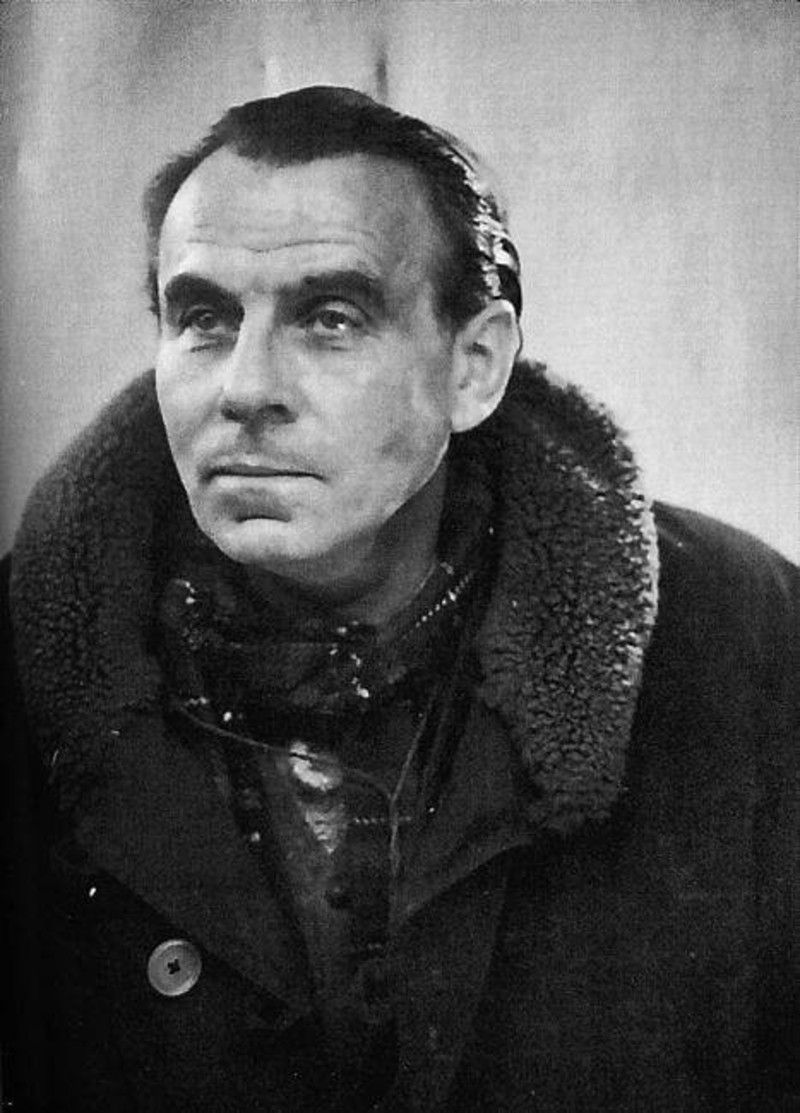
One of the most important features of post-structuralism was a concern with violence, inside and outside the text. All of which led onto an analysis of Louis-Ferdinand Céline and his torrent of unreason, the verbal diarrhea which flowed from his pen—what we might call his sense of anger against the world in general and language in particular. Indeed Céline’s anger, his hatred of the world, is primarily expressed through language; through the use and the misuse of language. In him reality is conflict—as Jean-Paul Sartre once said of Georges Bataille—and his words are a torrent of unreason; a Niagara of hate. Nevertheless the molten lava of his prose is cathartic; it has a rebarbative quality—a certain element of redemption. In short, the verbal torrent—the expressionless moment—is actually a piece of high style; in essence, it is as stylised as language can be. Moreover, it is a deliberate attempt at a style—a puncturing of the French language, in extenso of all language—whereby the directness of common speech is taken out of the bistro and placed in the Comedia Francaise. In Céline’s hands, therefore, the language of a bar-fight becomes literary language; it transforms itself into ecriture, the language of writing. Even though Céline’s brittle and dispassionate moments are vulgar, effective and energetic; indeed, he is truly a poet of violence. In a sense, therefore, his attempt to break up the sentence—the brutal transposition of his three dots and so on—is part of the act. It is as if Céline strives after a style without refinement; a jerky, unregulated and aggressive style. In short, a style which consists of an attack upon the very means of communication; a seismographic alternation. As a result Céline’s style—his short, ejaculatory passages—are an attempt at a style which in turn is no style at all. We might say, therefore, that Céline’s rhythms are an absence of rhythm; an attack upon language itself. It is as if Céline wishes to break up the medium of communication which he intends to make use of. In fact, he is his own worst enemy—the traducer of his own fancy; the opponent of his own recklessness. Céline, if you will, is a man habituated to the nature of his own disgrace; in short, he knows that he is a failure when failure itself is meaningless. Indeed his rhythms are sudden and ejaculatory, almost redundant, and they indicate a travail in pursuit of itself. As a consequence Céline fashions a sort of calculated effrontery; all of which is designed to provoke a liberal backlash; a “moral panic.”
You can buy Jonathan Bowden’s Extremists: Studies in Metapolitics here.
In a sense the opposition to Céline is primarily political; it is a form of left-liberal bias against a presumed fascist. Of course, Céline was a fascist, although it would be more accurate to say that his savage burlesque made fascism seem as ridiculous as anything else. Indeed Céline remained at bottom an anarchist; a right-wing anarchistic nihilist, and he was condemned by the other Collaborators as a consequence. As a result he once told an admirer that the National Socialists hated him, and they would spit him out just like the others. Céline, of course, had hardly a good word to say for anyone, except dancing girls, the occasional prostitute (his second wife was a dancer), and his cats, in particular Bébert, his cat during the war. We might say, therefore, that Céline exhibited a strange compassion for animals—an anthropomorphic bias—when compared to the inhumanism of his books. Moreover, the fascist parties with which Céline was associated—particularly in the flight to Sigmaringen—were detailed in his novel, Castle to Castle. They consisted of the Cagoule (the CSAR), the Comité Secret d’Action Révolutionnaire; a forerunner of the OAS, an extreme right-wing street army, an underground guerilla formation. (The CSAR or Cagoule, for its part, was founded by Deloncle in a split from Maurras’ Action Francaise which he found to be too effete). In a sense an activist like Deloncle found the Action Francaise to be too precise; too classical and fundamental in its lineaments. It was very much the creature of its founder, Charles Maurras, and it represented his ideal of a classical civilization purged of decadence. According to him, the worst legacy to France was the French Revolution, Rousseau, and the cult which he inaugurated, a cult of loose and sloppy thinking. He preferred to believe that French culture was harsh, spare, cool, and rational; it was the hubris of a disinterested professor. For Maurras, particularly in books like France Alone, the French spirit resembled the cool precision of Descartes and Pascal; it was at once the rarefied calm—the hieratic air—of the French academy. Deloncle, on the other hand, found the Action Francaise to be remote; too intellectual, in a word too classical to undertake actions of political extremity. In a sense he regarded Maurras and the Action Francaise as an adjunct to right-wing politics; not an irrelevance but certainly a hindrance to action, something of a prima donna to be used and then put on one side. While Deloncle moved on from the Cagoule to found the MSR; the Mouvement Social Révolutionnaire, at the end of 1940 after the country had been occupied. This movement, which was always inferior to Doriot’s FPP, linked up with Déat’s RNP, the Rassemblement National Populaire, although the union between them was to be short-lived. Moreover, Déat who served in Petain’s cabinet at Vichy, had begun as a socialist who then became a neo-socialist deputy before moving to the right and collaborating. Doriot who was an ex-communist, on the other hand, split away from the Communist Party to form the French People’s Party in the way that he had split from the Socialist Party at the Congress of Tours to form the French Communist Party. In a sense Doriot and the FPP, the Parti Populaire Francais, were the heroes of the fascist ‘left’ and in particular of men like Drieu la Rochelle, the author of Fascisme Socialiste. Doriot, who was killed in his chauffer-driven car by an American plane, also formed the LVF, the Légion des volontaires français contre le bolchevisme, to send French volunteers to the Eastern front. Around five thousand men volunteered to fight against communism, usually as a foreign detachment of the Waffen SS, and at the end of the war only around four hundred returned to France.
One of the main objections to Céline, however, is that he was right-wing; very right-wing, and yet he contrived to be one of the masters of modernism. This is something which the liberal-left find hard to forgive, particularly when Céline wrote Journey to the end of the Night, a canonical modernist work. It is hard to forgive Céline’s political outbursts, particularly Bagatelle pour une massacre and other works, from the perspective of the liberal establishment. This is the establishment, in short, which dominates the university system, the academy in general, and which provides the ethos, the counter-revolutionary élan of the intelligentsia.
Note
[1] [Authoress of the thirteen volume Pilgrimage (1915–67).]
1 comment
Not sure what this type of Bowdenian monologues really convey to us on the right – except exhibition of erudition.
Concerning this article – supposedly about Celine but with lots of sideshots – Bowden is characterizing Celine’s style in very different (and contradictory) terms:
– a torrent of unreason
– a piece of high style- vulgar, effective and energetic
– indeed, he is truly a poet of violence
– short, ejaculatory passages
– a style which in turn is no style at all
None of this is explained in detail, let alone exemplified by Bowden.
And, of course, Bowden never dives even superficially into the two main works of Celine, nor cite his views of the Jews.
If only Bowden had cited Celine directly, the relevance this author for us would have been more clear:
« La chute de Stalingrad c’est la fin de l’Europe. Il y a eu un cataclysme. L’épicentre c’était Stalingrad. Là on peut dire que c’était fini et bien fini, la civilisation des Blancs. … »
Louis-Ferdinand Céline, Entretien avec Claude Sarraute, Le Monde, juin 1960
If you have a Subscriber access,
simply login first to see your comment auto-approved.
Note on comments privacy & moderation
Your email is never published nor shared.
Comments are moderated. If you don't see your comment, please be patient. If approved, it will appear here soon. Do not post your comment a second time.