Counter-Currents
  • Advertise
  • Private Events
  • T&C
  • About
  • Contact
  • RSS
    • Main feed
    • Podcast feed
    • Videos feed
    • Comments feed
  • Welcome
  • Webzine
  • Books
  • Merch
  • Podcasts
  • Videos
  • Donate
  • Patrons
  • Subscribe
  • Crypto

LEVEL2

Donate Now Mailing list

Writers of May

(2 votes) Morris van de Camp David M. Zsutty Derek Stark Jayant Bhandari Greg Johnson

Articles of May

Heidegger on Nietzsche, Part One by Collin Cleary The Lunch Wars by David M. Zsutty 2 votes
  • Welcome
  • Webzine
  • Books
  • Merch
  • Podcasts
  • Videos
  • Donate
  • Patrons
  • Subscribe
  • Crypto
    • Nationalism This Week
      Letter to J. D. Vance

      Greg Johnson

      3

    • Lost In Trans-Mission:
      How the Media Fails To Reveal the Inconvenient Truth About the Usual Suspects

      Steven Tucker

      6

    • Liar, Liar, Pants on Fire!

      Beau Albrecht

      4

    • Editor’s Update
      Rob Rundo on Counter-Currents Radio, Fundraiser Update, & a New $20,000 Matching Grant

      Greg Johnson

    • The Bitter End of Western Metaphysics:
      Heidegger on Nietzsche, Part Three

      Collin Cleary

      10

    • Uncivil War

      Mark Gullick

      40

    • Exclusive Interview with Karel Veliky:
      The Final Chapter in the Film Series! Part II

      Ondrej Mann

      2

    • Happy Birthday to Us!

      Greg Johnson

      6

    • Zsutty’s Maximum

      David M. Zsutty

      16

    • Exclusive Interview with Karel Veliky:
      The Final Chapter in the Film Series! Part I

      Ondrej Mann

      2

    • The Union Jackal, June 2026

      Mark Gullick

      23

    • The Inferiority Behind Immigrant Superiority

      Jayant Bhandari

      15

    • Counter-Currents Radio Podcast No. 690
      Greg Johnson & David Zsutty Discuss Current Things: AI, Henry Nowak, the Iran Crisis, & More

      Counter-Currents Radio

      7

    • Collin Cleary: What Rome Means to Me

      Collin Cleary

      4

    • Paul Krugman: Closet Bolshevik

      Spencer J. Quinn

      21

    • Fugue of Ideas:
      Ibram X. Kendi’s Chain of Ideas

      Greg Johnson

      19

    • Based Blacks

      Lipton Matthews

      23

    • Black Intellectual Fatigue

      Derek Stark

      41

    • Why White Advocates Should Avoid “Based Blacks”

      Dani Vypont

      32

    • Nietzsche & Race

      Mark Gullick

    • Editor’s Update
      Rob Rundo Rescheduled to Next Week on Counter-Currents Radio;
      Tonight Greg Johnson & David Zsutty Answer Your Questions;
      Fundraiser Update & a New $20,000 Matching Grant

      Greg Johnson

    • The Counter-Currents 2026 Fundraiser
      Lifetime Subscriber Welcome Packages Extended

      Greg Johnson

    • Nationalism This Week
      Who’s Looking Back?

      Greg Johnson

      29

    • China’s Threat to American Security:
      Food, Farmland, Foreign Control, & Energy Policy

      Lipton Matthews

      5

    • The Bitter End of Western Metaphysics:
      Heidegger on Nietzsche, Part Two

      Collin Cleary

      16

    • The Killing of Henry Nowak

      Mark Gullick

      38

    • The Crisis of Chinese Technology Thieves

      Morris van de Camp

      1

    • The Strange World of Gender Bender Fiction:
      & What This Genre Tells Us About Autosexuality

      Dani Vypont

      3

    • Watching the Watchers:
      The Dark Triad Question

      David M. Zsutty

      14

    • The Remigration Movement Solidifies

      F. Roger Devlin

      1

    • Casting Aspersions:
      The Fatal Consequences of Race-Swapped Casting, From Helen of Troy to Henry of Southampton

      Steven Tucker

      20

    • The Murder of Henry Nowak

      Millennial Woes

      23

    • Don’t Forget to Vote in Our Writer & Article of the Month Poll

      Greg Johnson

    • The Robot Hotdog Stand

      Greg Johnson

      37

    • Laughing Our Way to Victory

      Dave Chambers

      7

    • The Zodiac Killer

      Mark Gullick

      11

    • Jared Taylor: What Rome Means to Me

      Jared Taylor

      1

    • An Interview with Endeavour:
      My Way of Life Is an Adventure!

      Ondrej Mann

      6

    • José Pedro Zúquete’s The Identitarians

      Greg Johnson

      3

    • Editor’s Update
      Fundraiser Update & How to Watch the Remigration Summit

      Greg Johnson

      5

    • The Bitter End of Western Metaphysics:
      Heidegger on Nietzsche, Part One

      Collin Cleary

      12

    • Berlin: City of Stones

      Spencer J. Quinn

      6

    • True Folk-Horror Is Horror of Your Own Folk:
      Mark Gatiss vs the Brexit Blind Dead  

      Steven Tucker

      4

    • Counter-Currents Radio Podcast No. 689
      Thomas Massie, the America 2050 Bust, the Need for Whites to Divest from America, the AI Economic Apocalypse, & Pro-White Project Pitches to Billionaires

      Counter-Currents Radio

      7

    • Nationalism This Week
      Remigration is Inevitable, Part 3

      Greg Johnson

      27

    • Why Billionaires Should Fund White Identity Politics

      Lipton Matthews

      8

    • How Cold War Two Came About

      Morris van de Camp

      5

    • Now Available for Pre-Order at a Special Price!
      Greg Johnson’s The Philosopher Is In

      Greg Johnson

    • David Zsutty’s Elevator Pitch to a Billionaire

      David M. Zsutty

      1

    • Headbanging Lite

      Mark Gullick

      5

    • Derek Stark

      Lost In Trans-Mission

      And then there's this: https://news.gallup.com/poll/710810/support-lgbtq-issues-remains-down-peak...

    • Derek Stark

      Lost In Trans-Mission

      However, he would make a fascinating experiment. Give him five years in a highly controlled...

    • Peter Quint

      Lost In Trans-Mission

      Yes, when are those people going to get reparations? The horror, the horror! 🙃

    • Uncle Semantic

      Zsutty’s Maximum

      A warped secularization of christianity is how I’ve heard many writers on our side describe the...

    • Greg Johnson

      Based Blacks

      I would prefer you stay but just not read peoplr who annoy you. Thanks for being part of CC.

    • Peter Quint

      Liar, Liar, Pants on Fire!

      Great article! Well, I know I am good; I will match my rectitude with anyone, and come away clean...

    • Peter Quint

      Lost In Trans-Mission

      Great article! All he got was 28 months; he should have been locked away in a psycho ward for the...

    • Peter Quint

      Letter to J. D. Vance

      Great article! I don’t want Vance to be president; he gives me the creeps; I don’t think he has our...

    • Dominic Fox

      Liar, Liar, Pants on Fire!

      I’m still flabbergasted how someone can lie that egregiously and shamelessly. Do words have no...

    • Dominic Fox

      Liar, Liar, Pants on Fire!

      The Christian ideas of repentance and “prodigial sons” give dysfunctional and anti-social...

    • Dominic Fox

      Letter to J. D. Vance

      "There was virtually no chance that this scenario would work. It was stewed up with bogus...

    • Zarathustra

      Letter to J. D. Vance

      A peace deal with Iran has finally been agreed. Let's see how Israel manages to sabotage it.

    • Will Williams

      Based Blacks

      Weave: June 15, 2026  Thank you for completely proving my point, which is that if we aren’t as...

    • Fred C. Dobbs

      Lost In Trans-Mission

      Great article. We’re all used to the media using lies of omission. The “teens” is most commonly used...

    • Fred C. Dobbs

      Liar, Liar, Pants on Fire!

      Father Merrin “he mixes lies with the truth to confuse us.” Excellent piece. We’ve all experienced...

    • Adrian Roberts

      Lost In Trans-Mission

      What about all the people who've been born in the wrong bodies and don't even know it?

    • Weave

      Based Blacks

      Thank you for completely proving my point, which is that if we aren’t as “pure” as you then we are...

    • Joe Gould

      Lost In Trans-Mission

      Philosophy matters. Bad philosophy backed by media, money, and state power is a disaster. The dogma...

    • Joe Gould

      Uncivil War

      I think that your phone (any brand, not just an iPhone) will give up all sorts of information on you...

    • YT

      Uncivil War

      So you’re advocating leaving your iPhone at home as it can be used for geographic location purposes...

    • Earth Day Special

      John Morgan

      12

    • A Robertson Roundup
      Remembering Wilmot Robertson
      (April 16, 1915 – July 8, 2005)

      Margot Metroland

      13

    • The Paranoid Style in White Nationalism

      Greg Johnson

      30

    • Join the Dance!

      Andrew Hamilton

      1

    • We Can’t Save the Earth Without Reducing African Birth Rates

      James Dunphy

      36

    • “I’m Not a Conspiracy Theorist, but . . .”:
      Jeffrey Epstein’s Death Gives New Life to “Conspiracy Theories”

      Greg Johnson

      22

    • Sylvia Plath: Stasis in Darkness

      Vic Olvir

      17

    • Vanguardism, Vantardism, & Mainstreaming

      Greg Johnson

      80

    • Aviation, Geography, & Race

      Charles Lindbergh

      3

    • Some Thoughts on Yule

      Collin Cleary

      4

    • Living in Truth:
      A Yuletide Homily

      Jef Costello

      7

    • John Kennedy Toole’s A Confederacy of Dunces

      Greg Johnson

      20

    • On Aleksandr Solzhenitsyn’s Warning to the West

      Spencer J. Quinn

      7

    • Elitism, British Modernism, & Wyndham Lewis

      Jonathan Bowden

      6

    • Philip K. Dick’s Do Androids Dream of Electric Sheep? as Anti-Semitic/Christian-Gnostic Allegory

      Greg Johnson

      20

    • “Conspiracy Theory” or Conspiracy?

      Andrew Hamilton

      21

    • Remembering H. P. Lovecraft
      (August 20, 1890–March 15, 1937)

      Greg Johnson

      3

    • Who Are We?
      Nordics, Aryans, & Whites

      Greg Johnson

      71

    • Remembering William Gayley Simpson
      (July 23, 1892–December 31, 1990)
      A Pleasant Afternoon with Harriet & Bill Simpson

      Margot Metroland

      18

    • Here are the Young Men
      Remembering Ian Curtis
      (July 15, 1956–May 18, 1980)

      Mark Gullick

      18

    • Percy Grainger
      Artist of the Right

      Alex Graham

      7

    • Remembering Revilo Oliver
      (July 7, 1908–August 20, 1994)

      Greg Johnson

      18

    • The Meaning of July 4th for the White Man

      Gregory Hood

      13

    • The Front National’s Evolution

      Bruno Mégret

    • Merwin K. Hart
      Forgotten American Hero & Man of the Right

      Morris van de Camp

      10

    • George Orwell’s Nineteen Eighty-Four

      Jonathan Bowden

      8

    • Carleton S. Coon
      Scientist & Reluctant White Advocate

      Morris van de Camp

      3

    • The Kwanzaa Absurdity Will Be Dwarfed by Juneteenth

      Robert Hampton

      10

    • Stravinsky

      Alex Graham

      7

    • Like the Roman:
      Remembering Enoch Powell (1912-1998)

      Mark Gullick

      23

    • The 1970s: The Golden Age of Hijacking

      Morris van de Camp

      21

    • Jonathan Bowden’s Deliverance
      Part 6

      Jonathan Bowden

    • Do You Want to Play a Game?

      Mark Gullick

      1

    • Sexually Incontinent on the Indian Subcontinent:
      Who Rapes More Animals, Indians or Pakistanis? The Battle Continues!

      Steven Tucker

      3

    • Neo-Fascism in Film
      Part 5

      Karel Veliky

      15

    • The Game of Tarot

      Mark Gullick

      2

    • Institutions Cannot Be Transplanted

      Jayant Bhandari

      5

    • Jonathan Bowden’s Deliverance
      Part 5

      Jonathan Bowden

    • Crosstown Traffic:
      Jimi Hendrix & The Post-War Rock ‘N’ Roll Revolution

      Mark Gullick

      1

    • Slaves from the North:
      Finns & Karelians in the East European Slave Trade, 900–1600

      Lipton Matthews

      14

    • Neo-Fascism in Film
      Part 4

      Karel Veliky

      2

    • David Lean’s A Passage to India

      Spencer J. Quinn

      1

    • Elites are Essential to Development

      Lipton Matthews

      7

    • Jonathan Bowden’s Deliverance
      Part 4

      Jonathan Bowden

    • Neo-Fascism in Film
      Part 3

      Karel Veliky

      6

    • E. M. Forster’s A Passage to India & the Indian Mentality

      Spencer J. Quinn

      25

    • Jonathan Bowden’s Deliverance
      Part 3

      Jonathan Bowden

    • The Rest Is Silence
      Heidegger’s Quietism

      Mark Gullick

      2

    • Dispelling the Historical Fallacy of Indian Nationalism

      Lipton Matthews

      8

    • Neo-Fascism in Film
      Part 2

      Karel Veliky

      8

    • Jonathan Bowden’s Deliverance
      Part 2

      Jonathan Bowden

    • Life of a Klansman

      Mark Gullick

      8

    • Jonathan Bowden’s Deliverance, Part 1

      Jonathan Bowden

    • Decolonial Ideas are Holding Back Developing Countries

      Lipton Matthews

      8

    • Neo-fascism in Film, Part 1

      Karel Veliky

      21

    • Jonathan Bowden’s Onslaught, Part 8
      Divigations on Decadence

      Jonathan Bowden

    • Jonathan Bowden’s Onslaught, Part 7
      Intrigues in the National Front

      Jonathan Bowden

      1

    • Rotten to the Core

      Mark Gullick

      8

    • Strauss on Husserl’s “Philosophy as Rigorous Science”

      Greg Johnson

    • Jonathan Bowden’s Onslaught, Part 6
      Francis Bacon & Right-Wing Nihilism

      Jonathan Bowden

    • András László
    • Derek Hawthorne
    • Beau Albrecht
    • Alain de Benoist
    • Kerry Bolton
    • Jonathan Bowden
    • Collin Cleary
    • Jef Costello
    • Savitri Devi
    • Julius Evola
    • Jim Goad
    • Gregory Hood
    • Juleigh Howard-Hobson
    • Greg Johnson
    • Charles Krafft
    • Anthony M. Ludovici
    • Trevor Lynch
    • H. L. Mencken
    • J. A. Nicholl
    • James J. O’Meara
    • Christopher Pankhurst
    • Tito Perdue
    • Michael Polignano
    • Spencer J. Quinn
    • Fenek Solère
    • Irmin Vinson
    • Leo Yankevich
    • Francis Parker Yockey
    • Multiple authors
  • Editor-in-Chief

    • Greg Johnson, Ph.D.

    Featured Writers

    • Beau Albrecht
    • Gunnar Alfredsson
    • Collin Cleary, Ph.D.
    • Jef Costello
    • Morris V. de Camp
    • F. Roger Devlin, Ph.D.
    • Stephen Paul Foster, Ph.D.
    • Jim Goad
    • Alex Graham
    • Mark Gullick, Ph.D.
    • Greg Johnson, Ph.D.
    • Travis LeBlanc
    • Trevor Lynch
    • Margot Metroland
    • James J. O’Meara
    • Angelo Plume
    • Spencer J. Quinn
    • Fred Reed
    • Clarissa Schnabel
    • Michael Walker
    • David M. Zsutty

    Frequent Writers

    • Asier Abadroa
    • Aquilonius
    • Alain de Benoist
    • Kerry Bolton, Ph.D.
    • Dave Chambers
    • Steven Clark
    • James Dunphy
    • Endeavour
    • Richard Houck
    • Jason Kessler
    • Titus Livius
    • Ondrej Mann
    • Lipton Matthews
    • Mark Mazari
    • John Morgan
    • Jaroslav Ostrogniew
    • Kathryn S.
    • Christian Secor
    • Anne Wilson Smith
    • Thomas Steuben
    • William De Vere
    • Kenneth Vinther
    • Max West

    Classic Authors

    • Maurice Bardèche
    • Jonathan Bowden
    • Julius Evola
    • Guillaume Faye
    • Ernst Jünger
    • Kevin MacDonald, Ph.D.
    • D. H. Lawrence
    • Charles Lindbergh
    • Jack London
    • H. P. Lovecraft
    • Anthony M. Ludovici
    • Sir Oswald Mosley
    • National Vanguard
    • Friedrich Nietzsche
    • Revilo Oliver
    • William Pierce
    • Ezra Pound
    • Saint-Loup
    • Savitri Devi
    • Carl Schmitt
    • Miguel Serrano
    • Oswald Spengler
    • P. R. Stephensen
    • Jean Thiriart
    • John Tyndall
    • Dominique Venner
    • Leo Yankevich
    • Francis Parker Yockey

    Other Authors

    • Howe Abbott-Hiss
    • Michael Bell
    • Giles Corey
    • Jack Donovan
    • Richardo Duchesne, Ph.D.
    • Emile Durand
    • Guillaume Durocher
    • Mark Dyal
    • Tom Goodroch
    • Andrew Hamilton
    • Robert Hampton
    • Huntley Haverstock
    • Derek Hawthorne
    • Gregory Hood
    • Juleigh Howard-Hobson
    • Alexander Jacob
    • Ruuben Kaalep
    • Tobias Langdon
    • Julian Langness
    • Patrick Le Brun
    • G A Malvicini
    • John Michael McCloughlin
    • Millennial Woes
    • Michael O’Meara
    • Christopher Pankhurst
    • Michael Polignano
    • J. J. Przybylski
    • Quintilian
    • Edouard Rix
    • C. B. Robertson
    • C. F. Robinson
    • Herve Ryssen
    • Alan Smithee
    • Fenek Solere
    • Ann Sterzinger
    • Robert Steuckers
    • Tomislav Sunic
    • Donald Thoresen
    • Marian Van Court
    • Irmin Vinson
    • Book Reviews
    • Movie Reviews
    • TV Reviews
    • Music Reviews
    • Art Criticism
    • Graphic Novels & Comics
    • Video Game Reviews
    • Fiction
    • Poems
    • Interviews
    • Videos
    • English Translations
    • Other Languages
      • Arabic
      • Bulgarian
      • Croatian
      • Czech
      • Danish
      • Dutch
      • Estonian
      • Finnish
      • French
      • German
      • Greek
      • Hungarian
      • Italian
      • Lithuanian
      • Norwegian
      • Polish
      • Portuguese
      • Romanian
      • Russian
      • Slovak
      • Spanish
      • Swedish
      • Ukrainian
    • Commemorations
    • Why We Write
  • Archives
  • Top 100 Commenters
  • The Looney Bin
  • Advertise
  • Private Events
  • T&C
  • About
  • Contact
  • RSS
    • Main feed
    • Podcast feed
    • Videos feed
    • Comments feed
Sponsored Links
Europa.com Above Time Coffee Antelope Hill Publishing Paul Waggener IHR-Store Spencer J. Quinn American Renaissance Jim Goad The Occidental Observer
Print May 25, 2026 13 comments

Predation Wearing the Mask of Civilization

Jayant Bhandari

3,307 words

Institutions reveal their true character in two places: in the gray zones where rules are incomplete, ambiguous, or unenforceable, and even more nakedly in broad daylight when those in authority openly violate the clearest rules without shame. In a living civilization, power is restrained by the office it occupies. In a hollowed-out order, the office becomes a license to violate. Authority exists not to uphold rules but to prove exemption from them. That is why law, bureaucracy, and policing expose the moral substrate of a society with merciless clarity.

India is the textbook case.

Even in the most civilized nations, courts decide only the tiniest sliver of human reality. The vast majority of civilization—trust, restraint, honesty, the silent agreements that make daily life possible—exists below the threshold of formal law. Verbal promises and everyday decency were never meant for judges. They rest on an internalized moral order.

In India, that moral order does not exist.

Indian bureaucracy does not administer rules. It prices access, punishes resistance, and extracts submission. Reformers claimed bureaucrats were corrupt only because their salaries were too low. This was a rationalization. When government salaries rose dramatically, the scale of bribes increased accordingly. The higher they climbed, the more entitled they became. Honesty is not a compensation problem. It is a value. A society either supplies that value to its institutions or it does not.

I cannot remember a single visit to an Indian government office that did not entail a demand for a bribe. Citizens grovel, prostrate, genuflect, and abase themselves for the most basic services. The bureaucrat does not merely want money. He wants submission. He wants to feel superior. The bribe is only part of the transaction; humiliation is the rest.

Electricity, water, mail delivery, death certificates, marriage certificates—everything has its tariff. Refusal to register a marriage is itself a crime, yet registering it requires another bribe. Even then, payment must be strategic. In the absence of honor, the bribe-taker accepts the money and still fails to do the work. You end up paying again, to more people, to move the same file.

A photographic-paper supplier in my city once dared to refuse an extra bribe demanded by a public-sector company. A manager ordered the entire shipment dragged into an open yard and left to bake under the merciless sun for a week. He then opened the ruined packages for theatrical “inspection” in front of the broken supplier. The man never refused again.

Obtaining a passport is a test of compromise. Police verification, supposedly a routine safeguard, becomes a demand for payment. When I was living in Delhi, I once refused to pay and went to a top police officer. Within seconds, he told me that the lower officers were doing me a favor and should be paid. The institution was not failing to perform its function. Extraction was its function.

Complain to a superior, and his first question is always the same: “How much was asked, and who is involved?” He is not investigating misconduct; he is verifying whether his cut is being passed upward. As in a fractal, climb the ladder and the same grotesque theater repeats at every level, only with a higher quantum of bribe. Move sideways—to the courts, politicians, or another agency—and the same banality continues.

The anti-corruption office is widely known to be the most corrupt institution of all. It prosecutes those who have fallen out of political favor, failed to deliver sufficient tribute, or become too visible on social media. Even then, punishment is usually theater; within months, the official is quietly back at his desk.

Oversight becomes another layer of extraction.

Police posts are auctioned to the highest bidder, with every lower-level officer responsible for sending a certain amount of cash upward. Senior officers, therefore, exercise no meaningful disciplinary control over the beatings, theft, rape, and pillage carried out by the men who paid for their positions.

A friend’s house was burgled. The police “caught” the thieves and then informed him that only a fraction of the stolen goods had been recovered; the rest had been divided among the officers. When he complained through a high-ranking relative, the response was chilling: he should have spoken up immediately after the arrest. Now nothing could be done. Every theft follows the same script.
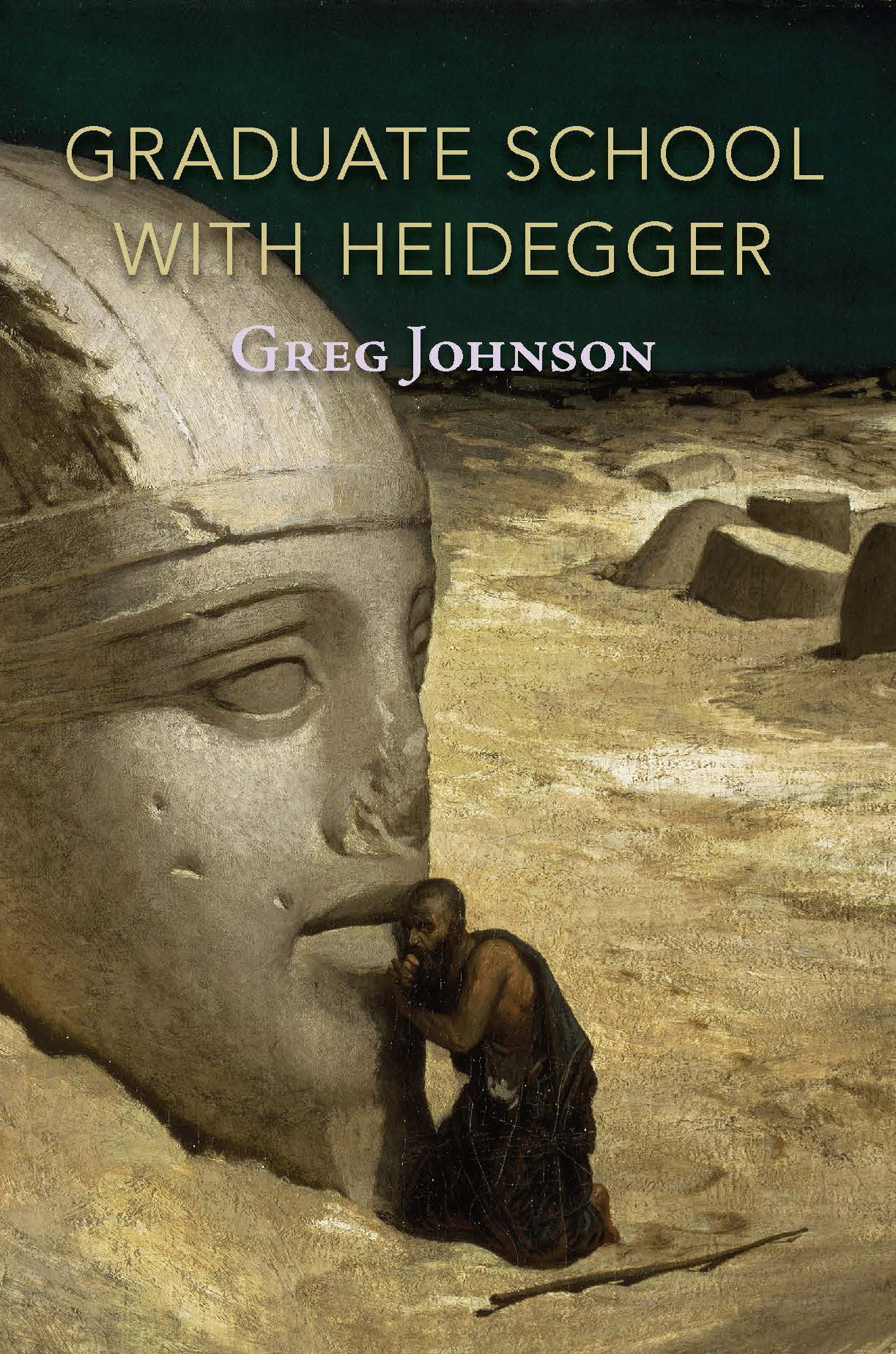
You can buy Greg Johnson’s Graduate School with Heidegger here

A visit to an Indian police station is a human zoo of the terrified and the broken. Officers refuse to register cases without payment. Protective laws, when embedded in a predatory policing system, do not protect the vulnerable; they create new markets for accusation, extortion, and bargaining. A law mandating immediate court referral and arrest in rape complaints has simply expanded the police marketplace. Genuine victims still need money and connections to be heard. False accusations, meanwhile, become instruments of leverage. The real rapist can make the complaint disappear if he is connected and has paid the right people; the false accuser can destroy a man’s life for years. The institution does not distinguish truth from falsehood. It prices vulnerability.

Institutions meant to protect become systems for harvesting vulnerability.

Fake cases are common knowledge, yet innocent men must pay ruinous bribes to remain free. A visit to court is equally grotesque: one pays the guard at the gate, often in full view of the judge. Inside, the judge—too indecisive, incompetent, or corrupt to decide anything—grants another adjournment. How else will he collect? Even the clerk who records the next date must be paid if you want to know it.

Lawyers on both sides thrive on delay, often speaking to one another without their clients’ knowledge or approval. The accused knows he will never receive a real hearing. He pays to avoid prison while the case drags on for decades. The rare matter that resolves does so only when both sides, financially bled dry, agree to an out-of-court settlement and present exhaustion as justice.

For suppliers to the government, as much as 50% of revenue vanishes in bribes. Shame once clung to such payments while the British shadow still lingered. Today, bureaucrats boast openly about their illicit earnings. Corruption is not a deviation; it is the ecology in which everyone must operate.

Even vice requires structure. A functioning mafia depends on loyalty, discipline, silence, and internal justice. In India, corruption is more anarchic: each office, police station, and courtroom is its own petty kingdom, yet even within these kingdoms, loyalty is non-existent, and backstabbing is routine. The state resembles a failed gang—armed with coercive power but lacking the hierarchy, loyalty, and internal discipline required even to regulate its own predation. The grim consolation is that such a system struggles to produce disciplined totalitarianism. It can brutalize, extort, and degrade, but it cannot organize tyranny with the coherence of North Korea or the Soviet Union.

Bureaucracy, police, and courts merely reveal in concentrated form what already exists throughout society. Institutions have mutated because the surrounding culture provides the instincts that drive their mutation. What appears in government as bribery and predation appears in everyday life as dishonesty, scamming, corner-cutting, indifference, hierarchy, and the casual poisoning of the common environment.

Indians do not want the system abolished; they want access to it. Their ambition is to reach a position from which they can extract, or to marry their daughters into households enriched by extraction. How the money is obtained is irrelevant. Corrupt wealth commands respect—often more respect than the same wealth earned honestly. Money and power are the only yardsticks. You can be assured that love, a civilizational value, is conspicuous by its absence.

A sane society must furnish its institutions with the right instincts. Civilization does not exist in nature. It is produced by the accumulated effort of rational and moral people who restrain themselves, discipline one another, and slowly make higher conduct normal.

The proximate problem of India is indeed its government; it is politically convenient to leave the blame there. But the deeper problem is the society that feeds it. If Indians refused to grovel before politicians and bureaucrats, if they stopped treating public servants as masters, much would change quickly. But the Indian mind cannot distinguish respect from servility. It oscillates between submission and domination. Lacking a working sense of justice and fairness, what would it fight for?

You can buy Greg Johnson’s From Plato to Postmodernism here

One small but revealing Indian habit is the compulsive use of “sir.” To Western ears, it can sound polite, even charming. In India, however, it often signals not respect but hierarchy-management. The speaker locates himself below power, flatters it, placates it, and hopes to extract safety or favor from it. Respect presumes dignity on both sides. Servility does not. When the balance of power shifts, the same person who once addressed you as “sir” may begin to abuse you. The address was never about respect; it was only about positioning.

Every social interaction—in society and within families—becomes a test of rank. Who is superior? Who is inferior? Who must bend? Who may command? A relationship is rarely allowed to remain simply human; it is quickly reorganized into an oppressor-oppressed structure. The state does not create this instinct. It formalizes it.

My family buys vegetables only from known farmers because the produce sold in markets is routinely washed in raw sewage—a practice that, grotesquely, gives the vegetables an artificial sheen. How do you prosecute such things in court? You can draft the harshest laws imaginable, but laws are meaningless unless the police, the courts, and the society behind them possess the will to enforce them. Societies do not wake up one morning and choose virtue. They reach it—if they ever do—through centuries of accumulated wisdom and painful internalization of restraint. Or they never reach it at all.

Where everyday conduct is not internally restrained, no legal system can trace or correct the damage. Micro-compromises, repeated by millions, compound into catastrophe. A discarded plastic wrapper here, a fistful of garbage tossed into the river there, a shortcut in construction, a quiet falsification in the records—each act seems trivial. Yet bridges eventually collapse, roads become killing fields, rivers die, and the land itself becomes a toxic wasteland no law can restore.

I learned the same lesson from machines. My father’s printing press still used British-era equipment built in the early 1900s. It worked flawlessly. A complex Swedish machine we later bought also ran with remarkable precision. As a child, I watched these machines endlessly at work, as if performing a kind of mechanical worship: tens of thousands of parts moving together in harmony, each part honoring its function. They revealed something of the spirit of those who had designed and manufactured them. The work had not merely been done for money; it carried pride, discipline, and devotion to the thing itself.

Amid the immense chaos of India—its might-makes-right instincts, its nebulous rules, its absence of reliable form—I yearned to understand that spirit: the inner discipline that made things work, the pride that made each part honor its function.

Then I persuaded my father to buy an Indian copy of the Swedish machine at a fraction of the price. Within days, a cog broke. It was repaired cheaply, but then another small defect appeared, and then another. The machine was not catastrophically bad in one obvious way; it was bad in thousands of small ways. Every part carried a micro-compromise. Before long, we were paying operator salaries for a machine that barely worked, and when it did, the quality was poor. Within a year, we sold it for scrap.

The social and economic consequences are immense. People do not work properly unless constantly supervised, and the supervisor himself lacks pride in the work. Scores of people are required to produce what one disciplined worker elsewhere could achieve, and even then, the quality hovers at the margin of acceptability. During my MBA, I was taught that incentives matter. Perhaps they do. But incentives work only where responsibility already exists in embryo. India is not a “carrot” society. It is a “stick” society.

Societies collapse the same way. When every cog cuts a corner, the entire system becomes unworkable.

But a society does not collapse merely because individuals cut corners. It collapses because no one corrects them. The decisive question is whether ordinary people supply feedback—whether they resist disorder, shame it, punish it, or quietly participate in it.

This is why a man feels safe in the West—not primarily because of its institutions, but because society itself still supplies relentless feedback to those institutions. When a crime occurs, someone, somewhere, will still rise and demand justice. In the Third World, one learns not to expect that.

As a university student in India, I used to take weekend bus journeys between the city where my parents lived and the city where I attended university. The buses on that route had television sets, and my journeys coincided with a popular weekly serial. Drivers halted the bus for forty-five minutes on pothole-riddled roads so passengers could watch without the picture flickering. When I objected and threatened to complain, the entire bus turned on me in unified rage. They swore they would deny the stop had ever happened and made it clear I risked a beating. Not a single soul was willing to defend the basic civilizational act of keeping public transport on schedule. The irony was grotesque: the serial was supposedly “deeply spiritual.”

Western moral terms—honesty, loyalty, honor—change meaning when transplanted into societies whose moral substrate never produced them. Such societies are not immoral in the usual sense; they are amoral. The immoral man knows right from wrong and violates it. The amoral man has never internalized the categories. He is guiltless not because he is innocent, but because conscience has never acquired authority over appetite. This is the mind in which power, not conscience, organizes behavior.

The same distortion applies to words such as love, happiness, respect, and peace. In a civilized moral order, these are not mere feelings or social gestures; they are achievements of the psyche, requiring restraint, self-awareness, and concern for the welfare of others. In a primitive order, they may appear similar to someone from a civilized society, but their substance is different. Love becomes possession, dependency, or tribal fusion against a common enemy. The individual disappears into the mob and experiences this loss of self as catharsis. Happiness becomes hedonism, sensuality, gluttony, or distraction. Respect becomes servility toward power and tyranny toward weakness. Peace becomes stupor, avoidance, or escape from anxiety. The words remain, but their inner substance is primitive.

When you talk about morality or truthfulness with Indians, they make fun of you and ask, “Are you becoming a saint?” Or they suggest that religion belongs in the temple, not in everyday life. You are judged as naïve, unaccustomed to real life. In their minds, goodness and honesty are not the duties of ordinary people; they belong to saints, while ordinary life is expected to be crooked. They do not understand sainthood as moral elevation; they understand it as withdrawal from real life. The phrase survives as a verbal reflex in a society where morality itself has no ordinary authority.

In such a society, everyday conversation does not rise toward moral reflection. It remains trapped in gossip, spectacle, magical politics, and the misfortunes of others.

In such a culture, competence is not the organizing ideal; power is. Education is pursued not for formation but for certificates that open the door to office, money, and status. Parents help children cheat because the certificate, not the discipline it is supposed to represent, is what matters. Once such men enter institutions, they do not acquire respect for the office or its responsibilities. The seat becomes a resource to exploit. Lacking inner authority, they compensate through cold arrogance, petty tyranny, and sadism; the higher they climb, the more vicious their insecurity becomes.

The same lesson begins in school. Authority is converted early into leverage: private tuition, gifts, favoritism, and exam manipulation. The student learns the real curriculum long before adulthood: authority is not to be respected, but navigated; rules are not to be internalized, but managed; power exists to extract.

There is little concept of value addition, contribution, or character formation. Character building is often in direct conflict with the might-makes-right mind. Elders teach children that one cannot scoop butter without a “crooked” finger. But children do not reserve that crooked finger for outsiders. Once grown, they use it on their own elders, who then wonder how they bred a snake. The result is a completely atomized society in which no one trusts anyone.

When resource acquisition is the only organizing principle—when values, morality, and reason have no authority—society dissolves into atomized individuals. One is alone even in the most crowded spaces. Machines do not work, institutions do not work, families do not work. There is no cohesion, no harmony, no shared expectation of conduct. Everyone is on his own.

The same instinct cannot be confined to one part of life. If one approaches strangers, clients, officials, and employees as objects to be exploited, the family cannot remain untouched. Parents cannot trust children, and children cannot trust parents. Without the glue of morality and reason, intellectual and financial capital cannot accumulate. Life becomes Groundhog Day: no learning, no guilt, no feedback, no causality.

Business, too, is imagined not as value creation but as the transfer of money from another pocket into one’s own. Service is incidental. Quality is theater.

I once visited a company that manufactured pharmaceutical excipients—the white carrier powder into which active medicine would later be mixed. I expected a sterile, regulated facility. Instead, we walked in wearing outdoor shoes; the floor and even the air were thick with the powder. Workers in unclean clothing manually filled bags. Worse, expired powder was being mixed with fresh material to meet a specified grade. The manager disclosed this not with shame, but with pride. The point was not to produce value, but to satisfy the appearance of a standard.

By itself, the excipient was not the final medicine. But in a complex economy, every such compromise travels downstream. Each small evasion becomes another compromised part in a larger system already unable to trust itself.

The same pattern runs through every institution: the appearance of compliance survives while the substance is quietly destroyed. Standards exist, procedures exist, documents exist, but each is hollowed out by the same instinct to evade, extract, and get away with it.

The written laws and superficial structures left behind by the British—checks and balances, common law, procedure, and the rule of law—remain largely in place. But once these institutions passed into Indian hands, the spirit animating them was inverted. What was designed to restrain power became a machinery of exploitation and expropriation.

The institutions have not vanished. Their outer shells—offices, uniforms, seals, procedures—remain, but their function has been grotesquely reversed. This was not an accident. It was inevitable in a culture still ruled by the iron law of “might makes right,” where expediency is the governing principle and reason, morality, and self-responsibility never took root.

Had Indian society remained in smaller, localized units, a crude but immediate tribal justice might have preserved a minimal order more aligned with its nature. The terrible possibility is that, when the hollowed-out Western scaffolding finally collapses, what rises from the ruins may prove more functional precisely because it is more primitive—however nightmarish it appears to civilized eyes.

This is the slow, inexorable apocalypse of second-hand modernity: imported institutions rotting from the inside until nothing remains but predation wearing the mask of civilization. The forms survive. The soul has already died.

Predation Wearing the Mask of Civilization

Predation%20Wearing%20the%20Mask%20of%20Civilization%0A

Share

  • Gab

Enjoyed this article?

Be the first to leave a tip in the jar!

Instant Echeck GreenPay™

Related

  • Zsutty’s Maximum

  • The Inferiority Behind Immigrant Superiority

  • China’s Threat to American Security

  • Remigration Is Inevitable

  • Sexually Incontinent On the Indian Subcontinent:

  • Institutions Cannot Be Transplanted

  • E. M. Forster’s A Passage to India & the Indian Mentality

  • Dispelling the Historical Fallacy of Indian Nationalism

Tags

bureaucracycorruptionextractionIndiainstitutionsJayant Bhandarimoralitythe third world

Previous

« The Cruelty of Kindness

Next

» The Mandalorian and Grogu

13 comments

  1. ArminiusMaximus says:
    May 25, 2026 at 3:24 pm

    Someone should circulate this round the boomer GOP circles in Ohio and to the American public at large. In just 25 years they have gained major entry to the heights of power.

    2
    2
    • Uncle Semantic
    • Notonimpact
    Reply
    1. Anonymous says:
      May 26, 2026 at 3:22 am

      Indians are masters of sophistry. They are natural con man. This is the reason so many of them are into politics in the West.

      0
      0
      Reply
  2. Derek Stark says:
    May 25, 2026 at 7:38 pm

    Coming soon, to a government office near you.

    This is another great article by Bhandari showing what it is like to navigate life in a non-Western society from the inside. He has a great insight in the last couple of paragraphs, noting that the antidote to the corruption inherent to large multicultural societies is building society from small bands of people who depend on each other and have ties of blood and history and therefore have multiple reasons to treat each other morally. (High IQs may also be necessary). That may be the only way to produce a society that has an “order more aligned with its nature.”

    1
    1
    • Uncle Semantic
    Reply
  3. WayDown says:
    May 25, 2026 at 9:36 pm

    I’ve heard many Indians say that the greatest ambition of Indians is to leave India and move to a Western country.


    0
    0
    Reply
    1. Flel says:
      May 26, 2026 at 5:30 am

      And yet when they weasel their way into leadership positions they seek to surround themselves with those same Indians they left behind. For a group so good at nepotism and asset pooling for profit (See the Patels of hotels) they slink back into victim hood when it’s convenient. There’s not a one I feel our country would miss if they were drop kicked out.

      0
      0
      Reply
    2. Bigfoot says:
      May 26, 2026 at 3:22 pm

      Coming to a convenience store and a hotel near you.

      1
      1
      • Scott
      Reply
  4. Anonymous says:
    May 26, 2026 at 3:49 am

    Indians’ lack of morality and truthfulness does not affect just India. Sometimes it has repercussions worldwide. The first Prime Minister of India, Nehru, whom the West viewed as a man of morality, has now proven to be a slick liar, which is totally in line with the temperament and character of an Indian. His lies provide the foundation that eventually causes the US involvement in the Vietnam War.

    https://www.unz.com/article/the-causes-of-the-vietnam-war/

    0
    0
    Reply
  5. Joe Gould says:
    May 26, 2026 at 10:13 am

    Contra Kipling, Gunga Din is not in fact a better man than you and I.

    0
    0
    Reply
  6. Hairy Iranian Dude says:
    May 26, 2026 at 5:04 pm

    Reading this essay I was reminded of Iranian shenanigans. There’s pleasure in hoodwinking The System, cutting corners, etc. I recall hearing about Iranians not trusting Iranian-made medicines. When I brought up the idea of starting a company which makes mountain bikes in Iran, working with tour companies, building hostels, restaurants, etc., in villages to attract Westerner mountain bikers and hikers, my father said I won’t be able to do it due to having to pay bribes at every juncture. When I refused to condone cheating the local Costco, I was called a “simpleton” by my own father. My father and other family members regularly take advantage of Costco’s generous return policy. They use a piece of equipment for under three months then return it. My dad even gloated about returning a used item and getting paid more for it because the price had since increased.


    A Mexican buddy works in southern Italy and says the Italians are worse drivers than Mexicans. I’ve met innumerable greasy Greeks. I visited Marseilles and my first two interactions were with Arabs – who tried to cheat me.

    So don’t think it nutty when I say I’m a Nordicist.

    One thing that disturbs me is when I meet or see oily Nordics; the used car salesmen type. I give the turd world a pass because it’s expected, but when Nordic men behave this way: off with their heads!

    0
    0
    Reply
  7. AdamMil says:
    May 28, 2026 at 6:38 am

    It’s hard to believe it could be as bad as described in this article. Surely there are some noble sentiments, some genuine love and affection and loyalty. But I also remember what Indians have told me. In India you never rent a room to somebody stronger than you, because he may not pay the rent and you won’t be able to get him out. And traffic laws are just suggestions; if a cop sees you breaking them just escape – he’s probably too lazy to chase you down – or pay a little bribe and keep going…

    0
    0
    Reply
    1. Chud says:
      May 28, 2026 at 10:42 am

      It’s as bad as the author says.


      I had an Indian friend doing a course and he was failed on every test. Why? Because the university he was a part of charged a fee for reassessing failed tests, so they made it a policy to fail everyone and just skim money off the top that way, for years on end. Wealthy Indians that come here tell me that back home the wealthy get away with actual murder because of their social connections. The cops will take them to the police station and not even put them in a cell, they’ll just serve them tea and crumpets (maybe a leftover British connection there) and tell them that it’ll all be sorted out for them. It was actually the same in countries like Brazil until very recently.


      Surely there are some noble sentiments, some genuine love and affection and loyalty.


      Game theory applies here. Good people surrounded by that level of horrific callousness and cynicism harden their hearts. They don’t become wholly evil, but they do what is necessary to survive and mimic that behavior to the extent needed to provide for their loved ones.

      0
      0
      Reply
  8. Larry Ernst says:
    May 28, 2026 at 6:28 pm

    During the second half of this article, Greg seems to be describing the form-without-substance culture which gradually has developed into an almost finished art in these United States. Western morality has left the building. In its place has arrived a shameful mediocrity and a robber baron hegemony in most venues, especially in government and the values which once obtained for perpetuation of the commonweal. Representative government has completely disappeared from local, state and national jurisdictions, where placeholders exist solely for their own preening aggrandizement. Epitomizing the venal narcissism and abounding “might makes right” greed and tyranny is a chief executive who builds monuments to himself and enriches his relatives and cronies while his country goes to hell in a hand basket and its treasure is poured into Zionist adventures and the foreign slaughter of innocents who reside in Mammon’s many enemies of the day. And the overriding shame is that the dwindling, yet still-determining number of American culture sustainers seem either ignorant or apathetic about their own nation’s descent into hell.  Bread and circuses rule the day as the proverbial sword of Damocles continues its descent and the United States soon upstages India as the harbor of every hateful and deceitful bird. Truly “righteousness exalts a nation but sin is a reproach to any people.”

    0
    0
    Reply
  9. Larry Ernst says:
    May 28, 2026 at 7:18 pm

    Jayant. Not “Greg.”  Senior moment!

    0
    0
    Reply

If you have a Subscriber access,
simply login first to see your comment auto-approved.

Post a comment Cancel reply

Note on comments privacy & moderation

Your email is never published nor shared.

Comments are moderated. If you don't see your comment, please be patient. If approved, it will appear here soon. Do not post your comment a second time.

Writers of May

(2 votes) Morris van de Camp David M. Zsutty Derek Stark Jayant Bhandari Greg Johnson

Articles of May

Heidegger on Nietzsche, Part One by Collin Cleary The Lunch Wars by David M. Zsutty 2 votes
    • Nationalism This Week
      Letter to J. D. Vance

      Greg Johnson

      3

    • Lost In Trans-Mission:
      How the Media Fails To Reveal the Inconvenient Truth About the Usual Suspects

      Steven Tucker

      6

    • Liar, Liar, Pants on Fire!

      Beau Albrecht

      4

    • Editor’s Update
      Rob Rundo on Counter-Currents Radio, Fundraiser Update, & a New $20,000 Matching Grant

      Greg Johnson

    • The Bitter End of Western Metaphysics:
      Heidegger on Nietzsche, Part Three

      Collin Cleary

      10

    • Uncivil War

      Mark Gullick

      40

    • Exclusive Interview with Karel Veliky:
      The Final Chapter in the Film Series! Part II

      Ondrej Mann

      2

    • Happy Birthday to Us!

      Greg Johnson

      6

    • Zsutty’s Maximum

      David M. Zsutty

      16

    • Exclusive Interview with Karel Veliky:
      The Final Chapter in the Film Series! Part I

      Ondrej Mann

      2

    • The Union Jackal, June 2026

      Mark Gullick

      23

    • The Inferiority Behind Immigrant Superiority

      Jayant Bhandari

      15

    • Counter-Currents Radio Podcast No. 690
      Greg Johnson & David Zsutty Discuss Current Things: AI, Henry Nowak, the Iran Crisis, & More

      Counter-Currents Radio

      7

    • Collin Cleary: What Rome Means to Me

      Collin Cleary

      4

    • Paul Krugman: Closet Bolshevik

      Spencer J. Quinn

      21

    • Fugue of Ideas:
      Ibram X. Kendi’s Chain of Ideas

      Greg Johnson

      19

    • Based Blacks

      Lipton Matthews

      23

    • Black Intellectual Fatigue

      Derek Stark

      41

    • Why White Advocates Should Avoid “Based Blacks”

      Dani Vypont

      32

    • Nietzsche & Race

      Mark Gullick

    • Editor’s Update
      Rob Rundo Rescheduled to Next Week on Counter-Currents Radio;
      Tonight Greg Johnson & David Zsutty Answer Your Questions;
      Fundraiser Update & a New $20,000 Matching Grant

      Greg Johnson

    • The Counter-Currents 2026 Fundraiser
      Lifetime Subscriber Welcome Packages Extended

      Greg Johnson

    • Nationalism This Week
      Who’s Looking Back?

      Greg Johnson

      29

    • China’s Threat to American Security:
      Food, Farmland, Foreign Control, & Energy Policy

      Lipton Matthews

      5

    • The Bitter End of Western Metaphysics:
      Heidegger on Nietzsche, Part Two

      Collin Cleary

      16

    • The Killing of Henry Nowak

      Mark Gullick

      38

    • The Crisis of Chinese Technology Thieves

      Morris van de Camp

      1

    • The Strange World of Gender Bender Fiction:
      & What This Genre Tells Us About Autosexuality

      Dani Vypont

      3

    • Watching the Watchers:
      The Dark Triad Question

      David M. Zsutty

      14

    • The Remigration Movement Solidifies

      F. Roger Devlin

      1

    • Casting Aspersions:
      The Fatal Consequences of Race-Swapped Casting, From Helen of Troy to Henry of Southampton

      Steven Tucker

      20

    • The Murder of Henry Nowak

      Millennial Woes

      23

    • Don’t Forget to Vote in Our Writer & Article of the Month Poll

      Greg Johnson

    • The Robot Hotdog Stand

      Greg Johnson

      37

    • Laughing Our Way to Victory

      Dave Chambers

      7

    • The Zodiac Killer

      Mark Gullick

      11

    • Jared Taylor: What Rome Means to Me

      Jared Taylor

      1

    • An Interview with Endeavour:
      My Way of Life Is an Adventure!

      Ondrej Mann

      6

    • José Pedro Zúquete’s The Identitarians

      Greg Johnson

      3

    • Editor’s Update
      Fundraiser Update & How to Watch the Remigration Summit

      Greg Johnson

      5

    • The Bitter End of Western Metaphysics:
      Heidegger on Nietzsche, Part One

      Collin Cleary

      12

    • Berlin: City of Stones

      Spencer J. Quinn

      6

    • True Folk-Horror Is Horror of Your Own Folk:
      Mark Gatiss vs the Brexit Blind Dead  

      Steven Tucker

      4

    • Counter-Currents Radio Podcast No. 689
      Thomas Massie, the America 2050 Bust, the Need for Whites to Divest from America, the AI Economic Apocalypse, & Pro-White Project Pitches to Billionaires

      Counter-Currents Radio

      7

    • Nationalism This Week
      Remigration is Inevitable, Part 3

      Greg Johnson

      27

    • Why Billionaires Should Fund White Identity Politics

      Lipton Matthews

      8

    • How Cold War Two Came About

      Morris van de Camp

      5

    • Now Available for Pre-Order at a Special Price!
      Greg Johnson’s The Philosopher Is In

      Greg Johnson

    • David Zsutty’s Elevator Pitch to a Billionaire

      David M. Zsutty

      1

    • Headbanging Lite

      Mark Gullick

      5

    • Derek Stark

      Lost In Trans-Mission

      And then there's this: https://news.gallup.com/poll/710810/support-lgbtq-issues-remains-down-peak...

    • Derek Stark

      Lost In Trans-Mission

      However, he would make a fascinating experiment. Give him five years in a highly controlled...

    • Peter Quint

      Lost In Trans-Mission

      Yes, when are those people going to get reparations? The horror, the horror! 🙃

    • Uncle Semantic

      Zsutty’s Maximum

      A warped secularization of christianity is how I’ve heard many writers on our side describe the...

    • Greg Johnson

      Based Blacks

      I would prefer you stay but just not read peoplr who annoy you. Thanks for being part of CC.

    • Peter Quint

      Liar, Liar, Pants on Fire!

      Great article! Well, I know I am good; I will match my rectitude with anyone, and come away clean...

    • Peter Quint

      Lost In Trans-Mission

      Great article! All he got was 28 months; he should have been locked away in a psycho ward for the...

    • Peter Quint

      Letter to J. D. Vance

      Great article! I don’t want Vance to be president; he gives me the creeps; I don’t think he has our...

    • Dominic Fox

      Liar, Liar, Pants on Fire!

      I’m still flabbergasted how someone can lie that egregiously and shamelessly. Do words have no...

    • Dominic Fox

      Liar, Liar, Pants on Fire!

      The Christian ideas of repentance and “prodigial sons” give dysfunctional and anti-social...

    • Dominic Fox

      Letter to J. D. Vance

      "There was virtually no chance that this scenario would work. It was stewed up with bogus...

    • Zarathustra

      Letter to J. D. Vance

      A peace deal with Iran has finally been agreed. Let's see how Israel manages to sabotage it.

    • Will Williams

      Based Blacks

      Weave: June 15, 2026  Thank you for completely proving my point, which is that if we aren’t as...

    • Fred C. Dobbs

      Lost In Trans-Mission

      Great article. We’re all used to the media using lies of omission. The “teens” is most commonly used...

    • Fred C. Dobbs

      Liar, Liar, Pants on Fire!

      Father Merrin “he mixes lies with the truth to confuse us.” Excellent piece. We’ve all experienced...

    • Adrian Roberts

      Lost In Trans-Mission

      What about all the people who've been born in the wrong bodies and don't even know it?

    • Weave

      Based Blacks

      Thank you for completely proving my point, which is that if we aren’t as “pure” as you then we are...

    • Joe Gould

      Lost In Trans-Mission

      Philosophy matters. Bad philosophy backed by media, money, and state power is a disaster. The dogma...

    • Joe Gould

      Uncivil War

      I think that your phone (any brand, not just an iPhone) will give up all sorts of information on you...

    • YT

      Uncivil War

      So you’re advocating leaving your iPhone at home as it can be used for geographic location purposes...

    • Earth Day Special

      John Morgan

      12

    • A Robertson Roundup
      Remembering Wilmot Robertson
      (April 16, 1915 – July 8, 2005)

      Margot Metroland

      13

    • The Paranoid Style in White Nationalism

      Greg Johnson

      30

    • Join the Dance!

      Andrew Hamilton

      1

    • We Can’t Save the Earth Without Reducing African Birth Rates

      James Dunphy

      36

    • “I’m Not a Conspiracy Theorist, but . . .”:
      Jeffrey Epstein’s Death Gives New Life to “Conspiracy Theories”

      Greg Johnson

      22

    • Sylvia Plath: Stasis in Darkness

      Vic Olvir

      17

    • Vanguardism, Vantardism, & Mainstreaming

      Greg Johnson

      80

    • Aviation, Geography, & Race

      Charles Lindbergh

      3

    • Some Thoughts on Yule

      Collin Cleary

      4

    • Living in Truth:
      A Yuletide Homily

      Jef Costello

      7

    • John Kennedy Toole’s A Confederacy of Dunces

      Greg Johnson

      20

    • On Aleksandr Solzhenitsyn’s Warning to the West

      Spencer J. Quinn

      7

    • Elitism, British Modernism, & Wyndham Lewis

      Jonathan Bowden

      6

    • Philip K. Dick’s Do Androids Dream of Electric Sheep? as Anti-Semitic/Christian-Gnostic Allegory

      Greg Johnson

      20

    • “Conspiracy Theory” or Conspiracy?

      Andrew Hamilton

      21

    • Remembering H. P. Lovecraft
      (August 20, 1890–March 15, 1937)

      Greg Johnson

      3

    • Who Are We?
      Nordics, Aryans, & Whites

      Greg Johnson

      71

    • Remembering William Gayley Simpson
      (July 23, 1892–December 31, 1990)
      A Pleasant Afternoon with Harriet & Bill Simpson

      Margot Metroland

      18

    • Here are the Young Men
      Remembering Ian Curtis
      (July 15, 1956–May 18, 1980)

      Mark Gullick

      18

    • Percy Grainger
      Artist of the Right

      Alex Graham

      7

    • Remembering Revilo Oliver
      (July 7, 1908–August 20, 1994)

      Greg Johnson

      18

    • The Meaning of July 4th for the White Man

      Gregory Hood

      13

    • The Front National’s Evolution

      Bruno Mégret

    • Merwin K. Hart
      Forgotten American Hero & Man of the Right

      Morris van de Camp

      10

    • George Orwell’s Nineteen Eighty-Four

      Jonathan Bowden

      8

    • Carleton S. Coon
      Scientist & Reluctant White Advocate

      Morris van de Camp

      3

    • The Kwanzaa Absurdity Will Be Dwarfed by Juneteenth

      Robert Hampton

      10

    • Stravinsky

      Alex Graham

      7

    • Like the Roman:
      Remembering Enoch Powell (1912-1998)

      Mark Gullick

      23

    • The 1970s: The Golden Age of Hijacking

      Morris van de Camp

      21

    • Jonathan Bowden’s Deliverance
      Part 6

      Jonathan Bowden

    • Do You Want to Play a Game?

      Mark Gullick

      1

    • Sexually Incontinent on the Indian Subcontinent:
      Who Rapes More Animals, Indians or Pakistanis? The Battle Continues!

      Steven Tucker

      3

    • Neo-Fascism in Film
      Part 5

      Karel Veliky

      15

    • The Game of Tarot

      Mark Gullick

      2

    • Institutions Cannot Be Transplanted

      Jayant Bhandari

      5

    • Jonathan Bowden’s Deliverance
      Part 5

      Jonathan Bowden

    • Crosstown Traffic:
      Jimi Hendrix & The Post-War Rock ‘N’ Roll Revolution

      Mark Gullick

      1

    • Slaves from the North:
      Finns & Karelians in the East European Slave Trade, 900–1600

      Lipton Matthews

      14

    • Neo-Fascism in Film
      Part 4

      Karel Veliky

      2

    • David Lean’s A Passage to India

      Spencer J. Quinn

      1

    • Elites are Essential to Development

      Lipton Matthews

      7

    • Jonathan Bowden’s Deliverance
      Part 4

      Jonathan Bowden

    • Neo-Fascism in Film
      Part 3

      Karel Veliky

      6

    • E. M. Forster’s A Passage to India & the Indian Mentality

      Spencer J. Quinn

      25

    • Jonathan Bowden’s Deliverance
      Part 3

      Jonathan Bowden

    • The Rest Is Silence
      Heidegger’s Quietism

      Mark Gullick

      2

    • Dispelling the Historical Fallacy of Indian Nationalism

      Lipton Matthews

      8

    • Neo-Fascism in Film
      Part 2

      Karel Veliky

      8

    • Jonathan Bowden’s Deliverance
      Part 2

      Jonathan Bowden

    • Life of a Klansman

      Mark Gullick

      8

    • Jonathan Bowden’s Deliverance, Part 1

      Jonathan Bowden

    • Decolonial Ideas are Holding Back Developing Countries

      Lipton Matthews

      8

    • Neo-fascism in Film, Part 1

      Karel Veliky

      21

    • Jonathan Bowden’s Onslaught, Part 8
      Divigations on Decadence

      Jonathan Bowden

    • Jonathan Bowden’s Onslaught, Part 7
      Intrigues in the National Front

      Jonathan Bowden

      1

    • Rotten to the Core

      Mark Gullick

      8

    • Strauss on Husserl’s “Philosophy as Rigorous Science”

      Greg Johnson

    • Jonathan Bowden’s Onslaught, Part 6
      Francis Bacon & Right-Wing Nihilism

      Jonathan Bowden

    • András László
    • Derek Hawthorne
    • Beau Albrecht
    • Alain de Benoist
    • Kerry Bolton
    • Jonathan Bowden
    • Collin Cleary
    • Jef Costello
    • Savitri Devi
    • Julius Evola
    • Jim Goad
    • Gregory Hood
    • Juleigh Howard-Hobson
    • Greg Johnson
    • Charles Krafft
    • Anthony M. Ludovici
    • Trevor Lynch
    • H. L. Mencken
    • J. A. Nicholl
    • James J. O’Meara
    • Christopher Pankhurst
    • Tito Perdue
    • Michael Polignano
    • Spencer J. Quinn
    • Fenek Solère
    • Irmin Vinson
    • Leo Yankevich
    • Francis Parker Yockey
    • Multiple authors
  • Editor-in-Chief

    • Greg Johnson, Ph.D.

    Featured Writers

    • Beau Albrecht
    • Gunnar Alfredsson
    • Collin Cleary, Ph.D.
    • Jef Costello
    • Morris V. de Camp
    • F. Roger Devlin, Ph.D.
    • Stephen Paul Foster, Ph.D.
    • Jim Goad
    • Alex Graham
    • Mark Gullick, Ph.D.
    • Greg Johnson, Ph.D.
    • Travis LeBlanc
    • Trevor Lynch
    • Margot Metroland
    • James J. O’Meara
    • Angelo Plume
    • Spencer J. Quinn
    • Fred Reed
    • Clarissa Schnabel
    • Michael Walker
    • David M. Zsutty

    Frequent Writers

    • Asier Abadroa
    • Aquilonius
    • Alain de Benoist
    • Kerry Bolton, Ph.D.
    • Dave Chambers
    • Steven Clark
    • James Dunphy
    • Endeavour
    • Richard Houck
    • Jason Kessler
    • Titus Livius
    • Ondrej Mann
    • Lipton Matthews
    • Mark Mazari
    • John Morgan
    • Jaroslav Ostrogniew
    • Kathryn S.
    • Christian Secor
    • Anne Wilson Smith
    • Thomas Steuben
    • William De Vere
    • Kenneth Vinther
    • Max West

    Classic Authors

    • Maurice Bardèche
    • Jonathan Bowden
    • Julius Evola
    • Guillaume Faye
    • Ernst Jünger
    • Kevin MacDonald, Ph.D.
    • D. H. Lawrence
    • Charles Lindbergh
    • Jack London
    • H. P. Lovecraft
    • Anthony M. Ludovici
    • Sir Oswald Mosley
    • National Vanguard
    • Friedrich Nietzsche
    • Revilo Oliver
    • William Pierce
    • Ezra Pound
    • Saint-Loup
    • Savitri Devi
    • Carl Schmitt
    • Miguel Serrano
    • Oswald Spengler
    • P. R. Stephensen
    • Jean Thiriart
    • John Tyndall
    • Dominique Venner
    • Leo Yankevich
    • Francis Parker Yockey

    Other Authors

    • Howe Abbott-Hiss
    • Michael Bell
    • Giles Corey
    • Jack Donovan
    • Richardo Duchesne, Ph.D.
    • Emile Durand
    • Guillaume Durocher
    • Mark Dyal
    • Tom Goodroch
    • Andrew Hamilton
    • Robert Hampton
    • Huntley Haverstock
    • Derek Hawthorne
    • Gregory Hood
    • Juleigh Howard-Hobson
    • Alexander Jacob
    • Ruuben Kaalep
    • Tobias Langdon
    • Julian Langness
    • Patrick Le Brun
    • G A Malvicini
    • John Michael McCloughlin
    • Millennial Woes
    • Michael O’Meara
    • Christopher Pankhurst
    • Michael Polignano
    • J. J. Przybylski
    • Quintilian
    • Edouard Rix
    • C. B. Robertson
    • C. F. Robinson
    • Herve Ryssen
    • Alan Smithee
    • Fenek Solere
    • Ann Sterzinger
    • Robert Steuckers
    • Tomislav Sunic
    • Donald Thoresen
    • Marian Van Court
    • Irmin Vinson
    • Book Reviews
    • Movie Reviews
    • TV Reviews
    • Music Reviews
    • Art Criticism
    • Graphic Novels & Comics
    • Video Game Reviews
    • Fiction
    • Poems
    • Interviews
    • Videos
    • English Translations
    • Other Languages
      • Arabic
      • Bulgarian
      • Croatian
      • Czech
      • Danish
      • Dutch
      • Estonian
      • Finnish
      • French
      • German
      • Greek
      • Hungarian
      • Italian
      • Lithuanian
      • Norwegian
      • Polish
      • Portuguese
      • Romanian
      • Russian
      • Slovak
      • Spanish
      • Swedish
      • Ukrainian
    • Commemorations
    • Why We Write
  • Archives
  • Top 100 Commenters
  • The Looney Bin
Sponsored Links
Europa.com Above Time Coffee Antelope Hill Publishing Paul Waggener IHR-Store Spencer J. Quinn American Renaissance Jim Goad The Occidental Observer
Donate Now Mailing list
Books for sale
  • The Philosopher Is In
  • Sexual Utopia in Power (Expanded Edition)
  • In Defense of Prejudice
  • Loving Our Own
  • Tyranny & Wisdom
  • The Populist Moment
  • Is America Doomed?
  • To all books
Copyright © 2026 Counter-Currents Publishing, Ltd.

Paywall Access


Please enter your email address.

Lost your password?

Edit your comment

Writer & Article of the Month May 2026

Voting for this month has concluded. Here are the final results!

Top Writers

  • #1 Morris van de Camp 2 votes
  • #2 David M. Zsutty 2 votes
  • #3 Derek Stark 2 votes
  • #4 Jayant Bhandari 2 votes
  • #5 Greg Johnson 2 votes
  • #6 Jared Taylor 1 vote
  • #7 Collin Cleary 1 vote
  • #8 Spencer J. Quinn 1 vote
  • #9 Mark Gullick 1 vote
  • #10 Lipton Matthews 1 vote
  • #11 Keith Woods 1 vote
  • #12 Steven Tucker 1 vote

Top Articles

  • #1 Heidegger on Nietzsche, Part One 2 votes
  • #2 The Lunch Wars 2 votes
  • #3 The 1970s: The Golden Age of Hijacking 1 vote
  • #4 True Folk-Horror Is Horror of Your Own Folk 1 vote
  • #5 Finding Atlantis Part 4 1 vote
  • #6 Berlin: City of Stones 1 vote
  • #7 The Ghost of the Confederacy 1 vote
  • #8 Lothrop Stoddard’s The Revolt Against Civilization 1 vote
  • #9 Could Fascism Work? 1 vote
  • #10 Jared Taylor's Elevator Pitch to a Billionaire 1 vote
  • #11 Predation Wearing the Mask of Civilization 1 vote
  • #12 Peak Fatigue in Fort Wayne 1 vote
  • #13 Keith Wood's Elevator Pitch to a Billionaire 1 vote
  • #14 Do You Want to Play a Game? 1 vote
  • #15 Why Billionaires Should Fund White Identity Politics 1 vote

Total votes cast: 17

Insert/edit link

Enter the destination URL

Or link to existing content

    No search term specified. Showing recent items. Search or use up and down arrow keys to select an item.