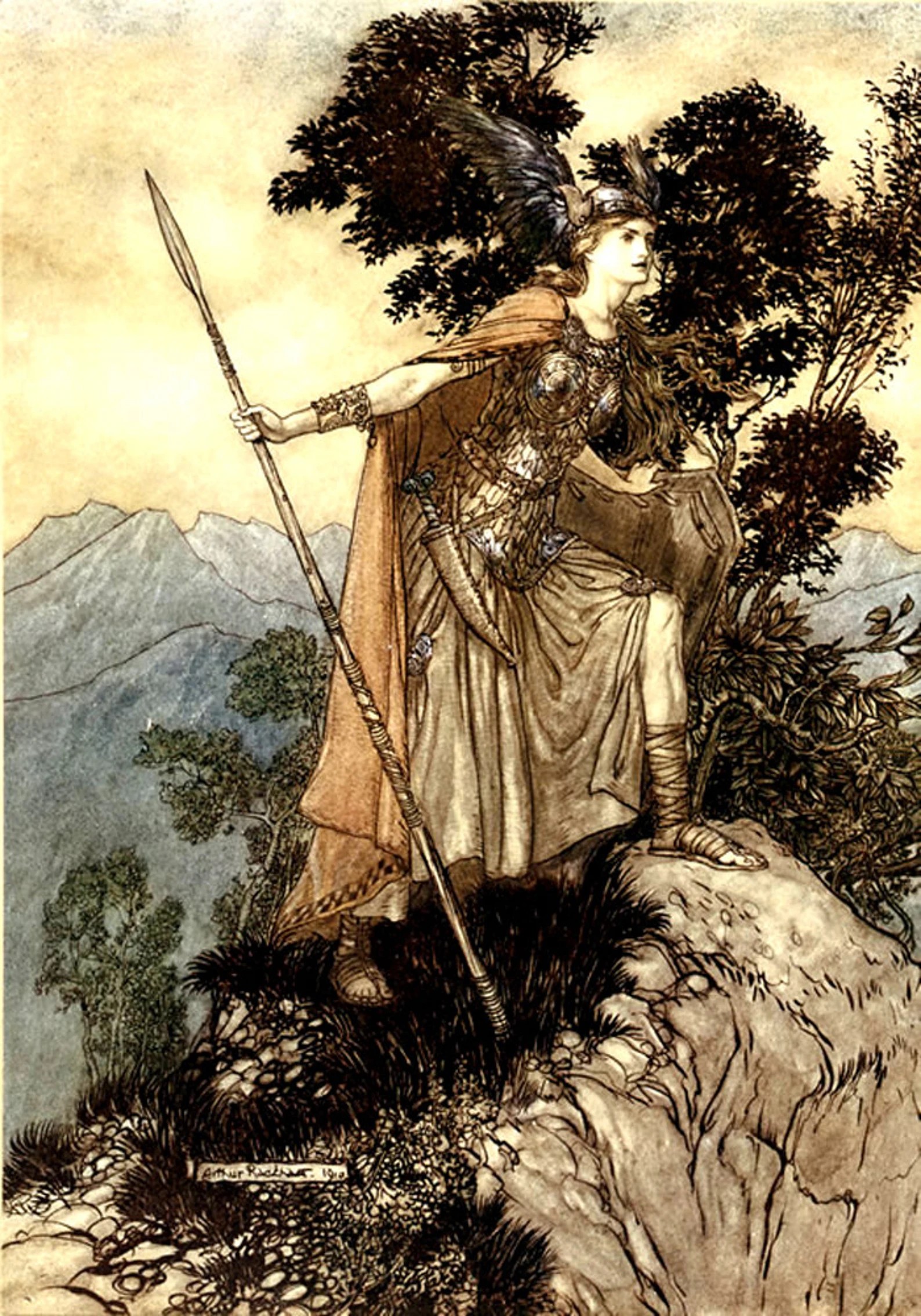
Counter-Currents
  • Advertise
  • Private Events
  • T&C
  • About
  • Contact
  • RSS
    • Main feed
    • Podcast feed
    • Videos feed
    • Comments feed
  • Welcome
  • Webzine
  • Books
  • Merch
  • Podcasts
  • Videos
  • Donate
  • Patrons
  • Subscribe
  • Crypto

LEVEL2

Donate Now Mailing list
Upcoming podcasts
  • Rob Rundo on Counter-Currents Radio

    Rob Rundo on Counter-Currents Radio

    Counter-Currents Radio

    06/13/2026 — 3 pm EST / 9 pm CET
  • Daniel Tyrie on Counter-Currents Radio

    Daniel Tyrie on Counter-Currents Radio

    Counter-Currents Radio

    06/20/2026 — 3 pm EST / 9 pm CET

Writers of May

(2 votes) Morris van de Camp David M. Zsutty Derek Stark Jayant Bhandari Greg Johnson

Articles of May

The Lunch Wars by David M. Zsutty Heidegger on Nietzsche, Part One by Collin Cleary 2 votes
  • Welcome
  • Webzine
  • Books
  • Merch
  • Podcasts
  • Videos
  • Donate
  • Patrons
  • Subscribe
  • Crypto
    • Editor’s Update
      Rob Rundo Rescheduled to Next Week on Counter-Currents Radio;
      Tonight Greg Johnson & David Zsutty Answer Your Questions;
      Fundraiser Update & a New $20,000 Matching Grant

      Greg Johnson

    • The Counter-Currents 2026 Fundraiser
      Lifetime Subscriber Welcome Packages Extended

      Greg Johnson

    • Nationalism This Week
      Who’s Looking Back?

      Greg Johnson

      16

    • China’s Threat to American Security:
      Food, Farmland, Foreign Control, & Energy Policy

      Lipton Matthews

      1

    • The Bitter End of Western Metaphysics:
      Heidegger on Nietzsche, Part Two

      Collin Cleary

      7

    • The Killing of Henry Nowak

      Mark Gullick

      28

    • The Crisis of Chinese Technology Thieves

      Morris van de Camp

      1

    • The Strange World of Gender Bender Fiction:
      & What This Genre Tells Us About Autosexuality

      Dani Vypont

      3

    • Watching the Watchers:
      The Dark Triad Question

      David M. Zsutty

      14

    • The Remigration Movement Solidifies

      F. Roger Devlin

      1

    • Casting Aspersions:
      The Fatal Consequences of Race-Swapped Casting, From Helen of Troy to Henry of Southampton

      Steven Tucker

      20

    • The Murder of Henry Nowak

      Millennial Woes

      23

    • Don’t Forget to Vote in Our Writer & Article of the Month Poll

      Greg Johnson

    • The Robot Hotdog Stand

      Greg Johnson

      35

    • Laughing Our Way to Victory

      Dave Chambers

      7

    • The Zodiac Killer

      Mark Gullick

      11

    • Jared Taylor: What Rome Means to Me

      Jared Taylor

      1

    • An Interview with Endeavour:
      My Way of Life Is an Adventure!

      Ondrej Mann

      6

    • José Pedro Zúquete’s The Identitarians

      Greg Johnson

      3

    • Editor’s Update
      Fundraiser Update & How to Watch the Remigration Summit

      Greg Johnson

      5

    • The Bitter End of Western Metaphysics:
      Heidegger on Nietzsche, Part One

      Collin Cleary

      11

    • Berlin: City of Stones

      Spencer J. Quinn

      6

    • True Folk-Horror Is Horror of Your Own Folk:
      Mark Gatiss vs the Brexit Blind Dead  

      Steven Tucker

      4

    • Counter-Currents Radio Podcast No. 689
      Thomas Massie, the America 2050 Bust, the Need for Whites to Divest from America, the AI Economic Apocalypse, & Pro-White Project Pitches to Billionaires

      Counter-Currents Radio

      7

    • Nationalism This Week
      Remigration is Inevitable, Part 3

      Greg Johnson

      27

    • Why Billionaires Should Fund White Identity Politics

      Lipton Matthews

      8

    • How Cold War Two Came About

      Morris van de Camp

      5

    • Now Available for Pre-Order at a Special Price!
      Greg Johnson’s The Philosopher Is In

      Greg Johnson

    • David Zsutty’s Elevator Pitch to a Billionaire

      David M. Zsutty

      1

    • Headbanging Lite

      Mark Gullick

      5

    • White Advocacy Past and Present

      Peter Bradley

      13

    • The Lunch Wars

      David M. Zsutty

      47

    • The Russians are Coming/The Russians are Coming

      Steven Clark

      1

    • Peak Fatigue in Fort Wayne

      Gabriel Anderson

      24

    • Keith Woods’ Elevator Pitch to a Billionaire

      Keith Woods

    • The Cruelty of Kindness

      Morris van de Camp

      9

    • Predation Wearing the Mask of Civilization

      Jayant Bhandari

      13

    • The Mandalorian & Grogu

      Trevor Lynch

      24

    • Editor’s Update
      Fundraiser Update & a New $20,000 Matching Grant
      Greg Johnson & David Zsutty Discuss Thomas Massie on Counter-Currents Radio

      Greg Johnson

      2

    • How the Jews Defeated Thomas Massie—& Themselves

      David M. Zsutty

      25

    • Jared Taylor’s Elevator Pitch to a Billionaire

      Jared Taylor

      15

    • Nationalism This Week
      Remigration Is Inevitable, Part 2

      Greg Johnson

      8

    • Could Fascism Work?

      Mark Gullick

      40

    • Jonathan Bowden’s Deliverance
      Part 7

      Jonathan Bowden

    • China’s Quiet Hand:
      Influence, Infiltration, & the Western Blind Spot

      Lipton Matthews

      9

    • Counter-Currents Radio Podcast No. 688
      Tyler Dykes on Running for US Congress in South Carolina

      Counter-Currents Radio

      3

    • Lothrop Stoddard’s The Revolt Against Civilization

      Spencer J. Quinn

      14

    • Lewis Strauss Did Nothing Wrong:
      How the politics of the Atom Bomb during the early Cold War Apply to Artificial Intelligence Today

      Morris van de Camp

      14

    • The Ghost of the Confederacy

      Dave Chambers

      12

    • America’s Century of Humiliation has Begun

      Greg Johnson

      27

    • Vauquelin

      Who’s Looking Back?

      You must judge AI/LLM based on those who control it. With the likes of Sam Altman and Alex Karp...

    • Chud

      Who’s Looking Back?

      There's another dangerous option where homebrew AI models scale up and the consumers get their...

    • Gabe

      Who’s Looking Back?

      Boom. Nailed it.

    • Joe Gould

      The Killing of Henry Nowak

      This is a good article. The only thing I want to add is, above all we must guard ourselves against...

    • Greg Johnson

      Who’s Looking Back?

      Thank you I also wonder if these AI bots are being used to gather intelligence on influential...

    • E_Perez

      Heidegger on Nietzsche, Part Two

      "Philosophy helps Western man understand how we got to where we are, and where things went wrong...

    • Chud

      Who’s Looking Back?

      I'll try to give a rundown. AI is a language learning model (LLM) that uses floating point...

    • Will Williams

      How the Jews Defeated Thomas Massie—And Themselves

      Massie to Honor USS Liberty Crew on House Floor [email protected]  June 6, 2026  thomas...

    • JBP

      Editor’s Update

      Sorry but... Wrong, wrong wrong and wrong. The current momentum of history will not change with a...

    • Will Williams

      The SPLC Indictment

      The indictment of the Southern Poverty Law Center by the Department of Justice on 21 April is...

    • Zarathustra

      Heidegger on Nietzsche, Part Two

      I rather liked this song by Puscifer.

    • Will Williams

      The Killing of Henry Nowak

      Pray in one hand, shit in the other, and see which hand fills up first.Connor McDowell: June 6...

    • Julius Strange

      Who’s Looking Back?

      It is always possible to run AI models locally to prevent data being collected. The bigger and more...

    • tempus

      Casting Aspersions

      There is a measure of beauty. It is the “Helen.” One Helen equals that quantity of beauty that...

    • tempus

      The Robot Hotdog Stand

      Since AI is a heavy energy consumer, the surest and quickest way for an AI to prevent another AI...

    • Tye

      Heidegger on Nietzsche, Part Two

      I remember his excellent pieces about The Birds. Thanks for the reminder, I’m going thru his essays...

    • SteveH

      The Killing of Henry Nowak

      'who" not "whom"

    • DenisetheCelt

      Laughing Our Way to Victory

      The Black Lies Splatter scam was run by jews. Period. Floyd was worthless drug-addicted criminal...

    • DenisetheCelt

      Laughing Our Way to Victory

      I agree. I think it's a lie. I don't think senile old Trump whispered a word of dissent to his...

    • DenisetheCelt

      Laughing Our Way to Victory

      Yes! Dean Martin was my mother's FAVORITE singer. (Tom Jones was #2). I heard a "rat pack" broadcast...

    • Earth Day Special

      John Morgan

      12

    • A Robertson Roundup
      Remembering Wilmot Robertson
      (April 16, 1915 – July 8, 2005)

      Margot Metroland

      13

    • The Paranoid Style in White Nationalism

      Greg Johnson

      30

    • Join the Dance!

      Andrew Hamilton

      1

    • We Can’t Save the Earth Without Reducing African Birth Rates

      James Dunphy

      36

    • “I’m Not a Conspiracy Theorist, but . . .”:
      Jeffrey Epstein’s Death Gives New Life to “Conspiracy Theories”

      Greg Johnson

      22

    • Sylvia Plath: Stasis in Darkness

      Vic Olvir

      17

    • Vanguardism, Vantardism, & Mainstreaming

      Greg Johnson

      80

    • Aviation, Geography, & Race

      Charles Lindbergh

      3

    • Some Thoughts on Yule

      Collin Cleary

      4

    • Living in Truth:
      A Yuletide Homily

      Jef Costello

      7

    • John Kennedy Toole’s A Confederacy of Dunces

      Greg Johnson

      20

    • On Aleksandr Solzhenitsyn’s Warning to the West

      Spencer J. Quinn

      7

    • Elitism, British Modernism, & Wyndham Lewis

      Jonathan Bowden

      6

    • Philip K. Dick’s Do Androids Dream of Electric Sheep? as Anti-Semitic/Christian-Gnostic Allegory

      Greg Johnson

      20

    • “Conspiracy Theory” or Conspiracy?

      Andrew Hamilton

      21

    • Remembering H. P. Lovecraft
      (August 20, 1890–March 15, 1937)

      Greg Johnson

      3

    • Who Are We?
      Nordics, Aryans, & Whites

      Greg Johnson

      71

    • Remembering William Gayley Simpson
      (July 23, 1892–December 31, 1990)
      A Pleasant Afternoon with Harriet & Bill Simpson

      Margot Metroland

      18

    • Here are the Young Men
      Remembering Ian Curtis
      (July 15, 1956–May 18, 1980)

      Mark Gullick

      18

    • Percy Grainger
      Artist of the Right

      Alex Graham

      7

    • Remembering Revilo Oliver
      (July 7, 1908–August 20, 1994)

      Greg Johnson

      18

    • The Meaning of July 4th for the White Man

      Gregory Hood

      13

    • The Front National’s Evolution

      Bruno Mégret

    • Merwin K. Hart
      Forgotten American Hero & Man of the Right

      Morris van de Camp

      10

    • George Orwell’s Nineteen Eighty-Four

      Jonathan Bowden

      8

    • Carleton S. Coon
      Scientist & Reluctant White Advocate

      Morris van de Camp

      3

    • The Kwanzaa Absurdity Will Be Dwarfed by Juneteenth

      Robert Hampton

      10

    • Stravinsky

      Alex Graham

      7

    • Like the Roman:
      Remembering Enoch Powell (1912-1998)

      Mark Gullick

      23

    • The Game of Tarot

      Mark Gullick

      1

    • Institutions Cannot Be Transplanted

      Jayant Bhandari

      5

    • Jonathan Bowden’s Deliverance
      Part 5

      Jonathan Bowden

    • Crosstown Traffic:
      Jimi Hendrix & The Post-War Rock ‘N’ Roll Revolution

      Mark Gullick

      1

    • Slaves from the North:
      Finns & Karelians in the East European Slave Trade, 900–1600

      Lipton Matthews

      14

    • Neo-Fascism in Film
      Part 4

      Karel Veliky

      2

    • David Lean’s A Passage to India

      Spencer J. Quinn

      1

    • Elites are Essential to Development

      Lipton Matthews

      7

    • Jonathan Bowden’s Deliverance
      Part 4

      Jonathan Bowden

    • Neo-Fascism in Film
      Part 3

      Karel Veliky

      6

    • E. M. Forster’s A Passage to India & the Indian Mentality

      Spencer J. Quinn

      25

    • Jonathan Bowden’s Deliverance
      Part 3

      Jonathan Bowden

    • The Rest Is Silence
      Heidegger’s Quietism

      Mark Gullick

      2

    • Dispelling the Historical Fallacy of Indian Nationalism

      Lipton Matthews

      8

    • Neo-Fascism in Film
      Part 2

      Karel Veliky

      8

    • Jonathan Bowden’s Deliverance
      Part 2

      Jonathan Bowden

    • Life of a Klansman

      Mark Gullick

      8

    • Jonathan Bowden’s Deliverance, Part 1

      Jonathan Bowden

    • Decolonial Ideas are Holding Back Developing Countries

      Lipton Matthews

      8

    • Neo-fascism in Film, Part 1

      Karel Veliky

      21

    • Jonathan Bowden’s Onslaught, Part 8
      Divigations on Decadence

      Jonathan Bowden

    • Jonathan Bowden’s Onslaught, Part 7
      Intrigues in the National Front

      Jonathan Bowden

      1

    • Rotten to the Core

      Mark Gullick

      8

    • Strauss on Husserl’s “Philosophy as Rigorous Science”

      Greg Johnson

    • Jonathan Bowden’s Onslaught, Part 6
      Francis Bacon & Right-Wing Nihilism

      Jonathan Bowden

    • London After (& Before) Midnight:
      Aleister Crowley, The Landlord’s Worst Nightmare

      James J. O'Meara

      2

    • Jonathan Bowden’s Onslaught, Part 5
      The Post-War British Far Right

      Jonathan Bowden

    • No Rules: Rollerball

      Mark Gullick

      4

    • Jonathan Bowden’s Onslaught, Part 3
      Brett Easton Ellis’ American Psycho

      Jonathan Bowden

    • An Alternate History of the Harris Presidency

      Beau Albrecht

      5

    • András László
    • Derek Hawthorne
    • Beau Albrecht
    • Alain de Benoist
    • Kerry Bolton
    • Jonathan Bowden
    • Collin Cleary
    • Jef Costello
    • Savitri Devi
    • Julius Evola
    • Jim Goad
    • Gregory Hood
    • Juleigh Howard-Hobson
    • Greg Johnson
    • Charles Krafft
    • Anthony M. Ludovici
    • Trevor Lynch
    • H. L. Mencken
    • J. A. Nicholl
    • James J. O’Meara
    • Christopher Pankhurst
    • Tito Perdue
    • Michael Polignano
    • Spencer J. Quinn
    • Fenek Solère
    • Irmin Vinson
    • Leo Yankevich
    • Francis Parker Yockey
    • Multiple authors
  • Editor-in-Chief

    • Greg Johnson, Ph.D.

    Featured Writers

    • Beau Albrecht
    • Gunnar Alfredsson
    • Collin Cleary, Ph.D.
    • Jef Costello
    • Morris V. de Camp
    • F. Roger Devlin, Ph.D.
    • Stephen Paul Foster, Ph.D.
    • Jim Goad
    • Alex Graham
    • Mark Gullick, Ph.D.
    • Greg Johnson, Ph.D.
    • Travis LeBlanc
    • Trevor Lynch
    • Margot Metroland
    • James J. O’Meara
    • Angelo Plume
    • Spencer J. Quinn
    • Fred Reed
    • Clarissa Schnabel
    • Michael Walker
    • David M. Zsutty

    Frequent Writers

    • Asier Abadroa
    • Aquilonius
    • Alain de Benoist
    • Kerry Bolton, Ph.D.
    • Dave Chambers
    • Steven Clark
    • James Dunphy
    • Endeavour
    • Richard Houck
    • Jason Kessler
    • Titus Livius
    • Ondrej Mann
    • Lipton Matthews
    • Mark Mazari
    • John Morgan
    • Jaroslav Ostrogniew
    • Kathryn S.
    • Christian Secor
    • Anne Wilson Smith
    • Thomas Steuben
    • William De Vere
    • Kenneth Vinther
    • Max West

    Classic Authors

    • Maurice Bardèche
    • Jonathan Bowden
    • Julius Evola
    • Guillaume Faye
    • Ernst Jünger
    • Kevin MacDonald, Ph.D.
    • D. H. Lawrence
    • Charles Lindbergh
    • Jack London
    • H. P. Lovecraft
    • Anthony M. Ludovici
    • Sir Oswald Mosley
    • National Vanguard
    • Friedrich Nietzsche
    • Revilo Oliver
    • William Pierce
    • Ezra Pound
    • Saint-Loup
    • Savitri Devi
    • Carl Schmitt
    • Miguel Serrano
    • Oswald Spengler
    • P. R. Stephensen
    • Jean Thiriart
    • John Tyndall
    • Dominique Venner
    • Leo Yankevich
    • Francis Parker Yockey

    Other Authors

    • Howe Abbott-Hiss
    • Michael Bell
    • Giles Corey
    • Jack Donovan
    • Richardo Duchesne, Ph.D.
    • Emile Durand
    • Guillaume Durocher
    • Mark Dyal
    • Tom Goodroch
    • Andrew Hamilton
    • Robert Hampton
    • Huntley Haverstock
    • Derek Hawthorne
    • Gregory Hood
    • Juleigh Howard-Hobson
    • Alexander Jacob
    • Ruuben Kaalep
    • Tobias Langdon
    • Julian Langness
    • Patrick Le Brun
    • G A Malvicini
    • John Michael McCloughlin
    • Millennial Woes
    • Michael O’Meara
    • Christopher Pankhurst
    • Michael Polignano
    • J. J. Przybylski
    • Quintilian
    • Edouard Rix
    • C. B. Robertson
    • C. F. Robinson
    • Herve Ryssen
    • Alan Smithee
    • Fenek Solere
    • Ann Sterzinger
    • Robert Steuckers
    • Tomislav Sunic
    • Donald Thoresen
    • Marian Van Court
    • Irmin Vinson
    • Book Reviews
    • Movie Reviews
    • TV Reviews
    • Music Reviews
    • Art Criticism
    • Graphic Novels & Comics
    • Video Game Reviews
    • Fiction
    • Poems
    • Interviews
    • Videos
    • English Translations
    • Other Languages
      • Arabic
      • Bulgarian
      • Croatian
      • Czech
      • Danish
      • Dutch
      • Estonian
      • Finnish
      • French
      • German
      • Greek
      • Hungarian
      • Italian
      • Lithuanian
      • Norwegian
      • Polish
      • Portuguese
      • Romanian
      • Russian
      • Slovak
      • Spanish
      • Swedish
      • Ukrainian
    • Commemorations
    • Why We Write
  • Archives
  • Top 100 Commenters
  • The Looney Bin
  • Advertise
  • Private Events
  • T&C
  • About
  • Contact
  • RSS
    • Main feed
    • Podcast feed
    • Videos feed
    • Comments feed
Sponsored Links
Europa.com Above Time Coffee Antelope Hill Publishing Paul Waggener IHR-Store Spencer J. Quinn American Renaissance Jim Goad The Occidental Observer
Print March 20, 2026 2 comments

An Esoteric Commentary on the Volsung Saga—Part XX:
Meeting the Valkyrie

Collin Cleary

5,369 words

1. Brynhild and Sigerdrifa

Sigurd has now slain the dragon Fafnir and tasted his blood, thereby acquiring knowledge of the language of birds. We discussed the esoteric significance of this in the last three installments. The birds tell Sigurd that he ought to ride “up to Hindarfjall, where Brynhild sleeps.” There, they say, “he would learn much wisdom.”[1] This is precisely where Sigurd heads, after loading Fafnir’s cursed treasure onto Grani. Two chapters of the saga are devoted to his meeting with Brynhild, and they are rich with occult significance. Among other things, the first of these chapters is one of the chief sources for our knowledge of rune magic.

Chapter Twenty. Sigurd Meets Brynhild

We will first of all simply summarize the events of the chapter in a straightforward way, then turn to some of the literary complexities surrounding the story. We are told by the sagaman that Sigurd road a long way to the mountain Hindarfjall, where he saw “a bright glow ahead as if there were a fire blazing and it lit up the sky.”[2] Sigurd sees a great fortress on top of the mountain with flags flying on it. At this point, informed readers will expect to hear that Sigurd rides through the fire on Grani’s back. But we are not told this. The text simply says that he went inside the fortress.

There, he finds a man sound asleep, wearing full armor. When Sigurd takes the figure’s helmet off, however, he finds that it is a woman. We are told that the woman wears chainmail that “was as tight as if grown into the flesh.” Sigurd proceeds to cut off the mail, presumably using Gram. Then the woman awakens. Sigurd tells her that she has been asleep too long (though how he knows this is unclear). He introduces himself as a man of the Volsung line and says he has been told of her beauty and wisdom wants to put these “to the test.”[3]

Brynhild then tells him of her circumstances. She says that two kings had fought, Hjalmgunnar and Agnar, brother of Audi. The former was an old and fine warrior and Odin had promised him victory. However, Brynhild says that in the course of the battle she deliberately struck down Hjalmbrunnar instead of Agnar. As punishment for disobeying him, Odin stung her with a “sleep-thorn” (svefnþorn) and said that she would never again win in battle and that she would marry. In response, Brynhild made a vow only to marry a man that did not know fear.

Sigurd responds to all this by asking her advice (ráð) on important matters. Brynhild states that Sigurd knows better than she, but says she will teach him gladly “whether of runes or of other matters pertaining to everything” (í rúnum eða öðrum hlutum, er liggja til hvers hlutar). She bids him to drink with her, in hopes that the gods will give them a good day, that her wisdom may profit him, and that he will remember that about which they speak.

Brynhild fills a cup with beer (bjórr) and gives it to Sigurd. She tells him it is full of magic and then proceeds to teach him seven types of runic spells (though these are only referred to in a general way, with most of their details omitted). When she finishes, Brynhild offers the hero a choice: to speak or to remain silent. Seemingly moved by her words, Sigurd declares that he wishes to have her counsel “as long as I may live.”[4] Thus ends the chapter.

There are some rather significant complexities surrounding this text and its source material. First of all, many of the passages in the chapter are quotations from Sigrdrifumal, a poem collected in the Codex Regius. The story related in Sigrdrifumal is almost identical to what we are told in the saga, except in the poem the wisewoman visited by Sigurd is called Sigerdrifa, not Brynhild. Further, the poem identifies her as a Valkyrie, whereas the saga nowhere states this explicitly. The exact same circumstances are related, however: Sigerdrifa struck down the king who was favored by Odin and, as punishment, Odin stuck her with a sleep-thorn. It is difficult to explain the saga’s depiction of Brynhild’s relationship to Odin without assuming she is a Valkyrie.

The name Sigerdrifa literally means “victory driver” (or perhaps “she who drives one to victory”). The name Sigurd means “victory warder” (or “victory guardian”). There is thus an obvious attempt to link the two characters through their names. We will deal with the possible esoteric significance of this later on. The fact that there are two different names for the Valkyrie generates the issue of which came first, and whether we are dealing with characters who were originally distinguished, then fused—or originally one, then divided into two.
You can buy Collin Cleary’s Wagner’s Ring & the Germanic Tradition here.

The structure of the saga seems to suggest that the sagaman fused Brynhild with the character of Sigerdrifa, and that these were originally distinct. This is because after Sigurd awakens Brynhild on the mountain, he later meets her again at the home of Heimir, her foster-father, but behaves as if he is meeting her for the first time. Later in the saga, Brynhild is back in her hall ringed with flame, when Sigurd (having forgotten who she is due to witchcraft) meets her again in the guise of Gunnar. It certainly seems as if the sagaman has rather awkwardly stitched together different stories, fusing Sigerdrifa the Valkyrie (or whatever her name originally was) with Brynhild.

Let us look briefly at the case for and against Sigerdrifa and Brynhild being the same character. The case against could appeal to Fafnismal and to Gripisspa. Fafnismal is the only other extant source in which the name Sigerdrifa appears. Fafnir mentions two women in this poem, Sigerdfrifa and another who is unnamed but is clearly Gudrun. Brynhild is not named at all. In Gripisspa, Gripir tells Sigurd of a “beautiful princess” who sleeps on a mountain dressed in armor, from whom he will learn runes and other matters. Later in the poem, he mentions Brynhild, but it is obvious that he does not intend her to be the same character as the “beautiful princess,” who is not named.

The case in favor of Brynhild being the same character as the Valkyrie would appeal, first of all, to the Prose Edda. Snorri identifies Brynhild as a Valkyrie awakened by Sigurd in a fortress on a mountain. The text then notes that Sigurd rode on to the land of King Gjuki and there married his daughter Gudrun. Then, later on, Sigurd and the sons of Gjuki visit Atli Budlason to ask for his sister, Brynhild, as a wife for Gunnar.

There is no mention by Snorri of Sigurd making any promises to Brynhild, nor any mention of a potion of forgetfulness. But clearly Snorri treats Brynhild and the Valkyrie as the same character. The poem Helreith Brynhilder (“Brynhild’s Ride to Hell”) describes Brynhild as a Valkyrie, and gives her exactly the same “back story”: she gave victory to the other king and is stung with a sleep-thorn by Odin. In this version, however, it is Odin himself who imposes the condition that only a man who has never known fear can break her sleep. The poem then refers to how Brynhild quarreled with Gudrun and realized how she had been deceived.

I lean toward the position that Sigerdrifa and Brynhild were originally the same character. In any case, in what follows I will treat them as the same character, just as the saga does. Further, I will refer to Brynhild at all times rather than Sigerdrifa, unless I am referring specifically to Sigrdrifumal.

As we have seen, Sigerdrifa is described as a Valkyrie in Sidrdrifumal and in Fafnismal. Helreith Brynhildar describes Brynhild as a Valkyrie, and so does Snorri’s Edda. Interestingly, Gripisspa describes the “beautiful princess” as sleeping on a mountain “after the death of Helgi.” As Carolyne Larrington notes, this seems to link Sigerdrifa/Brynhild with Sigrun, the Valkyrie who figures in the story of Helgi.[5]

Parts eight and nine of our series dealt extensively with the character of Helgi Hundingsbane, who woos the beautiful Sigrun. The name Sigrun means “victory rune” and the prefix Sig– is the same that appears in the names Sigurd and Sigerdrifa (as well as Sigmund and Signy). Helgakvitha Hundingsbana II identifies Sigrun as the reincarnation of the Valkyrie Svava (from the poem Helgakvitha Hjörvarthssonar). Svava was attached to the hero Helgi Hjorvarthsson who is reborn as Helgi Hundingsbana. Sigrun, in turn, is supposed to be reborn as the Valkyrie Kara, who accompanies Helgi Haddingjaskatti, the reincarnation of Helgi Hundingsbana. It is possible that Sigerdrifa/Brynhild is the rebirth of this same Valkyrie, though the only evidence (that I know of) would be the one line in Gripisspa quoted earlier.

As noted already, the saga does not identify Brynhild as a Valkyrie, though we have seen that other sources do. This is similar to how the saga treats Sigrun. Though she is referred to as a Valkyrie in the poems in which she appears in the Codex Regius, the saga does not do this. At one point in the saga, Sigrun is depicted as riding on the shore, watching Helgi’s ships during a terrific storm. In Helgakvitha Hundingsbana I, however, Sigrun actually flies above the ships. This, plus the fact that Sigrun is not referred to as a Valkyrie, suggests that the sagaman is deliberately trying to “humanize” the character. Brynhild receives exactly the same treatment.

2. The Chemical Wedding

Sigurd’s meeting with Brynhild is a recapitulation of the dualities found in the story of the dragon slaying, on a different (and higher) level. As noted in an earlier installment, the dragon represents the feminine, lunar, or “chaos” principle, while the hero is solar and represents “the One,” a masculine principle of form, individuation, and stability. Spiritual virility is achieved in the slaying of the dragon, or the domination of the chaos principle.
You can buy Collin Cleary’s Summoning the Gods here.

The hero achieves a kind of union with the dragon in drinking its blood and eating its heart. The chaos principle is thus not merely defeated but consumed or incorporated so that there is a wedding of masculine and feminine principles. The result is that the “ears” of the hero are opened: he understands the language of birds, or, in esoteric terms, he achieves a higher state of knowledge and being. In the episode of Brynhild’s awakening, the masculine meets the feminine yet again, on another level—a level that is both literal and simultaneously esoteric. Here the hero does not slay and consume but instead awakens and “marries.” The result is that once more the hero gains wisdom.

The encounter between Sigurd and Brynhild begins with another act of heroism from Sigurd, which parallels the slaying of the dragon. In an earlier essay, I argued that there is reason to believe that Fafnir was an ouroboros—that he encircled his treasure, biting his own tail. To get to the gold—which represents, esoterically, the crystallization of the One from chaos—the hero must slay the encircling dragon (though he does this, it must be noted, when the dragon has momentarily left his hoard to slither down to the water).

To get to the Valkyrie, Sigurd must pass through the ring of fire that encircles her.[6] The alchemical symbol of gold, as we have discussed, is ☉—a dot surrounded by a circle. The circle represents the chaos principle and the dot the One. In encircling his gold, the dragon is the chaos surrounding the One. We argued that this symbolism is equivalent to the kundalini serpent wrapped around the subtle lingam (the shiva bindu, or dot, within the circle of Shakti). In the meeting of Sigurd and Brynhild, however, this symbolic polarity is reversed.

Fire is a solar symbol and hence masculine. The solar ring of fire surrounds the lunar, female principle, represented by the Valkyrie. Evola says that “Fire is the proper virtue of the solar principle, not the fire of desire, generative ardor, or lust, but the flamma non urens, the nonmaterial principle of all animation.”[7] Sigurd is able to pass through this ring of fire without being burned. The reason for this is that he is now the fully realized solar hero, who thus cannot be harmed by the “virtue” (to use Evola’s term) of the solar principle. This fire is indeed the flamma non urens, which means “the fire that does not burn.”

When Sigurd rides through the fire to meet the Valkyrie he is moving within the solar to reach the lunar. In fact, he is going within his own solar, masculine being to reach the lunar feminine within himself. As we shall see, Brynhild represents the higher self of Sigurd.[8] And this higher self is the keeper of occult secrets. She is the feminine or lunar principle raised to a higher level than that which was represented by the dragon.

Let us reflect once again on the symbolism of the dot within the circle. Again, the symbol depicts the One surrounded by chaos—only chaos is here subdued. Due to the power of the one, she “revolves around” him. He is the still point around which she whirls. On another level, however, the polarity of the dot in the circle can be reversed. In this case the circle is masculine (the solar fire) and the dot is the lunar interior protected and shielded by the masculine. When the dot is masculine and the circle feminine, we are being told that within chaos is the one, or that the one is born of chaos. But when it is the masculine or solar that encircles, we are told that chaos, or the feminine, also exists within the One, or masculine. This interpenetration of the masculine and feminine principles is perhaps expressed best by the classic yin-yang diagram associated with Taoism, which shows the masculine within the feminine, and the feminine within the masculine.

In order for the above to be intelligible, one must at all times bear in mind the esoteric, alchemical understanding of “chaos” discussed in earlier installments (e.g., see part sixteen). We are accustomed to using the word “chaos” in a wholly negative sense, but the alchemical chaos has dual aspects. Chaos is Ginnungagap, the yawning void of nothingness. Acting on its own, it is negative: it is a negating, nihilating power. Subdued by the masculine power of the One it becomes the matrix: the womb of being. Paradoxically, it is the One that subdues chaos but is also born of chaos. This is because it is the proper being, the telos, of chaos to give birth to the One. The One is therefore both the cause of chaos giving birth to creation and that which is born. Man subdues woman so that woman can give birth to man. There is a metaphysical truth here that can only be imperfectly expressed by myth and metaphor. Indeed, it can only be imperfectly expressed by language as such.

Because the One is born of chaos, the One carries chaos within itself—just as a man carries something of his mother within himself. So far we have spoken of the relation of chaos and the One in terms that can apply both to creation as such—the “way down” —and to the creation by the spiritual virile male, the solar hero, of the “spiritual corporeality.” This is the “way up”: the simultaneous enlightenment of the mind and perfection of the body. To apply our symbolism more directly to the creation of the spiritual corporeality, the One (the spiritual corporeality, the goal of the alchemical opus) is born in mastery of the chaos within oneself—or, to put the matter in a more metaphysically significant way—within itself. (See part sixteen of this series.)
You can buy Collin Cleary’s What is a Rune? here

When Sigurd first encounters Brynhild she is wearing full armor, and he does not recognize at first that she is a woman. It is only when he removes the armor that he realizes this. Again, we encounter the symbolism of the feminine within the masculine, where the masculine is in this case represented by armor. The Valkyrie has become so accustomed to playing a male warrior role that her chainmail “was as tight as if grown into the flesh.”[9] It is a man who must remove the armor, for the womanhood in the woman is awakened by the man—and, in the symbolism of our story, Brynhild literally awakens. Here matters are complicated by the fact that, as noted already (and as we shall shortly expand upon) Brynhild represents the higher self within Sigurd. Removing the armor and revealing the woman beneath thus represents Sigurd’s going within himself.

When Brynhild awakens she wonders aloud who was strong enough to cut her chainmail, and then asks, “Is it Sigurd Sigmundarson who has come here with Fafnir’s helm, bearing Fafnir’s doom in his hand?” (referring to the sword Gram).[10] Since it is implied that Brynhild has been continuously asleep for a long time, this immediately tells us that Brynhild was quite conscious while she slumbered, only by means of “second sight.” In other words, right away we are informed that this is a being with supernatural powers.

She then tells Sigurd how she wound up in her present condition. She tells him of the battle between the two kings, and of how she disobeyed Odin and killed his favorite. This suggests the potential of the feminine to create dysfunction and disorder unless dominated, in some fashion or other, by the masculine. Odin’s response is to put Brynhild to sleep (while also apparently permitting her to use her ability to range over the world with her mind), and to ring her with fire, a solar, masculine symbol.

Further, Odin tells her that she will have to marry. This is the same thing as saying that she can no longer follow the warrior ways more properly suited to men (effectively, she can no longer be a Valkyrie). Instead, she must live as a woman, once she is restored to wakefulness. Further, only a man who does not know fear can awaken her and become her husband. In the saga (and in Sigrdrifumal), Brynhild herself imposes this condition on her awakening, but in Helreith Brynhilder it is Odin who decides this. A man who knows no fear whatsoever would be the perfect warrior, the spiritual virile man—indeed he would be the Absolute Man. Thus, it is Sigurd as Absolute Man who removes the armor and, in effect, makes a woman out of Brynhild—awakening the Absolute Woman within the Valkyrie. She is Shakti to his Shiva.
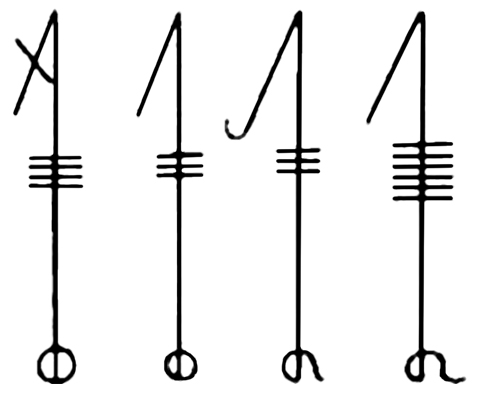
Sleep-thorn from the Huld manuscript.

Brynhild informs Sigurd that Odin stung her with a “sleep-thorn” (svefnþorn). Sleep-thorns are mentioned in several other places in the lore, including The Saga of King Hrolf Kraki and Gongu-Hrolfs Saga. However, accounts differ as to exactly what the sleep-thorn is. It figures in some Icelandic lists of spells, which are from texts of a much later date than the Volsung Saga (though the spells themselves may be very old). The Huld manuscript features a sigil, identified as the svefnþorn, which must be “carved in oak and laid under the head of the one who is supposed to sleep so that he cannot awaken until it is taken away.”[11]

Another text gives the following instructions for creating a sleep-thorn: “Take the heart sac of a dog; pour pickling broth into it. Then dry it for thirteen days long, in a place where the sun does not shine on it, and when the one to whom you wish to do this is asleep, hang this in the house over him completely without his knowing it.”[12] Neither of these spells describes something that one could be stung by (and the text clearly says “Óðinn stakk mik,” Odin stuck me).

As others have noted, Brynhild’s situation, brought about by the sleep-thorn, must also remind us of the tale of Sleeping Beauty. Though this story was first recorded in the modern period, it probably has much older origins and the story of Brynhild is a likely source. In Sleeping Beauty, the princess falls into a deep sleep after pricking her finger on a spindle. In the version recorded by the Brothers Grimm, a hedge of thorns then grows and surrounds the castle containing the princess, rather like the ring of fire in the saga. No man is able to pass through it except for a handsome prince, who enters the castle and awakens the princess with a kiss.

3. The Fylgja and the Valkyrja

We must now discuss the idea that Brynhild is the “higher self” of Sigurd—more specifically, we must discuss why she is his fylgja. The fylgja (often rendered in English as “fetch”) is usually understood to be a “part” of the Germanic “soul.”[13] I have put these words in quotes to warn the reader that these are not “parts” in any conventional sense, and it is problematic to use the loaded term “soul” to refer to the beliefs of our pre-Christian ancestors. Over time, the concept of the fylgja seems to have blended with that of the hamingja. Both are conceived, at least in part, as guardian spirits and both can be passed on to later generations.[14]

The word fylgja is derived from Proto-Germanic *fulgijaną, “to follow,” from which modern English “follow” ultimately derives. The fylgja is thus a being that follows or accompanies. In the lore, it often takes the form of a woman—indeed, sometimes a gigantic woman clad in armor (the fulgjukona, or fylgja-woman). The fylgja also takes the form of an animal, usually one that represents the type of person someone is. This suggests that the fylgja is the individual appearing under another aspect. A man’s fylgja is effectively his essence.[15] It both is him, yet it is not, for it was likely also the fylgja of his ancestors and may become the fylgja of his son, or some other descendent.

Claude Lecouteux writes:

[The examples from the sources] suggest that human beings have corresponding selves, perhaps doubles, in the otherworld and that communication is possible because there is really no border between that world and this. “The living body,” writes Régis Boyer, “would be only the material, visible intervention of a reality whose true essence would be in the kingdom of the dead, and which helps and follows each individual. The soul, here [in this world], would be a reflection.” This is one more proof that we take part as a microcosm in the life of the macrocosm, the world of the spirits, the dead, the ancestors, because the fylgja does not vanish with the disappearance of the one to whom it is attached and does not die out with a family.[16]

Just as there is “really no border” between the otherworld and this, there is no gulf between the individual and his fylgja. This “essence” is not a separate “thing,” rather it is the individual in another manifestation. [17] Yet the lore also suggests that the fylgjur are endowed with agency and capable of independent action (they could hardly be “guardian spirits” if they were not). Further, the sources indicate that one’s fylgja is not limited to the animal and the woman. Indeed, the lore suggests that a man can acquire multiple fylgjur.[18]

We noted a moment ago that the fylgja can appear as a gigantic woman clad in armor. This clearly suggests that there is a link between the fylgja and the valkyrja. Stephen Flowers has done a great deal to illuminate this connection, both in his work on the Germanic tradition and, as we shall see, in his treatment of Zoroastrian ideas. He writes that “The fylgjur have often been associated with the disir, and there is strong evidence to suggest that the valkyrur may also be related to the fylgja and hamingja concepts.”[19] Hilda Ellis Davidson concurs.[20] As one piece of evidence favoring this link, Flowers cites a fact we noted earlier, that all the various heroes in the lore bearing the name Helgi “are attached to valkyrur, and they act as guardian spirits, as dispensers of gifts and wisdom, and as lovers.”[21]

In Original Magic: The Rituals and Initiations of the Persian Magi, Flowers develops parallels between the Valkyries and the Zoroastrian fravashis. These parallels are so strong that they suggest, as Flowers points out, either a common Indo-European source for both concepts, or the influence of Iran on the Germanic tribes.[22] There is a possible connection even in the names. Valkyra comes from Old Norse valr (the slain; those who have died in battle) and kjósa (“to choose”), thus “chooser of the slain.” Fravashi may come from var-, “to choose.” But the sense of “choice” may differ. Reconstructed *fravarti might mean “one who has been chosen.” This does not provide strong evidence of a Valkyrie-fravashi connection, but it is nonetheless interesting.

Each person has his own fravashi which acts as a guardian angel and guide. Flowers writes:

Originally, they patrolled the boundaries of the ramparts of heaven but volunteered to descend to earth and incarnate as human beings; they then stand by individuals to the end of their days. . . . . The fravashi also serves as an ideal for the soul to strive toward and emulate. Ultimately, the individual is reunited with his fravashi and becomes one with it after death.[23]

Flowers notes, further, that the fravashis are depicted as “spear-carrying riders who protect and defend heaven.”[24] Further, the fravashi “is an ancestral protective spirit or angel and also the ‘higher, spiritual self’ of an individual. Fravashis actually receive cultic sacrifice.”[25] William W. Malandra, in An Introduction to Ancient Iranian Religion, notes that there is clear evidence that the fravashis were regarded as ancestral spirits, and that the fravashis of the dead were venerated.[26] While the word fravashi is feminine in gender, there is, however, no real evidence that they were conceived as women.[27] Nevertheless, the parallels between the fravashi and the Valkyrie are significant.

This brief discussion of the two is an example of comparative mythology.[28] We have made this comparison, however, in order to strengthen our case for the equivalence of the Valkyries and the fylgjur. It appears that there is good reason to believe that the Valkyries functioned as guardian spirits, that they were ancestral spirits who could be reborn and re-attach themselves to subsequent generations, and that they also represented an ideal “higher, spiritual self” of the individual.

Flowers notes that the fylgja, “which often appears as a large feminine being, is usually not the fylgja of the individual (mannsfylgja), but rather of the clan (aettarfylgja) which actually represents the ‘wirkende Macht der Sippe’ [the effective power of the clan].”[29] Nevertheless, the line between mannsfylgja and aettarfylgja is rather blurry. My hypothesis is that Brynhild is the fylgja of Sigurd, and simultaneously the fylgja of the Volsung clan itself. Having achieved the supreme act of heroism—having embodied the perennial archetype of dragonslayer (see part eighteen)—Sigurd now meets with the spirit of the Volsung clan, who will initiate him into further mysteries. These are mysteries of Odin, who is Volsi and the progenitor of the entire clan.

Writing of the fravashi, Flowers emphasizes that it should not be thought of as an entity separate from oneself. “Rather it is the very core of your being, usually hidden from you. By gaining awareness of it and reforming yourself in accordance with its character, you are really becoming who you are.”[30] In meeting Brynhild, Sigurd meets with himself, or with the higher part of himself. Flowers cites Aleister Crowley’s theory that the real purpose of “Magick” is to enter into dialogue with one’s “Holy Guardian Angel” and to thereby gain wisdom. Flowers endorses this claim, saying that:

The real aim of operative spiritual technologies, or operative theology, is to gain consciousness of, and communication with, the preexisting divine component of the individual psyche. Once this link is forged and made permanent, the individual becomes . . . both a wise man and a man of power. This is the essence of original magic.[31]

Sigurd’s removing the armor from Brynhild represents the revealing of the fulgjukona or valkyrja within himself. She is the wise center within the fire of the solar hero. Brynhild awakens to Sigurd, but he also awakens to her. The purpose of their meeting is the development of his power—including his magical power.

In our next installment, we will begin to explore the runic mysteries Brynhild imparts to Sigurd.

Notes

[1] Vǫlsunga Saga—The Saga of the Volsungs, trans. R.G. Finch (London: Thomas Nelson, 1965), 34.

[2] Finch, 35.

[3] Finch, 35.

[4] Finch, 39.

[5] The Poetic Edda, trans. Carolyne Larrington (Oxford: Oxford University Press, 1996), 282.

[6] As noted, the saga does not explicitly say at this point that a ring of fire surrounds Brynhild’s fortress or that Sigurd rides through it. Again, the text says only that he saw “a bright glow ahead as if there were a fire blazing and it lit up the sky.” Later in the text, the ring of fire is explicitly mentioned when Sigurd, in the guise of Gunnar, rides through it to woo Brynhild. Only a pedant would dispute that the ring of fire is present when Sigurd first meets Brynhild. It is clearly implied. Moreover, Fafnismal states that the Valkyrie’s hall is “encircled all around by flame.” See The Poetic Edda, trans. Jackson Crawford (Indianapolis: Hackett Publishing, 2015), 250. Helreith Brynhildar also states that Odin “kindled high-flaming fires” around Brynhild’s hall upon putting her to sleep (Crawford, Poetic Edda, 291).

[7] Julius Evola, The Hermetic Tradition, trans. E.E. Rehmus (Rochester, VT: Inner Traditions, 1995), 35.

[8] Edred Thorsson, Runelore (York Beach, Maine: Samuel Weiser, 1987), 108.

[9] Finch, 35.

[10] Finch, 35.

[11] Stephen E. Flowers, The Galdrabók (Smithville, TX: Rûna-Raven Press, 2005), 63.

[12] Flowers, Galdrabók, 76.

[13] For a discussion of all the parts, see Runelore, 167-173. See also my essay “Ancestral Being.”

[14] Because of this, Stephen Flowers uses the term “hamingja–fylgja complex.” He believes it is probable that these were once distinct concepts, but over time blended together so that it is now rather difficult to clearly mark the difference between the two. See Stephen E. Flowers, Sigurðr: Rebirth and the Rites of Transformation (Smithfield, TX: Rûna-Raven, 2011), 47, 52. See also H.R. Ellis Davidson The Road To Hel (Cambridge: Cambridge University Press, 2013), 130.

[15] Flowers writes that “the fylgja as well as the hamingja must not be thought of as forms, but rather as aspects of the ‘spiritual’ essence itself, which was originally equated with the procreative power and potency of a man” (Flowers, Sigurðr, 53).

[16] Claude Lecouteux, The Return of the Dead, trans. Jon E. Graham (Rochester, VT: Inner Traditions, 2009), 167. Quoting Boyer, “Hamr, Fylgja, Hugr: L’Ame pour les anciens Scandinaves,” Heimdall 33 (1981): 5-10. Italics added, as well as material in square brackets. Earlier in the same text Lecouteux compares the fylgja to the Egyptian ka and the Greek eidolon (pp. 163-164). Davidson (p. 130) refers to the fylgja as the “shadowy double.”

[17] Edred Thorsson has also drawn on Jung in discussing the fylgja, specifically Jung’s theory of the “anima/animus.” These are interesting speculations, however I know of no evidence in the Germanic sources which suggests that women have a male fylgja. Thorsson, Runelore, 172-173.

[18] See Flowers, Sigurðr, 55. See also Lecouteux, 166.

[19] Flowers, Sigurðr, 56.

[20] Davidson, 135.

[21] Flowers, Sigurðr, 56.

[22] Flowers, Original Magic: The Rituals and Initiations of the Persian Magi (Rochester, VT: Inner Traditions, 2017), 62. Flowers writes, “These mythologems either sprang from a common Indo-European source or else the idea was adopted into the Germanic world from the Iranian tribes, with which the Germanic folk often made alliances over the centuries beginning as early as the middle of the first millennium BCE.”

[23] Flowers, Original Magic, 62.

[24] Flowers, Original Magic, 66.

[25] Flowers, Original Magic, 65-66.

[26] Richard W. Malandra, An Introduction to Ancient Iranian Religion (Minneapolis, MN: University of Minnesota Press, 1983), 103-104.

[27] See Malandra, 103. However, the Zoroastrian concept of the daēnā, a kind of “spiritual double” to the individual, was visualized in at least one context as a woman. See Malandra, 104.

[28] See also Julius Evola, The Metaphysics of Sex (Rochester, VT: Inner Traditions, 1983), 129.

[29] Flowers, Sigurðr, 55-56. Flowers is quoting Jan de Vries.

[30] Flowers, Original Magic, 66-67. Italics in original.

[31] Flowers, Original Magic, 62-63.

An Esoteric Commentary on the Volsung Saga—Part XX: Meeting the Valkyrie

An%20Esoteric%20Commentary%20on%20the%20Volsung%20Saga%E2%80%94Part%20XX%3A%0AMeeting%20the%20Valkyrie%0A

Share

  • Gab

Enjoyed this article?

Be the first to leave a tip in the jar!

Instant Echeck GreenPay™

Related

  • Heidegger on Nietzsche, Part Two

  • Heidegger on Nietzsche, Part One

  • Remembering Julius Evola

  • An Esoteric Commentary on the Volsung Saga – Part XXII

  • An Esoteric Commentary on the Volsung Saga, Part XXI:

  • Counter-Currents in Rome

  • Neo-fascism in film part 4

  • What Rome Means to Me

Tags

alchemyAn Esoteric Commentary on the Volsung SagachaosClaude LecouteuxCollin Clearycomparative mythologyhermeticismHilda Ellis DavidsonJulius EvolaOdinrunesSigurdStephen FlowersThe Worm Ouroboros

Previous

« Will Trump Be Sacrificed to Moloch?

Next

» The Tragic Tale of the Humboldt Broncos

2 comments

  1. Beau Albrecht says:
    March 22, 2026 at 4:04 am

    Interesting take there.  Keep up the good work!

    0
    0
    Reply
    1. Collin Cleary says:
      March 23, 2026 at 7:50 pm

      Thank you!

      0
      0
      Reply

If you have a Subscriber access,
simply login first to see your comment auto-approved.

Post a comment Cancel reply

Note on comments privacy & moderation

Your email is never published nor shared.

Comments are moderated. If you don't see your comment, please be patient. If approved, it will appear here soon. Do not post your comment a second time.

Upcoming podcasts
  • Rob Rundo on Counter-Currents Radio

    Rob Rundo on Counter-Currents Radio

    Counter-Currents Radio

    Sat, Jun 13th — 3 pm EST / 9 pm CET
  • Daniel Tyrie on Counter-Currents Radio

    Daniel Tyrie on Counter-Currents Radio

    Counter-Currents Radio

    Sat, Jun 20th — 3 pm EST / 9 pm CET

Writers of May

(2 votes) Morris van de Camp David M. Zsutty Derek Stark Jayant Bhandari Greg Johnson

Articles of May

The Lunch Wars by David M. Zsutty Heidegger on Nietzsche, Part One by Collin Cleary 2 votes
    • Editor’s Update
      Rob Rundo Rescheduled to Next Week on Counter-Currents Radio;
      Tonight Greg Johnson & David Zsutty Answer Your Questions;
      Fundraiser Update & a New $20,000 Matching Grant

      Greg Johnson

    • The Counter-Currents 2026 Fundraiser
      Lifetime Subscriber Welcome Packages Extended

      Greg Johnson

    • Nationalism This Week
      Who’s Looking Back?

      Greg Johnson

      16

    • China’s Threat to American Security:
      Food, Farmland, Foreign Control, & Energy Policy

      Lipton Matthews

      1

    • The Bitter End of Western Metaphysics:
      Heidegger on Nietzsche, Part Two

      Collin Cleary

      7

    • The Killing of Henry Nowak

      Mark Gullick

      28

    • The Crisis of Chinese Technology Thieves

      Morris van de Camp

      1

    • The Strange World of Gender Bender Fiction:
      & What This Genre Tells Us About Autosexuality

      Dani Vypont

      3

    • Watching the Watchers:
      The Dark Triad Question

      David M. Zsutty

      14

    • The Remigration Movement Solidifies

      F. Roger Devlin

      1

    • Casting Aspersions:
      The Fatal Consequences of Race-Swapped Casting, From Helen of Troy to Henry of Southampton

      Steven Tucker

      20

    • The Murder of Henry Nowak

      Millennial Woes

      23

    • Don’t Forget to Vote in Our Writer & Article of the Month Poll

      Greg Johnson

    • The Robot Hotdog Stand

      Greg Johnson

      35

    • Laughing Our Way to Victory

      Dave Chambers

      7

    • The Zodiac Killer

      Mark Gullick

      11

    • Jared Taylor: What Rome Means to Me

      Jared Taylor

      1

    • An Interview with Endeavour:
      My Way of Life Is an Adventure!

      Ondrej Mann

      6

    • José Pedro Zúquete’s The Identitarians

      Greg Johnson

      3

    • Editor’s Update
      Fundraiser Update & How to Watch the Remigration Summit

      Greg Johnson

      5

    • The Bitter End of Western Metaphysics:
      Heidegger on Nietzsche, Part One

      Collin Cleary

      11

    • Berlin: City of Stones

      Spencer J. Quinn

      6

    • True Folk-Horror Is Horror of Your Own Folk:
      Mark Gatiss vs the Brexit Blind Dead  

      Steven Tucker

      4

    • Counter-Currents Radio Podcast No. 689
      Thomas Massie, the America 2050 Bust, the Need for Whites to Divest from America, the AI Economic Apocalypse, & Pro-White Project Pitches to Billionaires

      Counter-Currents Radio

      7

    • Nationalism This Week
      Remigration is Inevitable, Part 3

      Greg Johnson

      27

    • Why Billionaires Should Fund White Identity Politics

      Lipton Matthews

      8

    • How Cold War Two Came About

      Morris van de Camp

      5

    • Now Available for Pre-Order at a Special Price!
      Greg Johnson’s The Philosopher Is In

      Greg Johnson

    • David Zsutty’s Elevator Pitch to a Billionaire

      David M. Zsutty

      1

    • Headbanging Lite

      Mark Gullick

      5

    • White Advocacy Past and Present

      Peter Bradley

      13

    • The Lunch Wars

      David M. Zsutty

      47

    • The Russians are Coming/The Russians are Coming

      Steven Clark

      1

    • Peak Fatigue in Fort Wayne

      Gabriel Anderson

      24

    • Keith Woods’ Elevator Pitch to a Billionaire

      Keith Woods

    • The Cruelty of Kindness

      Morris van de Camp

      9

    • Predation Wearing the Mask of Civilization

      Jayant Bhandari

      13

    • The Mandalorian & Grogu

      Trevor Lynch

      24

    • Editor’s Update
      Fundraiser Update & a New $20,000 Matching Grant
      Greg Johnson & David Zsutty Discuss Thomas Massie on Counter-Currents Radio

      Greg Johnson

      2

    • How the Jews Defeated Thomas Massie—& Themselves

      David M. Zsutty

      25

    • Jared Taylor’s Elevator Pitch to a Billionaire

      Jared Taylor

      15

    • Nationalism This Week
      Remigration Is Inevitable, Part 2

      Greg Johnson

      8

    • Could Fascism Work?

      Mark Gullick

      40

    • Jonathan Bowden’s Deliverance
      Part 7

      Jonathan Bowden

    • China’s Quiet Hand:
      Influence, Infiltration, & the Western Blind Spot

      Lipton Matthews

      9

    • Counter-Currents Radio Podcast No. 688
      Tyler Dykes on Running for US Congress in South Carolina

      Counter-Currents Radio

      3

    • Lothrop Stoddard’s The Revolt Against Civilization

      Spencer J. Quinn

      14

    • Lewis Strauss Did Nothing Wrong:
      How the politics of the Atom Bomb during the early Cold War Apply to Artificial Intelligence Today

      Morris van de Camp

      14

    • The Ghost of the Confederacy

      Dave Chambers

      12

    • America’s Century of Humiliation has Begun

      Greg Johnson

      27

    • Vauquelin

      Who’s Looking Back?

      You must judge AI/LLM based on those who control it. With the likes of Sam Altman and Alex Karp...

    • Chud

      Who’s Looking Back?

      There's another dangerous option where homebrew AI models scale up and the consumers get their...

    • Gabe

      Who’s Looking Back?

      Boom. Nailed it.

    • Joe Gould

      The Killing of Henry Nowak

      This is a good article. The only thing I want to add is, above all we must guard ourselves against...

    • Greg Johnson

      Who’s Looking Back?

      Thank you I also wonder if these AI bots are being used to gather intelligence on influential...

    • E_Perez

      Heidegger on Nietzsche, Part Two

      "Philosophy helps Western man understand how we got to where we are, and where things went wrong...

    • Chud

      Who’s Looking Back?

      I'll try to give a rundown. AI is a language learning model (LLM) that uses floating point...

    • Will Williams

      How the Jews Defeated Thomas Massie—And Themselves

      Massie to Honor USS Liberty Crew on House Floor [email protected]  June 6, 2026  thomas...

    • JBP

      Editor’s Update

      Sorry but... Wrong, wrong wrong and wrong. The current momentum of history will not change with a...

    • Will Williams

      The SPLC Indictment

      The indictment of the Southern Poverty Law Center by the Department of Justice on 21 April is...

    • Zarathustra

      Heidegger on Nietzsche, Part Two

      I rather liked this song by Puscifer.

    • Will Williams

      The Killing of Henry Nowak

      Pray in one hand, shit in the other, and see which hand fills up first.Connor McDowell: June 6...

    • Julius Strange

      Who’s Looking Back?

      It is always possible to run AI models locally to prevent data being collected. The bigger and more...

    • tempus

      Casting Aspersions

      There is a measure of beauty. It is the “Helen.” One Helen equals that quantity of beauty that...

    • tempus

      The Robot Hotdog Stand

      Since AI is a heavy energy consumer, the surest and quickest way for an AI to prevent another AI...

    • Tye

      Heidegger on Nietzsche, Part Two

      I remember his excellent pieces about The Birds. Thanks for the reminder, I’m going thru his essays...

    • SteveH

      The Killing of Henry Nowak

      'who" not "whom"

    • DenisetheCelt

      Laughing Our Way to Victory

      The Black Lies Splatter scam was run by jews. Period. Floyd was worthless drug-addicted criminal...

    • DenisetheCelt

      Laughing Our Way to Victory

      I agree. I think it's a lie. I don't think senile old Trump whispered a word of dissent to his...

    • DenisetheCelt

      Laughing Our Way to Victory

      Yes! Dean Martin was my mother's FAVORITE singer. (Tom Jones was #2). I heard a "rat pack" broadcast...

    • Earth Day Special

      John Morgan

      12

    • A Robertson Roundup
      Remembering Wilmot Robertson
      (April 16, 1915 – July 8, 2005)

      Margot Metroland

      13

    • The Paranoid Style in White Nationalism

      Greg Johnson

      30

    • Join the Dance!

      Andrew Hamilton

      1

    • We Can’t Save the Earth Without Reducing African Birth Rates

      James Dunphy

      36

    • “I’m Not a Conspiracy Theorist, but . . .”:
      Jeffrey Epstein’s Death Gives New Life to “Conspiracy Theories”

      Greg Johnson

      22

    • Sylvia Plath: Stasis in Darkness

      Vic Olvir

      17

    • Vanguardism, Vantardism, & Mainstreaming

      Greg Johnson

      80

    • Aviation, Geography, & Race

      Charles Lindbergh

      3

    • Some Thoughts on Yule

      Collin Cleary

      4

    • Living in Truth:
      A Yuletide Homily

      Jef Costello

      7

    • John Kennedy Toole’s A Confederacy of Dunces

      Greg Johnson

      20

    • On Aleksandr Solzhenitsyn’s Warning to the West

      Spencer J. Quinn

      7

    • Elitism, British Modernism, & Wyndham Lewis

      Jonathan Bowden

      6

    • Philip K. Dick’s Do Androids Dream of Electric Sheep? as Anti-Semitic/Christian-Gnostic Allegory

      Greg Johnson

      20

    • “Conspiracy Theory” or Conspiracy?

      Andrew Hamilton

      21

    • Remembering H. P. Lovecraft
      (August 20, 1890–March 15, 1937)

      Greg Johnson

      3

    • Who Are We?
      Nordics, Aryans, & Whites

      Greg Johnson

      71

    • Remembering William Gayley Simpson
      (July 23, 1892–December 31, 1990)
      A Pleasant Afternoon with Harriet & Bill Simpson

      Margot Metroland

      18

    • Here are the Young Men
      Remembering Ian Curtis
      (July 15, 1956–May 18, 1980)

      Mark Gullick

      18

    • Percy Grainger
      Artist of the Right

      Alex Graham

      7

    • Remembering Revilo Oliver
      (July 7, 1908–August 20, 1994)

      Greg Johnson

      18

    • The Meaning of July 4th for the White Man

      Gregory Hood

      13

    • The Front National’s Evolution

      Bruno Mégret

    • Merwin K. Hart
      Forgotten American Hero & Man of the Right

      Morris van de Camp

      10

    • George Orwell’s Nineteen Eighty-Four

      Jonathan Bowden

      8

    • Carleton S. Coon
      Scientist & Reluctant White Advocate

      Morris van de Camp

      3

    • The Kwanzaa Absurdity Will Be Dwarfed by Juneteenth

      Robert Hampton

      10

    • Stravinsky

      Alex Graham

      7

    • Like the Roman:
      Remembering Enoch Powell (1912-1998)

      Mark Gullick

      23

    • The Game of Tarot

      Mark Gullick

      1

    • Institutions Cannot Be Transplanted

      Jayant Bhandari

      5

    • Jonathan Bowden’s Deliverance
      Part 5

      Jonathan Bowden

    • Crosstown Traffic:
      Jimi Hendrix & The Post-War Rock ‘N’ Roll Revolution

      Mark Gullick

      1

    • Slaves from the North:
      Finns & Karelians in the East European Slave Trade, 900–1600

      Lipton Matthews

      14

    • Neo-Fascism in Film
      Part 4

      Karel Veliky

      2

    • David Lean’s A Passage to India

      Spencer J. Quinn

      1

    • Elites are Essential to Development

      Lipton Matthews

      7

    • Jonathan Bowden’s Deliverance
      Part 4

      Jonathan Bowden

    • Neo-Fascism in Film
      Part 3

      Karel Veliky

      6

    • E. M. Forster’s A Passage to India & the Indian Mentality

      Spencer J. Quinn

      25

    • Jonathan Bowden’s Deliverance
      Part 3

      Jonathan Bowden

    • The Rest Is Silence
      Heidegger’s Quietism

      Mark Gullick

      2

    • Dispelling the Historical Fallacy of Indian Nationalism

      Lipton Matthews

      8

    • Neo-Fascism in Film
      Part 2

      Karel Veliky

      8

    • Jonathan Bowden’s Deliverance
      Part 2

      Jonathan Bowden

    • Life of a Klansman

      Mark Gullick

      8

    • Jonathan Bowden’s Deliverance, Part 1

      Jonathan Bowden

    • Decolonial Ideas are Holding Back Developing Countries

      Lipton Matthews

      8

    • Neo-fascism in Film, Part 1

      Karel Veliky

      21

    • Jonathan Bowden’s Onslaught, Part 8
      Divigations on Decadence

      Jonathan Bowden

    • Jonathan Bowden’s Onslaught, Part 7
      Intrigues in the National Front

      Jonathan Bowden

      1

    • Rotten to the Core

      Mark Gullick

      8

    • Strauss on Husserl’s “Philosophy as Rigorous Science”

      Greg Johnson

    • Jonathan Bowden’s Onslaught, Part 6
      Francis Bacon & Right-Wing Nihilism

      Jonathan Bowden

    • London After (& Before) Midnight:
      Aleister Crowley, The Landlord’s Worst Nightmare

      James J. O'Meara

      2

    • Jonathan Bowden’s Onslaught, Part 5
      The Post-War British Far Right

      Jonathan Bowden

    • No Rules: Rollerball

      Mark Gullick

      4

    • Jonathan Bowden’s Onslaught, Part 3
      Brett Easton Ellis’ American Psycho

      Jonathan Bowden

    • An Alternate History of the Harris Presidency

      Beau Albrecht

      5

    • András László
    • Derek Hawthorne
    • Beau Albrecht
    • Alain de Benoist
    • Kerry Bolton
    • Jonathan Bowden
    • Collin Cleary
    • Jef Costello
    • Savitri Devi
    • Julius Evola
    • Jim Goad
    • Gregory Hood
    • Juleigh Howard-Hobson
    • Greg Johnson
    • Charles Krafft
    • Anthony M. Ludovici
    • Trevor Lynch
    • H. L. Mencken
    • J. A. Nicholl
    • James J. O’Meara
    • Christopher Pankhurst
    • Tito Perdue
    • Michael Polignano
    • Spencer J. Quinn
    • Fenek Solère
    • Irmin Vinson
    • Leo Yankevich
    • Francis Parker Yockey
    • Multiple authors
  • Editor-in-Chief

    • Greg Johnson, Ph.D.

    Featured Writers

    • Beau Albrecht
    • Gunnar Alfredsson
    • Collin Cleary, Ph.D.
    • Jef Costello
    • Morris V. de Camp
    • F. Roger Devlin, Ph.D.
    • Stephen Paul Foster, Ph.D.
    • Jim Goad
    • Alex Graham
    • Mark Gullick, Ph.D.
    • Greg Johnson, Ph.D.
    • Travis LeBlanc
    • Trevor Lynch
    • Margot Metroland
    • James J. O’Meara
    • Angelo Plume
    • Spencer J. Quinn
    • Fred Reed
    • Clarissa Schnabel
    • Michael Walker
    • David M. Zsutty

    Frequent Writers

    • Asier Abadroa
    • Aquilonius
    • Alain de Benoist
    • Kerry Bolton, Ph.D.
    • Dave Chambers
    • Steven Clark
    • James Dunphy
    • Endeavour
    • Richard Houck
    • Jason Kessler
    • Titus Livius
    • Ondrej Mann
    • Lipton Matthews
    • Mark Mazari
    • John Morgan
    • Jaroslav Ostrogniew
    • Kathryn S.
    • Christian Secor
    • Anne Wilson Smith
    • Thomas Steuben
    • William De Vere
    • Kenneth Vinther
    • Max West

    Classic Authors

    • Maurice Bardèche
    • Jonathan Bowden
    • Julius Evola
    • Guillaume Faye
    • Ernst Jünger
    • Kevin MacDonald, Ph.D.
    • D. H. Lawrence
    • Charles Lindbergh
    • Jack London
    • H. P. Lovecraft
    • Anthony M. Ludovici
    • Sir Oswald Mosley
    • National Vanguard
    • Friedrich Nietzsche
    • Revilo Oliver
    • William Pierce
    • Ezra Pound
    • Saint-Loup
    • Savitri Devi
    • Carl Schmitt
    • Miguel Serrano
    • Oswald Spengler
    • P. R. Stephensen
    • Jean Thiriart
    • John Tyndall
    • Dominique Venner
    • Leo Yankevich
    • Francis Parker Yockey

    Other Authors

    • Howe Abbott-Hiss
    • Michael Bell
    • Giles Corey
    • Jack Donovan
    • Richardo Duchesne, Ph.D.
    • Emile Durand
    • Guillaume Durocher
    • Mark Dyal
    • Tom Goodroch
    • Andrew Hamilton
    • Robert Hampton
    • Huntley Haverstock
    • Derek Hawthorne
    • Gregory Hood
    • Juleigh Howard-Hobson
    • Alexander Jacob
    • Ruuben Kaalep
    • Tobias Langdon
    • Julian Langness
    • Patrick Le Brun
    • G A Malvicini
    • John Michael McCloughlin
    • Millennial Woes
    • Michael O’Meara
    • Christopher Pankhurst
    • Michael Polignano
    • J. J. Przybylski
    • Quintilian
    • Edouard Rix
    • C. B. Robertson
    • C. F. Robinson
    • Herve Ryssen
    • Alan Smithee
    • Fenek Solere
    • Ann Sterzinger
    • Robert Steuckers
    • Tomislav Sunic
    • Donald Thoresen
    • Marian Van Court
    • Irmin Vinson
    • Book Reviews
    • Movie Reviews
    • TV Reviews
    • Music Reviews
    • Art Criticism
    • Graphic Novels & Comics
    • Video Game Reviews
    • Fiction
    • Poems
    • Interviews
    • Videos
    • English Translations
    • Other Languages
      • Arabic
      • Bulgarian
      • Croatian
      • Czech
      • Danish
      • Dutch
      • Estonian
      • Finnish
      • French
      • German
      • Greek
      • Hungarian
      • Italian
      • Lithuanian
      • Norwegian
      • Polish
      • Portuguese
      • Romanian
      • Russian
      • Slovak
      • Spanish
      • Swedish
      • Ukrainian
    • Commemorations
    • Why We Write
  • Archives
  • Top 100 Commenters
  • The Looney Bin
Sponsored Links
Europa.com Above Time Coffee Antelope Hill Publishing Paul Waggener IHR-Store Spencer J. Quinn American Renaissance Jim Goad The Occidental Observer
Donate Now Mailing list
Books for sale
  • The Philosopher Is In
  • Sexual Utopia in Power (Expanded Edition)
  • In Defense of Prejudice
  • Loving Our Own
  • Tyranny & Wisdom
  • The Populist Moment
  • Is America Doomed?
  • To all books
Copyright © 2026 Counter-Currents Publishing, Ltd.

Paywall Access


Please enter your email address.

Lost your password?

Edit your comment

Writer & Article of the Month May 2026

Voting for this month has concluded. Here are the final results!

Top Writers

  • #1 Morris van de Camp 2 votes
  • #2 David M. Zsutty 2 votes
  • #3 Derek Stark 2 votes
  • #4 Jayant Bhandari 2 votes
  • #5 Greg Johnson 2 votes
  • #6 Jared Taylor 1 vote
  • #7 Collin Cleary 1 vote
  • #8 Spencer J. Quinn 1 vote
  • #9 Mark Gullick 1 vote
  • #10 Lipton Matthews 1 vote
  • #11 Keith Woods 1 vote
  • #12 Steven Tucker 1 vote

Top Articles

  • #1 The Lunch Wars 2 votes
  • #2 Heidegger on Nietzsche, Part One 2 votes
  • #3 Could Fascism Work? 1 vote
  • #4 Jared Taylor's Elevator Pitch to a Billionaire 1 vote
  • #5 Predation Wearing the Mask of Civilization 1 vote
  • #6 Peak Fatigue in Fort Wayne 1 vote
  • #7 Keith Wood's Elevator Pitch to a Billionaire 1 vote
  • #8 Do You Want to Play a Game? 1 vote
  • #9 Why Billionaires Should Fund White Identity Politics 1 vote
  • #10 The 1970s: The Golden Age of Hijacking 1 vote
  • #11 True Folk-Horror Is Horror of Your Own Folk 1 vote
  • #12 Finding Atlantis Part 4 1 vote
  • #13 Berlin: City of Stones 1 vote
  • #14 The Ghost of the Confederacy 1 vote
  • #15 Lothrop Stoddard’s The Revolt Against Civilization 1 vote

Total votes cast: 17

Insert/edit link

Enter the destination URL

Or link to existing content

    No search term specified. Showing recent items. Search or use up and down arrow keys to select an item.