Counter-Currents
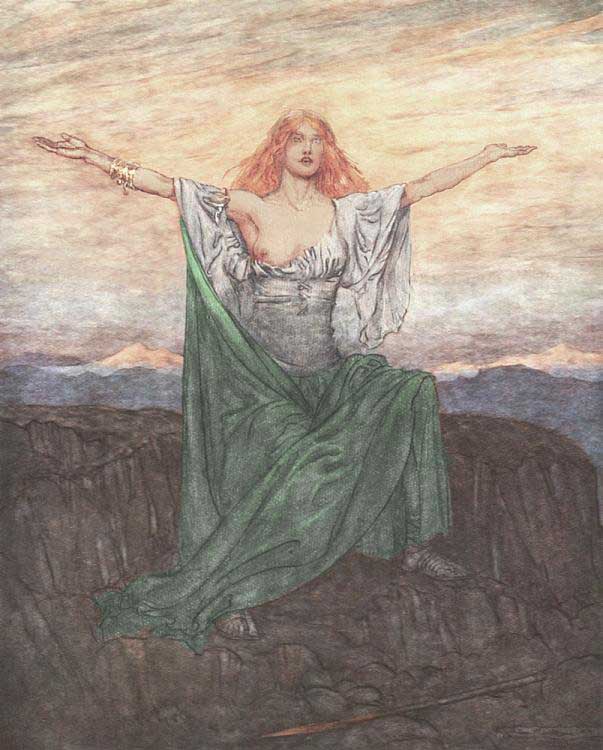
Hail to the Day by Arthur Rackham
Hail to the Day by Arthur Rackham
3,876 words
1. Introduction: Wisdom Speaking
In our last installment, we discussed Sigurd’s meeting with the Valkyrie Brynhild, and how their encounter recapitulates, on a higher level, the dualities found in the story of the dragon slaying. When Sigurd rides through the fire to meet the Valkyrie he is going within his own solar, masculine being to reach the lunar feminine. (more…)
5,369 words
1. Brynhild and Sigerdrifa
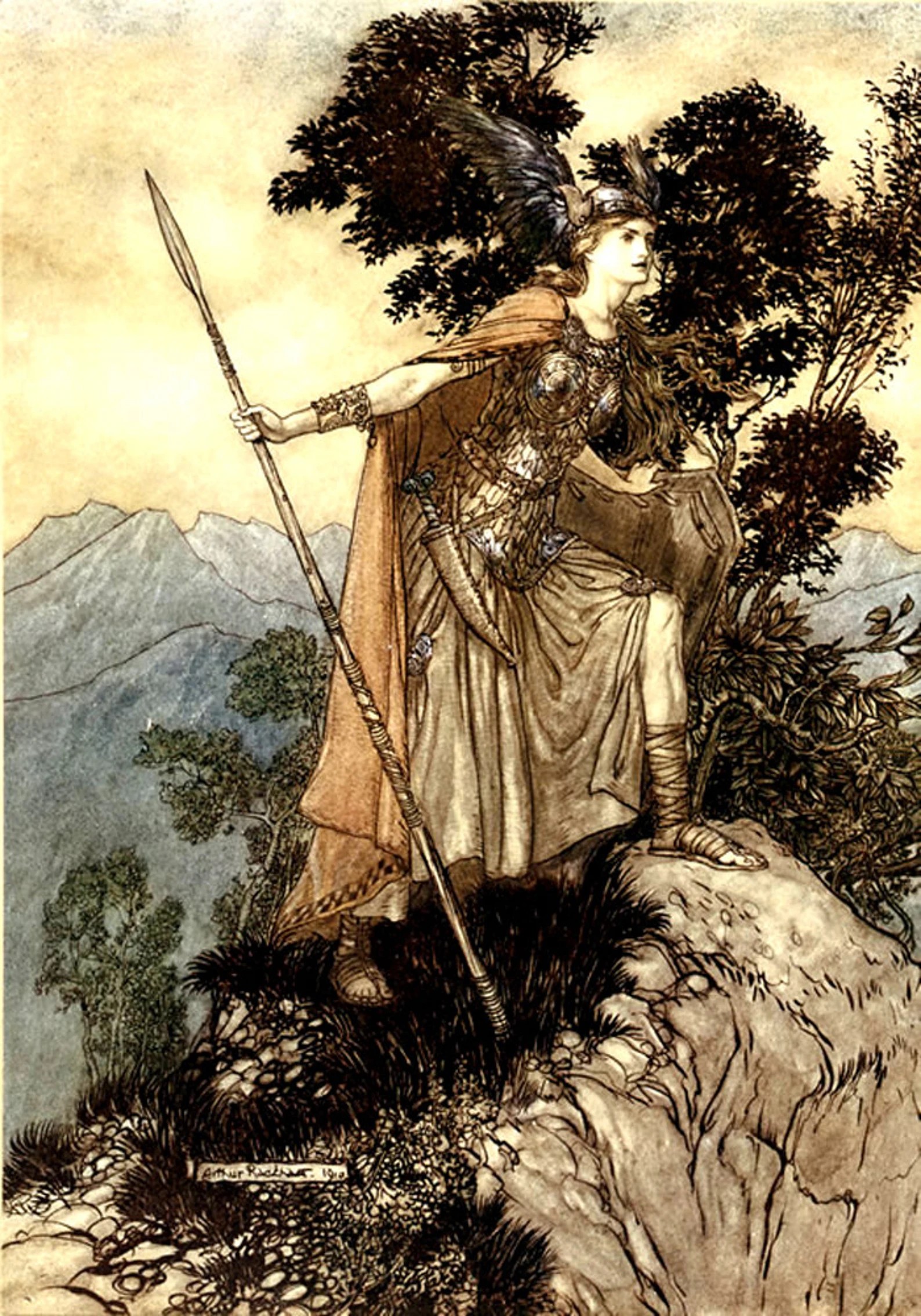
Sigurd has now slain the dragon Fafnir and tasted his blood, thereby acquiring knowledge of the language of birds. We discussed the esoteric significance of this in the last three installments. The birds tell Sigurd that he ought to ride “up to Hindarfjall, where Brynhild sleeps.” There, they say, “he would learn much wisdom.”[1] This is precisely where Sigurd heads, after loading Fafnir’s cursed treasure onto Grani. Two chapters of the saga are devoted to his meeting with Brynhild, and they are rich with occult significance. Among other things, the first of these chapters is one of the chief sources for our knowledge of rune magic. (more…)
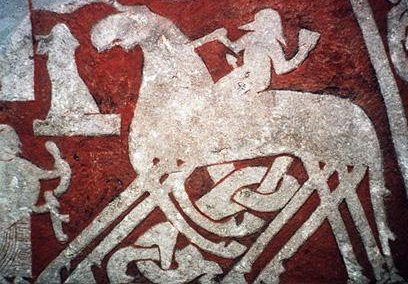
Odin riding Sleipnir in a detail on the Tjängvide stone
Odin riding Sleipnir in a detail on the Tjängvide stone
5,668 words
1. The Language of Birds
In our last installment, we explored the idea that Sigurd bathing in the dragon’s blood is a symbol for the achievement of the “spiritual corporeality.” In order to complete this alchemical transmutation, however, Sigurd must also consume the dragon’s blood, and its heart. (more…)
4,420 words
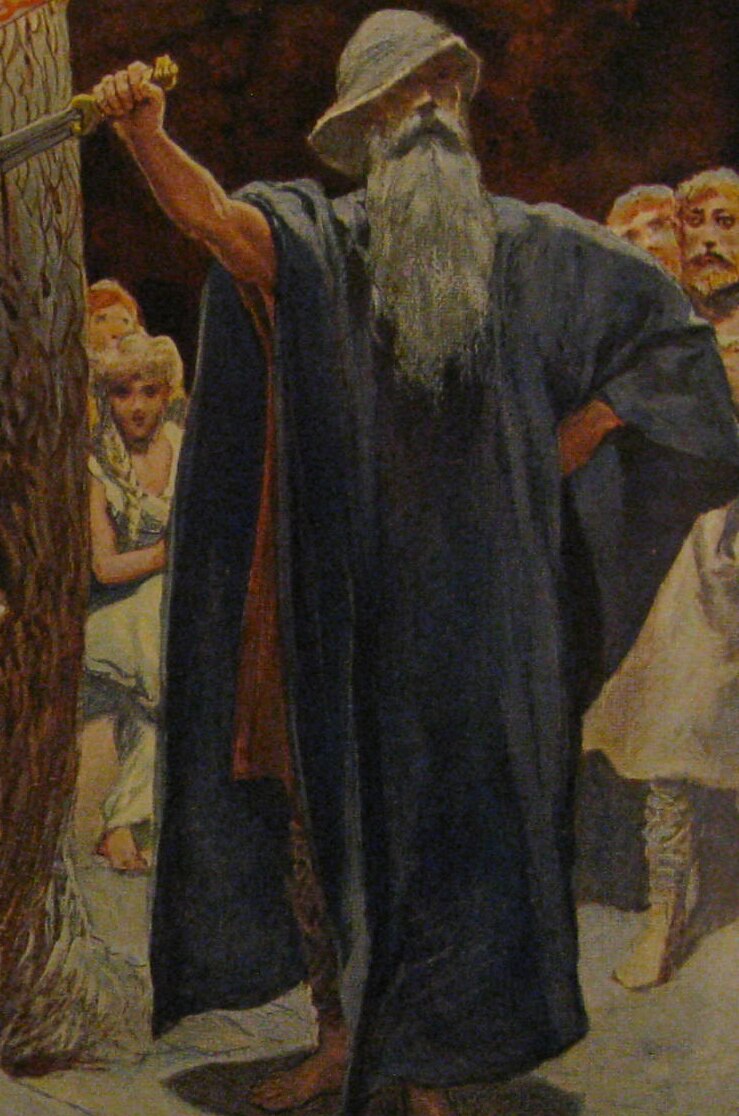
1. What Kind of Hero is Sigurd?
The previous installment offered a summary and interpretation of Julius Evola’s writings on alchemy. This was to prepare us for what we will begin in this essay: an alchemical interpretation of the dragon slaying episode in the saga, as well as related events.
Before we can develop such an interpretation, however, we should take account of the larger context in which Sigurd’s exploits occur. We shall do so by asking a very basic question: exactly what kind of hero is Sigurd? (more…)
4,441 words
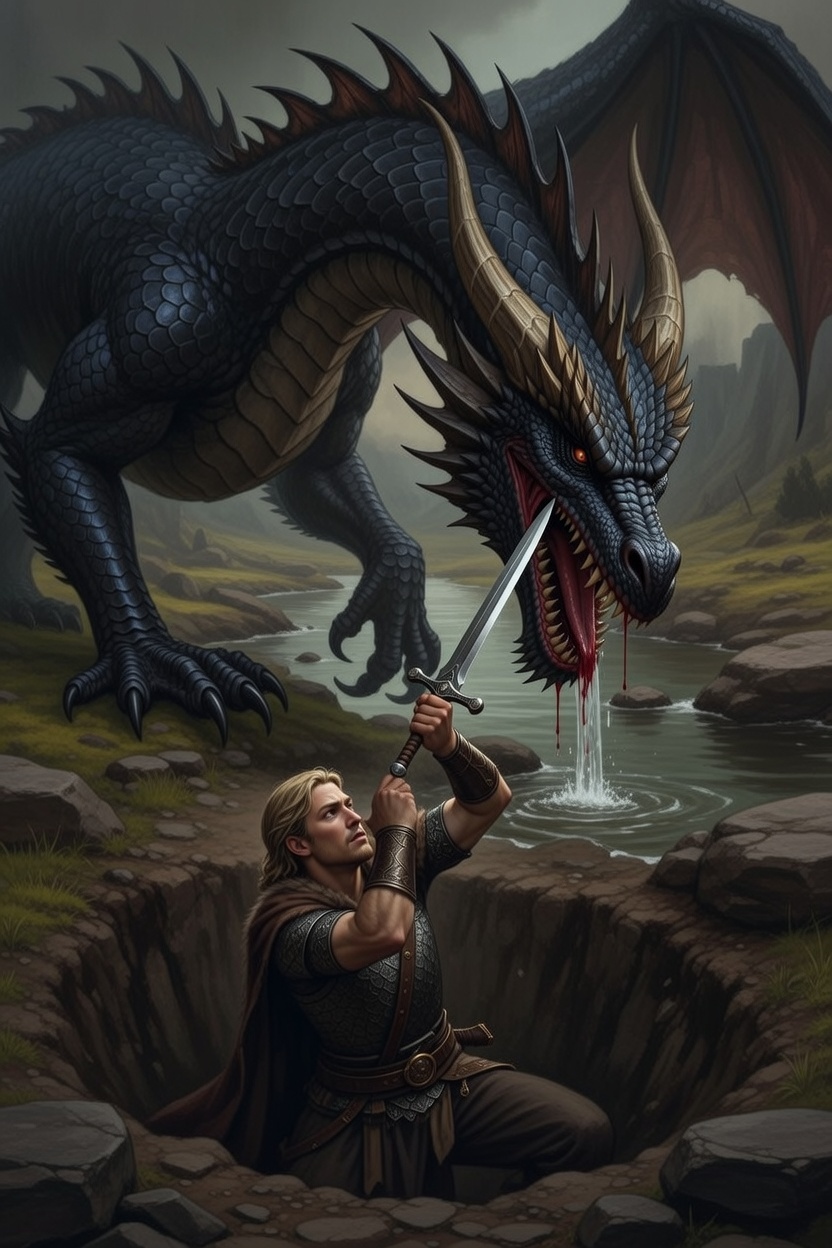
In our last installment we continued telling the tale of “Otter’s Ransom.” This is the story Regin the dwarf smith tells young Sigurd, about how Regin’s brother Fafnir killed their father and made off with the hoard of gold that had belonged to the dwarf Andvari. It is a fabulous treasure, but before giving it up Andvari places a curse upon it. We discussed Claude Lecouteaux’s translation of the name Andvari as “guardian of the breath,” deriving the name from Old Norse andi/önd meaning “breath, wind, or spirit,” a term used by medieval clerics writing in Old Norse to translate Latin anima, “breath,” “wind,” “vital principle,” or “soul.” (more…)

4,329 words
(Read the previous installments in this series here.)
It has been several years since I have published an installment in this series. As faithful readers know, I have been concentrating on my series of essays dealing with Heidegger’s history of metaphysics, from Plato to Nietzsche (now numbering some twenty-five installments; simply search my name to find all of them). After a great deal of thought and research, I am returning to the story of Sigurd, Fafnir’s Bane, and will publish further installments on an irregular basis (though hopefully not once every few years). (more…)