2,335 words
Translated by Ondrej Mann
We can conclude that peace with the world itself is still impossible, even though the number of those who oppose it has decreased significantly. — Jean Cocteau (more…)
2,335 words
Translated by Ondrej Mann
We can conclude that peace with the world itself is still impossible, even though the number of those who oppose it has decreased significantly. — Jean Cocteau (more…)
Part 1 of 7 (Part 2)
Translated by Ondrej Mann
Original in Czech: https://deliandiver.org/neofasismus-ve-filmu-cast-1/
“Decadence is a necessary condition for renaissance. That is why I am very happy to live in a society where everything is collapsing. I think this process of decay is completely natural. It is the end of a certain phase of humanity. However, this process of decay needs to be accelerated; it is still too slow. We need to hasten the death of what is rotting. It is necessary to start all over again. To wipe the slate clean, to sweep everything away. There is no solution in continuity.”
—Federico Fellini
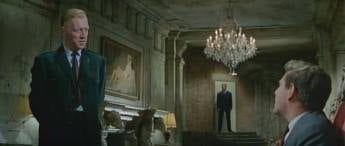
The first film dealing with the theme of neo-fascism or neo-Nazism is often considered to be the “spy drama” The Quiller Memorandum (1966, dir. Michael Anderson). (more…)
The British Academy of Film and Television Arts is the equivalent to America’s Academy of Motion Picture Arts and Sciences. Both organizations perform the same ceremonial functions in handing out their respective awards, the BAFTAs and the Oscars, although their overall duties have increased this century. When race moves center-stage, as it has in the movie business, a lot of people have a lot more work to do, and not just making movies. (more…)
3,749 words
Karel Veliky
Original in Czech: https://deliandiver.org/sadonacismus-ve-filmu-cast-4/
Translated by Ondrej Mann
“We must categorically reject the attempt, made primarily by W. Reich, to derive the instinct for destruction from the repression of the instinct for pleasure.”
—Julius Evola, Eros and the Mysteries of Love: The Metaphysics of Sex.
Visconti’s authority and the international success of his The Damned (see Part II) were reflected in the fact that in the early 1970s there was perhaps no film about “fascism” or “Nazis” that did not take into account their “sick sexuality.” The Conformist (1970, dir. B. Bertolucci), based on the novel by Alberto Moravia, depicts the behavior of a man (played by J. P. Trintignant), a weak-willed intellectual for whom the only acceptable way out of his own insecurities is to “merge with the totalitarian crowd.” (more…)
Original in Czech: https://deliandiver.org/sadonacismus-ve-filmu-cast-3/
Translated by Ondrej Mann
In the 1960s, kiosk “pulp magazines” named after German military prison camps “Stalag” (short for the German Stammlager) became popular in Israel. Among other things, they aroused and titillated the sexual fantasies of Jewish men with alluring blondes in flattering uniforms that revealed their ample bosoms, “SS women” torturing and humiliating Anglo-American prisoners in every way possible.[1] (more…)
Original in Czech: https://deliandiver.org/sadonacismus-ve-filmu-cast-2/
Translated by Ondrej Mann
“We are an elite society where anything goes.”
Visconti’s The Damned & Cavani’s The Night Porter
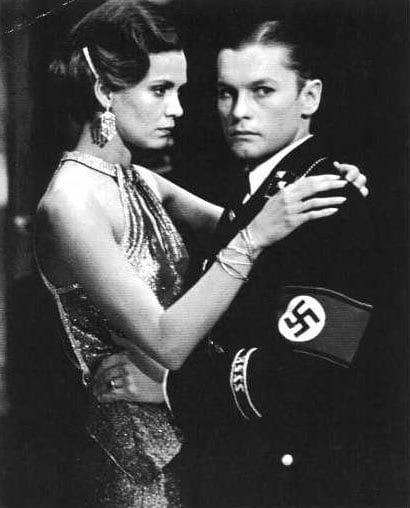
In every respect, the greatest film of this kind is The Damned (La caduta degli dei, 1969, directed by Luchino Visconti), which also started the whole “sadiconazista” wave, which is why we will stop at it for considerably longer than at the others. (more…)
Original in Czech: https://deliandiver.org/sadonacismus-ve-filmu-cast-1/
Translated by Ondrej Mann (more…)
Richard Wolstencroft is a 56-year-old Australian film director, writer, film festival organiser (Melbourne Underground Film Festival), former nightclub promoter, thinker, philosopher, and podcaster. He has directed eight feature films and twenty short films, including music videos.
He founded a nightclub called The Hellfire Club, which was very successful in the 1990s and early 2000s. In 2000, he founded the Melbourne Underground Film Festival (MUFF) and has been its director ever since. So he has been organising events in Melbourne continuously for about 35 years. Richard became famous when he made a film with Boyd Rice, a Right-wing counterculture musician popular in Dissident Right-wing circles, called Pearls Before Swine. (more…)
New Europe
It is beyond our scope to provide even a brief overview of the state of cinema in each European country. We can only note that in Belgium, the Netherlands, Norway, Denmark, and the Balkan countries, film production remained modest even in the pre-war years [1] and that while American and French films dominated continental Europe before the war, they were replaced by German and Italian films during the war. (more…)
From Siegfried to Triumph of the Will: Impulses of the Avant-Garde
The most distinctive artistic language of pre-revolutionary German cinema is expressionism. Silent films such as The Cabinet of Dr. Caligari (1920, dir. Robert Wiene), The Tired Death (1921, dir. Fritz Lang) and Nosferatu (1922, dir. Friedrich W. Murnau), and even earlier, The Student of Prague (1913, dir. Paul Wegener) and Homunculus (1916, dir. Otto Rippert), are striking not only for the fantastical nature of their themes and the macabre nature of their plots, which refer to “black romanticism”, but above all for their overall atmosphere. (more…)
In light of the recent Dublin riots, I thought I would write something Irish-themed and settled on Troy Duffy’s The Boondock Saints, a cult Tarantino knockoff movie from 1999 with Irish-Catholic themes. In the process of researching this I discovered the documentary Overnight about the making of the film — which is actually a far more interesting movie in itself. You can watch it here.
The history of Hollywood is that of a power struggle between producers and directors. (more…)
I ain’t going back
To living that old life no more.
— Old Crow Medicine Show, “Wagon Wheel”
The street is watching. She is watching. — Carlito’s Way
2023 has been quite a year for the anniversaries of some of my favorite films and, in these trying times, old movies are a solace. Watch a loved film one more time and you know in advance you are going to like it. It’s a cinematic comfort-blanket. (more…)