Counter-Currents
  • Advertise
  • Private Events
  • T&C
  • About
  • Contact
  • RSS
    • Main feed
    • Podcast feed
    • Videos feed
    • Comments feed
  • Welcome
  • Webzine
  • Books
  • Merch
  • Podcasts
  • Videos
  • Donate
  • Patrons
  • Subscribe
  • Crypto

LEVEL2

Donate Now Mailing list
  • Welcome
  • Webzine
  • Books
  • Merch
  • Podcasts
  • Videos
  • Donate
  • Patrons
  • Subscribe
  • Crypto
    • The Crisis of Chinese Technology Thieves

      Morris van de Camp

    • The Strange World of Gender Bender Fiction:
      & What This Genre Tells Us About Autosexuality

      Dani Vypont

    • Watching the Watchers:
      The Dark Triad Question

      David M. Zsutty

    • The Remigration Movement Solidifies

      F. Roger Devlin

      1

    • Casting Aspersions:
      The Fatal Consequences of Race-Swapped Casting, From Helen of Troy to Henry of Southampton

      Steven Tucker

      12

    • The Murder of Henry Nowack

      Millennial Woes

      20

    • Don’t Forget to Vote in Our Writer & Article of the Month Poll

      Greg Johnson

    • The Robot Hotdog Stand

      Greg Johnson

      26

    • Laughing Our Way to Victory

      Dave Chambers

      2

    • The Zodiac Killer

      Mark Gullick

      9

    • Jared Taylor: What Rome Means to Me

      Jared Taylor

    • An Interview with Endeavour:
      My Way of Life Is an Adventure!

      Ondrej Mann

      6

    • José Pedro Zúquete’s The Identitarians

      Greg Johnson

      3

    • Editor’s Update
      Fundraiser Update & How to Watch the Remigration Summit

      Greg Johnson

      5

    • The Bitter End of Western Metaphysics:
      Heidegger on Nietzsche, Part One

      Collin Cleary

      10

    • Berlin: City of Stones

      Spencer J. Quinn

      6

    • True Folk-Horror Is Horror of Your Own Folk:
      Mark Gatiss vs the Brexit Blind Dead  

      Steven Tucker

      4

    • Counter-Currents Radio Podcast No. 689
      Thomas Massie, the America 2050 Bust, the Need for Whites to Divest from America, the AI Economic Apocalypse, & Pro-White Project Pitches to Billionaires

      Counter-Currents Radio

      7

    • Nationalism This Week
      Remigration is Inevitable, Part 3

      Greg Johnson

      26

    • Why Billionaires Should Fund White Identity Politics

      Lipton Matthews

      8

    • How Cold War Two Came About

      Morris van de Camp

      5

    • Now Available for Pre-Order at a Special Price!
      Greg Johnson’s The Philosopher Is In

      Greg Johnson

    • David Zsutty’s Elevator Pitch to a Billionaire

      David M. Zsutty

      1

    • Headbanging Lite

      Mark Gullick

      5

    • White Advocacy Past and Present

      Peter Bradley

      13

    • The Lunch Wars

      David M. Zsutty

      47

    • The Russians are Coming/The Russians are Coming

      Steven Clark

      1

    • Peak Fatigue in Fort Wayne

      Gabriel Anderson

      24

    • Keith Woods’ Elevator Pitch to a Billionaire

      Keith Woods

    • The Cruelty of Kindness

      Morris van de Camp

      9

    • Predation Wearing the Mask of Civilization

      Jayant Bhandari

      13

    • The Mandalorian & Grogu

      Trevor Lynch

      24

    • Editor’s Update
      Fundraiser Update & a New $20,000 Matching Grant
      Greg Johnson & David Zsutty Discuss Thomas Massie on Counter-Currents Radio

      Greg Johnson

      2

    • How the Jews Defeated Thomas Massie—& Themselves

      David M. Zsutty

      24

    • Jared Taylor’s Elevator Pitch to a Billionaire

      Jared Taylor

      15

    • Nationalism This Week
      Remigration Is Inevitable, Part 2

      Greg Johnson

      8

    • Could Fascism Work?

      Mark Gullick

      40

    • Jonathan Bowden’s Deliverance
      Part 7

      Jonathan Bowden

    • China’s Quiet Hand:
      Influence, Infiltration, & the Western Blind Spot

      Lipton Matthews

      9

    • Counter-Currents Radio Podcast No. 688
      Tyler Dykes on Running for US Congress in South Carolina

      Counter-Currents Radio

      3

    • Lothrop Stoddard’s The Revolt Against Civilization

      Spencer J. Quinn

      14

    • Lewis Strauss Did Nothing Wrong:
      How the politics of the Atom Bomb during the early Cold War Apply to Artificial Intelligence Today

      Morris van de Camp

      14

    • The Ghost of the Confederacy

      Dave Chambers

      12

    • America’s Century of Humiliation has Begun

      Greg Johnson

      27

    • Prepare for Africans & Schizophrenics!
      Welcome to the New Canadian Military

      Gunnar Alfredsson

      6

    • Remembering Julius Evola:
      May 19, 1898–June 11, 1974

      Greg Johnson

    • About Film “From the Right”

      Karel Veliky

    • Nostalgia Ain’t What It Used To Be. . . Now It’s Racist

      Steven Tucker

      8

    • To Depose The King

      Mark Gullick

      7

    • Editor’s Update
      Tyler Dykes on Counter-Currents Radio & The Best of Trevor Lynch Now in French

      Greg Johnson

    • Udo

      The Murder of Henry Nowak

      They want to continue enjoying white-proletarian maintained civilization fundamentals. They are...

    • Paudi McCreevey

      The Murder of Henry Nowak

        Do not succumb to hoplessness. All white nationalists should take hope from the example of...

    • Old Sceptic

      Casting Aspersions

      Sydney is lovely, but I would much prefer Livy Dunne, a truly dazzling white beauty!

    • Dante Marotta

      The Remigration Movement Solidifies 

      Incredible news and from 600 people they can and are for that matter going to reach millions.

    • Dante Marotta

      Casting Aspersions

      Fantastic article as usual and some hilarious comments. The murder of Henry Nowak will be a...

    • Hi-ya!

      The Murder of Henry Nowak

      For my mental/emotional/psychological health I can’t look into these things too much. It’s the first...

    • Greg Johnson

      The Robot Hotdog Stand

      Technical innovations lead to grester prosperity only if the benefits are passed on to workers/...

    • The Laughing Cavalier

      Casting Aspersions

      Nolan does a lot of anti Christian messaging in his films, and regularly platforms Cillian Murphy,...

    • Cassu

      The Murder of Henry Nowak

      The police officer replied: “I don’t think you have [been stabbed], mate.” The tone of that...

    • Bozkurt

      The Robot Hotdog Stand

      Onkel Adi said that.

    • YT

      The Murder of Henry Nowak

      Yes. But is it to destroy or merely enslave us? I’ve never been able to decide. But I tend to the...

    • YT

      The Robot Hotdog Stand

      My point was that money saved from automating jobs moves to some new use. If I as a businessman can...

    • kolokol

      The Murder of Henry Nowak

      The UK authorities fear any kind of “White backlash”, as they call it. They don’t care about the...

    • Flel

      Casting Aspersions

      Fine choices!

    • Flel

      Casting Aspersions

      She could have launched a 1,000 slave ships, The slaves would have volunteered to row to escape her.

    • kolokol

      The Murder of Henry Nowak

      It was a racially-motivated hate-crime. "Vickrum Singh Digwa" (sic) was lying. He remember it all...

    • Dissesmyisland

      Casting Aspersions

      Nyong-NO-The face that launched a thousand sheeeeeeeeeeits.

    • kolokol

      Casting Aspersions

      "Lupita Nyong’o" (sic) is a ridiculous name. And she is hideously ugly. She is the antithesis of...

    • Anticommunist Action

      The Lunch Wars

      My father is a very, very stereotypical Republican-voting, “conservative” Baby Boomer. He gets all...

    • Bernie

      The Murder of Henry Nowak

      Many are saying this could be the straw that breaks the camel’s back in the UK. I certainly hope so...

    • Earth Day Special

      John Morgan

      12

    • A Robertson Roundup
      Remembering Wilmot Robertson
      (April 16, 1915 – July 8, 2005)

      Margot Metroland

      13

    • The Paranoid Style in White Nationalism

      Greg Johnson

      30

    • Join the Dance!

      Andrew Hamilton

      1

    • We Can’t Save the Earth Without Reducing African Birth Rates

      James Dunphy

      36

    • “I’m Not a Conspiracy Theorist, but . . .”:
      Jeffrey Epstein’s Death Gives New Life to “Conspiracy Theories”

      Greg Johnson

      22

    • Sylvia Plath: Stasis in Darkness

      Vic Olvir

      17

    • Vanguardism, Vantardism, & Mainstreaming

      Greg Johnson

      80

    • Aviation, Geography, & Race

      Charles Lindbergh

      3

    • Some Thoughts on Yule

      Collin Cleary

      4

    • Living in Truth:
      A Yuletide Homily

      Jef Costello

      7

    • John Kennedy Toole’s A Confederacy of Dunces

      Greg Johnson

      20

    • On Aleksandr Solzhenitsyn’s Warning to the West

      Spencer J. Quinn

      7

    • Elitism, British Modernism, & Wyndham Lewis

      Jonathan Bowden

      6

    • Philip K. Dick’s Do Androids Dream of Electric Sheep? as Anti-Semitic/Christian-Gnostic Allegory

      Greg Johnson

      20

    • “Conspiracy Theory” or Conspiracy?

      Andrew Hamilton

      21

    • Remembering H. P. Lovecraft
      (August 20, 1890–March 15, 1937)

      Greg Johnson

      3

    • Who Are We?
      Nordics, Aryans, & Whites

      Greg Johnson

      71

    • Remembering William Gayley Simpson
      (July 23, 1892–December 31, 1990)
      A Pleasant Afternoon with Harriet & Bill Simpson

      Margot Metroland

      18

    • Here are the Young Men
      Remembering Ian Curtis
      (July 15, 1956–May 18, 1980)

      Mark Gullick

      18

    • Percy Grainger
      Artist of the Right

      Alex Graham

      7

    • Remembering Revilo Oliver
      (July 7, 1908–August 20, 1994)

      Greg Johnson

      18

    • The Meaning of July 4th for the White Man

      Gregory Hood

      13

    • The Front National’s Evolution

      Bruno Mégret

    • Merwin K. Hart
      Forgotten American Hero & Man of the Right

      Morris van de Camp

      10

    • George Orwell’s Nineteen Eighty-Four

      Jonathan Bowden

      8

    • Carleton S. Coon
      Scientist & Reluctant White Advocate

      Morris van de Camp

      3

    • The Kwanzaa Absurdity Will Be Dwarfed by Juneteenth

      Robert Hampton

      10

    • Stravinsky

      Alex Graham

      7

    • Like the Roman:
      Remembering Enoch Powell (1912-1998)

      Mark Gullick

      23

    • Crosstown Traffic:
      Jimi Hendrix & The Post-War Rock ‘N’ Roll Revolution

      Mark Gullick

    • Slaves from the North:
      Finns & Karelians in the East European Slave Trade, 900–1600

      Lipton Matthews

      14

    • Neo-Fascism in Film
      Part 4

      Karel Veliky

      2

    • David Lean’s A Passage to India

      Spencer J. Quinn

      1

    • Elites are Essential to Development

      Lipton Matthews

      7

    • Jonathan Bowden’s Deliverance
      Part 4

      Jonathan Bowden

    • Neo-Fascism in Film
      Part 3

      Karel Veliky

      6

    • E. M. Forster’s A Passage to India & the Indian Mentality

      Spencer J. Quinn

      25

    • Jonathan Bowden’s Deliverance
      Part 3

      Jonathan Bowden

    • The Rest Is Silence
      Heidegger’s Quietism

      Mark Gullick

      2

    • Dispelling the Historical Fallacy of Indian Nationalism

      Lipton Matthews

      8

    • Neo-Fascism in Film
      Part 2

      Karel Veliky

      8

    • Jonathan Bowden’s Deliverance
      Part 2

      Jonathan Bowden

    • Life of a Klansman

      Mark Gullick

      8

    • Jonathan Bowden’s Deliverance, Part 1

      Jonathan Bowden

    • Decolonial Ideas are Holding Back Developing Countries

      Lipton Matthews

      8

    • Neo-fascism in Film, Part 1

      Karel Veliky

      21

    • Jonathan Bowden’s Onslaught, Part 8
      Divigations on Decadence

      Jonathan Bowden

    • Jonathan Bowden’s Onslaught, Part 7
      Intrigues in the National Front

      Jonathan Bowden

      1

    • Rotten to the Core

      Mark Gullick

      8

    • Strauss on Husserl’s “Philosophy as Rigorous Science”

      Greg Johnson

    • Jonathan Bowden’s Onslaught, Part 6
      Francis Bacon & Right-Wing Nihilism

      Jonathan Bowden

    • London After (& Before) Midnight:
      Aleister Crowley, The Landlord’s Worst Nightmare

      James J. O'Meara

      2

    • Jonathan Bowden’s Onslaught, Part 5
      The Post-War British Far Right

      Jonathan Bowden

    • No Rules: Rollerball

      Mark Gullick

      4

    • Jonathan Bowden’s Onslaught, Part 3
      Brett Easton Ellis’ American Psycho

      Jonathan Bowden

    • An Alternate History of the Harris Presidency

      Beau Albrecht

      5

    • The Origins of Mass Education:
      Augustina S. Paglayan’s Raised to Obey

      Francis Rockwell

      4

    • Jonathan Bowden’s Onslaught, Part 2
      Louis-Ferdinand Céline

      Jonathan Bowden

      1

    • The Four Philosophers of the Apocalypse

      Mark Gullick

      4

    • András László
    • Derek Hawthorne
    • Beau Albrecht
    • Alain de Benoist
    • Kerry Bolton
    • Jonathan Bowden
    • Collin Cleary
    • Jef Costello
    • Savitri Devi
    • Julius Evola
    • Jim Goad
    • Gregory Hood
    • Juleigh Howard-Hobson
    • Greg Johnson
    • Charles Krafft
    • Anthony M. Ludovici
    • Trevor Lynch
    • H. L. Mencken
    • J. A. Nicholl
    • James J. O’Meara
    • Christopher Pankhurst
    • Tito Perdue
    • Michael Polignano
    • Spencer J. Quinn
    • Fenek Solère
    • Irmin Vinson
    • Leo Yankevich
    • Francis Parker Yockey
    • Multiple authors
  • Editor-in-Chief

    • Greg Johnson, Ph.D.

    Featured Writers

    • Beau Albrecht
    • Gunnar Alfredsson
    • Collin Cleary, Ph.D.
    • Jef Costello
    • Morris V. de Camp
    • F. Roger Devlin, Ph.D.
    • Stephen Paul Foster, Ph.D.
    • Jim Goad
    • Alex Graham
    • Mark Gullick, Ph.D.
    • Greg Johnson, Ph.D.
    • Travis LeBlanc
    • Trevor Lynch
    • Margot Metroland
    • James J. O’Meara
    • Angelo Plume
    • Spencer J. Quinn
    • Fred Reed
    • Clarissa Schnabel
    • Michael Walker
    • David M. Zsutty

    Frequent Writers

    • Asier Abadroa
    • Aquilonius
    • Alain de Benoist
    • Kerry Bolton, Ph.D.
    • Dave Chambers
    • Steven Clark
    • James Dunphy
    • Endeavour
    • Richard Houck
    • Jason Kessler
    • Titus Livius
    • Ondrej Mann
    • Lipton Matthews
    • Mark Mazari
    • John Morgan
    • Jaroslav Ostrogniew
    • Kathryn S.
    • Christian Secor
    • Anne Wilson Smith
    • Thomas Steuben
    • William De Vere
    • Kenneth Vinther
    • Max West

    Classic Authors

    • Maurice Bardèche
    • Jonathan Bowden
    • Julius Evola
    • Guillaume Faye
    • Ernst Jünger
    • Kevin MacDonald, Ph.D.
    • D. H. Lawrence
    • Charles Lindbergh
    • Jack London
    • H. P. Lovecraft
    • Anthony M. Ludovici
    • Sir Oswald Mosley
    • National Vanguard
    • Friedrich Nietzsche
    • Revilo Oliver
    • William Pierce
    • Ezra Pound
    • Saint-Loup
    • Savitri Devi
    • Carl Schmitt
    • Miguel Serrano
    • Oswald Spengler
    • P. R. Stephensen
    • Jean Thiriart
    • John Tyndall
    • Dominique Venner
    • Leo Yankevich
    • Francis Parker Yockey

    Other Authors

    • Howe Abbott-Hiss
    • Michael Bell
    • Giles Corey
    • Jack Donovan
    • Richardo Duchesne, Ph.D.
    • Emile Durand
    • Guillaume Durocher
    • Mark Dyal
    • Tom Goodroch
    • Andrew Hamilton
    • Robert Hampton
    • Huntley Haverstock
    • Derek Hawthorne
    • Gregory Hood
    • Juleigh Howard-Hobson
    • Alexander Jacob
    • Ruuben Kaalep
    • Tobias Langdon
    • Julian Langness
    • Patrick Le Brun
    • G A Malvicini
    • John Michael McCloughlin
    • Millennial Woes
    • Michael O’Meara
    • Christopher Pankhurst
    • Michael Polignano
    • J. J. Przybylski
    • Quintilian
    • Edouard Rix
    • C. B. Robertson
    • C. F. Robinson
    • Herve Ryssen
    • Alan Smithee
    • Fenek Solere
    • Ann Sterzinger
    • Robert Steuckers
    • Tomislav Sunic
    • Donald Thoresen
    • Marian Van Court
    • Irmin Vinson
    • Book Reviews
    • Movie Reviews
    • TV Reviews
    • Music Reviews
    • Art Criticism
    • Graphic Novels & Comics
    • Video Game Reviews
    • Fiction
    • Poems
    • Interviews
    • Videos
    • English Translations
    • Other Languages
      • Arabic
      • Bulgarian
      • Croatian
      • Czech
      • Danish
      • Dutch
      • Estonian
      • Finnish
      • French
      • German
      • Greek
      • Hungarian
      • Italian
      • Lithuanian
      • Norwegian
      • Polish
      • Portuguese
      • Romanian
      • Russian
      • Slovak
      • Spanish
      • Swedish
      • Ukrainian
    • Commemorations
    • Why We Write
  • Archives
  • Top 100 Commenters
  • The Looney Bin
  • Advertise
  • Private Events
  • T&C
  • About
  • Contact
  • RSS
    • Main feed
    • Podcast feed
    • Videos feed
    • Comments feed
Sponsored Links
Europa.com Above Time Coffee Antelope Hill Publishing Paul Waggener IHR-Store Spencer J. Quinn American Renaissance Jim Goad The Occidental Observer
Print March 26, 2026 3 comments

The Power of Myth
Remembering Joseph Campbell
(March 26, 1904–October 30, 1987)

John Morgan

2,471 words

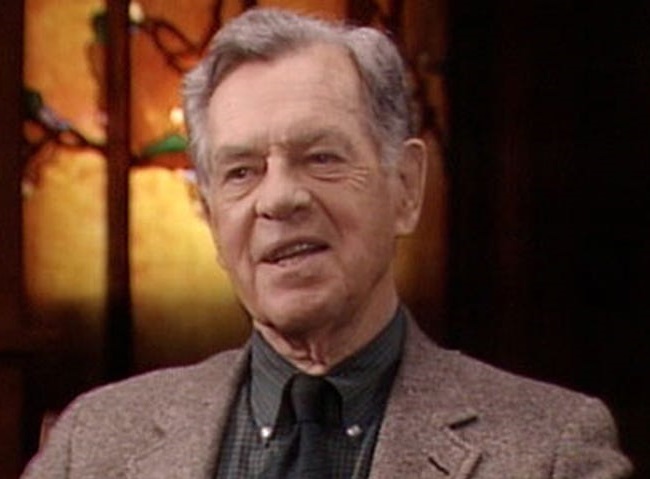
Joseph Campbell, the famed teacher of comparative mythology, was born on this day in 1904. For many people, including yours truly, he has served as a “gateway drug” into not only a new way of looking at myths, but into a non-materialistic way of viewing the world. And although as a public figure, Campbell mostly remained apolitical, evidence from his private life indicates that he was at least nominally a “man of the Right.”

Campbell was born into an Irish Catholic family in White Plains, New York. He attended Dartmouth College, and then later, Columbia University, where he studied English and medieval literature. He was not strictly a bookish type, either, being an accomplished athlete, and in fact during his time at Dartmouth he was considered to be among the fastest half-mile runners in the world.

It was during his travels to Europe and Asia during the 1920s and ’30s, as well as a great deal of wide reading while living in a shack in Woodstock, New York, that Campbell developed his interest in world mythology. He also discovered the ideas of C. G. Jung, which were to profoundly influence all of his work. Indeed, he participated in many of the early and historic Eranos conferences in Switzerland alongside not only Jung himself, but such luminaries as Mircea Eliade, Karl Kerényi, and Henry Corbin, among many others. In 1934 Campbell was hired as a professor at Sarah Lawrence College in New York, a position he was to hold until his retirement in 1972, after which he and his wife moved to Honolulu, Hawaii.

Interestingly, in regards to the Second World War, Campbell was a fervent non-interventionist (like his friend, the poet Robinson Jeffers), even in the wake of the Pearl Harbor attack, and in fact gave a public lecture at Sarah Lawrence three days afterwards in which he urged his students not to get caught up in war hysteria and to pursue their educations instead of joining the military. He felt passionately enough about this matter to send a copy of his lecture to the German novelist Thomas Mann, who at the time was working to convince Americans to join the fight against the Third Reich as an exile in California. (Mann sent him a quite angry reply.) And according to Campbell’s biographer, Stephen Larsen, in his journals he comes across as an early Pearl Harbor conspiracy theorist, pointing out that the Roosevelt administration had been trying to goad the Japanese into war for years and discussing the fact that the US Navy had received indications that the Japanese were about to attack in the days prior, but that these warnings were ignored — perhaps deliberately.

While Campbell gave frequent public lectures and published many books, including The Hero with a Thousand Faces in 1949, which was the most thorough overview of his essential ideas, and his four-volume The Masks of God opus, which appeared between 1959 and 1968, in which he attempted to summarize all of the world’s mythologies, he remained relatively obscure outside academic circles until late in his life. His later fame is largely attributable to the endorsements he received from two of his biggest fans. One is Jerry Garcia of the Grateful Dead, who invited Campbell to observe a concert they gave in Berkeley, California in February 1985. (Campbell reported that he was impressed by the event, comparing it to the ancient Dionysian festivals and Russian Easter celebrations.) In November 1986, Campbell and Garcia shared a stage at a conference at UC Berkeley. The other is George Lucas, who frequently cited Campbell’s conception of myth in interviews as being one of his primary inspirations in his writing of the Star Wars films. Indeed, in the 1980s Lucas invited Campbell to come to his Skywalker Ranch to view the entire trilogy (Campbell gave it somewhat guarded praise), and also helped to arrange the most crucial factor in securing Campbell’s late fame: Bill Moyers’ The Power of Myth series.

Moyers, a well-respected figure in broadcasting, filmed a series of interviews with Campbell during the mid-1980s, mostly at Skywalker Ranch, that were edited into six one-hour episodes and broadcast on PBS in 1988, along with an accompanying book of the same name. The series introduces and details Campbell’s ideas in a very accessible and entertaining way. It proved to be very popular, both during its original airing as well as in reruns and on video, and cemented Campbell’s reputation as an influential and respected intellectual in the American popular consciousness. Sales of Campbell’s books began to skyrocket as well. Unfortunately, he himself didn’t live to see any of this, as he had passed away the previous year, but he left behind a large body of work in which he had already presented his fully-articulated worldview.

As is frequently the case with prominent white men who don’t pay the proper lip service to political correctness, it wasn’t until after Campbell’s death that some of his former colleagues and acquaintances began to come forward with accusations of racism and anti-Semitism. This charge first appeared in an article by Brendan Gill in the September 28, 1989 issue of The New York Review of Books entitled “The Faces of Joseph Campbell,” in which he cited purely anecdotal evidence to support his claim that Campbell had been an anti-Semite, including Campbell’s stance on the war as well as the fact that he had praised the Germanic Jung while disdaining the Jewish Freud, and because he had evinced a love of German culture as well as a general dislike of the Abrahamic religions in his work — all of which is undeniably true.

In the letters that were printed in response, some came to Campbell’s defense while others pressed the attack, including a Sarah Lawrence colleague who claimed that Campbell had reacted to the racial integration of the school with horror. (Although again, no evidence for this was ever produced.) His sympathetic friends indicated that Campbell never tried to hide his conservative sympathies, and pointed out that the fact that Campbell was sympathetic to German and “pagan” cultures while disdaining Judaism and Christianity was hardly evidence that he had been a racist. Nevertheless, these charges have overshadowed Campbell’s work ever since, even if they have had no noticeable impact on the popularity of his work. (I first became aware of the controversy shortly after discovering Campbell, sitting at a restaurant in Ann Arbor, Michigan in 1995, when a passing waiter noticed that I was reading The Hero with a Thousand Faces and felt compelled to ask me, “Reading Joseph Campbell, the ol’ anti-Semite, huh?” I later learned that the waiter was a grad student at the University of Michigan.)

As an aside concerning the issue of Campbell as a man of the Right, something that I only became aware of as the result of a comment that was made on a previous posting of this commemoration is that Campbell had served as a Contributing Editor to Mankind Quarterly, an academic journal devoted to anthropology and the science of race that has been published since 1960. It has counted among its editors numerous names that are no doubt familiar to Counter-Currents readers, including Edward Dutton, Richard Lynn, and Roger Pearson. Mankind Quarterly has never bowed to notions of political correctness, and today is predictably lambasted in the mainstream as a “white supremacist journal” and so on. The fact that Campbell was willing to attach his name to it indicates that not only was he interested in the realities of race, but that he was not intimidated by the possibility of the association being used to smear his reputation.
You can buy Julius Evola’s East & West here.

Regardless of whether the accusations of anti-Semitism against Campbell are true or not, they follow a pattern that is typical for any artist or scholar who refuses to toe the party line. If Campbell had been engaged in “deconstructing” mythology, and showing that the Mahabharata or the Arthurian legends were nothing more than “narratives” expressing patriarchy and sexual repression for example, his personal failings in the eyes of academia would have been ignored. Surely what really bothers academics about Campbell, as well as about scholars with a similar worldview such as Jung, Mircea Eliade, or René Guénon, is that they dared to assert that there is an essential meaning to things, which of course then implies that there may actually be such a thing as values and traditions that are worth preserving.

I first discovered The Power of Myth series on video at my local library in 1995, during a period when I was looking for a new sense of direction and meaning in my life. I was 22, and like most Americans I had been educated in a strictly materialist way of understanding things. For the previous few years I had regarded myself as a Nietzschean, existentialist atheist (in spite of the fact that I only half-understood either Nietzsche or the existentialists). But I soon found this stance to be insufficient as I grew into adulthood and began to better comprehend the complexities of the human condition. It was my discovery of Colin Wilson, who I have written about elsewhere, and Campbell at this time (and through the latter, his own guru, Jung) which persuaded me that there is more to reality and living than what can be known through the five senses. Although I later moved on to other teachers and interests who in some ways surpass them, I will always owe a debt of gratitude to these two figures for “converting” me to something other than a model of a modern major materialist.

The Power of Myth struck me as a revelation, and it caused me to seek out Campbell’s books as well. Like most of us these days, I had always thought of myths as nothing more than quaint stories with some sort of simple moral lesson to be gleaned. Campbell contended that these myths are in fact reflections of a much deeper reality, one that is both metaphysical and which is reflective of deep psychological processes in our unconscious that transcend the individual and are connected to our racial memory. Even more importantly, Campbell first showed me that meaning was in fact anchored in something outside of ourselves, which was certainly very different from what I was being taught in most of my literature classes at the University at the time. I soon began to see everything from a Campbellesque perspective, and I doubt I could have mustered the enthusiasm to finish my degree were it not for the inspiration I derived from him.

The center of Campbell’s worldview is the idea of what he termed the “monomyth.” It posits that underneath all of the world’s mythologies, there is a single structure which they all more or less follow. This structure is timeless, as it is embedded within our consciousness, and can be found in the best modern art and literature — Campbell himself was particularly fond of James Joyce, and in fact the term monomyth itself is derived from Finnegans Wake — as much as in the ancient myths. Campbell believed that this monomyth was the expression of the single metaphysical reality which lies hidden behind the mere appearance of things, and that each culture and era develops its own stories to express this unchanging reality in accordance with “the unforged conscience of their race,” to paraphrase Joyce. In this sense, he shares some commonality with the traditionalists such as Guénon and Julius Evola. I don’t know of any place where the traditionalists have commented on Campbell directly, but surely they would criticize him along the same lines for which they criticized Jung: namely, that he understood myths as merely containing psychological symbols and “archetypes,” and as depictions of psychic processes, rather than as expressions of an objective reality (this is a complaint that a “true believer” in any religion could make against the Jungian conception of myth).

Surely a large part of the success of The Power of Myth, as it certainly was in my case, was because Campbell comes across in his recorded interviews and lectures as an extremely likable man with a gift for communicating complex ideas and stories in simple language. He was also a masterful storyteller. He was the very embodiment of your favorite teacher, who (hopefully) turned you on to the wonders of the world of ideas and filled you with the fiery passion to learn more about a particular subject. Like the very best teachers, what you learned from him only marked the starting point in a long odyssey that ended up leading you to other ideas and other destinations in life.

There are certainly many criticisms one can make of Campbell’s conception of things. In addition to the traditionalist objections already mentioned, some scholars have said that not just Campbell’s, but all efforts in the fields of comparative mythology and comparative religion, are flawed in that they emphasize the commonalities between all of the world’s traditions at the expense of the particularities which distinguish them, thus presenting a false universalism. There may be some truth in this, but at the same time it seems to me to be symptomatic of the general postmodern disregard for anything which asserts that there is an essential meaning to things, preferring to study each subject in isolation rather than as part of a whole. After all, how can a three-thousand-year-old story from ancient Greece teach a present-day American anything more than a Toni Morrison novel can? In fact, those old stories may actually be detrimental, given that they depict a way of life that reinforces old social orders rather than emphasizing the need for racial equality or the fluidity of gender.

At his post-war trial on the charge of promoting Fascism, Evola said about his beliefs, “My principles are only those that, before the French Revolution, every well-born person considered sane and normal.” I suspect that Campbell believed something similar, even if he never couched it in language that was quite so incendiary. When we look at the ancient stories, whether they are European, Indian, Chinese, Native American, or whatever, there is certainly a common outlook there which directly challenges the norms and values which we have come to accept as normal in the modern world.

And this, perhaps, is Campbell’s ultimate value from our point of view. There are certainly greater scholars of myth and religion to read. But especially for newcomers, he can open up the world of primordial, timeless, pre- and anti-modern wisdom that still lurks deep within our souls and continues to shape our lives, whether we are consciously aware of it are not. We are all part of a story that began long before we were born and which will continue long after we die. Campbell brings this story, and our place in it, to light like few others can. And this, in the end, is what the “true Right” is really about.

The Power of Myth Remembering Joseph Campbell (March 26, 1904–October 30, 1987)

The%20Power%20of%20Myth%0ARemembering%20Joseph%20Campbell%20%0A%28March%2026%2C%201904%E2%80%93October%2030%2C%201987%29%0A

Share

  • Gab

Enjoyed this article?

Be the first to leave a tip in the jar!

Instant Echeck GreenPay™

Related

  • Berlin: City of Stones

  • Remembering Julius Evola

  • An Esoteric Commentary on the Volsung Saga, Part XXI:

  • The Rest Is Silence: Heidegger’s Quietism

  • Remembering Jonathan Bowden

  • Remembering Flannery O’Connor

  • An Esoteric Commentary on the Volsung Saga—Part XX:

  • Remembering Gabriele D’Annunzio

Tags

anti-SemitismC. G. Jungcommemorationscomparative mythologyJohn MorganJoseph CampbellMankind Quarterlymythology

Previous

« Against Conspiracism Part 2

Next

» Legal, Truthful, Guilty: A Review

3 comments

  1. Dominic Fox says:
    April 1, 2026 at 3:20 am

    I never read Campbell, but a quote of his is one of the most important aphorisms I’ve ever read: ‘The psychotic drowns in the same waters in which the mystic swims …”

    “some scholars have said that not just Campbell’s, but all efforts in the fields of comparative mythology and comparative religion, are flawed in that they emphasize the commonalities between all of the world’s traditions at the expense of the particularities which distinguish them, thus presenting a false universalism”

    … and the modern academic will feel superior for not believing in “waters”.

    Left-brained people can read but they cannot read i.e. extent their mind through the visible text in front of them. They “read” myths/legends like an AI would.

    0
    0
    Reply
  2. Viktor Schmidt says:
    April 1, 2026 at 8:41 am

    I have read The Hero with a Thousand Faces and I noted that the author used many interesting examples from black Africans’ folklore. I really do not understand, why the Hollywood does not make film, based on authentical African folklore, but instead is transforming white figures, both historical and mythical, in blacks. Why we need black queen Charlotte or black queen Anne Boleyn, or black Thor, or black Hercules, when there are interesting African fairy tales and myths?

    0
    0
    Reply
  3. The laughing cavalier says:
    April 4, 2026 at 1:27 am

    I struggled to understand this bit, would anyone explain?

    “but surely [the existentialists] would criticize him along the same lines for which they criticized Jung: namely, that he understood myths as merely containing psychological symbols and “archetypes,” and as depictions of psychic processes, rather than as expressions of an objective reality (this is a complaint that a “true believer” in any religion could make against the Jungian conception of myth”

    Two other things spring to my mind. One is that I read that Campbell noted that all religions had a chief God but only for the Jews was their chief God also their own main God.
    If that’s the case, what is the nature of Judeo-Christian relationship with God? Isn’t it a bit solipsistic, even megalomaniacal, to believe YOU have a personal relationship with God, and he listens to YOU?

    The next thing is, morgan mentions Star Wars. Lucas has been open about this: the heroes journey, the good guy and bad guy are the same, these other myths (he said there were 7 core myths different societies repeat I think).
    But does anyone believe in the “inverse hermeneutic” theory? Star Wars certainly fits the bill, as do many other things, especially in recent pop culture. Did Campbell mention this?

    0
    0
    Reply

If you have a Subscriber access,
simply login first to see your comment auto-approved.

Post a comment Cancel reply

Note on comments privacy & moderation

Your email is never published nor shared.

Comments are moderated. If you don't see your comment, please be patient. If approved, it will appear here soon. Do not post your comment a second time.

    • The Crisis of Chinese Technology Thieves

      Morris van de Camp

    • The Strange World of Gender Bender Fiction:
      & What This Genre Tells Us About Autosexuality

      Dani Vypont

    • Watching the Watchers:
      The Dark Triad Question

      David M. Zsutty

    • The Remigration Movement Solidifies

      F. Roger Devlin

      1

    • Casting Aspersions:
      The Fatal Consequences of Race-Swapped Casting, From Helen of Troy to Henry of Southampton

      Steven Tucker

      12

    • The Murder of Henry Nowack

      Millennial Woes

      20

    • Don’t Forget to Vote in Our Writer & Article of the Month Poll

      Greg Johnson

    • The Robot Hotdog Stand

      Greg Johnson

      26

    • Laughing Our Way to Victory

      Dave Chambers

      2

    • The Zodiac Killer

      Mark Gullick

      9

    • Jared Taylor: What Rome Means to Me

      Jared Taylor

    • An Interview with Endeavour:
      My Way of Life Is an Adventure!

      Ondrej Mann

      6

    • José Pedro Zúquete’s The Identitarians

      Greg Johnson

      3

    • Editor’s Update
      Fundraiser Update & How to Watch the Remigration Summit

      Greg Johnson

      5

    • The Bitter End of Western Metaphysics:
      Heidegger on Nietzsche, Part One

      Collin Cleary

      10

    • Berlin: City of Stones

      Spencer J. Quinn

      6

    • True Folk-Horror Is Horror of Your Own Folk:
      Mark Gatiss vs the Brexit Blind Dead  

      Steven Tucker

      4

    • Counter-Currents Radio Podcast No. 689
      Thomas Massie, the America 2050 Bust, the Need for Whites to Divest from America, the AI Economic Apocalypse, & Pro-White Project Pitches to Billionaires

      Counter-Currents Radio

      7

    • Nationalism This Week
      Remigration is Inevitable, Part 3

      Greg Johnson

      26

    • Why Billionaires Should Fund White Identity Politics

      Lipton Matthews

      8

    • How Cold War Two Came About

      Morris van de Camp

      5

    • Now Available for Pre-Order at a Special Price!
      Greg Johnson’s The Philosopher Is In

      Greg Johnson

    • David Zsutty’s Elevator Pitch to a Billionaire

      David M. Zsutty

      1

    • Headbanging Lite

      Mark Gullick

      5

    • White Advocacy Past and Present

      Peter Bradley

      13

    • The Lunch Wars

      David M. Zsutty

      47

    • The Russians are Coming/The Russians are Coming

      Steven Clark

      1

    • Peak Fatigue in Fort Wayne

      Gabriel Anderson

      24

    • Keith Woods’ Elevator Pitch to a Billionaire

      Keith Woods

    • The Cruelty of Kindness

      Morris van de Camp

      9

    • Predation Wearing the Mask of Civilization

      Jayant Bhandari

      13

    • The Mandalorian & Grogu

      Trevor Lynch

      24

    • Editor’s Update
      Fundraiser Update & a New $20,000 Matching Grant
      Greg Johnson & David Zsutty Discuss Thomas Massie on Counter-Currents Radio

      Greg Johnson

      2

    • How the Jews Defeated Thomas Massie—& Themselves

      David M. Zsutty

      24

    • Jared Taylor’s Elevator Pitch to a Billionaire

      Jared Taylor

      15

    • Nationalism This Week
      Remigration Is Inevitable, Part 2

      Greg Johnson

      8

    • Could Fascism Work?

      Mark Gullick

      40

    • Jonathan Bowden’s Deliverance
      Part 7

      Jonathan Bowden

    • China’s Quiet Hand:
      Influence, Infiltration, & the Western Blind Spot

      Lipton Matthews

      9

    • Counter-Currents Radio Podcast No. 688
      Tyler Dykes on Running for US Congress in South Carolina

      Counter-Currents Radio

      3

    • Lothrop Stoddard’s The Revolt Against Civilization

      Spencer J. Quinn

      14

    • Lewis Strauss Did Nothing Wrong:
      How the politics of the Atom Bomb during the early Cold War Apply to Artificial Intelligence Today

      Morris van de Camp

      14

    • The Ghost of the Confederacy

      Dave Chambers

      12

    • America’s Century of Humiliation has Begun

      Greg Johnson

      27

    • Prepare for Africans & Schizophrenics!
      Welcome to the New Canadian Military

      Gunnar Alfredsson

      6

    • Remembering Julius Evola:
      May 19, 1898–June 11, 1974

      Greg Johnson

    • About Film “From the Right”

      Karel Veliky

    • Nostalgia Ain’t What It Used To Be. . . Now It’s Racist

      Steven Tucker

      8

    • To Depose The King

      Mark Gullick

      7

    • Editor’s Update
      Tyler Dykes on Counter-Currents Radio & The Best of Trevor Lynch Now in French

      Greg Johnson

    • Udo

      The Murder of Henry Nowak

      They want to continue enjoying white-proletarian maintained civilization fundamentals. They are...

    • Paudi McCreevey

      The Murder of Henry Nowak

        Do not succumb to hoplessness. All white nationalists should take hope from the example of...

    • Old Sceptic

      Casting Aspersions

      Sydney is lovely, but I would much prefer Livy Dunne, a truly dazzling white beauty!

    • Dante Marotta

      The Remigration Movement Solidifies 

      Incredible news and from 600 people they can and are for that matter going to reach millions.

    • Dante Marotta

      Casting Aspersions

      Fantastic article as usual and some hilarious comments. The murder of Henry Nowak will be a...

    • Hi-ya!

      The Murder of Henry Nowak

      For my mental/emotional/psychological health I can’t look into these things too much. It’s the first...

    • Greg Johnson

      The Robot Hotdog Stand

      Technical innovations lead to grester prosperity only if the benefits are passed on to workers/...

    • The Laughing Cavalier

      Casting Aspersions

      Nolan does a lot of anti Christian messaging in his films, and regularly platforms Cillian Murphy,...

    • Cassu

      The Murder of Henry Nowak

      The police officer replied: “I don’t think you have [been stabbed], mate.” The tone of that...

    • Bozkurt

      The Robot Hotdog Stand

      Onkel Adi said that.

    • YT

      The Murder of Henry Nowak

      Yes. But is it to destroy or merely enslave us? I’ve never been able to decide. But I tend to the...

    • YT

      The Robot Hotdog Stand

      My point was that money saved from automating jobs moves to some new use. If I as a businessman can...

    • kolokol

      The Murder of Henry Nowak

      The UK authorities fear any kind of “White backlash”, as they call it. They don’t care about the...

    • Flel

      Casting Aspersions

      Fine choices!

    • Flel

      Casting Aspersions

      She could have launched a 1,000 slave ships, The slaves would have volunteered to row to escape her.

    • kolokol

      The Murder of Henry Nowak

      It was a racially-motivated hate-crime. "Vickrum Singh Digwa" (sic) was lying. He remember it all...

    • Dissesmyisland

      Casting Aspersions

      Nyong-NO-The face that launched a thousand sheeeeeeeeeeits.

    • kolokol

      Casting Aspersions

      "Lupita Nyong’o" (sic) is a ridiculous name. And she is hideously ugly. She is the antithesis of...

    • Anticommunist Action

      The Lunch Wars

      My father is a very, very stereotypical Republican-voting, “conservative” Baby Boomer. He gets all...

    • Bernie

      The Murder of Henry Nowak

      Many are saying this could be the straw that breaks the camel’s back in the UK. I certainly hope so...

    • Earth Day Special

      John Morgan

      12

    • A Robertson Roundup
      Remembering Wilmot Robertson
      (April 16, 1915 – July 8, 2005)

      Margot Metroland

      13

    • The Paranoid Style in White Nationalism

      Greg Johnson

      30

    • Join the Dance!

      Andrew Hamilton

      1

    • We Can’t Save the Earth Without Reducing African Birth Rates

      James Dunphy

      36

    • “I’m Not a Conspiracy Theorist, but . . .”:
      Jeffrey Epstein’s Death Gives New Life to “Conspiracy Theories”

      Greg Johnson

      22

    • Sylvia Plath: Stasis in Darkness

      Vic Olvir

      17

    • Vanguardism, Vantardism, & Mainstreaming

      Greg Johnson

      80

    • Aviation, Geography, & Race

      Charles Lindbergh

      3

    • Some Thoughts on Yule

      Collin Cleary

      4

    • Living in Truth:
      A Yuletide Homily

      Jef Costello

      7

    • John Kennedy Toole’s A Confederacy of Dunces

      Greg Johnson

      20

    • On Aleksandr Solzhenitsyn’s Warning to the West

      Spencer J. Quinn

      7

    • Elitism, British Modernism, & Wyndham Lewis

      Jonathan Bowden

      6

    • Philip K. Dick’s Do Androids Dream of Electric Sheep? as Anti-Semitic/Christian-Gnostic Allegory

      Greg Johnson

      20

    • “Conspiracy Theory” or Conspiracy?

      Andrew Hamilton

      21

    • Remembering H. P. Lovecraft
      (August 20, 1890–March 15, 1937)

      Greg Johnson

      3

    • Who Are We?
      Nordics, Aryans, & Whites

      Greg Johnson

      71

    • Remembering William Gayley Simpson
      (July 23, 1892–December 31, 1990)
      A Pleasant Afternoon with Harriet & Bill Simpson

      Margot Metroland

      18

    • Here are the Young Men
      Remembering Ian Curtis
      (July 15, 1956–May 18, 1980)

      Mark Gullick

      18

    • Percy Grainger
      Artist of the Right

      Alex Graham

      7

    • Remembering Revilo Oliver
      (July 7, 1908–August 20, 1994)

      Greg Johnson

      18

    • The Meaning of July 4th for the White Man

      Gregory Hood

      13

    • The Front National’s Evolution

      Bruno Mégret

    • Merwin K. Hart
      Forgotten American Hero & Man of the Right

      Morris van de Camp

      10

    • George Orwell’s Nineteen Eighty-Four

      Jonathan Bowden

      8

    • Carleton S. Coon
      Scientist & Reluctant White Advocate

      Morris van de Camp

      3

    • The Kwanzaa Absurdity Will Be Dwarfed by Juneteenth

      Robert Hampton

      10

    • Stravinsky

      Alex Graham

      7

    • Like the Roman:
      Remembering Enoch Powell (1912-1998)

      Mark Gullick

      23

    • Crosstown Traffic:
      Jimi Hendrix & The Post-War Rock ‘N’ Roll Revolution

      Mark Gullick

    • Slaves from the North:
      Finns & Karelians in the East European Slave Trade, 900–1600

      Lipton Matthews

      14

    • Neo-Fascism in Film
      Part 4

      Karel Veliky

      2

    • David Lean’s A Passage to India

      Spencer J. Quinn

      1

    • Elites are Essential to Development

      Lipton Matthews

      7

    • Jonathan Bowden’s Deliverance
      Part 4

      Jonathan Bowden

    • Neo-Fascism in Film
      Part 3

      Karel Veliky

      6

    • E. M. Forster’s A Passage to India & the Indian Mentality

      Spencer J. Quinn

      25

    • Jonathan Bowden’s Deliverance
      Part 3

      Jonathan Bowden

    • The Rest Is Silence
      Heidegger’s Quietism

      Mark Gullick

      2

    • Dispelling the Historical Fallacy of Indian Nationalism

      Lipton Matthews

      8

    • Neo-Fascism in Film
      Part 2

      Karel Veliky

      8

    • Jonathan Bowden’s Deliverance
      Part 2

      Jonathan Bowden

    • Life of a Klansman

      Mark Gullick

      8

    • Jonathan Bowden’s Deliverance, Part 1

      Jonathan Bowden

    • Decolonial Ideas are Holding Back Developing Countries

      Lipton Matthews

      8

    • Neo-fascism in Film, Part 1

      Karel Veliky

      21

    • Jonathan Bowden’s Onslaught, Part 8
      Divigations on Decadence

      Jonathan Bowden

    • Jonathan Bowden’s Onslaught, Part 7
      Intrigues in the National Front

      Jonathan Bowden

      1

    • Rotten to the Core

      Mark Gullick

      8

    • Strauss on Husserl’s “Philosophy as Rigorous Science”

      Greg Johnson

    • Jonathan Bowden’s Onslaught, Part 6
      Francis Bacon & Right-Wing Nihilism

      Jonathan Bowden

    • London After (& Before) Midnight:
      Aleister Crowley, The Landlord’s Worst Nightmare

      James J. O'Meara

      2

    • Jonathan Bowden’s Onslaught, Part 5
      The Post-War British Far Right

      Jonathan Bowden

    • No Rules: Rollerball

      Mark Gullick

      4

    • Jonathan Bowden’s Onslaught, Part 3
      Brett Easton Ellis’ American Psycho

      Jonathan Bowden

    • An Alternate History of the Harris Presidency

      Beau Albrecht

      5

    • The Origins of Mass Education:
      Augustina S. Paglayan’s Raised to Obey

      Francis Rockwell

      4

    • Jonathan Bowden’s Onslaught, Part 2
      Louis-Ferdinand Céline

      Jonathan Bowden

      1

    • The Four Philosophers of the Apocalypse

      Mark Gullick

      4

    • András László
    • Derek Hawthorne
    • Beau Albrecht
    • Alain de Benoist
    • Kerry Bolton
    • Jonathan Bowden
    • Collin Cleary
    • Jef Costello
    • Savitri Devi
    • Julius Evola
    • Jim Goad
    • Gregory Hood
    • Juleigh Howard-Hobson
    • Greg Johnson
    • Charles Krafft
    • Anthony M. Ludovici
    • Trevor Lynch
    • H. L. Mencken
    • J. A. Nicholl
    • James J. O’Meara
    • Christopher Pankhurst
    • Tito Perdue
    • Michael Polignano
    • Spencer J. Quinn
    • Fenek Solère
    • Irmin Vinson
    • Leo Yankevich
    • Francis Parker Yockey
    • Multiple authors
  • Editor-in-Chief

    • Greg Johnson, Ph.D.

    Featured Writers

    • Beau Albrecht
    • Gunnar Alfredsson
    • Collin Cleary, Ph.D.
    • Jef Costello
    • Morris V. de Camp
    • F. Roger Devlin, Ph.D.
    • Stephen Paul Foster, Ph.D.
    • Jim Goad
    • Alex Graham
    • Mark Gullick, Ph.D.
    • Greg Johnson, Ph.D.
    • Travis LeBlanc
    • Trevor Lynch
    • Margot Metroland
    • James J. O’Meara
    • Angelo Plume
    • Spencer J. Quinn
    • Fred Reed
    • Clarissa Schnabel
    • Michael Walker
    • David M. Zsutty

    Frequent Writers

    • Asier Abadroa
    • Aquilonius
    • Alain de Benoist
    • Kerry Bolton, Ph.D.
    • Dave Chambers
    • Steven Clark
    • James Dunphy
    • Endeavour
    • Richard Houck
    • Jason Kessler
    • Titus Livius
    • Ondrej Mann
    • Lipton Matthews
    • Mark Mazari
    • John Morgan
    • Jaroslav Ostrogniew
    • Kathryn S.
    • Christian Secor
    • Anne Wilson Smith
    • Thomas Steuben
    • William De Vere
    • Kenneth Vinther
    • Max West

    Classic Authors

    • Maurice Bardèche
    • Jonathan Bowden
    • Julius Evola
    • Guillaume Faye
    • Ernst Jünger
    • Kevin MacDonald, Ph.D.
    • D. H. Lawrence
    • Charles Lindbergh
    • Jack London
    • H. P. Lovecraft
    • Anthony M. Ludovici
    • Sir Oswald Mosley
    • National Vanguard
    • Friedrich Nietzsche
    • Revilo Oliver
    • William Pierce
    • Ezra Pound
    • Saint-Loup
    • Savitri Devi
    • Carl Schmitt
    • Miguel Serrano
    • Oswald Spengler
    • P. R. Stephensen
    • Jean Thiriart
    • John Tyndall
    • Dominique Venner
    • Leo Yankevich
    • Francis Parker Yockey

    Other Authors

    • Howe Abbott-Hiss
    • Michael Bell
    • Giles Corey
    • Jack Donovan
    • Richardo Duchesne, Ph.D.
    • Emile Durand
    • Guillaume Durocher
    • Mark Dyal
    • Tom Goodroch
    • Andrew Hamilton
    • Robert Hampton
    • Huntley Haverstock
    • Derek Hawthorne
    • Gregory Hood
    • Juleigh Howard-Hobson
    • Alexander Jacob
    • Ruuben Kaalep
    • Tobias Langdon
    • Julian Langness
    • Patrick Le Brun
    • G A Malvicini
    • John Michael McCloughlin
    • Millennial Woes
    • Michael O’Meara
    • Christopher Pankhurst
    • Michael Polignano
    • J. J. Przybylski
    • Quintilian
    • Edouard Rix
    • C. B. Robertson
    • C. F. Robinson
    • Herve Ryssen
    • Alan Smithee
    • Fenek Solere
    • Ann Sterzinger
    • Robert Steuckers
    • Tomislav Sunic
    • Donald Thoresen
    • Marian Van Court
    • Irmin Vinson
    • Book Reviews
    • Movie Reviews
    • TV Reviews
    • Music Reviews
    • Art Criticism
    • Graphic Novels & Comics
    • Video Game Reviews
    • Fiction
    • Poems
    • Interviews
    • Videos
    • English Translations
    • Other Languages
      • Arabic
      • Bulgarian
      • Croatian
      • Czech
      • Danish
      • Dutch
      • Estonian
      • Finnish
      • French
      • German
      • Greek
      • Hungarian
      • Italian
      • Lithuanian
      • Norwegian
      • Polish
      • Portuguese
      • Romanian
      • Russian
      • Slovak
      • Spanish
      • Swedish
      • Ukrainian
    • Commemorations
    • Why We Write
  • Archives
  • Top 100 Commenters
  • The Looney Bin
Sponsored Links
Europa.com Above Time Coffee Antelope Hill Publishing Paul Waggener IHR-Store Spencer J. Quinn American Renaissance Jim Goad The Occidental Observer
Donate Now Mailing list
Books for sale
  • The Philosopher Is In
  • Sexual Utopia in Power (Expanded Edition)
  • In Defense of Prejudice
  • Loving Our Own
  • Tyranny & Wisdom
  • The Populist Moment
  • Is America Doomed?
  • To all books
Copyright © 2026 Counter-Currents Publishing, Ltd.

Paywall Access


Please enter your email address.

Lost your password?

Edit your comment

Writer & Article of the Month May 2026

Select a writer and one of their articles.

1 vote
2 votes
1 vote
2 votes
1 vote
2 votes
1 vote
1 vote
1 vote
2 votes
1 vote
1 vote

Insert/edit link

Enter the destination URL

Or link to existing content

    No search term specified. Showing recent items. Search or use up and down arrow keys to select an item.