If you hold any interest in the subject of videogames, the big news this week is the Japanese gaming giant Nintendo unveiling its latest new console, the Switch 2. To replicate its predecessor device’s immense success, it will need to have some good exclusives released for it. But of what kind? (more…)

Tag: Samurai
-
2,112 words
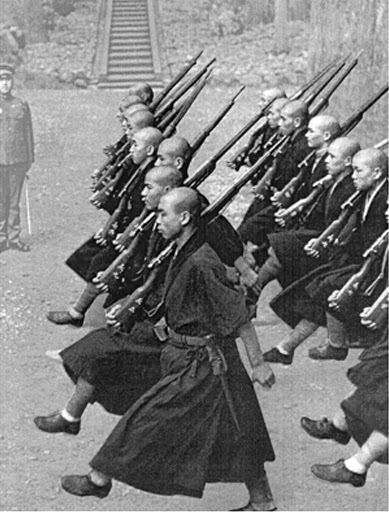
Japan is considered something of a utopia on the world stage today, standing among the lauded Nordic countries and wealthy microstates in terms of its civilizational level. Japan has virtually eliminated violent crime, has a high standard of living, is technologically advanced, stays out of wars, and remains a top world economy despite having seen better days. Japan even has a homogeneous population. Many on the Right therefore point to Japan as an example of the success of positive nationalism. (more…)
-
“Help us, Dave Filoni. You’re our only hope.”
On December 20th, J. J. “Death Star” Abrams and Disney Corp. will complete the destruction of the Star Wars saga that many of us have loved since childhood, while raking in untold millions by cynically exploiting nostalgia for the mythos they are desecrating. So pass the popcorn, because I’ll be right there, dear readers, to review it for you. (more…)
-
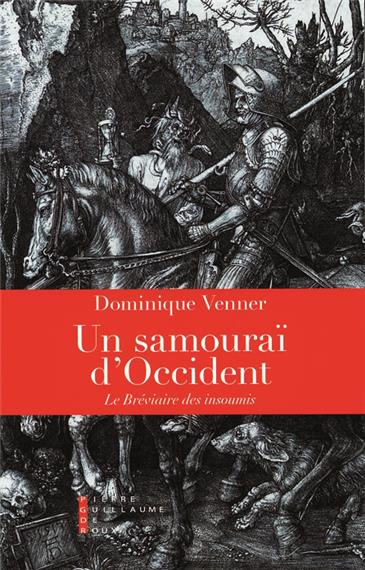
Translated by Guillaume Durocher
Translator’s Note:
This text is drawn from Dominique Venner, Un samouraï d’Occident: Le Bréviaire des insoumis (Paris: Pierre-Guillaume de Roux, 2013), 101-15.. I have previously reviewed this work at The Occidental Observer.
-
3,298 words
Samuel Jared Taylor is a Japan-born American white advocate. He is the founder and editor of the online magazine American Renaissance. Taylor is also the president of American Renaissance’s parent organization, New Century Foundation.
Grégoire Canlorbe: With the benefit of hindsight, what was the Golden Age of race relations in the USA? May it have been segregation? (more…)
-
Asceticism often has a bad reputation in vitalist circles. The idea of the sexless, passionless, passive, world-rejecting monk seems self-evidently maladaptive, an evolutionary dead end, as Nietzsche and Savitri Devi surmised. Yet the fact is that monks have often been warriors, and the monarchs of ascetic religions, such as Christianity and Buddhism, have often been great conquerors. (more…)
-
Editor’s Note:
The following text is the transcript by V. S. of Jonathan Bowden’s New Right lecture in London on December 10, 2011. I want to thank Michèle Renouf for making the recording available.
Mishima’s life was dedicated to a return of the spirit of the samurai and a belief in Yamamoto Jōchō’s book Hagakure, which is partly the 17th-century bible of samurai morality (more…)
-
Corneliu Zelea Codreanu
For My Legionaries
Introduction by Kerry Bolton; Historical Overview by Lucian Tudor; with new appendices and photographs.
London: Black House Publishing, 2015Black House Publishing has been known to me only as the publisher of relatively inexpensive, nicely produced Kindles that bring back into circulation the works of Sir Oswald Mosely and others of his circle;[1] (more…)
-
It is the fate of almost all religions to become, so to say, denatured; as they spread and develop, they gradually recede from their original spirit, and their more popular and spurious elements come to the fore, their less severe and essential features, those furthest removed from the metaphysical plane. While hardly any of the major historical religions have escaped this destiny, it would seem that it is particularly true of Buddhism. (more…)
-
January 26, 2013 Kerry Bolton
Yukio Mishima
English original here
Yukio Mishima, 1925-1970, nasceu Kimitake Hiraoka em uma família de classe média-alta. Autor de uma centena de livros, dramaturgo, e ator, ele foi descrito como o “Leonardo da Vinci do Japão contemporâneo”, e é um dos poucos escritores japoneses a se tornar conhecido e a ser traduzido no Ocidente. (more…)
-
Portuguese translation here
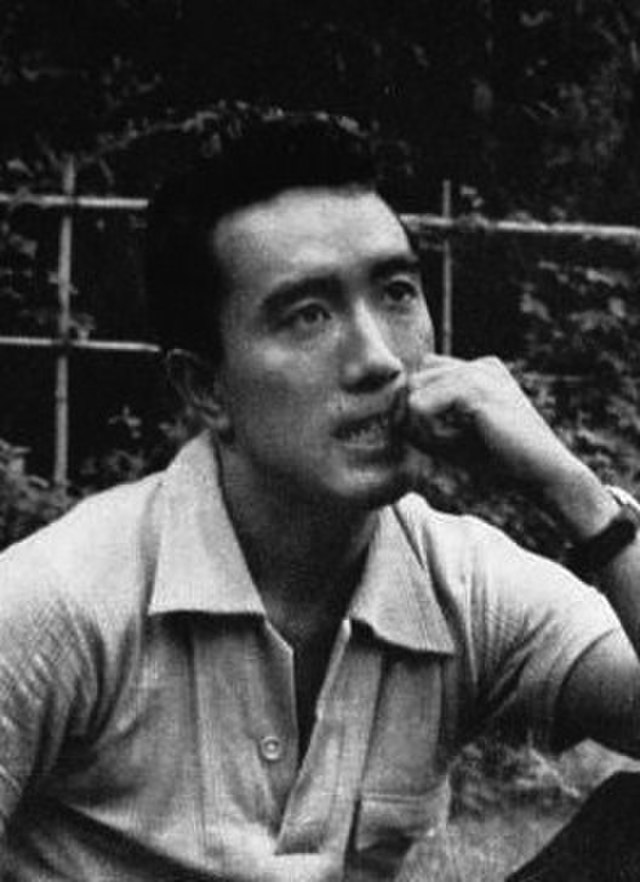
Yukio Mishima, 1925–1970, was born Kimitake Hiraoka into an upper middle class family. Author of a hundred books, playwright, and actor, he has been described as the “Leonardo da Vinci of contemporary Japan,”[1] and is one of the few Japanese writers to have become widely known and translated in the West. (more…)
-
Yukio Mishima was born into an upper middle class family in 1925. Author of a hundred books, playwright, and actor, he has been described as the “Leonardo da Vinci of contemporary Japan,” and is one of the few Japanese writers to have become widely known and translated in the West. (more…)