Counter-Currents
  • Advertise
  • Private Events
  • T&C
  • About
  • Contact
  • RSS
    • Main feed
    • Podcast feed
    • Videos feed
    • Comments feed
  • Welcome
  • Webzine
  • Books
  • Merch
  • Podcasts
  • Videos
  • Donate
  • Patrons
  • Subscribe
  • Crypto

LEVEL2

Donate Now Mailing list
  • Welcome
  • Webzine
  • Books
  • Merch
  • Podcasts
  • Videos
  • Donate
  • Patrons
  • Subscribe
  • Crypto
    • The Remigration Movement Solidifies

      F. Roger Devlin

    • Casting Aspersions:
      The Fatal Consequences of Race-Swapped Casting, From Helen of Troy to Henry of Southampton

      Steven Tucker

      6

    • The Murder of Henry Nowack

      Millennial Woes

      15

    • Don’t Forget to Vote in Our Writer & Article of the Month Poll

      Greg Johnson

    • The Robot Hotdog Stand

      Greg Johnson

      23

    • Laughing Our Way to Victory

      Dave Chambers

      2

    • The Zodiac Killer

      Mark Gullick

      9

    • Jared Taylor: What Rome Means to Me

      Jared Taylor

    • An Interview with Endeavour:
      My Way of Life Is an Adventure!

      Ondrej Mann

      6

    • José Pedro Zúquete’s The Identitarians

      Greg Johnson

      3

    • Editor’s Update
      Fundraiser Update & How to Watch the Remigration Summit

      Greg Johnson

      5

    • The Bitter End of Western Metaphysics:
      Heidegger on Nietzsche, Part One

      Collin Cleary

      10

    • Berlin: City of Stones

      Spencer J. Quinn

      6

    • True Folk-Horror Is Horror of Your Own Folk:
      Mark Gatiss vs the Brexit Blind Dead  

      Steven Tucker

      4

    • Counter-Currents Radio Podcast No. 689
      Thomas Massie, the America 2050 Bust, the Need for Whites to Divest from America, the AI Economic Apocalypse, & Pro-White Project Pitches to Billionaires

      Counter-Currents Radio

      7

    • Nationalism This Week
      Remigration is Inevitable, Part 3

      Greg Johnson

      26

    • Why Billionaires Should Fund White Identity Politics

      Lipton Matthews

      8

    • How Cold War Two Came About

      Morris van de Camp

      5

    • Now Available for Pre-Order at a Special Price!
      Greg Johnson’s The Philosopher Is In

      Greg Johnson

    • David Zsutty’s Elevator Pitch to a Billionaire

      David M. Zsutty

      1

    • Headbanging Lite

      Mark Gullick

      5

    • White Advocacy Past and Present

      Peter Bradley

      13

    • The Lunch Wars

      David M. Zsutty

      46

    • The Russians are Coming/The Russians are Coming

      Steven Clark

      1

    • Peak Fatigue in Fort Wayne

      Gabriel Anderson

      24

    • Keith Woods’ Elevator Pitch to a Billionaire

      Keith Woods

    • The Cruelty of Kindness

      Morris van de Camp

      9

    • Predation Wearing the Mask of Civilization

      Jayant Bhandari

      13

    • The Mandalorian & Grogu

      Trevor Lynch

      24

    • Editor’s Update
      Fundraiser Update & a New $20,000 Matching Grant
      Greg Johnson & David Zsutty Discuss Thomas Massie on Counter-Currents Radio

      Greg Johnson

      2

    • How the Jews Defeated Thomas Massie—& Themselves

      David M. Zsutty

      24

    • Jared Taylor’s Elevator Pitch to a Billionaire

      Jared Taylor

      15

    • Nationalism This Week
      Remigration Is Inevitable, Part 2

      Greg Johnson

      8

    • Could Fascism Work?

      Mark Gullick

      40

    • Jonathan Bowden’s Deliverance
      Part 7

      Jonathan Bowden

    • China’s Quiet Hand:
      Influence, Infiltration, & the Western Blind Spot

      Lipton Matthews

      9

    • Counter-Currents Radio Podcast No. 688
      Tyler Dykes on Running for US Congress in South Carolina

      Counter-Currents Radio

      3

    • Lothrop Stoddard’s The Revolt Against Civilization

      Spencer J. Quinn

      14

    • Lewis Strauss Did Nothing Wrong:
      How the politics of the Atom Bomb during the early Cold War Apply to Artificial Intelligence Today

      Morris van de Camp

      14

    • The Ghost of the Confederacy

      Dave Chambers

      12

    • America’s Century of Humiliation has Begun

      Greg Johnson

      27

    • Prepare for Africans & Schizophrenics!
      Welcome to the New Canadian Military

      Gunnar Alfredsson

      6

    • Remembering Julius Evola:
      May 19, 1898–June 11, 1974

      Greg Johnson

    • About Film “From the Right”

      Karel Veliky

    • Nostalgia Ain’t What It Used To Be. . . Now It’s Racist

      Steven Tucker

      8

    • To Depose The King

      Mark Gullick

      7

    • Editor’s Update
      Tyler Dykes on Counter-Currents Radio & The Best of Trevor Lynch Now in French

      Greg Johnson

    • Nationalism This Week
      Remigration Is Inevitable

      Greg Johnson

      21

    • You’re Nicked! The Story of The Sweeney

      Mark Gullick

      12

    • The Counter-Currents Fundraiser 2026:
      Help Us Provide You With All the News That’s Unfit To Print—Because It’s Actually Worth Reading!

      Steven Tucker

      3

    • kolokol

      The Murder of Henry Nowack

      The UK authorities fear any kind of “White backlash”, as they call it. They don’t care about the...

    • kolokol

      The Murder of Henry Nowack

      It was a racially-motivated hate-crime. "Vickrum Singh Digwa" (sic) was lying. He remember it all...

    • kolokol

      Casting Aspersions:
      The Fatal Consequences of Race-Swapped Casting, From Helen of Troy to Henry of Southampton

      "Lupita Nyong’o" (sic) is a ridiculous name. And she is hideously ugly. She is the antithesis of...

    • Bernie

      The Murder of Henry Nowack

      Many are saying this could be the straw that breaks the camel’s back in the UK. I certainly hope so...

    • Derek Stark

      The Zodiac Killer

      Another one is the “De Mau Mau” cult in Illinois in the 1970s, made up of black Viet Nam vets, who...

    • DM

      The Murder of Henry Nowack

      None. My only point is that it might be true that the attacker didn't remember stabbing the fellow.

    • Will Williams

      Nationalism This Week
      Remigration is Inevitable, Part 3

      Uncle Semantic: June 1, 2026  The weebo is ryan dawson, another antiWhite prick… —Weebo?...

    • Chud

      The Murder of Henry Nowack

      Sub-continental migration appears good when the local migration industry isn't established in India...

    • Bryan

      The Murder of Henry Nowack

      What threat did an unarmed White 18-year-old present to the entitled, knife-carrying Sikh?

    • Hammerhead

      Casting Aspersions:
      The Fatal Consequences of Race-Swapped Casting, From Helen of Troy to Henry of Southampton

      'These are the popular ‘soft’ things that reinforce this evil. It’s not just an abstract...

    • Will Williams

      The Zodiac Killer

      Derek Stark: June 2, 2026 …[T]here are more black serial killers per capita than white ones in the...

    • Vagrant Rightist

      The Murder of Henry Nowack

      Weren't Sikhs supposed to be the 'good ones' ? So much for that lie. Thanks MW, for the detailed...

    • Peter Quint

      The Murder of Henry Nowack

      Carry a Para-Ordnance 45 cal. sidearm everywhere like I do. 🙃

    • Peter Quint

      The Murder of Henry Nowack

      That is the same message White people in America have been getting for decades. 🙃

    • Thomas Johnson

      The Murder of Henry Nowack

      The message to white people in the UK is clear: if the nonwhite criminals don't get you, the coppers...

    • Glide Ratio 0:1

      Casting Aspersions:
      The Fatal Consequences of Race-Swapped Casting, From Helen of Troy to Henry of Southampton

      Surprised you called Nyongongo Mgolo "average". As far as my eyes can see she's a black 2. Well...

    • Vagrant Rightist

      Casting Aspersions:
      The Fatal Consequences of Race-Swapped Casting, From Helen of Troy to Henry of Southampton

      I'd be very surprised if Nolan himself believes in this stuff, but he knows full well his overlords...

    • Beau Albrecht

      The Robot Hotdog Stand

      Anyone remember this quote? "The simple statement that the People are not there for the sake of...

    • Greg Johnson

      The Robot Hotdog Stand

      You're arguing that a huge wave of post-AI business investment will employ the millions of people...

    • Peter Quint

      Casting Aspersions:
      The Fatal Consequences of Race-Swapped Casting, From Helen of Troy to Henry of Southampton

      Great article! Sidney Sweeney would have been the best choice for Helen of Troy. Gerard Butler would...

    • Earth Day Special

      John Morgan

      12

    • A Robertson Roundup
      Remembering Wilmot Robertson
      (April 16, 1915 – July 8, 2005)

      Margot Metroland

      13

    • The Paranoid Style in White Nationalism

      Greg Johnson

      30

    • Join the Dance!

      Andrew Hamilton

      1

    • We Can’t Save the Earth Without Reducing African Birth Rates

      James Dunphy

      36

    • “I’m Not a Conspiracy Theorist, but . . .”:
      Jeffrey Epstein’s Death Gives New Life to “Conspiracy Theories”

      Greg Johnson

      22

    • Sylvia Plath: Stasis in Darkness

      Vic Olvir

      17

    • Vanguardism, Vantardism, & Mainstreaming

      Greg Johnson

      80

    • Aviation, Geography, & Race

      Charles Lindbergh

      3

    • Some Thoughts on Yule

      Collin Cleary

      4

    • Living in Truth:
      A Yuletide Homily

      Jef Costello

      7

    • John Kennedy Toole’s A Confederacy of Dunces

      Greg Johnson

      20

    • On Aleksandr Solzhenitsyn’s Warning to the West

      Spencer J. Quinn

      7

    • Elitism, British Modernism, & Wyndham Lewis

      Jonathan Bowden

      6

    • Philip K. Dick’s Do Androids Dream of Electric Sheep? as Anti-Semitic/Christian-Gnostic Allegory

      Greg Johnson

      20

    • “Conspiracy Theory” or Conspiracy?

      Andrew Hamilton

      21

    • Remembering H. P. Lovecraft
      (August 20, 1890–March 15, 1937)

      Greg Johnson

      3

    • Who Are We?
      Nordics, Aryans, & Whites

      Greg Johnson

      71

    • Remembering William Gayley Simpson
      (July 23, 1892–December 31, 1990)
      A Pleasant Afternoon with Harriet & Bill Simpson

      Margot Metroland

      18

    • Here are the Young Men
      Remembering Ian Curtis
      (July 15, 1956–May 18, 1980)

      Mark Gullick

      18

    • Percy Grainger
      Artist of the Right

      Alex Graham

      7

    • Remembering Revilo Oliver
      (July 7, 1908–August 20, 1994)

      Greg Johnson

      18

    • The Meaning of July 4th for the White Man

      Gregory Hood

      13

    • The Front National’s Evolution

      Bruno Mégret

    • Merwin K. Hart
      Forgotten American Hero & Man of the Right

      Morris van de Camp

      10

    • George Orwell’s Nineteen Eighty-Four

      Jonathan Bowden

      8

    • Carleton S. Coon
      Scientist & Reluctant White Advocate

      Morris van de Camp

      3

    • The Kwanzaa Absurdity Will Be Dwarfed by Juneteenth

      Robert Hampton

      10

    • Stravinsky

      Alex Graham

      7

    • Like the Roman:
      Remembering Enoch Powell (1912-1998)

      Mark Gullick

      23

    • Crosstown Traffic:
      Jimi Hendrix & The Post-War Rock ‘N’ Roll Revolution

      Mark Gullick

    • Slaves from the North:
      Finns & Karelians in the East European Slave Trade, 900–1600

      Lipton Matthews

      14

    • Neo-Fascism in Film
      Part 4

      Karel Veliky

      2

    • David Lean’s A Passage to India

      Spencer J. Quinn

      1

    • Elites are Essential to Development

      Lipton Matthews

      7

    • Jonathan Bowden’s Deliverance
      Part 4

      Jonathan Bowden

    • Neo-Fascism in Film
      Part 3

      Karel Veliky

      6

    • E. M. Forster’s A Passage to India & the Indian Mentality

      Spencer J. Quinn

      25

    • Jonathan Bowden’s Deliverance
      Part 3

      Jonathan Bowden

    • The Rest Is Silence
      Heidegger’s Quietism

      Mark Gullick

      2

    • Dispelling the Historical Fallacy of Indian Nationalism

      Lipton Matthews

      8

    • Neo-Fascism in Film
      Part 2

      Karel Veliky

      8

    • Jonathan Bowden’s Deliverance
      Part 2

      Jonathan Bowden

    • Life of a Klansman

      Mark Gullick

      8

    • Jonathan Bowden’s Deliverance, Part 1

      Jonathan Bowden

    • Decolonial Ideas are Holding Back Developing Countries

      Lipton Matthews

      8

    • Neo-fascism in Film, Part 1

      Karel Veliky

      21

    • Jonathan Bowden’s Onslaught, Part 8
      Divigations on Decadence

      Jonathan Bowden

    • Jonathan Bowden’s Onslaught, Part 7
      Intrigues in the National Front

      Jonathan Bowden

      1

    • Rotten to the Core

      Mark Gullick

      8

    • Strauss on Husserl’s “Philosophy as Rigorous Science”

      Greg Johnson

    • Jonathan Bowden’s Onslaught, Part 6
      Francis Bacon & Right-Wing Nihilism

      Jonathan Bowden

    • London After (& Before) Midnight:
      Aleister Crowley, The Landlord’s Worst Nightmare

      James J. O'Meara

      2

    • Jonathan Bowden’s Onslaught, Part 5
      The Post-War British Far Right

      Jonathan Bowden

    • No Rules: Rollerball

      Mark Gullick

      4

    • Jonathan Bowden’s Onslaught, Part 3
      Brett Easton Ellis’ American Psycho

      Jonathan Bowden

    • An Alternate History of the Harris Presidency

      Beau Albrecht

      5

    • The Origins of Mass Education:
      Augustina S. Paglayan’s Raised to Obey

      Francis Rockwell

      4

    • Jonathan Bowden’s Onslaught, Part 2
      Louis-Ferdinand Céline

      Jonathan Bowden

      1

    • The Four Philosophers of the Apocalypse

      Mark Gullick

      4

    • András László
    • Derek Hawthorne
    • Beau Albrecht
    • Alain de Benoist
    • Kerry Bolton
    • Jonathan Bowden
    • Collin Cleary
    • Jef Costello
    • Savitri Devi
    • Julius Evola
    • Jim Goad
    • Gregory Hood
    • Juleigh Howard-Hobson
    • Greg Johnson
    • Charles Krafft
    • Anthony M. Ludovici
    • Trevor Lynch
    • H. L. Mencken
    • J. A. Nicholl
    • James J. O’Meara
    • Christopher Pankhurst
    • Tito Perdue
    • Michael Polignano
    • Spencer J. Quinn
    • Fenek Solère
    • Irmin Vinson
    • Leo Yankevich
    • Francis Parker Yockey
    • Multiple authors
  • Editor-in-Chief

    • Greg Johnson, Ph.D.

    Featured Writers

    • Beau Albrecht
    • Gunnar Alfredsson
    • Collin Cleary, Ph.D.
    • Jef Costello
    • Morris V. de Camp
    • F. Roger Devlin, Ph.D.
    • Stephen Paul Foster, Ph.D.
    • Jim Goad
    • Alex Graham
    • Mark Gullick, Ph.D.
    • Greg Johnson, Ph.D.
    • Travis LeBlanc
    • Trevor Lynch
    • Margot Metroland
    • James J. O’Meara
    • Angelo Plume
    • Spencer J. Quinn
    • Fred Reed
    • Clarissa Schnabel
    • Michael Walker
    • David M. Zsutty

    Frequent Writers

    • Asier Abadroa
    • Aquilonius
    • Alain de Benoist
    • Kerry Bolton, Ph.D.
    • Dave Chambers
    • Steven Clark
    • James Dunphy
    • Endeavour
    • Richard Houck
    • Jason Kessler
    • Titus Livius
    • Ondrej Mann
    • Lipton Matthews
    • Mark Mazari
    • John Morgan
    • Jaroslav Ostrogniew
    • Kathryn S.
    • Christian Secor
    • Anne Wilson Smith
    • Thomas Steuben
    • William De Vere
    • Kenneth Vinther
    • Max West

    Classic Authors

    • Maurice Bardèche
    • Jonathan Bowden
    • Julius Evola
    • Guillaume Faye
    • Ernst Jünger
    • Kevin MacDonald, Ph.D.
    • D. H. Lawrence
    • Charles Lindbergh
    • Jack London
    • H. P. Lovecraft
    • Anthony M. Ludovici
    • Sir Oswald Mosley
    • National Vanguard
    • Friedrich Nietzsche
    • Revilo Oliver
    • William Pierce
    • Ezra Pound
    • Saint-Loup
    • Savitri Devi
    • Carl Schmitt
    • Miguel Serrano
    • Oswald Spengler
    • P. R. Stephensen
    • Jean Thiriart
    • John Tyndall
    • Dominique Venner
    • Leo Yankevich
    • Francis Parker Yockey

    Other Authors

    • Howe Abbott-Hiss
    • Michael Bell
    • Giles Corey
    • Jack Donovan
    • Richardo Duchesne, Ph.D.
    • Emile Durand
    • Guillaume Durocher
    • Mark Dyal
    • Tom Goodroch
    • Andrew Hamilton
    • Robert Hampton
    • Huntley Haverstock
    • Derek Hawthorne
    • Gregory Hood
    • Juleigh Howard-Hobson
    • Alexander Jacob
    • Ruuben Kaalep
    • Tobias Langdon
    • Julian Langness
    • Patrick Le Brun
    • G A Malvicini
    • John Michael McCloughlin
    • Millennial Woes
    • Michael O’Meara
    • Christopher Pankhurst
    • Michael Polignano
    • J. J. Przybylski
    • Quintilian
    • Edouard Rix
    • C. B. Robertson
    • C. F. Robinson
    • Herve Ryssen
    • Alan Smithee
    • Fenek Solere
    • Ann Sterzinger
    • Robert Steuckers
    • Tomislav Sunic
    • Donald Thoresen
    • Marian Van Court
    • Irmin Vinson
    • Book Reviews
    • Movie Reviews
    • TV Reviews
    • Music Reviews
    • Art Criticism
    • Graphic Novels & Comics
    • Video Game Reviews
    • Fiction
    • Poems
    • Interviews
    • Videos
    • English Translations
    • Other Languages
      • Arabic
      • Bulgarian
      • Croatian
      • Czech
      • Danish
      • Dutch
      • Estonian
      • Finnish
      • French
      • German
      • Greek
      • Hungarian
      • Italian
      • Lithuanian
      • Norwegian
      • Polish
      • Portuguese
      • Romanian
      • Russian
      • Slovak
      • Spanish
      • Swedish
      • Ukrainian
    • Commemorations
    • Why We Write
  • Archives
  • Top 100 Commenters
  • The Looney Bin
  • Advertise
  • Private Events
  • T&C
  • About
  • Contact
  • RSS
    • Main feed
    • Podcast feed
    • Videos feed
    • Comments feed
Sponsored Links
Europa.com Above Time Coffee Antelope Hill Publishing Paul Waggener IHR-Store Spencer J. Quinn American Renaissance Jim Goad The Occidental Observer
Print September 22, 2023 12 comments

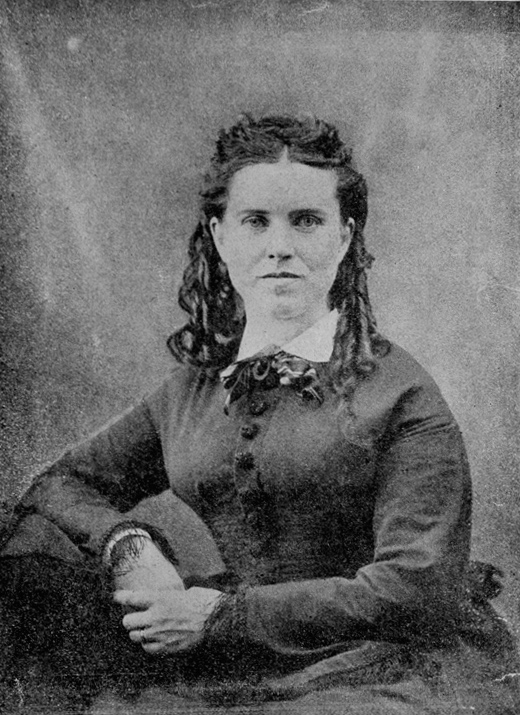
The Captivity Narrative of Fanny Kelly

Spencer J. Quinn

Fanny Kelly

2,865 words

Captivity narratives, especially those written by women, were a staple of American literature during the nineteenth century. Stories of white women captured and abused by savage Indians certainly inspired enough fascination and horror in the American public to warrant its own literary genre. And for good reason, considering that there had been thousands of white captives throughout American history up to 1900, and the abuse they in many cases suffered was a fate worse than death.

We all know what that means, of course. They knew it back then as well. This being the Victorian era, however, that didn’t stop many of the surviving captives from being somewhat cagey about their ordeals. They had their honor and status as ladies to consider after being restored to white society. One of the most well-known of these authors was Fanny Kelly, who was emigrating to Montana with her family and several others in the summer of 1864 when over 200 Blackfeet Sioux Indians attacked their wagon train. The assault happened near the Little Box Elder Creek in Wyoming. The Indians first surrounded the emigrants, initially feigning friendship. They demanded food, then gifts, then horses, and then began the slaughter. They killed four men and took Kelly, her adopted eight-year-old niece, a woman named Sarah Larimer, and her young son as captives. Three men, including the husbands of both women and one Negro slave, managed to escape.

Kelly ended up spending five months in captivity, and in 1871 published an account of her experiences entitled Narrative of my Captivity Among the Sioux Indians. The narrative is striking for many reasons, not least of which is its poignancy and detail. Aside from its gripping suspense and many evocative passages, it can serve as a testament to the mores and attitudes of white Americans from the time as well as an ethnology of the Blackfeet Sioux. For example, Kelly knew that the peculiar marks on their arrows meant that “their owners had all belonged to one tribe, though of different bands.” She also observed them firsthand in all their wanton cruelty and does not hold back in her memoir:

I thought of all the characters of romance and history, wherein the nature of the red man is enshrined in poetic beauty. The untutored nobility of soul, the brave generosity, the simple dignity untrammeled by the hollow conventionalities of civilized life, all rose mockingly before me, and the heroes of my youthful imagination passed through my mind in strange contrast with the flesh and blood realities into who hands I had fallen.

Kelly later underscores the theory-versus-experience divide which has long pitted whites against each other in internecine conflict over the topic of race:

. . . but the true red man, as I saw him, does not exist between the pages of many volumes. He roams his native wastes, and to once encounter and study him there, so much must be sacrificed that I was unable to appreciate the knowledge I was gaining at such a price.

After burning whatever they couldn’t steal, the savages placed the two white women and their children on horses and rode off. On their way, however, Kelly surreptitiously released her niece, instructing her to lay low and then retrace her steps back to the main trail. The girl absconded successfully, but Kelly was found out when she tried to follow shortly thereafter. The Indians beat her mercilessly and then hunted down and murdered her poor niece, whom they scalped and left where they’d found her. Miraculously, however, Larimer and her child managed to escape within a couple days of capture. But in my 1990 edition, we learn this from the book’s Prologue, and not from Kelly herself, who oddly drops the Larimers from her narrative. We shall see why later.

You can buy Spencer Quinn’s novel White Like You here.

The Indians then led their captive through a labyrinth of craggy, rugged terrain, which Kelly describes as “inaccessible to white men.” Here, they treated her as a slave while depriving her of food and water. Death threats were constant, and rather than embrace the prospect of mortal reprieve, the thoughtful narrator gives herself up to God: “But it is only those who have looked over the dark abyss of death who know how the soul shrinks from meeting the unknown future.”

After this, we are treated to Kelly’s deft literary depictions of her experiences, memories, hopes, and anguish. She describes what the Indians wore, what they ate, how they ate, how they organized themselves, how they worshipped, how they interacted with each other, and how they interacted with their environment. She explains how Indians would chew on sticks in the oppressive heat to keep from feeling parched. She describes a scene in which she faced execution for carelessly discarding her owner’s pipe. She saved herself by showering the braves with the paper money she had stashed in her purse. In another scene, Kelly tells of a dog-feast spirit dance in which dogs and horses were sacrificed to appease offended spirits, while braves dance like “fiends in a carnival of battle” beneath human scalps fastened to poles. She also meets a mysterious Southerner who had lived among the Indians for many years and had a brood of mixed-race children. He yet remained Southern enough to claim that Richmond would never be taken. Amusingly, she also relates a story of how the Sioux tried pickles for the first time and nearly gagged at their sour taste. They tried to cook them in their glass jars, only to watch the jars explode over their fires.

In one of the most striking and surreal moments of the narrative, Kelly eloquently tells of how she and her entire band endured a three-hour thunderstorm by lying flat on the ground. This was, apparently, the way of the tribe, and a lurid experience which I am sure will remain with the reader almost as long as it did for the author herself:

When the vivid gleams lit up the air, enormous trees could be seen bending under the fierceness of the blast, and great white sheets of water burst out of the clouds, as if intent on deluging the world. Every element of nature united in terrific warfare, and the security of the earth seemed denied to me while I clung to its flooded bosom, and blinded by lightning and shocked by the incessant roaring of the thunder and the wild ravaging of the ungovernable wind, felt myself but a tossed atom in the great confusion, and could only cling to God’s remembering pity in silent prayer.

Throughout the narrative, Kelly never once questions her identity as a civilized white person and is always prepared to assert the cultural and racial gulf between her and her captors. “Their people were not my people,” she affirms in her memoir. In many places we find refreshingly overt ethnocentrism. Upon meeting another captive white woman, she writes:

It was very natural and pleasant to know her as she was white, and although she was an Indian in tastes and habits, she was my sister and belonged to my race. There was a sympathetic chord between us, and it was a relief to be with her.

Her almost clinical detachment towards the Indians produces quite a few acerbic, yet no doubt accurate, assessments of them. Of hunting buffalo, she writes:

The Indians often, for the mere sport, make an onslaught, killing great numbers of them, and then have a plentiful feast of “ta-tonka,” as they call buffalo meat. They use no economy in food. It is always a feast or a famine; and they seem equally able to gorge or fast. Each man selects the part of the animal he has killed the best suits his own taste, and leaves the rest to decay or be eaten by wolves, thus wasting their own fame, and often suffering privation in consequence.

Kelly notes the Indians’ cruelty towards animals as well as towards humans, and laments how they often whipped their dogs and horses. She remarks on their boastful, profane, hidebound, and dishonest natures, as well as their near-universal fondness for whiskey. She particularly loathed their barbaric victory celebrations, as well as their penchant for targeting white women with long hair — which made for especially gaudy scalps. She witnessed murder, torture, mutilation, and wife battery. She befriended another white captive, one Mary Boyeau — whom historians cannot find any record of elsewhere — who resentfully described her sexual bondage to the Indians, as well as a harrowing scene in which Indians burst into the home of a white woman whom they then stabbed to death. Her wailing infant they tossed into the oven. The casual and torturous murder of white infants is a common occurrence in captivity narratives. Often, mothers were forced to witness such atrocities, especially if their Indian tormentors aimed to terrorize them into submission.

Like a first-rate novelist, Kelly adroitly presents all the crucial plot twists and intrigues surrounding her rescue by American forces at nearby Fort Sully. It’s real edge-of-your-seat reading, as is her delirious disbelief at being saved (“Am I free, indeed free?”), her joyous reunion with her husband, and her devastation upon learning the tragic fate of her poor niece. Later, after her husband’s passing in 1867, Kelly was invited to stay with the Larimers in Wyoming to co-author a memoir of their time in captivity. Unfortunately, Sarah Larimer published this supposedly co-written account under her own name, which prompted Kelly to sue. Years of litigation between the two women caused them to become enemies, and is perhaps the reason why Kelly leaves Larimer’s fate open-ended in her memoir.

As for whether Fanny Kelly was sexually abused, she claims not In her narrative. However, in her 1868 petition to Congress to receive recompense for her treatment at the hands of the Blackfeet, she writes:

Your memorialist was then taken into captivity, and was forced to become the squaw of one of the O-gal-lal-lah Chiefs, who treated her in a manner too horrible to mention, and during her captivity was passed from Chief to Chief, and treated in a similar manner.

Kelly’s testimony seems to have greater credibility in this regard than the narrative itself, given its consistency with nearly all captivity narratives involving white women. Gang rapes were not only common, but expected by any unlucky white woman who was captured by Indians on the frontier back then. S. C. Gwynne says as much in his Empire of the Summer Moon, a history of Quanah Parker and the Comanche Indians. In 1839 Rachel Plummer, the aunt of the famous captive Cynthia Ann Parker (Quanah’s white mother, on whom the film The Searchers was loosely based) published her account of captivity in which she writes:

To undertake to narrate their barbarous treatment would only add to my present distress, for it is with feelings of the deepest mortification that I think of it, much less to speak or write of it . . .[1]

George Spencer was taken captive by Indians during the great Minnesota uprising in 1862. He was treated relatively well, but recounted how

the female captives were, with very few exceptions, subjected to the most horrible treatment. In some cases, a woman would be taken out into the woods, and her person violated by six, seven, and as many as ten or twelve of these fiends.[2]

14-year-old, German-born Mary Schwandt was abducted by Sioux Indians in Minnesota around this time as well. After murdering six of her family members — or seven, if you include her sister’s unborn child, which had been ripped from its mother’s womb and nailed to a tree — the savages raped her repeatedly. In her own words:

They took me out by force, to an unoccupied teepee, near the house, and perpetrated the most horrible and nameless outrages upon my person. These outrages were repeated at different times during my captivity.[3]
You can buy Spencer J. Quinn’s young adult novel The No College Club here.

The list goes on.

Interestingly, Fanny Kelly never seemed to give in to hatred of her captors, either during her ordeal or years later, when she penned her memoir. Many other surviving captives did, however. In 1864, Laura Roper was captured by a band of Cheyenne Indians near her home in modern-day Nebraska. They slaughtered almost an entire white family before her eyes. During her abduction, a horse kicked her in the face. Of course, throughout her captivity she was continually raped, beaten, and abused. She did not forgive, and the following year wrote in a letter about how she hoped that “every one of the Indians will be extinguished.[4]

Fanny Kelly for her part makes sure to depict acts of kindness from the Indians. She also specifies which ones were brave or noble enough to rise above the savage mean. Towards the end of her captivity, she writes of how she had been sold to a different tribe of Blackfeet who, while remaining militarily hostile to the whites, treated her with all the fairness and respect appropriate for an innocent civilian prisoner of war. Squaws fed her on numerous occasions and offered her companionship when she desperately needed it. Kelly had also befriended a young Indian girl shortly before her rescue.

Most importantly, Kelly gives voice to the legitimate grievance the Indians had against the whites at that time. When comforting a brave with fever, the man bemoaned how “I go to fight the white man. He take away our land and chase game away; then he take away our squaws. He take away my best squaw.” And it’s true. Fanny Kelly does comment disapprovingly on how many American soldiers on the frontier took “Indian wives” and sired children with them, only to send the whole brood back to the tribe’s village whenever their real wives came to visit.

One of the best lines in the book comes out of the mouth of an Indian:

The palefaces, our eternal persecutors, pursue and harass us without intermission, forcing us to abandon to them, one by one, our best hunting grounds, and we are compelled to seek a refuge in the depths of these Bad Lands like timid deer. Many of them even dare to come into the prairies which belong to us, to trap beaver and hunt elk and buffalo, which are our property. These undesirable creatures, the outcasts of their own people, rob and kill us when they can. Is it just that we should suffer these wrongs without complaining?

By not reaching for easy answers and by plumbing the spiritual and psychological depths of the human soul, Narrative of my Captivity Among the Sioux Indians goes well beyond what a memoir typically offers. It is so well-written that I have to say it is suspiciously well-written. Did Fanny Kelly have help? Did she hire a ghostwriter? I don’t know, but her work exhibits real talent and panache, and comfortably occupies the upper middlebrow echelons of first-person non-fiction literature. I have read several captivity narratives, and all of them belie an amateur hand between the lines. Not so with Narrative of my Captivity. If Fanny Kelly was this good, why didn’t she publish anything else?

Regardless, Fanny Kelly’s narrative was extremely popular, with my 1990 edition being the book’s eleventh printing. In her later years, she remarried and worked for the federal government in Washington, DC. She also made a small fortune in real estate and was a highly esteemed lady in her old age. According the editors of my edition, Kelly developed a real affection towards the Indians to the point of entertaining Indian dignitaries in her home when they came to Washington.

And why wouldn’t she? Aside from seeming to be a good soul, she reached her prime very close to the apogee of white civilization. She died in 1904, a decade removed from the First World War. European and American whites were the unquestioned leaders of the world at that time. Of course she would express the white man’s generosity towards his conquered enemies. It would be inhuman not to, regardless of the inhumanity the Indians had inflicted upon her and her family 40 years earlier. The whites had won. Why restart wars that had already ended?

Of course, we all know in hindsight that victory was fleeting, and that wars, especially between racial groups, are never over. 150 years ago we had captivity narratives. Today, we have the tens of thousands of white European girls and women who’ve been brutalized and enslaved by Muslim invaders. Is it any different now than it was then? Yes and no. But the biggest way in which times have changed is that in Fanny Kelly’s day, white female victims were encouraged to tell their stories — as they should have been. Today, however, white women are shamed into keeping quiet, which is the one thing that will ensure that their victimization will continue.

Spencer J. Quinn

* * *

Like all journals of dissident ideas, Counter-Currents depends on the support of readers like you. Help us compete with the censors of the Left and the violent accelerationists of the Right with a donation today. (The easiest way to help is with an e-check donation. All you need is your checkbook.)

GreenPay™ by Green Payment

Select donation type

Select or enter an amount to give

Select or enter an amount to give monthly

For other ways to donate, click here.

Notes

[1] Rachel Plummer, Narrative of the Capture and Subsequent Sufferings of Mrs. Rachel Plummer During a Captivity of Twenty-one Months Among the Comanche Indians. 1839.

[2] C. M. Oehler, The Great Sioux Uprising (New York: Oxford University Press, 1959), pp 198-199.

[3] Charles S. Bryant & Abel B. Murch, A History of the Great Massacre by the Sioux Indians in Minnesota (Rickey & Carroll, Publishers, 1864). Digital scan reprint, 2001, p. 340.

[4] Ronald Becher, Massacre Along the Medicine Road: A Social History of the Indian War of 1864 in Nebraska Territory (Caxton Press, 1999), pp. 326-327, 428.

The Captivity Narrative of Fanny Kelly

The%20Captivity%20Narrative%20of%20Fanny%20Kelly

Share

  • Gab

Enjoyed this article?

Be the first to leave a tip in the jar!

Instant Echeck GreenPay™

Related

  • Berlin: City of Stones

  • Lothrop Stoddard’s The Revolt Against Civilization

  • Trump vs. Transgenderism

  • An Interview with Glen Allen, Free Speech Advocate

  • Neo-Fascism in Film, Part 3

  • E. M. Forster’s A Passage to India & the Indian Mentality

  • Jonathan Bowden’s Deliverance, Part 3

  • The Rest Is Silence: Heidegger’s Quietism

Tags

American Indian criminalityAmerican IndiansAmerican Indians and violenceAmerindianscaptivity narrativesFanny KellyNarrative of My Captivity Among the Sioux IndianspaywallS. C. GwynneSpencer J. Quinnthe Blackfeet Siouxthe Siouxwestward expansionWyoming

12 comments

  1. DarkPlato says:
    September 22, 2023 at 2:00 pm

    Good review.  Yeah, yeah, I was having the same thoughts too!  The writing seems professional compared to other captive narratives I have read.  But she was clearly a very smart lady based on her other successes.

    1
    1
    • Spencer Quinn
  2. S. Clark says:
    September 24, 2023 at 9:16 am

    There is some mention of Fanny Kelly in Evan S. Connell’s Son of the Morning Star, and is a concise study of her captivity. It is also inclusive showing the Indian viewpoint, being angry at whites wiping out their hunting grounds. Also how Kelly, having learned the Sioux language, was able to warn soldiers about an Indian plan to overrun the fort where she was to be returned. As Connell put it: “On December 12 the Blackfeet delivered her. They must have felt cheated when the gates quickly closed.”

    What is poignant is describing her capture and the slaughter of her wagon train. There were three hundred Sioux who surrounded them, their chief saying “good Indian, me.” The Indians traded, then arrogantly  destroyed the white goods they got, and demanded a feast. As Connell described: “Kelly had wandered some distance away to gather firewood, and the preacher was distributing sugar when the Oglalas quit playing games. Fanny Kelly said she would never forget the face of Mr. Taylor when a bullet struck his forehead: “He looked at me as he fell backward….”  The line When the Oglalas quit playing games sums up all non-whites when they see their moment has come. It works now, whether in the inner cities or borders.

    2
    2
    • Spencer Quinn
    • Weave
    1. Spencer Quinn says:
      September 24, 2023 at 12:00 pm

      Thanks for this. I will get around to reviewing Morning Star one of these days. I’m also a big fan of the Mr and Mrs Bridge novels.

      https://counter-currents.com/2023/01/we-are-all-mr-bridge/

      0
      0
  3. Hamburger Today says:
    September 24, 2023 at 10:03 am

    Thank you for this review.

    ‘[W]ars, especially between racial groups, are never over.’

    Indeed.

    2
    2
    • Spencer Quinn
    • Weave
  4. Beau Albrecht says:
    September 24, 2023 at 8:59 pm

    One of my friends, an American Indian, believes that the Indians of old never wasted meat and always honored women.  The poor thing, I couldn’t bear to tell her the truth about all that.

    2
    2
    • Spencer Quinn
    • Scott
    1. Spencer Quinn says:
      September 25, 2023 at 7:12 am

      I’m sure the wolves and vultures would disagree about the wasting meat part. And from all I have read, Indian men treated their squaws as little better than slaves. This whole ‘honoring women’ stuff is a white thing on the whole.

      0
      0
    2. Scott says:
      September 25, 2023 at 11:40 am

      Cannibalism was also a big thing. Archaeologists have had to soft-pedal that inconvenient truth in Academia for years.

      🙂

      2
      2
      • Spencer Quinn
      • Weave
  5. AAAA says:
    October 8, 2023 at 12:05 pm

    Do indians/native americans still act like they were depicted in the book today in America?

    0
    0
  6. Desert Flower says:
    October 25, 2023 at 11:43 am

    Excellent review, SJQ. It’s still amazing that so many Whites have a romanticized view of the Noble Savage. All you have to do is read a few books written by people from that era (prior to 1900), and your eyes will be opened.

    Here’s a clip from a 2007 movie, Bury My Heart at Wounded Knee.

    Sitting Bull is told what’s what.

    https://www.youtube.com/watch?v=iVqQosyOpg4

    0
    0
  7. Desert Flower says:
    October 26, 2023 at 4:55 pm

    I had to reread this excellent review, and get the book. Poor Fanny Kelly.

    I suggest anyone interested in the reality of the “Noble Savage” to also read Trevor Lynch’s review of John Ford’s film The Searchers. Ethan Edwards’ (John Wayne’s character) response to the dilemma of a White woman in savage hands is notable: rescue her or kill her out of compassion?

    https://counter-currents.com/2021/04/the-searchers/


    0
    0
  8. Hyacinth Bouquet says:
    October 30, 2023 at 4:11 am

    “We all know what that means, of course.”

    Reading this line, for some reason, recollected to me being an eight-year-old girl sitting in the backseat of my mother’s car while she talked in low, somber tones to a female friend of hers about a mutual acquaintance of theirs who had been violently attacked while walking through the parking lot of a local grocery store one night while walking back to her car: “And Betty, who works down at the police department, said she was” — and here my mother stopped to spell it out instead of saying the word — “r-a-p-e-d.”  I had no idea, at that age, of the exact anatomy involved in a rape, but I knew it involved degradation, violation and pain.  A lot of pain.  Reading the graphic accounts, and the sometimes indirect descriptions of the White women who became captives, really made vivid to me the reality of the incredible feat of carving a civilization out of a wilderness full of hostile savages.

    0
    0
  9. Historynerd says:
    December 27, 2023 at 12:55 am

    Please note that the ‘Blackfeet’ of Fanny’s account are the Blackfeet Sioux (Sihásapa), a division of the Lakota Sioux, NOT the Blackfeet Tribe (Siksiká), which were enemies of the Sioux. The terms both translate from their respective languages into the same word in English.

    0
    0

Comments are closed.

If you have a Subscriber access,
simply login first to see your comment auto-approved.

Note on comments privacy & moderation

Your email is never published nor shared.

Comments are moderated. If you don't see your comment, please be patient. If approved, it will appear here soon. Do not post your comment a second time.

    • The Remigration Movement Solidifies

      F. Roger Devlin

    • Casting Aspersions:
      The Fatal Consequences of Race-Swapped Casting, From Helen of Troy to Henry of Southampton

      Steven Tucker

      6

    • The Murder of Henry Nowack

      Millennial Woes

      15

    • Don’t Forget to Vote in Our Writer & Article of the Month Poll

      Greg Johnson

    • The Robot Hotdog Stand

      Greg Johnson

      23

    • Laughing Our Way to Victory

      Dave Chambers

      2

    • The Zodiac Killer

      Mark Gullick

      9

    • Jared Taylor: What Rome Means to Me

      Jared Taylor

    • An Interview with Endeavour:
      My Way of Life Is an Adventure!

      Ondrej Mann

      6

    • José Pedro Zúquete’s The Identitarians

      Greg Johnson

      3

    • Editor’s Update
      Fundraiser Update & How to Watch the Remigration Summit

      Greg Johnson

      5

    • The Bitter End of Western Metaphysics:
      Heidegger on Nietzsche, Part One

      Collin Cleary

      10

    • Berlin: City of Stones

      Spencer J. Quinn

      6

    • True Folk-Horror Is Horror of Your Own Folk:
      Mark Gatiss vs the Brexit Blind Dead  

      Steven Tucker

      4

    • Counter-Currents Radio Podcast No. 689
      Thomas Massie, the America 2050 Bust, the Need for Whites to Divest from America, the AI Economic Apocalypse, & Pro-White Project Pitches to Billionaires

      Counter-Currents Radio

      7

    • Nationalism This Week
      Remigration is Inevitable, Part 3

      Greg Johnson

      26

    • Why Billionaires Should Fund White Identity Politics

      Lipton Matthews

      8

    • How Cold War Two Came About

      Morris van de Camp

      5

    • Now Available for Pre-Order at a Special Price!
      Greg Johnson’s The Philosopher Is In

      Greg Johnson

    • David Zsutty’s Elevator Pitch to a Billionaire

      David M. Zsutty

      1

    • Headbanging Lite

      Mark Gullick

      5

    • White Advocacy Past and Present

      Peter Bradley

      13

    • The Lunch Wars

      David M. Zsutty

      46

    • The Russians are Coming/The Russians are Coming

      Steven Clark

      1

    • Peak Fatigue in Fort Wayne

      Gabriel Anderson

      24

    • Keith Woods’ Elevator Pitch to a Billionaire

      Keith Woods

    • The Cruelty of Kindness

      Morris van de Camp

      9

    • Predation Wearing the Mask of Civilization

      Jayant Bhandari

      13

    • The Mandalorian & Grogu

      Trevor Lynch

      24

    • Editor’s Update
      Fundraiser Update & a New $20,000 Matching Grant
      Greg Johnson & David Zsutty Discuss Thomas Massie on Counter-Currents Radio

      Greg Johnson

      2

    • How the Jews Defeated Thomas Massie—& Themselves

      David M. Zsutty

      24

    • Jared Taylor’s Elevator Pitch to a Billionaire

      Jared Taylor

      15

    • Nationalism This Week
      Remigration Is Inevitable, Part 2

      Greg Johnson

      8

    • Could Fascism Work?

      Mark Gullick

      40

    • Jonathan Bowden’s Deliverance
      Part 7

      Jonathan Bowden

    • China’s Quiet Hand:
      Influence, Infiltration, & the Western Blind Spot

      Lipton Matthews

      9

    • Counter-Currents Radio Podcast No. 688
      Tyler Dykes on Running for US Congress in South Carolina

      Counter-Currents Radio

      3

    • Lothrop Stoddard’s The Revolt Against Civilization

      Spencer J. Quinn

      14

    • Lewis Strauss Did Nothing Wrong:
      How the politics of the Atom Bomb during the early Cold War Apply to Artificial Intelligence Today

      Morris van de Camp

      14

    • The Ghost of the Confederacy

      Dave Chambers

      12

    • America’s Century of Humiliation has Begun

      Greg Johnson

      27

    • Prepare for Africans & Schizophrenics!
      Welcome to the New Canadian Military

      Gunnar Alfredsson

      6

    • Remembering Julius Evola:
      May 19, 1898–June 11, 1974

      Greg Johnson

    • About Film “From the Right”

      Karel Veliky

    • Nostalgia Ain’t What It Used To Be. . . Now It’s Racist

      Steven Tucker

      8

    • To Depose The King

      Mark Gullick

      7

    • Editor’s Update
      Tyler Dykes on Counter-Currents Radio & The Best of Trevor Lynch Now in French

      Greg Johnson

    • Nationalism This Week
      Remigration Is Inevitable

      Greg Johnson

      21

    • You’re Nicked! The Story of The Sweeney

      Mark Gullick

      12

    • The Counter-Currents Fundraiser 2026:
      Help Us Provide You With All the News That’s Unfit To Print—Because It’s Actually Worth Reading!

      Steven Tucker

      3

    • kolokol

      The Murder of Henry Nowack

      The UK authorities fear any kind of “White backlash”, as they call it. They don’t care about the...

    • kolokol

      The Murder of Henry Nowack

      It was a racially-motivated hate-crime. "Vickrum Singh Digwa" (sic) was lying. He remember it all...

    • kolokol

      Casting Aspersions:
      The Fatal Consequences of Race-Swapped Casting, From Helen of Troy to Henry of Southampton

      "Lupita Nyong’o" (sic) is a ridiculous name. And she is hideously ugly. She is the antithesis of...

    • Bernie

      The Murder of Henry Nowack

      Many are saying this could be the straw that breaks the camel’s back in the UK. I certainly hope so...

    • Derek Stark

      The Zodiac Killer

      Another one is the “De Mau Mau” cult in Illinois in the 1970s, made up of black Viet Nam vets, who...

    • DM

      The Murder of Henry Nowack

      None. My only point is that it might be true that the attacker didn't remember stabbing the fellow.

    • Will Williams

      Nationalism This Week
      Remigration is Inevitable, Part 3

      Uncle Semantic: June 1, 2026  The weebo is ryan dawson, another antiWhite prick… —Weebo?...

    • Chud

      The Murder of Henry Nowack

      Sub-continental migration appears good when the local migration industry isn't established in India...

    • Bryan

      The Murder of Henry Nowack

      What threat did an unarmed White 18-year-old present to the entitled, knife-carrying Sikh?

    • Hammerhead

      Casting Aspersions:
      The Fatal Consequences of Race-Swapped Casting, From Helen of Troy to Henry of Southampton

      'These are the popular ‘soft’ things that reinforce this evil. It’s not just an abstract...

    • Will Williams

      The Zodiac Killer

      Derek Stark: June 2, 2026 …[T]here are more black serial killers per capita than white ones in the...

    • Vagrant Rightist

      The Murder of Henry Nowack

      Weren't Sikhs supposed to be the 'good ones' ? So much for that lie. Thanks MW, for the detailed...

    • Peter Quint

      The Murder of Henry Nowack

      Carry a Para-Ordnance 45 cal. sidearm everywhere like I do. 🙃

    • Peter Quint

      The Murder of Henry Nowack

      That is the same message White people in America have been getting for decades. 🙃

    • Thomas Johnson

      The Murder of Henry Nowack

      The message to white people in the UK is clear: if the nonwhite criminals don't get you, the coppers...

    • Glide Ratio 0:1

      Casting Aspersions:
      The Fatal Consequences of Race-Swapped Casting, From Helen of Troy to Henry of Southampton

      Surprised you called Nyongongo Mgolo "average". As far as my eyes can see she's a black 2. Well...

    • Vagrant Rightist

      Casting Aspersions:
      The Fatal Consequences of Race-Swapped Casting, From Helen of Troy to Henry of Southampton

      I'd be very surprised if Nolan himself believes in this stuff, but he knows full well his overlords...

    • Beau Albrecht

      The Robot Hotdog Stand

      Anyone remember this quote? "The simple statement that the People are not there for the sake of...

    • Greg Johnson

      The Robot Hotdog Stand

      You're arguing that a huge wave of post-AI business investment will employ the millions of people...

    • Peter Quint

      Casting Aspersions:
      The Fatal Consequences of Race-Swapped Casting, From Helen of Troy to Henry of Southampton

      Great article! Sidney Sweeney would have been the best choice for Helen of Troy. Gerard Butler would...

    • Earth Day Special

      John Morgan

      12

    • A Robertson Roundup
      Remembering Wilmot Robertson
      (April 16, 1915 – July 8, 2005)

      Margot Metroland

      13

    • The Paranoid Style in White Nationalism

      Greg Johnson

      30

    • Join the Dance!

      Andrew Hamilton

      1

    • We Can’t Save the Earth Without Reducing African Birth Rates

      James Dunphy

      36

    • “I’m Not a Conspiracy Theorist, but . . .”:
      Jeffrey Epstein’s Death Gives New Life to “Conspiracy Theories”

      Greg Johnson

      22

    • Sylvia Plath: Stasis in Darkness

      Vic Olvir

      17

    • Vanguardism, Vantardism, & Mainstreaming

      Greg Johnson

      80

    • Aviation, Geography, & Race

      Charles Lindbergh

      3

    • Some Thoughts on Yule

      Collin Cleary

      4

    • Living in Truth:
      A Yuletide Homily

      Jef Costello

      7

    • John Kennedy Toole’s A Confederacy of Dunces

      Greg Johnson

      20

    • On Aleksandr Solzhenitsyn’s Warning to the West

      Spencer J. Quinn

      7

    • Elitism, British Modernism, & Wyndham Lewis

      Jonathan Bowden

      6

    • Philip K. Dick’s Do Androids Dream of Electric Sheep? as Anti-Semitic/Christian-Gnostic Allegory

      Greg Johnson

      20

    • “Conspiracy Theory” or Conspiracy?

      Andrew Hamilton

      21

    • Remembering H. P. Lovecraft
      (August 20, 1890–March 15, 1937)

      Greg Johnson

      3

    • Who Are We?
      Nordics, Aryans, & Whites

      Greg Johnson

      71

    • Remembering William Gayley Simpson
      (July 23, 1892–December 31, 1990)
      A Pleasant Afternoon with Harriet & Bill Simpson

      Margot Metroland

      18

    • Here are the Young Men
      Remembering Ian Curtis
      (July 15, 1956–May 18, 1980)

      Mark Gullick

      18

    • Percy Grainger
      Artist of the Right

      Alex Graham

      7

    • Remembering Revilo Oliver
      (July 7, 1908–August 20, 1994)

      Greg Johnson

      18

    • The Meaning of July 4th for the White Man

      Gregory Hood

      13

    • The Front National’s Evolution

      Bruno Mégret

    • Merwin K. Hart
      Forgotten American Hero & Man of the Right

      Morris van de Camp

      10

    • George Orwell’s Nineteen Eighty-Four

      Jonathan Bowden

      8

    • Carleton S. Coon
      Scientist & Reluctant White Advocate

      Morris van de Camp

      3

    • The Kwanzaa Absurdity Will Be Dwarfed by Juneteenth

      Robert Hampton

      10

    • Stravinsky

      Alex Graham

      7

    • Like the Roman:
      Remembering Enoch Powell (1912-1998)

      Mark Gullick

      23

    • Crosstown Traffic:
      Jimi Hendrix & The Post-War Rock ‘N’ Roll Revolution

      Mark Gullick

    • Slaves from the North:
      Finns & Karelians in the East European Slave Trade, 900–1600

      Lipton Matthews

      14

    • Neo-Fascism in Film
      Part 4

      Karel Veliky

      2

    • David Lean’s A Passage to India

      Spencer J. Quinn

      1

    • Elites are Essential to Development

      Lipton Matthews

      7

    • Jonathan Bowden’s Deliverance
      Part 4

      Jonathan Bowden

    • Neo-Fascism in Film
      Part 3

      Karel Veliky

      6

    • E. M. Forster’s A Passage to India & the Indian Mentality

      Spencer J. Quinn

      25

    • Jonathan Bowden’s Deliverance
      Part 3

      Jonathan Bowden

    • The Rest Is Silence
      Heidegger’s Quietism

      Mark Gullick

      2

    • Dispelling the Historical Fallacy of Indian Nationalism

      Lipton Matthews

      8

    • Neo-Fascism in Film
      Part 2

      Karel Veliky

      8

    • Jonathan Bowden’s Deliverance
      Part 2

      Jonathan Bowden

    • Life of a Klansman

      Mark Gullick

      8

    • Jonathan Bowden’s Deliverance, Part 1

      Jonathan Bowden

    • Decolonial Ideas are Holding Back Developing Countries

      Lipton Matthews

      8

    • Neo-fascism in Film, Part 1

      Karel Veliky

      21

    • Jonathan Bowden’s Onslaught, Part 8
      Divigations on Decadence

      Jonathan Bowden

    • Jonathan Bowden’s Onslaught, Part 7
      Intrigues in the National Front

      Jonathan Bowden

      1

    • Rotten to the Core

      Mark Gullick

      8

    • Strauss on Husserl’s “Philosophy as Rigorous Science”

      Greg Johnson

    • Jonathan Bowden’s Onslaught, Part 6
      Francis Bacon & Right-Wing Nihilism

      Jonathan Bowden

    • London After (& Before) Midnight:
      Aleister Crowley, The Landlord’s Worst Nightmare

      James J. O'Meara

      2

    • Jonathan Bowden’s Onslaught, Part 5
      The Post-War British Far Right

      Jonathan Bowden

    • No Rules: Rollerball

      Mark Gullick

      4

    • Jonathan Bowden’s Onslaught, Part 3
      Brett Easton Ellis’ American Psycho

      Jonathan Bowden

    • An Alternate History of the Harris Presidency

      Beau Albrecht

      5

    • The Origins of Mass Education:
      Augustina S. Paglayan’s Raised to Obey

      Francis Rockwell

      4

    • Jonathan Bowden’s Onslaught, Part 2
      Louis-Ferdinand Céline

      Jonathan Bowden

      1

    • The Four Philosophers of the Apocalypse

      Mark Gullick

      4

    • András László
    • Derek Hawthorne
    • Beau Albrecht
    • Alain de Benoist
    • Kerry Bolton
    • Jonathan Bowden
    • Collin Cleary
    • Jef Costello
    • Savitri Devi
    • Julius Evola
    • Jim Goad
    • Gregory Hood
    • Juleigh Howard-Hobson
    • Greg Johnson
    • Charles Krafft
    • Anthony M. Ludovici
    • Trevor Lynch
    • H. L. Mencken
    • J. A. Nicholl
    • James J. O’Meara
    • Christopher Pankhurst
    • Tito Perdue
    • Michael Polignano
    • Spencer J. Quinn
    • Fenek Solère
    • Irmin Vinson
    • Leo Yankevich
    • Francis Parker Yockey
    • Multiple authors
  • Editor-in-Chief

    • Greg Johnson, Ph.D.

    Featured Writers

    • Beau Albrecht
    • Gunnar Alfredsson
    • Collin Cleary, Ph.D.
    • Jef Costello
    • Morris V. de Camp
    • F. Roger Devlin, Ph.D.
    • Stephen Paul Foster, Ph.D.
    • Jim Goad
    • Alex Graham
    • Mark Gullick, Ph.D.
    • Greg Johnson, Ph.D.
    • Travis LeBlanc
    • Trevor Lynch
    • Margot Metroland
    • James J. O’Meara
    • Angelo Plume
    • Spencer J. Quinn
    • Fred Reed
    • Clarissa Schnabel
    • Michael Walker
    • David M. Zsutty

    Frequent Writers

    • Asier Abadroa
    • Aquilonius
    • Alain de Benoist
    • Kerry Bolton, Ph.D.
    • Dave Chambers
    • Steven Clark
    • James Dunphy
    • Endeavour
    • Richard Houck
    • Jason Kessler
    • Titus Livius
    • Ondrej Mann
    • Lipton Matthews
    • Mark Mazari
    • John Morgan
    • Jaroslav Ostrogniew
    • Kathryn S.
    • Christian Secor
    • Anne Wilson Smith
    • Thomas Steuben
    • William De Vere
    • Kenneth Vinther
    • Max West

    Classic Authors

    • Maurice Bardèche
    • Jonathan Bowden
    • Julius Evola
    • Guillaume Faye
    • Ernst Jünger
    • Kevin MacDonald, Ph.D.
    • D. H. Lawrence
    • Charles Lindbergh
    • Jack London
    • H. P. Lovecraft
    • Anthony M. Ludovici
    • Sir Oswald Mosley
    • National Vanguard
    • Friedrich Nietzsche
    • Revilo Oliver
    • William Pierce
    • Ezra Pound
    • Saint-Loup
    • Savitri Devi
    • Carl Schmitt
    • Miguel Serrano
    • Oswald Spengler
    • P. R. Stephensen
    • Jean Thiriart
    • John Tyndall
    • Dominique Venner
    • Leo Yankevich
    • Francis Parker Yockey

    Other Authors

    • Howe Abbott-Hiss
    • Michael Bell
    • Giles Corey
    • Jack Donovan
    • Richardo Duchesne, Ph.D.
    • Emile Durand
    • Guillaume Durocher
    • Mark Dyal
    • Tom Goodroch
    • Andrew Hamilton
    • Robert Hampton
    • Huntley Haverstock
    • Derek Hawthorne
    • Gregory Hood
    • Juleigh Howard-Hobson
    • Alexander Jacob
    • Ruuben Kaalep
    • Tobias Langdon
    • Julian Langness
    • Patrick Le Brun
    • G A Malvicini
    • John Michael McCloughlin
    • Millennial Woes
    • Michael O’Meara
    • Christopher Pankhurst
    • Michael Polignano
    • J. J. Przybylski
    • Quintilian
    • Edouard Rix
    • C. B. Robertson
    • C. F. Robinson
    • Herve Ryssen
    • Alan Smithee
    • Fenek Solere
    • Ann Sterzinger
    • Robert Steuckers
    • Tomislav Sunic
    • Donald Thoresen
    • Marian Van Court
    • Irmin Vinson
    • Book Reviews
    • Movie Reviews
    • TV Reviews
    • Music Reviews
    • Art Criticism
    • Graphic Novels & Comics
    • Video Game Reviews
    • Fiction
    • Poems
    • Interviews
    • Videos
    • English Translations
    • Other Languages
      • Arabic
      • Bulgarian
      • Croatian
      • Czech
      • Danish
      • Dutch
      • Estonian
      • Finnish
      • French
      • German
      • Greek
      • Hungarian
      • Italian
      • Lithuanian
      • Norwegian
      • Polish
      • Portuguese
      • Romanian
      • Russian
      • Slovak
      • Spanish
      • Swedish
      • Ukrainian
    • Commemorations
    • Why We Write
  • Archives
  • Top 100 Commenters
  • The Looney Bin
Sponsored Links
Europa.com Above Time Coffee Antelope Hill Publishing Paul Waggener IHR-Store Spencer J. Quinn American Renaissance Jim Goad The Occidental Observer
Donate Now Mailing list
Books for sale
  • The Philosopher Is In
  • Sexual Utopia in Power (Expanded Edition)
  • In Defense of Prejudice
  • Loving Our Own
  • Tyranny & Wisdom
  • The Populist Moment
  • Is America Doomed?
  • To all books
Copyright © 2026 Counter-Currents Publishing, Ltd.

Paywall Access


Please enter your email address.

Lost your password?

Edit your comment

Writer & Article of the Month May 2026

Select a writer and one of their articles.

1 vote
2 votes
1 vote
2 votes
1 vote
2 votes
1 vote
1 vote
1 vote
2 votes
1 vote
1 vote