 3,158 words
The culture wars are very real, and the best proof of their existence is that the Left-wing mainstream media regularly claim that they are not. That there is some level of cultural conflict between the establishment Left and their useful idiots, and the dissenters, is ridiculed as a far-Right fever-dream. What does the current Left-wing government make of these supposed culture wars? After Britain’s last General Election, which Labour won resoundingly despite taking just 42% of the electorate who could be bothered to turn out and vote, I don’t think anyone suspected how much damage the new arrivals would do to British (and particularly English) culture in just 18 months. The turnout for elections in Britain is shamefully low, incidentally, and I think my late father had the right idea; Don’t vote in two successive elections, you don’t vote again.
But Lisa Nandy, the new Culture Secretary, assumed her job in July, 2024, with the confident announcement that “the culture wars are over”. Well, if they are, then the white man lost. Every program and advertisement now features a disproportionate number of blacks (although never Sikhs or Chinese) and some incompetent or racist white folk. Soon, every drama featuring roles traditionally played by white actors will have been remade with blacks, probably by the BBC. And now even Hamlet, possibly the most famous play in the English language, is being “re-imagined” by Pakistanis. If you ever see that something famous and traditional is to be “re-imagined,” you probably need not trouble yourself watching it. “We want to democratize Shakespeare” bleats the director.
School libraries are filled with books like My Two Dads, almost a third of British Anglican churches lie empty (and many have had planning applications filed to become mosques), doctors are struck off by the General Medical Council for “misgendering” patients, and the Union flag has been effectively criminalized in parts of England. And yet there is no such a thing as a culture war, apparently. As Leonard Cohen sang; “There is a war between the ones who say there is a war, and the ones who say that there isn’t.”
I’ve written before about the importance of comedy to culture (specifically from a British perspective), and how the new commissars have completely neutralized it. Orwell called every joke a small revolution, Nietzsche said that all humor contains an element of cruelty; that is more than enough to seal comedy’s fate. We can’t have cruelty in our brave new world, thank you, and words are now equivalent to physical violence. At least if they are directed against ethnic minorities. Anti-white humor is fine, and the more cruelty, the better. But it is not just the great tradition of film and TV comedy which has been censored.
The new culture commissars have rigorously policed stand-up comedy. It has become standard practice for woke management to cancel tour dates at the last contractual moment for those like Katie Hopkins, a journalist who went into stand-up comedy, as well as serious documentary-making. This causes maximum inconvenience for Hopkins and her promoters, as well as those far-Right enough to want to see her live, requires ticket re-imbursement or re-allocation, and so on. Doubtless there are many small-venue owners who proudly think of themselves as “fighting fascism” with this sort of arrogant and unprofessional behavior. Hopkins is a useful litmus of where the UK is culturally. She used to suffer from epilepsy, and referred to herself on her own YouTube channel as a “spaz,” for which she was interviewed under caution by the police. On the other hand, a play put on in Wales in 2018 called The Assassination of Katie Hopkins required no intervention from the authorities.
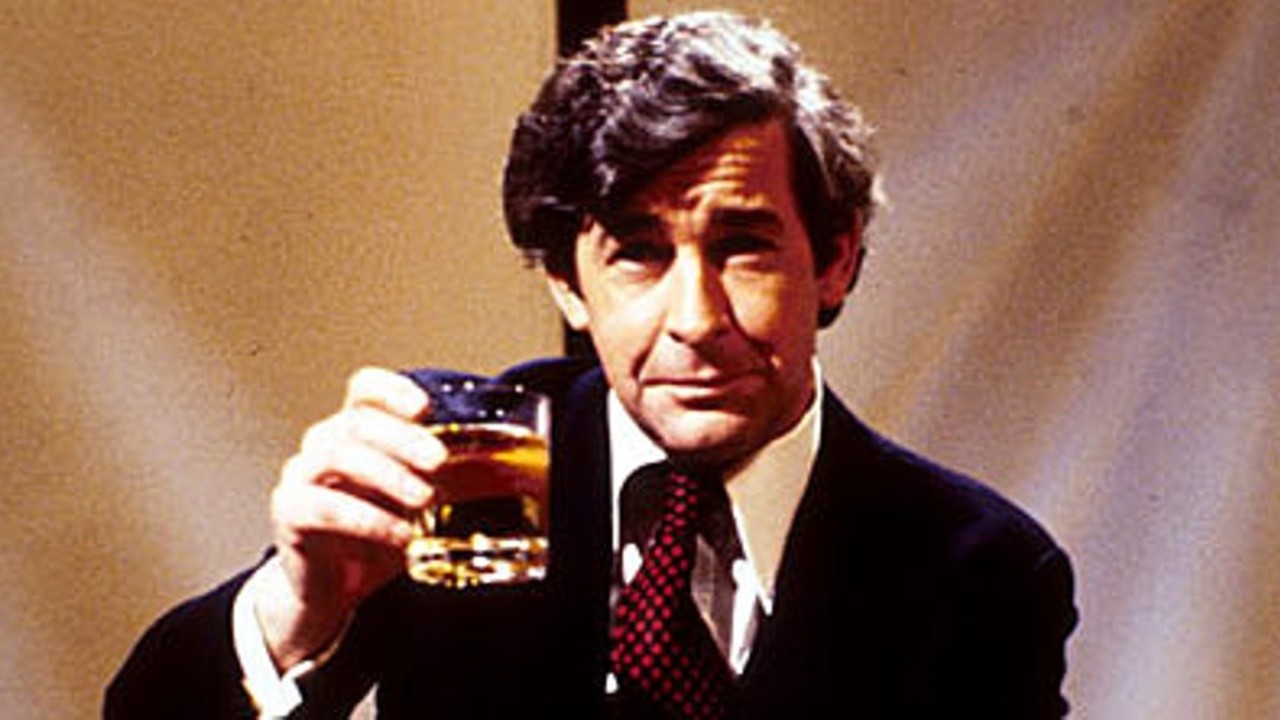
Stand-up comedy, and its reception by the various strata of society, is another mark of how much British culture has changed in 50 years. Dave Allen, the famous Irish stand-up (or in his case, sit-down) comedian, was surprisingly controversial for the 1960s and 1970s, particularly in his native Ireland, for material which would be considered mild and completely inoffensive today. Allen was born David Tynan O’Mahony in Dublin in 1936, but Ireland was the only Anglophone country in which he was not only never liked, but was vehemently disliked. Describing himself as “a professional atheist,” Allen poked fun at the Catholic Church, which like the Anglican Church in England, was still a powerful social presence even just half a century ago. The debate between two of the Monty Python team and a leading churchman and religious journalist over Life of Brian in 1979 was watched by millions. It was also debated in the nation’s pubs, clubs, factories, and offices. Allen got into trouble for a sketch showing the Pope performing a striptease, and Ireland was still a risky place to be insulting the Pope right up until 1992, when Sinéad O’Connor incurred the wrath of the Irish by tearing a picture of the Pontiff in half on live TV. It may have been broadcast on America’s Saturday Night Live, but it was O’Connor’s home country where record sales dipped.
Allen was a masterful performer. Smartly suited, and sitting in his trademark black vinyl chair, with cigarettes and a glass of Scotch within easy reach, Allen had one of those faces that always seems to be about to break into a smirk. I’ll bet he got into a lot of trouble at school for that very reason. One thing guaranteed to enrage an English schoolmaster (and Allen spent part of his youth in England) is a smirking schoolboy.
One of my favorite gags of Allen’s involves a nun standing outside a pub. It’s just over a minute long, and shows Allen’s ability to act out a joke to the full. Like many jokes, it works on the comedy of thwarted expectations, and for Allen, religious humor was directly confrontational. Much of his visual humor was incredibly crass and childish, but in a country who had taken Benny Hill to their hearts, this was not a problem. In one sketch, Allen, dressed as a Bishop, is holding the famous staff, the crozier, bent over at the top to resemble a shepherd’s crook. A good-looking nun walks past, and the staff suddenly becomes erect and points to the ceiling. An old nun walks past, and the staff droops back to its former shape. Anyone under 30 today would find it hard to understand the trouble this caused for Allen in Ireland. That country in the 1960s and 1970s was still both very conservative and deeply religious. In rural villages, the priest was still the most important figure in the community, and priests were the constant butt of Allen’s jokes. Allen famously had only half of his left-hand index finger, having lost the top part in an accident with machinery. Part of his stage act was inventing reasons for the loss, such as “a nose-picking accident,” or “a bet with a priest.” The idea of a priest betting was scandalous to the older generation of believers, despite the idea of a corrupt priesthood in Britain (which Ireland still was part of then) going all the way back to Chaucer.
And it wasn’t just the priesthood and the bishops Allen satirized, but the whole tradition and ritual of the Catholic Church was fair game for the Irishman. Two sets of pall-bearers are carrying coffins side-by-side, and the competitive edge takes over as they race one another to the cemetery. The pall-bearers use the coffins to barge into one another, bodies flying in all directions. People were outraged, though the idea of outrage at a comedian ridiculing the Catholic Church today is laughable in itself. The BBC would probably commission a series. But I don’t see any latter-day Dave Allens satirizing Islam or Judaism any time soon. Allen himself received death threats from outraged Irishmen from early on in his career.
Dave Allen’s career took off after a tour of Australia with Vaudeville act Sophie Tucker in 1963. After Allen’s satirical TV skit on the British military—always a target of fun for the Aussies—the Melbourne studio was flooded with fan-mail, and Allen was offered a pilot for a chat show, The Tonight Show. It took off, with its live studio format interspersed with sketches, the childish nature of which counter-balanced the “adult nature” of his verbal humor. Former BBC comedy producer Paul Jackson puts Allen’s initial success down under as due precisely to the Australian love of iconoclasm.
Allen didn’t stick to comedy, but became well-known for live studio stunts. One of the first was to put Allen and a cameraman into a car, and lower it into a tank of water to test a theory. To get out, the pair would have to wait for the car to fill, and therefore for the internal and external water pressure to equalize, before the door could be opened. Two air-tanks were provided. Once underwater, Allen tested the tanks. “I tapped them both” said Allen after the stunt. “One went ‘Bing!’ and the other went “Bong!’.” Years later, a family car rolled into a harbor in Scotland with a teenage boy trapped inside. Despite failed rescue attempts, he got out of the car alive. When asked how he knew to wait for the car to fill, the boy replied; “I watched Dave Allen do it.”
In 1964 Allen married Judith Stolt, an actress friend of the famous English actress, Dame Maggie Smith. Allen adopted his wife’s step-son, and the couple went on to have three children of their own. Allen seemed to have achieved the stability that would enable his career to flourish. And it did. On returning home, the BBC offered him a slot as resident comedian on The Val Doonican Show. Doonican was a schmaltzy musical act, but immensely popular, especially with female viewers. Allen was a hit, and the man who would later be called “the comedian’s comedian” had arrived. His first solo show was in 1967, Tonight With Dave Allen (they weren’t overly inventive with their titles in those days), and the ratings were good. His career launched, Allen was offered Dave Allen at Large, which was a ratings success to rival the greats of the day such as The Two Ronnies and Morecambe and Wise. One of Allen’s sons described going down to the shops while Allen’s show was on TV. “There was just no one around. The streets were empty,” he recalls. That was something that traditionally happened during Football Association Cup finals, but was unheard of for a comic TV show.
Allen branched out from straight comedy into documentaries which was still quite a young art form at the time. In some respects, Allen paved the way for documentary-makers such as Louis Theroux and many of today’s YouTubers. Dave Allen in the Great Melting-Pot took Allen to New York in 1969 to interview real New Yorkers. Americans were still pretty much of a mystery to the British in the 1970s outside of TV shows and movies, and the show was a huge hit. Dave Allen in Search of the Great British Eccentric dominated ratings for a documentary, with staggering viewing figures of 15-17 million per episode, and featured Allen looking for eccentric English people. He never judged the people he interviewed, neither giggled at them or ridiculed them in any way. He was just interested. As one of his children said of him; “Dave never stopped thinking,” and much of his humor was observational. (ChatGPT impressed me, not for the first time, by describing Allen as “the secular priest of curiosity”). Allen also did some straight acting, appearing in Alan Bennett plays on TV, and directed by Stephen Frears at the Royal Court. Allen knew his limitations, and worked within them to maximum effect. His humor was an influence on Jimmy Carr, one of the biggest names in British stand-up.
I know nothing about modern stand-up. The big names from the UK are Ricky Gervais and Jimmy Carr. It was also Russell Brand at one time, but he is in a spot of bother at the moment over rape allegations. I looked around for some random Americans, and a few raised a smile. I liked Mitch Hedberg, who does one-liners along Stephen Wright lines: “I went into a store called ‘Hard-to-Find Records and Tapes.’ Nothing was alphabetized.” It was simple dumb humor with clever word-play, although race and religion were not mentioned in the many minutes of clips I watched, just the one “ableist” gag. I say he “does one-liners” and I mean “he did.” Sadly, about the third video I watched on Hedberg was from 2005, and it featured him explaining how great he felt now that he was off drugs, only to die of an overdose two weeks later. Oh well, I guess that means limited material. And Lennie Bruce was obviously not the only stand-up to kill himself with narcotics.
Stand-up is a very naked form of entertainment, just a person with a microphone, and an audience. I imagine a stand-up comedian’s debut show must be nerve-jangling, to say the least. And a stand-up can’t get away with a mere string of gags, they also need a personality and an act. American stand-ups such as Rodney Dangerfield, Stephen Wright, and Lennie Bruce could not differ more in their content and style, but it is the well-defined persona each man creates which make them memorable in their different ways. Dangerfield adjusting his too-tight necktie and complaining about a lack of respect, and Wright and his baffling, surreal one-liners, delivered by a shambling, mumbling man who looks as though he just woken up. “I can levitate birds,” says Wright. “No one cares.” And possibly only Bruce could have bounded onstage in a swanky nightclub with some moneyed blacks in the audience and opened with “Any niggers here tonight?” He got a louder laugh from the blacks than the nervous whites, who were unsure whether to laugh. The portly British stand-up, Bernard Manning, mercilessly ridiculed blacks and Asians in his audience. If he did this today (and if he hadn’t passed away in 2007) he would be risking jail-time. Watch his comments to a Japanese audience member at around 1:00 here. Unthinkable today. It’s notable that Ricky Gervais, the English comic who took the baton of audience insults at the Oscars from Don Rickles, goes nowhere near race.
The story of British comedy is dispatches from the front line of an ongoing culture war Labour said was over, and papers such as The Guardian claim is an invention of the Right. Take Australia, where Allen’s career started in earnest. Now, Australian humor has always been robust, earthy, and defiantly masculine, and their stand-ups are notoriously “blokeish”—look at Kevin “Bloody” Wilson. But you are unlikely to be laughing along to a new generation of Aussie comics any time soon. Anthony Albanese, Australia’s Labour Prime Minister, is vying with Britain’s Keir Starmer to see who can be the most authoritarian. With the implementation of the new Combating Anti-Semitism, Hate, and Extremism Bill in Australia, and the Online Safety Act being adapted to criminalize criticism of Islam and Jewry in the U.K., religious jokes will soon be very risky territory. And we were warned about this some time ago. Mao’s Communist regime banned “weird” or “strange” words and phrases, which included jokes. Milan Kundera’s The Joke, in which a Czech man is imprisoned for making a joke about Stalin, was published in 1967. I reviewed it here at Counter-Currents. In 2000, Philip Roth published The Human Stain, in which a university lecturer is persecuted by a zealous, female student for using the word “spook” when enquiring about the constant absence of a black student. The man is not using the phrase as a pejorative term for blacks, but jokingly suggesting that the student might be a ghost. His persecution is relentless. Today, as is now well established, the U.K. is arresting over 12,000 people a year for online comments, many of which are jokes. Some estimates have raised this figure to 13,000 or even higher, but it’s well over 30 people a day. Second in the league—and still well above Russia—is Belarus, which imprisons less than half the number jailed in Britain. The Left are desperate to enforce the humorlessness which is such an important part of their natures.
Does this mean no more stand-up comedy? That depends on your definition. Looking through some recent BBC stand-up material, at first I thought Rosie Jones was some AI prank, but apparently she is a real comedienne. She suffers from cerebral palsy, which is the only real subject of her humor, if humor it is. Here is another recent BBC comedy sketch featuring a disabled comedian. He has on a T-shirt reading; “I Was Disabled Before It Was – .” You can’t read the final word because of a lectern. I assume it is “Cool” or similar. The guy is mute, but uses an AI voice generator. I didn’t find this funny. In fact, I find it to be something of the freak-show. I am just getting old, I guess.
Dave Allen dropped much of his religious satire towards the end of his career in 1990. No longer would he preface a religious sketch with; “Get your pens out, it’s complaints time. . .” He hadn’t been frightened off by his critics, or even by the occasional death threats (and the Irish are quite talented when it comes to bomb-making). He just felt he had said everything he had to say, as a comic, on the age-old problem of religion. Allen also changed his sign-off line. At the start of his career, he would say; “Goodnight, and may God go with you.” Later, he changed it to “your God.”
I haven’t seen a stand-up comedian for 30 years, not since I saw Eddie Izzard when he was still funny. Now, he dresses as a woman and has pronouns and so on, so is perhaps laughable for a different reason. But it is a moot point as to whether that comic form might be dead. Fortunately, we have the internet, which is a treasure-trove of the great stand-ups, with their simple but linguistically brilliant humor. “They all laughed when I said I wanted to be a comedian,” said British stand-up Bob Monkhouse in the 1950s. “Well, they’re not laughing now.” “When I die, I want to go peacefully,” dead-panned Bob Hope. “Not screaming in fear like my father’s passengers.” I don’t normally like the “zany” type of comedian. Stupid clothes and a dumb hat are not funny in and of themselves, as some stand-ups seem to think. You have to say funny things as well. But I did like a line from oddball Emo Phillips years ago, another gag that works on thwarted expectations. Phillips is complaining about how badly a date went:
She was mad at me because I wouldn’t open the car door for her, but I was too busy swimming for the surface.
She should have watched Dave Allen.
11 comments
You should listen to the stand-up comedy of Ben Bankas. He is a Canadian who has relocated to Austin, TX. He would be incarcerated if he did his act in the U.K.
Heard of but not heard. Will investigate. My publisher lives near Austin, I’ll see if he knows the guy.
He has a YouTube channel.
I don’t normally like the “zany” type of comedian. Speaking of zany, comic Bob Zany after losing a ton of weight in the 90s, said, “When I was fat a girl once said to me, ‘Bob, if you lose a hundred pounds, I’ll fuck ya’…I said if I lost a hundred pounds I wouldn’t want to fuck you!”
Hey Mark-ah (I know you like The Fall),
Bloody great article! It’s great to read an article where someone mentions the great Dave Allen (God rest his nearly threadbare soul). I was only a little boy when I first saw Dave; my Catholic father in spite of his faith, thought Dave was hilarious (they were both Irish after all). It was silence in the lounge-room whilst his monologue was delivered.
As a personal bonus, one of my aunties thinks were are related to Dave via various Irish family connections. I said to my old Mum, “We’ll take it!”
Before I sign off, check out Dave’s homosexual joke on youtube, if you haven’t already.
Cheers, old House!
Related to the great Dave Allen! You’ll sleep happy. Allen made my father laugh, and that was always a stamp of greatness for me. As for Catholic schools, as Dave said, you behaved there because they were tough. The nuns were tough. They’ve got one little boy nailed to the bloody wall!
I always wanted to read the book The Comedian as Confidence Man but never found a cheap copy.
Dave Allen sounds entertaining. If you haven’t already I can highly recommend Bill Hicks stand up from the early 90s. I think one of his specials was in the UK.
I do know Hicks. A bloke I used to work with would play his tapes while we built mechatronics. His porn collection. “They subpoena me, Mr. Hicks!” There’s gonna be two funerals that day. Very funny, but a tragic demise, yes?
Yes a tragic end for him. I think he smoked too much. As you know, comics’ lives are often pretty sad and short.
Yes, look at Tony Hancock, Peter Sellers, Spike Milligan, Kenneth Williams. All hilarious men with sad private lives. I must look out that book, Comedian as Confidence Man, so cheers for that. I smoke like a trooper, but then I am not particularly amusing.
Thanks for the flashback on Dave Allen, Mark. I’ve been trying to recover my memories of the 1970s-1990s if only for cultural comparison and contrast, not just warm and fuzzy nostalgia. For Chicago X’ers of my cohort, Sunday nights for the entire decade of the 1980s in high school and grammar school was Bears + ‘70s Dave Allen at 10 PM + Dr. Who (Tom Baker and Peter Davison) on WTTW, Ch. 11 at 10:30. BBC has been regularly uploading classic Dr. Who to YouTube. I’ll have to check for Dave Allen. Also, in the early ‘80s, ABC TV in America ran The Kenny Everett Show at midnight after the comedy sketch show called Fridays. His DIY guy segments, when they worked, had my 12-year-old self in stitches and unable to breathe. Fridays had the revolutionary punk, pop, and New Wave bands of the era as musical guests. It all seems so much better. We are the old men yelling at clouds. Cheers.
Comments are closed.
If you have a Subscriber access,
simply login first to see your comment auto-approved.
Note on comments privacy & moderation
Your email is never published nor shared.
Comments are moderated. If you don't see your comment, please be patient. If approved, it will appear here soon. Do not post your comment a second time.