Counter-Currents
  • Advertise
  • Private Events
  • T&C
  • About
  • Contact
  • RSS
    • Main feed
    • Podcast feed
    • Videos feed
    • Comments feed
  • Welcome
  • Webzine
  • Books
  • Merch
  • Podcasts
  • Videos
  • Donate
  • Patrons
  • Subscribe
  • Crypto

LEVEL2

Donate Now Mailing list

Writer of June

(4 votes) David M. Zsutty

Article of June

Why White Advocates Should Avoid “Based Blacks” by Dani Vypont 4 votes
  • Welcome
  • Webzine
  • Books
  • Merch
  • Podcasts
  • Videos
  • Donate
  • Patrons
  • Subscribe
  • Crypto
    • Replacement Migration & Hypergamy

      F. Roger Devlin

      26

    • Kurds of a Feather Flock Together:
      Europe’s “Racist” Parakeet Tweet-Storm

      Steven Tucker

      1

    • Elevator Pitch to a Billionaire
      Money, Money, Money

      Ondrej Mann

      1

    • All Hail Rhodesia

      Spencer J. Quinn

      3

    • Nationalism This Week
      Disenfranchisement

      Greg Johnson

      29

    • The Murder of Ann Widdecombe

      Lipton Matthews

      9

    • Disclosure Day
      Please, Keep It Undisclosed

      Francisco Albanese

      12

    • Remembering Carl Schmitt
      July 11, 1888–April 7, 1985

      Greg Johnson

      1

    • Editor’s Update
      Fundraiser Update & New Books

      Greg Johnson

      1

    • Third Homeland Institute Poll on the Great Replacement

      David M. Zsutty

      12

    • The Bitter End of Western Metaphysics:
      Heidegger on Nietzsche, Part Five (Conclusion)

      Collin Cleary

      9

    • Fraudulent Black British History

      Mark Gullick

      7

    • A White Nationalist Response to Scott Greer

      Dave Chambers

      25

    • The Miami Mall Incident:
      Black Youths or Black Extraterrestrials?

      Dominic Fox

      6

    • The Theology of Three Populisms

      Morris van de Camp

      2

    • The Dangers of Skilled Immigration

      Lipton Matthews

      25

    • The Brotherhood of the Bell

      Beau Albrecht

      16

    • Endeavor: What Rome Means to Me

      Endeavour

    • When the Family Becomes Predation

      Jayant Bhandari

      5

    • RICU: The Gentle Art of Persuasion

      Mark Gullick

      7

    • Mind of Darkness:
      A Review of Lipton Matthews’s Busting African Delusions

      Derek Stark

      12

    • Remembering Revilo Oliver
      July 7, 1908–August 20, 1994

      Greg Johnson

      2

    • Some Advantages of Irish Nationalism

      Greg Johnson

      31

    • America at 250 from the National Cathedral

      Gabriel Anderson

      18

    • Why Not Stop All the Clocks?
      Modern Conservatism’s Flagging Commitment Towards Turning Back Time

      Steven Tucker

      3

    • Remembering Jean Raspail
      July 5, 1925–June 13, 2020

      Greg Johnson

      2

    • Editor’s Update
      Fundraiser Update & New Books

      Greg Johnson

    • The Ethnic Reality of FIFA 2026

      Samuel Valleus

      13

    • Nationalism This Week
      Tucker’s New Party

      Greg Johnson

      30

    • Ethiopia Against Italy
      How the Italo-Ethiopian Wars were part of the conflict between Eastern & Western Christiandom

      Morris van de Camp

    • Please Vote in Our Writer & Article of the Month Poll

      Greg Johnson

    • Available for Pre-Order!
      F. Roger Devlin’s Not Hooking Up

      F. Roger Devlin

    • Kolberg: The Last Nazi (or Prussian?) Film

      Steven Clark

      2

    • America 250 & The Fate of Empires

      Richard Houck

      20

    • Available for Pre-Order!
      Greg Johnson’s The Battle of the Books

      Greg Johnson

    • Why All the Silence About Blacks Being Kicked Out of South Africa?
      Because It’s Other Blacks That Are Doing It.

      Steven Tucker

      10

    • Zelensky, the Jewish Conspiracy Narrative, & the Demographic Replacement of Ukraine:
      A Critical Analysis of a Disinformation Discourse within the European Identitarian Right

      Luís Graça

      30

    • The Original Congressional Debate on Birthright Citizenship

      Alex Graham

      13

    • America at 250
      Unmanifested Destiny  

      David M. Zsutty

      32

    • The Normies are Waking Up:
      The Alliance for Responsible Citizenship Conference, London 2026

      Lipton Matthews

      2

    • Ethnic Vigilantism: The Movie

      Mark Gullick

      15

    • Lothrop Stoddard’s The Revolt against Civilization

      Kevin MacDonald

      2

    • David Zsutty on Political Organizing

      David M. Zsutty

    • PC-Incompatible Gaming:
      Plantation Simulator and the “Problem” of Racist Video Games

      Steven Tucker

      3

    • Remembering Lothrop Stoddard
      June 29, 1883–May 1, 1950

      Greg Johnson

      1

    • Editor’s Update
      Fundraiser Update & Upcoming Projects

      Greg Johnson

    • Nationalism This Week
      Metapolitics Wins:
      Scott Greer’s Whitepill

      Greg Johnson

      8

    • Remembering Colin Wilson
      June 26, 1931–December 5, 2013

      Greg Johnson

      3

    • Kevin Deanna on Political Organizing

      Kevin Deanna

      1

    • The Bitter End of Western Metaphysics:
      Heidegger on Nietzsche, Part Four

      Collin Cleary

      6

    • Peter Quint

      Replacement Migration & Hypergamy

      the proportion who mix is higher than marriage stats would lead people to believe. That’s the actual...

    • Scott

      Some Advantages of Irish Nationalism

      Well, one of caveats against Kennedy's "A Nation of Immigrants" hubris (and that is what it was) is...

    • Dani Vypont

      Replacement Migration & Hypergamy

      One case from American history has always especially impressed me. Pretty much all the sources agree...

    • Dani Vypont

      Replacement Migration & Hypergamy

      You constantly post the most controversial and self-defeating thing possible under articles. This...

    • Peter Quint

      Replacement Migration & Hypergamy

      White women are the most racially disloyal women of all races. I always assume any White female I...

    • Scott

      Disclosure Day
      Please, Keep It Undisclosed

      Dennis Weaver seemed miscast to me. I liked his shtick as McCloud, the New Mexico cowboy marshal,...

    • Connor McDowell

      Replacement Migration & Hypergamy

      I’ve seen this OKCupid miscegenation argument before, and while much of my evidence is anecdotal, I...

    • Dominic Fox

      Nationalism This Week
      Disenfranchisement

      Even a real community will consist mostly of people who are only somewhat similar in character/...

    • Dani Vypont

      Replacement Migration & Hypergamy

      @JamesSunderland With regard to one of your earlier posts, I did some research, and it is ...

    • Dani Vypont

      Replacement Migration & Hypergamy

      What parts of the United States would you say have the most and least interracial relationships?It...

    • Dave Chambers

      All Hail Rhodesia

      Rhodesia is an inspiration to all of us whose families have had to flee the neighborhoods and...

    • CC reader

      Disclosure Day
      Please, Keep It Undisclosed

      Duel was a very good movie, and it was made for tv. Good suspense, camera work, musical score, and...

    • WU

      Replacement Migration & Hypergamy

      I visited Norway 3 years ago, and the experience was so strange it is worth relating. In Bergen,...

    • Dave Chambers

      Replacement Migration & Hypergamy

      What parts of the United States would you say have the most and least interracial relationships?

    • CC reader

      Third Homeland Institute Poll on the Great Replacement

      If a white ethnostate is carved out, the 67% who voted against returning to 60% white or higher...

    • Zarathustra

      Replacement Migration & Hypergamy

      MTV and Hollywood are partly to blame for this.

    • Dani Vypont

      Replacement Migration & Hypergamy

      I once had a Norwegian nationalist ask me to tell him the degree of mixing between White women &...

    • James Sunderland

      Replacement Migration & Hypergamy

      With regard to one of your earlier posts, I did some research, and it is possible to determine the...

    • Glide Ratio 0:1

      Replacement Migration & Hypergamy

      Maybe the NSDAP were correct about Persians (you could be Arab?) being Aryan. You seem to suffer...

    • Fionn McCool

      Replacement Migration & Hypergamy

      Dani, for what it’s worth, your 92% figure refers to biracial children born to black fathers and...

    • Earth Day Special

      John Morgan

      12

    • A Robertson Roundup
      Remembering Wilmot Robertson
      (April 16, 1915 – July 8, 2005)

      Margot Metroland

      13

    • The Paranoid Style in White Nationalism

      Greg Johnson

      30

    • Join the Dance!

      Andrew Hamilton

      1

    • We Can’t Save the Earth Without Reducing African Birth Rates

      James Dunphy

      36

    • “I’m Not a Conspiracy Theorist, but . . .”:
      Jeffrey Epstein’s Death Gives New Life to “Conspiracy Theories”

      Greg Johnson

      22

    • Sylvia Plath: Stasis in Darkness

      Vic Olvir

      17

    • Vanguardism, Vantardism, & Mainstreaming

      Greg Johnson

      80

    • Aviation, Geography, & Race

      Charles Lindbergh

      3

    • Some Thoughts on Yule

      Collin Cleary

      4

    • Living in Truth:
      A Yuletide Homily

      Jef Costello

      7

    • John Kennedy Toole’s A Confederacy of Dunces

      Greg Johnson

      20

    • On Aleksandr Solzhenitsyn’s Warning to the West

      Spencer J. Quinn

      7

    • Elitism, British Modernism, & Wyndham Lewis

      Jonathan Bowden

      6

    • Philip K. Dick’s Do Androids Dream of Electric Sheep? as Anti-Semitic/Christian-Gnostic Allegory

      Greg Johnson

      20

    • “Conspiracy Theory” or Conspiracy?

      Andrew Hamilton

      21

    • Remembering H. P. Lovecraft
      (August 20, 1890–March 15, 1937)

      Greg Johnson

      3

    • Who Are We?
      Nordics, Aryans, & Whites

      Greg Johnson

      71

    • Remembering William Gayley Simpson
      (July 23, 1892–December 31, 1990)
      A Pleasant Afternoon with Harriet & Bill Simpson

      Margot Metroland

      18

    • Here are the Young Men
      Remembering Ian Curtis
      (July 15, 1956–May 18, 1980)

      Mark Gullick

      18

    • Percy Grainger
      Artist of the Right

      Alex Graham

      7

    • Remembering Revilo Oliver
      (July 7, 1908–August 20, 1994)

      Greg Johnson

      18

    • The Meaning of July 4th for the White Man

      Gregory Hood

      13

    • The Front National’s Evolution

      Bruno Mégret

    • Merwin K. Hart
      Forgotten American Hero & Man of the Right

      Morris van de Camp

      10

    • George Orwell’s Nineteen Eighty-Four

      Jonathan Bowden

      8

    • Carleton S. Coon
      Scientist & Reluctant White Advocate

      Morris van de Camp

      4

    • The Kwanzaa Absurdity Will Be Dwarfed by Juneteenth

      Robert Hampton

      12

    • Stravinsky

      Alex Graham

      7

    • Like the Roman:
      Remembering Enoch Powell (1912-1998)

      Mark Gullick

      23

    • Exclusive Interview with Karel Veliky:
      The Final Chapter in the Film Series! Part II

      Ondrej Mann

      2

    • Exclusive Interview with Karel Veliky:
      The Final Chapter in the Film Series! Part I

      Ondrej Mann

      2

    • Nietzsche & Race

      Mark Gullick

    • The Crisis of Chinese Technology Thieves

      Morris van de Camp

      1

    • The Zodiac Killer

      Mark Gullick

      12

    • José Pedro Zúquete’s The Identitarians

      Greg Johnson

      3

    • Berlin: City of Stones

      Spencer J. Quinn

      6

    • Headbanging Lite

      Mark Gullick

      5

    • The Russians are Coming/The Russians are Coming

      Steven Clark

      2

    • The Cruelty of Kindness

      Morris van de Camp

      11

    • Jonathan Bowden’s Deliverance
      Part 7

      Jonathan Bowden

    • Lothrop Stoddard’s The Revolt Against Civilization

      Spencer J. Quinn

      15

    • About Film “From the Right”

      Karel Veliky

    • The 1970s: The Golden Age of Hijacking

      Morris van de Camp

      21

    • Jonathan Bowden’s Deliverance
      Part 6

      Jonathan Bowden

    • Do You Want to Play a Game?

      Mark Gullick

      1

    • Sexually Incontinent on the Indian Subcontinent:
      Who Rapes More Animals, Indians or Pakistanis? The Battle Continues!

      Steven Tucker

      3

    • Neo-Fascism in Film
      Part 5

      Karel Veliky

      15

    • The Game of Tarot

      Mark Gullick

      2

    • Institutions Cannot Be Transplanted

      Jayant Bhandari

      5

    • Jonathan Bowden’s Deliverance
      Part 5

      Jonathan Bowden

    • Crosstown Traffic:
      Jimi Hendrix & The Post-War Rock ‘N’ Roll Revolution

      Mark Gullick

      1

    • Slaves from the North:
      Finns & Karelians in the East European Slave Trade, 900–1600

      Lipton Matthews

      14

    • Neo-Fascism in Film
      Part 4

      Karel Veliky

      2

    • David Lean’s A Passage to India

      Spencer J. Quinn

      1

    • Elites are Essential to Development

      Lipton Matthews

      7

    • Jonathan Bowden’s Deliverance
      Part 4

      Jonathan Bowden

    • Neo-Fascism in Film
      Part 3

      Karel Veliky

      6

    • E. M. Forster’s A Passage to India & the Indian Mentality

      Spencer J. Quinn

      25

    • Jonathan Bowden’s Deliverance
      Part 3

      Jonathan Bowden

    • András László
    • Derek Hawthorne
    • Beau Albrecht
    • Alain de Benoist
    • Kerry Bolton
    • Jonathan Bowden
    • Collin Cleary
    • Jef Costello
    • Savitri Devi
    • Julius Evola
    • Jim Goad
    • Gregory Hood
    • Juleigh Howard-Hobson
    • Greg Johnson
    • Charles Krafft
    • Anthony M. Ludovici
    • Trevor Lynch
    • H. L. Mencken
    • J. A. Nicholl
    • James J. O’Meara
    • Christopher Pankhurst
    • Tito Perdue
    • Michael Polignano
    • Spencer J. Quinn
    • Fenek Solère
    • Irmin Vinson
    • Leo Yankevich
    • Francis Parker Yockey
    • Multiple authors
  • Editor-in-Chief

    • Greg Johnson, Ph.D.

    Featured Writers

    • Beau Albrecht
    • Gunnar Alfredsson
    • Collin Cleary, Ph.D.
    • Jef Costello
    • Morris V. de Camp
    • F. Roger Devlin, Ph.D.
    • Stephen Paul Foster, Ph.D.
    • Jim Goad
    • Alex Graham
    • Mark Gullick, Ph.D.
    • Greg Johnson, Ph.D.
    • Travis LeBlanc
    • Trevor Lynch
    • Margot Metroland
    • James J. O’Meara
    • Angelo Plume
    • Spencer J. Quinn
    • Fred Reed
    • Clarissa Schnabel
    • Michael Walker
    • David M. Zsutty

    Frequent Writers

    • Asier Abadroa
    • Aquilonius
    • Alain de Benoist
    • Kerry Bolton, Ph.D.
    • Dave Chambers
    • Steven Clark
    • James Dunphy
    • Endeavour
    • Richard Houck
    • Jason Kessler
    • Titus Livius
    • Ondrej Mann
    • Lipton Matthews
    • Mark Mazari
    • John Morgan
    • Jaroslav Ostrogniew
    • Kathryn S.
    • Christian Secor
    • Anne Wilson Smith
    • Thomas Steuben
    • William De Vere
    • Kenneth Vinther
    • Max West

    Classic Authors

    • Maurice Bardèche
    • Jonathan Bowden
    • Julius Evola
    • Guillaume Faye
    • Ernst Jünger
    • Kevin MacDonald, Ph.D.
    • D. H. Lawrence
    • Charles Lindbergh
    • Jack London
    • H. P. Lovecraft
    • Anthony M. Ludovici
    • Sir Oswald Mosley
    • National Vanguard
    • Friedrich Nietzsche
    • Revilo Oliver
    • William Pierce
    • Ezra Pound
    • Saint-Loup
    • Savitri Devi
    • Carl Schmitt
    • Miguel Serrano
    • Oswald Spengler
    • P. R. Stephensen
    • Jean Thiriart
    • John Tyndall
    • Dominique Venner
    • Leo Yankevich
    • Francis Parker Yockey

    Other Authors

    • Howe Abbott-Hiss
    • Michael Bell
    • Giles Corey
    • Jack Donovan
    • Richardo Duchesne, Ph.D.
    • Emile Durand
    • Guillaume Durocher
    • Mark Dyal
    • Tom Goodroch
    • Andrew Hamilton
    • Robert Hampton
    • Huntley Haverstock
    • Derek Hawthorne
    • Gregory Hood
    • Juleigh Howard-Hobson
    • Alexander Jacob
    • Ruuben Kaalep
    • Tobias Langdon
    • Julian Langness
    • Patrick Le Brun
    • G A Malvicini
    • John Michael McCloughlin
    • Millennial Woes
    • Michael O’Meara
    • Christopher Pankhurst
    • Michael Polignano
    • J. J. Przybylski
    • Quintilian
    • Edouard Rix
    • C. B. Robertson
    • C. F. Robinson
    • Herve Ryssen
    • Alan Smithee
    • Fenek Solere
    • Ann Sterzinger
    • Robert Steuckers
    • Tomislav Sunic
    • Donald Thoresen
    • Marian Van Court
    • Irmin Vinson
    • Book Reviews
    • Movie Reviews
    • TV Reviews
    • Music Reviews
    • Art Criticism
    • Graphic Novels & Comics
    • Video Game Reviews
    • Fiction
    • Poems
    • Interviews
    • Videos
    • English Translations
    • Other Languages
      • Arabic
      • Bulgarian
      • Croatian
      • Czech
      • Danish
      • Dutch
      • Estonian
      • Finnish
      • French
      • German
      • Greek
      • Hungarian
      • Italian
      • Lithuanian
      • Norwegian
      • Polish
      • Portuguese
      • Romanian
      • Russian
      • Slovak
      • Spanish
      • Swedish
      • Ukrainian
    • Commemorations
    • Why We Write
  • Archives
  • Top 100 Commenters
  • The Looney Bin
  • Advertise
  • Private Events
  • T&C
  • About
  • Contact
  • RSS
    • Main feed
    • Podcast feed
    • Videos feed
    • Comments feed
Sponsored Links
Europa.com Above Time Coffee Antelope Hill Publishing Paul Waggener IHR-Store Spencer J. Quinn American Renaissance Jim Goad The Occidental Observer
Print September 6, 2021 5 comments

Kevin Beary’s African Plays

Spencer J. Quinn

2,567 words

Fascinating drama can always emerge when characters argue the truth against each other. Each has something that is undeniably correct in their position, but since neither wishes to back down, it’s up to the audience to figure out whose position is more correct in the long run. Kevin Beary has written three one-act plays which deal with the African question, and uses dialectic with expert precision.

All three plays take place in nineteenth-century Africa and deal with the fundamental differences between the African and the European, and also between Christianity and tribal African religions. The conflicts therein mostly consist of chatting, but it is the kind that will stay with the attentive reader for a long time because the arguments themselves are so relevant, well-formulated, and indeed true.

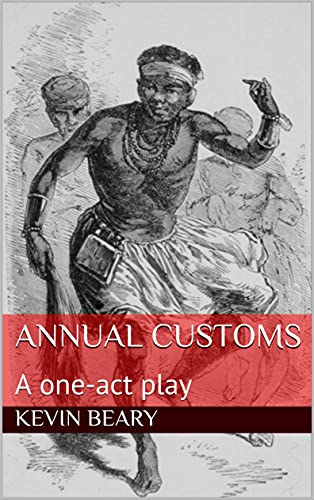
Annual Customs takes place in the mid-1860s in Abomey, which is the capital of the West African Kingdom of Dahomey – today, part of Benin. The explorer Richard Francis Burton is having a serious discussion with his missionary wife, Isabel. No blacks appear in the play, yet they loom large considering what Isabel intends to do with them if her much more level-headed husband allows her. She wishes not only to preach the gospel to them, but to alter their customs entirely to make them good Christians like herself.

Her attitude is fervent, to say the least, and to her credit, she is well-versed in the Bible. Any argument her husband presents to her she counters impeccably using Christian theology. At times, he has to resort to extra-religious arguments, which, while persuasive to modern audiences who have the benefit of a knowledge of genetics and hindsight, have little effect on the hard-headed Isabel.

At the heart of the matter is a highly civilized, and likely racial, revulsion to African ways. As a people, blacks are violent, barbaric, unhygienic, and almost completely lacking in empathy for others. Isabel simply cannot countenance that a Christian God would allow such abject savagery. She therefore takes it upon herself to reform these Africans in accordance with what are obviously higher European, Christian standards.

The following snippet of dialogue encapsulates this dispute perfectly:

ISABEL: Why did you come here, then, if not to help these people?

BURTON: My dear, did you see the King’s reaction when I conveyed to him Her Majesty’s Government’s views on human sacrifice and the slave trade? It was like talking into the wind.

ISABEL: You can’t expect him to change his customs and traditions overnight.

BURTON: You can’t expect him to change them at all. This is what I am telling you. And it is perhaps wrong to try and make him change them. This is their way of life. It is not our way. It is their way.

ISABEL: Surely you are not condoning human sacrifice?

BURTON: It disgusts and repels me, as it does any European. But it doesn’t disgust and repel them. These people take a delight in cruelty, in causing and watching suffering. It’s their nature.

ISABEL: Surely that is one aspect of their nature that can be changed.

BURTON: Why should it be changed? Do we try to teach the lion not to kill and dismember its prey?

ISABEL: A lion is not a human being made in the image of the Almighty God. We have a holy mission to these people, a civilizing mission which it is our sacred duty to fulfill. In order to receive mercy from God ourselves, we must practice mercy towards our fellow men. Do you understand, Richard? We are required to perform works of mercy when it is in our power to do so, as it is now. We must instruct the ignorant. We must admonish sinners. We cannot leave these people in the abyss of ignorance and sin in which we have found them. It would be un-Christian to do so.

How can Burton respond to such an argument without allowing the most grotesque immorality? He does, of course, in the vein described above. But in all cases, his arguments fall back on a shrug, race realism, and a strange sort of standoffish respect for his African hosts. He also exhibits a refreshing lack of arrogance that his wife would do well to emulate. Never does he presume to understand God’s way, while his wife never fails to presume to understand it. She’s armed with the Bible, after all.

This makes her a formidable villain in the play, for all her love and ardor for the plight of the African. Fortunately, Beary has contrived a suitable comeuppance for her at the play’s end. The surprise is poignant and the poetic justice is perfect.

Modern readers, especially those on the Right, will understand that Burton has the truth of the matter. Too much has transpired and so little progress has been made in Africa since the 1860s that Isabel’s tendentious and counter-productive dogma should quickly be swept aside by the breeze of reality in our time. We’re not there yet, sadly. But with Christianity continuing its descent into irrelevance, let’s hope that we will live to see the day that Christianity — or whatever replaces it — discards the kind of dangerous nonsense Isabel Burton effervescently espouses in Annual Customs.

Madam Tinubu lacks all of the restraint of Annual Customs and is a thing to behold. Tinubu is an African queen in Lagos speaking to a British consul, who spends the entire play offstage. Again, we’re in the mid-nineteenth century. In this case, however, we are treated to a vociferous defense of the African slave trade. The woman does not hide her scorn and contempt for the white man who presumes he can come to Africa, her home, and dictate the behavior of her people.

But Madam Tinubu is no ignoramus. She has a fiery intellect, and she understands her people and knows what’s best for them. She also understands enough Christianity to know that slavery is never explicitly condemned in the Bible: “Your Paul says, Slave, obey your master in everything. Paul don’t say nothing about stopping slavery.” This leads to her perfectly justified accusations of hypocrisy on the part of the whites. Slavery is an ancient and profitable practice among her people and she sees no reason whatsoever to curtail it for sake of do-gooding whites who don’t understand the fundamental differences between the races. In fact, Tinubu wishes the Muslims were in Lagos rather than the Christians, since the Muslims are good traders and never give her people trouble over slavery.

Madam Tinubu also demonstrates a powerful sense of human nature that seems to be completely absent in her unseen white counterpart. You think you can just free the slaves, eh? You think the work will then just do itself? Who will be able to control the resulting anarchy? Who will restore social order, Mr. All-Knowing White Man?

What do you think these slaves are gonna do when you free them, huh? You think they are gonna be thankful to you? You think they are gonna live in peace then and leave you alone? Lemme tell you something, Mr. Consul: When they are slaves, when they are in chains, they ask you to be free, because they know you believe in that, in freedom for everybody, that is the English idea you got, ain’t that so? So when they are slaves, they say, Master, please free me. I am a man just like you. I got rights just like you got. So you free them, and what do they do the minute you free them? They put you in chains, that is what they do, they put you in chains and they take you down to the market, to the market where they are selling all kinds of things, chickens and pigs and goats and such, and where they are selling you, too, and they will get the best price for you that you can fetch. You try asking them for your freedom then, see what they say. ‘Cause you got a belief in freedom, but they got a belief in slavery.

Beary makes it clear that Madam Tinubu does not wish to enslave whites. Like Francis Burton, she wishes the races to live and let live based on a kind of innocent, pre-literate understanding of the differences between whites and blacks:

Why do you think black people must start to think like white people? You think the color of our skin is the only difference between us? I tell you it is not the only difference. We got different heads, too, not just different skins, we got our own way of thinking.
You can buy Spencer J. Quinn’s novel Charity’s Blade here.

Unlike Annual Customs, however, Madam Tinubu does more than slay Christian idols. Our Queen offers threats. Do not interfere with our folkways, white man, she says. Do not presume you can make up the rules in our homeland. We will fight. This is our way of life and we will defend it. It’s impossible not to respect Tinubu’s determination and belligerence in the face of what she knows to be an existential threat. Of course, the way of life she wishes to continue is cruel and unspeakable for Europeans, Christians or not. Reading this play as an apologia for slavery will be difficult for many, simply because modern whites have — what? Evolved past it?

Perhaps we have. But the African has not, a message carried home in almost every paragraph of Madam Tinubu.

Queen, Consul, Preacher, Slave takes up where Madam Tinubu leaves off. We find that, after having signed several anti-slavery trade treaties, our vociferous Queen is now permanently on her back foot. Throughout the entirety of the play, which contains more narrative conflict than the other two combined, Tinubu wriggles like a desperate lioness trying to stay out of a trap. She must profess all the racial-egalitarian platitudes the English expect of her. She must continually denounce the slave trade and deny any culpability in it, all the while trying to unload slaves on the few remaining unscrupulous traders before the slaves all die on her.

Of course, she has no respect for the English ways and has not turned over a new leaf. How could she? It was only the presence of British troops and bombs in her precious Lagos which had forced her hand.

Now on the defensive, she plots with her slaves Jambo and Duke to murder the British consul Campbell and shanghai an African missionary named Crowther onto a slave ship. Unfortunately for her, however, the murder plot fails, and Jambo does not have the nerve to initiate action against an educated man like Crowther.

We then find Tinubu desperately plotting to capture lightning in a bottle a second time. Jambo, however, is skeptical that any new plan she concocts will succeed. The British — and Campbell — are too careful. Further, they see through her. Campbell appears and is entirely unmoved by her protestations of innocence.

Beyond all the rumors floating around Lagos, which point to Tinubu as the villain, she is taxing her abilities as a statesman when she emphatically distances herself from this or that heinous crime while casting blame on whichever enemy is convenient for her. Her slaves offer her a chorus of support, but Campbell, who is angry that he nearly lost his life, believes none of it. He then accuses her of supplying slaves for ritual sacrifice at funerals. He leaves after promising a full investigation and rebuffing Tinubu’s offer of a mulatto girl to keep him company.

The heart of the play begins when Mr. Figg, a reformed slave trader who owes Tinubu a great deal of money, appears. This insufferable white man has the nerve to profess concern for Tinubu’s spirituality as he expresses fulsome guilt for having helped cause all of Africa’s problems through the slave trade. What is it about the white Christians that makes them think that they are at the center of everything?

FIGG: You are mocking me, Madam. The trade has effaced your moral sense, it has robbed your heart of every gentle and humane disposition. Your heart has become hardened like steel and no humane pleadings can soften it.

TINUBU: Mr. Figg, my experience is that when people start talking to me about a moral sense, they are trying to convince me to take a loss.

FIGG: I am trying to convince you not to take a spiritual loss.

TINUBU: Spiritual losses don’t figure into my account books.

FIGG: But they should. In any case, I recognize and admit that we Europeans are to blame for the trade. If not for us, the wars you Africans fight amongst yourselves in order to procure slaves would cease.

TINUBU: I would like to agree with you, Mr. Figg. I would like to say that before the white man came to Africa, all African people were living in peace and harmony. In fact I sometimes do say that. But between you and me, you don’t got no idea what you are talking about, just like most white men who come to this country and never get any farther inland than the coast. There are different tribes here, all living next to each other, and when you got tribes living next to each other like that, you got war. They were making war against each other before the white man came, they are making war against each other now the white man is here, and they will keep on making war against each other when the white man is gone. These people are warriors, they live for war. War to them is the most important thing in life. War, killing, enslavement, sacrifice — these are such noble actions for them. When they attack a neighbor tribe, they are fighting for their survival. They are attacking that tribe before it can attack them. They are not going to stop killing, they are not going to stop enslaving, they are not going to stop sacrificing just because you and some other white people like you give up the trade. They don’t give a fig about you, Mr. Figg.

Ultimately, however, the net is too close, the trap too tight. For all her machinations, Tinubu cannot escape. In the end, she does indeed perform a cruel and heinous act against innocence in defense of her kingdom. It remains to be seen whether she can personally escape blame, but she ultimately recognizes that the English have won and destroyed her beautiful country.

Although she plays the scheming villain throughout the entire play, she never lets us forget that it was British bombs and British violence which wrought all this destruction on her country to begin with. So who is the villain? No side is innocent. However, she does conclude, in a moment of insight, that there is a great difference between what is natural and what is unnatural. For her, Africa is natural:

It is funny, but the English men, with all their big ships and cannon and guns, all their fancy stuff . . . African people know more about the world than them. Africa is the natural world, and England is the unnatural world. Can the unnatural world win over the natural world? I do not believe so.

Given how the “natural world” of Africa is currently in the process of submitting the “unnatural world” of European homelands to its will, how could such a statement from this wonderful play not be considered profoundly and painfully prophetic?

*  *  *

Counter-Currents has extended special privileges to those who donate $120 or more per year.

  • First, donor comments will appear immediately instead of waiting in a moderation queue. (People who abuse this privilege will lose it.)
  • Second, donors will have immediate access to all Counter-Currents posts. Non-donors will find that one post a day, five posts a week will be behind a “paywall” and will be available to the general public after 30 days.

To get full access to all content behind the paywall, sign up here:

Kevin Beary’s African Plays

Kevin%20Bearyand%238217%3Bs%20African%20Plays

Share

  • Gab

Enjoyed this article?

Be the first to leave a tip in the jar!

Instant Echeck GreenPay™

Related

  • All Hail Rhodesia

  • Disclosure Day

  • The Miami Mall Incident

  • The Theology of Three Populisms

  • Mind of Darkness:

  • Easy As Pi

  • Lothrop Stoddard on the French Colonists in San Domingo

  • Citizen Vigilante

Tags

AfricaAnnual Customsbook reviewsChristianitycolonialismKevin BearyMadam Tinubuplay reviewsQueen Consul Preacher Slaverace realismslaverySpencer J. Quinn

5 comments

  1. Broseph says:
    September 6, 2021 at 6:18 am

    This fine review does not make clear when the play was written.

    0
    0
    1. Spencer Quinn says:
      September 6, 2021 at 8:55 am

      Hi Broseph

      Madam Tinabu is from 2020. The other two are from 2021. I’m glad you liked the review.

      0
      0
  2. Gregor Huysmans says:
    September 6, 2021 at 12:15 pm

    Just wanted to congratulate you on your new book, Solzhenitsyn and the Right. I’ve been reading it this Labor Day weekend. Fantastic.

    0
    0
    1. Spencer Quinn says:
      September 6, 2021 at 4:46 pm

      Hi Gregor. Thank you so much! I’m glad you’re enjoying it!

      0
      0
  3. S. Clark says:
    September 6, 2021 at 6:42 pm

    A very interesting and insightful review, and I enjoyed the quotations from the play. Is this the same Kevin Beary who wrote The Savaged States of America? It is a dystopian novel written in 1998 dealing with an America collapsing into deranged feminism and ethnic ‘equality.’ Washington D.C. is named Turnertown, all men must take women’s names, etc. A feminized military (literally: a third of the troops are pregnant) is completely destroyed by an Islamic invasion.  Very fantastic then, but a little too chilling now.

    Some thoughts on this review.

    I’m reminded of a play I was going to write on the Amistad, the slave ship taken over by blacks and given asylum and eventual freedom. When I researched the play, it was very surprising that Cinque, the African hero who led the uprising and was touted as a man seeking freedom, went back to Africa and, when a clergyman visited him, was disturbed when he found Cinque had in fact owned several slaves, and saw no harm in it.
    When the movie Amistad came out, showing a wholly fictitious black leader and focusing on the trial and legal defense of John Quincey Adams (completely ignoring the clergymen who kept this trial going), I decided Hollywood had the version everyone wanted, and I abandoned it.
    I remember the movie Mr. Johnson, starring Pierce Brosnan, dealing with a Nigerian clerk who embezzles money to help build a road. It showed that white rule was really only a veneer, and African society was very much in control of everything. Johnson kept trying to imitate English culture, but it eventually resulted is a terrible dislocation. It’s funny seeing Johnson be given English plum pudding, which he visibly dislikes, but praises it as wonderful and delicious because it is English.
    The BBC series Victoria featured an English official in Africa trying to stop a  tribal war to no effect, and the African chiefs saw him as a meddler. One chief killed off his opposition, and the Official saved a girl that the chief would kill. The chief let her be sent to England, and the official made her a ‘gift’ to Victoria, saying she was of noble African birth, which she kind of was…political opposition that had to be exterminated. Victoria set the girl up in the palace. The girl accepts, but is also unhappy and suffers cultural dislocation. She really doesn’t belong there, but Victoria insists she be accepted. Prince Albert is more realistic and finds the girl a nuisance, and understands Victoria’s feminine sense of protection is clouding her judgement. When it is revealed the girl is suffering a nervous breakdown, she is sent away, and the official adopts her into his household.
    I thought it was a good example how do-gooders like this official cause more trouble by their bringing third world problems into England, and he uses his ‘moral superiority’ to influence Victoria to ‘do something.’  Again, the Africans couldn’t care less about the girl’s life, and as part of the political opposition, she had to be killed. And of course the official inserts this African into his family.
    As George Bernard Shaw said, “the conversion of the savage to Christianity is actually the conversion of Christianity to savagery.”

    0
    0

Comments are closed.

If you have a Subscriber access,
simply login first to see your comment auto-approved.

Note on comments privacy & moderation

Your email is never published nor shared.

Comments are moderated. If you don't see your comment, please be patient. If approved, it will appear here soon. Do not post your comment a second time.

Writer of June

(4 votes) David M. Zsutty

Article of June

Why White Advocates Should Avoid “Based Blacks” by Dani Vypont 4 votes
    • Replacement Migration & Hypergamy

      F. Roger Devlin

      26

    • Kurds of a Feather Flock Together:
      Europe’s “Racist” Parakeet Tweet-Storm

      Steven Tucker

      1

    • Elevator Pitch to a Billionaire
      Money, Money, Money

      Ondrej Mann

      1

    • All Hail Rhodesia

      Spencer J. Quinn

      3

    • Nationalism This Week
      Disenfranchisement

      Greg Johnson

      29

    • The Murder of Ann Widdecombe

      Lipton Matthews

      9

    • Disclosure Day
      Please, Keep It Undisclosed

      Francisco Albanese

      12

    • Remembering Carl Schmitt
      July 11, 1888–April 7, 1985

      Greg Johnson

      1

    • Editor’s Update
      Fundraiser Update & New Books

      Greg Johnson

      1

    • Third Homeland Institute Poll on the Great Replacement

      David M. Zsutty

      12

    • The Bitter End of Western Metaphysics:
      Heidegger on Nietzsche, Part Five (Conclusion)

      Collin Cleary

      9

    • Fraudulent Black British History

      Mark Gullick

      7

    • A White Nationalist Response to Scott Greer

      Dave Chambers

      25

    • The Miami Mall Incident:
      Black Youths or Black Extraterrestrials?

      Dominic Fox

      6

    • The Theology of Three Populisms

      Morris van de Camp

      2

    • The Dangers of Skilled Immigration

      Lipton Matthews

      25

    • The Brotherhood of the Bell

      Beau Albrecht

      16

    • Endeavor: What Rome Means to Me

      Endeavour

    • When the Family Becomes Predation

      Jayant Bhandari

      5

    • RICU: The Gentle Art of Persuasion

      Mark Gullick

      7

    • Mind of Darkness:
      A Review of Lipton Matthews’s Busting African Delusions

      Derek Stark

      12

    • Remembering Revilo Oliver
      July 7, 1908–August 20, 1994

      Greg Johnson

      2

    • Some Advantages of Irish Nationalism

      Greg Johnson

      31

    • America at 250 from the National Cathedral

      Gabriel Anderson

      18

    • Why Not Stop All the Clocks?
      Modern Conservatism’s Flagging Commitment Towards Turning Back Time

      Steven Tucker

      3

    • Remembering Jean Raspail
      July 5, 1925–June 13, 2020

      Greg Johnson

      2

    • Editor’s Update
      Fundraiser Update & New Books

      Greg Johnson

    • The Ethnic Reality of FIFA 2026

      Samuel Valleus

      13

    • Nationalism This Week
      Tucker’s New Party

      Greg Johnson

      30

    • Ethiopia Against Italy
      How the Italo-Ethiopian Wars were part of the conflict between Eastern & Western Christiandom

      Morris van de Camp

    • Please Vote in Our Writer & Article of the Month Poll

      Greg Johnson

    • Available for Pre-Order!
      F. Roger Devlin’s Not Hooking Up

      F. Roger Devlin

    • Kolberg: The Last Nazi (or Prussian?) Film

      Steven Clark

      2

    • America 250 & The Fate of Empires

      Richard Houck

      20

    • Available for Pre-Order!
      Greg Johnson’s The Battle of the Books

      Greg Johnson

    • Why All the Silence About Blacks Being Kicked Out of South Africa?
      Because It’s Other Blacks That Are Doing It.

      Steven Tucker

      10

    • Zelensky, the Jewish Conspiracy Narrative, & the Demographic Replacement of Ukraine:
      A Critical Analysis of a Disinformation Discourse within the European Identitarian Right

      Luís Graça

      30

    • The Original Congressional Debate on Birthright Citizenship

      Alex Graham

      13

    • America at 250
      Unmanifested Destiny  

      David M. Zsutty

      32

    • The Normies are Waking Up:
      The Alliance for Responsible Citizenship Conference, London 2026

      Lipton Matthews

      2

    • Ethnic Vigilantism: The Movie

      Mark Gullick

      15

    • Lothrop Stoddard’s The Revolt against Civilization

      Kevin MacDonald

      2

    • David Zsutty on Political Organizing

      David M. Zsutty

    • PC-Incompatible Gaming:
      Plantation Simulator and the “Problem” of Racist Video Games

      Steven Tucker

      3

    • Remembering Lothrop Stoddard
      June 29, 1883–May 1, 1950

      Greg Johnson

      1

    • Editor’s Update
      Fundraiser Update & Upcoming Projects

      Greg Johnson

    • Nationalism This Week
      Metapolitics Wins:
      Scott Greer’s Whitepill

      Greg Johnson

      8

    • Remembering Colin Wilson
      June 26, 1931–December 5, 2013

      Greg Johnson

      3

    • Kevin Deanna on Political Organizing

      Kevin Deanna

      1

    • The Bitter End of Western Metaphysics:
      Heidegger on Nietzsche, Part Four

      Collin Cleary

      6

    • Peter Quint

      Replacement Migration & Hypergamy

      the proportion who mix is higher than marriage stats would lead people to believe. That’s the actual...

    • Scott

      Some Advantages of Irish Nationalism

      Well, one of caveats against Kennedy's "A Nation of Immigrants" hubris (and that is what it was) is...

    • Dani Vypont

      Replacement Migration & Hypergamy

      One case from American history has always especially impressed me. Pretty much all the sources agree...

    • Dani Vypont

      Replacement Migration & Hypergamy

      You constantly post the most controversial and self-defeating thing possible under articles. This...

    • Peter Quint

      Replacement Migration & Hypergamy

      White women are the most racially disloyal women of all races. I always assume any White female I...

    • Scott

      Disclosure Day
      Please, Keep It Undisclosed

      Dennis Weaver seemed miscast to me. I liked his shtick as McCloud, the New Mexico cowboy marshal,...

    • Connor McDowell

      Replacement Migration & Hypergamy

      I’ve seen this OKCupid miscegenation argument before, and while much of my evidence is anecdotal, I...

    • Dominic Fox

      Nationalism This Week
      Disenfranchisement

      Even a real community will consist mostly of people who are only somewhat similar in character/...

    • Dani Vypont

      Replacement Migration & Hypergamy

      @JamesSunderland With regard to one of your earlier posts, I did some research, and it is ...

    • Dani Vypont

      Replacement Migration & Hypergamy

      What parts of the United States would you say have the most and least interracial relationships?It...

    • Dave Chambers

      All Hail Rhodesia

      Rhodesia is an inspiration to all of us whose families have had to flee the neighborhoods and...

    • CC reader

      Disclosure Day
      Please, Keep It Undisclosed

      Duel was a very good movie, and it was made for tv. Good suspense, camera work, musical score, and...

    • WU

      Replacement Migration & Hypergamy

      I visited Norway 3 years ago, and the experience was so strange it is worth relating. In Bergen,...

    • Dave Chambers

      Replacement Migration & Hypergamy

      What parts of the United States would you say have the most and least interracial relationships?

    • CC reader

      Third Homeland Institute Poll on the Great Replacement

      If a white ethnostate is carved out, the 67% who voted against returning to 60% white or higher...

    • Zarathustra

      Replacement Migration & Hypergamy

      MTV and Hollywood are partly to blame for this.

    • Dani Vypont

      Replacement Migration & Hypergamy

      I once had a Norwegian nationalist ask me to tell him the degree of mixing between White women &...

    • James Sunderland

      Replacement Migration & Hypergamy

      With regard to one of your earlier posts, I did some research, and it is possible to determine the...

    • Glide Ratio 0:1

      Replacement Migration & Hypergamy

      Maybe the NSDAP were correct about Persians (you could be Arab?) being Aryan. You seem to suffer...

    • Fionn McCool

      Replacement Migration & Hypergamy

      Dani, for what it’s worth, your 92% figure refers to biracial children born to black fathers and...

    • Earth Day Special

      John Morgan

      12

    • A Robertson Roundup
      Remembering Wilmot Robertson
      (April 16, 1915 – July 8, 2005)

      Margot Metroland

      13

    • The Paranoid Style in White Nationalism

      Greg Johnson

      30

    • Join the Dance!

      Andrew Hamilton

      1

    • We Can’t Save the Earth Without Reducing African Birth Rates

      James Dunphy

      36

    • “I’m Not a Conspiracy Theorist, but . . .”:
      Jeffrey Epstein’s Death Gives New Life to “Conspiracy Theories”

      Greg Johnson

      22

    • Sylvia Plath: Stasis in Darkness

      Vic Olvir

      17

    • Vanguardism, Vantardism, & Mainstreaming

      Greg Johnson

      80

    • Aviation, Geography, & Race

      Charles Lindbergh

      3

    • Some Thoughts on Yule

      Collin Cleary

      4

    • Living in Truth:
      A Yuletide Homily

      Jef Costello

      7

    • John Kennedy Toole’s A Confederacy of Dunces

      Greg Johnson

      20

    • On Aleksandr Solzhenitsyn’s Warning to the West

      Spencer J. Quinn

      7

    • Elitism, British Modernism, & Wyndham Lewis

      Jonathan Bowden

      6

    • Philip K. Dick’s Do Androids Dream of Electric Sheep? as Anti-Semitic/Christian-Gnostic Allegory

      Greg Johnson

      20

    • “Conspiracy Theory” or Conspiracy?

      Andrew Hamilton

      21

    • Remembering H. P. Lovecraft
      (August 20, 1890–March 15, 1937)

      Greg Johnson

      3

    • Who Are We?
      Nordics, Aryans, & Whites

      Greg Johnson

      71

    • Remembering William Gayley Simpson
      (July 23, 1892–December 31, 1990)
      A Pleasant Afternoon with Harriet & Bill Simpson

      Margot Metroland

      18

    • Here are the Young Men
      Remembering Ian Curtis
      (July 15, 1956–May 18, 1980)

      Mark Gullick

      18

    • Percy Grainger
      Artist of the Right

      Alex Graham

      7

    • Remembering Revilo Oliver
      (July 7, 1908–August 20, 1994)

      Greg Johnson

      18

    • The Meaning of July 4th for the White Man

      Gregory Hood

      13

    • The Front National’s Evolution

      Bruno Mégret

    • Merwin K. Hart
      Forgotten American Hero & Man of the Right

      Morris van de Camp

      10

    • George Orwell’s Nineteen Eighty-Four

      Jonathan Bowden

      8

    • Carleton S. Coon
      Scientist & Reluctant White Advocate

      Morris van de Camp

      4

    • The Kwanzaa Absurdity Will Be Dwarfed by Juneteenth

      Robert Hampton

      12

    • Stravinsky

      Alex Graham

      7

    • Like the Roman:
      Remembering Enoch Powell (1912-1998)

      Mark Gullick

      23

    • Exclusive Interview with Karel Veliky:
      The Final Chapter in the Film Series! Part II

      Ondrej Mann

      2

    • Exclusive Interview with Karel Veliky:
      The Final Chapter in the Film Series! Part I

      Ondrej Mann

      2

    • Nietzsche & Race

      Mark Gullick

    • The Crisis of Chinese Technology Thieves

      Morris van de Camp

      1

    • The Zodiac Killer

      Mark Gullick

      12

    • José Pedro Zúquete’s The Identitarians

      Greg Johnson

      3

    • Berlin: City of Stones

      Spencer J. Quinn

      6

    • Headbanging Lite

      Mark Gullick

      5

    • The Russians are Coming/The Russians are Coming

      Steven Clark

      2

    • The Cruelty of Kindness

      Morris van de Camp

      11

    • Jonathan Bowden’s Deliverance
      Part 7

      Jonathan Bowden

    • Lothrop Stoddard’s The Revolt Against Civilization

      Spencer J. Quinn

      15

    • About Film “From the Right”

      Karel Veliky

    • The 1970s: The Golden Age of Hijacking

      Morris van de Camp

      21

    • Jonathan Bowden’s Deliverance
      Part 6

      Jonathan Bowden

    • Do You Want to Play a Game?

      Mark Gullick

      1

    • Sexually Incontinent on the Indian Subcontinent:
      Who Rapes More Animals, Indians or Pakistanis? The Battle Continues!

      Steven Tucker

      3

    • Neo-Fascism in Film
      Part 5

      Karel Veliky

      15

    • The Game of Tarot

      Mark Gullick

      2

    • Institutions Cannot Be Transplanted

      Jayant Bhandari

      5

    • Jonathan Bowden’s Deliverance
      Part 5

      Jonathan Bowden

    • Crosstown Traffic:
      Jimi Hendrix & The Post-War Rock ‘N’ Roll Revolution

      Mark Gullick

      1

    • Slaves from the North:
      Finns & Karelians in the East European Slave Trade, 900–1600

      Lipton Matthews

      14

    • Neo-Fascism in Film
      Part 4

      Karel Veliky

      2

    • David Lean’s A Passage to India

      Spencer J. Quinn

      1

    • Elites are Essential to Development

      Lipton Matthews

      7

    • Jonathan Bowden’s Deliverance
      Part 4

      Jonathan Bowden

    • Neo-Fascism in Film
      Part 3

      Karel Veliky

      6

    • E. M. Forster’s A Passage to India & the Indian Mentality

      Spencer J. Quinn

      25

    • Jonathan Bowden’s Deliverance
      Part 3

      Jonathan Bowden

    • András László
    • Derek Hawthorne
    • Beau Albrecht
    • Alain de Benoist
    • Kerry Bolton
    • Jonathan Bowden
    • Collin Cleary
    • Jef Costello
    • Savitri Devi
    • Julius Evola
    • Jim Goad
    • Gregory Hood
    • Juleigh Howard-Hobson
    • Greg Johnson
    • Charles Krafft
    • Anthony M. Ludovici
    • Trevor Lynch
    • H. L. Mencken
    • J. A. Nicholl
    • James J. O’Meara
    • Christopher Pankhurst
    • Tito Perdue
    • Michael Polignano
    • Spencer J. Quinn
    • Fenek Solère
    • Irmin Vinson
    • Leo Yankevich
    • Francis Parker Yockey
    • Multiple authors
  • Editor-in-Chief

    • Greg Johnson, Ph.D.

    Featured Writers

    • Beau Albrecht
    • Gunnar Alfredsson
    • Collin Cleary, Ph.D.
    • Jef Costello
    • Morris V. de Camp
    • F. Roger Devlin, Ph.D.
    • Stephen Paul Foster, Ph.D.
    • Jim Goad
    • Alex Graham
    • Mark Gullick, Ph.D.
    • Greg Johnson, Ph.D.
    • Travis LeBlanc
    • Trevor Lynch
    • Margot Metroland
    • James J. O’Meara
    • Angelo Plume
    • Spencer J. Quinn
    • Fred Reed
    • Clarissa Schnabel
    • Michael Walker
    • David M. Zsutty

    Frequent Writers

    • Asier Abadroa
    • Aquilonius
    • Alain de Benoist
    • Kerry Bolton, Ph.D.
    • Dave Chambers
    • Steven Clark
    • James Dunphy
    • Endeavour
    • Richard Houck
    • Jason Kessler
    • Titus Livius
    • Ondrej Mann
    • Lipton Matthews
    • Mark Mazari
    • John Morgan
    • Jaroslav Ostrogniew
    • Kathryn S.
    • Christian Secor
    • Anne Wilson Smith
    • Thomas Steuben
    • William De Vere
    • Kenneth Vinther
    • Max West

    Classic Authors

    • Maurice Bardèche
    • Jonathan Bowden
    • Julius Evola
    • Guillaume Faye
    • Ernst Jünger
    • Kevin MacDonald, Ph.D.
    • D. H. Lawrence
    • Charles Lindbergh
    • Jack London
    • H. P. Lovecraft
    • Anthony M. Ludovici
    • Sir Oswald Mosley
    • National Vanguard
    • Friedrich Nietzsche
    • Revilo Oliver
    • William Pierce
    • Ezra Pound
    • Saint-Loup
    • Savitri Devi
    • Carl Schmitt
    • Miguel Serrano
    • Oswald Spengler
    • P. R. Stephensen
    • Jean Thiriart
    • John Tyndall
    • Dominique Venner
    • Leo Yankevich
    • Francis Parker Yockey

    Other Authors

    • Howe Abbott-Hiss
    • Michael Bell
    • Giles Corey
    • Jack Donovan
    • Richardo Duchesne, Ph.D.
    • Emile Durand
    • Guillaume Durocher
    • Mark Dyal
    • Tom Goodroch
    • Andrew Hamilton
    • Robert Hampton
    • Huntley Haverstock
    • Derek Hawthorne
    • Gregory Hood
    • Juleigh Howard-Hobson
    • Alexander Jacob
    • Ruuben Kaalep
    • Tobias Langdon
    • Julian Langness
    • Patrick Le Brun
    • G A Malvicini
    • John Michael McCloughlin
    • Millennial Woes
    • Michael O’Meara
    • Christopher Pankhurst
    • Michael Polignano
    • J. J. Przybylski
    • Quintilian
    • Edouard Rix
    • C. B. Robertson
    • C. F. Robinson
    • Herve Ryssen
    • Alan Smithee
    • Fenek Solere
    • Ann Sterzinger
    • Robert Steuckers
    • Tomislav Sunic
    • Donald Thoresen
    • Marian Van Court
    • Irmin Vinson
    • Book Reviews
    • Movie Reviews
    • TV Reviews
    • Music Reviews
    • Art Criticism
    • Graphic Novels & Comics
    • Video Game Reviews
    • Fiction
    • Poems
    • Interviews
    • Videos
    • English Translations
    • Other Languages
      • Arabic
      • Bulgarian
      • Croatian
      • Czech
      • Danish
      • Dutch
      • Estonian
      • Finnish
      • French
      • German
      • Greek
      • Hungarian
      • Italian
      • Lithuanian
      • Norwegian
      • Polish
      • Portuguese
      • Romanian
      • Russian
      • Slovak
      • Spanish
      • Swedish
      • Ukrainian
    • Commemorations
    • Why We Write
  • Archives
  • Top 100 Commenters
  • The Looney Bin
Sponsored Links
Europa.com Above Time Coffee Antelope Hill Publishing Paul Waggener IHR-Store Spencer J. Quinn American Renaissance Jim Goad The Occidental Observer
Donate Now Mailing list
Books for sale
  • Not Hooking Up
  • The Battle of the Books
  • The Philosopher Is In
  • Sexual Utopia in Power (Expanded Edition)
  • In Defense of Prejudice
  • Loving Our Own
  • Tyranny & Wisdom
  • To all books
Copyright © 2026 Counter-Currents Publishing, Ltd.

Paywall Access


Please enter your email address.

Lost your password?

Edit your comment

Writer & Article of the Month June 2026

Voting for this month has concluded. Here are the final results!

Top Writers

  • #1 David M. Zsutty 4 votes
  • #2 Mark Gullick 3 votes
  • #3 Morris van de Camp 2 votes
  • #4 Ondrej Mann 2 votes
  • #5 Dani Vypont 2 votes
  • #6 Greg Johnson 2 votes
  • #7 Collin Cleary 1 vote
  • #8 Millennial Woes 1 vote
  • #9 Beau Albrecht 1 vote
  • #10 Dave Chambers 1 vote
  • #11 Steven Tucker 1 vote
  • #12 Jayant Bhandari 1 vote

Top Articles

  • #1 Why White Advocates Should Avoid “Based Blacks” 4 votes
  • #2 Zsutty’s Maximum 3 votes
  • #3 The Murder of Henry Nowak 2 votes
  • #4 Uncivil War 1 vote
  • #5 Liar, Liar, Pants on Fire! 1 vote
  • #6 Small Is Beautiful: The Napoleon of Notting Hill 1 vote
  • #7 Interview with Gerhard Hallstatt of Allerseelen 1 vote
  • #8 Monkeys and Typewriters 1 vote
  • #9 The Remigration Movement Solidifies  1 vote
  • #10 I’m Glad He Failed 1 vote
  • #11 The Killing of Henry Nowak 1 vote
  • #12 Alex Jones’ Endgame: Blueprint for Global Enslavement, Part 4 1 vote
  • #13 China’s Threat to American Security 1 vote
  • #14 Ethnic Vigilantism: The Movie 1 vote
  • #15 The Inferiority Behind Immigrant Superiority 1 vote

Total votes cast: 21