811 words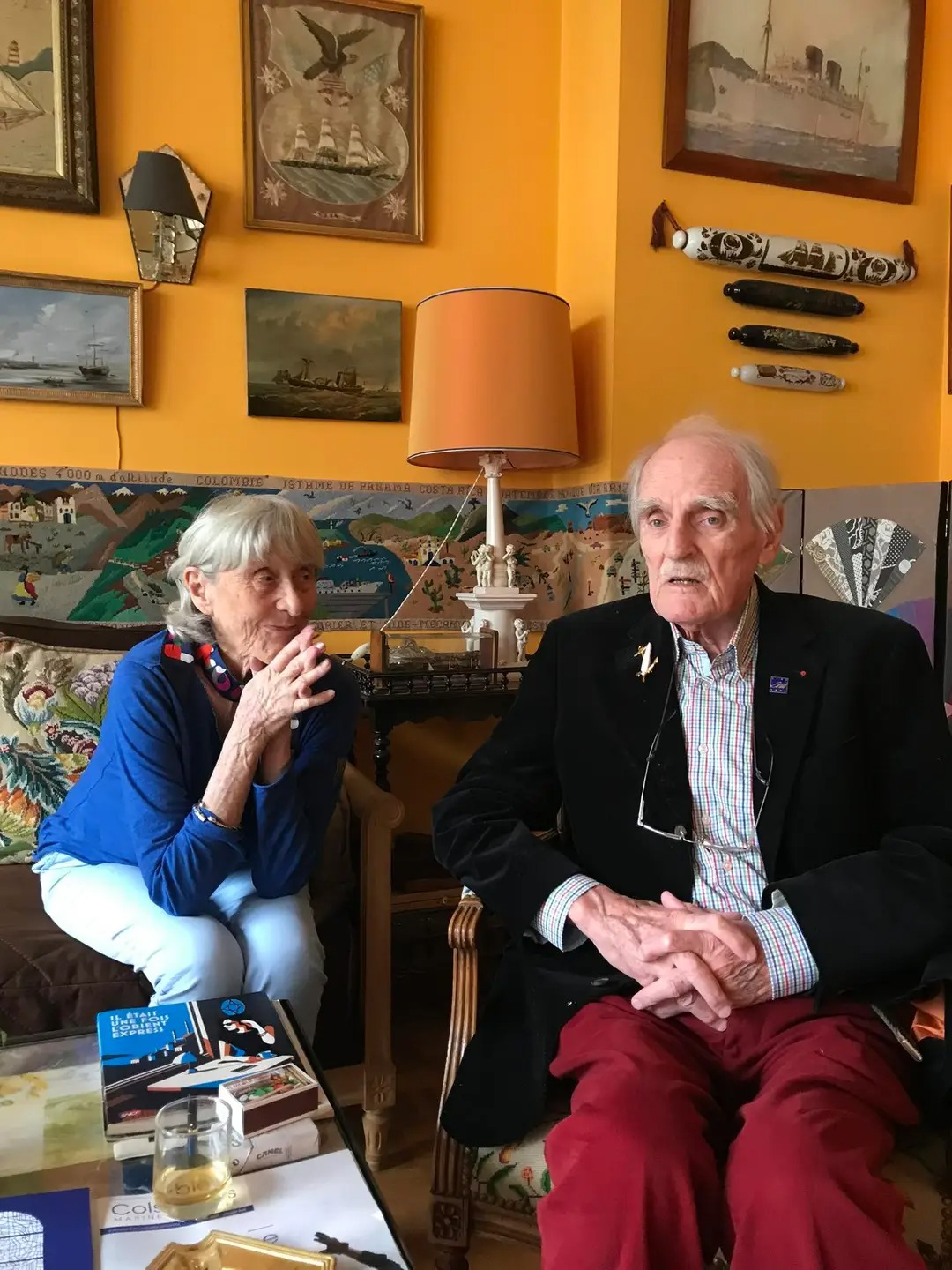
Translated by Ondrej Mann.
When I first contacted the Paris publishing house Robert Laffont about acquiring the rights to a new Czech translation of The Camp of the Saints, the author’s most famous novel, I never imagined that one day I would be sitting in the writer’s home.
The foreign rights department at Robert Laffont publishing house made it very clear that they would not give me Mr. Raspail’s personal contact details, which I did not expect. After I obtained the rights to translate the book into Czech and immersed myself in the work, I naturally had questions. Given the sophistication of the work and its many meanings, some were very subtle, and I wanted to know if I would get answers. The publisher told me to send them my questions, but it was not certain that they would be answered.
It was a pleasure and an honor, as well as a big surprise, to receive a written response to my ten or so questions and queries after a month. Mr. Raspail sent me a beautiful reply full of respect. Not only did he appreciate my questions, but he also answered them in great detail and even gave me his personal phone number in case I had any further questions, saying that I could call him anytime during aperitif hour, which in Paris means after 6 p.m.
In May 2019, I flew to the city on the Seine to visit my ex-husband and colleagues from the Sorbonne. I called Mr. Raspail and told him that the book was at the printer’s and would be ready in two weeks, and that I would send him a copy as soon as it came out of the press. He was very pleased and invited me and my wife to his apartment in the 17th arrondissement of Paris for a formal meeting and a drink to celebrate the book.
When the door opened, there stood a man with intelligent blue eyes, lively and energetic, and like every sophisticated French man, he was charming, playful, and flirtatious. He also pointed to a large sign on the wall, the kind that hangs on buildings and indicates the name of the street, with the inscription “Boulevard Raspail”. It reminded me of my stay in Paris when I was doing my doctoral thesis at the Sorbonne, at 31 Boulevard Raspail. But that’s another story.
So, in May 2019, I found myself in the Raspails’ apartment and was given the privilege of a celebratory glass of fine whiskey accompanied by a discussion in French on a wide variety of topics. Jean Raspail was healthy, energetic, vibrant, and had the youthful enthusiasm often found in people whose lives are filled with creativity and the realization of their adventurous dreams. We spent many hours talking about his career, his writing, but also about the present. It was clear that he was keenly interested in current events. He spoke very enthusiastically, for example, about Paris and the “reconquista,” and talked about the neighborhoods where the reclaiming of territory by whites is taking place and how it is happening.
During our meeting, Mr. Raspail also called the editors of Le Figaro, where he announced my new Czech translation, which was published on May 19, 2019, and arranged an interview with me for Le Figaro.
There was much to discuss. The writer and adventurer spoke about his travels around the world and different cultures, his wife sat by his side, and time stood still in the presence of a man full of intelligence, refinement, and wisdom, who in 1973 predicted what would happen some forty-five years later. Some passages from the novel Camp of the Saints seem to resonate today, as if they were written in the present. He himself remarked that his most famous work was “inspired.”
The French Academy honored his work twice: in 1981, he received the Grand Prize of the French Academy for his novel Moi, Antoine de Tounens, roi de Patagonie (I, Antoine de Tounens, King of Patagonia), and in 2003, he was awarded the Grand Prize of the French Academy for Literature.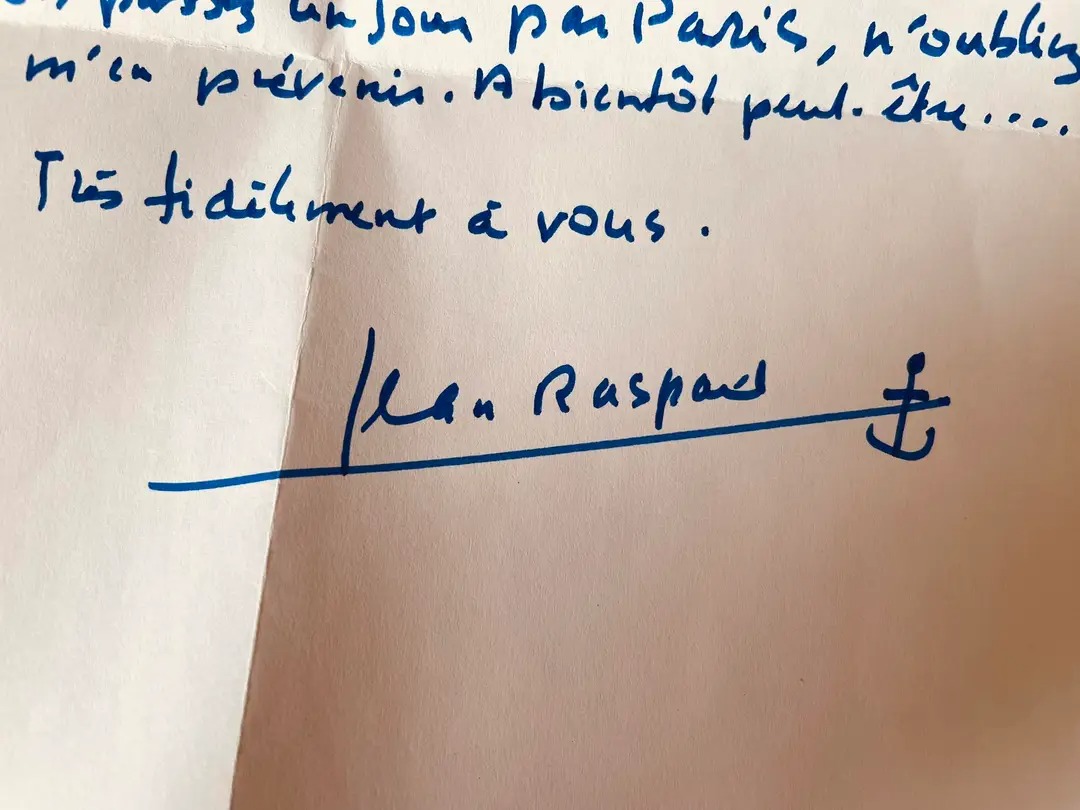
A few days after I left Paris, the writer called my number, which was my ex-husband’s apartment number, and when he found out that my ex-husband was American, he immediately started talking about his adventures in America, including how he and his friends canoed all the way down the Mississippi River from north to south.
His daily life had a royalist structure, with an aperitif at 6 p.m., which was an opportunity for socializing, visiting, and communication.
It is sad news that he passed away on June 13, 2020. He lived to the ripe old age of almost 95 and left behind a powerful, original, and interesting collection of works, some of his novels even prophetic, which I believe will find a steady and new readership in certain periods.
Dr. Zuzana Adamson, Docteur de la Sorbonne
4 comments
I know the article isn’t ostensibly about this (though for some reason these unnecessary details were added), but I can’t help but be a bit dismayed to read that the translator is apparently one of those women who divorces her husband to marry another woman…
That line threw me too but these days it’s the norm. I would love to know what Raspail’s reaction was.
Is this a man, woman, or an it? 🙃
Peter Quint: July 7, 2025 In May 2019, I flew to the city on the Seine to visit my ex-husband and colleagues from the Sorbonne. He was very pleased and invited me and my wife to his apartment. Is this a man, woman, or an it?
—
That is an unusual thing for Zuzanna Adamson, likely a female, to include in her anecdote about meeting Mr. Raspiel. Ondrej, are you sure you translated that correctly?
An interesting comparison by Heidi Beirich wannabe, Kathleen Belew**, between Raspiel’s The Camp of the Saints and Pierce’s The Turner Diaries by Miss Lulu Garcia-Nararro for NPR (National Polshevik Radio):
**Ms. Belew is another one of those “respectable” academic authors — currently Associate Professor of history at Northwestern U) — who is a “go-to” expert in White haters and hate groups by watchdogs like the SPLC. Read her credentials and about her “history” books, here: Kathleen Belew: Department of History – Northwestern University
Stephen Miller And ‘The Camp Of The Saints,’ A White Nationalist Reference
November 19, 2019
By Lulu Garcia-Navarro
Leaked Emails Reference to ‘Camp Of The Saints,’ A White Nationalist Guide : NPR
…Senior White House adviser (((Stephen Miller))) is an immigration hard-liner. He engineered the Trump administration’s family-separation policy and its travel ban on people from some Muslim-majority countries…
But last week, the Southern Poverty Law Center detailed leaked emails in which it says Miller encouraged far-right website Breitbart to promote white supremacist ideas. In one message, Miller references a book of fiction: “Someone should point out the parallels to Camp of the Saints.”
Historian Kathleen Belew is also familiar with the book and others like it — works of fiction like The Turner Diaries, “a piece of dystopic fiction that ends in a nuclear war after which all nonwhites are killed,” as NPR’s Andrew Limbong reported earlier this year. Belew says these novels morph from fiction to reality for white power activists.
“They fill imaginative holes that people can use in organizing, and they provide a map of ideology and operations that spur future activity,” she says.
Belew, a historian at the University of Chicago, wrote Bring the War Home, a book about the roots of white power movements in the United States. She says The Camp of the Saints taps into a central belief of white nationalism: fear around the reproduction of the white race and thusly, the birth of white children.
“We see the birth rate appearing in manifestos of violent actors. But to people in this movement, white reproduction is not just about a peaceful demographic transformation, but it’s about this feeling of being overrun by immigrants, about being threatened with forced integration, and about the idea that the white race is under attack. And I think that sense of emergency that is depicted in works like Camp of the Saints and The Turner Diaries explains how white nationalism becomes such a captivating and world-consuming way of thinking about politics.”….
Comments are closed.
If you have a Subscriber access,
simply login first to see your comment auto-approved.
Note on comments privacy & moderation
Your email is never published nor shared.
Comments are moderated. If you don't see your comment, please be patient. If approved, it will appear here soon. Do not post your comment a second time.