One of the topics at the recent amazing Counter-Currents conference in Rome was: How do we ask our billionaire for money? It’s a great topic, and I haven’t come across it yet in our intellectual circles, but since I already have experience writing fundraising appeals—for example, here and here—I’ll try to ask our wealthy potential sponsors for money in this article. (more…)
Tag: Ondrej Mann
-
Gerhard Hallstatt is an Upper Austrian musician, photographer, and writer, though he currently focuses primarily on music with his experimental band Allerseelen. He previously served as the publisher of the small but influential underground magazines Aorta and Ahnstern, using the pseudonym Adam Kadmon. These limited-circulation publications focused primarily on esoteric philosophy, magic, sacred architecture, art history, and cultural poetry, as well as half-forgotten National Socialist artists and occultists. (more…)
-
2,450 words
Part 1 available here.
OM: Have you thought about writing a series on films set in Francoist Spain, Chile, Argentina, and, more generally, the dictatorial regimes of South America? Would you recommend any films in this genre?
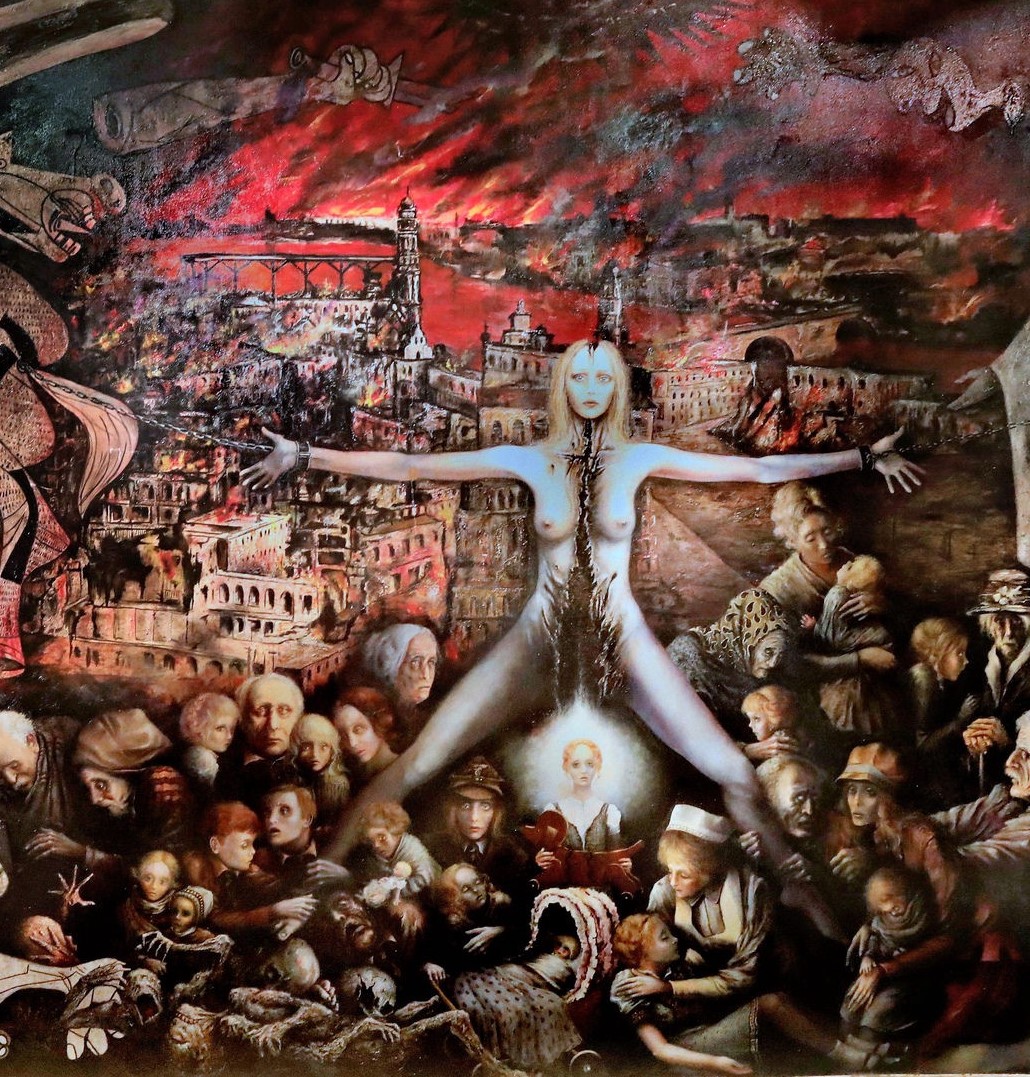
KV: I was just thinking about lifting the veil woven by egalitarian cultural dominance. You know what I mean? Everyone knows Picasso’s Guernica, but what about Dresden by Marti Teixidor? It’s the same with film. (more…)
-
2,430 words
Karel Veliky is the doyen of the Czech New Right, the creator of the vast majority of publications from Delian Diver, and one of the masterminds behind the entire project. Although Karel Veliky specializes primarily in writing books and comprehensive essays on topics such as Knut Hamsun, Corneliu Zelea Codreanu, Yukio Mishima, neo-fascism, the New Right, etc., the author has also found time to address more popular topics such as films from the Third Reich, Fascist Italy, Spain, and the occupied territories in the series “We & Film.” (more…) -
2,062 words
Endeavour was born in Canada in the 1990s, but has lived in several different countries. He writes essays and makes videos on various topics, including politics, history, culture, classic films, and technology, from the perspective of a Canadian nationalist, or more broadly, from the perspective of a white advocate and traditional conservative. He’s a good and entertaining companion. I think we’ll be hearing more about him and his work. In addition to writing for our website, he also has a Substack and a popular YouTube channel.
In the interview, we talked about the meaning of his name, travel, music, healthy lifestyle, motivation, the red pill, Morgoth’s Review, board games, and funny moments during his live streams. (more…)

-
May 18, 2026 Karel Veliky
About Film “From the Right”
2,383 words
Part 7 of 7 (Part 1, Part 2, Part 3, Part 4, Part 5, Part 6)
Translated by Ondrej Mann
This post concludes the series of articles “We and Film,” “Neo-fascism in Film,” and “Sadonacism in Film,” which we have already published on Counter-Currents.
Despite the inflation of images, film is still for modern man what ritual, meditation, or prayer is for traditional man—it allows him to forget himself. (more…)
-
Part 6 of 7 (Part 1, Part 2, Part 3, Part 4, Part 5)
Translated by Ondrej Mann
The skinhead movement (which has already celebrated its 50th anniversary!) now has its own retro films. [1] Führer Ex (2002, dir. Winfried Bonengel) returns to Germany at the turn of the 1980s and 1990s. Two young men, “battered” by DDR prison, allow themselves to be drawn into the “hell of neo-Nazism” that emerged after the country’s reunification. (more…)
-
2,751 words
Part 5 of 7 (Part 1, Part 2, Part 3, Part 4)
Translated by Ondrej Mann
The first film in which “neo-fascists” entered the new millennium—The Believer (2001, dir. Henry Bean)—actually deals mainly with the crisis of Jewish identity. Rebellious Jew Danny Balint (played by the sufficiently “Aryan-looking” Ryan Gosling) has been protesting against the senselessness of rigid dogmas in the faith of his race since childhood [1], (more…)
-
3,958 words
Part 4 of 7 (Part 1, Part 2, Part 3)
Translated by Ondrej Mann
If we study Caesar’s statements, we find that the ancient Romans used the same methods against the tribes they enslaved as the fascists did in our time. Over two millennium, the means have not changed, only the techniques. I do not mean to say, of course, that humanity is the same as it was two thousand years ago, but we undoubtedly find disturbing similarities.
—Miklós JancsóSweat, muscles, gym, “sieg-heil techno,” bodies, bodies, bodies, motto: Boia chi molla. [1] This is how the Italian film Skinheads (1993, dir. Claudio Fragasso) about the “crazy fashion” of skinheads begins. [2] (more…)
-
2,335 words
Translated by Ondrej Mann
We can conclude that peace with the world itself is still impossible, even though the number of those who oppose it has decreased significantly. — Jean Cocteau (more…)
-
Part 1 of 7 (Part 2)
Translated by Ondrej Mann
Original in Czech: https://deliandiver.org/neofasismus-ve-filmu-cast-1/
“Decadence is a necessary condition for renaissance. That is why I am very happy to live in a society where everything is collapsing. I think this process of decay is completely natural. It is the end of a certain phase of humanity. However, this process of decay needs to be accelerated; it is still too slow. We need to hasten the death of what is rotting. It is necessary to start all over again. To wipe the slate clean, to sweep everything away. There is no solution in continuity.”
—Federico FelliniThe first film dealing with the theme of neo-fascism or neo-Nazism is often considered to be the “spy drama” The Quiller Memorandum (1966, dir. Michael Anderson). (more…)
-
3,749 words
Karel Veliky
Original in Czech: https://deliandiver.org/sadonacismus-ve-filmu-cast-4/
Translated by Ondrej Mann
“We must categorically reject the attempt, made primarily by W. Reich, to derive the instinct for destruction from the repression of the instinct for pleasure.”
—Julius Evola, Eros and the Mysteries of Love: The Metaphysics of Sex.
Visconti’s authority and the international success of his The Damned (see Part II) were reflected in the fact that in the early 1970s there was perhaps no film about “fascism” or “Nazis” that did not take into account their “sick sexuality.” The Conformist (1970, dir. B. Bertolucci), based on the novel by Alberto Moravia, depicts the behavior of a man (played by J. P. Trintignant), a weak-willed intellectual for whom the only acceptable way out of his own insecurities is to “merge with the totalitarian crowd.” (more…)
-
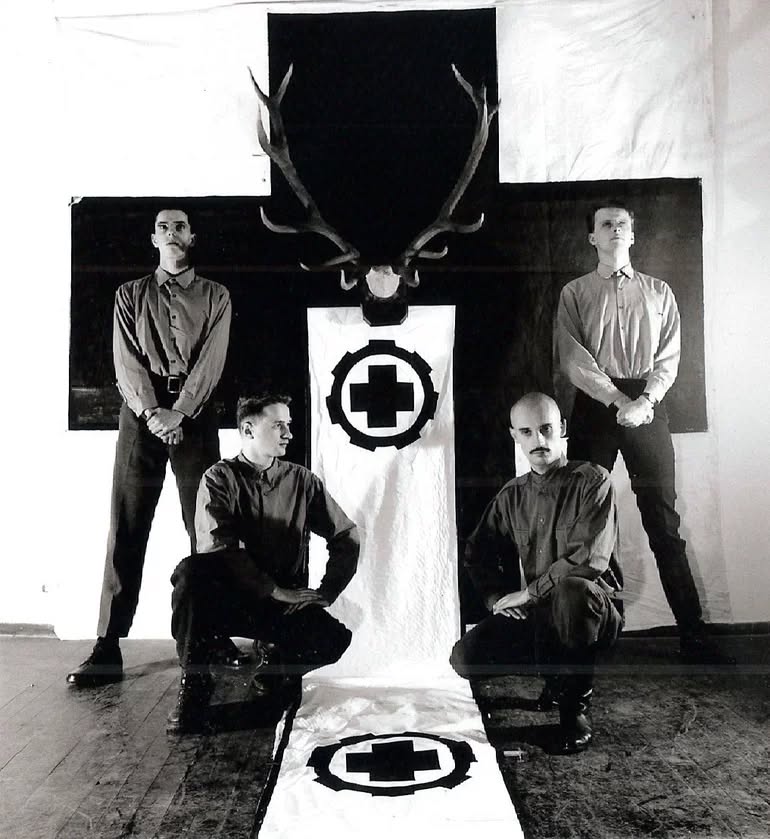
Here at Counter-Currents, we have already published a lot of material about Laibach, their music, and the cultural events surrounding the band. I believe that the band needs no further introduction to our readers. Personally, I like to play Laibach’s music at gothic parties, especially the songs Alle gegen Alle and Tanzt mit Laibach, but of course the band offers much more than just dance music. During their active years, Laibach has built a legacy that goes beyond music (they are one of the most influential bands in the genre today). Laibach is literally a cultural phenomenon today. (more…)