Counter-Currents
  • Advertise
  • Private Events
  • T&C
  • About
  • Contact
  • RSS
    • Main feed
    • Podcast feed
    • Videos feed
    • Comments feed
  • Welcome
  • Webzine
  • Books
  • Merch
  • Podcasts
  • Videos
  • Donate
  • Patrons
  • Subscribe
  • Crypto

LEVEL2

Donate Now Mailing list
Upcoming podcasts
  • Rob Rundo on Counter-Currents Radio

    Rob Rundo on Counter-Currents Radio

    Counter-Currents Radio

    06/13/2026 — 3 pm EST / 9 pm CET
  • Daniel Tyrie on Counter-Currents Radio

    Daniel Tyrie on Counter-Currents Radio

    Counter-Currents Radio

    06/20/2026 — 3 pm EST / 9 pm CET

Writers of May

(2 votes) Morris van de Camp David M. Zsutty Derek Stark Jayant Bhandari Greg Johnson

Articles of May

Heidegger on Nietzsche, Part One by Collin Cleary The Lunch Wars by David M. Zsutty 2 votes
  • Welcome
  • Webzine
  • Books
  • Merch
  • Podcasts
  • Videos
  • Donate
  • Patrons
  • Subscribe
  • Crypto
    • Happy Birthday to Us!

      Greg Johnson

    • Zsutty’s Maximum

      David M. Zsutty

      5

    • Exclusive Interview with Karel Veliky:
      The Final Chapter in the Film Series! Part I

      Ondrej Mann

    • The Union Jackal, June 2026

      Mark Gullick

      19

    • The Inferiority Behind Immigrant Superiority

      Jayant Bhandari

      15

    • Counter-Currents Radio Podcast No. 690
      Greg Johnson & David Zsutty Discuss Current Things: AI, Henry Nowak, the Iran Crisis, & More

      Counter-Currents Radio

      4

    • Collin Cleary: What Rome Means to Me

      Collin Cleary

      4

    • Paul Krugman: Closet Bolshevik

      Spencer J. Quinn

      14

    • Fugue of Ideas:
      Ibram X. Kendi’s Chain of Ideas

      Greg Johnson

      18

    • Based Blacks

      Lipton Matthews

      11

    • Black Intellectual Fatigue

      Derek Stark

      36

    • Why White Advocates Should Avoid “Based Blacks”

      Dani Vypont

      23

    • Nietzsche & Race

      Mark Gullick

    • Editor’s Update
      Rob Rundo Rescheduled to Next Week on Counter-Currents Radio;
      Tonight Greg Johnson & David Zsutty Answer Your Questions;
      Fundraiser Update & a New $20,000 Matching Grant

      Greg Johnson

    • The Counter-Currents 2026 Fundraiser
      Lifetime Subscriber Welcome Packages Extended

      Greg Johnson

    • Nationalism This Week
      Who’s Looking Back?

      Greg Johnson

      29

    • China’s Threat to American Security:
      Food, Farmland, Foreign Control, & Energy Policy

      Lipton Matthews

      5

    • The Bitter End of Western Metaphysics:
      Heidegger on Nietzsche, Part Two

      Collin Cleary

      16

    • The Killing of Henry Nowak

      Mark Gullick

      38

    • The Crisis of Chinese Technology Thieves

      Morris van de Camp

      1

    • The Strange World of Gender Bender Fiction:
      & What This Genre Tells Us About Autosexuality

      Dani Vypont

      3

    • Watching the Watchers:
      The Dark Triad Question

      David M. Zsutty

      14

    • The Remigration Movement Solidifies

      F. Roger Devlin

      1

    • Casting Aspersions:
      The Fatal Consequences of Race-Swapped Casting, From Helen of Troy to Henry of Southampton

      Steven Tucker

      20

    • The Murder of Henry Nowak

      Millennial Woes

      23

    • Don’t Forget to Vote in Our Writer & Article of the Month Poll

      Greg Johnson

    • The Robot Hotdog Stand

      Greg Johnson

      37

    • Laughing Our Way to Victory

      Dave Chambers

      7

    • The Zodiac Killer

      Mark Gullick

      11

    • Jared Taylor: What Rome Means to Me

      Jared Taylor

      1

    • An Interview with Endeavour:
      My Way of Life Is an Adventure!

      Ondrej Mann

      6

    • José Pedro Zúquete’s The Identitarians

      Greg Johnson

      3

    • Editor’s Update
      Fundraiser Update & How to Watch the Remigration Summit

      Greg Johnson

      5

    • The Bitter End of Western Metaphysics:
      Heidegger on Nietzsche, Part One

      Collin Cleary

      12

    • Berlin: City of Stones

      Spencer J. Quinn

      6

    • True Folk-Horror Is Horror of Your Own Folk:
      Mark Gatiss vs the Brexit Blind Dead  

      Steven Tucker

      4

    • Counter-Currents Radio Podcast No. 689
      Thomas Massie, the America 2050 Bust, the Need for Whites to Divest from America, the AI Economic Apocalypse, & Pro-White Project Pitches to Billionaires

      Counter-Currents Radio

      7

    • Nationalism This Week
      Remigration is Inevitable, Part 3

      Greg Johnson

      27

    • Why Billionaires Should Fund White Identity Politics

      Lipton Matthews

      8

    • How Cold War Two Came About

      Morris van de Camp

      5

    • Now Available for Pre-Order at a Special Price!
      Greg Johnson’s The Philosopher Is In

      Greg Johnson

    • David Zsutty’s Elevator Pitch to a Billionaire

      David M. Zsutty

      1

    • Headbanging Lite

      Mark Gullick

      5

    • White Advocacy Past and Present

      Peter Bradley

      13

    • The Lunch Wars

      David M. Zsutty

      47

    • The Russians are Coming/The Russians are Coming

      Steven Clark

      1

    • Peak Fatigue in Fort Wayne

      Gabriel Anderson

      24

    • Keith Woods’ Elevator Pitch to a Billionaire

      Keith Woods

    • The Cruelty of Kindness

      Morris van de Camp

      9

    • Predation Wearing the Mask of Civilization

      Jayant Bhandari

      13

    • WayDown

      Zsutty’s Maximum

      "Likewise, Indians were obsequious to whites when they felt we had power over them" It is an...

    • Will Williams

      Zsutty’s Maximum

      Mr. Zsutty: [M]any actual white [sic] liberals and many white [sic] conservatives for that matter...

    • Uliet Bravo

      Zsutty’s Maximum

      https://en.wikipedia.org/wiki/Liebig%27s_law_of_the_minimum#Liebig's_barrel Kinda sorta analogous...

    • Asier Abadroa

      Zsutty’s Maximum

      This reminds me of how Black South Africans burn illegal Black immigrants alive when they enter...

    • Elear

      The Inferiority Behind Immigrant Superiority

      Mr Bhandari describes a certain way of identity expression characteristic to ethnic diasporas: loud...

    • Beau Albrecht

      The Union Jackal, June 2026

      If he was all but dead on the scene, then the pigs wasted their effort arresting him for "racism". ...

    • Moss

      The Inferiority Behind Immigrant Superiority

      Interesting insights into a foreign culture, even though I find it quite disturbing.

    • Beau Albrecht

      The Union Jackal, June 2026

      As for the "elites", they should be housed in the middle of one of the no-go zones that their...

    • Will Williams

      Based Blacks

      Weave: June 9, 2026 ...I used to listen to preachers who claimed Jews were chosen and it was our...

    • Moss

      The Union Jackal, June 2026

      Ha, yes, better and more quaint times for our people Mark. In Fr Ted I remember the over 75's...

    • C.E. Whiteoak

      Zsutty’s Maximum

      Fantastic article. I have never seen a better explanation of group behavior.

    • Stronza

      The Union Jackal, June 2026

      Then the pigs arrest the White man, who dies because he got arrested instead getting first aid....

    • Vauquelin

      The Inferiority Behind Immigrant Superiority

      In the game of multiculturalism, everyone loses except those who have no culture and no roots.

    • Stronza

      The Union Jackal, June 2026

      What did that cute little opossum Pogo say?

    • Collin Cleary

      Heidegger on Nietzsche, Part One

      This is a joke, right?

    • Vauquelin

      Why White Advocates Should Avoid “Based Blacks”

      Blacks and whites are two nations inhabiting one territory. This is the source of all problems...

    • New Flyer

      The Union Jackal, June 2026

      Was listening to a Collett stream where he went over a police policy that dictates the 'racism" must...

    • Glide Ratio 0:1

      The Union Jackal, June 2026

      As to the World Cup, lets not forget the Czechs and the Croats did not kneel for the degenerate...

    • Beau Albrecht

      The Union Jackal, June 2026

      It's just mind-boggling.  There was an orc with a bloody sword, and a White man bleeding to death. ...

    • Silva

      The Inferiority Behind Immigrant Superiority

      Understanding Human History also contains geography, but points flaws in that of Guns, Germs, and...

    • Earth Day Special

      John Morgan

      12

    • A Robertson Roundup
      Remembering Wilmot Robertson
      (April 16, 1915 – July 8, 2005)

      Margot Metroland

      13

    • The Paranoid Style in White Nationalism

      Greg Johnson

      30

    • Join the Dance!

      Andrew Hamilton

      1

    • We Can’t Save the Earth Without Reducing African Birth Rates

      James Dunphy

      36

    • “I’m Not a Conspiracy Theorist, but . . .”:
      Jeffrey Epstein’s Death Gives New Life to “Conspiracy Theories”

      Greg Johnson

      22

    • Sylvia Plath: Stasis in Darkness

      Vic Olvir

      17

    • Vanguardism, Vantardism, & Mainstreaming

      Greg Johnson

      80

    • Aviation, Geography, & Race

      Charles Lindbergh

      3

    • Some Thoughts on Yule

      Collin Cleary

      4

    • Living in Truth:
      A Yuletide Homily

      Jef Costello

      7

    • John Kennedy Toole’s A Confederacy of Dunces

      Greg Johnson

      20

    • On Aleksandr Solzhenitsyn’s Warning to the West

      Spencer J. Quinn

      7

    • Elitism, British Modernism, & Wyndham Lewis

      Jonathan Bowden

      6

    • Philip K. Dick’s Do Androids Dream of Electric Sheep? as Anti-Semitic/Christian-Gnostic Allegory

      Greg Johnson

      20

    • “Conspiracy Theory” or Conspiracy?

      Andrew Hamilton

      21

    • Remembering H. P. Lovecraft
      (August 20, 1890–March 15, 1937)

      Greg Johnson

      3

    • Who Are We?
      Nordics, Aryans, & Whites

      Greg Johnson

      71

    • Remembering William Gayley Simpson
      (July 23, 1892–December 31, 1990)
      A Pleasant Afternoon with Harriet & Bill Simpson

      Margot Metroland

      18

    • Here are the Young Men
      Remembering Ian Curtis
      (July 15, 1956–May 18, 1980)

      Mark Gullick

      18

    • Percy Grainger
      Artist of the Right

      Alex Graham

      7

    • Remembering Revilo Oliver
      (July 7, 1908–August 20, 1994)

      Greg Johnson

      18

    • The Meaning of July 4th for the White Man

      Gregory Hood

      13

    • The Front National’s Evolution

      Bruno Mégret

    • Merwin K. Hart
      Forgotten American Hero & Man of the Right

      Morris van de Camp

      10

    • George Orwell’s Nineteen Eighty-Four

      Jonathan Bowden

      8

    • Carleton S. Coon
      Scientist & Reluctant White Advocate

      Morris van de Camp

      3

    • The Kwanzaa Absurdity Will Be Dwarfed by Juneteenth

      Robert Hampton

      10

    • Stravinsky

      Alex Graham

      7

    • Like the Roman:
      Remembering Enoch Powell (1912-1998)

      Mark Gullick

      23

    • Sexually Incontinent on the Indian Subcontinent:
      Who Rapes More Animals, Indians or Pakistanis? The Battle Continues!

      Steven Tucker

      3

    • Neo-Fascism in Film
      Part 5

      Karel Veliky

      15

    • The Game of Tarot

      Mark Gullick

      2

    • Institutions Cannot Be Transplanted

      Jayant Bhandari

      5

    • Jonathan Bowden’s Deliverance
      Part 5

      Jonathan Bowden

    • Crosstown Traffic:
      Jimi Hendrix & The Post-War Rock ‘N’ Roll Revolution

      Mark Gullick

      1

    • Slaves from the North:
      Finns & Karelians in the East European Slave Trade, 900–1600

      Lipton Matthews

      14

    • Neo-Fascism in Film
      Part 4

      Karel Veliky

      2

    • David Lean’s A Passage to India

      Spencer J. Quinn

      1

    • Elites are Essential to Development

      Lipton Matthews

      7

    • Jonathan Bowden’s Deliverance
      Part 4

      Jonathan Bowden

    • Neo-Fascism in Film
      Part 3

      Karel Veliky

      6

    • E. M. Forster’s A Passage to India & the Indian Mentality

      Spencer J. Quinn

      25

    • Jonathan Bowden’s Deliverance
      Part 3

      Jonathan Bowden

    • The Rest Is Silence
      Heidegger’s Quietism

      Mark Gullick

      2

    • Dispelling the Historical Fallacy of Indian Nationalism

      Lipton Matthews

      8

    • Neo-Fascism in Film
      Part 2

      Karel Veliky

      8

    • Jonathan Bowden’s Deliverance
      Part 2

      Jonathan Bowden

    • Life of a Klansman

      Mark Gullick

      8

    • Jonathan Bowden’s Deliverance, Part 1

      Jonathan Bowden

    • Decolonial Ideas are Holding Back Developing Countries

      Lipton Matthews

      8

    • Neo-fascism in Film, Part 1

      Karel Veliky

      21

    • Jonathan Bowden’s Onslaught, Part 8
      Divigations on Decadence

      Jonathan Bowden

    • Jonathan Bowden’s Onslaught, Part 7
      Intrigues in the National Front

      Jonathan Bowden

      1

    • Rotten to the Core

      Mark Gullick

      8

    • Strauss on Husserl’s “Philosophy as Rigorous Science”

      Greg Johnson

    • Jonathan Bowden’s Onslaught, Part 6
      Francis Bacon & Right-Wing Nihilism

      Jonathan Bowden

    • London After (& Before) Midnight:
      Aleister Crowley, The Landlord’s Worst Nightmare

      James J. O'Meara

      2

    • Jonathan Bowden’s Onslaught, Part 5
      The Post-War British Far Right

      Jonathan Bowden

    • No Rules: Rollerball

      Mark Gullick

      4

    • András László
    • Derek Hawthorne
    • Beau Albrecht
    • Alain de Benoist
    • Kerry Bolton
    • Jonathan Bowden
    • Collin Cleary
    • Jef Costello
    • Savitri Devi
    • Julius Evola
    • Jim Goad
    • Gregory Hood
    • Juleigh Howard-Hobson
    • Greg Johnson
    • Charles Krafft
    • Anthony M. Ludovici
    • Trevor Lynch
    • H. L. Mencken
    • J. A. Nicholl
    • James J. O’Meara
    • Christopher Pankhurst
    • Tito Perdue
    • Michael Polignano
    • Spencer J. Quinn
    • Fenek Solère
    • Irmin Vinson
    • Leo Yankevich
    • Francis Parker Yockey
    • Multiple authors
  • Editor-in-Chief

    • Greg Johnson, Ph.D.

    Featured Writers

    • Beau Albrecht
    • Gunnar Alfredsson
    • Collin Cleary, Ph.D.
    • Jef Costello
    • Morris V. de Camp
    • F. Roger Devlin, Ph.D.
    • Stephen Paul Foster, Ph.D.
    • Jim Goad
    • Alex Graham
    • Mark Gullick, Ph.D.
    • Greg Johnson, Ph.D.
    • Travis LeBlanc
    • Trevor Lynch
    • Margot Metroland
    • James J. O’Meara
    • Angelo Plume
    • Spencer J. Quinn
    • Fred Reed
    • Clarissa Schnabel
    • Michael Walker
    • David M. Zsutty

    Frequent Writers

    • Asier Abadroa
    • Aquilonius
    • Alain de Benoist
    • Kerry Bolton, Ph.D.
    • Dave Chambers
    • Steven Clark
    • James Dunphy
    • Endeavour
    • Richard Houck
    • Jason Kessler
    • Titus Livius
    • Ondrej Mann
    • Lipton Matthews
    • Mark Mazari
    • John Morgan
    • Jaroslav Ostrogniew
    • Kathryn S.
    • Christian Secor
    • Anne Wilson Smith
    • Thomas Steuben
    • William De Vere
    • Kenneth Vinther
    • Max West

    Classic Authors

    • Maurice Bardèche
    • Jonathan Bowden
    • Julius Evola
    • Guillaume Faye
    • Ernst Jünger
    • Kevin MacDonald, Ph.D.
    • D. H. Lawrence
    • Charles Lindbergh
    • Jack London
    • H. P. Lovecraft
    • Anthony M. Ludovici
    • Sir Oswald Mosley
    • National Vanguard
    • Friedrich Nietzsche
    • Revilo Oliver
    • William Pierce
    • Ezra Pound
    • Saint-Loup
    • Savitri Devi
    • Carl Schmitt
    • Miguel Serrano
    • Oswald Spengler
    • P. R. Stephensen
    • Jean Thiriart
    • John Tyndall
    • Dominique Venner
    • Leo Yankevich
    • Francis Parker Yockey

    Other Authors

    • Howe Abbott-Hiss
    • Michael Bell
    • Giles Corey
    • Jack Donovan
    • Richardo Duchesne, Ph.D.
    • Emile Durand
    • Guillaume Durocher
    • Mark Dyal
    • Tom Goodroch
    • Andrew Hamilton
    • Robert Hampton
    • Huntley Haverstock
    • Derek Hawthorne
    • Gregory Hood
    • Juleigh Howard-Hobson
    • Alexander Jacob
    • Ruuben Kaalep
    • Tobias Langdon
    • Julian Langness
    • Patrick Le Brun
    • G A Malvicini
    • John Michael McCloughlin
    • Millennial Woes
    • Michael O’Meara
    • Christopher Pankhurst
    • Michael Polignano
    • J. J. Przybylski
    • Quintilian
    • Edouard Rix
    • C. B. Robertson
    • C. F. Robinson
    • Herve Ryssen
    • Alan Smithee
    • Fenek Solere
    • Ann Sterzinger
    • Robert Steuckers
    • Tomislav Sunic
    • Donald Thoresen
    • Marian Van Court
    • Irmin Vinson
    • Book Reviews
    • Movie Reviews
    • TV Reviews
    • Music Reviews
    • Art Criticism
    • Graphic Novels & Comics
    • Video Game Reviews
    • Fiction
    • Poems
    • Interviews
    • Videos
    • English Translations
    • Other Languages
      • Arabic
      • Bulgarian
      • Croatian
      • Czech
      • Danish
      • Dutch
      • Estonian
      • Finnish
      • French
      • German
      • Greek
      • Hungarian
      • Italian
      • Lithuanian
      • Norwegian
      • Polish
      • Portuguese
      • Romanian
      • Russian
      • Slovak
      • Spanish
      • Swedish
      • Ukrainian
    • Commemorations
    • Why We Write
  • Archives
  • Top 100 Commenters
  • The Looney Bin
  • Advertise
  • Private Events
  • T&C
  • About
  • Contact
  • RSS
    • Main feed
    • Podcast feed
    • Videos feed
    • Comments feed
Sponsored Links
Europa.com Above Time Coffee Antelope Hill Publishing Paul Waggener IHR-Store Spencer J. Quinn American Renaissance Jim Goad The Occidental Observer
Print December 18, 2024 3 comments

Art, Death, & Phenomology: I Shot Andy Warhol

Mark Gullick

2,450 words

I always run into strong women who are looking for weak men to dominate them.
-Andy Warhol

Valerie Solanas took the elevator, got off at the 4th floor.
She pointed the gun at Andy, saying, “You cannot control me anymore”.
-Lou Reed and John Cale, Songs for Drella

The Shot Heard Around the Art World

On June 3, 1968, a slovenly, homeless, but highly intelligent woman approached a police officer in Times Square. She was wearing a black trench-coat, fisherman’s cap, and a black, turtle-neck sweater. She wasn’t a stevedore, although her loose, lesbian swagger might have fooled the untrained eye. She was wearing classic Beat-generation gear. The member of NYPD’s finest asked her how he could help, and she informed him that she had just shot a famous artist. The woman was Valerie Solanas, and the artist was Andy Warhol.

Solanas was telling the truth, for once in her life. She had just shot Warhol in his office. Warhol would later pose with the stitched scars across his abdomen. Her action had nothing to do with art criticism but rather with the fact that, as she believed, Warhol was controlling her mind. It was also because he was a man, a white man, and so fair game, and Solanas had taken her dislike of the male of the species beyond what we are now used to in our own culture, although she stands as a precursor of that now-ingrained, state-mandated hatred.

In the 1960s, feminism was still shifting gear from its bra-burning first phase to Gloria Steinem. Misandry was in its relative infancy, but Valerie Solanas gave us a taste of things to come. Like The Unabomber, Al Qaeda, and Anders Behring Breivik, Ms. Solanas had been good enough to provide the world with a testament to her thoughts. This was entitled The SCUM Manifesto, an acronym which stood for the Society for Cutting Up Men. There is something quaint about the fact that Solanas called it a “society”, as though it were a literary salon or a university debating concern. But there was nothing quaint about Solanas. She was the messenger of what was to come, the first post-modern feminist shooter – and there may be more – the Joan of Arc of Boomer misandry. I don’t believe there were calls for gun control after the world’s most famous pop artist got slotted, but Solanas shot Warhol with a .32 Baretta – of which more later – a snub-gun of the type Warhol would later immortalize in one of his famous screen-prints. She received a light jail sentence, leading one of Warhol’s protegés, Lou Reed, to sing in a later lyric, and with his familiar irony:

You get less time for stealing a car.
I remember thinking,
As I heard my own record in a bar.

Solanas ended up in an asylum, believing that the CIA had planted a listening device in her uterus. Warhol survived the assassination attempt and, in a strange act of cosmic serendipity, Solanas and Warhol died almost a year apart, in 1987 and 1988 respectively. Solanas was found face down over a toilet-bowl, a long-time methamphetamine addict. Warhol passed away while asleep in hospital after routine gall-bladder surgery, and Lou Reed also had an acerbic take on the artist’s death:

Not until years later
Would the hospital do to him
What she could not.

For gun enthusiasts, some sources report that the gun Solanas used was actually a Baretta .22. It wasn’t. I checked. Baretta produced no such caliber pistol. Actually, that’s not strictly true. Baretta produced the Bobcat, the pet name for the 21A, in the late 80s, a .21 gauge which could be adapted to .22 (can someone tell me why you would even want or need to do that? It’s a serious question) in the late 80s. The gun Warhol screen-printed in 1981, however, although not a Baretta, was a .22. Andy wanted art to imitate life, just as much as the artists who preceded him. Which brings us to mimesis, phenomenology, and art in general.

Art and Phenomenology: Vancouver, 2001

I am not looking for a cage-fight over the relative merits of modern art, or art in general, and I am certainly not trying to sell Andy Warhol to a Right-wing readership. That said, I like Andy Warhol’s work very much, and I know why. It’s because I like Andy Warhol’s work very much. I once had 24 hours to kill in Vancouver eight months before 9/11, after which I would never be at a loose end again. I made sure to visit that great city’s Museum of Art, where two viewings made me think about an individual’s response to art, where it comes from and how it manifests itself. They also made me think about death. I had been in a downstairs gallery, small and devoted to etchings and preparatory sketches. I was enthralled by one of Rembrandt’s preparatory line drawings for the great crucifixion etchings, and I remember thinking that it was sheer technique which separated “classical” art from its modern version. View representational art as superior to non-representational or abstract art, and you are applauding the artist’s ability to utilize mimesis, or the copying of nature. This is one reason Plato wished the poets expelled from the res publica, not because they told lies (Plato’s own mentor Socrates would be accused and convicted of doing just that), but because as mimetic artists, they were copying the world, which is itself a copy of the eidos, sometimes glibly referred to as the “mind of God”. For Plato, there was a sort of metaphysical distaste in the copy of a copy. But we have no religious impulse to guide us with art now, modern or classical, and our responses originate from other sources.

When I left the small gallery and walked up into a brightly lit hall, I saw an artwork on the wall opposite which made as strong an initial impression on me as I can remember any artwork making, before or since. It was one of a series of Warhol’s silkscreen prints entitled Electric Chair, and such a device is the work’s central image, slightly off-center as it is. This very American machine of execution is in fact, as rendered in Warhol’s original, an “Old Sparky” from Texas. It was mimetic, take from a photograph, and although the technique was limited, for me this was the announcement of great art. The print was duo-chrome, in a sort of deep umber and a dirty yellow. It made me think of death, just as Rembrandt’s etchings of the crucified Christ had made me think of death. But it also made me think of phenomenology. What accounted for the strength of the impact this artwork had made on me? It hit me, as they say, faster than a speeding bullet. On the subject of which, let’s leave Vancouver for now, and return to New York, to Valerie Solanas, and to the artist Valerie considered herself to be. And also to her target, Andy Warhol, already by 1968 the “famous artist” Solanas told the officer she had shot.

An Actress Prepares

“Trash! Yeah, pick it up!”
New York Dolls

Warhol was an ugly man inside and out. A childhood illness meant he lost hair and facial pigment, leaving him with, as Lou Reed describes his mentor in song, “bad skin, bad eyes, gay and fatty… a pink-eyed painting albino”. Inside, Warhol was a carnival of neuroses, frightened of the world even before Solanas put a bullet in his abdomen, petrified of it afterwards. There is an extent to which Warhol was guilty of what lawyers call “contributory negligence” in inviting Solanas far enough into his circle to put a bullet through his gall bladder without vetting her first. But he already did vet his acolytes, rewarding vice rather than virtue, and most of Warhol’s entourage at The Factory would be on some kind of watch-list today.

Valerie Solanas was little more than street trash. A product of alcoholic and sexually abusive parents, she had wanted a bite of the Big Apple, and ended up getting the wormy bit. She got a bit-part in one of Warhol’s dreadful movies, and had written a play, Up Your Ass, in addition to The SCUM Manifesto. Quotes from this tract include, “Sex is the refuge of the mindless”, and, “How often do you set your period?” This burgeoning literary talent was spotted by, and conned by, Maurice Girodias, avant garde publisher of literary porn by Henry Miller and Frank Harris. He gave her a worthless written contract, just as Warhol gave her an equally worthless verbal one. The SCUM Manifesto remains at the top of the imprint’s bestseller list, and a hardback original can set you back £600.

Solanas had tested 131 for IQ in school. She wasn’t stupid, she was just talentless in a world where that didn’t matter, and she despised men because she was forced – so she believed – to jerk them off for money to pay for drugs. And she was full of hatred in a way that would go on to become standard issue for feminists across the West. When she wasn’t shooting up, she was shooting famous artists. The other way The Factory got what was coming to it in the case of Solanas shooting its Prospero was that they cast Solanas as the runt of the litter, the pharmakos or scapegoat the Ancient Greeks would stone and beat before casting it from the city by way of expiation. If someone is already full of hatred, and you fail to expel them from the city, don’t encourage them to focus that hatred on you. That can lead to a bullet in the stomach, something I bet Warhol found had a very phenomenological impact on him indeed.

Husserl, Heidegger, Warhola

Andrej Warhola changed his name from the Czech when it was misspelled in copy without the “a”, and he liked it. It’s reminiscent of the moment in Joyce’s Ulysses in which Bloom sees that the brand logo in the rim of his hat has lost a letter from sweat and erosion, going from reading “hat” to “ha”. For Bloom, his “hat” becomes his “ha”, a phenomenological change affecting the very thing the name of which has been changed. Res, nomina. The power of naming.

Naming the phenomenon, describing it in its actuality, was the philosophical quest of both Edmund Husserl and his student, Martin Heidegger, and both had something to say about aesthetics with reference to phenomenology, Husserl’s “science of the things”. Aesthetics, although the word itself is an Ancient Greek construction, has only really been applied to the plastic arts in the Anglophone world since Walter Pater used it. Now, everyone has an opinion on art, some informed by knowledge of the history of art, some a pure response to a visual experience intended to please the viewer in some way. Art history is a subject I dip in and out of purely for pleasure, but the second response is of interest philosophically, and has something in common with a part of the perceptual process examined by Edmund Husserl, the so-called “Father of phenomenology”, and Martin Heidegger’s mentor.

This is in no way a philosophical examination of art, and of the thousands of hits you get searching with “phenomenology and art”, I have read none. But I wanted to get some sense, some meaning and even something like a dark beauty, from the trashy chaos of Warhol’s artistic output. Three short quotes will give no more than a light sketch of the phenomenological impact of, say, Electric Chair on me. The first two are from Husserl’s Ideas:

“Immediate ‘seeing’, not merely sensuous, experiential seeing, but seeing in the universal sense as an originally presentive consciousness of any kind whatever, is the ultimate legitimizing source of all rational assertions”.

The second is included as it joins the great phenomenologist as he himself walks through an art gallery:

“A name reminds us, namingly, of the Dresden Gallery and of our last visit there: We walk through the halls and stand before a picture by Teniers which represents a picture gallery. If, let us say, we allow that pictures in the latter would represent again pictures which, for their part, represent legible inscriptions, and so forth, then we can estimate which inclusion of objectivations which can be seized upon. But such very complicated examples are not required for eidetic insights, in particular for the insight into the ideal possibility for continuing ad libitum the encasement of one objectivation into another.”

The last is from Heidegger’s, The Origin of the Work of Art:

“The setting-into-work of truth thrusts up the awesome and at the same time thrusts down into the ordinary what we believe to be such.”

Perhaps it’s Warhol’s influence, but I seem to be using something like the “cut-ups” technique Bowie stole from William Burroughs. Bowie and his entourage turned up at The Factory one day so that Bowie could play Warhol his song, Andy Warhol, who hated the song and hated Bowie. Years later, Bowie would play Warhol in the film Basquiat. Now there’s an artist I genuinely dislike, phenomenology or no phenomenology.

Conclusion: I Shot Andy Warhol

 Andy loves those Hollywood movies.
We’re gonna scare you hip-hop pricks to death.
Reed and Cale, Songs for Drella 

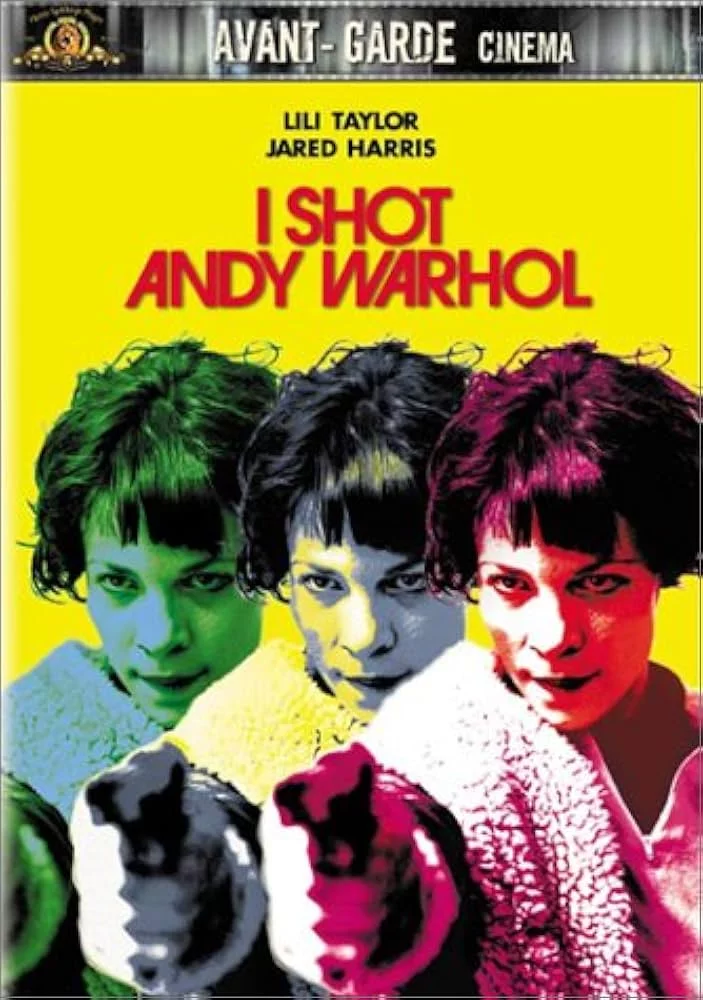
The movie I Shot Andy Warhol was released in 1996 to a tepid critical response. It is not a good movie but not a bad one. It shows Warhol the businessman, the introvert, and the pervert, and it doesn’t shy away from the full depths of Solanas’ literally violent misandry. Warhol showed if nothing else that the art world is supported by nothing but a core value set entirely by what the market dictates, given that this market is somewhat exclusive. In theory, anyone can buy a Warhol for several million dollars. It’s not a great leveller, though, unlike Warhol’s opinion of Coca-Cola, which was just that. After all, said Warhol, not even the President can get a better Coke than you.

Warhol is famous for his visual output, but also for the line, “In the future, everyone will be famous for 15 minutes.” There are many of these gnomic pearls, and they occasionally have a coda, as with Nietzsche’s famous statement that “what does not kill me makes me stronger.” That is rarely quoted with its parenthesized coda: “From the military school of life.” Warhol also amended his famed quip, possibly predicting the rise of the Internet in an, autobiography he called, “A parody of a personal revelation”, From A to B and back Again. “In 15 minutes,” he wrote there, “everybody will be famous.” Solanas got her 15 minutes. Don’t rest in peace, Valerie, you were always bad news even before you hit the headlines.

Art, Death, & Phenomology: I Shot Andy Warhol

Art%2C%20Death%2C%20andamp%3B%20Phenomology%3A%C2%A0I%20Shot%20Andy%20Warhol%0A

Share

  • Gab

Enjoyed this article?

Be the first to leave a tip in the jar!

Instant Echeck GreenPay™

Related

  • Heidegger on Nietzsche, Part Two

  • Heidegger on Nietzsche, Part One

  • Finding Atlantis Part 4

  • Curtis Dozier’s The White Pedestal

  • The Rest Is Silence: Heidegger’s Quietism

  • Finding Atlantis Part 3: The Stories We Tell

  • Finding Atlantis Part 2: Cyclical History

  • Jonathan Bowden’s Onslaught, Part 1

Tags

Andy WarholcelebritiesfeminismLou ReedMartin HeideggerPlato

Previous

« Paul Theroux’s African Safari, Part 2

Next

» What White Nationalists Want from the Trump Administration – Part 2

3 comments

  1. Scott says:
    December 19, 2024 at 4:15 pm

    I don’t know anything about “Barettas” but I used to be an Federal Firearms License holder and have experience with lots of Berettas.

    I also don’t know what .21 gauge is but there is a shotgun variant that is sometimes used for light recoil called a 20-gauge which has a bore size of 0.615 inches (15.6 mm) as opposed to the ubiquitous and powerful 12-gauge at 0.729 inches (18.5 mm).

    The Beretta Bobcat 21A is a pistol that is highly-concealable and comes in .22 LR (long-rifle, which is popular for both rifles and pistols).

    The advantage of a .22 LR is that the ammunition is dirt cheap and deadly if your shot placement is decent ─ hard with any concealable pistol ─ but if you can’t hit a pop can at 7 meters with a pistol, maybe you should carry a whistle instead.

    The .22 LR is also an unreloadable rimfire cartridge, with a case rim that might not feed properly in a very small pistol like this. This caliber would not be my first choice for a small pistol. A .22 LR is great for a large target pistol like a Browning Buck Mark or a Ruger Mark I.

    As a general rule, revolvers use rimmed cartridges while autoloading pistols usually use semi-rimmed or rimless cartridges.

    An exception is the large N-frame Smith & Wesson M1917 revolver which fires rimless .45 ACP with a special “moon” clip that holds six rounds for inserting directly into the cylinder. You can also fire special rimmed .45 ACP Auto-Rim brass in the M1917, which works like any standard revolver without needing a metal clip to hold the pistol rounds in the revolver cylinder. Btw, the moon clips for the standard rimless .45 ACP ammunition make an excellent speed loader ─ although the M1917 revolver does not like cheap Russian steel-cased .45 ACP ammo compared to the M1911 semiauto.

    The Beretta Bobcat also previously came in caliber .25 ACP (Automatic Colt Pistol) which is a cartridge invented by John M. Browning in 1905 specifically for small autoloading pistols like this, and was made by Fabrique Nationale and Colt, etc.

    The .25 ACP caliber is pretty much ideal for a small concealable autoloading pistol because it has several advantages, like a semi-rimmed design that feeds well, and a reliable center-fire primer instead of a rimfire like the .22 LR. The ammunition for .25 ACP is not very popular today so tends to be a little pricey, but it is not hard to find. And you can even reload the brass cases if you wanted to.

    The .22 LR rimfire cartridge is usually considered to be more powerful than the .25 ACP, but this is mostly myth since the testing is usually compared with a full-length rifle barrel in the one case, versus a very short pistol barrel in the other.

    Both calibers .22 LR and .25 ACP are considered underpowered for concealed-carry purposes, so Beretta makes a .32 ACP version called the Tomcat that is considered the minimal for self defense for most civilians.

    Mr. Browning basically invented the .25 ACP, .32 ACP, .380 ACP, and .45 ACP for the Model 1911 U.S. Gov’t. Model pistol that was replaced by the Beretta 92 in 9mm NATO in 1985.

    Browning also pioneered the FN Model 1935 Hi-Power in 9mm Luger, a high-capacity handgun adopted by various militaries in the world like Canada and the UK, and still used today.

    The Germans also used the 9mm Browning Hi-Power when they captured the Fabrique Nationale factory in Belgium during World War II. And you can get newer FN Brownings in the more powerful .40 S&W caliber.

    The Beretta 21A Bobcat in either .22 LR or .25 ACP, or the Beretta 3032 Tomcat in .380 ACP, which the Germans called the 9mm Kurz (short), has some advanced safety features for a “Saturday Night Special.”

    The Beretta Bobcat/Tomcat is a double-action/single-action design, so for the first shot you have to either pull hard on the trigger or cock the hammer back first.

    The Bobcat/Tomcat also has a tilt-up barrel which makes it easy for an elderly person to keep the chamber clear (and more safe) but to still load the first round manually with a quick “tip up” of the barrel by a lever and thus chamber the first round directly from the breech without having to have the grip strength necessary to charge the dimunitive slide handle first.

    Normally all self-defense guns are carried “cocked and locked” with a round in the chamber for rapid use. A single-action Colt 1911 has both a frame-mounted safety and a passive grip-safety to make this questionable practice of keeping a round in the chamber safer. This is called Condition 1 or “cocked and locked.”

    Police departments don’t like single-action autoloaders at all because it is too easy for liability attorneys to argue that cops can have an accidental discharge while detaining suspects compared to a double-action revolver like the Smith & Wesson .38 Special, .357 Magnum, or .44 Magnum revolver that the fictional Dirty Harry carried. These are double-action for each shot, which requires either a very hard trigger pull or manually cocking the hammer back first for a carefully-aimed shot (not allowed per their police training).

    Gaston Glock solved this problem for police departments in the 1980s with Glock’s double-action-only DAO autoloader which can’t be cocked single-action and has no hammer. It also has no safeties for cops to get confused over in stressful situations. It just has a relatively long but smooth trigger pull for each shot.

    I prefer Single-Action pistols like the 1935 Browning Hi-Power or the Colt .45 ACP Model 1911 ─ or DA/SA versions like the Beretta Model 92 or the Czech CZ-75, the best 9mm handgun ever made.

    The Beretta 92 safety is a slide-mounted de-cocker which I don’t like, while the CZ-75 and the Browning Hi-Power can be kept cocked with the frame-mounted safety locked. The CZ-75 can also fire double action for the first shot so you can pull the trigger a second time if a round misfires (as happens with robust military surplus ammunition that was originally made for cheap submachine guns like the Israeli Uzi). 

    Anyway, gun control started in the USA after Saint Jack was shot in Dallas in 1963 by a Commie loser with a surplus WWII Italian rifle purchased for about thirteen bucks via mail order. Libtards were very butthurt about this even though a little gasoline for a Molotov cocktail costs considerably less. And for the Jihadis, you can rent a car to crash into a Christmas crowd for less trouble than buying a gun.

    To shoot Officer Tippitt, Oswald then used a British WWII Lend Lease surplus Smith & Wesson Model 10 medium-frame revolver which had been converted from the British .38/200 caliber to the more powerful .38 Special, and had the barrel cut down to a snubbie length.

    Doctah Kang was shot and killed on April 4th, 1968 with a .30-06 pump-action rifle. Then Bobby Kennedy was shot on the campaign trail on June 5th, 1968 after winning the Democratic Presidential Primary in California with a .22 LR caliber Iver-Johnson revolver. Andy Warhol was shot by Valerie Solanis in New York two days earlier with a .32 caliber handgun, a bore size that can be found in both revolvers and pistols.

    I don’t remember seeing anything about the King and Warhol shootings on the TV News at the time, but I do remember the RFK shooting because television was preempted on the three network channels for about a week afterwards, and that interfered with my reruns of Gilligan’s Island and Lost in Space.

    In any case, on June 10th, 1968 a certain open-borders Congressman named (((Emanuel Celler))) of New York introduced the Gun Control bill of 1968 which was signed into law by President Johnson on October 22nd of that year. (Shooting people was already illegal, even in New York City.)

    One of the features of the GCA of 1968 is that it banned imports of so-called Saturday Night Specials, which were small concealable pistols of modest price.

    The German firm Walther managed to get around those strictures by putting their PPK (Police Pistol Kriminal) together in either .32 ACP or .380 ACP but with the larger Walther PP frame used for a concealable pistol that met the arbitrary U.S. import point limits. This is called the Walther PPK/S and is preferred by some people with larger hands.

    Today, the smaller Walther PPK (popularized by the James Bond character) is licensed to be made domestically, and they have some very nice stainless steel versions in .22 LR, .25 ACP (rare), .32 ACP or .380 ACP (the most popular). The smaller .32s usually give you one more round in the magazine compared to the larger .380s.

    If memory serves, a certain Bavarian Corporal shot himself with a Walther PP in .32 ACP caliber. Some other sources say a PPK in 6.35×15 mm caliber (aka .25 ACP). The Feldherr actually owned both models.

    Sources differ as to what gun Solanis actually used to shoot Warhol since she appears to have been carrying both a .22 LR revolver, plus a Beretta model M1935 in .32 ACP caliber (or 7.65×17mm Browning Semi-Rimmed for European speakers).

    Both the Beretta M1935 in .32 ACP and Beretta M1934 in .380 ACP were made in Italy and used in WWII and were available in great numbers on the surplus market in the United States before the odious 1968 GCA.

    While the German police in WWII used the .32 ACP as standard, and the German military used the 9mm Luger (or 9×19mm Parabellum +P in NATO parlance) as standard, the prewar Polish Army used the 9mm Kurz (the .380 ACP or 9×17mm) and in Italian, the 9mm Corto.

    Today the .32 ACP is considered unacceptably underpowered except for a very-concealable pistol like the Beretta Tomcat.

    I have been trying to get something more-concealable to replace my larger Makarov pistol in 9x18mm Mak, but these Beretta “cats” sell like hotcakes and they are always out of stock.

    I used to carry an FN Baby Browning in .25 ACP (import banned after 1968 but now made in the USA under license) until it got stolen by a junkie a few years ago in a burglary, and these kids are a bit pricey nowadays, especially the nickel version with the pearl handles.

    🙂

    0
    0
  2. Travis LeBlanc says:
    December 19, 2024 at 6:22 pm

    A bit of James Bond trivia is that the Beretta was Bond’s gun of choice. In the beginning of Dr. No, MI6 forces Bond to switch to his iconic Walther PPK due to the Beretta’s jamming issues.

    https://www.youtube.com/watch?v=qYMUgkD0ttk

    1
    1
    • Scott
  3. James J. O'Meara says:
    December 19, 2024 at 9:07 pm

    “This burgeoning literary talent was spotted by, and conned by, Maurice Girodias, avant garde publisher of literary porn by Henry Miller and Frank Harris.”

    Girodias! I never knew he published the SCUM Manifesto. He (born Frank Kahane, he supposedly took his mother’s name to fool the Nazis) was by all accounts, especially those of his authors, a first-class scumbag.

    However, he did publish a lot of notable stuff, given that he could take advantage of authors whose work was deemed for some reason “obscene” (French law allowing such works to be published in English):

    J. P. Donleavy’s The Ginger Man; Samuel Beckett’s French trilogy Molloy, Malone Dies, and The Unnamable; Henry Miller’s trilogy The Rosy Crucifixion, consisting of Sexus, Nexus and Plexus; A Tale of Satisfied Desire by Georges Bataille; Story of O by Pauline Réage; Terry Southern and Mason Hoffenberg’s Candy;  a critical book on Scientology, Inside Scientology/Dianetics by Robert Kaufman; Laurence Durrell’s The Black Book; Nikos Kazantzakis’s Zorba the Greek, Raymond Queneau’s Zazie, and of course William S. Burroughs’ Naked Lunch, The Soft Machine and The Ticket that Exploded.

    Some questionable items, and lots of outright pornography, but not a bad list in general.

    As for conning authors, he was infamous, and not limited to just stealing royalties. Donleavy didn’t know Girodias would put his book in the green-jacketed “Travelers’ Companion” pornography series and was outraged enough to fight a 20 year court battle, finally ending up owning the now-bankrupt company.

    A Tribesman to the end!

    1
    1
    • Scott

Comments are closed.

If you have a Subscriber access,
simply login first to see your comment auto-approved.

Note on comments privacy & moderation

Your email is never published nor shared.

Comments are moderated. If you don't see your comment, please be patient. If approved, it will appear here soon. Do not post your comment a second time.

Upcoming podcasts
  • Rob Rundo on Counter-Currents Radio

    Rob Rundo on Counter-Currents Radio

    Counter-Currents Radio

    Sat, Jun 13th — 3 pm EST / 9 pm CET
  • Daniel Tyrie on Counter-Currents Radio

    Daniel Tyrie on Counter-Currents Radio

    Counter-Currents Radio

    Sat, Jun 20th — 3 pm EST / 9 pm CET

Writers of May

(2 votes) Morris van de Camp David M. Zsutty Derek Stark Jayant Bhandari Greg Johnson

Articles of May

Heidegger on Nietzsche, Part One by Collin Cleary The Lunch Wars by David M. Zsutty 2 votes
    • Happy Birthday to Us!

      Greg Johnson

    • Zsutty’s Maximum

      David M. Zsutty

      5

    • Exclusive Interview with Karel Veliky:
      The Final Chapter in the Film Series! Part I

      Ondrej Mann

    • The Union Jackal, June 2026

      Mark Gullick

      19

    • The Inferiority Behind Immigrant Superiority

      Jayant Bhandari

      15

    • Counter-Currents Radio Podcast No. 690
      Greg Johnson & David Zsutty Discuss Current Things: AI, Henry Nowak, the Iran Crisis, & More

      Counter-Currents Radio

      4

    • Collin Cleary: What Rome Means to Me

      Collin Cleary

      4

    • Paul Krugman: Closet Bolshevik

      Spencer J. Quinn

      14

    • Fugue of Ideas:
      Ibram X. Kendi’s Chain of Ideas

      Greg Johnson

      18

    • Based Blacks

      Lipton Matthews

      11

    • Black Intellectual Fatigue

      Derek Stark

      36

    • Why White Advocates Should Avoid “Based Blacks”

      Dani Vypont

      23

    • Nietzsche & Race

      Mark Gullick

    • Editor’s Update
      Rob Rundo Rescheduled to Next Week on Counter-Currents Radio;
      Tonight Greg Johnson & David Zsutty Answer Your Questions;
      Fundraiser Update & a New $20,000 Matching Grant

      Greg Johnson

    • The Counter-Currents 2026 Fundraiser
      Lifetime Subscriber Welcome Packages Extended

      Greg Johnson

    • Nationalism This Week
      Who’s Looking Back?

      Greg Johnson

      29

    • China’s Threat to American Security:
      Food, Farmland, Foreign Control, & Energy Policy

      Lipton Matthews

      5

    • The Bitter End of Western Metaphysics:
      Heidegger on Nietzsche, Part Two

      Collin Cleary

      16

    • The Killing of Henry Nowak

      Mark Gullick

      38

    • The Crisis of Chinese Technology Thieves

      Morris van de Camp

      1

    • The Strange World of Gender Bender Fiction:
      & What This Genre Tells Us About Autosexuality

      Dani Vypont

      3

    • Watching the Watchers:
      The Dark Triad Question

      David M. Zsutty

      14

    • The Remigration Movement Solidifies

      F. Roger Devlin

      1

    • Casting Aspersions:
      The Fatal Consequences of Race-Swapped Casting, From Helen of Troy to Henry of Southampton

      Steven Tucker

      20

    • The Murder of Henry Nowak

      Millennial Woes

      23

    • Don’t Forget to Vote in Our Writer & Article of the Month Poll

      Greg Johnson

    • The Robot Hotdog Stand

      Greg Johnson

      37

    • Laughing Our Way to Victory

      Dave Chambers

      7

    • The Zodiac Killer

      Mark Gullick

      11

    • Jared Taylor: What Rome Means to Me

      Jared Taylor

      1

    • An Interview with Endeavour:
      My Way of Life Is an Adventure!

      Ondrej Mann

      6

    • José Pedro Zúquete’s The Identitarians

      Greg Johnson

      3

    • Editor’s Update
      Fundraiser Update & How to Watch the Remigration Summit

      Greg Johnson

      5

    • The Bitter End of Western Metaphysics:
      Heidegger on Nietzsche, Part One

      Collin Cleary

      12

    • Berlin: City of Stones

      Spencer J. Quinn

      6

    • True Folk-Horror Is Horror of Your Own Folk:
      Mark Gatiss vs the Brexit Blind Dead  

      Steven Tucker

      4

    • Counter-Currents Radio Podcast No. 689
      Thomas Massie, the America 2050 Bust, the Need for Whites to Divest from America, the AI Economic Apocalypse, & Pro-White Project Pitches to Billionaires

      Counter-Currents Radio

      7

    • Nationalism This Week
      Remigration is Inevitable, Part 3

      Greg Johnson

      27

    • Why Billionaires Should Fund White Identity Politics

      Lipton Matthews

      8

    • How Cold War Two Came About

      Morris van de Camp

      5

    • Now Available for Pre-Order at a Special Price!
      Greg Johnson’s The Philosopher Is In

      Greg Johnson

    • David Zsutty’s Elevator Pitch to a Billionaire

      David M. Zsutty

      1

    • Headbanging Lite

      Mark Gullick

      5

    • White Advocacy Past and Present

      Peter Bradley

      13

    • The Lunch Wars

      David M. Zsutty

      47

    • The Russians are Coming/The Russians are Coming

      Steven Clark

      1

    • Peak Fatigue in Fort Wayne

      Gabriel Anderson

      24

    • Keith Woods’ Elevator Pitch to a Billionaire

      Keith Woods

    • The Cruelty of Kindness

      Morris van de Camp

      9

    • Predation Wearing the Mask of Civilization

      Jayant Bhandari

      13

    • WayDown

      Zsutty’s Maximum

      "Likewise, Indians were obsequious to whites when they felt we had power over them" It is an...

    • Will Williams

      Zsutty’s Maximum

      Mr. Zsutty: [M]any actual white [sic] liberals and many white [sic] conservatives for that matter...

    • Uliet Bravo

      Zsutty’s Maximum

      https://en.wikipedia.org/wiki/Liebig%27s_law_of_the_minimum#Liebig's_barrel Kinda sorta analogous...

    • Asier Abadroa

      Zsutty’s Maximum

      This reminds me of how Black South Africans burn illegal Black immigrants alive when they enter...

    • Elear

      The Inferiority Behind Immigrant Superiority

      Mr Bhandari describes a certain way of identity expression characteristic to ethnic diasporas: loud...

    • Beau Albrecht

      The Union Jackal, June 2026

      If he was all but dead on the scene, then the pigs wasted their effort arresting him for "racism". ...

    • Moss

      The Inferiority Behind Immigrant Superiority

      Interesting insights into a foreign culture, even though I find it quite disturbing.

    • Beau Albrecht

      The Union Jackal, June 2026

      As for the "elites", they should be housed in the middle of one of the no-go zones that their...

    • Will Williams

      Based Blacks

      Weave: June 9, 2026 ...I used to listen to preachers who claimed Jews were chosen and it was our...

    • Moss

      The Union Jackal, June 2026

      Ha, yes, better and more quaint times for our people Mark. In Fr Ted I remember the over 75's...

    • C.E. Whiteoak

      Zsutty’s Maximum

      Fantastic article. I have never seen a better explanation of group behavior.

    • Stronza

      The Union Jackal, June 2026

      Then the pigs arrest the White man, who dies because he got arrested instead getting first aid....

    • Vauquelin

      The Inferiority Behind Immigrant Superiority

      In the game of multiculturalism, everyone loses except those who have no culture and no roots.

    • Stronza

      The Union Jackal, June 2026

      What did that cute little opossum Pogo say?

    • Collin Cleary

      Heidegger on Nietzsche, Part One

      This is a joke, right?

    • Vauquelin

      Why White Advocates Should Avoid “Based Blacks”

      Blacks and whites are two nations inhabiting one territory. This is the source of all problems...

    • New Flyer

      The Union Jackal, June 2026

      Was listening to a Collett stream where he went over a police policy that dictates the 'racism" must...

    • Glide Ratio 0:1

      The Union Jackal, June 2026

      As to the World Cup, lets not forget the Czechs and the Croats did not kneel for the degenerate...

    • Beau Albrecht

      The Union Jackal, June 2026

      It's just mind-boggling.  There was an orc with a bloody sword, and a White man bleeding to death. ...

    • Silva

      The Inferiority Behind Immigrant Superiority

      Understanding Human History also contains geography, but points flaws in that of Guns, Germs, and...

    • Earth Day Special

      John Morgan

      12

    • A Robertson Roundup
      Remembering Wilmot Robertson
      (April 16, 1915 – July 8, 2005)

      Margot Metroland

      13

    • The Paranoid Style in White Nationalism

      Greg Johnson

      30

    • Join the Dance!

      Andrew Hamilton

      1

    • We Can’t Save the Earth Without Reducing African Birth Rates

      James Dunphy

      36

    • “I’m Not a Conspiracy Theorist, but . . .”:
      Jeffrey Epstein’s Death Gives New Life to “Conspiracy Theories”

      Greg Johnson

      22

    • Sylvia Plath: Stasis in Darkness

      Vic Olvir

      17

    • Vanguardism, Vantardism, & Mainstreaming

      Greg Johnson

      80

    • Aviation, Geography, & Race

      Charles Lindbergh

      3

    • Some Thoughts on Yule

      Collin Cleary

      4

    • Living in Truth:
      A Yuletide Homily

      Jef Costello

      7

    • John Kennedy Toole’s A Confederacy of Dunces

      Greg Johnson

      20

    • On Aleksandr Solzhenitsyn’s Warning to the West

      Spencer J. Quinn

      7

    • Elitism, British Modernism, & Wyndham Lewis

      Jonathan Bowden

      6

    • Philip K. Dick’s Do Androids Dream of Electric Sheep? as Anti-Semitic/Christian-Gnostic Allegory

      Greg Johnson

      20

    • “Conspiracy Theory” or Conspiracy?

      Andrew Hamilton

      21

    • Remembering H. P. Lovecraft
      (August 20, 1890–March 15, 1937)

      Greg Johnson

      3

    • Who Are We?
      Nordics, Aryans, & Whites

      Greg Johnson

      71

    • Remembering William Gayley Simpson
      (July 23, 1892–December 31, 1990)
      A Pleasant Afternoon with Harriet & Bill Simpson

      Margot Metroland

      18

    • Here are the Young Men
      Remembering Ian Curtis
      (July 15, 1956–May 18, 1980)

      Mark Gullick

      18

    • Percy Grainger
      Artist of the Right

      Alex Graham

      7

    • Remembering Revilo Oliver
      (July 7, 1908–August 20, 1994)

      Greg Johnson

      18

    • The Meaning of July 4th for the White Man

      Gregory Hood

      13

    • The Front National’s Evolution

      Bruno Mégret

    • Merwin K. Hart
      Forgotten American Hero & Man of the Right

      Morris van de Camp

      10

    • George Orwell’s Nineteen Eighty-Four

      Jonathan Bowden

      8

    • Carleton S. Coon
      Scientist & Reluctant White Advocate

      Morris van de Camp

      3

    • The Kwanzaa Absurdity Will Be Dwarfed by Juneteenth

      Robert Hampton

      10

    • Stravinsky

      Alex Graham

      7

    • Like the Roman:
      Remembering Enoch Powell (1912-1998)

      Mark Gullick

      23

    • Sexually Incontinent on the Indian Subcontinent:
      Who Rapes More Animals, Indians or Pakistanis? The Battle Continues!

      Steven Tucker

      3

    • Neo-Fascism in Film
      Part 5

      Karel Veliky

      15

    • The Game of Tarot

      Mark Gullick

      2

    • Institutions Cannot Be Transplanted

      Jayant Bhandari

      5

    • Jonathan Bowden’s Deliverance
      Part 5

      Jonathan Bowden

    • Crosstown Traffic:
      Jimi Hendrix & The Post-War Rock ‘N’ Roll Revolution

      Mark Gullick

      1

    • Slaves from the North:
      Finns & Karelians in the East European Slave Trade, 900–1600

      Lipton Matthews

      14

    • Neo-Fascism in Film
      Part 4

      Karel Veliky

      2

    • David Lean’s A Passage to India

      Spencer J. Quinn

      1

    • Elites are Essential to Development

      Lipton Matthews

      7

    • Jonathan Bowden’s Deliverance
      Part 4

      Jonathan Bowden

    • Neo-Fascism in Film
      Part 3

      Karel Veliky

      6

    • E. M. Forster’s A Passage to India & the Indian Mentality

      Spencer J. Quinn

      25

    • Jonathan Bowden’s Deliverance
      Part 3

      Jonathan Bowden

    • The Rest Is Silence
      Heidegger’s Quietism

      Mark Gullick

      2

    • Dispelling the Historical Fallacy of Indian Nationalism

      Lipton Matthews

      8

    • Neo-Fascism in Film
      Part 2

      Karel Veliky

      8

    • Jonathan Bowden’s Deliverance
      Part 2

      Jonathan Bowden

    • Life of a Klansman

      Mark Gullick

      8

    • Jonathan Bowden’s Deliverance, Part 1

      Jonathan Bowden

    • Decolonial Ideas are Holding Back Developing Countries

      Lipton Matthews

      8

    • Neo-fascism in Film, Part 1

      Karel Veliky

      21

    • Jonathan Bowden’s Onslaught, Part 8
      Divigations on Decadence

      Jonathan Bowden

    • Jonathan Bowden’s Onslaught, Part 7
      Intrigues in the National Front

      Jonathan Bowden

      1

    • Rotten to the Core

      Mark Gullick

      8

    • Strauss on Husserl’s “Philosophy as Rigorous Science”

      Greg Johnson

    • Jonathan Bowden’s Onslaught, Part 6
      Francis Bacon & Right-Wing Nihilism

      Jonathan Bowden

    • London After (& Before) Midnight:
      Aleister Crowley, The Landlord’s Worst Nightmare

      James J. O'Meara

      2

    • Jonathan Bowden’s Onslaught, Part 5
      The Post-War British Far Right

      Jonathan Bowden

    • No Rules: Rollerball

      Mark Gullick

      4

    • András László
    • Derek Hawthorne
    • Beau Albrecht
    • Alain de Benoist
    • Kerry Bolton
    • Jonathan Bowden
    • Collin Cleary
    • Jef Costello
    • Savitri Devi
    • Julius Evola
    • Jim Goad
    • Gregory Hood
    • Juleigh Howard-Hobson
    • Greg Johnson
    • Charles Krafft
    • Anthony M. Ludovici
    • Trevor Lynch
    • H. L. Mencken
    • J. A. Nicholl
    • James J. O’Meara
    • Christopher Pankhurst
    • Tito Perdue
    • Michael Polignano
    • Spencer J. Quinn
    • Fenek Solère
    • Irmin Vinson
    • Leo Yankevich
    • Francis Parker Yockey
    • Multiple authors
  • Editor-in-Chief

    • Greg Johnson, Ph.D.

    Featured Writers

    • Beau Albrecht
    • Gunnar Alfredsson
    • Collin Cleary, Ph.D.
    • Jef Costello
    • Morris V. de Camp
    • F. Roger Devlin, Ph.D.
    • Stephen Paul Foster, Ph.D.
    • Jim Goad
    • Alex Graham
    • Mark Gullick, Ph.D.
    • Greg Johnson, Ph.D.
    • Travis LeBlanc
    • Trevor Lynch
    • Margot Metroland
    • James J. O’Meara
    • Angelo Plume
    • Spencer J. Quinn
    • Fred Reed
    • Clarissa Schnabel
    • Michael Walker
    • David M. Zsutty

    Frequent Writers

    • Asier Abadroa
    • Aquilonius
    • Alain de Benoist
    • Kerry Bolton, Ph.D.
    • Dave Chambers
    • Steven Clark
    • James Dunphy
    • Endeavour
    • Richard Houck
    • Jason Kessler
    • Titus Livius
    • Ondrej Mann
    • Lipton Matthews
    • Mark Mazari
    • John Morgan
    • Jaroslav Ostrogniew
    • Kathryn S.
    • Christian Secor
    • Anne Wilson Smith
    • Thomas Steuben
    • William De Vere
    • Kenneth Vinther
    • Max West

    Classic Authors

    • Maurice Bardèche
    • Jonathan Bowden
    • Julius Evola
    • Guillaume Faye
    • Ernst Jünger
    • Kevin MacDonald, Ph.D.
    • D. H. Lawrence
    • Charles Lindbergh
    • Jack London
    • H. P. Lovecraft
    • Anthony M. Ludovici
    • Sir Oswald Mosley
    • National Vanguard
    • Friedrich Nietzsche
    • Revilo Oliver
    • William Pierce
    • Ezra Pound
    • Saint-Loup
    • Savitri Devi
    • Carl Schmitt
    • Miguel Serrano
    • Oswald Spengler
    • P. R. Stephensen
    • Jean Thiriart
    • John Tyndall
    • Dominique Venner
    • Leo Yankevich
    • Francis Parker Yockey

    Other Authors

    • Howe Abbott-Hiss
    • Michael Bell
    • Giles Corey
    • Jack Donovan
    • Richardo Duchesne, Ph.D.
    • Emile Durand
    • Guillaume Durocher
    • Mark Dyal
    • Tom Goodroch
    • Andrew Hamilton
    • Robert Hampton
    • Huntley Haverstock
    • Derek Hawthorne
    • Gregory Hood
    • Juleigh Howard-Hobson
    • Alexander Jacob
    • Ruuben Kaalep
    • Tobias Langdon
    • Julian Langness
    • Patrick Le Brun
    • G A Malvicini
    • John Michael McCloughlin
    • Millennial Woes
    • Michael O’Meara
    • Christopher Pankhurst
    • Michael Polignano
    • J. J. Przybylski
    • Quintilian
    • Edouard Rix
    • C. B. Robertson
    • C. F. Robinson
    • Herve Ryssen
    • Alan Smithee
    • Fenek Solere
    • Ann Sterzinger
    • Robert Steuckers
    • Tomislav Sunic
    • Donald Thoresen
    • Marian Van Court
    • Irmin Vinson
    • Book Reviews
    • Movie Reviews
    • TV Reviews
    • Music Reviews
    • Art Criticism
    • Graphic Novels & Comics
    • Video Game Reviews
    • Fiction
    • Poems
    • Interviews
    • Videos
    • English Translations
    • Other Languages
      • Arabic
      • Bulgarian
      • Croatian
      • Czech
      • Danish
      • Dutch
      • Estonian
      • Finnish
      • French
      • German
      • Greek
      • Hungarian
      • Italian
      • Lithuanian
      • Norwegian
      • Polish
      • Portuguese
      • Romanian
      • Russian
      • Slovak
      • Spanish
      • Swedish
      • Ukrainian
    • Commemorations
    • Why We Write
  • Archives
  • Top 100 Commenters
  • The Looney Bin
Sponsored Links
Europa.com Above Time Coffee Antelope Hill Publishing Paul Waggener IHR-Store Spencer J. Quinn American Renaissance Jim Goad The Occidental Observer
Donate Now Mailing list
Books for sale
  • The Philosopher Is In
  • Sexual Utopia in Power (Expanded Edition)
  • In Defense of Prejudice
  • Loving Our Own
  • Tyranny & Wisdom
  • The Populist Moment
  • Is America Doomed?
  • To all books
Copyright © 2026 Counter-Currents Publishing, Ltd.

Paywall Access


Please enter your email address.

Lost your password?

Edit your comment

Writer & Article of the Month May 2026

Voting for this month has concluded. Here are the final results!

Top Writers

  • #1 Morris van de Camp 2 votes
  • #2 David M. Zsutty 2 votes
  • #3 Derek Stark 2 votes
  • #4 Jayant Bhandari 2 votes
  • #5 Greg Johnson 2 votes
  • #6 Jared Taylor 1 vote
  • #7 Collin Cleary 1 vote
  • #8 Spencer J. Quinn 1 vote
  • #9 Mark Gullick 1 vote
  • #10 Lipton Matthews 1 vote
  • #11 Keith Woods 1 vote
  • #12 Steven Tucker 1 vote

Top Articles

  • #1 Heidegger on Nietzsche, Part One 2 votes
  • #2 The Lunch Wars 2 votes
  • #3 The Ghost of the Confederacy 1 vote
  • #4 Lothrop Stoddard’s The Revolt Against Civilization 1 vote
  • #5 Could Fascism Work? 1 vote
  • #6 Jared Taylor's Elevator Pitch to a Billionaire 1 vote
  • #7 Predation Wearing the Mask of Civilization 1 vote
  • #8 Peak Fatigue in Fort Wayne 1 vote
  • #9 Keith Wood's Elevator Pitch to a Billionaire 1 vote
  • #10 Do You Want to Play a Game? 1 vote
  • #11 Why Billionaires Should Fund White Identity Politics 1 vote
  • #12 The 1970s: The Golden Age of Hijacking 1 vote
  • #13 True Folk-Horror Is Horror of Your Own Folk 1 vote
  • #14 Finding Atlantis Part 4 1 vote
  • #15 Berlin: City of Stones 1 vote

Total votes cast: 17