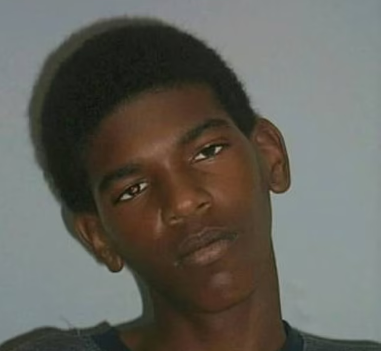
Michael Tirrell James
1,905 words
I recently wrote about the new Speaker of the House, Mike Johnson, and his then-mysterious “adopted black son” whose existence Johnson only ever referenced for entirely cynical reasons. In 2019 he claimed before Congress that he had asked his adopted black son what he thought about slavery reparations and that he was against it. This was the first time he had ever mentioned having a black son, nor does it appear in any of his official biographies.
During the height of the George Floyd riots, Johnson invoked his black son again to virtue-signal his belief in “white privilege.” He said (emphasis mine):
This is the first public hearing we’ve had since the terrible event that occurred in Minneapolis last week and there are some things that I think that anyone objectively observing these events can see and should agree on. The facts show that Mr. George Floyd appears to have been the victim of murder and I personally don’t believe that a close review of the video can lead anyone to any other conclusion. The tragedy has focused the spotlight once again . . . on the deep seeded problems we still have in this country. I think all of us agree that the crisis necessitates authentic reconciliation and transformative solutions for systematic change.
Johnson explained that his refusal to substantiate his child’s existence was out of respect for his son’s privacy.
What you were supposed to think is that Mike Johnson had taken a black boy who was on a bad path under his wing and put the love of Jesus Christ into his heart. Johnson claimed that he paid his adopted son’s way through college and that he is now working a white-collar job and doesn’t want people trying to make a big deal out of him. I thought Johnson was just making this up, or at least greatly exaggerating it; perhaps he let a troubled black teen crash on his couch once, or something.
If Johnson had genuinely wanted to protect his alleged son’s privacy, it would have been smarter not to mention his existence at all, because eventually some intrepid journalist would track him down. Perhaps Johnson wasn’t a big enough fish to be worth the effort before for this, but now that he is Speaker of the House, he surely is.
And indeed, someone did it.
While most of the American media took him at his word, the British newspaper The Daily Mail tracked down Johnson’s alleged “adopted black son,” and I’ll be damned if he doesn’t actually have one: Michael Tirrell James, who is now 40 years old. Although it is also now clear why Johnson was keen to keep his son’s identity private: He is a thug with a rap sheet a mile long.
Drug charges, concealed weapons charges, theft — you name it. When James was 23, he had a restraining order filed against him by his 16-year-old girlfriend. He got in trouble again as recently as this year. Mike Johnson’s Christian parenting apparently did nothing for him. Instead of his existence becoming a political prop that can be used against white racists, his black son is instead confirming White Nationalist narratives.
This was a very satisfying narrative collapse. But an even better one was that of the TV sitcom Diff’rent Strokes, which ran from 1978 until 1986
Diff’rent Strokes was one of Norman Lear’s sitcoms, and it is about a white, middle-aged WASP, Mr. Drummond, who adopts two black kids from Harlem: Arnold (10) and his older brother Wilis (12). They are the children of his former housekeeper, who asked Mr. Drummond on her deathbed to take care of them. The two black kids thus move into their Park Avenue apartment along with Mr. Drummond, his 13-year-old daughter Kimberly, and his maid Edna.
The show was revolutionary. Lear had previously produced controversial shows starring whites such as All in the Family and Maude, as well as edgy shows staring blacks such as The Jeffersons and Good Times. These dealt with the controversies of the day, but Diff’rent Strokes had a half-white and half-black cast. This had never happened before. (Speaking of novelty, after the first season the family’s maid, Edna, left to star in the equally-popular spinoff The Facts of Life which had the patriarchy-punching novelty of having an all-female cast.)
Diff’rent Strokes became a major hit across the country and ran for eight seasons, mainly due to the talent and charisma of 13-year-old Gary Coleman, whose signature line — “Whatchoo talkin’ ‘bout, Willis?” — became one of the most popular catchphrases of the 1980s.
A wide array of celebrities guest-starred on the show throughout its run, including Muhammad Ali and Nancy Reagan, who promoted her anti-drug “Just Say No” campaign. Another signature of the show was its occasional “very special episodes,” where they would deal with some hard-hitting social issue such as the dangers of drugs, child alcoholism, bulimia, or hitchhiking. By far the most famous “special episode” was the two-parter “The Bicycle Man,” which address the issue of child molestation. In it, Gordon Jump of WKRP in Cincinnati fame played a pedophile who owns a bicycle shop and tries to groom Arnold and his friend.
Coleman was born with certain ailments that required him to get kidney transplants, and the medication he had to take stunted his growth. As a consequence, he looked many years younger than he actually was. The writing was strong, as it was in all the Norman Lear productions, and Coleman admittedly had very good comedic timing. But what made his character work was the fact that he looked six years old but was played by an actor with the mind of someone much older. It made it seem as if this random working-class, black elementary school kid from Harlem was some kind of comedic prodigy.
You can buy Greg Johnson’s Toward a New Nationalism here.
Many try to paint the legacy of Diff’rent Strokes as a cautionary tale about the dangers of child stardom. It is certainly that, given that all three of its child stars — Gary Coleman, Todd Bridges (Willis), and Dana Plato (Kimberly) had their money mismanaged by their parents, and then they themselves went berserk after failing to transition into adult roles.
Dana Plato had the most tragic post-series story. She was fired from the show in 1984 after she became pregnant by her future husband, although they divorced before long. In 1989 she tried to kick her child-star image by posing nude for Playboy, but it ended up doing more harm than good. She also became addicted to drugs. Having been conned out of most of her money by an unscrupulous accountant, she tried to rob a video rental shop out of desperation; the clerk famously told the police that he “just got robbed by the girl who played Kimberly on Diff’rent Strokes.” Her prospects sank so low that she ended up doing softcore porn — and not high-production stuff like Red Shoe Diaries, either. She died in 1999 from a drug overdose mere days after an appearance on The Howard Stern Show, where she swore that she was no longer using drugs, to much audience skepticism.
Todd Bridges got hooked on crack, and in 1989 he was arrested for attempted murder after the dealer in the crack house he was living in was shot eight times. He hired Johnny Cochran to defend him and beat the charges, and then went on to become a crack dealer himself. He eventually got clean in the 1990s, and is the only child cast member of the series who is still alive today.
Gary Coleman eventually started showing signs of puberty, and was thus no longer the baby-faced cherub he had become famous as. The producers tried to cope by bringing in a new cute kid. When Coleman turned 18, there was barely $200,000 left in his trust thanks to his parents. At the show’s peak, Coleman had been making $100,000 per episode. Coleman sued his parents for $3.8 million, but only won a measly $1.3 million. He ended filing for bankruptcy multiple times and got in trouble with the law for domestic violence, as well as for assaulting a fan who had asked for his autograph while he was working as a mall security guard. Near the end of his life, Coleman managed a minor comeback when he finally embraced himself as an ironic meme, just as William Shatner did before him. He passed away in 2010 at the age of 42.
While a cautionary tale, Diff’rent Strokes is also a shining example of how the narratives of liberal racial propaganda can collapse spectacularly. The series was pro-integration propaganda whose message was: “If you let blacks into white society, even the ultra-white Manhattan WASP elite, they will fit in just fine if you’d just stop being racist.” Needless to say, not only is this wrong, but adopting not one, but two black boys when you have a white teenage daughter is sheer madness.
A major thing that set Diff’rent Strokes apart from other edgy Norman Lear sitcoms was that it was geared more toward children. The youngest child is the star of the show, and he can outwit the grownups. But it was also fairly political, like any typical Norman Lear show. Every other episode was about some white person being racist to the little cutey-pies. Still, while I don’t always agree with the liberal messages of All in the Family, Good Times, or The Jeffersons, I can still appreciate the craft that went into them. It may be Jewish crap, but it is well-written and -executed crap. But the fact that Diff’rent Strokes was directed at children made it more insidious.
I previously wrote about how my entire school was red-pilled by desegregation bussing, where they took kids out of the inner-city ghettos and enrolled them in the schools of the white suburbs. While it was unpleasant, in hindsight I am grateful for the experience. There were only a few blacks in each class; this wasn’t enough to make the white kids feel unsafe, but one could still study them and notice patterns and behavioral quirks that they all shared.
Bussing red-pilled me on blacks, but Diff’rent Strokes red-pilled me on the media. It was my first real exposure to anti-racist propaganda. Even at a young age, I could see the show’s agenda. It was promoting integration as a positive thing, even as I was experiencing the negatives of forced integration firsthand. I couldn’t help but notice the stark contrast in how different the inner-city blacks portrayed in Diff’rent Strokes were from how they appeared to me every day at school. I then knew my television was trying to sell me a lie.
While the lives of Dana Plato, Gary Coleman, and Todd Bridges may have been tragic, I must confess that it was a weight off my back knowing that Norman Lear did not get away with what he did. The implosion of all the show’s child stars rendered Diff’rent Strokes completely useless as pro-integration propaganda. It destroyed the show’s legacy. One can only talk about Diff’rent Strokes today in terms of what happened to its stars; they can’t call it “stunning” and “brave” as they do with, say, The Jeffersons. Everyone eventually found out that, behind the good writing and production values, blacks such as Gary Coleman and Todd Bridges were not “sweet kids once you get to know them,” but basically what you would expect the average black person to be like.
2 comments
Different Strokes aside, I’d like to hear more about Mike Johnson’s black son. The fact that Johnson is a republican makes it even more hilarious. I wonder if speaker Mike still bails him out when he gets arrested? If not, at what point did he stop?
Could Mike Johnson be hte Ed Buck of the GOP.
Comments are closed.
If you have a Subscriber access,
simply login first to see your comment auto-approved.
Note on comments privacy & moderation
Your email is never published nor shared.
Comments are moderated. If you don't see your comment, please be patient. If approved, it will appear here soon. Do not post your comment a second time.