Counter-Currents
  • Advertise
  • Private Events
  • T&C
  • About
  • Contact
  • RSS
    • Main feed
    • Podcast feed
    • Videos feed
    • Comments feed
  • Welcome
  • Webzine
  • Books
  • Merch
  • Podcasts
  • Videos
  • Donate
  • Patrons
  • Subscribe
  • Crypto

LEVEL2

Donate Now Mailing list

Writers of May

(2 votes) Morris van de Camp David M. Zsutty Derek Stark Jayant Bhandari Greg Johnson

Articles of May

Heidegger on Nietzsche, Part One by Collin Cleary The Lunch Wars by David M. Zsutty 2 votes
  • Welcome
  • Webzine
  • Books
  • Merch
  • Podcasts
  • Videos
  • Donate
  • Patrons
  • Subscribe
  • Crypto
    • Counter-Currents Radio Podcast No. 691
      Rob Rundo Returns

      Counter-Currents Radio

    • The Fragile Polity that is Syria

      Morris van de Camp

    • Nigel Farage Calls Britain a Two-Tier State

      Mark Gullick

      3

    • Nationalism This Week
      Letter to J. D. Vance

      Greg Johnson

      26

    • Lost In Trans-Mission:
      How the Media Fails To Reveal the Inconvenient Truth About the Usual Suspects

      Steven Tucker

      10

    • Liar, Liar, Pants on Fire!

      Beau Albrecht

      7

    • Editor’s Update
      Rob Rundo on Counter-Currents Radio, Fundraiser Update, & a New $20,000 Matching Grant

      Greg Johnson

    • The Bitter End of Western Metaphysics:
      Heidegger on Nietzsche, Part Three

      Collin Cleary

      10

    • Uncivil War

      Mark Gullick

      49

    • Exclusive Interview with Karel Veliky:
      The Final Chapter in the Film Series! Part II

      Ondrej Mann

      2

    • Happy Birthday to Us!

      Greg Johnson

      6

    • Zsutty’s Maximum

      David M. Zsutty

      16

    • Exclusive Interview with Karel Veliky:
      The Final Chapter in the Film Series! Part I

      Ondrej Mann

      2

    • The Union Jackal, June 2026

      Mark Gullick

      23

    • The Inferiority Behind Immigrant Superiority

      Jayant Bhandari

      15

    • Counter-Currents Radio Podcast No. 690
      Greg Johnson & David Zsutty Discuss Current Things: AI, Henry Nowak, the Iran Crisis, & More

      Counter-Currents Radio

      7

    • Collin Cleary: What Rome Means to Me

      Collin Cleary

      4

    • Paul Krugman: Closet Bolshevik

      Spencer J. Quinn

      21

    • Fugue of Ideas:
      Ibram X. Kendi’s Chain of Ideas

      Greg Johnson

      19

    • Based Blacks

      Lipton Matthews

      24

    • Black Intellectual Fatigue

      Derek Stark

      41

    • Why White Advocates Should Avoid “Based Blacks”

      Dani Vypont

      32

    • Nietzsche & Race

      Mark Gullick

    • Editor’s Update
      Rob Rundo Rescheduled to Next Week on Counter-Currents Radio;
      Tonight Greg Johnson & David Zsutty Answer Your Questions;
      Fundraiser Update & a New $20,000 Matching Grant

      Greg Johnson

    • The Counter-Currents 2026 Fundraiser
      Lifetime Subscriber Welcome Packages Extended

      Greg Johnson

    • Nationalism This Week
      Who’s Looking Back?

      Greg Johnson

      29

    • China’s Threat to American Security:
      Food, Farmland, Foreign Control, & Energy Policy

      Lipton Matthews

      5

    • The Bitter End of Western Metaphysics:
      Heidegger on Nietzsche, Part Two

      Collin Cleary

      16

    • The Killing of Henry Nowak

      Mark Gullick

      38

    • The Crisis of Chinese Technology Thieves

      Morris van de Camp

      1

    • The Strange World of Gender Bender Fiction:
      & What This Genre Tells Us About Autosexuality

      Dani Vypont

      3

    • Watching the Watchers:
      The Dark Triad Question

      David M. Zsutty

      14

    • The Remigration Movement Solidifies

      F. Roger Devlin

      2

    • Casting Aspersions:
      The Fatal Consequences of Race-Swapped Casting, From Helen of Troy to Henry of Southampton

      Steven Tucker

      20

    • The Murder of Henry Nowak

      Millennial Woes

      23

    • Don’t Forget to Vote in Our Writer & Article of the Month Poll

      Greg Johnson

    • The Robot Hotdog Stand

      Greg Johnson

      37

    • Laughing Our Way to Victory

      Dave Chambers

      7

    • The Zodiac Killer

      Mark Gullick

      11

    • Jared Taylor: What Rome Means to Me

      Jared Taylor

      1

    • An Interview with Endeavour:
      My Way of Life Is an Adventure!

      Ondrej Mann

      6

    • José Pedro Zúquete’s The Identitarians

      Greg Johnson

      3

    • Editor’s Update
      Fundraiser Update & How to Watch the Remigration Summit

      Greg Johnson

      5

    • The Bitter End of Western Metaphysics:
      Heidegger on Nietzsche, Part One

      Collin Cleary

      12

    • Berlin: City of Stones

      Spencer J. Quinn

      6

    • True Folk-Horror Is Horror of Your Own Folk:
      Mark Gatiss vs the Brexit Blind Dead  

      Steven Tucker

      4

    • Counter-Currents Radio Podcast No. 689
      Thomas Massie, the America 2050 Bust, the Need for Whites to Divest from America, the AI Economic Apocalypse, & Pro-White Project Pitches to Billionaires

      Counter-Currents Radio

      7

    • Nationalism This Week
      Remigration is Inevitable, Part 3

      Greg Johnson

      27

    • Why Billionaires Should Fund White Identity Politics

      Lipton Matthews

      8

    • How Cold War Two Came About

      Morris van de Camp

      5

    • Will Williams

      I was interviewed by the NY Post Friday, mostly about Miss Heidi’s participation with the SPLC. The...

    • Will Williams

      Nigel Farage Calls Britain a Two-Tier State

      Farage may turn out to be the latest in a line of snake-oil salesmen posing as saviors…---He’s...

    • Joe Gould

      Nationalism This Week
      Letter to J. D. Vance

      "If Trump does not go quietly, Vance can withhold his pardon and let the dogs in Congress tear Trump...

    • Peter Quint

      Nationalism This Week
      Letter to J. D. Vance

      I can’t tell from this far off. I wouldn’t put it pass him; it is pretty common these days. 🙃

    • Adrian Roberts

      Nationalism This Week
      Letter to J. D. Vance

      Does he wear eye-liner?

    • Doug Harrison

      Nationalism This Week
      Letter to J. D. Vance

      So it's a good career move for the cabinet secretaries to save the country from a deranged chief...

    • Greg Johnson

      Nationalism This Week
      Letter to J. D. Vance

      I am pretty sure that everyone in the cabinet wants a political career or just to enjoy his life in...

    • Adrian Roberts

      Nigel Farage Calls Britain a Two-Tier State

      ‘Unelected PM’. This is a silly term, first used by David Cameron to taunt Gordon Brown after he...

    • Greg Johnson

      Nationalism This Week
      Letter to J. D. Vance

      He "stood up" to the neocons because Iran had the ability to completely wreck the Gulf and the...

    • Doug Harrison

      Nationalism This Week
      Letter to J. D. Vance

      Yes, the pardon would be Vance's defensive weapon. Who would Vance trust to confide in regarding the...

    • Lexi

      Nationalism This Week
      Letter to J. D. Vance

      Yes, I think a brief Democratic Congressional majority is now baked in.  There will not be a...

    • Judas

      Nationalism This Week
      Letter to J. D. Vance

      I'm not sure if Trump is a Svengali or more of a Pied Piper and I don't really know who may be...

    • Will Williams

      Uncivil War

      Paudi McCreevey: June 16, 2026  White Nationalism and Christianity are compatible.---No, they...

    • Peter Quint

      Nigel Farage Calls Britain a Two-Tier State

      This carefully crafted animus is reaching critical levels in the US after the conviction and...

    • Will Williams

      Uncivil War

      Peter Quint: June 12, 2026  There are many reports of Catholics and Protestants sitting down...

    • JaymunD

      Lost In Trans-Mission:
      How the Media Fails To Reveal the Inconvenient Truth About the Usual Suspects

      The same goes for the "race is a social construct" creed.  Pretty soon my Money Market Fund will be...

    • Paudi McCreevey

      Uncivil War

      I know. It's sad. They preach Woke and not the Scriptures. Dark times.

    • Greg Johnson

      Uncivil War

      Preach it in the churches.

    • Greg Johnson

      Nationalism This Week
      Letter to J. D. Vance

      It isn't like Leftism will start working magically. And it isn't like they will learn to moderate...

    • Paudi McCreevey

      Uncivil War

      White Nationalism and Christianity are compatible. You may be plrasantly surprisedto to read the...

    • Earth Day Special

      John Morgan

      12

    • A Robertson Roundup
      Remembering Wilmot Robertson
      (April 16, 1915 – July 8, 2005)

      Margot Metroland

      13

    • The Paranoid Style in White Nationalism

      Greg Johnson

      30

    • Join the Dance!

      Andrew Hamilton

      1

    • We Can’t Save the Earth Without Reducing African Birth Rates

      James Dunphy

      36

    • “I’m Not a Conspiracy Theorist, but . . .”:
      Jeffrey Epstein’s Death Gives New Life to “Conspiracy Theories”

      Greg Johnson

      22

    • Sylvia Plath: Stasis in Darkness

      Vic Olvir

      17

    • Vanguardism, Vantardism, & Mainstreaming

      Greg Johnson

      80

    • Aviation, Geography, & Race

      Charles Lindbergh

      3

    • Some Thoughts on Yule

      Collin Cleary

      4

    • Living in Truth:
      A Yuletide Homily

      Jef Costello

      7

    • John Kennedy Toole’s A Confederacy of Dunces

      Greg Johnson

      20

    • On Aleksandr Solzhenitsyn’s Warning to the West

      Spencer J. Quinn

      7

    • Elitism, British Modernism, & Wyndham Lewis

      Jonathan Bowden

      6

    • Philip K. Dick’s Do Androids Dream of Electric Sheep? as Anti-Semitic/Christian-Gnostic Allegory

      Greg Johnson

      20

    • “Conspiracy Theory” or Conspiracy?

      Andrew Hamilton

      21

    • Remembering H. P. Lovecraft
      (August 20, 1890–March 15, 1937)

      Greg Johnson

      3

    • Who Are We?
      Nordics, Aryans, & Whites

      Greg Johnson

      71

    • Remembering William Gayley Simpson
      (July 23, 1892–December 31, 1990)
      A Pleasant Afternoon with Harriet & Bill Simpson

      Margot Metroland

      18

    • Here are the Young Men
      Remembering Ian Curtis
      (July 15, 1956–May 18, 1980)

      Mark Gullick

      18

    • Percy Grainger
      Artist of the Right

      Alex Graham

      7

    • Remembering Revilo Oliver
      (July 7, 1908–August 20, 1994)

      Greg Johnson

      18

    • The Meaning of July 4th for the White Man

      Gregory Hood

      13

    • The Front National’s Evolution

      Bruno Mégret

    • Merwin K. Hart
      Forgotten American Hero & Man of the Right

      Morris van de Camp

      10

    • George Orwell’s Nineteen Eighty-Four

      Jonathan Bowden

      8

    • Carleton S. Coon
      Scientist & Reluctant White Advocate

      Morris van de Camp

      3

    • The Kwanzaa Absurdity Will Be Dwarfed by Juneteenth

      Robert Hampton

      10

    • Stravinsky

      Alex Graham

      7

    • Like the Roman:
      Remembering Enoch Powell (1912-1998)

      Mark Gullick

      23

    • The 1970s: The Golden Age of Hijacking

      Morris van de Camp

      21

    • Jonathan Bowden’s Deliverance
      Part 6

      Jonathan Bowden

    • Do You Want to Play a Game?

      Mark Gullick

      1

    • Sexually Incontinent on the Indian Subcontinent:
      Who Rapes More Animals, Indians or Pakistanis? The Battle Continues!

      Steven Tucker

      3

    • Neo-Fascism in Film
      Part 5

      Karel Veliky

      15

    • The Game of Tarot

      Mark Gullick

      2

    • Institutions Cannot Be Transplanted

      Jayant Bhandari

      5

    • Jonathan Bowden’s Deliverance
      Part 5

      Jonathan Bowden

    • Crosstown Traffic:
      Jimi Hendrix & The Post-War Rock ‘N’ Roll Revolution

      Mark Gullick

      1

    • Slaves from the North:
      Finns & Karelians in the East European Slave Trade, 900–1600

      Lipton Matthews

      14

    • Neo-Fascism in Film
      Part 4

      Karel Veliky

      2

    • David Lean’s A Passage to India

      Spencer J. Quinn

      1

    • Elites are Essential to Development

      Lipton Matthews

      7

    • Jonathan Bowden’s Deliverance
      Part 4

      Jonathan Bowden

    • Neo-Fascism in Film
      Part 3

      Karel Veliky

      6

    • E. M. Forster’s A Passage to India & the Indian Mentality

      Spencer J. Quinn

      25

    • Jonathan Bowden’s Deliverance
      Part 3

      Jonathan Bowden

    • The Rest Is Silence
      Heidegger’s Quietism

      Mark Gullick

      2

    • Dispelling the Historical Fallacy of Indian Nationalism

      Lipton Matthews

      8

    • Neo-Fascism in Film
      Part 2

      Karel Veliky

      8

    • Jonathan Bowden’s Deliverance
      Part 2

      Jonathan Bowden

    • Life of a Klansman

      Mark Gullick

      8

    • Jonathan Bowden’s Deliverance, Part 1

      Jonathan Bowden

    • Decolonial Ideas are Holding Back Developing Countries

      Lipton Matthews

      8

    • Neo-fascism in Film, Part 1

      Karel Veliky

      21

    • Jonathan Bowden’s Onslaught, Part 8
      Divigations on Decadence

      Jonathan Bowden

    • Jonathan Bowden’s Onslaught, Part 7
      Intrigues in the National Front

      Jonathan Bowden

      1

    • Rotten to the Core

      Mark Gullick

      8

    • Strauss on Husserl’s “Philosophy as Rigorous Science”

      Greg Johnson

    • Jonathan Bowden’s Onslaught, Part 6
      Francis Bacon & Right-Wing Nihilism

      Jonathan Bowden

    • András László
    • Derek Hawthorne
    • Beau Albrecht
    • Alain de Benoist
    • Kerry Bolton
    • Jonathan Bowden
    • Collin Cleary
    • Jef Costello
    • Savitri Devi
    • Julius Evola
    • Jim Goad
    • Gregory Hood
    • Juleigh Howard-Hobson
    • Greg Johnson
    • Charles Krafft
    • Anthony M. Ludovici
    • Trevor Lynch
    • H. L. Mencken
    • J. A. Nicholl
    • James J. O’Meara
    • Christopher Pankhurst
    • Tito Perdue
    • Michael Polignano
    • Spencer J. Quinn
    • Fenek Solère
    • Irmin Vinson
    • Leo Yankevich
    • Francis Parker Yockey
    • Multiple authors
  • Editor-in-Chief

    • Greg Johnson, Ph.D.

    Featured Writers

    • Beau Albrecht
    • Gunnar Alfredsson
    • Collin Cleary, Ph.D.
    • Jef Costello
    • Morris V. de Camp
    • F. Roger Devlin, Ph.D.
    • Stephen Paul Foster, Ph.D.
    • Jim Goad
    • Alex Graham
    • Mark Gullick, Ph.D.
    • Greg Johnson, Ph.D.
    • Travis LeBlanc
    • Trevor Lynch
    • Margot Metroland
    • James J. O’Meara
    • Angelo Plume
    • Spencer J. Quinn
    • Fred Reed
    • Clarissa Schnabel
    • Michael Walker
    • David M. Zsutty

    Frequent Writers

    • Asier Abadroa
    • Aquilonius
    • Alain de Benoist
    • Kerry Bolton, Ph.D.
    • Dave Chambers
    • Steven Clark
    • James Dunphy
    • Endeavour
    • Richard Houck
    • Jason Kessler
    • Titus Livius
    • Ondrej Mann
    • Lipton Matthews
    • Mark Mazari
    • John Morgan
    • Jaroslav Ostrogniew
    • Kathryn S.
    • Christian Secor
    • Anne Wilson Smith
    • Thomas Steuben
    • William De Vere
    • Kenneth Vinther
    • Max West

    Classic Authors

    • Maurice Bardèche
    • Jonathan Bowden
    • Julius Evola
    • Guillaume Faye
    • Ernst Jünger
    • Kevin MacDonald, Ph.D.
    • D. H. Lawrence
    • Charles Lindbergh
    • Jack London
    • H. P. Lovecraft
    • Anthony M. Ludovici
    • Sir Oswald Mosley
    • National Vanguard
    • Friedrich Nietzsche
    • Revilo Oliver
    • William Pierce
    • Ezra Pound
    • Saint-Loup
    • Savitri Devi
    • Carl Schmitt
    • Miguel Serrano
    • Oswald Spengler
    • P. R. Stephensen
    • Jean Thiriart
    • John Tyndall
    • Dominique Venner
    • Leo Yankevich
    • Francis Parker Yockey

    Other Authors

    • Howe Abbott-Hiss
    • Michael Bell
    • Giles Corey
    • Jack Donovan
    • Richardo Duchesne, Ph.D.
    • Emile Durand
    • Guillaume Durocher
    • Mark Dyal
    • Tom Goodroch
    • Andrew Hamilton
    • Robert Hampton
    • Huntley Haverstock
    • Derek Hawthorne
    • Gregory Hood
    • Juleigh Howard-Hobson
    • Alexander Jacob
    • Ruuben Kaalep
    • Tobias Langdon
    • Julian Langness
    • Patrick Le Brun
    • G A Malvicini
    • John Michael McCloughlin
    • Millennial Woes
    • Michael O’Meara
    • Christopher Pankhurst
    • Michael Polignano
    • J. J. Przybylski
    • Quintilian
    • Edouard Rix
    • C. B. Robertson
    • C. F. Robinson
    • Herve Ryssen
    • Alan Smithee
    • Fenek Solere
    • Ann Sterzinger
    • Robert Steuckers
    • Tomislav Sunic
    • Donald Thoresen
    • Marian Van Court
    • Irmin Vinson
    • Book Reviews
    • Movie Reviews
    • TV Reviews
    • Music Reviews
    • Art Criticism
    • Graphic Novels & Comics
    • Video Game Reviews
    • Fiction
    • Poems
    • Interviews
    • Videos
    • English Translations
    • Other Languages
      • Arabic
      • Bulgarian
      • Croatian
      • Czech
      • Danish
      • Dutch
      • Estonian
      • Finnish
      • French
      • German
      • Greek
      • Hungarian
      • Italian
      • Lithuanian
      • Norwegian
      • Polish
      • Portuguese
      • Romanian
      • Russian
      • Slovak
      • Spanish
      • Swedish
      • Ukrainian
    • Commemorations
    • Why We Write
  • Archives
  • Top 100 Commenters
  • The Looney Bin
  • Advertise
  • Private Events
  • T&C
  • About
  • Contact
  • RSS
    • Main feed
    • Podcast feed
    • Videos feed
    • Comments feed
Sponsored Links
Europa.com Above Time Coffee Antelope Hill Publishing Paul Waggener IHR-Store Spencer J. Quinn American Renaissance Jim Goad The Occidental Observer
Print February 25, 2026 1 comment

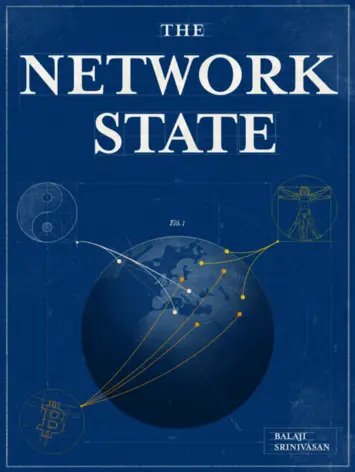
Balaji Srinivasan’s The Network State

Jane American

3,104 words

Balaji Srinivasan
The Network State
Self-Published, 2022

M.L. Cavanaugh, professional military strategist, defines strategy as “…the purposeful orientation toward success in a complex, competitive conflict.” Regardless of the situation at hand, whether Clausewitz’s “politics by other means” or just plain politics, strategic actions ought to be intelligently and systematically designed to gain control of the contested environment. In this respect, the Right’s current strategic posture can only be described as wanting. While Old Right party politics are demonstrably unsuitable for the demands of the postwar political environment, many still cling to outmoded tactics and symbols with a desperate hope, alienating healthy people and playing directly into the hands of the enemy. New Right metapolitics is a winning strategy on the cultural front, but it takes time to make the gains needed to secure material victories—time we may not have in the face of a problem like civilizational extinction. Some, under the pretext of realizing this, make the foolish mistake of using violence in an attempt to “do something,” only managing to tarnish their cause and needlessly destroy lives—not least their own—in the process.

We can and must do better, and people are waking up. Recent advances in institutional metapolitics, such as the resilience of Eric Orwoll and Peter Csere’s Private Membership Association Return to The Land (RTTL) in the face of lawfare, are cause for praise and further strategic development. The novelty of a project like RTTL lies not primarily in its legal framework for achieving its aims, but in the fact that its physical settlements were born out of a digitally native network. Parallel societies, and even new states emerging from such, are nothing new, but harnessing the disruptive power of the internet and allied technologies to promote the collective interests of white people and build resilient institutions will prove vitally important in a world where obsolete power structures are crumbling and, as the Chinese are fond of saying, “the backwards will be beaten.”

This is the conclusion I reached after finishing Balaji Srinivasan’s manifesto The Network State. At 262 pages of quasi-technical writing on pet theories of history as physics, impending robot war, and a tripolar power split between the New York Times, the Chinese Communist Party, and Bitcoin, it was an interesting but often frustrating read. Srinivasan’s grandiose predictions didn’t seem wrong, exactly, but were at once overly ambitious and reductive, all but eclipsing the question that drew me to the book in the first place: What is the network state, and how does one build it?

These questions were answered most clearly in chapters one “Quickstart” and five “From Nation States to Network States.” In the former, definitions of the network state were presented in the forms of one sentence, one image, 1,000 words, and one essay. To quote the most succinct, “A network state is a highly aligned online community with a capacity for collective action that crowdfunds territory around the world and eventually gains diplomatic recognition from pre-existing states.”

Does this remind you of anything? Deleting the word “online” and replacing “around” with “across” yields a concise retelling of the birth of the Israeli state. Indeed, as is plainly stated in chapter five, “[Theodore] Herzl’s work [The Jewish State] is a major inspiration for this book.” This is also a good time to address the Indian elephant in the room: Srinivasan is a Tamil Brahmin, of the same stock as Vivek Ramaswamy and Kamala Harris, and of similar stock to Usha Vance, a Telugu Brahmin. Just five years older than Ramaswamy, he graduated from Stanford and got a similar, more successful start to his career, helping to found a biotechnology company that produced an affordable genetic counseling test (acquired by Myriad for $375 million) before moving on to cryptocurrency.

Srinivasan is similarly transparent about his place in an emerging diasporic elite, declaring himself “…moderately bullish on India, but extremely bullish on Indians.” While the influence of Israelis on American politics may be (and that’s a big maybe) waning, the Tam-Brahms and gang are just getting started. The reader may wonder why White Nationalists should even consider taking a page out of the playbook of ethnic diasporas while those outsiders act like they’re now in charge of our countries. It’s a fair question, and one that I will return to later in this essay. But for now, suffice it to say that our survival is at stake, and this strategy has clearly proven successful for other groups in a similar position.

In chapter five, Srinivasan lays the theoretical groundwork for his project, explaining what exactly modern countries are in order to promote their digital successor. His precise discussion of the nature of the modern nation state in the chapter’s first section may seem tired to the seasoned ethnopluralist, but will act as an excellent primer to those unfamiliar with the nation/state distinction. The next section, “On Network States” is the most valuable part of the book. Another, longer one-sentence definition of the network state from chapter one is reiterated:

A network state is a social network with a moral innovation, a sense of national consciousness, a recognized founder, a capacity for collective action, an in-person level of civility, an integrated cryptocurrency, a consensual government limited by a social smart contract, an archipelago of crowdfunded physical territories, a virtual capital, and an on-chain census that proves a large enough population, income, and real estate footprint to attain a measure of diplomatic recognition.

In this section, Srinivasan expands upon each clause of this longer definition in detail and depicts intermediate steps on the way to “the final form of a diplomatically recognized network state,” which are the startup society, the network union, and the network archipelago. The first is the political version of a startup company: “A startup society is a new community built internet-first, usually for the purpose of solving a specific social problem in an opt-in way. The implication is that this society is still pretty small in population.” The network union is “[a] wholly digital entity, organized in a social tree structure, that engages in collective action on behalf of its members.”
You can buy Greg Johnson’s The White Nationalist Manifesto here

The most applicable example of a network union offered in the book is chapter two’s “Cancel-Proof Society,” a hypothetical “combination of a guild and cancellation insurance” where “…99% of the time this startup society is just doing ‘peacetime’ activities, like helping people find jobs…or just hanging out at meetups”, but “…1% of the time someone in the guild is under social attack…the guild can choose to publicly respond as one or…can quietly support the affected party with a new job after the uproar has died down.” We already see something analogous happening with grassroots efforts to help Shiloh Hendrix and Crystal Wilsey on Give Send Go, but such efforts are reactive: intentionally creating an organization to protect our people before they run into trouble will not only help to lessen the sting of cowardly tactics like doxing, but may also attract newcomers looking for protection and willing to contribute their time, energy, and money to build a robust group.

A network archipelago is “[a] network union that begins acquiring and networking properties in the physical world. The physical interaction is key for building trust.” RTTL is an ideal example, since they need a physical presence and a community-focused culture to accomplish their mission. Finally, a fully formed network state is “[a] network archipelago that gains diplomatic recognition from at least one legacy state. The diplomatic recognition is key for attaining sovereignty.” This is the ethnostate everyone keeps talking about—or at least one way to get there.

A few clauses of this definition are worth expanding upon here. The first is the idea of a moral innovation and the closely related concept of a one commandment. In the final section of chapter two “History As Trajectory,” Srinivasan writes “Every new startup society needs to have a moral premise at its core…it’s a huge endeavor to go and build an entire moral edifice on par with a religion, and work out all the practical details..[b]ut we do think you can come up with one commandment…[j]ust one specific issue where the history and science has convinced you that the establishment is wanting.” What is a suitable one commandment for an upstart New Right network state? It might be something like, in the language reminiscent of the pre-X Grok meme in which Srinivasan suggests formulating one commandments for the sake of punchy simplicity, “white flourishing good.” We can at least all agree on that despite our worthy disagreements about the centrality or irrelevance of religion to our cause, the civilizational significance of a certain geopolitical conflict, and eclectic philosophical movements.

Two clauses ought to be read with a critical eye: “a recognized founder” and “a capacity for collective action.” While a clear and centralized leadership structure may offer advantages for decision-making and group unity given truly competent and selfless leaders, we are historically more likely to get a Richard Spencer than an Eric Orwoll if we stress this point. Besides the risk of attracting toxic and defective people, a key disadvantage of a centralized, hierarchical leadership structure is that it creates high-value targets for the media and other adversaries to attack, as unfortunately happened to Mr. Orwoll. A cancel-proof network union, for example, might be able to operate with greater impunity were it comprised of many low value targets and lacked public leadership figures, although this would of course pose its own challenges.

As far as collective action goes, Srinivasan’s cheekily named public displays of alignment, which he sees as vital for displaying group unity and strength to outsiders, include things like “…orchestras, parades, the good kind of flash mobs, basketball games, and the types of gymnastic enterprises common to college football halftime shows wherein cheerleaders form tall human pyramids that require complete trust in the people at the base.” This is all sounding delightfully Riefenstahlesqe, at least to my ear—do I contradict myself in agreeing with Srinivasan that such Old Right style demonstrations are a good idea, even for the New Right? I don’t think so, but I do have a few caveats to share.

First, most New Right groups are not yet strong or established enough to where demonstrations of strength make much sense. We should focus on cultivating resilience and unity of purpose before we even think about bragging about these traits, especially to skeptical or hostile outsiders. Second, being optical doesn’t mean optics cucking. It means creating things so beautiful and good that only truly evil people would oppose them, without also intentionally burdening ourselves with unpopular branding—in a word, being wholesome. I believe that this can and should include, when the time is right, things that will readily be accused as being too reminiscent of Old Right movements when explicitly carried out by New Right groups, such as hiking trips with guitar songs, mass calisthenics and group workouts, community gardening, trash and graffiti cleanup events, cultural and artistic performances, and so on.

When the media inevitably smears those engaging in such positive actions as “racists” and “Nazis,” the appropriate response will not be to deny or apologize, but, in the immortal words of Johnathan Bowden, to “step over it!” Wholesome optics will attract people to our cause, and the media’s reflexively negative response to them will highlight the irrational hatred inherent in mainstream propaganda. Greater and greater success and displays of such will eventually convince at least some late adopters that we’re onto something—and we won’t need the rest anyways. However, firm organizational foundations and the ability to protect group members against well-equipped adversaries are required before attempting such public displays of alignment will be productive.

In the final clauses of this definition, we at last encounter the technologies that, in Srinivasan’s mind, will make all this possible. Recall that a fully realized network state will have “an integrated cryptocurrency…and an on-chain census that proves a large enough population, income, and real estate footprint to attain a measure of diplomatic recognition.” Like many cryptocurrency advocates, Srinivasan overlooks the primary function of money as a means of exchange in favor of promoting a feature of cryptocurrencies that is not exclusive to them: blockchain technology. According to Investopedia, “A blockchain is a distributed database or ledger shared across a computer network’s nodes. While it is best known for its crucial role in cryptocurrency systems, maintaining a secure and decentralized record of transactions, blockchains are not limited to cryptocurrency uses.”

Srinivasan’s vision is for an integrated cryptocurrency to serve as the “digital backbone of the network state. It manages the internal digital assets, the smart contracts, the web3 citizen logins, the birth and marriage certificates, the property registries, the public national statistics, and essentially every other bureaucratic process that a nation state manages via pieces of paper.” However, using blockchain in this manner does not necessarily require integration with cryptocurrency, and could itself pose significant security challenges to overcome.

While cryptographic encryption may be well-nigh impossible to break, breaking bones to get private keys is easy, despite Srinivasan’s assurances that “rubber hoses don’t scale.” This is not a trivial matter when all that stands between your startup society’s conveniently intertwined economy and digital historiography and the full force of an embarrassed legacy state are the individuals holding these private keys, even if they are somewhat difficult to identify at first. On the other hand, if antifa and other nonstate actors rather than state governments comprise the primary threat to a given group, cryptographic encryption would admittedly be a massive improvement in security, and there are presumably ways to mitigate the risks posed even by well-resourced and determined state actors.

For example, to avoid the seizure of assets in the form of cash and widely-adopted cryptocurrencies, it might be helpful to create a spendcoin, either integrated with or distinct from blockchain-based community records, if we choose to use them at all—a non-inflationary, user-friendly form of money that is used (if possible, exclusively) among members of a given startup society as an alternative to state currencies rather than a speculative asset for purchasing outside fiat currencies such as the U.S. Dollar. A spendcoin could still of course be seized or have its use criminalized by one method or another, but it would still be a much less attractive target for seizure than other currencies. The success of the new economy would serve as proof of concept for the network state’s ideas, and the resulting social and political ties would bind the new society together while attracting newcomers. Srinivasan’s intention for promoting the integration of crypto with network state records, which has real advantages for ease of record-keeping and warding off memory-holing, is probably entirely innocent, but I find his preference for a theory of technological truth as driving force of history rather than that of power to be incomplete (though not strictly incorrect).

Even a small startup society has the significant potential to be perceived as a threat to a legacy state’s sovereignty, particularly if it represents the interests of those who define themselves primarily (even if implicitly) in terms of ethnicity rather than nationality. Considering this, conflict between network states and legacy states (on a continuum from deplatforming to lawfare to deadly federal raids) seems inevitable and must be guarded against, but probably not via military means—see Ruby Ridge and Waco. Srinivasan suggests contracting with existing military powers for security, but I find this solution unrealistic for groups like ours who must contend with significant opposition from well-armed legacy states. He also hints at creating robot armies elsewhere in the book, which might not be totally ridiculous given the current state of drone technology, but again, the phrase “poking the bear” comes to mind.

To his credit, Srinivasan at least admits that “…answering these kinds of questions [about defense] presents an embedded Catch-22. Either someone thinking about starting new countries must want to create a powerful new military (dangerous!) or else they don’t have any guns and will get crushed by those that do (dangerously naive)…but for a fundamentally digital entity with physical decentralization around the world, the primary mode will be nonviolent digital defense through secrecy, pseudonymity, decentralization, and encryption.” I don’t have any better physical domain defense solutions than he does at the moment, but I do know that taking measures to comply with the letter of the law to the fullest extent possible and litigating in favor of the freedom of association where the operation of the law runs in direct contravention to that principle is the best way forward we have right now. This strategy probably won’t stop the lawfare machine from attempting to destroy us, but it will at least give us a fighting chance in contexts where certain rhetorically indispensable rights are still respected on paper.

All this risk-adverse talk of secrecy and avoiding the wrath of the state from both myself and Srinivasan brings us back to the nagging question from earlier in the paper: why on earth should we start acting like cryptic diasporas in our own countries? If we succeed in creating our own successful institutions rather than solely embarking on agonizingly long marches through mainstream ones, this may be a moot question. We can make secrecy less attractive than openness by decreasing the social and security risks of public White Nationalism through the creation of functional organizations that offer a financial and employment safety net, a positive real-world social atmosphere, and wholesome optics. In the meantime, we must also remember that the mainstream definition of “acceptable behavior” (which for whites currently means aiding in or at least not meaningfully interfering with our dispossession, and for non-whites used to mean adhering to white norms) changes depending on who is in power—this is what is meant by the phrase “nice until we’re not.” So long as we are intentional about preserving the best aspects of white culture in the face of necessary adaptations to change, we need not fear a fundamental break from the honor and forthrightness that lie at its root.

Srinivasan suggests that we “…think of this work as a toolbox, not a manifesto…there’s enough flexibility in the idea of the network state that you can customize it and make it your own.” For all the book’s flaws, the strategy outlined therein could drastically change the game for White Nationalism. I particularly urge readers with expertise in the areas of cryptocurrency, law, economics and finance, cybersecurity, and defense technology to read chapters one and five, get to the drawing board, and correct any mistaken notions you see in this article and in the book.

Balaji Srinivasan’s The Network State

Balaji%20Srinivasan%E2%80%99s%20The%20Network%20State%0A

Share

  • Gab

Enjoyed this article?

Be the first to leave a tip in the jar!

Instant Echeck GreenPay™

Related

  • Who’s Looking Back?

  • Laughing Our Way to Victory

  • Lewis Strauss Did Nothing Wrong:

  • Dialogue with a “Realist”

  • Politics, Metapolitics, and Hegemony

  • 500 Years of British Art, Part 2

  • Preparing for a Future After Trump

  • A Few Thoughts from The Eternal City

Tags

Balaji SrinivasanblockchaincryptocurrencyEric OrwollfuturismJane AmericanlawfaremetapoliticsNew RightOld RightReturn to the Landsocial networkssovereigntytechnology

Previous

« Can Rupert Lowe Restore Britain?

Next

» Bernie Goetz, the Marginal Character who Moved the Center

1 comment

  1. Joe Gould says:
    February 27, 2026 at 6:48 am

    This is all good thinking. I strongly agree about the desirability of presenting a multitude of medium value and moderately defended targets capable of working in harmony rather than a single “recognized leader” who would be easy to concentrate on, isolate, and destroy.

    In any case we can only gain by continuing to read and think about new kinds 0f state-like structures that might serve the vital interests of White people. There is not a single pro-White state in the world, so the old kind of thinking about states has failed us and we need to think fresh, constructive thoughts.

    1
    1
    • Todd Wayne

Comments are closed.

If you have a Subscriber access,
simply login first to see your comment auto-approved.

Note on comments privacy & moderation

Your email is never published nor shared.

Comments are moderated. If you don't see your comment, please be patient. If approved, it will appear here soon. Do not post your comment a second time.

Writers of May

(2 votes) Morris van de Camp David M. Zsutty Derek Stark Jayant Bhandari Greg Johnson

Articles of May

Heidegger on Nietzsche, Part One by Collin Cleary The Lunch Wars by David M. Zsutty 2 votes
    • Counter-Currents Radio Podcast No. 691
      Rob Rundo Returns

      Counter-Currents Radio

    • The Fragile Polity that is Syria

      Morris van de Camp

    • Nigel Farage Calls Britain a Two-Tier State

      Mark Gullick

      3

    • Nationalism This Week
      Letter to J. D. Vance

      Greg Johnson

      26

    • Lost In Trans-Mission:
      How the Media Fails To Reveal the Inconvenient Truth About the Usual Suspects

      Steven Tucker

      10

    • Liar, Liar, Pants on Fire!

      Beau Albrecht

      7

    • Editor’s Update
      Rob Rundo on Counter-Currents Radio, Fundraiser Update, & a New $20,000 Matching Grant

      Greg Johnson

    • The Bitter End of Western Metaphysics:
      Heidegger on Nietzsche, Part Three

      Collin Cleary

      10

    • Uncivil War

      Mark Gullick

      49

    • Exclusive Interview with Karel Veliky:
      The Final Chapter in the Film Series! Part II

      Ondrej Mann

      2

    • Happy Birthday to Us!

      Greg Johnson

      6

    • Zsutty’s Maximum

      David M. Zsutty

      16

    • Exclusive Interview with Karel Veliky:
      The Final Chapter in the Film Series! Part I

      Ondrej Mann

      2

    • The Union Jackal, June 2026

      Mark Gullick

      23

    • The Inferiority Behind Immigrant Superiority

      Jayant Bhandari

      15

    • Counter-Currents Radio Podcast No. 690
      Greg Johnson & David Zsutty Discuss Current Things: AI, Henry Nowak, the Iran Crisis, & More

      Counter-Currents Radio

      7

    • Collin Cleary: What Rome Means to Me

      Collin Cleary

      4

    • Paul Krugman: Closet Bolshevik

      Spencer J. Quinn

      21

    • Fugue of Ideas:
      Ibram X. Kendi’s Chain of Ideas

      Greg Johnson

      19

    • Based Blacks

      Lipton Matthews

      24

    • Black Intellectual Fatigue

      Derek Stark

      41

    • Why White Advocates Should Avoid “Based Blacks”

      Dani Vypont

      32

    • Nietzsche & Race

      Mark Gullick

    • Editor’s Update
      Rob Rundo Rescheduled to Next Week on Counter-Currents Radio;
      Tonight Greg Johnson & David Zsutty Answer Your Questions;
      Fundraiser Update & a New $20,000 Matching Grant

      Greg Johnson

    • The Counter-Currents 2026 Fundraiser
      Lifetime Subscriber Welcome Packages Extended

      Greg Johnson

    • Nationalism This Week
      Who’s Looking Back?

      Greg Johnson

      29

    • China’s Threat to American Security:
      Food, Farmland, Foreign Control, & Energy Policy

      Lipton Matthews

      5

    • The Bitter End of Western Metaphysics:
      Heidegger on Nietzsche, Part Two

      Collin Cleary

      16

    • The Killing of Henry Nowak

      Mark Gullick

      38

    • The Crisis of Chinese Technology Thieves

      Morris van de Camp

      1

    • The Strange World of Gender Bender Fiction:
      & What This Genre Tells Us About Autosexuality

      Dani Vypont

      3

    • Watching the Watchers:
      The Dark Triad Question

      David M. Zsutty

      14

    • The Remigration Movement Solidifies

      F. Roger Devlin

      2

    • Casting Aspersions:
      The Fatal Consequences of Race-Swapped Casting, From Helen of Troy to Henry of Southampton

      Steven Tucker

      20

    • The Murder of Henry Nowak

      Millennial Woes

      23

    • Don’t Forget to Vote in Our Writer & Article of the Month Poll

      Greg Johnson

    • The Robot Hotdog Stand

      Greg Johnson

      37

    • Laughing Our Way to Victory

      Dave Chambers

      7

    • The Zodiac Killer

      Mark Gullick

      11

    • Jared Taylor: What Rome Means to Me

      Jared Taylor

      1

    • An Interview with Endeavour:
      My Way of Life Is an Adventure!

      Ondrej Mann

      6

    • José Pedro Zúquete’s The Identitarians

      Greg Johnson

      3

    • Editor’s Update
      Fundraiser Update & How to Watch the Remigration Summit

      Greg Johnson

      5

    • The Bitter End of Western Metaphysics:
      Heidegger on Nietzsche, Part One

      Collin Cleary

      12

    • Berlin: City of Stones

      Spencer J. Quinn

      6

    • True Folk-Horror Is Horror of Your Own Folk:
      Mark Gatiss vs the Brexit Blind Dead  

      Steven Tucker

      4

    • Counter-Currents Radio Podcast No. 689
      Thomas Massie, the America 2050 Bust, the Need for Whites to Divest from America, the AI Economic Apocalypse, & Pro-White Project Pitches to Billionaires

      Counter-Currents Radio

      7

    • Nationalism This Week
      Remigration is Inevitable, Part 3

      Greg Johnson

      27

    • Why Billionaires Should Fund White Identity Politics

      Lipton Matthews

      8

    • How Cold War Two Came About

      Morris van de Camp

      5

    • Will Williams

      I was interviewed by the NY Post Friday, mostly about Miss Heidi’s participation with the SPLC. The...

    • Will Williams

      Nigel Farage Calls Britain a Two-Tier State

      Farage may turn out to be the latest in a line of snake-oil salesmen posing as saviors…---He’s...

    • Joe Gould

      Nationalism This Week
      Letter to J. D. Vance

      "If Trump does not go quietly, Vance can withhold his pardon and let the dogs in Congress tear Trump...

    • Peter Quint

      Nationalism This Week
      Letter to J. D. Vance

      I can’t tell from this far off. I wouldn’t put it pass him; it is pretty common these days. 🙃

    • Adrian Roberts

      Nationalism This Week
      Letter to J. D. Vance

      Does he wear eye-liner?

    • Doug Harrison

      Nationalism This Week
      Letter to J. D. Vance

      So it's a good career move for the cabinet secretaries to save the country from a deranged chief...

    • Greg Johnson

      Nationalism This Week
      Letter to J. D. Vance

      I am pretty sure that everyone in the cabinet wants a political career or just to enjoy his life in...

    • Adrian Roberts

      Nigel Farage Calls Britain a Two-Tier State

      ‘Unelected PM’. This is a silly term, first used by David Cameron to taunt Gordon Brown after he...

    • Greg Johnson

      Nationalism This Week
      Letter to J. D. Vance

      He "stood up" to the neocons because Iran had the ability to completely wreck the Gulf and the...

    • Doug Harrison

      Nationalism This Week
      Letter to J. D. Vance

      Yes, the pardon would be Vance's defensive weapon. Who would Vance trust to confide in regarding the...

    • Lexi

      Nationalism This Week
      Letter to J. D. Vance

      Yes, I think a brief Democratic Congressional majority is now baked in.  There will not be a...

    • Judas

      Nationalism This Week
      Letter to J. D. Vance

      I'm not sure if Trump is a Svengali or more of a Pied Piper and I don't really know who may be...

    • Will Williams

      Uncivil War

      Paudi McCreevey: June 16, 2026  White Nationalism and Christianity are compatible.---No, they...

    • Peter Quint

      Nigel Farage Calls Britain a Two-Tier State

      This carefully crafted animus is reaching critical levels in the US after the conviction and...

    • Will Williams

      Uncivil War

      Peter Quint: June 12, 2026  There are many reports of Catholics and Protestants sitting down...

    • JaymunD

      Lost In Trans-Mission:
      How the Media Fails To Reveal the Inconvenient Truth About the Usual Suspects

      The same goes for the "race is a social construct" creed.  Pretty soon my Money Market Fund will be...

    • Paudi McCreevey

      Uncivil War

      I know. It's sad. They preach Woke and not the Scriptures. Dark times.

    • Greg Johnson

      Uncivil War

      Preach it in the churches.

    • Greg Johnson

      Nationalism This Week
      Letter to J. D. Vance

      It isn't like Leftism will start working magically. And it isn't like they will learn to moderate...

    • Paudi McCreevey

      Uncivil War

      White Nationalism and Christianity are compatible. You may be plrasantly surprisedto to read the...

    • Earth Day Special

      John Morgan

      12

    • A Robertson Roundup
      Remembering Wilmot Robertson
      (April 16, 1915 – July 8, 2005)

      Margot Metroland

      13

    • The Paranoid Style in White Nationalism

      Greg Johnson

      30

    • Join the Dance!

      Andrew Hamilton

      1

    • We Can’t Save the Earth Without Reducing African Birth Rates

      James Dunphy

      36

    • “I’m Not a Conspiracy Theorist, but . . .”:
      Jeffrey Epstein’s Death Gives New Life to “Conspiracy Theories”

      Greg Johnson

      22

    • Sylvia Plath: Stasis in Darkness

      Vic Olvir

      17

    • Vanguardism, Vantardism, & Mainstreaming

      Greg Johnson

      80

    • Aviation, Geography, & Race

      Charles Lindbergh

      3

    • Some Thoughts on Yule

      Collin Cleary

      4

    • Living in Truth:
      A Yuletide Homily

      Jef Costello

      7

    • John Kennedy Toole’s A Confederacy of Dunces

      Greg Johnson

      20

    • On Aleksandr Solzhenitsyn’s Warning to the West

      Spencer J. Quinn

      7

    • Elitism, British Modernism, & Wyndham Lewis

      Jonathan Bowden

      6

    • Philip K. Dick’s Do Androids Dream of Electric Sheep? as Anti-Semitic/Christian-Gnostic Allegory

      Greg Johnson

      20

    • “Conspiracy Theory” or Conspiracy?

      Andrew Hamilton

      21

    • Remembering H. P. Lovecraft
      (August 20, 1890–March 15, 1937)

      Greg Johnson

      3

    • Who Are We?
      Nordics, Aryans, & Whites

      Greg Johnson

      71

    • Remembering William Gayley Simpson
      (July 23, 1892–December 31, 1990)
      A Pleasant Afternoon with Harriet & Bill Simpson

      Margot Metroland

      18

    • Here are the Young Men
      Remembering Ian Curtis
      (July 15, 1956–May 18, 1980)

      Mark Gullick

      18

    • Percy Grainger
      Artist of the Right

      Alex Graham

      7

    • Remembering Revilo Oliver
      (July 7, 1908–August 20, 1994)

      Greg Johnson

      18

    • The Meaning of July 4th for the White Man

      Gregory Hood

      13

    • The Front National’s Evolution

      Bruno Mégret

    • Merwin K. Hart
      Forgotten American Hero & Man of the Right

      Morris van de Camp

      10

    • George Orwell’s Nineteen Eighty-Four

      Jonathan Bowden

      8

    • Carleton S. Coon
      Scientist & Reluctant White Advocate

      Morris van de Camp

      3

    • The Kwanzaa Absurdity Will Be Dwarfed by Juneteenth

      Robert Hampton

      10

    • Stravinsky

      Alex Graham

      7

    • Like the Roman:
      Remembering Enoch Powell (1912-1998)

      Mark Gullick

      23

    • The 1970s: The Golden Age of Hijacking

      Morris van de Camp

      21

    • Jonathan Bowden’s Deliverance
      Part 6

      Jonathan Bowden

    • Do You Want to Play a Game?

      Mark Gullick

      1

    • Sexually Incontinent on the Indian Subcontinent:
      Who Rapes More Animals, Indians or Pakistanis? The Battle Continues!

      Steven Tucker

      3

    • Neo-Fascism in Film
      Part 5

      Karel Veliky

      15

    • The Game of Tarot

      Mark Gullick

      2

    • Institutions Cannot Be Transplanted

      Jayant Bhandari

      5

    • Jonathan Bowden’s Deliverance
      Part 5

      Jonathan Bowden

    • Crosstown Traffic:
      Jimi Hendrix & The Post-War Rock ‘N’ Roll Revolution

      Mark Gullick

      1

    • Slaves from the North:
      Finns & Karelians in the East European Slave Trade, 900–1600

      Lipton Matthews

      14

    • Neo-Fascism in Film
      Part 4

      Karel Veliky

      2

    • David Lean’s A Passage to India

      Spencer J. Quinn

      1

    • Elites are Essential to Development

      Lipton Matthews

      7

    • Jonathan Bowden’s Deliverance
      Part 4

      Jonathan Bowden

    • Neo-Fascism in Film
      Part 3

      Karel Veliky

      6

    • E. M. Forster’s A Passage to India & the Indian Mentality

      Spencer J. Quinn

      25

    • Jonathan Bowden’s Deliverance
      Part 3

      Jonathan Bowden

    • The Rest Is Silence
      Heidegger’s Quietism

      Mark Gullick

      2

    • Dispelling the Historical Fallacy of Indian Nationalism

      Lipton Matthews

      8

    • Neo-Fascism in Film
      Part 2

      Karel Veliky

      8

    • Jonathan Bowden’s Deliverance
      Part 2

      Jonathan Bowden

    • Life of a Klansman

      Mark Gullick

      8

    • Jonathan Bowden’s Deliverance, Part 1

      Jonathan Bowden

    • Decolonial Ideas are Holding Back Developing Countries

      Lipton Matthews

      8

    • Neo-fascism in Film, Part 1

      Karel Veliky

      21

    • Jonathan Bowden’s Onslaught, Part 8
      Divigations on Decadence

      Jonathan Bowden

    • Jonathan Bowden’s Onslaught, Part 7
      Intrigues in the National Front

      Jonathan Bowden

      1

    • Rotten to the Core

      Mark Gullick

      8

    • Strauss on Husserl’s “Philosophy as Rigorous Science”

      Greg Johnson

    • Jonathan Bowden’s Onslaught, Part 6
      Francis Bacon & Right-Wing Nihilism

      Jonathan Bowden

    • András László
    • Derek Hawthorne
    • Beau Albrecht
    • Alain de Benoist
    • Kerry Bolton
    • Jonathan Bowden
    • Collin Cleary
    • Jef Costello
    • Savitri Devi
    • Julius Evola
    • Jim Goad
    • Gregory Hood
    • Juleigh Howard-Hobson
    • Greg Johnson
    • Charles Krafft
    • Anthony M. Ludovici
    • Trevor Lynch
    • H. L. Mencken
    • J. A. Nicholl
    • James J. O’Meara
    • Christopher Pankhurst
    • Tito Perdue
    • Michael Polignano
    • Spencer J. Quinn
    • Fenek Solère
    • Irmin Vinson
    • Leo Yankevich
    • Francis Parker Yockey
    • Multiple authors
  • Editor-in-Chief

    • Greg Johnson, Ph.D.

    Featured Writers

    • Beau Albrecht
    • Gunnar Alfredsson
    • Collin Cleary, Ph.D.
    • Jef Costello
    • Morris V. de Camp
    • F. Roger Devlin, Ph.D.
    • Stephen Paul Foster, Ph.D.
    • Jim Goad
    • Alex Graham
    • Mark Gullick, Ph.D.
    • Greg Johnson, Ph.D.
    • Travis LeBlanc
    • Trevor Lynch
    • Margot Metroland
    • James J. O’Meara
    • Angelo Plume
    • Spencer J. Quinn
    • Fred Reed
    • Clarissa Schnabel
    • Michael Walker
    • David M. Zsutty

    Frequent Writers

    • Asier Abadroa
    • Aquilonius
    • Alain de Benoist
    • Kerry Bolton, Ph.D.
    • Dave Chambers
    • Steven Clark
    • James Dunphy
    • Endeavour
    • Richard Houck
    • Jason Kessler
    • Titus Livius
    • Ondrej Mann
    • Lipton Matthews
    • Mark Mazari
    • John Morgan
    • Jaroslav Ostrogniew
    • Kathryn S.
    • Christian Secor
    • Anne Wilson Smith
    • Thomas Steuben
    • William De Vere
    • Kenneth Vinther
    • Max West

    Classic Authors

    • Maurice Bardèche
    • Jonathan Bowden
    • Julius Evola
    • Guillaume Faye
    • Ernst Jünger
    • Kevin MacDonald, Ph.D.
    • D. H. Lawrence
    • Charles Lindbergh
    • Jack London
    • H. P. Lovecraft
    • Anthony M. Ludovici
    • Sir Oswald Mosley
    • National Vanguard
    • Friedrich Nietzsche
    • Revilo Oliver
    • William Pierce
    • Ezra Pound
    • Saint-Loup
    • Savitri Devi
    • Carl Schmitt
    • Miguel Serrano
    • Oswald Spengler
    • P. R. Stephensen
    • Jean Thiriart
    • John Tyndall
    • Dominique Venner
    • Leo Yankevich
    • Francis Parker Yockey

    Other Authors

    • Howe Abbott-Hiss
    • Michael Bell
    • Giles Corey
    • Jack Donovan
    • Richardo Duchesne, Ph.D.
    • Emile Durand
    • Guillaume Durocher
    • Mark Dyal
    • Tom Goodroch
    • Andrew Hamilton
    • Robert Hampton
    • Huntley Haverstock
    • Derek Hawthorne
    • Gregory Hood
    • Juleigh Howard-Hobson
    • Alexander Jacob
    • Ruuben Kaalep
    • Tobias Langdon
    • Julian Langness
    • Patrick Le Brun
    • G A Malvicini
    • John Michael McCloughlin
    • Millennial Woes
    • Michael O’Meara
    • Christopher Pankhurst
    • Michael Polignano
    • J. J. Przybylski
    • Quintilian
    • Edouard Rix
    • C. B. Robertson
    • C. F. Robinson
    • Herve Ryssen
    • Alan Smithee
    • Fenek Solere
    • Ann Sterzinger
    • Robert Steuckers
    • Tomislav Sunic
    • Donald Thoresen
    • Marian Van Court
    • Irmin Vinson
    • Book Reviews
    • Movie Reviews
    • TV Reviews
    • Music Reviews
    • Art Criticism
    • Graphic Novels & Comics
    • Video Game Reviews
    • Fiction
    • Poems
    • Interviews
    • Videos
    • English Translations
    • Other Languages
      • Arabic
      • Bulgarian
      • Croatian
      • Czech
      • Danish
      • Dutch
      • Estonian
      • Finnish
      • French
      • German
      • Greek
      • Hungarian
      • Italian
      • Lithuanian
      • Norwegian
      • Polish
      • Portuguese
      • Romanian
      • Russian
      • Slovak
      • Spanish
      • Swedish
      • Ukrainian
    • Commemorations
    • Why We Write
  • Archives
  • Top 100 Commenters
  • The Looney Bin
Sponsored Links
Europa.com Above Time Coffee Antelope Hill Publishing Paul Waggener IHR-Store Spencer J. Quinn American Renaissance Jim Goad The Occidental Observer
Donate Now Mailing list
Books for sale
  • The Philosopher Is In
  • Sexual Utopia in Power (Expanded Edition)
  • In Defense of Prejudice
  • Loving Our Own
  • Tyranny & Wisdom
  • The Populist Moment
  • Is America Doomed?
  • To all books
Copyright © 2026 Counter-Currents Publishing, Ltd.

Paywall Access


Please enter your email address.

Lost your password?

Edit your comment

Writer & Article of the Month May 2026

Voting for this month has concluded. Here are the final results!

Top Writers

  • #1 Morris van de Camp 2 votes
  • #2 David M. Zsutty 2 votes
  • #3 Derek Stark 2 votes
  • #4 Jayant Bhandari 2 votes
  • #5 Greg Johnson 2 votes
  • #6 Jared Taylor 1 vote
  • #7 Collin Cleary 1 vote
  • #8 Spencer J. Quinn 1 vote
  • #9 Mark Gullick 1 vote
  • #10 Lipton Matthews 1 vote
  • #11 Keith Woods 1 vote
  • #12 Steven Tucker 1 vote

Top Articles

  • #1 Heidegger on Nietzsche, Part One 2 votes
  • #2 The Lunch Wars 2 votes
  • #3 The 1970s: The Golden Age of Hijacking 1 vote
  • #4 True Folk-Horror Is Horror of Your Own Folk 1 vote
  • #5 Finding Atlantis Part 4 1 vote
  • #6 Berlin: City of Stones 1 vote
  • #7 The Ghost of the Confederacy 1 vote
  • #8 Lothrop Stoddard’s The Revolt Against Civilization 1 vote
  • #9 Could Fascism Work? 1 vote
  • #10 Jared Taylor's Elevator Pitch to a Billionaire 1 vote
  • #11 Predation Wearing the Mask of Civilization 1 vote
  • #12 Peak Fatigue in Fort Wayne 1 vote
  • #13 Keith Wood's Elevator Pitch to a Billionaire 1 vote
  • #14 Do You Want to Play a Game? 1 vote
  • #15 Why Billionaires Should Fund White Identity Politics 1 vote

Total votes cast: 17