1,088 words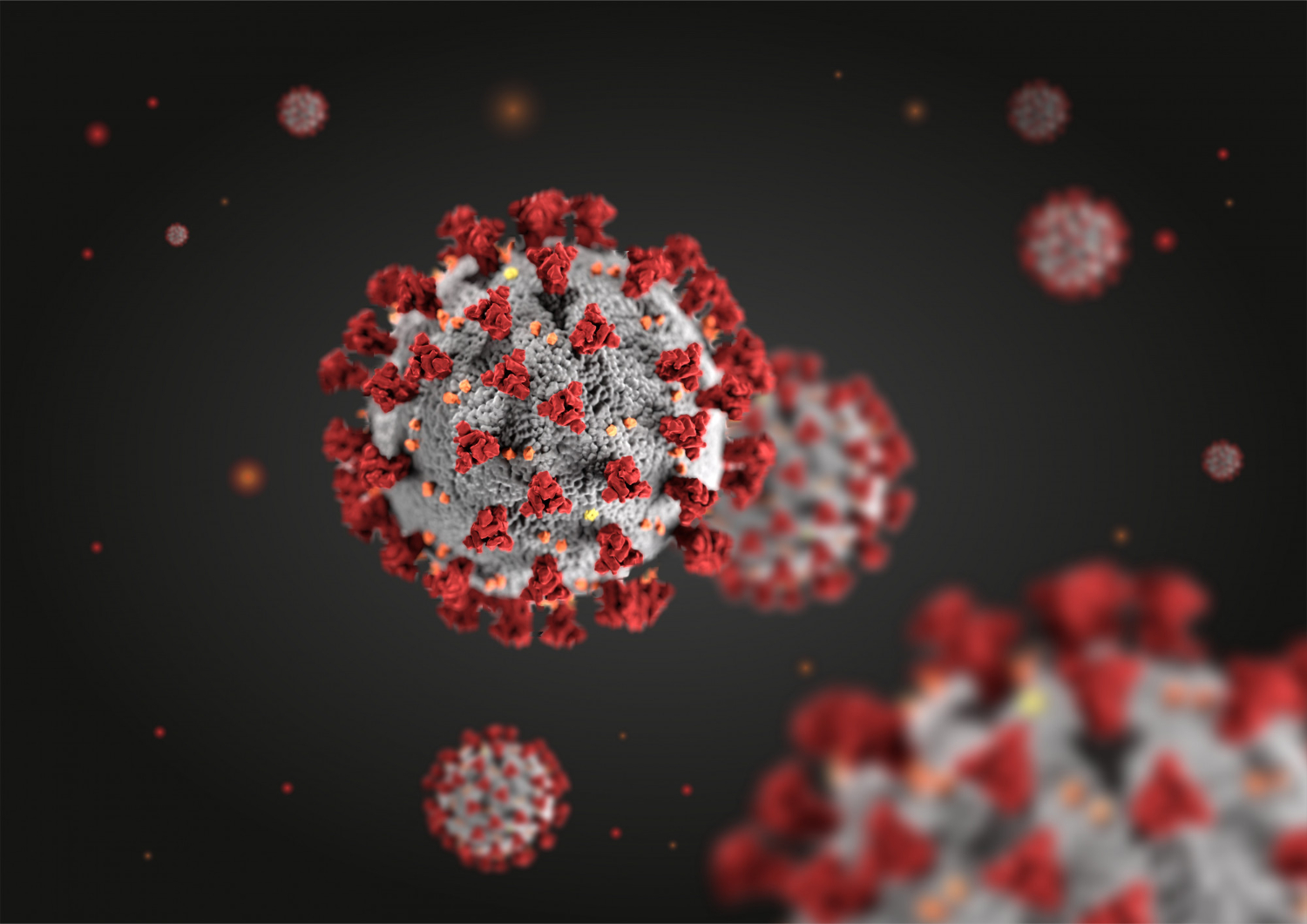
It is evident however, that the line between a defensive and an offensive strategy in the scenario of bioweapon research is paper thin, and Kennedy argues that research into biological defense is often indistinguishable from research into biological offense. A number of vested interests stand to gain from such “defensive” research: scientists and scientific institutions who are funded to carry out the research, pharmaceutical companies, which will gain the opportunity to create (highly lucrative) counteractive medication, vaccines and other therapies, and the military, which seeks to acquire knowledge of different potential bioweapons.
Kennedy tells the readers that a cozy and secretive relationship between the military and scientists in researching biological warfare (including wide ranging experimentation on human subjects, voluntary and otherwise) did not end with the defeats of Germany and Japan in 1945. On the contrary, after the war it was business as usual in American research laboratories, a business which actually built on data from human vivisection, especially experiments conducted by Ishii’s team. Kennedy also describes how the American military protected Japanese scientists from prosecution on condition that they place their services and skills at their disposal. Like Ishii, later American researchers enjoyed a good relationship with universities and like their Japanese and German predecessors, US bioweaponeers cultivated a symbiotic alliance with medical universities, Kennedy notes.
Kennedy believes that in contrast to the Americans, the Soviets wanted to and did prosecute the Japanese Unit 731 leaders. The American military was not coy about exploiting Japanese data and skills. Ishii reportedly visited the US in 1959 as part of an extended tour that even included a series of lectures at Fort Derrick. By contrast, twelve members of Unit 731 were tried in the Soviet Union at Khabarovsk. However, Kennedy fails to mention that those members received light sentences by Soviet standards, the maximum sentence being 25 years in a labor camp, and in fact the last prisoner was released in 1956, long before the expiration of his 25 year sentence. It has been suggested and seems likely that the lenient sentences were conditional upon assistance and/or the provision of information to the Soviets with their own bioweapon program. Kennedy does not mention this and thereby gives the impression that the Soviets were acting ethically while the Americans were not. His statement that “the Soviets were in a frenzy to get Ishii in the dock” suggests that they were morally outraged; but such “frenzy” could be interpreted more cynically. For whatever reason, in his background account of the history of bioweapons, Kennedy has very little to say about bioweapon research in the Soviet Union. Incitement to bioweapon research through national competition is thus also only briefly mentioned. This neglect is regrettable. Mistrust between nations very probably plays a significant role in the funding of bioweapon research and reluctance to move away from it. Bioweapon development was probably incentivised in much the same way as in nuclear weapon development- “upping the ante”, that is to say, out of fear that the enemy is or could be at an advantage. It could well, for example, explain the refusal of American and Russian authorities to comply with a request in the 1970’s from the WHO to destroy their samples of the smallpox virus.
Another factor which Kennedy does not explore in this book is personal envy, ambition, vanity, competition and the yearning for fame and recognition among scientists. These personal factors undoubtedly play a significant role in motivating scientists to create ever more effective bioweapons. Kennedy shows little interest in the private psychological motivation of individuals involved in the scenario he is describing.
The collusion of universities with laboratories in secretive bioweapons research shows whence and how research laboratories recruited new staff. After his account of the unethical beginnings in Japanese occupied Manchuria, Kennedy provides a brief history of research in the US from 1945 up to the time of gain-of-function research at Wuhan, with which this book is principally concerned.
Shortly after the end of the war, Henry Stimpson, the US Secretary of State for War, commissioned a group of scientists to examine the practical wartime potential of bioweapons. The group’s findings were that the use of bioweapons in wartime was entirely feasible. Acting upon that information, the War Department embarked on a program of research funding to universities to study various pathogens and test them to see which pathogen could be best adapted for use as a bioweapon. In a bizarre scenario which reads like dark or satirical science fiction, different universities were paid to research the military potential of a particular disease allocated to them:
The National Institutes of Health committed to studying cholera and typhus. Harvard Medical School agreed to investigate dysentery. Cornell worked on anthrax, and the University of Cincinnati adopted tularemia. Michigan State College took on brucellosis; Northwestern, mussel toxins; Notre Dame rickettsiae; and so on.
Drug companies also have a vested interest in such research, because there is then a demand to provide new antidotes to new pathogens. According to Kennedy’s account, the US partnership between the pharmaceutical industry and the American military was given a fillip during the Second World War when President Roosevelt appointed George Merck to direct a new agency called The War Research Service, working out of the National Academy of Sciences in Washington, with laboratories located at Fort Detrick in Maryland. In a January 1945 report, Merck acknowledged his reliance on what he described as the “energy and ingenuity” of Japanese scientists who had “fostered offensive developments in this field (bioweapon research) from 1936 until as late as 1945.” (This remarkably candid admission is taken from Merck’s own Report to the Secretary of War published online at Governmentattic.org.).
The major players: the military, military intelligence, pharmaceutical companies, the “scientific community”, professional medical journals, scientific organizations, politicians, were and are involved and all protect each other when it comes to charges of misconduct or worse. Kennedy depicts unholy alliances between parties with stakes in bioweapon research. He writes:
One of the focuses of this book is the dark alliance between America’s military and intelligence agencies-particularly the CIA-and our public health bureaucracies. Following the collapse of the Soviet Union, the military and intelligence apparatus erected the biosecurity agenda as the new spear tip of American foreign policy.
Both the evidence and common sense supports Kennedy’s allegation in this book that Covid-19 was a gene manipulated Frankenstein organism created by and in the WIV and a bioweapon in all but name. If it neither emerged by chance naturally in Wuhan, nor was somehow brought there, then it was created in the WIV.
3 comments
I don’t believe the official line that “gain of function research” is ever for defensive purposes. There already are a very large number of nasty pathogens, and no need for anyone to make them nastier unless they’re expecting to start trouble with them.
Does this book make mention of the 1918 Spanish Flu? There is a conspiracy theory that it was inadvertently released out west. 🙃
The main thing that makes me doubt that COVID was an escaped bioweapon is how ineffective it was. Killing only like 0.03% of healthy fighting-age men wouldn’t be worth the effort of deployment. That said, it’s possible they were only testing a particular facet of an effective bioweapon, such as enhanced transmissibility.
Comments are closed.
If you have a Subscriber access,
simply login first to see your comment auto-approved.
Note on comments privacy & moderation
Your email is never published nor shared.
Comments are moderated. If you don't see your comment, please be patient. If approved, it will appear here soon. Do not post your comment a second time.