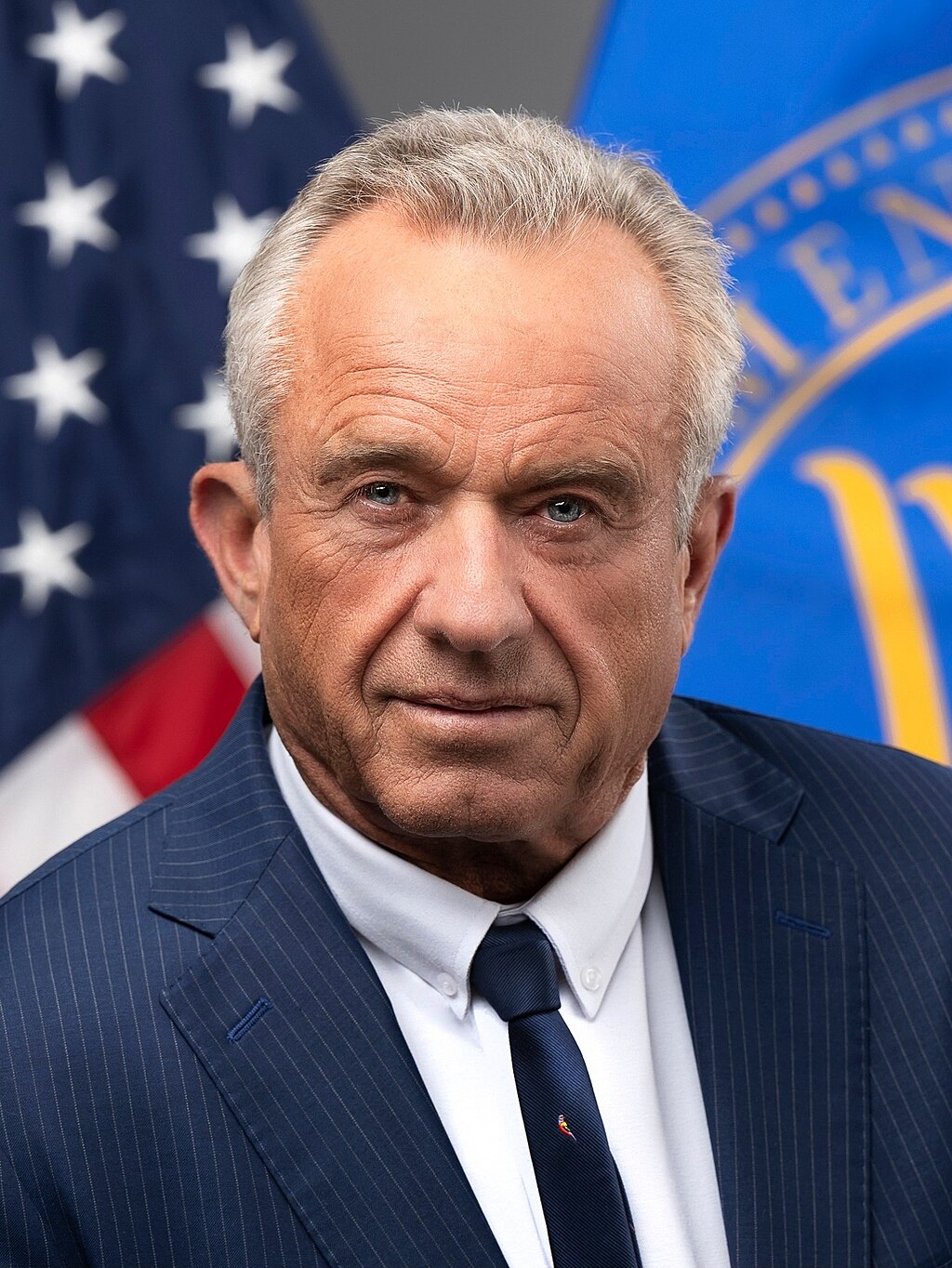
Robert F. Kennedy Jr.
1,038 words
Serious government funded research into the feasibility of producing bioweapons in a laboratory began after 1918. For reason of the dire consequences of using gas as a war weapon and its potential to strike large numbers of non-combatants at random, the Geneva Protocol of 1925 prohibited the use of both chemical and biological weapons. It said nothing about producing or stockpiling them, therefore any signatory state could carry out research without breaching the Protocol.
As more became known about bacteria and viruses and how they worked, so too did the opportunities to research the possibility of using pathogens for military purposes. The first research and application of laboratory cultured bioweapons, according to Kennedy’s account, was made by the Japanese imperial army, specifically Manchu Detachment 731, the biological warfare unit of the Kwantung Army operating in the 1930’s in Japanese occupied Manchuria. The story is an ugly one. A large number and wide variety of vivisection experiments on human subjects were carried out there under the direction of one Shiro Ishii, a scientist and lieutenant general. His research was to prove highly useful to the American military after 1945.
Not only were thousands of individual human guinea pigs subject to vivisection as part of the Japanese biowarfare project, germs and viruses were also tested on entire human populations. Kennedy writes that,
Ishii field-tested bacteriological weapons by aerial dousing of civilian populations…he proved the efficacy of entomological weapons during highly successful plague attacks on Manchuria’s port city of Ningbo in October 1940. Unit 731 dropped ceramic barrels filled with plague-laden fleas. Within days, residents were dying in droves.
The stricken were then removed by Ishii’s men disguised as carers to be transported to the Unit 731 complex, there to be subject, apparently without anesthetic, to vivisection experiments of the cruelest possible kind. Kennedy writes at some length on the ghoulish human vivisection experiments which Ishii and those under him conducted at the vast complex built for that purpose in a remote part of Manchuria.
Kennedy underscores a number of aspects of those events which are highly relevant today and specifically relevant to the Covid-19 epidemic. One is the collusion between the military and scientists and universities. Scientists were afforded material and working facilities by the Japanese military and of course the military sought to profit from what scientists could discover. Kennedy also notes that Japanese scientists and doctors were keen to work in Ishii’s unit. They did so with no apparent moral qualms about the immeasurable suffering and loss of human life their work entailed. According to Kennedy, citing Charles Talesen in Plague Wars. A True Story of Biological Warfare, “some twenty thousand physicians, researchers and workers took part in Ishii’s bioweapon research project”. Ishii offered a two fold explanation and justification when urging his team to abandon all ethical and humane scruples: firstly, there was their duty to science “to devise the most expedient treatment possible” to combat pathogens and secondly, he appealed to their patriotism, asserting that the aim of their research was “to successfully build a powerful military weapon against the enemy.”
Academics also conspired with the leading Japanese medical journals to mask their scholarly papers under pretense of vaccine development, epidemic prevention and defensive biowarfare.
There seems to be a duality of purpose at work here which Kennedy also observes in the Wuhan experiments: on the one hand, the unending scientific quest to advance knowledge for the sake of knowledge, the insatiable, often unethical, curiosity of the scientist, and on the other, the ambition of the military to possess effective bioweapons. The book shows that there has been a long and mutually advantageous relationship between military intelligence and science in the area of bioweapons. The curiosity and ambition of scientists around such research is rewarded with funding and prestige. Behind the scientists, supporting them financially and defending them in public, there stand large vested interests. Kennedy describes the US biological warfare effort as a “three way partnership” between Big Pharma, the intelligence agencies and the Pentagon, a partnership characterized by “vast budgets, intense secrecy and lack of accountability.”
As Kennedy says, financial interests, military intelligence interests and scientific curiosity were then and still are today all interwoven complementary motives of bioweapon research. Such motives are so strong that they often leave no place for honesty, pity, transparency or civic duty. Not only ethics but caution too gives way to the ruthless ambition of scientists and the organizations which fund them. This book describes work on pathogens so rash and hazardous that the question may reasonably be asked: “Are these scientists and intelligence operatives completely out of their minds?”
Kennedy’s brief history of disregard for ethical considerations and professional misconduct before the Wuhan research makes it easy to understand how misinformation and deceit was just “business as usual” with regard to research at the WIV. Kennedy underlines the readiness of American researchers and their backers to commit perjury, misappropriate federal funds, suppress evidence, discredit objectors and/or cow them into submission, misinform the public and governments, bribe, connive with those funding them to disguise their work, and even commit treason.
Medical journals, scientist and responsible authorities fight shy of using the word bioweapon: epidemic prevention and defensive warfare are preferred expressions when discussing or responding to questions about biowarfare related scientific research. Its raison d’être is sugar coated in euphemistic language. Prudence in the face of theoretical future hazards is the pretext provided to explain present action. The preferred language of bioweapon research advocates and lobbyists reflects that: “taking precautions”, “searching for a safeguard”, “the need to be prepared”. Subsequently, the manipulation of pathogenic viruses came to be known by an anodyne term less likely to ring alarm bells than “bioweapon research” or “genetic manipulation of pathogens”. The work came to be known as “gain-of-function research”.
Gain-of-function researchers argue that it is in the interests of health and safety that pathogens be manipulated genetically to enhance their pathogenicity and transferability. Discovering ways of making pathogens more dangerous and enhancing them so that they can cross species barriers, barriers which otherwise impedes their spread, is necessary, advocates of the research claim, in order to prepare for the challenge of new contagions. In short, the best way to defeat bioweapons is to create them.
3 comments
Well everybody is behind the power curve when it comes to perfecting bio weapons; thousands of years ago, the jews took the bubonic/black plague, and perfected it. The jews engineered the following modifications in the black plague: anthropomorphization, interbreedability with the host population, increased hostility, focused target aggression, high fertility rates, and containability in the environments they are released into. Yes, that is how the jews perfected the black race, however the jews found that there was one small problem—they did not anticipate blacks being so deliciously, scrumptious! 🙃
Does he mention who wrote the checks for the “gain of function” research?
These kinds of stories make me ill. And justify why proWhites and only them, should commandeer world administration. The rest of them are too goddamn evil to ever be allowed near technologies like this. Subhuman vermin like ishii and its men, if karma be real, would be posthumously suffering in the depths of hell for millennia for atrocities like this.
Comments are closed.
If you have a Subscriber access,
simply login first to see your comment auto-approved.
Note on comments privacy & moderation
Your email is never published nor shared.
Comments are moderated. If you don't see your comment, please be patient. If approved, it will appear here soon. Do not post your comment a second time.