2,562
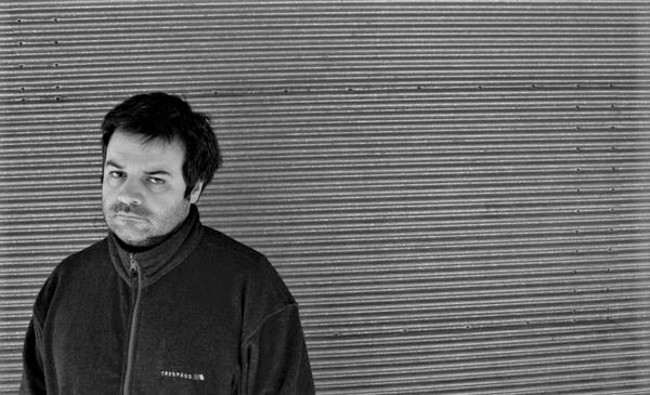
Gustavo Escanlar
There’s a Japanese proverb that goes something like: “The nail that sticks out always gets hammered.” It’s a saying that sums up well the beehive-like society the Japanese live in. I don’t think this is necessarily a bad thing, in fact, contrary to what many believe, sometimes, as that Tatooinian Sensitive Young Man™ Anakin Skywalker so wisely said in that cinematic masterpiece Attack of the Clones: “We must let go of our pride and do what is requested of us.”
What I’m getting at is that whenever there’s a solid established order based on higher aspirations, conformity isn’t a bad idea at all. Quite the opposite. The problem comes when this order vanishes or gets replaced by one ruled by frivolity, opportunism, and the urge to please those whose petty interests clash with the Truth. When that happens, it’s neither narcissistic nor reprehensible to raise your voice and “play the fool”; on the contrary, I’d say it’s almost a duty, an obligation, and sometimes it even takes a lot of courage.
And this is where Gustavo Escanlar comes into the picture. The prototype of the Uruguayan Sensitive Young Man. A writer whose short and truncated body of work has been the target of the most degrading criticism; a writer who, while alive, was sidelined by the pompous agents of a petty and envious cultural system that, unable to fully absorb him into its ranks, buried him under lawsuits (But… question: does anyone remember the names of those plaintiffs? No, right? Because they’re doomed to oblivion, and when the time comes, their graves will be duly desecrated, while Escanlar’s won’t face that fate, because as long as a single Sensitive Young Man™ is still breathing, his memory will endure.) and then, after he passed away at forty-eight, hypocritically praised him as some sort of “deliberately audacious rebel.”
I, without asking permission, want to claim his spirit and settle scores with his executioners.
Understanding Escanlar’s life and work is impossible for those unfamiliar with the conservative mindset of the average Montevidean. And careful, when I say “conservative,” I don’t necessarily mean moral or religious values – values that Uruguayans, being a people whose institutions are heavily influenced by Freemasonry and French Jacobinism, largely lack– but rather a kind of chronic pusillanimity, a flat view of daily life that made artists like Horacio Quiroga or Herrera y Reissig such outliers in their time. And in the years when Escanlar like a local dandy began wearing out his soles on the streets of the Uruguayan capital, and cutting his teeth in the world of writing, this weakness of ours could only get worse.
You see, back then (early nineties), the transition from military dictatorship to democracy was nearly complete; on paper, this transition officially wrapped up in ’85. The Frente Amplio, the leftist coalition that to this day rules Uruguay with a rubber fist, took control of the capital, and thus began its long period of decline that continues to our days. Bad faith, bureaucracy, insecurity, vandalism, and collective mediocrity reached an almost Soviet pitch back then, and while the USSR had already ceased to exist by those years, there won’t be a shortage of commentators who’d say –not without some reason– that instead of dissolving, it decided to relocate to Montevideo.
Given this backdrop, there was no way such environment could leave a sensibility like Escanlar’s indifferent. A born rebel, he intuitively grasped that aphorism from Nietzsche where the mustachioed author compared military civilization to industrial civilization and concluded that, of the two, the latter was by far the worse. The German writes in a passage from The Gay Science:
It is strange that submission to powerful, frightening, yes, terrifying persons, to tyrants and generals, is experienced to be not nearly as distressing as this submission to unknown and uninteresting persons, which is what all the greats of industry are (…) if they had the refinement of noble breeding in their eye and gesture, there might not be any socialism of the masses. For the masses are basically prepared to submit to any kind of slavery provided that the superiors constantly legitimize themselves as higher, as born to command. through refined demeanour! The commonest man senses that refinement cannot be improvised and that one has to honour in it the fruit of long ages -but the absence of the higher demeanour and the notorious manufacturer’s vulgarity with ruddy, plump hands give him the idea that it is only accident and luck that elevated one above the other in this case: well, then, he infers, let us try accident and luck! Let us throw the dice!- and socialism begins.
As I said, I think it was partly this distrust –this suspicion, as far as I know never explicitly articulated– that there was no longer a solid established order based on higher aspirations; the realization that that place of power and authority had been taken over by the theatrics of a small group of bugmen and women on the verge of hysterics, that drove him to want to unmask our ruling class at all costs. And this congenital, emotional impulse turned him into a sort of decadent, self-destructive, and at times brilliant goliard-journalist. A sole-wearer who roamed the streets, taking notes on the miseries of a city that, decades earlier, was known as the “Switzerland of America” and, by then, was already shaping up as just another dump in the south of the continent; a stop, if you will, somewhat whiter and more European compared to the rest of Latrine-america, yes, but one that, over time, would slowly and progressively become much browner and more nihilistic than it was in its beginnings.
Escanlar’s stories and chronicles put this reality on paper, permeated by a deep disillusionment with post-dictatorship Montevideo. Stylistically, they draw from the rebellious and countercultural tone pioneered by American authors like Charles Bukowski, Tom Wolfe, or Hunter S. Thompson (Escanlar, to the dismay of the local Marxist left, was madly in love with American culture), employ typical tricks of so-called “dirty realism,” and constantly play with blurring the lines between author and narrator. They are, for the most part, hilarious texts, overflowing with that goliardic, impertinent, and provocative spirit that got him into so much legal trouble. In one of his best-known stories, Danger, a narrator encapsulates the cursed, self-referential, and somewhat narcissistic tone of his work in a dialogue with a female interlocutor:
‘I read your book,’ she says and stays silent for a few seconds so I’ll desperately pounce on her to ask: ‘What did you think, what did you think, please tell me what you thought.’ Since I don’t say anything and more than ten seconds pass, she feels obliged to continue. ‘And I didn’t like it at all.’ I smile, but I’m deeply hurt. ‘Why do you write these things? What do you want to provoke in people?’ she asks. I lean back. I scratch my belly. (…) She goes on: ‘It’s deeply unpleasant.’ ‘Can’t you find another way to say things? Do you have to mock everything? Do you have to be so crude?’ she asks three times. ‘Yes, maybe I could find another way to say things. Mocking everything is the only way I have to hide the anguish everything causes me. I’m as crude as some aspects of reality. In that sense, though you may not believe it, though you may not understand, I’m a moralist… almost a fundamentalist. Yes, ma’am, if you call me a writer, consider me a realist.’
By then, Escanlar’s life veered into a distinctly gonzo path. Nearing his thirties, fat and dabbling in cocaine, he reluctantly and quite cynically took jobs in the newsrooms of several capital city papers. In the mid-nineties, Uruguay’s print media was booming, before digitalization and the 2002 economic crisis, any middle-class kid could aspire to be a journalist and live comfortably off it. As much as it pains some critics and intellectuals from back then (and sadly still alive and kicking), the last military regime had laid the groundwork for a solid educational system for the youth of the time, which allowed many of them to live the high life in a still-prosperous Uruguay, or even go gallivanting –oh, sorry! I meant studying– abroad.
Escanlar, however, chose to stay, delving into the seedy underbelly of a city that was fast becoming Latin America’s leading consumer of cocaine, the world’s second-largest consumer of whiskey, and a fierce contender for the global lead in per capita suicides.
His first literary success was the inclusion of his story “Screams and Whispers” in the McOndo anthology of short stories. Years later, Escanlar would be recognized as the “most Macondian” of the authors featured there, as the enfant terrible of a generation of writers who sought at all costs to break away from the prejudices associated with the Latin American Boom literature. Screams and Whispers is, in my view, his most brilliant text, and it works perfectly as a showcase of his unmistakable style in literature. The story is a rough ride through the decadent backstage of the capital’s journalism scene. Its pages bring together prostitutes, virgin interns, unscrupulous photographers, corrupt and power-hungry editors-in-chief trying to climb one more rung in the cutthroat world of politics, all framed by a semi-homosexual narrator obsessed with Tom Waits. The final result is sad and hilarious in equal parts:
I left without saying goodbye. I like leaving places, lives, like that. That’s how it’ll be when you die, you won’t say goodbye to anyone, you’ll leave everyone hanging, you won’t have to explain anything. That’s how I left the radio, that’s how I left the newspaper, that’s how I left Lucía, that’s how I left Pichucho. Everyone told me, ‘Face it, don’t be a coward.’ And what the hell am I supposed to face now?
By the end of the millennium, under the prestigious Italian publisher Mondadori, his first and best novel came out: Stockholm. This is, in my opinion, his second-best work, the one that rightfully earned him the eternal hatred and envy of those pompous agents of the Uruguayan cultural system I mentioned earlier. Stockholm narrates the misadventures of a group of marginal kids devoted to robbery and kidnapping wealthy people. So far, no one has made this connection, but the influence of the so-called tupabandas on Escanlar is undeniable (tupabandas were squads of young delinquents led by former guerrilla fighters like Pepe Mujica and Luis Alberto Huidobro who, in the nineties, robbed banks and collection agencies. The money they stole was mostly –allegedly– destined for the propaganda projects of what would later become Uruguay’s most-voted political force: the Frente Amplio. Over time, several of these figures would become bitter rivals of Escanlar, only this time from their armchairs in the newsrooms of state or pro-government media).
But beyond all this, Stockholm is a foreshadowing: a Tarantino-esque, sepia-toned kaleidoscope of a society already beginning to outline its future collapse by the mid-21st century; the start of its ethical and social bankruptcy, and the subsequent rise –and near-total dominance– of the Marxist left. The narrator is a middle-class kid who falls into crime and nihilism after realizing the falsehood of cultural and university circles:
What happened was that, at a certain point in my middle-class life, I realized everything was a lie. I’d spent hours studying, hours in assemblies debating, hours in bars talking about the dictatorship of the proletariat, about Gramsci and Foucault. Hours screwing in the name of the revolution, of the new man. (…). I’ve seen the best minds of my generation destroyed by routine, by political militancy, by premature aging, by stupid seriousness. Yes, I also read the Beatniks and bought into it, even though Uruguayan roads were crap and Route 66 was just a TV series, and I couldn’t watch TV because it was counterrevolutionary and consciousness-numbing. So when the dictatorship ended, I took off. I moved alone to the apartment on Salto Street and turned it into a den of junkies and thieves. The only ones who came in were my neighborhood friends, the ones who’d taken another path, the ones who hadn’t chosen. They’re the real ones.
The book wasn’t a bestseller by any means, but along with his journalistic work in print media, it gave Escanlar some notoriety, leading him to become one of the hosts of the popular TV investigative program Zona Urbana. This was the crowning of his meteoric rise; what followed was a string of high-profile media scandals that even put him in the crosshairs of the law (by 2004, the leftist coalition Frente Amplio controlled the entire country). The most notorious of these –aside from a petty plagiarism accusation– was the one involving Federico Fasano, after Escanlar called the unscrupulous leftist media mogul a “son of a bitch” on TV. Fasano immediately sued him for “defamation and slander,” and Escanlar ended up in jail for three months and criminally prosecuted for a year.
From then on, Uruguayans had to get used to the fact that leftist journalists are sacred cows, protected by law, and must not be offended under any circumstances.
Now teetering on the edge of censorship, fired from every radio and TV program that had him on their roster, Escanlar joined the then-nascent news site Montevideo Portal, editing a blog called The Seven Senses. At the time, the blog format was becoming very popular around here, and its characteristic informal, fragmented, and personal style suited Escanlar’s combative writing like a glove. The entries in The Seven Senses are, in my view, a lucid and impertinent window into mid-2000s Uruguay, when the left was consolidating its role as the thorough destroyer of our institutions and putting any naive, well-meaning illusions anyone might have had about the virtues of the democratic system in checkmate.
Now, no more beating around the bush, Montevideo’s streets were becoming unsafe, lumpenized; politicians were acting as if they were above the law; meanwhile, with immigration and growing police negligence, drug trafficking was settling into peripheral neighborhoods; the quality of education was plummeting to atrocious levels; and all this was normal because, with the arrival of the Frente Amplio to power and their union allies, schools and high schools turned into mere welfare ghettos, designed solely to keep kids from killing each other on the streets. Oh, and how could we forget the silly, sentimental philosophy of José “Pepe” Mujica, which was already dazzling the masses, making them believe they were in the presence of a great leader. Fools!
Unlike most of his contemporaries, Escanlar had the courage to take note of all this and denounce it at the top of his lungs, becoming, in the process, perhaps the most hated Uruguayan of all. And none of this came cheap, as we know: he paid the price.
Soon after, his final novel, The German Woman, was published, which, in my view, is decent but doesn’t reach the heights of his earlier work. I like some scattered parts, like the long, satirical description of our nefarious carnival; the scrutiny of the always-ignored ties between the union leadership and drug trafficking; or the detailed, first-person analysis of a girl already seasoned in the world of prostitution; as well as the dry, regionalistic portrait of spaces like the Old City and Montevideo’s port. But I don’t know… something’s missing…
Escanlar died a year later, at forty-eight, from a cocaine overdose.
2 comments
”the realization that that place of power and authority had been taken over by the theatrics of a small group of bugmen and women on the verge of hysterics,…”
Great description of the jews! 🙃
“All men are created equal” is such a lie. Men like Escanlar have entire universes in their souls and seek to share them with others. Then there’s all the “immigrants” who suck up resources and destroy entire civilizations with their emptiness.
Comments are closed.
If you have a Subscriber access,
simply login first to see your comment auto-approved.
Note on comments privacy & moderation
Your email is never published nor shared.
Comments are moderated. If you don't see your comment, please be patient. If approved, it will appear here soon. Do not post your comment a second time.