 5,112 words
“Right now the biggest risk for democracies is that the public no longer sees them as democratic.”
—Nico Jaspers, CEO and co-founder of Dalia Research[1]
“All of them portray themselves as defenders of democracy, but they’re attacking liberal democracy from the inside and using its concepts against it. That makes these people both new and potentially dangerous.”
—Contemporary Far-Right Thinkers and the Future of Liberal Democracy, Alejandro Castrillón
“Any movement that offers any real hope for the future will have to find much of its moral inspiration in the plebeian radicalism of the past.”
—Christopher Lasch
“Democracy seems fated then to destroy itself . . . If the danger exists that democracy might be used in order to defeat democracy, then the radical democrat has to decide whether to remain a democrat against the majority or to give up his own position. . . It is a remarkable fact and a necessity, but in no way an abstract dialectic or sophistical game. It often happens that democrats are in the minority.”
—Carl Schmitt, The Crisis of Parliamentary Democracy
As explained in Liberal Anti-Democracy: How Western Elites Thwart the Will of the People, it is crucial to understand that from the very beginning, liberal democracy was largely designed to serve as a social engineering mechanism for legitimating the rule of the merchants under the veneer of popular legitimacy.
However, the designs of our constitutional architects are underscored by a much larger, more important practical and pragmatic issue. In vast modern countries with large populations, pure democracy is logistically impossible for practical reasons that make some form of representation a practical necessity.
As Aristotle observed, “an excessively large number cannot participate in order” and in public affairs. Democracy therefore cannot exist in a state “consisting of too many.” This is why the Greeks believed that democracy was only a suitable constitution for small, independent city states. Rousseau similarly considered it a basic principle of political philosophy that democracy can only exist in “a small state, where the people can assemble easily and where it’s not hard for each citizen to know all the rest.” This is why Rousseau adored his beloved homeland, the small Swiss canton of Geneva.
When designing their anti-democratic liberal constitutional system, the American Founding Fathers sought to exploit this phenomenon by bringing the United States of America under a single federal government, because they identified an “extensive territory” as the greatest “advantage” for restricting the emerging democratic energies of revolutionary American society. As John Adams noted, within a large enough political arena, the people “can never act, consult, or reason together, because they cannot march five hundred miles, nor spare the time, nor find a space to meet.” For this reason, James Madison argued to “extend the sphere” by embracing an expansive federal government and large congressional districts, which would make it “more difficult for . . . [the people] to discover their own strength, and to act in unison with each other.” A large federal state would obligate a representative system that would “depute power from the many to a few,” while providing enormous advantages to men of “commerce [and] finance” who are highly organized across large geographical space, and guaranteeing American statesmen would probably have an “attachment to the rights of property.”
The Federalists sought to strangle democracy in its cradle by exploiting the obvious fact that within large polities, representation becomes an inevitability. As the English jurist John Selden once famously explained to the House of Commons: “The Knights and Burgesses sit for themselves and others, some for more, some for fewer, and what is the Reason? Because the Room will not hold all.” If there were a “Room able to hold all the Commons of England,” then every free-born Englishman would indeed sit in Parliament.
While liberal political philosophy has generally regarded representative government as an explicitly anti-democratic constitutional mechanism, the quasi-democratic idea that parliament can serve as an approximate substitute for the whole of the people has nevertheless served as its central justification. As Carl Schmitt explains, the legitimacy of representative democracy rests on the idea that “the people in its entirety must decide, as was originally the case when all members of the community could assemble themselves under the village tree.” Only “because it is impossible today for everyone to come together at the same time in one place,” do the people elect representatives to legislate on their behalf.
This was true until the advent of the 21st century. However, this iron law that has constrained the imaginations of political theorists from Machiavelli to Montesquieu, Hobbes, Locke, Rousseau, Paine, Kant, and J. S. Mill no longer constrains us today. The internet, for the first time since the Pnyx housed the assembled Athenian people beneath the silhouette of the Parthenon, is a space that can hold us all.
In the 21st century, there is no longer any strictly logistical reason why the people need representatives to legislate on their behalf. Through some form of direct democracy facilitated over the internet, the people could represent themselves by voting directly on laws in regular national referendums, and the results could be tallied in less time than it takes Congress to conduct a roll call. Functional blockchain-based voting systems have developed functional prototypes for the novel concepts of “liquid democracy,” “delegative democracy,” and “issue-based direct democracy” (IBDD). Such models combine elements of representative and direct democracy, allowing voters to vote on specific issues directly, or delegate their voting stake to other individuals in the network. In the age of the internet, people do not need representatives to make decisions for them; voters could vote directly on specific laws and policy initiative themselves.
This is not just speculation. In many senses we are already living within a quasi-digital democracy, with social media platforms like X serving as the de facto public square where ideas are debated by incredibly diverse perspectives and tested far more rigorously than within parliamentary sessions or committees. Historically unprecedented free discussion over the internet allows information to spread like wildfire. Within just two decades of online free speech, a mass awakening of political consciousness has taken place, forcing the liberal internationalist program that dominated the 20th century onto the defensive.
Our democracies are already digital. It would not be a particularly far stretch from the present moment to formalize a digital institutional apparatus that could allow voters to replace their representatives. It’s not inconceivable that national governments could create some sort of online digital voting platform allowing people to vote directly on every single bill, piece of legislation, and policy. The opportunities are endless.
Something like this could be accompanied by social media-like platforms to serve as an open public parliamentary space for citizens to debate political issues. Every country could have its own X, where citizens discuss ideas, policies, and legislative proposals with each other. Participation on these platforms should be restricted to citizens, obviously. Yet there is an argument that governments have a positive obligation to create platforms like this to fulfill their commitment to free speech rights and democracy. They should also be obliged to adopt a digital charter of rights to prohibit the censorship of political speech.
These two things could allow for the creation of an Athenian-style direct democratic state for the modern world. And accomplishing this would not be nearly as radical as it may first seem.
A digital direct democracy could completely replace the legislative branch, but the government would otherwise function normally under an executive, like a president or a king. As popular sovereignty theorists from Hobbes to Rousseau have recognized, although sovereignty to make laws resides in the people, “the public force needs an agent of its own” duly constituted to enforce and administer the laws. Even in Ancient Athens, where the Athenian assembly was sovereign, the assembly still delegated power to magistrates and generals. The same is true in every modern so-called liberal democracy, which delegates power to the executive branch and delegates lawmaking and regulatory authority to legions of expert administrative agencies and commissions, where scientists and technicians with subject-matter expertise handle technical questions.
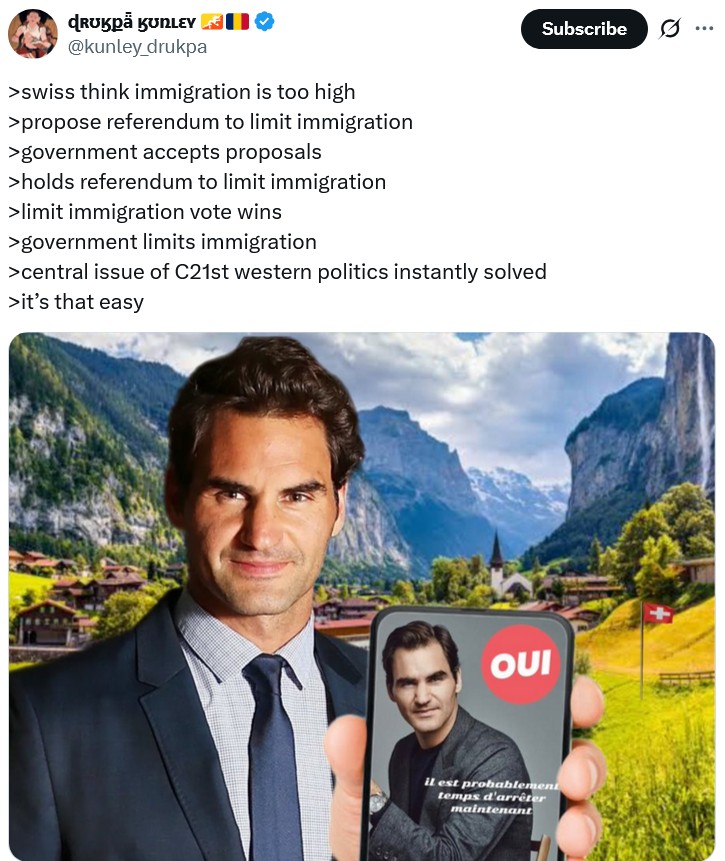 All that modern legislatures do is delegate power to agencies and committees, review and authorize laws, and decide where to allocate taxpayer funds. There is no logistical reason why people couldn’t accomplish these functions and entirely replace the legislative branch through online platforms. Digital direct democracies could allow the people to decide their laws, choose which programs receive taxpayer funding, and instruct the executive via popular mandates via referendum. The only difference here is that the executive branch would answer directly to the people, instructed via clear policy mandates, rather than to corrupt parliamentary or congressional majorities. Otherwise, the government would operate normally and every bit as effectively as any other state.
While very obvious and intuitive, this idea has scarcely been discussed online. This is unfortunate, as the potential for digital democracy could represent an incredible opportunity for nationalists. However, on a preliminary basis there are three very powerful arguments in favor of direct democracy: 1) the working and middle-class majorities that direct democracy would empower are the only true constituent for nationalist politics, 2) democracy is a powerful and pragmatic justification for nationalist policies, and 3) the opponents of liberal internationalism can organize around direct democracy as an alternative vision and rhetorical weapon to delegitimize and discredit the corrupt and plutocratic system of representative government.
The Majority Would Choose Better Policies Than Our Current Representative System
Perhaps there was a case for representative democracy in the 1780s when elected representatives had direct ties to the communities they represented, served electoral districts of some 6000 people at most, and where they lived next door to their constituents eleven months of the year. However, after the interstate, automobiles, and modern methods of transportation have severed all rootedness to local communities, the average congressional district has ballooned into an anonymous mass of 300,000 people, and where transnational corporations coordinate hundreds of billions of dollars to lobby, bribe, and pressure representatives, the idea of representative “democracy” is totally ridiculous and absurd.
Representatives do not represent their constituents. Neither do they exercise any sort of specialized expertise. Most politicians are lawyers, not scientists or statesmen. They also regularly authorize bills written by special interest lobbyists into force without even reading or reviewing the contents. There is no reason why the general public would not do a better job than Congress. In fact, if any group can be expected to make responsible decisions, it is the taxpayer, as the taxpayer is footing the bill for all the special interest projects of the state. Right now, the bar for competent legislation reflecting the common good is through the floor. The people would not voluntarily accept most of the policies promoted by our elites if they were put to popular vote.
Congress is so unbelievably corrupt and dysfunctional that it was unable to pass the 2020 Covid-relief bill to provide Americans a $600 stimulus check during the Covid lockdowns. The omnibus spending bill was unable to receive congressional authorization until it had morphed into a 6,000 page $2.2 trillion-dollar distribution of special interest subsidies including $3.8 billion to Israel, $453 million to Ukraine, $136 million to foreign aids workers, $135 million to Burma, $130 million for Democracy programs in Nepal, and $10 million dollars to Pakistan for gender studies, to name but a few of the highlights.[2]
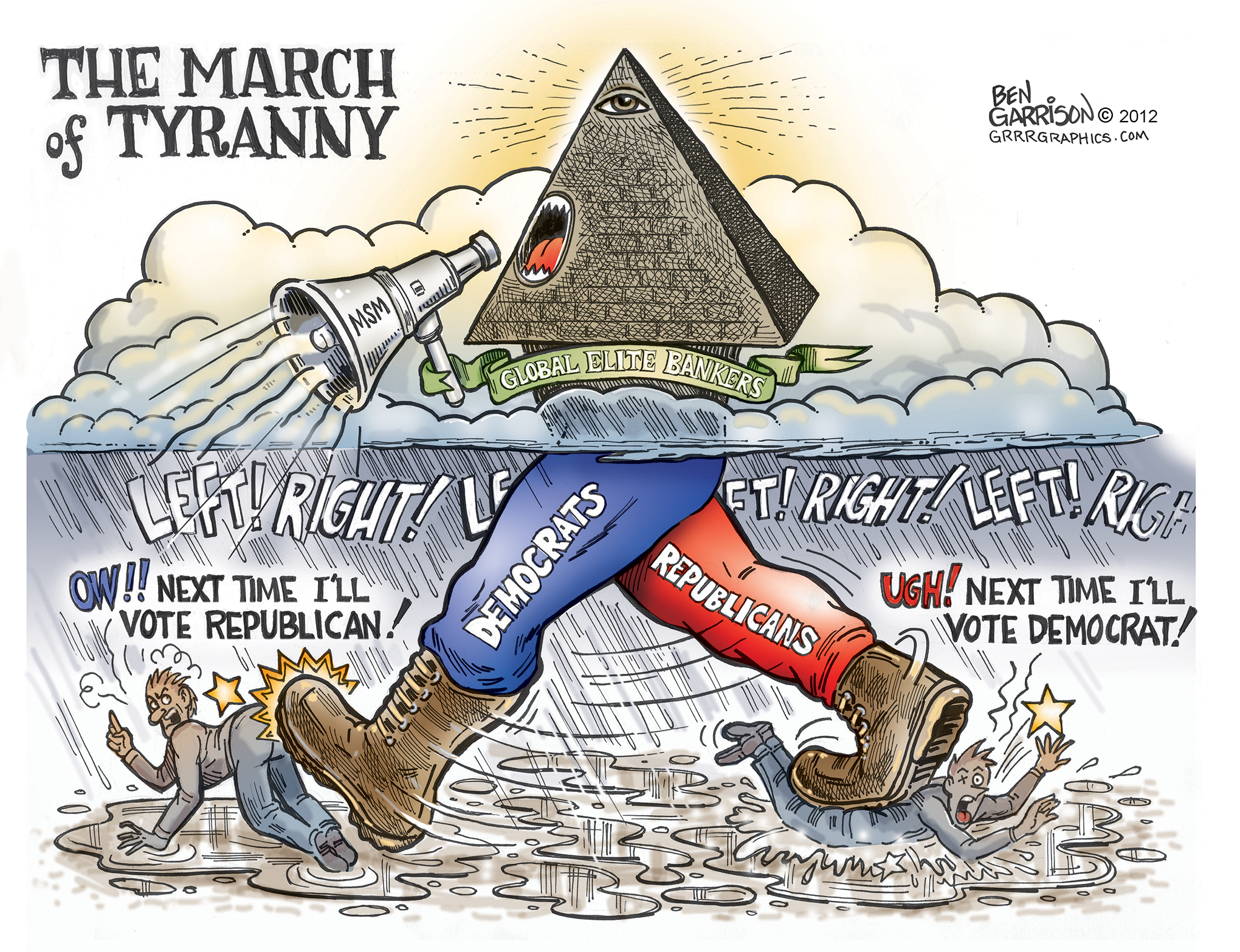 This system is obviously horrifically dysfunctional, and there is almost no way that we can beat the system at what it does best. Nationalists do not have billions of dollars to rig elections. Nationalists do not have an intelligence apparatus to bribe, blackmail, and manipulate political institutions (quite frankly, we also would never succeed in doing this because we are not evil Semitic cultists who see non-Jews as subhuman cattle, but I digress). Nationalists do not have the support of investment banks Fortune 500s, and the constellation of well-funded globalist foundations and civil society organizations that manipulate politics. Unlike these entities, nationalists do not currently have the wealth or organizational capacity to force minoritarian agendas on the public.
However, nationalists have the truth and the ability to appeal to the interests and instincts of the working- and middle-class majorities, who resonate with nationalism and patriotism.
Don’t take my word for it. Donald Trump’s political consultants crunched the numbers and correctly determined that an implicitly white nationalist platform was a winning strategy in 2016. Donald Trump’s presidency, while useless in terms of its political performance, revealed that nationalism is still overwhelmingly popular after generations of extreme wall-to-wall liberal propaganda. This should not be a surprise. For the last century, politicians have had to lie about every single major anti-white policy initiative, because if they had told the truth about their intentions, they would have been obliterated at the ballot box.
The working and middle-class majorities are the only constituency in society with a natural inclination to nationalism. They are the only group where each individual benefits from the prosperity of the whole, strong borders, and strong public social institutions to protect and promote the fortunes of the people and the nation against the predations of international markets and the vagaries of globalization. It was the grassroots instincts of these people that drove Brexit, MAGA, and the rise of nationalist parties throughout the West.
This is why tech platforms have to enforce totalitarian censorship regimes to stall the spread of the Right wing. In an article urging tech platforms and governments to take drastic action to counter “the spread of hateful ideologies and radicalization online,” VICE News quoted Andrew Torba:
Any online community that is explicitly pro-free speech will inevitably become right-leaning. This is because in the free market of ideas right-leaning ideas win. Which is why we see these left-wing tech companies censoring. No one is buying their progressive, globalist bullshit anymore, so it must be force-fed down the throats of users and dissent must be stamped out with the iron fist of censorship.[3]
In uncensored environments with genuine freedom of speech, nationalists dominate the conversation. Nationalists cannot negotiate with globalists, but we can win the conversation and the hearts and minds of ordinary people in a genuine contest of ideas. A concept like direct democracy belongs to nationalists. A truly direct democratic state would almost certainly be a radically nationalistic state.
 As an important caveat, this is not to say that a truly direct digital democracy requires universal suffrage. Voting in elections is already restricted based on age and citizenship. If voters are given more responsibility and power, it makes sense that voting rights should be subject to further restrictions. Perhaps voting rights could be restricted to men, to citizens with net-positive tax contributions, to families with children and a stake in the future of the nation (unlike our childless parasite political class), to members of the ruling party, or perhaps as a privilege for military service. Voting rights could even theoretically be restricted according to certain testing metrics or filters. The point being, there are plenty of ways to tailor the system through assigning voting power to certain demographics that are likely to have meritorious voting preferences.
However, at a high level, ordinary voters can certainly be trusted with making decisions in the national interest better than our senile and childless pedophile elites. In a world without aristocracies or kings, ordinary people are the only class that can be trusted to make decisions in the interests of the nation and the people.
As long as white men can freely and frankly speak and organize, we can figure out and solve the problems facing us, no matter how seemingly insurmountable they might seem.
Democracy Can Serve as a Justification for Nationalist Policies
The concept of democracy can also serve as an incredibly potent justification for future nationalist governments to introduce radically nationalistic policies.
First and foremost, the state could and should ban all private interest groups, lobbyists, and NGOs from interfering in politics and manipulating the state on the basis of democracy and the principle of “one man, one vote.” Political rights are for natural persons and citizens, not corporate entities funded by conspiratorial cadres of billionaires who are enemies of the people. By granting a small group of people disproportionate and hidden power, private interest lobbies offend the concept of democracy and the idea of political equality. The so-called deep state should be eliminated, conflicts of interest heavily regulated, and radical safeguards put into place to prevent foreign interference and the penetration of the state by corrupt special interests.
Democracy also provides the most powerful, if not the only remaining justification for maintaining national homogeneity. As Carl Schmitt explained, democracy is “the idea of similarity” and shared “identity between the ruler and all the ruled.” Thus, for the state to possess a shared friend-enemy distinction with the population, this “requires . . . first homogeneity and second—if the need arises —elimination or eradication of heterogeneity.” As Carl Schmitt predicted, “a democracy demonstrates its political power by knowing how to refuse or keep at bay something foreign and unequal that threatens its homogeneity.”
Carl Schmitt’s description of democracy presents a radical alternative to liberalism, evoking instead an ancient sentiment reflected in the political theory of Aristotle and the way of life of the Ancient Greeks, who asserted that political liberty and self-determination are only possible within a homogenous polity with shared identity, capable of cooperating and uniting around a shared conception of the common good.
Currently, one of the slogans that the liberal government in Australia is using to protect its “fragile multicultural consensus” by persecuting nationalists is “social cohesion.” This is obviously ridiculous, as multiculturalism by definition means degenerating society into racial and ethnic factions that lack social cohesion.
However, nationalists can and should adopt the same rhetoric and justify reversing demographic change by appealing to “social cohesion” and the protection of our democratic rights and heritage. Democracy and civil liberties are obviously only possible within an ethnically homogenous and coherent polity where people share identity, destiny, and a conception of the common good.
Direct democracy could be the antidote for reconstituting a polity fractured by centuries of liberalism and multi-party factionalism. The democratic ideals of collective cooperation and political participation may contain within themselves the seeds of a new civilizational ethos that might reveal a path for Westerners to rediscover a sense of identity and common purpose, restore confidence in the state, and lay the ideological foundations for the revival of an ethno-nationalist kind of politics for the 21st century.
Direct Democracy Can Serve as a Rhetorical Weapon to Discredit and Expose the Contradictions of the Representative System
There is a final and far more interesting argument in favor of direct democracy. While we can theorize in the abstract about the merits of direct democracy, the merits are ultimately peripheral to the utility of direct democracy as a rhetorical weapon against liberal democracy.
Liberal democracy has never been more unpopular. Most people despise the system. The emperor has no clothes. However, what exactly are people supposed to do aside from vote and pray for a different outcome? People are not given any viable alternatives or choices. Opposition is divided and conquered, dissident discourse is fragmented across niche online ideologies, radical parties are banned and suppressed, while system politicians co-opt nationalist rhetoric to stay in power and redirect popular outrage into further popular mandates for an incorrigible and dysfunctional system.
The metapolitical task for outsiders is to challenge the reigning orthodoxy of liberal democracy by helping the public consciousness envision an alternative to the multi-party electoral system. Direct democracy can be this solution.
We are on a sinking ship. The lifeboats on board may not be our ideal solution. Maybe we’ll have to share a lifeboat with people we’d rather not. However, these are tertiary problems. Right now, there is a hole in the ship, the hull is taking on water, and if we do not get into some sort of lifeboat immediately, we are going to be dragged to our deaths beneath the icy waves. The priority right now is not finding the ideal solution; the priority right now is survival. The details can be sorted out later.
This is our situation. Right now, globalists and Zionists have a stranglehold on our institutions. Nobody can promise that a direct democratic state would be perfect. However, as of now, the globalists and Zionists are going to destroy the nations of the world, annihilate European civilization, and perpetually enslave our descendants to anarcho-tyrannical race communism and international finance capitalism. We don’t need to replace liberal democracy with the perfect system; we need a “lifeboat” capable of detaching us from the logic of this evil system and giving us a fighting chance yesterday.
 People nowadays may not be able to agree on much. But perhaps most people can at least agree that citizens should have the right to exercise free political speech and have their say on matters concerning their nation. People also agree that the government should look after ordinary people and the wellbeing of the nation, not the special interests that have destroyed our civilization for greed and short-term profit. We can’t be certain of many things, but we can be certain that direct democracy would be infinitely better than what we have right now. Under our current rulers, mass replacement immigration and the suppression of nationalists under brutal persecution until the extinction of the white race is virtually guaranteed.
We need to be brutally honest. Nationalists should continue participating in elections and generally use all means at their disposal to move the needle. This is not to say that nationalists should recede from electoral politics. Far from it. However, we must be sober about the current reality and recognize that the system is incredibly powerful and will stop at nothing to maintain its stranglehold over public institutions.
They are using lawfare. They are banning nationalist parties and imprisoning nationalist leaders. Authentic nationalist opposition is facing media blackouts, persecution, imprisonment, and massive electoral fraud. If that doesn’t work, they will start killing us. They killed Huey Long and they killed John F. Kennedy. They will kill us too. We need something anti-fragile, a coherent alternative vision for organizing society that does not depend on participating within institutions that are devoted to destroying us.
We may not be able to win electorally. We almost certainly will not be able to impose an autocratic dictatorship based on disenfranchising and robbing people of their rights. However, what we can do is ruthlessly discredit the system from the outside by exposing its contradictions.
This is generally the only option for subjects of totalitarian systems.
In The Power of the Powerless, Czech dissident Václav Havel explored the tyranny of the communist regime in Czechoslovakia. “Power in a totalitarian system is maintained not by force alone but by the complicity of individuals living in lies,” observed Václav Havel. And “[t]he power of the powerless lies in their refusal to cooperate with the system of lies.”
Hundreds of years before, Étienne de La Boétie stated:
Resolve to serve no more, and you are at once freed. I do not ask that you place hands upon the tyrant to topple him over, but simply that you support him no longer; then you will behold him, like a great Colossus whose pedestal has been pulled away, fall of his own weight and break in pieces.
In Twilight of the Idols, Nietzsche writes: “Are we immoralists doing harm to virtue?—Just as little as the anarchists are harming the princes. Only since the princes have been shot at have they been sitting securely on their thrones again. Moral: one must take shots at morality.”[4]
As Chris Hedges notes, it is only “[o]nce ideas shift for a large portion of a population, once the vision of a new society grips the popular imagination, [that] the old regime is finished.” As 20th-century revolutionary movements demonstrated, revolutionaries need to saturate society with a vision of a coherent alternative before it can materialize. Killing the myth of liberal democracy and breaking people out of the matrix of representative politics therefore seems to be the prerequisite for any modern revolutionary political movement. And what better argument is there to eradicate the system’s final shreds of legitimacy than the concept of direct democracy?[5]
There is no guarantee that we can seize the system, but we have a tremendous opportunity to ruthlessly critique and discredit the system to the point that people retract their allegiance and refuse to cooperate.

You can buy Jason Kessler’s book Charlottesville & the Death of Free Speech here.
We can’t agree on much, but can we agree on direct democracy? Direct democracy has self-evidently broad and universal appeal to our cultural heritage of America through the traditions of American populism—the struggle to return power to “the agricultural, the mechanical, and the laboring classes” which Andrew Jackson called “the bone and sinew of the country.” A movement fighting to give control of the state back over to its working families, the lifeblood of this nation, and put the American people back in charge of their own destiny is an idea that can have tremendous political potency.[6] Direct democracy is not premised on taking away rights and establishing a central European-style autarchy; rather, it promises to empower and give more rights to ordinary people, giving people a participatory stake in the political order in a way that is entirely consistent with our American heritage and political traditions.
Every radical movement needs some sort of unifying vision. The Magna Carta became the lightning rod that allowed the feudal barons of England to organize around a unified cause and oppose the tyrannical reign of King John; the Declaration of Independence presented a shared vision for the thirteen colonies to unite against the British Empire; democratic rights became the basis for uniting the revolutionary movements of the 19th-century against European monarchies.
Each of these movements had to embrace some sort of value proposition that gave large swathes of ordinary people a genuine participatory stake in the vision of the radicals, so that they could organize and motivate a sufficiently large coalition capable of generating and effectuating real political change.
Can the concept of direct democracy serve a similar purpose for uniting the disenfranchised victims of plutocratic liberal democracy?
The many factions of the dissident right are generally united in fighting against the system and securing self-government and self-determination for Europeans. However, they are divided over how this should be implemented in practice. Will it be a monarchy? An empire? A dictatorship? More than just a devastating critique of the out-of-touch liberal representative system, perhaps direct democracy could be this unifying vision that galvanizes the opponents of the liberal regime around a unifying common political vision of the future. Direct democracy could serve as a lightning rod for such revolutionary political energy.
Direct democracy thus not only offers the possibility of serving as a catalyst for coalitions of outsiders to organize around but also has potential as a rhetorical weapon that simultaneously shatters the illusion of representative democracy and strips the system of its moral legitimacy.
The system does not represent the people. Liberal democracy is not direct democracy. It gives people the illusion of choice, but it does not give people real choice. This system is a sham, an illusion. We are not citizens, we are subjects of financial forces far beyond our control. The people are not allowed to choose. And until we are allowed to choose, we are little more than slaves.
However, the electoral system gives our oppressors the illusion of popular legitimacy. We need to take that illusion away. And direct democracy represents an alternative that inherently exposes this contradiction.
Simply invoking the possibility of direct democracy essentially appropriates and shatters the democratic legitimacy of a system justified entirely on its representation of the people. Representation is immediately exposed as crude mimicry and pantomime in the face of direct democracy, losing all moral authority. It exposes the contradiction of liberal so-called “democracy,” forcing the system to more explicitly frame itself as the opponent of democracy, true freedom of expression and association, and the self-determination of peoples.
If voters could vote on the laws directly, why would they need the treasonous conmen and fraudsters in Congress? Why do we need to keep electing charlatans on vague mandates with unlimited power and freedom to betray us on every single campaign promise, when we ourselves could vote directly on individual laws and policies?
If the public can imagine a genuine alternative, this creates the possibility for radical political energy that the system may not be able to redirect or outmaneuver. If people can imagine something better, some sort of plausible alternative, they can retract their allegiance and their participation. Political activism could then take on different forms, such as the mass civil disobedience that the American Left reveres, or the general strikes that toppled the communist governments of the Eastern Bloc.
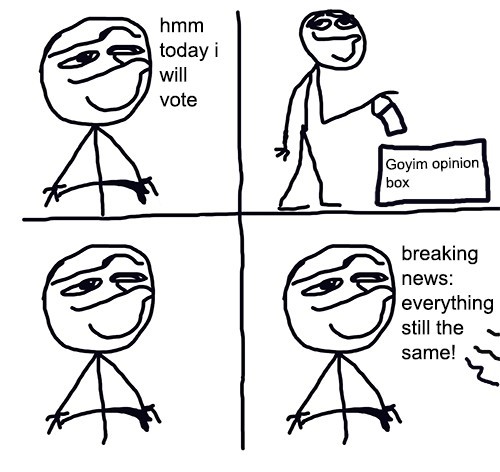
Right now, politics is a performance spectacle and spectator sport. We are completely subject to the decisions of our elected rulers and can do literally nothing about it. This is not democracy. If democracy is not direct, it is not democracy at all.
To truly propose a revolutionary alternative to liberalism, it is incumbent on any revolutionary opposition movement to appropriate the concept of democracy from the regime. As Carl Schmitt recognized, “the principle of democracy is the only principle of legitimacy that is available as an ideological basis for a contemporary constitution.”
Liberalism uses the concept of democracy and freedom to delegitimize its enemies and pursue regime change around the world. Why aren’t nationalists using the same script to undermine and discredit liberalism?
As Carl Schmitt once explained, “the danger exists that democracy might be used in order to defeat democracy. . .”
Liberal democracy persists because people have no alternative. It persists because it’s supposedly better than everything else that has been tried. But what if we haven’t tried everything?
Why don’t we try direct democracy?
Notes
[1] Quoted in Benas Gerdziunas, “Citizens disillusioned with democracy: poll” (Politico: 2018).
[2] Jacob Pramuk, “McConnell blocks $2,000 stimulus checks, then ties them to unrelated Trump demands on tech and election,” CNBC, Dec 2020. James North and Philip Weiss, “$500m to Israel in midst of Covid relief bill sparks ire,” Mondoweiss, Dec 2020. Omri Nahmias, “US COVID-19 relief bill includes increasing US-Israel research funding,” The Jerusalem Post, Dec 2020. David Brennan, “These Foreign Aid Projects, Worth $4 Billion, Could Be Scrapped to Fund Larger Stimulus Checks,” Newsweek, Dec 2020.
[3] John Milton, Areopagitica (1644) (Cambridge University Press: 1918), 58. David Gilbert, “Here’s How Big Far Right Social Network Gab Has Actually Gotten” (Vice News: 2019).
[4] Friedrich Nietzsche, Twilight of the Idols (Hackett Publishing: 1997), 10.
[5] Chris Hedges, “Our Invisible Revolution” (Truth Dig: 2013).
[6] Andrew Jackson, “Jackson’s Farewell Address” (1837).
4 comments
Interesting propositions included in this article. We can utilize the technology the system is providing for our own ends. Parochialism and sentimental idealization of “the Shire” while having their uses (return to more primordial archetypes) should not prevent the dissidents from embracing technology to its full potential.
Indeed the identitarians could become the forerunners of digital democracy from within their own movements without sacrificing the ideals of aristocracy or violating the Elite Theory. A multitude of servers could become the identitarian equivalent of the bolshevik “soviets” once the movements are able to organize themselves to such an extent where policy could be discussed. Voting mechanism can also be refined administratively by allocating number of votes per individual for example (to each according to their deeds) while making safeguards against the e-mob rule. Such servers could then become federated with one another to scale up the system towards a more coordinated phase. From there the accumulated experience and know-how could inform the systemic political reform/revolution to fully advance the political organization of the nation into the Digital Age of the XXI century.
Similarly the alternative economic and cultural networks could embrace the tech developments to make up for the manpower and financial deficits of their wielders. The System can restrict the technology and paywall it, but at the same time it cannot completely monopolize it 40k Mechanicus-style. The AI, e-currencies and e-payments should not be shunned in favor of cash and people, but compliment them. Even if we’re dependent on the power grid, so is the System and black-outs/shutdowns strike both ways. The embrace of technology in an aging society can also be used as another axis of resistance against an increasingly sclerotic system, favoring the tech-savy.
Conservatives can go to trade schools if they want. The new elite should study AI & automation, development, administration, security and networking among others. Even if they are not going to become the tech gods they should possess at least an understanding of digital knowledge.
Great article! Direct democracy sounds like the right thing, but how are you going to stop non-whites from voting for endless reparations, and subsidies? You would have to fight a major war to eliminate the non-whites. 🙃
I’m all for this. We could finally make the blockchain useful.
On a sidenote, it would be great if, in the meantime, politicians under investigation had their seats occupied by a merchant marine, and on conviction the merchant marine could maintain that seat until election, even running as a neutral incumbent.
lol nvm the sidenote that would violate seperation of powers
Comments are closed.
If you have a Subscriber access,
simply login first to see your comment auto-approved.
Note on comments privacy & moderation
Your email is never published nor shared.
Comments are moderated. If you don't see your comment, please be patient. If approved, it will appear here soon. Do not post your comment a second time.