 3,335 words
“Reality is that which, when you stop believing in it, doesn’t go away.”
—Philip K. Dick, How to Build a Universe That Doesn’t Fall Apart Two Days Later.
The nature of reality has puzzled men since long before even the Greeks asked ti esti?; “What is it?” Reality has been explained in as many different ways as there have been thinkers to explain it. Even the supposed precision of the physical sciences can’t persuade scientists to agree on the ultimate nature of reality.
But one of the few things we can say with certainty about reality is that it does at least unite humanity. We all perceive reality, in one version or another. An individual’s perception of reality may certainly be seriously skewed such as by drugs, injury, or psychological dysfunction. But even if you are locked deep in an asylum convinced that you are Napoleon, you are still experiencing reality of one sort or another. There is a “common stuff” to reality which means we have no choice but to partake in it along with everyone else.
Of course, we can’t cross-reference. No one knows what it is to experience someone else’s perception of reality. At least, not yet, although God knows what they are cooking up in the AI Batcave. But, broadly speaking, we can all agree that there is such a thing as reality, even if it is possible that different individuals process it differently. For example, a being who could investigate the sense data of different individuals might find that what I see as blue, you actually see as red. It doesn’t matter, so long as we both refer to it as either “blue” or “red.”
If that sounds suspiciously relativistic, like the “my truth/your truth” false dialectic beloved of standpoint epistemology, bear with me. It is not that the experience of reality must be shown to be exactly the same for every individual—nor could it be—but that there is something to which we refer, and we term it “reality.” We noted the possibility that physical or psychological factors may alter reality for individual(s), but it may be that reality can be skewed in other ways, and for other reasons. Firstly, what is the real? We need at least a serviceable working definition. Instead of asking an empiricist philosopher or a scientist, we will turn to one of the most famous philosophers of language.
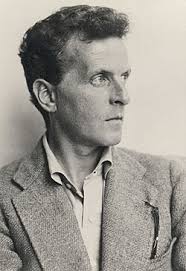
The first line of Wittgenstein’s 1921 Tractatus Logico-Philosophicus (a series of interconnected, sub-numerated statements, each of which implies the next) gives us a template for reality:
“1. The world is everything that is the case.”
The Tractatus concerns truth and its functions—in other words, reality—and one would expect the word itself to appear early in the text. But we have to wait some time, until 2.06:
“The existence and non-existence of atomic facts is the reality.”
We can’t follow Wittgenstein too far down the rabbit-hole of the Tractatus here, but if we go back two lines to 2.04: “The totality of existent atomic facts is the world,” we see that the equation of the world with reality in the Tractatus is clear. This world, this reality, however, is composed of facts and not things. This is stated all the way back in the Tractatus’ second point:
“1.1 The world is the totality of facts, not of things.”
Wittgenstein is saying something fundamental about reality; that it is propositional. It has to do with the inter-relation of facts about things, not the brute reality of the things themselves. And, as anyone who has watched a detective movie knows (Wittgenstein loved them, along with Westerns), the facts can change. We will return to facts, and the way in which they shape reality, but that reality is already under attack from several directions.
You can buy Greg Johnson’s The Trial of Socrates here.
The most obvious threat to reality is AI. Already, a phrase often heard online when showing an image is “I don’t know if this AI, but…” An acquaintance of mine has a company with an extensive AI program, and he tells me there is no digital equivalent to a watermark on an AI-produced image. It can’t be detected as a fake in the way that a Photoshopped picture can to the practiced eye. I also asked him whether it is possible to generate fake CCTV footage using AI. Absolutely, he said. If AI can replicate detail and sharpness, it can also do blurry and grainy. So, will this invalidate all future use of CCTV data by the police and the courts? London has more CCTV cameras than any city in the world, but of what use are they if, in a courtroom, no one can tell a record of reality from a fake? The same would hold for bodycams, phones, or anything else capable of producing a visual record.
The falsification of a visual image constituting a veridical record of reality began, perhaps, with the infamous photograph taken in 1937 of Stalin and his Chief of Secret Police, Nikolai Yezhov. There are two photographs of Stalin, before and after. As for Yezhov, now you see him, now you don’t. Stalin’s artist started something which is not over yet. Stalin also knew a lot more about manipulating reality than the mere air-brushing of photos. At meetings of the Supreme Soviet, he would insist that vodka was served and drunk, as Russians will. The bar-staff knew to take bottles of vodka to the commissariat, and one of water to Stalin.
Once AI is combined with virtual reality, we had better find a way to be sure we are in the real world, just as Descartes wished for a sure way to know he was not dreaming. I was never quite convinced by the little spinning-top in Inception as a guarantor of reality, but several very different movies have taken up the theme of a counterfeit reality in which the protagonist is trapped. For example, Total Recall, The Matrix, and The Cabin in the Woods all revolve around the idea of reality as the production of a third party. Altered States (in which William Hurt plays a psychonaut experimenting with hallucinogenic drugs in a flotation tank) is similar, but this alternative reality is self-willed. And there are also movies in which reality is altered, but by the design of men rather than Faustian technology or narcotic experiments. The Sting, The Usual Suspects, and The Last Seduction all rely on the manipulation of reality by human agents, but without using scientific or narcotic means. As for TV, perhaps the most famous example of an artificial reality is Patrick McGoohan’s famous series, The Prisoner. Number 6 strives for reality, and is continuously believing he has found something stable and real to enable him to escape The Village, only to find another layer of illusion. There are also some amusing takes on parallel realities: Groundhog Day, Being John Malkovich, and The Truman Show all make surreal comedy from being a psychological stranger in a strange land. But for now, back to reality, and another TV series which had an interesting relationship with the real world.
In the Spring of last year, the hot topic in the UK was a Netflix series called Adolescence. It was covered here at Counter Currents, and ruthlessly dismantled online as outrageous, anti-white propaganda. The plot concerns a young white boy who stabs a white girl to death, and is shown as the series progresses to have been “radicalized” on the internet. It is “toxic masculinity” that is to blame for the crime, but that is of secondary importance. Two aspects of reality are conflicted by Adolescence. The first is the origin of the storyline, which is based on actual events. The only real improvement on reality made by the insufferably smug series creators was that the actual crime—the one tethered to reality—involved a black boy stabbing a black girl to death. What are facts when it comes to protecting the black brand? Once this falsification, this tweaking of reality, has been converted into the delivery system of a government-endorsed TV series, however, it interferes at a secondary level with the distinction between what is real and what is not.
Something Prime Minister Keir Starmer said in relation to the show is worth revisiting, and Starmer couldn’t talk about Adolescence enough in the House of Commons. He seemed to believe that everyone in the United Kingdom should have their eyes pinned open, like Alex DeLarge in A Clockwork Orange, and be forced to watch it. It was indeed sent to every secondary school in the UK (where watching it was implicitly mandated), an unprecedented move. Kemi Badenoch, Leader of His Majesty’s Opposition, was vilified by the Labour benches when she admitted to not having seen it. But it was Starmer’s description of this fictional series that was so odd. On more than one occasion, and on the floor of the House of Commons, Starmer referred to Adolescence as “a documentary.”
A documentary is intimately linked to reality. The whole point of a documentary is that it is not fictional, and unwise fictions in a documentary can and do land the makers in court. The word “document” comes from the Medieval documentum, meaning an example or proof of something. By the time of Old French in the thirteenth century, when the concept had become integral to the legal process and so required a precise definition, un document had come primarily to mean “written evidence.” At its core, a documentary is a record of truth, a testament to something that really happened in the real world. Its whole point is that it is not fiction. Adolescence was fiction. Even the real subject it fictionalized was itself fictionalized further up the line. Not even the producers ever pretended otherwise. But Keir Starmer took it for reality, and wished us to do the same. This is why he repeatedly referred to Adolescence as a documentary. Tell a lie enough times…
If you listen to British politicians, you will often hear them say “The reality is…” Apart from being a fairly accurate predictor that what you are about to hear has as much relation to reality as Adolescence, it is also an attempt to cast a word-spell. The British government undoubtedly employs NLP (Neuro-Linguistic Programming), a fundamentally dull subject but one whose techniques are plainly used by the political class. Tony Blair is a fan of NLP, and if he was a fan of Tai Chi I would stop doing it tomorrow. At its simplest form (and I’m not convinced it has many others) NLP uses verbal repetition to effect psychological consequences in other people. It is the reiteration of technocratically designed words and phrases intended to have real-world effects. We recall the title of J. L. Austin’s 1962 book on language philosophy, How to Do Things with Words. But, stripped of its technocratic glitz, NLP is just the psychology of advertising given a flashy, scientific name. By coincidence, I watched the film Kingsman while writing this, in which three agents in training are inexplicably told to use “our NLP techniques” on one of their exercises. This pointless interjection leads to an unfunny scene in a rather patchy movie. What is funny about NLP, however, is when the media try to use it to convince you that reality is other than you might mistakenly believe.
Do you recall when YouTubers began making montages of these NLP fortune-cookie mottoes, as they were suddenly parroted by every Leftist media outlet? Anyone remember when the walls were closing in for Donald Trump? The fact that they are trying to pacify us with NLP shows they think they are hypnotizing chickens. But this feeble attempt at mass formation is a side-show. For the serious aspect of how language can be manipulated, and the effects that has on reality, we need to turn to definition.
You can buy Greg Johnson’s From Plato to Postmodernism here
To illustrate a link between language and reality, and how it revolves around definition, let’s take a comic look at a serious subject and hear a tale of two Crocketts. David “Davy” Crockett was one of those rare American folk-heroes whose name we recognized even in England. He described himself as follows:
I’m that same Davy Crockett, fresh from the backwoods, half-horse, half-alligator, a little touched with the snapping turtle, can wade the Mississippi, leap the Ohio, ride upon a streak of lightning…
Of course, unless we are suffering from some severe cognitive impairment, we understand that Crockett is not some hybrid creature, nor can he perform the physics-defying feats described. We understand that his speech is not connected with reality in anything other than a poetic, figurative sense. Now let’s look at another Crockett (probably not a descendant of Davy) and her use of language.
Jasmine Crockett is a fat black woman who has advanced in American politics for that very reason and no other. She also made a recent statement pertinent to reality which needs unpacking. Here, she is indulging in a regular pastime of American blacks (and, of course, white liberals); excusing black crime:
“Just because someone commits a crime, it doesn’t make them a criminal.”
She means a black man, of course, but let’s look at the epistemological implication of her statement. Consider alternative statements which are congruent:
“Just because someone swims, it doesn’t make them a swimmer.”
“Just because someone does professional accounting for various companies, it doesn’t make them an accountant.”
And so on. The point is that Ms. Crockett is claiming that language does not operate within a rigid system of stable definition, but rather in a whimsical, Alice in Wonderland-style way. “When I use a word, it means just what I choose it to mean,” Humpty-Dumpty tells Alice. “Neither more nor less.” This is, in essence, the working principle of the Left in regards to linguistic definition.
If you commit a crime, however, it does make you a criminal, black, white, or Albino. This isn’t some obscure machination of a systemically racist society. It’s how language operates. Without the surety of definition, language and meaning become arbitrary. I’ve noted before that this type of untethered, centerless epistemology is very dangerous once it “escapes the lab” by jumping from the seminar room to the public sector, and on to governance and legislation. I’ve also said that, if the Leftist book-burnings ever start in earnest, the dictionary will be first on the pyre.
An interesting, albeit primal, form of NLP can be found in the jungle of “black fatigue” videos. One black woman in particular (there are hundreds of examples) made every single statement blacks, and particularly black women, make at the point of arrest, in this case for shoplifting:
I didn’t do nothing! Why you arrest me for no reason? Call your chief! I’m not trespassing! [Note: No one involved had said that this particular woman was trespassing]. This raciss! This is why black people get killed! I’m a woman! I already pay for that! This not even mine! It my sister’s!”
You get the picture. On and on it went, like Luther’s theses. They all say some or all of these things when placed under arrest. But this string of inaccurate denial (to use the legal term) shows two things. One, this woman’s reality has been pre-formed for her by a set of easy-to-remember catchphrases, like a rap song. This is black NLP. Two, she believes that by repetition these phrases become real, become descriptive of reality. They are words of power, deep urban juju.
Related to the manipulation of reality using language, the visual field of semiotics also plays a part in the orchestration of reality. “Optics” is another technique the political class uses to its advantage. I think the first time I remember it being used was by Barack Obama in his first term. Obama and his advisers had been caught out on a golf course by a news team during some national crisis or disaster. When challenged as to why he was on the links rather than in the Oval Office, Obama said “Yeah, the optics weren’t good on that one.” This translates from technocratic language as “Reality was exposed to the public when it should not have been.” Obama was also the first person I heard suggesting, with reference to online censorship, that truth needs to be “curated.” In a similar way, visual and auditory reality must be inspected, edited where necessary, and then passed fit for public consumption, as with the BBC’s infamous edit of Trump’s January 6 speech. Two orders of reality exist; but only one is permissible.
So, let’s say there are two orders of reality. The first, R1, is actual reality to the extent that it can be proved to be real rather than a simulation or fake. The second is R2, and this is a constructed reality, intended to deceive by simulating an instance of R1. R2 is like a Potemkin village. Where can we find a good, recent example of R1 and R2, reality and the Potemkin version? Let’s not be too ethnocentric about this. Perhaps we should look among our Somalian friends.
The scale of the fraud largely perpetrated in Minneapolis is still unfolding, and a similar situation is coming to light in Ireland, with added multi-cultural spice in the form of Brazilians and Indians also scamming the Irish system. What the Minneapolis affair does show is a very variegated R1 and R2, and this difference—and its perception by the wider public—is what makes this event so important.
You can buy Greg Johnson’s Graduate School with Heidegger here
R1, in the context of the Somali fraud, is composed of empty daycare centers, false accounting, illicit pay-offs to colluding parents, unanswered phone lines, false business registration, and doubtless a host of other irregularities. R2, on the other hand, is well-attended schools, financial propriety, accurate and transparent accounting, and so on. What has caused the problems for the Somalis and their attack dogs in the Democrat Party is that the gap between R1 and R2 was too great, too visible, and ultimately incapable of being denied. The proximity, or lack of proximity, between R1 and R2 is the difference between getting away with it and getting caught. If you want to get away with it, you had better make your Potemkin Village look convincing.
Enough of the alternative realities. I’ll leave that sort of thing to the likes of Dr. Strange. But reality is not simply something for men in powdered wigs to ponder over in idle hours, nor is it ultimately just the sub-atomic labyrinth of the nuclear physicists (irrelevant to most of us anyway). If reality is composed of facts (as Wittgenstein proposes), and facts can be altered, modified, and manipulated, then you had better hope that whoever is doing the manipulating has your best interests at heart.
Nietzsche is one of the easiest writers to take out of context. His aphoristic style was forced on him, to a certain extent, by his extreme myopia. He often had to write with his nose almost touching the page. He tried a new-fangled typewriter, but didn’t get on with it, so his painful style of writing continued. That was Nietzsche’s reality. But I am going to take him out of context here. In his first book, The Birth of Tragedy from the Spirit of Music, Nietzsche is writing of the metaphysical habit of philosophers to posit another world as well as this (a tradition which harks back to Plato). But, out of context, his warning applies equally to us, suspicious as we are of the reality we find ourselves in. Have we already taken the red pill? Or did we take the blue one by mistake?
“Men of philosophical disposition are known for their constant premonition that our everyday reality is an illusion, hiding another, totally different kind of reality.”
2 comments
Reality is an expression of “the thing within its-self.” Great article! 🙃
In Wittgenstein’s treatise, I also found this: “2.063: “Reality in general is the world”. However, there is another perspective: Reality is a phenomenon of consciousness, which is its true creator.
Comments are closed.
If you have a Subscriber access,
simply login first to see your comment auto-approved.
Note on comments privacy & moderation
Your email is never published nor shared.
Comments are moderated. If you don't see your comment, please be patient. If approved, it will appear here soon. Do not post your comment a second time.