819 words
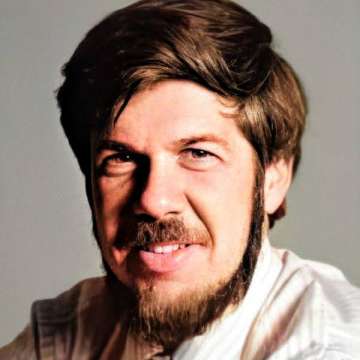
Stephen Jay Gould
Public debates about science are often presented as struggles between rigorous inquiry and ideological distortion. Over time, however, closer examination of the historical record shows that credibility was frequently distributed according to cultural alignment rather than evidentiary strength. Figures embraced by mainstream commentators were often shielded from scrutiny despite serious weaknesses, while researchers whose conclusions conflicted with dominant moral narratives were subjected to attacks on their reputations. This pattern becomes especially clear in science and intelligence research, where reassessments of influential critiques reveal substantial misrepresentation.
One revealing example comes from popular neuroscience. It has since been acknowledged in mainstream literary journalism that many of Oliver Sacks’s celebrated case histories were embellished or partially invented. Narrative coherence and emotional resonance frequently took precedence over strict clinical documentation. These stories were nevertheless treated for years as authoritative representations of neurological science. The importance of this admission lies not in biographical detail, but in what it reveals about standards of credibility. When work aligns with prevailing cultural expectations, deviations from empirical rigor are more easily excused.
A similar dynamic can be observed in the reception of Stephen Jay Gould’s critique of intelligence testing. His work was widely accepted as a definitive exposure of bias in psychometrics, particularly through his treatment of early intelligence tests such as the Army Beta. Yet careful reanalysis shows that his account relied heavily on selective quotation, speculation, and misunderstanding of test design and historical context. The Army Beta was not a haphazard or punitive instrument, but the result of extensive piloting and revision aimed at assessing cognitive ability among illiterate or non-English-speaking recruits under wartime constraints. The use of nonverbal tasks, pantomimed instructions, and limited verbal demands reflected deliberate accommodation rather than contempt for examinees.
Gould’s claim that large numbers of recruits were confused by the test is not supported by the data. Zero scores did occur, but their frequency was limited and anticipated by test designers, who explicitly recognized that such scores could reflect either low ability or misunderstanding and therefore required follow-up testing. Likewise, his criticism of time limits ignores documented development trials, in which longer limits produced inflated scores and reduced the test’s discriminatory power, leading designers to shorten administration times to improve measurement accuracy. In sum, these omissions show that Gould’s interpretation substitutes rhetorical inference for documented procedure, excluding pilot data, administrative safeguards, and the broader logic of the testing program.
Moving from critique to accusation, the case of Cyril Burt illustrates even more clearly how reputational narratives can diverge from empirical reality. Burt was long portrayed as a fraudulent researcher whose data were allegedly fabricated to support hereditarian conclusions, a claim that became central to broader efforts to discredit intelligence research. However, a comprehensive statistical reanalysis of his social mobility data shows that the core accusations do not withstand scrutiny. The supposed anomalies in his tables arise from standard data-weighting and rounding procedures that were widely used in the mid-twentieth century. When these procedures are properly understood, the appearance of suspicious regularity disappears. Claims that Burt’s data were “too normal” rest on misunderstandings of proportional fitting and marginal constraints, techniques that were well known at the time and sufficient to generate the observed patterns without fabrication. Moreover, the reanalysis demonstrates that Burt’s substantive arguments did not depend on the precise numerical features later labeled fraudulent. His use of the data was illustrative rather than evidentiary in the strong sense imposed retrospectively by critics. The durability of the fraud narrative therefore reflects ideological hostility more than statistical demonstration.
Extending this pattern into the contemporary period, similar dynamics characterize responses to Richard Lynn. He was widely condemned for documenting low average IQ scores in developing countries, yet this finding has been repeatedly replicated using independent data. His national IQ estimates correlate strongly with educational performance, economic productivity, and development indicators. Contemporary measures such as the World Bank’s Harmonized Learning Outcomes align closely with the cross-national patterns Lynn identified, and even AI systems such as Grok and Gemini acknowledge that his datasets correlate substantially with World Bank learning metrics. Despite this, Lynn is often portrayed as having ignored or evaded criticism, when in fact he was well known for responding directly and extensively to critics and for engaging objections to his data and methods in published replies. These responses are rarely acknowledged in retrospective portrayals, even though the empirical relationships he identified continue to appear across datasets, methodologies, and institutions.
Taken together, these cases suggest that assessments of scientific credibility have often been shaped less by methodological standards than by conformity to prevailing intellectual and moral frameworks. Figures whose work reinforced dominant narratives were frequently granted interpretive latitude, even when their arguments relied on selective reading or narrative construction. By contrast, researchers whose findings conflicted with those frameworks were more readily assumed to be biased or illegitimate, illustrating how science itself can become a vehicle for political activism rather than a neutral pursuit of truth.
4 comments
This is extremely well written. Thank you for writing it.
Remove duplicate comment
Will Williams: January 28, 2026
Dr. Lynn was right about race, but overstayed his time in academia and had to fight the anti-White establishment to be proven right: (See: “Call a spade a spade” at sequencemag.com). Compare his career as a “scientific racist” with Dr. William Pierce who gave up his successful academic career to pursue racial truth full time.
Greg Johnson quoted William Pierce 15 years ago, here on C-C: “Remembering William Pierce: September 11, 1933–July 23, 2002”
During our conversation on July 14, 2001, Pierce told us something that I will always remember. He loved physics, and he said that giving up academia was the hardest thing he ever did, but in the end, nothing could compare with the freedom to spend the rest of his life speaking the truth.
That is what separates Pierce from other successful scientific racists like Dr. Lynn. While searching for that essay with that Pierce quote I found this one
In “Why Conservatives STILL Can’t Win” at counter-currents.com Greg wrote:
Pierce was right. Conservatism can’t win. It doesn’t really conserve anything. It is so politically inept and hapless that it seems almost designed to lose. If doing the same thing again and again and expecting a different result is a definition of insanity, it is also a good definition of conservatism.
Written in 20010 Greg was discovering Pierce was right about a lot of things. Others, especially C-C commenters, were wrong about a lot 25 years ago. The comments under Greg’s 2010 essay reveal just how wrong some of the participating commentators were back then. They are worth reading with fresh eyes.
Pierce told us why 25 years ago in “The Importance of Courage” here: WLP88: The Importance of Courage” at nationalvanguard.org how easy it is to separate from Bkacks
…Yes, I am a racist, and I believe that we should not make a fuss about the behavior of Black athletes. I believe that their behavior should be none of our business. I also believe that they should not be viewed on our television screens and held up by the Jewish masters of the media as role models for our youth, nor should they be involved in any of our athletic contests. I believe that we should get them out of our country and out of our lives. I believe that we should do away with the system which in this century has changed athletics in America from something at least remotely similar to the Olympics into something very much like what took place in the Coliseum. I also believe that we should get rid of the people behind that system, the people who deliberately conspired to make professional athletics in America what it is…
As for myself, I know, like Pierce, that our people should not look to a racial Jew like Gould or a racial Negro like Lipman to show us the way forward to preserve our race.
I searched C-C for a recent essay mentioning “Right-Wing” and found this one by the Lip Man, so it will do. I bump my own comment under it.
Will Williams: January 28, 2026 … Greg Johnson quoted William Pierce 15 years ago, here on C-C: “Remembering William Pierce: September 11, 1933–July 23, 2002”
—
Greg: …During our conversation on July 14, 2001, Pierce told us something that I will always remember. He loved physics, and he said that giving up academia was the hardest thing he ever did, but in the end, nothing could compare with the freedom to spend the rest of his life speaking the truth.
… While searching for that essay with that Pierce quote I found this one In “Why Conservatives STILL Can’t Win” at counter-currents.com . Greg wrote:
Pierce was right. Conservatism can’t win. It doesn’t really conserve anything. It is so politically inept and hapless that it seems almost designed to lose. If doing the same thing again and again and expecting a different result is a definition of insanity, it is also a good definition of conservatism.
[…]
Pierce told us why 25 years ago in “The Importance of Courage” here: WLP88: The Importance of Courage” at nationalvanguard.org how easy it is to separate from Blacks.
[…]
As for myself, I know, like Pierce, that our people should not look to a racial Jew like Gould or a racial Negro like Lipman to show us the way forward to preserve our race.
—
How many pro-White groups have failed in the past 50 years, and why have they failed? William Pierce wrote the following in ACTION!, predecessor to the current internal NA Members BULLETIN, in 1976, letting them know the difficult road that lay ahead for them as Alliance members:
“WHY WE WILL SUCCEED WHERE OTHERS FAIL by Dr. William Pierce- 1976” at whitebiocentrism.com forum.
I don’t think I need to convince anyone here that what we are trying to do is very difficult. It is obvious from our own experience of the last few months that it is not easy to build up our numbers even to those needed for a truly viable organization, which I talked about a few weeks ago. It is not easy to bring new people to our meetings in the numbers we would like.
The difficulties we experience tempt some of us, I am sure, to place less emphasis on the fundamental Truth we express in our Affirmation and to turn instead toward gimmicks of one sort or another. If people will not listen to our Truth, some of us may think, then we should talk to them about things they are interested in: income taxes, school busing, pornography, abortion, the right to keep and bear arms.
Now, there is no doubt that, right now, we could win a greater response from the general public if we stopped talking about our Purpose, our Truth, and concentrated all our efförts on one of those topics. We would also be more successful, in a certain sense, if we were careful not to mention the Jews or to talk about race. We could win more people, in other words — we could be a bigger organization — if we would behave like conservatives or right wingers…
Read more at the link, posted by very astute young NA Membership Coordinator Dillon Rau on 17 March, 2026.
Comments are closed.
If you have a Subscriber access,
simply login first to see your comment auto-approved.
Note on comments privacy & moderation
Your email is never published nor shared.
Comments are moderated. If you don't see your comment, please be patient. If approved, it will appear here soon. Do not post your comment a second time.