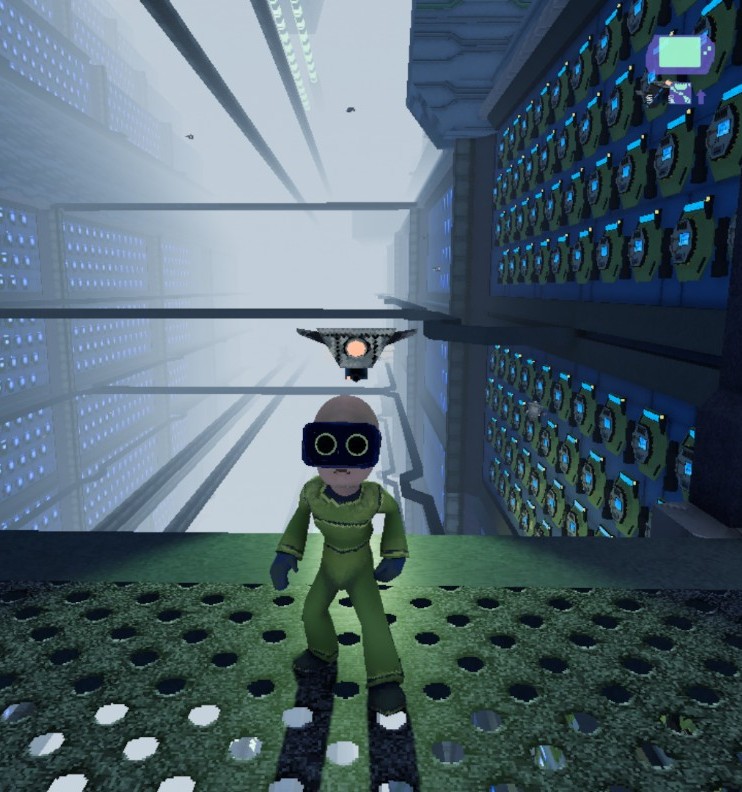
 1,050 words
The year is unknown. You wake up from a pleasant dream and tear off a virtual reality device which was attached to goggles seemingly built into your head. You find yourself sealed in a pod, although you are soon extracted by a strange machine. It is difficult to walk, because you have never done so in your life. A robotic voice calls you “Redeemer” and tells you to step into something called a “rejuvenation chamber.”
Serene Estates: The Last Guy was published by Kvltgames, previously known for patriotic action games Heimat Defender and The Great Rebellion. Developed by an even smaller team calling themselves Digital Escape Games, the title takes place in a vast underground complex where humanity, or at least all the hero knows of it, has been reduced to living in a series of tubes.
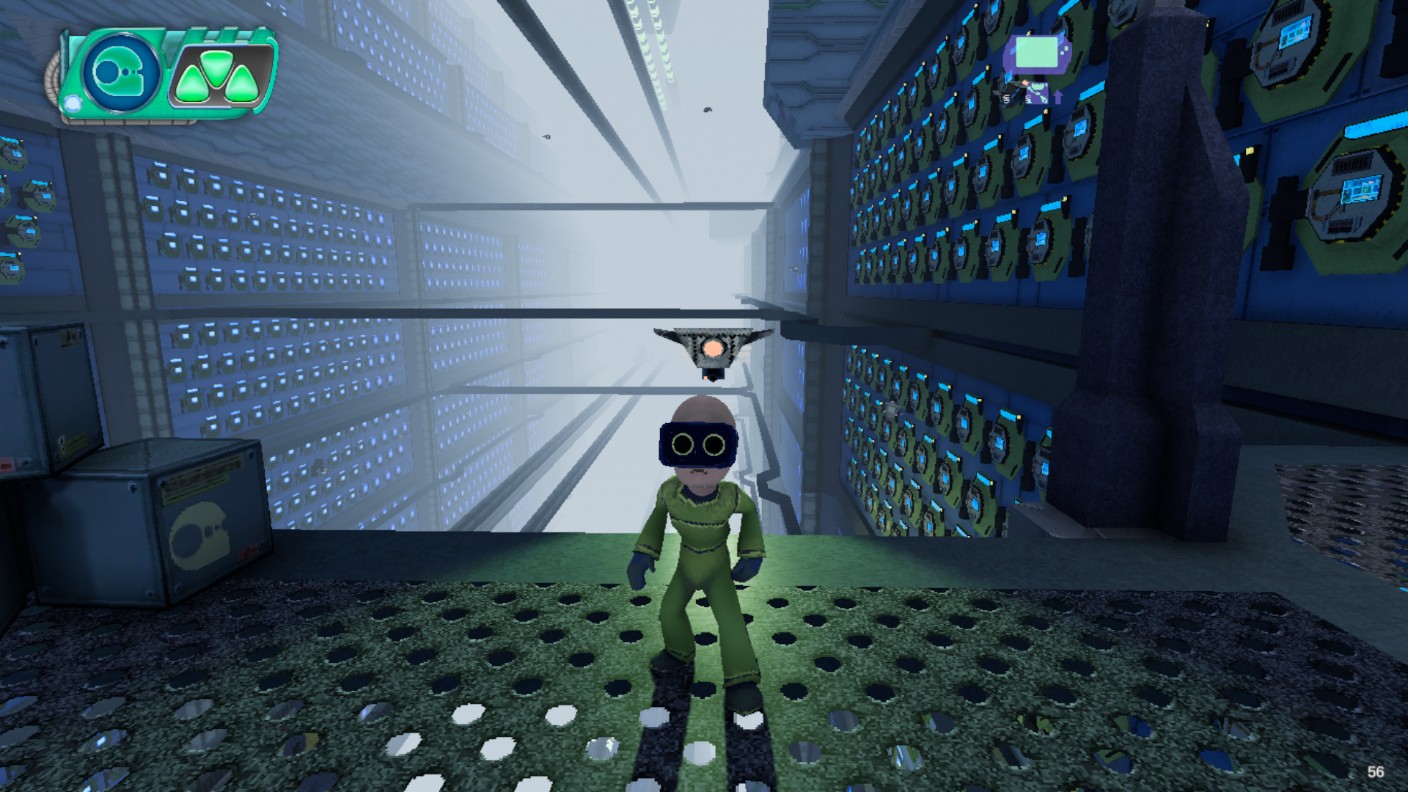
The protagonist stands in his own housing block, observed by one of the game’s many drones.
With a physique apparently stunted by a lifetime of sedentary soy consumption, the hero must traverse a polyurethane prison while evading drone attacks from Serena, its artificial queen. A mysterious benefactor called the Admin contacts the player in a series of transmissions to guide him through the colorful tomb. Numerous message files left in random locations gradually make clear how the denizens of Serene Estates have been enslaved by their own desire for comfort and safety.
Being entirely unarmed, the hero’s actions are mostly peaceful, largely consisting of running, jumping, and solving simple puzzles to access and sabotage the various facilities. However, there are a few points where he is compelled to pilot a series of drones in a sort of futuristic dogfighting. This is interesting in that it provides elaborate environments for indoor flight, similar to the Descent series but without the likelihood of getting lost; thankfully, these are large open spaces rather than a maze of tunnels.
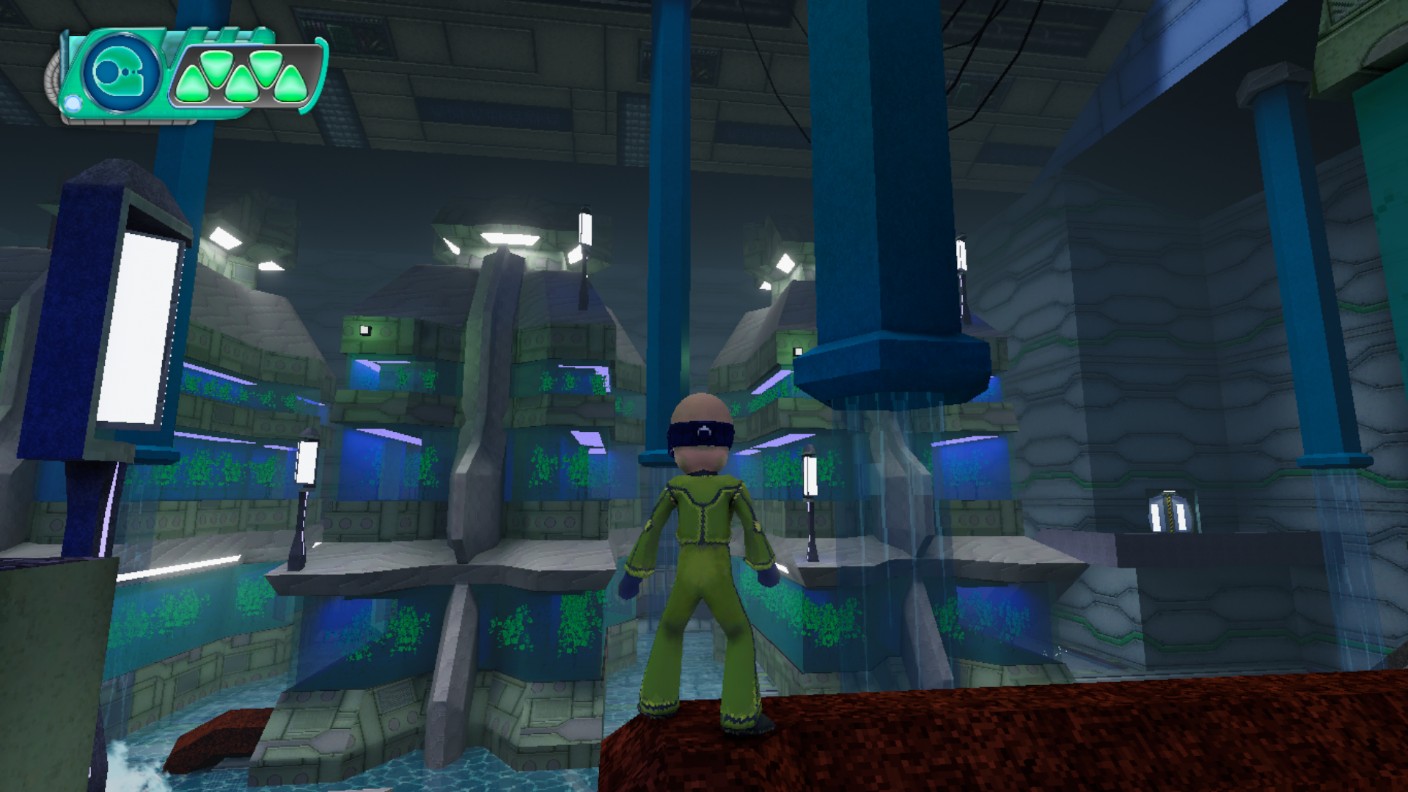
The hero visits the food manufacturing plant, which provides an entirely plant-based diet.
Although there are no weapons or armor, this does not mean there are no power ups or potions to acquire. Throughout the game the player comes across vending machines dispensing something called Soy Breeze, which replenishes his health. He can increase his maximum health by consuming Bug Lite, an insect-based concoction which one log file explains has had opium added to increase customer retention. Perhaps the hero’s diet while living in the pod was so feminizing that even “eating the bugs” is a great improvement and serves to restore his manly vigor. The more cynical interpretation would be that the opium merely makes him more insensitive to pain.
It would be understandable to object that the plot is unoriginal. The idea of human beings locked in a virtual world which they take for reality, while their bodies waste away in artificial pods, is familiar from The Matrix, as is the idea of a hero who would liberate them from this condition. The developers themselves mentioned System Shock as an influence, in which an arrogant and malignant artificial intelligence is in control of an isolated outpost of humanity. The basic concept of a dark future in which we have been enslaved or nearly wiped out is very familiar today, and much older than video games.

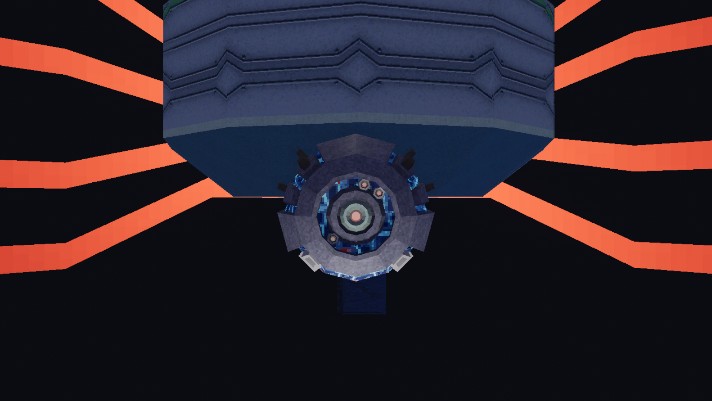 The main antagonist from System Shock 2 (top) and a proxy for Serena in Serene Estates (bottom).
However, I very much enjoyed the exposition of the story throughout the game. It is not made entirely clear what has happened in Serene Estates until just before the final battle with Serena’s drones, but there are clues to stimulate the player’s imagination. The inhabitants came to the compound willingly, driven by propaganda about extreme weather and rioting. They surrendered all personal property upon arrival, accepting the authority of a corporation and a childless couple who were initially human. At first there was a great deal of work to do, but advances in automation changed the situation, and life in the compound became increasingly focused on virtual reality. Ultimately everyone was forced to participate in the “Actuaverse,” even those who were promised otherwise. The subjects’ dissatisfaction with life in the pod displeased corporate stakeholders and provoked a terrible experiment which led to the situation the hero finds himself in.
The graphics are refreshingly simple, with no sign of the common contemporary efforts at photorealism. The developers themselves compare it to “early 2000s classics,” and the player can often make out individual pixels. The screen is uncluttered, and the gameplay is explained with simple instructional graphics, avoiding the excessive tutorials common in recent titles. The color scheme and general aesthetic are appropriate to the plot, presumably designed by the corporation to be soothing to the inhabitants, but with little sign of human vitality. My only complaint is that there is no option for pro-white players to turn off colored lighting.
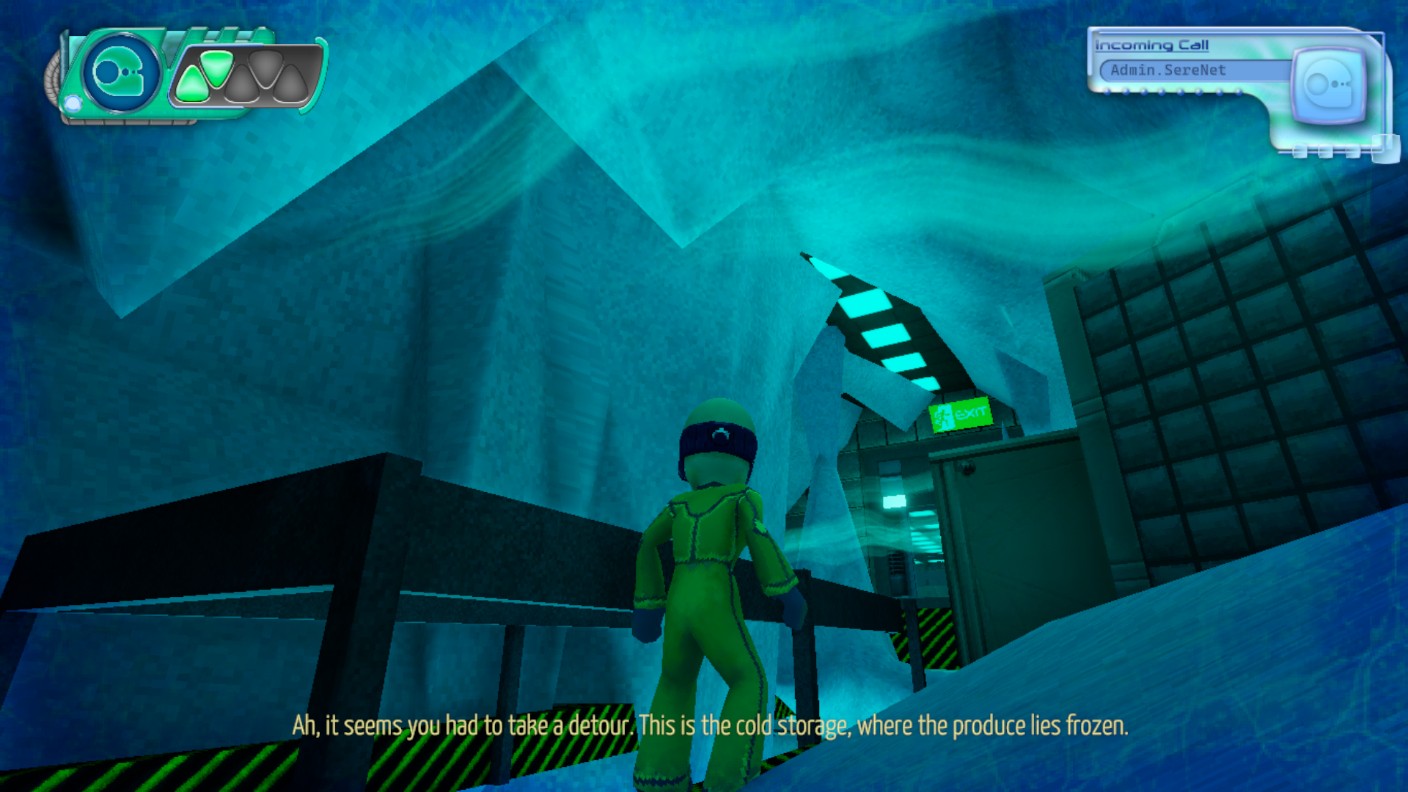 The gameplay is unusual in that the player never comes face to face with another human being, nor even another form of animal life. The only living things he encounters before finally escaping the compound are the soy plants grown by machines. He never even sees human remains, although many have died since the beginning of the program; it is implied that the dead have been “recycled,” either used as fertilizer or fed back to the living directly.
Unlike in The Matrix, the hero develops no special powers and performs no great feats of will, demonstrating only the drive to explore, to survive and ultimately to escape. Some of his fellow pod-dwellers can be evacuated as well if he locates the necessary keys, although it is unclear exactly what happens to them. The game ends with him stepping outside the compound and seeing the sun for the first time, along with enormous metal arches suggesting that some kind of civilization still survives.
Despite the dystopian setting, this is not a depressing game to play. It lacks the hopeless or oppressive atmosphere of many horror games, and the player must assume that the developers are not entirely pessimistic about the real world. The soundtrack, composed by one of the developers, is high-energy and far from gloomy. Anyone who hopes for a less artificial and more white pilling world should be able to appreciate this game.
5 comments
The gameplay is unusual in that the player never comes face to face with another human being…
Great article! The gameplay is not that unusual, I have gone years without meeting another White Nationalist (human being). 🙃
I’m one of the three main developers who worked on the game. You’ve really dug deep into the lore here.
We’re still thinking of things we could add as additional content; such as a time trial mode, harder difficulties (though getting a balance in this would be hard) and other features. Though these ideas are all at the conceptual, pre-planning phase at the moment since we’re fixing any minor bugs which have slipped through our QA process.
On that topic, we can’t thank our play-testers enough. They went above and beyond in finding bugs, big and small which would have made the game a whole lot less polished if they’d not been highlighted and fixed prior to release.
I like how you dig into the lore behind Soy Breeze which was created with genetically modified soy to create opium soymilk and Bug Lite, a drink made using roided up fireflies, for per-firefly production gains. Roided up bugs were a pitched enemy type very early in development, about 2 and a half years ago, but we couldn’t think of a good way to fit them in whilst meeting our deadlines.
Great article overall, I really like it.
I recommend you check out Synthetic Man’s critique of the game
https://youtu.be/7pdF22OHtJk
@ 5:50
Good stuff, thanks for reminding me, I gotta pick this up ASAP. Love System Shock 2.
Hi! Project lead here. Thanks for the nice review. Only factual error I have to point out is concerning music, RetroRebel did not work on music for the game, just sound design for the some of the cinematics. This is our bad since music & sound are in a single category in the credits. We’ll fix that to make it more clear.
Thanks again, keep up the good work!
If you have a Subscriber access,
simply login first to see your comment auto-approved.
Note on comments privacy & moderation
Your email is never published nor shared.
Comments are moderated. If you don't see your comment, please be patient. If approved, it will appear here soon. Do not post your comment a second time.