Counter-Currents
  • Advertise
  • Private Events
  • T&C
  • About
  • Contact
  • RSS
    • Main feed
    • Podcast feed
    • Videos feed
    • Comments feed
  • Welcome
  • Webzine
  • Books
  • Merch
  • Podcasts
  • Videos
  • Donate
  • Patrons
  • Subscribe
  • Crypto

LEVEL2

Donate Now Mailing list
Upcoming podcasts
  • Rob Rundo on Counter-Currents Radio

    Rob Rundo on Counter-Currents Radio

    Counter-Currents Radio

    06/13/2026 — 3 pm EST / 9 pm CET
  • Daniel Tyrie on Counter-Currents Radio

    Daniel Tyrie on Counter-Currents Radio

    Counter-Currents Radio

    06/20/2026 — 3 pm EST / 9 pm CET

Writers of May

(2 votes) Morris van de Camp David M. Zsutty Derek Stark Jayant Bhandari Greg Johnson

Articles of May

The Lunch Wars by David M. Zsutty Heidegger on Nietzsche, Part One by Collin Cleary 2 votes
  • Welcome
  • Webzine
  • Books
  • Merch
  • Podcasts
  • Videos
  • Donate
  • Patrons
  • Subscribe
  • Crypto
    • Why White Advocates Should Avoid “Based Blacks”

      Dani Vypont

    • Nietzsche & Race

      Mark Gullick

    • Editor’s Update
      Rob Rundo Rescheduled to Next Week on Counter-Currents Radio;
      Tonight Greg Johnson & David Zsutty Answer Your Questions;
      Fundraiser Update & a New $20,000 Matching Grant

      Greg Johnson

    • The Counter-Currents 2026 Fundraiser
      Lifetime Subscriber Welcome Packages Extended

      Greg Johnson

    • Nationalism This Week
      Who’s Looking Back?

      Greg Johnson

      21

    • China’s Threat to American Security:
      Food, Farmland, Foreign Control, & Energy Policy

      Lipton Matthews

      1

    • The Bitter End of Western Metaphysics:
      Heidegger on Nietzsche, Part Two

      Collin Cleary

      11

    • The Killing of Henry Nowak

      Mark Gullick

      28

    • The Crisis of Chinese Technology Thieves

      Morris van de Camp

      1

    • The Strange World of Gender Bender Fiction:
      & What This Genre Tells Us About Autosexuality

      Dani Vypont

      3

    • Watching the Watchers:
      The Dark Triad Question

      David M. Zsutty

      14

    • The Remigration Movement Solidifies

      F. Roger Devlin

      1

    • Casting Aspersions:
      The Fatal Consequences of Race-Swapped Casting, From Helen of Troy to Henry of Southampton

      Steven Tucker

      20

    • The Murder of Henry Nowak

      Millennial Woes

      23

    • Don’t Forget to Vote in Our Writer & Article of the Month Poll

      Greg Johnson

    • The Robot Hotdog Stand

      Greg Johnson

      35

    • Laughing Our Way to Victory

      Dave Chambers

      7

    • The Zodiac Killer

      Mark Gullick

      11

    • Jared Taylor: What Rome Means to Me

      Jared Taylor

      1

    • An Interview with Endeavour:
      My Way of Life Is an Adventure!

      Ondrej Mann

      6

    • José Pedro Zúquete’s The Identitarians

      Greg Johnson

      3

    • Editor’s Update
      Fundraiser Update & How to Watch the Remigration Summit

      Greg Johnson

      5

    • The Bitter End of Western Metaphysics:
      Heidegger on Nietzsche, Part One

      Collin Cleary

      11

    • Berlin: City of Stones

      Spencer J. Quinn

      6

    • True Folk-Horror Is Horror of Your Own Folk:
      Mark Gatiss vs the Brexit Blind Dead  

      Steven Tucker

      4

    • Counter-Currents Radio Podcast No. 689
      Thomas Massie, the America 2050 Bust, the Need for Whites to Divest from America, the AI Economic Apocalypse, & Pro-White Project Pitches to Billionaires

      Counter-Currents Radio

      7

    • Nationalism This Week
      Remigration is Inevitable, Part 3

      Greg Johnson

      27

    • Why Billionaires Should Fund White Identity Politics

      Lipton Matthews

      8

    • How Cold War Two Came About

      Morris van de Camp

      5

    • Now Available for Pre-Order at a Special Price!
      Greg Johnson’s The Philosopher Is In

      Greg Johnson

    • David Zsutty’s Elevator Pitch to a Billionaire

      David M. Zsutty

      1

    • Headbanging Lite

      Mark Gullick

      5

    • White Advocacy Past and Present

      Peter Bradley

      13

    • The Lunch Wars

      David M. Zsutty

      47

    • The Russians are Coming/The Russians are Coming

      Steven Clark

      1

    • Peak Fatigue in Fort Wayne

      Gabriel Anderson

      24

    • Keith Woods’ Elevator Pitch to a Billionaire

      Keith Woods

    • The Cruelty of Kindness

      Morris van de Camp

      9

    • Predation Wearing the Mask of Civilization

      Jayant Bhandari

      13

    • The Mandalorian & Grogu

      Trevor Lynch

      24

    • Editor’s Update
      Fundraiser Update & a New $20,000 Matching Grant
      Greg Johnson & David Zsutty Discuss Thomas Massie on Counter-Currents Radio

      Greg Johnson

      2

    • How the Jews Defeated Thomas Massie—& Themselves

      David M. Zsutty

      25

    • Jared Taylor’s Elevator Pitch to a Billionaire

      Jared Taylor

      15

    • Nationalism This Week
      Remigration Is Inevitable, Part 2

      Greg Johnson

      8

    • Could Fascism Work?

      Mark Gullick

      40

    • Jonathan Bowden’s Deliverance
      Part 7

      Jonathan Bowden

    • China’s Quiet Hand:
      Influence, Infiltration, & the Western Blind Spot

      Lipton Matthews

      9

    • Counter-Currents Radio Podcast No. 688
      Tyler Dykes on Running for US Congress in South Carolina

      Counter-Currents Radio

      3

    • Lothrop Stoddard’s The Revolt Against Civilization

      Spencer J. Quinn

      14

    • Lewis Strauss Did Nothing Wrong:
      How the politics of the Atom Bomb during the early Cold War Apply to Artificial Intelligence Today

      Morris van de Camp

      14

    • AdamMil

      Nationalism This Week
      Who’s Looking Back?

      Massive hardware. To run something like Grok you'd need terabytes of GPU memory. That said, for...

    • AdamMil

      Nationalism This Week
      Who’s Looking Back?

      Don’t be too sure. There have already been multiple experiments showing that modern AIs may turn on...

    • Hi-ya!

      Nationalism This Week
      Who’s Looking Back?

      I use the following commands if I feel ai is getting to wound up, yes I got it from ai but it’s...

    • Collin Cleary

      The Bitter End of Western Metaphysics:
      Heidegger on Nietzsche, Part Two

      Oh no, not so. For the Overman, truth is entirely relative and subjective. Remember: he gets to...

    • Connor McDowell

      Nationalism This Week
      Who’s Looking Back?

      HAL9000 in 2001 was never truly “sentient”. “His” programming had a conflict that couldn’t be...

    • Will Williams

      Nationalism This Week
      Victory First

      There are several C-C essays that mention Gaza, but this appears to be the only one where comments...

    • Observer

      The Bitter End of Western Metaphysics:
      Heidegger on Nietzsche, Part Two

      In Platonism, we find the insistence that being, true being, is identical with “the forms.” The...

    • JBP

      The Bitter End of Western Metaphysics:
      Heidegger on Nietzsche, Part Two

      Thanks. Unfortunately I must fall into the 95% that Jane refers to. My brain is not putting the...

    • Will Williams

      Nationalism This Week
      Who’s Looking Back?

      Vauquelin: June 7, 2026 ...You must judge AI/LLM based on those who control it. With the likes of...

    • Hi-ya!

      The Bitter End of Western Metaphysics:
      Heidegger on Nietzsche, Part Two

      Love to engage in this with more attention ; I’ve never seen “clearing” in presocratics and my hot...

    • Vauquelin

      Nationalism This Week
      Who’s Looking Back?

      You must judge AI/LLM based on those who control it. With the likes of Sam Altman and Alex Karp...

    • Chud

      Nationalism This Week
      Who’s Looking Back?

      There's another dangerous option where homebrew AI models scale up and the consumers get their...

    • Gabe

      Nationalism This Week
      Who’s Looking Back?

      Boom. Nailed it.

    • Joe Gould

      The Killing of Henry Nowak

      This is a good article. The only thing I want to add is, above all we must guard ourselves against...

    • Greg Johnson

      Nationalism This Week
      Who’s Looking Back?

      Thank you I also wonder if these AI bots are being used to gather intelligence on influential...

    • E_Perez

      The Bitter End of Western Metaphysics:
      Heidegger on Nietzsche, Part Two

      "Philosophy helps Western man understand how we got to where we are, and where things went wrong...

    • Chud

      Nationalism This Week
      Who’s Looking Back?

      I'll try to give a rundown. AI is a language learning model (LLM) that uses floating point...

    • Will Williams

      How the Jews Defeated Thomas Massie—& Themselves

      Massie to Honor USS Liberty Crew on House Floor [email protected]  June 6, 2026  thomas...

    • JBP

      Editor’s Update
      Saturday: Greg Johnson & David Zsutty Discuss the Epstein Bomb on Counter-Currents Radio

      Sorry but... Wrong, wrong wrong and wrong. The current momentum of history will not change with a...

    • Will Williams

      Nationalism This Week
      The SPLC Indictment

      The indictment of the Southern Poverty Law Center by the Department of Justice on 21 April is...

    • Earth Day Special

      John Morgan

      12

    • A Robertson Roundup
      Remembering Wilmot Robertson
      (April 16, 1915 – July 8, 2005)

      Margot Metroland

      13

    • The Paranoid Style in White Nationalism

      Greg Johnson

      30

    • Join the Dance!

      Andrew Hamilton

      1

    • We Can’t Save the Earth Without Reducing African Birth Rates

      James Dunphy

      36

    • “I’m Not a Conspiracy Theorist, but . . .”:
      Jeffrey Epstein’s Death Gives New Life to “Conspiracy Theories”

      Greg Johnson

      22

    • Sylvia Plath: Stasis in Darkness

      Vic Olvir

      17

    • Vanguardism, Vantardism, & Mainstreaming

      Greg Johnson

      80

    • Aviation, Geography, & Race

      Charles Lindbergh

      3

    • Some Thoughts on Yule

      Collin Cleary

      4

    • Living in Truth:
      A Yuletide Homily

      Jef Costello

      7

    • John Kennedy Toole’s A Confederacy of Dunces

      Greg Johnson

      20

    • On Aleksandr Solzhenitsyn’s Warning to the West

      Spencer J. Quinn

      7

    • Elitism, British Modernism, & Wyndham Lewis

      Jonathan Bowden

      6

    • Philip K. Dick’s Do Androids Dream of Electric Sheep? as Anti-Semitic/Christian-Gnostic Allegory

      Greg Johnson

      20

    • “Conspiracy Theory” or Conspiracy?

      Andrew Hamilton

      21

    • Remembering H. P. Lovecraft
      (August 20, 1890–March 15, 1937)

      Greg Johnson

      3

    • Who Are We?
      Nordics, Aryans, & Whites

      Greg Johnson

      71

    • Remembering William Gayley Simpson
      (July 23, 1892–December 31, 1990)
      A Pleasant Afternoon with Harriet & Bill Simpson

      Margot Metroland

      18

    • Here are the Young Men
      Remembering Ian Curtis
      (July 15, 1956–May 18, 1980)

      Mark Gullick

      18

    • Percy Grainger
      Artist of the Right

      Alex Graham

      7

    • Remembering Revilo Oliver
      (July 7, 1908–August 20, 1994)

      Greg Johnson

      18

    • The Meaning of July 4th for the White Man

      Gregory Hood

      13

    • The Front National’s Evolution

      Bruno Mégret

    • Merwin K. Hart
      Forgotten American Hero & Man of the Right

      Morris van de Camp

      10

    • George Orwell’s Nineteen Eighty-Four

      Jonathan Bowden

      8

    • Carleton S. Coon
      Scientist & Reluctant White Advocate

      Morris van de Camp

      3

    • The Kwanzaa Absurdity Will Be Dwarfed by Juneteenth

      Robert Hampton

      10

    • Stravinsky

      Alex Graham

      7

    • Like the Roman:
      Remembering Enoch Powell (1912-1998)

      Mark Gullick

      23

    • Neo-Fascism in Film
      Part 5

      Karel Veliky

      15

    • The Game of Tarot

      Mark Gullick

      1

    • Institutions Cannot Be Transplanted

      Jayant Bhandari

      5

    • Jonathan Bowden’s Deliverance
      Part 5

      Jonathan Bowden

    • Crosstown Traffic:
      Jimi Hendrix & The Post-War Rock ‘N’ Roll Revolution

      Mark Gullick

      1

    • Slaves from the North:
      Finns & Karelians in the East European Slave Trade, 900–1600

      Lipton Matthews

      14

    • Neo-Fascism in Film
      Part 4

      Karel Veliky

      2

    • David Lean’s A Passage to India

      Spencer J. Quinn

      1

    • Elites are Essential to Development

      Lipton Matthews

      7

    • Jonathan Bowden’s Deliverance
      Part 4

      Jonathan Bowden

    • Neo-Fascism in Film
      Part 3

      Karel Veliky

      6

    • E. M. Forster’s A Passage to India & the Indian Mentality

      Spencer J. Quinn

      25

    • Jonathan Bowden’s Deliverance
      Part 3

      Jonathan Bowden

    • The Rest Is Silence
      Heidegger’s Quietism

      Mark Gullick

      2

    • Dispelling the Historical Fallacy of Indian Nationalism

      Lipton Matthews

      8

    • Neo-Fascism in Film
      Part 2

      Karel Veliky

      8

    • Jonathan Bowden’s Deliverance
      Part 2

      Jonathan Bowden

    • Life of a Klansman

      Mark Gullick

      8

    • Jonathan Bowden’s Deliverance, Part 1

      Jonathan Bowden

    • Decolonial Ideas are Holding Back Developing Countries

      Lipton Matthews

      8

    • Neo-fascism in Film, Part 1

      Karel Veliky

      21

    • Jonathan Bowden’s Onslaught, Part 8
      Divigations on Decadence

      Jonathan Bowden

    • Jonathan Bowden’s Onslaught, Part 7
      Intrigues in the National Front

      Jonathan Bowden

      1

    • Rotten to the Core

      Mark Gullick

      8

    • Strauss on Husserl’s “Philosophy as Rigorous Science”

      Greg Johnson

    • Jonathan Bowden’s Onslaught, Part 6
      Francis Bacon & Right-Wing Nihilism

      Jonathan Bowden

    • London After (& Before) Midnight:
      Aleister Crowley, The Landlord’s Worst Nightmare

      James J. O'Meara

      2

    • Jonathan Bowden’s Onslaught, Part 5
      The Post-War British Far Right

      Jonathan Bowden

    • No Rules: Rollerball

      Mark Gullick

      4

    • Jonathan Bowden’s Onslaught, Part 3
      Brett Easton Ellis’ American Psycho

      Jonathan Bowden

    • András László
    • Derek Hawthorne
    • Beau Albrecht
    • Alain de Benoist
    • Kerry Bolton
    • Jonathan Bowden
    • Collin Cleary
    • Jef Costello
    • Savitri Devi
    • Julius Evola
    • Jim Goad
    • Gregory Hood
    • Juleigh Howard-Hobson
    • Greg Johnson
    • Charles Krafft
    • Anthony M. Ludovici
    • Trevor Lynch
    • H. L. Mencken
    • J. A. Nicholl
    • James J. O’Meara
    • Christopher Pankhurst
    • Tito Perdue
    • Michael Polignano
    • Spencer J. Quinn
    • Fenek Solère
    • Irmin Vinson
    • Leo Yankevich
    • Francis Parker Yockey
    • Multiple authors
  • Editor-in-Chief

    • Greg Johnson, Ph.D.

    Featured Writers

    • Beau Albrecht
    • Gunnar Alfredsson
    • Collin Cleary, Ph.D.
    • Jef Costello
    • Morris V. de Camp
    • F. Roger Devlin, Ph.D.
    • Stephen Paul Foster, Ph.D.
    • Jim Goad
    • Alex Graham
    • Mark Gullick, Ph.D.
    • Greg Johnson, Ph.D.
    • Travis LeBlanc
    • Trevor Lynch
    • Margot Metroland
    • James J. O’Meara
    • Angelo Plume
    • Spencer J. Quinn
    • Fred Reed
    • Clarissa Schnabel
    • Michael Walker
    • David M. Zsutty

    Frequent Writers

    • Asier Abadroa
    • Aquilonius
    • Alain de Benoist
    • Kerry Bolton, Ph.D.
    • Dave Chambers
    • Steven Clark
    • James Dunphy
    • Endeavour
    • Richard Houck
    • Jason Kessler
    • Titus Livius
    • Ondrej Mann
    • Lipton Matthews
    • Mark Mazari
    • John Morgan
    • Jaroslav Ostrogniew
    • Kathryn S.
    • Christian Secor
    • Anne Wilson Smith
    • Thomas Steuben
    • William De Vere
    • Kenneth Vinther
    • Max West

    Classic Authors

    • Maurice Bardèche
    • Jonathan Bowden
    • Julius Evola
    • Guillaume Faye
    • Ernst Jünger
    • Kevin MacDonald, Ph.D.
    • D. H. Lawrence
    • Charles Lindbergh
    • Jack London
    • H. P. Lovecraft
    • Anthony M. Ludovici
    • Sir Oswald Mosley
    • National Vanguard
    • Friedrich Nietzsche
    • Revilo Oliver
    • William Pierce
    • Ezra Pound
    • Saint-Loup
    • Savitri Devi
    • Carl Schmitt
    • Miguel Serrano
    • Oswald Spengler
    • P. R. Stephensen
    • Jean Thiriart
    • John Tyndall
    • Dominique Venner
    • Leo Yankevich
    • Francis Parker Yockey

    Other Authors

    • Howe Abbott-Hiss
    • Michael Bell
    • Giles Corey
    • Jack Donovan
    • Richardo Duchesne, Ph.D.
    • Emile Durand
    • Guillaume Durocher
    • Mark Dyal
    • Tom Goodroch
    • Andrew Hamilton
    • Robert Hampton
    • Huntley Haverstock
    • Derek Hawthorne
    • Gregory Hood
    • Juleigh Howard-Hobson
    • Alexander Jacob
    • Ruuben Kaalep
    • Tobias Langdon
    • Julian Langness
    • Patrick Le Brun
    • G A Malvicini
    • John Michael McCloughlin
    • Millennial Woes
    • Michael O’Meara
    • Christopher Pankhurst
    • Michael Polignano
    • J. J. Przybylski
    • Quintilian
    • Edouard Rix
    • C. B. Robertson
    • C. F. Robinson
    • Herve Ryssen
    • Alan Smithee
    • Fenek Solere
    • Ann Sterzinger
    • Robert Steuckers
    • Tomislav Sunic
    • Donald Thoresen
    • Marian Van Court
    • Irmin Vinson
    • Book Reviews
    • Movie Reviews
    • TV Reviews
    • Music Reviews
    • Art Criticism
    • Graphic Novels & Comics
    • Video Game Reviews
    • Fiction
    • Poems
    • Interviews
    • Videos
    • English Translations
    • Other Languages
      • Arabic
      • Bulgarian
      • Croatian
      • Czech
      • Danish
      • Dutch
      • Estonian
      • Finnish
      • French
      • German
      • Greek
      • Hungarian
      • Italian
      • Lithuanian
      • Norwegian
      • Polish
      • Portuguese
      • Romanian
      • Russian
      • Slovak
      • Spanish
      • Swedish
      • Ukrainian
    • Commemorations
    • Why We Write
  • Archives
  • Top 100 Commenters
  • The Looney Bin
  • Advertise
  • Private Events
  • T&C
  • About
  • Contact
  • RSS
    • Main feed
    • Podcast feed
    • Videos feed
    • Comments feed
Sponsored Links
Europa.com Above Time Coffee Antelope Hill Publishing Paul Waggener IHR-Store Spencer J. Quinn American Renaissance Jim Goad The Occidental Observer
Print January 28, 2026 3 comments

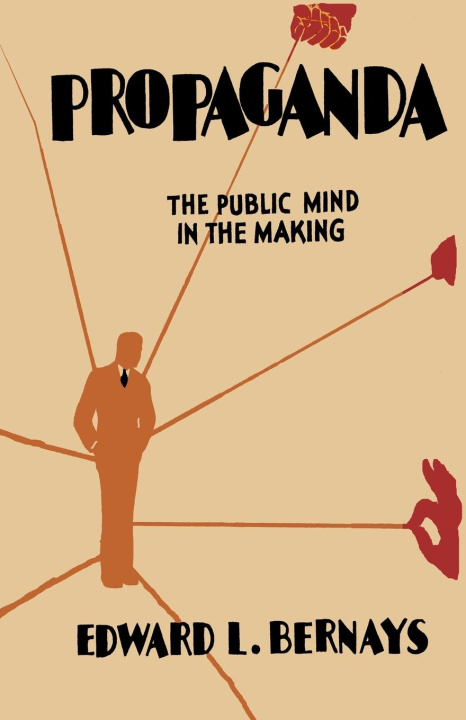
Propaganda

Spencer J. Quinn

2,487 Words

Propaganda is a 1928 tract written by Jewish marketing strategist (and Sigmund Freud nephew) Edward Bernays. It’s brief, but it could have been a lot briefer. Basically, Bernays has four main ideas about his eponymous subject matter, which he applies and reapplies over and over. It quickly gets tedious, but don’t let the tedium fool you. Propaganda is an extremely valuable work—especially for what white advocates are trying to accomplish today. And this is because those four ideas are brilliant. In this review, I intend not so much to evaluate Propaganda but give a brief history of the subject as presented by Bernays, summarize his main ideas, and suggest a way in which white advocates can use these ideas to further their cause.

The word “propaganda” first appeared in English in 1622, when Pope Gregory XV added a new function to the Holy See called The Office for the Propagation of the Faith (Congregatio de propaganda fide). The Pope wished to counter the spread of Protestantism by propagating the good word of the Catholic Church across the globe. In the eyes of the faithful, propaganda started out as a way to combat lies with Truth. And this more or less positive (or, at worst, neutral) connotation remained in place until World War I.

In the words of Mark Crispin Miller, who wrote the Introduction to the 2005 edition of Propaganda:

[I]t was not until 1915 that governments first systematically deployed the entire range of modern media to rouse their populations to fanatical assent. Here was an extraordinary state accomplishment: mass enthusiasm at the prospect of a global brawl that otherwise would mystify those very masses, and that shattered most of those who actually took part in it.

So it makes sense that by 1928, the public perception of propaganda had significantly dimmed, considering that the practice had helped to get millions killed for no discernible reason. War is a racket, after all. Yet practice makes perfect, and the men who learned how to propagandize “fanatical assent” during the war figured out how to apply their skills on behalf of companies such as General Motors, General Electric, and Procter & Gamble after the war concluded. Edward Bernays was one of these men, and ended up being the best, largely due to a solid understanding of mass psychology and mass media and how to creatively interleave the two.

Miller relates how, in the early 1950s, Bernays propagandized the idea that Guatemala was on the brink of communist revolution. This led to a CIA overthrow of Guatemala and the installation of a “quasi-fascist” US puppet regime, which greatly simplified matters for Bernays’ employer, the United Fruit Company. Miller tells us that Bernays actually believed his own propaganda and was quick to disassociate himself from his messaging if he ever found it to be untruthful or fraudulent. For example, Bernays had been a major asset for tobacco companies until he learned of the health hazards associated with smoking.

IDEA #1: An “invisible government” uses propaganda

Bernays repeatedly tells us that through propaganda, a small number of unseen and unknown men manipulate the habits and opinions of millions. These are the true rulers of our society. “It is they who pull the wires which control the public mind, who harness old social forces and contrive new ways to bind and guide the world,” he writes.

This invisible government controls not only the kind of soap we buy and breakfast cereal we eat, but also the men who are (or could never be) elected to public office. The irony of propaganda is that it requires a free society in which to thrive, but ultimately makes society less free despite all appearances.

A presidential candidate may be “drafted” in response to “overwhelming popular demand,” but it is well known that his name may be decided upon by half a dozen men sitting around a table in a hotel room.

This insight turned out to be quite prescient according to historian Harry Elmer Barnes. In his essay “Was Roosevelt Pushed into War by Popular Demand?” (published in the great revisionist work Barnes Against the Blackout by the Institute for Historical Review), the presidential nomination of Republican Wendell Wilkie in 1940 seemed as if it sprang from grass roots enthusiasm, but was in fact manufactured by men behind the scenes such as Ogden Reid, publisher of the New York Herald-Tribune, and Thomas Lamont, chairman of the board of JP Morgan and Company. These men desired America’s entry into the war in Europe, and selected Wilkie since his platform was hardly different than that of the fervently interventionist President Roosevelt.

And they made it seem otherwise through propaganda.

IDEA #2: Propaganda must court or mold public opinion

If this invisible government is the surgeon, and propaganda the tools at his disposal, the public—or, really, public opinion—is the patient. Sometimes propaganda will analyze and capitalize on existing public opinion. Other times it will massage the public mind until it creates the opinion it is seeking. In the first case, the surgeon will find something amiss under the skin and then fix it by selling whatever product, service, or notion he wishes to sell. In the second, he will graft something new onto the patient in order for the patient to then desire whatever product, service, or notion he wishes to sell. In either case, the patient is a passive actor and completely unaware of what is being done to him.

Industries, public utilities, educational movements, indeed all groups representing any concept or product, whether they are majority or minority ideas, succeed only because of approving public opinion. Public opinion is the unacknowledged partner in all broad efforts.

To take the surgeon analogy even further, applying propaganda that runs afoul of public opinion would be about as disastrous as the patient waking up during an operation. Many a product has failed because its propagandist misread the mind of the public.

Bernays offers an interesting case study of a piano manufacturer that wishes to sell more pianos. Instead of producing advertisements touting the benefits of a particular brand of piano, the clever propagandist would try “lifting the idea of the music room to a place in the public consciousness which it did not have before.” This he may do, for example, by

  1. “Organizing an exhibition of period music rooms designed by well-known decorators who themselves exert an influence on the buying groups.”
  2. “Putting in [these rooms] rare and valuable tapestries.”
  3. Inviting “persons known to influence the buying habits of the public, such as a famous violinist, a popular artist, and a society leader” to this exhibition.
  4. Persuading prominent architects to “to make the music room an integral architectural part of their plans with perhaps a specially charming niche in one corner for the piano.”

Bernays sums it up beautifully:

Under the old salesmanship the manufacturer said to the prospective purchaser, “Please buy a piano.” The new salesmanship has reversed the process and caused the prospective purchaser to say to the manufacturer, “Please sell me a piano.”

IDEA #3: Propaganda competes with other propaganda

Miller refers to Bernays as a “propagandist for propaganda.” According to Miller, Bernays felt that the negative connotations of the term were unfair. If a propaganda campaign has untoward effects, it’s not because propaganda is inherently evil but because there was a failure of competing propaganda campaigns to predict or uncover these effects. According to this logic, anything bad occurring because of propaganda comes from not having enough propaganda. Indeed, in Bernays’ mind (as it was in Pope Gregory’s), propaganda is a tool to shed light upon darkness and “bring order out of chaos.”

You can buy Jason Kessler’s book Charlottesville & the Death of Free Speech here.

Objectively, this idea is highly dubious. Firstly, governments or oligarchs can stifle counter-propaganda. During World War I, a person caught distributing or engaging in anti-war propaganda would be imprisoned. Today, a person engaging in Dissident Right propaganda will be canceled one way or another. How can propaganda compete under such circumstances?  Secondly, there are the moral quandaries associated with propaganda as mind control, which Bernays, to his discredit, rather blithely dismisses. And finally, it is possible that general understanding has not yet reached the point where counter-propaganda becomes necessary, thereby allowing bad propaganda to flourish in the meantime. Bernays’ experience propagandizing tobacco products is a case in point. Before the famous surgeon general’s warning in 1964, how many deaths did Bernays contribute to by finding ingenious ways for cigarette companies to sell their products? And does it really make a difference if he knew about the ill-effects of smoking while doing so? You could ask the same question about his role in selling the abattoir that was World War I.

One technique often employed by competitive propaganda is the panel of experts. Bernays used this trick to convince millions of Americans that a hearty breakfast of bacon and eggs is just what a person needs to begin his day. After all, 9 out of 10 doctors agree! But what about all the fat associated with bacon and eggs? Isn’t that bad for you? Well, according to countless competing propaganda campaigns, 9 out of 10 doctors agree on that too. This is why you should buy low-calorie foods containing the wondrous fat replacer olestra!

According to Mark Schatzker in his book The End of Craving:

Discovered in 1968 by scientists researching baby food, this miracle substance looked, smelled, tasted, and even cooked like fat. Incredibly, it contained zero calories. It did everything fat did but with no funny aftertaste, no bitterness—nothing. Olestra was so superbly fatlike that you could fry potato chips in it, which is what Frito-Lay did, marketing low-calorie versions of Doritos, Ruffles, and Lay’s under the WOW moniker. In the end, though, olestra’s camouflage was its undoing. Enzymes in the gut that bond with fat molecules didn’t react with olestra and let it sail by, and it arrived at the end of its digestive journey as pristine as at the beginning, causing a constellation of unpleasant symptoms, the most famous being “anal leakage.”

Schatzker goes on to document how fat-free and sugar-free additives in food often trick the brain into thinking the body is receiving fat and sugar, and then triggers unexpected and often negative side effects as a result. In a sense The End of Craving can be considered counter-propaganda to the anti-fat, anti-sugar propaganda most Americans grew up with.

But if competition doesn’t necessarily redeem propaganda, then what use is idea #3? It’s useful because it teaches us that propaganda is everywhere. And if you find negative or otherwise fraudulent propaganda, it must be countered with more propaganda. Ignoring it is never enough.

IDEA #4: Propaganda takes advantage of mass psychology

Midway through Propaganda Bernays relates an interesting anecdote about World War I. In Great Britain there had been a public outcry against the abrupt way soldiers were being treated in so-called “evacuation hospitals.” These were similar to MASH units near the front line, and so abrupt treatment was about as good as could be expected given the circumstances. But because the British populace had associated the term “hospital” with extensive, rehabilitative care, they were outraged. That is, until a propaganda-wise person in the British government changed the name to “evacuation posts.” After that, the outcry ceased.

According to Bernays’ study of psychology:

[t]he group has mental characteristics distinct from those of the individual, and is motivated by impulses and emotions which cannot be explained on the basis of what we know of individual psychology. So the question naturally arose: If we understand the mechanism and motives of the group mind, is it not possible to control and regiment the masses according to our will without their knowing about it?

According to Bernays, when using propaganda to sway the masses one way or another, it is best to appeal to emotions and impulses, rather than thought and reason. Without leadership, the masses will naturally resort to “clichés, pat words or images” to direct their attention. The British public relied upon its clichéd understanding of hospitals while venting its outrage. Once leadership stepped in with propaganda, the affair concluded.

***

Of course, I recommend Propaganda to anyone interested in the topic. It’s a classic, and there is much that is brilliant in it. But there is also quite a bit of repetition, as well as a few less-than-useful passages which haven’t aged well, for example Bernays’ treatment of the radio as the premier tool of propaganda. His chapter on “women’s activities” is best skipped given all that has happened to the fairer sex since 1928. Also, Bernays was directing his pro-propaganda propaganda towards a more monoracial and less anti-white society than what we have today. The propaganda he describes is much less vicious than what we find every day on the internet. Still, the fundamentals of Edward Bernays’ ideas ring true after nearly a century, and I have summarized them to make them as useful as possible.

One way in which white advocates can apply Bernaysian propaganda to further their cause would be to infiltrate Protestant churches in a particular area the same way that the above piano propagandist infiltrated the world of event organizers, decorators, and architects. All they would need is four or five young and aspiring religious leaders who are committed to white well-being. During services, they can stress the morality and common sense behind white ethnocentrism, and thereby instill the need for benign white tribalism among their parishioners. And when blowback occurs, they can protect and defend each other, thereby giving the impression of mass interest in white ethnocentrism.

Instead of saying “Please sell me a piano,” such people may ultimately go to Greg Johnson and say, “Please sell me White Nationalism.” Regardless of the propaganda put in use, however, it has to be a deliberate and well-thought-out plan on the part of an “invisible government” of influential and resourceful whites who wish to make public opinion more amenable to their ideas. It that way, we would all be Bernaysians.

I will leave you with a passage from Propaganda in which Bernays does treat the racial aspect of his subject matter with a surprising amount of restraint and—dare I say it?—respect. I’ll let you be the judge.

When an Imperial Wizard, sensing what is perhaps hunger for an ideal, offers a picture of a nation all Nordic and nationalistic, the common man of the older American stock, feeling himself elbowed out of his rightful position and prosperity by the newer immigrant stocks, grasps the picture which fits in so neatly with his prejudices, and makes it his own. He buys the sheet and pillowcase costume, and bands with his fellows by the thousand into a huge group powerful enough to swing state elections and to throw a ponderous monkey wrench into a national convention.

Propaganda

Propaganda%0A

Share

  • Gab

Enjoyed this article?

Be the first to leave a tip in the jar!

Instant Echeck GreenPay™

Related

  • Berlin: City of Stones

  • Lothrop Stoddard’s The Revolt Against Civilization

  • Trump vs. Transgenderism

  • An Interview with Glen Allen, Free Speech Advocate

  • E. M. Forster’s A Passage to India & the Indian Mentality

  • A Blunder, Not a Betrayal

  • My Thoughts on the Iran War

  • Tyler Oliveira Versus the Jews

Tags

advertisingEdward Bernaysmarketingmass psychologypropagandaSpencer J. QuinnWorld War I

Previous

« On Self-Actualization

Next

» Ted Cruz, the Gaza War, and the Scofield Bible

3 comments

  1. Peter Quint says:
    January 29, 2026 at 12:11 am

    Great article! I have given some thought to the precepts of a successful propaganda campaign over the years. I have identified three precepts, and they must occur in this order:
    1. The target audience must be engaged at the earliest possible age. The best examples being: Christianity, the holohoax, and slavery, are the three most effective White guilt campaigns.
    2. The campaigns must be continuous, “from cradle to the grave.” I once tried to remember a day when I had not heard mention of Christianity, the holohoax, or slavery, and I could not.
    3. last, but the most important, is that the target audience must finance these campaigns:  churches, movies, television, radio programs, books etc. 🙃

    4
    4
    • Spencer Quinn
    • Scott
    • kolokol
    • Tye
  2. Uncle Semantic says:
    January 31, 2026 at 12:30 am

    Instead of saying “Please sell me a piano,” such people may ultimately go to Greg Johnson and say, “Please sell me White Nationalism.” Though not as slimy as the ‘sell me this pen’ jordan belfort, should WN methods be no less aggressive than stratton oakmont’s phone calls to sell? Instead of penny stocks, we sell exclusive high civilization.

    1
    1
    • kolokol
  3. Grey Wolf says:
    March 1, 2026 at 5:02 am

    The Germans have had their own Bernays,  this was Hans Domizlaff (1892-1971). Good painter, graphic designer, and writer, he was practically father of brand management. However he worked in commercial advertisment only, and was very successful there, and he never engaged in the political propaganda.

    0
    0

Comments are closed.

If you have a Subscriber access,
simply login first to see your comment auto-approved.

Note on comments privacy & moderation

Your email is never published nor shared.

Comments are moderated. If you don't see your comment, please be patient. If approved, it will appear here soon. Do not post your comment a second time.

Upcoming podcasts
  • Rob Rundo on Counter-Currents Radio

    Rob Rundo on Counter-Currents Radio

    Counter-Currents Radio

    Sat, Jun 13th — 3 pm EST / 9 pm CET
  • Daniel Tyrie on Counter-Currents Radio

    Daniel Tyrie on Counter-Currents Radio

    Counter-Currents Radio

    Sat, Jun 20th — 3 pm EST / 9 pm CET

Writers of May

(2 votes) Morris van de Camp David M. Zsutty Derek Stark Jayant Bhandari Greg Johnson

Articles of May

The Lunch Wars by David M. Zsutty Heidegger on Nietzsche, Part One by Collin Cleary 2 votes
    • Why White Advocates Should Avoid “Based Blacks”

      Dani Vypont

    • Nietzsche & Race

      Mark Gullick

    • Editor’s Update
      Rob Rundo Rescheduled to Next Week on Counter-Currents Radio;
      Tonight Greg Johnson & David Zsutty Answer Your Questions;
      Fundraiser Update & a New $20,000 Matching Grant

      Greg Johnson

    • The Counter-Currents 2026 Fundraiser
      Lifetime Subscriber Welcome Packages Extended

      Greg Johnson

    • Nationalism This Week
      Who’s Looking Back?

      Greg Johnson

      21

    • China’s Threat to American Security:
      Food, Farmland, Foreign Control, & Energy Policy

      Lipton Matthews

      1

    • The Bitter End of Western Metaphysics:
      Heidegger on Nietzsche, Part Two

      Collin Cleary

      11

    • The Killing of Henry Nowak

      Mark Gullick

      28

    • The Crisis of Chinese Technology Thieves

      Morris van de Camp

      1

    • The Strange World of Gender Bender Fiction:
      & What This Genre Tells Us About Autosexuality

      Dani Vypont

      3

    • Watching the Watchers:
      The Dark Triad Question

      David M. Zsutty

      14

    • The Remigration Movement Solidifies

      F. Roger Devlin

      1

    • Casting Aspersions:
      The Fatal Consequences of Race-Swapped Casting, From Helen of Troy to Henry of Southampton

      Steven Tucker

      20

    • The Murder of Henry Nowak

      Millennial Woes

      23

    • Don’t Forget to Vote in Our Writer & Article of the Month Poll

      Greg Johnson

    • The Robot Hotdog Stand

      Greg Johnson

      35

    • Laughing Our Way to Victory

      Dave Chambers

      7

    • The Zodiac Killer

      Mark Gullick

      11

    • Jared Taylor: What Rome Means to Me

      Jared Taylor

      1

    • An Interview with Endeavour:
      My Way of Life Is an Adventure!

      Ondrej Mann

      6

    • José Pedro Zúquete’s The Identitarians

      Greg Johnson

      3

    • Editor’s Update
      Fundraiser Update & How to Watch the Remigration Summit

      Greg Johnson

      5

    • The Bitter End of Western Metaphysics:
      Heidegger on Nietzsche, Part One

      Collin Cleary

      11

    • Berlin: City of Stones

      Spencer J. Quinn

      6

    • True Folk-Horror Is Horror of Your Own Folk:
      Mark Gatiss vs the Brexit Blind Dead  

      Steven Tucker

      4

    • Counter-Currents Radio Podcast No. 689
      Thomas Massie, the America 2050 Bust, the Need for Whites to Divest from America, the AI Economic Apocalypse, & Pro-White Project Pitches to Billionaires

      Counter-Currents Radio

      7

    • Nationalism This Week
      Remigration is Inevitable, Part 3

      Greg Johnson

      27

    • Why Billionaires Should Fund White Identity Politics

      Lipton Matthews

      8

    • How Cold War Two Came About

      Morris van de Camp

      5

    • Now Available for Pre-Order at a Special Price!
      Greg Johnson’s The Philosopher Is In

      Greg Johnson

    • David Zsutty’s Elevator Pitch to a Billionaire

      David M. Zsutty

      1

    • Headbanging Lite

      Mark Gullick

      5

    • White Advocacy Past and Present

      Peter Bradley

      13

    • The Lunch Wars

      David M. Zsutty

      47

    • The Russians are Coming/The Russians are Coming

      Steven Clark

      1

    • Peak Fatigue in Fort Wayne

      Gabriel Anderson

      24

    • Keith Woods’ Elevator Pitch to a Billionaire

      Keith Woods

    • The Cruelty of Kindness

      Morris van de Camp

      9

    • Predation Wearing the Mask of Civilization

      Jayant Bhandari

      13

    • The Mandalorian & Grogu

      Trevor Lynch

      24

    • Editor’s Update
      Fundraiser Update & a New $20,000 Matching Grant
      Greg Johnson & David Zsutty Discuss Thomas Massie on Counter-Currents Radio

      Greg Johnson

      2

    • How the Jews Defeated Thomas Massie—& Themselves

      David M. Zsutty

      25

    • Jared Taylor’s Elevator Pitch to a Billionaire

      Jared Taylor

      15

    • Nationalism This Week
      Remigration Is Inevitable, Part 2

      Greg Johnson

      8

    • Could Fascism Work?

      Mark Gullick

      40

    • Jonathan Bowden’s Deliverance
      Part 7

      Jonathan Bowden

    • China’s Quiet Hand:
      Influence, Infiltration, & the Western Blind Spot

      Lipton Matthews

      9

    • Counter-Currents Radio Podcast No. 688
      Tyler Dykes on Running for US Congress in South Carolina

      Counter-Currents Radio

      3

    • Lothrop Stoddard’s The Revolt Against Civilization

      Spencer J. Quinn

      14

    • Lewis Strauss Did Nothing Wrong:
      How the politics of the Atom Bomb during the early Cold War Apply to Artificial Intelligence Today

      Morris van de Camp

      14

    • AdamMil

      Nationalism This Week
      Who’s Looking Back?

      Massive hardware. To run something like Grok you'd need terabytes of GPU memory. That said, for...

    • AdamMil

      Nationalism This Week
      Who’s Looking Back?

      Don’t be too sure. There have already been multiple experiments showing that modern AIs may turn on...

    • Hi-ya!

      Nationalism This Week
      Who’s Looking Back?

      I use the following commands if I feel ai is getting to wound up, yes I got it from ai but it’s...

    • Collin Cleary

      The Bitter End of Western Metaphysics:
      Heidegger on Nietzsche, Part Two

      Oh no, not so. For the Overman, truth is entirely relative and subjective. Remember: he gets to...

    • Connor McDowell

      Nationalism This Week
      Who’s Looking Back?

      HAL9000 in 2001 was never truly “sentient”. “His” programming had a conflict that couldn’t be...

    • Will Williams

      Nationalism This Week
      Victory First

      There are several C-C essays that mention Gaza, but this appears to be the only one where comments...

    • Observer

      The Bitter End of Western Metaphysics:
      Heidegger on Nietzsche, Part Two

      In Platonism, we find the insistence that being, true being, is identical with “the forms.” The...

    • JBP

      The Bitter End of Western Metaphysics:
      Heidegger on Nietzsche, Part Two

      Thanks. Unfortunately I must fall into the 95% that Jane refers to. My brain is not putting the...

    • Will Williams

      Nationalism This Week
      Who’s Looking Back?

      Vauquelin: June 7, 2026 ...You must judge AI/LLM based on those who control it. With the likes of...

    • Hi-ya!

      The Bitter End of Western Metaphysics:
      Heidegger on Nietzsche, Part Two

      Love to engage in this with more attention ; I’ve never seen “clearing” in presocratics and my hot...

    • Vauquelin

      Nationalism This Week
      Who’s Looking Back?

      You must judge AI/LLM based on those who control it. With the likes of Sam Altman and Alex Karp...

    • Chud

      Nationalism This Week
      Who’s Looking Back?

      There's another dangerous option where homebrew AI models scale up and the consumers get their...

    • Gabe

      Nationalism This Week
      Who’s Looking Back?

      Boom. Nailed it.

    • Joe Gould

      The Killing of Henry Nowak

      This is a good article. The only thing I want to add is, above all we must guard ourselves against...

    • Greg Johnson

      Nationalism This Week
      Who’s Looking Back?

      Thank you I also wonder if these AI bots are being used to gather intelligence on influential...

    • E_Perez

      The Bitter End of Western Metaphysics:
      Heidegger on Nietzsche, Part Two

      "Philosophy helps Western man understand how we got to where we are, and where things went wrong...

    • Chud

      Nationalism This Week
      Who’s Looking Back?

      I'll try to give a rundown. AI is a language learning model (LLM) that uses floating point...

    • Will Williams

      How the Jews Defeated Thomas Massie—& Themselves

      Massie to Honor USS Liberty Crew on House Floor [email protected]  June 6, 2026  thomas...

    • JBP

      Editor’s Update
      Saturday: Greg Johnson & David Zsutty Discuss the Epstein Bomb on Counter-Currents Radio

      Sorry but... Wrong, wrong wrong and wrong. The current momentum of history will not change with a...

    • Will Williams

      Nationalism This Week
      The SPLC Indictment

      The indictment of the Southern Poverty Law Center by the Department of Justice on 21 April is...

    • Earth Day Special

      John Morgan

      12

    • A Robertson Roundup
      Remembering Wilmot Robertson
      (April 16, 1915 – July 8, 2005)

      Margot Metroland

      13

    • The Paranoid Style in White Nationalism

      Greg Johnson

      30

    • Join the Dance!

      Andrew Hamilton

      1

    • We Can’t Save the Earth Without Reducing African Birth Rates

      James Dunphy

      36

    • “I’m Not a Conspiracy Theorist, but . . .”:
      Jeffrey Epstein’s Death Gives New Life to “Conspiracy Theories”

      Greg Johnson

      22

    • Sylvia Plath: Stasis in Darkness

      Vic Olvir

      17

    • Vanguardism, Vantardism, & Mainstreaming

      Greg Johnson

      80

    • Aviation, Geography, & Race

      Charles Lindbergh

      3

    • Some Thoughts on Yule

      Collin Cleary

      4

    • Living in Truth:
      A Yuletide Homily

      Jef Costello

      7

    • John Kennedy Toole’s A Confederacy of Dunces

      Greg Johnson

      20

    • On Aleksandr Solzhenitsyn’s Warning to the West

      Spencer J. Quinn

      7

    • Elitism, British Modernism, & Wyndham Lewis

      Jonathan Bowden

      6

    • Philip K. Dick’s Do Androids Dream of Electric Sheep? as Anti-Semitic/Christian-Gnostic Allegory

      Greg Johnson

      20

    • “Conspiracy Theory” or Conspiracy?

      Andrew Hamilton

      21

    • Remembering H. P. Lovecraft
      (August 20, 1890–March 15, 1937)

      Greg Johnson

      3

    • Who Are We?
      Nordics, Aryans, & Whites

      Greg Johnson

      71

    • Remembering William Gayley Simpson
      (July 23, 1892–December 31, 1990)
      A Pleasant Afternoon with Harriet & Bill Simpson

      Margot Metroland

      18

    • Here are the Young Men
      Remembering Ian Curtis
      (July 15, 1956–May 18, 1980)

      Mark Gullick

      18

    • Percy Grainger
      Artist of the Right

      Alex Graham

      7

    • Remembering Revilo Oliver
      (July 7, 1908–August 20, 1994)

      Greg Johnson

      18

    • The Meaning of July 4th for the White Man

      Gregory Hood

      13

    • The Front National’s Evolution

      Bruno Mégret

    • Merwin K. Hart
      Forgotten American Hero & Man of the Right

      Morris van de Camp

      10

    • George Orwell’s Nineteen Eighty-Four

      Jonathan Bowden

      8

    • Carleton S. Coon
      Scientist & Reluctant White Advocate

      Morris van de Camp

      3

    • The Kwanzaa Absurdity Will Be Dwarfed by Juneteenth

      Robert Hampton

      10

    • Stravinsky

      Alex Graham

      7

    • Like the Roman:
      Remembering Enoch Powell (1912-1998)

      Mark Gullick

      23

    • Neo-Fascism in Film
      Part 5

      Karel Veliky

      15

    • The Game of Tarot

      Mark Gullick

      1

    • Institutions Cannot Be Transplanted

      Jayant Bhandari

      5

    • Jonathan Bowden’s Deliverance
      Part 5

      Jonathan Bowden

    • Crosstown Traffic:
      Jimi Hendrix & The Post-War Rock ‘N’ Roll Revolution

      Mark Gullick

      1

    • Slaves from the North:
      Finns & Karelians in the East European Slave Trade, 900–1600

      Lipton Matthews

      14

    • Neo-Fascism in Film
      Part 4

      Karel Veliky

      2

    • David Lean’s A Passage to India

      Spencer J. Quinn

      1

    • Elites are Essential to Development

      Lipton Matthews

      7

    • Jonathan Bowden’s Deliverance
      Part 4

      Jonathan Bowden

    • Neo-Fascism in Film
      Part 3

      Karel Veliky

      6

    • E. M. Forster’s A Passage to India & the Indian Mentality

      Spencer J. Quinn

      25

    • Jonathan Bowden’s Deliverance
      Part 3

      Jonathan Bowden

    • The Rest Is Silence
      Heidegger’s Quietism

      Mark Gullick

      2

    • Dispelling the Historical Fallacy of Indian Nationalism

      Lipton Matthews

      8

    • Neo-Fascism in Film
      Part 2

      Karel Veliky

      8

    • Jonathan Bowden’s Deliverance
      Part 2

      Jonathan Bowden

    • Life of a Klansman

      Mark Gullick

      8

    • Jonathan Bowden’s Deliverance, Part 1

      Jonathan Bowden

    • Decolonial Ideas are Holding Back Developing Countries

      Lipton Matthews

      8

    • Neo-fascism in Film, Part 1

      Karel Veliky

      21

    • Jonathan Bowden’s Onslaught, Part 8
      Divigations on Decadence

      Jonathan Bowden

    • Jonathan Bowden’s Onslaught, Part 7
      Intrigues in the National Front

      Jonathan Bowden

      1

    • Rotten to the Core

      Mark Gullick

      8

    • Strauss on Husserl’s “Philosophy as Rigorous Science”

      Greg Johnson

    • Jonathan Bowden’s Onslaught, Part 6
      Francis Bacon & Right-Wing Nihilism

      Jonathan Bowden

    • London After (& Before) Midnight:
      Aleister Crowley, The Landlord’s Worst Nightmare

      James J. O'Meara

      2

    • Jonathan Bowden’s Onslaught, Part 5
      The Post-War British Far Right

      Jonathan Bowden

    • No Rules: Rollerball

      Mark Gullick

      4

    • Jonathan Bowden’s Onslaught, Part 3
      Brett Easton Ellis’ American Psycho

      Jonathan Bowden

    • András László
    • Derek Hawthorne
    • Beau Albrecht
    • Alain de Benoist
    • Kerry Bolton
    • Jonathan Bowden
    • Collin Cleary
    • Jef Costello
    • Savitri Devi
    • Julius Evola
    • Jim Goad
    • Gregory Hood
    • Juleigh Howard-Hobson
    • Greg Johnson
    • Charles Krafft
    • Anthony M. Ludovici
    • Trevor Lynch
    • H. L. Mencken
    • J. A. Nicholl
    • James J. O’Meara
    • Christopher Pankhurst
    • Tito Perdue
    • Michael Polignano
    • Spencer J. Quinn
    • Fenek Solère
    • Irmin Vinson
    • Leo Yankevich
    • Francis Parker Yockey
    • Multiple authors
  • Editor-in-Chief

    • Greg Johnson, Ph.D.

    Featured Writers

    • Beau Albrecht
    • Gunnar Alfredsson
    • Collin Cleary, Ph.D.
    • Jef Costello
    • Morris V. de Camp
    • F. Roger Devlin, Ph.D.
    • Stephen Paul Foster, Ph.D.
    • Jim Goad
    • Alex Graham
    • Mark Gullick, Ph.D.
    • Greg Johnson, Ph.D.
    • Travis LeBlanc
    • Trevor Lynch
    • Margot Metroland
    • James J. O’Meara
    • Angelo Plume
    • Spencer J. Quinn
    • Fred Reed
    • Clarissa Schnabel
    • Michael Walker
    • David M. Zsutty

    Frequent Writers

    • Asier Abadroa
    • Aquilonius
    • Alain de Benoist
    • Kerry Bolton, Ph.D.
    • Dave Chambers
    • Steven Clark
    • James Dunphy
    • Endeavour
    • Richard Houck
    • Jason Kessler
    • Titus Livius
    • Ondrej Mann
    • Lipton Matthews
    • Mark Mazari
    • John Morgan
    • Jaroslav Ostrogniew
    • Kathryn S.
    • Christian Secor
    • Anne Wilson Smith
    • Thomas Steuben
    • William De Vere
    • Kenneth Vinther
    • Max West

    Classic Authors

    • Maurice Bardèche
    • Jonathan Bowden
    • Julius Evola
    • Guillaume Faye
    • Ernst Jünger
    • Kevin MacDonald, Ph.D.
    • D. H. Lawrence
    • Charles Lindbergh
    • Jack London
    • H. P. Lovecraft
    • Anthony M. Ludovici
    • Sir Oswald Mosley
    • National Vanguard
    • Friedrich Nietzsche
    • Revilo Oliver
    • William Pierce
    • Ezra Pound
    • Saint-Loup
    • Savitri Devi
    • Carl Schmitt
    • Miguel Serrano
    • Oswald Spengler
    • P. R. Stephensen
    • Jean Thiriart
    • John Tyndall
    • Dominique Venner
    • Leo Yankevich
    • Francis Parker Yockey

    Other Authors

    • Howe Abbott-Hiss
    • Michael Bell
    • Giles Corey
    • Jack Donovan
    • Richardo Duchesne, Ph.D.
    • Emile Durand
    • Guillaume Durocher
    • Mark Dyal
    • Tom Goodroch
    • Andrew Hamilton
    • Robert Hampton
    • Huntley Haverstock
    • Derek Hawthorne
    • Gregory Hood
    • Juleigh Howard-Hobson
    • Alexander Jacob
    • Ruuben Kaalep
    • Tobias Langdon
    • Julian Langness
    • Patrick Le Brun
    • G A Malvicini
    • John Michael McCloughlin
    • Millennial Woes
    • Michael O’Meara
    • Christopher Pankhurst
    • Michael Polignano
    • J. J. Przybylski
    • Quintilian
    • Edouard Rix
    • C. B. Robertson
    • C. F. Robinson
    • Herve Ryssen
    • Alan Smithee
    • Fenek Solere
    • Ann Sterzinger
    • Robert Steuckers
    • Tomislav Sunic
    • Donald Thoresen
    • Marian Van Court
    • Irmin Vinson
    • Book Reviews
    • Movie Reviews
    • TV Reviews
    • Music Reviews
    • Art Criticism
    • Graphic Novels & Comics
    • Video Game Reviews
    • Fiction
    • Poems
    • Interviews
    • Videos
    • English Translations
    • Other Languages
      • Arabic
      • Bulgarian
      • Croatian
      • Czech
      • Danish
      • Dutch
      • Estonian
      • Finnish
      • French
      • German
      • Greek
      • Hungarian
      • Italian
      • Lithuanian
      • Norwegian
      • Polish
      • Portuguese
      • Romanian
      • Russian
      • Slovak
      • Spanish
      • Swedish
      • Ukrainian
    • Commemorations
    • Why We Write
  • Archives
  • Top 100 Commenters
  • The Looney Bin
Sponsored Links
Europa.com Above Time Coffee Antelope Hill Publishing Paul Waggener IHR-Store Spencer J. Quinn American Renaissance Jim Goad The Occidental Observer
Donate Now Mailing list
Books for sale
  • The Philosopher Is In
  • Sexual Utopia in Power (Expanded Edition)
  • In Defense of Prejudice
  • Loving Our Own
  • Tyranny & Wisdom
  • The Populist Moment
  • Is America Doomed?
  • To all books
Copyright © 2026 Counter-Currents Publishing, Ltd.

Paywall Access


Please enter your email address.

Lost your password?

Edit your comment

Writer & Article of the Month May 2026

Voting for this month has concluded. Here are the final results!

Top Writers

  • #1 Morris van de Camp 2 votes
  • #2 David M. Zsutty 2 votes
  • #3 Derek Stark 2 votes
  • #4 Jayant Bhandari 2 votes
  • #5 Greg Johnson 2 votes
  • #6 Jared Taylor 1 vote
  • #7 Collin Cleary 1 vote
  • #8 Spencer J. Quinn 1 vote
  • #9 Mark Gullick 1 vote
  • #10 Lipton Matthews 1 vote
  • #11 Keith Woods 1 vote
  • #12 Steven Tucker 1 vote

Top Articles

  • #1 The Lunch Wars 2 votes
  • #2 Heidegger on Nietzsche, Part One 2 votes
  • #3 Could Fascism Work? 1 vote
  • #4 Jared Taylor's Elevator Pitch to a Billionaire 1 vote
  • #5 Predation Wearing the Mask of Civilization 1 vote
  • #6 Peak Fatigue in Fort Wayne 1 vote
  • #7 Keith Wood's Elevator Pitch to a Billionaire 1 vote
  • #8 Do You Want to Play a Game? 1 vote
  • #9 Why Billionaires Should Fund White Identity Politics 1 vote
  • #10 The 1970s: The Golden Age of Hijacking 1 vote
  • #11 True Folk-Horror Is Horror of Your Own Folk 1 vote
  • #12 Finding Atlantis Part 4 1 vote
  • #13 Berlin: City of Stones 1 vote
  • #14 The Ghost of the Confederacy 1 vote
  • #15 Lothrop Stoddard’s The Revolt Against Civilization 1 vote

Total votes cast: 17