Counter-Currents
  • Advertise
  • Private Events
  • T&C
  • About
  • Contact
  • RSS
    • Main feed
    • Podcast feed
    • Videos feed
    • Comments feed
  • Welcome
  • Webzine
  • Books
  • Merch
  • Podcasts
  • Videos
  • Donate
  • Patrons
  • Subscribe
  • Crypto

LEVEL2

Donate Now Mailing list
Upcoming podcasts
  • Rob Rundo on Counter-Currents Radio

    Rob Rundo on Counter-Currents Radio

    Counter-Currents Radio

    06/13/2026 — 3 pm EST / 9 pm CET
  • Daniel Tyrie on Counter-Currents Radio

    Daniel Tyrie on Counter-Currents Radio

    Counter-Currents Radio

    06/20/2026 — 3 pm EST / 9 pm CET

Writers of May

(2 votes) Morris van de Camp David M. Zsutty Derek Stark Jayant Bhandari Greg Johnson

Articles of May

Heidegger on Nietzsche, Part One by Collin Cleary The Lunch Wars by David M. Zsutty 2 votes
  • Welcome
  • Webzine
  • Books
  • Merch
  • Podcasts
  • Videos
  • Donate
  • Patrons
  • Subscribe
  • Crypto
    • Happy Birthday to Us!

      Greg Johnson

      4

    • Zsutty’s Maximum

      David M. Zsutty

      8

    • Exclusive Interview with Karel Veliky:
      The Final Chapter in the Film Series! Part I

      Ondrej Mann

    • The Union Jackal, June 2026

      Mark Gullick

      21

    • The Inferiority Behind Immigrant Superiority

      Jayant Bhandari

      15

    • Counter-Currents Radio Podcast No. 690
      Greg Johnson & David Zsutty Discuss Current Things: AI, Henry Nowak, the Iran Crisis, & More

      Counter-Currents Radio

      4

    • Collin Cleary: What Rome Means to Me

      Collin Cleary

      4

    • Paul Krugman: Closet Bolshevik

      Spencer J. Quinn

      15

    • Fugue of Ideas:
      Ibram X. Kendi’s Chain of Ideas

      Greg Johnson

      18

    • Based Blacks

      Lipton Matthews

      11

    • Black Intellectual Fatigue

      Derek Stark

      36

    • Why White Advocates Should Avoid “Based Blacks”

      Dani Vypont

      23

    • Nietzsche & Race

      Mark Gullick

    • Editor’s Update
      Rob Rundo Rescheduled to Next Week on Counter-Currents Radio;
      Tonight Greg Johnson & David Zsutty Answer Your Questions;
      Fundraiser Update & a New $20,000 Matching Grant

      Greg Johnson

    • The Counter-Currents 2026 Fundraiser
      Lifetime Subscriber Welcome Packages Extended

      Greg Johnson

    • Nationalism This Week
      Who’s Looking Back?

      Greg Johnson

      29

    • China’s Threat to American Security:
      Food, Farmland, Foreign Control, & Energy Policy

      Lipton Matthews

      5

    • The Bitter End of Western Metaphysics:
      Heidegger on Nietzsche, Part Two

      Collin Cleary

      16

    • The Killing of Henry Nowak

      Mark Gullick

      38

    • The Crisis of Chinese Technology Thieves

      Morris van de Camp

      1

    • The Strange World of Gender Bender Fiction:
      & What This Genre Tells Us About Autosexuality

      Dani Vypont

      3

    • Watching the Watchers:
      The Dark Triad Question

      David M. Zsutty

      14

    • The Remigration Movement Solidifies

      F. Roger Devlin

      1

    • Casting Aspersions:
      The Fatal Consequences of Race-Swapped Casting, From Helen of Troy to Henry of Southampton

      Steven Tucker

      20

    • The Murder of Henry Nowak

      Millennial Woes

      23

    • Don’t Forget to Vote in Our Writer & Article of the Month Poll

      Greg Johnson

    • The Robot Hotdog Stand

      Greg Johnson

      37

    • Laughing Our Way to Victory

      Dave Chambers

      7

    • The Zodiac Killer

      Mark Gullick

      11

    • Jared Taylor: What Rome Means to Me

      Jared Taylor

      1

    • An Interview with Endeavour:
      My Way of Life Is an Adventure!

      Ondrej Mann

      6

    • José Pedro Zúquete’s The Identitarians

      Greg Johnson

      3

    • Editor’s Update
      Fundraiser Update & How to Watch the Remigration Summit

      Greg Johnson

      5

    • The Bitter End of Western Metaphysics:
      Heidegger on Nietzsche, Part One

      Collin Cleary

      12

    • Berlin: City of Stones

      Spencer J. Quinn

      6

    • True Folk-Horror Is Horror of Your Own Folk:
      Mark Gatiss vs the Brexit Blind Dead  

      Steven Tucker

      4

    • Counter-Currents Radio Podcast No. 689
      Thomas Massie, the America 2050 Bust, the Need for Whites to Divest from America, the AI Economic Apocalypse, & Pro-White Project Pitches to Billionaires

      Counter-Currents Radio

      7

    • Nationalism This Week
      Remigration is Inevitable, Part 3

      Greg Johnson

      27

    • Why Billionaires Should Fund White Identity Politics

      Lipton Matthews

      8

    • How Cold War Two Came About

      Morris van de Camp

      5

    • Now Available for Pre-Order at a Special Price!
      Greg Johnson’s The Philosopher Is In

      Greg Johnson

    • David Zsutty’s Elevator Pitch to a Billionaire

      David M. Zsutty

      1

    • Headbanging Lite

      Mark Gullick

      5

    • White Advocacy Past and Present

      Peter Bradley

      13

    • The Lunch Wars

      David M. Zsutty

      47

    • The Russians are Coming/The Russians are Coming

      Steven Clark

      1

    • Peak Fatigue in Fort Wayne

      Gabriel Anderson

      24

    • Keith Woods’ Elevator Pitch to a Billionaire

      Keith Woods

    • The Cruelty of Kindness

      Morris van de Camp

      9

    • Predation Wearing the Mask of Civilization

      Jayant Bhandari

      13

    • Peter Quint

      Zsutty’s Maximum

      The only reason that black on black crime is worse than black on white crime is proximity and...

    • Peter Quint

      Happy Birthday to Us! 16

      Great article! Glad to be a part of an evolving organization, that may one day be an institution...

    • Zarathustra

      Zsutty’s Maximum

      Someone who worked in a refugee camp once told me about a Muslim who consumed alcohol in the camp....

    • Hi-ya!

      Happy Birthday to Us! 16

      Great site , Greg. I loved the trial of Socrates.

    • Wasili

      Paul Krugman: Closet Bolshevik

      It’s revealing that Krugman returns so often to the explanation that rural MAGA voters are primarily...

    • Will Williams

      Happy Birthday to Us! 16

      I don’t know about numerology or astrology, but Greg’s very real assessment of our situation is why...

    • Mark Gullick

      The Union Jackal, June 2026

      "Weren’t all of these incidents somewhat predictable when you openly invite masses of low...

    • Dani Vypont

      Happy Birthday to Us! 16

      Congrats on 16 years!Since David Zsutty has mentioned on the podcast that he has an interest in...

    • Will Williams

      Zsutty’s Maximum

      C.E. Whiteoak: June 11, 2026  Fantastic article. I have never seen a better explanation of...

    • Flel

      The Union Jackal, June 2026

      Weren’t all of these incidents somewhat predictable when you openly invite masses of low...

    • WayDown

      Zsutty’s Maximum

      "Likewise, Indians were obsequious to whites when they felt we had power over them" It is an...

    • Will Williams

      Zsutty’s Maximum

      Mr. Zsutty: [M]any actual white [sic] liberals and many white [sic] conservatives for that matter...

    • Uliet Bravo

      Zsutty’s Maximum

      https://en.wikipedia.org/wiki/Liebig%27s_law_of_the_minimum#Liebig's_barrel Kinda sorta analogous...

    • Asier Abadroa

      Zsutty’s Maximum

      This reminds me of how Black South Africans burn illegal Black immigrants alive when they enter...

    • Elear

      The Inferiority Behind Immigrant Superiority

      Mr Bhandari describes a certain way of identity expression characteristic to ethnic diasporas: loud...

    • Beau Albrecht

      The Union Jackal, June 2026

      If he was all but dead on the scene, then the pigs wasted their effort arresting him for "racism". ...

    • Moss

      The Inferiority Behind Immigrant Superiority

      Interesting insights into a foreign culture, even though I find it quite disturbing.

    • Beau Albrecht

      The Union Jackal, June 2026

      As for the "elites", they should be housed in the middle of one of the no-go zones that their...

    • Will Williams

      Based Blacks

      Weave: June 9, 2026 ...I used to listen to preachers who claimed Jews were chosen and it was our...

    • Moss

      The Union Jackal, June 2026

      Ha, yes, better and more quaint times for our people Mark. In Fr Ted I remember the over 75's...

    • Earth Day Special

      John Morgan

      12

    • A Robertson Roundup
      Remembering Wilmot Robertson
      (April 16, 1915 – July 8, 2005)

      Margot Metroland

      13

    • The Paranoid Style in White Nationalism

      Greg Johnson

      30

    • Join the Dance!

      Andrew Hamilton

      1

    • We Can’t Save the Earth Without Reducing African Birth Rates

      James Dunphy

      36

    • “I’m Not a Conspiracy Theorist, but . . .”:
      Jeffrey Epstein’s Death Gives New Life to “Conspiracy Theories”

      Greg Johnson

      22

    • Sylvia Plath: Stasis in Darkness

      Vic Olvir

      17

    • Vanguardism, Vantardism, & Mainstreaming

      Greg Johnson

      80

    • Aviation, Geography, & Race

      Charles Lindbergh

      3

    • Some Thoughts on Yule

      Collin Cleary

      4

    • Living in Truth:
      A Yuletide Homily

      Jef Costello

      7

    • John Kennedy Toole’s A Confederacy of Dunces

      Greg Johnson

      20

    • On Aleksandr Solzhenitsyn’s Warning to the West

      Spencer J. Quinn

      7

    • Elitism, British Modernism, & Wyndham Lewis

      Jonathan Bowden

      6

    • Philip K. Dick’s Do Androids Dream of Electric Sheep? as Anti-Semitic/Christian-Gnostic Allegory

      Greg Johnson

      20

    • “Conspiracy Theory” or Conspiracy?

      Andrew Hamilton

      21

    • Remembering H. P. Lovecraft
      (August 20, 1890–March 15, 1937)

      Greg Johnson

      3

    • Who Are We?
      Nordics, Aryans, & Whites

      Greg Johnson

      71

    • Remembering William Gayley Simpson
      (July 23, 1892–December 31, 1990)
      A Pleasant Afternoon with Harriet & Bill Simpson

      Margot Metroland

      18

    • Here are the Young Men
      Remembering Ian Curtis
      (July 15, 1956–May 18, 1980)

      Mark Gullick

      18

    • Percy Grainger
      Artist of the Right

      Alex Graham

      7

    • Remembering Revilo Oliver
      (July 7, 1908–August 20, 1994)

      Greg Johnson

      18

    • The Meaning of July 4th for the White Man

      Gregory Hood

      13

    • The Front National’s Evolution

      Bruno Mégret

    • Merwin K. Hart
      Forgotten American Hero & Man of the Right

      Morris van de Camp

      10

    • George Orwell’s Nineteen Eighty-Four

      Jonathan Bowden

      8

    • Carleton S. Coon
      Scientist & Reluctant White Advocate

      Morris van de Camp

      3

    • The Kwanzaa Absurdity Will Be Dwarfed by Juneteenth

      Robert Hampton

      10

    • Stravinsky

      Alex Graham

      7

    • Like the Roman:
      Remembering Enoch Powell (1912-1998)

      Mark Gullick

      23

    • Sexually Incontinent on the Indian Subcontinent:
      Who Rapes More Animals, Indians or Pakistanis? The Battle Continues!

      Steven Tucker

      3

    • Neo-Fascism in Film
      Part 5

      Karel Veliky

      15

    • The Game of Tarot

      Mark Gullick

      2

    • Institutions Cannot Be Transplanted

      Jayant Bhandari

      5

    • Jonathan Bowden’s Deliverance
      Part 5

      Jonathan Bowden

    • Crosstown Traffic:
      Jimi Hendrix & The Post-War Rock ‘N’ Roll Revolution

      Mark Gullick

      1

    • Slaves from the North:
      Finns & Karelians in the East European Slave Trade, 900–1600

      Lipton Matthews

      14

    • Neo-Fascism in Film
      Part 4

      Karel Veliky

      2

    • David Lean’s A Passage to India

      Spencer J. Quinn

      1

    • Elites are Essential to Development

      Lipton Matthews

      7

    • Jonathan Bowden’s Deliverance
      Part 4

      Jonathan Bowden

    • Neo-Fascism in Film
      Part 3

      Karel Veliky

      6

    • E. M. Forster’s A Passage to India & the Indian Mentality

      Spencer J. Quinn

      25

    • Jonathan Bowden’s Deliverance
      Part 3

      Jonathan Bowden

    • The Rest Is Silence
      Heidegger’s Quietism

      Mark Gullick

      2

    • Dispelling the Historical Fallacy of Indian Nationalism

      Lipton Matthews

      8

    • Neo-Fascism in Film
      Part 2

      Karel Veliky

      8

    • Jonathan Bowden’s Deliverance
      Part 2

      Jonathan Bowden

    • Life of a Klansman

      Mark Gullick

      8

    • Jonathan Bowden’s Deliverance, Part 1

      Jonathan Bowden

    • Decolonial Ideas are Holding Back Developing Countries

      Lipton Matthews

      8

    • Neo-fascism in Film, Part 1

      Karel Veliky

      21

    • Jonathan Bowden’s Onslaught, Part 8
      Divigations on Decadence

      Jonathan Bowden

    • Jonathan Bowden’s Onslaught, Part 7
      Intrigues in the National Front

      Jonathan Bowden

      1

    • Rotten to the Core

      Mark Gullick

      8

    • Strauss on Husserl’s “Philosophy as Rigorous Science”

      Greg Johnson

    • Jonathan Bowden’s Onslaught, Part 6
      Francis Bacon & Right-Wing Nihilism

      Jonathan Bowden

    • London After (& Before) Midnight:
      Aleister Crowley, The Landlord’s Worst Nightmare

      James J. O'Meara

      2

    • Jonathan Bowden’s Onslaught, Part 5
      The Post-War British Far Right

      Jonathan Bowden

    • No Rules: Rollerball

      Mark Gullick

      4

    • András László
    • Derek Hawthorne
    • Beau Albrecht
    • Alain de Benoist
    • Kerry Bolton
    • Jonathan Bowden
    • Collin Cleary
    • Jef Costello
    • Savitri Devi
    • Julius Evola
    • Jim Goad
    • Gregory Hood
    • Juleigh Howard-Hobson
    • Greg Johnson
    • Charles Krafft
    • Anthony M. Ludovici
    • Trevor Lynch
    • H. L. Mencken
    • J. A. Nicholl
    • James J. O’Meara
    • Christopher Pankhurst
    • Tito Perdue
    • Michael Polignano
    • Spencer J. Quinn
    • Fenek Solère
    • Irmin Vinson
    • Leo Yankevich
    • Francis Parker Yockey
    • Multiple authors
  • Editor-in-Chief

    • Greg Johnson, Ph.D.

    Featured Writers

    • Beau Albrecht
    • Gunnar Alfredsson
    • Collin Cleary, Ph.D.
    • Jef Costello
    • Morris V. de Camp
    • F. Roger Devlin, Ph.D.
    • Stephen Paul Foster, Ph.D.
    • Jim Goad
    • Alex Graham
    • Mark Gullick, Ph.D.
    • Greg Johnson, Ph.D.
    • Travis LeBlanc
    • Trevor Lynch
    • Margot Metroland
    • James J. O’Meara
    • Angelo Plume
    • Spencer J. Quinn
    • Fred Reed
    • Clarissa Schnabel
    • Michael Walker
    • David M. Zsutty

    Frequent Writers

    • Asier Abadroa
    • Aquilonius
    • Alain de Benoist
    • Kerry Bolton, Ph.D.
    • Dave Chambers
    • Steven Clark
    • James Dunphy
    • Endeavour
    • Richard Houck
    • Jason Kessler
    • Titus Livius
    • Ondrej Mann
    • Lipton Matthews
    • Mark Mazari
    • John Morgan
    • Jaroslav Ostrogniew
    • Kathryn S.
    • Christian Secor
    • Anne Wilson Smith
    • Thomas Steuben
    • William De Vere
    • Kenneth Vinther
    • Max West

    Classic Authors

    • Maurice Bardèche
    • Jonathan Bowden
    • Julius Evola
    • Guillaume Faye
    • Ernst Jünger
    • Kevin MacDonald, Ph.D.
    • D. H. Lawrence
    • Charles Lindbergh
    • Jack London
    • H. P. Lovecraft
    • Anthony M. Ludovici
    • Sir Oswald Mosley
    • National Vanguard
    • Friedrich Nietzsche
    • Revilo Oliver
    • William Pierce
    • Ezra Pound
    • Saint-Loup
    • Savitri Devi
    • Carl Schmitt
    • Miguel Serrano
    • Oswald Spengler
    • P. R. Stephensen
    • Jean Thiriart
    • John Tyndall
    • Dominique Venner
    • Leo Yankevich
    • Francis Parker Yockey

    Other Authors

    • Howe Abbott-Hiss
    • Michael Bell
    • Giles Corey
    • Jack Donovan
    • Richardo Duchesne, Ph.D.
    • Emile Durand
    • Guillaume Durocher
    • Mark Dyal
    • Tom Goodroch
    • Andrew Hamilton
    • Robert Hampton
    • Huntley Haverstock
    • Derek Hawthorne
    • Gregory Hood
    • Juleigh Howard-Hobson
    • Alexander Jacob
    • Ruuben Kaalep
    • Tobias Langdon
    • Julian Langness
    • Patrick Le Brun
    • G A Malvicini
    • John Michael McCloughlin
    • Millennial Woes
    • Michael O’Meara
    • Christopher Pankhurst
    • Michael Polignano
    • J. J. Przybylski
    • Quintilian
    • Edouard Rix
    • C. B. Robertson
    • C. F. Robinson
    • Herve Ryssen
    • Alan Smithee
    • Fenek Solere
    • Ann Sterzinger
    • Robert Steuckers
    • Tomislav Sunic
    • Donald Thoresen
    • Marian Van Court
    • Irmin Vinson
    • Book Reviews
    • Movie Reviews
    • TV Reviews
    • Music Reviews
    • Art Criticism
    • Graphic Novels & Comics
    • Video Game Reviews
    • Fiction
    • Poems
    • Interviews
    • Videos
    • English Translations
    • Other Languages
      • Arabic
      • Bulgarian
      • Croatian
      • Czech
      • Danish
      • Dutch
      • Estonian
      • Finnish
      • French
      • German
      • Greek
      • Hungarian
      • Italian
      • Lithuanian
      • Norwegian
      • Polish
      • Portuguese
      • Romanian
      • Russian
      • Slovak
      • Spanish
      • Swedish
      • Ukrainian
    • Commemorations
    • Why We Write
  • Archives
  • Top 100 Commenters
  • The Looney Bin
  • Advertise
  • Private Events
  • T&C
  • About
  • Contact
  • RSS
    • Main feed
    • Podcast feed
    • Videos feed
    • Comments feed
Sponsored Links
Europa.com Above Time Coffee Antelope Hill Publishing Paul Waggener IHR-Store Spencer J. Quinn American Renaissance Jim Goad The Occidental Observer
Print July 6, 2023 8 comments

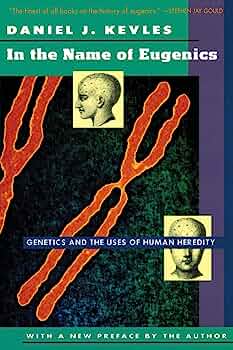
Daniel Kevles’ In the Name of Eugenics

Spencer J. Quinn

3,641 words

Daniel Kevles
In the Name of Eugenics: Genetics and the Uses of Human Heredity
Berkeley: University of California Press, 1985

It is young men like you, Bertie, who make the person with the future of the race at heart despair. Cursed with too much money, you fritter away in idle selfishness a life which might have been made useful, helpful and profitable. You do nothing but waste your time on frivolous pleasures. You are simply an anti-social animal, a drone. Bertie, it is imperative that you marry. — P. G. Wodehouse, The Inimitable Jeeves (1923)

One thing I like about enemy literature is that at the very least it gives you a feel for how strong — or weak — the opposition’s case is. As for Daniel Kevles’ 1985 book In the Name of Eugenics, it isn’t very strong. Billed on the back as “the first book to objectively deal seriously and objectively with the development of human genetics as a scientific and medical discipline,” it amounts to exactly that, despite the author’s unconvincing attempts to condemn his own subject matter. There really isn’t all that much to condemn. Nearly three-quarters of In the Name of Eugenics focuses on either genetics proper, “reform eugenics” (which arose in the 1930s as a milder form of the original “mainline eugenics”), or straightforward biographies of the topic’s major players — all of which Kevles finds unobjectionable.

So what is Kevles’ beef with eugenics? The fact that he is Jewish might give us all a clue. So would the book’s blurbs from co-tribesmen Stephen Jay Gould and Leon Kamin. As Kevles states in the Preface to the 1995 edition:

In the interest of reducing the proportion of the “less fit” in society, eugenicists in the United States helped restrict immigration from Eastern and Southern Europe. They promoted the passage of eugenic sterilization laws that disproportionately threatened lower-income groups. The laws and programs they fostered supplied a model for the Nazis, who sterilized several hundred thousand people and, brandishing their research into the genetics of individual and racial differences, claimed scientific justifications for the Holocaust.

Basic bitch, essentially. It’s made even bitchier by the fact that such a small proportion of what Kevles covers in his own book meets the description above. It’s like he’s selling us Dracula, but ends up delivering Renfield. Still, aside from a few ideological hiccups and the occasional lapses into psychoanalysis and race denialism, In the Name of Eugenics is an informative, absorbing, and valuable history of a widely misunderstood twentieth-century phenomenon. As it turns out, eugenics isn’t as bad as all that — especially the bad parts.

Kevles begins, appropriately, with Sir Francis Galton, “the founder of the faith.” As the first cousin of Charles Darwin, Galton was keenly aware of the rise of evolutionary theory in 1860s England. His 1869 work Hereditary Genius and other writings promoted the idea that humanity can improve itself over successive generations through selective breeding. His underlying assumption was the still-nascent idea of the heritability of genetic traits, which included those difficult to quantify such as intelligence and temperament. Galton relied for his research on the study of statistics, of which he was also a pioneer. He developed the now-ubiquitous statistical concepts of standard deviation and regression towards the mean. Galton also fashioned himself the anti-Malthus by insisting that human reproduction must be encouraged — but only among the right humans.

You can buy Spencer Quinn’s novel White Like You here.

At the core of his beliefs was the inegalitarian nature of humanity. The upper classes, he noted, produced on average individuals of higher quality and greater fitness than the lower classes. Yet, the lower classes continually outbred the upper classes. This “birthrate differential” fueled much of the eugenic concerns of the British and American upper classes throughout the first decades of the twentieth century. If the lower classes outbreeding the upper classes is dysgenic, then how can it be stopped, or at least curtailed? How could the upper classes be persuaded to produce more of their own?

As Galton stated in the Preface of the 1892 edition of Hereditary Genius:

We may not be able to originate, but we can guide. The processes of evolution are in constant and spontaneous activity, some towards the bad, some towards the good. Our part is to watch for opportunities to intervene by checking the former and giving free play to the latter.

While Kevles’ treatment of Galton is fairly benign and evenhanded, this begins to change with Galton’s protégé and biographer, Karl Pearson. For Kevles, Pearson was less scientific and more professionally — that is, selfishly — interested in eugenics. He was “concerned less with the shape of the new society than with where the Karl Pearsons would fit into it.” Kevles unsurprisingly reports with some distaste on Pearson’s penchant for both nationalism and socialism. He also accuses him of advocating a particularly uncharitable form of social Darwinism as an excuse to perpetrate class warfare, or what Kevles calls “social imperialism.” After all, it was Pearson who noted that only the small, super-fertile percentage of a population is responsible for producing future generations. 20% of today’s generation, he estimated, produces around 75% of tomorrow’s. And if that 20% is substandard, that does not bode well for the future:

In the eighteen-eighties, Pearson had pinned the excessive reproduction of the socially unfit upon capitalism, which, with its demand for cheap labor, encouraged the immigration of workers below a desirable standard. In the early twentieth century, he found his target in liberal reformism. “We have placed our money on Environment,” he quipped, “when Heredity wins at a canter.” Thus, assuming that everyone in Britain who could benefit from an education was getting one, Pearson saw no point in expanding schools. “No training or education can create [intelligence],” he declared in the Huxley Lecture. “You must breed it.” Indeed, he privately asserted to Galton that charities for the children of the “incapables” were “a national curse and not a blessing.” In his opinion, such measures as the minimum wage, the eight-hour day, free medical advice, and reductions in infant mortality encouraged an increase in unemployables, degenerates and physical and mental weaklings. Natural selection, he believed, had been suspended, and replaced by “reproductive selection,” which gave the battle “to the most fertile, not the most fit.”

According to Kevles, Pearson’s eugenics led him to found a “secular religion” out of the science centered on his Biometrics Laboratory in London and his journal Biometrika. At heart was his contention that “under all psychic states lay physical states that were presumably normally distributed in the manner of, say, height.”

Racial egalitarian that he is, Kevles disparages this contention (falsely, as it turns out, as IQ scores do correspond with tangible, mappable structures in the brain). Yet, he gives Pearson credit for personally eschewing politics out of principle. He also credits him for going beyond Galton and laying down the foundations of modern statistics. Included in his accomplishments are the development of probable error theory and the chi-squared test. Kevles also calls Pearson’s Treasury of Human Inheritance, which is a vast compendium of human traits, “a scientific treasure.”

The more fashionable eugenics became in the early twentieth century, however, the more Kevles dislikes it — and not entirely for bad reasons. As the furor took hold in the United States, “positive eugenics” — that is, pressuring the upper classes to have more children — gave way to “negative eugenics,” which entailed finding ways for the lower classes to have fewer children whether they wanted to or not.

Here’s where immigration restrictions and forced sterilizations enter the equation. Here’s also where we find rather unscientific notions among the eugenicists. For example, top American eugenicist Charles Davenport supported some questionable notions about the heritability of mental disease and of vaguely-described behavior patterns such as feeblemindedness, degeneracy, and shiftlessness. To solve these problems, he then promoted “the sexual segregation of defectives.”

You can buy Spencer J. Quinn’s young adult novel The No College Club here.

Even worse is American eugenicist Harry Laughlin, whom Kevles describes as “humorless, intolerant of criticism, and continually afire with dogmatic secular zeal.” Kevles dives into the man’s shoddy scholarship, questionable ethics, and aristocratic prejudice — and then laments the fact that Laughlin, as an expert, had considerable influence over policymaking in Washington. Of course, these policies largely included forced sterilizations and immigration restriction — although oddly enough, not abortion, as eugenicists in general were not too keen on abortion. According to Kevles, many who were not mentally ill or feebleminded were nevertheless deemed to be so and then sterilized. The same went for people who suffered from conditions that we know today are not hereditary.

It’s one thing for a scientist to be wrong because little is known about a particular field, but it’s something else entirely for that scientist to influence public policy based on his incomplete knowledge. Kevles brings home this point throughout his book, and it is a fair one. During the 1920s, Americans went sterilization-happy in a way the British eugenicists never could or would have. In response to the “menace of the feebleminded,” many Americans sought to “weed out of our race the contaminating strains of worthless blood,” in the words of eugenicists W. C. D. and Catherine Wetham. Sounds a bit harsh, doesn’t it?

From the 1910s to the Second World War, nearly 36,000 Americans were sterilized. Some accepted it voluntary. In most cases they were criminals, the habitually indolent, and the incurably insane. Despite the zeal of the eugenicists, however, many American judges and lawmakers were concerned about medical tyranny and sought to do justice whenever they could. It wasn’t all smooth sailing for eugenics back then. Still, Kevles makes the point that many innocents were victimized by this policy. Whether this was a worthwhile price to pay to purify the race, or to at least curtail poverty and lawlessness, it’s up to the reader to decide.

Despite not discussing eugenics outside of England or the United States for nearly the entire book, Kevles notes that the Nazis had sterilized nearly 225,000 people before the Second World War, and euthanized an additional 70,000 in 1939.

Kevles’ thesis regarding the insidious nature of eugenics is undermined by several factors. First, he is simply wrong about the heritability of intelligence and temperament. In Chapter 9, fittingly entitled “False Biology,” Kevles ties himself in knots trying to cast doubt on this notion. As with Stephen Jay Gould’s equally wrongheaded The Mismeasure of Man, Kevles looks to errors in early IQ and intelligence testing — especially as conducted by the US Army during the First World War — and attempts to discredit the entire enterprise. He pulls the same trick with the supposed Nordic supremacism of Madison Grant, as if minimal intra-racial differences compel us to believe that inter-racial differences are just as minimal. He cites the fraudulent nature of Cyril Burt’s mid-century twin studies, which reported a .771 correlation between genetics and intelligence, but ignores the fact that psychologist Arthur Jensen later excluded Burt’s questionable data — and yet came to similar conclusions. Kevles also fails to mention the fact that subsequent twin studies have exonerated Burt’s conclusions.

Kevles seems to assert that there is no such thing as general intelligence (later known as g), and that race is a political or social, rather than biological, phenomenon.

He then makes the case for environment being a major culprit of perceived racial differences in intelligence. This entails childhood studies from the time period which show how children raised in different environments, even twins, will demonstrate mental aptitudes roughly proportional to the quality of these environments. He also cites studies claiming that when black children move to cities from the countryside, their intelligence testing scores increase. This all ignores the fact that while environment often seems to play a role in determining children’s intelligence, its impact all but evaporates in adulthood. Two 40-year-old identical twins raised in vastly different environments will most likely have very similar IQs.

In another instance, Kevles triumphantly cites a study of “performance tests” given to Native Americans whose scores in some cases surpassed those of white children. These tests required physical rather than verbal or mathematical tasks, however, and so can hardly be trusted as intelligence tests. Most astonishingly, he cites a ludicrous claim by the psychologist Otto Klineberg that blacks as babies learn rhythm when their mothers wave their arms in the air while listening to marching-band music during football games.

Since Kevles so often notes that eugenics’ prime supporters, as well as the eugenicists themselves, tended to be white Anglo-Saxon Protestants, it becomes fair game for this reviewer to note that many of Kevles’ race-egalitarian sources in this chapter are Left-wing, diaspora Jews: Klineberg, Walter Lippman, Franz Boas, and Edward Sapir, to name only a few. He implies in several places that the white eugenicists were waging some kind of covert warfare on behalf of their race. If so, could the same not be said of all the Jews he trots out who deceive the reader regarding the heritability of intelligence?

Check out my reviews of Richard Haier’s The Neuroscience of Intelligence and Stephen Sanderson’s Race and Evolution for more on how recent studies have nailed the coffin shut on the idea of racial egalitarianism.

The second blow to Kevles’ anti-eugenics position springs from his own writing — which is why, as enemy literature, it is refreshingly weak. By the 1930s, some were already formulating a “reform eugenics” to push back against the more stringent features of the previous “mainline eugenics.” Eugenics effectively self-corrected, and it did not require the Second World War to do so. Much of this sprang from concern for human rights in the face of cruel and unusual punishment. More, however, came from advances in biology, and genetics in particular. Front and center of this pushback were J. B. S. Haldane and Lionel Penrose, who provided a much-needed reality check for eugenics:

Besides, by the mid-thirties, the weight of authoritative opinion concerning mental deficiency was rapidly shifting to the truths that Lionel Penrose was demonstrating: that the term “feebleminded” was carelessly used to cover a spectrum of mental disabilities, most of them ill-defined; that many of the disorders were caused by deprivation or disease; and that apart from a few deficiencies, little reliable was known about the actual dependence of mental disability upon heredity. Authoritative opinion also had it that the feebleminded were not proliferating at a menacing rate . . .

In many ways, eugenics was informed by the development of the science of genetics once the theories of Gregor Mendel gained acceptance in the early twentieth century. Armed both with this and improved technology, it was only a matter of time for the reform school to overtake the mainline one. Kevles dedicates the latter half of In the Name of Eugenics not so much to eugenics as to all the dizzying accomplishments of geneticists from the Second World War to the time of his writing. This is all good stuff, but it cannot possibly be construed as anti-eugenics, since the inheritors of Galton and Pearson kept pace with the times. For example, modern eugenicists abandoned all talk of sterilization and instead focused on volunteerism. They also spearheaded the necessary push to genetically screen husbands and wives for genetic disorders and to advise prospective parents on the possibility that their progeny might inherit genetic diseases. They also toned down all the racial talk, even as people such as Arthur Jensen, Edward O. Wilson, and William Shockley, all of whom were professional eugenicists, were reinvigorating the hereditarian school of biology in the 1960s and ‘70s.
You can buy Spencer J. Quinn’s novel Charity’s Blade here.

So if Kevles has at least grudging respect for Galton and Pearson, and finds little to complain about after the 1930s, then what is his problem with eugenics? It essentially boils down to the 20-year period between 1910 and 1930, during which eugenicists acted for the greater good despite lacking the scientific clarity of future generations. But as soon as that clarity was attained, they changed their emphasis. A disinterested study of eugenics would see this period as a hiccup rather than a defining moment. Such a study would also underscore how the early eugenicists, despite their errors, meant well. Kevles does neither of these things, which indicates that he is not disinterested, but rather appears to have an axe to grind.

As for the Nazis and Kevles’ fear that eugenics provides the slippery slope to the gates of Auschwitz, one need merely ask: Did it? The answer is not in America, and certainly not in England. In both countries and elsewhere outside of Germany, the trend was to pull back from the type of extreme eugenics as Kevles reports was practiced in the Third Reich. And this was all well before the Second World War. Further, for someone so haunted by the specter of the Nazis, Kevles hardly mentions them. What did the Nazi eugenicists themselves have to say about their advanced sterilization and euthanasia programs? Did they provide any reasons for their measures? Did Germany derive any benefit from them? Was there any backlash? Kevles doesn’t bother to say. It seems In the Name of Eugenics amounts to a trial in absentia as far as the Nazis are concerned, and is less convincing as a result.

The final way in which Kevles undermines himself is by giving oxygen to the eugenicists themselves. Alexandra Minna Stern makes the same mistake in her 2019 book Proud Boys and the White Ethnostate, in which she gives dissident leaders such as Greg Johnson and Jared Taylor ample room to express their ideas. Perhaps she felt that their ideas were so bad that they would refute themselves. But the opposite happened: She inadvertently made the dissident Right look good. With the benefit of 50 years of hindsight, Kevles does the same with the early eugenicists. By quoting them so liberally and describing them so accurately, he makes them look not only good, but prescient.

Here is Kevles on Davenport making sense:

He may have argued against barring the entry of particular national groups, but he believed that the European nations sent over disproportionately large numbers of their worst human stock, that immigrants rapidly outbred the native population, and that they supplied an excess of public charges. Davenport deplored the fact that the government had to support tens of thousands of insane, mentally deficient, epileptic, and otherwise handicapped wards, not to mention prisoners and paupers, at a cost he estimated to be about a hundred million dollars a year.

Here is Henry Fairfield Osborn, President of the American Museum of Natural History, making sense:

. . . [T]he true spirit of American democracy that all men are born with equal rights and duties has been confused with the political sophistry that all men are born with equal character and ability to govern themselves and others, and with the educational sophistry that education and environment will offset the handicap of heredity.

Here is psychologist and psychometrics pioneer Henry Goddard making sense:

. . . [T]he chief determiner of human conduct is the unitary mental process which we call intelligence. . . . This process is conditioned by a nervous mechanism . . . and the consequent grade of intelligence or mental level for each individual is determined by the kind of chromosomes that come together with the union of the germ cells . . [and] is but little affected by any later influence except such serious accidents as may destroy part of the mechanism. As a consequence, any attempt at social adjustment which fails to take into account the determining character of the intelligence and its unalterable grade in each individual is illogical and inefficient.

And here is Kevles on the Nazis making sense:

Sterilization was, of course, only the beginning of the Nazi eugenic program. In the interest of improving the German “race,” the government provided loans to biologically sound couples whose fecundity would likely be a credit to the Volk; the birth of a baby would reduce the loan indebtedness by twenty-five percent. A number of German cities established special subsidies for third and fourth children born to the fitter families. To foster the breeding of an Aryan elite, Heinrich Himmler urged members of the S.S. to father numerous children with racially preferred women, and in 1936 he instituted the Lebensborn — spa-like homes where S.S. mothers, married and unmarried, might receive the best medical care during their confinements.

The more I read about these early eugenicists, the more I like them! Had we heeded the warnings of some of them, we wouldn’t have all the dire problems we have today: declining average intelligence, out-of-control immigration, crime-ridden cities, rampant transsexualism, and anti-white racism, to name only a few. If history has taught us anything, it’s that you either have eugenics or you have dysgenics. Pick one. If a society is not actively pursuing eugenic goals, then it is practicing dysgenics, whether it realizes it or not.

Yes, eugenics’ authoritative fatalism will never make it popular — even if practiced reasonably and stripped of its more questionable dogma. It is an elitist doctrine through and through. But there is a certain amount of dignity and autonomy that should accompany human life — and eugenics, as sensible as it is, does chafe against that. How else can you describe a program which effectively reduces people to animal husbandry? This is perhaps why eugenics is so easily dismissed or mocked — as P. G. Wodehouse did so adroitly in his Jeeves stories via Bertie Wooster’s overbearing aunt Agatha. It’s funny to imagine the old battle axe trying to pound good eugenic sense into her errant and irresponsible nephew. We know she’s right, but we can’t help taking Bertie’s side, as feckless as he is.

Daniel Kevles and the other race egalitarians he cites in In the Name of Genetics would like us to think that this is all there is to eugenics: It restricts freedom, it says mean things about brown people, its practitioners made mistakes in the past, and it led to the Nazis. Eugenics bad! Case closed. But a careful reading of Kevles himself shows that not only is this view wrong, but that the case should be reopened.

* * *

Like all journals of dissident ideas, Counter-Currents depends on the support of readers like you. Help us compete with the censors of the Left and the violent accelerationists of the Right with a donation today. (The easiest way to help is with an e-check donation. All you need is your checkbook.)

GreenPay™ by Green Payment

Select donation type

Select or enter an amount to give

Select or enter an amount to give monthly

For other ways to donate, click here.

Daniel Kevles’ In the Name of Eugenics

Daniel%20Kevlesand%238217%3B%20In%20the%20Name%20of%20Eugenics%0A

Share

  • Gab

Enjoyed this article?

Be the first to leave a tip in the jar!

Instant Echeck GreenPay™

Related

  • Paul Krugman: Closet Bolshevik

  • Black Intellectual Fatigue

  • Watching the Watchers

  • Berlin: City of Stones

  • Lothrop Stoddard’s The Revolt Against Civilization

  • Trump vs. Transgenderism

  • Yes, We Can Replace Them

  • An Interview with Glen Allen, Free Speech Advocate

Tags

anti-eugenicismanti-eugenicsArthur Jensenbook reviewsCharles DavenportDaniel Kevleseugenicseugenics in the Third ReichgeneticsHarry LaughlinhereditarianismheredityIn the Name of EugenicsKarl Pearsonmainline eugenicsP. G. Wodehousepositive eugenicsrace and IQracial egalitarianismracial equalityreform eugenicsSir Francis GaltonSpencer J. Quinnsterilizationthe Third Reich

8 comments

  1. Sag says:
    July 6, 2023 at 3:39 pm

    Not surprised whatsoever, based off of this characterisation of the book, that unfavourable reference is made to Karl Pearson. His lecture National Life from the Standpoint of Science (https://archive.org/details/nationallifefro00peargoog/page/n8/mode/2up?view=theater) contains precisely the kind of rationally formulated wisdom which the technical specialists influencing public policymaking today eschew out of fear.

    0
    0
  2. Rez says:
    July 6, 2023 at 6:18 pm

    Excellent review! Thank you!

    One suggestion: Instead of the term Nazi, we should all use National Socialist, or the equivalent.

    0
    0
  3. Lord Snooty says:
    July 6, 2023 at 9:23 pm

    Almost all the doctors and nurses who participated in the Nazi euthanasia program must have believed they were doing humanitarian work by relieving the suffering of incurables. After the war, finding themselves judged as on the same level as members of a paramilitary death squad must have come as a complete shock.

    0
    0
  4. Lord Shang says:
    July 6, 2023 at 11:20 pm

    Funny thing about anti-eugenicist Lionel Penrose. I recognized that last name, Googled, and discovered that he was not only (as I suspected) the father of Nobel physicist Roger Penrose, but of several other highly intelligent and accomplished children as well:

    https://en.chessbase.com/post/the-penrose-family-scientists-and-chess-players

    Anti-eugenicists play fast and loose with the truth. Because concepts like “feebleminded” are imprecise (but not thereby invalid), they are easy to discredit in the popular mind by means of finding obvious exceptions. Likewise, doubt can be cast upon hereditarianism by publicizing individuals of great ability born to modest parents, or of modest persons born to accomplished parents. But eugenics was always about statistically significant aggregates (which is undoubtedly why Galton was forced to develop advances in stats in order to establish his science).

    Positive eugenics sounds innocuous to all except hardcore genetics-denialists, but negative eugenics is more socially valuable. The correlation between genius parents and children is much weaker than that between behaviorally underclass parents/children. This might seem to bolster the ‘environmentalist’ side, until one researches the life history outcomes of underclass children adopted into middle or upper-class homes. While the latter fare better than underclass kids raised in underclass environments, they still are statistically much more likely to be both dumber and more delinquent than their genetically different but environmentally similar peers. “You can take the savage out of the jungle …” And, on the old principle that “one bad apple spoils the barrel”, even a small behavioral underclass can impose immensely disproportional costs, economic and sociological, on society.

    At a minimum, convicted non-capital criminals should be given the option of choosing  vasectomies as a means of reducing sentence lengths (and a more vigorous capital punishment regime could itself constitute a form of negative eugenics). And all habitual, violent criminals should face mandatory sterilization. The survival and development of civilization are themselves moral values, and ones which, moreover, at least can be argued trump the individual bodily “rights” of felons.

    The old eugenicists were humanitarians of the highest order (as Richard Lynn pointed out in his book Eugenics: A Reassessment). They altruistically sought to improve life and preserve civilization for unseen generations, including ones far in the future. How, exactly, does this conflict with Christian ethics (as both progressives and even theoconservatives believe)?

    0
    0
    1. Beau Albrecht says:
      July 7, 2023 at 4:20 am

      Good points there.  Now let’s take it a little further.  For the sake of argument, let’s suppose the hardcore leftist position is true that intelligence and character are 100% environmental, and 0% genetic.  Does that mean it’s OK for the criminal underclass to breed like bunny rabbits and teach their antisocial values to their youth?  If leftist social engineering worked, they would’ve fixed the root causes they talk so much about by now, as well as indoctrinated the kiddos into being responsible citizens.  Since it doesn’t work, then discouraging reproduction seems a viable way to end the cycle of dysfunction.

      0
      0
      1. Desert Flower says:
        July 7, 2023 at 8:34 am

        Excellent point, Beau Albrecht.

        0
        0
  5. Beau Albrecht says:
    July 7, 2023 at 3:57 am

    I find some of the anti-eugenics arguments to be dodgy:  1) feeblemindedness isn’t well defined, 2) some mental conditions might not be genetic, and 3) some cases of mental retardation might not be genetic.  The fact is that people who are retarded or significantly mentally ill just aren’t going to be good parents.  This is true whatever the exact diagnosis happens to be, or what caused it. I’m not hating; just observing.  Can you imagine what it must be like for a child to grow up in that kind of environment?  A good rule of thumb would be that those incapable of living independently have no business raising children.

    As for the German eugenics program, Lothrop Stoddard had a good bit to say about that in Into the Darkness, which I’ve reviewed here.  His overall take is that they were quite meticulous about reviewing the cases, and in his opinion, too cautious.

    Aside from all that, I’ve seen some criticisms of the Buck v. Bell decision, claiming that she was never retarded in the first place.  Well, if this is so, why didn’t any of her lawyers put her on the stand so that she could show the judges that she could carry on a lucid conversation?

    0
    0
  6. Alexandra O. says:
    July 23, 2023 at 2:27 pm

    I actually believe I was a born Eugenicist.  When I was 16 or 17, I used to stay up late and quietly watch old movies on TV after my parents were asleep.  After midnight, there were ‘infor-mercials’ about missionaries in Africa or South America or India, or the myriad other poor regions of the planet, showing poor women sitting on sidewalks in forlorn villages with three or four small kids around her, begging for money.

    Even at that age, my first thoughts were — “If this woman doesn’t have any money or food for the kids or herself, why did she have them?  And there’s another one in a basket cradle new to her”.

    That thought is still with me today nearly 50 years later.  I see it clearly as the basis of Eugenics.  There are myriad social answers swirling around incessantly being put forth — Catholics absolutely forbid the use of birth control, while the Islamic world insists that women must obey their husbands and have as many kids as he wants — and the Nazis chimed in with Eugenics to breed only correct biological humans.  Well, of these three, I would certainly choose the latter.

    But after nearly 200 years of grappling with this problem, it’s still one of the worst problems in the world — I state firmly that overpopulation alone is the absolute basis of Climate Change — and not cow farts or car exhaust.

    Well, that’s my Eugenic stand, and I’m proud of it, though I usually keep my mouth firmly closed on the subject, as we are all forced to do today.


    “If you can’t feed yourself, why would you have children?”  And that applies to men and women and all races.


    0
    0

Comments are closed.

If you have a Subscriber access,
simply login first to see your comment auto-approved.

Note on comments privacy & moderation

Your email is never published nor shared.

Comments are moderated. If you don't see your comment, please be patient. If approved, it will appear here soon. Do not post your comment a second time.

Upcoming podcasts
  • Rob Rundo on Counter-Currents Radio

    Rob Rundo on Counter-Currents Radio

    Counter-Currents Radio

    Sat, Jun 13th — 3 pm EST / 9 pm CET
  • Daniel Tyrie on Counter-Currents Radio

    Daniel Tyrie on Counter-Currents Radio

    Counter-Currents Radio

    Sat, Jun 20th — 3 pm EST / 9 pm CET

Writers of May

(2 votes) Morris van de Camp David M. Zsutty Derek Stark Jayant Bhandari Greg Johnson

Articles of May

Heidegger on Nietzsche, Part One by Collin Cleary The Lunch Wars by David M. Zsutty 2 votes
    • Happy Birthday to Us!

      Greg Johnson

      4

    • Zsutty’s Maximum

      David M. Zsutty

      8

    • Exclusive Interview with Karel Veliky:
      The Final Chapter in the Film Series! Part I

      Ondrej Mann

    • The Union Jackal, June 2026

      Mark Gullick

      21

    • The Inferiority Behind Immigrant Superiority

      Jayant Bhandari

      15

    • Counter-Currents Radio Podcast No. 690
      Greg Johnson & David Zsutty Discuss Current Things: AI, Henry Nowak, the Iran Crisis, & More

      Counter-Currents Radio

      4

    • Collin Cleary: What Rome Means to Me

      Collin Cleary

      4

    • Paul Krugman: Closet Bolshevik

      Spencer J. Quinn

      15

    • Fugue of Ideas:
      Ibram X. Kendi’s Chain of Ideas

      Greg Johnson

      18

    • Based Blacks

      Lipton Matthews

      11

    • Black Intellectual Fatigue

      Derek Stark

      36

    • Why White Advocates Should Avoid “Based Blacks”

      Dani Vypont

      23

    • Nietzsche & Race

      Mark Gullick

    • Editor’s Update
      Rob Rundo Rescheduled to Next Week on Counter-Currents Radio;
      Tonight Greg Johnson & David Zsutty Answer Your Questions;
      Fundraiser Update & a New $20,000 Matching Grant

      Greg Johnson

    • The Counter-Currents 2026 Fundraiser
      Lifetime Subscriber Welcome Packages Extended

      Greg Johnson

    • Nationalism This Week
      Who’s Looking Back?

      Greg Johnson

      29

    • China’s Threat to American Security:
      Food, Farmland, Foreign Control, & Energy Policy

      Lipton Matthews

      5

    • The Bitter End of Western Metaphysics:
      Heidegger on Nietzsche, Part Two

      Collin Cleary

      16

    • The Killing of Henry Nowak

      Mark Gullick

      38

    • The Crisis of Chinese Technology Thieves

      Morris van de Camp

      1

    • The Strange World of Gender Bender Fiction:
      & What This Genre Tells Us About Autosexuality

      Dani Vypont

      3

    • Watching the Watchers:
      The Dark Triad Question

      David M. Zsutty

      14

    • The Remigration Movement Solidifies

      F. Roger Devlin

      1

    • Casting Aspersions:
      The Fatal Consequences of Race-Swapped Casting, From Helen of Troy to Henry of Southampton

      Steven Tucker

      20

    • The Murder of Henry Nowak

      Millennial Woes

      23

    • Don’t Forget to Vote in Our Writer & Article of the Month Poll

      Greg Johnson

    • The Robot Hotdog Stand

      Greg Johnson

      37

    • Laughing Our Way to Victory

      Dave Chambers

      7

    • The Zodiac Killer

      Mark Gullick

      11

    • Jared Taylor: What Rome Means to Me

      Jared Taylor

      1

    • An Interview with Endeavour:
      My Way of Life Is an Adventure!

      Ondrej Mann

      6

    • José Pedro Zúquete’s The Identitarians

      Greg Johnson

      3

    • Editor’s Update
      Fundraiser Update & How to Watch the Remigration Summit

      Greg Johnson

      5

    • The Bitter End of Western Metaphysics:
      Heidegger on Nietzsche, Part One

      Collin Cleary

      12

    • Berlin: City of Stones

      Spencer J. Quinn

      6

    • True Folk-Horror Is Horror of Your Own Folk:
      Mark Gatiss vs the Brexit Blind Dead  

      Steven Tucker

      4

    • Counter-Currents Radio Podcast No. 689
      Thomas Massie, the America 2050 Bust, the Need for Whites to Divest from America, the AI Economic Apocalypse, & Pro-White Project Pitches to Billionaires

      Counter-Currents Radio

      7

    • Nationalism This Week
      Remigration is Inevitable, Part 3

      Greg Johnson

      27

    • Why Billionaires Should Fund White Identity Politics

      Lipton Matthews

      8

    • How Cold War Two Came About

      Morris van de Camp

      5

    • Now Available for Pre-Order at a Special Price!
      Greg Johnson’s The Philosopher Is In

      Greg Johnson

    • David Zsutty’s Elevator Pitch to a Billionaire

      David M. Zsutty

      1

    • Headbanging Lite

      Mark Gullick

      5

    • White Advocacy Past and Present

      Peter Bradley

      13

    • The Lunch Wars

      David M. Zsutty

      47

    • The Russians are Coming/The Russians are Coming

      Steven Clark

      1

    • Peak Fatigue in Fort Wayne

      Gabriel Anderson

      24

    • Keith Woods’ Elevator Pitch to a Billionaire

      Keith Woods

    • The Cruelty of Kindness

      Morris van de Camp

      9

    • Predation Wearing the Mask of Civilization

      Jayant Bhandari

      13

    • Peter Quint

      Zsutty’s Maximum

      The only reason that black on black crime is worse than black on white crime is proximity and...

    • Peter Quint

      Happy Birthday to Us! 16

      Great article! Glad to be a part of an evolving organization, that may one day be an institution...

    • Zarathustra

      Zsutty’s Maximum

      Someone who worked in a refugee camp once told me about a Muslim who consumed alcohol in the camp....

    • Hi-ya!

      Happy Birthday to Us! 16

      Great site , Greg. I loved the trial of Socrates.

    • Wasili

      Paul Krugman: Closet Bolshevik

      It’s revealing that Krugman returns so often to the explanation that rural MAGA voters are primarily...

    • Will Williams

      Happy Birthday to Us! 16

      I don’t know about numerology or astrology, but Greg’s very real assessment of our situation is why...

    • Mark Gullick

      The Union Jackal, June 2026

      "Weren’t all of these incidents somewhat predictable when you openly invite masses of low...

    • Dani Vypont

      Happy Birthday to Us! 16

      Congrats on 16 years!Since David Zsutty has mentioned on the podcast that he has an interest in...

    • Will Williams

      Zsutty’s Maximum

      C.E. Whiteoak: June 11, 2026  Fantastic article. I have never seen a better explanation of...

    • Flel

      The Union Jackal, June 2026

      Weren’t all of these incidents somewhat predictable when you openly invite masses of low...

    • WayDown

      Zsutty’s Maximum

      "Likewise, Indians were obsequious to whites when they felt we had power over them" It is an...

    • Will Williams

      Zsutty’s Maximum

      Mr. Zsutty: [M]any actual white [sic] liberals and many white [sic] conservatives for that matter...

    • Uliet Bravo

      Zsutty’s Maximum

      https://en.wikipedia.org/wiki/Liebig%27s_law_of_the_minimum#Liebig's_barrel Kinda sorta analogous...

    • Asier Abadroa

      Zsutty’s Maximum

      This reminds me of how Black South Africans burn illegal Black immigrants alive when they enter...

    • Elear

      The Inferiority Behind Immigrant Superiority

      Mr Bhandari describes a certain way of identity expression characteristic to ethnic diasporas: loud...

    • Beau Albrecht

      The Union Jackal, June 2026

      If he was all but dead on the scene, then the pigs wasted their effort arresting him for "racism". ...

    • Moss

      The Inferiority Behind Immigrant Superiority

      Interesting insights into a foreign culture, even though I find it quite disturbing.

    • Beau Albrecht

      The Union Jackal, June 2026

      As for the "elites", they should be housed in the middle of one of the no-go zones that their...

    • Will Williams

      Based Blacks

      Weave: June 9, 2026 ...I used to listen to preachers who claimed Jews were chosen and it was our...

    • Moss

      The Union Jackal, June 2026

      Ha, yes, better and more quaint times for our people Mark. In Fr Ted I remember the over 75's...

    • Earth Day Special

      John Morgan

      12

    • A Robertson Roundup
      Remembering Wilmot Robertson
      (April 16, 1915 – July 8, 2005)

      Margot Metroland

      13

    • The Paranoid Style in White Nationalism

      Greg Johnson

      30

    • Join the Dance!

      Andrew Hamilton

      1

    • We Can’t Save the Earth Without Reducing African Birth Rates

      James Dunphy

      36

    • “I’m Not a Conspiracy Theorist, but . . .”:
      Jeffrey Epstein’s Death Gives New Life to “Conspiracy Theories”

      Greg Johnson

      22

    • Sylvia Plath: Stasis in Darkness

      Vic Olvir

      17

    • Vanguardism, Vantardism, & Mainstreaming

      Greg Johnson

      80

    • Aviation, Geography, & Race

      Charles Lindbergh

      3

    • Some Thoughts on Yule

      Collin Cleary

      4

    • Living in Truth:
      A Yuletide Homily

      Jef Costello

      7

    • John Kennedy Toole’s A Confederacy of Dunces

      Greg Johnson

      20

    • On Aleksandr Solzhenitsyn’s Warning to the West

      Spencer J. Quinn

      7

    • Elitism, British Modernism, & Wyndham Lewis

      Jonathan Bowden

      6

    • Philip K. Dick’s Do Androids Dream of Electric Sheep? as Anti-Semitic/Christian-Gnostic Allegory

      Greg Johnson

      20

    • “Conspiracy Theory” or Conspiracy?

      Andrew Hamilton

      21

    • Remembering H. P. Lovecraft
      (August 20, 1890–March 15, 1937)

      Greg Johnson

      3

    • Who Are We?
      Nordics, Aryans, & Whites

      Greg Johnson

      71

    • Remembering William Gayley Simpson
      (July 23, 1892–December 31, 1990)
      A Pleasant Afternoon with Harriet & Bill Simpson

      Margot Metroland

      18

    • Here are the Young Men
      Remembering Ian Curtis
      (July 15, 1956–May 18, 1980)

      Mark Gullick

      18

    • Percy Grainger
      Artist of the Right

      Alex Graham

      7

    • Remembering Revilo Oliver
      (July 7, 1908–August 20, 1994)

      Greg Johnson

      18

    • The Meaning of July 4th for the White Man

      Gregory Hood

      13

    • The Front National’s Evolution

      Bruno Mégret

    • Merwin K. Hart
      Forgotten American Hero & Man of the Right

      Morris van de Camp

      10

    • George Orwell’s Nineteen Eighty-Four

      Jonathan Bowden

      8

    • Carleton S. Coon
      Scientist & Reluctant White Advocate

      Morris van de Camp

      3

    • The Kwanzaa Absurdity Will Be Dwarfed by Juneteenth

      Robert Hampton

      10

    • Stravinsky

      Alex Graham

      7

    • Like the Roman:
      Remembering Enoch Powell (1912-1998)

      Mark Gullick

      23

    • Sexually Incontinent on the Indian Subcontinent:
      Who Rapes More Animals, Indians or Pakistanis? The Battle Continues!

      Steven Tucker

      3

    • Neo-Fascism in Film
      Part 5

      Karel Veliky

      15

    • The Game of Tarot

      Mark Gullick

      2

    • Institutions Cannot Be Transplanted

      Jayant Bhandari

      5

    • Jonathan Bowden’s Deliverance
      Part 5

      Jonathan Bowden

    • Crosstown Traffic:
      Jimi Hendrix & The Post-War Rock ‘N’ Roll Revolution

      Mark Gullick

      1

    • Slaves from the North:
      Finns & Karelians in the East European Slave Trade, 900–1600

      Lipton Matthews

      14

    • Neo-Fascism in Film
      Part 4

      Karel Veliky

      2

    • David Lean’s A Passage to India

      Spencer J. Quinn

      1

    • Elites are Essential to Development

      Lipton Matthews

      7

    • Jonathan Bowden’s Deliverance
      Part 4

      Jonathan Bowden

    • Neo-Fascism in Film
      Part 3

      Karel Veliky

      6

    • E. M. Forster’s A Passage to India & the Indian Mentality

      Spencer J. Quinn

      25

    • Jonathan Bowden’s Deliverance
      Part 3

      Jonathan Bowden

    • The Rest Is Silence
      Heidegger’s Quietism

      Mark Gullick

      2

    • Dispelling the Historical Fallacy of Indian Nationalism

      Lipton Matthews

      8

    • Neo-Fascism in Film
      Part 2

      Karel Veliky

      8

    • Jonathan Bowden’s Deliverance
      Part 2

      Jonathan Bowden

    • Life of a Klansman

      Mark Gullick

      8

    • Jonathan Bowden’s Deliverance, Part 1

      Jonathan Bowden

    • Decolonial Ideas are Holding Back Developing Countries

      Lipton Matthews

      8

    • Neo-fascism in Film, Part 1

      Karel Veliky

      21

    • Jonathan Bowden’s Onslaught, Part 8
      Divigations on Decadence

      Jonathan Bowden

    • Jonathan Bowden’s Onslaught, Part 7
      Intrigues in the National Front

      Jonathan Bowden

      1

    • Rotten to the Core

      Mark Gullick

      8

    • Strauss on Husserl’s “Philosophy as Rigorous Science”

      Greg Johnson

    • Jonathan Bowden’s Onslaught, Part 6
      Francis Bacon & Right-Wing Nihilism

      Jonathan Bowden

    • London After (& Before) Midnight:
      Aleister Crowley, The Landlord’s Worst Nightmare

      James J. O'Meara

      2

    • Jonathan Bowden’s Onslaught, Part 5
      The Post-War British Far Right

      Jonathan Bowden

    • No Rules: Rollerball

      Mark Gullick

      4

    • András László
    • Derek Hawthorne
    • Beau Albrecht
    • Alain de Benoist
    • Kerry Bolton
    • Jonathan Bowden
    • Collin Cleary
    • Jef Costello
    • Savitri Devi
    • Julius Evola
    • Jim Goad
    • Gregory Hood
    • Juleigh Howard-Hobson
    • Greg Johnson
    • Charles Krafft
    • Anthony M. Ludovici
    • Trevor Lynch
    • H. L. Mencken
    • J. A. Nicholl
    • James J. O’Meara
    • Christopher Pankhurst
    • Tito Perdue
    • Michael Polignano
    • Spencer J. Quinn
    • Fenek Solère
    • Irmin Vinson
    • Leo Yankevich
    • Francis Parker Yockey
    • Multiple authors
  • Editor-in-Chief

    • Greg Johnson, Ph.D.

    Featured Writers

    • Beau Albrecht
    • Gunnar Alfredsson
    • Collin Cleary, Ph.D.
    • Jef Costello
    • Morris V. de Camp
    • F. Roger Devlin, Ph.D.
    • Stephen Paul Foster, Ph.D.
    • Jim Goad
    • Alex Graham
    • Mark Gullick, Ph.D.
    • Greg Johnson, Ph.D.
    • Travis LeBlanc
    • Trevor Lynch
    • Margot Metroland
    • James J. O’Meara
    • Angelo Plume
    • Spencer J. Quinn
    • Fred Reed
    • Clarissa Schnabel
    • Michael Walker
    • David M. Zsutty

    Frequent Writers

    • Asier Abadroa
    • Aquilonius
    • Alain de Benoist
    • Kerry Bolton, Ph.D.
    • Dave Chambers
    • Steven Clark
    • James Dunphy
    • Endeavour
    • Richard Houck
    • Jason Kessler
    • Titus Livius
    • Ondrej Mann
    • Lipton Matthews
    • Mark Mazari
    • John Morgan
    • Jaroslav Ostrogniew
    • Kathryn S.
    • Christian Secor
    • Anne Wilson Smith
    • Thomas Steuben
    • William De Vere
    • Kenneth Vinther
    • Max West

    Classic Authors

    • Maurice Bardèche
    • Jonathan Bowden
    • Julius Evola
    • Guillaume Faye
    • Ernst Jünger
    • Kevin MacDonald, Ph.D.
    • D. H. Lawrence
    • Charles Lindbergh
    • Jack London
    • H. P. Lovecraft
    • Anthony M. Ludovici
    • Sir Oswald Mosley
    • National Vanguard
    • Friedrich Nietzsche
    • Revilo Oliver
    • William Pierce
    • Ezra Pound
    • Saint-Loup
    • Savitri Devi
    • Carl Schmitt
    • Miguel Serrano
    • Oswald Spengler
    • P. R. Stephensen
    • Jean Thiriart
    • John Tyndall
    • Dominique Venner
    • Leo Yankevich
    • Francis Parker Yockey

    Other Authors

    • Howe Abbott-Hiss
    • Michael Bell
    • Giles Corey
    • Jack Donovan
    • Richardo Duchesne, Ph.D.
    • Emile Durand
    • Guillaume Durocher
    • Mark Dyal
    • Tom Goodroch
    • Andrew Hamilton
    • Robert Hampton
    • Huntley Haverstock
    • Derek Hawthorne
    • Gregory Hood
    • Juleigh Howard-Hobson
    • Alexander Jacob
    • Ruuben Kaalep
    • Tobias Langdon
    • Julian Langness
    • Patrick Le Brun
    • G A Malvicini
    • John Michael McCloughlin
    • Millennial Woes
    • Michael O’Meara
    • Christopher Pankhurst
    • Michael Polignano
    • J. J. Przybylski
    • Quintilian
    • Edouard Rix
    • C. B. Robertson
    • C. F. Robinson
    • Herve Ryssen
    • Alan Smithee
    • Fenek Solere
    • Ann Sterzinger
    • Robert Steuckers
    • Tomislav Sunic
    • Donald Thoresen
    • Marian Van Court
    • Irmin Vinson
    • Book Reviews
    • Movie Reviews
    • TV Reviews
    • Music Reviews
    • Art Criticism
    • Graphic Novels & Comics
    • Video Game Reviews
    • Fiction
    • Poems
    • Interviews
    • Videos
    • English Translations
    • Other Languages
      • Arabic
      • Bulgarian
      • Croatian
      • Czech
      • Danish
      • Dutch
      • Estonian
      • Finnish
      • French
      • German
      • Greek
      • Hungarian
      • Italian
      • Lithuanian
      • Norwegian
      • Polish
      • Portuguese
      • Romanian
      • Russian
      • Slovak
      • Spanish
      • Swedish
      • Ukrainian
    • Commemorations
    • Why We Write
  • Archives
  • Top 100 Commenters
  • The Looney Bin
Sponsored Links
Europa.com Above Time Coffee Antelope Hill Publishing Paul Waggener IHR-Store Spencer J. Quinn American Renaissance Jim Goad The Occidental Observer
Donate Now Mailing list
Books for sale
  • The Philosopher Is In
  • Sexual Utopia in Power (Expanded Edition)
  • In Defense of Prejudice
  • Loving Our Own
  • Tyranny & Wisdom
  • The Populist Moment
  • Is America Doomed?
  • To all books
Copyright © 2026 Counter-Currents Publishing, Ltd.

Paywall Access


Please enter your email address.

Lost your password?

Edit your comment

Writer & Article of the Month May 2026

Voting for this month has concluded. Here are the final results!

Top Writers

  • #1 Morris van de Camp 2 votes
  • #2 David M. Zsutty 2 votes
  • #3 Derek Stark 2 votes
  • #4 Jayant Bhandari 2 votes
  • #5 Greg Johnson 2 votes
  • #6 Jared Taylor 1 vote
  • #7 Collin Cleary 1 vote
  • #8 Spencer J. Quinn 1 vote
  • #9 Mark Gullick 1 vote
  • #10 Lipton Matthews 1 vote
  • #11 Keith Woods 1 vote
  • #12 Steven Tucker 1 vote

Top Articles

  • #1 Heidegger on Nietzsche, Part One 2 votes
  • #2 The Lunch Wars 2 votes
  • #3 The Ghost of the Confederacy 1 vote
  • #4 Lothrop Stoddard’s The Revolt Against Civilization 1 vote
  • #5 Could Fascism Work? 1 vote
  • #6 Jared Taylor's Elevator Pitch to a Billionaire 1 vote
  • #7 Predation Wearing the Mask of Civilization 1 vote
  • #8 Peak Fatigue in Fort Wayne 1 vote
  • #9 Keith Wood's Elevator Pitch to a Billionaire 1 vote
  • #10 Do You Want to Play a Game? 1 vote
  • #11 Why Billionaires Should Fund White Identity Politics 1 vote
  • #12 The 1970s: The Golden Age of Hijacking 1 vote
  • #13 True Folk-Horror Is Horror of Your Own Folk 1 vote
  • #14 Finding Atlantis Part 4 1 vote
  • #15 Berlin: City of Stones 1 vote

Total votes cast: 17