 5,759 words
Audio version here
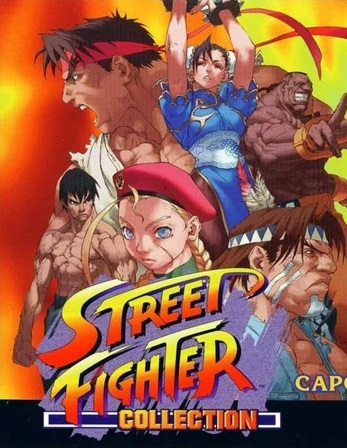
The Japanese videogame franchise Street Fighter, especially in its earliest versions, is a presentation of the perspective of the Japanese as regards the world situation up to that time, as well as future prognostication and an evaluation of the “Other.”
The various characters within the microcosmal scenario or context of a world tournament serve to illustrate the reality of life within the mundane plane: the reality of race war and the inevitability of conflict between the diverse groups on Earth, and their historical role, mission, and destiny. Of course, given that the videogame was a presentation of a Japanese perspective, and moreover an Americanized (i.e., Judaized) Japan subordinate to world Jewry (if only to a degree), the game is perhaps, under the influence of Jewry, an inversion of the reality of world-historical events and of this world’s realities. Hence, it must be understood to be a simulacrum of reality — appropriate enough given its “virtual” nature as a representation of a representation.
Regardless of Jewy’s diabolical influence, the game manages to reveal at least a partial truth and not a complete inversion with the hybridized consciousness of the Japanese manifesting itself “through a glass darkly” — the mixture of the Aryan Ainu and indigenous Oriental people creating a lack of consistency and resolve as regards their adherence to Truth; perhaps an incapacity to understand or fully comprehend Truth. This is revealed in the cartoon He-man, wherein beast-man — the non-white — dwells in illusion (maya) and He-man (the Aryan) dwells in Eternity.
An overview of the storyline gives insight into this inversion or distortion of “The Truth.” Shadowloo, often translated as “Shadowlaw,” is an international terrorist drug cartel that seeks world domination and power and is headed by a figure who appears reminiscent of Adolf Hitler. The archetype can already be seen to be inverted, with Hitler being portrayed from the Judeo-Christian-egalitarian-liberal-humanist perspective as “evil” and as the archetype of the “shadow.”
The inversion lies — and “lie” is the appropriate term — in the fact that Hitler was the archetype of Traditional values, of the higher man (Aryan), and of the hero (Virya), the self-sacrificer, he who elevates and creates a spiritualized world through emphasizing the noble and good in the classical sense. If he doesn’t eliminate them, he at least doesn’t elevate the weak and defective so that they can’t displace their betters. Adolf Hitler, being a representative and an archetype of nobility, was and is the light of the Black Sun shining upon the Earth and was wholly against the use of drugs and other substances to tear down and destroy others. This transposition of roles with Hitler (the good; gut; the goth; the got — deriving from the gods) being defiled and portrayed as merely the head of a drug cartel is characteristic of Jewish black magic. It is in fact the Jew who is this figure, while the Aryan is he who elevates and improves the lives of his own, and indeed of others, if doing so is overall harmonious and beneficial for the higher man.
The character of M. Bison (who was originally called “Vega,” named after the star Vega from the Lyrean constellation and hereafter referred to by the character’s original name) is more representative in his behavior of the Jew — the “organic lie,” as Alfred Rosenberg referred to him. The Jew is largely in control of the international drug trade, and is motivated by the elimination of all of those people who are sufficiently healthy and strong enough to resist his despotic influence. Hence, the inversion of the character of “M. Bison” or Vega is a characteristic Jewish scapegoating tactic in their attempt to transfer their sins onto those they hate (and whom they hate because they represent a mirror that reminds them of their inferiority, and which they accordingly seek to smash).
The character of Vega (M. Bison) represents the archetype of Aryan man as viewed from the frog-like perspective of Judeo-Christianity, and what would be called “evil” within this chandal creed of the Untermensch (the Jew). Vega is a star in the Lyrean constellation and is one which will, during the Aquarian Age (an age already upon us), become the pole star that will replace the current one around which the Earth revolves, forming the swastika of the new age. Hence the connotation of Nazism and the swastika are implicit in Vega’s name and character.

You can buy Fenek Solère’s Resistance here.
The figure of Vega — his physiognomy, his skin tone and behavior — are all characteristically Germanic: He is a square-jawed figure with a high forehead and centered eyes, the eyes of a predator, aesthetically representing the Aryan archetype, though perverted with a violence that is embodied in his “psycho power,” the Vril or Odic force, This is the force of the Black Sun, of which it is a distorted representation: The radiations of the Black Sun from the pole of the Hollow Earth and the hidden Sun, the central Sun of the galactic center.
The star of Vega has the characteristics of Venus and Mercury, according to astrological lore in the ancient almanacs, and was referred to in Vedism as a star of good omen that led to the vanquishing of the Asuras, the dark forces who are bound up with Jewry. The former position of the polestar is occupied during the time of Atlantis, hence connoting the Atlantean origin of the Aryan race and its displacement from that position occurring simultaneously with the fall of Atlantis. The cycles of time dictate a new advent of this star ascending in the Aquarian Age.
That Vega has the characteristics of Venus and Mercury is also noteworthy given that Venus, being Lucifer, refers to the transcendent nature of the Aryan, and Mercury, being a star representative of wisdom and intellect, connotes this property of the Aryan as well. Associations with Saturn and Jupiter also apply, meaning it is a star of expansion and power as well as restriction and control. The gray-green uniforms of the National Socialists connote Saturnian restriction, death, and limitation within the aeon of Pisces. But, as in the case of the Totenkopf symbol they wore, it also represents a resurrection of the Virya, or hero, through combat against the evil tide of the Demiurge in the Age of Aquarius. This is a liberation of Saturn from the dark forces who have enslaved the planetary archon Krodo/Santur/Saturn by the ice rings which surround it, and which are already melting due to the Christ Ray and the second coming of the Christ, the Black Sun (i.e., the increase of radiations from the galactic center through the next stages of the Manvantara). Vega, being one of the brightest stars in the sky, is the light of the North and of the Golden Age which will reappear in the coming age which is already upon us.
The portrayal of “Vega” as something malevolent or negative in Street Fighter is a typical inversion of beastman expressing his jealousy of the Aryan through defilement tactics. It is either this, or the Japanese game developers were attempting to portray the Nazis, as represented by Vega, as having perverted the gnosis of star lore and put themselves on a pedestal unjustly, or at least having unjustly treated others, and thus were “evil” in the Judeo-Christian sense.
Vega’s appearance in a red-and-blue uniform is connotative of the impassioned nature of Mars (the red planet), of anger and aggression; there are also the Saturnian colors of his gray cape and the spiritual color of his blue stripes, with steel armor plating further connoting Mars and the martial element. Red and blue also perhaps connote the Ida and Pingala nadis of the occult anatomy, with the white Shushumna replaced by a grey cape to represent a failed integration of the soul. The metal greaves worn over the German jackboots are an allusion to the Germanic Knight of the Ghibellines and the Hohenstaufens; Frederick Barbarossa. Hence the inversion of the Aryan superman into a stereotypical character of Judeo-Christian “evil”: a dark, violent, malevolent force which delights in conquest and power and the supersession of others. The reality of the Aryan superman is otherwise: a figure who conquers and dominates to enhance and elevate all sentient life on Earth that has merit, and which demonstrates it through its will to power and superlative merit and talent — or at least that which serves that which has merit and talent — thus creating more rather than less harmony on Earth overall.
Another member of Shadowloo (Shadowlaw) is Sagat, a Muay Thai fighter from Thailand whose fight orients around self-development and achieving excellence as a warrior. The character is portrayed in the game as having flaws. His inherent defect stems from his lack of higher focus or direction of willpower, presumably toward the heavenly world of spiritual heights due to his focus on the personality and temporal power (becoming Emperor of Muay Thai), rather than focusing his consciousness on the higher states of being.
Sagat is portrayed as having lost an eye (hence having a lack of vision) in the midst of combat within the material plane, and can be likened to the figure of Wotan, who sacrifices an eye for wisdom. Only here it is inverted, sacrificing wisdom for temporal power and reputation. Hence, yet another inversion of reality can be seen, with the fact of temporal power being associated with a lack of wisdom — which is false, as the two, spiritual authority and temporal power, are bound up with one another and are not separable.
Thus, the portrayal of the one who seeks temporal power is of one who is blind, lacking in wisdom. It can only be said to be accurate to the extent that there is a lack of either of these modalities of human activity. Yet again, we have here the implied criticism of those who are oriented toward worldly goals and objectives, who only bear a discordant ring and not the ring of Truth. Sagat is representative of Wotan fallen, and being Thai is historically associated with primordial (Theraveda) Buddhism, which is astrologically corresponds to Mercury, who is Wotan (Buddha being the mercurial archetype, and saffron or orange being a color astrologically corresponded with Mercury). Mercy is also associated with intellectualism: the cunning of reason and wisdom. The name Sagat means “blocker” in Thai, further underscoring the inversion of the mercurial archetype — instead of representing the attainment of wisdom, it here an obstruction or blocking of wisdom through worldly orientation.
Sagat’s orientation, initially under the influence of the international drug cartel called “Shadowloo,” has a temporal focus, and later, after presumably having an epiphany of sorts, he shifts his focus toward fighting the fight outside affiliation with Shadowloo. He thus fights the “greater jihad” rather than the lesser, overcoming his previous limitations through an imminent transcendence by working within his tradition and not allowing himself to be overcome by an obsession with temporal power at the expense of his True will.
His decision to shift his focus, however, was not made out of a moralizing choice to conform to so-called “ethics” as he, being of a mercurial, Buddhistic orientation, had obtained a state “beyond good and evil,” and thus chose to follow a higher path of self-overcoming rather than self-limitation. Thus, in Sagat’s story we can see the ethics of aristocratic nobility entering into, or rather revealing themselves, in the story through its Japanese creators who, in spite of the clear American (Judeo-Christian-Masonic-Anglo-American Zionist Empire) influences, manifest their authentic Japanese character through this figure.
The Muay Thai fighter Sagat is also a representation of Thai tradition, and his Muay Thai trunks being blue and orange, but more blue and then orange, connote a transitioning away from the influence of the previous age of Pisces, with the external Sun (orange) reflecting its rays off the Earth’s surface (and hence appearing orange-yellow) and toward the emanations of the Black Sun (blue) in the Age of Aquarius. This is the Sun’s true color. This shifts his focus away from the cunning of reason toward higher spiritual gnosis (buddhi manas, the spiritual or Buddha mind, which dark blue connotes).
That Sagat has a shaved head not only connotes the tradition of Thai fighters but also that of the Theraveda Buddhist monks, and thus his transition from a corrupted and under-developed form of praxis through affiliation with Shadowloo toward an independent path: the path of enlightenment and the doctrine of awakening through Buddhist ascesis. It is a known fact that fighters, like Buddhist monks, practice the retention of semen in order to work up their vital force (kundalini) toward the higher energy centers as well as for the purpose of increasing vril, or Chi — the life force, by whatever name it may be called. Sagat unifies the opposites of spirit and matter as a Luciferian being and attains a state of enlightenment through it. The active nihilism of Buddhistic spiritual practice has its counterpart in Sagat’s martial arts practice, with the temporal power of the kshatriya (warrior) united with the spiritual authority of the brahma under the rays of the Black Sun in the new Golden Age.
You can buy Julius Evola’s East & West here.
Balrog, whose original name was M. Bison (after Mike Tyson, the negro-American boxer of fame and infamy), is an affiliate of Shadowloo representative perhaps in the mind of the Japanese as one of the slave minions of the dark forces of the Earth. This is a recurrent theme in much of Jewish propaganda, such as in their pop-cultural, racially supremacist cartoon from the 1930s, Superman, particularly its episode of “Superman versus the Klan” wherein the Ku Klux Klan is portrayed in the setting of “darkest Africa,” undergoing various voodoo rights with the “savage” negroes. Thus, a “secret relationship between blacks and Nazis” is established, when the reality is the secret relationship between blacks and Jews, as outlined in the book of the same name by Louis Farrakhan.
The Aryan is therefore associated with the “savage” of Africa, connoting an “evil” association in the Judeo-Christian sense, its association with the Obea and the Wanga thereby aspersing the Aryan, and indeed, to some extent the negro. This theme is represented in Street Fighter by its Japanese creators, and the thug of Shadowloo, a negro, is portrayed as a crude boxer, violently assaulting everyone. The negro Balrog, whose name may also connote the Balrog or cacodemon as portrayed in Tolkien’s work, is also portrayed as a dirty fighter, a sneaking and mendacious figure. The morality, according to Judeo-Christian moralism, of Balrog is yet another aspersion against negroes and their lack of regard for this particular brand of ethics, being of a more Titanic character as exemplified in Balrog’s pugilistic style: throwing haymakers and low blow knees-all gestures of directed force, a direct projection of will-to-power again against all and sundry.
Vega, whose original name was Balrog, is yet another figure who represents one of the powers of the era of the Second World War: Spain. He is a narcissistic sociopath, which is apparently a trait ascribed to Spaniards by the Japanese, the Spanish having been colonists in the Orient for centuries and yet having failed to solidify any base of operations there, unlike other more powerful nations such as the French (Indochina) and England (Taiwan). This might be an implicit slander against the Spanish for their lack of capability (“’not playing with a full deck”) in their conquering endeavors. This view is also suggested in the videogame Tenchu: Stealth Assassins, with the Spanish pirate captain being killed by the traditional Japanese samurai.
The Spaniard’s vanity is affirmed to exist in the character of Vega (which is also a trait of this star, if poorly aspected, in the natal chart), as shown by his effeminate manners and the mask behind which he hides. Vega is a Shadowloo assassin, and in the Street Fighter animated movie he is portrayed as a sadistic abuser of women, a sadomasochist who merges the sex and death archetypes of eros and thanatos into a negative form of animosity toward the “Other.”
This type of Spanish character may very well exist to an extent, and might be attributable to the infusion of Semitic blood there as a result of the Moorish invasion and occupation of Aryan Spain. The concomitant hybridization of these two groups to at least a slight extent has led to a character of a fallen nature, which is what led to the destruction of the Spanish Empire through overreaching. The case of Francisco Pizarro and Lope de Aguirre in the latter’s search for El Dorado revealed a questing Aryan nature, but also hubris. That Vega is portrayed as a bullfighter further connotes a masochistic hubris of personality within this Spanish archetype. Perhaps Vega’s arrogance is a representation of this Spanish trait of the Spaniard as well?
Another affiliate of Shadowloo that creates confusion as to types — who Shadowloo represents entirely, the Aryan or Judeo-Masonic cabal that rules behind the scenes (perhaps representing both as two sides of the dialectic of the “enlightenment”?) — is the character of Zangief, a stereotypical Russian “man of the people” or working-class hero. Zangief’s appearance represents Communism’s atheistic ideology: titanic, crudely materialistic, and oriented toward machines and industry: Zangief shows being situated is in a military armaments factory. This also implicitly critiques the chthonic, warlike quality of the Soviets, conveying that such an ideology leads only to the application of force of the lowest density, a spiritually hollow and vacuous world of lead in the Age of Lead, and of the lowest vibrational frequency. Zangief is portrayed as a relatively unintelligent brute with a slavish (Slav?) disposition, serving Vega (M. Bison), Shadowloo’s boss. He is a representative of the typical “worker,” the mass man of the Jew world order, whose animal mind (kama manas) proliferates as as he has no higher ideal than metal and machines – “work,” despising all higher forms of culture and forms of life. His animal mind is further underscored by his angry visage and hairy body, as well as his minimal garments: only a pair of red, brief-style trunks also denoting the martial element, the muladhara chakra.
The figure of Blanka represents the Brazilian South American mongrel “beast-man.” He is a feral creature who has purely animalistic qualities and has no capacity for speech (articulation, logos, no conception of God), but can only grunt like a brute. Even his fighting capacity is animalistic, consisting of biting and the emission of electrical discharges, a shamanistic and lower magical assault against “the Other” opponent. Plinio Salgado, the founder of the Brazilian Integralist party, was a half-breed of predominantly Portuguese extraction who sided with Adolf Hitler during the Second World War, and thus Blanka (blanco? white?) may be a mockery of this figure and his hybridized nature. Columbia, cocaine’s major manufacturer, and Venezuela also sided with Hitler, amongst other South American nations, but most were mainly neutral or else untrustworthy allies owing to the treacherous Catholic Church’s influence. These Portuguese and Spanish colonists were led by their Jewish controllers to sabotage the preexisting Aryan empires of Machu Picchu, Teohuanaco and Tenochtilan, taking advantage of the pacifism and altruism of the natives and then mass-slaughtering them in the name of God, the Demiurge, the Lord of Jewry. Hence, the portrayal of South America in Blanka is an aspersion of the attempt on the part of the Catholic Church to impose upon all its levelling equality, dragging everyone down into a state of arrested development.
The character of Rolento represents a characteristically militaristic “American patriotard.” Though his name is Italian and he has connotations of a Mussolini archetype, he is apparently German-American and an opponent of Shadowloo. Like a typical Anglo-American Zionist, his claim to opposing Shadowloo’s “evil” is largely a pretext for his own imperialism, and thus constitutes a critique of the Judeo-Christian Zionist’ hypocrisy and his militaristic propensity, even while he is servile to Jewry and the latter’s slave morality (a morality of hypocrisy, as Jewry and Masonry purport to be humble servants of “their” G-d while being extremely arrogant, and purporting to be altruistic while being instead its antithesis: extremely egotistical).
Rolento is a negative, and thus true representation of the “Green Beret” of the Vietnam vet, patriotard variety. His beret is red, connoting martial qualities in an astrological sense and partaking of the qualities of violence and aggression. The color green suggests Venus and harmony, the heart or anahata chakra, and red the base or muladhara chakra, which the Anglo-American empire represents, being the golem of Jewry, which Rolento typifies. His solid white eyes either connote a zombie-like character so common amongst the mind-controlled American cattle (goyim) or an aspiration to attain godhood as a Virya, kshatriya warrior hero archetype, if only in his own mind (suggestive of the “god mode” of the videogame Doom). His aspiration to establish a militaristic utopia is very reminiscent of America, the “invincible eagle.”
Guile is yet another typical instance of the American archetype, and even his name is appropriate. He is a guileful figure who, like Rolento, is a master of psychological warfare and deception, a representative of the Freemasonic despotism of America. His deceptive quality creates an inner schism and tension in his character, which manifests in his defective fighting style, its externalization based largely on trickery and brute force, a perfect example of American foreign policy. He is the brother of Ken Masters, who is also the half-brother of Ryu.
Ken Masters represents the blonde-haired American who has become fascinated with the East and its culture, becoming a karate expert. He embodies a typical American aggression as seen in his red-colored gi, and yet by virtue of being influenced by the Eastern spirituality and one of its martial arts, he has transitioned away from the corruption of Guile and toward a more spiritual orientation of his consciousness. Thus, he is capable of being a half-brother of Ryu, the modern Japanese archetype, seeking his tradition with Zen-like detachment, the vehicle of karate serving as a mechanism of imminent transcendence.
Judging from the fact that Ken has black eyes and somewhat Oriental features, this might indicate that he is a half-breed (part Aryan with his golden hair and part Oriental with black eyes, or that he is a half-breed Oriental Jew, in the latter case showing an implied Jewish supremacy). In either case, the implication by the game’s creators is that the North American is only capable of the physical expression of violence, and possesses a deviant psychology based upon self-interest and power madness. This is of course true in part, but is not the complete story.

You can buy Irmin Vinson’s Some Thoughts on Hitler & Other Essays here.
Continuing to praise themselves with characteristically Oriental guile, the game’s creators present another archetype of Japanese traditionalism which serves the dual purpose of making allowances for their affiliation with the Third Reich, that of an erstwhile affiliate of Shadowloo:the sumo wrestler E. Honda. He is some sort of Japanese police agent investigating Shadowloo, and who causes the death of some of his fellow Japanese through manufactured drugs.
In the figure of E. Honda, the Japanese tradition is presented as rectified and no longer tainted with an affiliation of Shadowloo (implicitly the Nazis), and presented as a purer, morally virtuous archetype of innocence in the Judeo-Christian sense (or Zen Buddhist sense, and possibly that of Shinto). This may also be connoted by the rising Sun in E. Honda’s stage.
Yet more Oriental infighting is presented in the character of Fei Long, a Bruce Lee archetype or archetype of the modern Chinese warrior who is portrayed as an extremely arrogant and contemptuous figure and a showmen infatuated with his own image while simultaneously having been, unlike the more traditionalist figure of Gen (the Taoist and traditionalist martial artist), who is a more mysterious and potentially humble type, corrupted by Western culture as a movie star.
Hence the Japanese aspersion against the Chinese, who is corrupted (albeit largely unwillingly) under the regime of Mao Tse Tung, some regions of China having sided with the Third Reich and even having been colonized by Japan, such as Manchukuo. The moral (again, according to Judeo-Christian and mainstream religious norms as well as those of democratic Enlightenment ideology) character of the Chinese is nonetheless upheld by the Japanese creators in the figure of Chun Li, who represents the traditional, dutiful Chinese woman with her traditional costume, her stage being situated in a stereotypical Chinese city with street peddlers and rickshaws. Her dutiful nature can be seen in how she makes it her life’s mission to bring Vega (M. Bison) to what is considered by the United Nations globalists’ “justice” as vengeance for Vega orchestrating the death of Chun Li’s father. That the Interpol agent Chun Li must play things by the book rather than seeking private vengeance, as her law-abiding mentality dictates, is a Traditional “mode of conduct” according to her Confucianist code of ethics (rights and principles, or li, as spoken of in the Analects of Confucius).
By praising the Oriental female, who is in a way a distant affiliate of theirs (being Orientals closely related in some respects), they place themselves in the position to critique the white female Cammy to a greater degree.
Kami, in Japanese Shinto refers to any being that possesses awe-inspiring qualities. The figure of Cammy in this franchise is represented by a white, blonde-haired and blue-eyed MI6 agent who has become possessed by the psycho power of Vega (M. Bison), becoming his captive slave and covert assassin. This is seen in an episode of the Street Fighter movie, in which Cammy employs her martial arts tactics to assassinate a politician by the name of “Mr. Sellers” (a seller? a Jew?), thereby implicitly conveying the relationship between Vega or M. Bison and “anti-Semitic” Nazism, as well as the latter’s Shadowloo organization.
In Shinto, Kami are considered to be of a double mind, and this is shown in the character’s schizophrenic consciousness being controlled by Vega. This is perhaps also a subtle mockery of the white woman being “double-minded” or wayward in her loyalty, lacking constancy or consistency in principles.
According to Shinto lore, one had an obligation to appease Kami in order to gain their favor and avoid their wrath, not unlike the relationship most have — and indeed must have — with white women, and women in general. A parallel is best drawn between white women, as archetypically represented by Cammy, and Kami, the natural spirits or divine forces of nature (the Earth Mother goddess).
They had two souls: one gentle (positive feminine archetype or higher octave of female consciousness) and the other assertive (aggressive; irrational — the negative or lower octave of female consciousness, though this can have its positive traits, just as the former can have its negative in being overly altruistic and other-regarding without prudence or stability of judgment, heedless of the consequences of action). The souls are also hidden: one happy and one mysterious, further connoting the female nature of the external façade (mask) and the internal reality (face).
The role of Kami was also the sustaining of crops, meaning that their role mirrored that of the feminine (sustaining and nurturing the “growing things”). That the figure of Cammy in the videogame is portrayed as a traitor to her race (the British) illustrates that her judgment is poor, and her double-mindedness (and conflictual, dualistic soul) further leads to a violation of the National Socialist creed Meine Ehre Heisst Treue (honor is my loyalty). Hence, white females are subtly mocked as the Achilles’ heel of the white race, and perhaps by extension the males who “let them off the chain.”
The inverted red triangle Cammy wears over her right breast connotes feminism and an impassioned and martial feminine consciousness, and this on a black military vest suggesting a Saturnian finitude or death-like quality and its barrenness (childlessness). This is probably intended to be prognosticative, alluding to the death of the white race through feminism and the lack of traditional role-play. What is unknown by the creators, of course, is that species propagation is already of no purpose, as a race war to come will be the deciding factor of world history on this earthly plane. What is also unknown is that with Hitler’s sacrifice, the Aryan race has already won, only in a different dimension: first, Hyperborea.
Another “victim” figure is placed into the pantheon of world fighters in the tournament of Shadowloo, and participates purely for reasons consistent with his Oriental Hindu ethics: Dhalsim, who only engages in such activity for the purpose of obtaining money with which to feed his village. Thus, he is presented as a Ghandi-like archetype, only in a more martial form, abiding by Gandhi’s Satyagraha-style ethics (non-violent resistance), only resisting the “Western imperialism” that coerces him to fight for “the innocent.” This characteristically passive-aggressive mentality is presented as a virtue of Chandalism in contradistinction to the vice of Vega’s master morality, and is thus characteristically Judeo-Christian (Hindu; and also to some extent, but not authentically, Buddhist; more the Mahayana form of a distorted Buddhism centered on moralizing and passivity).
The Oriental contrast between Sagat, the more Indo-European-Lemurian hybrid and inheritor of the Theraveda tradition (masculine consciousness), and the more Aryan Dravidian Oriental Dhalsim (feminine consciousness), as well as the ethics of Chun Li (feminine-lunar), presents the Oriental Sagat as more of a dark-side, masculine modality of Oriental or quasi-Oriental consciousness or essence and behavior, and the other two as feminine, even if perhaps more Aryan racially, as in the case of Dhalsim. Perhaps this is an implicit tongue-in-cheek mockery of the Aryan and the resultant product of caste mixture on the part of the kshatriya Japanese?
The other token minority characters are added as a means of appealing to the American and British (Anglo-American) audience, those of Deejay and T. Hawk. Here is presented the same guileful mockery on the part of the Japanese, who posit two figures representative of colonized nations manifesting their will to power within the context of the “racial holy war” (Rahowa) of the Shadowloo tournament, obtaining their “right” to oppose their “colonialist oppressors” by main force.
Historically, the episode of the “wind rush” Caribbean backwash of colonization to England occurred in the 1960s, just as did the Mexicans into the United States. Hereby, the creators are mocking the Anglo-American imperialist expansion, as it took on the sewage of the “Third World” it sought to control and exploit, a tu quoque-style gesture on their part. This presumably is what the international Jews had planned from the beginning in setting up the white colonialists who they largely controlled and influenced, and then used in their expansion into non-white territory. Then, after finishing with them, they received the backstab from the international Jews’ morgul knife.
The most significant figures in the game, at least viewed through Japanese eyes, are those who are the ultimate victors in the end: Ryu (a traditionalist karate master) and Akuma, whose original name was Gouki (“Great Demon,” but which was changed at the request of the “Western” affiliates to “Akuma” — meaning “demon” and connoting Satan or the Devil), and having created a false connotation of Judeo-Christian “evil” associated with the character.
Ryu is a representative of Japanese tradition, that of Zen, or perhaps Shinto and karate. He is portrayed as forever involved in a spirit quest, wandering the Earth in search of combatants to hone his skills, not fighting the outer war against others such as Vega and Shadowloo, who are seeking temporal power. Ryu seeks spiritual power through fighting an inner war of self-overcoming (the absent God who is coming, the Superman, only in Oriental form, not Nietzschean, the form of “the man of heaven,” perhaps in his samurai warrior form).
Ryu’s stage is that of the Japanese landscape showcasing the beauty of Japan prior to Westernization and modernism, yet this assertion of autonomy and origins occurs in spite of the Ainu Aryan creators of Japan. Perhaps the allusion is to Shinto and the animism of the Japanese tradition in the pre-Ainu stock, who subsisted in the islands of “Japan” long ago? Thus, could it be an implied condemnation of the Aryan and their superimposition of culture?
Regardless, Ryu, in the last phase of the tournament, faces Vega and is defeated. The Oriental is defeated by the Aryan. However, poetic justice as presented by the game’s creators lies in the appearance of Akuma. Akuma is a spiritual figure, perhaps another one of the Kami of Shinto, as he has features unlike all the other characters of a non-human sort, and has bright red hair (could this be paradoxically suggesting the Aryan origins of this figure deriving from or being identical with the Divyas of Hyperborea? This would further implicate the Aryan as “fallen” and hubristic, being defeated by the higher form from which he involuted). The odds that he represents Japan’s clan spirit and its indigenous people is high, as Akuma defeats Vega for supremacy, and as the last gesture of his appearance over Vega’s dead body, he displays the back of his gi, on which is emblazoned the heaven kanji, the Japanese symbol for the transcendent emblazoned in glowing fire for the elemental fire of spirit. Thus is conveyed the defeat of Aryan mankind by the primordial spirits of the Japanese.
It is confusing whether Vega represents the Jew rather than the Aryan, a confusion that was probably deliberate on the part of the creators who, being agreeable to the Anglo-American Zionist audience and markets, had to put the Aryan in the place of the Jew as the archetype of “evil,” in the Judeo-Christian sense.
Unless, of course, this is the sincere wish of the Japanese: to witness the fall of Aryan man and the hegemony of their super-cultural organism in the form of Akuma, an archetype of their own supremacy. It is not enough to understand this motivation if one views the world through Western eyes. Neither is it adequate to view it through Eastern eyes, as both would be a distorted prism of half-truth. Rather, one must view the meaning of this entire franchise through Northern eyes, in the light of the North, of the Black Sun — not that of the rising and dying Sun, and least of all that of the rising and dying son-God of the Magian Near Eastern and Mediterranean type.
The Aryan stands on the true throne of Hlidskjalf in Asgard, the realm of Eternity in which only he may dwell. He thereby conquers on the spiritual plane and he conquers through combat in the physical one, even if he is defeated on the physical — through the triumph of the Will.
* * *
Counter-Currents has extended special privileges to those who donate $120 or more per year.
- First, donor comments will appear immediately instead of waiting in a moderation queue. (People who abuse this privilege will lose it.)
- Second, donors will have immediate access to all Counter-Currents posts. Non-donors will find that one post a day, five posts a week will be behind a “paywall” and will be available to the general public after 30 days.
- Third, paywall members have the ability to edit their comments after publishing them. At Counter-Currents, every man can be an editor! (The edit option ends when the comment thread closes. Currently, that is in 100 days.)
- Fourth, Paywall members can “commission” a yearly article from Counter-Currents. Just send a question that you’d like to have discussed to [email protected]. (Obviously, the topics must be suitable to Counter-Currents and its broader project, as well as the interests and expertise of our writers.)
- Fifth, Paywall members will also have access to the Counter-Currents Telegram chat group.
To get full access to all content behind the paywall, sign up here:
Paywall Gift Subscriptions
 If you are already behind the paywall and want to share the benefits, Counter-Currents also offers paywall gift subscriptions. We need just five things from you:
- your payment
- the recipient’s name
- the recipient’s email address
- your name
- your email address
To register, just fill out this form and we will walk you through the payment and registration process. There are a number of different payment options.
1 comment
I’m now gonna undo all my prior comments I wrote earlier lamenting the ills of computers, games and the internet by commenting on this.
My knowledge is of the two dimensional street fighter series. I’ve seen the modern incarnations on youtube but it really doesn’t work the same way visually and looks like a stupid mess to me. So I only regard the sprite animated SF’s as SF.
I don’t know if I agree with all of this essay, or the radical pagan perspective, but I suspect the opening summary is very correct, that SF was in large part a result of Japan’s exposure to American culture and Hollywood movies, before these movies were too woke and you still saw some appealing archetypes, albeit often fed to us by Jews.
I never perceived Bison as Hitler. I wonder if it’s our own sensitivities on this, due to decades of post war Jewish propaganda, where Hitler is constantly attacked by Jews that we ourselves project him onto any fictional villain. Hard to say. Certainly Jews do shift blame for their own crimes onto goy villains. But any fictional villain is Hitler by that standard. Still I get why this is part of the analysis. I guess Japan felt compelled to follow this trend, or were copying American stuff and not really thinking about it too much.
Sometimes I think a cool thought experiment would be to consider what white culture would like completely absent Jewish influence. I’d be interested to hear anyone’s ideas on this.
Visually Bison seemed something more like Pinochet or similar leader, with the hat.
Sagat never looked at all like a Thai to me, but a kind of tall and powerful but aging white guy, trying to prove himself one last time. I heard he was named after some real Muay Thai guy. I really have no idea, and really don’t care much either how one group of orientals regard other groups of orientals, but perhaps Japanese see Thais in a certain brutish and less Asian way, and that’s depicted in Sagat.
Zangief: I’m sure Zangief was highly formative in the West’s ideas about Russia at that time. Like Ivan Drago was.
I didn’t know he was supposed to be on Shadaloo’s payroll. I thought he was just an independent fighter. Very hard to pull off his spinning piledriver, and even more so that super move on a regular joystick. The grappling characters had that 360 special, then later the 720 degree super move.
Zangief could ‘vacuum’ in opponents who were some distance away with it. Maybe there’s something to be also be read into with the play mechanics.
You well summed up Blanka as the savage, and it’s interesting to read your further thoughts on him as I feel the same kind of conflict over him, although I didn’t know anything about Plinio Salgado and the other history you mentioned.
I agree in one way Blanka is a taboo depiction of the base savage races of the primitive world, perhaps there’s a comment about Brazil’s race mixing in him as you suggest at first, but yes in another ways Blanka sidesteps blackness as a major source of violent primitivism, the ‘blame’ being pushed towards Amerindians and possibly even European ancestry.
Whatever, I seem to remember comments on youtube noticing Blanka’s generally unflattering traits, blaming America for this raciss portrayal in its attitudes to South America. Japan/Capcom were not mentioned.
You’re getting a bit ahead of me here with Rolento. Time he appeared in the series I had stopped playing. But I remember the character from Final Fight along with Sodom – who was very interesting and quite frightening I thought, although a bit watered down when he appeared in Street Fighter.
I do not recognize the description of Rolento from what’s written here. To me visually he clearly appears inspired by South American revolutionaries. A failed Che Guevara with terrorist leanings, he had bombs and stuff in FF. Rolento was still fighting the revolution in his own mind. Perhaps there’s a commentary about the left in him ?
Guile, I don’t associate him with psychological warfare, unless you mean he’s emblematic of American propaganda and brainwashing. Nor do I see his style as defective or based on trickery.
From what I remember he was weighted as one of the most powerful characters in the game. I remember character tables depicting what would happen if two players of equal skill fought with different characters. I’m pretty sure Guile was at the top. Flattering an American audience, conceding to American global dominance ? I don’t know.
Guile’s big back story was his pal Charlie/Nash? who appeared himself in Street Fighter Alpha with the same moves as Guile.
Guile was probably my favorite character to play, because it was very natural to do the charge moves and unleash sonic booms.
I liked Ken as well. I liked Ken’s anger. Ken and Guile were my favorites. I found Ryu a bit boring, although his moves were so similar to Ken’s. I can’t stand his look in these latest games, complete with hipster beard. It looks retarded now.
Glad you mentioned Akuma. I never really played him much though. I liked his mystery as a secret character at first. I remember seeing his air fireballs for the first time. Like ‘wow!’. But that special move, Shun Goku Satsu ? where the screen would white out and you’d just see the hits and the flaming Japanese character might have been the beginning of the decline of Street Fighter as it opened the door to a level of hollow non-interactive stylistic display that then became the norm in Capcom’s fighting games afterwards. Some of the super moves and spectacle in the X-men vs Streetfighter/Marvel vs Capcom and so on just became more and more ridiculous.
Still, I don’t play games anymore, but I do have a soft spot for Street Fighter and a couple of others so I wanted to read this.
Comments are closed.
If you have a Subscriber access,
simply login first to see your comment auto-approved.
Note on comments privacy & moderation
Your email is never published nor shared.
Comments are moderated. If you don't see your comment, please be patient. If approved, it will appear here soon. Do not post your comment a second time.