Counter-Currents
  • Advertise
  • Private Events
  • T&C
  • About
  • Contact
  • RSS
    • Main feed
    • Podcast feed
    • Videos feed
    • Comments feed
  • Welcome
  • Webzine
  • Books
  • Merch
  • Podcasts
  • Videos
  • Donate
  • Patrons
  • Subscribe
  • Crypto

LEVEL2

Donate Now Mailing list

Writers of May

(2 votes) Morris van de Camp David M. Zsutty Derek Stark Jayant Bhandari Greg Johnson

Articles of May

Heidegger on Nietzsche, Part One by Collin Cleary The Lunch Wars by David M. Zsutty 2 votes
  • Welcome
  • Webzine
  • Books
  • Merch
  • Podcasts
  • Videos
  • Donate
  • Patrons
  • Subscribe
  • Crypto
    • Small Is Beautiful:
      The Napoleon of Notting Hill and G. K. Chesterton Upon Defending One’s Homeland from Others—and Itself

      Steven Tucker

    • The Psychology Behind MrBeast’s Moronic Thought Experiment

      Endeavour

      2

    • On the Roots of Anti-Immigrant Sentiment in Contemporary Britain

      Lipton Matthews

      3

    • Remembering Enoch Powell:
      June 16, 1912–February 8, 1998

      Greg Johnson

      8

    • Counter-Currents Radio Podcast No. 691
      Rob Rundo Returns

      Counter-Currents Radio

    • The Fragile Polity that is Syria

      Morris van de Camp

      1

    • Nigel Farage Calls Britain a Two-Tier State

      Mark Gullick

      4

    • Nationalism This Week
      Letter to J. D. Vance

      Greg Johnson

      31

    • Lost In Trans-Mission:
      How the Media Fails To Reveal the Inconvenient Truth About the Usual Suspects

      Steven Tucker

      10

    • Liar, Liar, Pants on Fire!

      Beau Albrecht

      7

    • Editor’s Update
      Rob Rundo on Counter-Currents Radio, Fundraiser Update, & a New $20,000 Matching Grant

      Greg Johnson

    • The Bitter End of Western Metaphysics:
      Heidegger on Nietzsche, Part Three

      Collin Cleary

      10

    • Uncivil War

      Mark Gullick

      50

    • Exclusive Interview with Karel Veliky:
      The Final Chapter in the Film Series! Part II

      Ondrej Mann

      2

    • Happy Birthday to Us!

      Greg Johnson

      6

    • Zsutty’s Maximum

      David M. Zsutty

      16

    • Exclusive Interview with Karel Veliky:
      The Final Chapter in the Film Series! Part I

      Ondrej Mann

      2

    • The Union Jackal, June 2026

      Mark Gullick

      23

    • The Inferiority Behind Immigrant Superiority

      Jayant Bhandari

      15

    • Counter-Currents Radio Podcast No. 690
      Greg Johnson & David Zsutty Discuss Current Things: AI, Henry Nowak, the Iran Crisis, & More

      Counter-Currents Radio

      7

    • Collin Cleary: What Rome Means to Me

      Collin Cleary

      4

    • Paul Krugman: Closet Bolshevik

      Spencer J. Quinn

      21

    • Fugue of Ideas:
      Ibram X. Kendi’s Chain of Ideas

      Greg Johnson

      19

    • Based Blacks

      Lipton Matthews

      24

    • Black Intellectual Fatigue

      Derek Stark

      41

    • Why White Advocates Should Avoid “Based Blacks”

      Dani Vypont

      32

    • Nietzsche & Race

      Mark Gullick

    • Editor’s Update
      Rob Rundo Rescheduled to Next Week on Counter-Currents Radio;
      Tonight Greg Johnson & David Zsutty Answer Your Questions;
      Fundraiser Update & a New $20,000 Matching Grant

      Greg Johnson

    • The Counter-Currents 2026 Fundraiser
      Lifetime Subscriber Welcome Packages Extended

      Greg Johnson

    • Nationalism This Week
      Who’s Looking Back?

      Greg Johnson

      29

    • China’s Threat to American Security:
      Food, Farmland, Foreign Control, & Energy Policy

      Lipton Matthews

      5

    • The Bitter End of Western Metaphysics:
      Heidegger on Nietzsche, Part Two

      Collin Cleary

      16

    • The Killing of Henry Nowak

      Mark Gullick

      38

    • The Crisis of Chinese Technology Thieves

      Morris van de Camp

      1

    • The Strange World of Gender Bender Fiction:
      & What This Genre Tells Us About Autosexuality

      Dani Vypont

      3

    • Watching the Watchers:
      The Dark Triad Question

      David M. Zsutty

      14

    • The Remigration Movement Solidifies

      F. Roger Devlin

      2

    • Casting Aspersions:
      The Fatal Consequences of Race-Swapped Casting, From Helen of Troy to Henry of Southampton

      Steven Tucker

      20

    • The Murder of Henry Nowak

      Millennial Woes

      23

    • Don’t Forget to Vote in Our Writer & Article of the Month Poll

      Greg Johnson

    • The Robot Hotdog Stand

      Greg Johnson

      37

    • Laughing Our Way to Victory

      Dave Chambers

      7

    • The Zodiac Killer

      Mark Gullick

      11

    • Jared Taylor: What Rome Means to Me

      Jared Taylor

      1

    • An Interview with Endeavour:
      My Way of Life Is an Adventure!

      Ondrej Mann

      6

    • José Pedro Zúquete’s The Identitarians

      Greg Johnson

      3

    • Editor’s Update
      Fundraiser Update & How to Watch the Remigration Summit

      Greg Johnson

      5

    • The Bitter End of Western Metaphysics:
      Heidegger on Nietzsche, Part One

      Collin Cleary

      12

    • Berlin: City of Stones

      Spencer J. Quinn

      6

    • True Folk-Horror Is Horror of Your Own Folk:
      Mark Gatiss vs the Brexit Blind Dead  

      Steven Tucker

      4

    • Scott

      Remembering Enoch Powell

      London unequivocally started the war.The Entente were determined after the “embarassment at Munich...

    • Peter Quint

      Remembering Enoch Powell

      How did he deter population replacement; it seems to me that it has been proceeding right-on-time...

    • Peter Quint

      The Psychology Behind MrBeast’s Moronic Thought Experiment

      Great article! I would press red. 🦈

    • Beau Albrecht

      Remembering Enoch Powell

      His speech deterred population replacement migration for two decades.  By that, he did more for...

    • Peter Quint

      Remembering Enoch Powell

      Great article! I am not belittling Powell, but other than the Rivers of Blood speech what did...

    • Homeland

      On the Roots of Anti-Immigrant Sentiment in Contemporary Britain

      FIFA is also part of the anti-white industrial complex. The World Cup risks becoming a parody of...

    • Will Williams

      On the Roots of Anti-Immigrant Sentiment in Contemporary Britain

      To answer the question posed in the title of this piece, the root of anti-immigrant sentiment in...

    • Ondrej Mann

      The Psychology Behind MrBeast’s Moronic Thought Experiment

      Good point. But what if it weren’t universal? For example, what if it only applied to writers on our...

    • Dr X

      Letter to J. D. Vance

      Speaking of  "wrecking the economy" - I lack a good understanding of how money was created in the...

    • Moss

      On the Roots of Anti-Immigrant Sentiment in Contemporary Britain

      The multicultural project hasn't failed, it's doing what it is supposed to do - destroy white people...

    • Moss

      Remembering Enoch Powell

      A titan of a man.

    • Joe Gould

      Nigel Farage Calls Britain a Two-Tier State

      We owe Nigel Farage nothing. Instead of thanking him we should congratulate ourselves on spreading...

    • Adrian Roberts

      Remembering Enoch Powell

      I don’t carry a torch for Britain’s involvement in WW2, but von Papen said something to the effect...

    • Greg Johnson

      Remembering Enoch Powell

      It was the British who chose to make a war between Germany and Poland into the Second World War.

    • Adrian Roberts

      Remembering Enoch Powell

      "When Britain started the Second World War" C'mon. We're not the NJP.

    • Scott

      Letter to J. D. Vance

      Scott | June 17, 2026 at 8:26 amThis will “wreck the economy” is all relative, especially in wartime...

    • Scott

      Letter to J. D. Vance

      "I’d imagine millions of Iranians who were skeptical of the Iranian leadership prior to them being...

    • Scott

      Letter to J. D. Vance

      Unless Trump actually has a legitimate medical issue or becomes senile like Biden clearly was, there...

    • Glide Ratio 0:1

      Uncivil War

      That's funny, I can tell you I've known countless Ethno Nationalists open to the idea of working...

    • Beau Albrecht

      The Fragile Polity that is Syria

      It seems that they didn't learn the lesson that diversity is a country's greatest strength.  How...

    • Earth Day Special

      John Morgan

      12

    • A Robertson Roundup
      Remembering Wilmot Robertson
      (April 16, 1915 – July 8, 2005)

      Margot Metroland

      13

    • The Paranoid Style in White Nationalism

      Greg Johnson

      30

    • Join the Dance!

      Andrew Hamilton

      1

    • We Can’t Save the Earth Without Reducing African Birth Rates

      James Dunphy

      36

    • “I’m Not a Conspiracy Theorist, but . . .”:
      Jeffrey Epstein’s Death Gives New Life to “Conspiracy Theories”

      Greg Johnson

      22

    • Sylvia Plath: Stasis in Darkness

      Vic Olvir

      17

    • Vanguardism, Vantardism, & Mainstreaming

      Greg Johnson

      80

    • Aviation, Geography, & Race

      Charles Lindbergh

      3

    • Some Thoughts on Yule

      Collin Cleary

      4

    • Living in Truth:
      A Yuletide Homily

      Jef Costello

      7

    • John Kennedy Toole’s A Confederacy of Dunces

      Greg Johnson

      20

    • On Aleksandr Solzhenitsyn’s Warning to the West

      Spencer J. Quinn

      7

    • Elitism, British Modernism, & Wyndham Lewis

      Jonathan Bowden

      6

    • Philip K. Dick’s Do Androids Dream of Electric Sheep? as Anti-Semitic/Christian-Gnostic Allegory

      Greg Johnson

      20

    • “Conspiracy Theory” or Conspiracy?

      Andrew Hamilton

      21

    • Remembering H. P. Lovecraft
      (August 20, 1890–March 15, 1937)

      Greg Johnson

      3

    • Who Are We?
      Nordics, Aryans, & Whites

      Greg Johnson

      71

    • Remembering William Gayley Simpson
      (July 23, 1892–December 31, 1990)
      A Pleasant Afternoon with Harriet & Bill Simpson

      Margot Metroland

      18

    • Here are the Young Men
      Remembering Ian Curtis
      (July 15, 1956–May 18, 1980)

      Mark Gullick

      18

    • Percy Grainger
      Artist of the Right

      Alex Graham

      7

    • Remembering Revilo Oliver
      (July 7, 1908–August 20, 1994)

      Greg Johnson

      18

    • The Meaning of July 4th for the White Man

      Gregory Hood

      13

    • The Front National’s Evolution

      Bruno Mégret

    • Merwin K. Hart
      Forgotten American Hero & Man of the Right

      Morris van de Camp

      10

    • George Orwell’s Nineteen Eighty-Four

      Jonathan Bowden

      8

    • Carleton S. Coon
      Scientist & Reluctant White Advocate

      Morris van de Camp

      3

    • The Kwanzaa Absurdity Will Be Dwarfed by Juneteenth

      Robert Hampton

      10

    • Stravinsky

      Alex Graham

      7

    • Like the Roman:
      Remembering Enoch Powell (1912-1998)

      Mark Gullick

      23

    • The 1970s: The Golden Age of Hijacking

      Morris van de Camp

      21

    • Jonathan Bowden’s Deliverance
      Part 6

      Jonathan Bowden

    • Do You Want to Play a Game?

      Mark Gullick

      1

    • Sexually Incontinent on the Indian Subcontinent:
      Who Rapes More Animals, Indians or Pakistanis? The Battle Continues!

      Steven Tucker

      3

    • Neo-Fascism in Film
      Part 5

      Karel Veliky

      15

    • The Game of Tarot

      Mark Gullick

      2

    • Institutions Cannot Be Transplanted

      Jayant Bhandari

      5

    • Jonathan Bowden’s Deliverance
      Part 5

      Jonathan Bowden

    • Crosstown Traffic:
      Jimi Hendrix & The Post-War Rock ‘N’ Roll Revolution

      Mark Gullick

      1

    • Slaves from the North:
      Finns & Karelians in the East European Slave Trade, 900–1600

      Lipton Matthews

      14

    • Neo-Fascism in Film
      Part 4

      Karel Veliky

      2

    • David Lean’s A Passage to India

      Spencer J. Quinn

      1

    • Elites are Essential to Development

      Lipton Matthews

      7

    • Jonathan Bowden’s Deliverance
      Part 4

      Jonathan Bowden

    • Neo-Fascism in Film
      Part 3

      Karel Veliky

      6

    • E. M. Forster’s A Passage to India & the Indian Mentality

      Spencer J. Quinn

      25

    • Jonathan Bowden’s Deliverance
      Part 3

      Jonathan Bowden

    • The Rest Is Silence
      Heidegger’s Quietism

      Mark Gullick

      2

    • Dispelling the Historical Fallacy of Indian Nationalism

      Lipton Matthews

      8

    • Neo-Fascism in Film
      Part 2

      Karel Veliky

      8

    • Jonathan Bowden’s Deliverance
      Part 2

      Jonathan Bowden

    • Life of a Klansman

      Mark Gullick

      8

    • Jonathan Bowden’s Deliverance, Part 1

      Jonathan Bowden

    • Decolonial Ideas are Holding Back Developing Countries

      Lipton Matthews

      8

    • Neo-fascism in Film, Part 1

      Karel Veliky

      21

    • Jonathan Bowden’s Onslaught, Part 8
      Divigations on Decadence

      Jonathan Bowden

    • Jonathan Bowden’s Onslaught, Part 7
      Intrigues in the National Front

      Jonathan Bowden

      1

    • Rotten to the Core

      Mark Gullick

      8

    • Strauss on Husserl’s “Philosophy as Rigorous Science”

      Greg Johnson

    • Jonathan Bowden’s Onslaught, Part 6
      Francis Bacon & Right-Wing Nihilism

      Jonathan Bowden

    • András László
    • Derek Hawthorne
    • Beau Albrecht
    • Alain de Benoist
    • Kerry Bolton
    • Jonathan Bowden
    • Collin Cleary
    • Jef Costello
    • Savitri Devi
    • Julius Evola
    • Jim Goad
    • Gregory Hood
    • Juleigh Howard-Hobson
    • Greg Johnson
    • Charles Krafft
    • Anthony M. Ludovici
    • Trevor Lynch
    • H. L. Mencken
    • J. A. Nicholl
    • James J. O’Meara
    • Christopher Pankhurst
    • Tito Perdue
    • Michael Polignano
    • Spencer J. Quinn
    • Fenek Solère
    • Irmin Vinson
    • Leo Yankevich
    • Francis Parker Yockey
    • Multiple authors
  • Editor-in-Chief

    • Greg Johnson, Ph.D.

    Featured Writers

    • Beau Albrecht
    • Gunnar Alfredsson
    • Collin Cleary, Ph.D.
    • Jef Costello
    • Morris V. de Camp
    • F. Roger Devlin, Ph.D.
    • Stephen Paul Foster, Ph.D.
    • Jim Goad
    • Alex Graham
    • Mark Gullick, Ph.D.
    • Greg Johnson, Ph.D.
    • Travis LeBlanc
    • Trevor Lynch
    • Margot Metroland
    • James J. O’Meara
    • Angelo Plume
    • Spencer J. Quinn
    • Fred Reed
    • Clarissa Schnabel
    • Michael Walker
    • David M. Zsutty

    Frequent Writers

    • Asier Abadroa
    • Aquilonius
    • Alain de Benoist
    • Kerry Bolton, Ph.D.
    • Dave Chambers
    • Steven Clark
    • James Dunphy
    • Endeavour
    • Richard Houck
    • Jason Kessler
    • Titus Livius
    • Ondrej Mann
    • Lipton Matthews
    • Mark Mazari
    • John Morgan
    • Jaroslav Ostrogniew
    • Kathryn S.
    • Christian Secor
    • Anne Wilson Smith
    • Thomas Steuben
    • William De Vere
    • Kenneth Vinther
    • Max West

    Classic Authors

    • Maurice Bardèche
    • Jonathan Bowden
    • Julius Evola
    • Guillaume Faye
    • Ernst Jünger
    • Kevin MacDonald, Ph.D.
    • D. H. Lawrence
    • Charles Lindbergh
    • Jack London
    • H. P. Lovecraft
    • Anthony M. Ludovici
    • Sir Oswald Mosley
    • National Vanguard
    • Friedrich Nietzsche
    • Revilo Oliver
    • William Pierce
    • Ezra Pound
    • Saint-Loup
    • Savitri Devi
    • Carl Schmitt
    • Miguel Serrano
    • Oswald Spengler
    • P. R. Stephensen
    • Jean Thiriart
    • John Tyndall
    • Dominique Venner
    • Leo Yankevich
    • Francis Parker Yockey

    Other Authors

    • Howe Abbott-Hiss
    • Michael Bell
    • Giles Corey
    • Jack Donovan
    • Richardo Duchesne, Ph.D.
    • Emile Durand
    • Guillaume Durocher
    • Mark Dyal
    • Tom Goodroch
    • Andrew Hamilton
    • Robert Hampton
    • Huntley Haverstock
    • Derek Hawthorne
    • Gregory Hood
    • Juleigh Howard-Hobson
    • Alexander Jacob
    • Ruuben Kaalep
    • Tobias Langdon
    • Julian Langness
    • Patrick Le Brun
    • G A Malvicini
    • John Michael McCloughlin
    • Millennial Woes
    • Michael O’Meara
    • Christopher Pankhurst
    • Michael Polignano
    • J. J. Przybylski
    • Quintilian
    • Edouard Rix
    • C. B. Robertson
    • C. F. Robinson
    • Herve Ryssen
    • Alan Smithee
    • Fenek Solere
    • Ann Sterzinger
    • Robert Steuckers
    • Tomislav Sunic
    • Donald Thoresen
    • Marian Van Court
    • Irmin Vinson
    • Book Reviews
    • Movie Reviews
    • TV Reviews
    • Music Reviews
    • Art Criticism
    • Graphic Novels & Comics
    • Video Game Reviews
    • Fiction
    • Poems
    • Interviews
    • Videos
    • English Translations
    • Other Languages
      • Arabic
      • Bulgarian
      • Croatian
      • Czech
      • Danish
      • Dutch
      • Estonian
      • Finnish
      • French
      • German
      • Greek
      • Hungarian
      • Italian
      • Lithuanian
      • Norwegian
      • Polish
      • Portuguese
      • Romanian
      • Russian
      • Slovak
      • Spanish
      • Swedish
      • Ukrainian
    • Commemorations
    • Why We Write
  • Archives
  • Top 100 Commenters
  • The Looney Bin
  • Advertise
  • Private Events
  • T&C
  • About
  • Contact
  • RSS
    • Main feed
    • Podcast feed
    • Videos feed
    • Comments feed
Sponsored Links
Europa.com Above Time Coffee Antelope Hill Publishing Paul Waggener IHR-Store Spencer J. Quinn American Renaissance Jim Goad The Occidental Observer
Print June 28, 2021 4 comments

Hollywood & the Nazis, Part Two:
The Goebbels Award

Travis LeBlanc

3,375 words

All installments in this series available here

In the last article, I discussed how in the 1930s, Hollywood was reluctant to make any anti-Nazi movies for a variety of reasons — chiefly that the Nazi government might invoke Article 15 of their film quota law to ban the studio that made it in Germany.

So if you can’t make anti-Nazi movies, what about a pro-Jew movie? If you can’t build some animosity against Hitler then maybe you can build some sympathy for Jews. Article 15 said you couldn’t make Germany look bad but it didn’t say anything about making Jews look good. That was the thinking of the two philo-Semitic gentiles behind the creation of the 1934 film The House of Rothschild. The House of Rothschild would end up being the greatest unintentional antisemitic propaganda movie of all time. They Live has nothing on The House of Rothschild. You can watch it here.
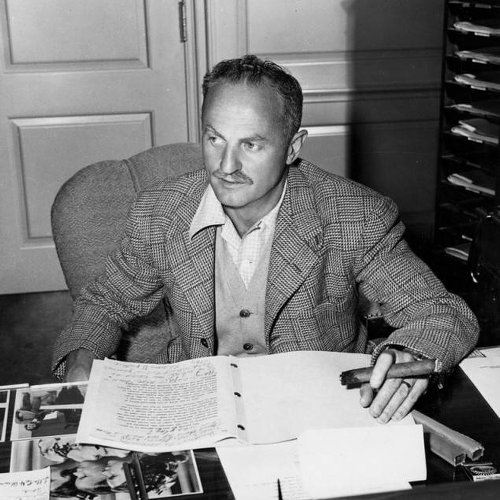
Darryl Zanuck

Darryl Zanuck was an ethnic Swiss Protestant raised in Nebraska and head of production at Warner Brothers. He had previously produced two pro-Jew movies that went on to be big hits: The Jazz Singer and Disraeli, which received an Academy Award nomination for Best Picture.

One day in 1933, Zanuck announced that he was giving everyone at Warner Brothers a pay raise. Studio boss Jack Warner was furious at this and countermanded Zanuck’s decision. This lead to a falling out between Zanuck and Warner Brothers. Zanuck soon left Warner Brothers to team up with Joseph Schenck of United Artists to start a new studio: Twentieth Century Pictures. Twentieth Century would later merge with Fox in 1935.

With his new company set up, Zanuck managed to persuade three big Warner Brothers stars to come join him in his new venture: Constance Bennett, Loretta Young, and George Arliss, whose performance in Disraeli had won him an Academy Award for Best Actor. Seeing that Zanuck and Arliss had such success with the pro-Jew film Disraeli, they thought it might be a good idea to make another. This was the origin of what would become The House of Rothschild.
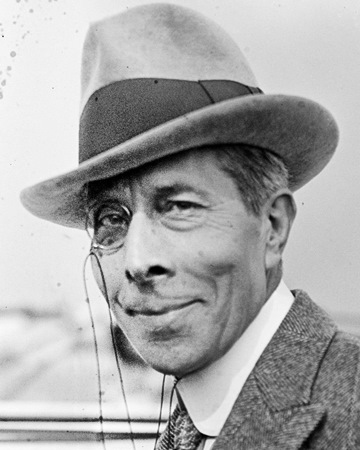
George Arliss

British-born George Arliss was enthusiastic about the project as he was himself a great admirer of the Jews. “No one has a keener appreciation of what the world of science and art and literature owes to the Jews than I, and no one has greater sympathy with them in their unequal fight against savagery and ignorance.” Arliss traveled to England in order to research the history of the Rothschild family but not before creating a minor controversy by taking a German ship to get there.

I had never watched The House of Rothschild before I started researching this article. I was aware of its existence but I had no interest in watching a movie about Jews, nevermind one that portrayed the Jews as the heroes nevermind one that portrayed the freakin’ Rothschilds as heroes. But then I stumbled upon the factoid that Joseph Goebbels allowed The House of Rothschild to be shown in Nazi Germany with only minor edits, and that got me curious. I decided to watch The House of Rothschild to see if I could figure out what the Nazis liked so much about it and. . . they should have called it The JQ: The Movie. It has all the tropes and quite a few canards as well. Only bluepilled gentiles could have made this movie.

The House of Rothschild opens in 1780 in Frankfurt, Germany. In the opening shot, we see a sign that says “All Jews must be in the Jew Street by sundown. — Chancellor of Prussia.”

In his house on Jew Street, we see family patriarch Mayer Rothschild, his wife, and their five sons. Mayer is counting his stacks of money and business is doing gangbusters. Mayer’s son comes in to tell him that the taxman is coming. So then all the Rothschilds start scrambling to hide all their giant stacks of money. They cover up the expensive pot roast they are cooking and Mayer tells his kids to “look hungry.” When the taxman arrives, Mayer shows him fake account books to make him think that business is going badly. The taxman is not fooled, but for a bribe of 5,000 gulden, he reduced Rothschild’s taxes from 20,000 to 2,000 gulden.

Now, what you’re supposed to think watching this is “Well, why should the Jews pay their taxes to a government that is so mean to them? They segregate them and make them live in that tiny ghetto. I would dodge my taxes, too.” But watching that scene redpilled, you’re just like “Man, these Jews are really greedy. They lie and resort to all kind of deception to avoid contributing to the common good of the nation and when the lies don’t work, will make illegal bribes to avoid paying their fair share. The guy’s a money lender. It’s not like he had to do any strenuous labor to get that money. The guys working the coal mines are paying their taxes. What the hell is this guy’s problem?”

We then see Mayer Rothschild on his deathbed. He orders his sons to split up and start banks in a different major European city. “Work and strive for money! Money is power! Money is the only weapon that a Jew has to defend himself with!”

Honestly, I don’t know what I am supposed to think of this. That society is forcing him to become fabulously wealthy? That he would love nothing more than to be out there digging ditches but it’s a matter of life and death that he loan money with interest? That he engages in usury because people hate Jews and not the other way around?

Mayer Rothschild dies and his sons split up. One Rothschild stays in Frankfurt, one goes to Paris, one to Madrid, one to Naples, and Nathan Rothschild, their leader and the protagonist of The House of Rothschild, goes to London. The Napoleonic Wars break out, and every European country turns to the Rothschilds for funding. The Rothschilds side with the allies over the French. Because the Allies won the battle for Rothschild funding, they are at last able to defeat Napoleon and he is sent Elba.

Now, what you’re supposed to think watching that is “Well, it’s a good thing we have these Jews around to save us from that tyrant Napoleon. Lord knows what that Corsican monster would have done were it not for these Jews.” But watching this movie redpilled, you think “This small clique of Jews is deciding the fate of Europe.”

With Napoleon in Elba, Nathan Rothschild gets word that France is going to receive the largest loan of all time to help them rebuild. All the banks of Europe submit their bids. The Rothschild bank submits the best bid, but to Nathan’s shock, it is announced that the loan has been granted to Barings of London. Nathan demands an explanation, and the antisemitic Count Ledrantz (played by Boris Karloff of Frankenstein fame) tells him that it is because Nathan is a Jew. Nathan then uses his vast wealth to manipulate the stock market in such a way that Barings bonds become unsellable and they are forced to transfer the loan to the Rothschilds at a significant financial loss to themselves.

Now, what you’re supposed to think watching that is “Well, serves them right for being antisemites!” But watching that scene while redpilled, you think “Jews manipulate the stock market for their personal gain and to resolve petty grudges at the expense of gentiles.”

Zanuck’s business partner Joseph Schenck actually did raise some concern about including Boris Karloff’s antisemitic character, because he would afraid that audiences would start cheering for him after his lines.
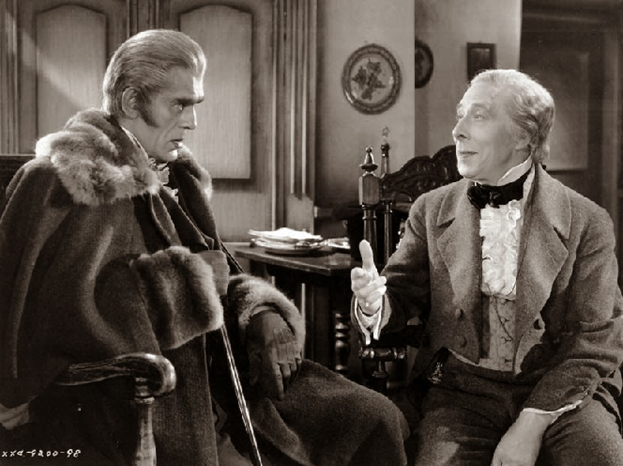
Boris Karloff as the antisemitic Count Ledrantz and George Arliss as Nathan Rothschild

After that episode, Nathan Rothschild becomes stridently racist against gentiles and forces his daughter (played by Lorretta Young) to break off her engagement to Captain Fitzroy. In retaliation for outmaneuvering him, Count Ledrantz starts an antisemitic propaganda campaign that causes anti-Jewish riots to break out all over Europe.

Napoleon escapes from Elba and regains power. Four of the Rothschild brothers want to side with Napoleon this time, as he is more pro-Jew and it would be the smarter option financially, but Nathan says no. Napoleon is such a tyrant that the Rothschilds must put the good of humanity above their own self-interests. They set up a meeting with the Allies, and Nathan bluffs them that he will back Napoleon unless they call off the riots and grant Jews equal rights. The allies have no choice but to agree.

With Napoleon back and on the move, the London stock market goes into a panic. Nathan dumps his entire fortune into it to keep it from crashing because he is just such a humanitarian. When news of Waterloo comes in, the market recovers, and Nathan, because he bought the dip, becomes the wealthiest man in the world.

Now, what you’re supposed to think watching that is “Thank God for those Rothschilds or else we would all be speaking French right now.” But watching the film redpilled, you think “These Jews become fabulously wealthy off war and human suffering without ever having to pick up a gun themselves. European leaders are forced to grovel at their feet and give in to their every demand or else the Jews will allow them to be destroyed by their enemies.”

The House of Rothschild is a movie that could only have been made by bluepilled philo-Semitic gentiles. A Jew would have known to avoid the tropes and an anti-Semite would have emphasized them in a much more heavy-handed way. The House of Rothschild seems to skip along casually dropping antisemitic tropes blissfully unaware that it is doing so.

When the Anti-Defamation League learned of the plot of The House of Rothschild, they started freaking out. They immediately recognized the tropes. The ADL sent a letter to Zanuck to try to get him to cancel the film: 

The impression which will be made is that the concentration of wealth in the hands of one international Jewish family invested that family with indisputable power to determine the destinies of nations. The very fact that Christian nations must beg of the Jewish Rothschild family for money with which to protect their own existence will in itself create a most undesirable reaction.

ADL national secretary Leon Lewis called it “one of the most dangerous presentations” of Jews of the era. He urged Zanuck to get in touch with “those among our people . . . who have been devoting all their energies in the past few months to stemming the rising tide of hatred against the Jews.”

Zanuck responded to the ADL: 

I am not a Jew and I have never heard of this “rising hatred of Jews” that you speak about in your letter, and I am inclined to believe that it is, more or less, imaginary as far as the general public is concerned. We make pictures for the broad general public rather than the minority and I will guarantee you that if there is such a thing as a “rising hatred for the Jew in America” our film version of ROTHSCHILD will do more to stop it than anything, from the standpoint of entertainment.

Having no luck with Zanuck, the ADL then turned to the Hays office. In a letter to Will Hays, the ADL stated: 

It is important that nothing be done now that might possibly feed the unreasoning prejudice against the Jews which is in some places. A widespread factor in this unfair and prejudiced attack is the false allegation that all Jews acquire money for power, with the inference that such power may be misused. The historical prominence of the house of Rothschild is such that hostile propagandists have tried to make the very name a synonym for sinister, world-wide political power, growing out of accumulated riches. The fact that in the case of the Rothschilds the power of money was rightly used may be overshadowed by the greater impression of the Rothschilds as an example of Jewish power through domination by money.

The Hays office agreed that the film had the potential to cause problems. In response, Zanuck put on some preview performances of The House of Rothschild and sent Hays 175 preview cards from audience members praising the film. The National Council of Jewish Women even previewed the film, giving it their thumbs up. The Hays office was satisfied that people were not picking up any antisemitic vibes from the movie and dropped the matter.

Having failed with Zanuck and the Hays office, the ADL had another option. They appealed to the Jewish studio heads throughout Hollywood to see if they could use their influence to kill the movie. The ADL sent a telegram to Louis B. Mayer, the most powerful man in Hollywood and a majority shareholder in Twentieth Century Pictures: 

OUR SITUATION AT THIS TIME MORE CRITICAL THAN ANY TIME HERETOFORE DEMANDING OF EACH THE GREATEST CAUTION STOP IN NORMAL TIMES NO HARM MIGHT BE ANTICIPATED ACUTE CONDITIONS NOW MUST BE CONSIDERED STOP WILL YOU COOPERATE TO PREVENT PICTURE AT LEAST DURING CRITICAL PERIOD.

Louis B. Mayer sat down and watched The House of Rothschild with Harry Cohn, head of Columbia Picture. Neither of them found anything wrong with it. The ADL then went to Louis B. Mayer’s rabbi Edward Magnin to see if he could talk sense into Mayer. According to Leon Lewis, Magnin “lit into” Mayer and told him that 

the conditions in the industry were responsible for a great deal of the prejudice existing and that it is ironical that on top of it they should show so little sense as to promote a film of this type at this time. He said they were digging their own graves and that they would alienate the Jews as well.

The ADL also appealed to Jack Warner of Warner Brothers to see if he could do something to stop the movie. The problem with Jack Warner is that Zanuck was his former employee and it would have been a bad look. Zanuck quits Warner Brothers after a falling out, starts a new company, and then Jack Warner immediately tries to kill his new film. Jack Warner would have ended up looking ultra-petty. Plus, Zanuck was a gentile and Warner was a Jew, so that might in itself create an antisemitic impression.

In the end, the ADL was unable to stop the release of The House of Rothschild. It would end up being a big hit for Twentieth Century Pictures and was nominated for the Academy Award for Best Picture where it would lose to It Happened One Night.

As for The House of Rothschild, the Nazis loved it. They would later use footage from The House of Rothschild in their antisemitic magnum opus Der ewige Jude. Twenty minutes into Der ewige Jude, they play a clip from early in the movie and the narrator states “Here we show a scene from a film about the Rothschild family. It was made by American Jews, obviously as a tribute to one of the greatest names in Jewish history. They honor their hero in a typically Jewish manner, delighting in the way old Mayer Amschel Rothschild cheats his host state by feigning poverty to avoid paying taxes.”

After The House of Rothschild, it became the consensus around Hollywood that it might be a good idea not to make any more movies about Jews just to be on the safe side.

In 1937, Warner Brothers would release The Life of Emile Zola, a film about the eponymous French writer and his experiences during the Dreyfus Affair (watch it here). The Dreyfus Affair was a controversy that rocked French society for several years and involved a Jewish military officer who was accused of spying for Germany. Dreyfus’ Jewishness was a pretty central part of the controversy. Anti-Dreyfusards claimed Dreyfus sold out his country to Germany because Jews are rootless cosmopolitans incapable of real patriotism or loyalty. Dreyfusards claimed he was being scapegoated because he was a Jew. But in The Life of Emile Zola, the word “Jew” is not spoken a single time.

It would take several years longer for Hollywood to address the issue of Jews than Nazis. Confessions of a Nazi Spy, Hollywood’s first-ever anti-Nazi movie, mentions that the Nazis are racist but never addresses the persecution of minorities at all.

The first Hollywood movie to address the persecution of minorites in Germany was the 1940 Jimmy Stewart film The Mortal Storm (which you can watch here). But even in The Mortal Storm, the persecuted minority group is never identified as “Jews.” They are only ever referred to as “non-Aryans.”

The original screenplay for The Mortal Storm was apparently much more explicit about who was being persecuted and even included a scene where a Jewish father gives a speech to his mischling son on Jewish pride. “I’m proud to be a Jew. I’m proud to belong to the race that gave Europe its religion and its moral law — much of its science, too — much of its genius, in art, literature, and music. Mendelssohn was a Jew, and Rubenstein — the great English statesman, Disraeli, was a Jew, and so was our poet Heine, who wrote the ‘Lorelei.’”

This scene was cut out at the last minute — halfway through production, in fact. The reasons are obscure, but all signs point to the decision being made by the MGM big man himself, Louis B. Mayer.

Louis B. Mayer’s rabbi Edward Magnin offered a likely explanation. Magnin was granted a preview of The Mortal Storm, approved of the movie, and was not opposed to MGM’s decision to forego naming the Jew: 

One thing in favor of our side now is that people may be sympathetic, (but not much), when they fear and now they are afraid. They hate the thing they fear — that is the answer. They can still hate Jews and still fear Germany!

In other words, it was less important that people like Jews than that they hate Nazis.
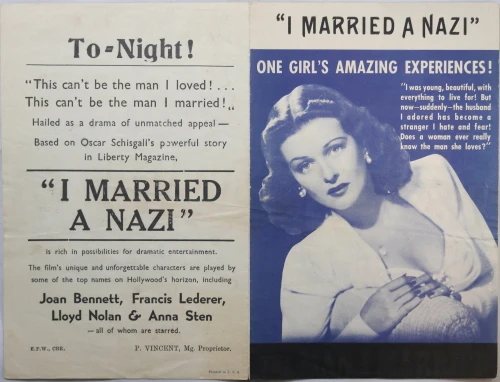
The first Hollywood movie to explicitly reference Jews in relation to Nazis was the Fox movie The Man I Married AKA I Married a Nazi (watch it here). This is a funny little movie and completely absurd. In The Man I Married, Joan Bennett plays an American art critic who is married to a good-natured German immigrant played by Czech-born Jewish actor Francis Lederer (who had previously played the Nazi spy in Confessions of a Nazi Spy).

Joan Bennett, Lederer, and their 7-year-old son travel to Nazi Germany. Once there, Lederer reunites with a childhood friend played by Anna Sten. She starts taking Lederer to Nazi rallies, and he immediately becomes a diehard Nazi. Suddenly, Joan Bennett now finds herself married to a raving Nazi fanatic. 

The idea that Hitler and Nazi ideas had a magical power to turn ordinary people into hysterical bloodthirsty maniacs was be promoted even back then, before the United States had even entered the war.

The movie has a twist ending that I am going to spoil for you. At the end, Bennett is disgusted and wants to return to America, but Lederer insists on staying in Germany and keeping their son. Lederer gets into an argument with his anti-Nazi father about it and then his father drops a bomb on him: Lederer’s mother was actually Jewish which makes Lederer himself a half-Jew. Furthermore, dad threatens Lederer that if he does not let Bennett return to America with their son that he will report him to Nazi authorities. Bennett gets the kid and goes home.

That is the first time Hollywood explicitly references the Nazi persecution of Jews by name. The Man I Married was released in August of 1940.

*  *  *

Counter-Currents has extended special privileges to those who donate $120 or more per year.

  • First, donor comments will appear immediately instead of waiting in a moderation queue. (People who abuse this privilege will lose it.)
  • Second, donors will have immediate access to all Counter-Currents posts. Non-donors will find that one post a day, five posts a week will be behind a “paywall” and will be available to the general public after 30 days.

To get full access to all content behind the paywall, sign up here:

Hollywood & the Nazis, Part Two: The Goebbels Award

Hollywood%20and%23038%3B%20the%20Nazis%2C%20Part%20Two%3A%20The%20Goebbels%20Award

Share

  • Gab
  • Hollywood the Nazis, Part Two:
    The Goebbels Award &body=%0D%0A%0D%0A%0D%0A%0D%0A%0D%0A%0D%0Ahttps://counter-currents.com/2021/06/hollywood-nazis-2/%0D%0A%0D%0A%0D%0A%0D%0A">

Enjoyed this article?

Be the first to leave a tip in the jar!

Instant Echeck GreenPay™

Related

  • Nietzsche & Race

  • Berlin: City of Stones

  • How the Jews Defeated Thomas Massie—And Themselves

  • The Rest Is Silence: Heidegger’s Quietism

  • Remembering Joseph Campbell

  • Against Conspiracism Part 1

  • Operation Epic Fail

  • Trump, Iran, & My Red Line–Again

Tags

anti-SemitismDarryl ZanuckGeorge ArlissHollywood and the NazisJewsJews in AmericaJews in HollywoodNational Socialist Germanyphilo-SemitismThe House of Rothschildthe Jewish questionthe RothschildsTravis LeBlancusurywarwar profiteering

4 comments

  1. Beau Albrecht says:
    June 28, 2021 at 8:21 am

    I saw a synopsis about the HoR film from Black Pilled.  My thoughts were, what were they thinking?


    0
    0
  2. Gregor Huysmans says:
    June 28, 2021 at 8:38 am

    I remember years ago I saw The Eternal Jew on Youtube and when they got to the Rothschild clip I thought ” No way this is real. They had to have edited it.” Nope. To be a fly on the wall when Goebbels watched this film.

    Also of note: The ending of this film is one of the first to have been shot in three-strip Technicolor. 1:23:30 timestamp.

    0
    0
    1. Captain John Charity Spring MA says:
      June 28, 2021 at 11:42 am

      Goebbels must have chuckled about that film. Probably rubbed his hands like a merchant. Probably sent out a memo to the studios in Germany to strike a tone similar to the Rothschild Movie.

      0
      0
  3. Ives Myra says:
    June 28, 2021 at 10:30 pm

    The fact that multiple people who dealt with Jews frequently didn’t see the problem with the House of Rothschild is rather humorous.

    0
    0

Comments are closed.

If you have a Subscriber access,
simply login first to see your comment auto-approved.

Note on comments privacy & moderation

Your email is never published nor shared.

Comments are moderated. If you don't see your comment, please be patient. If approved, it will appear here soon. Do not post your comment a second time.

Writers of May

(2 votes) Morris van de Camp David M. Zsutty Derek Stark Jayant Bhandari Greg Johnson

Articles of May

Heidegger on Nietzsche, Part One by Collin Cleary The Lunch Wars by David M. Zsutty 2 votes
    • Small Is Beautiful:
      The Napoleon of Notting Hill and G. K. Chesterton Upon Defending One’s Homeland from Others—and Itself

      Steven Tucker

    • The Psychology Behind MrBeast’s Moronic Thought Experiment

      Endeavour

      2

    • On the Roots of Anti-Immigrant Sentiment in Contemporary Britain

      Lipton Matthews

      3

    • Remembering Enoch Powell:
      June 16, 1912–February 8, 1998

      Greg Johnson

      8

    • Counter-Currents Radio Podcast No. 691
      Rob Rundo Returns

      Counter-Currents Radio

    • The Fragile Polity that is Syria

      Morris van de Camp

      1

    • Nigel Farage Calls Britain a Two-Tier State

      Mark Gullick

      4

    • Nationalism This Week
      Letter to J. D. Vance

      Greg Johnson

      31

    • Lost In Trans-Mission:
      How the Media Fails To Reveal the Inconvenient Truth About the Usual Suspects

      Steven Tucker

      10

    • Liar, Liar, Pants on Fire!

      Beau Albrecht

      7

    • Editor’s Update
      Rob Rundo on Counter-Currents Radio, Fundraiser Update, & a New $20,000 Matching Grant

      Greg Johnson

    • The Bitter End of Western Metaphysics:
      Heidegger on Nietzsche, Part Three

      Collin Cleary

      10

    • Uncivil War

      Mark Gullick

      50

    • Exclusive Interview with Karel Veliky:
      The Final Chapter in the Film Series! Part II

      Ondrej Mann

      2

    • Happy Birthday to Us!

      Greg Johnson

      6

    • Zsutty’s Maximum

      David M. Zsutty

      16

    • Exclusive Interview with Karel Veliky:
      The Final Chapter in the Film Series! Part I

      Ondrej Mann

      2

    • The Union Jackal, June 2026

      Mark Gullick

      23

    • The Inferiority Behind Immigrant Superiority

      Jayant Bhandari

      15

    • Counter-Currents Radio Podcast No. 690
      Greg Johnson & David Zsutty Discuss Current Things: AI, Henry Nowak, the Iran Crisis, & More

      Counter-Currents Radio

      7

    • Collin Cleary: What Rome Means to Me

      Collin Cleary

      4

    • Paul Krugman: Closet Bolshevik

      Spencer J. Quinn

      21

    • Fugue of Ideas:
      Ibram X. Kendi’s Chain of Ideas

      Greg Johnson

      19

    • Based Blacks

      Lipton Matthews

      24

    • Black Intellectual Fatigue

      Derek Stark

      41

    • Why White Advocates Should Avoid “Based Blacks”

      Dani Vypont

      32

    • Nietzsche & Race

      Mark Gullick

    • Editor’s Update
      Rob Rundo Rescheduled to Next Week on Counter-Currents Radio;
      Tonight Greg Johnson & David Zsutty Answer Your Questions;
      Fundraiser Update & a New $20,000 Matching Grant

      Greg Johnson

    • The Counter-Currents 2026 Fundraiser
      Lifetime Subscriber Welcome Packages Extended

      Greg Johnson

    • Nationalism This Week
      Who’s Looking Back?

      Greg Johnson

      29

    • China’s Threat to American Security:
      Food, Farmland, Foreign Control, & Energy Policy

      Lipton Matthews

      5

    • The Bitter End of Western Metaphysics:
      Heidegger on Nietzsche, Part Two

      Collin Cleary

      16

    • The Killing of Henry Nowak

      Mark Gullick

      38

    • The Crisis of Chinese Technology Thieves

      Morris van de Camp

      1

    • The Strange World of Gender Bender Fiction:
      & What This Genre Tells Us About Autosexuality

      Dani Vypont

      3

    • Watching the Watchers:
      The Dark Triad Question

      David M. Zsutty

      14

    • The Remigration Movement Solidifies

      F. Roger Devlin

      2

    • Casting Aspersions:
      The Fatal Consequences of Race-Swapped Casting, From Helen of Troy to Henry of Southampton

      Steven Tucker

      20

    • The Murder of Henry Nowak

      Millennial Woes

      23

    • Don’t Forget to Vote in Our Writer & Article of the Month Poll

      Greg Johnson

    • The Robot Hotdog Stand

      Greg Johnson

      37

    • Laughing Our Way to Victory

      Dave Chambers

      7

    • The Zodiac Killer

      Mark Gullick

      11

    • Jared Taylor: What Rome Means to Me

      Jared Taylor

      1

    • An Interview with Endeavour:
      My Way of Life Is an Adventure!

      Ondrej Mann

      6

    • José Pedro Zúquete’s The Identitarians

      Greg Johnson

      3

    • Editor’s Update
      Fundraiser Update & How to Watch the Remigration Summit

      Greg Johnson

      5

    • The Bitter End of Western Metaphysics:
      Heidegger on Nietzsche, Part One

      Collin Cleary

      12

    • Berlin: City of Stones

      Spencer J. Quinn

      6

    • True Folk-Horror Is Horror of Your Own Folk:
      Mark Gatiss vs the Brexit Blind Dead  

      Steven Tucker

      4

    • Scott

      Remembering Enoch Powell

      London unequivocally started the war.The Entente were determined after the “embarassment at Munich...

    • Peter Quint

      Remembering Enoch Powell

      How did he deter population replacement; it seems to me that it has been proceeding right-on-time...

    • Peter Quint

      The Psychology Behind MrBeast’s Moronic Thought Experiment

      Great article! I would press red. 🦈

    • Beau Albrecht

      Remembering Enoch Powell

      His speech deterred population replacement migration for two decades.  By that, he did more for...

    • Peter Quint

      Remembering Enoch Powell

      Great article! I am not belittling Powell, but other than the Rivers of Blood speech what did...

    • Homeland

      On the Roots of Anti-Immigrant Sentiment in Contemporary Britain

      FIFA is also part of the anti-white industrial complex. The World Cup risks becoming a parody of...

    • Will Williams

      On the Roots of Anti-Immigrant Sentiment in Contemporary Britain

      To answer the question posed in the title of this piece, the root of anti-immigrant sentiment in...

    • Ondrej Mann

      The Psychology Behind MrBeast’s Moronic Thought Experiment

      Good point. But what if it weren’t universal? For example, what if it only applied to writers on our...

    • Dr X

      Letter to J. D. Vance

      Speaking of  "wrecking the economy" - I lack a good understanding of how money was created in the...

    • Moss

      On the Roots of Anti-Immigrant Sentiment in Contemporary Britain

      The multicultural project hasn't failed, it's doing what it is supposed to do - destroy white people...

    • Moss

      Remembering Enoch Powell

      A titan of a man.

    • Joe Gould

      Nigel Farage Calls Britain a Two-Tier State

      We owe Nigel Farage nothing. Instead of thanking him we should congratulate ourselves on spreading...

    • Adrian Roberts

      Remembering Enoch Powell

      I don’t carry a torch for Britain’s involvement in WW2, but von Papen said something to the effect...

    • Greg Johnson

      Remembering Enoch Powell

      It was the British who chose to make a war between Germany and Poland into the Second World War.

    • Adrian Roberts

      Remembering Enoch Powell

      "When Britain started the Second World War" C'mon. We're not the NJP.

    • Scott

      Letter to J. D. Vance

      Scott | June 17, 2026 at 8:26 amThis will “wreck the economy” is all relative, especially in wartime...

    • Scott

      Letter to J. D. Vance

      "I’d imagine millions of Iranians who were skeptical of the Iranian leadership prior to them being...

    • Scott

      Letter to J. D. Vance

      Unless Trump actually has a legitimate medical issue or becomes senile like Biden clearly was, there...

    • Glide Ratio 0:1

      Uncivil War

      That's funny, I can tell you I've known countless Ethno Nationalists open to the idea of working...

    • Beau Albrecht

      The Fragile Polity that is Syria

      It seems that they didn't learn the lesson that diversity is a country's greatest strength.  How...

    • Earth Day Special

      John Morgan

      12

    • A Robertson Roundup
      Remembering Wilmot Robertson
      (April 16, 1915 – July 8, 2005)

      Margot Metroland

      13

    • The Paranoid Style in White Nationalism

      Greg Johnson

      30

    • Join the Dance!

      Andrew Hamilton

      1

    • We Can’t Save the Earth Without Reducing African Birth Rates

      James Dunphy

      36

    • “I’m Not a Conspiracy Theorist, but . . .”:
      Jeffrey Epstein’s Death Gives New Life to “Conspiracy Theories”

      Greg Johnson

      22

    • Sylvia Plath: Stasis in Darkness

      Vic Olvir

      17

    • Vanguardism, Vantardism, & Mainstreaming

      Greg Johnson

      80

    • Aviation, Geography, & Race

      Charles Lindbergh

      3

    • Some Thoughts on Yule

      Collin Cleary

      4

    • Living in Truth:
      A Yuletide Homily

      Jef Costello

      7

    • John Kennedy Toole’s A Confederacy of Dunces

      Greg Johnson

      20

    • On Aleksandr Solzhenitsyn’s Warning to the West

      Spencer J. Quinn

      7

    • Elitism, British Modernism, & Wyndham Lewis

      Jonathan Bowden

      6

    • Philip K. Dick’s Do Androids Dream of Electric Sheep? as Anti-Semitic/Christian-Gnostic Allegory

      Greg Johnson

      20

    • “Conspiracy Theory” or Conspiracy?

      Andrew Hamilton

      21

    • Remembering H. P. Lovecraft
      (August 20, 1890–March 15, 1937)

      Greg Johnson

      3

    • Who Are We?
      Nordics, Aryans, & Whites

      Greg Johnson

      71

    • Remembering William Gayley Simpson
      (July 23, 1892–December 31, 1990)
      A Pleasant Afternoon with Harriet & Bill Simpson

      Margot Metroland

      18

    • Here are the Young Men
      Remembering Ian Curtis
      (July 15, 1956–May 18, 1980)

      Mark Gullick

      18

    • Percy Grainger
      Artist of the Right

      Alex Graham

      7

    • Remembering Revilo Oliver
      (July 7, 1908–August 20, 1994)

      Greg Johnson

      18

    • The Meaning of July 4th for the White Man

      Gregory Hood

      13

    • The Front National’s Evolution

      Bruno Mégret

    • Merwin K. Hart
      Forgotten American Hero & Man of the Right

      Morris van de Camp

      10

    • George Orwell’s Nineteen Eighty-Four

      Jonathan Bowden

      8

    • Carleton S. Coon
      Scientist & Reluctant White Advocate

      Morris van de Camp

      3

    • The Kwanzaa Absurdity Will Be Dwarfed by Juneteenth

      Robert Hampton

      10

    • Stravinsky

      Alex Graham

      7

    • Like the Roman:
      Remembering Enoch Powell (1912-1998)

      Mark Gullick

      23

    • The 1970s: The Golden Age of Hijacking

      Morris van de Camp

      21

    • Jonathan Bowden’s Deliverance
      Part 6

      Jonathan Bowden

    • Do You Want to Play a Game?

      Mark Gullick

      1

    • Sexually Incontinent on the Indian Subcontinent:
      Who Rapes More Animals, Indians or Pakistanis? The Battle Continues!

      Steven Tucker

      3

    • Neo-Fascism in Film
      Part 5

      Karel Veliky

      15

    • The Game of Tarot

      Mark Gullick

      2

    • Institutions Cannot Be Transplanted

      Jayant Bhandari

      5

    • Jonathan Bowden’s Deliverance
      Part 5

      Jonathan Bowden

    • Crosstown Traffic:
      Jimi Hendrix & The Post-War Rock ‘N’ Roll Revolution

      Mark Gullick

      1

    • Slaves from the North:
      Finns & Karelians in the East European Slave Trade, 900–1600

      Lipton Matthews

      14

    • Neo-Fascism in Film
      Part 4

      Karel Veliky

      2

    • David Lean’s A Passage to India

      Spencer J. Quinn

      1

    • Elites are Essential to Development

      Lipton Matthews

      7

    • Jonathan Bowden’s Deliverance
      Part 4

      Jonathan Bowden

    • Neo-Fascism in Film
      Part 3

      Karel Veliky

      6

    • E. M. Forster’s A Passage to India & the Indian Mentality

      Spencer J. Quinn

      25

    • Jonathan Bowden’s Deliverance
      Part 3

      Jonathan Bowden

    • The Rest Is Silence
      Heidegger’s Quietism

      Mark Gullick

      2

    • Dispelling the Historical Fallacy of Indian Nationalism

      Lipton Matthews

      8

    • Neo-Fascism in Film
      Part 2

      Karel Veliky

      8

    • Jonathan Bowden’s Deliverance
      Part 2

      Jonathan Bowden

    • Life of a Klansman

      Mark Gullick

      8

    • Jonathan Bowden’s Deliverance, Part 1

      Jonathan Bowden

    • Decolonial Ideas are Holding Back Developing Countries

      Lipton Matthews

      8

    • Neo-fascism in Film, Part 1

      Karel Veliky

      21

    • Jonathan Bowden’s Onslaught, Part 8
      Divigations on Decadence

      Jonathan Bowden

    • Jonathan Bowden’s Onslaught, Part 7
      Intrigues in the National Front

      Jonathan Bowden

      1

    • Rotten to the Core

      Mark Gullick

      8

    • Strauss on Husserl’s “Philosophy as Rigorous Science”

      Greg Johnson

    • Jonathan Bowden’s Onslaught, Part 6
      Francis Bacon & Right-Wing Nihilism

      Jonathan Bowden

    • András László
    • Derek Hawthorne
    • Beau Albrecht
    • Alain de Benoist
    • Kerry Bolton
    • Jonathan Bowden
    • Collin Cleary
    • Jef Costello
    • Savitri Devi
    • Julius Evola
    • Jim Goad
    • Gregory Hood
    • Juleigh Howard-Hobson
    • Greg Johnson
    • Charles Krafft
    • Anthony M. Ludovici
    • Trevor Lynch
    • H. L. Mencken
    • J. A. Nicholl
    • James J. O’Meara
    • Christopher Pankhurst
    • Tito Perdue
    • Michael Polignano
    • Spencer J. Quinn
    • Fenek Solère
    • Irmin Vinson
    • Leo Yankevich
    • Francis Parker Yockey
    • Multiple authors
  • Editor-in-Chief

    • Greg Johnson, Ph.D.

    Featured Writers

    • Beau Albrecht
    • Gunnar Alfredsson
    • Collin Cleary, Ph.D.
    • Jef Costello
    • Morris V. de Camp
    • F. Roger Devlin, Ph.D.
    • Stephen Paul Foster, Ph.D.
    • Jim Goad
    • Alex Graham
    • Mark Gullick, Ph.D.
    • Greg Johnson, Ph.D.
    • Travis LeBlanc
    • Trevor Lynch
    • Margot Metroland
    • James J. O’Meara
    • Angelo Plume
    • Spencer J. Quinn
    • Fred Reed
    • Clarissa Schnabel
    • Michael Walker
    • David M. Zsutty

    Frequent Writers

    • Asier Abadroa
    • Aquilonius
    • Alain de Benoist
    • Kerry Bolton, Ph.D.
    • Dave Chambers
    • Steven Clark
    • James Dunphy
    • Endeavour
    • Richard Houck
    • Jason Kessler
    • Titus Livius
    • Ondrej Mann
    • Lipton Matthews
    • Mark Mazari
    • John Morgan
    • Jaroslav Ostrogniew
    • Kathryn S.
    • Christian Secor
    • Anne Wilson Smith
    • Thomas Steuben
    • William De Vere
    • Kenneth Vinther
    • Max West

    Classic Authors

    • Maurice Bardèche
    • Jonathan Bowden
    • Julius Evola
    • Guillaume Faye
    • Ernst Jünger
    • Kevin MacDonald, Ph.D.
    • D. H. Lawrence
    • Charles Lindbergh
    • Jack London
    • H. P. Lovecraft
    • Anthony M. Ludovici
    • Sir Oswald Mosley
    • National Vanguard
    • Friedrich Nietzsche
    • Revilo Oliver
    • William Pierce
    • Ezra Pound
    • Saint-Loup
    • Savitri Devi
    • Carl Schmitt
    • Miguel Serrano
    • Oswald Spengler
    • P. R. Stephensen
    • Jean Thiriart
    • John Tyndall
    • Dominique Venner
    • Leo Yankevich
    • Francis Parker Yockey

    Other Authors

    • Howe Abbott-Hiss
    • Michael Bell
    • Giles Corey
    • Jack Donovan
    • Richardo Duchesne, Ph.D.
    • Emile Durand
    • Guillaume Durocher
    • Mark Dyal
    • Tom Goodroch
    • Andrew Hamilton
    • Robert Hampton
    • Huntley Haverstock
    • Derek Hawthorne
    • Gregory Hood
    • Juleigh Howard-Hobson
    • Alexander Jacob
    • Ruuben Kaalep
    • Tobias Langdon
    • Julian Langness
    • Patrick Le Brun
    • G A Malvicini
    • John Michael McCloughlin
    • Millennial Woes
    • Michael O’Meara
    • Christopher Pankhurst
    • Michael Polignano
    • J. J. Przybylski
    • Quintilian
    • Edouard Rix
    • C. B. Robertson
    • C. F. Robinson
    • Herve Ryssen
    • Alan Smithee
    • Fenek Solere
    • Ann Sterzinger
    • Robert Steuckers
    • Tomislav Sunic
    • Donald Thoresen
    • Marian Van Court
    • Irmin Vinson
    • Book Reviews
    • Movie Reviews
    • TV Reviews
    • Music Reviews
    • Art Criticism
    • Graphic Novels & Comics
    • Video Game Reviews
    • Fiction
    • Poems
    • Interviews
    • Videos
    • English Translations
    • Other Languages
      • Arabic
      • Bulgarian
      • Croatian
      • Czech
      • Danish
      • Dutch
      • Estonian
      • Finnish
      • French
      • German
      • Greek
      • Hungarian
      • Italian
      • Lithuanian
      • Norwegian
      • Polish
      • Portuguese
      • Romanian
      • Russian
      • Slovak
      • Spanish
      • Swedish
      • Ukrainian
    • Commemorations
    • Why We Write
  • Archives
  • Top 100 Commenters
  • The Looney Bin
Sponsored Links
Europa.com Above Time Coffee Antelope Hill Publishing Paul Waggener IHR-Store Spencer J. Quinn American Renaissance Jim Goad The Occidental Observer
Donate Now Mailing list
Books for sale
  • The Philosopher Is In
  • Sexual Utopia in Power (Expanded Edition)
  • In Defense of Prejudice
  • Loving Our Own
  • Tyranny & Wisdom
  • The Populist Moment
  • Is America Doomed?
  • To all books
Copyright © 2026 Counter-Currents Publishing, Ltd.

Paywall Access


Please enter your email address.

Lost your password?

Edit your comment

Writer & Article of the Month May 2026

Voting for this month has concluded. Here are the final results!

Top Writers

  • #1 Morris van de Camp 2 votes
  • #2 David M. Zsutty 2 votes
  • #3 Derek Stark 2 votes
  • #4 Jayant Bhandari 2 votes
  • #5 Greg Johnson 2 votes
  • #6 Jared Taylor 1 vote
  • #7 Collin Cleary 1 vote
  • #8 Spencer J. Quinn 1 vote
  • #9 Mark Gullick 1 vote
  • #10 Lipton Matthews 1 vote
  • #11 Keith Woods 1 vote
  • #12 Steven Tucker 1 vote

Top Articles

  • #1 Heidegger on Nietzsche, Part One 2 votes
  • #2 The Lunch Wars 2 votes
  • #3 The 1970s: The Golden Age of Hijacking 1 vote
  • #4 True Folk-Horror Is Horror of Your Own Folk 1 vote
  • #5 Finding Atlantis Part 4 1 vote
  • #6 Berlin: City of Stones 1 vote
  • #7 The Ghost of the Confederacy 1 vote
  • #8 Lothrop Stoddard’s The Revolt Against Civilization 1 vote
  • #9 Could Fascism Work? 1 vote
  • #10 Jared Taylor's Elevator Pitch to a Billionaire 1 vote
  • #11 Predation Wearing the Mask of Civilization 1 vote
  • #12 Peak Fatigue in Fort Wayne 1 vote
  • #13 Keith Wood's Elevator Pitch to a Billionaire 1 vote
  • #14 Do You Want to Play a Game? 1 vote
  • #15 Why Billionaires Should Fund White Identity Politics 1 vote

Total votes cast: 17