Counter-Currents
  • Advertise
  • Private Events
  • T&C
  • About
  • Contact
  • RSS
    • Main feed
    • Podcast feed
    • Videos feed
    • Comments feed
  • Welcome
  • Webzine
  • Books
  • Merch
  • Podcasts
  • Videos
  • Donate
  • Patrons
  • Subscribe
  • Crypto

LEVEL2

Donate Now Mailing list
Upcoming podcasts
  • Rob Rundo on Counter-Currents Radio

    Rob Rundo on Counter-Currents Radio

    Counter-Currents Radio

    06/06/2026 — 3 pm EST / 9 pm CET
  • Daniel Tyrie on Counter-Currents Radio

    Daniel Tyrie on Counter-Currents Radio

    Counter-Currents Radio

    06/20/2026 — 3 pm EST / 9 pm CET
  • Welcome
  • Webzine
  • Books
  • Merch
  • Podcasts
  • Videos
  • Donate
  • Patrons
  • Subscribe
  • Crypto
    • China’s Threat to American Security:
      Food, Farmland, Foreign Control, & Energy Policy

      Lipton Matthews

    • The Bitter End of Western Metaphysics:
      Heidegger on Nietzsche, Part Two

      Collin Cleary

    • The Killing of Henry Nowak

      Mark Gullick

      18

    • The Crisis of Chinese Technology Thieves

      Morris van de Camp

      1

    • The Strange World of Gender Bender Fiction:
      & What This Genre Tells Us About Autosexuality

      Dani Vypont

      3

    • Watching the Watchers:
      The Dark Triad Question

      David M. Zsutty

      9

    • The Remigration Movement Solidifies

      F. Roger Devlin

      1

    • Casting Aspersions:
      The Fatal Consequences of Race-Swapped Casting, From Helen of Troy to Henry of Southampton

      Steven Tucker

      13

    • The Murder of Henry Nowak

      Millennial Woes

      21

    • Don’t Forget to Vote in Our Writer & Article of the Month Poll

      Greg Johnson

    • The Robot Hotdog Stand

      Greg Johnson

      31

    • Laughing Our Way to Victory

      Dave Chambers

      4

    • The Zodiac Killer

      Mark Gullick

      11

    • Jared Taylor: What Rome Means to Me

      Jared Taylor

      1

    • An Interview with Endeavour:
      My Way of Life Is an Adventure!

      Ondrej Mann

      6

    • José Pedro Zúquete’s The Identitarians

      Greg Johnson

      3

    • Editor’s Update
      Fundraiser Update & How to Watch the Remigration Summit

      Greg Johnson

      5

    • The Bitter End of Western Metaphysics:
      Heidegger on Nietzsche, Part One

      Collin Cleary

      11

    • Berlin: City of Stones

      Spencer J. Quinn

      6

    • True Folk-Horror Is Horror of Your Own Folk:
      Mark Gatiss vs the Brexit Blind Dead  

      Steven Tucker

      4

    • Counter-Currents Radio Podcast No. 689
      Thomas Massie, the America 2050 Bust, the Need for Whites to Divest from America, the AI Economic Apocalypse, & Pro-White Project Pitches to Billionaires

      Counter-Currents Radio

      7

    • Nationalism This Week
      Remigration is Inevitable, Part 3

      Greg Johnson

      26

    • Why Billionaires Should Fund White Identity Politics

      Lipton Matthews

      8

    • How Cold War Two Came About

      Morris van de Camp

      5

    • Now Available for Pre-Order at a Special Price!
      Greg Johnson’s The Philosopher Is In

      Greg Johnson

    • David Zsutty’s Elevator Pitch to a Billionaire

      David M. Zsutty

      1

    • Headbanging Lite

      Mark Gullick

      5

    • White Advocacy Past and Present

      Peter Bradley

      13

    • The Lunch Wars

      David M. Zsutty

      47

    • The Russians are Coming/The Russians are Coming

      Steven Clark

      1

    • Peak Fatigue in Fort Wayne

      Gabriel Anderson

      24

    • Keith Woods’ Elevator Pitch to a Billionaire

      Keith Woods

    • The Cruelty of Kindness

      Morris van de Camp

      9

    • Predation Wearing the Mask of Civilization

      Jayant Bhandari

      13

    • The Mandalorian & Grogu

      Trevor Lynch

      24

    • Editor’s Update
      Fundraiser Update & a New $20,000 Matching Grant
      Greg Johnson & David Zsutty Discuss Thomas Massie on Counter-Currents Radio

      Greg Johnson

      2

    • How the Jews Defeated Thomas Massie—& Themselves

      David M. Zsutty

      24

    • Jared Taylor’s Elevator Pitch to a Billionaire

      Jared Taylor

      15

    • Nationalism This Week
      Remigration Is Inevitable, Part 2

      Greg Johnson

      8

    • Could Fascism Work?

      Mark Gullick

      40

    • Jonathan Bowden’s Deliverance
      Part 7

      Jonathan Bowden

    • China’s Quiet Hand:
      Influence, Infiltration, & the Western Blind Spot

      Lipton Matthews

      9

    • Counter-Currents Radio Podcast No. 688
      Tyler Dykes on Running for US Congress in South Carolina

      Counter-Currents Radio

      3

    • Lothrop Stoddard’s The Revolt Against Civilization

      Spencer J. Quinn

      14

    • Lewis Strauss Did Nothing Wrong:
      How the politics of the Atom Bomb during the early Cold War Apply to Artificial Intelligence Today

      Morris van de Camp

      14

    • The Ghost of the Confederacy

      Dave Chambers

      12

    • America’s Century of Humiliation has Begun

      Greg Johnson

      27

    • Prepare for Africans & Schizophrenics!
      Welcome to the New Canadian Military

      Gunnar Alfredsson

      7

    • Remembering Julius Evola:
      May 19, 1898–June 11, 1974

      Greg Johnson

    • About Film “From the Right”

      Karel Veliky

    • Will Williams

      Watching the Watchers:
      The Dark Triad Question

      Greg Johnson: June 5, 2026 Are cool headed people who are incapable of loyalty really...

    • Will Williams

      The Killing of Henry Nowak

      Remove duplicate comment.

    • Will Williams

      The Killing of Henry Nowak

      Deetron: June 5, 2026 It would be easy to find 12 whites [sic] who would be eager to let Karmelo go...

    • Will Williams

      The Killing of Henry Nowak

      Deetron: June 5, 2026 It would be easy to find 12 whites [sic] who would be eager to let Karmelo go...

    • Greg Johnson

      Watching the Watchers:
      The Dark Triad Question

      Are cool headed people who are incapable of loyalty really useful in a war?

    • Julius Strange

      Watching the Watchers:
      The Dark Triad Question

      I agree. Richard Lynn talks about this in his books Eugenics: A reassessment in which he states that...

    • Francis XB

      The Killing of Henry Nowak

      Matt Walsh did a recent video showcasing the Nowak case. Walsh makes it clear the killing is part of...

    • Stronza

      The Killing of Henry Nowak

      I can't disagree with you.  He is an irritant and it's hard to pin him down.  But he has millions of...

    • Corday

      The Killing of Henry Nowak

      Tucker will do a great political video then follow it up interviewing somebody who unironically...

    • Glide Ratio 0:1

      Casting Aspersions:
      The Fatal Consequences of Race-Swapped Casting, From Helen of Troy to Henry of Southampton

      I wouldn't count on it flopping. Just look at the movie 'Troy'. An utter desecration of the original...

    • Vagrant Rightist

      The Killing of Henry Nowak

      I have to agree, it's frustrating. And demons, and probably UFOs. It's this 'essential' slop,...

    • Will Williams

      Watching the Watchers:
      The Dark Triad Question

      Mr. Zsutty: …How many unsung Henry Nowaks have died because we have failed to watch the watchers?---...

    • YT

      The Killing of Henry Nowak

      Yeah, WN thinkers at places like CC need to start talking about future punishments for the race...

    • Malaparte

      The Killing of Henry Nowak

      My gripe with Tucker is that he swings between quasi-White nationalist takes and low-grade Bible-...

    • Glide Ratio 0:1

      The Killing of Henry Nowak

      Yes, because without jews Europeans would be blood drinking, blood smearing barbarians. Thank god...

    • Chud

      The Robot Hotdog Stand

      The Austrian economists have contended with this question and many begrudgingly admit that if you...

    • Deetron

      The Killing of Henry Nowak

      It would be easy to find 12 whites who would be eager to let Karmelo go. I could write the...

    • Stronza

      The Killing of Henry Nowak

      Tucker Carlson has a show about this, published yesterday on you tube.   His guest is Frank Wright,...

    • Will Williams

      The Robot Hotdog Stand

      That was a very long comment I put up here yesterday, but thanks to Greg was at least allowed....

    • John

      Prepare for Africans & Schizophrenics!
      Welcome to the New Canadian Military

      Reference “white Canadians”: this is redundant as Canadians belong to the European Race, aka White...

    • Earth Day Special

      John Morgan

      12

    • A Robertson Roundup
      Remembering Wilmot Robertson
      (April 16, 1915 – July 8, 2005)

      Margot Metroland

      13

    • The Paranoid Style in White Nationalism

      Greg Johnson

      30

    • Join the Dance!

      Andrew Hamilton

      1

    • We Can’t Save the Earth Without Reducing African Birth Rates

      James Dunphy

      36

    • “I’m Not a Conspiracy Theorist, but . . .”:
      Jeffrey Epstein’s Death Gives New Life to “Conspiracy Theories”

      Greg Johnson

      22

    • Sylvia Plath: Stasis in Darkness

      Vic Olvir

      17

    • Vanguardism, Vantardism, & Mainstreaming

      Greg Johnson

      80

    • Aviation, Geography, & Race

      Charles Lindbergh

      3

    • Some Thoughts on Yule

      Collin Cleary

      4

    • Living in Truth:
      A Yuletide Homily

      Jef Costello

      7

    • John Kennedy Toole’s A Confederacy of Dunces

      Greg Johnson

      20

    • On Aleksandr Solzhenitsyn’s Warning to the West

      Spencer J. Quinn

      7

    • Elitism, British Modernism, & Wyndham Lewis

      Jonathan Bowden

      6

    • Philip K. Dick’s Do Androids Dream of Electric Sheep? as Anti-Semitic/Christian-Gnostic Allegory

      Greg Johnson

      20

    • “Conspiracy Theory” or Conspiracy?

      Andrew Hamilton

      21

    • Remembering H. P. Lovecraft
      (August 20, 1890–March 15, 1937)

      Greg Johnson

      3

    • Who Are We?
      Nordics, Aryans, & Whites

      Greg Johnson

      71

    • Remembering William Gayley Simpson
      (July 23, 1892–December 31, 1990)
      A Pleasant Afternoon with Harriet & Bill Simpson

      Margot Metroland

      18

    • Here are the Young Men
      Remembering Ian Curtis
      (July 15, 1956–May 18, 1980)

      Mark Gullick

      18

    • Percy Grainger
      Artist of the Right

      Alex Graham

      7

    • Remembering Revilo Oliver
      (July 7, 1908–August 20, 1994)

      Greg Johnson

      18

    • The Meaning of July 4th for the White Man

      Gregory Hood

      13

    • The Front National’s Evolution

      Bruno Mégret

    • Merwin K. Hart
      Forgotten American Hero & Man of the Right

      Morris van de Camp

      10

    • George Orwell’s Nineteen Eighty-Four

      Jonathan Bowden

      8

    • Carleton S. Coon
      Scientist & Reluctant White Advocate

      Morris van de Camp

      3

    • The Kwanzaa Absurdity Will Be Dwarfed by Juneteenth

      Robert Hampton

      10

    • Stravinsky

      Alex Graham

      7

    • Like the Roman:
      Remembering Enoch Powell (1912-1998)

      Mark Gullick

      23

    • Jonathan Bowden’s Deliverance
      Part 5

      Jonathan Bowden

    • Crosstown Traffic:
      Jimi Hendrix & The Post-War Rock ‘N’ Roll Revolution

      Mark Gullick

    • Slaves from the North:
      Finns & Karelians in the East European Slave Trade, 900–1600

      Lipton Matthews

      14

    • Neo-Fascism in Film
      Part 4

      Karel Veliky

      2

    • David Lean’s A Passage to India

      Spencer J. Quinn

      1

    • Elites are Essential to Development

      Lipton Matthews

      7

    • Jonathan Bowden’s Deliverance
      Part 4

      Jonathan Bowden

    • Neo-Fascism in Film
      Part 3

      Karel Veliky

      6

    • E. M. Forster’s A Passage to India & the Indian Mentality

      Spencer J. Quinn

      25

    • Jonathan Bowden’s Deliverance
      Part 3

      Jonathan Bowden

    • The Rest Is Silence
      Heidegger’s Quietism

      Mark Gullick

      2

    • Dispelling the Historical Fallacy of Indian Nationalism

      Lipton Matthews

      8

    • Neo-Fascism in Film
      Part 2

      Karel Veliky

      8

    • Jonathan Bowden’s Deliverance
      Part 2

      Jonathan Bowden

    • Life of a Klansman

      Mark Gullick

      8

    • Jonathan Bowden’s Deliverance, Part 1

      Jonathan Bowden

    • Decolonial Ideas are Holding Back Developing Countries

      Lipton Matthews

      8

    • Neo-fascism in Film, Part 1

      Karel Veliky

      21

    • Jonathan Bowden’s Onslaught, Part 8
      Divigations on Decadence

      Jonathan Bowden

    • Jonathan Bowden’s Onslaught, Part 7
      Intrigues in the National Front

      Jonathan Bowden

      1

    • Rotten to the Core

      Mark Gullick

      8

    • Strauss on Husserl’s “Philosophy as Rigorous Science”

      Greg Johnson

    • Jonathan Bowden’s Onslaught, Part 6
      Francis Bacon & Right-Wing Nihilism

      Jonathan Bowden

    • London After (& Before) Midnight:
      Aleister Crowley, The Landlord’s Worst Nightmare

      James J. O'Meara

      2

    • Jonathan Bowden’s Onslaught, Part 5
      The Post-War British Far Right

      Jonathan Bowden

    • No Rules: Rollerball

      Mark Gullick

      4

    • Jonathan Bowden’s Onslaught, Part 3
      Brett Easton Ellis’ American Psycho

      Jonathan Bowden

    • An Alternate History of the Harris Presidency

      Beau Albrecht

      5

    • The Origins of Mass Education:
      Augustina S. Paglayan’s Raised to Obey

      Francis Rockwell

      4

    • Jonathan Bowden’s Onslaught, Part 2
      Louis-Ferdinand Céline

      Jonathan Bowden

      1

    • András László
    • Derek Hawthorne
    • Beau Albrecht
    • Alain de Benoist
    • Kerry Bolton
    • Jonathan Bowden
    • Collin Cleary
    • Jef Costello
    • Savitri Devi
    • Julius Evola
    • Jim Goad
    • Gregory Hood
    • Juleigh Howard-Hobson
    • Greg Johnson
    • Charles Krafft
    • Anthony M. Ludovici
    • Trevor Lynch
    • H. L. Mencken
    • J. A. Nicholl
    • James J. O’Meara
    • Christopher Pankhurst
    • Tito Perdue
    • Michael Polignano
    • Spencer J. Quinn
    • Fenek Solère
    • Irmin Vinson
    • Leo Yankevich
    • Francis Parker Yockey
    • Multiple authors
  • Editor-in-Chief

    • Greg Johnson, Ph.D.

    Featured Writers

    • Beau Albrecht
    • Gunnar Alfredsson
    • Collin Cleary, Ph.D.
    • Jef Costello
    • Morris V. de Camp
    • F. Roger Devlin, Ph.D.
    • Stephen Paul Foster, Ph.D.
    • Jim Goad
    • Alex Graham
    • Mark Gullick, Ph.D.
    • Greg Johnson, Ph.D.
    • Travis LeBlanc
    • Trevor Lynch
    • Margot Metroland
    • James J. O’Meara
    • Angelo Plume
    • Spencer J. Quinn
    • Fred Reed
    • Clarissa Schnabel
    • Michael Walker
    • David M. Zsutty

    Frequent Writers

    • Asier Abadroa
    • Aquilonius
    • Alain de Benoist
    • Kerry Bolton, Ph.D.
    • Dave Chambers
    • Steven Clark
    • James Dunphy
    • Endeavour
    • Richard Houck
    • Jason Kessler
    • Titus Livius
    • Ondrej Mann
    • Lipton Matthews
    • Mark Mazari
    • John Morgan
    • Jaroslav Ostrogniew
    • Kathryn S.
    • Christian Secor
    • Anne Wilson Smith
    • Thomas Steuben
    • William De Vere
    • Kenneth Vinther
    • Max West

    Classic Authors

    • Maurice Bardèche
    • Jonathan Bowden
    • Julius Evola
    • Guillaume Faye
    • Ernst Jünger
    • Kevin MacDonald, Ph.D.
    • D. H. Lawrence
    • Charles Lindbergh
    • Jack London
    • H. P. Lovecraft
    • Anthony M. Ludovici
    • Sir Oswald Mosley
    • National Vanguard
    • Friedrich Nietzsche
    • Revilo Oliver
    • William Pierce
    • Ezra Pound
    • Saint-Loup
    • Savitri Devi
    • Carl Schmitt
    • Miguel Serrano
    • Oswald Spengler
    • P. R. Stephensen
    • Jean Thiriart
    • John Tyndall
    • Dominique Venner
    • Leo Yankevich
    • Francis Parker Yockey

    Other Authors

    • Howe Abbott-Hiss
    • Michael Bell
    • Giles Corey
    • Jack Donovan
    • Richardo Duchesne, Ph.D.
    • Emile Durand
    • Guillaume Durocher
    • Mark Dyal
    • Tom Goodroch
    • Andrew Hamilton
    • Robert Hampton
    • Huntley Haverstock
    • Derek Hawthorne
    • Gregory Hood
    • Juleigh Howard-Hobson
    • Alexander Jacob
    • Ruuben Kaalep
    • Tobias Langdon
    • Julian Langness
    • Patrick Le Brun
    • G A Malvicini
    • John Michael McCloughlin
    • Millennial Woes
    • Michael O’Meara
    • Christopher Pankhurst
    • Michael Polignano
    • J. J. Przybylski
    • Quintilian
    • Edouard Rix
    • C. B. Robertson
    • C. F. Robinson
    • Herve Ryssen
    • Alan Smithee
    • Fenek Solere
    • Ann Sterzinger
    • Robert Steuckers
    • Tomislav Sunic
    • Donald Thoresen
    • Marian Van Court
    • Irmin Vinson
    • Book Reviews
    • Movie Reviews
    • TV Reviews
    • Music Reviews
    • Art Criticism
    • Graphic Novels & Comics
    • Video Game Reviews
    • Fiction
    • Poems
    • Interviews
    • Videos
    • English Translations
    • Other Languages
      • Arabic
      • Bulgarian
      • Croatian
      • Czech
      • Danish
      • Dutch
      • Estonian
      • Finnish
      • French
      • German
      • Greek
      • Hungarian
      • Italian
      • Lithuanian
      • Norwegian
      • Polish
      • Portuguese
      • Romanian
      • Russian
      • Slovak
      • Spanish
      • Swedish
      • Ukrainian
    • Commemorations
    • Why We Write
  • Archives
  • Top 100 Commenters
  • The Looney Bin
  • Advertise
  • Private Events
  • T&C
  • About
  • Contact
  • RSS
    • Main feed
    • Podcast feed
    • Videos feed
    • Comments feed
Sponsored Links
Europa.com Above Time Coffee Antelope Hill Publishing Paul Waggener IHR-Store Spencer J. Quinn American Renaissance Jim Goad The Occidental Observer
Print January 12, 2026 7 comments

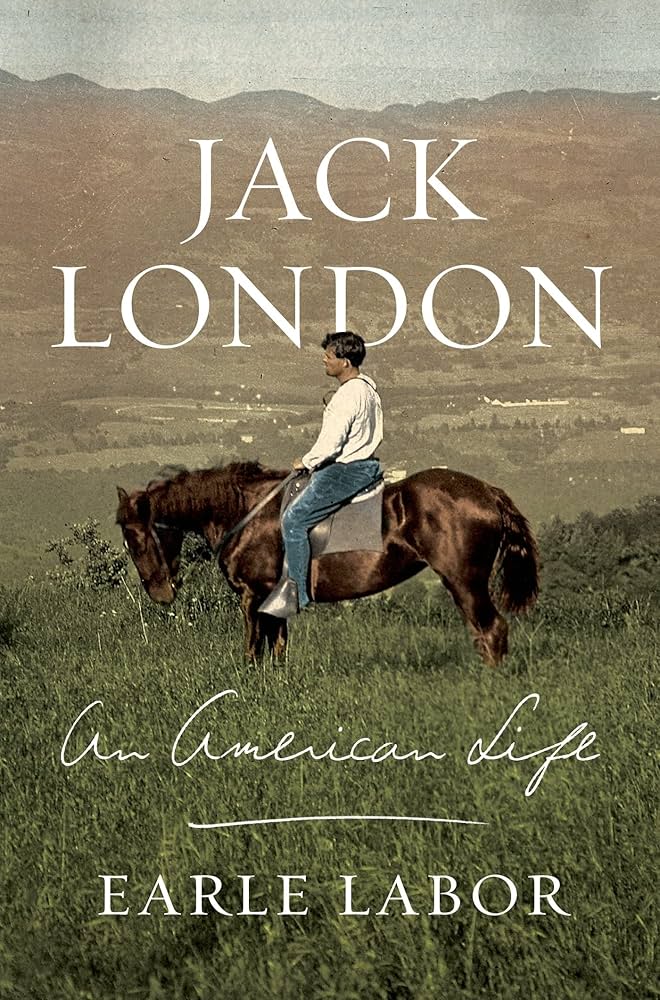
Jack London: An American Life

Mark Gullick

3,090 words

Earle Labor
Jack London: An American Life
Farrar, Straus & Giroux, 2013

“The greatest story Jack London ever wrote was the story he lived.”

– Alfred Kazin

American writer Jack London was born John Griffith Chaney on January 12, 1876. Born into poverty in San Francisco, London later said that “life is not always a matter of holding good cards, but sometimes playing a poor hand well.” He would go on to become one of America’s most famous literary sons, albeit one whose life contained many contradictions and internal oppositions. “No American writer,” writes London scholar Earle Labor “has been subjected to more misleading commentaries.”

As a writer, London was clear about his influences. Visiting the grave of Robert Louis Stevenson in Samoa, London exclaimed that he would not have gone so far for the grave of any other man. As for English writers whose language he used in such an unadorned yet striking manner, London wrote “I would never have written anywhere near the way I did had Kipling never been.” Although he was dubbed the “American Kipling” aged 24, London was not a writer with a life attached, but vice versa.

London earned the nickname “Prince of the Oyster Pirates” at 15 from being part of a crew of bayside shellfish thieves, and was an able-bodied seaman by 17 as well as a prize-winning author. In addition to plying the trade which placed him in the pantheon of American literature, Jack London was, at various times a vagrant, a mailman, a convict, a young Socialist (and President of the Intercollegiate Student Socialist Collective aged 29), a Hearst war correspondent, a lecturer, a gold prospector, and a factory and laundry worker. He sailed the world aged 31 in his own boat, became a successful farmer, breeder, and rancher at 38, wrote over 50 books, and was dead at 40. He could write, he could box, he was a prodigious swimmer, a persuasive lecturer, and he could build a piggery from scratch. He was a sort of working-class Renaissance man. London braved conditions in the Klondike during the gold-rush that killed hundreds of prospectors, and he once took a boat 20 miles off course to return a bird to the island from which the wind had blown it onto his deck. He wrote one of the greatest books ever written about my home city and his namesake, London. The People of the Abyss  which I reviewed here at Counter-Currents belongs with Orwell’s Down and Out in Paris and London and Henry Mayhew’s London Labour and the London Poor. London was also a notorious boozer, brawler and womanizer, presumably in his spare time. For comparison, I checked the former occupations of the top five New York Times best-selling fiction authors at the time of writing: A physician, an academic, a lawyer who went into politics, a teacher, and a science fiction writer who is also a computer programmer. It’s hardly, to quote the title of one of London’s most famous novels, the call of the wild.

Life for the Londons was hard and peripatetic, moving often to satisfy London’s mother, Flora, who always felt the family deserved better even if it stretched the purse-strings. Jack’s father’s fortunes on the land rose and fell, although London was not one of those authors who had a poor relationship with his parents:

My father was the best man I have ever known – too intrinsically good to get ahead in the soulless scramble for a living that a man must cope with if he would survive in our anarchical capitalist system.

This eulogy shows both a loving son and an addle-brained socialist, but London worked hard, often in appalling jobs and for long hours, to help support his family. In addition to his essay entitled How I Became a Socialist, it is worth noting a comment the notorious anarcho-feminist, Emma Goldman made about London when she was a guest at the London ranch:

[T]here was in London nothing of the rancor I had so often found in the socialists I had debated with. But, then, Jack London was the artist first . . .

London would become disillusioned with socialism later in his short life, perhaps as he went back to the land. Socialists, then as now, chatter about the means of production as though they knew it in any but a theoretical way. The vast majority of the socialist ninnies London fell in with would probably have failed to grow a pot-plant, let alone run a ranch. The means of production are not an app. They gave the means of production to blacks in South Africa recently, and we see how that is working out. London’s heart was socialist, but his head and hands eventually saw through the sham.

Having got a taste for the brine after borrowing money from his black nanny to buy a sloop for his oyster piracy, the Razzle Dazzle, London signed on to a schooner bound for Japan, aged 17, and returned in 1893 to a labor shortage. Grueling jobs on the railways and in a jute factory persuaded him to join “Kelly’s Army,” an unofficial troop of vagrants intended for industrial work, like an active trade union without a definite trade.

Charles T. Kelly was one of those slightly cracked American folk heroes, like John Brown or Davy Crockett. His “industrial army” of unemployed men was “one of several western contingents of Coxey’s Army of the Unemployed (or, as it came to be called, the Commonweal of Christ)” and they aimed to march across the continent, climaxing with a huge protest in Washington on May Day, 1894. This looked like a January 6 waiting to happen, and Jack and his crew wanted in. They caught up with Kelly’s rag-tag army at Sacramento, but London’s enlistment didn’t last long. He had no wish to march on Washington, but the marching itself became his new love.

Like Orwell who would later admire his work, London became a tramp. This would lead to a book, The Road, which tells of the hobo life of train-hopping and pan-handling (something London would do in the literal sense later in life). Heading out to the wide-open spaces still meant something in a tenderfoot nation whose frontiers had only just been conquered (albeit not yet tamed). The “Turner thesis” named after historian Frederick Jackson Turner claimed that “the frontier has gone, and with its going has closed the first period of American history.” For London, this meant that the road now went all the way. Mr. Earle situates “The Road” and the rapidly expanding rail network within the deep myths of Americana:

Here was another major facet of the American Dream: the other side of the coin from the Myth of Success. James Fennimore Cooper and Walt Whitman had romanticized the dream of “lightin’ out for the territory.”

As with everything else in his life, London even did vagrancy his way:

A boy on The Road . . . no matter how green he is, is never a gay cat; he is a road-kid or “punk,” and if he travels with a “profesh,” he is known possessively as a “prushun.” I was never a prushun, for I did not take kindly to possession.

Possession was also a problem in London’s love life. Falling in love with Russian-heritage Anna Strunsky, they fell out and he rashly married his friend, Elizabeth “Bessie” Maddern, in 1900. Despite producing a daughter, it was a loveless marriage, and London ended up in an affair with Strunsky, among many others. London was a handsome man, stocky and strong at 5’ 8” and 170lb, fit and energetic and with a lust for life which women often favored. After divorcing Bessie, London fell in love with and finally married Charmian Kittredge, who would stay with him and sailed the globe with him until his death. She was also his secretary, typing up his hand-written, steady 1,000 words a day (an excellent number for any writer, provided it is every day).

While a single man yearned for a genuine education even though he was a natural autodidact. In his first attempt at entering an academy, he crammed two years’ worth of work into four months and was expelled for making the rest of the students look foolish. He never graduated from Berkeley either, but he got himself as good an education as he needed from the “sailors and adventurers who would influence his writing” down at Heinold’s First and Last Chance Saloon. These larger-than-life figures included sea captain Alexander McClean, who would become the model for Wolf Larsen in The Sea Wolf. The bar still stands, re-named Jack London’s Rendezvous in honor of Berkeley’s famous adopted son.

In 1897, America got gold fever, and so did London’s brother-in-law, Captain James Shepard. Yelling “Klondike or bust!” Shepard threw his money in with Jack’s road experience, and the pair kitted themselves out with “everything . . . for building cabins and boats as well as for survival in the wilderness.” They put a team together and set out on the trail. Unfortunately, that trail was the “Edmonton Trail,” also known as “the back door into the Yukon” which had been somewhat oversold by the local authorities. Zealous prospectors were faced with the earth at its cruelest:

[T]he alleged “trail” was two thousand miles of impenetrable virgin forests, muskeg marshes, rapids, whirlpools, canyons, mountains, and “Dog-Eating Prairie”–a vast wasteland that got its unsavory name from Indians who staved off starvation on this lifeless expanse by killing and eating their dogs.

No one struck gold, but London returned with the only treasure that ever mattered to him: experience. Adventure itself was Jack London’s fiat currency. After the gold rush, he would find it in a war zone.

In 1904, the San Francisco Examiner assigned London to cover the Russo-Japanese War. On arrival, he was immediately arrested by the Japanese, released, then re-arrested for straying too close to the Manchurian border. London personally petitioned the Examiner’s owner, William Randolph Hearst, to be permitted transfer to the Imperial Russian Army, where he felt he would be less restricted in his reportage. (Hearst would famously again become involved in warfare of a sort in 1974, when his granddaughter, Patty, joined the terrorist group the Symbionese Liberation Army). Before Hearst could act, London was arrested again, this time for roughing up a Japanese assistant he accused of stealing his horse’s fodder. London, the great writer of the wild animal, was very involved in animal activism, which is quite normal today but was something of an idiosyncrasy then. For a man to fight for a woman is not unheard of, but to give a man a drubbing over horse-feed shows the locus of London’s affections. He wrote several pieces highlighting cruelty to animals in the circus, which was popular entertainment at the time. Two animal rights organizations collaborated to form the “Jack London Club” to inform the public about the state of animal welfare at the circus, and to urge them to protest about it. London is a rewarding novelist for any animal lover, which he passionately was.

The Londons’ world tour was on a ship London had built called the Snark after Lewis Carroll’s nonsense poem The Hunting of the Snark. Earle’s book devotes a lot of time to this trip, and it is by no means overdone. It is an adventure story in itself, a tale within a tale, like one of Conrad’s sea-stories.

It was an incredibly perilous trip, well documented by other diary-keepers than London, who was hard at work writing for a living. And London was living. Some of the human suffering he witnessed, including the destruction of a whole village by lava, and many leper colonies in the South Seas, put him squarely in line with today’s Left. In The Cruise of the Snark, London displays not the misanthropy common to many writers, but a very modern blancophobia:

Life has rotted away in this wonderful garden spot, where the climate is as delightful and healthful as any to be found in the world. . . When one considers the situation, one is almost driven to the conclusion that the white race flourishes on impunity and corruption.

But London overlooks the tribes he comes across who are still savage. Even after turning down the offer of dinner with cannibals, London must have suspected that these were not the happy-go-lucky, childlike ingenues of Rousseau’s fantasies.

London’s literary critics included President Theodore Roosevelt, whose previous connection with London had been to spring him from jail in Japan. Roosevelt branded London a “nature faker” after reading White Fang, a book I remember fondly from school, and possibly the first American novel many English boys of my generation ever read. London would reply to Roosevelt in print, politely pointing out the finer points of the likely outcome of a fight between a wolf and a lynx. Wolves often featured in London’s tales, besides Wolf Larsen, and he signed his letters to Charmian “Wolf.” London even called the dream home he built (and which burned down) “Wolf House.” In a curious twist to London’s already convoluted life, mysterious red blotches on his body after a bad sunburn from learning to surf in Hawaii would not be diagnosed by medical science until 90 years later. Unknown to him, London suffered from the auto-immune disease, Lupus erythematosus. Lupus is the Latin name for wolf.

Jack London was a sort of Gestalt which took different forms depending on who was judging him. Stories of drug addiction, alcoholism, and womanizing (which was actually frowned upon among the famous at one time) created a myth which, like all myths, is undoubtedly partly fact and partly fiction. But part of this myth was sly self-promotion. London used media attention on his escapades to his full advantage. His fame and media presence should not be underestimated. Jack London was newsworthy, as were his sometimes very public mishaps. And he knew the press from the inside. All the leading papers and magazines serialized London’s stories, and to be commissioned to cover the Russo-Japanese War by a Hearst publication was a professional imprimatur. London was also a talented photographer and credited with advancing war photography significantly. The press jumped the gun during the voyage of the Snark, however. London was met at the quayside in Polynesia by an English dignitary who showed him that day’s headline:

LONDON SNARK LOST AT SEA WITH ALL CREW MISSING

But Jack London wasn’t dead yet.

After the perils of the high seas, the Londons returned to the land. London expanded a ranch near Oakland into a thriving business. Always something of a syncretist, the type of writer who can cross-pollinate when it comes to drawing moral lessons from their life situation, London still retained enough of his socialism to transfer its ideals to the land:

I go into farming because my philosophy and my research have taught me to recognize the fact that a return to the soil is the basis of economics. . . I see my farm in terms of the world, and the world in terms of my farm. . .

London had studied land farming in the Far East, and applied the principles he had learned there to the rich soil of California. Tillage, crop rotation, terracing, and the correct organic content of fertilizer; London mastered these as he had mastered writing and the pugilistic arts, by putting all of himself into the enterprise. He devoured agricultural journals, corresponded with famous horticulturalists, and designed a whole new silo, as well as a piggery which changed the industry with its innovative sanitation. It would be over 20 years until folk singer Woody Guthrie would write the protest song “This Land is Your Land,” but London would have appreciated the lyric.

Jack London was all made of contraries which somehow formed a literary whole. A boxer who could weep openly, a materialist who admired Christ, and a man who could write from the point of view of an animal in the wild, London was a man of contradictions which fused to form good, earthy, two-fisted American prose. That London’s life was so eventful, such a willed adventure, but also so dysfunctional places him in an American literary tradition which never seemed to cross the Atlantic. Hemingway, Bukowski, Mailer, Crews: these were all hard-boozing bruisers in their lives as well as their prose, but the English just got on with their luncheon. The biography I read prior to this was Fred Kaplan’s excellent life of Dickens, who was involved in quite a nasty train crash on one occasion, although he emerged unharmed, save for the nightmares it created. As far as action sequences go, that was pretty much it for Dickens. If you were to represent both writers as movies, Jack London is Die Hard while Dickens is A Room with a View. I don’t think London would have picked Dickens to help him crew a boat, or indeed any other English writer, except maybe Conrad (who was Polish).

Late in his life, London became interested in the work of the Swiss psychologist Carl Jung. His wife noted Jack’s fascination with Jungian principles such as the archetype and the collective unconscious, and a “newly awakened interest in folklore and mythology.” Nations and peoples have an unconscious past as well as individuals, and the fact that America’s is still so youthful in part explains London’s place in the national psyche. His writing may not hark far back in terms of time, but it is the pre-history of America that he plumbs, its atavistic self. Earle writes:

Clearly, the combined influence of Hawaii and Jung had wrought “a sea-change into something rich and strange.” London the avowed rational materialist, after coming through the game of life, was a philosophical work in progress.

It is a great sadness that the world does not really have any work by the “post-Jungian” Jack London, but the game of life through which he had passed was approaching endgame. “At the end,” writes Earle, “it would be neither mind nor spirit, but body that betrayed him.”

In 1915, with his auto-immune system closing down, and the bill for years of hard drinking and endless cigarettes coming due, Jack London became the highest-paid author in America. He died on November 22, 1916, at his California ranch. The last words he spoke to his second wife were “Thank God. You’re not afraid of anything.” It was a phrase he could have applied equally to himself. He was cremated, having praised the practice a year before his death as a more efficient use of the soil he venerated, and his urn was buried in Oakland. The candle that burned twice as bright had burned half as long.

Jack London: An American Life

Jack%20London%3A%20An%20American%20Life%0A

Share

  • Gab

Enjoyed this article?

Be the first to leave a tip in the jar!

Instant Echeck GreenPay™

Related

  • The Killing of Henry Nowak

  • The Robot Hotdog Stand

  • The Zodiac Killer

  • Headbanging Lite

  • Could Fascism Work?

  • To Depose The King

  • You’re Nicked! The Story of The Sweeney

  • Finding Atlantis Part 4

Tags

adventureAmerican literatureJack LondonMark Gullicksocialismthe American frontier

Previous

« Leave Greenland Alone

Next

» Remembering Jack London

7 comments

  1. Fire Walk With Lee says:
    January 12, 2026 at 4:17 pm

    See, this is why I love Counter-Currents.

    I am in the middle of reading a Penguin Classics collection of Jack Londons best known works (admittedly for the first time) and I set it down to come here.  I seem to recall his birthday being celebrated here with a collection of articles that I thought I would glance at and this article shows up.  A strange and happy coincidence.

    1
    1
    • Uncle Semantic
  2. Peter Quint says:
    January 12, 2026 at 5:50 pm

    Great article! I finished The Mutiny On The Elsinore last week, every White Nationalist should have a copy in their library. My favorite London novel is Whitefang; my favorite London short story is The League Of Old Men. 🙃

    0
    0
  3. AdamMil says:
    January 12, 2026 at 7:13 pm

    Thanks for this. London sure seems to be a fascinating character.

    0
    0
  4. Hedgerow says:
    January 13, 2026 at 12:11 pm

    Dickens was an athlete, in that he could outwalk anyone. He would think nothing of going off on 20-mile jaunts “before supper” and would appall any houseguests who would accompany him, thinking they were going on only a five-minute stroll around the corner and back. I got that info from Dan Simmons’ excellent novel Drood. Simmons apparently did a lot of research, so I mostly believe the walking accounts.

    0
    0
    1. Mark Gullick says:
      January 13, 2026 at 3:14 pm

      I stand corrected. Nietzsche claimed to get all his best ideas while walking, so perhaps the same goes for old Boz.

      0
      0
  5. Gam says:
    January 13, 2026 at 6:09 pm

    To paraphrase London: “Yes, I am a socialist, but first I am a White man”.  One’s racial ties and sense of nation in its true meaning are vital before one goes on to subscribe to any political view in my opinion.

    0
    0
  6. Uncle Semantic says:
    January 15, 2026 at 2:32 pm

    Yes, I am a socialist, but first I am a White man. Imagine if all White Californians and their diasporic offshoots thought this way.

    0
    0

Comments are closed.

If you have a Subscriber access,
simply login first to see your comment auto-approved.

Note on comments privacy & moderation

Your email is never published nor shared.

Comments are moderated. If you don't see your comment, please be patient. If approved, it will appear here soon. Do not post your comment a second time.

Upcoming podcasts
  • Rob Rundo on Counter-Currents Radio

    Rob Rundo on Counter-Currents Radio

    Counter-Currents Radio

    Sat, Jun 6th — 3 pm EST / 9 pm CET
  • Daniel Tyrie on Counter-Currents Radio

    Daniel Tyrie on Counter-Currents Radio

    Counter-Currents Radio

    Sat, Jun 20th — 3 pm EST / 9 pm CET
    • China’s Threat to American Security:
      Food, Farmland, Foreign Control, & Energy Policy

      Lipton Matthews

    • The Bitter End of Western Metaphysics:
      Heidegger on Nietzsche, Part Two

      Collin Cleary

    • The Killing of Henry Nowak

      Mark Gullick

      18

    • The Crisis of Chinese Technology Thieves

      Morris van de Camp

      1

    • The Strange World of Gender Bender Fiction:
      & What This Genre Tells Us About Autosexuality

      Dani Vypont

      3

    • Watching the Watchers:
      The Dark Triad Question

      David M. Zsutty

      9

    • The Remigration Movement Solidifies

      F. Roger Devlin

      1

    • Casting Aspersions:
      The Fatal Consequences of Race-Swapped Casting, From Helen of Troy to Henry of Southampton

      Steven Tucker

      13

    • The Murder of Henry Nowak

      Millennial Woes

      21

    • Don’t Forget to Vote in Our Writer & Article of the Month Poll

      Greg Johnson

    • The Robot Hotdog Stand

      Greg Johnson

      31

    • Laughing Our Way to Victory

      Dave Chambers

      4

    • The Zodiac Killer

      Mark Gullick

      11

    • Jared Taylor: What Rome Means to Me

      Jared Taylor

      1

    • An Interview with Endeavour:
      My Way of Life Is an Adventure!

      Ondrej Mann

      6

    • José Pedro Zúquete’s The Identitarians

      Greg Johnson

      3

    • Editor’s Update
      Fundraiser Update & How to Watch the Remigration Summit

      Greg Johnson

      5

    • The Bitter End of Western Metaphysics:
      Heidegger on Nietzsche, Part One

      Collin Cleary

      11

    • Berlin: City of Stones

      Spencer J. Quinn

      6

    • True Folk-Horror Is Horror of Your Own Folk:
      Mark Gatiss vs the Brexit Blind Dead  

      Steven Tucker

      4

    • Counter-Currents Radio Podcast No. 689
      Thomas Massie, the America 2050 Bust, the Need for Whites to Divest from America, the AI Economic Apocalypse, & Pro-White Project Pitches to Billionaires

      Counter-Currents Radio

      7

    • Nationalism This Week
      Remigration is Inevitable, Part 3

      Greg Johnson

      26

    • Why Billionaires Should Fund White Identity Politics

      Lipton Matthews

      8

    • How Cold War Two Came About

      Morris van de Camp

      5

    • Now Available for Pre-Order at a Special Price!
      Greg Johnson’s The Philosopher Is In

      Greg Johnson

    • David Zsutty’s Elevator Pitch to a Billionaire

      David M. Zsutty

      1

    • Headbanging Lite

      Mark Gullick

      5

    • White Advocacy Past and Present

      Peter Bradley

      13

    • The Lunch Wars

      David M. Zsutty

      47

    • The Russians are Coming/The Russians are Coming

      Steven Clark

      1

    • Peak Fatigue in Fort Wayne

      Gabriel Anderson

      24

    • Keith Woods’ Elevator Pitch to a Billionaire

      Keith Woods

    • The Cruelty of Kindness

      Morris van de Camp

      9

    • Predation Wearing the Mask of Civilization

      Jayant Bhandari

      13

    • The Mandalorian & Grogu

      Trevor Lynch

      24

    • Editor’s Update
      Fundraiser Update & a New $20,000 Matching Grant
      Greg Johnson & David Zsutty Discuss Thomas Massie on Counter-Currents Radio

      Greg Johnson

      2

    • How the Jews Defeated Thomas Massie—& Themselves

      David M. Zsutty

      24

    • Jared Taylor’s Elevator Pitch to a Billionaire

      Jared Taylor

      15

    • Nationalism This Week
      Remigration Is Inevitable, Part 2

      Greg Johnson

      8

    • Could Fascism Work?

      Mark Gullick

      40

    • Jonathan Bowden’s Deliverance
      Part 7

      Jonathan Bowden

    • China’s Quiet Hand:
      Influence, Infiltration, & the Western Blind Spot

      Lipton Matthews

      9

    • Counter-Currents Radio Podcast No. 688
      Tyler Dykes on Running for US Congress in South Carolina

      Counter-Currents Radio

      3

    • Lothrop Stoddard’s The Revolt Against Civilization

      Spencer J. Quinn

      14

    • Lewis Strauss Did Nothing Wrong:
      How the politics of the Atom Bomb during the early Cold War Apply to Artificial Intelligence Today

      Morris van de Camp

      14

    • The Ghost of the Confederacy

      Dave Chambers

      12

    • America’s Century of Humiliation has Begun

      Greg Johnson

      27

    • Prepare for Africans & Schizophrenics!
      Welcome to the New Canadian Military

      Gunnar Alfredsson

      7

    • Remembering Julius Evola:
      May 19, 1898–June 11, 1974

      Greg Johnson

    • About Film “From the Right”

      Karel Veliky

    • Will Williams

      Watching the Watchers:
      The Dark Triad Question

      Greg Johnson: June 5, 2026 Are cool headed people who are incapable of loyalty really...

    • Will Williams

      The Killing of Henry Nowak

      Remove duplicate comment.

    • Will Williams

      The Killing of Henry Nowak

      Deetron: June 5, 2026 It would be easy to find 12 whites [sic] who would be eager to let Karmelo go...

    • Will Williams

      The Killing of Henry Nowak

      Deetron: June 5, 2026 It would be easy to find 12 whites [sic] who would be eager to let Karmelo go...

    • Greg Johnson

      Watching the Watchers:
      The Dark Triad Question

      Are cool headed people who are incapable of loyalty really useful in a war?

    • Julius Strange

      Watching the Watchers:
      The Dark Triad Question

      I agree. Richard Lynn talks about this in his books Eugenics: A reassessment in which he states that...

    • Francis XB

      The Killing of Henry Nowak

      Matt Walsh did a recent video showcasing the Nowak case. Walsh makes it clear the killing is part of...

    • Stronza

      The Killing of Henry Nowak

      I can't disagree with you.  He is an irritant and it's hard to pin him down.  But he has millions of...

    • Corday

      The Killing of Henry Nowak

      Tucker will do a great political video then follow it up interviewing somebody who unironically...

    • Glide Ratio 0:1

      Casting Aspersions:
      The Fatal Consequences of Race-Swapped Casting, From Helen of Troy to Henry of Southampton

      I wouldn't count on it flopping. Just look at the movie 'Troy'. An utter desecration of the original...

    • Vagrant Rightist

      The Killing of Henry Nowak

      I have to agree, it's frustrating. And demons, and probably UFOs. It's this 'essential' slop,...

    • Will Williams

      Watching the Watchers:
      The Dark Triad Question

      Mr. Zsutty: …How many unsung Henry Nowaks have died because we have failed to watch the watchers?---...

    • YT

      The Killing of Henry Nowak

      Yeah, WN thinkers at places like CC need to start talking about future punishments for the race...

    • Malaparte

      The Killing of Henry Nowak

      My gripe with Tucker is that he swings between quasi-White nationalist takes and low-grade Bible-...

    • Glide Ratio 0:1

      The Killing of Henry Nowak

      Yes, because without jews Europeans would be blood drinking, blood smearing barbarians. Thank god...

    • Chud

      The Robot Hotdog Stand

      The Austrian economists have contended with this question and many begrudgingly admit that if you...

    • Deetron

      The Killing of Henry Nowak

      It would be easy to find 12 whites who would be eager to let Karmelo go. I could write the...

    • Stronza

      The Killing of Henry Nowak

      Tucker Carlson has a show about this, published yesterday on you tube.   His guest is Frank Wright,...

    • Will Williams

      The Robot Hotdog Stand

      That was a very long comment I put up here yesterday, but thanks to Greg was at least allowed....

    • John

      Prepare for Africans & Schizophrenics!
      Welcome to the New Canadian Military

      Reference “white Canadians”: this is redundant as Canadians belong to the European Race, aka White...

    • Earth Day Special

      John Morgan

      12

    • A Robertson Roundup
      Remembering Wilmot Robertson
      (April 16, 1915 – July 8, 2005)

      Margot Metroland

      13

    • The Paranoid Style in White Nationalism

      Greg Johnson

      30

    • Join the Dance!

      Andrew Hamilton

      1

    • We Can’t Save the Earth Without Reducing African Birth Rates

      James Dunphy

      36

    • “I’m Not a Conspiracy Theorist, but . . .”:
      Jeffrey Epstein’s Death Gives New Life to “Conspiracy Theories”

      Greg Johnson

      22

    • Sylvia Plath: Stasis in Darkness

      Vic Olvir

      17

    • Vanguardism, Vantardism, & Mainstreaming

      Greg Johnson

      80

    • Aviation, Geography, & Race

      Charles Lindbergh

      3

    • Some Thoughts on Yule

      Collin Cleary

      4

    • Living in Truth:
      A Yuletide Homily

      Jef Costello

      7

    • John Kennedy Toole’s A Confederacy of Dunces

      Greg Johnson

      20

    • On Aleksandr Solzhenitsyn’s Warning to the West

      Spencer J. Quinn

      7

    • Elitism, British Modernism, & Wyndham Lewis

      Jonathan Bowden

      6

    • Philip K. Dick’s Do Androids Dream of Electric Sheep? as Anti-Semitic/Christian-Gnostic Allegory

      Greg Johnson

      20

    • “Conspiracy Theory” or Conspiracy?

      Andrew Hamilton

      21

    • Remembering H. P. Lovecraft
      (August 20, 1890–March 15, 1937)

      Greg Johnson

      3

    • Who Are We?
      Nordics, Aryans, & Whites

      Greg Johnson

      71

    • Remembering William Gayley Simpson
      (July 23, 1892–December 31, 1990)
      A Pleasant Afternoon with Harriet & Bill Simpson

      Margot Metroland

      18

    • Here are the Young Men
      Remembering Ian Curtis
      (July 15, 1956–May 18, 1980)

      Mark Gullick

      18

    • Percy Grainger
      Artist of the Right

      Alex Graham

      7

    • Remembering Revilo Oliver
      (July 7, 1908–August 20, 1994)

      Greg Johnson

      18

    • The Meaning of July 4th for the White Man

      Gregory Hood

      13

    • The Front National’s Evolution

      Bruno Mégret

    • Merwin K. Hart
      Forgotten American Hero & Man of the Right

      Morris van de Camp

      10

    • George Orwell’s Nineteen Eighty-Four

      Jonathan Bowden

      8

    • Carleton S. Coon
      Scientist & Reluctant White Advocate

      Morris van de Camp

      3

    • The Kwanzaa Absurdity Will Be Dwarfed by Juneteenth

      Robert Hampton

      10

    • Stravinsky

      Alex Graham

      7

    • Like the Roman:
      Remembering Enoch Powell (1912-1998)

      Mark Gullick

      23

    • Jonathan Bowden’s Deliverance
      Part 5

      Jonathan Bowden

    • Crosstown Traffic:
      Jimi Hendrix & The Post-War Rock ‘N’ Roll Revolution

      Mark Gullick

    • Slaves from the North:
      Finns & Karelians in the East European Slave Trade, 900–1600

      Lipton Matthews

      14

    • Neo-Fascism in Film
      Part 4

      Karel Veliky

      2

    • David Lean’s A Passage to India

      Spencer J. Quinn

      1

    • Elites are Essential to Development

      Lipton Matthews

      7

    • Jonathan Bowden’s Deliverance
      Part 4

      Jonathan Bowden

    • Neo-Fascism in Film
      Part 3

      Karel Veliky

      6

    • E. M. Forster’s A Passage to India & the Indian Mentality

      Spencer J. Quinn

      25

    • Jonathan Bowden’s Deliverance
      Part 3

      Jonathan Bowden

    • The Rest Is Silence
      Heidegger’s Quietism

      Mark Gullick

      2

    • Dispelling the Historical Fallacy of Indian Nationalism

      Lipton Matthews

      8

    • Neo-Fascism in Film
      Part 2

      Karel Veliky

      8

    • Jonathan Bowden’s Deliverance
      Part 2

      Jonathan Bowden

    • Life of a Klansman

      Mark Gullick

      8

    • Jonathan Bowden’s Deliverance, Part 1

      Jonathan Bowden

    • Decolonial Ideas are Holding Back Developing Countries

      Lipton Matthews

      8

    • Neo-fascism in Film, Part 1

      Karel Veliky

      21

    • Jonathan Bowden’s Onslaught, Part 8
      Divigations on Decadence

      Jonathan Bowden

    • Jonathan Bowden’s Onslaught, Part 7
      Intrigues in the National Front

      Jonathan Bowden

      1

    • Rotten to the Core

      Mark Gullick

      8

    • Strauss on Husserl’s “Philosophy as Rigorous Science”

      Greg Johnson

    • Jonathan Bowden’s Onslaught, Part 6
      Francis Bacon & Right-Wing Nihilism

      Jonathan Bowden

    • London After (& Before) Midnight:
      Aleister Crowley, The Landlord’s Worst Nightmare

      James J. O'Meara

      2

    • Jonathan Bowden’s Onslaught, Part 5
      The Post-War British Far Right

      Jonathan Bowden

    • No Rules: Rollerball

      Mark Gullick

      4

    • Jonathan Bowden’s Onslaught, Part 3
      Brett Easton Ellis’ American Psycho

      Jonathan Bowden

    • An Alternate History of the Harris Presidency

      Beau Albrecht

      5

    • The Origins of Mass Education:
      Augustina S. Paglayan’s Raised to Obey

      Francis Rockwell

      4

    • Jonathan Bowden’s Onslaught, Part 2
      Louis-Ferdinand Céline

      Jonathan Bowden

      1

    • András László
    • Derek Hawthorne
    • Beau Albrecht
    • Alain de Benoist
    • Kerry Bolton
    • Jonathan Bowden
    • Collin Cleary
    • Jef Costello
    • Savitri Devi
    • Julius Evola
    • Jim Goad
    • Gregory Hood
    • Juleigh Howard-Hobson
    • Greg Johnson
    • Charles Krafft
    • Anthony M. Ludovici
    • Trevor Lynch
    • H. L. Mencken
    • J. A. Nicholl
    • James J. O’Meara
    • Christopher Pankhurst
    • Tito Perdue
    • Michael Polignano
    • Spencer J. Quinn
    • Fenek Solère
    • Irmin Vinson
    • Leo Yankevich
    • Francis Parker Yockey
    • Multiple authors
  • Editor-in-Chief

    • Greg Johnson, Ph.D.

    Featured Writers

    • Beau Albrecht
    • Gunnar Alfredsson
    • Collin Cleary, Ph.D.
    • Jef Costello
    • Morris V. de Camp
    • F. Roger Devlin, Ph.D.
    • Stephen Paul Foster, Ph.D.
    • Jim Goad
    • Alex Graham
    • Mark Gullick, Ph.D.
    • Greg Johnson, Ph.D.
    • Travis LeBlanc
    • Trevor Lynch
    • Margot Metroland
    • James J. O’Meara
    • Angelo Plume
    • Spencer J. Quinn
    • Fred Reed
    • Clarissa Schnabel
    • Michael Walker
    • David M. Zsutty

    Frequent Writers

    • Asier Abadroa
    • Aquilonius
    • Alain de Benoist
    • Kerry Bolton, Ph.D.
    • Dave Chambers
    • Steven Clark
    • James Dunphy
    • Endeavour
    • Richard Houck
    • Jason Kessler
    • Titus Livius
    • Ondrej Mann
    • Lipton Matthews
    • Mark Mazari
    • John Morgan
    • Jaroslav Ostrogniew
    • Kathryn S.
    • Christian Secor
    • Anne Wilson Smith
    • Thomas Steuben
    • William De Vere
    • Kenneth Vinther
    • Max West

    Classic Authors

    • Maurice Bardèche
    • Jonathan Bowden
    • Julius Evola
    • Guillaume Faye
    • Ernst Jünger
    • Kevin MacDonald, Ph.D.
    • D. H. Lawrence
    • Charles Lindbergh
    • Jack London
    • H. P. Lovecraft
    • Anthony M. Ludovici
    • Sir Oswald Mosley
    • National Vanguard
    • Friedrich Nietzsche
    • Revilo Oliver
    • William Pierce
    • Ezra Pound
    • Saint-Loup
    • Savitri Devi
    • Carl Schmitt
    • Miguel Serrano
    • Oswald Spengler
    • P. R. Stephensen
    • Jean Thiriart
    • John Tyndall
    • Dominique Venner
    • Leo Yankevich
    • Francis Parker Yockey

    Other Authors

    • Howe Abbott-Hiss
    • Michael Bell
    • Giles Corey
    • Jack Donovan
    • Richardo Duchesne, Ph.D.
    • Emile Durand
    • Guillaume Durocher
    • Mark Dyal
    • Tom Goodroch
    • Andrew Hamilton
    • Robert Hampton
    • Huntley Haverstock
    • Derek Hawthorne
    • Gregory Hood
    • Juleigh Howard-Hobson
    • Alexander Jacob
    • Ruuben Kaalep
    • Tobias Langdon
    • Julian Langness
    • Patrick Le Brun
    • G A Malvicini
    • John Michael McCloughlin
    • Millennial Woes
    • Michael O’Meara
    • Christopher Pankhurst
    • Michael Polignano
    • J. J. Przybylski
    • Quintilian
    • Edouard Rix
    • C. B. Robertson
    • C. F. Robinson
    • Herve Ryssen
    • Alan Smithee
    • Fenek Solere
    • Ann Sterzinger
    • Robert Steuckers
    • Tomislav Sunic
    • Donald Thoresen
    • Marian Van Court
    • Irmin Vinson
    • Book Reviews
    • Movie Reviews
    • TV Reviews
    • Music Reviews
    • Art Criticism
    • Graphic Novels & Comics
    • Video Game Reviews
    • Fiction
    • Poems
    • Interviews
    • Videos
    • English Translations
    • Other Languages
      • Arabic
      • Bulgarian
      • Croatian
      • Czech
      • Danish
      • Dutch
      • Estonian
      • Finnish
      • French
      • German
      • Greek
      • Hungarian
      • Italian
      • Lithuanian
      • Norwegian
      • Polish
      • Portuguese
      • Romanian
      • Russian
      • Slovak
      • Spanish
      • Swedish
      • Ukrainian
    • Commemorations
    • Why We Write
  • Archives
  • Top 100 Commenters
  • The Looney Bin
Sponsored Links
Europa.com Above Time Coffee Antelope Hill Publishing Paul Waggener IHR-Store Spencer J. Quinn American Renaissance Jim Goad The Occidental Observer
Donate Now Mailing list
Books for sale
  • The Philosopher Is In
  • Sexual Utopia in Power (Expanded Edition)
  • In Defense of Prejudice
  • Loving Our Own
  • Tyranny & Wisdom
  • The Populist Moment
  • Is America Doomed?
  • To all books
Copyright © 2026 Counter-Currents Publishing, Ltd.

Paywall Access


Please enter your email address.

Lost your password?

Edit your comment

Writer & Article of the Month May 2026

Select a writer and one of their articles.

1 vote
2 votes
2 votes
2 votes
1 vote
2 votes
1 vote
1 vote
1 vote
2 votes
1 vote
1 vote