2,523 words 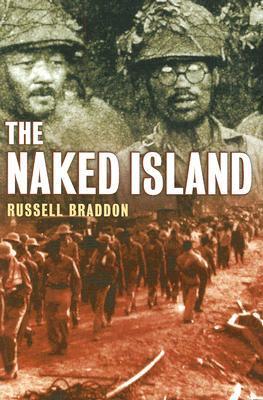
The familiar narrative surrounding World War Two involves a main theater of war in Europe and Russia, with a late intervention from the USA. But it was, of course, a World War, with fighting taking place across Africa, Asia, and Latin America. Much of the world was involved in some way. Even former socialist utopia Sweden, who supposedly remained neutral throughout the war, was not really as uninvolved as it would like to have the world believe. Sweden allowed Germany to use their territory to transport iron ore by rail, leading, among other things, to the occupation of their neighbors, Norway. Sweden was like a conscientious objector smuggling guns to the front line despite doing no fighting themselves. In this global conflagration, the Anzac countries, Australia and New Zealand (and Tonga, to be fair), played a minor but important part in the war in the Pacific.
One of the great Australian documents of that country’s war effort is Russell Braddon’s 1951 book, The Naked Island, most of which describes the treatment of Australian and other allied troops at the hands of the Japanese in prison camps in Malaya, Burma, and Thailand. The book went on to sell over two million copies, becoming part of Australia’s literary tradition. It is a gruelling book which is at once a gripping record of army life (both serious and amusing), a testament to the will and determination of white men under duress, and an insight into what is surely one of history’s cruelest people, the Japanese. Anyone who knows anything about the infamous “rape of Nanjing” in 1937, in which Japanese troops visited appalling atrocities on a Chinese village which had already surrendered, will need no introduction to Japanese cruelty. Many Western nations have a lasting animosity towards the Japanese because of their treatment of prisoners of war (POWs) before VJ Day (Victory in Japan). In 1998, when then Emperor Akihito visited London, some British ex-POWs turn their backs on him as he rode past in a carriage with the Queen. It was a moving protest against Japanese torture and forced labor.
The book opens with Braddon using a camp latrine. On the way, across “twenty feet of maggot-ridden mud”, he sees a Scottish soldier, crippled by dysentery and ashamed to have uncontrollably fouled himself. Braddon uses the vile latrine and returns past the guard. The Scotsman is dead. An unpleasant opening, but pastoral compared with what will come in a book which largely concerns horror and cruelty inflicted for purely racialist reasons.
A flashback, and Braddon enlists in the Australian army, aged 20. He is posted to Malaya and is not expecting a glorious war: “Regretfully we resigned ourselves to a war without battles where our sole function was to guard the Empire’s greatest source of tin and rubber.”
After a relaxing time in Singapore, with his biggest gripe being the incivility and ingratitude of the natives he is helping protect, Braddon’s war soon becomes hotter, and the coming of the Japanese is foreshadowed when Braddon’s company are forced to decamp without their new mascot, a small Malay orphan who has attached himself to the company:
When the war came to Tampin and his soldier foster parents were sent to fight elsewhere, it is said that Little Tinea was killed by the bombs. I don’t know. I rather hope he was; for there was no place for children such as he in the arms of the soldiers of Nippon.
The war was changing, and Braddon with it. The young man does not consider himself a coward – he joined up voluntarily, after all – but notes in himself a “tendency to terror” just before he kills his first Japanese. Bayoneting the man, he compares the technique used as “just like a stop volley at tennis”, surprised at his casual attitude to his first kill. The troops are told that the Japanese often use fire-crackers to imitate the sound of gunfire, but it is not a firecracker that tears Braddon’s sergeant’s throat out mid-conversation. His war has begun in earnest.
Military intelligence has been ridiculed many times in literature, and so it is here. We hear much about “misinformation” in our modern, pampered state of peace, usually relating to some trivia or other. In wartime, misinformation can have deadly consequences for the men on the ground. Discovering they have been guarding the wrong aerodrome for days due to a similarity in names, the unit travels to the correct aerodrome only to learn that the attack on Pearl Harbor has just taken place, and they are now sitting ducks. Stranded when their relief fails to arrive, Braddon and his fellow soldiers fall into the hands of the Japanese:
A last message came through on our dying radio. The Loyals had been beaten back in their attempt to fight through to us. We were alone. Australia, it said, was proud of us which was nice.
Braddon spends his 21st birthday tied up with his comrades, and sitting on the edge of their pre-dug grave. He and what little remains of his unit have been captured, and for them, although the combat war is over, the real hell has just begun.
From the moment Braddon gets inside the internment camp, things become squalid. Seven hundred men are crowded into an area designed for 30 female office workers to exercise. There is no water and no latrines. The entire tone of the book changes. Once inside the jail itself, the first thing that happens is a fusillade of stories about the other prisoners, and their respective captures. The reader is kept aware that the Japanese are not keeping their captives alive out of some old, Shinto sense of honor, but because they need workers for the war effort. But the stories are a sudden departure from the book’s earlier, diaristic style. It’s as though Braddon (the character, not the author) senses that the horror is coming, and so rushes into a sort of narratomania. It’s one of the best sections of the book.
The jail is appalling. The only thing making it preferable to, say, Solzhenitsyn’s cell in the gulag, is that at least the Aussies were in no danger of hypothermia. Eventually, the 700 men are moved into a wing of the camp, and the comparative luxury of three men in cells meant for one. They chalk up comical signs above the cell doors. “Shangri La”, “Abandon Hope All Ye Who Enter Here”, “There’s no place like home”. They watch the Chinese in the opposite cell pacing around because “tomorrow, one of them will die at random, their head later appearing on a pole in the town.”
The description of these 700 men in such crushed squalor made me wonder what today’s Western 20-year-olds might make of such incarceration. The stench, the gangrenous wounds, the lice, the diet of glue-like rice, the sound of dying men moaning like the damned. Some of today’s youth may struggle to find within themselves the optimism, stoicism, and humor which come naturally to the Australian.
As is so often the case with accounts of Caucasian troops stationed in tropical climes, tiny creatures prove as vexatious as the enemy. Braddon tells of hookworms, sand-flies, and lice, the first potentially deadly, the latter pair maddening. It is reminiscent of Orwell’s description of lice-riddled uniforms in Homage to Catalonia. The lack of any fruit or vegetables leads to avitaminosis followed by an appalling disease of the scrotum – “Rice balls” – which is left raw and bleeding. This terrible condition affects every trooper, and each man is in constant agony, there being no pain-killing drugs available, or any medicine at all. Braddon also debunks the myth of the inscrutable Asian:
When an Indian, Chinaman, Jap, Korean or Indonesian is in pain he screams and moans with an abandon which, to the European, is downright embarrassing. They are all of them admirably impassive about inflicting pain on others being apparently immune to the European’s ability to suffer vicariously but when stung themselves, they become most vociferous.
Braddon contracts beri-beri, and this six-foot-tall man reduces to a skeletal 81 pounds. Nevertheless, Braddon vows to maintain his personal grooming, and also to read and memorize one page a day of Hitler’s Mein Kampf, in order to understand the enemy.
The ingenuity with which the POWs create a mini-society in the depths of hell on earth is a testament to a superior ethnicity. Stealing from the Japanese and using their resources against them, the officers rationalizing food and whatever medicine can be bought on the black market, the POWs soon have the basic structure of an economically run society. Again, I imagine 700 black men, ranging from 18 to 40, in the same circumstances. Would we have a case of equal outcome, given the equal opportunity? Meanwhile men die agonizing deaths from dysentery, crippling disorders are rife, and the Japanese are notable for the relish with which they perform acts of needless cruelty. This is a good book to give to a cultural relativist, someone who thinks all cultures are essentially worth the same, and Braddon’s book will make you more ethnocentric than you were before you started it.
Moving munitions in work units, the men feel the guilt of helping with the Japanese war effort. These shells would be used on their own kind, so as much sabotage as possible is carried out. With the discovery that mortar shells were susceptible to moisture, men would queue up to urinate on cases of them.
It’s an apolitical book, but at one point, when a monthly contribution is raised by the men for provisions for the sick, an officer pipes up that this is a type of health insurance scheme. He is shouted down, Braddon calling him a “socialist pleasure wrecker”. It’s a great epithet for the left and their need to codify normal human gestures, the bureaucratic reflex endemic to every socialist. As for the Japanese, they are hardly better off than their prisoners. On the Emperor’s birthday, each Japanese soldier receives two cubes of tinned pineapple.
The English POWs set up classes and societies, creating little theaters for Shakespeare productions. The English are also the most given to song, and a brothel piano bought from the Japanese is used for concerts. To conjure morale from the depths of hopeless despair says as much about manliness as the ability to bear arms. “The men of Changi were solid gold right through, as men, on the whole, always are,” Braddon notes.
Marched to Thailand to what they are told is a convalescent camp, the POWs are in fact a caravan of workers set to labor on the Thai railways. Not only did this involve wading waist-deep through jungle swamps, but occasionally two men having to carry a third who has collapsed, and would otherwise be left to die. Again, I am concerned about how our current crop of youngsters might fare in these climes and under conditions of war.
As the men approach the railway, they see the men who preceded them at the labor camp, “travesties of men”, and they see what they will soon become. It wasn’t just allied POWs who were worked to death. The Japanese killed 130,000 Malay on their railways. They would rather these men died than returned home to tell of what they had seen. Forty legs are amputated a day, and cholera, dysentery, and typhoid are rife. There is no Geneva Convention here. That was still five years away.
These men make their own soap, their own writing-paper, their own radios. Whenever white men are gathered together in adversity, they will always show themselves to be homo faber, they will always tend to get things done and made. They make shoes, prosthetic limbs, chess sets, and an engraver with which the word “Rolex” can be etched onto the cheapest watch, transforming it into an expensive item on the black market. They steal woolen jumpers from the camp guards, unravel them, knit them into socks, and sell them back to the Japanese. Again, what would a clutch of today’s Westerners from their teens upwards contrive to make if they were similarly confined in “that condition of unspeakable filth which only Asiatics can attain”?
Braddon finds himself incarcerated with Ronald Searle, the illustrator who would go on to become England’s most famous cartoonist after the war. As the men put together a Christmas pantomime, written by those POWs who were musical, Searle is the set-designer.
As for the sheer human, visceral suffering on every one of the book’s pages, a description of the workers on the railways is worth quoting at length:
They had feet torn by bamboo thorns and working for long months without boots. Their shins had no spare flesh at all on the calves and looked as if bullets had exploded inside them, bursting the meat outwards and blackening it. These were their ulcers, of which they had dozens, from threepenny-bit size upwards, on each leg. Their thighbones and pelvis stood out sharply and on the point of each thighbone was that red raw patch like a saddle sore or monkey’s behind. All their ribs showed clearly, the chest sloping backwards to the hollows of throat and collarbone. Arms hung down, sticklike, with huge hands, and the skin wrinkled where muscle had vanished, like old men. Heads were shrunken onto skulls with large teeth and faintly glowing eyes set in black wells: hair was matted and lifeless. The whole body was draped with a loose-fitting envelope of thin purple-brown parchment which wrinkled horizon tally over the stomach and chest and vertically on sagging fleshless buttocks.
I don’t know whether the late Mr. Braddon’s book is still a feature on the Australian curriculum, but I would take a guess and say probably not (I wonder if any Australian readers might tell me). Not because of the book’s gruesome depiction of war, but rather its portrayal of the grace, organization, and humor of the white man under pressure. Nothing that glorifies white excellence is admissible for today’s wreckers of education. It may also upset the Jewish lobby ultimately setting the agenda, as Jews presume that they have the monopoly on incarceration.
The Naked Island is a tough read, one of the rawest accounts of war I have ever read. But, as with the decreasing importance placed by the globalists on the sacrifices mostly white men made during the World Wars, there are also questions about the value of the societies those victories secured. A song by Eric Bogle, And the Band Played Waltzing Matilda, is about the rout of Australian troops at the Battle of Gallipoli in 1915, and is both intensely sad and increasingly pertinent. During an Anzac Day parade, an old soldier watches his comrades pass him, and wonders whether the sacrifice was worth it:
And now every April I sit on my porch
And I watch the parade pass before me.
I see my old comrades, how proudly they march,
Reliving the dreams of past glories.
I see these old men, all tattered and torn,
The forgotten heroes of a forgotten war.
And the young people ask me, ‘What are they marching for?’
And I ask myself the same question.
12 comments
Wow, interesting sounding book. I read that the Japanese would take a guy, tie him to a tree, and slit his belly open. You can live a long while like that if no major arteries are severed. They would then release starving pigs which would devour the soft guts while he was still alive, while his comrades looked on, unable to help! The stories are difficult to reconcile with the beauty of Japanese culture as it stands today. There seems to be an unfortunate connection between high iq and cruelty. Think about Gaza. Sadly, we need them–they don’t need us…
Here’s one way to reconcile:
Try and find this BBC documentary from the turn on the century.
https://en.wikipedia.org/wiki/Horror_in_the_East
In the First World War the Japanese fought on the same side as the British and captured German soldiers who were fighting in Asia. They were treated well, even, following an Imperial Order of 1882, ‘as guests’. The question arises: “How could the Japanese behave with such kindness towards their prisoners in World War I and then, less than thirty years later, act with such cruelty?”
TL;DR Civilized samurai had the monopoly on slaughter in the old days of that hierarchy. When it was democratized in WW2, that’s when it went chotto cray-cray.
Sorry to say it but high IQ didn’t immunize the Japanese herd (who are by the by currently undergoing substantial enrichment) when covid came around. There is a reason why the new Replicon vax was rolled out there first. Their absent institutional skepticism and negligible critical thinking skills make them a soft target for both of these nefarious attack vectors.
Holocaust Greuelpropagandist Laurence Rees should be taken with a shaker of salt, but that being said, I agree with the basic thesis here.
A few additional points. The Japanese and the Germans were not really allied. They had signed some agreements, but the Germans were not obligated to declare war on Japan’s enemies after the Pearl Harbor attack.
The Germans did declare war on December 11, 1941 anyway because there was a de facto war on already, with Lend-Lease military aid being convoyed to Germany’s enemies, including the Soviet Union, and the American Navy ordered in peacetime to shoot German ships on sight.
That’s a good point but it seems unklikely to me that the Greuelpropaganda sales team would criticize “Democracy,” implicitly or otherwise. All of the Entente and FDR just loved Day-maw-crah-say.
In the Wikipedia blurb at least, Rees is mainly critical of the presumed God status of the Emperor, which is supposedly a newish affectation.
I would point out that critics of the atomic bombings tout that a proposal was made to demonstrate the new weapon to the Japanese leadership first. While that is fine in theory, the American military rejected this idea as impractical.
Some have suggested that they used the new nuclear weapon without a demonstration only because they were more interested in testing out the weapon operationally by nuking Jap cockroaches, but I find that hard to believe.
Others have made a rather bourgeois argument that the Manhattan Project was so expensive that Truman & Co. had to use it to justify the sunken cost ─ but the atomic bomb was not any more expensive than any other weapons system like the A4/V2 missile or the B-29 bomber.
In fact, the United States developed no fewer than three strategic bomber platforms for WWII and put them into production, something that the Germans did not do because of cost.
Even after demonstrating the atomic bomb somehow, the Japanese Emperor still would have had to be convinced enough to order the “unthinkable” surrender.
1. Even after the first operational testing of the new weapon on Hiroshima, the Emperor still had not been convinced, nor did he order the surrender prior to the Americans demonstrating the Gadget operationally a second time on Nagasaki, with more atomic strikes potentially to follow. This “unprecedented cruelty” allowed Hirohito to save face ─ and gain a conditional surrender by retaining his throne. If memory serves ─ and this subject was intensely studied after the war ─ the number of Japanese who perished from ionizing radiation at Hiroshima was about fifty-five (55).
2. Furthermore, if a demonstration of the atomic weapon was not convincing, or if it was deemed to be a big bluff, the conventional firebombing attacks put together by General LeMay ─ which were more devasting than the atomic bombings ─ were already a stark reality, and the cities held in reserve by the U.S. Army Air Force to test the atomic bombs, would then have simply been wiped off the map conventionally all the same.
3. Even if the atomic bomb had been a great failure, the Japanese islands were now under complete air and naval blockade, and massive starvation was in the immediate cards until hostilities formally ceased. A complete invasion would be necessary at some point if the Emperor postponed the surrender order.
🙂
Before resorting to wikipedia, I should have trawled the web more carefully. The series is copyright-blocked on YT, but surprisingly found it here, both episodes spliced together, so make of it what you will before its yeeted by the beeb.
My choice of the word democratized created an unintended distortion of the point I hoped to make. I’d say the Japanese don’t the monopoly on cruelty but that something pent up by its rigid societal rules was unshackled. Having read a few late-era JG Ballard novels and heard his anecdote about the beatings meted out in Shanghai by the Japanese that he personally witnessed, it rings true to my ears at least.
Tolerance of hardship beyond what a sane Westerner would accept without protest is an indelible part of their life. So not so surprising that the release valve that was WW2 resulted in the horrors that were documented. It’s a nation of futons, not soft mattresses, karoshi and keisaku. The plot of that movie ‘Whiplash‘ would be a little less moronically implausible were it set there instead!
Anyway, as Japan has seemingly lost the will to adequately defend their industry from them post-WTO, China has had the last laugh as it enshitifies all who compete with it.
I’m pro vax btw. I take this as further evidence of high iq…
I think that these behaviors represent dehumanization of lower IQ peoples. All groups have an evolutionary Will to power and are like this in their primordial state. Groups evolved morally over history. However, the higher groups take longer in this evolution. They’ve actually “got the goods” have not yet tasted defeat. Japanese and Jews are similar in average iq at about 107, the highest in the world.
I’ve abandoned any admiration my immature stupid self ever had for the Japanese while stumbling across the horrors committed by the scum surgeon-general ishii at unit 731 and the planned Operation Cherry Blossoms at Night against the west coast and innumerable horrors these demonic ‘people’ are responsible for. And these are apparently the best of the colored world?? There is not one group of brownblacks or yellows that have a shred of collective civility. All will revert to their natural state of wartime barbarism with glee once enabled. The Australians may have fought on the wrong side, but they certainly were not the wrong people. My god, what horror…
The Chinese have always seemed like a more or less humane people. Perhaps more so than Europeans, give or take.
The Chinese are not humane. They run over children in their own country flagrantly. They happily indulge in poisoning people to make money and they will sell their own children into slavery for money. There are thousands of such stories in China. Please, live there. Get wechat while there and see the videos of Chinese acting like complete animals. Not to mention, the never ending exploitation of Ukrainian and Russian women for prostitution and surrogacy. Chinese are absolute scum who hide behind a friendly veneer. Read Comtaose’s articles on here. He has great articles on them.
Also, these are the same people that openly and proudly wished for as many Ukrainian and Russian men possible to die in this current war so they would have more wives.
I don’t doubt Oriental brutality, but you still have to take the atrocity claims, especially the mad scientist stuff, with a grain of salt.
I don’t know the truth of Unit 731 or Nanking exactly but there are probably exaggerations. Historians can debate and revise these things ─ which is not something that can be said of the Holocaust, where revision is actually criminalized in most modern advanced countries.
🙂
The view that the Axis powers (which in the South Pacific meant the Empire of the Rising Sun) represented virtue, kindness, and the best interests of White people never attained popularity in Australia.
Perhaps in some parts of Europe it was plausible to argue that in World War II the wrong side won. That was not how Australian soldiers or civilians felt about it.
There may have been reasons for that hesitancy to embrace Japanese superiority over Whites.
I look forward to reading it. The Japanese were really horrible. I think they killed over 250,000 people in Nanking. Another good read about the Pacific theater of war is William Manchester’s _Goodbye, Darkness_. A memoir about his experiences in combat in Okinawa, it also provides a great overview of the war. He emphasizes the immensity of the distances the action spanned in the Pacific. Manchester is the author of _American Caesar_, a biography of Gen. Douglas MacArthur.
Comments are closed.
If you have a Subscriber access,
simply login first to see your comment auto-approved.
Note on comments privacy & moderation
Your email is never published nor shared.
Comments are moderated. If you don't see your comment, please be patient. If approved, it will appear here soon. Do not post your comment a second time.