1,467 words 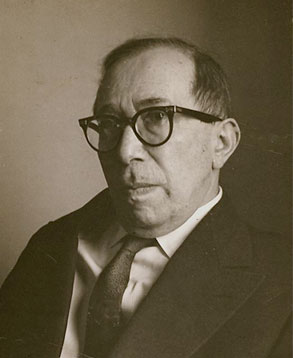
Leo Strauss is influential among certain circles, such as the Claremont Institute and the BAPsphere. For example, a few days ago, Costin Alamariu (a.k.a. Bronze Age Pervert), posted a supporter’s photo of his dissertation, Selective Breeding and the Birth of Philosophy, by Strauss’s grave.
I decided to give Strauss’s ideas a fair hearing. If he has good ideas, I would like to know them, and if he has bad ideas, I would like to criticize them effectively. As of now, the Straussians exist mostly as a shadowy meme in the mind of the dissident right, similar to how we exist in the minds of liberals.
Thus far, my impression from slogging through Neil G. Robertson’s Leo Strauss is that he was a rightist and anti-modern thinker who drew upon the ancient Greeks and German nihilists (his term for the Revolutionary Conservatives, as well as their main inspiration, Nietzsche).
One of Strauss’s key ideas is esoteric writing in politics and philosophy. Strauss argues that the great thinkers of the past wanted to avoid being harmed by the city (aka censorship) and causing harm to the city, so they conveyed their most controversial ideas “between the lines.” Esoteric writing only reveals itself to esoteric reading strategies. Strauss laments that esoteric writing and reading have atrophied from lack of use since the dawn of the “free” press. This means that even the smartest of moderns are incapable of reading premodern thinkers.
The Socratics particularly need to be read carefully with fine attention to detail. I enjoyed reading Strauss’s On Tyranny, which analyzes Xenophon’s Hiero.[1] Even though I do not fully agree with all of Strauss’s analysis, it was obvious that he was not an AP Literature student making stuff up so he has something to talk about.
Strauss developed a rigorous system:
- Don’t read between the lines if it would be less exact than not doing so.
- Start from the exact consideration of the author’s statements.
- To understand a statement, first understand the context it is made in and the work as a whole.
- Do not delete or amend a passage without considering all possible interpretations, including irony.
- If a master writer makes errors that would embarrass a high schooler, and especially if he even incidentally discusses intentional blunders in writing, assume it was intentional—but don’t get carried away.
- Remember that even Homer sometimes nods.
- Ask who the real audience is. Look for inconsistencies and ambiguities and try to resolve them.
- The middle of the text, asides, footnotes, and statements by minor characters are perfect for hiding secrets in plain sight.
- If the author omits something important, that’s the most important part.[2]
But there is a major problem. Strauss’s disciples have acquired a notorious reputation for not just applying esoteric writing to the study of past authors, but using it themselves. They go from esoteric reading to esoteric writing. To fully understand an idea one must apply it, but there can be too much of a good thing.
Esoteric reading is still useful, but esoteric writing is neither useful nor viable in the modern era, and especially in political philosophy.
Let’s first look at censorship. It’s not a novel concept that writers often conceal their true ideas under censorship, whether that be honest de jure censorship as in the USSR, or unspoken, de facto rules as in the US. If you are a radical trying to hold down a job in academia, the government, or the private sector, it makes sense to practice esoteric writing, or not even hint at dissident views.
But that’s not how we change the culture. To overcome taboos, we must challenge them. There will always be a price, but since we don’t face the hard power of a commissar’s bullet or a heretic’s stake, I would rather openly challenge censorship than work around it. It will deprive neoliberal regimes of legitimacy, move the Overton Window, and help the best ideas to triumph. And, most importantly, courage like cowardice is contagious.
In contrast, esoteric writing does none of these things. It lends legitimacy to the regime and contributes to a general climate of oppression. It normalizes the idea that Big Brother is watching and encourages people to internalize oppression and self-censorship. It is also ineffective at changing minds, even among the elite who could enact change from top down, because it assumes that they will correctly identify that there is a hidden meaning and then correctly interpret it. Not all great minds think alike. Oftentimes we disagree, sometimes vehemently.
Upon reflection, I must confess that I have used esoteric writing myself, most often in trying to evade social media bans. I felt I had little choice. This went far beyond being merely polite or optical, or using humor. Was it effective? Probably not. Those who picked up what I was putting down didn’t need to hear it, while the “normies” were probably confused if they noticed anything at all.
With censorship weakened and even mainstream conservative influencers moving further to the right, it is time to switch from dog whistles to bull horns.
Non-Straussians in the movement have also leaned heavily into irony, perhaps as a way of esoteric writing (or, more often, podcasting). I don’t need to name names. Part of this is generic Zoomer irony. But I suspect that a lot of it is to imply that their true beliefs are not that far off from what they joke about while maintaining plausible deniability. It also allows them to change their positions as often as a pop-star diva changes costume and then claim that their past position was ironic and that anyone who didn’t get the joke was stupid. This happens so often I wonder if they have any sincere convictions at all. If I change a position, I own it honestly and explain why. A reputation for irony is self-defeating in the long run.
But esoteric writing is not just to protect oneself. It is also to protect “the city” from one’s radical ideas. Usually, this just means not challenging the established religion. We must first clarify whether the city means the state or the nation. In an ideal world, the state is an extension of the nation, but we are not in an ideal world. In fact, since the 1930s and especially the 1960s, Western states have generally been hostile towards their respective nations.
The establishment is evil and anti-white. It has done everything possible to sabotage President Trump’s America First agenda. I want to delegitimize it and burn it down.
Worrying that political philosophy could harm the nation is laughable. It is like the scene from The Campaign where the mom tells the kids to put their headphones on because the adults are going to use “mature words” and then they listen to a degenerate rap song. Our people are already well acquainted with highly destructive ideas like white guilt, critical race theory, communism, atheism, moral relativism, and pregnant men. Knowing that some very fine people thought different things across time and space, and concluding that its doubtful that their society’s interpretation of ultimate truth is 100% right and everyone else is varying degrees of wrong, isn’t going to hurt the masses.
If anything, the nation needs more political philosophy of the good kind to counter the bad. If we don’t talk to our people about political philosophy, Professor Erwin Chemerinsky will. With churches, judges, academics, and journalists going full woke, some moderate skepticism and perhaps even moral relativity is healthy.
Yes, there are truly dangerous ideas out there, but they are of the metaphysical variety and thus are protected by their innate nature. As Heraclitus said, “things keep their secrets.”
There are other issues outside of the city harming thinkers or vice versa which undermine esoteric writing. As artificial intelligence continues to advance, it will likely be able to detect esoteric messages. It might even become able to dox alternate social media accounts based on writing style, etc. Secrets are becoming nigh impossible to keep anymore.
There is also the issue of readers innocently or maliciously interpreting esoteric writing. Misinterpretation was always an issue, but online debate culture has made it even worse. Given that everything you say will be outrageously misunderstood and misrepresented anyway, why add to the problem? Thus, I write as clearly as possible. I mean what I say and say what I mean.
To conclude, applying esoteric writing to past authors should be done cautiously and with great rigor as Strauss did, while practicing it oneself in the current year is no longer desirable or even viable.
Notes
[1] Strauss, Leo. On Tyranny. Corrected and expanded edition including the Strauss-Koveje correspondence. Edited by Victor Gourevitch and Michael S. Roth. Chicago: University of Chicago Press, 2013
[2] Neil G. Robertson, Leo Strauss: An Introduction (London: Polity Press, 2021), p. 94.
45 comments
Clarity is hard. Clarity is an achievement. Clarity is not a universal default that the boob succumbs to and the clever man transcends.
Samizdat was a form of esoteric writing, especially in the jokes.
Was samizdat the cause or effect of Soviet disintegration?
You could argue it was both.
Even shock troops need support by way of the people who get them to the front.
Great piece. Heard of Strauss but never read, and I’ll correct that. His approach to the written text is not many miles away from structuralism, the raw, original stuff rather than the more effete post-structuralist silliness. I’ve never written “between the lines”, or even used a pen-name, and online activity has cost me two jobs, many friends and family members, and I am barred in perpetuity from all major social media platforms. But oneself is not a representative sample. Bravo for the piece.
I would like to explore a comparison of Strauss’ hermeneutics to another Right-wing school of reading, the New Criticism, which emerged from the Southern Agrarian movement, particularly John Crowe Ransom, Allen Tate, and Robert Penn Warren and was championed by Cleanth Brooks.
Here are a few preliminary thoughts. Like Strauss, the New Critics practiced close readings of texts. Like Strauss, the New Critics were anti-historicist, attacking the idea that the meaning of a text can be reduced to its historical context. Unlike Strauss, the New Critics were dismissive of appeals to the author’s intended meaning, which they called the “intentional fallacy.” Texts don’t mean simply what the authors intend them to mean. This bring the New Critics closer to philosophical hermeneutics and deconstruction, rather than to Strauss, who was all about uncovering the author’s intended meaning.
“It also allows them to change their positions … and then claim that their past position was ironic and that anyone who didn’t get the joke was stupid.”
That’s right. And it also wastes readers’ precious time.
There are far too many voices these days to have to go to the Orifice of Delphi every time you read a tweet; no one can reasonably expect readers/listeners not to tune them out with irony in such heavy rotation.
I agree. Here’s a talk I gave on Irony back in 2017: https://counter-currents.com/2017/08/identity-vs-irony/
Wow, this is really good, Greg; both parts, but especially the ironism one (part 2). It should go in Classics Corner and, if possible, promoted somehow, so it’s not easily overlooked.
Thanks so much. Will repost this week.
Good article. Three good ones today. I don’t see Strauss so much as advocating esoteric writing, as acknowledging it as a phenomenon, sort of like a zoologist out there in the wild telling us what life forms exist. If Strauss had an immediate purpose, I would think that given his seminal position at the root of the neo conservative movement, he is advocating a system of signaling among people like him, about achieving their geopolitical objectives without alarming the masses too much. Now you have to read between the line to understand that. 😉
as I was saying before, I think these techniques are used as much within fictional and popular literature as in philosophic objective writing. For example, one example that I talked about recently was in the movie Do the Right Thing. Ostensibly it’s about oppression of blacks, right? But at one point these blacks that jive on the street corner and they are observing some Koreans unloading supplies for their grocery store. The older man says “now look at them, Koreans running a grocery store. The fresh off the boat, can barely speak the language and they’re running a successful grocery store. 50 years and none of you guys have ever opened a grocery store. Now either they’re geniuses, or you are bunch of idiots.” And then everyone agrees it’s because they’re black! This would be an example of the Strauss technique where two line lines of argument are opposed to each other, say atheism versus theism, and the verdict is declared in favor of the theism, the politically correct answer, although the opposing arguments were strangely more compelling. I seriously doubt spike Lee read Strauss or anything like that, it’s just the things that intelligent minds spontaneously do under constraints to make points. Strauss provides us with a lexis for discussing these things.
Gee, this remark turned out much longer than I expected. I would like to hear about Strauss’s ideas to combat nihilism too.
I’ve never come across a serious argument showing how Strauss actually had a “seminal position at the root of the neo conservative movement.” He was the teacher of teachers of some Neocons, sure, but I don’t think he would have championed their monstrous neo-imperial campaigns to make the world safe for Jewry. In fact, one of his (also) nominally Jewish, but anti-neoconservative, accolytes, Nathan Tarcov, showed this a long time ago in a piece called “Will the Real Leo Strauss Please Stand Up?”
I think that Strauss thought older forms of exotericism and esotericism were necessary in the older regimes, all of which, in one way or another, were simply versions of Plato’s cave, which, however far removed from the actual truth about things (the sun), reflected an order in which natural opinion and its various hierarchies still existed. But modernity–and certainly whatever this thing we’re all living with now is–is the product, Strauss argues, of a radical break on the part of modern political philosophers with that old order and it culminates in what he referred to as the “cave beneath the cave” and the forgetfulness of nature, period. What kind of method he ultimately thought was best for leading future philosophers–the “puppies of the race”–in this unnatural and sick subterraneous cavern of a “society” to a healthier understanding of things, let alone to true philosophy, is unclear. His students, by and large, seem to have done a crappy job, having converted the next few generations of his readers into smug atheists and Epicurean “scholars,” with all the contempt that that term justly deserves.
Oh I see what you mean. Strauss wasn’t really a neoconservative. I don’t know that much about him, actually, I only read that. I’m only now reading the book David read.
when you say the systems other medievalists worked in was simply the allegory of the cave in different forms, do you mean that Islam and Christianity are merely derivatives of platonism? Please explain the cave beneath the cave.
I’ll have to get back to you on that. But yes, I’ll definitely take a crack later on.
I don’t think that Strauss thought, with Nietzsche, that Christianity or Islam were versions of “Platonism for the people,” per se, although what Nietzsche meant by that is surely complicated and since, as Strauss himself says, he literally believed every word Nietzsche wrote until he was well into his twenties, there might have been some overlap there. I think that Strauss, following Plato, thought that every political society is necessarily closed but takes its bearings by authoritative opinions regarding the high and the low, the noble and the base, the just and the unjust, and so on that are in some way soiled fragments of the truth. Those opinions stem from the laws and, behind them, the lawgivers and greatest poets (Homer, e.g.), who depict the gods and the highest (and, by extension, the lowest) types of human beings, the heroes or those who are close to the gods, and so on. Every premodern society, regardless of whether it was polytheistic or monotheistic, was determined by some notion of rank ordering, some conception of the highest in or beyond man, and the type of human beings who came closest to embodying that conception–the warrior, the priest, etc. Every premodern society, then, was what Plato showed to be a cave, escape from which is only possible for a very few, the philosophers. And despite what Plato shows in the Republic, where he discusses the image of political society as the cave, he didn’t actually think it was the job of the philosophers to escape the cave and then go back to it and enlighten it, freeing all nonphilosophers from their shackles and educating them in philosophy. He and the overwhelming majority of the philosophers after him were in this sense decidedly elitist. At best he thought he could play a role in creating nobler, and in that sense truer, myths for the future.
It was modern political philosophy, Strauss argues, starting with Machiavelli, that decided to change the relationship between the philosophers and political society. It did this by criticizing previous philosophy as useless and ultimately dangerous, having come, in the real world, to be the handmaiden of theology and therefore of pernicious priests. It, on the other hand, sought to be useful, and it did this by turning away from the stress on goodness and nobility and beauty and transcendence and focusing on this-worldly goods like the avoidance of pain, the pursuit of pleasure, and the forgetfulness of what it convinced its vulgar votaries were silly things like eternity, God, and so on. As Hobbes, a great disciple of Machiavelli, said, “there is no summum bonum (greatest good) nor finis ultimis (utmost aim) as is spoken of in the books of the old moral philosophers.” Strauss says people like Machiavelli and Hobbes (and Locke and Montesquieu and so on) did what they did (think of the importance the last two philosophers had for the American founders), not out of some genuinely philanthropic motive to improve man’s lot or from charity, but from “antitheological ire.” The very doctrines (rights) that became so famously associated with the movement they played such pivotal roles in founding–liberalism–were the result, Strauss seems to say, of a theoretical concern on their part to refute revelation, which they thought Plato and the other “old moral philosophers” had insufficiently answered the challenge of. They wanted to refute God by attempting to remove him from men’s hearts.
The situation that attempt brought about, in the long run, Strauss shows through his analysis of later modernity or the effects of the Machiavellians’ turn, becomes deplorable, because the longings for God or the transcendent don’t actually go away and human life, henceforth, becomes nasty, poor, brutish, long, and confused. As he says of Locke’s project, life becomes “a joyless quest for joy.” The old natural longings become twisted and perverted, misdirected and even unnatural. The situation in which this is all on display, everywhere and at all times, is late modernity, still a political society, still closed (despite all the vaunted talk about “openness”), but even more hidden from a possible path to the truth that the premodern societies, or caves, held out the prospect of. That is the cave beneath the cave.
Does that make sense? I’m sure I’m missing things here. It’s been a long time since I studied this stuff.
No that’s great. What is your background? What do you work on now?
It won’t let me reply to you, Dark Plato, so it looks like I’m replying to myself. I studied with some of the Strauss folks years ago, but broke with most of them well over a decade ago.
This is a very good topic. Have you ever encountered Plato’s secret doctrine? It’s basically hard-to-solve math and philosophy problems and fractions. Greek mathematics knew only whole numbers and fractions, division beyond whole numbers was evil because it led to decimal periodic numbers and they couldn’t express those mathematically. This knowledge of advanced mathematics and geometry, for example, was the secret teaching of the Pythagoreans.
Today, the secret knowledge is: 1) The existence and differences in IQ of different races and that intelligence and traits are innate. Intelligence and talent cannot be acquired, there must be good genetics. And that anti-racism is a fraud.
2) The truth about the Jewish question. Jewish influence in history, present, Jewish evolutionary theory, nepotism, Jewish religion- knowledge of Talmud, Tanakh.
3) The truth about National Socialism- the banking system of the Third Reich, their description of the Jewish Question, authentic speeches by Adolf Hitler, the German economic boom since 1933. Authentic books of the Third Reich.
What we need is “Secret Squirrel Decoder Rings” (SQDR). If we had SQDR’s we would be impervious to monitoring, and compromise—we could say what we want! 🤫
I don’t mind saying this intellectual piece is over my head since I prefer straight talk.
It’s not mentioned that Strauss, a racial Jew born in Germany in 1899, was raised in an Orthodox Jewish home, whatever he became later when he moved to America. Is this worth mentioning? Maybe not.
Definitely worth mentioning, looks like he was refining a system of communication for his fellow jews! 🐍
I’m not sure about that, though he was some kind of political Zionist to his last days. His last letter to Gershom Scholem indicates he was “apikorsi,” Jewish code for atheist. There were some ways in which he couldn’t free himself from the grips of this ethnic religion, to be sure, but I think it’s to his credit that he refused for years to believe Einstein was, as he said, “tops in physics” because he just assumed all the praise heaped on Albert was by Jews who were proud of their hometown hero, so to speak.
I think Strauss thought, at the end of the day, that “philosophers” and those who tried to understand them had more in common with each other than they did with those they accidentally happened to be born among, that the philosophical tribe was the only one that mattered, and that Maimonides, to take an important example, was not, therefore, a Jew.
He may have been decisively wrong about all that, but that’s a different matter. He didn’t advance the interests of Jews as Jews in some vulgar or common sense, I don’t think, though he gave lectures at Jewish institutions and so on.
My basic take on Strauss is that he among the great thinkers of the last century, several notches below Heidegger and Freud, but roughly on par with the likes of Schmitt, Gadamer, Lacan, Kojeve. Although he made great contributions to Platonic studies by focusing on the dramatic structure of the dialogues, he tends to read Nietzsche back into Plato, ridding the latter of “religious” and metaphysical commitments. In general Strauss overstates the conflict between philosophy and the city, which on a suspicious reading of Strauss operates as a kind of placeholder for the conflict between Jewish interests and the city. Strauss and his students are undeniably insightful, however, when it comes to the early Moderns, especially Bacon.
Malaparte: May 17, 2025 My basic take on Strauss is that he among the great thinkers of the last century, several notches below Heidegger and Freud, but roughly on par with the likes of Schmitt, Gadamer, Lacan, Kojeve…
It’s not difficult for a Jewish philosopher to find himself several notches below the highly promoted Jew fraudster, Sigmund Freud. I agree with both of the simple observations made here today by Peter Quint and Richard Chance.
Being an Aryan race-thinker, I’m not interested in the double-talk of Jewish philosophers when I have men like William Gayley Simpson and Drs. Revilo Oliver and William Pierce who tell it to us like it is, and truthfully.
I have found that links I put in C-C comments can be read by me but not by others, so that discourages me from putting up links to the teachings of the above-mentioned men at NationalVanguard.org. But if the reader will put the name ‘freud’ in the search block at NV, several esays that speak to Freud’s fraud, like, “Sigmund Freud: Sick Jewish Liar” will come up. Excerpts from these articles:
If anyone thinks Freud hasn’t made an impact on 20th century America, let him eye the following glossary:
Identity crisis, projection, libido, defense mechanism, self-actualization, Oedipus complex, peak experiences, penis envy, interpersonal relationships, inferiority complex, sibling rivalry, feelings of inadequacy, compulsive personality, paranoiac, extrovert, trauma, phallic symbol, meaningful relationships, infantile sexuality, working through human ecology, latent homosexuality, introvert, acting out, underachiever, castration complex, transference, sublimation, Freudian slip, pleasure principle, bisexuality, death wish, love-hate relationship, id, ego, superego, conscious, preconscious, unconscious…
Any connections between dope and the shrink profession?
Freud called cocaine his “magic carpet.” He forced it upon his sisters, friends, patients, even his fiancee, informing her it would “make her strong and give her cheeks a red color” and had made him a “big wild man.” Commenting on Freud’s fifteen-year public relations campaign on behalf of cocaine, Dr. Ernest Jones, Freud’s Boswell, explained, “In short, looked at from the vantage point of our present knowledge, he [Freud] was rapidly becoming a public menace.” As Martin L. Gross, author of The Psychological Society (Random House, 1978), which has furnished the meat of this article, writes: “No one has yet evaluated the hallucinatory effect of cocaine on Freud’s mind during the formative years of psychoanalysis. Without cocaine, could Freud have created such improbable flights of human fancy?”
Sorry, your comment is unhinged, and I happen to think Freud was pretty brilliant. And yes, I’ve read MacDonald’s Culture of Critique, which has its points (especially Freud’s identification with Hannibal), but there are plenty of good Aryans who have taken inspiration from Freud, among them Jung, Medard Boss, Heidegger himself, Paul Ricoeur, Alfred Hitchcock, David Lynch, Salvador Dali, DH Lawrence, the list goes on and on.
Although organized Jewry clearly works to destroy us, and most ordinary Jews appear to carry an anti-White animus, it’s also true that many individual Jews have made great contributions to our culture and civilization. Yes, it’s complicated, maybe someday you’ll wrap your head around it.
Martin Gardner, the puzzle guy from scientific American, who was well read in philosophy, said that the profound parts of Freud were stolen from earlier philosophers like William James, and the original parts of his thought were absurd.
Nobody is entirely “original” in European thought, and various archaeologies and genealogies of Freud have been written. Schelling and Schopenhauer probably had more of an influence on Freud than William James, but influence can travel by strange and indirect paths. Some have even traced Freud’s theory of the drives back to Aristotle’s concept of dunamos.
My larger point, however, is that countless individual Jews have made great contributions to European thought, art, music, literature. Freud and Leo Strauss are but two examples. Where they rank in the pantheon is debatable, but they belong to it.
Although I generally think we’d be much better off if the Jews left our lands for their very own ethnostate, Israel, I also see the merit of Nietzsche’s remarks in paragraph 475 of Human, All Too Human, where he suggests that Jews should be incorporated into the larger European gene pool as part of the culturo-biological process of creating the “good European,” as their energy and higher intelligence would strengthen the race. “As soon as it is no longer a matter of preserving nations, but rather of producing the strongest possible mixed European race, the Jew becomes as useful and desirable an ingredient as any other national quantity. Every nation, every man has disagreeable, even dangerous characteristics; it is cruel to demand that the Jew should be an exception. Those characteristics may even be especially dangerous and frightful in him, and perhaps the youthful Jew of the stock exchange is the most repugnant invention of the whole human race.”
Of course in the roughly 140 years since Nietzsche wrote these words, Jews have worked tirelessly to destroy the European world, its culture and racial basis. They persist in doing so despite their ever-increasing rates of intermarriage with Whites (as high as 72% among non-Orthodox Jews in US; 35 to 50% among the non-Orthodox in Europe). It’s a conundrum. I can’t wrap my head around it either.
Agree more or less with your assessment of the originality of thinkers and the placement of Jewish intellectuals in the “pantheon.”
I thought Gardner’s remarks were interesting, as he seems to be neither antisemitic nor slavishly philosemitic, so his thoughts might be objective.
Freud was not a scientist (the Jew Hans Eysenck, among others, disproved that contention), but a (putrid) mythmaker whose entire purpose was to undermine white and Christian civilization. He was at least as much of a fraud as Marx, the espouser of “scientific” socialism. What is valuable in Freud’s corpus?
I especially value Freud’s writings on the vicissitudes of the drives, sublimation, and fetishism. But it’s really the manner of his thought, its explorative nature, opening up and provisionally charting the unconscious.
Freud’s notion of disavowal, set forth in the late essay Splitting of the Ego in the Process of Defense, could probably be applied to how we deal with the trauma of racial difference. Disavowal is the process whereby we simultaneously recognize and deny a troubling reality. We know that blacks are, in the main, brutes who are radically different from us (a knowledge increasingly confirmed by genetic research), but we hold onto and perpetuate an alternate perception of blacks, to wit, that they are innocents who would be our equals were it not for the history of their slavery and oppression. More generally, disavowal explains how we navigate the many sacred cows of egalitarian ideology.
@malaparte:
I would say more than merely making excuses for blacks, we’ve transcended into some sort of fantasy reality where blacks are persistently persecuted and whites represent a clear and present danger to blacks. When blacks attack whites, reality is inverted and the blacks are interpreted as the victims, as in the recent stabbing of the white kid. I propose a new coping mechanism: Frank inversion. There, give me my PhD in philosophy.
Malaparte: May 17, 2025 Sorry, your comment is unhinged, and I happen to think Freud was pretty brilliant…
—
Thank you, sir. I have spent my life living, seeking racial truth where I can find it — not much time for reading lots of philosophers, except those recommended by my mentors that I agree with for the most part, including those I named above from my lifetime, plus Shopenhauer, Nietzsche, Rosenberg, even Hitler.
You are much more well-read than I. You are probably university trained, whereas I am more self-educated. If that makes you hinged and me unhinged, so be it. Fortunately, as a builder I know how to repair faulty hinges.
—
[T]here are plenty of good Aryans who have taken inspiration from Freud, among them Jung, Medard Boss, Heidegger himself, Paul Ricoeur, Alfred Hitchcock, David Lynch, Salvador Dali, DH Lawrence, the list goes on and on…
I’ve seen Hitchcock’s Hollywood movies and am familiar with Dali’s surreal art, but haven’t known either as being inspired by Freud. You mention D.H. Lawrence. Are you aware that Mr. Lawrence was a Cosmotheist? Did Freud inspire him to make this very nonSemitic Cosmotheist statement:
“We and the cosmos are one. The cosmos is a vast living body, of which we are still parts. The sun is a great heart whose tremors run through our smallest veins. The moon is a great gleaming nerve center from which we quiver forever.”
Source: “Cosmotheist Beginnings, part 4” at nationalvanguard.org to learn of some of the other good Aryans who inspired Dr. Pierce to formulate the Cosmotheist philosophy for his people 50 years ago.
—
Although organized Jewry clearly works to destroy us, and most ordinary Jews appear to carry an anti-White animus, it’s also true that many individual Jews have made great contributions to our culture and civilization. Yes, it’s complicated, maybe someday you’ll wrap your head around it.
So what? Organized Jewry, as you say, is an identifiable a group, a collective race, and they act as a group to destroy the White race. Aryans are also a group and must be thinking and acting as a group for our own benefit and welfare if we are to be preserved as a group.
That, sir, is what I’ve wrapped my uncomplicated mind around. I am an unaplologetic group thinker, despite change agent Tucker Carlson having told us each night for years on his Fox News show that he is the “sworn enemy of group think.” Universalism and individualism do not infect the Jewish race, nor should they infect racially conscious, separatist-minded Aryans.
I have an advanced degree in a very prosaic field for which I have no passion. However, many years ago I was taught by second-generation Straussians (one by way of Rosen, the other by way of Cropsey), and I learned from them a thing or two about Strauss. As for Freud and that sprawling domain that encompasses Jung, Lacan, Zizek, and so on, I have delved into it on my own, sporadically, in an attempt to better understand myself and the world around me. I tarry with the Left, because the Right cannot explain everything.
I pretty much agree with all of this. https://counter-currents.com/2014/01/paul-gottfrieds-leo-strauss-the-conservative-movement-in-america/
You should link to your essay on esoteric writing and Strauss. That is truly the best resource in this topic.
Here it is:
https://counter-currents.com/2013/01/strauss-on-persecution-the-art-of-writing/
I agree that Strauss overstates the city vs philosophy conflict. Even though the type of people who make good handshakers, tyrants, front men etc is usually different from philosophers and policy enthusiasts, philosophy can’t escape bad government. They aren’t going to let us grill, game or think in peace.
I can’t remember who said it, but there’s a refreshingly simple quote: “What can be stated can be stated clearly.” Truer words were never spoken. If a person of average intelligence finds himself struggling over and over again to understand what a non-technical writer is saying, there’s a good chance the writer is some sort of fraud.
That was Wittgenstein (though perhaps he cribbed from someone before him). I think it’s mostly, but perhaps not always, true. Schopenhauer was clearer than Kant (supposedly even in German, I don’t know), but by common consensus, the latter was greater.
There was nothing esoteric about Socrates.
He was blatantly and proudly aristocratic.
You can be both.
I think that in the 1980-00s (and perhaps even up to today), many paleoconservatives engaged in at least some instances of esotericism, especially wrt racial topics. Most of them weren’t fools. Across the 90s, at various John Randolph Club meetings, I used to ask one paleo after another if he’d read The Dispossessed Majority. The overwhelming majority had. Interestingly, when I asked Prof Michael Levin this in 1993, he hadn’t (he would a few years later publish the seminal Why Race Matters; he came to his race-realism not via white nationalism, but careful analysis of many empirical social science investigations, along with personal observations and commonsense).
I don’t think it requires some special key to convince a reasonably intelligent person of racial differences in abilities. The facts are obvious and palpable, sometimes too much so. Rather it requires a massive apparatus of social conditioning to dissuade people from the reality of racial differences in behavior. My point is, it’s no great stretch that Levin would come to these ideas independently. I find when people are mad at me about my belief in racial differences, it’s not so much that they disagree with me, but that they’re angry that I am disagreeing with authority and saying things that I shouldn’t be saying. Their ire stems more from authoritarianism.
The techniques of esoteric writing in today’s context would be used regarding of course, race differences in abilities, and of course, things relating to the JQ. Those are our taboos. But what Strauss really meant was that the ancient philosophers had a parallel system of belief or parallel philosophical system beneath their writing. What they really believed was not what the superficial meaning of their texts were. Their esoteric writing built up through specific instances a completely parallel system of thought underneath the superficial text. The esotericism was necessary because people were executed for atheism in those days. It would be hard to find that in the modern context, except maybe neoconservative writings, for example, liberal democracy really equals ethnic domination.
Malaparte: May 18, 2025 I have an advanced degree in a very prosaic field for which I have no passion.
That’s unfortunate for you. I studied mostly architecture and art during my university years, disciplines for which I still have a certain degree of interest. However, my passion is in trying to build a successful, much-needed White separatist movement, based on the new spiritual consciousness imparted to me by William Pierce and others.
—
However, many years ago I was taught by second-generation Straussians (one by way of Rosen, the other by way of Cropsey), and I learned from them a thing or two about Strauss. As for Freud and that sprawling domain that encompasses Jung, Lacan, Zizek, and so on, I have delved into it on my own, sporadically, in an attempt to better understand myself and the world around me. I tarry with the Left, because the Right cannot explain everything.
Good for you. As a strict race-thinker I’m not of the Left or the Right, so am not confused by the claims of either. We can agree to disagree on the merits of the Jew Freud.
I still enjoy the subjects I studied as an undergrad. It’s the career I got myself into that’s a downer. I often think of becoming a high school teacher, but that would entail its own headaches. Evidently life is not painless.
I salute you for your work on behalf of the movement, but would caution against making any one man your guru, in particular Pierce. The entire European tradition is our birthright, and its riches are inexhaustible.
The difficult question is how to profit from Jewish contributions to our tradition while also bearing in mind the potential “culture distorting” effects of Jewish thought. There’s no easy answer. It’s impossible to “purify” European thought of Jewish contributions, and even were that possible, it’d be the poorer for it. The poison is also pharmakon.
Malaparte: May 18, 2025 I still enjoy the subjects I studied as an undergrad. It’s the career I got myself into that’s a downer. I often think of becoming a high school teacher, but that would entail its own headaches. Evidently life is not painless.
I salute you for your work on behalf of the movement, but would caution against making any one man your guru, in particular Pierce. The entire European tradition is our birthright, and its riches are inexhaustible.
The difficult question is how to profit from Jewish contributions to our tradition while also bearing in mind the potential “culture distorting” effects of Jewish thought. There’s no easy answer. It’s impossible to “purify” European thought of Jewish contributions, and even were that possible, it’d be the poorer for it. The poison is also pharmakon.
I found the word pharmacon, a synonum for the word drug. I’m drug-free when it comes to appreciating Jew contributions to “European thought.” Pre-Christian European beliefs were heroic, conformed more to our character as a people, not slavelike, forced at the points of lances to believe in the Jewish god, or die.
It’s funny that you aspired to teach. Pierce was a tenured professor of Physics by the age of 31, then gave that and his career as a rocket scientist with NASA up to work full time for his race. When asked what title he preferred, it wasn’t racial leader, but teacher. He is still teaching his people nearly 23 years after his passing.
What good will European thought be if one day there are no Europeans left to enjoy those thoughts, only judaized mongrels who brag that they have a European ancestor ?
There’s a distinction between your word guru and the word mentor, which is what Pierce has been for me. Gurus are experts in a field, for sure, but a mentor gives advice and instruction to someone (his mentee — me in the case of my mentor, Dr. Pierce) regarding the course or process to be followed. Mentees don’t often get to pick their mentors; the mentor picks who he’ll allow to pick his brain.
You may come to understand better why it is I who have succeded Dr. Pierce as Chairman of the organization he founded, NA, and Trustee of the philosophy/world view/ideology/religion thst he slso founded, Cosmotheism, when Ondrej Mann’s interview with me appears on C-C shortly. Others could have stepped up to responsibly fill the positions and promote Pierce’s life’s work, but they didn’t. I will ensure that when the time comes my replacement is up for the task to continue on the Piercean Path.
Our exchange has run its course, Mr. Malaparte. I wish you well.
Malaparte: May 18, 2025 I still enjoy the subjects I studied as an undergrad. It’s the career I got myself into that’s a downer. I often think of becoming a high school teacher, but that would entail its own headaches. Evidently life is not painless.
I salute you for your work on behalf of the movement, but would caution against making any one man your guru, in particular Pierce. The entire European tradition is our birthright, and its riches are inexhaustible.
The difficult question is how to profit from Jewish contributions to our tradition while also bearing in mind the potential “culture distorting” effects of Jewish thought. There’s no easy answer. It’s impossible to “purify” European thought of Jewish contributions, and even were that possible, it’d be the poorer for it. The poison is also pharmakon.
—
I found the word pharmacon, a synonym for the word drug. I’m drug-free when it comes to appreciating Jew contributions to “European thought.” Pre-Christian European beliefs were heroic, conformed more to our character as a people, than slavelike, forced at the points of lances to believe in the Jewish god, or die.
It’s funny that you aspired to teach. Pierce was a tenured professor of Physics by the age of 31, then gave that and his career as a rocket scientist with NASA up to work full time for his race. When asked what title he preferred, it wasn’t racial leader, but teacher. He is still teaching his people nearly 23 years after his passing.
What good will European thought be if one day there are no Europeans left to enjoy those thoughts, only judaized mongrels who brag that they have a European ancestor ?
There’s a distinction between your word guru and the word mentor, which is what Pierce has been for me. Gurus are experts in a field, for sure, but a mentor gives advice and instruction to someone (his mentee — me in the case of my mentor, Dr. Pierce) regarding the course or process to be followed. Mentees don’t often get to pick their mentors; the mentor picks who he’ll allow to pick his brain.
You may come to understand better why it is I who have succeeded Dr. Pierce as Chairman of the organization he founded, NA, and Trustee of the philosophy/worldview/ideology/religion that he also founded, Cosmotheism, when Ondrej Mann’s interview with me appears on C-C shortly. Others could have stepped up to responsibly fill the positions and promote Pierce’s life’s work, but they didn’t. I will ensure that when the time comes my replacement is up for the task to continue on the Piercean Path.
Our exchange has run its course, Mr. Malaparte. I wish you well.
Neo-Straussians are engaged in creating a smokescreen of edgy irony to hide a project aimed at reorienting the status quo. They are unfit allies to anyone who looks at the world as it is today and finds it lacking, left or right, centre or edge. They are snakes.
Never trust a Neo-Straussian. That is the only rule in 21st century politics. Everything else is negotiable.
Comments are closed.
If you have a Subscriber access,
simply login first to see your comment auto-approved.
Note on comments privacy & moderation
Your email is never published nor shared.
Comments are moderated. If you don't see your comment, please be patient. If approved, it will appear here soon. Do not post your comment a second time.