Counter-Currents
  • Advertise
  • Private Events
  • T&C
  • About
  • Contact
  • RSS
    • Main feed
    • Podcast feed
    • Videos feed
    • Comments feed
  • Welcome
  • Webzine
  • Books
  • Merch
  • Podcasts
  • Videos
  • Donate
  • Patrons
  • Subscribe
  • Crypto

LEVEL2

Donate Now Mailing list
Upcoming podcasts
  • Rob Rundo on Counter-Currents Radio

    Rob Rundo on Counter-Currents Radio

    Counter-Currents Radio

    06/13/2026 — 3 pm EST / 9 pm CET
  • Daniel Tyrie on Counter-Currents Radio

    Daniel Tyrie on Counter-Currents Radio

    Counter-Currents Radio

    06/20/2026 — 3 pm EST / 9 pm CET

Writers of May

(2 votes) Morris van de Camp David M. Zsutty Derek Stark Jayant Bhandari Greg Johnson

Articles of May

The Lunch Wars by David M. Zsutty Heidegger on Nietzsche, Part One by Collin Cleary 2 votes
  • Welcome
  • Webzine
  • Books
  • Merch
  • Podcasts
  • Videos
  • Donate
  • Patrons
  • Subscribe
  • Crypto
    • Editor’s Update
      Rob Rundo Rescheduled to Next Week on Counter-Currents Radio;
      Tonight Greg Johnson & David Zsutty Answer Your Questions;
      Fundraiser Update & a New $20,000 Matching Grant

      Greg Johnson

    • The Counter-Currents 2026 Fundraiser
      Lifetime Subscriber Welcome Packages Extended

      Greg Johnson

    • Nationalism This Week
      Who’s Looking Back?

      Greg Johnson

      11

    • China’s Threat to American Security:
      Food, Farmland, Foreign Control, & Energy Policy

      Lipton Matthews

      1

    • The Bitter End of Western Metaphysics:
      Heidegger on Nietzsche, Part Two

      Collin Cleary

      5

    • The Killing of Henry Nowak

      Mark Gullick

      27

    • The Crisis of Chinese Technology Thieves

      Morris van de Camp

      1

    • The Strange World of Gender Bender Fiction:
      & What This Genre Tells Us About Autosexuality

      Dani Vypont

      3

    • Watching the Watchers:
      The Dark Triad Question

      David M. Zsutty

      14

    • The Remigration Movement Solidifies

      F. Roger Devlin

      1

    • Casting Aspersions:
      The Fatal Consequences of Race-Swapped Casting, From Helen of Troy to Henry of Southampton

      Steven Tucker

      20

    • The Murder of Henry Nowak

      Millennial Woes

      23

    • Don’t Forget to Vote in Our Writer & Article of the Month Poll

      Greg Johnson

    • The Robot Hotdog Stand

      Greg Johnson

      35

    • Laughing Our Way to Victory

      Dave Chambers

      7

    • The Zodiac Killer

      Mark Gullick

      11

    • Jared Taylor: What Rome Means to Me

      Jared Taylor

      1

    • An Interview with Endeavour:
      My Way of Life Is an Adventure!

      Ondrej Mann

      6

    • José Pedro Zúquete’s The Identitarians

      Greg Johnson

      3

    • Editor’s Update
      Fundraiser Update & How to Watch the Remigration Summit

      Greg Johnson

      5

    • The Bitter End of Western Metaphysics:
      Heidegger on Nietzsche, Part One

      Collin Cleary

      11

    • Berlin: City of Stones

      Spencer J. Quinn

      6

    • True Folk-Horror Is Horror of Your Own Folk:
      Mark Gatiss vs the Brexit Blind Dead  

      Steven Tucker

      4

    • Counter-Currents Radio Podcast No. 689
      Thomas Massie, the America 2050 Bust, the Need for Whites to Divest from America, the AI Economic Apocalypse, & Pro-White Project Pitches to Billionaires

      Counter-Currents Radio

      7

    • Nationalism This Week
      Remigration is Inevitable, Part 3

      Greg Johnson

      27

    • Why Billionaires Should Fund White Identity Politics

      Lipton Matthews

      8

    • How Cold War Two Came About

      Morris van de Camp

      5

    • Now Available for Pre-Order at a Special Price!
      Greg Johnson’s The Philosopher Is In

      Greg Johnson

    • David Zsutty’s Elevator Pitch to a Billionaire

      David M. Zsutty

      1

    • Headbanging Lite

      Mark Gullick

      5

    • White Advocacy Past and Present

      Peter Bradley

      13

    • The Lunch Wars

      David M. Zsutty

      47

    • The Russians are Coming/The Russians are Coming

      Steven Clark

      1

    • Peak Fatigue in Fort Wayne

      Gabriel Anderson

      24

    • Keith Woods’ Elevator Pitch to a Billionaire

      Keith Woods

    • The Cruelty of Kindness

      Morris van de Camp

      9

    • Predation Wearing the Mask of Civilization

      Jayant Bhandari

      13

    • The Mandalorian & Grogu

      Trevor Lynch

      24

    • Editor’s Update
      Fundraiser Update & a New $20,000 Matching Grant
      Greg Johnson & David Zsutty Discuss Thomas Massie on Counter-Currents Radio

      Greg Johnson

      2

    • How the Jews Defeated Thomas Massie—& Themselves

      David M. Zsutty

      24

    • Jared Taylor’s Elevator Pitch to a Billionaire

      Jared Taylor

      15

    • Nationalism This Week
      Remigration Is Inevitable, Part 2

      Greg Johnson

      8

    • Could Fascism Work?

      Mark Gullick

      40

    • Jonathan Bowden’s Deliverance
      Part 7

      Jonathan Bowden

    • China’s Quiet Hand:
      Influence, Infiltration, & the Western Blind Spot

      Lipton Matthews

      9

    • Counter-Currents Radio Podcast No. 688
      Tyler Dykes on Running for US Congress in South Carolina

      Counter-Currents Radio

      3

    • Lothrop Stoddard’s The Revolt Against Civilization

      Spencer J. Quinn

      14

    • Lewis Strauss Did Nothing Wrong:
      How the politics of the Atom Bomb during the early Cold War Apply to Artificial Intelligence Today

      Morris van de Camp

      14

    • The Ghost of the Confederacy

      Dave Chambers

      12

    • America’s Century of Humiliation has Begun

      Greg Johnson

      27

    • Will Williams

      The Killing of Henry Nowak

      Pray in one hand, shit in the other, and see which hand fills up first.Connor McDowell: June 6...

    • Julius Strange

      Who’s Looking Back?

      It is always possible to run AI models locally to prevent data being collected. The bigger and more...

    • tempus

      Casting Aspersions

      There is a measure of beauty. It is the “Helen.” One Helen equals that quantity of beauty that...

    • tempus

      The Robot Hotdog Stand

      Since AI is a heavy energy consumer, the surest and quickest way for an AI to prevent another AI...

    • Tye

      Heidegger on Nietzsche, Part Two

      I remember his excellent pieces about The Birds. Thanks for the reminder, I’m going thru his essays...

    • SteveH

      The Killing of Henry Nowak

      'who" not "whom"

    • DenisetheCelt

      Laughing Our Way to Victory

      The Black Lies Splatter scam was run by jews. Period. Floyd was worthless drug-addicted criminal...

    • DenisetheCelt

      Laughing Our Way to Victory

      I agree. I think it's a lie. I don't think senile old Trump whispered a word of dissent to his...

    • DenisetheCelt

      Laughing Our Way to Victory

      Yes! Dean Martin was my mother's FAVORITE singer. (Tom Jones was #2). I heard a "rat pack" broadcast...

    • Stronza

      The Killing of Henry Nowak

      Re parents of murdered children scurrying away (or not) from claims of antiWhite-ism we have the...

    • Will Williams

      Remigration is Inevitable Part 3

      Will Williams: June 4, 2026  I mention [“Christ is King” Bryan Dawson] here in this piece that...

    • Collin Cleary

      Heidegger on Nietzsche, Part Two

      It will likely presence itself next Friday. Thanks for reading!! Please take a look at the many...

    • Collin Cleary

      Heidegger on Nietzsche, Part Two

      You’re looking at the wrong website. Counter-Currents is not political propaganda. My essay is not...

    • Mark Gullick

      The Killing of Henry Nowak

      Look up the British BIT. I forget what it stands for, but it is known as the "nudge unit". I bet a...

    • Stronza

      The Killing of Henry Nowak

      Here's the entire sentencing statement by the judge. https://www.judiciary.uk/wp-content/uploads/...

    • Will Williams

      Crosstown Traffic

      ...His girlfriend of the time was undergoing serious investigation by another biographer of Hendrix’...

    • YT

      Who’s Looking Back?

      Also, we’re not speaking about “true AI”, are we? True AI - HAL from Kubrick’s 2001 - suggests real...

    • Will Williams

      America Has Already Lost the Iran War

      US Warships Flee Oman Sea after Iranian Navy’s Missile WarningJune, 05, 2026 – Politics...

    • Hi-Ya!

      Who’s Looking Back?

      17.68 It will appear a handsome deed To have made, of yourself, a party of one.

    • YT

      Who’s Looking Back?

      I’m not even 60, and this is the second CC article read today which I really don’t understand. The...

    • Earth Day Special

      John Morgan

      12

    • A Robertson Roundup
      Remembering Wilmot Robertson
      (April 16, 1915 – July 8, 2005)

      Margot Metroland

      13

    • The Paranoid Style in White Nationalism

      Greg Johnson

      30

    • Join the Dance!

      Andrew Hamilton

      1

    • We Can’t Save the Earth Without Reducing African Birth Rates

      James Dunphy

      36

    • “I’m Not a Conspiracy Theorist, but . . .”:
      Jeffrey Epstein’s Death Gives New Life to “Conspiracy Theories”

      Greg Johnson

      22

    • Sylvia Plath: Stasis in Darkness

      Vic Olvir

      17

    • Vanguardism, Vantardism, & Mainstreaming

      Greg Johnson

      80

    • Aviation, Geography, & Race

      Charles Lindbergh

      3

    • Some Thoughts on Yule

      Collin Cleary

      4

    • Living in Truth:
      A Yuletide Homily

      Jef Costello

      7

    • John Kennedy Toole’s A Confederacy of Dunces

      Greg Johnson

      20

    • On Aleksandr Solzhenitsyn’s Warning to the West

      Spencer J. Quinn

      7

    • Elitism, British Modernism, & Wyndham Lewis

      Jonathan Bowden

      6

    • Philip K. Dick’s Do Androids Dream of Electric Sheep? as Anti-Semitic/Christian-Gnostic Allegory

      Greg Johnson

      20

    • “Conspiracy Theory” or Conspiracy?

      Andrew Hamilton

      21

    • Remembering H. P. Lovecraft
      (August 20, 1890–March 15, 1937)

      Greg Johnson

      3

    • Who Are We?
      Nordics, Aryans, & Whites

      Greg Johnson

      71

    • Remembering William Gayley Simpson
      (July 23, 1892–December 31, 1990)
      A Pleasant Afternoon with Harriet & Bill Simpson

      Margot Metroland

      18

    • Here are the Young Men
      Remembering Ian Curtis
      (July 15, 1956–May 18, 1980)

      Mark Gullick

      18

    • Percy Grainger
      Artist of the Right

      Alex Graham

      7

    • Remembering Revilo Oliver
      (July 7, 1908–August 20, 1994)

      Greg Johnson

      18

    • The Meaning of July 4th for the White Man

      Gregory Hood

      13

    • The Front National’s Evolution

      Bruno Mégret

    • Merwin K. Hart
      Forgotten American Hero & Man of the Right

      Morris van de Camp

      10

    • George Orwell’s Nineteen Eighty-Four

      Jonathan Bowden

      8

    • Carleton S. Coon
      Scientist & Reluctant White Advocate

      Morris van de Camp

      3

    • The Kwanzaa Absurdity Will Be Dwarfed by Juneteenth

      Robert Hampton

      10

    • Stravinsky

      Alex Graham

      7

    • Like the Roman:
      Remembering Enoch Powell (1912-1998)

      Mark Gullick

      23

    • Institutions Cannot Be Transplanted

      Jayant Bhandari

      5

    • Jonathan Bowden’s Deliverance
      Part 5

      Jonathan Bowden

    • Crosstown Traffic:
      Jimi Hendrix & The Post-War Rock ‘N’ Roll Revolution

      Mark Gullick

      1

    • Slaves from the North:
      Finns & Karelians in the East European Slave Trade, 900–1600

      Lipton Matthews

      14

    • Neo-Fascism in Film
      Part 4

      Karel Veliky

      2

    • David Lean’s A Passage to India

      Spencer J. Quinn

      1

    • Elites are Essential to Development

      Lipton Matthews

      7

    • Jonathan Bowden’s Deliverance
      Part 4

      Jonathan Bowden

    • Neo-Fascism in Film
      Part 3

      Karel Veliky

      6

    • E. M. Forster’s A Passage to India & the Indian Mentality

      Spencer J. Quinn

      25

    • Jonathan Bowden’s Deliverance
      Part 3

      Jonathan Bowden

    • The Rest Is Silence
      Heidegger’s Quietism

      Mark Gullick

      2

    • Dispelling the Historical Fallacy of Indian Nationalism

      Lipton Matthews

      8

    • Neo-Fascism in Film
      Part 2

      Karel Veliky

      8

    • Jonathan Bowden’s Deliverance
      Part 2

      Jonathan Bowden

    • Life of a Klansman

      Mark Gullick

      8

    • Jonathan Bowden’s Deliverance, Part 1

      Jonathan Bowden

    • Decolonial Ideas are Holding Back Developing Countries

      Lipton Matthews

      8

    • Neo-fascism in Film, Part 1

      Karel Veliky

      21

    • Jonathan Bowden’s Onslaught, Part 8
      Divigations on Decadence

      Jonathan Bowden

    • Jonathan Bowden’s Onslaught, Part 7
      Intrigues in the National Front

      Jonathan Bowden

      1

    • Rotten to the Core

      Mark Gullick

      8

    • Strauss on Husserl’s “Philosophy as Rigorous Science”

      Greg Johnson

    • Jonathan Bowden’s Onslaught, Part 6
      Francis Bacon & Right-Wing Nihilism

      Jonathan Bowden

    • London After (& Before) Midnight:
      Aleister Crowley, The Landlord’s Worst Nightmare

      James J. O'Meara

      2

    • Jonathan Bowden’s Onslaught, Part 5
      The Post-War British Far Right

      Jonathan Bowden

    • No Rules: Rollerball

      Mark Gullick

      4

    • Jonathan Bowden’s Onslaught, Part 3
      Brett Easton Ellis’ American Psycho

      Jonathan Bowden

    • An Alternate History of the Harris Presidency

      Beau Albrecht

      5

    • The Origins of Mass Education:
      Augustina S. Paglayan’s Raised to Obey

      Francis Rockwell

      4

    • András László
    • Derek Hawthorne
    • Beau Albrecht
    • Alain de Benoist
    • Kerry Bolton
    • Jonathan Bowden
    • Collin Cleary
    • Jef Costello
    • Savitri Devi
    • Julius Evola
    • Jim Goad
    • Gregory Hood
    • Juleigh Howard-Hobson
    • Greg Johnson
    • Charles Krafft
    • Anthony M. Ludovici
    • Trevor Lynch
    • H. L. Mencken
    • J. A. Nicholl
    • James J. O’Meara
    • Christopher Pankhurst
    • Tito Perdue
    • Michael Polignano
    • Spencer J. Quinn
    • Fenek Solère
    • Irmin Vinson
    • Leo Yankevich
    • Francis Parker Yockey
    • Multiple authors
  • Editor-in-Chief

    • Greg Johnson, Ph.D.

    Featured Writers

    • Beau Albrecht
    • Gunnar Alfredsson
    • Collin Cleary, Ph.D.
    • Jef Costello
    • Morris V. de Camp
    • F. Roger Devlin, Ph.D.
    • Stephen Paul Foster, Ph.D.
    • Jim Goad
    • Alex Graham
    • Mark Gullick, Ph.D.
    • Greg Johnson, Ph.D.
    • Travis LeBlanc
    • Trevor Lynch
    • Margot Metroland
    • James J. O’Meara
    • Angelo Plume
    • Spencer J. Quinn
    • Fred Reed
    • Clarissa Schnabel
    • Michael Walker
    • David M. Zsutty

    Frequent Writers

    • Asier Abadroa
    • Aquilonius
    • Alain de Benoist
    • Kerry Bolton, Ph.D.
    • Dave Chambers
    • Steven Clark
    • James Dunphy
    • Endeavour
    • Richard Houck
    • Jason Kessler
    • Titus Livius
    • Ondrej Mann
    • Lipton Matthews
    • Mark Mazari
    • John Morgan
    • Jaroslav Ostrogniew
    • Kathryn S.
    • Christian Secor
    • Anne Wilson Smith
    • Thomas Steuben
    • William De Vere
    • Kenneth Vinther
    • Max West

    Classic Authors

    • Maurice Bardèche
    • Jonathan Bowden
    • Julius Evola
    • Guillaume Faye
    • Ernst Jünger
    • Kevin MacDonald, Ph.D.
    • D. H. Lawrence
    • Charles Lindbergh
    • Jack London
    • H. P. Lovecraft
    • Anthony M. Ludovici
    • Sir Oswald Mosley
    • National Vanguard
    • Friedrich Nietzsche
    • Revilo Oliver
    • William Pierce
    • Ezra Pound
    • Saint-Loup
    • Savitri Devi
    • Carl Schmitt
    • Miguel Serrano
    • Oswald Spengler
    • P. R. Stephensen
    • Jean Thiriart
    • John Tyndall
    • Dominique Venner
    • Leo Yankevich
    • Francis Parker Yockey

    Other Authors

    • Howe Abbott-Hiss
    • Michael Bell
    • Giles Corey
    • Jack Donovan
    • Richardo Duchesne, Ph.D.
    • Emile Durand
    • Guillaume Durocher
    • Mark Dyal
    • Tom Goodroch
    • Andrew Hamilton
    • Robert Hampton
    • Huntley Haverstock
    • Derek Hawthorne
    • Gregory Hood
    • Juleigh Howard-Hobson
    • Alexander Jacob
    • Ruuben Kaalep
    • Tobias Langdon
    • Julian Langness
    • Patrick Le Brun
    • G A Malvicini
    • John Michael McCloughlin
    • Millennial Woes
    • Michael O’Meara
    • Christopher Pankhurst
    • Michael Polignano
    • J. J. Przybylski
    • Quintilian
    • Edouard Rix
    • C. B. Robertson
    • C. F. Robinson
    • Herve Ryssen
    • Alan Smithee
    • Fenek Solere
    • Ann Sterzinger
    • Robert Steuckers
    • Tomislav Sunic
    • Donald Thoresen
    • Marian Van Court
    • Irmin Vinson
    • Book Reviews
    • Movie Reviews
    • TV Reviews
    • Music Reviews
    • Art Criticism
    • Graphic Novels & Comics
    • Video Game Reviews
    • Fiction
    • Poems
    • Interviews
    • Videos
    • English Translations
    • Other Languages
      • Arabic
      • Bulgarian
      • Croatian
      • Czech
      • Danish
      • Dutch
      • Estonian
      • Finnish
      • French
      • German
      • Greek
      • Hungarian
      • Italian
      • Lithuanian
      • Norwegian
      • Polish
      • Portuguese
      • Romanian
      • Russian
      • Slovak
      • Spanish
      • Swedish
      • Ukrainian
    • Commemorations
    • Why We Write
  • Archives
  • Top 100 Commenters
  • The Looney Bin
  • Advertise
  • Private Events
  • T&C
  • About
  • Contact
  • RSS
    • Main feed
    • Podcast feed
    • Videos feed
    • Comments feed
Sponsored Links
Europa.com Above Time Coffee Antelope Hill Publishing Paul Waggener IHR-Store Spencer J. Quinn American Renaissance Jim Goad The Occidental Observer
Print July 6, 2018 5 comments

The Englishness of Nick Drake

Fenek Solère

3,550 words

‘I never felt magic crazy as this
I never saw moons knew the meaning of the sea
But now you’re here
Brighten my northern sky’

Born into old-money and brought up amidst the rural charm of a rambling red brick house named Far Leys in a small sleepy hamlet called Tanworth-in-Arden on the outskirts of Birmingham, Nick Drake’s childhood home on Bates Lane looked out over Vicarage Hill towards the winding River Alne. Where not so long before, just like in Tolkien’s idyllic Shire, the great wooden wheels of watermills ploughed white water between the grassy banks as it flowed southwards past Wootton Wawen. Wootton itself, old even when the Doomsday Book was compiled, being a settlement that Aethelbald, King of the Mercians, gave to Earl Aethilric to build a minster somewhere between 723 and 737.

The fledgling songster growing up in the very heart of Aethelred and Aethelflaed’s ancient Saxon Kingdom, before going to Eagle House Preparatory School in Berkshire and boarding at Marlborough, buying his first Levin guitar for £13.00 in a local shop and writing songs in the vein of an archetypal English troubadour and mystical romantic about unobtainable princesses like “The Thoughts of Mary Jane”:

‘The way she sings
And her brightly coloured rings
Make her the princess of the sky’…

as well as the classic “Time Has told Me”:

‘Time has told me
You came with the dawn
A soul with no footprint
A rose with no thorn’…

and the Edward Elgar inspired I Was Made to Love Magic:

 ‘I was born to love no one

No one to love me
Only the wind in the long green grass
The frost in a broken tree

I was made to love magic
All its wonder to know
But you all lost that magic
Many many years ago

I was born to use my eyes
Dream with the sun and the skies
To float away in a lifelong song
In the mist where melody flies.

I was born to love magic…

I was born to sail away
Into a land of forever
Not to be tied to an old grave
In your land of never.

I was born to love magic…

Was made to love magic’…

Precocious adolescent lyrics one may argue but words imbued with themes of Anglo Saxon Ring-Lore, Star-Cunning and Wyrd Craft. The artist constantly invoking what the Anglo Saxon scholar Stephen Pollington calls ‘All our hardiest words — mother, father, land, earth, tree, field, sky, love, hate, live, die, eat, drink, sleep and wake’. A true son of Saint George conjuring haunting, if subliminal, images of sacred groves, revered springs, elves, demons and fairies. Much like the expression Pink Moon itself, no doubt consciously or unconsciously influenced by the proximity of the aptly named Pink Green, source of the River Alne near Wood End.

Such intimate topographic detail coming to characterize Drake’s musical compositions for the whole of his short but artistically productive life.

Academically successful, ‘though distracted’, while boarding in the Wiltshire downs, within earshot of Silbury Hill, the tallest prehistoric man-made structure in Europe, he spent the summer before going up to Fitzwilliam College, Cambridge, studying French in Aix-en-Provence, busking in the centre of Aix on weekends, experimenting with hallucinogenic drugs and driving around North Africa with vagabond friends.

Slowly he was metamorphosing into the poet in black, writing songs about the moon and the seas like Bird Flew By, Milk and Honey and Blossom Friend. Descriptions reminiscent of the Lacnunga, a collection of medical and magical texts from the tenth century, which Dr. Brian Bates, former Research Director of the Christensen Foundation’s project on recovering the nature-based knowledge of ancient England and author of the Way of Wyrd (1983), The Wisdom of the Wyrd: Teachings for Today from Our Ancient Past (1996) and The Real Middle-Earth (2002) believes were shamanic, involving music, dance and the ingestion of certain plants and mushrooms in order to enter a trance-like state to receive guidance and healing.

Certainly, the symbolism and the word-play of Drake, the would-be 1970’s minstrel, brings to mind the Nine Herbs Charm and the Land Ceremonies Charm which was often used to promote the fertility of the soil. So much so that you can practically smell the fragrance of night scented stock, wild thyme, plantain, fennel and crab apple in his pastoral vignettes, a symphonic blending of vocal tone and chord textures like that used in “Bird Flew By”:

‘Bird flew by
And wondered, wondered why
She was wise enough to stay up in the sky
From the air she could wonder
For a reason
What’s the point of a year

Or a season’…

And in “Milk and Honey”:

‘Round and round the burning circle
All the seasons: one, two and three
Autumn leaves and then the winter
Spring is born and wanders free

Gold and silver burns my autumns
All too soon they’d fade and die
And then I’d known, there’d be no others
Milk and honey were their lies’…

And again in “Blossom Friend”:

‘Black days of winter all were through
The blossoms came and they brought you
Clouds left the sky
And I knew the reason why
They made way for you and the blossom

The seasons cycle turned again
An April shower now and then
Trees came alive
And the bees left their hive
They came out to see you and the blossom
People were laughing, smiling with the sun
They knew that summer had begun
The nights grew warm, the days grew long
Spring turned to summer and was gone
It seemed so fine
All the cider and wine
But I knew you’d go with the blossom
When the Spring returns I’ll look again
To find another blossom friend
Until I do
Find something new
I’ll just think of you and the blossom’…

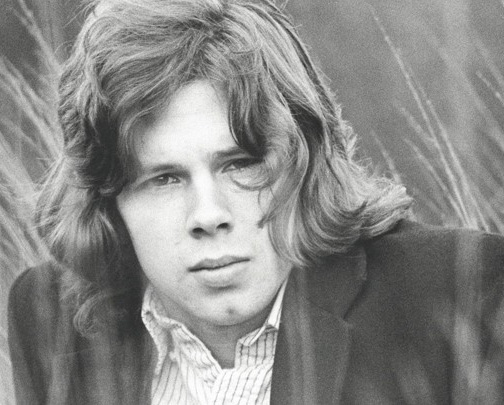
Affectation some cynics might claim but the six foot three giant, walking with shoulders hunched in his shabby lace up shoes, ill-fitting jacket and black corduroy trousers, pulled it off with incredible aplomb according to the popular opinion of the time. Maybe it was the beautiful hands that one girlfriend so fondly recalled years later? Or maybe it was the schoolboy exploits like driving out to the Suffolk coast, listening to the sound of the waves pounding on the shingle, bringing forth visions of the thrusting oars of King Raedwald’s ships as they furrowed the estuaries and nesses off the Anglian coastline?

One can only guess at the sort of inspiration the chirruping curlew calls may have had on such an impressionable mind. Lost amid a foggy lowland that had provided the scenic backdrop to some of M. R. James’s most eerie tales and witnessed longboats being run aground at Caister-on-Sea, Snape Common near Aldeburgh and Woodbridge, bringing Pagan war-bands ashore, before being carried to the top of a hill to host the funereal treasure horde at Sutton Hoo.

Such acts impregnating the very earth itself with unmistakable heathen Englishness.

And it was the descendants of those same Anglo Saxon peoples who populated places like the recently discovered Royal Hall at Rendlesham that many centuries later constructed Cambridge’s Gothic colleges, where Drake sat down to write in the shadow of bells and spires, that once looked down on the first tentative intellectual steps of the poet Christopher Marlowe at Corpus Christi, the Lord Protector Oliver Cromwell at Sidney-Sussex and author of Paradise Lost, John Milton, at Christ’s College.

Drake unsurprisingly studied English literature and was particularly drawn to the works of William Blake, Henry Vaughan and William Butler Yeats. Influences reflected in his own highly original lyrical output. Like Blake, Vaughan and Yeats, Drake also skillfully uses elemental symbols and mystical codes, largely drawn from nature. The stars, rain, sky, mist and seasons are all common-place in his oeuvre, no doubt reflecting his rural upbringing and rootedness in the country of his birth.

Blake’s words in ‘To See a World’ from Auguries of Innocence:

‘To see a World in a Grain of Sand
And a heaven in a Wild Flower
Hold infinity in the palm of your hand
And Eternity in an Hour’

would certainly not be out of place in a Drake melody. Neither would the symbiosis of Christianity and pagan metaphor through the medium of the landscape and nature as per Henry Vaughan’s “Regeneration”:

‘It was high-spring, and all the way
Primrosed, and hung with shade;
Yet, was it frost within,
And surly winds
Blasted my infant buds, and sin
Like clouds eclipsed my mind’

Or even, W. B. Yeats’s, as in his most famous poem “The Second Coming”:

‘Turning and turning in the widening gyre
The falcon cannot hear the falconer;
Things apart; the Centre cannot hold;
Mere anarchy is loosed upon the world…’

Similar sensibilities as these being crafted into songs on Drake’s three original albums, Five Leaves Left (1969), Bryter Layter (1971), and Pink Moon (1972). Indeed, iconography related to the spring and summer seasons are especially evident in the song-smith’s early work like “Way to Blue,” “The Thoughts of Mary Jane,” and “Saturday Sun”:

‘Have you seen the land living by the breeze
Can you understand the light among the trees
Tell me all you may know
Show me what you have to show
Tell us all today
If you know the way to blue?’…

‘Who can know
The thoughts of Mary Jane
Why she flies
Or goes out in the rain
Where she’s been
And who she’s seen
In her journey to the stars’…

‘Saturday sun
Came early one morning
In a sky so clear and blue
Saturday sun
Came without warning
So no one knew what to do’

Yet from Bryter Layter on, the descriptions he deploys in songs like Things Behind the Sun, Place to Be and Pink Moon, coupled with the trademark complexity of his guitar tunings are far more bleak, deliberately evoking the fall and winter, which of course are more often than not used to convey a sense of loss and sorrow. Such as:

‘Don’t be shy you learn to fly
And see the sun when day is done
If only you see
Just what you are beneath a star
That came to stay one rainy day
In autumn for free’

Complimented by “Place to Be”:

‘And I was green, greener than the hill
Where flowers grew and sun shone still
Now I’m darker than the deepest sea
Just hand me down, give me a place to be’

and the triptych completed by the ominous “Pink Moon”:

‘I saw it written and I saw it say
Pink Moon is on its way
And none of you stand so tall
Pink Moon gonna get you all

It’s a pink moon
It’s a pink moon
Pink, pink, pink, pink
Pink moon’

After all, it is said Cambridge nurtures melancholy with its long grey days and dimly lit courts leading onto the city’s labyrinthine tangle of medieval streets. Perhaps this was a factor in Drake’s mindset at the time? Or possibly it was Nick’s obsession with musical authenticity? Following in the tradition of Keats, Vaughan Williams and Frederick Delius, as the very personification of Englishness itself ? For part of the English Romantic tradition demands that one appears to be partially sad even when being celebratory. In a sense, celebrating what one is commemorating. A perfect example being Ernest Dowson’s elegiac poetry “Songs of Sunset” which Delius set to music:

‘A song of the setting sun!
The sky in the west is red,
And the day is all but done:
While yonder up overhead,
All too soon,
There rises, so cold, the cynic moon.

A song of a winter day!
The wind of the north doth blow,
From a sky that’s chill and grey,
On fields where no crops now grow,
Fields long shorn
Of bearded barley and golden corn.

A song of a faded flower!
T’was plucked in the tender bud,
And fair and fresh for an hour,
In a lady’s hair it stood.
Now, ah, now,
Faded it lies in the dust and low’…

With Drake replying in kind:

‘’When the day is done
Down to earth then sinks the sun
Along with everything that was lost and won
When the day is done’

Certainly Drake’s songs, much like his pale face in the remaining black and white photograph memorabilia, are wreathed in smoke rings of grey-blue depression. Arthur Lubow on the liner notes to the 1996 Fruit Tree compilation describing them as “disturbingly pure and innocent, like the chilling loveliness of a boy’s-choir singing Faure’s Requiem”. Another critic commenting that they seemed to be a “series of extremely vivid, complete observations, almost like a series of epigrammatic proverbs”.

One apocryphal story tells how Drake tried to perform at the Cambridge May Ball, backed by a dozen female string players in black evening gowns and white boas but his microphone went dead halfway through the show and he continued to sing on in splendid isolation to the disinterested accompaniment of champagne swilling undergraduates.

After leaving Cambridge some nine months before graduating Drake took up residence in London’s Notting Hill and Hampstead. Where he was ‘discovered’ and signed to the young Harvard graduate Joe Boyd’s Witchseason Productions on the strength of a recommendation from Fairport Convention’s Ashley Hutchings. Another of Fairport’s stalwarts Richard Thompson, whose wife Linda incidentally was once Drake’s girlfriend and says, “There was a magic that surrounded Nick”, described him as a loner, “a veiled figure in the corner of the room, singing songs of deceptive simplicity”. Thompson going on: “Time Has Told Me, the verse is very simple and then the chords for the bridge are really strange, quite unconventional. They’re not jazz changes. They’re not from classical music. It’s hard to find where they come from?”

In his 2018 interview for Mojo, Thompson continues: “River Man sounds easy and rolling, but it had a 5/4 time signature, and this really unusual chord sequence that you might find in the Impressionist composers like Debussy. Nick was a very underrated guitarist. Playing his own music he was quite extraordinary. He played immaculately and uniquely, on acoustic guitar, which isn’t an easy instrument to play in a flawless way. Nick had his own tunings for things, which people are still trying to figure out. He was probably influenced by Davy Graham and Bert Jansch but he was totally his own man with his own style”.

And today it is universally agreed that Drake’s style mattered. He has become one of the most influential and celebrated folk artists of the twentieth century. Some believing he is one of the most important folk singer/ songwriters to have ever lived. Though his own music is distinctively individual Nick Drake has influenced numerous musicians and songwriters ever since his all too early death.

The critic Trevor Dann argues Drake’s own influences were as varied as “avant-garde jazz, classical music, especially choral music, what we’d now call ‘world music’, and the blues”. Articles and reviews defining Nick’s music as having an underlying Baroque quality are now ubiquitous, with some writers and analysts specifically identifying the string arrangements in many of his songs and the occasional orchestral influence on his guitar work as being synonymous with that particular era and musical movement, particularly on his first album Five Leaves Left. An album that mainly consists of straightforward arrangements for guitar, drums, bass, and piano embellished by lush strings. With the exception of Way to Blue, which discards the traditional arrangement and leaves only Drake’s voice backed by a string quartet.

Most, if not all, of these commentators have despite their highly perceptive and detailed knowledge of the artist’s material, missed the key point, which is Drake’s intrinsic Englishness. No Dylan or West Coast Joni Mitchell could have produced such music. It is in some ways a sort of channeling of the past into the present to give birth to an idealized future. The songs are filled with shadow imagery of rune-masters, warlocks, dragons, land wights and hedge-riders.

Getting inside a Nick Drake song is almost like being taken on a spirit-journey into the Other-world, becoming tangled in the web of Wyrd and undergoing a ceremony or initiatory ritual where almost every aspect of the natural world conveys a message or a threat. What the Christian proselytizer Alfred the Great writing in 888, described thus: ‘What we call Wyrd is really the work of God about which he is busy every day’. Drake himself fulfilling the thousand year old Anglo Saxon Runic maxim:

‘A man shall utter wisdom, write runes, sing songs, earn praise, expound glory, be diligent daily’.

And Drake was diligent to the point of obsession. His bass lines are clear, and his melodies resonate. The official recordings’ arrangements echo Bach and Handel. Richie Unterberger, focusing his comments on Five Leaves Left, in his article on Drake for the All Music Guide asserts correctly “Drake created a vaguely mysterious, haunting atmosphere, occasionally embellished by tasteful Baroque strings.”

All the while the hum of harmony is pervasive in Drake’s songs. Basso continuos appear and re-appear in his tunes. A sensitive listener will pick-up on him thumbing out the bass line while playing the melody. Bass lines determining the harmonic direction of the song. A side effect of the strange yet carefully wrought guitar tunings which by simultaneously playing the parts of bass, melody, and harmony achieve an intervallic structure to facilitate the more difficult polyphonic passages.

Drake’s second album, Bryter Layter, is more contemporary and even experiments with jazz arrangements. Kathleen C. Fennesy saying of the work, “Bryter Layter was a small step backward…yet is nonetheless Drake at his most upbeat and accessible. It is also the least cohesive, most uncharacteristic and controversial of his three original albums”.

The third and last official recording is by far the most intimate and personal of the three. By now the despondent Drake was being truly traumatized by the mental horrors of schizophrenia as real to him as the imagined monsters of his ancestors, creatures like the cynocephali, the fire-breathing dog headed people of the Anglo Saxon Nowell Codex; the mearcstpa, or boundary-walkers of Beowulf; and the homodubius or centaurs from the blemmya manuscript of the poem Judith.

Recorded in two nights after a brief visit to Spain, Pink Moon’s eleven tracks are performed using just Drake’s voice and guitar. Lacking the big arrangements of the previous albums, his guitar work displays a continuing ornateness which belies a Baroque sensibility by means of complex chord structures and precision counterpoint. It is generally considered to be Drake’s magnum opus, filled with the sense of hopelessness that marked his last days. The songs were feverishly stark and painfully depressing as if he was striving to reach beyond the petty commercial structures being imposed on the natural eco-system within which his music existed.

Music that has subsequently been compared favorably to Van Morrison’s commercially incandescent 1968 album Astral Weeks. Yet, during the composer’s lifetime was overlooked, leading him into a tail-spin of uncertainty. The black fog of morbidity tormenting him for the next three years. His later work being “suffused with horrifying beauty” according to Arthur Lubow, particularly noticeable on the track Black Eyed Dog, where Drake’s voice rises to a scream that sends shivers down the spine.

To quote Frank Kornelussen from the liner notes to Time of No Reply, a compilation of ten previously unreleased songs and four tracks from Drake’s very last recording session:

He was the mystic of Riverman
and the doubter of Hazy Jane II.
He was the beggar of Place to Be
and the outcast of Clothes of Sand.
He was the dreamer of Northern Sky
and the nihilist of Parasite.
He was the stranger of At the Chime of a City Clock
and the searcher of Cello Song.
He was the lover in Hazy Jane I
and the jilted in Which Will.
He was the comedy of Poor Boy and the tragedy of Fly.
He was the life From the Morning, the doom of Black Eyed Dog,
The tune of Voice from the Mountain and the cry of Pink Moon

So it is strangely ironic that towards the end of his life, just when his depression seemed to lifting and while he was speaking positively of travelling back to France to write songs for the chanteuse Francois Hardy, that Nick drifted into an everlasting amitriptyline anti-depressant induced sleep while listening to the Brandenburg Concertos.

Leaving us to stand and wonder about what might have been while sheltering from a leaden English rain under a mighty oak tree in the village of Tanworth-in-Arden. Staring at a headstone beside a well-beaten path and a sign pinned to the lichen encrusted bark for all to see which reads: ‘Fans are requested to pay their respects by leaving only small tokens or flowers’. Eyes catching sight of all manner of ephemera, a harmonica, bracelets, rings, a framed picture of a girl dancing on the brow of a hill and a small damp packet of Swan rolling papers, recalling the reason Drake had called his first album Five Leaves Left.

So, returning home, mindful of the ghostly moon glow and the gloaming landscape that surrounds me, I unclip the notched neck of my Martin d-28 from the forked guitar stand and strum the opening chords of Fruit Tree:

‘Till time has flown
Far from their dying day
Forgotten while you’re here
Remembered for a while’…

The Englishness of Nick Drake

The%20Englishness%20of%20Nick%20Drake

Share

  • Gab

Enjoyed this article?

Be the first to leave a tip in the jar!

Instant Echeck GreenPay™

Related

  • Jonathan Bowden’s Onslaught, Part 4

  • Jonathan Bowden’s Suck, Part 5

  • Music, Mullets, and Memories of the Eighties

  • My literary ballet

  • Simple Minds New Gold Dream

  • The Best of Marianne Faithfull

  • This Gun’s For Hire (Even if He’s Just Groping in the Dark)

  • Remembering Philip Larkin

Tags

English identityFenek Solèrefolk musicpoetrypopular music

5 comments

  1. William Barnwell says:
    July 6, 2018 at 8:27 am

    Like many people, I became acquainted with Nick Drake after Dream Academy’s release of Life in a Northern Town back in the 80’s, and I purchased a used LP of Bryter Layter while in college. Have been a big fan every since. I really enjoyed the description of Drake’s unique Englishness, and how distinct his work was as compared to the Laurel Canyon folk scene of the same period. It is amazing to think how much our world has transitioned from the time of Drake’s life, and the fact that our culture has been driven even further from its Anglo roots is even more melancholy than Drake’s music.

    0
    0
  2. Maximus says:
    July 6, 2018 at 11:32 am

    Texts like this makes me love Counter Currents even more. In a real White Western ethnostate their is a place for the timid, introvert and genuine artist, the individuals with the souls of poets. It is the ethnomasochist modern society of today that makes way for the troglodyte and defends the brutal bully, the haters and the worshipers of the ugly and the meaningless existence.

    0
    0
  3. Jwhamm says:
    July 8, 2018 at 4:10 am

    I’ve listened to Nick Drake since I was a young teenager. There is something very mystical and spiritual about the quality of his music. I’ve never heard anything comparable, although Donovan tried to do something similar with several albums. The author does a very good work of showing the influence of those particular English poets like William Blake. Although there were bands that captured the England of the past just as well like the Kinks with Village Green Preservation Society, no one captured the essence of Englishness as much as Nick Drake. This was a very good article. Thanks for sharing about his background. I learned some more.

    0
    0
  4. Paul W says:
    July 8, 2018 at 8:16 am

    Nick drake has quite a following amongst folk music performers and lovers , I remember in the early 00s thinking I was cool listening to someone I thought was relatively unknown, boy was I wrong.
    His musical legacy in folk circles, not just English, but the rest of isles is cited often as an inspiration to them.
    Even the actor Brad Pitt is a fan, having done a BBC radio 2 special on Nick Drake, about a decade or so ago.

    It funny, but I never considered his englishness before, but, yeah, if was from somewhere else, he probably would nt have produced what he did.

    0
    0
  5. Logical Meme says:
    July 10, 2018 at 6:20 pm

    Thank you for this essay on Drake’s “personification of Englishness” and Baroque musical stylings. Purists (and Drake himself) might disagree, but I’ve always favored the fuller production and arrangements of Bryter Layter (1971). My personal fave is “One of These Things First”, with Paul Harris’ piano lurching and jumping around, like a spring rabbit. It still astonishes me that such vocal gravitas came from a young man in his early twenties.

    0
    0

Comments are closed.

If you have a Subscriber access,
simply login first to see your comment auto-approved.

Note on comments privacy & moderation

Your email is never published nor shared.

Comments are moderated. If you don't see your comment, please be patient. If approved, it will appear here soon. Do not post your comment a second time.

Upcoming podcasts
  • Rob Rundo on Counter-Currents Radio

    Rob Rundo on Counter-Currents Radio

    Counter-Currents Radio

    Sat, Jun 13th — 3 pm EST / 9 pm CET
  • Daniel Tyrie on Counter-Currents Radio

    Daniel Tyrie on Counter-Currents Radio

    Counter-Currents Radio

    Sat, Jun 20th — 3 pm EST / 9 pm CET

Writers of May

(2 votes) Morris van de Camp David M. Zsutty Derek Stark Jayant Bhandari Greg Johnson

Articles of May

The Lunch Wars by David M. Zsutty Heidegger on Nietzsche, Part One by Collin Cleary 2 votes
    • Editor’s Update
      Rob Rundo Rescheduled to Next Week on Counter-Currents Radio;
      Tonight Greg Johnson & David Zsutty Answer Your Questions;
      Fundraiser Update & a New $20,000 Matching Grant

      Greg Johnson

    • The Counter-Currents 2026 Fundraiser
      Lifetime Subscriber Welcome Packages Extended

      Greg Johnson

    • Nationalism This Week
      Who’s Looking Back?

      Greg Johnson

      11

    • China’s Threat to American Security:
      Food, Farmland, Foreign Control, & Energy Policy

      Lipton Matthews

      1

    • The Bitter End of Western Metaphysics:
      Heidegger on Nietzsche, Part Two

      Collin Cleary

      5

    • The Killing of Henry Nowak

      Mark Gullick

      27

    • The Crisis of Chinese Technology Thieves

      Morris van de Camp

      1

    • The Strange World of Gender Bender Fiction:
      & What This Genre Tells Us About Autosexuality

      Dani Vypont

      3

    • Watching the Watchers:
      The Dark Triad Question

      David M. Zsutty

      14

    • The Remigration Movement Solidifies

      F. Roger Devlin

      1

    • Casting Aspersions:
      The Fatal Consequences of Race-Swapped Casting, From Helen of Troy to Henry of Southampton

      Steven Tucker

      20

    • The Murder of Henry Nowak

      Millennial Woes

      23

    • Don’t Forget to Vote in Our Writer & Article of the Month Poll

      Greg Johnson

    • The Robot Hotdog Stand

      Greg Johnson

      35

    • Laughing Our Way to Victory

      Dave Chambers

      7

    • The Zodiac Killer

      Mark Gullick

      11

    • Jared Taylor: What Rome Means to Me

      Jared Taylor

      1

    • An Interview with Endeavour:
      My Way of Life Is an Adventure!

      Ondrej Mann

      6

    • José Pedro Zúquete’s The Identitarians

      Greg Johnson

      3

    • Editor’s Update
      Fundraiser Update & How to Watch the Remigration Summit

      Greg Johnson

      5

    • The Bitter End of Western Metaphysics:
      Heidegger on Nietzsche, Part One

      Collin Cleary

      11

    • Berlin: City of Stones

      Spencer J. Quinn

      6

    • True Folk-Horror Is Horror of Your Own Folk:
      Mark Gatiss vs the Brexit Blind Dead  

      Steven Tucker

      4

    • Counter-Currents Radio Podcast No. 689
      Thomas Massie, the America 2050 Bust, the Need for Whites to Divest from America, the AI Economic Apocalypse, & Pro-White Project Pitches to Billionaires

      Counter-Currents Radio

      7

    • Nationalism This Week
      Remigration is Inevitable, Part 3

      Greg Johnson

      27

    • Why Billionaires Should Fund White Identity Politics

      Lipton Matthews

      8

    • How Cold War Two Came About

      Morris van de Camp

      5

    • Now Available for Pre-Order at a Special Price!
      Greg Johnson’s The Philosopher Is In

      Greg Johnson

    • David Zsutty’s Elevator Pitch to a Billionaire

      David M. Zsutty

      1

    • Headbanging Lite

      Mark Gullick

      5

    • White Advocacy Past and Present

      Peter Bradley

      13

    • The Lunch Wars

      David M. Zsutty

      47

    • The Russians are Coming/The Russians are Coming

      Steven Clark

      1

    • Peak Fatigue in Fort Wayne

      Gabriel Anderson

      24

    • Keith Woods’ Elevator Pitch to a Billionaire

      Keith Woods

    • The Cruelty of Kindness

      Morris van de Camp

      9

    • Predation Wearing the Mask of Civilization

      Jayant Bhandari

      13

    • The Mandalorian & Grogu

      Trevor Lynch

      24

    • Editor’s Update
      Fundraiser Update & a New $20,000 Matching Grant
      Greg Johnson & David Zsutty Discuss Thomas Massie on Counter-Currents Radio

      Greg Johnson

      2

    • How the Jews Defeated Thomas Massie—& Themselves

      David M. Zsutty

      24

    • Jared Taylor’s Elevator Pitch to a Billionaire

      Jared Taylor

      15

    • Nationalism This Week
      Remigration Is Inevitable, Part 2

      Greg Johnson

      8

    • Could Fascism Work?

      Mark Gullick

      40

    • Jonathan Bowden’s Deliverance
      Part 7

      Jonathan Bowden

    • China’s Quiet Hand:
      Influence, Infiltration, & the Western Blind Spot

      Lipton Matthews

      9

    • Counter-Currents Radio Podcast No. 688
      Tyler Dykes on Running for US Congress in South Carolina

      Counter-Currents Radio

      3

    • Lothrop Stoddard’s The Revolt Against Civilization

      Spencer J. Quinn

      14

    • Lewis Strauss Did Nothing Wrong:
      How the politics of the Atom Bomb during the early Cold War Apply to Artificial Intelligence Today

      Morris van de Camp

      14

    • The Ghost of the Confederacy

      Dave Chambers

      12

    • America’s Century of Humiliation has Begun

      Greg Johnson

      27

    • Will Williams

      The Killing of Henry Nowak

      Pray in one hand, shit in the other, and see which hand fills up first.Connor McDowell: June 6...

    • Julius Strange

      Who’s Looking Back?

      It is always possible to run AI models locally to prevent data being collected. The bigger and more...

    • tempus

      Casting Aspersions

      There is a measure of beauty. It is the “Helen.” One Helen equals that quantity of beauty that...

    • tempus

      The Robot Hotdog Stand

      Since AI is a heavy energy consumer, the surest and quickest way for an AI to prevent another AI...

    • Tye

      Heidegger on Nietzsche, Part Two

      I remember his excellent pieces about The Birds. Thanks for the reminder, I’m going thru his essays...

    • SteveH

      The Killing of Henry Nowak

      'who" not "whom"

    • DenisetheCelt

      Laughing Our Way to Victory

      The Black Lies Splatter scam was run by jews. Period. Floyd was worthless drug-addicted criminal...

    • DenisetheCelt

      Laughing Our Way to Victory

      I agree. I think it's a lie. I don't think senile old Trump whispered a word of dissent to his...

    • DenisetheCelt

      Laughing Our Way to Victory

      Yes! Dean Martin was my mother's FAVORITE singer. (Tom Jones was #2). I heard a "rat pack" broadcast...

    • Stronza

      The Killing of Henry Nowak

      Re parents of murdered children scurrying away (or not) from claims of antiWhite-ism we have the...

    • Will Williams

      Remigration is Inevitable Part 3

      Will Williams: June 4, 2026  I mention [“Christ is King” Bryan Dawson] here in this piece that...

    • Collin Cleary

      Heidegger on Nietzsche, Part Two

      It will likely presence itself next Friday. Thanks for reading!! Please take a look at the many...

    • Collin Cleary

      Heidegger on Nietzsche, Part Two

      You’re looking at the wrong website. Counter-Currents is not political propaganda. My essay is not...

    • Mark Gullick

      The Killing of Henry Nowak

      Look up the British BIT. I forget what it stands for, but it is known as the "nudge unit". I bet a...

    • Stronza

      The Killing of Henry Nowak

      Here's the entire sentencing statement by the judge. https://www.judiciary.uk/wp-content/uploads/...

    • Will Williams

      Crosstown Traffic

      ...His girlfriend of the time was undergoing serious investigation by another biographer of Hendrix’...

    • YT

      Who’s Looking Back?

      Also, we’re not speaking about “true AI”, are we? True AI - HAL from Kubrick’s 2001 - suggests real...

    • Will Williams

      America Has Already Lost the Iran War

      US Warships Flee Oman Sea after Iranian Navy’s Missile WarningJune, 05, 2026 – Politics...

    • Hi-Ya!

      Who’s Looking Back?

      17.68 It will appear a handsome deed To have made, of yourself, a party of one.

    • YT

      Who’s Looking Back?

      I’m not even 60, and this is the second CC article read today which I really don’t understand. The...

    • Earth Day Special

      John Morgan

      12

    • A Robertson Roundup
      Remembering Wilmot Robertson
      (April 16, 1915 – July 8, 2005)

      Margot Metroland

      13

    • The Paranoid Style in White Nationalism

      Greg Johnson

      30

    • Join the Dance!

      Andrew Hamilton

      1

    • We Can’t Save the Earth Without Reducing African Birth Rates

      James Dunphy

      36

    • “I’m Not a Conspiracy Theorist, but . . .”:
      Jeffrey Epstein’s Death Gives New Life to “Conspiracy Theories”

      Greg Johnson

      22

    • Sylvia Plath: Stasis in Darkness

      Vic Olvir

      17

    • Vanguardism, Vantardism, & Mainstreaming

      Greg Johnson

      80

    • Aviation, Geography, & Race

      Charles Lindbergh

      3

    • Some Thoughts on Yule

      Collin Cleary

      4

    • Living in Truth:
      A Yuletide Homily

      Jef Costello

      7

    • John Kennedy Toole’s A Confederacy of Dunces

      Greg Johnson

      20

    • On Aleksandr Solzhenitsyn’s Warning to the West

      Spencer J. Quinn

      7

    • Elitism, British Modernism, & Wyndham Lewis

      Jonathan Bowden

      6

    • Philip K. Dick’s Do Androids Dream of Electric Sheep? as Anti-Semitic/Christian-Gnostic Allegory

      Greg Johnson

      20

    • “Conspiracy Theory” or Conspiracy?

      Andrew Hamilton

      21

    • Remembering H. P. Lovecraft
      (August 20, 1890–March 15, 1937)

      Greg Johnson

      3

    • Who Are We?
      Nordics, Aryans, & Whites

      Greg Johnson

      71

    • Remembering William Gayley Simpson
      (July 23, 1892–December 31, 1990)
      A Pleasant Afternoon with Harriet & Bill Simpson

      Margot Metroland

      18

    • Here are the Young Men
      Remembering Ian Curtis
      (July 15, 1956–May 18, 1980)

      Mark Gullick

      18

    • Percy Grainger
      Artist of the Right

      Alex Graham

      7

    • Remembering Revilo Oliver
      (July 7, 1908–August 20, 1994)

      Greg Johnson

      18

    • The Meaning of July 4th for the White Man

      Gregory Hood

      13

    • The Front National’s Evolution

      Bruno Mégret

    • Merwin K. Hart
      Forgotten American Hero & Man of the Right

      Morris van de Camp

      10

    • George Orwell’s Nineteen Eighty-Four

      Jonathan Bowden

      8

    • Carleton S. Coon
      Scientist & Reluctant White Advocate

      Morris van de Camp

      3

    • The Kwanzaa Absurdity Will Be Dwarfed by Juneteenth

      Robert Hampton

      10

    • Stravinsky

      Alex Graham

      7

    • Like the Roman:
      Remembering Enoch Powell (1912-1998)

      Mark Gullick

      23

    • Institutions Cannot Be Transplanted

      Jayant Bhandari

      5

    • Jonathan Bowden’s Deliverance
      Part 5

      Jonathan Bowden

    • Crosstown Traffic:
      Jimi Hendrix & The Post-War Rock ‘N’ Roll Revolution

      Mark Gullick

      1

    • Slaves from the North:
      Finns & Karelians in the East European Slave Trade, 900–1600

      Lipton Matthews

      14

    • Neo-Fascism in Film
      Part 4

      Karel Veliky

      2

    • David Lean’s A Passage to India

      Spencer J. Quinn

      1

    • Elites are Essential to Development

      Lipton Matthews

      7

    • Jonathan Bowden’s Deliverance
      Part 4

      Jonathan Bowden

    • Neo-Fascism in Film
      Part 3

      Karel Veliky

      6

    • E. M. Forster’s A Passage to India & the Indian Mentality

      Spencer J. Quinn

      25

    • Jonathan Bowden’s Deliverance
      Part 3

      Jonathan Bowden

    • The Rest Is Silence
      Heidegger’s Quietism

      Mark Gullick

      2

    • Dispelling the Historical Fallacy of Indian Nationalism

      Lipton Matthews

      8

    • Neo-Fascism in Film
      Part 2

      Karel Veliky

      8

    • Jonathan Bowden’s Deliverance
      Part 2

      Jonathan Bowden

    • Life of a Klansman

      Mark Gullick

      8

    • Jonathan Bowden’s Deliverance, Part 1

      Jonathan Bowden

    • Decolonial Ideas are Holding Back Developing Countries

      Lipton Matthews

      8

    • Neo-fascism in Film, Part 1

      Karel Veliky

      21

    • Jonathan Bowden’s Onslaught, Part 8
      Divigations on Decadence

      Jonathan Bowden

    • Jonathan Bowden’s Onslaught, Part 7
      Intrigues in the National Front

      Jonathan Bowden

      1

    • Rotten to the Core

      Mark Gullick

      8

    • Strauss on Husserl’s “Philosophy as Rigorous Science”

      Greg Johnson

    • Jonathan Bowden’s Onslaught, Part 6
      Francis Bacon & Right-Wing Nihilism

      Jonathan Bowden

    • London After (& Before) Midnight:
      Aleister Crowley, The Landlord’s Worst Nightmare

      James J. O'Meara

      2

    • Jonathan Bowden’s Onslaught, Part 5
      The Post-War British Far Right

      Jonathan Bowden

    • No Rules: Rollerball

      Mark Gullick

      4

    • Jonathan Bowden’s Onslaught, Part 3
      Brett Easton Ellis’ American Psycho

      Jonathan Bowden

    • An Alternate History of the Harris Presidency

      Beau Albrecht

      5

    • The Origins of Mass Education:
      Augustina S. Paglayan’s Raised to Obey

      Francis Rockwell

      4

    • András László
    • Derek Hawthorne
    • Beau Albrecht
    • Alain de Benoist
    • Kerry Bolton
    • Jonathan Bowden
    • Collin Cleary
    • Jef Costello
    • Savitri Devi
    • Julius Evola
    • Jim Goad
    • Gregory Hood
    • Juleigh Howard-Hobson
    • Greg Johnson
    • Charles Krafft
    • Anthony M. Ludovici
    • Trevor Lynch
    • H. L. Mencken
    • J. A. Nicholl
    • James J. O’Meara
    • Christopher Pankhurst
    • Tito Perdue
    • Michael Polignano
    • Spencer J. Quinn
    • Fenek Solère
    • Irmin Vinson
    • Leo Yankevich
    • Francis Parker Yockey
    • Multiple authors
  • Editor-in-Chief

    • Greg Johnson, Ph.D.

    Featured Writers

    • Beau Albrecht
    • Gunnar Alfredsson
    • Collin Cleary, Ph.D.
    • Jef Costello
    • Morris V. de Camp
    • F. Roger Devlin, Ph.D.
    • Stephen Paul Foster, Ph.D.
    • Jim Goad
    • Alex Graham
    • Mark Gullick, Ph.D.
    • Greg Johnson, Ph.D.
    • Travis LeBlanc
    • Trevor Lynch
    • Margot Metroland
    • James J. O’Meara
    • Angelo Plume
    • Spencer J. Quinn
    • Fred Reed
    • Clarissa Schnabel
    • Michael Walker
    • David M. Zsutty

    Frequent Writers

    • Asier Abadroa
    • Aquilonius
    • Alain de Benoist
    • Kerry Bolton, Ph.D.
    • Dave Chambers
    • Steven Clark
    • James Dunphy
    • Endeavour
    • Richard Houck
    • Jason Kessler
    • Titus Livius
    • Ondrej Mann
    • Lipton Matthews
    • Mark Mazari
    • John Morgan
    • Jaroslav Ostrogniew
    • Kathryn S.
    • Christian Secor
    • Anne Wilson Smith
    • Thomas Steuben
    • William De Vere
    • Kenneth Vinther
    • Max West

    Classic Authors

    • Maurice Bardèche
    • Jonathan Bowden
    • Julius Evola
    • Guillaume Faye
    • Ernst Jünger
    • Kevin MacDonald, Ph.D.
    • D. H. Lawrence
    • Charles Lindbergh
    • Jack London
    • H. P. Lovecraft
    • Anthony M. Ludovici
    • Sir Oswald Mosley
    • National Vanguard
    • Friedrich Nietzsche
    • Revilo Oliver
    • William Pierce
    • Ezra Pound
    • Saint-Loup
    • Savitri Devi
    • Carl Schmitt
    • Miguel Serrano
    • Oswald Spengler
    • P. R. Stephensen
    • Jean Thiriart
    • John Tyndall
    • Dominique Venner
    • Leo Yankevich
    • Francis Parker Yockey

    Other Authors

    • Howe Abbott-Hiss
    • Michael Bell
    • Giles Corey
    • Jack Donovan
    • Richardo Duchesne, Ph.D.
    • Emile Durand
    • Guillaume Durocher
    • Mark Dyal
    • Tom Goodroch
    • Andrew Hamilton
    • Robert Hampton
    • Huntley Haverstock
    • Derek Hawthorne
    • Gregory Hood
    • Juleigh Howard-Hobson
    • Alexander Jacob
    • Ruuben Kaalep
    • Tobias Langdon
    • Julian Langness
    • Patrick Le Brun
    • G A Malvicini
    • John Michael McCloughlin
    • Millennial Woes
    • Michael O’Meara
    • Christopher Pankhurst
    • Michael Polignano
    • J. J. Przybylski
    • Quintilian
    • Edouard Rix
    • C. B. Robertson
    • C. F. Robinson
    • Herve Ryssen
    • Alan Smithee
    • Fenek Solere
    • Ann Sterzinger
    • Robert Steuckers
    • Tomislav Sunic
    • Donald Thoresen
    • Marian Van Court
    • Irmin Vinson
    • Book Reviews
    • Movie Reviews
    • TV Reviews
    • Music Reviews
    • Art Criticism
    • Graphic Novels & Comics
    • Video Game Reviews
    • Fiction
    • Poems
    • Interviews
    • Videos
    • English Translations
    • Other Languages
      • Arabic
      • Bulgarian
      • Croatian
      • Czech
      • Danish
      • Dutch
      • Estonian
      • Finnish
      • French
      • German
      • Greek
      • Hungarian
      • Italian
      • Lithuanian
      • Norwegian
      • Polish
      • Portuguese
      • Romanian
      • Russian
      • Slovak
      • Spanish
      • Swedish
      • Ukrainian
    • Commemorations
    • Why We Write
  • Archives
  • Top 100 Commenters
  • The Looney Bin
Sponsored Links
Europa.com Above Time Coffee Antelope Hill Publishing Paul Waggener IHR-Store Spencer J. Quinn American Renaissance Jim Goad The Occidental Observer
Donate Now Mailing list
Books for sale
  • The Philosopher Is In
  • Sexual Utopia in Power (Expanded Edition)
  • In Defense of Prejudice
  • Loving Our Own
  • Tyranny & Wisdom
  • The Populist Moment
  • Is America Doomed?
  • To all books
Copyright © 2026 Counter-Currents Publishing, Ltd.

Paywall Access


Please enter your email address.

Lost your password?

Edit your comment

Writer & Article of the Month May 2026

Voting for this month has concluded. Here are the final results!

Top Writers

  • #1 Morris van de Camp 2 votes
  • #2 David M. Zsutty 2 votes
  • #3 Derek Stark 2 votes
  • #4 Jayant Bhandari 2 votes
  • #5 Greg Johnson 2 votes
  • #6 Jared Taylor 1 vote
  • #7 Collin Cleary 1 vote
  • #8 Spencer J. Quinn 1 vote
  • #9 Mark Gullick 1 vote
  • #10 Lipton Matthews 1 vote
  • #11 Keith Woods 1 vote
  • #12 Steven Tucker 1 vote

Top Articles

  • #1 The Lunch Wars 2 votes
  • #2 Heidegger on Nietzsche, Part One 2 votes
  • #3 Could Fascism Work? 1 vote
  • #4 Jared Taylor's Elevator Pitch to a Billionaire 1 vote
  • #5 Predation Wearing the Mask of Civilization 1 vote
  • #6 Peak Fatigue in Fort Wayne 1 vote
  • #7 Keith Wood's Elevator Pitch to a Billionaire 1 vote
  • #8 Do You Want to Play a Game? 1 vote
  • #9 Why Billionaires Should Fund White Identity Politics 1 vote
  • #10 The 1970s: The Golden Age of Hijacking 1 vote
  • #11 True Folk-Horror Is Horror of Your Own Folk 1 vote
  • #12 Finding Atlantis Part 4 1 vote
  • #13 Berlin: City of Stones 1 vote
  • #14 The Ghost of the Confederacy 1 vote
  • #15 Lothrop Stoddard’s The Revolt Against Civilization 1 vote

Total votes cast: 17