3,657 words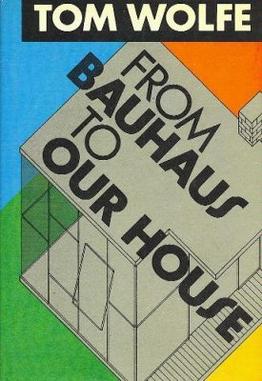
Architecture as a profession seems a very abstract concept in these technocratic times. Remote, intellectual, and almost esoteric. But unless you happen to be standing in a desert, or some Arctic tundra (and I’m amazed you can get a signal if you are), then architecture is all around you. You can see it everywhere you look. You live and work within its environs. Architecture is a suitable case for close examination because, like it or not, you are in proximity to it 24/7, the above arid landscapes excepted. And – and this is obviously a question of degree – someone designed the buildings you see or are inside before they were built.
Architecture was not always the rarified exercise it is today, and architects were not always the intellectualized prima donnas they have become. There was a time when architecture enriched a city or a town, making a statement to the people who used it and passed it by, not to others in the architectural profession. This is Charles Jencks’ “double coding”: the incorporation of signs and signals in a building intended for other architects, a sort of preen of the peacock feathers. Derrida did much the same thing with philosophy, but that’s a tale for another day. What of architects themselves? What happened to them along the way from the Chrysler Building to the Pompidou Centre? We had better not ask an architect. The only one I ever knew was appalled when I suggested that the people who would actually be using a planned building should have an input on its design. In the world of the architect, that kind of attitude is out. So, who to turn to? Perhaps an American journalist may enlighten us.
Tom Wolfe, the writer and journalist who passed away in 2018, was one of journalism’s finest stylists as well as being a profound and powerful thinker-through of culture. Improbably enough, he threw over a career as a baseball player for a Yale PhD before going into journalism. From local reportage, he graduated to the Herald Tribune and New York Post, going on to write best-selling books on the disparate areas of American culture in which he moved easily. Wolfe was part of the “New Journalism” movement, along with Hunter S. Thompson and Joan Didion. He also wrote fiction, and is a luminary in more than one department of American literature. Wolfe forged a style which was part literary finesse, part journalistic observation, and when a white suit he wore to an early interview made a hit, that style became Wolfe’s sartorial signature. He was urbane and elegant, saying of the suit that he had “found a substitute personality.” A contrarian with a gimlet eye for detail, Wolfe said of his politics: “I belong to the party of the opposition.”
Wolfe’s 1981 book, From Bauhaus to Our House, is a sprightly, hyper-informed, subtle mockery of the great architectural schism: the death of classicism and the rise of modernism. Bauhaus is critique with considerably more style than the buildings illustrated therein, and Wolfe’s opening image, as so many of his do, has both accuracy and a tragic panache: “Every child goes to school in a building that looks like a duplicating-machine replacement-parts wholesale distribution warehouse.”
Depending on where and when you grew up, you may recognize that description. And, as in the suburbs, more so in the city, albeit on a larger scale:
[Architects do] such things as building more glass boxes and covering them with mirrored plate glass so as to reflect the glass boxes next door and distort their boring straight lines into curves.
Taste differs, naturally. As well as its necessary mechanics, architecture is an aesthetic experience, in the Ancient Greek sense of aesthetike, describing the impact of the outside world on the senses, and having more to do with sensation and perception than any consideration of artistic merit. Schopenhauer discusses architecture in these terms in The World as Will and Idea. But we don’t just see buildings as we see paintings. We use them. And for Wolfe, this very concept of use in the wrong architectural hands leads to the cardinal sin of one of his main targets in Bauhaus: Le Corbusier, of whom Wolfe notes: “Le Corbusier was the sort of relentlessly rational intellectual that only France loves wholeheartedly.”
The reader can almost see Wolfe’s lip curl as he writes the phrase used by Le Corbusier to describe buildings: “Machines for living.” Le Corbusier typifies, for Wolfe, the new theoretics which have invaded architecture, the paradigm shift from the pragmatics of building to the round-dance of theory and counter-theory. Frank Lloyd Wright is a famous, more classical architect for whom Wolfe clearly has a great deal of respect, and he wryly explains the schism between architecture and architectural theory:
Every time Wright read that Le Corbusier had finished a building, he told the Fellows: ‘Well, now that he’s finished one building, he’ll go and write four books about it.’
Another of Wolfe’s nemeses is Walter Gropius, who opened the Bauhaus School in Weimar in 1919. He, along with many other major cultural figures, fled to America in the 1930s, and Gropius was treated like a visiting dignitary. Wolfe calls him the “Silver Prince”, and before long Gropius was head of the Harvard School of Architecture. In terms of its design ethos, geometry, austerity, and the use of man-made materials were the signature of the new school: “The hallmarks of the Bauhaus style were glass corners, flat roofs, honest materials, and expressed structure.”
Gropius and his Bauhaus minimalists also embraced the technophilia which was one of the strongest cultural influencers of the 20th century: “Overnight, Gropius dreamed up a new motto, a new heraldic device for the Bauhaus compound: ‘Art and Technology – A New Unity!’”
Wolfe expands on the theme of the compound, the new idea of the artistic/technological collective, with its eerie unity of purpose and quasi-Freemasonic atmosphere. The compound is fiercely identitarian, an import from ever-fashionable Europe, and a type of modern guild for architects:
In the world of the architectural compounds, competition now took place on two levels. There was not merely the age-old competition to obtain commissions[…] There was also the sheerly intellectual competition of the theories.
Ideas about building were undergoing a sea-change into ideas about ideas about building. And ideas require manifestoes, although Wolfe notes that “There were no manifestoes in the world of art prior to the twentieth century and the developments.” Manifestoes nowadays are associated with political parties on the campaign trail and mass-shooters, but that of the New Movement (as the Bauhaus-led set of compounds were dubbed) makes impressive and insurrectional claims, according to Wolfe:
In an art compound you announced… usually through a manifesto: ‘We have just removed the divinity of art and architecture from the hands of the official art establishment… and it now resides with us, inside our compound’.
The result of this insular movement was the same as that produced by any kind of collective if it is to succeed as such: doctrine (and its application, indoctrination).
Studying architecture was no longer a matter of technical skills and a knowledge of aesthetic alternatives. Before he knew it, the student found himself drawn into a movement and entrusted with a set of inviolable aesthetic and moral principles.
As with any artistic school or movement, it is individual talent that leads the way. Art – and the aesthetic, non-structural part of architecture – is one area in which individualism does not represent a potential danger, and its effects may be beneficial in that artistic style finds new ways to express itself. But the individual counts for nothing in the compound:
“There were geniuses in architecture, but they could not be unique. They had to be part of a compound, part of a ‘consensus’…”
And that consensus concerned not who the New Movement were and what they represented, but who they were not and who it was they wished to replace. Every movement has to have an enemy, someone to oppose and thus define itself against. For the School of Bauhaus, and the various other compounds of the New Movement, it was the bourgeoisie. Although it is often said that America has never had a class system, it has in all but name. And, with a nod to Renaissance Italy, Wolfe illustrates the undeniable fact that the commissary locus of architecture has changed, and that change is shot through with considerations of social standing:
In the past, those who commissioned and paid for palazzi, cathedrals, opera houses, libraries, universities, museums, ministries, pillared terraces, and winged villas didn’t hesitate to turn them into visions of their own glory.
In Renaissance Italy (although it was still city-states then), major building projects were financed by the aristocracy, and we wouldn’t have much famous art from the period without patronage. And what the patrons wanted, they got. Indeed, obedience was partly what they were paying for. But without their money, no Renaissance art. Now, architects have successful businessmen as their patrons, who will go for whatever the famous architect wants. And if what he wants is all mapped out in an ideological matrix rather than on conventional blueprint paper, then you are likely to get a Lego house rather than classical Americana, little Bauhaus on the prairie. So, the nature of funding has changed and, with it, the nature, the telos (reason for), architecture has changed. For Wolfe, the reason is simple: “We no longer depend on the patronage of the nobility, the merchant class, the state, or any other outside parties for our divine eminence.”
And, away from the big commissions from the wing-tips, the New Movement had found a new cause célèbre at street level: “[T]he new architecture was being created for the workers. The holiest of all goals: perfect worker housing… [and] to reject all things bourgeois.”
The battle against the bourgeoisie had begun! In the same way American students used to clutch their copies of Mao’s Little Red Book when protesting ‘Nam, so too these architects could hold a little pure socialism in their hands in the form of championing the worker. The trouble was (and where have we heard this before with the Left?): “The battle to be the least bourgeois of all became somewhat loony… To be non-bourgeois, art must be machine-made.”
Compare the Bauhaus style, as Wolfe does later in the book, with the “expressed structure” of the bourgeoisie:
[Bourgeois houses feature] every manner of quoin and groin and pediment and lintel and rock-faced arch, cozy anthropomorphic elements such as entablatures and capitals, pilasters and columns, plinths and rusticated bases… spires, Spanish tile roofs, bays, corbels – to create a dishonest picture of what went on inside, architecturally and socially.
A torrent of architectural but structurally superfluous design features— “facia”—from a bygone age conjures up all that the New Movement was trying to sweep away. Beware of those who wish to sweep things away and start again. Remember Chairman Mao and his wish to replace The Four Olds: old ideas, old culture, old customs, and old habits. That could be a mission statement for the post-modern school of architecture.
Wolfe reiterates the concept of “year zero”, and the impetus it gave the New Movement. Again, the yearning to reset the calendars to zero was the key-note in 1789, 1917, and 1957. Of course, Gropius started Bauhaus in 1919, so the impulse to start again was part necessity:
Rubble, smoking ruins – starting from zero! If you were young, it was wonderful stuff. Starting from year zero referred to nothing less than re-creating the world.
Of course, Wolfe’s “migration of the compounds” from war-ravaged Europe to the thrusting new nation about to make the 20th century its own were not the only malevolent arrivistes America had to suffer. There was also the Frankfurt School in the 1930s, and the architects of the New Movement and these entryist, intellectual long-marchers had much in common. And academically, sure enough, wherever there is cultural and intellectual subversion, there you will find the French:
By now the philosophy—and the jargon—of French structural linguistics was highly fashionable in American universities. Even Venturi, with all his talk about ‘codes’, ‘references’, and ‘ambiguities’, had been affected by it.
As ever, the fons et origo of bad ideas was the university:
The university architecture departments themselves became the American version of the compounds. Here was an approach to architecture that turned the American architect from a purveyor to a bond salesman to an engineer of the soul.
The sly reference to Stalin at the end simply reiterates a theme which accompanies Wolfe throughout Bauhaus, that there was at least a quasi-political impulse behind the post-modernist architectural revolution. There might be a temptation to describe the Mondrian-esque, spare and geometric style of the moderns as “conservative”, but what could be further from the truth? Conservatism celebrates tradition, pilasters and columns, not set-square corners and girders running outside the building. Wolfe mentions Mondrian, he of the geometric design and colored squares, on several occasions in Bauhaus, and this is not a new niggle for him. As far back as his first collection, The Kandy-Kolored Tangerine-Flake Streamline baby, we find him describing a block of New York apartments as “Early Sixties Post-Mondrian Chic.” Wolfe has clearly found the artist that best exemplifies the architecture he examines in Bauhaus.
In order to sample the intellectual atmosphere with regard to architecture somewhere other than his native America, Charles Jencks (whom I mentioned earlier in relation to “double coding”) went to England. Wolfe tells us that “British architects tended to be skeptical of the theorizing, but they were intrigued all the same.” While there, Jencks published a book and coined a phrase with the title The Language of Post-Modern Architecture. This is generally held to be the first use of the term “post-modern” with which we are now all so familiar. The new wave of French post-structuralism hit the USA some time before it arrived in the UK (see Allan Bloom’s The Closing of the American Mind), which always had a stalwart empiricist and analytical defense against the continent and its wily metaphysics. But the catch-all phrase for what Wolfe is describing is really post-modernism.
But post-modernism means many things to many people. Most use it vaguely, usually pejoratively. But if it is vague, one thing about it is clear: there must have been a modernism for it to be post. If you believe Virginia Woolf, then modernism began in 1922 when James Joyce’s Ulysses was published. Many philosophers, on the other hand, refer to Descartes as the father of modernism. It all depends on how you like your modernism.
Whether it is post-modern or not, personally, I find the whole architectural project Wolfe exposes to be brutalist, Fauvist, pointlessly confrontational. It poses as rigid order – and who could be against that? – but it embodies a conceptual chaos, an urge to despoil made real. No wood, just steel, ceramics, and glass. Modernist architecture is against nature, just as so many on the Left are in so many corrosive ways. Wolfe does a service here to any who want to know why it is they like what they like about this or that building—or don’t like.
And, as above, so below. Just as the high-end architects built their geometric houses on the hill, the trickledown effect at street level gave rise to the “International Style” of rows of identikit, boxy, suburban houses. Uniformity of style and the model worker, indeed. Socialism, at whatever strength you want to mix it, has as its central supporting wall uniformity, and its architecture should reflect that.
Undoubtedly, one likes what one likes because one is used to the tradition in which one was brought up, as British Prime Minister Lord Palmerston might have put it in the mid-19th century. Wolfe relates a tale of British government:
Palmerston once threw out the results of a design competition for a new British Foreign Office building and told the leading Gothic Revival architect of the day, Gilbert Scott, to do it in the classical style. And Scott did it, because Palmerston said do it.
The politician outranks the architect even on the latter’s home territory. Politics and architecture are also linked, in ways both noble and frankly shabby. An example of the latter was the case of the late Sir Roger Scruton’s appointment in 2018 as head of a UK governmental body intended to improve the quality of architecture. He didn’t last six months. The man who was arguably the greatest living British philosopher at the time was fired when Tweets were found concerning Islam, China, and George Soros:
“’Islamophobia’ is a propaganda word.”
“Each Chinese person is a replica of the next.”
“Anybody who doesn’t think that there’s a Soros Empire in Hungary hasn’t been observing the facts.”
The last comment, wouldn’t you know it, was deemed “anti-Semitic.” The reappearance of these scarlet letters was the work of Leftist figurehead New Statesman magazine. They got Scruton fired, a man whose brief was to beautify British architecture, or at least slow its uglification. I recall seeing a photo on social media of their staff celebrating Sir Roger’s defenestration with champagne, and that photo was a key transition point for me, moving as I was from disliking and ridiculing the Left to actively hating them. Wolfe would have understood exactly why the establishment wanted Scruton out before he could do some good. Old ideas, old culture…
As the book winds down, Wolfe returns to Le Corbusier to precis the main thesis of From Bauhaus to Our House:
The hell with the behemoth buildings! Every heads-up architect knew that you had to excel, first of all, in the intellectual competition of the compounds. The ideal career was the Corbu career. There had been an unmistakable purity about Corbu, in his career as in his designs. Corbu had triumphed through intellect and genius alone, through manifestos, treatises, speeches, debates, drawings, visionary plans, and the sheer moral force of his mission.
Beware those who directly affect our lives when they stumble across missions which require moral force. No good can come of it.
From Bauhaus to Our House was not received particularly well, critically speaking, but one suspects that the post-modern architects’ guild, the compound imported from tout chic Europe, has some clout when it comes to controlling the editorial arena. The book is illustrated with the buildings, the structures, the “machines for living”, about which Wolfe writes his critique, so the reader is invited to judge.
What happened in the end was that American artists fell under a spell compounded of two things. The first was a Europhilia endemic to American artists of all types. Like truffles, if the ideas are from Europe, they somehow seem to have more class, more élan. Secondly, despite America’s rooted antipathy to socialism, everyone knows there have always been genuine reds under the bed, and there is a deep strain of hard-left sympathy running through this particular cultural movement. From the communal structure of the compound to the fetish for workers’ housing, from the rigid conformity to dogma to the anti-individualism, America’s architects were, for a significant period of time, apparatchiks.
The architectural schools of which Wolfe is so critical produced results which seem to be out of place in terms of the opposition between structure and free-play, order and disorder. Whereas, for example, we might place Bach in the structural category and Schoenberg in that of free-play, Canaletto in the former and the later Kandinsky in the latter, when it comes to architecture, a curious swapping of outward form takes place. Bauhaus was all about structure in its plainest form, Le Corbusier’s “machine for living”, while classical architecture accommodates the wildest anomalies: fluted, Lovecraftian fronds on spires, Rococo swirls under lintels, the scrollwork at the top of the Ionian column, gargoyles. America imported some of these architectural features from Europe to a very small degree, but when it came to ideas about architecture, they signed up big.
Wolfe has an eye for the connection between America and Europe. America, after all, began as a European adventure, and so there must always be a fascination for the old continent. Europe was the scene, and scenery, of the traditional “Grand Tour” undertaken by American debutantes and young men starting out in life but with no great necessity to work just yet. (Henry James and Thomas Wolfe both thematize this rite of passage). But these aristocratic tourists left Europe where they found it, they didn’t bring it back with them.
In Nietzschean terms, Bauhaus et al produce buildings that are wholly Apollonian and statuary, all surface, without a trace of Dionysiac depth. The illusion of curvature is admissible by judicious use of geometry, but curvature itself is not. The houses must be as anti-nature as is visually possible which is the socialist way. Tom Wolfe has exposed this charlatanry, and I’m not surprised the architectural elites balked at the book. He has seen through them and found them wanting. Just build buildings, he seems to be saying. Don’t think too much about it.
If you over-conceptualize art you end up with Gilbert and George, and the same goes for architecture. There is no deviation from the basic tableau and there isn’t supposed to be. You aren’t supposed to like it as such, you’re supposed to like yourself for liking it. That’s what conceptual art does, it praises the viewer by giving them simple ideas such as repetition and sameness, nothing too taxing, just a feeling of fitting in with the zeitgeist. People who would be all thumbs with most books love conceptual art. And that’s all fine and well, but art is elective. No one strong-arms you into an art gallery or, if they do, move house. Nevertheless, architecture may be an aesthetic experience, but we have to use it too. In a monologue as stylish as it is informative, Tom Wolfe reminds us of that.
6 comments
Great article, so I take it that the architects out there now are like the Borg? 🙃
Mr. Gullick: Another of Wolfe’s nemeses is Walter Gropius, who opened the Bauhaus School in Weimar in 1919. He, along with many other major cultural figures, fled to America in the 1930s, and Gropius was treated like a visiting dignitary. Wolfe calls him the “Silver Prince”, and before long Gropius was head of the Harvard School of Architecture.
—
Wolfe was a clever writer for our side, notably with his novel, Bonfire of the Vanities, mentioned by William Pierce, here: “WLP90: Time of the Bonfire” at nationalvanguard.org.
… [This Black on White crime] is the sort of thing which most White Americans — certainly those who live in large cities and drive to work every day — have nightmares about: accidentally taking the wrong freeway exit while coming home at night and ending up in a Black neighborhood. That nightmare scene was the key element in Tom Wolfe’s best-selling novel, Bonfire of the Vanities.
Pierce sold that Wolfe novel for its honest racial aspect. The first book I ever purchased from Pierce’s National Vanguard Books in 1990 was Wolf’s clever non-fiction The Painted Word that exposed modern art as almost entirely Jewish without mentioning the “J”-word. CosmotheistChurch.org still offers that Wolfe title.
Though Walter Gropius was not a Jew, he might as well been one with the “modern aka degenerate” Bauhaus movement that he headed after WWI.
The progressive Bauhaus artists, architects, and designers, led by German architect Walter Adolph Georg Gropius were shut down by the Nazis in 1933, and many immigrated to America soon thereafter… (Jewish source: A Bauhausful of Antisemites – The Forward)
In 1919, all eyes were on Weimar, the tiny town in the heart of Thuringia. The German National Assembly had withdrawn here from the revolutionary hotbed of the Capital, Berlin. It had gathered to draw up a constitution in the “Spirit of Weimar” – home of venerated poets and thinkers like Goethe, Schiller, Wieland, and Herder. It was a spirit Germans conjured up to contrast the monstrosities of WWI. The constitution was to be that of a republic, the first on German soil.
Whilst the assembly noodled over details, Walter Gropius, a 36 year old architect, signed the contract making him director of the new Weimar Art School, the State Bauhaus. Weimar democracy was to last a mere 14 years before it was strangled by Hitler’s Nazis. Its demise was also to be the end of the Bauhaus. As a flagship of modernity this school was anathema to the Nazis... (Jewish source: Bauhaus | Jewish Voice From Germany)
Before becoming a fulltime political soldier, I studied the Bauhaus School while enrolled as a student of Architecture at NCSU’s School of Design. Even then I sided with the “Nazis” for banning degenerate modern art in Germany.
This is an excellent article, Mark!
Superb writing and deep analysis. Everywhere I go, I see ugly plastic (it looks like plastic) and glass buildings. The ugliness is indeed deliberate; a deliberate insult to us all.
As an aside; I haven’t heard ‘Gilbert and George’ mentioned anywhere for quite some time!
I’ve always thought Bauhaus was shitty and up it’s own asshole
The destroyer frank ‘gehry’ goldberg died last week. This jew’s designs are some of the ugliest to ever plague our cities. The Stata Center at MIT. Really? Only a warped mind from a tribesman could conjure up such ghastly deformation.
Very interesting here. It brings to mind the Toohey sect in Fountainhead. It’s interesting that these odd perversions of architecture originated from a leftoid cultural context, and then gets criticized by other leftists (of a more authentic type) for being little houses made of ticky-tacky that all look the same.
Comments are closed.
If you have a Subscriber access,
simply login first to see your comment auto-approved.
Note on comments privacy & moderation
Your email is never published nor shared.
Comments are moderated. If you don't see your comment, please be patient. If approved, it will appear here soon. Do not post your comment a second time.