1,790 words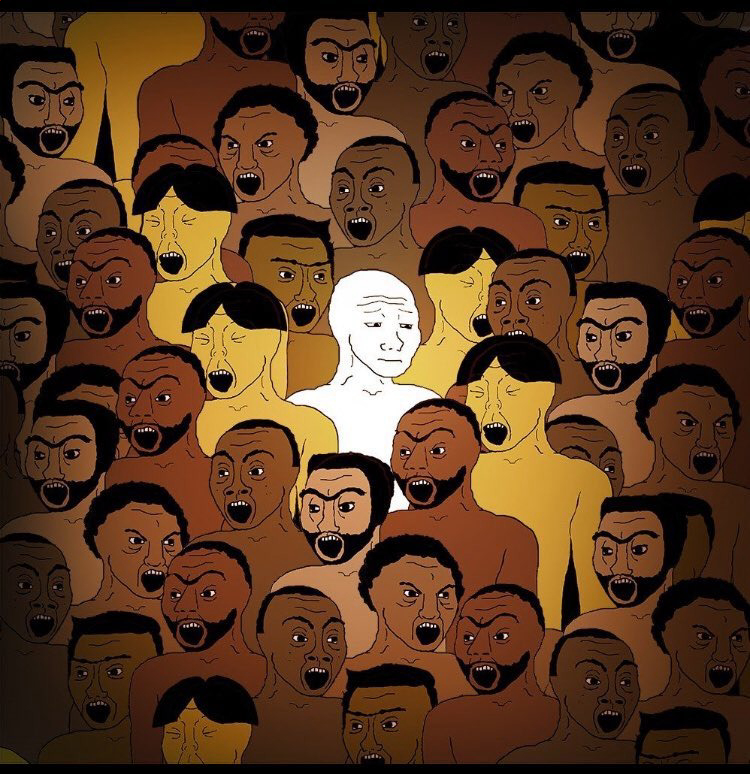
Cormac McCarthy’s 2006 post-apocalyptic novel The Road tells the story of a nameless man and his son traversing what was once the United States in the years following an unexplained apocalyptic event. The world was covered in ash, causing plant and animal life to gradually die off. The boy was born shortly after this world-ending cataclysm, giving him no memory of the times before.
The man’s wife committed suicide, as many people had done, seeing no future in the post-apocalyptic hellscape. Though he doesn’t know what they will find, the man sets off with his son, who is at that point around 10 years old, navigating the former road network south in the faint hope of finding the warmer southern latitudes more hospitable.
Toward the end of the novel, as they are nearing the coast, the man shows the boy their location on an old highway map. When he sees the map’s depiction of the ocean, the boy eagerly asks his father, “Is it blue?” The man was alive before the apocalypse and had gazed upon the deep blue of the ocean’s broad expanse, therefore he gives no second thought to its representation on the map. The boy, on the other hand, has lived his entire existence in an ash-coloured wasteland, devoid of the vibrance which the natural world once had to offer. For him, a view of blue waters stretching to the horizon would constitute a sight of unspeakable beauty.
The man is doubtful that the ocean would still look the way it did in the before times. However, the promise of finding a blue sea at the end of their arduous journey through thousands of miles of desolation is a rare moment of optimism for the boy. Not wanting to dampen his son’s hope, he ambiguously replies to the question, “The sea? I don’t know. It used to be.” When the two arrive at the coast, they are not greeted by an endless sea of blue, but a depressing tide of slag-coloured waves beneath an ash-filled sky crashing upon a grey sandy beach. Seeing the visible disappointment on his son’s face, the man somberly remarks to the boy, “I’m sorry it’s not blue.”
This part of the story captures a particularly devastating kind of heartbreak. That is the disappointment of having an idealistic vision of one’s imagination crushed by bleak, uninspiring reality. This anguish is not only felt by the boy, whose hopes of finding a rare sight of beauty in such a dejected hellscape were dashed, but also by also by the man, perhaps even more so. For him, the blue of the ocean was real. It wasn’t just an abstract conception, but something he saw with his own eyes. He took his son on their punishing trek over thousands of miles in the vain hope of finding something worth living for in the post-apocalyptic world. For the man, the realization that he can’t give that to the boy upon reaching the coast is gut-wrenching.
I was reminded of this moment in McCarthy’s novel when, a while back, a friend of mine told me about an experience some of his acquaintances went through. I have never met the people in question. I’ve only heard of them secondhand. I don’t know their names or their political opinions. Despite them being total strangers to me, I couldn’t help but see parallels between them and this allegory from The Road and found myself feeling as the man did in this scene. These folks are a family made up of a Ukrainian man, a Russian woman, and their young child. They lived in Moscow but left Russia as a result of the 2022 Russo-Ukraine War which made their livelihoods there no longer possible. Since the husband is a Ukrainian citizen, they were offered asylum in Canada. I was told that they were going to Toronto, my hometown, to see if they’d like to settle there.
I grew up in the North York region of Toronto. When I was a kid, Canada was the envy of the world. Our ordinary family of four enjoyed a world-class standard of living. We had a house in the suburbs, two cars, and a summer and winter vacation each year. This wasn’t anything out of the ordinary. It was the case for most of my peers. The lifestyle was not too dissimilar from the one depicted as typical in media of the era. While we took this for granted at the time and thought nothing of it, the neighbourhood I grew up in and the elementary school I attended were supermajority white.
However, things slowly changed over the years. By the time I was an adult, Toronto was unrecognizable from the city of my youth. The opportunities had dried up, home ownership went from the norm to a luxury of the wealthy and the old, and the city was no longer as clean and well-run as it once was. Unlike my elementary school and neighbourhood which were majority white, I now found myself in a small minority at university and in the workplace. With the prospects my hometown had to offer having diminished, I went abroad for a few years in my 20s, spending some time working in Saint Petersburg.
When I heard that this Russian-Ukrainian family from Moscow was considering making Toronto their new home, I had an idea of what they were coming from having spent several years in Russia myself. I also had an idea what they might expect to find in Canada and what they would actually find there. I hoped for the best for them but had a feeling that there was a good chance they’d be disappointed. The conception of the orderly, affluent, and implicitly white suburbs of North America seems like a dream when compared to the slate-coloured concrete apartment blocks of the former Soviet Union. However, the new reality of overpriced urban centres cramped with vape shops, Indian takeout, and Vietnamese nail salons, populated by a hodgepodge of third world migrants isn’t nearly as appealing.
It was depressing, though not at all surprising to hear that it only took this family two weeks of being in Toronto before deciding that they didn’t want to stay any longer. From what I was told, their impression of the city was that it was dirty, expensive, and most notably of all, majority non-white, something which they considered a deal breaker. Last I heard, they decided to settle in Poland instead, another former Eastern Bloc country, ironically a lot more similar to where they had to left in the first place.
When I was growing up, I knew a Polish WWII veteran who lived in my neighbourhood in North York. He had moved to Canada in the 1950s having escaped Poland’s postwar communist regime. In those days, Canada undeniably offered better prospects for a white family than Poland. The choice of Poland over Canada would’ve been unthinkable back then, but today, that decision is quite understandable. This isn’t much of a solace though, since the decline of Canada is not an anomaly. The same process is taking place throughout the entire white world. Some countries are further down the line than others, but all are heading towards the same fate.
This personal anecdote of mine is representative of a broader phenomenon of pessimism permeating Western society. There seems to be a gradual wide spreading acknowledgement that life in the West isn’t what it once was. Countries like Canada, once renowned for their exceptional standard of living, are steadily losing that reputation. Underlying the economic woes, political chaos, and collapse in social cohesion is the issue of demographics. The quality of life which these countries once knew is declining alongside the share of the population of the people who built such prosperity. While this process has been underway for decades, its implications are only now being understood on broad scale as the issue has become unavoidable.
The phrase Paris Syndrome denotes the disappointment tourists feel while visiting Paris as a result of the city not living up to their lofty expectations. They build up the French capital in their mind as a place of unrivaled luxury, beauty, and romance only to be disappointed by the reality they find when they arrive the city. Implicit in that idealized vision of Paris is that it’s a French city, populated by actual French people. Whether it is acknowledged or not, the primary catalyst of Paris Syndrome today must be the fact that the French themselves are increasingly scarce in Paris, with Arabs and Africans becoming a more common sight on the streets than the natives.
I struggled to come up with a satisfying conclusion to this essay as there is little optimism to be found in such a subject, though, looking back at the novel which served as its inspiration, it might be able to provide some reprieve. Despite being possibly the bleakest post-apocalyptic story ever written, I found The Road surprisingly uplifting. McCarthy presents the reader with the most pessimistic of worlds imaginable and tells a story of perseverance through the most hopeless of situations. The reader isn’t guaranteed that the characters will find safe haven, only that they will go on searching.
When the man poignantly says to his son, “I’m sorry it’s not blue”, in spite of his disappointment, the boy simply replies, “It’s okay.” This reflects a resilience the boy has built up against the harshness of the post-apocalyptic wasteland. In that sense, he has grown stronger than his father. He had hoped to find a rare moment of absolution upon reaching the coast and looking out at an azure sea, only to have those hopes dashed. However, the boy doesn’t dwell on that shattered idealism. That letdown didn’t mean that his quest had been a failure. It just meant that the boy’s journey in search of salvation continued. After all, that is why they chose not to lie down and die as so many others had and set off down the road to begin with.
Maybe this is the best approach to dealing with the sense that we have lost what we once knew in the West. Will my hometown of Toronto ever again be the ideal place to raise a white family as it was during my childhood? I don’t know. However, there’s a danger in fixating on sentimentalism. It serves to dishearten oneself into helpless demoralization. Uncertainty should not dampen one’s resolve. The past is gone, but that does not mean we must accept continuing on this trajectory. Rather than dwelling on what’s gone, one must harden themselves to the reality of a less safe and secure world and take up the task of changing that course towards a more promising future.
17 comments
Indeed, there’s still a lot to be thankful for, especially compared to a post-apocalyptic world. People are waking up.
I face the near complete disfigurement of the city I live in every day. The greatest crime in the history of the world is being perpetrated against us. If our foe were honorable and we lost an honest and hard fought war, it would be one thing. It is very difficult to quell the white hot fire inside as the accelerating dispossession of our people by people who are being handed what was ours without a fight.
Still, per your point, we must build a future of and for our own. It is possible if we started yesterday. It is also heartening when we do it in fellowship with one another.
I don’t think the boy was more resilient than the father. It’s easier to get over something you’ve never truly experienced, only idealized.
I’m old enough to have grown up in an almost entirely white environment and a society that still felt fundamentally normal, and I’m always torn between “At least I saw some of the good times” and “It feels worse knowing what we’ve lost”.
Ultimately multiculti Clown World probably is easier on those who know nothing else.
Same. I think that is the problem that the future generations face; they don’t know anything different first hand and may therefore be less apt to invoke change. Motivation for such might rely on any semblance of a “biological / spiritual imperative” that persists, or a sense of extreme romanticism for past, greater ages that empowers their reascent.
Great article! I want it to be like it was when I was a kid. I want to see school buses full of tow headed children. I want to see White children riding bicycles in the summer, and riding sleds in the winter. I want to see hordes of White children “trick or treating” on Halloween. All these things are gone. 🙃
Excellent article. It has a subtle rhetorical development so that it could possibly be used to influence some normies to reassess the replacement issue and the direction of society. Obviously, it won’t totally convert them to WN by itself, but there are a lot of normies who can be convinced through repetition. This article could be a good entry point to their re-education.
This situation you describe is identical to my childhood in Australia back in the 80’s. No, two-car per family, or multiple vacations; just fun in the Sun, outdoor sports, going to the beach with hardly an ethic in sight. I look back at my “lily-White” childhood and can hardly believe it myself.
Great article. I think it’s the first one at CC that’s actually made me cry. However, you’ve made such a good point that we all need to take up our journeys on this unknown road rather than lay down and die.
I am from Central Europe, and this article reminds me of an incident from my childhood. In the early 1990s, I was at a Christian scout camp. The organizers told us that two boys from Canada would also be coming to the camp. There were few foreigners in Czechia at the time, so we were very curious about these new “Canadian boys.” We were very surprised when two small, fat Chinese boys appeared. Me and the other white children found it strange that the “Canadians” were Chinese! There was something absurdly false about it. I think that if they had said “two Chinese are coming,” we would have looked forward to meeting Chinese people, who were considered interestingly exotic at the time. But as it was, there was a certain awkwardness in talking about “those Canadians who are actually Chinese.” In fact, they had a white father and a mother from Hong Kong. Later, we asked them to tell us something about China, but they didn’t know anything because they had never been there. We also tried to label them as Indians (in the sense of “Native Americans”) because they vaguely reminded us of them. They seemed to take offense at this—they didn’t know anything about Native Americans either.
Enjoyable article. I thought the story was familiar and that’s because I saw the movie of the same title. I grew up in the San Fernando Valley in southern California and it’s barely recognizable now. It should be called valley de San Fernando now since the mexicans have reconquered it. What once was a white stronghold of suburban life has been degraded into an upscale East LA. It’s aggravating as hell. I’m glad to be in Missouri at this point, but even here the tide is changing and not for the good.
Interesting take… The problem with it is that, in the film, there were no direct threats to the “survivors” (incidental cannibals notwithstanding, and aside from starvation and disease); whereas, the reality of what the film is used to analogise, “The Great Browning” of the erstwhile European world, does indeed have direct threats — multitudes thereof, all of who all clambering over one another to “get back at” those who built the world which they patently never could nor were motivated to even try to, and take it for themselves. Moreover, there are arch villains and traitors in this, the real life version, who are facilitating this take-over of the First World by the Third; adding various sub-plots to the script.
In fact, that is the immediate impression I took from reading the title of this homily, “I’m sorry it’s not White”: The Road (2099) will not comprise a Caucasian fathers and sons (something that’s already becoming a rarity) — rather, characters of a far more swarthy complexion — and that there won’t likely be a happy ending for those of the creative calibre for conjuring such prescient (?) tales.
…multitudes thereof, all of who all clambering over one another to “get back at” those who built the world which they patently never could nor were motivated to even try to, and take it for themselves.
They will be doing a lot more than just “clambering over one another”; soon enough, the various nonwhite racial-cultural-religious groups will be violently clawing at each other (i.e., making outright, total war) for the right to run the whole show. Those of us left will only be able stand back and sneer. OTOH, maybe some white folk will get mad as hell and do something, having nothing to lose at that point.
I do not know if this is true, but apparently a few older Rhodesians and S. Africans (blax) are wishing that the whites would come back and run things. Too late, assholes. Should’ve shown some appreciation and understanding when times were good.
I’ve read interviews with older South Africans and Rhodesians that have said things similar to that. The people being interviewed, while not wealthy, had what amounted to a decent job with a white employer at the time. They also remember what their respective countries were like under white rule. Infrastructure was maintained, government services were more efficient, businesses could function better with more taxes collected, utilities were a lot more reliable, and there was a lot less crime and corruption. The news media isn’t going to give a lot of coverage to things like that. American Renaissance had a good article about how inefficient the electrical utility has become in South Africa. Many of the white farmers in what was once Rhodesia, had their farms confiscated, which in turn caused many of them to leave the country. Few, if any, of these seized farms became productive. Once the nation became Mozambique, the blacks had little knowledge about how to manage a farm. The result was fallow fields and derelict farm equipment. The tractors and other machinery on the farms basically became useless because the blacks didn’t know how to maintain any of them. What’s ironic is that the government of Mozambique formally asked many of the white farmers to return to the country, with the promise that they could have their old farms back and things would go back to the way that they were. This didn’t work, though. These expatriate, white, farmers didn’t fall for false promises.
Much interesting info in your comment, Bigfoot, and thanx for the upvote. Especially about Mozambique. It is a relief to hear that the long-gone white farmers didn’t accept the govt’s invitation to return, as all would be the same (right…).
Your welcome.
I don’t know a great deal about Mozambique (formerly Portuguese East Africa ?) but Rhodesia was renamed Zimbabwe, N. Rhodesia became Zambia from memory
Comments are closed.
If you have a Subscriber access,
simply login first to see your comment auto-approved.
Note on comments privacy & moderation
Your email is never published nor shared.
Comments are moderated. If you don't see your comment, please be patient. If approved, it will appear here soon. Do not post your comment a second time.