4,727 words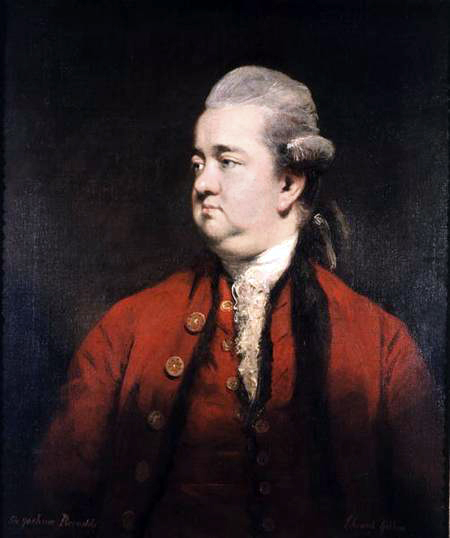
When I was in the army in the mid-70s, I was posted to Frankfurt, Germany and spent a lot of time catching up on my reading. Some guys in my company devoured books, the vast majority westerns, sci-fi, and the occasional odd jobs like Zen and the Art of Motorcycle Repair.
There was a devoted coterie in the army who read Atlas Shrugged. The Stars and Stripes, the military newspaper, always had enthusiastic letters to the editor praising Ayn Rand and her philosophy, usually in excited, exclamation mark littered two columns of print, as if to mirror the verbosity of Rand’s tome.
In my company, literacy was judged by quantity, not quality. My two years of college reading was considered insufficient compared to one of the GIs who read thirty books a month.
“Yeah,” one GI pointed to him, “that guy’s a reader. He’s smart.” Unlike poor me, who relied on trips to the post library and the British Bookstore in Frankfurt. One day in the PX’s slim book shelf, I picked up a paperback three volume set of Edward Gibbon’sThe History of the Decline and Fall of the Roman Empire. Since I was a cog of the American empire and Vietnam offered a nasty bite of decline and fall, there was no better time. Some kilometers north and east of Frankfurt were remains of the Limes, the ancient Roman defenses that kept the Germans at bay.
I immediately took to Gibbon. His eighteenth century style and sweep was very approachable, readable and majestic at once. His book was the first in the modern era to use primary sources, cite those sources in detail, and comment in an objective manner. Gibbon’s sense of irony, detachment, and spots of moralizing made the pages go by fast.
Certainly his opening is a masterful hook to any reader:
If a man were called to fix the period in history of the world during which the condition of the human race was most happy and prosperous, he would, without hesitation, name that which elapsed from the death of Domitian to the accession of Commodus. The vast extent of the Roman empire was governed by absolute power, under the guidance of virtue and wisdom. The armies were restrained by the firm but gentle hand of four successive emperors whose characters and authority commanded involuntary respect…Such princes deserved the honor of restoring the republic, had the Romans of their days been capable of enjoying a rational freedom.
“Had the Romans of their days been capable of enjoying a rational freedom.”
That wonderful Gibbon twist offering some moralizing but not without a sense of humor. In fact, Gibbon is funny and makes for a good read. Had their been such a thing in the 18th century, he would have made an excellent guest on the Tonight Show in the semi-literate, Johnny Carson days. A sort of bewigged Gore Vidal or Peter Ustinov. His style is very architectural, building ordered paragraphs of this and that, then concluding with a third summation. I think of his observation of northern Britain, especially the Attacotti, whose tribesmen, observed by soldiers of the Emperor Valentinian, practiced cannibalism, “…it is said they attacked the shepherd rather than his flock, and that they curiously selected the most delicate and most brawny parts both of males and females, which they prepared for their horrid repasts.”
This written while the Scotland of Gibbon’s time was a center of enlightened thought and inquiry. As Gibbon put it:
If in the neighborhood of the commercial and literary town of Glasgow a race of cannibals has really existed, we may contemplate in the period of Scottish history the opposite extremes of savage and civilized life. Such reflections tend to enlarge the circle of our ideas, and to encourage the pleasing hope that New Zealand may produce in some future age the Hume of the Southern Hemisphere.
A delicious punch line at the end, noting recent British penetration of New Zealand and its fierce, cannibalistic Maoris. This eighteenth century optimism is now considered “colonialist” and to be disdained. Also, when one considers how low world standards have fallen in our very tarnished age, the Maoris, who seem poised to eventually retake New Zealand as the English descendants fade into dropping numbers and impotent, civilizational stupor, may well bring back cannibalism as an example of native pride and tradition. That’s assuming that after a thirty day’s enjoyment of Maori freedom, the Chinese simply don’t come in and set up shop offering another kind of order. Of course in Gibbon’s day, China was still very much a closed society, since the Mandarins who ruled wanted nothing to do with foreign barbarians who had little to offer the harmonic Kingdom of Heaven.
Gibbon’s style and mastery of his subject made him, for a long time, and pretty much today, the arbiter of how we perceive Rome. The wonderful Rome of the republic has always been our true, realized Arcadia, and the empire Gibbon chronicles is still looked on as a standard the West lives up to. He had a dim view of the Byzantine Empire, sunk in orientalist despotism and stagnation. It has very much been our view, although recent historians maintain that the Byzantines lasted for several centuries, fighting off the Turks in what was one of history’s longest holding actions. Although Gibbon ends his study with the fall of Constantinople in 1453, it is apparent his real love is with the Western Roman Empire. When he writes of its own despotism, civil war, corruption and barbarian invasion, he still defines our consensus of what made and broke Rome.
His definitive mark on our perception of the past is mirrored by Winston Churchill. It can’t be denied Churchill’s lasting fame is that, rhetorically, he defined what the second world war was about, and his interpretation of those events are still maintained in his own rhetoric and Gibbonesque manner, respected especially by Anglo-Saxon readers, conservatives and neoconservatives who claim to be disciples of Churchillian order and direction.
Jacob Epstein’s bust of Churchill was in the White House until removed by Obama, which set off a mild storm of conservative protest and an Aha! Moment of what Obama really stood for. These Americans, especially neocons, are much more at home with Churchill as the great World War Two leader then they are with FDR, who is at best mildly disliked and seen as the booby who let Stalin into eastern Europe. Yet one has to admit that Roosevelt did create a world order that still endures, if shaky and showing cracks, while Churchill’s brag of a British Empire that could last a thousand years is rhetoric and nothing else. Roosevelt made it clear the price of American involvement in the great crusade was the end of the empire, and Churchill’s grasping of American support made that inevitable. It was, as historian David Irving shows, a choice Churchill made with no reservations. For the record, the Churchill bust was restored by Donald Trump, a fellow traveler of neocons.
Gibbon’s chronicle of Roman disorder is never slacking, where unknown figures like Gallenus, Maxentius, Domitian and others are portrayed actively and before our eyes on the page. Gibbon’s immersion in the political and social realities of Rome’s slow decline is never without interest. He catches the human aspects of this age very well, seeing ourselves in it. When he refers to a needed program of reform ended because “The needs of legislation conflicted with those of interest,” we know what he’s talking about, or when Constantine challenged Maxentius for control of the empire, Gibbon, almost with a splash of wit, observes:
Before Maxentius left Rome he consulted the Sibylline books. The guardians of these ancient oracles were as well versed in the arts of this world as they were ignorant of the secrets of fate; and they returned him a very prudent answer, which might adapt itself to the event and secure their reputation whatever should be the chance of arms.
Augustus Caesar ended any Roman expansion, and this happy world Gibbon described was contained and static. But barbarians outside started thumping at the door, especially the Goths. They migrated from Scandinavia, settled in eastern Europe and what is now the Ukraine until challenged by the Huns. They fought, lost horribly, and retreated to the banks of the Dniester (now once again territory where a western and eastern power vie for control), lost again, and fled to Rome’s eastern border in 372, begging entry.
Rome reluctantly agreed, seeing the Goths, who made it across the Danube in makeshift rafts, looking more like bedraggled refugees than any kind of fierce warrior state. Rome offered them grain (a kind of welfare benefit), demanded they give up their weapons, doled Goths out to the provinces as slaves or simple farmers, even as soldiers under controlled supervision. The Goths were forced to let Rome take some of their children hostage as a testament of good behavior.
As Gibbon noted, this went well with the average Roman:
…it was a subject of flattering exultation that the barbarian, so lately an object of terror, now cultivated their lands, drove their cattle to the neighboring fair, and contributed his labour to the public plenty. They congratulated their masters on the powerful accession of subjects and soldiers; but they forgot to observe that multitudes of secret enemies, insolent from favour or desperate from oppression, were being introduced into the heart of the Empire.
The Goths got tired of grain. They wanted gold, land, and more land. The Roman Empire said no. The Goths mulled and simmered as their numbers grew, and they weren’t assimilating into Roman society. They preferred tribal areas. Meanwhile, there was another Roman war of imperial succession.
The problems of political succession became an historical pinwheel forever returning to Rome. Harold Covington observed the Romans were very paleo-conservative in their politics. They went for the jugular of their opponents. Covington noted it was as if Donald Trump and Hilary Clinton had their own private armies, and when an election was deemed rigged, there was a war. It might be more savage than a civilized society wants (or perhaps more honest then our tiresome mountains of media and legal hodgepodge), but prolonged civil war weakened the empire. It was fought in rural areas devastated by these struggles, and what eventually happened was the Roman forces, once the smoke cleared and they solved (for now) their political succession problem, looked around and discovered they had a Goth problem boiling within their lands.
Goths were starting to understand Rome was dealing from weakness, not strength.
Rome decided to outmanoeuvre the Goths diplomatically and play for time. In Roman terms, this meant offering a conference and banquet for Fritigern, the chief Gothic leader, then killing him. It was all very Roman. He escaped, and the Goths took to the field.
As Gibbon noted, centuries of order and peace left most of the Roman citizenry unable to respond to a massive invasion. Their only protection was to stay in cities, which the Goths couldn’t get the hang of taking, but that meant the food supply was imperiled.
Things came to a head in 378 at the battle of Adrianople, where a Roman army under the emperor Valens was destroyed, the traditional Roman infantry taking on Gothic war making using cavalry and encircling their forces in wagons impervious to assault…sort of like an ancient battle of NATO and American tactics taking on drone warfare. The invincibility of Roman power was broken. Rome still could field armies ( Gibbon noted arsenals were liberally dispensed throughout the empire), but Rome lost it’s respect as an omnipotent military force, much as Napoleon did after the 1812 Russian retreat, and the German Wehrmacht after Stalingrad and Kursk.
The Goths, however, simply sought new negotiations, more gold, and slowed their incursion to rampage nearby Greece. They were bought off, but this spread the word to other Germanic tribes that Rome was an easy mark, and Gibbon noted henceforth barbarian invasions continued, although they were more extended raiding parties than actual planned invasions.
The Romans sought vengeance here and there. In the eastern provinces, all Gothic hostages were taken by the Roman authorities and massacred. Gibbon coldly wondered, “How far the urgent consideration of the public safety…may operate to dissolve the natural obligations of humanity and justice is a doctrine of which I still desire to remain ignorant.”
As Gibbon noted, Rome was eventually turning east anyway. Its leadership started coming from the Balkans, Illyria and points outside Rome itself, so eventually moving the capital to Constantinople made sense, as did the easy defensibility of the city.
Gibbon chronicled Rome’s decay from corruption, a failure to introduce a peaceful succession, then the barbarian invasions, and he added a new cause to Rome’s fall that would be controversial had he written his chronicle some years earlier. That cause was Christianity, which he blamed for dissipating the Roman people and state. Living in the age of enlightenment, he was writing at the right time, when skepticism eroded the unquestioning faith of earlier Christendom. As George Orwell remarked, Gibbon would have regarded the Middle Ages as a time of barbarity, one reason being Christianity’s domination of the era.
Gibbon argued Christianity, an imported eastern religious sect with the philosophical trimmings of world-weary Greeks, destroyed the Roman sense of citizenship and unity. The Roman gods represented certain civic virtues and public festivals that kept the public spirit alive.
Christianity was an inner-directed religion. Where Roman (and Greek) religious ceremonies were out of doors and in public areas, the temples only repositories of the specific god, Christians brought people into their churches. The religion’s stern sense of good and evil severed ties in many people between their duties to Rome and their savior. While Rome practiced religious freedom, only asking that any religion acknowledge the emperor as a divinity, the Christians couldn’t do this (nor the Jews, from where Christianity derived).
As Gibbon noted, Christians believed in demons and evil spirits that tempted and led people to the devil. Ergo, the Roman gods were manifestations of demons…
It was confessed, or at least it was imagined, that they had distributed among themselves the most important characters of polytheism, one demon assuming the name and attributes of Jupiter, another of Aesculapius, a third of Venus…it was the first but arduous duty of a Christian to preserve himself pure and undefiled from the practice of idolatry.
Some Christian thinkers allow Plato and a select group of philosophers to escape denunciation, arguing they were forerunners of Christ.
But it was unanimously affirmed that those who, since the birth or death of Christ, had obstinately persisted in the worship of demons neither deserved nor could expect a pardon from the irritated justice of the Deity. These rigid sentiments, which had been unknown to the ancient world, appear to have infused a spirit of bitterness into a system of love and harmony.
Gibbon’s enjoyable sarcasm (“ irritated justice” ) showed his dislike of Christianity. He recounts as well the internecine wars between various Christian sects that further diluted a sense of Roman unity. This continued with the division of Rome into the Eastern and Western empire, and a deadly strife continued between the Eastern Orthodox and Catholic Church that never ended. It might be argued that the western Crusades, ostensibly created to rescue the Holy Land, were oftentimes as much a mass invasion of the Byzantine Empire. In fact the real end of the Byzantine Empire began in 1204, when the fourth crusade, ostensibly to save the Holy Land (yet again) from the Muslims took a long side trip to sack Constantinople.
When the Turks began their final assault on Constantinople in 1453, the appeals of Emperor Constantine XI for western help were answered by the Pope thusly: submit (convert) to Rome. The Greek church preferred Muslim domination where they at least kept their identity. “Better a turban than the Bishop’s crown,” was a Byzantine saying.
Is Gibbon reacting too harshly to Christianity diluting and in the end sapping Rome of its strength? It might seem so, but it is a fact that the later Roman Empire faced attacks on all sides, and civic strength was sapped by corruption, disunity, civil war, and Christianity, although finally made the state religion by Constantine, ruptured much Classical thought and soul.
A spirit of inquiry and civic strength, while diluted by Rome’s control, still existed. A Christian state did little to unify. Rather, when the Empire collapsed (steadily vanishing here and there is a more accurate description of what happened), the Church concentrated on making peace with barbarians like the Goths, converting them and preserving itself. It paid off. When Rome was sacked in 410 by the Gothic leader Alaric, he instructed that Christian churches were to be spared ruin or sacking, and those within were to be unmolested. When Rome was sacked, St. Augustine, safely in Carthage, began to write of the City of God, replacing that of Rome. The final, Gibbon would concur, dismal triumph of the spirit over the actual. And in fact the Catholic Church is the last vestige of Rome, enduring today, although very tattered, much like Europe itself.
Gibbon wrote a coherent and thrilling narrative. His skepticism, going so far as calling Christianity a mere superstition, fell on approving middle class ears. But then, there has always been a dichotomy in the West between Christian faith and the old Greek and Roman world. Even though the Renaissance saw revival of this world blossom, Western man always glanced back to what had been. As for devoutness, Ambrose Bierce remarked that a Christian follows the teachings of Jesus so long they are not inconsistent with his sinning.
All five volumes of Gibbon’s work were warmly received. He was, in effect, a best-selling author.
What of the present day? Comparing Ancient Rome with our time is almost inescapbale. Gibbon argued that a second decline and fall was unlikely. The effects of a mass invasion from the east would be countered by Russia, and new weaponry dissipated any serious conquest.
He also was confident of the Age of Enlightenment and its rationality as a counter to the emotional superstition of Christianity. He described its ethos:
The desire of perfection became the ruling passion of their soul; and it is well known that, while reason embraces a cold mediocrity, our passions hurry us with rapid violence over the space which lies between the most opposite extremes.
He means mediocrity not in our disparaging sense, but that of reason and keeping all in balance of the middle way. It was a solid worldview that would soon end with the French Revolution and Romanticism.
Certainly Gibbon was no friend of either. In 1791, living in Switzerland, he praised Edmund Burke’s Reflections on the Revolution in France:
Burke’s book is a most admirable medicine against the French disease, which has made too much progress even in this happy country. I approve his politics, I adore his chivalry, and I can even forgive his superstition.
Gibbon would be uneasy at the Europe of the EU, where it has dropped a blanket over all its states and enforced a reign of economic stagnation and political repression. He observed that his contemporary Europe was a multitude of states where, if one is too religiously or politically extreme, one could find another state less stringent. This was a beneficial effect of European disunity. Roman universalism meant there was nowhere to hide. This is now the problem with the EU. It was believed the European Union would keep peace in Europe and make it a superpower, but instead it has killed innovation and multiplied a managerial class that stifles creativity. They’re not very good at forming a strong military, but very good at repressing any popular discontent. That sounds very late Rome.
This seems to be the European sickness. When Europeans hanker for Rome and create a unified continent, the old Roman urge of imperial domination reasserts itself. From Phillip the Second’s Spain to Louis the XIV, to Napoleon then Hitler, united Europe becomes cosseted in control and domination of its subjects.
Certainly the crisis of 1914-1945 was a huge civil war that wasted the previous balance of 1815-1914 that was every bit as serene as Gibbon’s second century Rome.
What of barbarians? There is no doubt Europe is overrun with streams of Muslims, Africans, and whatever else. The European Union is seemingly unable and, for the most part, unwilling, to cope with the problem. It has echoes in the problem of the Gothic invasions, where incursions by the Huns and others forced the Goths west. A sub-culture of analysis blames Europe and America for these dark hordes, claiming it was western colonialism and imperialism that forced them west, not the least the decades-long war in the Middle East which, in its essence, is to secure Israel’s security and wreck her perceived enemies.
This school of thought has been supported by those who claim the “barbarians” weren’t barbaric at all. Alaric and his Gothic invaders did not sack Rome out of savagery, but merely to get even for the centuries of Roman treatment of them.
Certainly there is more sympathy for the non-Roman world now then there was in Gibbon’s day. When I was in college, one of my professors taught a Medieval history class, and she cheerfully observed the dark ages were dark only because we don’t have written accounts of it. She believed the “fall” of Rome was greatly exaggerated.
A similar invasion has overwhelmed America, which has yet to manifest itself into an actual plan to seize power. Gibbon observed of the Goths and other barbarians who infiltrated Rome that, “The desire of spoil is a more rational provocation than the vanity of conquest.”
In a modern context, I would substitute “welfare benefits” for “spoil.” This alien population swarms in, and why shouldn’t they if they receive in effect, a gift of affluence? The EU has bought their population’s compliance to all kinds of repression, the managerial class’ control and stagnation by welfare benefits. As long as they can buy off the electorate, they can do as they please. The problem will come when the funds dry up, the pie will shrink, and someone, somewhere will have to told “no.” What will the invaders do? What will Europeans do, deprived of necessities such as free medical care, month long vacations, and freedom from serious, responsible labor?
Spoil is still the goal, not conquest, but it’s wise to recall when the Goths first arrived in Roman territory, they crossed the Danube as refugees fleeing eastern invaders. Eventually, they became an army that bested Rome, and finally, they became the Roman army. What happens when some Muslim leader in Germany looks around and decides to form his own army and conquer Bavaria? Or if the Banderists in Ukraine, deprived of their homeland by a resurgent Russian army, decide to carve out Austria or the Czech Republic as a new stronghold? Could the police really stand up to Ukrainians that have toughed it out with the Russian army? When was the last time the Czechs fought anybody? Would the E.U. make its usual proclamations and threats of sanctions to Muslims who decide the hell with it and start knocking off Eurocrats who don’t play nice? Perhaps our Muslim Alaric would inform the Eurocrats meeting in Davos that they can stay there and don’t bother coming back. We just made Notre Dame, Cologne, and St. Paul into mosques. Allahu Akbar, and keep sending the gold.
The recent riots in Los Angeles over deportation of illegal migrants was more noise than threat, but a thoughtful Che Guevara might already be in the city, deciding instead of making a revolution south of the Rio Grande, why not go for California? It’s ripe for the taking.
More disturbing than the mobs ( many of whom presumably Soros led and paid), was a photo I saw of a new graduation class of L.A. police. Almost all of them were Hispanic. The world of Adam-12 and Joseph Wambaugh’s New Centurions is over. What happens when the order is given to crack down and these cops refuse? Much like, in the last days of Rome, you had to give the army orders not in Latin, but Gothic?
Shall we compare Donald Trump to a mad Caesar of the last two centuries?
Actually, Gibbon tempered denunciations of madness. Commodus, certainly a prime villain in Gibbon’s account of Rome’s fall, was less to be blamed than the advisors and crowd around him who encouraged his depravity because it was very much part of theirs.
The spirit of Epstein was very strong in this Rome. Gibbon might look upon Washington D.C. and see a slop that touches all who touch it into civic and moral debilitation.
As for Trump, I see him more as a symptom of our decline than a prime instigator. If he reminds me of any Roman emperor, it is Didianus Julianus, the wealthiest man in Rome who, in 193 A.D., when the Praetorian Guard killed emperor Pertinax for instituting reforms, promptly put the empire up for sale. Sulpicianus, the chief Magistrate of Rome, promptly closed all the city gates to keep other bidders out, but Julianus offered enough gold and perhaps his own version of tweets to amuse the Praetorians and open the gates, outbid Sulpicianus, and so become emperor., outbidding the 23,000 sesterces price offered by Sulpicianus. As one wag put it, Rome had been bought and sold many times, but this was the first case in which it had been haggled over.
For the record, Julianus lasted four months, killed off by the Praetorian Guard.
The comparison to Christianity’s debilitating effects on Rome’s civic spirit can be symbiotic to Marxism, which has been a destructive element ever since its germination, as noted, in Ur-marxist form in 1789 France. Communism has been defined as the Christian heresy. The twentieth century has been a battle between communism and capitalism, and despite the collapse of the Soviet Union, can it not be said that Marxist beliefs have in fact permeated our latter day Rome, much as Christianity eventually became the ethos of Rome? Fanaticism as expressed in the Woke movement and the glorification of non-whites is very much the progeny of Christianity’s seed. The last shall be the first. From each own according to his need. Gibbon would agree with me that this is hardly mediocrity (his), but passions.
Certainly, the Christian struggle between East and West might simply find its modern equivalent in the Special Military Operation, where Byzantine Russia and Catholic Europe are having another set-to? When Constantinople fell in 1453, the Eastern Church transferred its spiritual capital from Constantinople to Moscow, which became Holy Moscow. The Russians still believe, somewhere in their psyche, that they are destined to restore Constantinople to the Orthodox Church. Is there still a holy Rome?
I might compare Gibbon’s recollections of Rome’s attempts to conquer Persia, which were always defeated with harsh results for Rome. Its last attempt, led by Julian the Apostate, the last Roman emperor who made a serious effort to re-institute Roman religion and turn back Christian domination, resulted in his death in battle. A humiliating treaty forced Jovian, his successor, to simply get the hell out of Persia. Julian’s death meant the last serious attempt to check Christianity. Soon after he died, paganism was forbidden. Substitute Iran for Persia, and our civilization’s obsession with conquering this land seems very dark and will lead to a similar hubris.
I should be gloomy, but I’m not. Gibbon offers a worldview and an almost serene interpretation of decline and fall. We’ve been there, we came back, and we’re going there again. As Thornton Wilder put in his play The Skin of Our Teeth, human catastrophe is matched by survival.
I wouldn’t mind a nice afternoon tea with lots of scones and butter where Thornton, Jane and I discussed decline and fall under Gibbon’s wise eyes and interjections while someone plays Couperin’s Le Barricades Mysterieuse…the Mysterious Barricades, a flowing, balanced piece for harpsichord. Someone once said that if the world came to an end, it is the last piece of music one should hear.
A serene, balanced, time of mediocrity among the thoughtful as the curtain of an epoch closes. Gibbon would approve.
11 comments
2025 has shown how precarious the American people’s territorial sovereignty is. It has also exposed that the ruling regime has no time or interest in addressing significant challenges to its territorial sovereignty.
Mexico and Latin America has a 60 million + colonist population. It has openly declared the right to 1/3rd of our territory. A claim that hasn’t been refuted or renounced.
Somalia has raised its flag over the state of Minnesota. It has colonized Minneapolis and now has a young politician who, in addition to their sitting congressional representative, openly aims to tie the Somalian homeland with its American colony and to extract American wealth for Somalia’s benefit. That has gone un-punished.
New York looks likely to fall to a South Asian race grifter promising Roti and handouts for his people – advertised in his tongue. He also claims rights to black first-class citizen privileges despite not being black or a descendant of black slaves in America.
For decades an albatross population has hunkered down in America’s mid-size cities and increase their political control over them.
American military and law enforcement are ethnically cleansed of Americans. That appears to not have been arrested.
post-American companies and new ventures are increasingly Asian. In fact, they appear to have moved from the imported workers to the financiers and leaders of the new round of AI ventures.
It looks like foreign predation is rapidly accelerating. There doesn’t appear to be much of a protest if not a helping hand by the “America First” counter-regime.
We are going to be forced to toughen up if we want to have some destiny that we can control.
Great article! I would rather see the world destroyed than hand it over to a bunch of non-whites. 🙃
Completely agree. Rather a dead ashen cinder in space than giving Gaia over to this subhuman trash undeserving of the pleasure of the air they breathe.
I’m familiar with Gibbon’s strong critique of the alien , pacifist, universalist Christian religion. What did he have to say about ….
The Jews?
Did he agree with Nietzsche that Judeo Christianity was a Jewish plot concocted by Pharisee Saul of Tarsus/St. Paul to weaken the hated ha White Roman world that had conquered Jerusalem and disbursed the Jewish nation – Judaism light for the White Gentiles, with the real deal – Talmud Judaism still remaining , waiting, always waiting and instigating?
If Jesus never existed the Jews would have invented him—as perhaps they did. Interestingly, a rival theory exists that the Roman Rulers of the Flavian Dynasty invented the Jesus story in order to tame Judaism as a revolutionary factor (render unto Caesar, obey the powers that be). If either scenario is accurate, we are dealing here with world class myth makers, for the legend took on a life of its own and escaped the grasp of its creators.
It is a hypothesis promoted by Joesph Atwill in his book Caesar’s Messiah, I subscribe to it. 🙃
I only have two comments. The first is I wish I had not read Clark’s article as now I know the situation is worse than I thought and the second is that, being a Christian Identity type, I can’t seem to find quotes as to when the church first went multi cult and put the mixed multitude ahead of, seemingly, Christ himself.
Never a dull moment!!!!
This is an informative, well-written article. It has moved me to start rereading parts of this famous 6-volume opus. Volumes 4, 5 and 6 deal with the period after 476 AD – focusing on the Eastern Empire, which expired in 1453 AD.
It is indeed disheartening to compare today’s culture to that of Europe in the Age of Enlightenment, of which Edward Gibbon is an exemplar.
The author includes several great quotes from Gibbon. Here is another: “The various modes of worship which prevailed in the Roman World were all considered by the people as equally true; by the philosopher as equally false; and by the magistrate as equally useful.”
The title is Zen and the Art of Motorcycle Maintenance rather than ‘repair’. Otherwise, great piece! Gibbon is one of those writers I have never read but have always felt a sunny disposition towards. Once can sense even from a distance a clear mind and lively wit.
Thank you for all your comments. It was a lot of fun re-reading Gibbon and writing this. Thank you, Tye, for catching my error. I was a tad too rushed. Glad readers like you are out there.
Jaye: Gibbon wasn’t enthusiastic about Jews. he saw them as untrustworthy barbarians capable of doing damage to Greek/Roman culture. Wolfemu: Sorry I depress you, but as I said, Gibbon cheered me up. I think keeping the past in us is a good emetic to these times. As Goethe said, “what is classical is healthy, and what is romantic is diseased.”
If anyone is interested in a good study of pagan vs. Christian thought, try Julian by Gore Vidal. A very literate, entertaining, and thoughtful story of this period and the smothering of the classical by the Christian.
You missed the class component of the fall of Rome. Like all Republics, the oligharcy gets more powerful, grabs more wealth, in Rome’s case, land. The people become paupers, the oligarchy becomes sedentary and unproductive.
Just like the USA, mass poles of wealth, creating sloth and corruption at the top.
The class component is the one that is mainstream. However, the barbarians settling in the Empire is definitely interesting and left out of civil historical discourse.
Comments are closed.
If you have a Subscriber access,
simply login first to see your comment auto-approved.
Note on comments privacy & moderation
Your email is never published nor shared.
Comments are moderated. If you don't see your comment, please be patient. If approved, it will appear here soon. Do not post your comment a second time.