2,716 words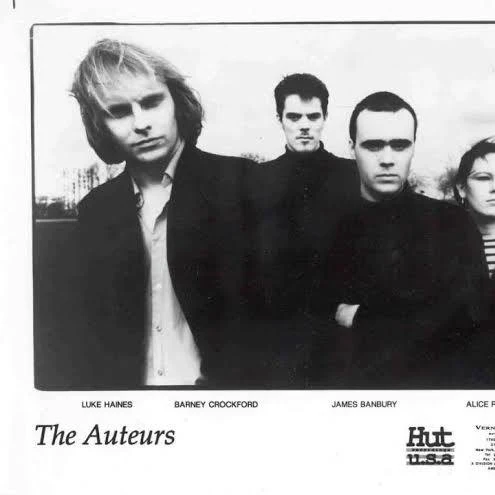
I think fame is to be avoided. And I’ve done pretty well at that.
-Luke Haines
Whatever happened to rock music? Do white teenagers still form bands, rehearse in garages with cheap guitars and a borrowed drum-kit, record demo-tapes? Rock music is disapproved of today because it is a feature of white culture, and so the target of ethno-masochists. Liberals don’t even venerate Hendrix, one of the few black rockers, probably because his rhythm section was composed of two white oppressors. Rap music is venerated, of course. Whatever its value or lack thereof, black people make it, and so it is hallowed ground. Now that jazz has left town, rap (and its horrible derivatives) is one of the few things blacks can achieve to any level of competence, if that is the word I want.
So, white, guitar-based rock music seems to have vanished, expunged from the cultural canvas, certainly in the UK. America still has Country and Western, another genuinely white musical phenomenon, whereas the UK only ever had a bit of folk music and Morris-dancing to fall back on. As the progressive long march through the institutions finally pitched up at popular music, white people were never going to be allowed to stay at the party they started. Are you old enough to recall when “world music” was all the rage in the 80s and 90s? Despite its name, world music was not open to the whole world, at least not the white parts. You would read world music album listings and find plenty of music from Africa and Latin America, but where was the big-hair, LA metal? Where was the punk rock? Banished from world music, apparently, as whites are now being banished from the world. How prescient. Culture goes first when empires fall.
There was a time when you could take the pulse of white rock by noting how often it turned up in the media. In the 1970s, you couldn’t open a newspaper without reading a story about Zeppelin or Mick ‘n’ Keef, Slade, or the Pistols. Now, the only musicians featured in the MSM are either black or whites aping blacks. As British band Black Rebel Motorcycle Club put it in 2002: Whatever happened to my rock and roll?
Now, it has to be said that white British rock music was born and cradled in black arms. No Mississippi Delta blues, then no Beatles, Stones, Zeppelin or The Who. Rock music has a complex lineage in the UK, but it was in essence an import from the States, where Elvis Presley was the acceptable white face of black blues music. This caused an animosity which will scarcely surprise readers here. An early version of cultural appropriation, perhaps. When The Rolling Stones guiltily took Muddy Waters on tour, it was the rock equivalent of reparations. The Stones don’t play Brown Sugar anymore either, apparently “ashamed” of its raunchy lyric about slave-girls.
Rock and roll in the UK came out of skiffle – see Lonnie Donegan – in the 1950s. Then rhythm and blues joined in before evolving into rock and heavy metal in the late 60s and early 70s. And it caught on quick. When The Kinks wrote the song often credited with starting heavy rock, You Really Got Me, Pete Townshend of The Who heard it on the radio on while returning from an American tour. He got this new, staccato use of his instrument, and immediately wrote I Can’t Explain. The riff had arrived, and rock music with it. There are possibly Tibetan monks on the roof the world, or perhaps pygmy tribes somewhere deep in the rain-forests, who are not familiar with famed riffs such as those to be found in Smoke on the Water, Whole Lotta Love, and School’s Out. But there can’t be many.
And what white rock bands proceeded to do with the heavily amplified electric guitar (which had started its life modestly strumming the rhythm part in big bands) was some of the most innovative and moving music ever recorded. Whites should be inordinately proud of the tradition of their rock music and what they made of its genealogy. After rock and roll begat R ‘n’ B, which begat rock, which begat metal, which begat glam, which begat punk, there was something of a hiatus during the 80s, when the synthesizer was king. You could buy a cherrywood Gibson SG (think Angus Young or Jimmy Page’s famous twin-neck) for 200 quid in the 80s.
And then the 90s began in a state of musical confusion. What were British youth supposed to be listening to? Well, they were already listening to The Spice Girls, at least the little girls were, and female teenyboppers were always the target market in the 70s. The 90s was the decade of the boy/girl band in Britain. But the original, male, record-buying public – people of my age – had grown up. We had started out buying the British glam bands (T. Rex, The Sweet, Slade, and Bowie) in the early 70s. Now it was the 90s and we had grown out of that but failed to grow into anything else we found in the charts. Perhaps it was my pubescent love of glam rock which made me take so readily to a band who, two decades after the 70s, revived something of that dramatic glam-rock spirit.
The Auteurs were a London band who released four albums between 1993 and 1999. A standard, two-guitar, bass, drums and vocals line-up was augmented by a cello, seemingly incongruous but in fact adding an extra dimension to a sound that featured light and shade in equal measure. Not many bands used orchestral instruments. Jethro Tull’s Ian Anderson played the flute (often while standing on one leg), Roxy Music’s Eddie Jobson was a frantic violinist, and there were plenty of brass sections in the UK charts in the 80s. But the cello seemed to suit The Auteurs. Sometimes upbeat, sometimes mournful and sinister.
The Auteurs must have been important to me as they are one of only three bands I have seen live on six occasions. The other two being The Clash and Joy Division, The Auteurs are in exalted company, as far as I am concerned. Formed by singer-songwriter Luke Haines (something of an intellectual, at least in the context of rock music) and with a healthy obsession with the 1970s and pop culture in general, they were free of the old obsessions with black music supplied via the delivery system of the Stones, The Beatles, Cream et al. Haines was much more interested in Mott the Hoople and Cockney Rebel, The Fall and Buzzcocks. This was genuinely white rock music.
As is often said of cult movies that never made any money, The Auteurs “received critical acclaim”. This means they were never as famous as the critics thought they should have been. But those same critics enjoyed the eclectic thrill of liking a band not many other people liked, or had even heard of. Haines is even credited with kick-starting “Britpop”, a rather vague movement which would develop into the entirely manufactured feud between Blur and Oasis. Sometimes, distracting the British public is as described by Iggy Pop in Lust for Life, “like hypnotizing chickens”. Blur/Oasis was in the news cycle for weeks.
Haines was an acute observer of the music scene he was a part of, and wryly noted the tendency of the British music press to treat bands “as though they were in the Premier League”, like football teams vying against one another. That said, The Auteurs were somewhat overshadowed by Suede, another retro-sounding band who led a sort of glam-rock revival in the UK while America was turning to grunge. The 1990s were an odd time musically, with bands on either side of the Atlantic getting very different musical results despite having essentially grown up listening to Bowie, The Beatles, and the Stones. Suede and The Auteurs were effete and vaguely effeminate whereas Nirvana and Pearl Jam were sweaty and male.
The first Auteurs album, New Wave, set the tone for the band. Big, bold guitar riffs vied with genuine melodic intricacy, sometimes sounding as though punk rock had been blended with chamber music. Haines’ lyrics were arch and clever, self-consciously so, peppered with cultural reference points, dysfunctional relationships, and bitter turns of phrase. Haines has a rather weak voice, but carried off songs with a combination of sneer and sophistication, and my top ten includes songs from all four albums, along with some snippets of lyrics.
This is a pretty composition with an almost music-box central theme, written in 2/4 time and showing Haines’ feel for melody early on the first album. The lyric sneers at those who dress from charity shops (or thrift stores in the US):
Chaïme Soutine never spent a thrift-store dime in his life.
Lenny Bruce never walked in a dead man’s shoes,
Even for one night.
There is a cynicism throughout Haines’ lyrics, but a healthy one
Although largely apolitical in his writing, Haines always struck me as a conservative who could not shake off a vestigial affection for youthful Left-wing idealism. Here, he recounts his childhood amazement that “people live in houses behind trees”, and the song is a barbed attack on hereditary money:
There’s nothing wrong with inherited wealth
If you melt the silver yourself.
Haines was disdainful of the rich, the famous, the known, and it was always difficult to read him where celebrity was concerned. You never quite knew, with Haines, whether he was bitterly disappointed with his lack of fame or found it a solace. I met him once, at one of his solo gigs. A bit of a miserable bugger, if I’m honest.
The band’s best and most successful single (although it wasn’t very successful), this is glam-punk with a cello, which is an irresistible prospect in itself. Having dressed up as Rudolf Valentino on the cover of New Wave, Haines combined the name with that of another hero, Lenny Bruce, to kick off the band’s second album, Now I’m a Cowboy. It’s the best of the four, in my opinion, and has one of the best album covers of the period. Haines’ lyrics are at their most oblique:
There were mourners on the street of every shape and size.
The motorcade came down from Redondo.
Assassins on the corner tried to throw you a line,
You dirty-mouth comic Rodolfo.
Haines’ jacket in the video is a shrine to glam.
I love songs which are sinister both in intent and in performance. Alice Cooper was a master of that dark art (Bauhaus tried but failed miserably) and I would love to hear him cover this song.
I first learnt the value of a little subterfuge
From some old queen or other,
Or another woman’s refuge.
It is creepy and set to a jagged soundtrack. Haines also has a knack of using words such as “subterfuge” that you just don’t usually hear in pop or rock music, phrases like “in cahoots”, “continental cigarettes”, and, here, “Svengali”. Like Mark E. Smith and Morrissey, Haines reminds us that rock music lyrics have the same range of possibilities as literature. Why not use it?
This shows Haines’ affection for punk, as well as his fascination with a glam-rock star whose name is now deeply disgraced in the UK. Gary Glitter was one of the biggest names in British glam, but his imprisonment and subsequent flight from England to Thailand after being found guilty of sexual offences against minors made him a public enemy. Indeed, Haines flirted with Morrissey-like controversy by writing a song called The Glitter Band, which featured the following:
Gary Glitter was a bad, bad man
For sullying the reputation of the Glitter Band.
Your Gang, Our Gang is on the fourth and final Auteurs album, How I Learned to Love the Bootboys, and is a reference to Glitter’s nickname of “leader of the gang”. It’s about two minutes long and is a song some Englishmen might still call “mental”.
Also from the final album, this is steeped in sentiment for the old days. The tale of a rock and roll band, The Hurricanes are: “Four young men gonna change the world again.”
A strange, sci-fi movie, Theremin opening cuts into pure glam chords and still has room for a skiffle section in its three minutes. Pop music was fair game for Haines as a subject to study as well as what he did, and a lot of his lyrics were what you might call meta-pop, pop music whose subject was pop music.
This is another very sinister song, recounting as it does a man alone in a woman’s house. The light guitar chops seem to mimic his walking around the place, looking where he ought not to look:
Rifling through your possessions and stuff.
The things that you are ashamed of.
Many of Haines’ lyrics seem to be from the point of view of male stalkers, possibly unhealthy but no less interesting for that.
The band’s first single and opener on the debut album, Showgirl crashes in through the front door before turning timidly in on itself for a spell as a light ballad. Haines and his band were very good at peaks and troughs in the context both of albums and individual songs, and this song climbs back from a whisper to a great, glam-soaked chorus. The lyric tells of the highs and lows of marrying an actress:
I took a showgirl for my bride.
Thought my life would be righteous.
Took her bowling, got her high.
Got myself a showgirl bride.
It’s also a strangely disquieting video, given that it features a wedding. Haines was very capable of making the bright ordinariness of life into something vaguely disturbing.
It is not easy to write a rock song in 3/3/2 time, but Haines and his band pull it off here. The bass line is what first drew me into the song, a beguiling mixture of reggae and Latino before Haines cuts across with a riff which is a cross between The Clash and Iron Maiden:
Oh, powder and make-up, watching you wake up.
Do you think that I scrub up well?
Who’s right, who’s not?
Who owes who what?
Who’s gonna get it now I’m a rich man’s toy?
Not only the most beautiful Auteurs song, but possibly the most beautiful I recall from that strange musical decade in the UK, the naughty 90s. Sweeping cello, mandolin, and a sort of medieval middle-eight set off Haines’ awareness of his vocal limitations, and the song is steeped in a rich atmosphere:
The child brides went down to the water.
Neptune calls up to his daughters.
Throw yourself at the tides.
I’ll see you on the other side.
The song is from the third album, After Murder Park, which the band’s label, Hut Records, must have thrown some money at. Haines took The Auteurs into Abbey Road Studios to record, famous for reasons with which I am sure you familiar, and I am sure not cheap to hire. The last time I was in that particular street, the zebra-crossing famously traversed by The Beatles on the cover of Abbey Road was still in use, Japanese and German tourists queuing politely to walk across in a line for a photo.
The Auteurs, then, one of the best and most under-rated English bands of a rather arid musical decade. Haines continued to record after the band’s demise (and still does today, recently with REM’s Peter Buck), under the name Black Box Recorder and Baader-Meinhof, but for me he never again attained the heights of his first band. Haines is one of those English musicians who have always fascinated me, along with Mark E. Smith, Morrissey, Howard Devoto, John Foxx, Billy Childish and others. Not always technically great singers, they were nevertheless wordsmiths backed by bands who remind us that white rock music is a literate art form, not just shouting about girls. Haines was trying to say something with his lyrics, but I am not overly sure he knew what that was. Which makes it all the more enjoyable trying to work it out.
38 comments
In the mid Sixties black recording artists called the music made by White so-called imitators “plastic soul.” Intrigued, the Beatles did them one better and named an album Rubber Soul, an album which certainly made everyone forget Little Richard.
Hell yes. I can’t believe I’ve gone so long without listening to these guys again. A friend gave me New Wave (on cassette) and I wore it out, then bought Now I’m a Cowboy.
British 90s music was far superior to American, IMHO. Live Forever is a fun documentary about Brit Pop that some might like.
Auteurs, Suede, Pulp, and Lush were my own faves. I saw Blur around 91-92 and they were good. Never cared for Oasis much.
Your music articles are among my favorites here.
I will second the endorsement of Gullick’s music writing. As for 90s bands, I would put My Bloody Valentine, Stereolab, Royal Trux, and Auteurs at the top.
Whatever else the 90s was, it was also a great era for music. Around that same time I got to see MBV with Dinosaur Jr. in Houston (along with Babes in Toyland, lol). If you like MBV, you don’t need me to say how much of a time machine they can be.
I don’t know about you, but music from then is sometimes so evocative that I can’t even listen to it for more than a minute or two—thinking back of things neglected, cherished, kept, lost, I feel like my heart is going to explode.
I’m with you. Whenever I hear or even think of hearing MBV’s “Soon” I remember waiting for a bus transfer I had to take to work in 1992 when the song was just released in America. The bus was usually never there when I needed it and I would look for it to come over the brow of a hill an eighth mile away. When I would finally see it coming it would be such a triumph, a leap of joy. It was cinematic too, seeing the lights and its sign before the bus itself.
The bus will be here “Soon.” I listened to that song heavily and still do.
Wow, what a scene! Cinematic indeed.
MBV are the loudest band I have ever heard bar Led Zeppelin. Stereolab were superb, very Krautrock. Royal Trux were (are still?) a proper rock band.
Mr. G, what do you think of The Jesus and Mary Chain? Have you ever seen them? My own introduction to them was in 1987 by way of the John Hughes movie Some Kind of Wonderful. (They rerecorded “The Hardest Walk” for it.)
That soundtrack, by the way, is spectacular, if you haven’t heard it.
I did see them, in London, and loved them, as I do the album Honey’s Dead. Sadly, I served the two lads (the Reid brothers?) in a bar in London, and they were smacked out of their heads. Heroin chic spoiled a lot of decent rock music. That said, listen to Thee Hypnotics, particularly the album Thee Very Crystal Speed Machine. Brilliantly dark rock, and that lot were known for being the worst junkies in London. I think they might have killed that bird out of Mazzy Star. Hope Sandoval? She was there too, in the bar, around 1994, equally dosed out. Much as I love Johnny Thunders, it’s always a crying shame when smack takes over.
That is the headiest and heaviest recommendation I’ve ever read, putting The Auteurs in the company of those heroes of mine. If you added Flaming Lips* and Lush to that list, I would not only buy everything The Auteurs have done, I would also become a zillionaire and buy The Auteurs themselves.
*Flaming Lips has the best rock lyric on their Clouds Taste Metallic album. I’m not sure if these are the real lyrics, but it sounds like “Cats killing dogs/Dogs killing ca-a-ats/When the spaceship beams you up, you better get drunk fast.”
Now, Oasis is by far the Beatles of that era. Second I would say the Verve, which may be idiosyncratic. Blur, for all that they’re talked about, really only have one great song (the woo hoo song) and one sort of good song (boys who like girls.)
The Verve was great when they burst onto the [American (I assume they were known in England before)] scene in 1993. The artwork for that album, the one that had “Blue” on it, was superior. It was directly in the tradition of the album designer group Hipgnosis that did the covers of Houses of the Holy and Presence. The Verve’s followup Northern Soul was vety good. Their “breakthrough” song that came after called Bittersweet Symphony (?) I found to be a disappointment, but the video they had for it made up for it, one of the best rock videos, very memorable. The Verve’s visual art was just as impressive as their music.
Yeah, there are a couple of good songs from Valium Skys that come up on Pandora. Great album cover too, and great image, in the idiom of that band, so to speak, lol. There is actually an intricate artistry to album covers, I’m waking up to rather late, actually. I noticed an Eric and the Bunnymen cover on Pandora, where they are in a boat in a cavern, which is rich in allusion. I wish I had someone to discuss these matters with…
The band that had the best cover art was Amon Duul II. When I would haunt used record stores in the mid-80s, they were chock full of these very weird looking albums. I finally bought an Amon Duul album in 1990 and quickly bought them all after being introduced. Renate Knaup’s singing is something else, and the band could do anything, metal, prog, psych, corny ballads. But that cover art is something I keep coming back to. Like the old guy in the Woodstock documentary said, “Those kids are on pot!”
Verve (before they had to become The Verve for some ridiculous copyright reason) were great live, and I couldn’t agree more about A Northern Soul (wonderful) and Urban Hymns (dire).
????—that’s exactly the opposite of the truth. The verve pipe is a good band too.
Yeah, it seems like rock has sort of gone the wayside. Despite rap becoming more popular in the early 00’s when I was a youngin’ I couldn’t get into it. I was a rock guy. I sort of killed the vibe one cosmic bowling outing when after a series of new rap songs I requested a KISS song. I’m assuming the DJ meant well when he said, “we got a young guy here who still appreciates the classics who requested KISS!” I supposed I should have pretended to like rap to help my social standing but it just isn’t my thing. I had my rap phase later in life but I’m very selective in who I like. Necro is one of my favorites because he has these very eclectic and aesthetic samples that he raps to and the subject matter of his rap lyrics is so hyperbolically offensive and over the top it makes rap a sort of self-parody of itself. Essentially a subversion of rap. The fact that Necro is of white complexion and Jewish (in before Jews aren’t white!) sort of exacerbates this.
What happened to Martha Stewarts chin?
The skin is hanging like an orangutan off a tree limb
Good stuff.
There are a lot of great, I hate the word, underground rock bands. Especially when it comes to metal. I started listening to a lot of black metal during Covid. I’m not sure how it popped up in my youtube algorithm but next thing I know I see a swastika from one of Black Magick SS’s album. It blew me away. It was like black metal met The Doors. I think there is still rock music being played/published but it is of course eclipsed by rap.
ZZ top is playing near the town I grew up in over the summer. So, it looks like these boomer rock bands are still pumping out tunes.
What was the Kiss song you requested? Kiss has a broad spectrum of songs from righteous hard rockers like Cold Gin and 100,000 Years, to loathsome soccer mom ballads like Beth, to LCD hair metal 80s crap like Let’s Put the X in Sex. I assume you didn’t choose Beth. I bet the DJ would have liked Let’s Put… if he knew about it.
I saw Kiss in about ’77, and the problem is that I had already seen Zeppelin, The Who, The Stones, Pink Floyd and Thin Lizzy by that time. Kiss were poor fare.
Have to ask this, what do you think of Mick Farren? He seemed like he was a late 20th century Mencken, but he kind of disappointed me with his writings. Since you said you met Lemmy, I suspect you knew Farren too. His musical work with the Deviants (listen to “Lets’s Drink to the People,” a savage piece of misanthropy that makes The Kinks sound like Melanie), his solo album Mona, and Vampires Stole My Lunch Money are classic things that should never die. His writings, however, at least the ones I’ve seen, could be better. At worst, he seemed like a standard issue anti-white commie. At best, just a lukewarm libertarian. Please, tell us a good story, Unca Mark!
Hate to pile on with questions about the English, but you’re the only one I know. What do you think of Tom Sharpe? Scathing satire about the British race, so scathing that it seems he could not be allowed to live. The last book I read from him, the characters were so nasty that I lost interest. His earlier works, Indecent Exposure and Riotous Assembly especially, were unique in their hatred blended with farce, like a Fawlty Towers sketch about Berlin May 1945. I don’t think Sharpe was a jew, because his hatred towards his own people seemed like coming from special knowledge that even jews don’t have.
I’m being harsh, but so was Sharpe.
Whatever happened to classical music?
I think it is taking a well-earned rest while it recruits some more cellists of colour. You know, they stopped “blind auditions” when recruiting for orchestras. They were thereby forced to judge people on the colour of their skin, not the content of their playing ability.
My question was in imitation of yours which started this article. The problem precedes non-White inclusion in classical music. I think, ever since the aftermath of WW1, there has been a (purposeful) diminution of the impact of Classical Music. Rock “music” has been at the forefront of this divorce from, and going-under of, the Western musical heritage.
That there’s even serious discussion on rock “music” shows how far we have fallen.
Since you asked, a few years ago I created these playlists to try to systematically expose myself to more “classical” composers. (I even went to the trouble of culling out Jewish ones, being as I was at the time a little obsessed with the JQ…lol.)
Also, I intentionally tried to find videos of more intimate performances, even informal/amateur ones, to make it feel more “accessible,” though that wasn’t always the case.
Here they are:
Awesome!
Nearly four decades ago, when I was eleven, I wanted to be a heavy metal guitarist, but a little salon piece by Carulli made me see the light. It’s been a love affair with Classical Music ever since. As I explored more Classical Music, I listened to less and less heavy metal “music”. One day, I trashed – both literally and figuratively – all my non-Classical Music recordings. The quality, seriousness, immediacy, and beauty of Classical Music made me realize what popular “music” was; to wit, unmitigated garbage.
Now, older and wiser, I realize what I listened to was the Culture of Critique; a distortion of beauty and of health; a promotion of ugliness.
I think the greatness of the West isn’t just Science and Technos, but its (Classical) Music.
I primarily listen to instrumental electronic music because lyrics often annoy me.
Most of the best artists are white.
Carbon Based Lifeforms, Aes Dana, Stuff like that. Pitch Black is good even though they often add “tribal” overtones.
Older rock is great though.
When a melancholic mood strikes, Carbon Based Lifeforms always did it for me. Interloper and Russia are a few favorites of mine from them. Amethystium and Ryan Farish are quite good as well.
Thanks for the heads up on those two – particularly Amethystium.
Another artist I like is Tamás Olejnik. His stuff kinda’ all sounds the same but his sound is unique and his grooves are great for background music. I often listen to him all day long while working.
Great article—I’ve never heard the Auteurs—this is a good lead for me to explore as I’m always looking for new music. This entire comments Thread is turning into a useful resource in fact.
I was at this hole in the wall antique shop the other day, where I live, and they had these color photographs of old concerts at the arena in the city, late 70s early 80s, typical stuff Led Zeppelin, Bowie, Van Halen, The Who. But it just struck me like doesn’t that seem like such a greater era? Although we have more technology, everything after 2005 is so vapid. I think it’s consciously enforced; they don’t want any IQ sifting by culture. They want whites to mix with non-whites.
yet there is some good music being created. But you have to actively seek it. My latest love is Fontaines DC. Have you guys heard them at all? Especially their most recent album is great. Pandora seems to group them with new order in Jesus and Mary chain and that bracket of stuff.
Mark, I wonder what part of Costa Rica you live in? I was there a couple of weeks ago and got a feel for the place.
Another question: do you guys understand the meaning of Immigrant Song? Now that is great poetry!
I was going to add to my Amon Duul II comment but there’s no Reply button there.
I often think there are two kinds of people: those who have heard Amon Duul II’s “Mozambique” from 1974 and those who haven’t. It has 4 or 5 sections, like a Yes prog song. I read just a couple days ago that the song is supposed to be about a hardcore commie, the daughter of Nazis, who murdered the official who sentenced Che Guevara to death. But that can’t be right. It certainly seems to be about, as its title indicates, atrocities in Mozambique under Portuguese colonial rule. Renate Knaup intones, as if speaking through a megaphone, “The white beast is in the villages, dealing only in Death! With his soul left behind him, he is: The Raper of Women, Mutilator of Children, Murderer of Men.” And after that the band launches into a Hawkwind-like jam that goes on for like 5 minutes! And before that Renate leads everyone in a singalong whose refrain is “clap your hands, because you’re gonna die”! The whole thing is saturated with Manson Family-Peoples Temple vibes! And it’s very good musically! YouTube commenters usually suck, but one of them hit it on the nose. He wrote “I don’t know what it’s about, but it seems to be about something very bad, from the lyrics.” And, going back to the discussion about cover art, the album features a closeup photo of a clothespin. Pheww!
I would include a link to Youtube but it seems they “remastered” it, and it sounds inferior to my precious vinyl. They even took out the animal yelps that lurked in the background. They have no shame.
That sounds retarded. I bet you won’t have any songs about the late events in Gaza.
It’s not retarded, it’s unsane. Also, I would be interested to hear songs about Gaza post-2023. Are there any?
“Haines reminds us that rock music lyrics have the same range of possibilities as literature. Why not use it?”
Hear, hear! While I’m no aficionado of music, I have noticed the degradation of lyrics from often meaningful in my parents’ day to mediocre in my youth to inane these days. It exasperates me to hear modern pop songs that just take a few words and repeat them over and over, when they weren’t worth saying the first time.
I know what you’re saying, but rock lyrics shouldn’t be poetry. The famous rock critic Lester Bangs would write about this, saying the lyrics should be throwaway, tossed-off stuff, in service of the music and nothing more. He gave the example of Iggy Stooge singing “Next year I’ll be 22/I say ‘Oh my’ and a, a ‘boo hoo.'”
“Are you old enough to recall when world music was all the rage in the 80s and 90s?”
Yes! Some of it, maybe most of it, was good, though. I took a course in 1988 of African history at the expensive elite college my parents paid for and that I got scholarships for. It was a low-key course, it wasn’t Cornel West, the black professor seemed shy and self-deprecating, upsetting all the stereotypes. He did insist on playing, though, throughout his lectures, an Osibisa song. Osibisa was an early 70s Nigerian prog rock band whose albums had Roger Dean artwork (Dean being the guy who invented the bubbly Yes logo). From hearing that song so often, I became an Osibisa fan. Osibisa even introduced me by covering one of his songs to the fantastic work of Roland Kirk, the blind black American weirdo who is better than Stevie Wonder.
Josephus Cato: June 26, 2025 Yeah, it seems like rock has sort of gone the wayside… I supposed I should have pretended to like rap to help my social standing but it just isn’t my thing. I had my rap phase later in life but I’m very selective in who I like…
For a racially conscious White man to pretend to like nigger noise to help his social standing sounds crazy to me. Jews have controlled popular music since the 60’s, at least, with their Billboard rating system, control of the industry and what gets radio play.
I was subjected to Motown in the ’60s and bought into it “to help my social standing” because that was predominently what I and my peers were fed. I can see that now, as an uncompromising race-thinker, but not then. Who needs it? Who needs niggers for anything — domestic chores, singing, dancing, shooting hoops, race-mixing ads/commercials?
Other than some classical music I’ve never purchased an album, tape, or even a 45 record in my life, but listened to music on the radio like everyone else. I’ve never heard of almost all of the bands mentioned in Mark’s essay or in these comments below it. Though I was close to “White Power” music when the National Alliance owned Resistance Records, that music never had any appeal to me. I may have “pretended to like it <ahem!> to help my social standing.” I certainly liked the energy of those bands but could have done without the heavy drinking, indiscipline, fighting among themselves, mosh pits, but did not enjoy listening to their songs at all. Where is that genre now? Gone the way of the alt-right and Gab?
I can say I’ve enjoyed some music by Pink Floyd, Sting, Tom Petty, the Beach Boys, etc, — even Christopher Cross and Chris DeBurgh. If that makes me some sort of out-of-touch prude, so be it. One CD I’ve enjoyed is “Call of the Blood by Dresden (band); songs by Joseph Pryce” at https://cosmotheistchurch.org/product/ $16 Some others at C-C may appreciate Joe Pryce’s musical genius. He wrote each song, did all of the vocals, played every instrument and mixed the tracks.
Call of the Blood is nothing like typical skinhead or “White power” music. It is powerful progressive rock, somewhat reminiscent of the British band Yes. It is melodic and lyrical, and is written and performed with absolute professionalism. Its 17 tracks are written from a radical White nationalist and National Socialist viewpoint. You have never heard anything quite like it in your life.
Here is the new CD’s track list:
• Horst Wessel Song
• George Lincoln Rockwell
• Avatar
• Ariadne in America
• To Robert Matthews in Valhalla
• Zog/Blood and Soil
• Desolation Row (to Robert Miles)
• Dark Queen
• Call of the Blood
• The Stormer (to Julius Streicher)
• Landsberg Am Lech
• For Wilmot Robertson (Instauration)
• Tryst (Danger in Central Park)
• The Party Song
• Threnody (to the Leader)
• White Amerika
• La Chasse (the Hunt)
This excellent music makes a great recruiting tool; music reaches a part of the soul that reason cannot touch.
My god, those middle class wannabe-poetic lyrics are awful – pretentious and poserish in the worst way, and just plain laughably bad in places. Why is he constantly writing using American imagery if he’s English? Hilariously cheesy. Though at least he does quote Morrissey in one song – “some old queen or other” from The Queen Is Dead, so I’ll let him off with that one.
Comments are closed.
If you have a Subscriber access,
simply login first to see your comment auto-approved.
Note on comments privacy & moderation
Your email is never published nor shared.
Comments are moderated. If you don't see your comment, please be patient. If approved, it will appear here soon. Do not post your comment a second time.